UK Conservative Party leader Kemi Badenoch says the party does not condone former member, and candidate, Jack Ross’s conduct, which was revealed in an Al Jazeera investigation. It showed Ross discussing contract killers and offering to broker the services of a far-right activist.
Kimberly Guilfoyle has faced mounting allegations, including offering access to Trump officials in exchange for money.
Published On 13 Oct 202613 Oct 2026
United States President Donald Trump’s administration has asked the US ambassador to Greece, Kimberly Guilfoyle, to resign following a series of allegations of misconduct, including claims that she offered a political donor access to senior administration officials in exchange for money.
“We have asked Ambassador Guilfoyle to resign,” White House press secretary Katie Zacharia told reporters on Tuesday. “She has been a wonderful asset to the team, and we wish her well.”
Recommended Stories
list of 4 itemsend of list
The announcement comes after weeks of damaging reports about Guilfoyle’s conduct.
According to The Wall Street Journal, Guilfoyle asked a Trump donor to cover a $100,000 credit card bill shortly before her congressional confirmation hearing, promising him access to administration officials in return.
The newspaper also reported that she told guests at a reception that she could use US influence to undermine the Greek government, promoted the interests of a Greek construction and energy company and allowed one of its lobbyists to attend private diplomatic meetings.
Guilfoyle’s lawyers have denied any wrongdoing, saying the money she sought was payment for previous speaking engagements and public appearances that she had not received.
Trump had signalled on Monday that he was considering removing her from the post.
“Well, we’re looking at it,” he told reporters. “We’re not happy.”
Secretary of State Marco Rubio initially defended Guilfoyle, calling her a “strong ambassador,” but later declined to comment on the allegations and criticised reporters for asking about them.
Guilfoyle is a former Fox News host and California prosecutor. She is the former wife of California Governor Gavin Newsom and was previously engaged to Trump’s eldest son, Donald Trump Jr.
Real Madrid accuse Barcelona of paying former refereeing official Jose Maria Enriquez Negreira between 2001 and 2018.
Real Madrid have urged UEFA to conclude its ongoing investigation into the Negreira case with “utmost urgency” after European football’s governing body confirmed receiving a dossier from them on Thursday.
The case pertains to Barcelona football club allegedly paying millions of dollars to the company of Jose Maria Enriquez Negreira, the former vice president of Spanish football’s refereeing committee, between 2001 and 2018, to try to influence referee decisions.
Recommended Stories
list of 4 itemsend of list
Barcelona have denied any wrongdoing or conflict of interest and said they paid him for reports and advice related to refereeing.
Thursday’s statement by UEFA was the latest update in its investigation into the payments opened in 2023, while there is an ongoing Spanish criminal case as well.
Here’s everything you need to know about the case:
What is the Real Madrid vs Barcelona Negreira case?
Barcelona allegedly paid more than 7.3 million euros ($7.95m) between 2001 and 2018 to firms owned by Negreira, who was vice president of the refereeing committee of the Spanish football association from 1993-2018.
In March 2023, Spanish prosecutors formally charged Barcelona as well as two of the club’s former presidents, Josep Maria Bartomeu and Sandro Rosell, and Negreira and his son, Javier Enriquez Negreira, with corruption over the affair.
Barcelona was accused of corruption in sports, fraudulent management and the falsification of mercantile documentation; it denies any wrongdoing and says the payments were made for technical refereeing reports.
In June 2023, UEFA’s investigators decided that Barcelona would not face any punishment, and the club has continued to play in European competition since then.
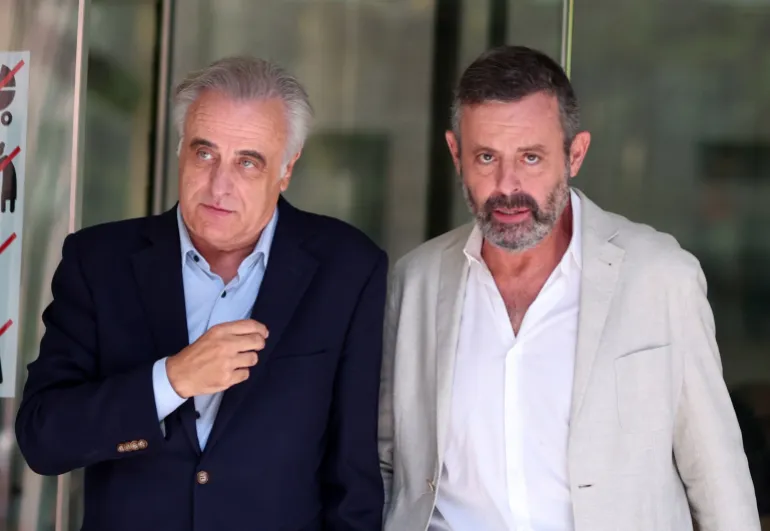
Former FC Barcelona presidents Rosell and Bartomeu leave the court after being heard in the Negreira case on September 18, 2025 [Bruna Casas/Reuters]
What are Real Madrid’s accusations against Barcelona?
Real Madrid have primarily accused Barcelona of sports corruption and influencing refereeing decisions through payments to Negreira.
The club joined the complaint filed by Spanish prosecutors against Barcelona and expressed their “deep concern about the seriousness of the facts”.
According to reports in Spanish media, Real Madrid have requested that Barcelona be stripped of the nine titles they won between 2001 and 2018, the years in which the Catalan club paid Negreira.
What have UEFA, Real Madrid, and Barcelona said?
All three entities issued separate statements on Thursday night.
UEFA: The governing body confirmed receiving a “substantial amount of documents” — reportedly worth 50,000 pages — from Real Madrid pertaining to the investigation. “The UEFA Ethics and Disciplinary Inspectors have also received these latest documents which they will assess as part of their ongoing review,” it said in a statement.
Real Madrid: The club issued its statement following UEFA’s announcement and confirmed that it had provided “extensive documentation and evidence regarding events of extraordinary seriousness, which directly affect the integrity of the competition and confidence in the refereeing system.” It urged that UEFA’s investigation proceed with “utmost urgency until its full conclusion” now that the dossier has been handed over.
Barcelona: Accused party Barcelona issued a statement clarifying that the latest development pertains to the same ongoing investigation, and that “proceedings have not been reopened because they have never been closed.” “As of today, they have not made any new requests to FC Barcelona nor have they forwarded Real Madrid’s complaint to the Club. Should they do so, the Club will respond accordingly, as it has done up to now.”
What else is going on between Real Madrid and Barcelona?
Some reports in Spain claim that Real Madrid president Florentino Perez and FC Barcelona have been summoned to appear before a Madrid court on November 25 for a conciliation hearing ahead of possible criminal proceedings for defamation against Perez.
The hearing follows legal action launched by Barcelona on June 12 over comments made by Perez in May in the Negreira case.
Barcelona said the action was intended to force Perez to retract statements it described as knowingly false, defamatory and damaging to the club’s image and reputation.
The club warned that if the conciliation process failed, it would file a criminal complaint.
The dispute centres on comments Perez made at a May 12 news conference concerning the so-called Negreira case.
Perez described the affair as “the most serious case of corruption in football”, adding: “We could never have imagined Barcelona giving money to the head of the referees.”
He also claimed Real Madrid had been denied league titles, saying: “I’ve won seven leagues. I could have won twice as many. The others were stolen from me.”
Neither entity has issued any statement since UEFA acknowledged receiving Real Madrid’s dossier on Thursday.
Will the case have an impact on El Clasico?
The Spanish football giants will meet in the first leg of El Clasico on October 25 in La Liga. The case will have no bearing on the scheduling of the match but could provide an added touch of drama to what is known as one of the most bitter football rivalries in club football.