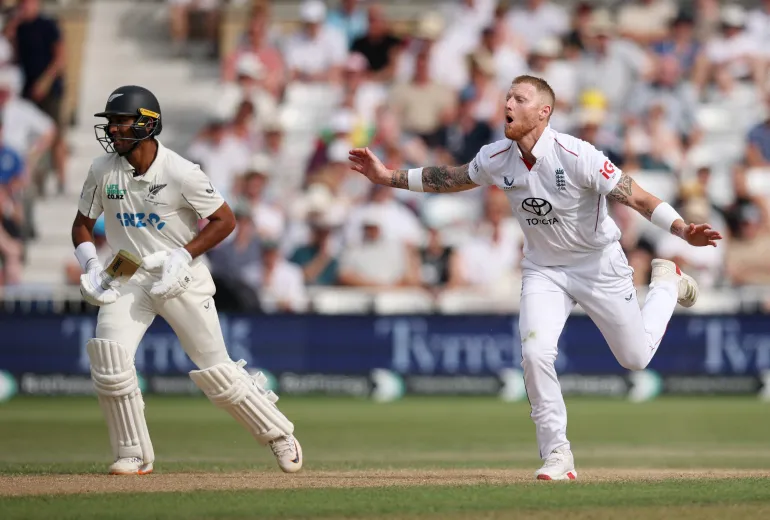
England test captain Ben Stokes will retire from international cricket after the ongoing test match against New Zealand.
Published On 28 Jun 202628 Jun 2026
England captain Ben Stokes has made the dramatic decision to announce his imminent retirement from international cricket midway through the deciding third test against New Zealand.
“This is my last two days as your captain and my last two days representing England,” Stokes told his England teammates inside the dressing room on Sunday at the start of play at Trent Bridge on Day 4, in a video released on social media by England Cricket.
Recommended Stories
list of 4 itemsend of list
The match is headed to a fifth and final day on Monday, with the series on the line at 1-1.
The shocking announcement came 15 minutes before the tea break. Stokes picked up a wicket moments later and was given a standing ovation as he led England off at the end of the session.
“The reasons can wait [about] why,” Stokes said in his dressing-room speech. “But I’ve had many trips to the well before for this team, and I’ve got one more trip to do.”
Stokes, 35, one of the world’s best known cricketers, has represented England for 15 years, the peak surely coming in 2019 when he starred for England in its wild win over New Zealand in the 50-over World Cup final at Lord’s.
He was also a key player in England’s T20 World Cup-winning team in 2022, the same year he became test captain.
Stokes has decided to quit international cricket during a series when he made front-page news after being dropped by England for the second test amid an investigation following a night out with teammate Gus Atkinson after the first test at Lord’s.
The two players were in a London nightclub when an England team security official was reportedly struck by a rugby player from English club Saracens.
The England and Wales Cricket Board (ECB) dropped Stokes and Atkinson, and later said they had “breached specific contractual obligations” and were given a written warning. The sport’s independent oversight panel – the Cricket Regulator body – said after its investigation that there was “insufficient evidence to establish that any regulatory breach occurred”.
Stokes was recalled for the third test.
Stokes reacts alongside New Zealand’s Rachin Ravindra [File: Andrew Boyers/Reuters]
ECB chairman Richard Thompson said Stokes is “one of England’s greatest ever cricketers and one of the defining figures of his generation.”
“His performances under pressure, his relentless competitiveness and his ability to produce the extraordinary when it matters most have given me and millions of other fans memories that will endure forever,” Thompson said.
“Beyond his remarkable achievements on the field, his performances have inspired many youngsters to embrace cricket with positivity and belief. We are losing a batsman, a bowler, a captain and a talisman.”
England captain Ben Stokes has made a stunning announcement to end his international career at the conclusion of the ongoing third Test against New Zealand.
All-rounder Stokes, one of the finest cricketers to ever play for England, was in the middle of a bowling spell at Trent Bridge when a statement was released confirming his intention to end a 15-year international career.
The 35-year-old missed England’s second Test after being involved in an incident in a London nightclub.
Before his return to the leading the team in Nottingham, he referred only to leading the team “this week”.
China has added 10 United States-based companies to its export control list and barred government procurement from nearly 50 US companies two weeks after the Pentagon blacklisted some of China’s best-known companies for their alleged ties to the Chinese military.
China’s Ministry of Commerce announced the export order on Monday, barring Chinese companies from exporting “dual-use” items that can be used for civilian or military purposes to the US firms.
Recommended Stories
list of 4 itemsend of list
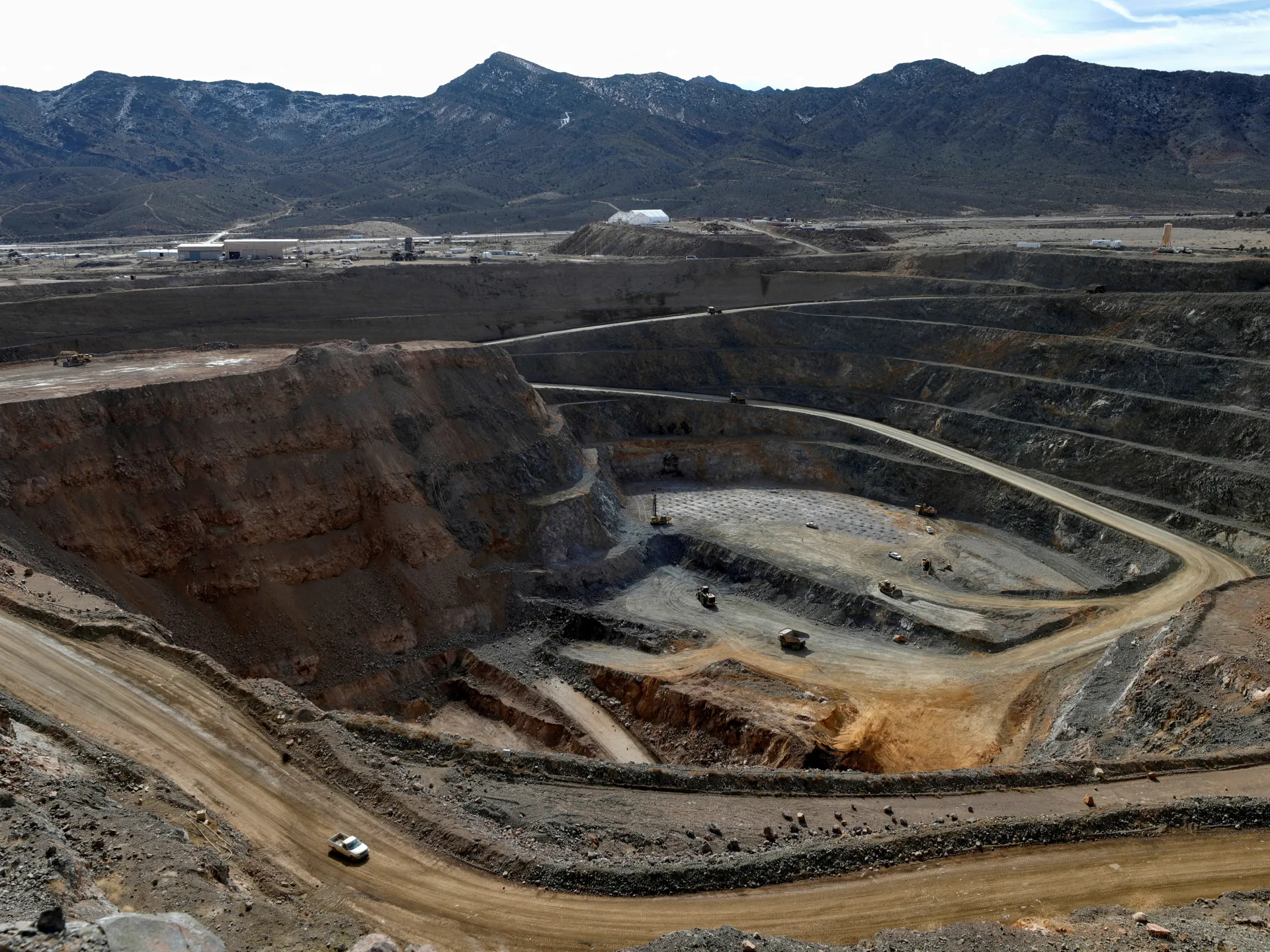
The list of companies includes rare-earth mine operator MP Materials Corp, rare-earth magnet maker USA Rare Earths, and US defence contractors specialising in fields such as aerospace, drones, synthetic-aperture radar, and shipbuilding and repairs.
Under the order, “foreign institutions and individuals worldwide are also prohibited from transferring or providing Chinese dual-use goods to them” while ongoing export transactions must be suspended immediately.
The Commerce Ministry said the export ban had been issued to “safeguard national security and interests and fulfil international obligations such as non-proliferation”.
China’s Ministry of Finance on Monday separately barred Chinese government procurement from 46 companies, including subsidiaries of major US defence contractors like Lockheed Martin, Boeing, General Atomics and General Dynamics. US-funded, locally registered companies, however, have been given an exemption by the ministry.
Experts described Beijing’s orders as a retaliation, albeit a largely symbolic one, against the US after the Pentagon in early June added about 80 Chinese companies and their subsidiaries to its list of “Entities Identified as Chinese Military Companies Operating in the United States”.
The designation means the Pentagon either believes the companies are owned or controlled by the Chinese military or they are “military-civil fusion contributors”, a term for commercial companies that contribute to China’s military development despite their civilian status.
The updated list includes Chinese e-commerce giant Alibaba Holdings, search engine giant Baidu and electric automaker BYD, some of China’s largest and best-known companies.
While the order does not bar US companies from doing business with them, it does impact US defence contractors and their future supply chains.
“We can interpret this as a tit-for-tat response, and that fits into China’s playbook any time we’ve seen escalation from the US side in terms of trade and investment tools,” said Nick Marro, global trade lead analyst at the Economist Intelligence Unit.
China-based supply chain consultant Cameron Johnson said the Commerce Ministry’s order mirrors US semiconductor export controls designed to keep the most advanced chips out of Chinese hands.
“They basically say it doesn’t matter where or who you are, you are bound by this regardless of circumstance,” said Johnson, who is also a senior partner at the Shanghai consultancy Tidal Wave Solutions. “Organisations or individuals in any country or region are prohibited from transferring dual-use materials that originated in China.”
He said Beijing’s orders in practice may be hard to enforce and many of the companies named in those orders have already moved their supply chains out of China or begun to “de-risk” their operations there.
Johnson said the wide scope of companies included in Washington’s and Beijing’s directives could be a sign of more to come and may signal a new front in the US-China trade war.
“This is probably just the beginning of the back and forth,” he said. Last year, after returning to the White House for a second term, US President Donald Trump reignited the US-China trade war, leading Washington and Beijing to impose escalating rounds of tariffs on each other.
Trump and Chinese President Xi Jinping agreed to a trade truce in October, which was extended during a summit between the two leaders in Beijing in May.
Despite promises to “enhance economic cooperation” during the meeting, observers like Singapore-based geopolitical analyst Steve Okun predicted the goodwill may be short-lived.
“The US’s recent closure of chip export loopholes and China’s continuing addition to its export bans show the national security lane remains active in both capitals regardless of the diplomatic niceties at the recent Trump-Xi summit,” Okun told Al Jazeera.
“There is no ‘truce’ in the US-China trade war. Expect further actions from both sides as well on export controls and investment restrictions,” he said.
As Colombia comes down from the ecstasy-filled high of its recent win in their 2026 World Cup opener, a sadder, and much darker reality is beginning to set. On June 21st, 2026, Colombians will vote in a historic runoff election that will not only hurt Colombia but will have serious effects on the future of Venezuela.
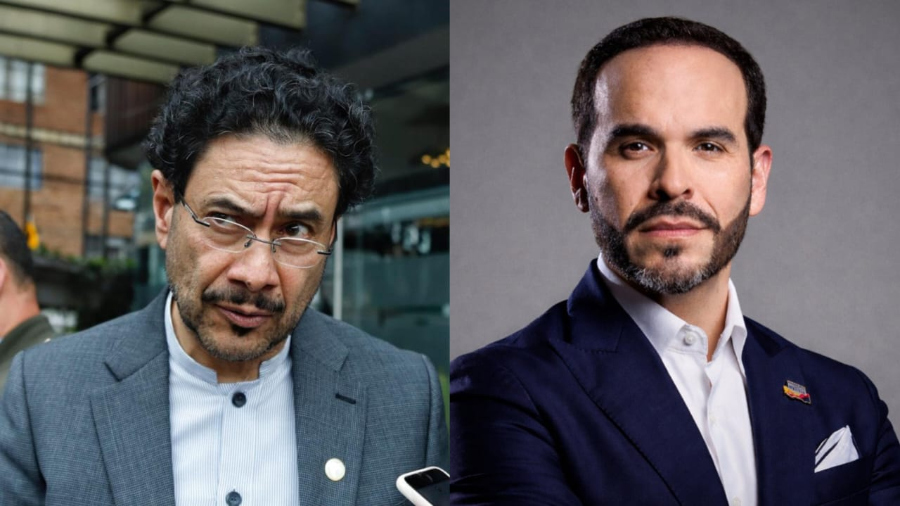
No matter the outcome, Colombia will be worse off, as both Iván Cepeda and Abelardo De la Espriella are a study on how a democracy can offer voters a choice between two particular brands of terrible.
The first-round of the election provides a clear insight into the current state of Colombian civil society. Like many presidential systems, Colombia structures its presidential elections in a two-round system. If no candidate surpasses 50% of the vote in the first round, as happened on May 31st, a second runoff election is called between the first and second placed candidates. That runoff is this Sunday, June 21st. Moderate and moderate right-wing candidates Sergio Fajardo and Paloma Valencia achieved historic electoral lows for centrists with 4% and 6% of the vote respectively, whilst the radical extremes of the political scale rejoiced in victory.
The biggest surprise was undoubtedly Abelardo de la Espriella´s first round victory, with the self-anointed “Tiger” garnering 43.7% of the vote to first round favourite Iván Cepeda´s 40.9%. With a mere 600,000 votes separating the candidates and about 3 million votes being contested, both can win the election.
Cepeda, who is President Gustavo Petro’s hand-picked heir, initially questioned the results alongside the controversial president, and only accepted them on June 7th, a week after the election. With his institutional backing, that delay matters. All in all, Colombians ran to the extremes, which provided a clear data-backed picture of just how polarized Colombian civil society is.
Whoever gets sworn in Bogotá on August 7th2026, will have more operational influence over Venezuelan affairs than any other head of state in the hemisphere, apart from Trump.
Regardless of the result in the June 21st runoff, the Colombian elections will have a lasting effect on the future of Venezuela and could be the catalyst for very different answers to the question of the country´s political future.
First and foremost, Colombia is the country that has received the largest number of Venezuelan migrants, with approximately 3 million Venezuelans calling the country home. Since January 2025, Colombia has been hosting the diaspora without US funding and support. Furthermore, part of the the 2,219 kilometre-long border between both countries is controlled by the Colombian Guerrilla ELN (Ejército de Liberación Nacional), who lost key ally and facilitator Nicolás Maduro on January 3rd and is currently massing on the Colombian side.
Bogotá’s diplomatic influence and posture is one of the few international players that can have significant effects on whether interim dictator Delcy Rodríguez will eventually push for elections in Venezuela.
All in all, whoever gets sworn in Bogotá on August 7th 2026, will have more operational influence over Venezuelan affairs than any other head of state in the hemisphere, apart from the self-proclaimed most popular man in Venezuela, Donald Trump.
Now, it’s time to get down to brass tacks, the who is who. Inside trash can number one we find Iván Cepeda. Cepeda’s personal arc is worryingly similar to that of the Rodríguez siblings in Venezuela. His father was a radical Left politician murdered by far Right paramilitary groups. That fuelled Cepeda’s deep hatred towards the Colombian political system and institutions. A career senator and politician, Cepeda is probably the smartest mind in Colombia’s hard Left. He is also an admirer of Hugo Chávez, and strong critic of former president and kingmaker Álvaro Úribe. Cepeda’s followers will frame him as a left-wing moderate, but he is not. He is Petro without the cocaine, prostitutes and charisma, running on continuing the Total Peace framework that has seen record numbers of cocaine production in the country, and bolstered the rearming of the ELN. His commitment to governmental continuity will no doubt hurt Colombia, starting with the fact that current policies have driven down Foreign Direct Investment in Colombia by 30% from a 2023 peak.
De la Espriella is a one-man band who won the first round through violent speeches, AI anthropomorphic videos of himself as a tiger, and evangelical networks.
Furthermore, his delay in recognizing the electoral results provides an interesting insight on how Cepeda could interact with institutions that he finds inconvenient. A man who questions clean elections certified by international observers has no business rewriting constitutions, a key pillar on his first-round electoral campaign, which he recently dropped in a pathetic attempt to attract centrists and moderates. Cepeda’s rhetoric and language is extremely divisive. He frames every political opponent as an oligarch, every private enterprise as an exploiter, every security operation as state violence whilst analysing the deep social gaps and concerns the country must navigate. Rather than seeking to solve them, Cepeda weaponizes them to further divide the Colombian population.
But Cepeda’s rottenness is not counterbalanced by a knight in shining armour, but by a different but equally foul-smelling individual. We find Abelardo “The Tiger” de la Espriella inside trash can number two. The part-time attorney, part-time rum maker, aspiring opera singer, fashionista with terrible taste is one of the most questionable figures in the Colombian public sphere. A criminal defence attorney, who became famous for being the lawyer and fixer for chavista allies like Alex Saab and paramilitary leaders, has found a new “passion project” in his expanding list of questionable side hustles: becoming the president of Colombia. De la Espriella comes in as a true outsider who has no congressional or political backing. He is a one-man band who won the first round through violent speeches, AI anthropomorphic videos of himself as a tiger, and evangelical networks.
Abelardo’s rhetoric only serves to perpetrate a never-ending cycle of violence. The anti-democratic claims that he will literally “gut leftists,” his active endorsements of states of exception and support for arbitrary concentrations of power within the presidency, his promise to open ten CECOT-style mega prisons, and his constant disregard and attacks against human rights are problematic.
His “security agenda” is not offering any coherent security policy. On the contrary, he’s seeking to create a permission structure for state-sponsored political violence, dressed as law and order. His policy against the ELN of all-out war has no institutional backing, and risks triggering considerable escalation. Events like the April 25th bombing can serve as a prelude of what an empowered ELN can look like.
De la Espriella’s polarization is of a different flavour to Cepeda’s, but equally problematic. Instead of using social and class divides, the Tiger weaponizes the us-versus-them mentality along the lines of patriots and enemies. In a country with such a tragic and saddening history of political violence, that rhetoric has a body count attached to it.
Cepeda’s attitude will likely be lukewarm and soft on Venezuela, dragging his feet on any meaningful action such as Venezuelan migrants in Colombia or elections in our country.
At the end of the day, either candidate will face serious problems to govern, and will bring a myriad of conundrums for Colombia, but how do their stances translate into the Venezuelan question? On one hand, Iván Cepeda has constantly framed the operation to extract Nicolás Maduro as violation of sovereignty, a position which lacks any diplomatic nuance, and at the same time provides strong insights into how Cepeda will behave towards Venezuela and how much pressure he´ll exert on Venezuela to call for elections. The Total Peace Framework will provide the ELN with the political umbrella to consolidate in the border region, stacking an unpredictable situation on top of an already volatile powder-keg in Venezuela. Calling Cepeda a “friend” of Maduro or Delcy is not accurate, but he is the regime’s useful neighbour. His attitude will most likely be lukewarm and soft on Venezuela, dragging his feet on any meaningful action like his predecessor Gustavo Petro such as Venezuelan migrants in Colombia or elections in our country.
On the other hand, analysing Abelardo’s impact on Venezuela must begin with the fact that he was the leading defence attorney for Alex Saab between 2013 and 2018, the same years Saab ran Maduro’s sanction-busting operation. Although his divisive rhetoric claims forceful actions, his personal history and contacts in his rolodex prove that rather than full force, there is a clear entanglement with the chavista operation. De la Espriella also has no real plan for the domestic situation with refugees, and his ultra-nationalist stance could cause serious problems for foreign populations in Colombia. Furthermore, his full force campaign against the guerrillas can drive the ELN back over the Venezuelan border.
A small “silver lining” does exist. On one hand, Cepeda has stated that he will try to push for regularization mechanisms in Colombia. On the other, Abelardo’s ties to the International Right and Donald Trump can transform him into a key figure to push for a decisive presidential election and as a source of pressure on Delcy.
Colombia’s role as a key interlocutor with Venezuela is undeniably at risk regardless of who wins the presidency. Because the region and Venezuela needed a Colombian president that could be a genuine bridge between Washington and Caracas, between the Venezuelan diaspora and integration, between the ELN and disarmament, and for the ever-divided poles of the Colombian population. But rather, on June 21, the country was forced to choose between ideological blindness dressed in progressive language, and maximum pressure dressed over an obvious conflict of interest. Venezuela might again pay the price for someone else’s terrible choices.
Daiki Kaneko had only 24 hours before his World Cup journey took him to Dallas, where his home country’s squad will take on Sweden.
The Japanese soccer fan was making the most of it on Tuesday in Inglewood, snapping pictures of SoFi Stadium before taking in a different kind of monument: a space-age, two-story branch of the chicken chain Raising Cane’s, complete with a 308-square-foot screen, a mirrored dog sculpture and a massive halo hovering around the exterior.
For Kaneko, 25, who lives in the Tokyo suburbs, it was the perfect encapsulation of American grandeur.
“All this for chicken,” he said. “I love America.”
Inglewood is already diverse — most residents are Latino or Black, and nearly a third are immigrants. But during the World Cup, it’s looking more like the United Nations. English, Japanese, Swiss, Iranians, Paraguayans, Bosnians, Belgians and others are flocking to the city of about 102,000, where eight matches are being played at SoFi Stadium.
Though visitors from abroad may not have heard of Inglewood until now, they’re soaking up the vibes of a city that has long been a major sports and entertainment hub, home to venues such as the Kia Forum and Intuit Dome, and a crucible of Black culture, immortalized in hip-hop songs by artists such as Tupac Shakur and Dr. Dre.
“We’re an international city now,” Mayor James Butts said.
Butts said locals were already proud of what the city has become, but the World Cup has put the celebratory feelings over the top.
“We have people from so many different countries migrating to Inglewood, and there’s an explosive sense of community pride,” he said.
Bartender Elijah Gonzalez, left, mixes a drink at the Nile Bar in Inglewood while customers watch a World Cup soccer preview.
(Allen J. Schaben / Los Angeles Times)
City officials are doing everything they can to embrace the spirit of the tournament, including speeding up permits so small businesses and neighborhoods can hold World Cup gatherings and watch parties, Butts said. During the U.S.’s opening match against Paraguay on June 12, the city hosted the Wood Cup, a block party on Market Street that brought in more than 5,000 people.
Businesses across the city are embracing the tournament as well, vying for a piece of the roughly $17 million the city expects to haul in. For a few weeks, concerns about skyrocketing housing costs and gentrification, brought on by the city’s increasing popularity as a place to settle down, are taking a back seat to the sheer fun of international soccer.
The supersized Raising Cane’s had its grand opening on June 11, the first day of the tournament. During the USMNT’s opening match, Cinepolis, a luxury movie theater down the road from SoFi Stadium, turned into a global sports hub, according to CEO Luis Olloqui.
Maddy Daversa, a bartender at the Meeting Spot, a restaurant near the stadium, said 2,000 people poured in when the Americans played Paraguay.
“I was selling beers for five hours straight,” she said. “It was crazy.”
Daversa said the restaurant is usually closed on Mondays but opened in hopes of getting some spillover fans from the Iran-New Zealand game at SoFi.
“Every table was full,” she said. “We’re taking advantage.”
Tuesday was an off day for Inglewood, with no games at SoFi. But the energy was still palpable, with locals sporting soccer jerseys and tourists popping up across the city.
“I just want to be where the fans are,” said David Meier, a Swiss fan in town for his home country’s match against Bosnia-Herzegovina on Thursday.
Meier, 45, plans to explore L.A. via bars, restaurants and watch parties, taking in every game that his schedule will allow before heading north of the border to Vancouver, where Switzerland will face Canada on June 24.
“Everyone has been so kind,” he said. “Soccer and beer turns strangers into friends.”
Flags from countries competing in the World Cup are on display at Manchester Boulevard and South Market Street in Inglewood.
(Allen J. Schaben / Los Angeles Times)
The energy carried over to Market Street, a historic shopping district about a mile from SoFi Stadium. Businesses set up signs, posters and international flags to lure locals and tourists alike, while the Miracle Theater hosted a watch party for the match between France and Senegal.
Owen Smith, who co-owns the theater with his wife, Mariana, said a Senegalese friend who grew up in France asked if he would be willing to show the game on the big screen. A day later, fans of both teams assembled inside, snapping photos in front of a giant inflatable World Cup trophy in the lobby.
“The Miracle is a cultural event theater. It’s about accommodating the community,” Smith said.
Benyam Woldegiorgis, who co-owns the Nile Bar on Market Street, is showing every single World Cup match — all 104 of them.
“It brings in business,” he said. “Usually it’s just football, basketball and baseball, but now we’re adding soccer to the mix.”
Dionte Johnson, owner of the streetwear store Kingsrowe, partnered with Adidas to hold a watch party for the U.S. team’s opener and said the turnout was massive, bringing in loads of Mexico fans who are local residents, even though their team had already won their opener the day before.
“The downside of the World Cup is that tickets are so expensive, so a lot of locals can’t go check out the games themselves. That’s why we’re hosting events,” Johnson said. “The games are in our backyard, so this is something people have had on their calendar for a long time.”
Homeowners are cashing in as well, with some renting out their places on Airbnb for a small fortune, figuring that crashing on a friend’s couch or booking a hotel room elsewhere is well worth the lofty payouts brought by World Cup demand.
Across L.A., hotel demand lagged compared with initial expectations, but short-term rental prices still jumped 56% compared with typical rates, and more than 70% of rentals were booked by December 2025.
In Inglewood — especially for rentals walkable to SoFi Stadium — prices became dizzying.
David Orenstein and his wife, Peggy, run an Airbnb across the street from SoFi Stadium. It usually rents for $400 per night, but for the U.S. team’s opening game, it went for $3,000.
(Robert Gauthier / Los Angeles Times)
Peggy Orenstein and her husband, David, own a home steps from the stadium that typically rents for $400 a night on Airbnb. For the U.S. team’s opener, the nightly rate shot up to $3,000.
For other matches, the four-bedroom house is going for $1,200 to $1,500 a night. Orenstein said the high demand and international crowds are a teaser for what’s to come.
“Next up is the Olympics,” she said. “This is a great learning lesson for what we can expect.”
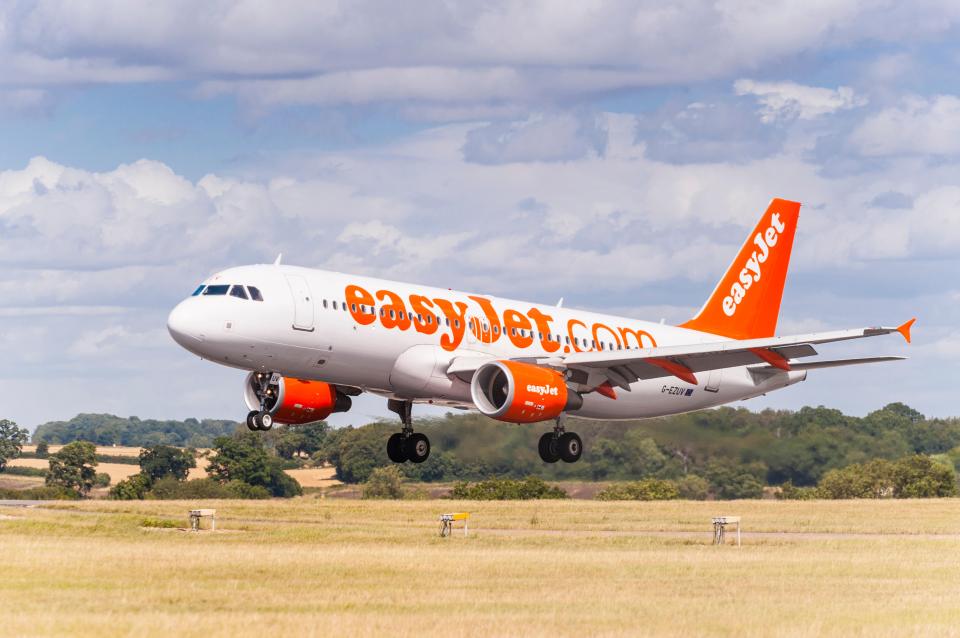
EasyJet is launching 13 new flights from the UKCredit: Alamy
EasyJet will launch a route between Newquay Airport in Cornwall and Geneva in Switzerland – which will be its first international route from the airport.
The route will launch on January 16, 2027 and operate once a week on Saturdays until February 27, 2027.
Among the 12 other routes being launched are new routes from London Luton to Kittila in Finland launching on November 24 and Strasbourg in France launching on November 29.
Flights to Kittila will operate twice a week, on Tuesdays and Saturdays whereas flights to Strasbourg will operate four times a week on Mondays, Thursdays, Fridays and Sundays.
London Southend will get new flights to Edinburgh, Scotland operating twice a week from October 25 on Thursdays and Sundays from £23.99 per person.
From Birmingham you will be able to fly to Copenhagen in Denmark, twice a week on Mondays and Fridays, launching on November 16 and costing from £31.99 per person.
Or if you live near Manchester, you can head to Cairo in Egypt from November 9 – the only direct route from Manchester to the ‘Sphinx’ airport.
The route will operate twice a week on Mondays and Fridays, with flights costing from £131.99 per person.
Liverpool will get two new routes including to Kittilä in Finland and Reykjavik in Iceland.
Flights to Kittila will start on November 25, departing twice a week on Wednesdays and Saturdays with tickets costing from £30.99 per person.
On the other hand, flights will head to Reykjavik from November 2, taking off on Mondays and Fridays, with flights costing from £43.99 per person.
And Newcastle will get several new destinations including Barcelona in Spain, Berlin in Germany, Copenhagen in Denmark, Hurghada in Egypt and Rovaniemi in Finland.
Flights to Barcelona will be the first to launch on October 25, operating twice a week on Fridays and Sundays and costing from £28.99 per person.
Hurghada flights will then start on October 27 twice a week on Tuesdays and Saturdays, costing from £121.99 per person.
Copenhagen flights will launch on November 5, followed by Berlin on November 20 and then Rovaniemi on November 25.
Walking through Budapest, it is impossible not to notice the contradictions. Hungary is a member of NATO, a member of the European Union, and a beneficiary of decades of Western integration. At the same time, Chinese companies are building multibillion-dollar factories, Russian energy remains essential, and Viktor Orbán spent years cultivating close ties with both Moscow and Beijing.
From Caracas, many would interpret this reality as an anomaly. Perhaps for a country so accustomed to contradictions, it is a window into the world that is coming. Or into the world that already arrived.
For decades, international politics was dominated by a relatively straightforward question: whose side are you on? The Cold War forced countries to choose between Washington and Moscow, although Venezuela took a novel approach in the second half of its democratic period. Even after the collapse of the Soviet Union, the American unipolar moment sustained the assumption that development, prosperity, and international integration were ultimately synonymous with Westernization.
The twenty-first century has proven more complicated. Turkey purchases Russian weapons while hosting American bases as a NATO member. India participates in strategic partnerships with the United States while maintaining longstanding military and energy ties with Moscow. The United Arab Emirates hosts capital, companies, and citizens from virtually every geopolitical camp. Hungary, home to CPAC Europe and a destination for both Chinese investment and Western conservative movements, has perhaps turned this logic into a national strategy more successfully than any other European country.
These countries are not neutral. Nor are they non-aligned in the classical Cold War sense. They are states that have learned to maximize their options in a multipolar world.
Time to embrace multipolarity?
For years, discussions about Venezuela’s future have been framed as a choice between opposing models. Would the country resemble Cuba or Colombia? Nicaragua or Costa Rica? Would a transition imply a return to the Western consensus that shaped much of Latin America after the Cold War?
Five months after January 3 and the beginning of a period of unprecedented American tutelage, those questions appear increasingly outdated.
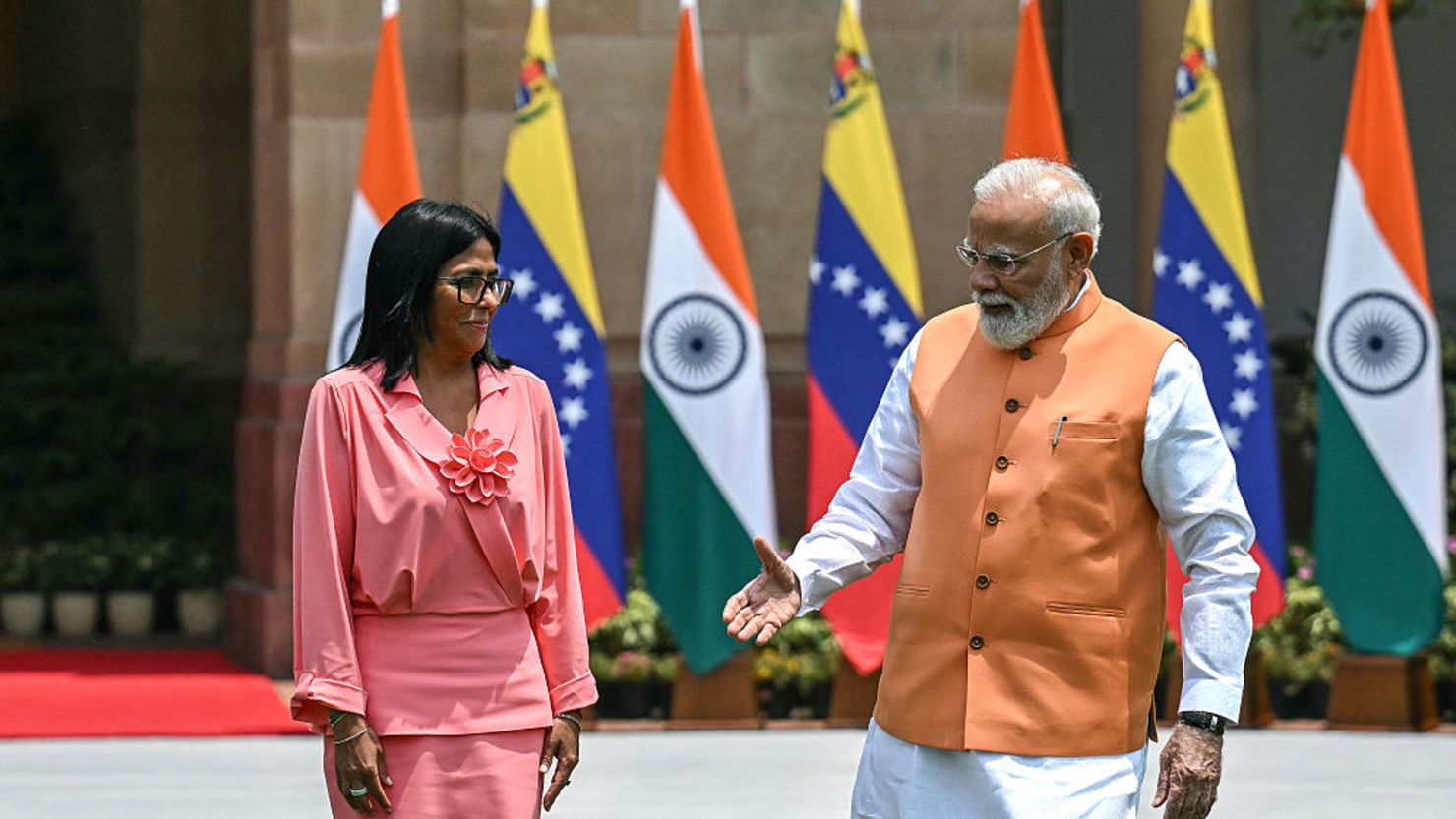
The symbolism of recent weeks is difficult to ignore. While Delcy Rodríguez was in India seeking to deepen energy ties with one of the world’s fastest-growing economies, General Dan Caine was simultaneously in Caracas discussing security cooperation with Venezuelan authorities. In the traditional chavista worldview, these developments would have belonged to rival geopolitical universes. In today’s Venezuela, they increasingly appear as part of the same strategy.
Venezuela arrives at this reality from a different place. Questions of external influence, compromised sovereignty, competing centers of power, and tutelage have played a far larger role here than among our neighbors.
The concept of regime learning refers to the ways political systems adapt in order to survive. In Venezuela, that process has already transformed the country’s economic model. Price controls have largely been abandoned. The private sector is in a slow process of rehabilitation. In short, revolutionary orthodoxy has repeatedly yielded to political necessity.
Regime learning does not only change how states govern. It changes how they understand the world.
What is becoming apparent in 2026 is that the same process may be transforming Venezuela’s geopolitical posture.
The Bolivarian Revolution was founded on a particular assumption. Venezuela would help construct an alternative pole of power, aligned with actors such as Cuba, Russia, Iran, and eventually China. The goal was not merely to diversify partnerships. It was to build a geopolitical project capable of challenging American influence in the hemisphere.
Twenty-five years later, the lesson learned appears remarkably different.
Arriving late to the game
Russia became absorbed by its invasion of Ukraine. China proved willing to defend its own interests, but not necessarily those of its partners. Iran remained geographically distant and economically constrained. Cuba, despite years of leeching off the Venezuelan state, proved largely incapable of defending the revolution against genuine external pressures. The experience of governing under sanctions, isolation, economic collapse, and great-power competition appears to have produced a different conclusion: dependence on any single external patron creates vulnerabilities.
The logical response is not non-alignment, but rather hedging.
Instead of anchoring Venezuela to a single geopolitical camp, the emerging strategy appears designed to maintain productive relations with several simultaneously. Security cooperation with Washington. Oil exports to India. Commercial ties with China. Investment from the Gulf. Access to Western financial markets. None of these relationships are mutually exclusive. In fact, they reinforce one another.
To some extent, there is nothing uniquely Venezuelan about this. Much of Latin America already operates in a multipolar environment. Governments across the ideological spectrum maintain economic ties with China while preserving political, commercial, and security relationships with the United States. Yet Venezuela arrives at this reality from a very different place. Questions of external influence, compromised sovereignty, competing centers of power, and political tutelage have played a far larger role in Venezuelan politics than in most neighboring countries.
The lesson Venezuela appears to be learning is neither socialist nor liberal, neither anti-Western nor fully Western.
In some respects, the country’s experience over the last quarter century has more in common with the dilemmas faced by some post-communist European states (like Ukraine) than with those of Colombia, Peru, or Ecuador. Venezuela is never going to become Switzerland, nor is it going to become India. It lacks the geography, the institutions, and the scale required for either role. Yet it may be discovering a different path, one better suited to its circumstances: not a great power, not a neutral sanctuary, but a medium-sized energy producer whose strategic value derives from its ability to remain relevant to multiple centers of power simultaneously.
This is what makes Hungary such a useful comparison. Not because Hungary represents a political model for Venezuela, nor because Viktor Orbán and Nicolás Maduro are comparable figures. If anything, a Venezuelan transition led by María Corina Machado would likely have more in common ideologically with a post-Orbán government than with Orbán himself. Yet that is precisely the point. Even a post-Orbán Hungary would remain a member of NATO and the European Union, continue attracting Chinese investment, and remain constrained by the economic and energy relationships accumulated over decades. Hungary is useful because it illustrates a broader phenomenon: the emergence of states whose prosperity depends less on belonging to a bloc than on remaining useful to several at once.
Viewed from this perspective, Venezuela’s current trajectory increasingly resembles neither Cuba nor the Colombia of the early 2000s. It is not moving toward the permanent isolation of the former, nor toward the straightforward Western alignment of the latter under Álvaro Uribe. Instead, it is beginning to occupy an intermediate position, one that may become increasingly common in a multipolar world.
The Bolivarian Revolution aspired to create a twenty-first-century Cuba. Five months after January 3, its most enduring geopolitical legacy may be the emergence of an oil-rich Hungary in the Caribbean.
Regime learning does not only change how states govern. It changes how they understand the world. After 25 years of revolution, sanctions, collapse, and adaptation, the lesson Venezuela appears to be learning is neither socialist nor liberal, neither anti-Western nor fully Western. It is something more pragmatic: in a multipolar world, survival belongs to those who can make themselves useful to everyone.
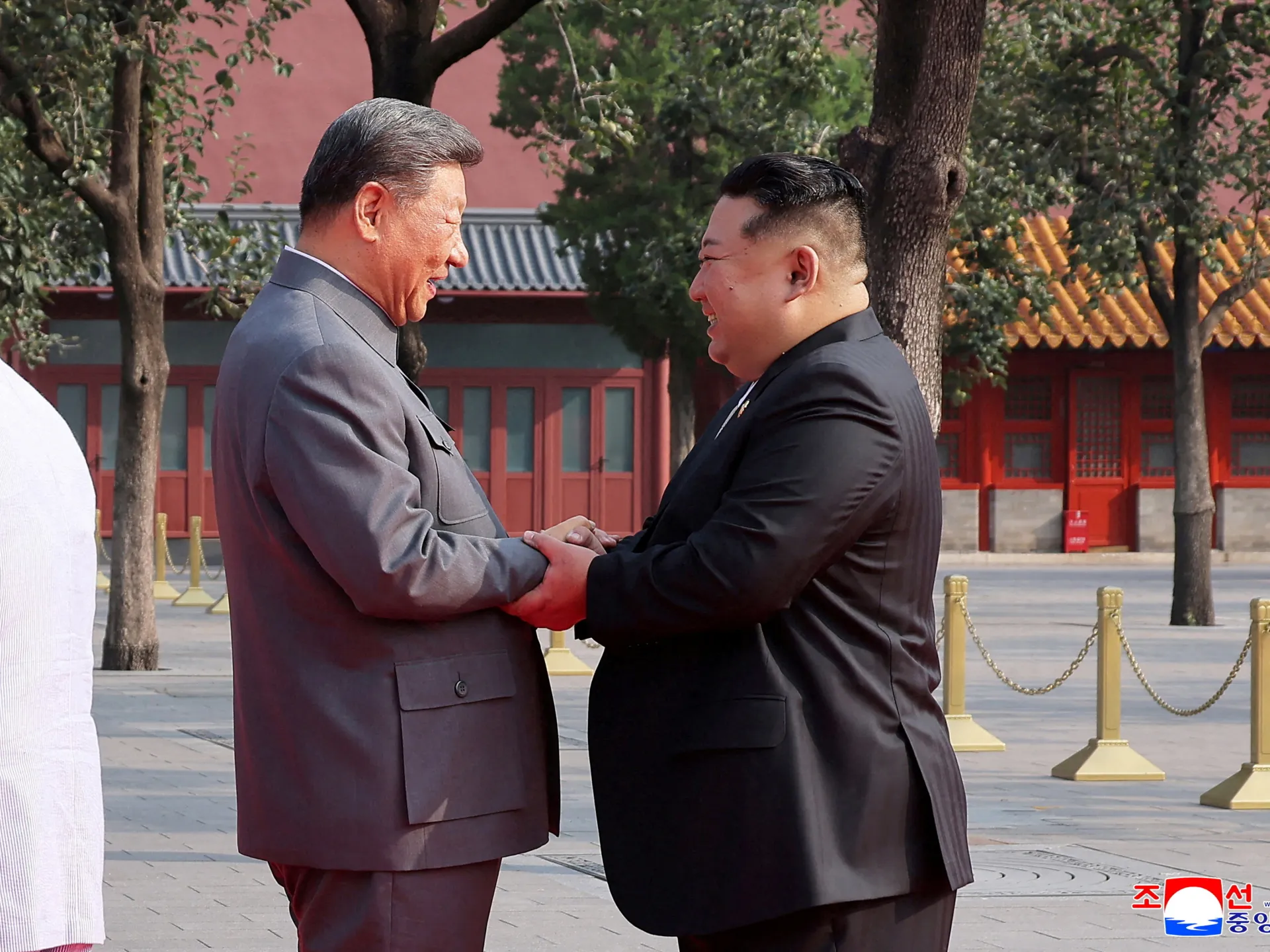
Chinese President Xi Jinping’s meeting with North Korea’s Kim Jong Un in Pyongyang on Sunday is significant for one reason.
It’s not that they are meeting: The two men met in Beijing just a year ago when China held a massive military parade to mark 80 years since Japan surrendered unconditionally to Allied forces, bringing an end to the second world war.
Recommended Stories
list of 4 itemsend of list
What’s surprising is that Xi is travelling at all.
The Chinese leader has not travelled to Pyongyang since 2019, having steadily cut down his travel in recent years, and world leaders like US President Donald Trump and Russian leader Vladimir Putin generally come to him these days.
“We need to remember that Xi Jinping has not really travelled abroad that much,” William Yang, Crisis Group’s senior analyst for Northeast Asia, told Al Jazeera. “The growing trend is foreign leaders heading to Beijing to meet with him.
“For Xi Jinping to be the one who decides to travel to Pyongyang, it shows the level of significance that China attaches to this trip.”
Xi averaged about 14 trips a year between 2013 and 2019, but dropped to approximately six a year between 2022 and 2025, according to the Asia Society. In 2020, he made just one overseas trip, and in 2021, he made none, as China grappled with the COVID-19 pandemic.
He may be travelling now, though, amid concerns about North Korea’s relationship with Russia, Yang said.
Senior partner no more?
Traditionally, Beijing played the role of senior partner in the China-North Korea relationship, with North Korea heavily dependent on China for as much as 95 percent of its trade, according to one 2022 estimate from the National Committee on North Korea, a US-based nonprofit.
That dynamic has been changing since Russia’s 2022 invasion of Ukraine, however. North Korea has provided Russia with critical weapons, artillery and manpower and is credited by observers with helping to keep Moscow’s war machine going.
South Korea’s Institute for National Security Strategy, a government-funded research institute, estimates that since 2023, Moscow has paid North Korea as much as $14.4bn for troop deployments and the export of “artillery, shells, and guided and ballistic missiles”.
The report said that North Korea may only have received between $580m and $1.5bn of that in the form of “goods”, which means there is a “significant possibility that the majority of the payment from Moscow was in the form of ‘sensitive military technology or related precision parts and materials that are difficult to observe via satellite’,” according to a translation.
Although China shares a mutual defence treaty with North Korea, it is still wary of North Korea acquiring new military technology, Yang said.
“Beijing has always been very careful about providing military assistance to North Korea because they do not see a militarily stronger North Korea as necessarily in its favour,” he said. “A North Korea that is militarily emboldened through its relationship with Russia could be a potential source of disruption to the balance of power and status quo on the Korean Peninsula.”
North Korea has already carried out eight missile launches since the start of the year, and in May unveiled a new AI-guided tactical cruise missile, according to North Korean media and the US Naval Institute.
Earlier this week, North Korean state media also released photos of Kim touring a new “weapons-grade nuclear materials” factory, which would be used to expand Pyongyang’s nuclear capability at an “exponential rate”.
Fluctuating tensions
North Korea has technically been at war with South Korea since 1950, with the conflict suspended by a 1953 armistice agreement. The two countries are divided by a 250-kilometre-long (155-mile-long) Demilitarized Zone, splitting the Korean Peninsula.
Tensions have fluctuated dramatically over the years, reaching a recent low point in 2024 when Kim abandoned the long-term goal of Korean unification.
He has largely cut off communications ever since, according to observers. On Friday, South Korea’s Ministry of Foreign Affairs said that it hopes that Xi’s trip will “play a constructive role in addressing issues related to the Korean Peninsula” – suggesting that Seoul may have lobbied the Chinese leader to try to smooth over relations.
South Korean Minister of Unification Chung Dong-young separately told reporters last month that he expects the two leaders to discuss a possible meeting between Kim and Trump later in the year.
Xi may also be alarmed by other security developments in East Asia, including news of a possible military-logistics support pact between South Korea and Japan, which was raised at the Shangri-La Dialogue of regional defence officials in Singapore last weekend.
While China and South Korea’s relationship fluctuates, its ties with Japan are acrimonious due to longstanding grievances dating back to Imperial Japan’s occupation of China in the 1930s and 1940s. Beijing has also objected to recent moves by Tokyo to expand its de facto military.
The administration of United States President Donald Trump has proposed a new 25 percent tariff on imports from Brazil amid allegations of unfair trading practices.
US Trade Representative Jamieson Greer announced the new punitive tariffs late on Monday, stemming from issues including digital trade and illegal deforestation.
Recommended Stories
list of 4 itemsend of list
The new tariffs would be imposed under Section 301 of US trade policy — a statute that gives the US government broad authority to impose trade sanctions based on violations of trade agreements, as well as what it deems “unfair” trade practices under the Trade Act of 1974.
Greer said there has been an investigation that began in July. The practices under investigation were related to issues such as illegal deforestation, ethanol market access, and anticorruption enforcement, among other key issues, according to the summary released by the US Department of Commerce on Tuesday.
In the 107-page document, the US government said that trade practices between the two nations “are unreasonable and burden or restrict US commerce”, and pointed to agreements that Brazil has with Mexico and India.
“Brazil’s trade arrangements with Mexico and India also create incentives to offshore US production by creating a financial advantage to exporting to Brazil from these countries, as opposed to exporting from the United States,” the document says.
There is a comment period for the general public to weigh in on the proposed tariffs, which begins on Thursday. The written comment period ends on July 1, and there will be a public hearing in Washington on July 6.
Beef, coffee, rare earths, other metals, energy, and aircraft parts are among the products that would be exempt from the tariffs.
On CNBC, Greer said that it would release more findings on unfair trade practices in the next several weeks in order to address what Greer called a “giant” trade deficit.
However, the data shows that the US maintains a trade surplus with Brazil. In March, Brazil bought more goods, worth $3.3bn, from the US than it exported at $2.9bn, representing a $420m trade surplus.
Other countries under investigation include China and Vietnam.
The new tariff would partially replace a tariff of 50 percent on many Brazilian goods imposed last year by Trump, with 40 percent serving as a punishment for Brazil’s prosecution of former President Jair Bolsonaro, a Trump ally.
The White House also recently dropped tariffs on select aluminium, copper, and steel imports, which include agricultural equipment such as harvesters. Those tariffs will drop from 25 percent to 15 percent. The tariffs expire in December 2027.
The new tariffs come after the Supreme Court, in February, struck down the use of the International Emergency Economic Powers Act (IEEPA), which the White House used to impose its sweeping global tariffs.
“They are the first of many new tariffs to replace the IEPPA national security tariffs. The period of public comment will allow for potential modest tweaks and exemptions. Ultimately, it will add to some inflation pressure compared to the last few months but not compared to a year earlier,” Rachel Ziemba, a senior adjunct fellow at the Center for a New American Security, told Al Jazeera.
Political tensions
The changes come despite President Luiz Inacio Lula da Silva’s visit to Washington last month, as relations have deteriorated in recent months.
The US State Department has also designated two of Brazil’s criminal gangs as “terrorist organisations”, a move that supported Senator Flavio Bolsonaro’s position, Lula’s main rival in October’s election, and over the objections of Brazilian officials.
“I expressly asked President Trump not to tariff our companies,” Bolsonaro wrote on X on Tuesday. “Tariffs are not the solution.”
The White House did not respond to Al Jazeera’s request for comment.
Venezuela is far from being the only country in the Americas where State institutions have been used to crack down on independent media and protect the interests of ruling elites. In Guatemala, the case of journalist José Rubén Zamora became one of the clearest examples of how prosecutors, courts and political power can converge to silence investigative journalism.
In early April 2025, I interviewed Ramón Zamora, son of Guatemalan journalist and elPeriódico founder José Rubén Zamora. His arrest following years of investigations into alleged government corruption led to the newspaper’s closure and the persecution of people close to him. During our conversation, Ramón Zamora described how Guatemala has developed a tacit network of complicity between State institutions and political authorities, a system that raises broader questions about this new form of power in Latin America and may also help explain how the chavista State in Venezuela operates.
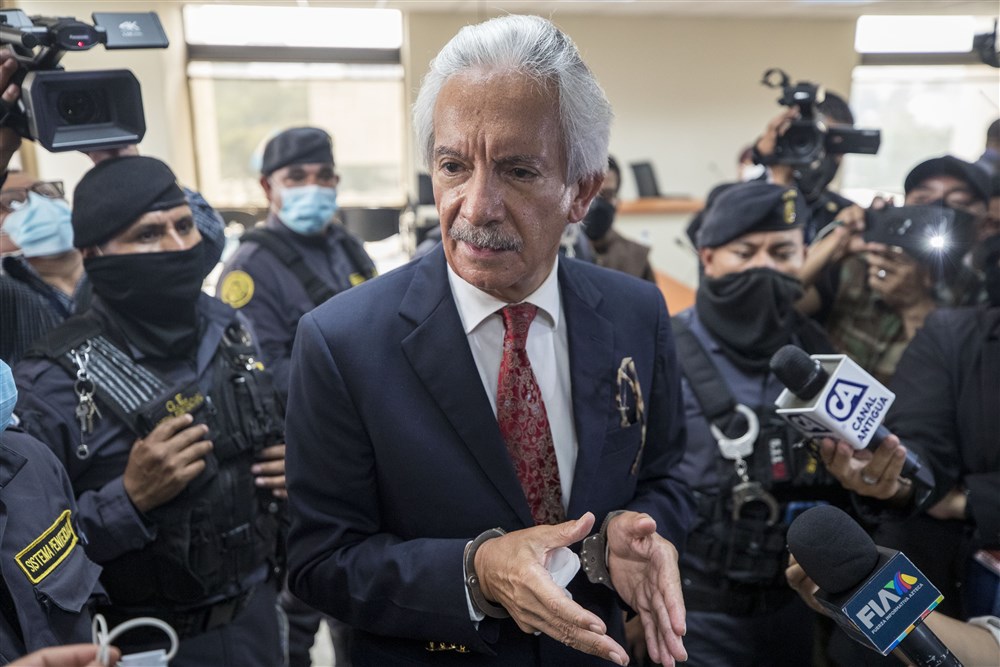
After elPeriódico published two investigations on May 2 and May 3, 2021 into apparent cases of corruption in the government of former President Alejandro Giammattei, the media outlet was subjected to legal persecution that culminated in the arrest of Rubén Zamora, who had dedicated his work to investigating corruption in the Central American country.
The persecution began with an investigation into alleged bribery by the newspaper to obtain information related to the publications. The judge who heard the case dismissed it. Later, in 2022, an investigation into money laundering related to the sale of works of art owned by Zamora to cover elPeriódico‘s costs was reopened, leading to his arrest.
The imprisonment of Zamora caught the attention of the Inter-American Commission on Human Rights and the Office of the Special Rapporteur for Freedom of Expression. In their 2022 and 2023 annual reports, the IACHR requested information from Guatemala regarding the country’s human rights situation and recalled that Zamora has benefited from precautionary measures since 2003 due to risks linked to his journalistic work. Guatemala rejected parts of the assessment as lacking objectivity. Amnesty International described Zamora as a prisoner of conscience and condemned his detention. Zamora was granted house arrest for the second time on February 12, 2026.
Reducing chavismo to a simple narco-structure simplifies the scope that the organization can have, since apparent drug trafficking would not be the essence of the system but rather an activity within it.
During the arrest and initial detention of journalist José Rubén Zamora in 2022, Guatemala was governed by Alejandro Giammattei, a conservative president whose administration faced strong criticism from international organizations over corruption, institutional deterioration, and pressure against journalists and anti-corruption actors. Since January 14, 2024, Guatemala has been governed by Bernardo Arévalo, a progressive and anti-corruption reformist whose presidential term is scheduled to end in January 2028.
His son, Ramón Zamora, says that his father’s persecution is the result of an unwritten agreement between various powerful sectors within the State that aim to protect their interests. “In Guatemala, there is something my father called the “Pact of the Corrupt.” The Pact of the Corrupts is a tacit agreement that forms a network of corruption spread across political parties and institutions, where those who reach positions of power must govern according to the pact.”
This explanation describes the composition of a de facto cross-cutting network, which has political parties, institutions, and security forces under its control, punishing dissent as a means of survival, subjecting its detractors to exile, imprisonment, and discredit.
“The judge presiding over the case ordered an investigation into my father’s defense attorneys and witnesses, causing his lawyer to go into exile just five days after his arrest. Currently, six of the twelve lawyers who have defended my father have been detained,” says Ramón, who is also outside Guatemala with his mother after the court issued an arrest warrant against both of them.
“They also persecuted my family. My mother and I were outside Guatemala visiting the United States when the judge handling my father’s case issued an arrest warrant against us, so we decided not to return.”
But how can the Pact explain the nature of the chavista State?
Corruption as political capital
Chavismo is not exclusively a militarized organization or simply a drug trafficking operation. As in Guatemala with the Pact of the Corrupts, the institutions of the chavista State are co-opted and work in the tacit interest of their members, where one of the main means of maintaining the pact is loyalty based on impunity, while corruption operates as political capital.
Consequently, the exercise of power is not oriented toward citizens or the satisfaction of public demands, but rather toward preserving the internal balance of the Pact itself. Governing involves administering concessions, distributing power quotas, and avoiding any decision that could alter the network of interests that sustains the regime. Reforms, when they exist, do not constitute a project of institutional transformation but are carefully calibrated to avoid destabilizing the architecture of loyalties on which the system rests.
This model of governance, the pacted State, is complemented by a logic of repression, combining massive and indiscriminate terror against actors whose actions threaten the balance of the pact. Similar dynamics can be observed in regimes such as Russia, Belarus, Nicaragua, and several Central Asian States. Journalists, judges, political leaders, and internal and external dissidents are the main targets of a system of coercion designed not to mobilize the masses, but to send clear and disciplining signals to those who break the pact. The selectivity of repression does not mitigate its severity. On the contrary, it makes it more efficient and functional in sustaining the apparatus of power.
Reducing chavismo to a simple narco-structure simplifies the scope that the organization can have, since apparent drug trafficking would not be the essence of the system but rather an activity within it. The Venezuelan State has become a web of systematic corruption that makes crime a functional activity of power.
The stability of the system is due to a network of mostly informal agreements between civilian, military, and economic actors who share a common interest: preserving an order in which rupture is more costly than continuity.
In this context, ideology ceases to serve as the system’s organizing principle and takes on a strictly instrumental role. It is not the compass that guides the action of power, but rather an adaptable rhetorical resource used to justify decisions already made to sustain the pact. Chavismo does not act primarily to carry out an ideological project, but rather to preserve a balance of interests between civilian, military, and criminal elites, in which ideas can mutate without the system suffering. Ideology, thus, does not guide the organization: it accompanies it, decorates it, or excuses it, but does not determine it.
The thesis of a pacted State suggests that authoritarian stability rests not only on repression or ideology, but on a shared understanding among political, military, and economic elites that preserving the existing order is preferable to risking rupture. Such systems can appear remarkably resilient precisely because their survival depends less on ideological coherence than on the mutual guarantees exchanged within the ruling coalition.
The notion of a pacted State helps explain why chavismo has shown a capacity for survival that goes beyond personalistic or circumstantial explanations. The stability of the system is due to a network of mostly informal agreements between civilian, military, and economic actors who share a common interest: preserving an order in which rupture is more costly than continuity. As long as that calculation remains valid, the system does not collapse; it adapts, reconfigures itself, and absorbs pressures without altering its fundamental logic. Yet the resilience of pacted States is not immutable.
Such systems begin to weaken when influential actors within the ruling coalition conclude that the regime can no longer guarantee protection, resources, or political survival. Economic decline, succession disputes, international pressure, social unrest, or weakening coercive institutions can alter the cost-benefit calculations sustaining the pact. Similar dynamics were visible in Eastern Europe after November 1989, when regimes in the German Democratic Republic, Romania, and Bulgaria rapidly collapsed once the elite coalitions sustaining them began to fracture internally, a process that would also unfold in Albania.
History suggests that pacted States often project an image of permanence precisely until the internal understandings sustaining them begin, almost imperceptibly, to dissolve.