A powerful earthquake that struck eastern Indonesia has killed at least 51 people and forced about 5,000 people to evacuate, as rescue teams work to clear roads blocked by landslides and reach survivors still trapped under rubble.
The magnitude 7.7 earthquake struck at 5:58am local time on Saturday (21:58 GMT, Friday), with its epicentre about 68km (42 miles) north-northwest of the city of Ende, on Flores Island, East Nusa Tenggara province, according to the US Geological Survey, which put the depth at 10km (6.2 miles).
Recommended Stories
list of 2 itemsend of list
The earthquake, followed by some 341 aftershocks, is one of Indonesia’s deadliest in years.
Earthquake victims are treated in a temporary medical tent due to fears of aftershocks, in front of the Ruteng hospital in Manggarai, East Nusa Tenggara on August 15, 2026 [Juni Kriswanto/AFP]
A total of 36 people were seriously injured and 77 more suffered minor injuries, Deputy Health Minister Benjamin Paulus Octavianus told a televised meeting on Sunday.
More than 3,300 people in Sikka regency, one of the hard-hit areas, either fled their homes or were left stranded, taking shelter in a sports arena, according to Indonesia’s disaster mitigation agency, BNPB.
“The quake was massive, the shock was so strong, we were resting at home with family,” Nona, a 51-year-old resident of Talibura village, told the Reuters news agency. “There were 13 of us inside the house, and we all ran to save ourselves.”
In the port town of Maumere, some residents camped outside collapsed homes under tarpaulin tents, while others received treatment in a makeshift tent outside a local hospital.
“Almost all of Sikka’s residents didn’t dare stay indoors, so they slept on a porch or a tent outside,” Simon Sabandi, the region’s deputy chief, told news channel KompasTV.
Lieutenant General Suharyanto, the BNPB head, said the earthquake destroyed at least 157 houses and damaged nearly 200 more, forcing about 2,000 villagers in Nagekeo regency, the area closest to the epicentre, into temporary shelters.
He said three helicopters and a rescue vessel had been deployed to support the emergency response in a region where the scattered geography of small islands makes access difficult.
East Nusa Tenggara police chief Rudi Darmoko said the disaster had caused severe damage and building collapses across the province.
Rescue teams have yet to fully reach Nagekeo, where landslides have blocked roads and disrupted communications, said Fathur Rahman, head of the local search and rescue agency in Maumere, adding that a team was attempting to reach the area by ferry.
More than 3,500 military and police personnel have been deployed overall, Cabinet Secretary Teddy Indra Wijaya said. More than 1,300 homes have been damaged, and 20 petrol stations remain shut due to power outages, according to state energy firm Pertamina.
Officials are considering declaring a state of emergency for East Nusa Tenggara, which would unlock further resources and funding.
A tsunami warning issued immediately after the earthquake has since been lifted.
Reporting from Jakarta, Al Jazeera’s Jessica Washington said aftershocks could continue for “several days”, with authorities in the island’s northern areas ordering further evacuations as the true scale of the damage is still “emerging”.
The same stretch of coastline was struck by a similarly powerful earthquake in December 1992, when the quake and the tsunami it triggered killed more than 2,500 people on Flores, Indonesia’s geophysics agency said.
Indonesia, a nation of some 290 million people spread across roughly 17,000 islands, sits on the Pacific “Ring of Fire”, making it one of the world’s most seismically active countries.
The jailing of one of Indonesia’s most influential entrepreneurs in a controversial corruption case has raised fears of damage to investor confidence in Southeast Asia’s largest economy.
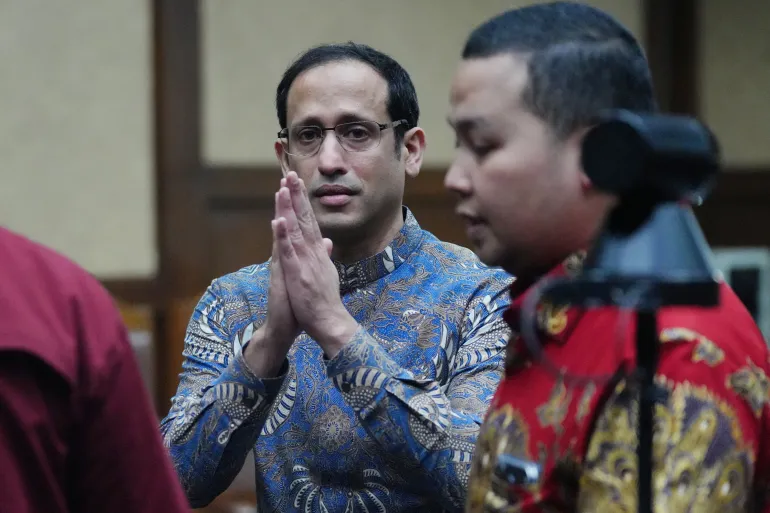
Nadiem Makarim, the cofounder of the popular super-app Gojek, was last month sentenced to 10 years in prison for allegedly abusing his authority while serving as the country’s education minister.
Recommended Stories
list of 4 itemsend of list
Makarim was found guilty of giving favourable treatment to Google, an early investor in Gojek, when procuring Chromebook laptops for schoolchildren during the COVID-19 pandemic.
Prosecutors argued that Makarim, who served as former Indonesian President Joko Widodo’s education minister from 2019 to 2024, inflicted state losses of $120m, alleging that he should have been aware the laptops would not work in remote areas with poor internet access.
Critics of the prosecution have argued that the case against Makarim lacks evidence and that the startup founder-turned-politician is the latest victim of a campaign of political retribution being waged by the administration of Indonesian President Prabowo Subianto.
Nicky Fahrizal, a researcher of politics and social change at the Centre for Strategic and International Studies (CSIS) in Jakarta, said foreign investors will inevitably think twice before committing capital to Indonesia following the verdict.
“The Nadiem case, along with a string of similar incidents, has served as a warning signal to investors,” Fahrizal told Al Jazeera.
“For them, non-economic factors, such as legal certainty and the quality of the judicial system, are absolute prerequisites.”
Nadiem Makarim gestures after being sentenced in a laptop procurement corruption case at the Indonesian Court for Corruption Crimes in Jakarta, on June 30, 2026 [Tatan Syuflana/AP]
Makarim was found guilty by a panel of five judges on June 30, following charges related to the procurement of more than 1 million laptops intended for use in schools in remote and impoverished areas.
At the trial held at the Indonesian Court for Corruption Crimes in Jakarta, prosecutors alleged that Makarim deliberately tailored the tender specifications to favour Google, which invested in Aplikasi Karya Anak Bangsa (AKAB), Gojek’s then-parent company.
Scrutiny of the tender process first arose among the public after it emerged that the Chromebooks often did not work in remote areas, raising questions about how Google was chosen in the first place.
“Choosing a device that relies on an internet connection amid uneven infrastructure… demonstrates a mismatch with needs…” Judge Sunoto said during the sentencing.
Following the verdict, prosecutor Corneles Geeb Paulus hailed the outcome as a victory for “the schoolchildren whose rights were taken away and who were deprived of equitable access to digital education across Indonesia”.
Google has denied providing or offering authorities any inducements to win the tender.
The California-based tech giant, which has a market value of more than $4 trillion, was not indicted in the case.
“From a legal standpoint, authorities seem to have hit a wall in their efforts to secure sufficient evidence and establish the necessary criminal nexus to prosecute the corporation,” the CSIS’s Fahrizal said.
“From a political perspective, Google is a tech giant with immense business influence.”
Taking action against Google could have jeopardised the government’s ongoing digitalisation efforts, Fahrizal added, describing the company as “too big to fail” within the digital sector.
Trissia Wijaya, an Indonesian-born research fellow at the University of Melbourne’s Asia Institute, said Nadiem’s prosecution, coupled with the uncertainty of the business environment under Prabowo, would inevitably erode market confidence.
“Regardless of whether Nadiem is actually guilty or not, he is a symbol of startups and market optimism in Indonesia, especially in the mid-2010s,” Wijaya told Al Jazeera.
“When Gojek started booming and gaining traction, Indonesia was one of the main target countries for global investors, both from the US and China, to invest in the fintech industry,” Wijaya added, describing Indonesia’s business environment as being at a “critical juncture.”
Indonesian President Prabowo Subianto gestures during a joint news conference with Singapore’s Prime Minister Lawrence Wong at the Merdeka Palace in Jakarta, Indonesia, on July 6, 2026 [Willy Kurniawan/Reuters]
Since taking office in 2024, Prabowo has faced criticism over his handling of the economy, including high levels of spending on public initiatives, such as his signature free lunch programme, which is expected to cost about $15bn this year.
In June, the Indonesian rupiah hit an all-time low against the US dollar, a nadir economic analysts partly attributed to investors’ scepticism about Prabowo’s populist economic policies.
For his part, Prabowo has denied that he is anti-business, while emphasising that Indonesia must uphold the rule of law.
“Some have claimed that I dislike foreign investors and will drive them away, but that is not the case. I have met many investors who are planning to enter the market,” Prabowo told a conference for young entrepreneurs in the city of Lampung last month.
“The government must create a favorable environment for entrepreneurs, including the enforcement of the law. If the law is not enforced, what ensues is the law of the jungle… law based on power, and in the end, that is not good for any of us.”
‘Credibility’ of government policies
Siwage Dharma Negara, a co-coordinator of the Indonesia studies programme at the ISEAS-Yusof Ishak Institute in Singapore, said Indonesia’s reputation as an investment destination had already been in decline before the Makarim verdict.
“Investors are unsure about the credibility of government policies, and they are unsure about the credibility of institutions, whether executive, legislative, or judicial in Indonesia,” Negara told Al Jazeera.
“Nadiem’s case is only one factor that has damaged foreign investor confidence. But there are many other factors that contribute, including government policies that are increasingly less pro-market.”
Teguh Yudo Wicaksono, an economics lecturer at Universitas Islam Indonesia in Yogyakarta, said that although he does not expect the case to have much of an impact on foreign investment, it could deter Indonesian talent based overseas from returning home.
“This could result in a brain drain and Indonesia losing talent,” Wicaksono told Al Jazeera.
Makarim attended Harvard Business School and Brown University in the United States before returning to Indonesia in 2006 and cofounding Gojek four years later.
In 2019, Gojek, which began as a ride-hailing business before evolving into a super-app that also offers food delivery and digital payment services, became the first Indonesian tech company to achieve a valuation of more than $10bn.
Drivers wear Gojek helmets during the Go-Food festival in Jakarta, Indonesia, on October 27, 2018 [Beawiharta/Reuters]
Not all observers see the Makarim case as a negative for investor sentiment.
I Gusti Ngurah Bayu Pradana, an expert in business law at the Bali-based Malekat Hukum International Law Firm, said the enforcement of corruption law should be seen as a “positive signal for legal certainty and governance quality in a country, rather than a negative one”.
“Experienced foreign investors generally understand that the greatest risk in investing is not the existence of law enforcement, but rather, legal uncertainty, or a situation in which the rules of the game are unclear, legal processes lack transparency, or enforcement is selective and unpredictable,” Pradana told Al Jazeera.
While Makarim was found guilty of abusing authority and causing state losses, he was acquitted of an additional charge of directly seeking to enrich himself, and he was handed a lower sentence than the 18 years sought by the prosecution.
While reading the verdict, Judge Andi Saputra also presented a dissenting opinion, saying that he found “no evidence of malicious intent or malicious acts” and scant “causal connection or indication between the conflict of interest and the corporate crime”.
The Malekat Hukum law firm’s Pradana pointed to the judge’s dissenting view as evidence of the Indonesian judiciary’s independence and rigorous fact-finding.
“For foreign investors considering Indonesia as an investment destination, the takeaway from this case should not be alarm, but rather confidence that Indonesia’s legal system functions and can hold anyone accountable equally before the law,” Pradana said.
“So long as investment contracts are clearly drafted, business processes are conducted transparently, and implementation complies fully with applicable laws and regulations, investment in Indonesia remains a safe and promising choice.”
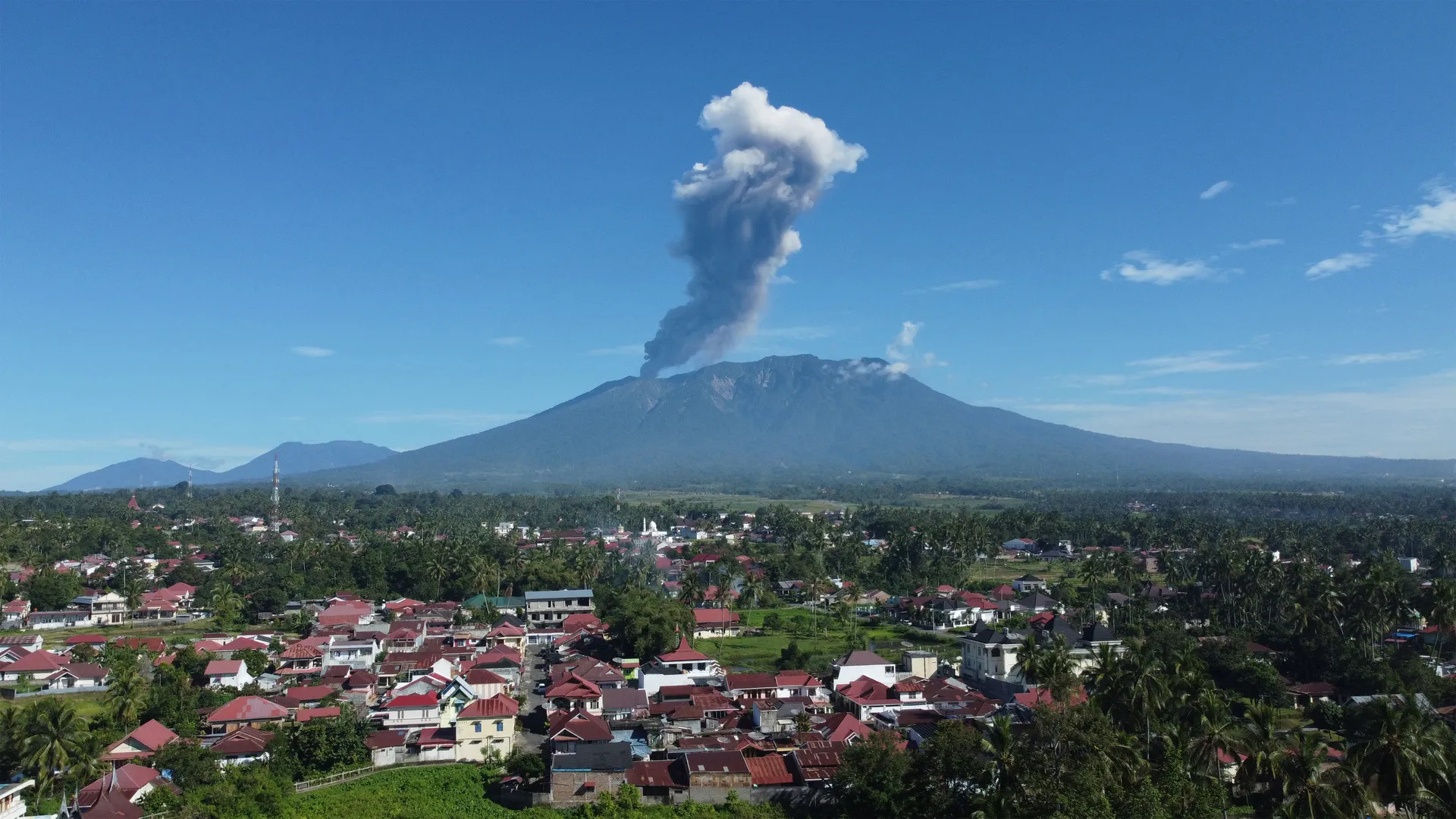
Videos show Indonesia’s Mount Merapi spewing a column of ash around 2 kilometres high in West Sumatra’s Tanh Datar District. Authorities have enforced an “exclusion zone” within a 3-kilometre radius around Mount Merapi since an eruption in 2023.