immigration

8 convicted of terrorism charges in Texas immigration center shooting sentenced to decades in prison

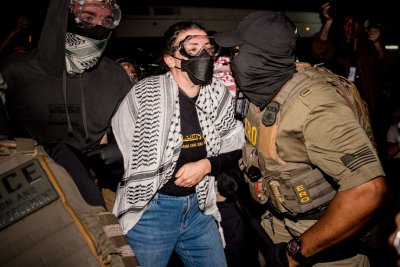
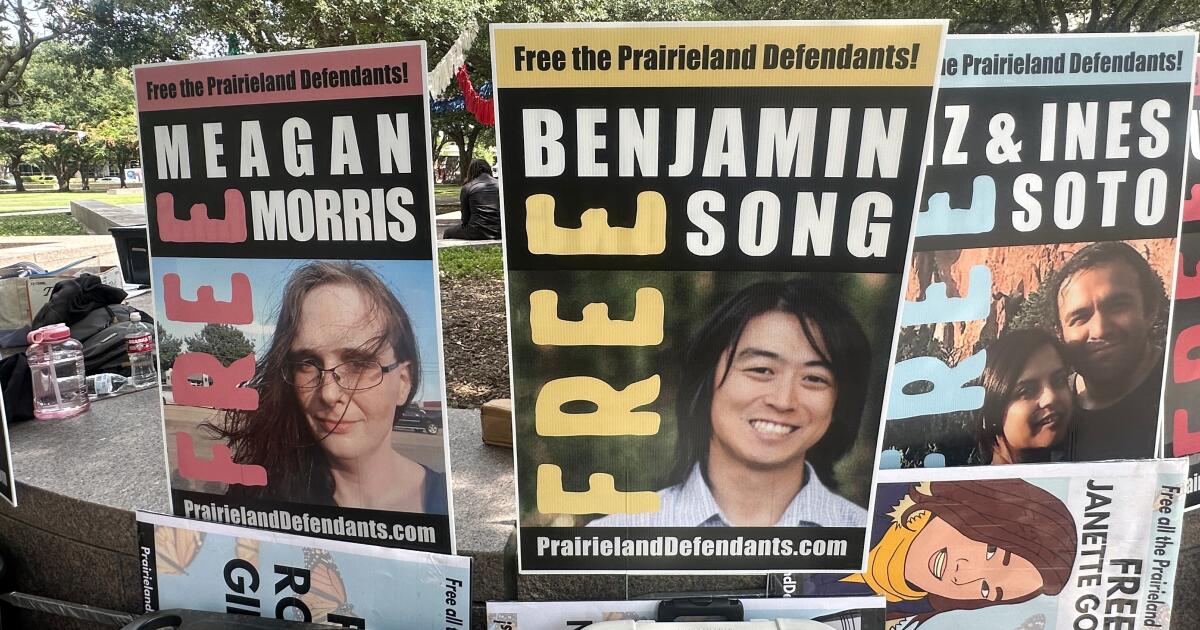
A demonstrator who shot and wounded a police officer outside a Texas immigration center last July 4 was sentenced to 100 years in federal prison Tuesday, while other protesters accused of having links to antifa were given multiple decades in federal prison.

Benjamin Song was convicted of attempted murder last March after prosecutors say he opened fire and wounded a police officer at the Prairieland Detention Center in Alvarado.

The seven other protesters sentenced Tuesday received prison terms ranging from 30 to 70 years.

“Our issue with this case has always been this isn’t a bunch of terrorists. This is a bunch of kids and young adults who really have a really big heart and really wanted their voice to be heard,” Philip Hayes, Song’s attorney, said outside the federal courthouse in Fort Worth. “It was never intended that anybody get hurt. It was never intended that any shots would be fired.”

He said his client would appeal the sentencing.

“Song, aside from this day, has had an impeccable life. A former Marine. A good student,” Hayes said. “He had a lot of good qualities that were just ignored. The judge went ahead and gave as much as he could.”

One of the defendants, Daniel Sanchez Estrada, was convicted of corruptly concealing a document and conspiracy to conceal documents. Others pleaded guilty to providing material support to terrorists rather than take their case to trial.

Prosecutors say the eight are members of antifa, a decentralized anti-fascist organization that has become a target of the Trump administration. They have denied any affiliation and maintain they attended the demonstration to show support for immigrants inside the detention center.

President Donald Trump last fall signed an executive order designating antifa a domestic terrorist organization, even though there is no domestic equivalent to the State Department’s list of foreign terror organizations.

Critics warn the case could have wide-reaching impact on protests given that organizations operating within the U.S. are supposed to be protected by First Amendment free-speech rights.

Short for “anti-fascists,” antifa is not a single organization but rather an umbrella term for far-left militant groups that confront or resist neo-Nazis and white supremacists at demonstrations.

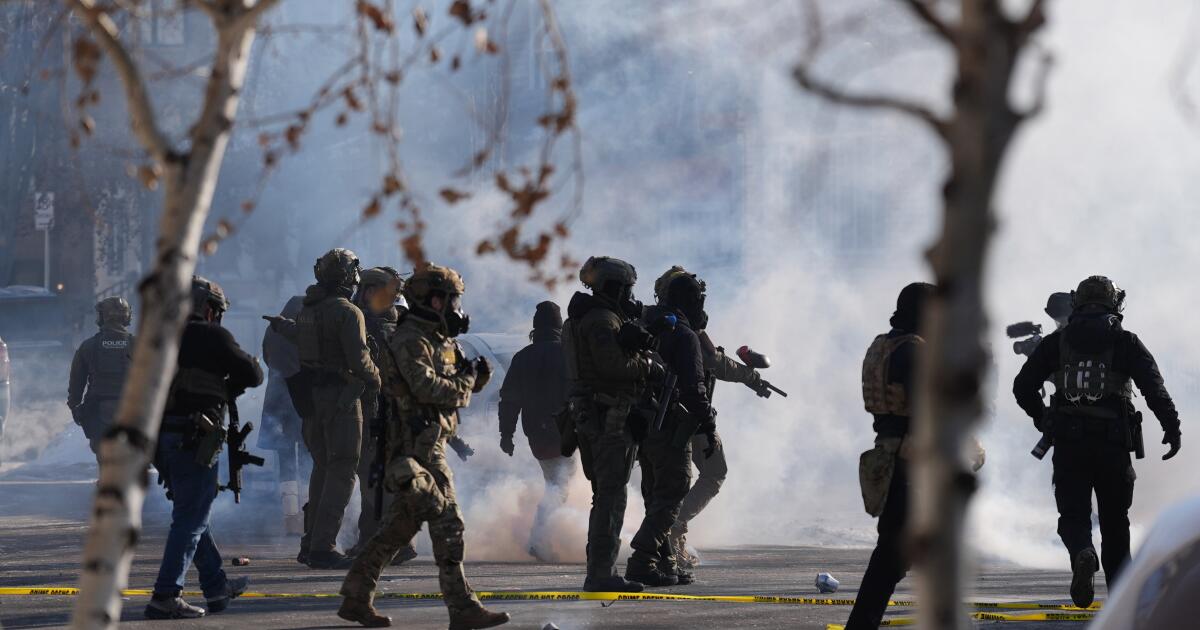
Last week, federal prosecutors charged 15 people with impeding the Trump administration’s immigration crackdown in Minnesota. They claimed the demonstrators were members of antifa who conspired against the federal government to block arrests and deportations by setting up blockades around government buildings and throwing chunks of ice at federal vehicles, among other actions.

Stengle and Marcelo write for the Associated Press. Marcelo reported from New York.
Source link

Federal judge halts Trump administration effort to subpoena Walz in immigration enforcement probe

A federal judge has blocked an attempt by the Trump administration to subpoena Minnesota Gov. Tim Walz and other state officials, calling it an effort to “harass and retaliate against them.”

In a ruling unsealed Monday, U.S. District Judge Patrick Schlitz found the “dominant purpose” of the subpoenas was to “coerce Minnesota officials into assisting the federal government with enforcing civil immigration law and to harass and retaliate against them for failing to do so.”

The subpoenas were served in January as part of an investigation into whether Walz and other officials obstructed or impeded law enforcement during a sweeping immigration operation in the Minneapolis-St. Paul area.

The subpoenas, which seek records, were sent to the offices of Walz, Atty. Gen. Keith Ellison, Minneapolis Mayor Jacob Frey, St. Paul Mayor Kaohly Her and officials in Ramsey and Hennepin counties.

The judge ruled that there appeared to be “extremely weak to nonexistent” connections between the information sought in the subpoenas and any possible criminal violation. The subpoenas seek materials “that largely if not entirely relate to constitutionally protected conduct,” the judge wrote, noting that Minnesota has the legal right not to devote its resources to enforcing federal immigration law.

The Justice Department “is not conducting a criminal investigation,” the judge wrote, “but is instead using the grand jury process for other (unlawful) purposes.”

The evidence that the subpoenas were issued for unlawful reasons is overwhelming, the judge said, arguing that the Justice Department “has struggled — without success — to identify a single plausible investigatory justification” for them.

Walz, in a statement, called the ruling “a victory for the rule of law and our democracy.”

“The U.S. Justice Department is pursuing criminal investigations into the President’s political opponents,” said Walz, the 2024 Democratic nominee for vice president. “This case was just one example of that, but we are seeing daily reminders of this administration’s lawlessness — in Minnesota and around the country. We all must continue to seek justice and uphold the rule of law.”

Ellison said “it should disturb every American that Donald Trump is weaponizing the criminal justice system against people he disagrees with.”

The subpoenas are “a politically motivated retaliation against our city for lawfully standing up to ICE and fighting for our residents,” Her said in a statement, referring to U.S. Immigration and Customs Enforcement.

Frey said the investigation was “never about justice, law, and order, but the absence of it.”

“Subpoenaing political opponents because they spoke on behalf of their constituents violates the core tenets of our democracy and human decency,” he said.

Frey also observed that criticizing government action is not a crime.

“One of the defining strengths of our democracy is the ability to challenge those in power without fear of retribution. Elected officials have both the right and the responsibility to speak honestly about how government decisions affect the people they serve,” he said.

Bauer and Richer write for the Associated Press. AP writer Eric Tucker in Washington contributed to this report.

Source link

Prosecutors charge 15 for impeding Minnesota immigration crackdown

Federal prosecutors announced charges Tuesday against 15 people who are accused of impeding federal agents during the Trump administration’s massive immigration surge in Minnesota earlier this year.

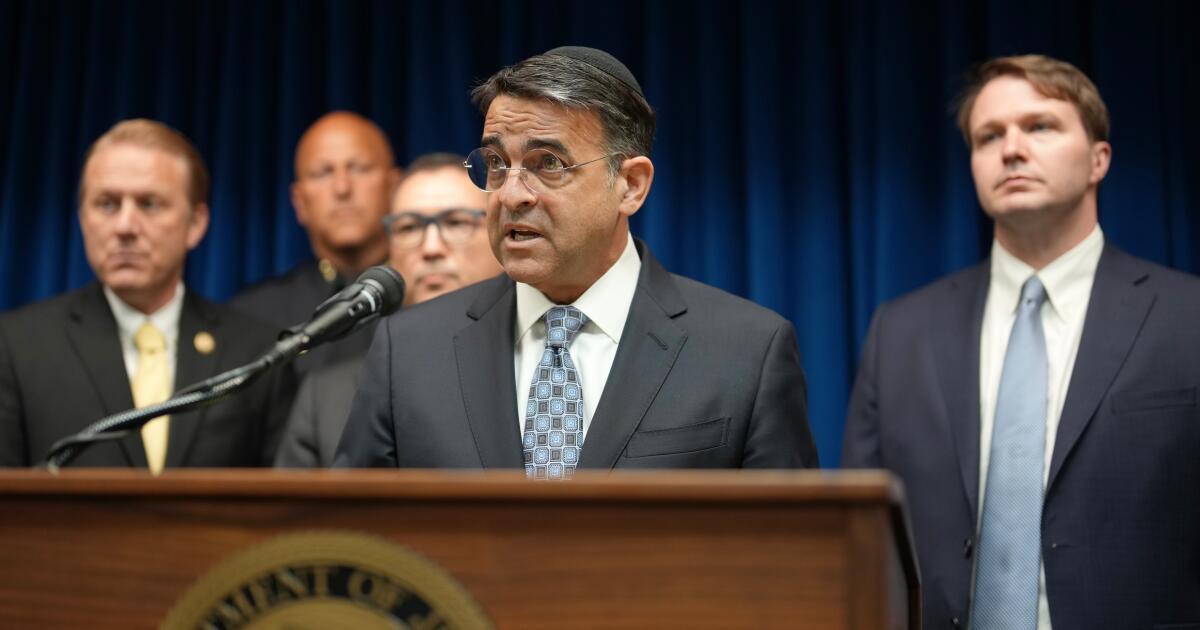
The investigation targeted two “Minneapolis-based antifa groups” whose members were trained in “surveillance, operational planning and rapid mobilization against law enforcement,” Minnesota U.S. Atty. Daniel N. Rosen said at a press conference.

The charges come as the Trump administration has escalated its attacks on “antifa,” an umbrella term for a diffuse movement of militant left-wing activists, which President Trump has described as a domestic terror group.

Rosen said some of those arrested identified as “antifa” while deploying a range of tactics to disrupt the immigration crackdown, such as “stalking” federal agents and using blocks of ice to slow their convoys. He declined to say whether any federal agents were injured as a result of their actions.

“Whether or not they actually, at the end of the day, cause bodily harm is not the measure of whether or not they committed a serious federal crime,” Rosen told reporters.

Twelve people were arrested Tuesday, two remain at large and one is already in custody, Rosen added. The names and specific charges of those arrested were not immediately available.

The charges come months after the administration’s “Operation Metro Surge” brought thousands of federal agents to the Twin Cities, setting off mass protests and leading to the fatal shooting of two U.S. citizens.

During the surge, convoys of agents in unmarked SUVs traveled through neighborhoods, at times banging down doors, waiting outside schools and demanding residents produce proof of citizenship.

Primarily organized through anonymous neighborhood messaging threads, a sprawling network of outraged Minnesotans quickly formed, with ordinary citizens and activists using whistles and car horns to call attention to the masked, heavily armed agents.

At the time, border czar Tom Homan indicated that federal authorities were probing “the organization and funding of the attacks on ICE.”

“They’ll be held accountable,” Homan said. “Justice is coming.”

Last September, Trump signed an order classifying antifa as a domestic terror organization and directing federal agencies to “investigate, disrupt, and dismantle” its affiliates and funders.

Democrats and several First Amendment groups have raised issue with the designation. While the federal government may designate foreign terror groups, there is no formal mechanism to apply the same label to domestic groups.

Trump has long invoked the term against a range of political opponents, including peaceful protesters without anarchist leanings.

Offenhartz writes for The Associated Press.

Source link

House Democrats ask new ICE director to roll back policy on visits

Dozens of House Democrats are asking the new director of Immigration and Customs Enforcement to roll back a policy that they say hinders their ability to speak with detainees during oversight visits.

The new policy requires that lawmakers identify detainees by name at least two business days before a visit and provide a signed consent form from each detainee. It’s the latest point of conflict in an ongoing battle over when and how lawmakers can inspect immigration facilities.

In a letter Thursday to acting ICE Director David Venturella, Rep. Mike Levin (D-San Juan Capistrano) and 77 other members of Congress, including two dozen from California, argued that they need to conduct constant oversight of immigration facilities because of historic levels of reports regarding the mistreatment of detainees, deaths in custody and substandard facility conditions.

“This Administration has enabled a revolving door of arbitrary policies, directives, and guidance on member access to facilities or on communication with detainees designed to hinder any productive oversight,” they wrote.

The letter was written in response to the new policy, which was outlined in a memo last month.

In the letter, Levin and the other members wrote that detainees have a hard time accessing the visitation form because it is at times unavailable at a detention center’s law library. They said it limits their ability to speak broadly with detainees, particularly those from vulnerable populations, such as the elderly.

Detainees previously used a sign-up sheet to meet with members of Congress or just started talking to detainees they encountered during facility tours.

In the memo outlining ICE’s new policy, then-acting director Todd Lyons said the increased visits by members of Congress have become a burden and a time suck. Homeland Security didn’t immediately reply to a request for comment, but previously said that the policy doesn’t prevent lawmakers from speaking with detainees.

Levin said the increase in visits was necessary because the agency slashed staffing of its oversight offices. The letter notes that for next fiscal year, the president requested additional cuts to the Homeland Security Office of Inspector General.

“These actions, coupled with the constant changes to policies surrounding member access to facilities, reveal a clear attack on the levers that ensure government transparency at every level,” the members wrote.

Democratic House members sued the Trump administration last July after they were repeatedly denied access to immigrant detention facilities in California and across the country.

Homeland Security officials previously implemented a policy requiring lawmakers to give seven days’ notice before a visit, but that policy was temporarily blocked in federal court.

This week, lawyers said a Belizean man who helped organize hunger strikes at the Adelanto ICE Processing Center was moved to facilities out of state and scheduled to be deported after he spoke to three members of Congress about conditions at the detention center in San Bernardino County.

Source link

Ariana Grande tells White House not to use song in ‘barbaric’ TikTok

Ariana Grande was crystal clear in the White House’s comments section on TikTok.

The “We Can’t Be Friends” hitmaker didn’t mince words on Thursday when she commented on a White House TikTok: “Please do not ever use my music in relation to this barbaric, inhumane, heinous nonsense. F— ice,” she wrote in her comment.

The TikTok in question, posted by the White House on Tuesday, promoted the administration’s crackdown on immigration and featured Immigration and Customs Enforcement officers handcuffing various people to the tune of the Grammy-winner’s song “Bye.”

“Bye-bye 👋 President Trump has delivered the most secure border in history,” the caption on the video read. Grande’s comment has since been deleted or hidden from the video’s replies, and the sound on the TikTok has been disabled.

White House spokeswoman Abigail Jackson responded to Grande’s comment in an emailed statement to The Times, writing, “We’ll say this one last time: what’s actually barbaric, inhumane, and heinous are the criminal illegal aliens who have injured and murdered innocent American citizens.”

Grande joins a slew of prominent musicians and artists who have told the Trump administration to cease using their tunes to promote his agenda.

On the 2024 presidential campaign trail, Beyoncé endorsed former Vice President Kamala Harris, who used Queen Bey’s song “Freedom” as a rally anthem. When a spokesman for Trump used the same song in a social media post, the mega star’s team responded swiftly with a cease-and-desist.

During a 2024 Montana rally, Trump’s team played a video clip using “My Heart Will Go On,” the theme song from the 1997 film “Titanic.” Celine Dion’s management team and record label responded with a statement shooting down the song’s use: “In no way is this use authorized, and Celine Dion does not endorse this or any similar use. … And really, THAT song?”

And then, of course, when Trump used Bruce Springsteen’s “Born in the U.S.A.” on the 2016 campaign trail without the artist’s permission, the American rocker responded by endorsing Hillary Clinton and calling Trump a “moron.”

Add to the list Nancy Sinatra, who posted that Trump’s nod to Frank Sinatra’s song “My Way” was “sacrilege”; the Smiths’ former guitarist Johnny Marr, who said, “Consider this s— shut right down right now,” when the band’s song was used at a 2023 Trump rally; Sabrina Carpenter, who slammed the use of her song in a video, calling it “evil”; and many, many, many more.


Source link

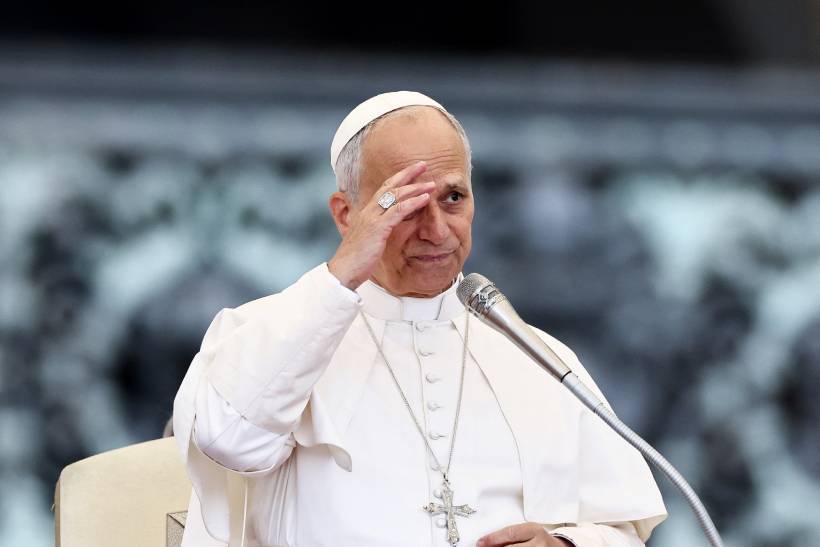
Pope Leo Visiting the Canary Islands to Meet Migrants

Pope Leo has traveled to the Canary Islands as the final stop of his week long visit to Spain, placing migration and human dignity at the center of his international message. The Canary Islands have become one of Europe’s most important migration gateways, with thousands of people risking dangerous Atlantic crossings from Africa in search of safety, opportunity, or asylum.

The visit comes amid growing global debate over migration policies, border security, and humanitarian responsibilities. During his Spain tour, Leo has repeatedly argued that the treatment of migrants represents a moral test for governments and societies.

His stop in the Canary Islands includes meetings with migrants, humanitarian organizations, and local groups assisting new arrivals, as well as a memorial tribute to those who lost their lives attempting the journey.

Why the Canary Islands Have Become a Migration Flashpoint

Located off the northwest coast of Africa, the Canary Islands have emerged as a major entry point for migrants seeking access to Europe.

As Mediterranean routes have become increasingly difficult or heavily monitored, many migrants have turned to the Atlantic route despite its extreme dangers. The journey often involves overcrowded boats, harsh weather conditions, and long periods at sea.

The rising number of arrivals has transformed the islands into a focal point of European migration debates, exposing tensions between humanitarian obligations and border management concerns.

Pope Leo’s Broader Message on Migration

The pope’s visit is consistent with his broader emphasis on human rights, social justice, and international responsibility.

Throughout his papacy, Leo has framed migration not merely as a political issue but as a question of human dignity. His criticism of the international community’s response reflects concerns that many governments are prioritizing deterrence and border enforcement over humanitarian protection.

By meeting migrants directly, Leo is attempting to shift attention from statistics and policy disputes toward the personal experiences of those undertaking dangerous journeys.

Spain’s Different Approach

Spain has largely adopted a more welcoming position toward migrants compared with several European countries that have tightened immigration policies.

The government’s efforts to regularize the status of hundreds of thousands of undocumented migrants reflect a belief that legal integration can strengthen social cohesion and economic participation.

However, implementation challenges remain significant. Many migrants continue to face lengthy bureaucratic processes, uncertainty regarding legal status, and difficulties accessing employment and social services.

At the same time, migration has become an increasingly contentious political issue, with critics arguing that more permissive policies could encourage additional arrivals.

The Growing European Debate

Migration remains one of the most divisive issues across Europe.

Governments face competing pressures to maintain border security, address labor shortages, uphold humanitarian commitments, and respond to domestic political concerns. Rising support for nationalist and far right parties in several countries has further intensified the debate.

Against this backdrop, Pope Leo’s intervention highlights the widening gap between humanitarian advocates and political leaders who favor stricter migration controls.

His visit also underscores the role religious institutions continue to play in shaping discussions about ethics, responsibility, and international solidarity.

Analysis

The significance of Pope Leo’s Canary Islands visit extends beyond Spain’s migration challenges.

The trip represents an effort to place human rights concerns at the center of a debate increasingly dominated by security, border control, and political polarization. By choosing one of Europe’s most visible migration entry points, Leo is drawing attention to the human consequences of global inequality, conflict, and displacement.

The visit also reflects a growing tension between moral leadership and political realities. While many governments acknowledge humanitarian responsibilities, they face domestic pressures that often push policy in the opposite direction.

Leo’s message is therefore unlikely to change migration policy overnight. However, it may strengthen the position of humanitarian organizations and advocates who argue that migration should be addressed through a combination of legal pathways, international cooperation, and human rights protections rather than deterrence alone.

Future Outlook

Migration pressures on Europe are unlikely to diminish in the near future.

Conflict, economic instability, climate related challenges, and demographic trends will continue to drive movement across borders. As a result, countries will face increasing pressure to develop sustainable migration frameworks that balance security concerns with humanitarian obligations.

Pope Leo is expected to remain one of the most prominent global voices advocating for migrants and refugees. His Canary Islands visit may become a defining symbol of his broader effort to place human dignity at the center of international policymaking.

The larger challenge for Europe will be determining whether political leaders can translate humanitarian principles into workable migration policies amid growing public and political divisions.

With information from Reuters.

Source link

Trump signs bill giving nearly $70B to his immigration enforcement agenda through end of his term

President Trump signed a bill into law on Wednesday that gives his immigration and deportation agenda a nearly $70 billion boost for the rest of his time in the White House.

The bill provides $38 billion for U.S. Immigration and Customs Enforcement and $26 billion for the Border Patrol. An additional $5 billion would cover unforeseen costs, according to the White House.

Trump signed the legislation in the Oval Office a day after House Republicans pushed the measure through by a 214-212 vote over the objections of Democrats. His signature ended a nearly six-month fight over Department of Homeland Security funding that began with shooting deaths of deaths of two U.S. citizens, Alex Pretti and Renee Good, in January during federal immigration enforcement operations in Minneapolis.

Democrats began demanding changes to immigration enforcement after the shootings, creating an impasse — and resulting in the longest agency in history — that ultimately led Republicans to go it alone on the funding.

The agencies will be funded through the next three years. The new law front-loads routine annual funding, ensuring a virtually uninterrupted flow of money as the Trump administration seeks to deport some 1 million people per year.

The legislation had become sidetracked over $1 billion for White House security, including for Trump’s new ballroom, and a $1.8 billion fund to compensate his allies who claim to be victims of political prosecution. Both proposals became politically toxic and were scrapped.

The bill as passed focused exclusively on immigration enforcement, a topic that Republicans have treated as a defining issue between the two major political parties and one the GOP hopes will carry it to victory in November’s midterm elections.

Superville and Binkley write for the Associated Press.

Source link

House is set to fund Trump’s immigration actions for the rest of his time in the White House

House Republicans will look to get nearly $70 billion for immigration enforcement over the finish line Tuesday, enough to fund a pair of Homeland Security agencies through the next three years and the rest of President Donald Trump’s time in office.

Speaker Mike Johnson will need near perfect attendance and unity on his side to complete weeks of action on the bill. The legislation got sidetracked when Republicans sought to include $1 billion for enhanced security on the White House grounds, including for Trump’s new ballroom, and the Trump administration tried to create a nearly $1.8 billion fund to compensate allies of the president who claim they have been unjustly investigated and prosecuted. Those proposals proved politically toxic and were scrapped.

Now, the bill is focused entirely on immigration enforcement, a topic that Republicans have treated as a defining issue between the two major political parties and one they hope will carry them to victory in this year’s midterm elections. The bill provides $38 billion for Immigration and Customs Enforcement, $26 billion for the Border Patrol and another $5 billion to cover unforeseen costs, fueling Trump’s deportation agenda.

“It’s long overdue,” said Johnson, R-La., of the bill. “We have to fund border security and immigration enforcement, and it’s sad that Republicans have to do it on our own.”

Funding accelerates Trump’s deportation agenda

The funding comes on top of the nearly $140 billion that the Republican-controlled Congress gave ICE and Customs and Border Protection last year as part of Trump’s tax and spending cuts bill.

Democrats objected to giving the agencies more money without significant changes in the way they operate after the deaths of Alex Pretti and Renee Good in Minneapolis. For example, Democrats insisted that agents be required to display their ID badges during enforcement operations and that they get a judicial warrant before entering private property. Instead, the funding will come with virtually no strings attached.

House Democratic Leader Hakeem Jeffries vowed his party would oppose the package.

“We believe that taxpayer dollars should be used to make life more affordable for the American people – not give ICE another $70 billion blank check so that they can unleash brutality on American citizens and violently target law-abiding immigrant communities,” said Jeffries of New York.

Homeland Security faced longest shutdown in history

The package is the result of a monthslong standoff in Congress after Democrats refused to fund the Department of Homeland Security in the wake of the immigration enforcement actions in Minneapolis and other American cities, leading to the longest shutdown in agency history.

Negotiations had been underway with the White House to alter ICE operations as Democrats were demanding. When those negotiations failed, Republicans turned to a complicated procedural maneuver to get around the filibuster and pass the immigration funding with no Democratic votes.

If approved, the package would next go to Trump for his signature, all but assuring an essentially uninterrupted flow of funds for his immigration enforcement and deportation agenda into 2029.

The Senate completed its work on the legislation last week during an all-night session that extended into the early morning hours Friday. The final 52-47 vote on the bill was nearly party line, with Sen. Lisa Murkowski of Alaska the only Republican to oppose it.

Money comes at pivotal time for immigration agenda

The money will come at a pivotal time for the Department of Homeland Security, which is under new leadership after Trump replaced Kristi Noem with new Secretary Markwayne Mullin in March.

While Mullin has vowed to keep the department out of the headlines, the administration is under pressure from anti-immigration advocates to deliver on Trump’s campaign promise of the largest deportation operation in American history.

So far, the administration has not hit its goal of 1 million deportations a year, but Trump’s border czar, Tom Homan, has promised more to come, including hinting at immigration enforcement actions in New York, the nation’s biggest city, which is heavily Democratic.

At the same time, the administration is making it more difficult for legal immigrants to remain in the U.S. by working to end Temporary Protective Status, changing the processes for obtaining green cards and leaving some Dreamers — the young people who were brought illegally to the U.S. as children — reporting delays in renewing their status, which allows them to stay and work.

Tight vote ahead

On the House side, Johnson has little margin for error. Republicans can afford to lose only a couple of votes if every lawmaker is present. GOP leadership opted to avoid any hiccups and sent lawmakers home last week rather than take up the bill early Friday once the Senate had completed its all-nighter.

The bill is just a slim package, without the hundreds of pages of details and directives that typically come from Congress when it provides funding for agencies.

Leading up to the vote, Democrats portrayed DHS as an agency that has used its new resources to buy private jets for its leadership, warehouse immigrants in deplorable conditions and attack U.S. citizens.

“To give these rogue agencies another $70 billion now when they still have $100 billion in the bank from last year would implicate all of us in the escalating corruption and shameful actions of this department,” said Rep. Jamie Raskin of Maryland, the ranking Democratic member on the House Judiciary Committee.

Republicans countered that they were fulfilling their duty to safeguard the nation and support the men and women charged with enforcing the law.

“Democrats can say whatever they want, but what it’s about is public safety. What’s it about is keeping Americans safe,” said Rep. Michelle Fischbach, R-Minn.

Freking and Mascaro write for the Associated Press.

Source link

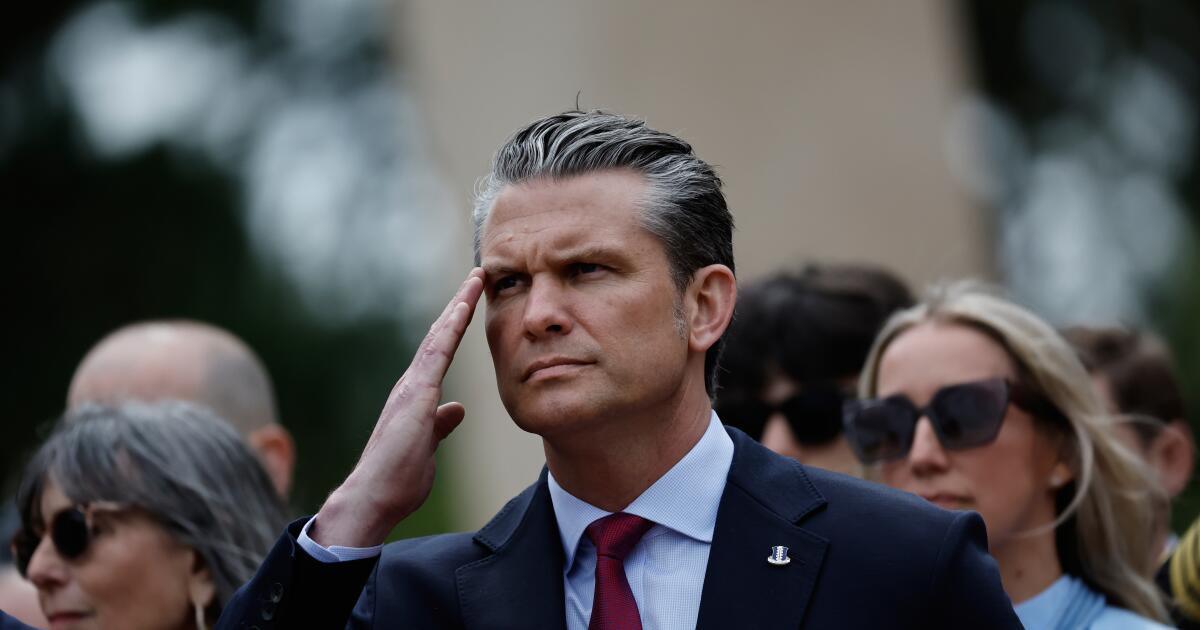
Hegseth invokes immigration and ‘invasion’ in D-day speech in France

U.S. Defense Secretary Pete Hegseth gave a D-day anniversary speech Saturday that appeared to link immigration by sea to the wartime liberation of Europe, warning that the freedom won by Allied troops could prove temporary if leaders failed to defend it against today’s “invasion.”

Hegseth, speaking at the Normandy American Cemetery in Colleville-sur-Mer overlooking Omaha Beach in northwestern France during commemorations for the 82nd anniversary of the June 6, 1944, landings, said that today, “different European beaches are stormed by different dangerous ideologies.”

“Beaches in Spain and Italy and Greece and Bulgaria. Boats and men arrive,” he said.

“When will European capitals do something about that invasion? Or is it too late?” he added. “I pray not, and I believe not.”

Hegseth did not use the word “immigration,” but his remarks echoed broader Trump administration criticism of Europe over migration, borders and what U.S. officials have described as censorship of nationalist and far-right voices.

On Saturday, British Prime Minister Keir Starmer’s office condemned Vice President JD Vance’s remarks blaming immigration for the killing of Henry Nowak, an 18-year-old British student stabbed to death in Southampton, even though both Nowak and his killer were British.

In December, the Trump administration’s national security strategy warned that Europe faced the “prospect of civilizational erasure” and could become “unrecognizable” within 20 years.

Source link

Judge halts Trump plan to link USDA SNAP funds to gender, immigration

A federal judge sided with California and other Democratic states on Friday in a preliminary injunction that blocked the Trump administration’s attempt to condition food benefits on compliance with the president’s policies on gender and immigration.

Twenty states and the District of Columbia filed a lawsuit in March against the Trump administration in U.S. District Court in Massachusetts, arguing that the “unlawful” and “unconstitutional” funding requirements are vague and designed to force policies on states.

Billions in federal funding are ultimately at stake, including money for school lunch programs that provide meals to 30 million children nationwide and food stamps that support about 40 million Americans living in low-income households.

“As the Trump Administration tries to use essential programs and billions in funding as leverage to advance their hateful, discriminatory agenda, California continues to fight to uphold the law and ensure that our communities can continue to access the funding they need to thrive,” said California Atty. Gen. Rob Bonta in a statement.

The policy shift from the United States Department of Agriculture marks another effort by the president to force left-leaning states to submit to his positions on hot-button political and cultural issues to receive government funding. California’s current budget relies on $174.5 billion in federal dollars, or roughly one-third of the overall state budget funds.

Last year, the Trump administration canceled a sexual education grant to California after the state declined to remove gender identity from sexual education curriculum. The administration is also restricting federal funds in an attempt to force states to ban transgender athletes from competing in women’s sports.

The funding conditions from the USDA relate to gender ideology, women and girls’ sports and immigration, according to the lawsuit.

States argue that the conditions do not explain what activities are prohibited for entities that receive grants. The USDA did not cite any law allowing the organization to impose anti-discrimination policies that go beyond federal law, the suit states.

The states that joined the lawsuit contend that they are left with the “unlawful” choice of adhering to the conditions or risk losing up to $74 billion in collective federal assistance from the USDA.

U.S. District Judge Myong Joun approved a preliminary injunction Friday and is expected to issue a memorandum later explaining the decision, according to the Associated Press.

Source link

A federal judge strikes down Trump administration immigration policy affecting 39 countries

A federal judge on Friday struck down a Trump administration policy enacted after the shooting of two National Guard members that made it harder for immigrants from dozens of countries to stay and enter the U.S.

In a ruling harshly criticizing the administration, U.S. District Chief Judge John McConnell Jr. said the policy “threw the lives of countless immigrants living in the United States into indeterminate legal limbo,” and he accused the U.S. Citizenship and Immigration Services of ignoring the law.

“In enacting its latest immigration policies, USCIS: claims statutory and regulatory authority that it does not possess; makes decisions without the reasoned explanations that it must provide; acts without regard for the reliance interests of applicants that it must consider; and justifies its actions with pretextual concerns of ‘national security’ that mask anti-immigrant sentiments that it is forbidden from letting influence its decision-making,” he wrote. “In legal terms that means USCIS’s actions are contrary to law and arbitrary and capricious.”

A spokesperson for the Department of Homeland Security did not immediately respond to a request for comment.

The policies enacted after the National Guard shooting last year meant that immigrants from 39 African, Asian, Latin American and Middle Eastern countries have been “categorically barred” from receiving final decisions on, among other things, their asylum, work permit, green card and citizenship applications.

“This ruling reaffirms a basic principle: the federal government cannot shut down lawful immigration pathways or discriminate against people based on where they come from,” said Skye Perryman, president and CEO of Democracy Forward, which represented the plaintiffs in the case. “These unlawful policies caused enormous harm to families, workers, asylum-seekers, and communities across the country who were left in limbo, unable to work, access protections, or move forward with their lives.”

The policies apply to U.S. Citizenship and Immigration Services, which approves applications for immigrants to work and become citizens. The agency, which is within the Homeland Security Department, often grants asylum, but only for those already in the United States when they apply. Immigration judges grant asylum to those who are stopped at the border; the ruling does not affect them, and neither do the policies that sparked the lawsuit.

It is part of an ongoing effort by the administration to tighten U.S. entry standards for travel and immigration, in what critics say unfairly prevents travel for people from a broad range of countries. The administration suggested it would expand the restrictions after the arrest of an Afghan national suspect in the shooting of two National Guard troops over Thanksgiving weekend.

In its motion to dismiss, which the court denied, the government argued that Congress gave the executive branch broad authority over immigration policy, including “the entry of aliens into the United States as well as discretion within the statutory scheme to confer as well as withdraw various discretionary benefits.”

“This case rests on a remarkable premise: that a federal court should prevent an agency from issuing the very policy guidance that provides government personnel with the guardrails necessary to ensure consistent, non-arbitrary, and individualized decisionmaking consistent with federal law,” the government wrote in its brief.

Immigration groups celebrated the ruling.

“This ruling sets a powerful precedent that the administration cannot ignore the law as laid down by Congress and cannot arbitrarily bar immigration benefits on the basis of national origin by fiat,” said Jamal Abdi, president at the National Iranian American Council. “Fortunately, this is still a nation of laws, and those who uphold America’s values have recourse to challenge and push back on such discriminatory, arbitrary policies.”

Shawn VanDiver, a Navy veteran who heads a coalition that supports Afghan resettlement efforts called #AfghanEvac, said the ruling was a “significant victory for the rule of law and for thousands of Afghan allies and other immigrants who followed every requirement asked of them.”

“Just this week in Dallas and Fort Worth, we met people who feared losing jobs because delayed work permit renewals threatened their livelihoods, families who postponed education, travel, and homeownership because they did not know when their cases would be resolved, and future Americans who had expected to become citizens only to see their applications stall without explanation,” VanDiver said.

Casey writes for the Associated Press.

Source link

Judge: Trump must restart immigration, asylum processing

June 5 (UPI) — A federal judge on Friday canceled a batch of President Donald Trump‘s immigration policies, forcing the administration to begin processing immigration and asylum applications.

The decision from a judge in Rhode Island said Trump’s immigration policies enacted last fall had left immigrants in the United States in “indeterminate legal limbo” because of “anti-immigrant sentiments that it is forbidden from letting influence its decision-making.”

The 135-page decision from Judge John J. McConnell Jr. said the decision to stop processing immigration applications from people from 39 countries “placed the lives of countless individuals on hold — solely by virtue of their countries of birth.”

The policies in question include a global pause on asylum applications filed with the U.S. Citizenship and Immigration Services, a pause on decisions on immigration applications of people from the 39 countries in a travel ban, which prevented them from getting permanent residency status, citizenship and more.

The administration announced the changes after an Afghan man allegedly shot two National Guard members in Washington, D.C., in November. Rahmanullah Lakanwal pleaded not guilty.

“USCIS’s hold on adjudications cannot be attributed to anything that these individuals did wrong; rather, it arises solely by the happenstance of their birth,” McConnell wrote.

“The court is reminded of a line often repeated in discussions around immigration policy: If people wish to immigrate to the United States, they ought to ‘follow the law’ and ‘do things the right way,'” he wrote. “This case serves as a perfect example of immigrants doing just that.”

Democracy Forward, a legal nonprofit that helped represent the immigration groups and unions behind the lawsuit, told The New York Times that it celebrates the ruling.

“This ruling reaffirms a basic principle: The federal government cannot shut down lawful immigration pathways or discriminate against people based on where they come from,” organization President Skye Perryman said. “These unlawful policies caused enormous harm to families, workers, asylum seekers and communities across the country.”

Shawn VanDiver, president of #AfghanEvac, also celebrated the ruling.

“For months, we have heard from Afghan allies whose citizenship ceremonies were canceled, work permits expired while waiting for decisions, green card applications stopped moving and families were left in uncertainty despite doing everything the right way,” The Hill reported VanDiver said in a statement.

“Today’s ruling is a significant victory for the rule of law and for thousands of Afghan allies and other immigrants who followed every requirement asked of them, only to see their cases frozen indefinitely.”

Source link

Federal judge pauses sentencing to weigh argument in Wisconsin judge’s immigration case conviction

A federal judge on Wednesday considered whether to throw out a jury’s guilty verdict against former Wisconsin Judge Hannah Dugan, who was convicted of felony obstruction for helping an immigrant evade federal officers.

The case was an early test of how the courts would respond to President Trump’s sweeping immigration crackdown.

Dugan had been scheduled to be sentenced on Wednesday, but U.S. District Judge Lynn Adelman postponed the proceedings indefinitely to instead hear arguments about whether to overturn her conviction.

Adelman did not rule from the bench and did not indicate when he might issue a decision. Dugan and attorneys for both sides left the courtroom without commenting to reporters.

Former judge’s attorney points to a Virginia case

Dugan’s attorney Steven Biskupic argued that her conviction was invalid and should be overturned. He said that was necessary because a federal appeals court in April overturned a key Virginia immigration case that the judge and prosecutors had cited in the Dugan case.

Biskupic argued that based on the 4th U.S. Circuit Court of Appeals overturning that ruling, Dugan was improperly convicted, procedurally, under a certain federal law.

“Our primary argument is this was an invalid theory of conviction,” Biskupic said.

In the Virginia case, an immigrant who was in the country illegally was detained by U.S. Immigration and Customs Enforcement agents and later escaped. He was recaptured and indicted on a charge of obstructing a pending immigration proceeding.

The federal appeals court found that the ICE action did not constitute a “pending proceeding,” as is required under the federal obstruction law.

Dugan’s attorneys argue that she should not have been charged because there was no “pending proceeding” against the immigrant in her courtroom being sought by ICE agents, only a warrant filed for his arrest. The filing of a warrant does not constitute a “proceeding” under the law, Biskupic argued.

Prosecutors countered that the facts in the Virginia case are different and don’t apply to Dugan’s. They also argued that other cases support Dugan’s conviction.

“The court should stick with its ruling,” said Richard Frohling, acting U.S. attorney for the eastern district of Wisconsin.

In response to a question from the judge, he contended that the appeals court was wrong to overturn the Virginia case. The judge also quizzed Frohling on what constitutes a proceeding under the law and how long it lasts.

“It could be a couple minutes, it could be a couple years,” Frohling said. “It all depends on the context.”

Dugan’s sentencing was postponed so the court can hear new arguments

Dugan, 67, faces up to five years in prison after a jury convicted her on Dec. 19. But it is unlikely that Dugan would be sentenced to prison. Federal sentencing guidelines generally call for probation for defendants like her who have no criminal history and are convicted of a nonviolent crime.

She resigned from her position as a Milwaukee County circuit judge two weeks after her conviction amid threats of impeachment from Republican state lawmakers. She had been a judge for nine years.

Dugan was present for Wednesday’s arguments but did not speak.

The Trump administration brought the case against Dugan as the president pressed ahead with his sweeping immigration crackdown. Trump’s administration and his allies branded Dugan as an activist judge, while Dugan’s attorneys said she was being unfairly targeted and argued, unsuccessfully, that she was immune from being charged because she was a judge.

Dugan’s case marked the first time that a state judge in Wisconsin went to trial on charges of obstructing immigration agents. She was acquitted of concealing an individual to prevent arrest, a misdemeanor.

Dugan helped an immigrant wanted by ICE agents

On April 18, 2025, immigration officers went to the Milwaukee County courthouse after learning Eduardo Flores-Ruiz had reentered the country illegally and was scheduled to appear before Dugan for a hearing in a state battery case.

Dugan confronted agents outside her courtroom and directed them to the chief judge’s office because she told them their administrative warrant wasn’t sufficient grounds to arrest Flores-Ruiz.

After the agents left, she led Flores-Ruiz and his attorney out a private jury door. Agents spotted Flores-Ruiz in the corridor, followed him outside and arrested him after a foot chase. A week later, FBI agents arrested Dugan in the courthouse, leading her outside in handcuffs.

Flores-Ruiz was deported in November.

Bauer writes for the Associated Press.

Source link

Newark mayor imposes curfew at Delaney Hall immigration detention centre | Protests News

Ras Baraka, the mayor of Newark in New Jersey, has imposed a curfew on the area surrounding Delaney Hall, the immigration detention centre that has become a flashpoint in the debate over United States President Donald Trump’s mass deportation drive.

The Sunday morning announcement came amid a flare-up in tensions outside the detention centre, which is run by the private contractor GEO Group, as part of a 15-year deal with Immigration and Customs Enforcement (ICE).

Recommended Stories

list of 3 itemsend of list

“Due to the escalating situation at Delaney Hall and the increasing need for police intervention, immediate action is required to protect public safety,” Baraka wrote in a statement.

“Multiple individuals have already been arrested and found in possession of weapons, underscoring the seriousness of the threat.”

As part of the curfew, movement will be restricted within half a mile (0.8km) of the detention centre between the hours of 9pm and 6am US Eastern time (1:00 to 10:00 GMT).

A nearby road, Doremus Avenue, will also be closed to pedestrians and vehicles that cannot verify their need to be in the area.

Since the reopening of Delaney Hall as an immigration detention facility last year, it has been the site of confrontations between law enforcement and protesters, including Mayor Baraka himself.

The month of May has seen more than a week of daily protests outside Delaney Hall, after lawyers for the detainees at Delaney Hall announced a hunger strike was unfolding inside.

Detainees have denounced the living conditions to human rights groups, reporting expired food, a lack of medical care and abuse at the hands of authorities.

The Trump administration has justified its mass deportation campaign as an effort to rid the US of “the worst of the worst”, framing undocumented immigrants as a criminal threat.

But critics point out that many of those detained have no criminal record, and some who do have only been cited for minor offences.

The Transactional Records Access Clearinghouse, a data-tracking service from Syracuse University, found that, as of April, roughly 71 percent of those in ICE detention had no criminal conviction.

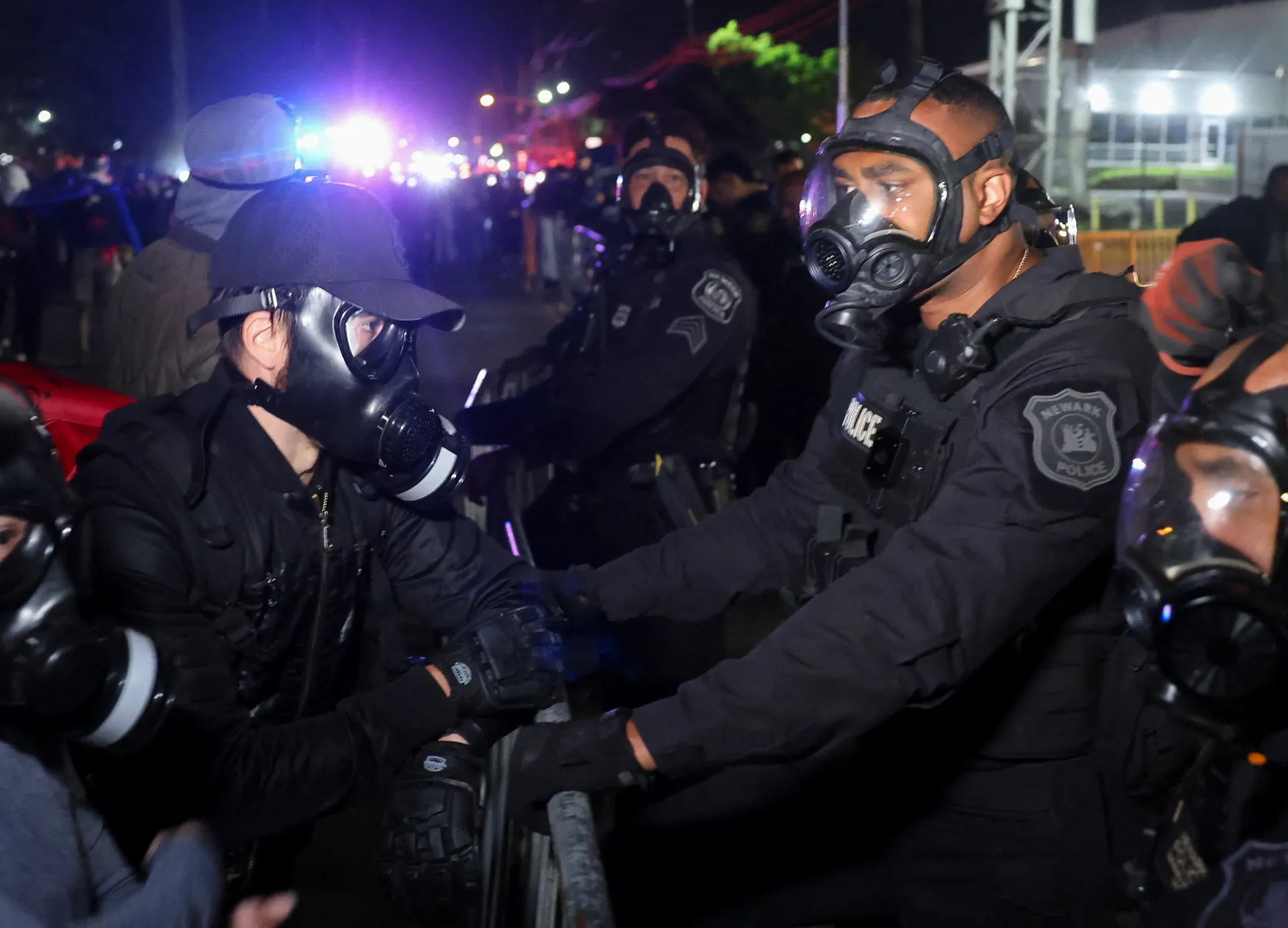
To show solidarity with the hunger strike, protesters have been gathering outside Delaney Hall, locking arms to form human chains and creating barricades to prevent access.

But that has led to tense confrontations with law enforcement, who have used batons and pepper spray to try to clear roads to the facility.

Governor Mikie Sherrill called for the establishment of designated protest zones, to mitigate the likelihood of conflict between officers and demonstrators.

But clashes have continued. Overnight on Wednesday, six protesters were arrested.

Politicians themselves have encountered tense interactions at Delaney Hall.

A year ago, one protest resulted in trespassing charges against Mayor Baraka and assault charges against US Representative LaMonica McIver, after a disagreement over which officials could enter the facility for an inspection.

While the charges against Baraka were dropped, McIver continues to face legal proceedings. She has denied the charges and called the prosecution politically motivated.

“One year ago, the Trump administration threw baseless charges against me for conducting oversight to protect immigrants at Delaney Hall,” McIver wrote on social media on Saturday.

“Have they tried to silence me? Yes. Have the stakes risen? Yes. Am I backing down from speaking up for you? Never.”

This past week, Governor Sherrill was also denied access to the facility. She has since issued a statement calling for Delaney Hall to be shut down.

At a news conference on Saturday, she blamed “national extremist groups” for arriving from out of state and escalating tensions. She added that the current precautions were designed to protect the safety of peaceful protesters.

“I urge those protesting outside of Delaney Hall to bring the temperature down, so we can focus on the detainees and their families,” Sherrill said.

She suggested that the actions of state and local officials would help head off any expanded ICE operations in New Jersey.

“I will not give ICE a pretext to expand operations at Delaney Hall or across our state. I will not put lives at risk,” she said. “I’m grateful to the vast majority of protesters who have assembled peacefully and raised their voices about Delaney Hall’s conditions.”

Source link

Newark, N.J., imposes curfew amid immigration facility protests

May 31 (UPI) — Newark, N.J., Mayor Ras J. Baraka instituted a curfew early Sunday in the area around an immigration detention facility where protesters have gathered in reaction to a hunger and labor strike there.

Baraka’s announcement came amid growing conflict between those supporting the hunger strikers at Delaney Hall detention facility and those who support the Trump administration’s immigration crackdown. The strike has been in effect since May 22 with detainees protesting what they describe as inhumane conditions at the facility.

Supporters of the strikers have gathered outside the facility since the start of the strike, and some have gotten into scuffles with Immigration and Customs Enforcement officials, prompting anti-immigration protesters to join the demonstrations.

“Due to the escalating situation at Delaney Hall and the increasing need for police intervention, immediate action is required to protect public safety,” Baraka said in a statement. “Multiple individuals have already been arrested and found in possession of weapons, underscoring the seriousness of the threat.”

Baraka said the curfew went into effect at midnight and applied to a half-mile surrounding the facility. He closed Doremus Avenue to all pedestrian traffic and limited vehicle traffic to those with official business in the area.

“This curfew will remain in effect nightly from 9 p.m. to 6 a.m. until further notice,” the mayor said.

In his statement, he said those violating the curfew will be issued a warning, and non-compliance would “result in removal from the area and the issuance of appropriate summonses and/or further legal action.”

Source link

California governor election guide: Immigration, homelessness, affordability

Democratic and Republican candidates vying to replace Democratic Gov. Gavin Newsom have been sparring on televised debates and exchanging campaign attacks since April to garner the attention of voters statewide.

The candidates include a Riverside County sheriff, a former senior advisor to British Prime Minister David Cameron, a former Los Angeles mayor, a billionaire hedge fund founder and two former members of the U.S. House of Representatives.

Recent polls showed that the leading Democratic candidate is Xavier Becerra, a former U.S. Secretary of Health and Human Services whose campaign is focusing on affordability and housing for what he calls “working Californians.” Vying for one of the top two spots in the June 2 primary are Republican contender Steve Hilton, a former Fox News commentator who was endorsed by President Trump, and Democratic billionaire Tom Steyer, a hedge fund founder turned environmental warrior.

Here is what the top candidates have said on important topics such as immigration, housing and homelessness, affordability and the entertainment industry.

Immigration and ICE

The U.S. Immigration and Customs Enforcement raids that began in California last summer have been hotly debated by Democratic and Republican candidates.

Here is what the candidates said during a debate in May or stated on their websites, as well as some criticism they have faced during the campaign.

  • Xavier Becerra vowed to protect and lead the state against the Trump administration’s attacks on immigrants and marginalized communities. Becerra’s rivals have accused him of failing to protect migrant children when he served as Health and Human Services secretary under the Biden administration.
  • Riverside County Sheriff Chad Bianco opposes “sanctuary city” laws that block local law enforcement from assisting federal immigration agents, calls for the deportation of criminal illegal immigrants and says the border must be secured. But he has also faced criticism from fellow Republicans for supporting a pathway to citizenship for lawful, working undocumented people and telling his constituents that his deputies were not taking part in Immigration and Customs Enforcement raids.
  • Former Fox News host Steve Hilton, who legally immigrated to the United States from the United Kingdom, opposes California’s state and local sanctuary policies, and said the state must cooperate with the federal government because the governor’s job is to enforce laws, whether the governor agrees with immigration enforcement activity or not.
  • San José Mayor Matt Mahan plans to demand ICE officers be unmasked, vows to go after agents and immigration agency leadership when they violate the constitution and shield communities from unwarranted harassment.
  • Former Congresswoman Katie Porter said California should enforce its sanctuary laws statewide, “so we don’t have crazy cowboys taking the law into their own hands.”
  • Billionaire hedge fund founder Tom Steyer wants to strengthen California’s laws to ensure law enforcement agents can’t profile Californians based on their race, ethnicity, language, occupation or location. He also wants legislation that will grant the state attorney general the authority to hold ICE agents accountable for violent and illegal acts on the job. He supports abolishing ICE. But he has faced heat on the campaign trail for his former hedge fund’s investment in the Corrections Corp. of America, now known as CoreCivic, which operates private prisons around the nation that are housing people picked up by federal immigration agents. Steyer has repeatedly expressed remorse about his former firm’s ties with the company and said he personally ordered the divestment from private prisons before he sold his stake in the hedge fund.
  • State Supt. of Public Instruction Tony Thurmond says he plans to levy a new tax on companies that operate ICE detention centers, fight to abolish ICE, protect California’s sanctuary laws and work with Congress to establish a pathway to citizenship.
  • Former L.A. Mayor Antonio Villaraigosa supports helping law-abiding immigrants and said violent criminals have been deported under the state’s sanctuary laws, despite claims to the contrary by Republican candidates.

Housing and homelessness

Here’s what each candidate said about the need to address the state’s housing shortage and its stubborn homeless problem:

  • Becerra said he plans to cut “unnecessary red tape” and speed up “approvals for projects that meet affordability and environmental standards.” On homelessness, Becerra said he wants to establish a $150-million annual homelessness prevention fund to pay rents and fight eviction or foreclosure.
  • Bianco said he wants to end “overregulation of our building industry” and eliminate the California Environmental Quality Act, the California Coastal Commission and the California Air Resources Board. On homelessness, he wants cities to clear encampments and prioritize mental health and substance abuse treatment. He wants to force people to accept drug treatment “when necessary.”
  • Hilton proposes to reform the California Environmental Quality Act so that only government prosecutors can sue, preventing private individuals and organizations from stopping or delaying new housing projects. He also said he believes rent control measures reduce the incentive to build housing and wants to restructure or eliminate them. On homelessness, Hilton wants to build more low-cost group shelters instead of permanent housing.
  • Mahan said he wants to lower developer fees and taxes for infill housing. Mahan also said more homes should be built off-site in California-based factories, making them cheaper than building them on site. On homelessness, Mahan wants to make the state’s Homeless Housing, Assistance and Prevention grant permanent and fund it at $1 billion a year.
  • Porter said she would “greenlight innovative building strategies, shred unnecessary red tape and create incentives” to build needed housing. On homelessness, Porter wants more interim housing, emergency rental assistance and rapid rehousing programs.
  • Steyer is pledging to make it harder for large corporations to buy up the state’s housing stock and wants to encourage cheaper methods of home construction. On homelessness, Steyer wants to expand interim housing options and homeless services.
  • Thurmond said he wants to build 2 million new homes for “working Californians,” on 75,000 acres of surplus land that local school districts own. On homelessness, Thurmond wants to increase the number of housing units that include mental health and substance abuse services.
  • Villaraigosa said he wants to cut development fees and reform CEQA to speed housing development, particularly for infill housing. On homelessness, Villaraigosa wants to double the state’s investment in Newsom’s Homekey program to build an additional 10,000 units of permanent supportive housing over five years.

A comprehensive guide on the candidate’s full views on housing and homelessness is here.

What the candidates have said about affordability

The candidates offered their ideas for making California more affordable during debates in April and May as well as on their websites.

  • Becerra said he will stand up to price gouging and unjustified rate hikes and use the power of the state to lower prices “where the market has failed.”
  • Bianco says he wants to cut taxes for working families and businesses, stop the “over-regulation on California’s economy,” support job growth and unleash the state’s energy resources to lower the price of gas and utilities.
  • Hilton said he wants to eliminate income taxes on people who earn less than $100,000 and on the first $100,000 for Californians who earn more than that. He also wants to end California’s current tax on tips to ensure tipped workers keep more of their earnings.
  • Mahan said he wants to enact a “Gas Tax Holiday” that ends or reduces the tax on gas. He also wants to remove barriers to building affordable housing by putting a cap on fees charged for new housing construction.
  • Porter supports single-payer healthcare, providing free child care and college tuition and making wealthy corporations pay their “fair share” in taxes. To pay for it, Porter would impose a progressive corporate tax, meaning more profitable businesses and corporations would pay a higher rate. She also supports ending income taxes for those who earn less than $100,000.
  • Steyer called himself the only candidate who is “willing to take on the corporate special interests” that drive up the cost of living in the state. He said he would like to lower gas prices as well as streamline permitting, reform zoning and enforce laws to build affordable homes faster. He also supports single-payer healthcare.
  • Thurmond wants to provide a tax credit to make it easier for Californians to pay for the rising cost of gas, groceries and housing. He plans to establish a universal childcare program and provide low-cost loans to help small businesses make improvements at their firms.
  • Villaraigosa plans to support a California Fuel Affordability Guarantee to cap gas prices for working families.

The entertainment industry

Here’s what some candidates have listed on their campaign websites about their ideas to support California’s entertainment industry.

  • Becerra supports state requirements that mandate productions disclose how AI is being used, cutting the “bureaucratic friction” of getting a filming location permit and vows to uphold the state requirement that ensures digital platforms share meaningful performance data with the cast, writers and directors.
  • Hilton wants to restore California’s competitive edge as a place for productions by creating financial incentives for film productions, cover the initial and technical costs associated with the development of a film or television project and reserve funding for independent and mid-budget projects.
  • Mahan said he plans to expand and modernize production incentives, make them more competitive and ensure the protections are for everyone who works on a film or television project from the technical crew to writers, directors and actors.
  • Steyer said he would like to block corporate mergers in entertainment, defend and expand film tax credits and eliminate the regulations and hurdles for permitting and logistics that “slow down productions.”

Times staff writers Seema Mehta, Nicole Nixon and Andrew Khouri contributed to this report.

Source link

ICE agent arrested over shooting of Venezuelan man in US immigration raid | Civil Rights News

The charges stem from the January 14 shooting of Julio Cesar Sosa-Celis in Minneapolis during Operation Metro Surge.

An Immigration and Customs Enforcement (ICE) agent charged with shooting a Venezuelan man during a controversial immigration raid in Minnesota has been arrested in Texas, according to United States authorities.

Agent Christian Castro, 52, was taken into custody on Friday after investigators from Minnesota tracked him down in the southern state, where he was arrested with assistance from the Texas Rangers and the Department of Homeland Security’s (DHS) inspector general’s office. He faces four counts of second-degree assault and one count of falsely reporting a crime.

Recommended Stories

list of 3 itemsend of list

The charges stem from the non-fatal shooting on January 14 of Julio Cesar Sosa-Celis in Minneapolis during Operation Metro Surge, a large-scale immigration enforcement campaign that drew widespread criticism for its aggressive tactics.

Prosecutors allege Castro fired through the front door of a residence, striking Sosa-Celis in the leg.

“Mr Castro was charged earlier this month with four counts of second-degree assault and one count of falsely reporting a crime for an incident on January 14, 2026, when he discharged his weapon through the front door of a home knowing there were people who had just run inside,” the Hennepin County Attorney’s Office said in a statement.

“The bullet travelled through the door and struck one victim in the leg before making its final impact in the wall of a child’s room.”

Minnesota officials welcomed Castro’s arrest, saying federal agents should be held to the same legal standards as everyone else.

“In Minnesota, we believe in equal justice under the law. That means nobody is above the law, including agents of the federal government,” said Minnesota Attorney General Keith Ellison. “I am pleased to hear Christian Castro has been taken into custody and will stand trial for the crimes he allegedly committed in Minnesota.”

The case became a flashpoint after federal authorities initially claimed Sosa-Celis and another man had assaulted ICE officers.

Those allegations later unravelled when video and other evidence emerged that contradicted agents’ accounts, prompting prosecutors to drop charges against Sosa-Celis and his housemate, Alfredo Aljorna.

The DHS later acknowledged that officers involved in the incident had provided false information about the shooting.

The outgoing director of ICE, Todd Lyons, also indicated a federal investigation was under way. “Lying under oath is a serious federal offense,” he said.

But through a spokesperson, ICE rejected Minnesota’s effort to prosecute the agent involved, calling the case “unlawful” and “a political stunt”.

Castro is the second federal officer charged this year in connection with Operation Metro Surge, an unusual step that reflects growing scrutiny of federal agents’ conduct during the immigration crackdown.

Hennepin County Attorney Mary Moriarty is also pursuing investigations into other incidents linked to the operation.

Operation Metro Surge began in Minnesota in December 2025. By the time Sosa-Celis was shot on January 14, hundreds of federal agents had been deployed across the Minneapolis-St Paul area in what officials described as the largest DHS operation in US history.

The crackdown ultimately prompted intense controversy, particularly after the fatal shootings of two US citizens: Renee Good on January 7 and Alex Pretti on January 24.

Against that backdrop, the investigation into the Sosa-Celis shooting further intensified scrutiny of federal agents’ tactics and conduct during the operation.

Source link