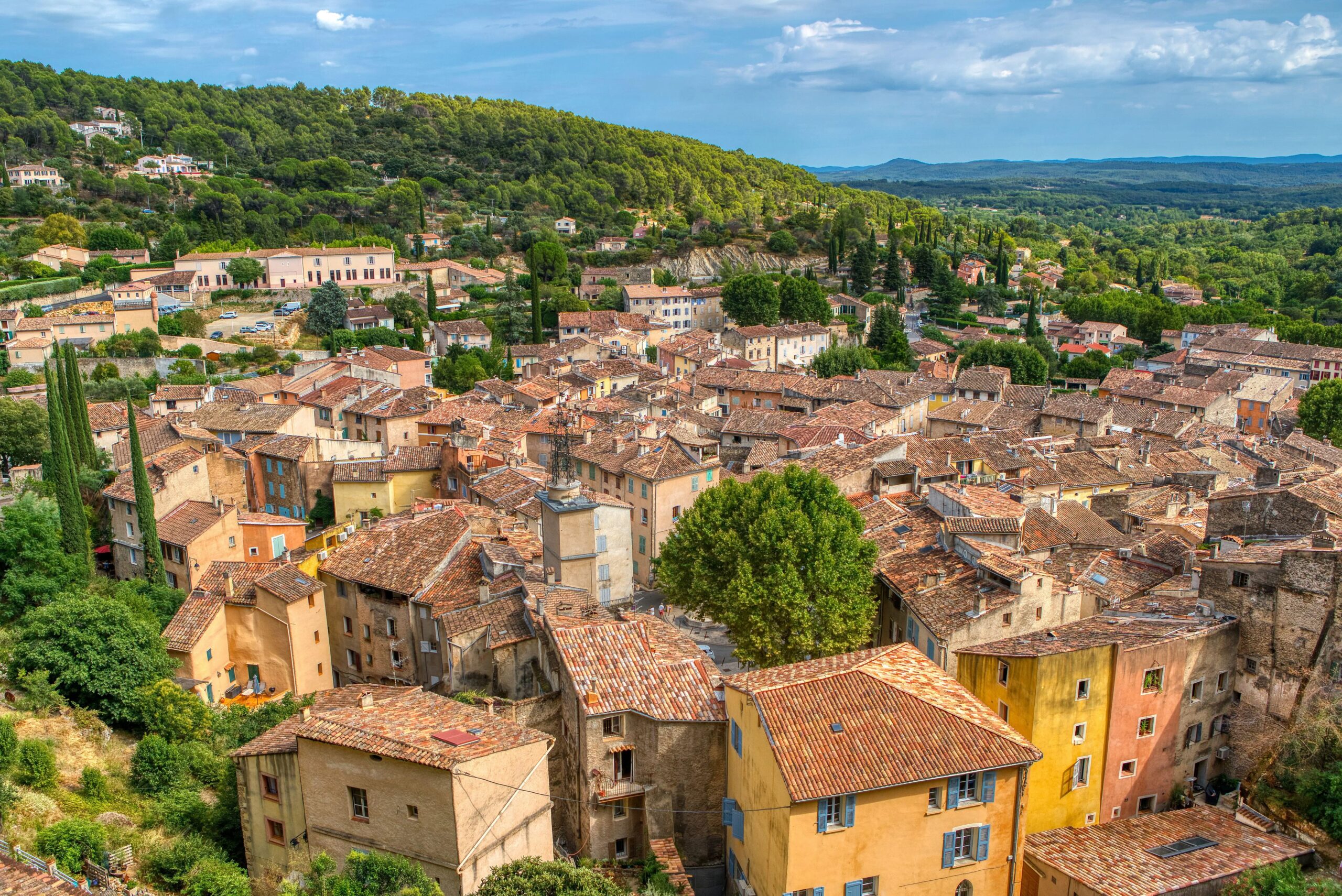
idyll

How tiny French idyll is quietly turning into ‘the new St Tropez’

HOLLYWOOD superstar George Clooney revealed last week his plans to open a new restaurant in the tiny Provencal town of Cotignac.

The French fishing village, which is home to just 2,000 people, has seen an extraordinary influx of Hollywood celebrities in recent years.

George Clooney (pictured with his wife Amal) is planning to open at restaurant in Cotignac Credit: Splash
George has partnered with entrepreneur Graham Porter to open the restaurant, who also owns the Lou Calen hotel Credit: BackGrid

Yet this latest development is the first likely to draw hordes of selfie-stick-wielding tourists to the quaint medieval town.

And residents are split over the move, with many fearing the commune is being transformed into a new A-list enclave to rival St Tropez.

While some welcome the creation of jobs in the area, others feel the town risks being overwhelmed by celebrity residents such as George, 65, and his wife Amal, 48.

Writing on a local Cotignac Facebook page, local resident Veronique Luisetti wrote that the town is being “taken over.”

The Canadian entrepreneur backing George’s restaurant, Graham Porter, also owns the Lou Calen hotel, which includes the Michelin-starred Le Jardin Secret restaurant, and the La Falaise art centre.

Another, Viviane Palumbo, added: “We don’t have any money left!”

Meanwhile a comedy mock-up cartoon showing the Ocean’s Eleven actor serving a platter at his new venue is being shared among neighbours.

Titled Cotignac: Hollywood Passe en Cuisine – or Hollywood hits the kitchen – it sees a caricature of George serving up a platter of pasta in an apron.

Some Cotignac locals welcome the jobs the restaurant will create, but others are worried the town is being “taken over” Credit: Alamy
Angelina Jolie and Brad Pitt bought the Chateau Miraval vineyard close to Cotignac in 2008 Credit: Alamy

Jeany Cronk, who runs vineyard Maison Mirabeau, welcomes the jobs the venue will create for locals and said it will bring in much-needed cash.

But she said the residents hope they won’t be overrun by visitors desperate to ogle the actor, saying: “We are not St Tropez.”

Jeany, 53, told The Sun: “You can’t really escape the fact that people will want to come here to see George when his restaurant opens.

“It will impact people wanting to come and eat there.

“And he’s been a celebrity for a very long time, he understands that, you know.

“We’re expecting it to be over the top at first, but we’re hoping it settles down.

“Some people are negative about it, because not everyone likes change, but others are positive about the jobs it will create.

“We are just hoping that everyone will be respectful, and keep the spirit of our community alive.

“We are a former fishing village, we are not St Tropez.

“We don’t have a big Chanel villa or crowds of visitors.”

Jeany, author of the book At Home in Provence, has had plenty of chances to meet the celebrities who have moved into the area – from George and his wife Amal to Brad Pitt and Angelina Jolie, who bought the Chateau Miraval vineyard just minutes away from Cotignac in 2008.

The vineyard was later at the centre of a toxic legal battle between the couple, after actress Angelina sold her share in 2021.

Chateau Miraval became part of a legal battle when Angelina Jolie sold her share in 2021 Credit: Reuters
A comedy mock-up cartoon (an AI image) depicts George Clooney at his new venue, and translates to “Cotignac: Hollywood steps into the kitchen! Very nice… but do you also do the lunch special?” Credit: Facebook/Passon Var

Also within a 30 minute radius is John Lucas’s Skywalker Vineyard, while John Malkovich owns a private wine-making estate named Les Quelles de La Coste.

And Ridley Scott produces wine at his Mas des Infermieres vineyard in the heart of the Luberon National Park in Provence.

Jeany continued: “Cotignac has always been quite a famous place.

“I mean, it’s one of the most beautiful villages in France.

“And it is, you know, it has a long history with, you know, celebrities.

“Eric Idle’s lived there for many years.

“And hugely famous people, like David Bowie and Pink Floyd recorded albums in the Studio Miraval.

“George and Amal have obviously built a strong connection to our village.

The former fishing village has a long history with celebrities Credit: Getty
John Malkovich has a private wine-making estate in the area Credit: Getty

“I think what’s very nice for him – and I really hope that this remains, now that the restaurant is so public – is that he’s been very free to move around and be amongst people who live in the village.

“He feels happy and safe here.

“I think the celebrities always love that people just go about their business while they’re there and don’t make a big fuss.”

But what of the rivalry among neighbouring vineyards?

David Bowie and Pink Floyd have both recorded albums in the Studio Miraval Credit: AFP
George Clooney (pictured with Brad Pitt) has recently became a French citizen after buying an estate in Brignole Credit: Getty

She continued: “It’s generally very friendly.

“We all share a common goal – to bring our beautiful rose wines to the world.

“And these big names do lend a hand in raising our profile.

“We are doing very well at the moment, especially in the UK, and we have a great global partnership with Soho House.

“So it isn’t nasty in any way.

“However,” she added, “Of course, business is business.”

George’s latest venture comes as he recently became a French citizen after buying an estate in nearby Brignoles.

And he reportedly wants his restaurant ready to open next year, according to the local mayor.

Jean-Pierre Véran told the newspaper Nice-Matin: “He wants to create a well-designed restaurant, with a terrace and the option to reserve the dining room for private events when he hosts celebrities.”

He continued: “We discussed their restaurant, and I told them I wasn’t opposed to this project, which can benefit everyone.”

However, both the actor and his wife are likely to stay far away from the kitchen – after joking that they are not the world’s greatest cooks.

“I’ll tell you what,” Clooney said three years ago.

“My wife, who is a brilliant lawyer, she’s one of the advocates of the world.

“She takes on Isis.

“But I better be doing the cooking or we will all die.”

Source link

A lakeside idyll: laid-back cycling and autumn hikes on Italy’s Lake Iseo | Italy holidays

Rust red and burnt sienna speckle the green mountain rising from Lake Iseo. Golden autumn sunlight shimmers on the water. Monte Isola, Italy’s largest lake island, is a peak of sheer cliffs and dense forest, dotted with old fishing hamlets and hillside villages, each as pretty as the terraced villas of Lake Como and Garda, but with far fewer visitors. I arrive at the small port town of Peschiera Maraglio – where striped wooden boats jut from the water like the gondolas of Venice – on a ferry from Sulzano, a five-minute hop across the water.

“Only three people on the island are allowed to own a car: the priest, the doctor and the mayor,” says Chiara, my tour guide from Brescia. Residents can zip up and down the steep island roads on mopeds, and a small fleet of van-sized buses trundle around throughout the day, but nearly all cars are forbidden and visitors have to explore on foot or bike.

Even bikes are banned from boats at the weekend. Not that it matters: the harbour front is lined with bike rentals (from €4 an hour for a standard bike). I’m normally a nervous cyclist, but car-free roads raise my confidence. Plus, most other visitors have the telltale front-wheel wobble of novice riders. This isn’t the place for Lycra and personal bests; the smooth-as-silk, quiet roads are for slow pedalling, and neck swivelling to take in another gorgeous view of Lake Iseo.

An aerial view of Lake Iseo with Monte Isola

The circular lakeside route winds past olive groves tumbling to the shore. I thought I’d need base layers and gloves this far into autumn, but I’m in shorts and a T-shirt and already working up a sweat in 24C sunshine. I pedal through the lakeside hamlet of Sensole in the island’s south-west and stop in Menzino, just along the shore. There’s a cafe-bar catering to cyclists, so I fuel up with an espresso con lake view.

The view from the western side of the island is somewhat marred by a huge concrete factory on the mainland, so I keep my head down on the pedal to Siviano, the island’s capital. The shambling streets are sleepy; the stacked skyline of orange, lemon and magnolia villas is punctuated by the looming facade of Santi Faustino e Giovita church and a medieval stone tower. Monte Isola has been inhabited since the Roman era. Venetian rule in the 15th and 16th centuries left the main towns resembling those on Garda and Como: hillside terraces of wooden-shuttered pastel villas. In the late 18th century, Monte Isola found its main industry: net making. At Retificio La Rete Srl, a small shop and net factory at Siviano’s port, fishing nets have been handwoven for centuries, along with nets for basketball hoops, football goals, shopping bags and hammocks.

At the northern tip of the island, I get the best views of Lake Iseo’s craggiest mountains. The south of the lake is chalk-white bell towers against gently undulating hills, draped in franciacorta vineyards. The north is where jagged peaks scrape the sky, plummeting to the emerald-green lake water. Just off the shore, a speck of an island (Isola di Loreto) is topped with a grand, castle-like building, which Chiara says is privately owned. A flotilla of kayakers from Marone make their way towards the private dock, slipping across the glass-still water.

In Carzano, I pause to admire thepink-and-white facade of San Giovanni Battista church, before cycling along the more functional stretch of road along the eastern shore. The traffic-free spell is broken by an old Fiat Punto, apologetically crawling along the road. Maybe the driver is the doctor or priest.

I complete my circle back in Peschiera Maraglio, where a late lunch of lake fish awaits at La Foresta restaurant. To begin, pickled tench so vinegary it makes my mouth water and a chub carpaccio that tastes like fresh lake water; followed by the island staple of dried, salted sardinas on grilled polenta. “Sardina is not a sardine; it’s actually a type of shad fish,” Chiara explains. “In the middle ages, when Monte Isola had to pay tax to Venice, they didn’t understand how money worked, so they paid in salted sardinas instead.”

Fish drying in Peschiera Maraglio, Lago d’Iseo. Photograph: Matthias Scholz/Alamy

As the last ferries leave for the evening, it feels as if I have Peschiera Maraglio to myself. Accommodation is private holiday apartments or restaurants with rooms. At Decio, a modern bistro dominates the ground floor, with a handful of sleek bedrooms above. The glass front shows off an uninterrupted lake view and the room is bathed in orange light at sunset. I spend the evening perched on a stool outside L’Isola dei Sapori, a no-frills alfresco spot where sparkling franciacorta wine is perfectly chilled, and snacks of local salami, olives and fish dishes combine for a light dinner.

skip past newsletter promotion


The next day, I forgo my bike and lace up my hiking boots. The steep trail to the top of the island begins with the enclosed cobbled streets of Peschiera Maraglio and wends into thick chestnut forest. I pocket a particularly beefy conker, unable to resist the childhood urge for a blinder. My legs start to burn against the gradient – the trail is 450 metres of climbing. Rocks and twisting roots burst through the forest path and there’s a sheer drop to one side, but the glimpses of Lake Iseo between the trees are worth every wheeze.

Santuario della Madonna della Ceriola chapel on the island of Monte Isola in Lake Iseo. Photograph: Image Professionals/Alamy

After an hour, the trees thin out and I emerge at Santuario della Madonna della Ceriola. The striking white sanctuary was built in the 13th century, on the remains of a pagan temple and early Christian chapels. A vast golden altar and detailed frescoes adorn the interior, but it’s the panoramic view outside that really makes the hike worthwhile. The ferry to Sulzano is a toy boat, leaving a white tail of wake.

From up high, I see that autumn colours are already creeping into the forest. I wipe the sweat from my eyes. This view is only going to get prettier as the season evolves, and the prize conkers are yet to fall.

The trip was arranged by Visit Brescia. Bike rental starts at €4 an hour. The ferry from Sulzano to Monte Isola is €2.60 each way. Trains run from Brescia to Sulzano from €4.10. Rooms at Decio start at €90 B&B

Source link