
husband

Rhian Sugden admits marriage is under strain and she sleeps in separate bed from husband saying ‘we’re strangers’

Rhian Sugden has admitted that her and husband Oliver Mellor are spending more time apart after welcoming their miracle IVF baby.

The former glamour model, 40, told how becoming parents has put more strain on their marriage than their heartbreaking six-year battle to have a child.

Rhian Sugden sat down for a chat with Amy Hart on the Private Parts podcast Credit: @privatepartspodcast/TikTok
Former glamour model Rhian confessed her marriage to Oliver Mellor is under strain Credit: instagram

Rhian and ex Coronation Street actor Oliver, 45, spent around £150,000 on eight rounds of IVF before welcoming their son George, now two, in 2024.

But while their gruelling fertility struggle brought them closer together at the time, Rhian says life as parents has left them struggling to find time for each other.

“The IVF itself made us stronger because we’d had to back each other up,” said Rhian.

“I felt guilty that I wasn’t gonna make him a dad because he’s like the best dad.

Read more on Rhian Sugden

RHI REVEAL

Rhian Sugden reveals why she’s been locked in a secret feud with Jodie Marsh


ONLY PRIVATE

Rhian Sugden takes swipe Katie Price after star reveals huge OnlyFans earnings

“So I had all that guilt of, oh god, I’m not gonna be able to fulfill his dream, my dream. So, he was very good in that respect.”

However, Rhian admitted things have dramatically changed between them since George arrived.

Rhian admitted she’s not ‘getting much time alone’ with her husband since giving birth to George Credit: Instagram/@rhiansuggers
Celeb Big Brother alum Rhian gave birth to George in 2024 Credit: Collect

Speaking on the Private Parts podcast this week, Rhian explained: “The thing that’s changed our marriage is having the actual child.

“Like, we’re like strangers at the minute. It’s hard. Even when we go on holiday, we’re not really getting much time alone.”

The Celebrity Big Brother alum also revealed she now sleeps in George’s bedroom because of his sleep struggles.

She said: “George just didn’t sleep as a baby, and I was like, I can’t do this. Just get him in bed. So we’ve just bought him a double bed and now I’m in George’s bedroom.”

Rhian and Oliver began dating in 2013 and tied the knot in Turkey in 2018.

Last year, Rhian publicly criticised Oliver after claiming he had gone drinking with friends while she and George were unwell – although she later insisted their marriage was fine.

The couple have spoken openly about their struggle to become parents, with Rhian undergoing eight rounds of IVF after discovering she had a very low egg count.

Elsewhere in the podcast, Rhian recalled breaking down in tears when a doctor warned her that the egg being used in her final IVF attempt was very low grade.

“I was crying on the table,” she said. “I was like, so why are we putting it in?”

But the treatment worked, leaving Rhian stunned when she discovered she was pregnant.

She recalled: “I couldn’t believe it. I still had lots of pregnancy tests even when I was like six months pregnant because I was just like every day thinking, surely not.

“You kind of set yourself up for a fail so that when it actually becomes reality, you’re like, oh no, like what happens now?”

Rhian was asked if her OnlyFans earnings had helped fund IVF and she replied: “I do more things than OnlyFans, but it definitely helped.”

Despite the challenges of parenthood, Rhian said: “I love it. I mean, [George]’s the best thing that’s ever happened to me. But it’s so full on.”

Source link

Debbie McGee reveals precious final days with TV star husband Paul Daniels

EXCLUSIVE: The star opens up in new book A Magical Life, saying: ‘Even though I was losing him, I just kept telling myself – I still do – how lucky I was.’

Debbie McGee had been in bed for barely half an hour when the nurse woke her to say her wonderful, magical husband was nearing the end. After almost four decades together, there was nowhere else Debbie wanted to be than with Paul Daniels.

She says: “I got up and went to him, laying alongside him on the hospital bed, just cuddling him. Paul always used to tell people that I was the best thing that happened to him. I wanted him to know that he was the best thing that ever happened to me.”

Ten years after Paul’s death at 77, Debbie, 67, has laid bare the agony and the profound tenderness of his final weeks in her new autobiography, titled A Magical Life.

She says: “Even though I was losing him, I just kept telling myself – I still do – how lucky I was.”

To see more of the stories you love from The Mirror and to find them easily in Google then make us your preferred source. Free and easy-to-do, just click on the link here to find more from The Mirror at the top of your feed.

The pair had met during a summer season in Great Yarmouth in 1979, the year The Paul Daniels Magic Show began its 15-year run on BBC1.

They married in 1988 and, although they had no children together, she became stepmother to his three sons, Paul Jr, Martin and Gary.

Their professional partnership continued long after his television heyday, with the couple still touring together in 2015. By the autumn, however, Debbie had begun to notice Paul seemed unusually tired, not least when he struggled to learn his lines for a pantomime.

Soon he began missing parties, leaving her to go alone, and when she returned he was often in bed. Even wrapping the Christmas presents, something they usually enjoyed together, no longer interested him.

Debbie writes: “Paul would usually have six projects on the go at any one time. He would get up in the morning and be straight on his laptop. He couldn’t sit still.

“But now he didn’t seem interested in anything. He would just sit in front of the TV until he fell asleep.

“When he was up and about, his balance seemed to have gone. He kept falling over.” Blood tests led to a suspicion of pernicious anaemia and a course of injections was prescribed.

But Paul continued to weaken, and Debbie rang the surgery desperate for answers. She told the doctor: “I can’t describe what’s happening but this isn’t my husband.”

Eventually, Paul was referred to a neurologist. However on the morning of the appointment he was sick after breakfast, and so Debbie called an ambulance. A CT scan later revealed a glioblastoma that had spread across much of the left side of his brain and was extending towards the right.

The consultant asked Paul: “Do you want me to tell you what’s wrong?” He replied: “No. Tell Deb.” Paul waited in the hospital corridor while Debbie stayed to hear the results, expecting an explanation of how doctors would treat him.

But though radiotherapy was discussed, the consultant could not promise it would improve his condition. Paul’s severe claustrophobia also made the prospect of wearing a treatment mask daunting.

Debbie says: “In desperation, I asked, ‘Is there any treatment he could have in America?

“‘If this was your spouse, what would you be doing?’” The consultant promised to discuss the case with oncologists, but told Debbie quite frankly: “In all honesty, if this were my spouse, I would be taking them home and making them as comfortable as possible.”

In the end Debbie was told Paul might have two months, and went home to prepare for his return.

When she came back to the hospital, she found him in his Crombie coat and favourite trilby, dancing with a nurse. Debbie recalls: “In that moment it was hard to believe there was anything wrong with him at all.

“He seemed like himself again. The man I loved. My Paul.”

After they announced his diagnosis publicly, around 800 emails and letters arrived in a single day. His sons and grandchildren visited.

With Paul prone to falling because of the tumour, Debbie’s sister Donna also moved in to help watch over him, finally allowing Debbie to get some much-needed sleep. Debbie says: “Paul didn’t ever want to know what was wrong with him.

“I think he knew that he was dying but he couldn’t discuss it. I didn’t try to press him. There was no benefit to distressing him.”

Days were spent watching Only Fools and Horses and taking short walks when the weather allowed. Paul had a Magnum ice cream every afternoon. Debbie remembers: “It was a very loving, peaceful month. I couldn’t deny what was happening, but I really forced myself to stay in the moment and not look forward and not look back.

“I would wake up, put my make-up on and smile, although it was sort of fake. Each new day I told myself, he’s still alive today so we’ll make the best of it.”

One film they watched together during those weeks has become impossible for her to watch again.

She explains: “I only cried in front of Paul once and I only saw him cry once in front of me. It was when we were watching one of the films in the Best Exotic Marigold Hotel series.

“At the end of it, there’s a wedding. The young couple at the centre of the film get married. I turned to Paul to see that he had tears streaming down his face.

“I can’t watch that movie any more.” As his condition deteriorated, nurses began sitting with Paul overnight. On March 14, Debbie’s mother visited for her birthday and went to say goodbye.

“Paul couldn’t speak very well by then but he sang ‘Happy Birthday’ to Mum in a whisper,” Debbie says.

That was the last day Debbie remembers her husband being conscious. Afterwards, she just sat with him and talked, though she found it difficult to say much without crying.

Debbie adds: “Paul and I had a fairy tale life. Through the good times and the bad, we had faced every challenge together. We really were a team.

“I hope he knew that I was with him, loving him until the very end.”

A Magical Life by Debbie McGee is out on October 8 (Mirror Books).
Source link

Former Homeland Security Secretary Kristi Noem files for divorce from her husband of 34 years

Hannah Schoenbaum and Sarah Raza

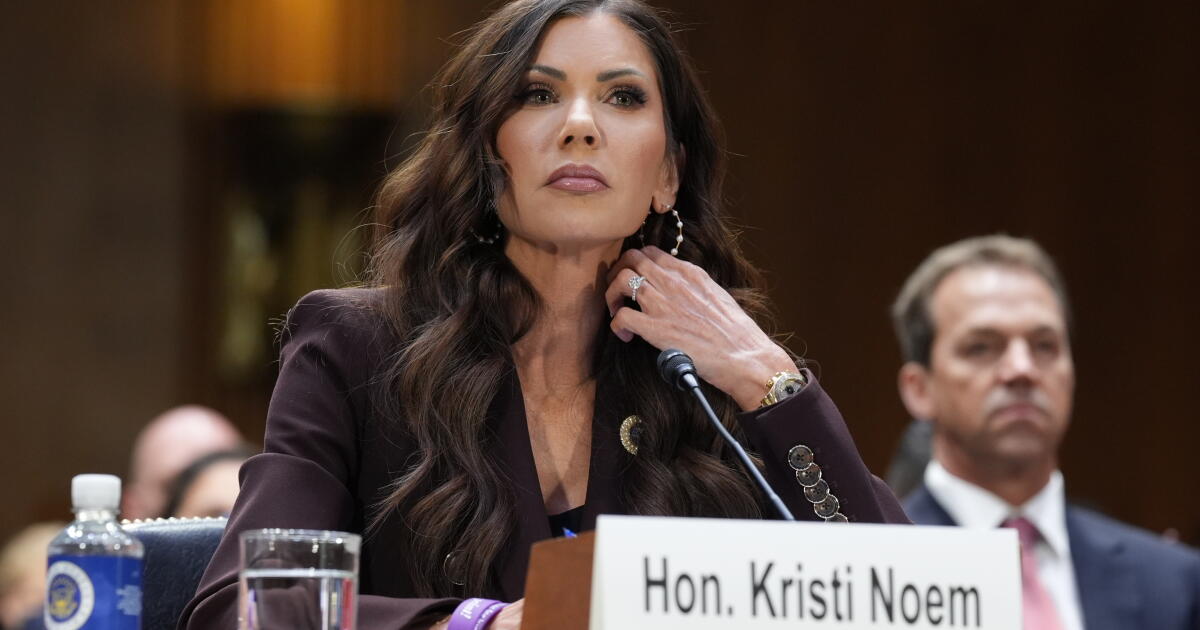
Former Department of Homeland Security Secretary Kristi Noem has filed for divorce from her husband of 34 years.

Noem, who was tasked with leading President Trump’s immigration crackdown from January 2025 to March 2026 and previously served as South Dakota’s governor, is seeking a divorce from Bryon Noem in their home state. The two married in May 1992 and have three children.

The filing, made in April but posted online Monday, comes after questions arose earlier this year about the nature of Kristi Noem’s relationship with a top advisor. The complaint, filed in Hamlin County, notes “irreconcilable differences” as grounds for the divorce.

In a statement, Kristi Noem’s attorney confirmed she has filed for divorce and said she will reserve further comments for the legal process. Lawyers for Bryon Noem did not immediately respond to requests for comment.

A day before Noem was ousted from her post in Trump’s Cabinet, members of Congress questioned her about an alleged extramarital affair with Corey Lewandowski, a special government employee and one of the secretary’s lead advisors. He was Trump’s first campaign manager in 2016 and appeared to play an outsize role in Noem’s department, even though his position was supposed to have a limit on days worked.

Noem denied the allegations that they were having an affair, dismissing them as “tabloid garbage.”

Once a close ally to Trump, Noem became a liability for the Republican president as questions arose over her conduct following the shooting deaths of two protesters in Minneapolis at the hands of immigration officers. Noem characterized Renee Good and Alex Pretti, both U.S. citizens, as aggressors, contradicting videos from the scene and descriptions of their deaths from bystanders. She also faced criticism from fellow Republicans for her spending at her department.

Trump nominated Markwayne Mullin, then a U.S. senator from Oklahoma, in Noem’s place and made her a special envoy for the Shield of the Americas, a new security initiative focused on the Western Hemisphere.

Schoenbaum and Raza write for the Associated Press. Schoenbaum reported from Salt Lake City, Utah.

Source link

The truth about Soviet mail-order brides: Inside Katya Suvorova’s new memoir

It’s never been a more terrifying time to be an undocumented immigrant in America. Despite countless protests and pushback, ICE agents continue to patrol the streets. In July, Colombian immigrant Johan Sebastián Durán Guerrero was shot and killed by an ICE officer in Biddeford, Maine, during a routine traffic stop.

But what about the white-passing undocumented immigrants that seem to slip through the system? The ones who blend in so seamlessly (despite the thick accents of some)? We forget they are also legally not supposed to be here. Specifically, those from Eastern Europe, Russia and the former Soviet Union. And what about those young, desperate women who suggestively posed for the camera as the Soviet Union collapsed all around them, hoping to be chosen by an American man?

Book Review

Ungrateful Immigrant Daughter: A Memoir From the Child of a Mail-Order Bride

By Katya Suvorova
Alcove Press: 352 pages, $30

If you buy books linked on our site, The Times may earn a commission from Bookshop.org, whose fees support independent bookstores.

Katya Suvorova’s searing debut memoir, “Ungrateful Immigrant Daughter: A Memoir from the Child of a Mail-Order Bride,” out Sept. 29, is a heart-wrenching tale of immigration that pulls back the velvety red curtain to reveal one story behind the over-sexualized stereotypical post-Soviet mail-order bride narrative so ingrained in post-Cold War U.S. culture.

My own family legally immigrated to the U.S. from Soviet Belarus in the early 1990s. I grew up with the Western media narrative that Eastern European women were submissive sex symbols, desperate for financial security. Some boys in school even assumed I was “easy” because I was Eastern European.

Mostly told from a child’s point-of-view, Suvorova’s “Ungrateful” traces their journey in the ’90s from Russia to the U.S. and life thereafter, as white-passing undocumented immigrants who illegally crossed the border from Mexico — with the help of a man who replied to her mother’s mail-order-bride ad in a catalog. A catalog Suvorova would find years (and many rich American stepfathers) later while cleaning out the garage, and realize her mother had lied to her. She was not, in fact, a model, posing for a Coca-Cola ad, but a young woman with a small child desperate to leave Russia behind for the West. When Suvorova confronts her mother after finding the catalog, her mother replies: “Everyone was doing it.”

Mail-order brides shaped early colonial America. Men were often the first to settle small Western frontier towns and would in turn grow lonely for companionship. Newspaper ads for brides were normalized and proliferated in 19th century America. According to historian Elliott West, “Some mining camps in Idaho in 1870 had nine men for every woman.” The truth is that love didn’t enter the picture when it came to marriage until about the 19th century with the Victorians; before then, marriage was more like a business contract, with dowries and cows alike.

Letter brides remained ubiquitous in 20th century America and were not stigmatized until the 1970s and 1980s when it became more apparent that mail-order immigrant brides from developing Southeast Asian and Eastern European countries were being abused and exploited. It wasn’t until 2005 that the U.S. passed the International Marriage Broker Regulation Act (IMBRA), which requires background checks and other precautions meant to protect foreign brides from domestic abuse, violence and exploitation. You don’t have to dig deep to see this narrative proliferated in our culture. Jeffrey Epstein mostly recruited Eastern European women into his international sex-trafficking ring.

Author Katya Suvorova

Author Katya Suvorova

(Alcove Press)

Suvorova and her mother were not spared such indignities. Abuse, both psychological and physical, permeates the pages of “Ungrateful.” From one of her earliest childhood memories of watching her mother being abused while stuck in a closet to later tales of her mother’s forced alcohol abuse and estrangement from her own mother (Suvorova’s beloved Babushka), expertly executed by her stepfather Adam — the abuse ran rampant. Suvorova herself is a victim, neglected by her mother and forced to act as a child bride to please one of the husbands. Eventually, Suvorova realizes that it wasn’t just her mother that was sold in a catalog to an American suitor, but her young daughter (Suvorova) as well. It’s no surprise that Suvorova is estranged from her mother, a topic she covers often on her social media.

Of course, there is also the “gold digger” stigma. Suvorova writes about girls in school accusing her mother of being a gold digger, intentionally choosing rich boyfriends that would eventually become rich husbands while they lived in poverty and couch surfed. Suvorova’s mother would use creative tactics to find these men: hang out in five-star hotels or fancy athletic clubs. She would have them buy her computers, clothes and expensive jewelry she could sell later. She always ordered the priciest thing on the menu and bought gift cards when the men gave her money for groceries in case the relationship did not work out. She passed down these survival tactics to Suvorova like gospel. But, ultimately, it wasn’t money that her mother was after, it was green cards for them both, the permanence and safety of American citizenship: the American Dream.

In 2012, I dressed up as a mail-order bride for Halloween. I was 22, about the age Suvorova’s mother was when they immigrated to the U.S. I wore a tight sleeveless red American Apparel dress. Shiny fake patent leather pumps. A white veil from Claire’s at the mall. I covered myself in bits of cardboard, packing tape and foam peanuts and overdid my makeup with several coats of mascara and thick black eyeliner. I thought this costume was funny, clever, appropriating and reclaiming the narrative that haunted me all my life. I thought because of where I was born, I was allowed to do this. A notoriously blunt girl who I sensed didn’t like me approached while I was waiting for the bathroom. “What are you, a slut?” she said, scanning me like a barcode.

Suvorova’s memoir effectively shows the risks immigrants were willing to take to escape the collapse of the Soviet Union and the corruption (ruled by the KGB) that followed. Without explicitly diving in, her writing sheds light on today’s Russian corruption and Putin’s endless war with Ukraine, which is ultimately a war against the West. In fact, Suvorova and many antiwar Russian immigrants today are terrified to return to their motherland due to fear of imprisonment and retaliation, as one Los Angeles woman in 2024 learned the hard way upon landing in Russia, receiving a 12-year prison sentence for donating $51 to a Ukrainian charity.

In the building I grew up in and my parents managed, a young Russian “model” and her mother lived with a much older Persian man. Without much inquiry, I simply assumed she was a mail-order bride running from a traumatic past in the motherland, ordered from a catalog to make him dinner and vacuum his carpet. Closer to my age than not, she became my friend. Gifted me jewelry. Babysat me while my parents drank tea with her mother. I later found out she cheated on the Persian man, laid out her wedding dress on the soiled carpet while he was at work, and moved herself and her mother to Las Vegas, where she started a successful business and bought a house.

Suvorova’s story is not just about the childhood trauma inflicted by her mail-order-bride mother, but it’s a redemption story about reuniting with her beloved maternal Babushka and biological father. It’s a story of self-discovery. Not unlike the bestselling memoir “Educated” by Tara Westover, who overcomes an abusive childhood in a rural survivalist Mormon family. Like Westover, Suvorova finds shelter in books, school and an education.

Like all contemporary creative nonfiction writers and memoirists who are not celebrities, Suvorova must have been told somewhere down the line that in order to sell her memoir she must gain a following on social media, and she’s done just that. With about 95,000 followers on Instagram, Suvorova uses the platform to reveal earnest roundups, tips, tragic tales of estrangement and survival, and summaries of deleted chapters of “Ungrateful” as blocks of text over grainy film photos of her as a child. Suvorova’s very active social media presence sheds light on the current state of memoir and nonfiction publishing: You must have a platform to be read.

In a bizarre meta twist of events, Suvorova must sell herself and her story on social media, like her mother sold herself (and in turn her daughter) to those American husbands. In a stroke of marketing genius, some early copies of “Ungrateful” come with book-branded condoms.

And despite revealing in the memoir that she eventually did become an American citizen, Suvorova has since moved to Europe. When I asked Suvorova over Instagram direct message why she and her husband left the U.S. for Europe, she replied: “We left because I didn’t feel safe publishing my book about growing up as an undocumented kid under the current Trump administration. I have to take medicine that, if I were detained and could not take it, would lead to organ failure. We knew ICE was detaining U.S. citizens as well and decided not to risk it. In order to still publish the book and not be detained, we left the U.S.”

How many of us have been cruel immigrant daughters (or sons)? Ungrateful. Spoiled. Unaware or unwilling to acknowledge how much our parents have sacrificed to get us here. In the case of Suvorova’s memoir — although, she does acknowledge her white privilege — she certainly has a lot to be ungrateful for.

Ruzova is a Soviet-born writer based in Los Angeles. Her essay “The Sauna” was a notable in Best American Essays 2025.

Source link

‘Heartbroken’ TOWIE star splits with husband she married in secret seven years ago

A “heartbroken” TOWIE star has split from her husband after they married in secret seven years ago.

Maria Fowler tied the knot with a motocross racer in an intimate ceremony in Cheshire surrounded by their nearest and dearest, back in 2019.

Maria Fowler and Kelvin Batey tied the knot seven years ago Credit: Instagram
The TOWIE alum showed off her huge ring as she revealed her and Kelvin had married in secret Credit: THE SUN

Maria and Kelvin Batey described the event as the “happiest day of our lives,” as she showed off her huge sparkler.

Now, it’s been revealed that the pair have gone their separate ways with Maria questioning “how it all went so wrong.”

A source close to Maria told The Sun: “Maria and Kelvin decided to call it quits at the start of the summer.

“It was a really tough decision but Maria ultimately felt like she wanted more.”

Read more on Maria Fowler

INSTA VS REALITY

Maria Fowler praised for sharing VERY honest look at pre-holiday shopping


MUMMY DIARIES

Towie’s Maria Fowler posts VERY honest C-section and ‘imperfect’ birth snaps

It seems Maria had big plans for her future but didn’t quite see how Kelvin would fit into them.

The source continued: “She has been really successful in business recently and it made her realise she could cope without him.

“It hasn’t been the easiest of transitions but they are getting there. Maria has been incredibly emotional, but has thrown herself into work.

“It’s when she’s not working that she is struggling and questioning how it went so wrong.”

Maria and Kelvin share two daughters – Evie and Nellie Credit: Instagram
The 40-year-old shot to fame after joining appearing on TOWIE in 2010 Credit: WireImage

The mum-of-two, who has taken a step back from the limelight in recent years, got engaged to Kelvin in 2017.

They wed at the Nunsmere Hall Hotel and went on to enjoy a minimoon in Bowness Bay Marina, Windermere.

Maria said at the time: “So this happened yesterday… we got married!

“The happiest day of our lives. What an absolutely incredible day surrounded by Incredible people.

“We had an intimate ceremony which was full of tears, laughs and sentiment.”

The former couple share two children – Evie, nine, and Nellie, five.

Maria, 40, shot to fame after appearing on TOWIE in 2010 – when the show first launched.

Source link

A California desert icon, the Bagdad Cafe on Route 66, is in limbo

Four decades ago, the cult hit “Bagdad Cafe” was filmed at a ramshackle diner in the Mojave Desert.

The tale of two women in the lonely landscape — a hardworking, rifle-wielding cafe owner and a stranded German tourist with a suitcase full of lederhosen — captivated viewers, particularly in Europe and Japan.

Busloads of international tourists rolled up to the actual Bagdad Cafe on a cracked, sunbaked stretch of Route 66.

Real-life proprietor Andrea Pruett, a sweet but steely Southerner who kept her own gun behind the counter, greeted them in French and German, then fed them buffalo burgers and omelets.

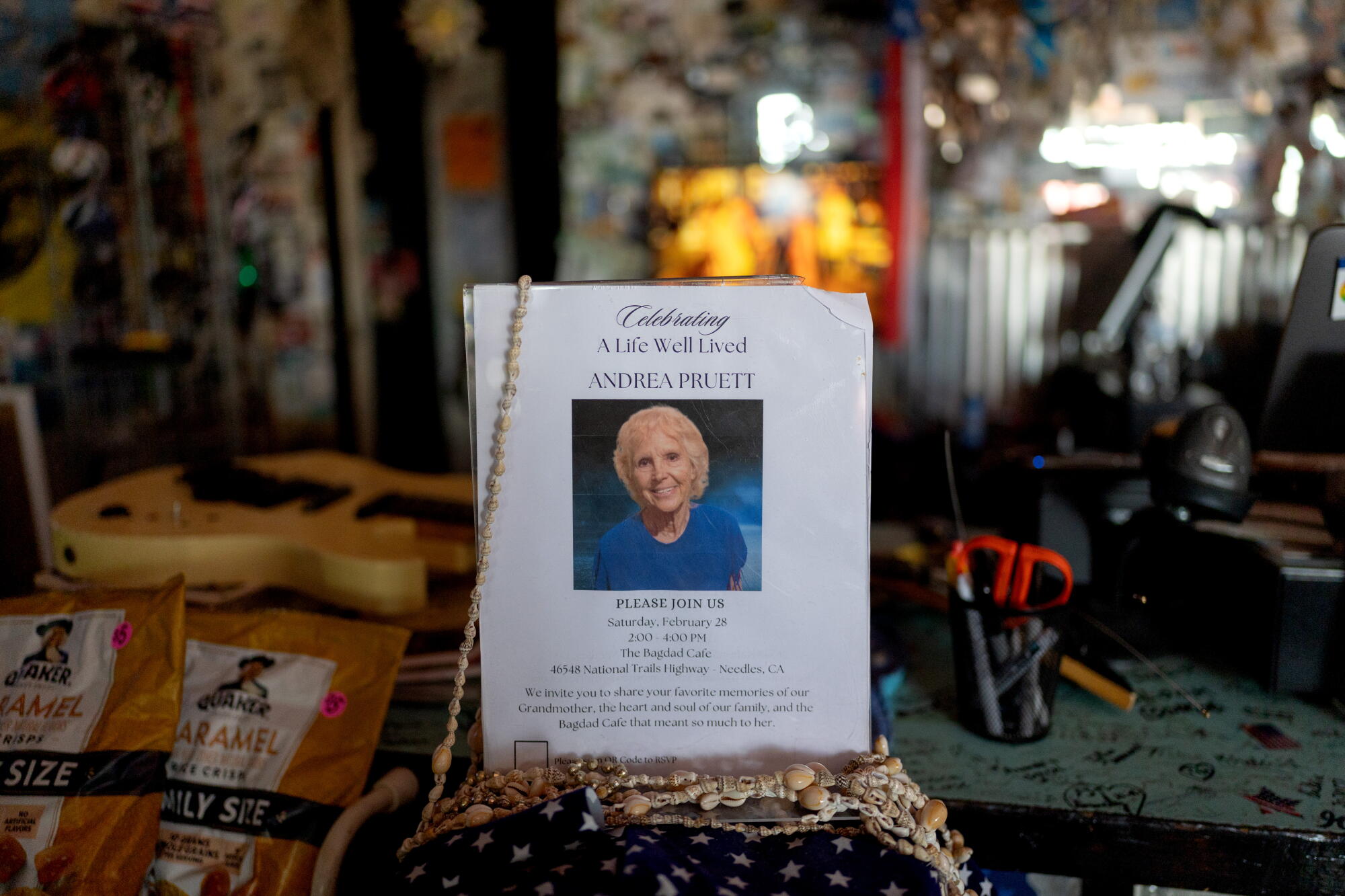
A memorial announcement for owner Andrea Pruett is seen at the Bagdad Cafe on Route 66 in the Mojave Desert.

A memorial announcement for owner Andrea Pruett is seen at the Bagdad Cafe on Route 66 in the Mojave Desert.

As Pruett aged, her grip on reality loosened. But she refused to leave.

Now, the Bagdad Cafe is in limbo. Though T-shirts and tchotchkes are still for sale, the kitchen is closed. And Pruett’s family is figuring out what comes next.

Buses full of Europeans still come. So, too, do the roadtrippers celebrating Route 66, which turns 100 this year.

“We don’t get any locals, and we don’t cook any food right now,” said Mark Bradley, the cafe’s gruff but genial manager. “But we’re definitely on the map to see … it’s magic that takes place here.”

The cafe is a cacophony of color in an expanse of desert brown. Flags from all over — France, Brazil, Japan, New Zealand, Canada — hang from low ceilings. The walls are covered floor to ceiling by visitors’ passport photos and dollar bills with Sharpie signatures. “We’ve been here three times!” an Italian visitor raved in a guest book.

Pruett is still there, too. An urn holding her ashes sits by the front door.

A drone image shows the remote Bagdad Cafe on Route 66 in Newberry Springs.

A drone image shows the remote Bagdad Cafe on Route 66 in Newberry Springs.

In 1995, eight years after the movie’s European premiere, Pruett and her husband, Harold, stopped for burgers at what was then called the Sidewinder Cafe in Newberry Springs, 20 miles east of Barstow. They had just bought 640 acres for an ostrich ranch, which ultimately didn’t work out, though they kept some of the birds as pets.

The owner told them the A-frame, wood-shingled diner was for sale. “My husband looked at me and I said, ‘Don’t even think about it,’ ” Pruett told The Times in 2003.

But their son, actor Harold P. Pruett II — who was 26 and starring that year in a campy erotic horror flick called “Embrace of the Vampire” — declared the cafe “cool,” and that was that.

The Pruetts promptly rechristened it Bagdad Cafe, following German filmmaker Percy Adlon’s lead.

The exterior of the Bagdad Cafe.

The exterior of the Bagdad Cafe.

Nearby Bagdad was a railroad town named in the 1880s by Southern Pacific Railroad officials after the Middle Eastern metropolis — without the H — because of the desert terrain.

Bagdad became a stop for steam-powered trains whose engines needed more water every eight miles or so in the desert climate, said Scott Piotrowski, past president of the California Historic Route 66 Assn.

The bustling little town was also a hub for gold, silver and copper mining camps.

Mining eventually faded, but cars on Route 66 overheated easily and often limped into town for water. A restaurant named, naturally, Bagdad Cafe, owned by a woman named Alice Lawrence, was the only place for miles with a dance floor and jukebox.

When Interstate 40 opened in 1972 about 10 miles north — taking most traffic and tourists away from Route 66 — it was the death knell for Bagdad, where all that remains today is a single scruffy cedar tree.

Two men look at the interior of the Bagdad Cafe on Route 66.

Thierry Farion, left, from France, and Aziz Khechine, right, from Tunisia, look at memorabilia inside the Bagdad Cafe.

At Pruett’s Bagdad Cafe, she embraced the movie. The two female characters, initially wary of each other, are both on a hiatus from their husbands, and the German tourist eventually draws big crowds by performing magic tricks.

“When people came in, it was like a director saying, ‘Action!’ ” said Pruett’s grandson, Greg Landers, 47, of Glassell Park. “She would just go right into welcoming people and telling them to sit down, answering their questions.”

A petite bottle-blonde who spoke with the laid-back drawl of her native Arkansas, Pruett showed off memorabilia signed by the “Bagdad Cafe” director. She got a yellow thermos like the one in the film, which, miraculously, never seems to run out of java, even when the coffee pot is busted.

A guest book displays messages at the Bagdad Cafe.

A guest book displays messages at the Bagdad Cafe.

She kept the jukebox on the movie’s Academy Award-nominated theme song, “Calling You,” recorded by R&B singer Jevetta Steele and covered by Celine Dion, Barbra Streisand, George Michael and others.

The lyrics immortalized the Bagdad:

A desert road from Vegas to nowhere
Some place better than where you’ve been
A coffee machine that needs some fixing
In a little café just around the bend

Pruett’s place drew desert eccentrics, including a gravelly-voiced man dubbed General Bob who sniped at customers who doubted his claims that he designed the Pentagon, built the Golden Gate Bridge, was a brain surgeon and was 109. (“Actually, he’s 83 years old, and if he wants to be older, I let him,” Pruett told NPR in 2003.)

Monaco’s Prince Albert II stopped in once. So did actress Renée Zellweger, who told Jay Leno on “The Tonight Show” that there was a “little old guy, he’s been sitting there for, I think, maybe 45 years on the same barstool. We had chicken fried steak together.”

When Huell Howser popped in unannounced for a 2001 episode of his California road trip show, General Bob, perched at the bar with a fedora atop his long silver hair, proclaimed he was 98 years old and “a real general, not a f—up.”

Marian Box, left, works the counter and talks to visitor Jaelene Kleckner.

Marian Box, left, works the counter and talks to visitor Jaelene Kleckner.

For all the joy, desert life brought plenty of hardship.

One night in the 1990s, not long after Pruett bought the place, she was closing out the cash register when a man walked in, slammed a wooden 2-by-4 on the counter and ordered her to put all the money in a bag.

“She actually had a shotgun under the counter, and she pulled it out and said, ‘Stop,’ and cocked it,” said Landers, her grandson.

The man threw his hands up and said his family was in the car. They had been traveling and ran out of money. Pruett ushered them inside, fed them and sent them away with some cash — after making them wash their own dishes.

Pruett, who gave birth to Landers’ father, Corky, at 15, had a tough and impoverished youth. But she was “kind almost to a fault,” said Landers, a contractor who lived with her for a spell in his 20s and worked in the cafe. People who just about everyone else had given up on — she’d give them a place to stay and work to do.

In February 2002, the younger of Pruett’s two sons, Harold the actor, died of an accidental drug overdose. Her husband died two months later.

Pruett’s love for her customers kept her going, said Bradley, who has been around the cafe for 26 years as a frequent visitor and employee.

“She would have them crying as they left, but happy crying,” he said. “She could do that to people by giving them a hug and in just the few minutes that they were here. She had a magic to her.”

In 2016, Sarah Jane Woodall — a former nude model who posts popular desert travelogues on YouTube under the moniker Wonderhussy — stopped for breakfast and shot a video.

The cafe was quiet and grimy. She loved it.

“It was just, like, a lovable hot mess,” said Woodall, an Army kid who lived for a time in Germany, where people were obsessed with the movie.

The COVID-19 pandemic lockdowns devastated the Bagdad Cafe — and Pruett, who turned 80 in the summer of 2020.

The Europeans disappeared. Vandals busted the windows. Pruett let go of her waiters. Her kitchen closed and never reopened.

A sign for a former motel next to the Bagdad Cafe on Route 66 in Newberry Springs.

A sign for a former motel next to the Bagdad Cafe on Route 66 in Newberry Springs.

In 2021, her house burned down. She slept in the cafe, her thin frame curled up in a red vinyl booth.

That summer, Léa De Carmo, an aspiring actress, was driving back to Los Angeles from Las Vegas with a friend and, after a night of partying, craved a cup of coffee. They pulled into the Bagdad Cafe, where — as in the movie — the coffee pot was broken.

De Carmo, a native of Paris who had never seen the film, was stunned when she opened the door and “saw French flags and soccer team stuff everywhere.”

“It seems like all the French are led there for one reason or another,” said De Carmo, 29, who talked to Pruett that day for over two hours.

“She had essentially lost everything — her business, her house — but she just had this incredible energy and warmth and humor,” De Carmo said. “There was also this very deep loneliness.”

For the next four years, De Carmo drove from L.A. to Newberry Springs dozens of times, filming Pruett for a just-finished documentary called “The Keeper of Bagdad Cafe,” about her final years in the crumbling diner.

In the film, friends help Pruett move into an RV in the parking lot. As a woman gently washes her white hair with bottled water behind the cafe counter, Pruett says she can’t remember where she’s from.

“One thing she never forgot was the cafe,” De Carmo said. “She always knew where she was and that it was the place she wanted to be.”

Landers said his father, who died in 2022, asked her to move in with him in L.A., but she didn’t want to leave the Bagdad.

“It was just hard,” said Landers, who added that she might have fared better, physically, at least, in a dementia care facility. But she repeatedly said, “No, this is my place. This is where I want to be.”

Pruett’s friends in the desert stepped up. Bradley took care of her and the cafe, opening it each day for tourists to come in and take photos.

In 2023, Tropical Storm Hilary pummeled the diner’s old roof. Water poured in.

Woodall returned at the cafe’s request, filming the stained, decaying ceiling and the water-catching buckets and coffee pots on the floor. The YouTuber’s fans raised more than $25,000 — enough for a new roof.

In the video, Pruett stood by, smiling, quiet, a little confused.

For the next three years, she stayed at the Bagdad, even as her memory continued to fade. She died this January at 85.

On a Friday morning this summer, with the outside temperature already 115 degrees, Matt Parker stood behind the worn green Formica counter, setting a smart TV to the movie and preparing to make Nescafé instant coffee — a favorite of Europeans.

On a good day, they get three tour buses, he said.

Parker, 53, moved from L.A. County to Newberry Springs — where he used to camp with his dad and ride dirt bikes as a kid — a few years ago and fell in love with the cafe.

“You can’t recreate this,” he said. “We’re just caretakers of it. It’s a museum and church, in a sense, with all this stuff. Mrs. Pruett really focused on protecting it, protecting these people’s stuff — their mark.”

An urn is seen near the entrance of the Bagdad Cafe on Route 66.

Andrea Pruett’s urn near the entrance of the Bagdad Cafe, which she ran for three decades.She died in January.

Landers said that, while the family figures out what to do with the cafe, he asked Bradley to keep it open like his grandma did.

Though her urn remains in the place she loved most, Landers hopes, someday, to bury her ashes in the Hollywood Forever Cemetery next to her youngest son.

Since her death, he can’t help but think of a scene from the movie. The German woman — forced to leave after her tourist visa expires — is gone and the bustling restaurant quiet again. A customer walks in and asks where the magic shows went.

A snoozing employee sits up and says: “The magic? It’s gone.”

In the end, the German returns to the Bagdad Cafe. And so do the crowds.

Source link

Duncan Sheik dead: ‘Barely Breathing’ singer, Tony winner dies at 56

Duncan Sheik, who earned a Grammy nomination for his ubiquitous 1990s hit “Barely Breathing” and won a Tony Award for composing the music for “Spring Awakening,” died Thursday. He was 56.

“It is with profound sadness that we confirm the passing of Duncan Sheik,” a statement posted Friday on Sheik’s Instagram account read. “The world has a lost a singular talent, and deeply influential voice in music and theater…. Duncan’s artistry touched many and leaves an indelible mark on the cultural landscape.

“Duncan was a father, husband, son, brother, and friend. He will be remembered for his sensitivity, wit, inteligence, and depth of spirit he brought to those who knew and loved him.”

The statement added that “Duncan passed away last night surrounded by love.”

His mother, Suzanne Sheik, told the New York Times that her son died of organ failure. A statement posted to his Instagram account Thursday said that Sheik was “receiving medical care and remains in critical but stable condition.”

Sheik, a New Jersey native, went to Brown University, where he played in an early band with singer-songwriter Lisa Loeb. His 1996 self-titled debut LP was a hit on the strength of “Barely Breathing,” an exemplar of the upbeat coffeeshop rock that emerged in the wake of grunge on the pop charts. The single stayed on the Hot 100 for over a year, and the album went gold, earning earned him a Grammy nomination for male pop vocal performance.

Sheik’s followup, 1998’s “Humming,” featured rich orchestration, but he already had an eye on Broadway (his sister Kacie Sheik is a stage actor who has appeared in “Hair,” “American Idiot” and “Because of Winn-Dixie,” for which Duncan wrote the score).

He wrote his 2001 album “Phantom Moon” with poet and playwright Steven Sater, whom he’d again collaborate with on the score for the musical “Spring Awakening” — based on the play by German Expressionist Frank Wedekind, which won him a Tony Award — and “Alice by Heart.” His 2009 album “Whisper House” yielded a companion musical of the same name. He also composed the score for the 2004 film “A Home at the End of the World.”

While Sheik sought treatment for alcohol addiction after canceling a tour in 2011, his stage and studio career never slowed. Other major stage credits include hit productions of “American Psycho,” “Bob & Carol & Ted & Alice,” the thriller “Noir” and “The Secret Life of Bees,” along with Shakespeare’s “Twelfth Night” and “The Taming of the Shrew.” His last album, “Claptrap,” came out in 2022.


Source link

Judy Collins on the art of the farewell

When Judy Collins comes to Los Angeles, she likes to stay at the Beverly Hilton in part because “they serve a fabulous breakfast,” she says over coffee at the hotel on a recent morning. “That’s rare today,” she adds. “Too often a place will just send up a cardboard shopping bag with the things you ordered in it.”

Collins knows her amenities: At 87, the Grammy-winning singer and songwriter still plays about 120 shows a year, drawing audiences around the world with her high, clear voice and an expansive repertoire that blends the hits that made her famous in the 1960s and ’70s — Joni Mitchell’s “Both Sides Now,” Leonard Cohen’s “Suzanne,” Stephen Sondheim’s “Send in the Clowns” — with traditional folk tunes and material of her own.

Yet now she’s preparing to hang it up with a lengthy farewell tour she’s calling Sweet Judy Blue Eyes (after “Suite: Judy Blue Eyes,” the folk-rock classic her one-time lover Stephen Stills wrote about her for Crosby, Stills & Nash). The night before our interview, Collins played L.A.’s Ford Theatre; she’ll be back through Southern California for a Sept. 27 date at the Lobero Theatre in Santa Barbara and again next year for shows in Palm Springs and Aliso Viejo.

After we talk, she plans to do a bit of tai chi, for which she uses an app on her phone and which she wishes more people practiced. “Maybe that would alter civilization,” she says. “If we were all doing tai chi, we couldn’t be at war with Iran.” Then she’ll head to the airport for a flight home to New York, where she’s lived for decades — most of them with her husband, industrial designer Louis Nelson, who died in 2024.

At breakfast, Collins is wearing a patterned turquoise jacket over a matching dress and high-heeled black leather boots.

“You like these?” she asks of the boots. “These are Stuart Weitzman. I bought them 30 years ago, and I’ve never stopped wearing them.”

That’s a well-made boot.
They fit, they’re great and I reject all invitations to get rid of them.

Has your thinking about clothes changed over the decades?
I used to dress in jeans because I was a cowgirl — I hung out with rodeo riders in Colorado. As I came up, I liked what was simple. My mother made all our clothes on a Singer sewing machine for years. Now I love beaded things. I have full closets I need to go through.

Before you came onstage last night, an announcer told the audience not to take pictures or videos.
That’s my management’s doing — it’s important to them, so I go along with it. But the pictures are usually bad. Also, the phones take people’s minds off what’s going on onstage. People need the chance to focus. We’re in a period of insanity right now, so people need time to sit wherever they are. They could go to the ballet or to the theater, but they choose to come to me, and they get to sit there and they get to listen and they get to think about their own lives.

As a performer, that’s what you seek to provide.
I’m providing silence. It’s such a noisy world — so full of crappy music that plays outside all these hotels and places where we stay. It drives me nuts.

You have a line in the show where you say, “Something unexpected happened — I turned 87.” It got a good laugh.
People applaud too.

What are they saying by applauding?
They want to be acknowledged for their own ages, whether they’re 87 or 90 or 19. People are coming to see me, but they’re also coming to see their history. They’ll remember what happened 60, 70 years ago — they were probably marching at the same things I was marching at. And if they’re 19, they want to know why we’re not marching now.

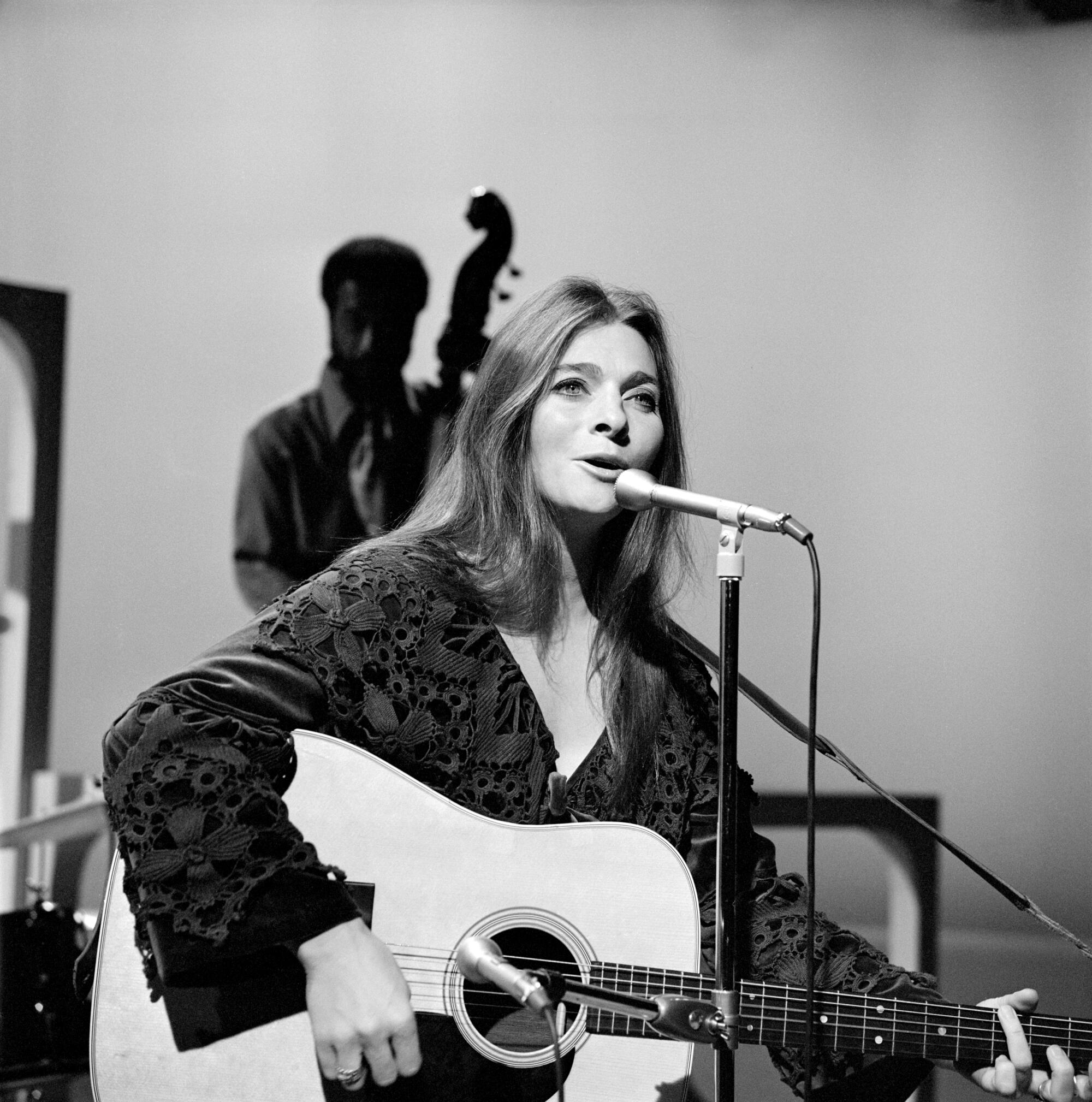
Judy Collins performs on "The Smothers Brothers Comedy Hour" in 1969.

Judy Collins performs on “The Smothers Brothers Comedy Hour” in 1969.

(CBS via Getty Images)

You said we’re in a period of insanity.
This country is losing so much of the depth of our origin. The fact that workers who’ve come to this country are being taken off to God knows where — it makes no sense. Number one, these people often have some sort of legality. And secondly, they do the work here. Nobody else wants to go up to the orchards in Oregon and pick the fruit. Do you?

I can’t say that I do.
I don’t want to do that.

This tour is billed as your grand farewell.
So long, you guys.

I’m always reluctant to trust that framing. Cher’s done like eight farewell tours.
I hadn’t counted them up — shame on me.

Should we really believe you?
I think we have to believe in the present tense. What you’re hearing is what’s happening.

You had a music stand onstage with you. What was on it?
All the lyrics to all the songs.

You can’t possibly need the lyrics anymore.
Oh, yes, I do.

You’ve been singing some of them for decades.
Doesn’t matter — it has to be there in case you have to look at it.

Would you say you do look? Or is it more of a security blanket?
It’s a security blanket. But my eyes wander — I like to see who’s in the audience and what’s going on. I like to look up and down the aisles, and I like to fantasize: How did this happen?

Your life and career?
I mean, I know how it happened. I was 16, and I started going to the Denver Folklore Society, which was run by a guy named Lingo the Drifter. And Lingo the Drifter had these wonderful evenings where we all played the guitar and sang and drank illegal whiskey and so on.

Judy Collins last month in Beverly Hills.

Judy Collins last month in Beverly Hills.

(Allen J. Schaben / Los Angeles Times)

Before Denver, you lived briefly as a kid in Los Angeles.
My father was a very eclectic and fabulous radio personality. He had a radio show for 30 years in Seattle then here in Hollywood, broadcasting out of CBS — a big deal. If we weren’t in school, we would drive up Santa Monica Boulevard into Hollywood and we’d stand around and watch them produce the radio mysteries. People would walk in a sandbox to get the sound of somebody walking up the gravel road to the door.

Are you familiar with the term “nepo baby”?
No.

It refers to the child of a famous artist who follows in their parent’s footsteps.
Oh, that’s interesting.

People use it derisively, as if to say that a kid has overly benefited from their advantages.
We certainly had advantages. For instance, the Library of Congress, which is the jewel in the crown — I don’t know what they’re doing now — but they sent us Braille books and they sent us all the shows from New York and they sent us the recordings of all the Shakespearean plays by the great Dame Judith Anderson and John Gielgud. I had all that growing up. In some ways, I wasn’t raised — I was trained. I got to see how a professional has to handle his life. My father was a professional in all ways. He drank — occasionally, not all the time — but he was absolutely organized about everything, including that.

You’ve been sober for something like half a century.
Forty-eight years. I’m in my 49th now.

You ever miss drinking?
Oh, my God, no. I was so sick — I was gone. Bye-bye.

Some people replace one addiction with another.
I had an eating disorder, which is still kind of … You know, last night, I asked for apple juice during the show — I was in trouble because I wasn’t eating. When my husband died, I stopped eating again. I’d stopped eating in the ’60s and ’70s and ’80s, but I got over that. But suddenly I didn’t want to eat again.

Would you consider that disordered eating?
I don’t know. Anyway, I have to really be careful. We had a talk about it last night. I have to eat these protein bars, and I have to eat them all the time.

Do you remember the first gig you played after your husband died?
Oh, yes — I had to go out. When my son took his life in 1992, I got a call from Joan Rivers — she and I knew each other pretty well. She was getting ready to go out and do her show in Las Vegas, and she called me in New York and she said, “I have to tell you this” — her husband had just killed himself — she said, “You cannot stay home. You have to go out.” I was canceling all my shows, and she said, “You can’t do that because you won’t ever get over this if you do.”

How did you take that advice?
I said, “Thank you,” and I called my staff and I said, “Put ’em back on.” My mother came out with me, Louis came out with me, my sister came out with me, and it was incredibly true: I had to be working or else I would die. So when it came to Louis, I was out three days later.

What did that feel like?
Well, it was wonderful because I was working. I can work and get through anything — that’s the psychological effect of what I’m doing on the stage. I’m interacting with people, I’m hearing the laughter, I’m hearing the music. What could be more healing?

This is why I’m wondering why you plan to stop touring.
But you see, I have all these other things to do — I have a life that’s not just touring. I’m working on the music for a Broadway show. And I’m doing a new book — it’s called “Singing Through the Storm,” and it’ll be out next year, I hope.

Judy Collins and Leonard Cohen in 2010

Judy Collins and Leonard Cohen attend the 41st annual Songwriters Hall of Fame ceremony in New York in 2010.

(Larry Busacca / Getty Images)

You’ve interpreted the music of so many great songwriters: Joni Mitchell, Bob Dylan, Leonard Cohen. Was there ever a writer whose work you admired but couldn’t find your way into?
No.

OK.
I’ll tell you my funniest Leonard story. In 2014, I think it was, I went to this little group in Norway called Democrats Abroad — lonely group of people. That night, this woman came up to me and said, “Hi, I’m Marianne.” I said, “Hi, Marianne.” And then she said, “I’m Leonard’s Marianne.” She said, “There’s something I’ve wanted to tell you for many years: We were living together in Spain, Leonard and I, and he was writing songs and we were swimming in the nude. And then one day he came to me and he said, ‘Marianne, I’m going to New York to sing my songs for Judy Collins,’ and he went to New York and he played you all his songs and you recorded them.” Marianne said, “I just wanted to tell you that you ruined my life.” Fortunately, we became friends on Facebook.

You opened last night’s set with “Both Sides Now.”
Oh, yes.

This might be the most famous song you do. Some artists would save it for later in the show.
I don’t want people to wonder for an hour and a half: Will she? Won’t she? What will I do if she doesn’t?

Do you still enjoy singing “Both Sides Now”?
I love it. It was Al Kooper who brought me to Joni — she sang it to me over the phone. Al is living a very sane, quiet life in the Northeast now. He’s married — never goes out anymore. It’s hard to think of Al Kooper just sitting there enjoying his marriage and his garden.

What will you do on the plane home today?
I’ll probably get out the computer and noodle around on the book and see what I can come up with.

The work never ends.
It never ends because it’s not done.

Source link

Gladiators star’s savage swipe at Holly Willoughby’s TV boss husband

Former Gladiators star ‘Giant’ has accused the show of exploiting its power over performers and accused Holly Willoughby’s TV producer husband Dan Baldwin, 51, of double standards

Jamie Bigg, better known as Giant on the hit TV show Gladiators, has opened up about his biggest battle behind the scenes on the BBC show.

After Jamie separated from his wife, Katie Christian, late last year he began a relationship with OnlyFans model Taylor Ryan, 28. The pair first met at a Gladiators Live event in Sheffield. Taylor, from Exeter, Devon, was there as she was a fan of the show.

The pair began dating and their romance was so serious that in April Jamie, then 40, quit the programme after he was ordered to dump Taylor or lose his job. TV bosses reportedly said Taylor’s role as an online adult content creator conflicted with the show’s family-friendly image.

Jamie said at the time: “I had to choose between dating Taylor and keeping my job.”

The 6ft 5in Gladiator has now accused Holly Willoughby’s TV producer husband Dan Baldwin, 51, of double standards for interviewing adult star Lily Phillips on his wife’s new YouTube show.

In an exclusive interview with The Sun, Jamie, now 41, said the Lily interview left a bad taste in the mouth and said his exit “f***ing sucked” after insisting Dan had promised him a future on the show.

He said: “For the person who deleted or helped delete me, for his wife to do that interview, it just seemed too close to home to be comfortable with it.”

Dad-of-two Jamie said Dan allegedly told him “you’re definitely in the next series. Giant’s a huge character. We can’t imagine season four without Giant”. But when he refused to end his relationship, he was axed from the show.

Jamie is critical of the lack of duty of care shown to him, claiming the show completely washed its hands of him.

He told The Sun: “They did try and delete me from the past, present and future with no duty of care for my mental health or the ADHD or the divorce or the getting older, which I thought was very, very harsh.”

Jamie described himself as a “pawn in their game” and accused the show of exploiting its power over performers.

Dan’s media firm Hungry Bear produces Gladiators and Holly’s Together show has been approached for comment by The Mirror but at the time of publication have not responded.

Jamie is now working as a motivational speaker and wants to use his experience as a bodybuilder and former Gladiator to inspire and help people overcome adversity in their own lives. He is represented by Champions Speakers for bookings.

The Mirror has also contacted the BBC for comment.

For more of the latest showbiz news and gossip, follow Mirror Celebs on TikTok, Snapchat, Instagram, Twitter, Facebook,YouTube and Threads.


Source link

Amanda Seyfried secretly splits from husband Thomas Sadoski after 9 years of marriage

AMANDA Seyfried and her husband, Thomas Sadoski, have split after nine years of marriage.

The couple revealed in a statement to People on Tuesday that they’re going their separate ways.

Amanda Seyfried and her husband Thomas Sadoski have quietly split after nine years of marriage Credit: Getty
They revealed via a joint statement to People that they’ve been separated for a while Credit: Getty

“We have been separated for a while, and it’s proven to be the right move for us and our family unit. We’ve got each other forever—and it’s GOOD,” their joint statement read.

Amanda, 40, and Thomas, 50, first connected in 2015 while starring in the off-Broadway production of The Way We Get By.

The actors reunited months later as love interests in The Last Word and began dating in March 2016.

Their love story quickly blossomed as they got engaged later that year and quietly eloped in March 2017.

Read More on Amanda Seyfried

MEAN GIRL?

Awkward moment Amanda Seyfried caught ‘mocking’ rivals after losing Golden Globe

“We eloped. We just took off into the country with an officiant and just the two of us, and we did our thing,” Thomas revealed at the time about their secret wedding.

“It was beautiful. It was everything that it should be. It was just the two of us talking to each other.”

Their daughter Nina arrived just days after they said, “I do,” followed by their son, Thomas Jr., in September 2020.

The pair had kept their relationship relatively out of the public eye while living on a farm in upstate New York.

Most read in Entertainment

They’ve each made brief remarks about their romance in the past, with Thomas gushing in 2017 that Amanda was “the person that I love, admire, respect most in the world.”

Amanda also boasted about her husband, saying in 2023 that their relationship was like “yin and yang.”

They certainly shared a passion for the cameras, as both have had successful acting careers for decades.

Amanda most recently starred in The Housemaid alongside Sydney Sweeney and The Testament of Ann Lee.

The former couple quietly eloped in March 2017, two years after meeting on the set of an Off-Broadway play Credit: Getty
They share two children: a daughter born in March 2017, and a son born in September 2020 Credit: Getty – Contributor

She’s preparing for the release of her newest film, The Life and Deaths of Wilson Shedd, next month.

Thomas is best known for playing Don Keefer in the HBO series The Newsroom.

His acting career began when he landed the role of Mark Ruffalo’s understudy in the Off-Broadway play This Is Our Youth.

The Connecticut native made his film debut in 2000, starring as Chris in Loser.

Source link

Katie Derham’s proposal from husband on night they met and heartbreaking loss

Former newsreader and Strictly Come Dancing star Katie Derham is hosting the BBC Proms

BBC host Katie Derham received a marriage proposal on a first date.

The former Strictly Come Dancing star is a former ITV news presenter but in 2010 she announced she was returning to the BBC where she started her career as a researcher.

Since then she’s worked extensively across radio and she was one of the contestants on Strictly Come Dancing in 2015 when she was partnered with Anton Du Beke and impressed both the judges and viewers, topping the leaderboard and making it through to the final. She returned for the Christmas special two years later which she won with Brendan Cole.

As she teams up with Celebrity Traitors star Nick Mohammed to present the BBC’s Last Night of the Proms on Saturday, September 12, which will feature a Dolly Parton tribute, we take a look at her life offscreen.

Katie Derham’s heartbreak

Katie, who was born in Kent, is now 56 and she admits that her last birthday was a poignant moment for her because her mother Margaret was the same age when she was diagnosed with early onset Alzheimer’s.

Margaret died aged just 61, from complications of pancreatitis. Opening up to HELLO! magazine’s Second Act podcast Katie said: “I’ve stopped being quite so angry (over her death) as I was for many years. She never met my second daughter, and she had such a bright and interesting mind.”

She added: “It seems particularly cruel. She was 61 when she died – that’s nothing is it?” Katie also spoke about how she felt she had to “step up” and be the “mother of the family” after Margaret died.

The mother-of-two continued: “I don’t know how she (Margaret) responded to the menopause, I don’t know what she was like as a young grandma – I don’t know what she was like as an older grandma.”

Marriage proposal

Katie met her husband, John Vincent, now the chief executive and co-founder of fast food chain Leon Restaurants, when he caught her gatecrashing the Cambridge University May Ball – and proposed to her.

“It sounds so bad now, in retrospect. But with a big smile and a big twinkle, he said “Well, you know, give me a snog and I won’t throw you out,” she revealed to HELLO!

“It did make me laugh. And we spent the night dancing around, but I thought (proposing) was a joke, I genuinely never thought I’d see him again. But he told his mum and dad ‘I met this girl at this ball and I’m pretty sure I’m going to marry her.’”

They met up again when John took the plunge and called the BBC switchboard during her shift as a financial news researcher in 1992. They went on to marry seven years later and they are the proud parents of two daughters.

Last Night of the Proms: The Finale is on BBC One on Saturday, September 12 from 9pm

Source link