Hunter

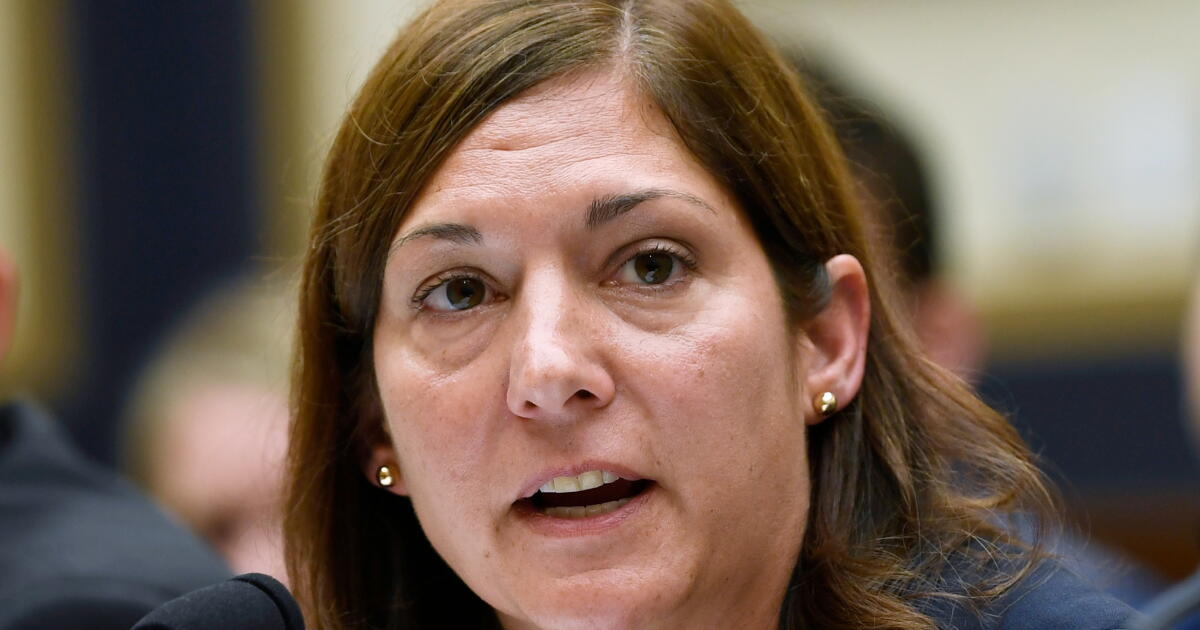
Hunter Biden says pardon was ‘not good’ for America or his father’s legacy

Hunter Biden has told the BBC he is “the most privileged person there is” after receiving a presidential pardon from his father, former US President Joe Biden, acknowledging it was not a good choice for America or his father’s legacy.

In a wide-ranging interview with the BBC’s Newsnight, Hunter Biden defended the controversial pardon, reflected on his father’s declining health, ruled out seeking elected office and spoke about helping others recover from addiction.

Asked about the 2024 pardon, he said he understood the criticism but noted: “What would you have thought of my dad if he did not do that for me.”

“It’s something that is easily criticised and for good reason,” he added.

“It’s not fair… All I know is that I’m grateful that he did it for me,” he said, acknowledging the pardon was “not good” for the American people, the Constitution – or his father’s legacy.

He argued to the BBC that his father ultimately acted out of concern that he would become a target under Donald Trump’s incoming administration.

“I was the only one in the world that could have gotten what I got from the only person in the world who could give it, my father.”

Hunter Biden also insisted he and his father had never discussed the possibility of a pardon before it was granted.

“There is no way that you can have those kinds of discussions that would not become public,” he said.

President Biden granted his son a full and unconditional pardon in December 2024, despite repeatedly saying beforehand that he would not use the powers of the presidency to intervene in his son’s legal cases. In announcing the decision, the former president said his son had been “selectively and unfairly prosecuted”.

The pardon covered his son’s federal gun conviction, a tax case he’d pled guilty to and any federal offences committed between 2014 and 2024.

Source link

Commonwealth Games 2026: Georgia Hunter Bell eyes golden sweep after Glasgow win

Georgia Hunter Bell is eyeing an ambitious sweep of gold medals in 2026 after winning the 800m Commonwealth Games title in Glasgow.

England’s Hunter Bell dominated the field to add Commonwealth gold to the 1500m world indoor title she won earlier this year in Poland.

The 32-year-old, a training partner of 800m Olympic champion Keely Hodgkinson, will also race at next month’s European Championships and the inaugural Ultimate Championships in September.

“There are four opportunities to win gold this year,” Hunter Bell told BBC Sport.

“I am two golds down and two more to go.”

Hunter Bell is blossoming later in her career.

Having taken five years out from the sport before returning during the Covid-19 pandemic, she took 1500m bronze at the Paris Olympics before pipping Hodgkinson to silver at last year’s World Championships in the 800m.

This, though, is her first outdoor title – in the event Hodgkinson is Olympic champion.

“Every medal is a landmark moment but my first outdoor gold is huge,” she said.

Hunter Bell and Kenya’s world champion Lilian Odira were the favourites for this title after Hodgkinson opted not to compete. The final was barely a contest with Hunter Bell setting the pace and then kicking on with 200m to go to win by more than a second.

Hodgkinson has instead taken time off before the European Championships in Birmingham, which start on 10 August.

Hunter Bell is only running in the 1500m in that event, denying the chance to see an intriguing race between the pair, but took her opportunity in her friend and training partner’s absence.

Though she said the win validates her decision to come to Glasgow, she defended the decision of others to withdraw.

Source link

‘Leviticus’ review: Marks the arrival of another major new horror voice

In Australian writer-director Adrian Chiarella’s knotty roller coaster of a feature debut “Leviticus,” about a demon tormenting a pair of queer teenage boys, the fear is more insidious than the external threat of a violent bigot or shunning parent.

In an abandoned mill in their blighted industrial town, quiet new kid Naim (Joe Bird) and brash hunk Ryan (Stacy Clausen) allow a friendly, mischievous connection to turn into something more. But when Naim later secretly observes his new crush fiercely locking lips with another classmate, Hunter (Jeremy Blewitt), son of a leader in the tight-knit church that Naim’s single mom (Mia Wasikowska) just joined, hurt gets the better of Naim’s instincts and he secretly informs on the pair.

The church’s punishment, however, delivered in front of the congregants, is an eerie ritual performed by a gaunt, severe visitor (Nicholas Hope). Called a “deliverance healer,” his fire-and-brimstone method — making incarnate the title’s Biblical book, regularly used to justify anti-LGBTQ viewpoints — leave Ryan and Hunter writhing in agony. Afterward, Naim, sensing he might have unwittingly set into motion something awful, notices bizarre behavior in the stricken-looking Ryan. When they try to furtively rekindle their passion, it becomes violently clear they are not alone. Or even, it seems, themselves.

The feeling that nowhere is safe is a durable horror concept, the backbone behind such classics as “Nightmare on Elm Street” and “It Follows.” In “Leviticus,” which is expertly paced by editor Nick Fenton, it comes with a flair for open-space unease and unexpected claustrophobia that puts director Chiarella in a long line of savvy Australian mood-setters like Peter Weir and Fred Schepisi. These filmmakers knew how to fold tactile dread into a worthy narrative, rather than treat genre as if it were a kit with instructions.

But most urgently and bleakly, Chiarella is giving religious-based conversion therapy its devilish due as a warping of the soul designed to sow distrust in one’s own desires. He’s careful, however, not to tell a tale that would speak to homophobes. As distressing as their circumstance is, Naim and Ryan are unmistakably positioned as heroic lovers, not victims-to-be. Chiarella takes time between bouts of danger to show affection and intimacy that, in defiance of teen-slasher formula, isn’t immediately penalized with sadism. But their fraught relationship will decidedly keep you nervous, so score one for multilayered storytelling.

Points, too, for the solid casting, from the leads’ tricky pivoting from openness to caginess, to the criminally underseen Wasikowska, who navigates maternal complexities of worry and compassion that confound easy pigeonholing. If anything, the movie could have used more of her, although it’s better overall that “Leviticus” prioritizes Naim and Ryan as queer protagonists caught in a chilling loop of escape and reunion. We already know what’s out there, ready to do harm. This movie’s nail-biting, sorrowful power comes from what internalized destruction looks like.

‘Leviticus’

Rated: R, for bloody violent content, language, some sexual content and teen drug use

Running time: 1 hour, 28 minutes

Playing: Opens Friday, June 19 in wide release

Source link

Joe Hunter talks blocking ‘Survivor’ players online and ‘Joetation’

Survivor 50” castaway Joe Hunter has made it to the final tribal council of the grueling competition show twice, but walked away with slim to none when it came to jury votes.

On Wednesday night, four-time “Survivor” player Aubry Bracco was crowned sole survivor and won the not $1-million but $2-million prize (thanks to a twist that involved a coin toss and MrBeast), and Jonathan Young came in second. Hunter, a firefighter and fan favorite, lost on an 8-3-0 vote.

According to Hunter, jury members had made up their minds before the remaining three castaways even had a shot to sweeten their chances at the final tribal council.

“I sit down in that chair for final Tribal, right? I’m thinking alright, here we go,” Hunter told “Entertainment Weekly.” “Right away, the second before any word was said, I went, ‘Oh, that one hates me, this one hates me, hate me, hate me, hate me.’ And I thought, ‘There’s zero chance.’”

Hunter was somewhat optimistic leading up to the tribal council and said that he thought some of the jury members had come with an open mind. “I’ll give credit to Emily, Rick Devens, Christian, Dee,” he said.

“I just felt it was very transparent based on the questions and responses that, before this thing started, I think it was a wrap.”

During the series finale, “Survivor” legend Cirie Fields put Hunter on blast, saying that castaways felt like they had to babysit him and jokingly calling it the “Joetation” when it was a player’s turn to sway Hunter to vote alongside them.

Hunter chalked up the babysitting remark to his own naivete when it came to being vulnerable with other players he thought were his friends on the island. “I just put that vulnerability in the wrong hands,” he told the outlet. “That’s really what it is. And that’s part of the game.”

Hunter also spoke with “Entertainment Tonight” and admitted that yes, he’d blocked a select few “Survivor” players on social media. “So, 751 players,” Hunter said, “yeah, there’s two.

“I’ll tell you this, each one of them is not random,” he said. “Actually, there’s three. It is not random. … All of which I would love to talk to and solve it, and have tried.”

Last week, former “Survivor” players Kelley Wentworth, who’s been a castaway three times, Savannah Louie, who won Season 49 and was on the same tribe as Hunter in Season 50, and Tiffany Ervin, who competed on Seasons 46 and 50, all said they’d been blocked by Hunter.

Source link