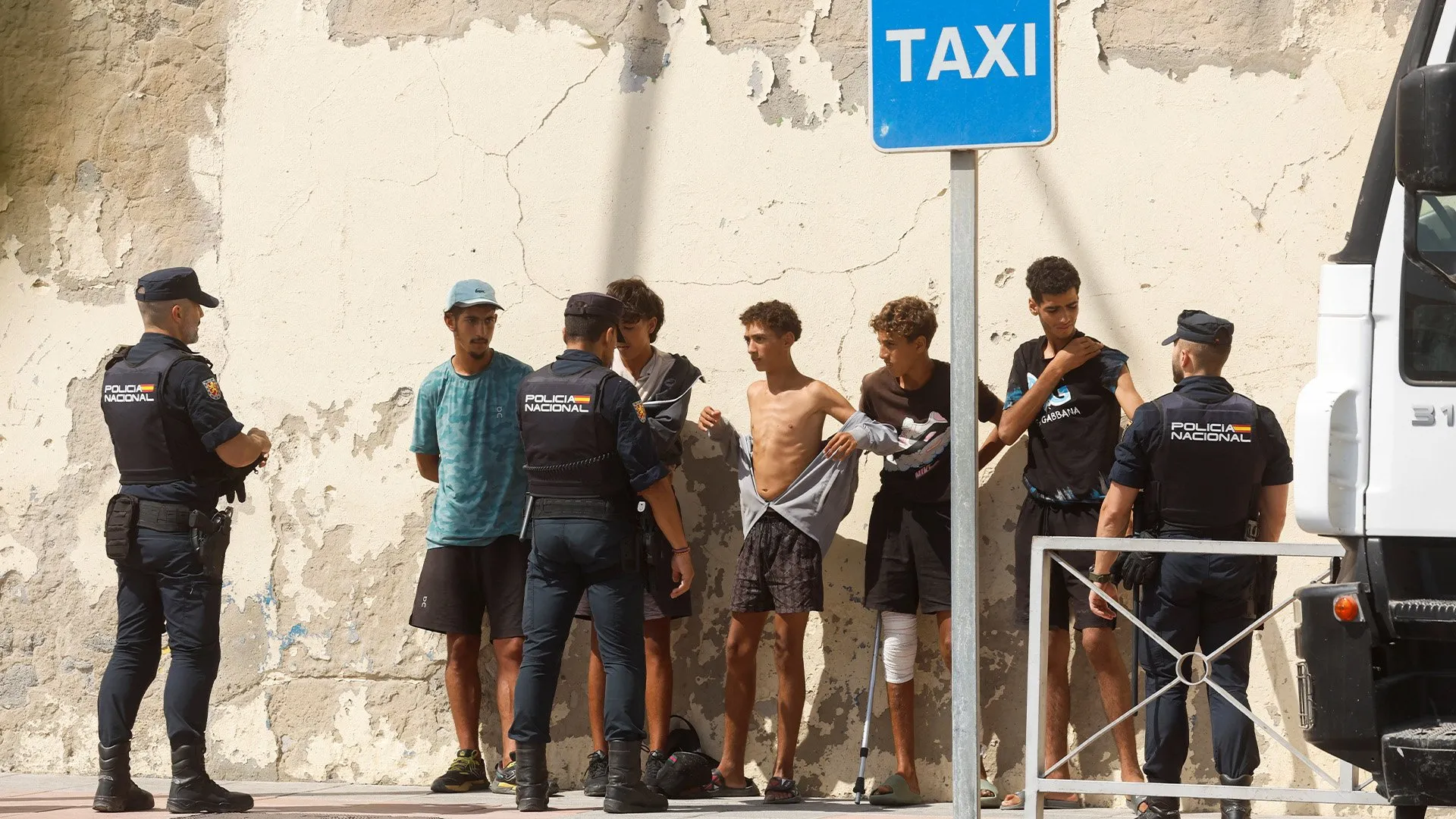
Authorities estimate that at least 10,000 people remain in the enclave of Ceuta after a record surge of 72,000 migrants crossed from Morocco to Ceuta over the course of two days in late July, overwhelming local resources and creating a humanitarian crisis.
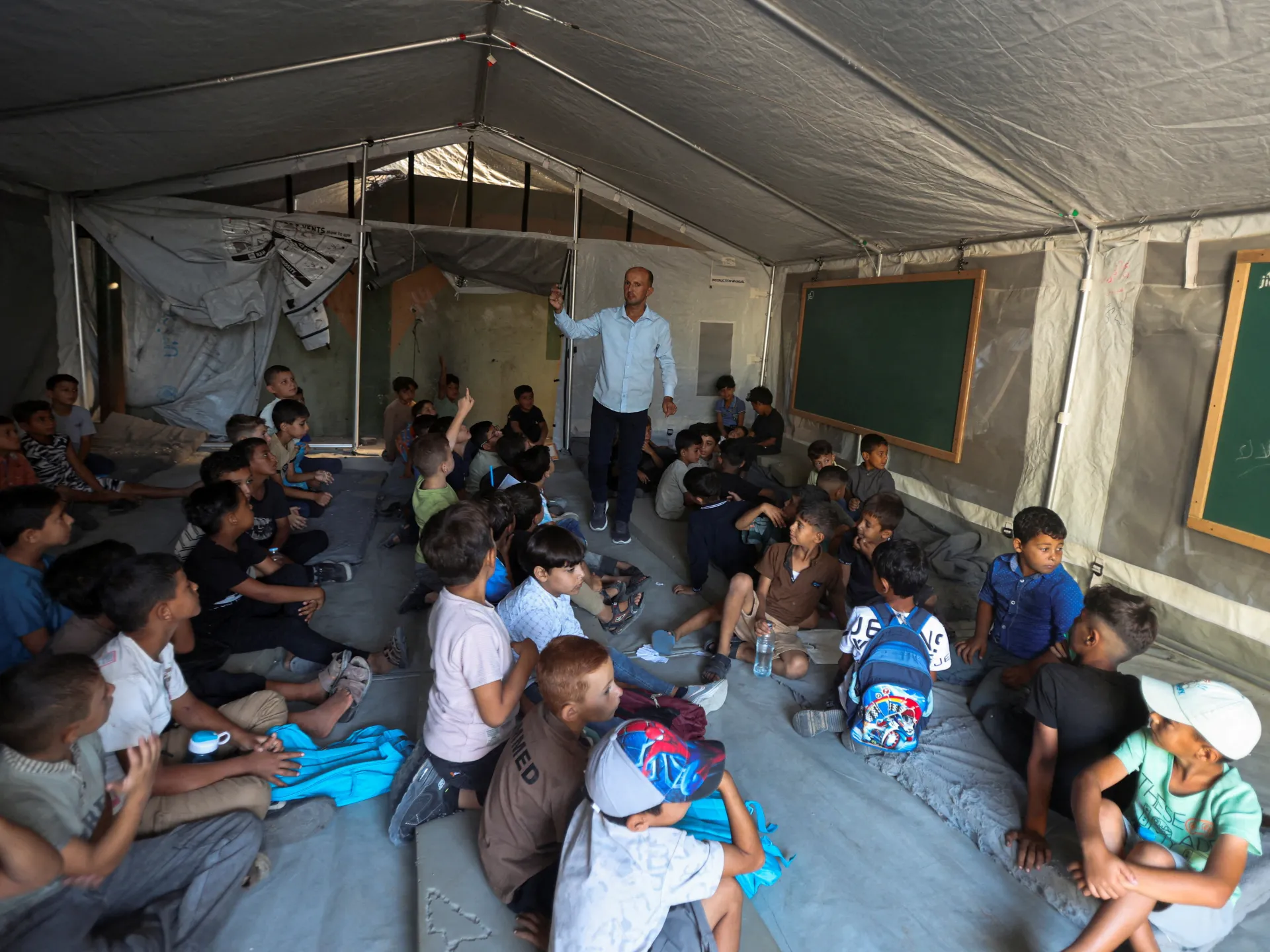
Hundreds of thousands of children returned to in-person classes in Gaza on Saturday for the first time in nearly three years, filing into damaged school buildings, makeshift classrooms and tents amid a severe shortage of basic supplies.
The United Nations Children’s Fund (UNICEF) says 98 percent of schools in the Gaza Strip were destroyed or damaged during Israel’s genocidal war on the enclave, while local education officials estimate about 660,000 students have been deprived of regular, in-person learning.
The reopening is a fragile milestone in a territory where about 22,000 students and more than 770 education workers, including 532 teachers, have been killed, according to Ibrahim Ramadan, director of education for eastern Khan Younis.
“The last time I have been to school was three years ago,” said student Moayed Abu Mustafa in Khan Younis. “Now, we are starting the school year; it is year of joy, happiness and success. Despite all of this, we will learn, we will learn even in a tent.”
Moayed has no proper shoes, notebook or pen, and will sit on the floor in a sweltering tent.
Across Gaza, the Ministry of Education, backed by aid agencies, has set up dozens of temporary schools from tarpaulins, sheet metal and wood. Some classrooms consist of a few mattresses and a blackboard; others still shelter displaced families.
“We studied on phones, and we haven’t seen our teachers. Now, we are back pursuing our dream … from one tent to another,” said 15-year-old Samar Abu Salmi, who lives in a tent with her family and can no longer afford school supplies that were cheap before the war.
Stationery trader Khaled Aliyan said Israeli import restrictions have driven prices up fivefold. “All stationery items are expensive,” he said.
Israeli forces still control more than 60 percent of Gaza despite an October 2025 “ceasefire” that halted large-scale fighting but left the underlying conflict unresolved.
50,000 frontline staff to receive a jab for a different Ebola strain, with 20,000 enrolled in a one-year clinical trial.
Published On 20 Sep 202620 Sep 2026
Health workers in parts of the Democratic Republic of the Congo (DRC) have begun to receive a vaccine that many hope will provide a level of protection against the Ebola virus.
The vaccine rollout started on Saturday in Bunia, the capital of Ituri province in the northeastern DRC. Ituri is the epicentre of the fastest-growing outbreak of Ebola in history.
Recommended Stories
list of 3 itemsend of list
The provincial governor, Major-General Gaby Kasongo Mulumba, said health workers there “are particularly exposed and deeply involved in the response”.
The operation, backed by the World Health Organization and Doctors Without Borders, known by its French initials MSF, will also target North Kivu, where cases have been rising sharply, health authorities said.
Some 50,000 health and other frontline workers will be injected with the Ervebo vaccine, which was developed for use against the more common Zaire strain.
Its effectiveness against the current Ebola strain caused by the Bundibugyo virus will be monitored in 20,000 recipients for up to one year.
Clinical trials are ongoing to find a licensed vaccine for the latest outbreak, which has no licensed vaccine or proven treatment.
“We don’t know to what degree it might be effective against the Bundibugyo strain,” Steve Ahuka, a Congolese official who is part of the health task force against the Ebola outbreak, said.
Dr Jeannot Elua said at a health facility in Bunia the vaccine was “beneficial”.
“We healthcare workers don’t really have a choice. We are going to receive it,” he told the Associated Press news agency. “Some people here had already received the previous vaccine. I received it myself, because it was mandatory.”
WHO experts have said that early data on the Ervebo vaccine, notably from animal trials, suggested it could offer some protection in the current outbreak.
The virus has killed at least 3,639 and infected some 7,541 people since May. Some 1,823 people have recovered, according to the latest figures from local authorities.
Workers at the Ceca-20 cemetery in Mongbwalu, Ituri province, Democratic Republic of the Congo, on July 14, 2026, as aid agencies intensify efforts to contain an Ebola outbreak caused by the Bundibugyo virus [File: Gradel Muyisa Mumbere/Reuters]
The WHO said in August that 70,000 doses of Ervebo were approved for use in the DRC.
The vaccine is being used under a compassionate-use programme, which allows a medical product to be used in a serious disease situation even though it has not been specifically approved for that particular use.
While WHO officials have cited “encouraging signs” that transmission may be slowing, MSF warned on Friday that there is no clear evidence the epidemic is coming under control.
Deir el-Balah, Gaza – A handful of electronic components, a few wires and a basic programmable circuit board are enough to bring a group of curious children around a table in central Gaza to learn about robotics.
Students at The Next Gen Team: Rising Robotics Engineer Project in Deir el-Balah learn how to integrate sensors into alarm systems, study robotics, understand how motors and drive units work, as well as get firsthand experience with programming.
Recommended Stories
list of 4 itemsend of list
The children’s research could save lives in the future. The robotics and early warning systems they are working on could make way for bigger developments such as early detection of gas leaks and fires or help rescue workers access hard-to-reach areas, such as victims trapped under rubble.
Today’s lesson will also teach students the sciences of the future and help them keep pace with technological advancements happening outside Gaza’s borders.
Before the war, students had access to schools, universities, incubators and training programmes to pursue an interest in technology.
With much of that infrastructure now destroyed or damaged during Israel’s genocidal war on Gaza, there are few places and tools for students to work with.
But their interest in robotics and will to learn are helping them maintain their skills and ambitions for the future, something they hope will be of benefit when the bombs stop falling on Gaza.
Hamza al-Atrash, 16, is a student taking part in the “Next Gen” project and learning how electronic components can be used to develop robots and early-warning systems. To do this, he is using an Arduino controller – a programmable circuit board which connects sensors – and some other electronics.
Students work with what they have, but a shortage of equipment and electricity outages make studying a challenge.
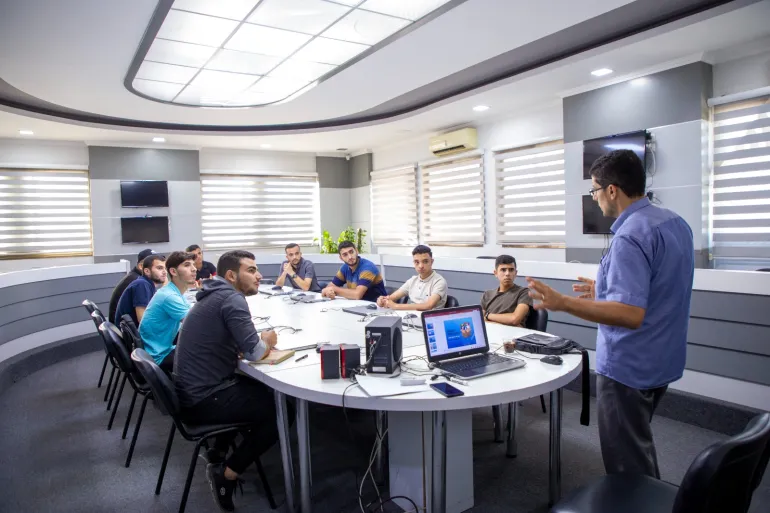
A view of a technology incubator in Gaza before the war, where students received training in technology and innovation [Iyad Al-Qatrawi/Al Jazeera]
“We have capabilities and aspirations that we want to develop, and we try to take advantage of every available opportunity for learning and training,” Hamza tells Al Jazeera.
Hamza hopes the skills that he and his cohort learn in class will benefit his community and provide new opportunities for young people in Gaza.
“The lack of devices and equipment doesn’t mean we’ll stop. It pushes us to look for solutions and make the most of the simple tools we have,” he said.
The challenges facing these students are part of a wider disruption to Gaza’s technology and innovation sector.
Before the war, Gaza had several incubators that supported technology projects and startups. Bahaa al-Masri, head of the training team for the Early Warning Systems and Robotics Project, said it provided a rare bit of hope for children and young adults in the besieged enclave.
“These incubators provided an environment for training and development. They helped innovators and entrepreneurs turn their ideas and projects into prototypes and ventures,” he told Al Jazeera.
The war severely damaged this ecosystem: training spaces were lost, equipment difficult to find, and students and innovators left with limited opportunities to experiment and develop their ideas.
A view of a technology incubator in Gaza prior to the war, which provided an environment for training, incubating tech projects, and supporting students in the fields of technology and innovation [Iyad Al-Qatrawi/Al Jazeera]
Although challenges remain, the trainers are continuing their mission of educating budding tech experts in Gaza.
“We have a generation of students who possess genuine passion and talent in technology and digital systems,” he told Al Jazeera. “They need the environment and tools to develop these abilities and turn their ideas into projects that can serve their community and their future.”
Education pays the price
The near-collapse of Gaza’s technology sector has coincided with the widespread destruction of the education system, with schools, universities and research facilities repeatedly targeted by Israel during the war.
Preliminary estimates from the Government Media Office in Gaza put direct losses to the education sector at approximately $4bn. Seventeen higher education institutions have been completely or partially destroyed since October 2023, preventing about 620,000 high school students and 90,000 university students from continuing their education.
Approximately 20,228 students and 830 teachers and educational staff have also been killed, along with 194 scientists, academics and researchers.
For students seeking to enter technical fields, the loss of such educational facilities and teachers means fewer opportunities to gain practical experience and hone their skills.
Before the war, the IT industry was one of the promising sectors of Gaza’s economy and a rare source of foreign income, said Ahmad Abu Qamar, an economic affairs specialist and board member of the Palestinian Economists Syndicate.
It was also an opportunity for employment for thousands of university graduates entering a job market with high unemployment, with roughly 80 percent of its economic activities directed towards foreign markets.
Abu Qamar estimates that the IT sector now runs at less than 25 percent of pre-war levels, while more than 70 percent of IT companies in Gaza have completely or partially halted operations.
But even if a company’s offices or equipment survived the war on Gaza, damage to digital infrastructure has also made it difficult for companies to continue functioning.
Prices of some technical equipment – including computers, mobile devices, servers, routers, fibre-optic lines, and cabling – used in the industry have increased by more than 600 percent due to the difficulties of importing devices during Israel’s ongoing siege on the enclave.
According to his estimates, about 30,000 IT professionals have lost their jobs since the war began. General unemployment is at nearly 80 percent and poverty at more than 90 percent in the enclave.
UCAS Technology Incubator, one of the most prominent incubators of the University College of Applied Sciences in Gaza, was destroyed during the war, as part of extensive damage to the institutions and structure of the technology and digitisation sector in the Strip [Iyad Al-Qatrawi/Al Jazeera]
Brain drain
A severe shortage of vital IT equipment – such as storage devices, routers, and laptops – has been compounded by the destruction of supporting internet and electricity infrastructure, including primary and secondary networks, according to technology and digital economy expert Abdullah Altahrawi with the UCAS Technology Incubator. This makes the task of rebuilding Gaza’s IT sector an even bigger challenge than before the war, particularly with Israel’s more crippling siege on Gaza.
“The repercussions have extended to dealings with foreign markets, including the purchase of servers and electronic services, the management of digital accounts, the use of cards and e-commerce,” Altahrawi said.
Before the war, Gaza’s five main incubators provided training, mentoring, workspaces and support for tech startups. Perhaps most crucially, it also gave students a place to develop their skills, connect with foreign markets, and find job opportunities.
Just two incubators – the UCAS Technology Incubator, affiliated with the University College of Applied Sciences, and the Ma’an Center for Innovation and Entrepreneurship Incubator, have resumed operations since the October 2025 ceasefire. But their capacity has not managed to exceed 20 percent of pre-2023 levels.
Due to the damage caused by three years of Israeli bombing and a shortage of real estate, just 1 percent of technology companies now have offices, while only 10 percent of business incubators have an operational office space.
Companies looking to rebuild and universities ready to teach a new cohort of tech students have also been hit by a brain drain in the sector, severely hindering development and innovation.
“More than 80 percent of highly skilled and experienced professionals in the technology and digital fields have left the Gaza Strip,” Altahrawi said. “Gaza’s future is inseparable from its ability to restore and develop its technology sector.”
Two back-to-back Israeli air strikes hit Lebanon’s southern city of Nabatieh, while a third strike targeted an ambulance team responding to the attacks. At least 4,386 people have been killed and 12,400 injured since 2 March, when the current Israel-Hezbollah war began.
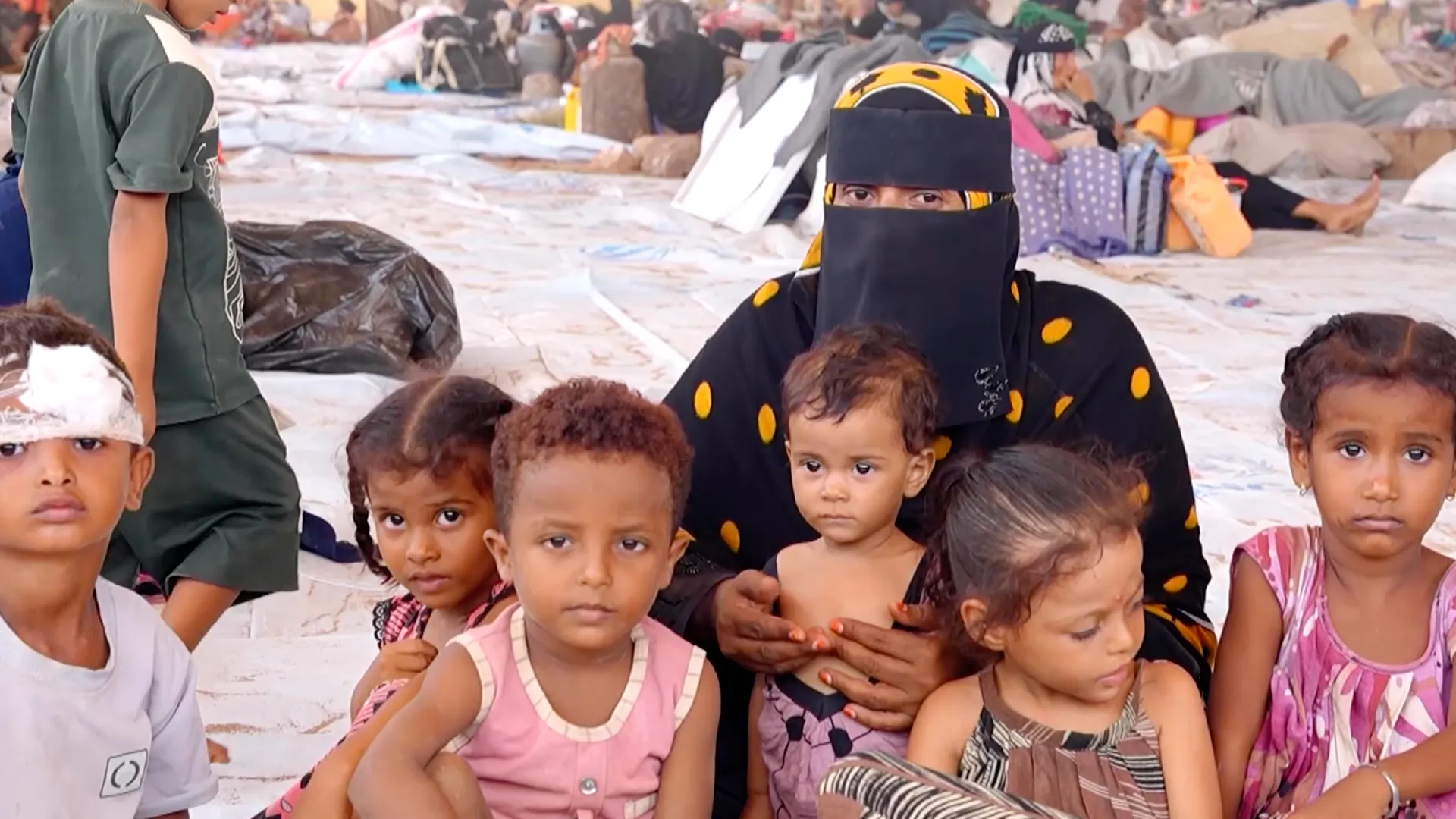
More than 2,700 Yemenis have fled to Djibouti, many making dangerous sea crossings to escape the conflict. Al Jazeera’s Hasan Razzaq spoke with some of those who have arrived in the northern town of Obock, where they are seeking shelter and assistance.
New Delhi, India – On the morning of August 26, the Himalayan landscape above Nepal’s Rasuwa district changed in minutes.
A mass of ice and rock broke loose high in the mountains and sent a violent surge of water, mud and debris down the Lhende Khola River. The torrent travelled through valleys, swept away settlements and infrastructure and eventually reached the Nepal-China border.
What followed was not simply a flood.
It was a chain reaction.
By mid-September, more than 1,400 people had been reported dead and at least 6,000 remained missing in Nepal and across the border in Tibet. Twelve hydropower plants were destroyed, while roads, bridges and homes were buried or washed away.
The scale of the destruction has left scientists and disaster managers confronting a difficult question: How do you warn communities about a disaster whose trigger may occur high above them, in terrain that is difficult to monitor and where there may be only minutes to react?
Basanta Raj Adhikari, director of the Centre for Disaster Studies at Tribhuvan University in Kathmandu, described the event to Al Jazeera as unprecedented in size, affected area and mechanism. His estimate suggested that the energy involved was greater than that released by the Hiroshima atomic bomb, a comparison intended to illustrate the scale of the physical forces involved rather than suggest that the event was equivalent to a nuclear explosion.
For scientists who study the Himalayas, the disaster demonstrated how quickly an event originating in a remote, high-altitude environment can become a regional catastrophe.
And Nepal is not alone.
The warning problem
A warming climate is altering glaciers, snow cover, permafrost and high-altitude lakes. At the same time, roads, hydropower projects, tourist facilities and settlements have pushed deeper into mountain valleys.
That combination is creating a new risk landscape in which one hazard can trigger another.
An avalanche can block a river. A blocked river can form a temporary lake. A sudden release can become a debris flow. That debris can destroy a road or bridge, block another river and create another flood downstream.
The August disaster in Nepal showed how quickly such a sequence can unfold. It also exposed a weakness in the way early-warning systems are often designed.
Many systems are built around a particular hazard: rainfall, river level or glacial lake outburst flood. But the Himalayas do not always respect those categories.
In July, the International Centre for Integrated Mountain Development, or ICIMOD, warned that a below-normal monsoon should not be interpreted as a safer one.
“The biggest misunderstanding is that less seasonal rainfall means lower flood risk,” said Saswata Sanyal, a disaster risk reduction specialist at ICIMOD.
“A drier monsoon can still be a dangerous monsoon,” he added, warning that seasonal averages cannot capture the cloudbursts capable of producing catastrophic flooding in mountain valleys.
The Nepal disaster went a step further.
The immediate trigger was not simply heavy rainfall.
Scientists have been examining an ice-rock avalanche and other possible processes that temporarily obstructed the river system before releasing a destructive surge. ICIMOD has described the event as an ice avalanche rather than a conventional glacial lake outburst flood, while other scientists have examined the role of local seismic activity and other high-altitude processes.
That distinction matters.
A warning system waiting for rainfall or a rising river may not provide enough time when the real trigger happens several kilometres upstream and above the line of sight of the communities below.
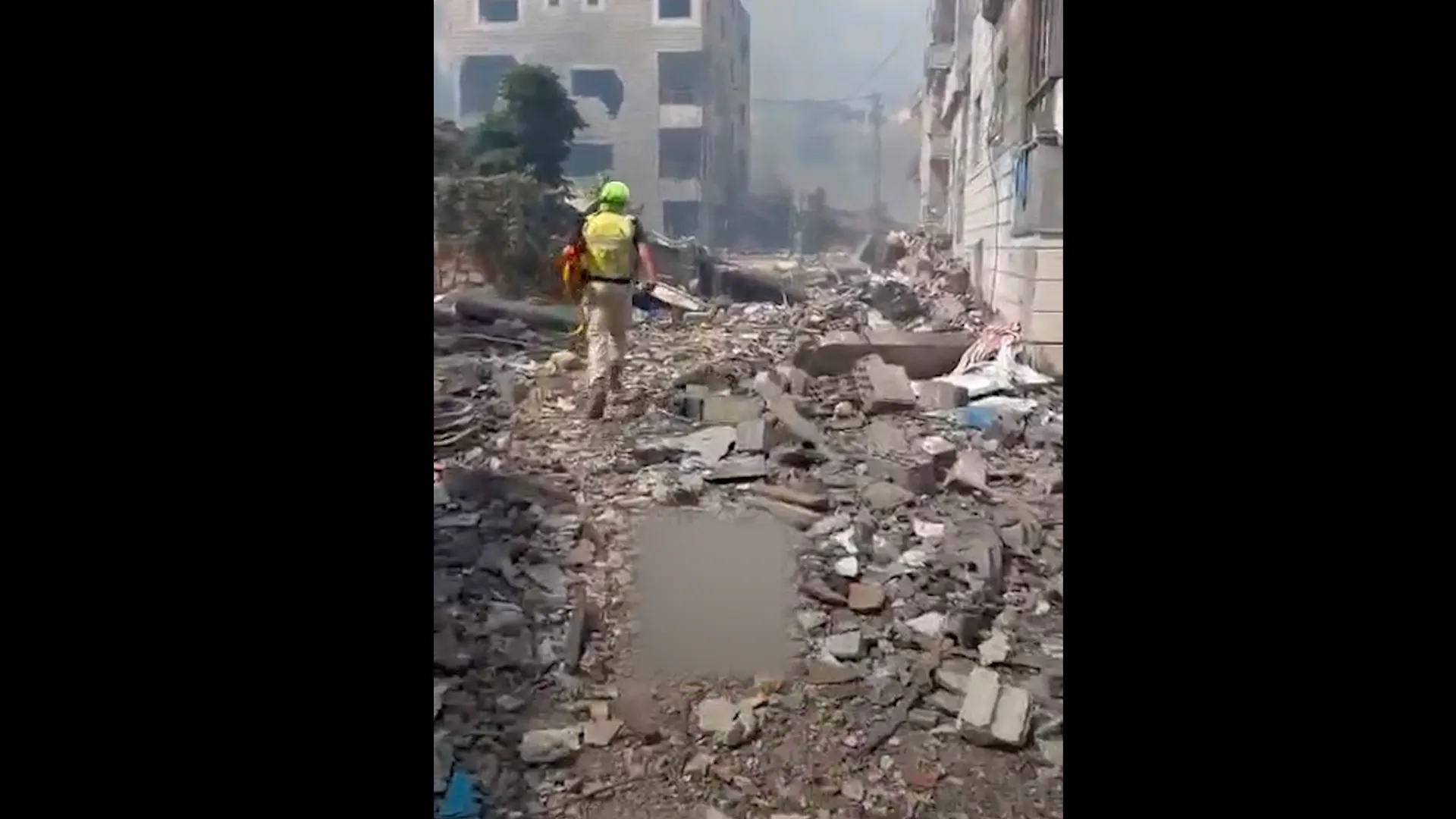
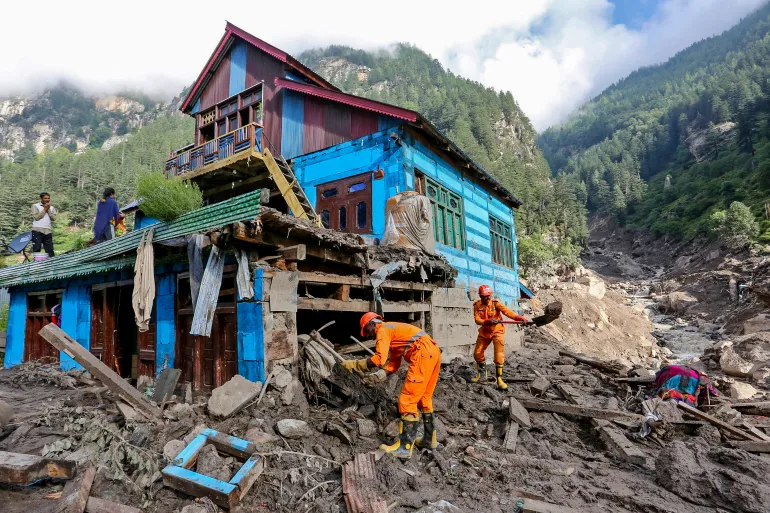
Indian National Disaster Response Force (NDRF) personnel conduct a search and rescue operation at the site of a flash flood at a village in the Kishtwar district of Indian-administered Kashmir on August 16, 2025 [AFP]
Kashmir’s warning signs
Thousands of kilometres away, scientists studying Kashmir’s Himalayas are seeing another part of the same problem.
A study published in the Journal of Glaciology this year mapped 155 glacial lakes above 2,500 metres (8,200ft) across the Himalayas in Indian-administered Kashmir.
The researchers found that the area of ice-contact proglacial lakes – bodies of water that form directly against the margin of a melting glacier, trapped by moraine ridges, bedrock basins, or ice dams – had increased by 26 percent between 1992 and 2024.
Five lakes were classified as having very high susceptibility to glacial lake outburst floods.
An outburst from those lakes, the researchers found, could threaten several thousand buildings, 15 major bridges, roads and a hydropower project.
More significantly, the study warned that hazards could occur in chains, with an upstream lake outburst potentially triggering secondary events downstream.
For Irfan Rashid, a glaciologist and associate professor at the University of Kashmir who co-authored the study, the implications extend beyond individual lakes.
Rashid recently told Al Jazeera that without action, the melting, thinning, and destabilisation of glaciers, seasonal snow cover, and permafrost along the Hindu Kush-Himalayas system would increase, and water shortages could become a major problem across the Upper Indus, Ganga and Brahmaputra basins by the end of the century.
That is why the Nepal disaster resonates in Kashmir.
The landscapes are different, the rivers are different and the individual hazards may differ. But the underlying problem is increasingly similar: Communities living downstream of a rapidly changing high-altitude environment may have little time to respond when something breaks loose above them.
The challenge is particularly acute in places where roads, bridges and hydropower projects occupy narrow valleys.
Once a mountain river begins carrying enormous quantities of rock, ice and mud, infrastructure designed for conventional floods can quickly become irrelevant.
Volunteers rescue flood-affected victims along with their livestock using a boat following heavy rains and overflowing of the Sutlej River, on the outskirts of Multan in Punjab province, Pakistan, on September 4, 2025 [Shahid Saeed Mirza/AFP]
Pakistan has already begun building a warning network
The same concern runs across the western Himalayas and Karakoram ranges.
The Gilgit-Baltistan region in Pakistan-administered Kashmir contains hundreds of glaciers and glacial lakes, while communities and infrastructure sit along valleys exposed to sudden floods and landslides.
Pakistan has responded by expanding early-warning infrastructure.
Under a United Nations-supported programme, early-warning systems, evacuation shelters, disaster-management centres and other protective measures have been established in vulnerable valleys.
But technology alone cannot solve the problem. A sensor can detect a change. Someone still has to receive the message. Someone has to understand what it means. And people downstream have to have a route to safety.
That last part is often the weakest link. A siren is useful only if the people hearing it know where to go. An automatic warning is useful only if it arrives before the flood. A satellite image is useful only if the information can be converted into a decision quickly enough to save lives.
This is why disaster scientists increasingly talk about anticipatory action rather than simply disaster response.
“The era of preparing for a single, predictable hazard is over,” Sanyal said earlier this year. “Anticipatory action and early warning must now be the foundation.”
Nepal army soldiers work during a search and rescue operation outside a tunnel near a hydropower project site, following deadly flash floods and mudslides, in Rasuwa district, Nepal, on September 1, 2026 [Reuters]
The infrastructure trap
The Himalayas are also becoming more heavily engineered.
Hydropower is central to Nepal’s economy. Roads are being expanded. Border crossings are growing in importance. Tourism is pushing deeper into remote valleys.
The benefits are obvious. So are the risks.
The August disaster struck an area where hydropower infrastructure was concentrated along the river corridor. At least 900 workers were believed to have been inside tunnels and other facilities in the aftermath, making rescue operations extraordinarily difficult. Two workers were eventually pulled alive from a hydropower tunnel nine days after the disaster.
The question is no longer simply whether infrastructure can withstand a flood. It is whether planners have adequately considered what happens when a flood is carrying an enormous mass of rock and ice, when a river changes course, or when one mountain hazard triggers another.
For decades, engineering risk assessments have often relied on historical records. But history becomes a less reliable guide when the physical conditions producing disasters are changing.
A river that flooded once every several decades may no longer behave according to the same pattern. A glacier that appeared stable from satellite imagery may sit beneath an increasingly unstable slope. A lake that was considered remote may suddenly become a threat to a road, village or power plant hundreds of metres below.
Relatives of victims and missing people react outside the morgue of the Tribhuvan University Teaching Hospital (TUTH), in Kathmandu, Nepal, August 29, 2026 [Narendra Shreshtha/EPA]
The border problem
There is another complication that no satellite can solve on its own.
Borders.
The Himalayas are divided among countries with different political systems, security concerns and approaches to sharing information. But rivers do not stop at international boundaries. Neither do floods.
The August disaster reached the Nepal-China border and damaged the Gyirong crossing, an important trade and pilgrimage route. The disaster also raised questions about how quickly information about hazards in high mountain areas can move between countries.
This is where regional cooperation becomes more than a diplomatic slogan, experts say. A sensor positioned in one country can provide warning to people in another. A satellite image collected over one mountain range can reveal a developing hazard that threatens a valley downstream. A river gauge can provide critical information before floodwaters reach a settlement.
The technical capability already exists in many cases. The missing piece is often the architecture connecting it.
A 2026 assessment of Himalayan disaster risks has argued for stronger monitoring, early-warning systems and regional coordination because hazards are increasingly interconnected.
The idea is simple: Information about a mountain hazard should not stop at the same line where a political boundary begins.
Buildings are inundated after flash floods triggered by sudden heavy rainfall swamped Rangpo town in Sikkim, India, Friday, October 6, 2023 [Prakash Adhikari/AP Photo]
From Nepal to Sikkim to Kashmir
The August disaster in Nepal isn’t a tragedy belonging to one country, point out experts.
The Kashmir Himalayas study has already identified lakes capable of producing destructive outburst floods and has warned of cascading processes.
Northeast India’s Sikkim provides another example.
Today, 40 high-risk glacial lakes have been identified in Sikkim, including 16 placed in the highest-risk category, with authorities working on drainage, flood-retention and other protective measures.
But the lesson from each disaster is broadly the same: Waiting for a disaster to prove the risk is the most expensive form of preparedness.
The world’s second largest mountain, the 8,611-metre- (28,251ft-) high K2 (seen in the distance), and the 8,051-meter- (26.414ft-) high Broad Peak (R), are illuminated by the moon at Concordia, the confluence of the Baltoro and Godwin-Austen glaciers, in the Karakoram mountain range in Pakistan, September 7, 2014 [Wolfgang Rattay/Reuters]
The Third Pole test
The Himalayas are sometimes called the Third Pole because they contain one of the world’s largest concentrations of snow and ice outside the Arctic and Antarctic.
Major Asian rivers depend on water originating in these mountains. Hundreds of millions of people live downstream.
That makes the changing Himalayas not only an environmental issue but a security, infrastructure and humanitarian one.
The August disaster demonstrated the most frightening version of that future. A mountain can collapse without warning. A river can become a weapon of debris. A hydropower tunnel can become a trap. A border crossing can disappear in minutes. And by the time people downstream understand what is happening, the water may already be there.
It’s a future that a region stretching from northeast India, spanning Tibet, Nepal, Kashmir and Pakistan, can no longer ignore. Yet disaster management remains largely divided by national boundaries. That contradiction is becoming harder to navigate.
The next glacial collapse could begin in Kashmir. It could begin in Pakistan’s high mountains. It could begin in Sikkim, Nepal or Tibet.
Wherever it starts, the same question will follow the mountain downstream: Who knew, how early did they know, and did the warning reach the people in time?
For a region entering an era of increasingly complex mountain hazards, that may be the real measure of whether the Third Pole is prepared.
Separate attacks struck central refugee camps as officials warned Gaza’s health sector faces total collapse.
Published On 19 Sep 202619 Sep 2026
An Israeli strike on a motorcycle has killed one Palestinian and injured others, with one child in critical condition, reports the Palestinian Wafa news agency.
The air strike targeted the vehicle in the Sheikh Radwan neighbourhood, west of Gaza City, on Friday. Ongoing Israeli strikes on the besieged enclave have killed at least 1,381 people since the ceasefire was announced in October 2025.
Recommended Stories
list of 3 itemsend of list
Israel has killed at least 73,795 people and wounded 174,869 others since the start of its genocidal war in October 2023.
On Friday, the Israeli army also opened fire in the Nuseirat and al-Bureij refugee camps in the central Gaza Strip, reports Wafa. The attacks on tents sheltering displaced people have resulted in multiple injuries.
Earlier this week, an Israeli “double-tap” air strike killed a paramedic and a 15-year-old schoolboy in Gaza City. Israeli forces claimed they were targeting Hamas operatives.
Last month, UNICEF found that, on average, one child is killed a day by Israel.
Families are now confined to about a third of the enclave, sheltering among destroyed buildings, rubble and uncleared waste, the agency said.
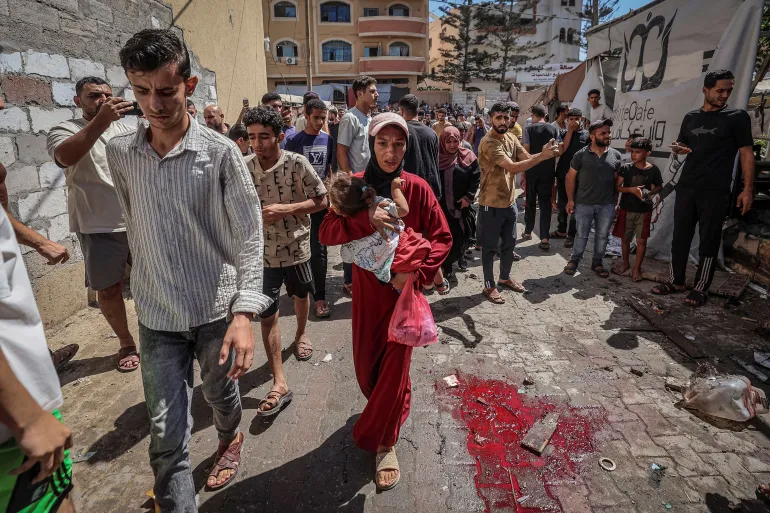
A Palestinian woman carries a girl past a blood stain on the ground after an Israeli drone strike on a cafe in al-Bureij camp, central Gaza Strip, on September 16, 2026 [File: AFP]
On Wednesday, a previously damaged building collapsed in Gaza City, killing at least 21 people, including 12 children. The Palestinian Civil Defence agency in Gaza struggled to recover bodies from under the rubble due to Israel’s severe restrictions on heavy equipment.
The Health Ministry warned on Wednesday that Gaza’s health system was on the verge of “total collapse” as Israel continues to limit the amount of medical aid and fuel permitted to enter the enclave.
In Super Macklemore 64, players are chased by a giant Ed Sheeran, dodge tiny billionaire Robert Krafts and summon musicians to chant “Free Palestine”. Creator Jonathan Mann says it highlights the “absurdity” of Macklemore being dropped from Sheeran’s concerts and Israel’s genocide in Gaza.
Police in Ceuta used batons and fired shots into the air as they began moving migrants from beaches to a new camp. Nearly 10,000 remain in the Spanish territory weeks after a record influx saw more than 72,000 people cross from Morocco.
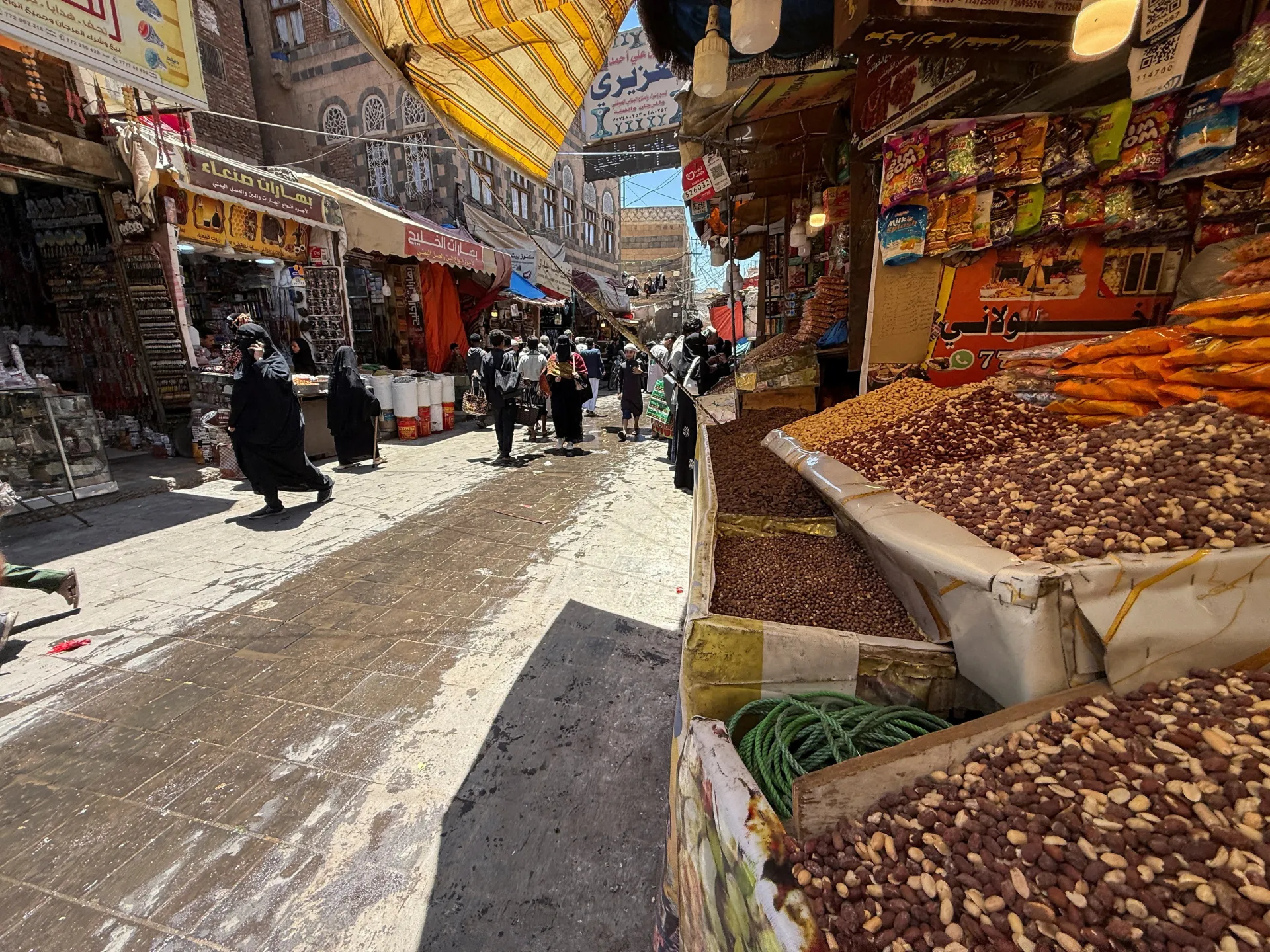
Sanaa, Yemen – Ahmed Yahya, 28, fills his taxi with 10 litres of petrol as he begins his workday early in the morning.
“I feed my taxi with fuel first so that it can help feed my family,” Yahya, a taxi driver, said as he wiped the dust from his front window at a petrol station on the outskirts of Sanaa.
Recommended Stories
list of 3 itemsend of list
Up until earlier this week, Yahya used to pay 4,750 Yemeni riyals, the equivalent of roughly $8.90 in Houthi-controlled areas of Yemen. The price had remained unchanged for about four years in territory under the rebel group’s control – including the capital Sanaa.
But then, on Monday, the Houthis announced a roughly 10 percent increase in the price of petrol, up to 5,250 Yemeni Riyals ($9.80). After years of economic misery, Yahya described the price hike as another “painful surprise to an already devastated people”.
The Houthi-run Yemen Petroleum Company said the diesel and petrol price increase was the result of a “global increase in fuel prices”, and promised that it would be temporary. The increase in global oil prices this year comes off the back of the impact of the United States-Israel war on Iran. But, more recently, the Houthis’ own capture of Yemen’s southern Red Sea coast from government forces last week, and attacks on Saudi Arabia, have played a major role in increasing prices.
“When I heard the announcement of the new fuel price, I was shocked and frustrated. We’re hardly surviving, and this price increase will make survival even harder,” said Yahya, as he lamented another burden in a country where 18 million already face acute food insecurity – a lack of reliable access to enough food.
‘Rent or food?’
Yahya, a father of three, has been working as a taxi driver for five years. Although the job helps make ends meet, he feels financially insecure, especially with the ongoing changes in food and fuel prices.
“My family spend about 75,000 Yemeni riyals [$140] a month on food expenses such as flour, rice and cooking oil. With the fuel price rise, we will need at least 85,000 Yemeni riyals [$159] a month for the same food items,” said Yahya.
The resumption of fighting in Yemen in the past few months, after a four-year period of relative calm in the country’s war, has contributed to the price rises. But for Yahya, relatively safe in Sanaa, it’s the increased expenses that are the more troubling development.
“When prices rise, they affect what we eat, drink, and how we live,” he said. “Let me give you an example: I pay 25,000 Yemeni riyals [$47] in rent every month. With the increase in food prices, putting money aside to pay the rent has become more challenging. What is the priority? Rent or food?”
An April report by the International Monetary Fund (IMF) said that Yemen’s internal conflict has led to significant macroeconomic vulnerabilities and a marked decrease in income per capita, leaving more than half of the population in urgent need of humanitarian assistance.
“It [the conflict] has caused widespread food insecurity, disease outbreaks, mass family displacement, and limited access to clean water,” the report said.
Risky and costly transportation
One of the links between the renewed fighting and the increase in prices is the longer distances needed to transport products across the country, as truckers avoid roads near the front lines.
“A truck carrying goods from the south to the north or vice versa now takes up to a week to reach its final destination. Before the renewed fighting, a similar journey would have taken three days or less,” explained Saleh Abdullah, a shopkeeper in Sanaa.
The increased transportation costs, including the higher fuel prices, are passed on to the consumer.
“This means no family is immune to this trouble,” Abdullah said. “Whether it is the flour, the baby milk, the fruits, the vegetables, or anything else, families will feel the pain of price increases.”
“Some customers become angry at us when we sell products at a higher price,” he added. “We didn’t impose prices. We just react and adapt to the changes in the country or the region.”
Ibrahim Abdu, an employee at the Nehm customs checkpoint in Sanaa governorate, said the number of trucks arriving in the capital has declined over the past few weeks.
“Fighting has cut off many roads, and merchants have avoided risking their products and drivers,” he told Al Jazeera.
‘A hunger multiplier’
Years of war have taken a heavy toll on Yemen’s economy, disrupted businesses, and pushed millions of people into poverty and food insecurity. Against this bleak backdrop, the country’s humanitarian tragedy has been worsening.
Ahmed Mohammed, a former humanitarian worker in Hodeidah, describes the fuel price rise as a “hunger multiplier” in war-torn Yemen.
“If a breadwinner struggles to buy a family three meals a day, he may be able to afford only two given the rising price of food commodities. This will deepen hunger among families,” said Mohammed.
He added: “War is ugly, and one of its ugliest aspects is seeing a family unable to afford a kilogramme of flour, sugar or rice.”
The UN Refugee Agency (UNHCR) warned this week that the violence threatens to trigger a humanitarian crisis as more people are displaced, pressuring communities with limited resources.
A multi-faceted impact
Wafiq Saleh, an economic researcher and executive director of the Taiz Centre for Yemeni-Gulf Studies, said the 10 percent hike in fuel prices in Houthi-controlled areas deals a blow to Yemeni consumers.
“Its impact will manifest as a major inflationary wave, placing a heavy burden on the most vulnerable and income-deprived segments of society,” Saleh told Al Jazeera.
While this price increase may appear modest in percentage terms, its effects extend far beyond the petrol station, rippling through various goods and services and creating new hardships, according to Saleh.
“Petroleum products serve as intermediate inputs for a wide range of goods and services. Consequently, a 10 percent rise in fuel prices does not merely increase people’s expenses by 10 percent; it triggers a cascading effect on prices,” he said.
“The most severely affected sectors include agriculture – which relies on diesel for crop irrigation – and the transport and services sectors, where rising costs immediately drive up passenger fares and food prices.”
He added that the increase would also affect water and electricity services, many of which rely on diesel-powered generators, further increasing the cost of basic services.
Small- and medium-sized enterprises are similarly affected.
“Small enterprises are operating on narrow profit margins, and they may be forced to either cease operations or pass the increased costs on to the final consumer,” Saleh said.
Public broadcaster RTE says the country’s participation cannot be justified amid ‘appalling and ongoing loss of lives in Gaza’.
Published On 17 Sep 202617 Sep 2026
Ireland has become the second country, after the Netherlands, to announce a boycott of next year’s Eurovision Song Contest over Israel’s participation.
Irish public broadcaster RTE said in a statement on Thursday that the country’s participation could not be justified “given the appalling and ongoing loss of lives in Gaza” and that the humanitarian crisis in the enclave “continues to put the lives of so many civilians at risk”.
Recommended Stories
list of 3 itemsend of list
RTE, which manages Ireland’s selection and participation in Eurovision, added that it remained “deeply concerned by the continued denial of independent access [for] international journalists to the territory”.
The decision marks the second consecutive year that Ireland will neither participate in nor broadcast the competition, which is the world’s most popular television music show.
Earlier this month, Eurovision organisers said they were excluding any country involved in an armed conflict from hosting the competition.
However, the Dutch public broadcaster Avrotros said the exclusion of countries in conflict was not “sufficient”.
Avrotros announced last month that it was withdrawing from the 2027 competition.
It said Eurovision could “no longer be considered neutral” given Israel’s participation in “a large-scale military conflict” in Gaza.
Both Ireland and the Netherlands were among five countries that withdrew from Eurovision 2026 in Vienna earlier this year. Spain, Slovenia and Iceland also decided not to participate.
Eurovision Director Martin Green said on Thurday that organisers “fully respect” Ireland’s decision and that they “will be missed”.
“The Eurovision Song Contest is at its best when broadcasters and their artists from different countries come together to share music, celebrate creativity and create connections between audiences,” Green said.
“That power to bring people together is at the heart of what makes the Contest so special, and is even more important now in an increasingly difficult and divided world.”
The 2026 show, which Bulgaria won, attracted 132 million viewers, 34 million fewer than its 2025 edition.
Thousands of protesters gathered outside the venue in the Austrian capital during the final in mid-May to oppose Israel’s participation.
The European Broadcasting Union organises the annual music competition. It has faced accusations of applying a double standard for refusing to exclude Israel, despite banning Russia following its invasion of Ukraine in 2022.
Hashim Thaci, former President of Kosovo and KLA leader, has been found guilty of war crimes by the Specialist Court in The Hague. Al Jazeera’s Marah Rayan explains how the ruling came about.
A 15-year-old boy has been killed in an apparent Israeli double-tap strike as he rushed to help a paramedic wounded in an attack moments before. Israel has killed around one child per day in Gaza since the 2025 ‘ceasefire’.
Rescuers continue searching for survivors as the government scales back operations in open waters.
Published On 13 Sep 202613 Sep 2026
At least one person has died and more than 30 remain missing after a ferry sank off the coast of Vanuatu, Prime Minister Jotham Napat’s office has said in a statement.
The MV Matui, an inter-island ferry, sank in bad weather on Friday while sailing between the islands of Ambae and Santo, in Vanuatu’s north, according to New Zealand’s public broadcaster RNZ.
Recommended Stories
list of 3 itemsend of list
Of the dozens of crew members and passengers on board, 15 have been accounted for alive, Napat’s office said in a statement posted on Facebook, with search and rescue operations continuing.
The Pacific nation’s government said search efforts “in open waters” were being scaled back “whilst efforts move toward a search along the south-east coast, where currents may have carried survivors”.
It said the sinking “appears to be the result of strong winds and marine warnings not being heeded, and possibly of negligence including overloading of the vessel”, adding that a full investigation would follow to establish the facts and prevent a repeat.
Vanuatu police, the country’s Maritime Safety Authority and the ferry’s operator, Tui Shipping Agency, did not immediately respond to requests for comment, the Reuters news agency reported.
The International Organisation for Migration (IOM) warns that the figure is rising ‘by the hour’ as it calls for safe humanitarian access.
Published On 11 Sep 202611 Sep 2026
More than 46,000 people have been driven from their homes in Yemen in the wake of the latest escalation in fighting between Houthi rebels and government forces, according to United Nations data.
The International Organisation for Migration (IOM) warned that the figure is rising “by the hour” in a statement issued on Friday.
Recommended Stories
list of 4 itemsend of list
The UN agency called on all parties to the conflict to guarantee safe humanitarian access and protect civilians, aid workers and humanitarian assets on the ground.
“Families are being forced to flee for the second or third time in this conflict, with almost nothing left,” Amy Pope, head of the IOM, said in the statement.
The agency said many people had reportedly fled Mocha with their belongings overnight after the Iran-allied Houthi rebels captured the strategically important Red Sea port city from the internationally recognised government on Thursday.
Entire villages were said to have been abandoned in some areas of the war-torn country. The IOM urged the parties to the conflict to guarantee humanitarian access and ensure the safety of aid workers.
The statement came amid reports on Friday that the Houthis had captured a strategically located island in the Bab al-Mandeb Strait and now control Yemen’s entire Red Sea coast.
‘Two new crises’
Separately on Friday, the UN also voiced concern over the Houthis seizing a key humanitarian compound and its assets in Mocha, warning that humanitarian personnel and facilities must be protected.
“The compound houses staff of UN agencies working to provide humanitarian assistance to vulnerable communities in the area,” UN deputy spokesperson Farhan Haq told reporters.
All UN personnel working at the compound had left before the seizure and were “safe and accounted for”, Haq added.
Haq stressed that humanitarian personnel, premises and assets “must be respected and protected at all times”, while calling for safe and unimpeded humanitarian access so life-saving assistance can continue reaching people in need.
Farea Al-Muslimi, a Yemen researcher at the London-based Chatham House thinktank, told Al Jazeera that deteriorating humanitarian conditions in Yemen will build on what was already one of the world’s worst crises.
“Yemen was already going through one of the worst humanitarian crises in the world,” Al-Muslimi said.
“It got terribly worse after the Houthis cracked down on aid organisations in northern Yemen. But the war continued despite the fragile truce, and what that meant was the destruction of what remained of the economy, with millions of families left without income,” he said.
Al-Muslimi warned that the latest escalation “will create two new crises”, one being further internal displacement, noting that “we’ve already seen more than 10,000 families displaced in the last week alone”, and the other being rising prices for goods inside Yemen.
“Since this is [happening in] a maritime [trade] corridor, it will, for sure, drive further violence inside Yemen, but also from outside Yemen,” Al-Muslimi added.
“The Yemeni population will continue to suffer, first and foremost, more than anyone else, inside or outside the country.”
Bettiah, India – Neyaz Miya was adjusting a kitchen handle. Mehadi Hassan was fixing a bracket for a bed.
They were at different construction sites – Miya in a half‑constructed home, a little higher up the hill, while Hassan was on the ground floor of Ganesh Hotel, closer to the Trishuli River that flowed through Syafrubesi, a bustling market town near the Nepal‑Tibet border, now wiped off the map by the August 26 flash floods.
More than 1,200 bodies have been recovered since then, at least 4,000 people remain missing, and more than 13,000 have been rescued.
“First came the terrifying loud sound. Then the ground trembled, and dark clouds descended upon us,” recalls 34‑year‑old Miya, who ran further up the hill with his phone and slippers that morning, five or six others running alongside him.
Hassan, lower on the slope, did not wait to reach for his slippers or his phone. He just ran, climbing a narrow, stair‑like path, up the hill, stopping only when he reached roughly 60 metres (200ft) above the road.
At some point, Miya and Hassan found each other. Around them were 60 to 70 other survivors who had also gathered high up on the hill.
A decade earlier, Miya had arrived in Syafrubesi as a carpenter. Three years later, he brought Hassan with him – both men from Bihar’s Bettiah district. Over the years, they built the town’s interiors – sofas, beds, almirahs, and kitchens for hotels and homes.
On that Wednesday morning, they watched all of that washed away. The multi‑storey hotels where they had worked – Red Panda, Garden Hotel, Buddha Hotel, Sunrise Hotel – were all swallowed by the flood.
“The town was gone in a blink,” Miya recounts, now sitting in his home in Turhapatti village of Bihar, India, just across the Nepal border. “There were only three kinds of people who survived that day: Those who were out of town, those who were at work and managed to run, and those who lived a little higher up the hill.”
Based on what he witnessed, Miya says only a few hundred people in Syafrubesi, a town that had a population of 2,271 in the 2011 census, likely survived.
Miya and Hasan are among them. Three of their close friends and colleagues, also migrant workers from Bihar, are not.
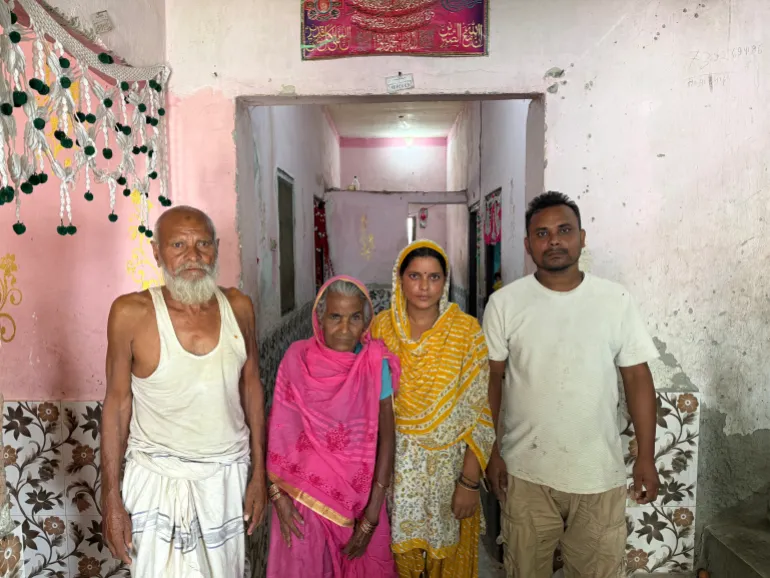
Neyaz Miya (far right), with his wife Rijwana Khatun, his mother Rubaida Khatun, and his father Doshahmad Miya. Neyaz survived the floods, but lost his masonry tools, worth almost $1000 [Jyoti Yadav/Al Jazeera]
A workday like no other
When the floods reached Syafrubesi, the men were already at work: Their shifts began at seven in the morning.
“To start at seven, we would wake up at four or five,” Miya recalls. They would leave with empty stomachs and were fed tea with doughnuts or biscuits at the construction site by building owners. Their first break came at 11am, when they returned to the rented one‑room space (3,500 Nepali rupees or $23 a month) that housed five to seven migrants at a time.
On the morning of August 26, they left for work alongside 34‑year‑old Arman Ansari, 20‑year‑old Samir Ansari, and 52‑year‑old Mukhtar Ansari, all migrants from Miya’s Turhapatti village.
In the rented room, two teenage boys, Arman’s 14‑year‑old son, Salman Alam, and his friend Shibu Alam, 17, remained asleep. They had come a month earlier to visit the hills.
“My father had cooked meat bhaat (rice with meat),” Salman recounts. He was waiting for his father to return at 11am so they could eat together.
Arman, his father, was working beside Hassan on the ground floor, pasting sunmica onto the same bed. Samir and Mukhtar were on the top floor of the Full Moon Hotel.
When Hassan ran out of the under-construction building and up the hill, he believed Arman was behind him. But by the time Hassan and Miya met higher up, there was no sign of the other three: Arman, Samir and Mukhtar.
Miya and Hassan found the boys, Salman and Shibu, terrified, on the hill. “Salman was crying, howling and searching for his father,” Hassan said.
The flood, which came with a high speed, took half an hour to recede. Soon, helicopters started hovering above them, airlifting the critically injured.
The four of them – Miya, Hassan and the boys – walked down the hill on foot to search for the three missing in the debris. They found nothing but sludge. Miya’s furniture-cutting tools and machines, worth 80,000 Nepali rupees ($530), were buried in the debris.
When they got back to their room, perched high on a slope, they found that it had survived.
But the army had taken charge, and soldiers herded survivors away from tenements near the river. “They said it [the flood] might come again,” Miya recalls.
They slept that night in a government school building in a village, he says. “At night, we were given daal bhat (rice and daal), and we wrapped ourselves in tarpaulin and slept.”
The next morning, a helicopter took them to another village. From there, another helicopter carried them to an army compound in a town. In the evening, they teamed up with five other migrants and hired an SUV to reach Nepal’s capital Kathmandu, each paying 3,500 rupees ($23).
The next morning, on August 28, they hired another SUV, which charged them 950 rupees ($6) each for a distance of 290km (180 miles) to Birgunj, a town on the India-Nepal border. They then crossed the border on foot before boarding buses for their villages.
It wasn’t the homecoming Indian migrants who work in Nepal usually plan.
A lane in Turhapatti village, Bihar, India, where the migrant workers are from. It is a village where almost every family has a story of migration [Jyoti Yadav/Al Jazeera]
‘No regular work’ back home
Turhapatti is among thousands of villages tucked along the 1,715km (1,066-mile) stretch of the India-Nepal border, where generations have crossed back and forth in search of work.
The two countries share an open border, and on both sides, especially in Bihar, the bond is known as a roti-beti ka rishta (a relationship of food and daughters), alluding to ties of livelihoods and matrimonial kinship. People live, work, and marry across the border.
Kathmandu is as close to Turhapatti as is Patna, the capital of Bihar. Per its 2021 Population and Housing Census, Nepal had 700,000 foreign-born residents, 97 percent of them from India.
Miya and Hassan say the wages for a carpenter or a mason on the Indian side are between 600-700 rupees, while for the same work in Nepal, wages are about 900 rupees. That drives migrant workers from India over the border into Nepal.
Nepal, for its part, is facing a major out-migration crisis — its per capita income is the lowest in South Asia, barring Afghanistan, and hundreds of thousands of young men and women leave each year to find work elsewhere. This creates a demand for migrant workers from Bihar, India’s poorest state that lies just across the border.
In Turhapatti, Miya owns only 0.03 hectares (0.06 acres), not enough to feed his family of six children, wife and parents. In recent years, he transitioned from being a carpenter to a contractor, which allowed him to bring in more workers from Bihar.
He had been sending 30,000 Indian rupees ($315) back to his family every month.
Hassan has even less back home: He inherited a 6×8-metre (20×25ft) room from his father and no agricultural land. “There is no regular daily work here,” he says. He would send 15,000 Indian rupees ($157) home from Nepal each month for his wife and four children.
Their story echoes in most homes in Turhapatti. The village had a population of 16,000 people in the 2011 census, India’s latest one. In nearly every household, men have left to work in other parts of India and abroad as carpenters, masons, or labourers mixing cement and sand into mortar.
The destinations are Kashmir, where close to 700 men from the village work; Nepal, with nearly 600; and thousands scattered across Indian cities: Chennai, Kolkata, Delhi, Mumbai. About 100 men have migrated to Dubai, Oman and Saudi Arabia.
The houses they built in Turhapatti stand in stark contrast to those of those who remain in India. The marble-fronted and iron-gated homes belong to men working in the Gulf, while semi-permanent dwellings belong to those who stayed behind.
Migrants in Nepal fall in between: Miya has been able to raise a brick house.
Sahrun Khatun, Arman’s wife, with her eldest son Salman (holding the youngest child) who survived, her mother-in-law, and two younger children, outside their home in Turhapatti, Bihar, India [Jyoti Yadav/Al Jazeera]
‘My body shivers at the thought’
This economic reality is what drove Arman Ansari to Syafrubesi. On July 26, Arman left for Nepal with Samir and Mukhtar. Arman’s son and his friend Shubu went with the three adults; the teenagers were on a trip to the hills.
Now, Arman’s brother-in-law. Jameel Miya, a carpenter in Kathmandu, scours the city’s hospitals for Arman’s body, telling authorities that his brother-in-law’s right hand and chest had deep scars, cut by shards of glass when he was young.
Arman’s wife, Sahrun Khatun, has only her last phone call with Arman to hold on to. They spoke two hours before the floods swept him away. “He was about to get his wages on September 1 and return home,” she says.
Salman, who had tagged along with his father to see the hills, hasn’t been able to sleep since the flood.
“The moment I close my eyes, I feel the flood is coming for me,” he says.
Mukhtar’s family lives a few lanes away.
Since the floods, Kasmun Khatun, Mukhtar’s wife, has been glued to the internet for any news of her missing husband. Joining her in that remote search are her daughter Asmana (18) and son Sadre Alam (14).
Her eldest son, Osama, 25, a tailor in Kathmandu, has been busy searching for his father in city hospitals.
“After waiting for a week and watching the videos, I submitted my DNA samples,” he says over a phone call. Osama manages to send home 6,000 rupees ($63), but that is no longer enough – his mother needs eye surgery that has already been delayed and cannot be put off much longer.
“The guardian has gone, all of a sudden,” he says, referring to his father.
At the far edge of Turhapatti stands the home of Samir Ansari, the youngest among the missing migrants and youngest of his five migrant brothers.
The Ganesh Hotel project he was working on was only three days from completion.
“He said he found another site to work on,” recalls his father, Hasmuddin Miya, remembering their last phone call on the evening of August 25.
Samir was a mason who specialised in marble tiles, a skill he had learned in Kashmir while working under his elder brothers at construction sites.
The three families are preparing to host a bhoj, the funeral feast – a custom of feeding hundreds of people – having given up on hope.
Meanwhile, the two survivors, Miya and Hassan, are already making calls to find work again. This time, their search turns towards Nepal’s plains. They pledge never to return to the hills.
“My whole body shivers at the thought of going there,” says Hassan.


![A view of a technology incubator in Gaza before the war, where students received training in technology and innovation [Iyad Al-Qatrawi/Al Jazeera]](https://i0.wp.com/occasionaldigest.com/wp-content/uploads/2026/09/1-1789814125.jpeg?w=640&ssl=1)
![A view of a technology incubator in Gaza prior to the war, which provided an environment for training, incubating tech projects, and supporting students in the fields of technology and innovation [Iyad Al-Qatrawi/ Al Jazeera]](https://i0.wp.com/occasionaldigest.com/wp-content/uploads/2026/09/3-1789814366.jpeg?w=640&ssl=1)
![UCAS Technology Incubator, one of the most prominent incubators of the University College of Applied Sciences in Gaza, after its destruction during the war, as part of extensive damage to the institutions and structure of the technology and digitization sector in the Strip [Iyad Al-Qatrawi/Al Jazeera]](https://i0.wp.com/occasionaldigest.com/wp-content/uploads/2026/09/2-1-1789814285.jpg?w=640&ssl=1)
![Indian National Disaster Response Force (NDRF) personnel conduct a search and rescue operation at the site of a flash flood at a village in the Kishtwar district of Indian-administered Kashmir on August 16, 2025 [AFP]](https://i0.wp.com/occasionaldigest.com/wp-content/uploads/2026/09/afp_68aac36f5150-1756021615.jpg?w=640&ssl=1)