How the Earthquakes Reshape Venezuela’s Economic Future
Originally published in Spanish on Asdrúbal’s personal Substack
There are weeks that change a government. And there are weeks that change a country. This is one of them.
Until just a few days ago, the economic debate regarding Venezuela revolved around how much we would grow this year. Around whether the figure would be 4% or 6%, and at what point that growth would materialize in people’s daily lives: exchange rate stabilization, the reestablishment of relations with multilateral organizations, and the possibility of slowly beginning a recovery process.
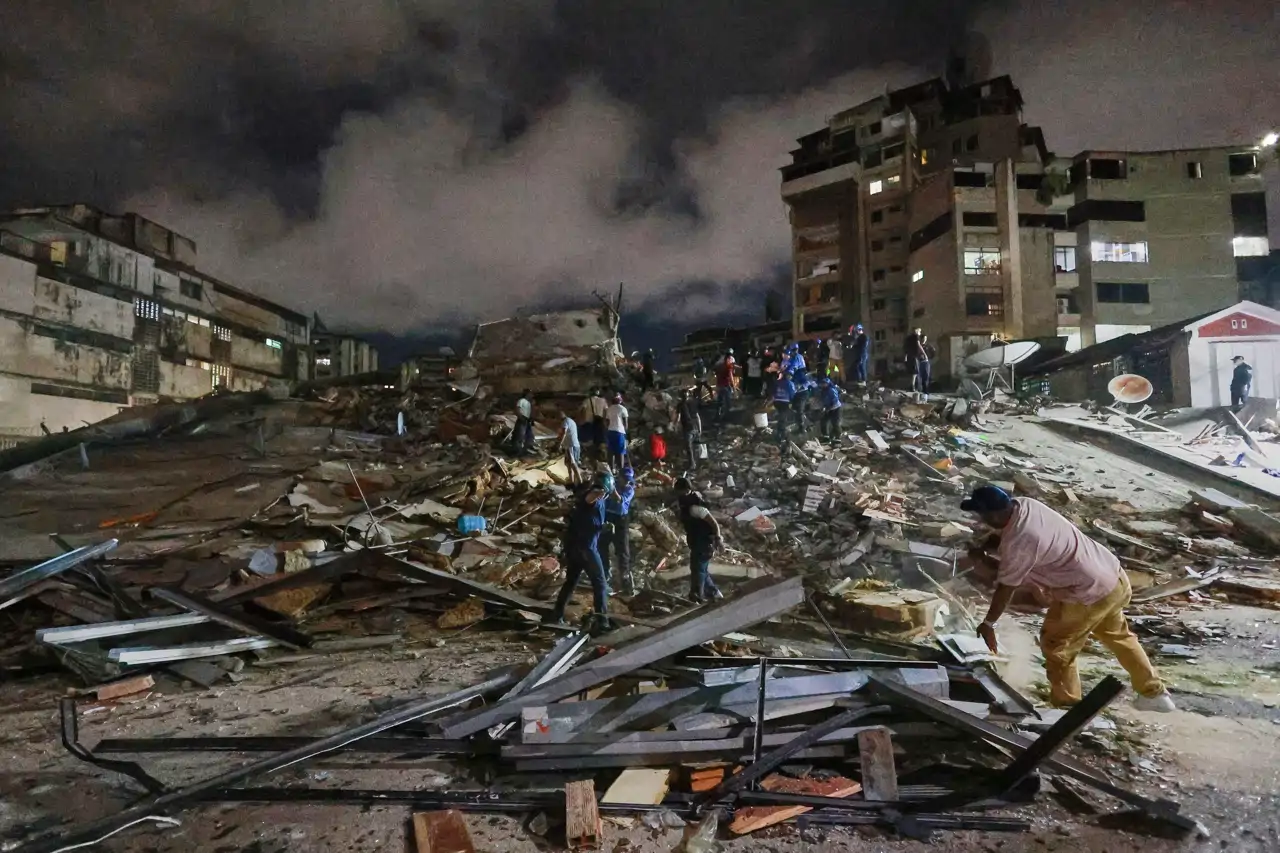
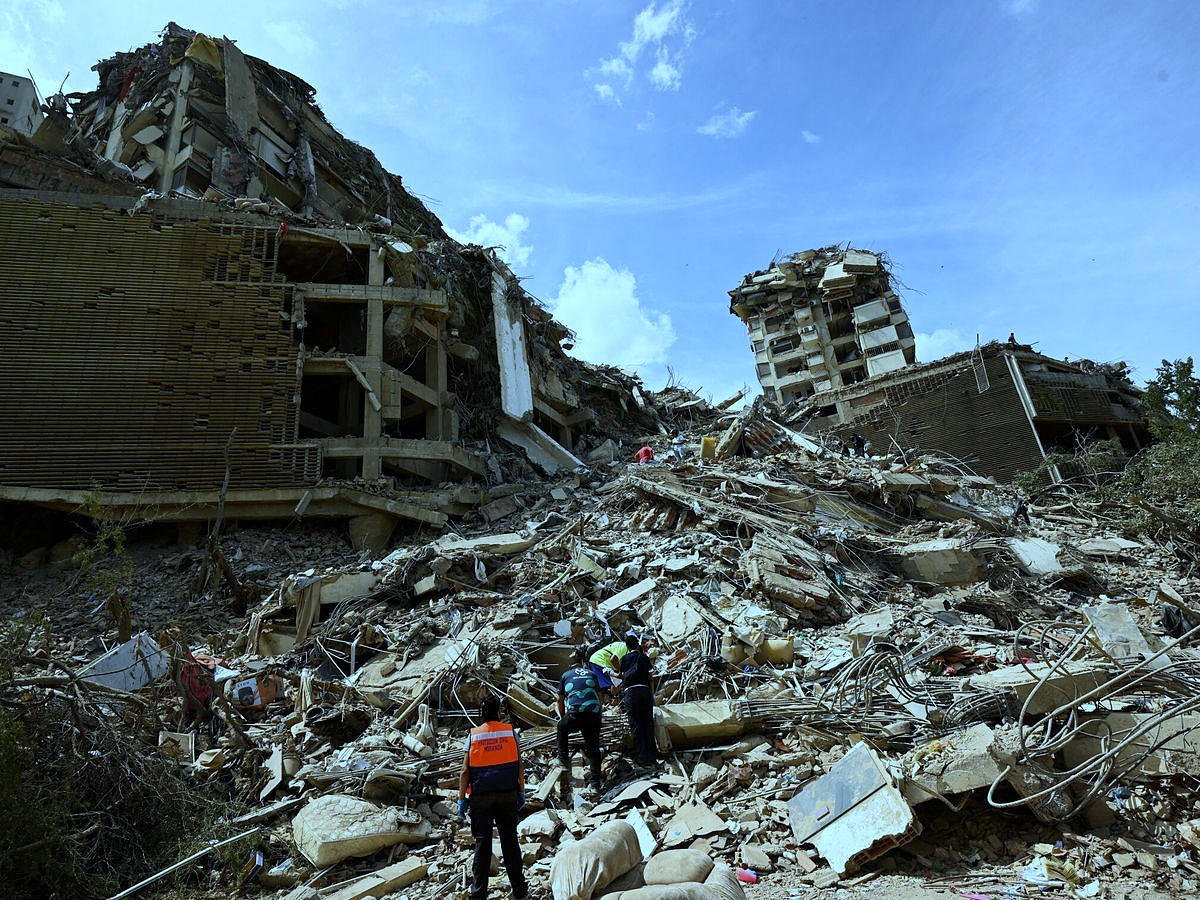
On the morning of June 24th, a Financial Times scoop centered the discussion on the actual size of our foreign debt. That was the horizon. Today, the horizon no longer looks like that. The earthquakes that struck this week not only leave a human tragedy of dimensions still difficult to quantify; they also profoundly alter the country’s economic outlook. International evidence shows that a major earthquake can generate losses equivalent to between 3% and 10% of GDP, depending not only on physical damage but on the State’s capacity to respond.
Anyone who thinks the problem is limited to the cost of rebuilding highways, hospitals, or housing is seeing only a part of the picture. Earthquakes destroy infrastructure, but they also destroy productivity, employment, tax revenues, logistical chains, and confidence. Thousands of businesses interrupt operations, families postpone consumption and investment decisions, and economic activity loses momentum for months or even years. The expectations and decisions of economic agents are disrupted by a widespread sense of loss and uncertainty.
The economic literature is quite consistent on this point. Studies by the World Bank, the IMF, and numerous academic papers conclude that the impact of a natural disaster depends far less on the intensity of the phenomenon itself than on the institutional strength of the affected nation. Economies with solid States tend to absorb the initial shock and recover relatively quickly. Conversely, in fragile States, a natural disaster often mutates into a prolonged economic crisis because institutional weakness amplifies the damage and delays reconstruction.
The economic agenda will no longer be dominated exclusively by growth, but by reconstruction. We need to prevent the disaster from destroying a large part of Venezuela’s remaining physical and human capital.
That is precisely Venezuela’s primary challenge. Over the years, the country lost fiscal, technical, and operational capacity. This is not a political assessment, but an observable fact. The State’s capacity to design public policy has been significantly reduced. The prolonged economic crisis and hyperinflation led us to a state of “save yourself if you can.”
The difficulties in maintaining basic infrastructure, public utilities, or the hospital network were already evident before the earthquake. Rebuilding cities like La Guaira demands far more than financial resources: it requires planning, engineering, contracting capacity, technical supervision, and a public administration capable of coordinating thousands of projects simultaneously. Today, the Venezuelan State lacks a good portion of those capabilities.
Our recent history shows how society has demonstrated resilience where the State has lost capacity. The private sector, non-governmental organizations, churches, universities, and multiple civil society initiatives have, through years of crisis, developed a remarkable ability to organize, mobilize resources, and respond swiftly to emergencies. We saw it during the pandemic, during the landslides in Las Tejerías, and in so many other humanitarian crises. And we are seeing it now. This accumulated experience will be one of the most critical assets in confronting this tragedy, though on its own, it remains insufficient to undertake a reconstruction of this magnitude.
It would be a mistake to turn international aid into a battleground for confrontation. Venezuela doesn’t need speeches on sovereignty, but engineers, heavy machinery, hospitals, drinking water, electricity, and the capacity to rebuild.
That is why I maintain that this earthquake completely changes the economic conversation. Just a few weeks ago, we were discussing how to accelerate growth, attract investment, or deepen reforms. We argued that institutional reform was necessary for Venezuela to achieve sustained and inclusive growth. Today, the priority has shifted to preventing the disaster from destroying a large part of the country’s remaining physical and human capital. The economic agenda will no longer be dominated exclusively by growth, but by reconstruction.
An inevitable conclusion emerges from this: Venezuela cannot face this challenge alone. This is not merely a matter of securing financing. It will be indispensable to mobilize technical assistance, specialized teams, field hospitals, temporary infrastructure, fast-access credit, and international coordination mechanisms. International cooperation will cease to be a mere complement and will become a necessary condition for recovery.
There’s some good news, however: for the first time in many years, the conditions exist for such cooperation to be possible. The reestablishment of relations with international financial institutions opens a window that until a few months ago seemed firmly shut. It would be a mistake to turn this aid into a new battleground for political confrontation. Countries do not need speeches on sovereignty after an earthquake. They need engineers, heavy machinery, hospitals, drinking water, electricity, and the capacity to rebuild.
The country needs to design a roadmap to achieve broad political agreements, leading to a democratically elected government able to drive the necessary reforms.
Economic history demonstrates that major disasters can become turning points. Some countries seized these tragedies to modernize their infrastructure, strengthen their institutions, and build more resilient economies. Others remained trapped for decades in a cycle of destruction and precariousness. The difference was never solely the magnitude of the earthquake, but the quality of the collective response.
Beyond the immediate emergency, this tragedy also leaves a political lesson that is impossible to ignore. The reconstruction of Venezuela demands more than financial resources or international assistance. It requires leadership with democratic legitimacy and the capacity to build consensus. The country needs to design a roadmap to achieve broad political agreements, leading to a democratically elected government and providing it with the necessary backing to drive the economic and institutional reforms that recovery demands. No reconstruction program will be sustainable unless it rests upon legitimate institutions, clear rules, and a political pact that offers stability, generates trust, and allows for the mobilization of support from the international community and private investment.
That is why I believe this earthquake has not only moved the earth. It shifted Venezuela’s economic horizon. The projections we made just a week ago likely no longer describe the country we will have at the close of this year. The Venezuelan economy has just entered a new phase, and the speed with which we manage to combine the efforts of the State, the proven capacity of the private sector and civil society, and the decisive support of the international community will determine not only the economic performance of 2026, but the real possibilities for recovery over the next decade.