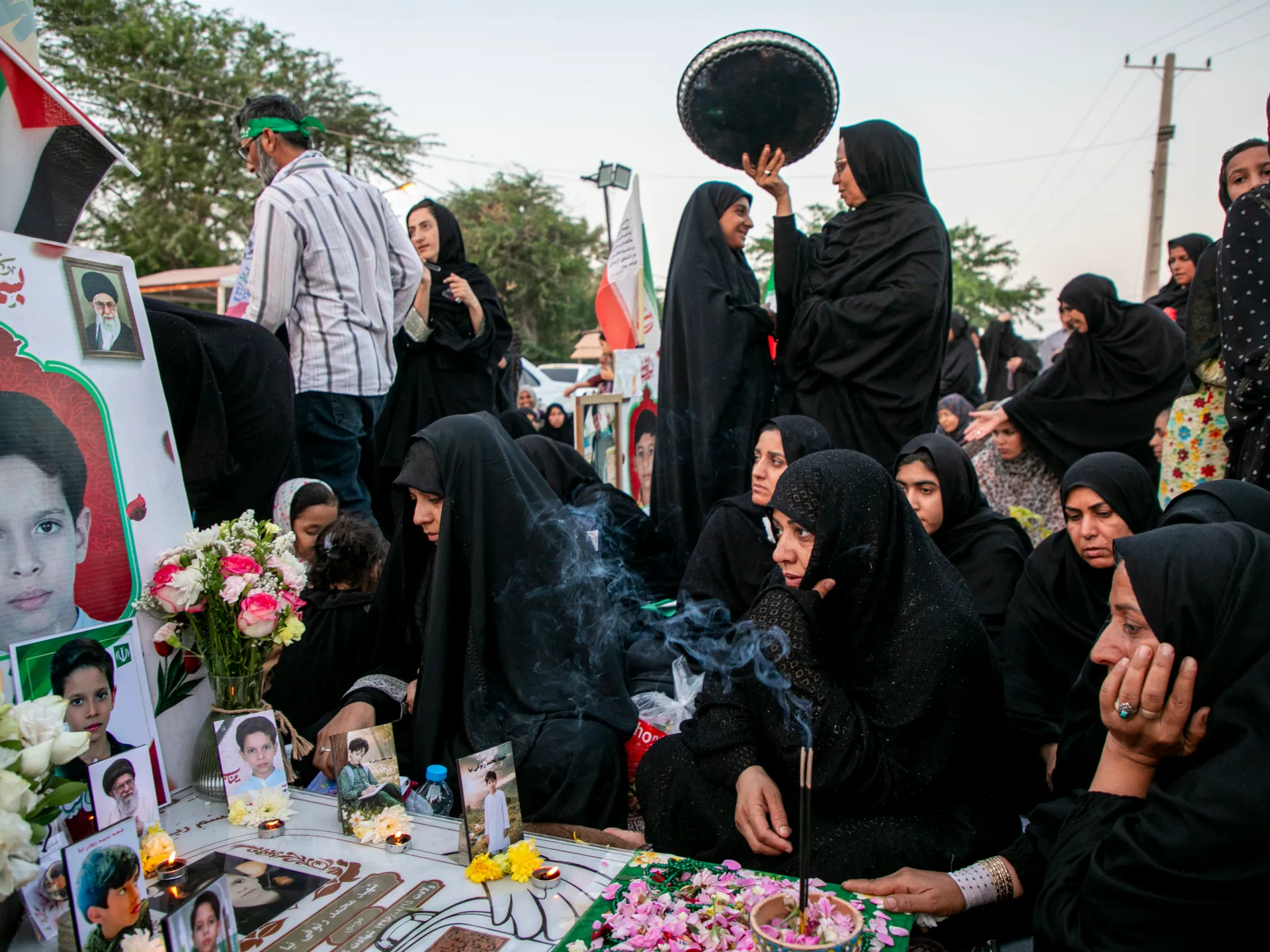
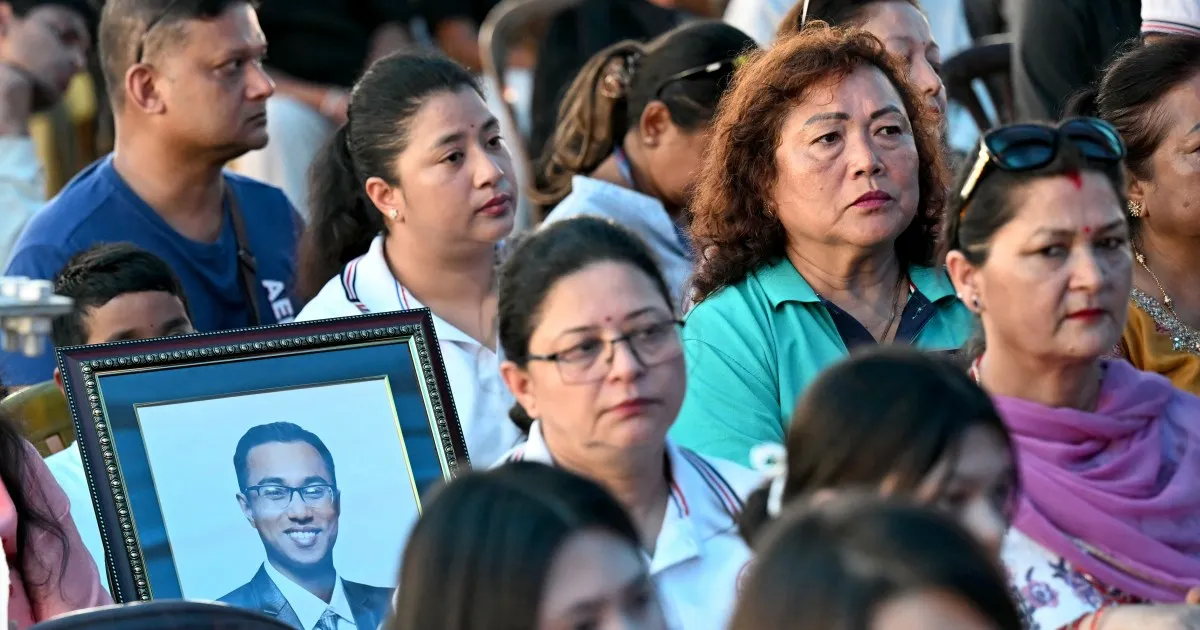
Former prosecutor at the International Criminal Court Geoffrey Nice says that the US-Israel war on Iran was not based on imminent threat and warns that holding powerful states accountable is ‘unrealistic.’
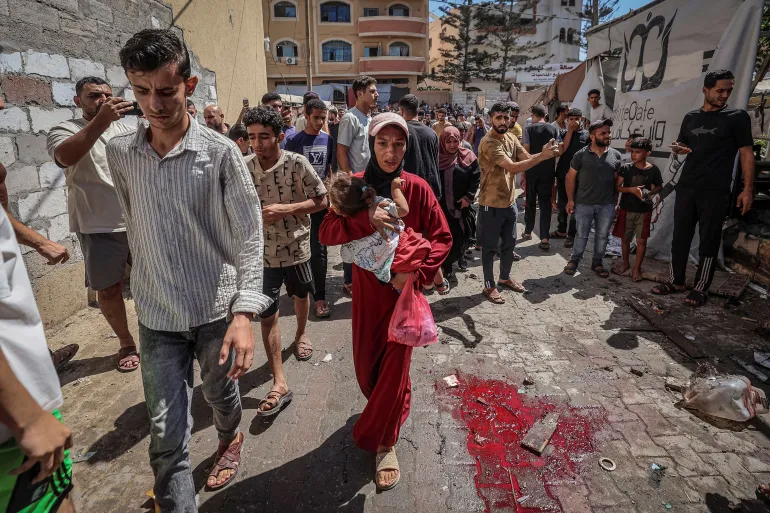
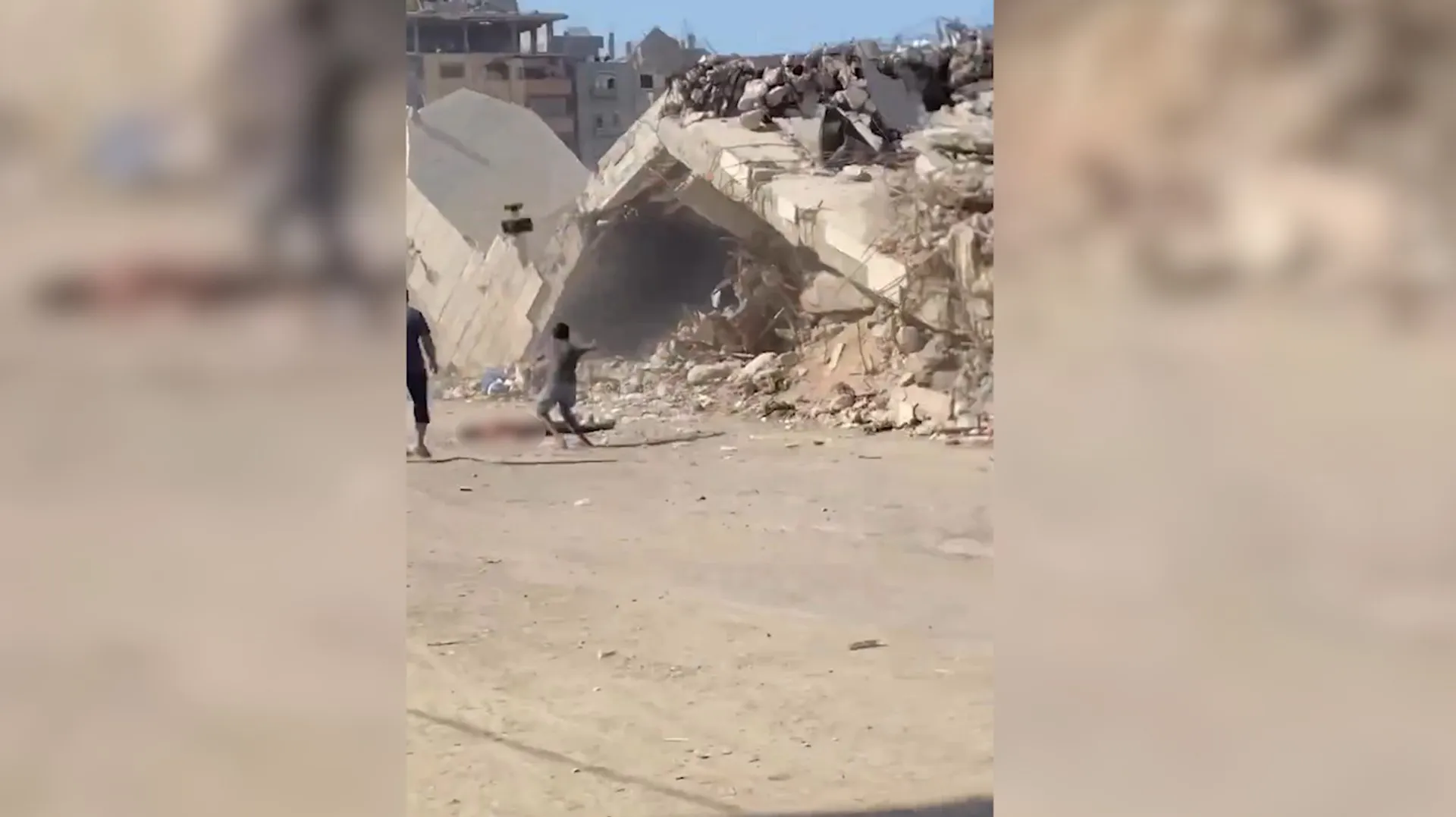
A blast occurred in an apartment above a restaurant in Gaza City, causing a blaze. Rescue teams headed to the site to put off the fires. The cause of the blast is suspected to be an Israeli drone attack, several people had died in the blast.
Under the guise of preserving secularism, this law allows the exclusion of people based on their religious identity.
On Monday, the Supreme Court of Canada will begin a four-day hearing for one of the most consequential constitutional cases in the country’s recent history. At issue is Quebec’s so-called “secularism law”, known as Bill 21 – a law enacted in 2019 that prohibits certain public sector workers from wearing visible religious symbols at work.
It bars many public sector employees, including teachers, prosecutors, police officers, and judges, from wearing religious symbols such as hijabs, turbans, kippahs, and other visible expressions of faith while at work.
There is much at stake in this case that raises fundamental questions about religious freedom, equality, and the limits of state power in a constitutional democracy. In addition, another significant issue is that to get the bill passed, Quebec’s government had used the “notwithstanding clause”, a unique provision in Canadian law that allows it to override fundamental rights and freedoms. No other constitutional democracy in the world has a similar blanket override of fundamental rights and freedoms.
The Quebec government claims that the law is necessary to preserve the religious neutrality of the state. Yet Bill 21 does the opposite: by forcing some individuals to choose between their profession and their religious identity, the Quebec government is not remaining neutral – it is effectively excluding people of faith from public sector employment.
The use of this extraordinary, and until recently rarely used, constitutional mechanism has turned the spotlight on Bill 21 beyond the borders of Quebec and the debate over secularism and religious freedoms. It has become a test of how far a democratic government can go in limiting fundamental rights and freedoms.
Evidence before the courts shows that Bill 21 affects religious people of many faiths, including Jewish men who wear kippahs and Sikh men and women who wear turbans; but its impact falls particularly heavily on Muslim women who wear the hijab. For many Muslim women who wear headscarves, teaching and other public service careers have effectively been closed off.
The message of exclusion that this law sends to young people is especially troubling. Generations of young people in Quebec are being told that their full participation in public life requires abandoning visible aspects of their identity.
This is why the National Council of Canadian Muslims and the Canadian Civil Liberties Association launched the constitutional challenge against Bill 21. The Supreme Court of Canada must consider the implications, and possible limitations, of allowing governments to sidestep rights protections through pre-emptive use of constitutional override powers. The court’s decision will help determine whether constitutional rights in Canada remain meaningful constraints on government power, or whether they can be suspended whenever politically convenient.
These questions extend far beyond Canada. Across Europe and elsewhere, debates about secularism have increasingly centred on restrictions targeting religious expression, often impacting Muslim women in particular.
Canada often prides itself on being a model of multicultural democracy, one that accommodates diversity. Bill 21 challenges that reputation by testing whether neutrality can coexist with policies that effectively exclude people of visible faith from public service.
True secularism does not demand the erasure of religious identity. A neutral state does not require citizens to shed visible expressions of belief in order to participate fully in public life.
The Supreme Court of Canada now has the opportunity to reaffirm these principles and clarify that constitutional rights cannot be easily set aside. At a time when countries around the world are grappling with questions of belonging, pluralism, and the rights of minorities, the Canadian court’s ruling will send an important signal about whether liberal democracies are willing to uphold their commitments to freedom and equality.
We say this is not an abstract idea, but an imperative to demonstrate that commitments to freedom and equality are more than mere words.
The views expressed in this article are the author’s own and do not necessarily reflect Al Jazeera’s editorial stance.
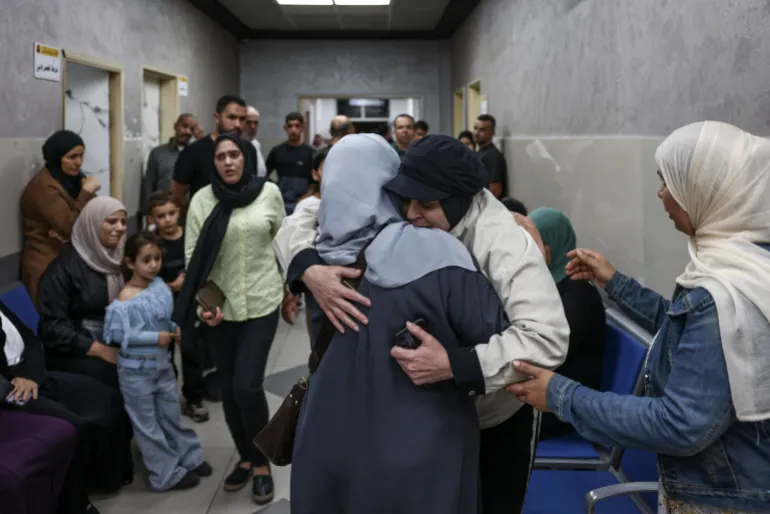
Day of intense hardship as mothers mourn children lost in war and children face day without their mothers.
While much of the Middle East celebrated Mother’s Day with flowers and gifts this weekend, in Gaza, the occasion served as a painful reminder of precious lives lost.
Sitting in her tent in Gaza City on Saturday, Em Rami Dawwas remembered the three sons she lost in Israeli attacks, two of whose bodies are still being withheld by the authorities.
Recommended Stories
list of 3 itemsend of list
“I miss my sons on Mother’s Day. They used to bring me gifts, flowers, sweets, and ask me about my needs. They were the light of my life,” she said, sitting among boxes filled with their clothes, which she cannot bring herself to throw away.
Palestinian children have borne the brunt of Israel’s genocidal war on Gaza that began in October 2023, with UNICEF estimating in October last year that 64,000 children have been killed and wounded in Israeli attacks.
Reporting from among the tents in Gaza City, Al Jazeera’s Hind Khoudary said Dawwas kept the photos of her sons under her pillow, looking at them every day, “as if holding on will keep their memory alive”.
Many mothers spend the day in graveyards, sitting in the only place they can feel close to their dead children, said Khoudary.
‘I just wanted to make her happy’
Maram Ahmed faced a second Mother’s Day without her mother, who she lost in an Israeli air attack that killed her entire family. Her mother was her closest friend, said Khoudary.
“On Mother’s Day, even if I didn’t have money, I would buy my mum a gift from my allowance, even if it was for less than a dollar. I just wanted to make her happy,” said the 14-year-old, sitting in her sparse tent.
“I feel so sad when I see other children with their mothers, but I don’t show it,” she said.
A report published by rights group Amnesty International this month highlighted the “brutal price” women and girls have paid during the war, which started in October 2023. Two years later, Israel and the Palestinian group Hamas agreed to a fragile “ceasefire” that the former has repeatedly violated.
“Amid Israel’s deliberate imposition of conditions of life calculated to bring about the physical destruction of Palestinians in Gaza, Palestinian women face compounded and life-threatening consequences,” said the report.
It cited ongoing mass displacement, the collapse of reproductive, maternal and neonatal healthcare, the interruption of treatment for chronic illness, heightened exposure to disease and unsafe and undignified living conditions faced by women, as well as “profound physical and mental harm”.
Since the October 2025 “ceasefire”, Israeli attacks have killed more than 650 Palestinians, many of them women and children, according to recent figures from the Ministry of Health.
Overall, Israeli attacks have killed more than 72,000 people since the start of the war.
Gaza City, the Gaza Strip – On February 28, Lama Abu Reida was just a few hours away from what she hoped would change the fate of her sick infant daughter, Alma.
The family had finally been informed that the baby girl – fewer than five months old and unable to breathe without an oxygen machine – was eligible for medical evacuation.
Recommended Stories
list of 3 itemsend of list
The small travelling bag was packed, the medical documents in order, and Abu Rheida ready to go. All that remained was to exit the Rafah crossing between Gaza and Egypt and from there head to Jordan, where Alma could undergo a surgery that was not available in the Gaza Strip.
But just one day before the scheduled March 1 trip, Israel shut Gaza’s crossings “until further notice”, citing security reasons. The decision coincided with the launch of a joint military attack alongside the United States on Iran – and shattered Abu Rheida’s hopes.
“They told me the crossing had been closed without any warning because of the war with Iran,” the mother says in a choked voice.
Alma, who suffers from a lung cyst, has been at Nasser Hospital in Khan Younis, in southern Gaza, for more than three months now, with her mother staying by her side day and night.
“She cannot do without oxygen at all,” Abu Rheida says. “Without it, she becomes extremely exhausted.”
‘I don’t know what might happen’
The Rafah crossing, Gaza’s main gateway to the outside world, was closed for long periods during Israel’s genocidal war against Palestinians in the Strip that began in October 2023.
On February 1, Israel announced a limited reopening as part of a trial phase following a “ceasefire” with the Palestinian group Hamas. This allowed some movement under the agreement’s arrangements, particularly for medical cases.
But only a few patients were able to travel, and thousands remained on waiting lists until the February 28 closure, which stopped the transfer of wounded patients abroad, as well as medical evacuations of patients like Alma.
Doctors had told her family the only option for Alma, who was previously admitted to intensive care three times within a month, was to have surgery abroad to remove the cyst from the lung. While not particularly risky, such an operation cannot be done inside Gaza due to limited medical resources.
“My daughter’s life depends on a single surgery, and afterwards she could live a completely normal life,” Abu Rheida says.
“If her travel is delayed any longer … I don’t know what might happen. Her condition is not reassuring,” she adds in despair.
On Sunday, Israeli authorities said the Rafah crossing will open again on Wednesday for ”limited movement of people” in both directions.
Hadeel Zorob’s late son, Sohaib [Courtesy of Hadeel Zorob/Al Jazeera]
‘The closure killed my children’
The very thing Abu Rheida fears is something Hadeel Zorob has already endured.
Zorob’s six-year-old son, Sohaib, died on March 1, 2025, while her eight-year-old daughter, Lana, passed away on February 18 last month. The two children suffered from a rare genetic disease that causes gradual deterioration in the body’s functions.
They were both waiting for medical referrals to travel abroad for treatment – but that never happened.
“I watched my children die slowly in front of my eyes, one after the other, without being able to do anything,” says Zorob, 32, breaking down in tears.
Lana was only a few days away from travelling before she passed away.
“My daughter’s travel had been scheduled around the same period when the crossing was later closed, but she died before that,” Zorob says.
“When the news of the crossing closure came, my grief for my daughter returned all over again as I remembered the many children who will suffer the same fate.”
Zorob says her children were still able to move and play relatively normally in the early stages of their illness.
Before Israel’s war on Gaza, both children were receiving specialised hospital treatment, which helped stabilise their condition to some extent. But as the Israeli attacks intensified, their condition gradually worsened until it reached a life-threatening stage. The collapse of Gaza’s healthcare system left the family struggling to access the medications they relied on.
“We even tried to bring the medicine from the West Bank, and I asked the Red Cross and the World Health Organization, but nothing worked,” Zorob says.
During the war, she and her family had to leave their home and move into a tent in the al-Mawasi area. The new displacament conditions made caring for the children much harder.
“Both were bedridden … in diapers, and their blood sugar needed regular monitoring. We had to give fluids and watch their food … all this in a tent with no basic necessities.”
Zorob says she feels like “going crazy” when she thinks that her children might have survived and improved if they were able to get treatment abroad.
“The closure of the crossings killed my children!” she adds, her voice filled with anguish. “The world gives no value to our lives or to the lives of our children … this has become something normal.”
Zorob says she is trying to stay strong for her third child, four-year-old Layan, despite the persisting pain.
“All I want is that what happened to my children does not happen to any other mother … that the crossing be reopened and that children and patients be allowed to travel.”
‘Is that too much to ask?’
According to the Health Ministry in Gaza, more than 20,000 patients and wounded people are waiting to travel abroad for medical treatment.
Among them are about 4,000 cancer patients in need of specialised care unavailable in Gaza, and roughly 4,500 children.
The lists also include around 440 “life-saving” cases needing urgent intervention and nearly 6,000 wounded people who require continued hospital care outside of Gaza.
The Al-Dameer Association for Human Rights has called the Rafah crossing’s closure a form of collective punishment for civilians in Gaza, warning that it “sentences more patients to death” and deepens Gaza’s humanitarian crisis.
Amal al-Talouli, 43, has been suffering from breast cancer for five years [Maram Humaid/Al Jazeera]
For Amal al-Talouli, the closure of the Rafah crossing was another devastating blow in her battle with cancer.
The 43-year-old has been suffering from breast cancer for about five years. Although she underwent treatment before the war, the disease returned and spread to other parts of her body, including the spine.
“Praise be to God, we accept our fate,” the mother of two says. “Still, why should our suffering worsen because we are prevented from travelling and the crossings are closed?”
Al-Talouli is currently living with relatives after losing her home in the Beit Lahiya project area, in northern Gaza, during the war.
Displacement was not an easy choice due to her health condition, she says. The situation is compounded by a severe shortage of medications and specialised medical staff – a reality also experienced by other cancer patients in Gaza.
“There is a shortage of everything,” al-Talouli says. “I developed osteoporosis and eye fluid from chemotherapy. Chemo needs good nutrition, but malnutrition and famine made it much harder.”
Al-Talouli says the shutdown of the crossings made things worse.
“[It] affects us very, very much. No medicines are entering, and no essential treatments are coming in,” says al-Talouli, whose name was on a waiting list to travel outside of Gaza for treatment.
She stresses that cancer patients in Gaza urgently need support.
“Now I only want the crossing to reopen so I can have a chance to recover and continue my life with my children,” she says. “Is that too much to ask?”
Rights groups have slammed United States Secretary of Defense Pete Hegseth for saying that “no quarter” will be shown to Iran, as the US and Israel continue their military campaign against the country.
“We will keep pressing. We will keep pushing, keep advancing. No quarter, no mercy for our enemies,” Hegseth told reporters on Friday.
Recommended Stories
list of 3 itemsend of list
Under the Hague Convention and other international treaties, it is illegal to threaten that no quarter will be given.
Domestic laws, such as the 1996 War Crimes Act, also prohibit such policies. US military manuals likewise warn that threats of “no quarter” are illegal.
Brian Finucane, a senior adviser at the International Crisis Group, a think tank, said Hegseth’s comments appear to run afoul of those standards.
“These comments are very striking,” Finucane told Al Jazeera over a phone call. “It raises questions about whether this belligerent, lawless rhetoric is being translated into how the war is being conducted on the battlefield.”
But Hegseth has publicly dismissed concerns about international law, claiming he would abide no “stupid rules of engagement” and no “politically correct wars”.
His rhetoric has provoked concern among some experts that measures designed to prevent civilian harm are being ignored in favour of a campaign of “maximum lethality”.
Hegseth’s remarks also come after a US strike on a girls’ school in southern Iran that killed more than 170 people, most of them children. The war has left at least 1,444 Iranians dead and millions more displaced.
‘Inhumane and counterproductive’
Prohibitions against declaring “no quarter” go back more than a century, part of an effort to impose restraints on conduct during war.
The Nuremberg trials after World War II upheld that legal standard, as Nazi officials were prosecuted, in some cases, for denying quarter to enemy forces.
“The basic idea is that it’s both inhumane and counterproductive to execute people who have laid down their arms,” said Finucane.
He added that the “mere announcement” of “no quarter” from a government official can itself be a war crime.
The US and Israel have already faced allegations of violating international law during their war against Iran. Experts have condemned their initial strike on February 28 as “unprovoked”, deeming the conflict an illegal war of aggression.
Iranian officials also protested after a US submarine sank a military vessel, the IRIS Dena, off the coast of Sri Lanka, as it returned from a ceremonial naval exercise in India. That attack killed at least 84 people.
While warships are considered legal military targets, Iran has said that the ship was not fully armed, raising questions about whether it could have been interdicted rather than sunk.
US forces also purportedly declined to help rescue sailors from the Dena, even though the Geneva Convention largely requires aid to the shipwrecked. The Sri Lankan navy ultimately helped collect survivors from the wreckage.
Responding to the attack, Hegseth described the sinking of the ship as a “quiet death”. He also told reporters, “We are fighting to win.”
US President Donald Trump himself remarked that he asked why the ship had been sunk, not captured.
“One of my generals said, ‘Sir, it’s a lot more fun doing it this way,’” Trump said.
‘Serious red flag’
The US military has faced criticism for killing civilians in military operations for decades.
That includes during the so-called “global war on terror”, when airstrikes resulted in thousands of civilian deaths, including a 2008 attack on a wedding party in Afghanistan.
Even before the war with Iran, the Trump administration had faced accusations that it violated international law by attacking alleged drug-trafficking vessels in the Caribbean Sea and eastern Pacific Ocean.
At least 157 people have been killed in those attacks since they started on September 2.
The Trump administration, however, has never identified the victims nor presented evidence against them. Scholars have condemned the attacks as a campaign of extrajudicial killings.
Analysts say that the Pentagon’s policies of emphasising lethality at the expense of human rights concerns has carried over into its war against Iran.
“Death and destruction from the sky all day long. We’re playing for keeps. Our warfighters have maximum authorities granted personally by the president and yours truly,” Hegseth said during a briefing on March 4.
“Our rules of engagement are bold, precise and designed to unleash American power, not shackle it.”
Sarah Yager, the Washington director at Human Rights Watch, called such rhetoric alarming.
“I’ve been engaging with the US military for two decades, and I’m shocked by this language. Rhetoric from senior leaders matters because it helps shape the command environment in which US forces operate,” Yager said.
“From an atrocity-prevention perspective, language that dismisses legal restraints is a serious red flag.”
While the impact of Hegseth’s rhetoric on combat operations is not certain, a recent report from the watchdog group Airwars found that the pace of the US and Israeli assault on Iran has far outstripped other military operations in modern history.
Reports indicate that the US dropped nearly $5.6bn worth of munitions in the first two days of the war alone. Airwars says the US and Israel hit more targets in the first 100 hours of the Iran war than in the first six months of the US campaign against ISIL (ISIS).
Following Hegseth’s remarks on Friday, Senator Jeff Merkley condemned the Pentagon chief as a “dangerous amateur”. He cited the attack on the Iranian girls’ school as an example of the consequences.
“His ‘no hesitation’ engagement rules set the stage for failing to distinguish a civilian school from a military target,” Merkley wrote in a social media post.
“The result, more than 150 dead schoolgirls and teachers from an American missile.”
Voters in the Republic of Congo will choose their next president on Sunday, although longtime leader Dennis Sassou Nguesso is likely to be elected unchallenged, analysts say.
The central African nation, which has been led almost continuously by Nguesso for more than 40 years, is one of the most politically repressive in the world, with Freedom House giving it a 17 out of 100 rating for freedom.
Recommended Stories
list of 4 itemsend of list
The country is Africa’s third-largest oil exporter. It sells between 236,000 and 252,000 barrels per day, alongside copper and diamonds.
Congo is also highly biodiverse. Sprawling expanses of tropical rainforest in the country form part of the Congo Basin – the second-largest rainforest network in the world after the Amazon. The Nouabale-Ndoki National Park in the north is a UNESCO World Heritage site and is home to elephants, endangered lowland gorillas, and chimpanzees.
Still, the country of 6 million people is racked by economic woes. Corruption and mismanagement, analysts say, contribute to Congo being 171st of 193 countries on the United Nations Human Development Index.
A fractured political opposition, meanwhile, has only allowed Nguesso’s governing Congolese Labour Party (PCT) to consolidate power over the years, although a newcomer is raising hopes.
Here’s what we know about Sunday’s polls:
Supporters of outgoing President Denis Sassou Nguesso, who is running for re-election, take part in a campaign rally before the March 15 presidential election, in Brazzaville, Republic of Congo, March 7, 2026 [Roch Bouka/Reuters]
When do polls open?
Polls will open on Saturday, March 15, between 6am (05:00 GMT) and 6pm (05:00 GMT). More than 2.6 million people are eligible to vote; that is, they are more than 18 years old and have been registered.
Voter turnout in 2021 — during the last election — was 67.70 percent according to the International Foundation for Electoral Systems (IFES). Authorities have announced that borders will be closed during voting.
Candidates with an absolute majority usually win the elections, or in rare cases, a run-off will be called between the two top polling candidates.
Presidential terms in Congo are for five years. While the constitution had previously allowed a maximum of two terms and an age limit of 70, those were removed in 2015.
France’s President Emmanuel Macron speaks with President of Congo Denis Sassou Nguesso during the signing of a letter of intent by Denis Christel Sassou Nguesso, Congolese minister of international cooperation and promotion of partnership, and France’s Delegate Minister for Francophonie and International Partnerships Thani Mohamed Soilihi at The Elysee Presidential Palace in Paris on May 23, 2025 [File: Thomas Samson/Reuters]
Who’s running?
Dennis Sassou Nguesso: The 82-year-old was first elected to office in 1979 and led the country for 12 years under a one-party state. He lost elections after opposition lawmakers voted to introduce a multiparty system. On his second attempt in 1997, he seized power in a bloody civil war and has remained in office since. He is Africa’s third-longest serving ruler.
Nguesso’s legacy has been one of gross underdevelopment and corruption, said Andrea Ngombet, the exiled founder of Sassoufit, a group advocating for Nguesso’s exit. In 2015, Nguesso pushed through a controversial referendum that reset presidential term limits from two to three. It also completely removed age restrictions, allowing him to run for the fifth consecutive time in 2021.
A strong hold on the country’s judiciary and the Independent National Electoral Body (CENI) has helped secure Nguesso’s hold, analysts say. His strategic international alliances, from Beijing to Moscow to Paris, have ensured foreign investments and boosted his influence, according to Ngombet. However, since 2013, France has launched investigations into his family’s numerous assets in Europe and the US under pressure from civil society. French authorities seized property belonging to his son, Denis-Christel Sassou Nguesso, in 2022.
Melaine Deston Gavet Elengo: At only 35, Elengo’s candidacy has caused ripples. The oil sector engineer leads the Republican Movement and is the youngest contender in the race. Although a first-time presidential candidate, Elengo appears to be pulling an unusual amount of interest as he presents himself as a departure from the old system. His campaign has emphasised a government built on transparency, an independent justice system, and inclusive development.
“He could secure at least 20 percent of the vote, signalling a generational shift,” Ngombet said.
“His unique advantage lies in the unspoken support from UPADS dissidents frustrated with the boycott,” he added, referring to the opposition party, Pan-African Union for Social Democracy (UPADS), which boycotted the March 21, 2021, presidential election over concerns of integrity. UPADS is doing the same this year but has called on its supporters to go out and vote according to their “conscience”.
Elengo is also closely allied with political heavyweights like the opposition Union of Humanist Democrats, founded by the popular opposition figure, late Guy-Brice Parfait Kolelas, who came second in 2016.
A man walks past a campaign banner of presidential candidate Destin Gavet, before the presidential election scheduled for March 15, in Brazzaville, Republic of Congo, March 11, 2026 [Roch Bouka/Reuters]
Joseph Kignoumbi Kia Mboungou, 73: The veteran lawmaker is the leader of the political party The Chain and represents the southwestern Lekoumou department. He has run several times in the past without much success, with his 2021 bid resulting in just 0.62 percent of the vote. Mboungou’s campaign promised political change and an economy that diversifies from oil, while reducing poverty.
Uphrem Dave Mafoula, 43: The economist is leader of the New Start party. He is making his second bid for the top post after running as the youngest candidate in 2021 and securing just 0.52 percent of the vote. Mafoula’s goal, he says, is to implement governance reforms, create jobs, and reduce inequalities.
Vivien Romain Manangou, 43: The independent first-timer is a university lecturer campaigning on institutional reforms, improving public finances, and promoting national unity.
Mabio Mavoungou Zinga, 69: Running under the opposition coalition Alliance party, the retired customs inspector and former member of parliament promises to tackle corruption and free jailed opposition leaders. It’s his first bid.
Anguios Nganguia Engambe, about 60: The president of the Party for Action of the Republic is running for his fourth time as presidential candidate. In 2021, he won only 0.18 percent of the vote. This time, he has pledged to bridge political divisions in the country and foster better political participation.
Which opposition leaders have been targeted?
Several opposition leaders are either jailed or have fled into exile. Some are:
Jean-Marie Michel Mokoko,78: A former chief of the army and an adviser to Nguesso, who turned against the president and ran for elections in 2016. He called for protests after the results showed that he won 13.74 percent and placed third. He was arrested afterwards on charges of undermining state security and was in 2018 sentenced to 20 years in prison.
Andre Okombi Salissa: a one-time leading member of the governing Congolese Labour Party, and a former minister, Salissa also switched to the opposition in 2016 to contest the polls. He was arrested shortly after, also on security charges. In 2019, he was sentenced to 20 years of hard labour.
What are the key issues?
Poverty despite oil riches
Analysts have long warned that a lack of economic diversification hurts the country’s prospects. As Africa’s third-largest oil producer, Congo earns more than 80 percent of its export revenue from oil, according to the World Bank, making the economy vulnerable to shocks.
Government investment in hydrocarbons has only intensified in recent years. In 2015, authorities aimed to boost daily output to 500,000 barrels of oil per day within three years. Liquefied natural gas (LNG) production and export also began in 2024.
Despite this, around half the population lives below the poverty line. Most live in the main cities of Brazzaville and Pointe-Noire where access to electricity and roads is available but dismal. The situation is even worse in rural areas, analysts say.
While the population is young, with nearly half under 18, job creation is weak. Many young people with degrees have to turn to menial work for survival. The unemployment rate hovers at approximately 40 percent, with inadequate electricity being one of the major barriers for business, according to the World Bank.
Forests and agriculture
Before it began extracting oil in the 1970s, agricultural produce and timber were the biggest revenue generators in Congo.
However, Congo has become reliant on food imports amid the shift to oil.
Although the country has up to 10 million hectares (24 milllion acres) of arable land, only a small percentage is being cultivated, and that’s mostly for low-yield subsistence farming.
The government has touted plans to boost cassava, maize, sorghum, and soy farming, along with developing fisheries and poultry.
Meanwhile, deforestation in the Congo Basin, which encompasses parts of Congo and five neighbouring countries, nearly doubled between 2010 and 2020, compared to the previous decade.
Political freedom and post-Nguesso race
Protests are rare in the country as authorities don’t provide permits and respond with violence when demonstrators gather, according to the Africa Center for Strategic Studies.
Opposition members are routinely jailed. Nguesso appoints national judges himself, meaning the judiciary is not independent.
Many Congolese expect Nguesso to win Sunday’s elections, so much attention is now on who will likely take over leadership in the country in the coming years.
Analysts say an intense succession race is already brewing behind the scenes.
Denis-Christel Nguesso, the president’s son and minister of international cooperation, is the clear favourite, but he faces challenges from the president’s nephew and Head of National Security Jean-Dominique Okemba.
The Nguessos’ cousin, Jean-Jacques Bouya, who is currently the minister of planning and works, is another contender.
Occupied East Jerusalem – Basema Dabash sheds tears daily for the home she and her husband, Raed, were forced to demolish in Sur Baher, in the south of occupied East Jerusalem.
For years, the couple lived under the spectre of losing their home, ever since the Israeli authorities issued a demolition order in 2014. In January of this year, the eviction notice came. And then, on February 12, the family were forced to demolish their home. If they didn’t, they would have been forced to pay the municipality to carry out the demolition.
Recommended Stories
list of 3 itemsend of list
“We were forced to start demolishing the house ourselves to avoid the municipality’s demolition fees, which can reach 100,000 shekels [$32,000],” Basema, 51, said. “We started by breaking down the inside of the house and sent the municipality photos to confirm that we had begun the demolition, but they demanded that we demolish it from the outside as soon as possible.”
The family soon completed the demolition of the two houses where eight people, including three children, lived. However, this didn’t waive the fine of 45,000 shekels ($14,600), which will continue to be paid in instalments until 2029.
‘Self-demolition’ haunts Palestinians living in East Jerusalem, which has been controlled by Israel since 1967, and illegally merged with West Jerusalem under one Israeli-run administration.
The choice between self-demolition and paying a further fee to the municipality is a simple one – the vast majority of Palestinians can’t afford to pay the exorbitant amount, and resort to demolishing their own homes, despite the immense pain and profound psychological impact it causes.
‘How did we come to this?’
Basema’s troubles started in 2014, when she received a building violation notice from the Israeli municipality in Jerusalem for the building she and her husband shared with their married son, Mohammed, and his family. They appealed at the time to an Israeli court in an attempt to freeze the demolition order.
For more than a decade, the family was forced to pay accumulated fines in an attempt to keep their home. Then, on January 28, they received an eviction notice, giving them a deadline to vacate the house and have it demolished.
The house slated for demolition was 45 square metres (485sq feet), an extension Basema had added to her existing 45-square-metre home. She had also built a similar-sized residence for her married son on top of the extension. The demolition order targeted both the extension and her son’s residence.
The Dabash family tried to obtain a building permit for the house several times, but their requests were rejected by Israel. Despite this, the municipality fines Palestinians and demolishes their homes under the pretext of lacking permits.
“We chose to demolish our own house not only to avoid the fine, but also because the municipal crews show no mercy to anything around the house and deliberately vandalise the entire area under the pretext of demolition, breaking trees and causing extensive damage that we could have done without,” Basema said.
Basema, along with her husband and one of her sons, Abdelaziz, now lives in what remains of their home. Mohammed has also moved in with them, while his wife and children live in her family’s home. The demolition has thus scattered her son’s family, who haven’t yet been able to find a small house to rent due to the high cost of housing.
The family also incurred significant expenses removing the rubble and redesigning the older section of the house to accommodate everyone, not to mention the psychological toll, which has been devastating.
“I stand to wash the dishes and find my tears falling on their own. How did we come to this? Why are we being subjected to this injustice? The house has become cramped and barely fits us. My grandchildren visit us and then cry bitterly when they leave for their grandfather’s house because we have no space,” Basema said sadly.
Increased demolitions
As illegal Israeli settlements continue to expand in East Jerusalem and the occupied West Bank, with building permits easily obtained, Palestinians say the double standards are obvious.
Human Rights Watch has found that Israeli authorities make it “virtually impossible for Palestinians to obtain building permits”, and the Israeli human rights organisation B’Tselem said planning policies in East Jerusalem make it “very difficult for residents to obtain building permits”.
Marouf al-Rifai, spokesperson for the Palestinian Authority’s Jerusalem Governorate, told Al Jazeera that 15 self-demolitions were carried out last February, five in January, and 104 in December.
Demolitions, in general, escalated to unprecedented levels after October 2023, when Israel’s genocidal war on Gaza began. Al-Rifai said that 400 demolitions were carried out in 2025 in East Jerusalem and its surrounding area, either by municipal crews or by homeowners themselves. Prior to that, the number of demolitions had reached a maximum of 180 per year.
The United Nations has reported that demolitions in 2025 displaced 1,500 Palestinians.
“Even the method of carrying out demolitions changed after the war on Gaza,” al-Rifai said. “Previously, demolitions were only carried out after exhausting all legal avenues and giving residents the opportunity to appeal to the courts and freeze the demolitions.”
But Israeli authorities have taken a more punitive position since demolition policy fell under the influence of far-right Israeli National Security Minister Itamar Ben-Gvir, who began pushing for Israeli army bulldozers to carry out demolitions without even notifying the homeowners, al-Rifai said.
In addition, the Palestinian Authority official said, demolition notices for Palestinian homes in Jerusalem increased from 25,000 before the war to 35,000. The town of Silwan alone has received 7,000 demolition notices since 1967.
Fakhri Abu Diab, a member of the Committee for the Defence of al-Bustan Neighborhood in East Jerusalem, told Al Jazeera that self-demolition is a double punishment and pain for the homeowner after the effort and hardship involved in building the house.
“Israel’s goal is to break the morale of the Palestinians and to brainwash them into becoming tools for implementing its plans to demolish homes. When we demolish our own homes, it’s as if we are demolishing a part of our own body,” he explained.
Israel can only demolish a limited number of Palestinian homes annually due to logistical, financial, budgetary, and logistical constraints. Demolition by Palestinians multiplies the number of homes demolished, thus turning the victim into a “demolition contractor”, as he put it.
“I refused to demolish my house myself because of the negative consequences that I and my family would have to live with for the rest of our lives, and the Israeli bulldozers demolished it. If I had done it myself, it would have remained a nightmare that would haunt me.”
Saqr Qunbur says he has already received a total of $26,000 in fines for building his house, and so can’t afford to pay more for Israeli crews to demolish it [Ahmad Jalajel/Al Jazeera]
No alternative
But the cost of a demolition carried out by Israeli municipal crews ranges between 80,000 and 120,000 shekels ($26,000-$39,000).
Saqr Qunbur couldn’t pay that, and was forced instead, on December 26, to demolish his 100-square-metre (1,076sq-foot) house in Jabal al-Mukabber under the pretext of lacking a permit. He had built it in 2013 and was immediately issued a building violation notice.
Saqr told Al Jazeera that he had lived in the house with his wife and four-year-old child. Since building the house, he has received a total of 80,000 shekels ($26,000) in fines that he’s still paying despite his home being demolished.
Saqr had nowhere to live after being forced to demolish his house, so his neighbour gave him a dilapidated room to live in while he found a place to rent.
“My child has been suffering psychologically since we demolished the house. Every day he asks me why I demolished it, and I don’t know what to tell him. I say it’s so I can build him a better house, but deep down I know I won’t even be able to rent a suitable place,” he explained with anguish.
Saqr chose to demolish his house himself after he says an Israeli officer threatened him, saying, “Demolish it, or I’ll demolish it over your head”. He also wanted to avoid the humiliation that accompanies demolitions carried out by Israel, where police sometimes fire live ammunition and tear gas at family members and carry out assaults, as documented by human rights groups.
“I developed diabetes and high blood pressure after my house was demolished. The doctor said it was due to anger and grief. This is an occupation that wants to expel us from our land, and we want to stay,” he concluded.
A United Nations fact-finding mission has concluded that “there are no indicators of structural reforms or change” to improve the human rights situation in Venezuela, despite the removal of its leader in January.
On Thursday, a member of the fact-finding mission, Maria Eloisa Quintero, delivered remarks (PDF) to the UN Human Rights Council questioning whether Venezuela’s leadership would face accountability for its record of human rights abuses.
Recommended Stories
list of 3 itemsend of list
She also pointed to ongoing abuses under the government of interim President Delcy Rodriguez, who was sworn into office on January 5.
“Civic and democratic space remains severely restricted. Civil society organizations, the few remaining independent media outlets, and political actors continue to face attacks, harassment or intimidation,” Quintero wrote in her statement.
“The prospects for full guarantees necessary for free and democratic elections remain remote.”
All told, the fact-finding mission found that at least 87 people have been detained since January.
Fourteen of them were journalists who were temporarily taken into custody while covering Rodriguez’s inauguration, and another 27 were reportedly arrested for celebrating the fall of Rodriguez’s predecessor, Nicolas Maduro.
The fact-finding mission revealed that at least 15 of the recent arrests involved children.
A violation of international law
Its report was one of the first international assessments of human rights under Rodriguez’s nascent presidency.
She took office after the United States launched a military operation in the early morning hours of January 3 to abduct Venezuela’s then-President Maduro. Previously, Rodriguez had served as Maduro’s vice president.
Maduro and his wife Cilia Flores currently remain imprisoned in New York, where they face charges of drug trafficking and weapons possession.
The US has backed Rodriguez’s ascent to the presidency. Both her government and that of US President Donald Trump have said there is no immediate plan to hold a new election in Venezuela, citing the need for stability.
Quintero emphasised that it was the view of the fact-finding mission that the US operation “violated international law”, echoing the legal consensus.
“While the Mission has reasonable grounds to believe that Nicolas Maduro is responsible for crimes against humanity committed against the civilian population, this does not justify an unlawful military intervention,” Quintero wrote.
Her remarks also pointed out that, while Maduro may be gone, the rest of his government remains.
That government has faced repeated accusations that it perpetrated violence against members of Venezuela’s political opposition and others deemed critical of the country’s socialist leadership.
“The legal instruments that have long served as a basis for political persecution remain fully in force,” Quintero said.
“State institutions that played a key role in the repression — and which have been identified in previous Mission reports — have not been reviewed or reformed.”
Human rights groups have collected thousands of reports of arbitrary detention, as well as torture and extrajudicial killings, under Maduro, who served as president from 2013 until January.
Members of Venezuela’s opposition have also called for the removal of the existing government, which they say fraudulently claimed victory in the 2024 presidential race, despite vote tallies indicating otherwise.
Limits to ‘positive’ steps
At first, Quintero said the fact-finding mission found that developments under Rodriguez “initially appeared encouraging”.
She pointed to “positive” steps like the release of political prisoners and passage of an amnesty law that would lift criminal penalties for dissidents facing certain criminal charges.
But the benefits of those steps, she said, were mitigated by irregularities. The amnesty law was narrow in scope — only addressing certain accusations, made within a specific time range — and the bill never received a full, public reading.
Meanwhile, the government has claimed to release more political prisoners than has actually been verified by local human rights groups.
Quintero added that the fact-finding mission also found that 30 officials from Venezuela’s Scientific, Criminal and Forensic Investigations Corps (CICPC) — part of the national police agency — were detained for failing to produce false evidence about the US’s attack on January 3.
Their family members, she indicated, also faced government retaliation. The fact-finding mission called for more changes to be made to address the continued human rights abuses.
“A far deeper and more enduring transformation is required so that the population can trust that the long years of repression and violence have truly come to an end,” Quintero wrote.
Instead, she warned that the existing “machinery” of repression is simply “mutating” to adapt to the new reality in Venezuela, post-Maduro.
Washington, DC – In September, the United States began launching dozens of deadly military strikes against alleged drug-smuggling boats in the Caribbean Sea and eastern Pacific.
Nearly half a year later, remarkably little is known about the strikes. The identities of the nearly 157 people killed have not been released. Any purported evidence against them has not been made public.
Recommended Stories
list of 3 itemsend of list
But a group of United Nations and international law experts are hoping to change that on Friday, when they testify at the Inter-American Commission on Human Rights (IACHR).
The international hearing will be the first of its kind since the strikes began on September 2, and rights advocates hope it can help lead to accountability as individual legal cases related to the strikes proceed.
Steven Watt, a senior staff lawyer with the American Civil Liberties Union’s human rights programme, said the goal of the hearing will be threefold.
“Our ask will be to conduct a fact-finding investigation into what’s going on,” Watt said.
The second aim, he continued, would be “to assert or to arrive at a conclusion that there is no armed conflict here”, in what would be a rebuke to US President Donald Trump’s previous claims.
Finally, Watt said, he hopes the proceedings will yield long-sought transparency from the Trump administration on “whether or not they have a legal justification for these boat strikes”.
“We don’t think there are any,” Watt added.
‘We don’t know the names’
The experts set to testify at Friday’s hearing said the IACHR has a unique mandate to uncover the truth behind the US strikes.
The commission, based in Guatemala City, Guatemala, is an independent investigative body within the Organization of American States, of which the US was a founding member in 1948.
While the Trump administration has claimed it has a right to carry out the deadly attacks as part of a wider military offensive against so-called “narco-terrorists”, rights groups have decried the campaign as a series of extrajudicial killings.
They argue that Trump’s deadly tactics deny those targeted of anything that approaches due process.
Legal experts have also dismissed Trump’s claims that suspects in drug-related crimes are equivalent to “unlawful combatants” in an “armed conflict”.
Few details have emerged from the air strikes. Several families have come forward, however, to informally identify the dead as their loved ones.
Victims are said to include 26-year-old Chad Joseph and 41-year-old Rishi Samaroo, who were sailing home to Trinidad and Tobago when they were killed in October, according to relatives.
A complaint filed against the US government said both men travelled often between the islands and Venezuela, where Joseph found work as a farmer and fisherman, and Samaroo laboured on a farm.
The family of Colombian national Alejandro Carranza, 42, have also said he was killed in September when the US military attacked his fishing boat off the country’s coast.
The US has yet to confirm the victims’ identities, and only two survivors have ever been rescued in the 45 reported strikes.
A clearer picture of what happened will be a significant step towards accountability, according to experts like Watt.
“[The IACHR] is uniquely positioned to identify who all these persons are,” Watt said. “We just know the numbers from the United States. We don’t know the names or the backgrounds of these people.”
The IACHR has launched a range of human rights investigations in recent decades, including probes into the 2014 mass kidnapping of 43 students in Iguala, Mexico, and a series of murders in Colombia from 1988 to 1991 dubbed the Massacre of Trujillo.
The commission has also examined US policies, including extrajudicial detentions at Guantanamo Bay, Cuba, during its so-called “global war on terror”.
The IACHR has the power to seek resolutions to human rights complaints or refer them for litigation before the Inter-American Court of Human Rights.
Just last week, the court ordered Peru to pay reparations to the family of a woman who died during a government-led forced sterilisation campaign in the 1990s.
The Carranza family has filed its own complaint to the IACHR, and the families of Joseph and Samaroo have also lodged a lawsuit against the US in a federal court in Massachusetts.
Angelo Guisado, a senior staff lawyer at the Center for Constitutional Rights (CCR), said a fuller accounting of the US actions is needed to prevent future abuses. He is among the experts testifying on Friday.
“You can’t normalise assassinating fishermen off the coast of South America,” Guisado told Al Jazeera. “That’s just sadistic and an abomination to the rules-based order that we’ve created.”
“So we hope that the commission can do some investigation.”
A war against ‘narco-terrorists’?
One of Guisado’s goals for Friday’s hearing will be to unpack the Trump administration’s argument that the attacks are necessary from a national security standpoint.
Even before the US strikes began, the Trump administration began framing the Latin American drug trade as an existential threat to the US.
As part of that re-framing, the administration borrowed messaging from its “global war on terror”, taking the unorthodox approach of labelling several cartels “foreign terrorist organisations”.
Speaking last week at a meeting of Latin American leaders, White House security adviser Stephen Miller maintained there is no “criminal justice solution” to drug cartels.
Instead, he affirmed that the US would use “hard power, military power, lethal force, to protect and defend the American homeland”, even if that meant carrying out deadly operations throughout the Western Hemisphere.
Guisado, however, noted that the administration has admitted that the targeted boats were largely carrying cocaine, not the highly addictive fentanyl responsible for the majority of US drug overdoses.
He explained that the administration has done little to prove its claims that drug traffickers are part of a coordinated effort to destabilise the US.
Such hyperbolic language, Guisado added, could be used as a smokescreen to conceal illegal actions.
“When you invoke national security interest, it seems as if scrutiny and any legitimate analysis or condemnation gets pushed to one side in favour of an ersatz martial law,” Guisado said.
“The idea that you could just proclaim anyone a narcoterrorist and do whatever you want with them is just so repugnant to our system of fairness, justice and law.”
Watt, meanwhile, said he hopes the IACHR will draw a clear “line in the sand”, separating drug crimes from what is conventionally considered an armed conflict.
He also would like to see the IACHR clearly outline the US’s human rights obligations.
“But even if there was an armed conflict — of which there isn’t — the laws of war would prohibit the type of conduct that the United States is engaging in here,” Watt explained.
“It would be an extrajudicial killing. It would be a war crime.”
Transparency or accountability
Friday’s hearing will only be an initial step towards accountability, and critics question how effective the IACHR will ultimately be.
The US has regularly shrugged off human rights probes at international forums, and it is not party to entities like the International Criminal Court in The Hague, raising barriers to the pursuit of justice.
Despite being a member of the OAS, the US has also not ratified the American Convention on Human Rights, one of the organisation’s founding documents.
It is, therefore, unclear how binding any IACHR decisions could be, although Watt argued that it is “longstanding jurisprudence of the commission that the declaration imposes obligations on non-ratifying member states”.
Still, legal experts said Friday’s hearing may yield clarity on the Trump administration’s legal argument for the boat strikes.
The IACHR has said US government representatives are set to appear at the hearing.
To date, the US Department of Justice has not released the Office of Legal Counsel’s official reasoning for the boat strikes, considered the foundational legal document for the military actions.
A separate memorandum from that office addressed the US abduction of Venezuelan President Nicolas Maduro on January 3, which it framed as a drug enforcement action.
That memo touched on the boat strikes, but it only served to raise further questions about Trump’s rationale.
“This will be an opportunity for the United States to put its case before the commission,” Watt said.
“But of course, it depends on US cooperation,” he continued. “They’re going down there, but it’ll be interesting to see what they actually say”.
United Nations refugee agency says forced displacement likely to increase as US and Israel continue deadly strikes across Iran.
Published On 12 Mar 202612 Mar 2026
Share
More than three million people have been displaced in Iran since the United States and Israel launched a war against the country late last month, the United Nations says, as concerns mount over a worsening humanitarian crisis.
The UN High Commissioner for Refugees (UNHCR) said on Thursday that as many as 3.2 million people – representing between 600,000 and one million Iranian households – have been forcibly displaced since the war began on February 28.
Recommended Stories
list of 3 itemsend of list
“Most of them are reportedly fleeing from Tehran and other major urban areas towards the north of the country and rural areas to seek safety,” UNHCR official Ayaki Ito said in a statement.
“This figure is likely to continue rising as hostilities persist, marking a worrying escalation in humanitarian needs.”
The US and Israeli militaries have continued to bombard Iran despite mounting international condemnation and calls for de-escalation.
More than 1,300 people have been killed in US-Israeli attacks across the country to date, according to the latest figures from Iranian officials.
While the US and Israel have said they are targeting Iranian leaders as well as military and nuclear infrastructure, Iran says thousands of civilian sites, such as schools and hospitals, have been attacked.
Iran’s Deputy Health Minister Ali Jafarian told Al Jazeera on Thursday that medical teams have been responding to a growing number of casualties as strikes on urban areas have intensified in recent days.
“Most of these people are civilians,” Jafarian said, adding that more than 30 hospitals and health facilities have been damaged due to the attacks.
On Thursday, explosions were heard in several parts of the capital, Tehran, and other Iranian cities as the strikes continued.
Al Jazeera’s Tohid Asadi said rescuers were digging through mounds of rubble as several multistorey apartment buildings were heavily damaged in recent attacks on a hard-hit eastern neighbourhood of Tehran.
“We saw bodies taken out [of the rubble] … and the situation was far beyond what I can call disastrous,” Asadi said.
Iran has responded to the US-Israeli assault by launching a barrage of missiles and drones at US bases and other sites in countries across the wider Middle East region.
It has also shut down the Strait of Hormuz, a critical Gulf waterway through which about one-fifth of the world’s oil transits, raising serious concerns of disruptions to global energy supplies.
Human Rights Watch (HRW) said on Monday that the Israeli military illegally deployed white phosphorus munitions over the southern Lebanese town of Yohmor on March 3, posing severe risks to civilians.
Ramzi Kaiss, HRW’s Lebanon researcher, described the incendiary effects of white phosphorus as capable of causing death or “cruel injuries that result in lifelong suffering.” The group said it had verified eight images and reports from civil defense personnel responding to fires in residential areas.
Legal and Humanitarian Context
White phosphorus can legally be used in warfare to create smoke screens, illuminate battlefields, mark targets, or burn fortified positions. However, HRW emphasized that deploying airburst white phosphorus over populated areas is prohibited under international humanitarian law.
Protocol III of the Convention on the Prohibition of Certain Conventional Weapons classifies white phosphorus as an incendiary weapon and forbids its use against military targets located among civilians. While Israel has not signed the protocol and is not legally bound by it, HRW and other rights groups argue that its use in populated areas constitutes a violation of humanitarian principles.
Previous Patterns and Scale
The report comes amid an intensification of Israeli strikes in Lebanon over the past week. According to the Lebanese National Council for Scientific Research, between October 2023 and July 2024, Israel carried out 175 attacks using white phosphorus in southern Lebanon, sparking fires across more than 600 hectares (1,480 acres) of farmland.
HRW previously accused Israel of using white phosphorus in 2023, a charge the Israeli military denied. Civilian displacement and casualties have been severe: nearly 400 people killed and hundreds of thousands forced to leave their homes as strikes continue.
Israeli Response
The Israeli military told Reuters it was unaware of and could not confirm the use of white phosphorus shells in Yohmor. Officials said they had not reviewed the same videos cited by HRW and declined to comment on the allegations. Lebanese authorities have not issued a statement on the report.
On March 3, the Israeli military ordered residents of Yohmor and 50 other nearby towns to evacuate ahead of strikes, highlighting the heightened risks to civilians in affected areas.
Analysis
The allegations underscore the ongoing humanitarian and legal concerns in southern Lebanon amid Israel’s operations. Even without Israel being formally bound by Protocol III, the use of incendiary munitions in populated areas raises questions about compliance with customary international humanitarian law, which prohibits indiscriminate attacks on civilians.
The repeated accusations of white phosphorus use reflect both the intensity of Israel’s military campaign and the broader risk of civilian harm in the conflict. Beyond immediate casualties and destruction, agricultural damage and displacement threaten long-term social and economic stability in southern Lebanon, particularly for farming communities still recovering from previous conflicts.
The HRW report may intensify international scrutiny on Israel’s conduct in Lebanon, potentially influencing diplomatic and humanitarian responses in the region.
Human Rights Watch says drone strikes by Haitian forces kill more than 1,200 people in and near Port-au-Prince since 2025.
Published On 10 Mar 202610 Mar 2026
Share
Drone strikes operated by Haitian security forces and private contractors have killed at least 1,243 people and injured 738 in Haiti, Human Rights Watch (HRW) reports.
Since March last year, Haitian security forces with support from Vectus Global, a United States-licensed private military firm, have carried out antigang operations using quadcopter drones strapped with explosives, often in densely populated parts of the capital, Port-au-Prince.
Recommended Stories
list of 3 itemsend of list
The report found strikes from March 1, 2025, to January 21 in West Department, where Port-au-Prince is located, have killed 17 children and 43 adults not believed to be members of any criminal groups.
“Haitian authorities should urgently rein in the security forces and private contractors working for them before more children die,” Juanita Goebertus, Americas director at HRW, said in a statement.
The nonprofit said the number of drone attacks in Port-au-Prince, which is 90 percent controlled by gangs, has “significantly increased” in recent months, with 57 reported from November to late January, almost double that of the 29 attacks reported from August through October
HRW said its researchers analysed seven videos uploaded to social media or shared directly with the group that show quadcopter drones in action and geolocated four of them to Port-au-Prince.
“The videos show the repeated use of drones equipped with explosives to attack vehicles and people, some of them armed, but none who appear to be engaged in violent acts or pose any imminent threat to life,” the group said.
‘There are innocent people’
HRW said it did not find widespread drone use among criminal groups.
One of the attacks highlighted in the report occurred on September 20 in the Simon Pele neighbourhood, an impoverished community controlled by a gang of the same name.
The drone attack killed nine people, including three children, and injured at least eight as the leader of the Simon Pele gang prepared to distribute gifts to children in the area.
HRW quoted one unnamed resident as recalling how the explosion ripped both feet off a baby.
Among those killed was a six-year-old girl whose unidentified mother was quoted as saying: “In the spaces where the gangs are, there are innocent people, people who raise their children, who follow normal paths.”
The families of those killed said the criminal group organised and controlled access to their funerals, according to Human Rights Watch.
Last month, the United Nations Integrated Office in Haiti said it had no indications the deaths and injuries were being investigated.
HRW said there was no evidence drones were being used widely by gangs. The UN’s high commissioner for human rights said in October that the drone strikes were disproportionate and likely unlawful.
Tedros Adhanom Ghebreyesus says children, the elderly at particular risk after damage to Iranian petroleum facilities.
Published On 9 Mar 20269 Mar 2026
Share
The head of the World Health Organization has warned that recent Israeli attacks on oil facilities in Iran could have negative effects on public health, with Iranian children and the elderly among the most vulnerable.
Tedros Adhanom Ghebreyesus said in a statement on Monday that damage to Iranian petroleum facilities “risks contaminating food, water and air”.
Recommended Stories
list of 3 itemsend of list
Those hazards “can have severe health impacts especially on children, older people, and people with pre existing medical conditions”, Tedros warned in a post on X. “Rain laden with oil has been reported falling in parts of the country.”
The Iranian authorities said oil facilities in the capital, Tehran, and the nearby province of Alborz were targeted on Saturday in the United States-Israeli war against the country, the Fars news agency reported.
Israel said it struck “a number of fuel storage facilities in Tehran” that were used “to operate military infrastructure”.
The strikes sent massive flames and clouds of thick, black smoke into the sky above Tehran, with Al Jazeera’s Tohid Asadi reporting that black raindrops fell early on Sunday morning.
The attacks on Iran’s energy infrastructure came as the US and Israeli governments had vowed to continue to bombard the country despite mounting international concern over the widening conflict.
Iran has retaliated to the US-Israeli strikes by launching missiles and drones at targets across the Middle East, including energy infrastructure in nearby Arab Gulf states.
Human rights groups have condemned both Iran and the US and Israel for targeting civilian infrastructure.
Agnes Callamard, the head of Amnesty International, said on Monday that “Israel should have taken all feasible precautions to avoid or minimize the risks to civilians when targeting oil refineries” in Iran.
“The incidental harm to civilians, including the release of toxic substance, appears to indicate that too little precautions were taken and that the incidental harm to civilians is disproportionate,” she wrote on X.
“The scenes of catastrophe described by Iranians after Tehran’s oil depots were bombed are yet another demonstration that ultimately, whatever they may say, the US and Israel’s attacks on Iran are harming first and foremost civilians, including children.”
Thick clouds of smoke rise over Tehran after the attacks on Iranian oil infrastructure, on March 8, 2026 [Majid Asgaripour/WANA via Reuters]
As Palestinians in Gaza try to return to some form of normality in their lives, they express how their families have been affected by the closure of the Rafah crossing, in addition to the Iran war.
The killing of prominent Iraqi women’s rights activist Yanar Mohammed has fuelled an outpouring of grief and calls for justice, with advocates from around the world remembering Mohammed as a “courageous” voice.
Mohammed, 66, was killed earlier this week after unidentified gunmen on a motorcycle opened fire outside her home in the north of Iraq’s capital, Baghdad.
Recommended Stories
list of 3 itemsend of list
“Despite being rushed to the hospital and attempts to save her life, she succumbed to her wounds,” the Organisation of Women’s Freedom in Iraq, a group that Mohammed co-founded, said in a statement shared on social media.
“We at the Organisation for Women’s Freedom in Iraq condemn in the strongest terms this cowardly terrorist crime, which we consider a direct attack on the feminist struggle and the values of freedom and equality.”
Several international rights groups also condemned Mohammed’s killing, with Amnesty International on Wednesday decrying the deadly attack as “brutal” and “a calculated assault to stifle human rights defenders, especially those defending women’s rights”.
The organisation, which said Iraq’s Prime Minister Mohammed Shia al‑Sudani ordered an investigation into the killing, also called on the Iraqi authorities to ensure the perpetrators are brought to justice.
Yanar Mohammed speaks during a Women’s Day event in Baghdad, Iraq, in 2006 [Akram Saleh/Getty]
“Yanar Mohammed … dedicated her life to defending women’s rights,” Amnesty’s Iraq researcher, Razaw Salihy, said in a statement. “The Iraqi authorities must stop this pattern of targeted attacks in their tracks, and take seriously the sustained smear campaigns designed to discredit and endanger activists.”
Mohammed was one of Iraq’s most prominent women’s rights activists, working since the early 2000s “to protect women facing gender-based violence, including domestic abuse, trafficking, and so-called ‘honour killings’”, Front Line Defenders said.
Her work included the establishment of safe houses, which sheltered hundreds of women experiencing exploitation and abuse.
In a 2022 interview with Al Jazeera, Mohammed described her organisation’s efforts to support Iraqi women who survived violence at the hands of ISIS (ISIL), which had seized control of large swathes of the country.
“Muslim-Arab women who were enslaved by ISIL and have not found a place to go back to, they are still living in the shadows of the society,” she said at the time.
“Not less than 10,000 women were the victims of ISIL attack[s], and this femicide is not really acknowledged by the international community or dealt with in a way that keeps the dignity or the respect [of], or compensates, those who were the victims.”
Years of threats
Mohammed had been the target of death threats for decades, “aimed at dissuading her from defending women’s rights”, Front Line Defenders said. “Yet she remained defiant in the face of threats from ISIS and other armed groups.”
In 2016, she was awarded the Rafto Prize “for her tireless work for women’s rights in Iraq under extremely challenging conditions”.
The Rafto Foundation, the Norway-based nonprofit group that administers the award, said it was “deeply shaken” by her killing. “We are deeply shocked by this brutal attack on one of the most courageous human rights defenders of our time,” the foundation said in a statement.
“The assassination represents not only an attack on Yanar Mohammed as a person, but also on the fundamental values she dedicated her life to defending: women’s freedom, democracy, and universal human rights.”
Other activists and human rights groups also paid tribute to Mohammed this week, with Human Rights Watch describing her as “one of Iraq’s most courageous advocates for women’s rights” for more than two decades.
“Yanar was a dear colleague and friend to so many of us in the women’s rights and feminist community, one of our icons. She spent her life standing up for women’s rights in the most dangerous environment,” said Agnes Callamard, secretary-general of Amnesty International.
“She faced constant threats, but she never stopped. And today we cry and mourn her energy, her commitment, her profound humanity, her amazing courage.”
Mohammed speaks to reporters in Baghdad, Iraq, in 2005 [File: Wathiq Khuzaie/Getty]
Cape Town, South Africa – Two ominous letters are spray-painted on a wall at the entrance to Tafelsig, a township in Mitchells Plain on the outskirts of Cape Town: HL – the insignia of the Hard Livings gang, which has threatened communities there for five decades.
It’s a February day soon after the president’s state of the nation address, in which Cyril Ramaphosa boldly announced he’d be deploying the army to communities across South Africa to tackle the growing crisis of crime, drugs and gangs. But in Tafelsig, which will likely be part of the new military operation, most people seem unbothered by the news.
Recommended Stories
list of 3 itemsend of list
Mitchells Plain is on the Cape Flats – a series of densely populated, impoverished townships about 30km (19 miles) southeast of the wealthy city centre where the president made his speech. While the city boasts hordes of tourists and some of the most expensive real estate on the continent, the Cape Flats accounts for the highest rate of gang-related killings in the country.
“When it was at its worst, [there was a shooting] almost every day,” said Michael Jacobs, the chairperson of a local community police forum.
“Whether it’s day or whether it’s night, they’re shooting somewhere on the Cape Flats,” he added on a drive through the settlement of run-down houses and corrugated iron shacks.
Around him, residents made their way to a home-grown tuck shop, known as a spaza, or sat on street corners while toddlers ran about.
“How is this conducive to raising children?” he asked, recounting the horrors of life in Mitchells Plain.
In the past week, four people, including a nine-month-old, had been shot and killed in a drug den in Athlone, about 17km (10 miles) away.
A beloved Muslim cleric who is rumoured to have angered a gang leader over a personal dispute was also shot dead on the first day of Ramadan as he was leaving the Salaamudien Mosque on a nearby street.
As Jacobs spoke, reports of other shootings filtered through on the many crime groups he is part of on WhatsApp. A few days later, he shared with Al Jazeera a video of two schoolgirls and a taxi driver shot outside a school in Atlantis, about 40km (25 miles) north of Cape Town. One of the girls died.
The Salaamudien Mosque, where a cleric was gunned down on the first day of Ramadan [Otha Fadana/Al Jazeera]
Tafelsig residents now await the probable arrival of uniformed soldiers and armed vehicles in their neighbourhood, but have little hope that it will make a difference.
Despite his weariness with the violence, Jacobs is far from enthusiastic about a decision to deploy the army.
Other critics of the government’s decision said it is window dressing more than a real solution while some question the wisdom of such a drastic step in a country where the military has a history of brutality and where recent explosive allegations about police corruption at the highest levels have surfaced.
‘Do our lives not matter?’
In his speech on February 12, Ramaphosa said he would deploy the army to the Western Cape, the province that includes the Cape Flats, and Gauteng, home to the country’s largest city, Johannesburg, to tackle gang violence and illegal mining. On February 17, Acting Police Minister Firoz Cachalia announced that the Eastern Cape would be added to the list and a deployment would take place in 10 days – although no soldiers have so far been deployed.
The president’s decision followed pressure from civil society groups and the Democratic Alliance (DA) party, which runs the Western Cape, to take drastic action to curb widespread gang-related violence in the three provinces.
A day before its province was added to the deployment schedule, the DA joined residents in Gqeberha, the largest city in the Eastern Cape, for a “Do Our Lives Not Matter?” protest to demand that Ramaphosa take urgent action.
In Gauteng, neighbourhoods surrounding the province’s once-lucrative abandoned mines have often been turned into battlegrounds, resulting in shootouts between police and illegal artisanal miners, known as zama zamas.
Gauteng and the Western Cape frequently appear at the top of the country’s organised crime lists while the Eastern Cape made headlines last year for a series of killings linked to extortion syndicates.
In the latest crime statistics, police announced the arrests of 15,846 suspects nationwide and the seizure of 173 firearms and 2,628 rounds of ammunition from February 16 to Sunday alone.
Gauteng took up the most space in the police’s crime highlights, which included a 16-year-old arrested in Roodepoort for possession and distribution of explosives and the seizure of counterfeit clothing and shoes worth 98 million rand ($6.1m).
Overall, South Africa has some of the world’s most violent crime with an average of 64 people killed every day, according to official statistics.
The three provinces selected for military deployments have a turbulent history with the armed forces, not least during the apartheid era when the regime used soldiers to unleash deadly crackdowns on antiapartheid activists.
“They were the enemy,” Jacobs said, recalling his own arrest in September 1987 during a student protest on the Cape Flats opposing the racist government, which was replaced in the country’s first democratic elections in 1994.
Michael Jacobs at his office in Cape Town [Otha Fadana/Al Jazeera]
Today after three decades of democracy, poverty, unemployment and violent crime remain a major challenge in the area.
But Jacobs, like other critics of the military police, believes the new move will do little to cure the ills that he said gangs exploit to increase their influence. Children as young as eight years old are recruited into their ranks.
The Town Centre, a shopping mall that was once a hub of economic activity, has been reduced to a ghost town where the drug trade thrives despite the fact that it is right next to a police station, according to Jacobs.
For him, there is a direct link between the country’s economic decline and the flourishing of gang activity over the past decade on the Cape Flats, where working-class people have seen their livelihoods stripped away as the manufacturing sector shrank.
On an average weekday when children should be at school, he said, you see children and even women in their 60s in Mitchells Plain digging through rubbish bins to find glass, plastic or other things they can recycle and turn into income. “At least it will put something on the table.”
Plugging a ‘haemorrhage’
Social issues and not simply military intervention should be put at the heart of government anticrime efforts, analysts say.
“There’s no other way to describe it other than plugging a hole that is haemorrhaging at the moment with regards to these forms of organised crime,” said Ryan Cummings, director of analysis at Signal Risk, an Africa-focused risk management firm.
Irvin Kinnes, an associate professor with the University of Cape Town’s Centre for Criminology, pointed out that constitutionally the army is limited in the duties its members may perform among the civilian population. Their role will be largely to support police, who will retain control of all operations.
He fears the government has not learned lessons from previous army deployments in South Africa’s democratic era.
The army was dispatched to the Western Cape in 2019 during a previous spike in gang violence and was again sent in to help with the enforcement of COVID-19 restrictions the following year.
“It’s a very dangerous thing to bring the army because there’s an impatience with the fact that the police are not doing their job. And so they come in with that mentality and want to beat up everybody and break people’s bones,” Kinnes said.
“We saw what happened in COVID. They killed people as the army. It’s not as if the police don’t kill people, but the point is, you don’t need the army to do that.”
To the government’s detractors, summoning the army is nothing more than an attempt at political heroics before local elections due to be held this year or in early 2027.
Kinnes pointed out that, according to police statistics, crime has been decreasing without the help of the army.
“It’s very much political. It’s to show that the political leaders have kind of heard the public. But the call for the army hasn’t come from the community. It’s come from politicians,” he said.
Police stand guard while South African President Cyril Ramaphosa visits crime-ridden Hanover Park in Cape Town in 2018 [File: Mike Hutchings/Reuters]
‘The military is ready’
Ramaphosa, who has yet to reveal details of the military deployment, has defended his decision. On Monday in his weekly newsletter, the president sought to separate the South African armed forces from their troubling past, listing several operations that benefitted communities, such as disaster relief efforts and law enforcement operations at the border.
He made it clear that the army’s role would merely be a supporting one “with clear rules of engagement and for specific time-limited objectives”.
Its presence may free up officers to focus on police work and would take place alongside other measures, such as strengthening antigang units and illegal mining teams, he said.
“Given our history, where the apartheid state sent the army into townships to violently suppress opposition, it is important that we do not deploy the [military] inside the country to deal with domestic threats without good reason,” Ramaphosa wrote.
Cummings said it was clear the president’s hand was forced amid an unrelenting wave of violence. “The rhetoric of the president up until now suggests that this was a directive that he was not necessarily too keen on implementing.”
On the ground, soldiers appear equally reluctant about their pending engagement.
Ntsiki Shongo is a soldier who was deployed in 2019 and during the COVID-19 pandemic. He told Al Jazeera, using a pseudonym, that any operation involving the police was almost certainly doomed.
“We [in the army] become so negative when we are working with them [the police] because always we don’t get what we need,” he said.
“We know how easy it is to get these gangsters, to get these drug lords, but unfortunately, the police, they are not cooperating with us because some of them are in cooperation with these criminals,” he charged. “Maybe they are scared for their lives because they are staying in the same areas with them.”
“So this operation, … is it going to be a success? I don’t know. It all depends on the police,” he said, adding that he and his fellow soldiers long for the day the government lets the military solve the problem on its own.
“Even when we are just sitting having lunch as soldiers, we talk about the police. We pray that one day the state can say, ‘Let’s take the military inside the country and clean out all these weapons, all these guns, all these gangsters,’” he said.
“The military is ready, and they want to prove a point because we’ve been hungry for these things.”
London, United Kingdom – Legal experts have documented almost 1,000 incidents in which pro-Palestine voices have been allegedly targeted in the United Kingdom, data that they say represents a “systematic effort” to repress the country’s solidarity movement.
The European Legal Support Center (ELSC) said on Wednesday that it has verified 964 cases of “anti-Palestinian repression” from January 2019 until August 2025, including students being investigated over their solidarity, activists being arrested, employees facing disciplinary procedures and artists having their events cancelled.
Recommended Stories
list of 4 itemsend of list
The findings of the study, carried out in collaboration with researchers at Forensic Architecture, are a “sample indicative of a far wider and deeper pattern”, said the group comprising lawyers and legal officers.
The ELSC pitched the report as an Index of Repression, a database that is open to the public.
“We’re launching this database to show that repression of the Palestine solidarity movement in Britain is pervasive,” Amira Abdelhamid, ELSC’s director of research and monitoring, told Al Jazeera.
One documented case involves a University of Warwick student who was reported to police by their university for carrying a sign that drew parallels between Israel and Nazi Germany during a campus rally in November 2023.
(Al Jazeera)
The student was arrested for “racial aggravation against the Jewish community” and investigated by their university. But in January 2024, after the ELSC stepped in, the police dropped the student’s caution and deleted all associated records. The university confirmed in March that there would be no further disciplinary action.
ELSC said “Zionist advocacy” groups, journalists and media outlets were involved in 138 incidents – including UK Lawyers for Israel (UKLFI), a pro-Israel organisation that it said played a part in 29 of the documented cases.
“The goal of this analysis is to denaturalise this politically produced process,” the group said. “This strategic targeting across sectors represents a kind of division of repressive labour. It aims to dismantle solidarity at every stage, from the formation of political consciousness in universities and schools, to its expression in culture, to its organisation in public spaces.”
Another incident involved a football club’s kit manager who was dismissed after posting his views about Israel’s conduct on social media.
The case of Dana Abuqamar, a University of Manchester student, is also analysed in the database. The Home Office revoked her visa after she told Sky News that, after 16 years of Israel’s blockade of Gaza, “We are both in fear (of) how Israel will retaliate … but also we are full of pride.”
She later clarified that her comments were not in support of the October 7 attacks into southern Israel, during which more than 1,000 people were killed. The UKLFI reported her to the police and her university, but in 2024, she won a human rights appeal.
“The main immediate goal of this anti-Palestinian repression is to depoliticise the movement, to make it seem as though it’s not a legitimate political and ethical struggle, but rather a security problem, a problem of so-called anti-Semitism or a breach of compliance,” ELSC’s Abdelhamid said.“I don’t think that has succeeded … two years on we still see people resisting the repression happening in Britain [and] speaking up and acting for Palestine and against the genocide.”
Since Israel’s onslaught on Gaza began in October 2023, tens of thousands of Britons have rallied in support of Palestine.
According to YouGov, one in three Britons have “no sympathy at all for the Israeli side in the conflict” after Israel killed more than 70,000 people in two years and decimated the Gaza Strip.
The government, led by Labour leader Keir Starmer, has long been accused of cracking down on pro-Palestine solidarity because of a wave of arrests during demonstrations and due to its proscription of Palestine Action as a “terror” organisation – a ruling recently deemed unlawful by the High Court.
In January, Human Rights Watch said that its research found a “disproportionate targeting of certain groups, including climate change activists and Palestine protesters, undermining the right to protest freely and without fear of harassment”.
Venezuela’s National Assembly says thousands of people have regained freedom under a new amnesty law.
Published On 25 Feb 202625 Feb 2026
Share
A special commission of Venezuela’s National Assembly reports that more than 3,200 individuals have been granted full release from prison since the country’s amnesty law took effect last week.
The figures, announced on Tuesday, include former prisoners and individuals who were previously held under house arrest or subject to other restrictive judicial measures.
Recommended Stories
list of 3 itemsend of list
Lawmaker Jorge Arreaza, head of the commission overseeing implementation of the amnesty, said during a news conference that authorities had received a total of 4,203 applications for amnesty since the law was passed on February 20.
Arreaza said after evaluating these requests, 3,052 people previously under house arrest or other restrictive measures were granted full freedom. Additionally, 179 individuals who were in prison have also been released.
Last week, Venezuela’s interim President Delcy Rodriguez signed the amnesty legislation into law after it was unanimously adopted by the National Assembly, which authorities said is intended to ease political tensions, promote reconciliation and accelerate the release of political prisoners.
During its signing, Rodriguez said the law showed that the country’s political leaders were “letting go of a little intolerance and opening new avenues for politics in Venezuela”.
Opposition figures have criticised the amnesty, which appears to include carve-outs for some offences previously used by authorities to target former President Nicolas Maduro’s political opponents.
Critics say the law explicitly does not apply to those prosecuted for “promoting” or “facilitating … armed or forceful actions” by foreign actors against Venezuela’s sovereignty.
The law also excludes amnesty for members of the security forces convicted of terrorism-related charges.
Hundreds of detainees had already been granted conditional release by Rodriguez’s government since the deadly US raid that led to the abduction of Maduro last month.
United Nations human rights experts welcomed the amnesty with “caution”, stressing that it must apply to all victims of unlawful prosecution and be embedded in a comprehensive transitional justice process consistent with international standards.
Hundreds, perhaps thousands, of Venezuelans have been jailed in recent years over plots, real or imagined, to overthrow the government of Maduro, who was flown to New York after his abduction by the US military.
Venezuela-based prisoners’ rights group Foro Penal said on Tuesday that it has verified only 91 “political releases” since the amnesty law took effect on February 20.
The organisation added that it has requested a review of 232 cases currently excluded from the amnesty, and that nearly 600 people remain in detention.
Indian Prime Minister Narendra Modi will begin a two-day visit to Israel on Wednesday. Modi’s first trip to Israel was in 2017, when he was the first Indian leader to ever visit the country.
India was among the countries that opposed the creation of Israel in 1948, and for decades was one of the most forceful non-Arab critics of Israel’s policies towards Palestinians. It only established diplomatic ties with Israel in 1992, but since 2014, when Modi came to power, relations between the two countries have flourished.
Here is more about what is on the agenda for Modi’s visit, and why it is significant.
Who will Modi meet, and what will they talk about?
Modi is expected to land at the Ben Gurion international airport outside Tel Aviv at 12:45pm local time (10:45 GMT).
Israeli Prime Minister Benjamin Netanyahu is expected to welcome Modi at the airport, as he did during the Indian premier’s 2017 visit. The two leaders are scheduled to hold talks shortly after.
Then, at 4:30pm (14:30 GMT), Modi is scheduled to address the Knesset, the Israeli parliament, in Jerusalem. He then returns to Tel Aviv for the night.
On the morning of February 26, Modi is scheduled to visit the Yad Vashem museum, a memorial to Holocaust victims, before meeting Israeli President Isaac Herzog. Modi and Netanyahu will then meet again and oversee the signing of agreements between the two countries, before Modi departs Israel in the afternoon.
Overall, Modi and Netanyahu aim to use this visit to bolster strategic economic and defence agreements between India and Israel, officials from both sides have said.
“We don’t compete, we rather complement each other,” JP Singh, India’s ambassador to Israel, told state broadcaster All India Radio on Monday, speaking of relations with Israel. “Israel is really good at innovation, science and technology. Therefore, there will be a lot of discussion on AI, cybersecurity and quantum.”
The two countries signed a new Bilateral Investment Treaty in September last year, replacing the 1996 investment treaty, to provide “certainty and protection” to investors from both countries. They are also aiming to upgrade existing bilateral security agreements at this meeting.
In a video posted on the Israeli Embassy’s social media channels on Monday, Israel’s ambassador to India, Reuven Azar, said: “Our economic partnership is gaining real momentum. We signed a bilateral investment treaty, and we are moving forward to sign a free trade agreement, hopefully this year.”
Azar said that Israel wants to encourage Indian infrastructure companies to come to Israel to build and invest in the country.
He added: “We will deepen our defence relationship by updating our security agreements.”
In an X post of his own on Sunday, Netanyahu wrote that he is looking forward to greeting Modi in Jerusalem.
“We are partners in innovation, security, and a shared strategic vision. Together, we are building an axis of nations committed to stability and progress,” he wrote.
“From AI to regional cooperation, our partnership continues to reach new heights,” Netanyahu added.
How are India-Israel relations?
Relations between India and Israel have improved exponentially over the years. While still under British rule in the 1920s and 1930s, India strongly identified with the Palestinian struggle for independence.
In 1917, the United Kingdom signed the Balfour Declaration, promising Jews who had been displaced from Europe due to Adolf Hitler’s oppression a homeland in the British Mandate in Palestine. This was opposed by many nations, including India, which was fighting British colonialism at the time.
“Palestine belongs to the Arabs in the same sense that England belongs to the English, or France to the French,” Mahatma Gandhi, India’s most prominent freedom fighter who is revered as the father of the nation, wrote in an article in his weekly newspaper Harijan on November 26, 1938.
India was among the nations opposed to the creation of Israel in 1948. In 1949, India also voted against Israel’s UN membership. While it recognised Israel as a state in 1950, it was not until 1992 that the two formalised diplomatic relations, and economic relations gradually grew over the following two decades.
Since Modi became India’s leader in 2014, there has been a major shift in the relationship between India and Israel. Nine years ago, Modi was the first Indian prime minister ever to visit Israel.
India is currently Israel’s second-largest trading partner in Asia, after China. According to India’s Ministry of External Affairs, trade jumped from $200m in 1992 to $6.5bn in 2024.
India’s main exports to Israel include pearls, precious stones, automotive diesel, chemicals, machinery, and electrical equipment; imports include petroleum, chemical machinery and transport equipment.
Azad Essa, a senior reporter at Middle East Eye and author of the 2023 book Hostile Homelands: The New Alliance Between India and Israel, told Al Jazeera that Modi’s visit to Israel shows how far India’s relations with Israel have evolved over the past decade.
“Whereas a partnership existed, it was a lot more limited prior to Modi. [New] Delhi has now emerged as Israel’s strongest non-Western ally, so much so that it is now considered a ‘special relationship’, rooted in strategic cooperation and ideological convergence,” Essa said.
“This visit will be Netanyahu’s opportunity to offer appreciation to Modi, and will be used by him to show Israelis that he is a well-respected and popular leader in the Global South.”
Under Modi, India has become Israel’s top arms customer. And in 2024, during Israel’s genocidal war on Gaza, Indian arms firms supplied Israel with rockets and explosives, according to an Al Jazeera investigation.
Modi’s Hindu nationalist Bharatiya Janata Party (BJP) envisions India as a Hindu homeland, echoing Israel’s self-image as a Jewish state. Both India and Israel frame “Islamic terrorism” as a key threat, a label critics say is used to justify wider anti-Muslim policies.
“The alliance between India and Israel is not just about weapon sales or trade. It is about India’s open embrace of authoritarianism and militarism in building a supremacist state in Israel’s image,” Essa said.
“It is also a story about how security, nationalism and democratic language can be used to justify and normalise increasingly illiberal policies, and this has implications for democracies everywhere.”
Why is this visit significant?
Modi’s visit comes at a time of rising and complex geopolitical tensions in and around the Middle East.
Despite the warm relations between the two countries in recent decades, Modi’s trip comes just a week after India joined more than 100 countries in condemning Israel’s de facto expansion in the occupied West Bank. New Delhi signed the statement on February 18 – a day later than most – after initially appearing hesitant.
This week, Netanyahu claimed that he plans to form a new regional bloc of countries, which he termed a “hexagon” alliance, to stand against “radical” Sunni and Shia-majority nations.
On Sunday, Netanyahu said this alliance would include Israel, India, Greece and Cyprus, along with other unnamed Arab, African and Asian states. None of these governments has officially endorsed this plan, including India.
Analysts said Modi’s visit will be viewed by many as an endorsement of Israeli policies, however.
“The timing of the visit is notable because it comes at a time when Netanyahu has lost immense credibility around the world, and to have the leader of the world’s so-called largest democracy visiting Israel and showing affection to Netanyahu, who has a warrant in his name from the International Criminal Court, is a ringing endorsement of him and Israel’s policies,” Essa said.
Modi’s visit also comes at a time of heightened tensions between Iran and the United States.
India and Iran have long had a cooperative relationship. After Modi visited Iran in 2016, the two countries signed a major deal, allowing India to develop the strategically located port of Chabahar on Iran’s southeastern coast. However, after the US imposed additional sanctions on Iran last year and threatened to penalise all countries that do business with Tehran, India has reportedly started moving out of Chabahar.
In June 2025, India did not join the Shanghai Cooperation Organisation’s (SCO’s) condemnation of Israel’s attacks on Iran during the 12-day war between Iran and Israel. However, it did join a later condemnation by the BRICS grouping of major emerging economies of the Israeli and US attacks on Iran.
The US, which has been applying its own pressure on India over the past year in retaliation for its purchase of Russian oil, is building up a vast array of military assets in the Arabian Sea, close to Iran, as President Donald Trump increases pressure on Iran to agree to a deal over its nuclear programme and stock of ballistic missiles.
Trump said last Friday that he was considering a limited strike on Iran if Tehran does not reach a deal with the US. “I guess I can say I am considering that,” he told reporters.
Iran has said it is seeking a diplomatic solution, but will defend itself if Washington resorts to military action.
Israel will likely be a front-line participant in any escalation that might follow from US strikes or Iranian retaliation, analysts say.
Attack on Nablus-area mosque is latest in surge of Israeli settler and military violence targeting Palestinians.
Israeli settlers have defaced and set fire to a mosque in the occupied West Bank during the Muslim holy month of Ramadan, marking the latest incident in a wave of Israeli violence against Palestinians in the territory.
The Wafa news agency reported on Monday that settlers graffitied racist slogans on the walls of Abu Bakr as-Siddiq Mosque, located between the towns of Sarra and Tal, near Nablus in the north of the West Bank.
Recommended Stories
list of 3 itemsend of list
Worshippers arriving for the day’s first prayers found the damage and a smouldering fire that spewed black smoke across the mosque’s entrance and stained the ornate doorway, The Associated Press reported.
“I was shocked when I opened the door,” Munir Ramdan, who lives nearby, told the news agency. “The fire had been burning here in the area, the glass was broken here and the door was broken.”
Ramdan told AP that security camera footage showed two people walking towards the mosque carrying gasoline or petrol and a can of spray paint, and running away a few minutes later.
The attackers spray-painted graffiti denigrating the Prophet Muhammad, as well as the words “revenge” and “price tag” – a term used to describe attacks by Israeli settlers against Palestinians and their property.
A man inspects Hebrew graffiti on the walls outside the Abu Bakr as-Siddiq Mosque after the attack [AFP]
The assault comes amid a wave of intensified Israeli settler and military violence across the West Bank in the shadow of Israel’s genocidal war against Palestinians in the nearby Gaza Strip.
At least 1,094 Palestinians have been killed by Israeli troops and settlers in the West Bank since the Gaza war began in October 2023, according to the latest United Nations figures.
Last week, the UN Human Rights Council warned in a new report (PDF) that Israeli policies in the West Bank – including “the systematic unlawful use of force by Israeli security forces” and unlawful demolitions of Palestinian homes – aim to uproot Palestinian communities.
“These violations, together with pervasive and growing settler violence committed with impunity, are fundamental to the coercive environment that induces forced displacement and forcible transfer, which is a war crime,” the report said.
It added that these policies are aimed at “altering the character, status and demographic composition of the occupied West Bank, raising serious concerns of ethnic cleansing”.
Back in the West Bank village of Tal on Monday, resident Salem Ishtayeh told AP that the Israeli settlers’ assault on the local mosque was “directed especially” at Palestinians who are fasting during Ramadan.
“So they like to provoke you with words. It’s not that they are attacking you personally, they are attacking your religion, the Islamic faith,” Ishtayeh said.
A Palestinian man inspects the debris at the mosque that was attacked by Israeli settlers [Mohamad Torokman/Reuters]
According to the Palestinian Authority’s Ministry of Religious Affairs, settlers vandalised or attacked 45 mosques in the West Bank last year.
The Israeli military and police said they responded to the latest incident and were searching for suspects.
But human rights groups say the Israeli authorities have allowed the settlers to operate with total impunity in their attacks against Palestinians.
Israeli organisation B’Tselem has accused Israel of actively aiding the settlers’ violence “as part of a strategy to cement the takeover of Palestinian land”.
The UN also warned last year that settler attacks were being carried out “with the acquiescence, support, and in some cases participation, of Israeli security forces”.