In pro-Palestine hub of Athens, Israeli buyers increase local resentment | Property News
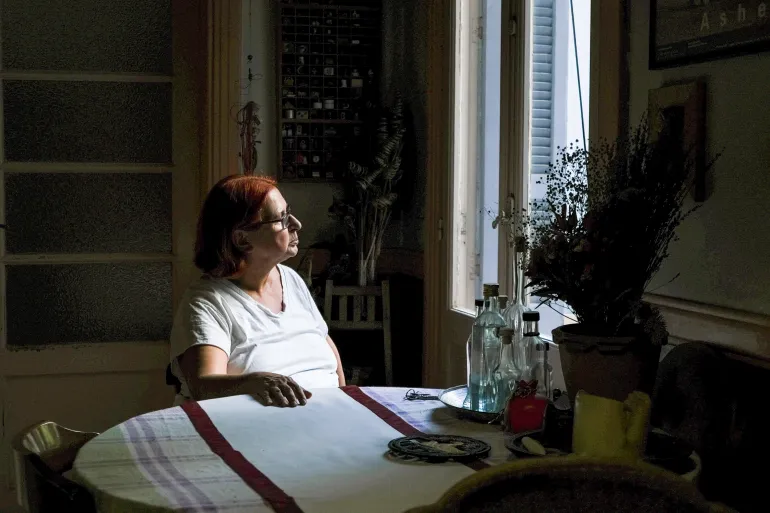
Athens, Greece – Tonia Katerini, a 69-year-old architect, leaned into her computer, scrolling through the property contracts that she said are remaking her neighbourhood.
Across Exarchia, the Athens district long known for its radical left-wing politics, flats are being bought up and turned into short-term rentals, pushing out the people who live there.
For months, Katerini and a group of neighbours have been digitally mapping foreign purchases using public records, marking them with red dots.
She zoomed out from her street on the map; it was a sea of red.
The balcony doors of her flat, where she has lived since 1986, were open and noise from the cafes below drifted in past the plants and stacks of architectural plans.
Her group says much of the money behind the rentals is Israeli; by their count, more than half of the area’s new company-run hotels and rentals .
In a neighbourhood where Palestinian flags hang from balconies and solidarity slogans cover the walls, that has caused friction.
On her own cobbled street, where the noise of arriving tourists rolling their suitcases wakes her in the morning, Israeli investors have bought two buildings, she said. The flat below hers belongs to one such company.
“They are nice guys we have downstairs,” she said. “It’s an Israeli company.”

A few streets away, a residential building is streaked with black paint.
“Airbnbs leave us homeless,” reads one slogan across its facade. “Zionists not welcome,” reads another.
Such buildings are easy to spot. Instead of residents’ names, the buzzer panels show only numbers and a keypad by the door releases keys for Airbnb guests.
Across the neighbourhood, activists have splattered keypads and facades with red paint.
They say short-term rentals are driving an aggressive gentrification that is pricing out locals and erasing the area’s identity.
Foreign money has poured into Greek property in recent years: non-residents invested a record 2.75 billion euros ($3.2bn) in Greek real estate in 2024, according to the Bank of Greece, before easing last year.
No official figures break down foreign buyers in Athens by nationality. But an annual survey of completed sales by the agency network RE/MAX Hellas found that Israelis were the largest group of foreign buyers in Attica, the region around the capital, ahead of buyers from Turkiye and Lebanon, reported the Greek weekly To Vima.
Exarchia’s political activism runs deep. In 1973, students at the nearby Athens Polytechnic rose up against the US-backed military government, which fell the following year.
In 2008, police shot dead Alexandros Grigoropoulos, a 15-year-old Greek student, in Exarchia, provoking protests that spread across the country. It came, Katerini said, like “fire on dry land”.
As Greece’s debt crisis deepened, that anger on the streets helped propel the left-wing Syriza party to power in 2015.

‘Tenants displaced, apartment blocks emptied’
Chrysoulla Papageorgiou, a schoolteacher who has lived in Exarchia for 24 years, is a familiar face on its streets. Earnest and straight-talking, the 46-year-old remembers it as “a neighbourhood of solidarity”.
The change came slowly, then quickened. At first, small owners rented out a spare room. After the COVID-19 pandemic, companies began buying entire blocks.
“Overnight, tenants were displaced and apartment blocks emptied,” she said.
Bars opened, spilling tables and chairs across pavements on streets that had once been quiet.
Rents rose and migrants and low-income families, many living in basements and on the lower floors, were the first to go. Schools lost pupils and old bookshops, traditional cafes and grocers closed.
For years, Exarchia residents sheltered refugees in occupied buildings. Sitting on prime real estate, they were among the first buildings police emptied and then sold, Papageorgiou said.
“Half were squats,” she said. “Now we have only one.”
That last building is draped in painted sheets declaring solidarity with the families inside. Neighbours help make sure the children get to school.

Since 2022, Exarchia Square, long the heart of the neighbourhood’s protests, has been a fenced-off construction site for a new metro station that many residents fought against. Riot police, Papageorgiou added, are now a daily presence.
The aim, she believed, is to turn central Athens into somewhere “purely touristic”.
In recent years, buyers have been “almost only Israeli”.

Near the square hangs a large Palestinian flag. Tourists sometimes scrawl anti-Palestinian messages on its white stripe, and activists paint it white again.
Foreign buyers, Katerini said, see Greece as a safer place for their money than Israel itself, and in Athens “the government is very friendly with Israel”. In August, Athens signed a missile deal with Israel worth $3.5bn.
‘A very good opportunity’ for investors
Vagelis Lazaridis, a stocky real estate agent who heads a branch of the Athens-Attica Real Estate Agents’ Association, talks about his trade with passion. He said the reasons for the investments were purely practical.
Exarchia “was a run-down area” which made it “a very good opportunity”, he said.
It is beside the centre, close to the metro and to universities full of students from abroad. Unlike Plaka, beneath the Acropolis, it has few building restrictions.
Once a handful of buyers arrive, he said, others follow.

Greece to become ‘far less appealing’ for Israeli buyers
The government is now trying to cool the market.
Prime Minister Kyriakos Mitsotakis announced last month that the transfer tax for homebuyers from outside the European Union would rise from 3 percent to 15 percent from next July.
“The party is over in Greece,” The Jerusalem Post wrote in a recent report. “The country, which in recent years has become a preferred destination for Israelis seeking real estate investments at reasonable prices and with attractive yields, is about to become far less appealing.”
Lazaridis said agents’ associations oppose the plan, which has yet to become law. It “may not take effect, or may be postponed”, he said.
Agents expect some non-EU buyers to speed up purchases before the deadline, reported the Greek news site in.gr.

‘Fewer Airbnbs’
Not everyone in the trade sees an unstoppable tide.
Iryna Rondyak, who is originally from Ukraine, runs her own estate agency near Exarchia. She said that when Israeli buyers began arriving about a decade ago, they made up about 60 percent of her foreign clients, many buying whole office buildings to turn into hotels.
Until around 2024, foreigners accounted for about 70 percent of her sales, she said.
This year, it is about 30 percent, as state-backed mortgages for young Greeks, under a scheme called “Spiti mou” (My Home), attract local buyers back.

She credits new rules for the turnaround.
No new short-term rental licences are being issued in central Athens, including Exarchia, and in September the freeze was extended to the end of 2027, reported To Vima.
Properties bought under Greece’s “golden visa” residency scheme can now only be let long-term. While a cheaper route into the scheme, at 250,000 euros ($280,000), rewards investors who convert empty office buildings into flats.
“Anyone living in Greece couldn’t find a home in the centre. Everything was on Airbnb,” she said. “Now there are far fewer.”
It is “a little better,” she said, but “the problem still exists”.
Rents remain high, at 10 to 15 euros ($12 to $17) per square metre, even in the southern suburbs, she said. Many flats sit empty because owners find renting them out is not worth the tax bill.

Residents are less convinced.
The rental freeze is temporary, they say, and investors with enough money can still find ways in. Nor does it undo what has already happened: many of the neighbourhood’s buildings are already short-term rentals.
Back in Exarchia, Papageorgiou counts herself lucky.
Her landlady, whose family has lived in the area for generations, refuses to raise the rent as an “act of resistance”.
Papageorgiou said jokingly that her landlady’s accountant has told her she is ruining the market.