Iran war live: Saudi blasts Houthi ‘war crimes’; US warns on Saudi airports
Saudi Arabia calls Houthi attacks 'full-fledged war crimes' while the US warns of possible attacks on Saudi airports.
Source link
Saudi Arabia calls Houthi attacks 'full-fledged war crimes' while the US warns of possible attacks on Saudi airports.
Source link
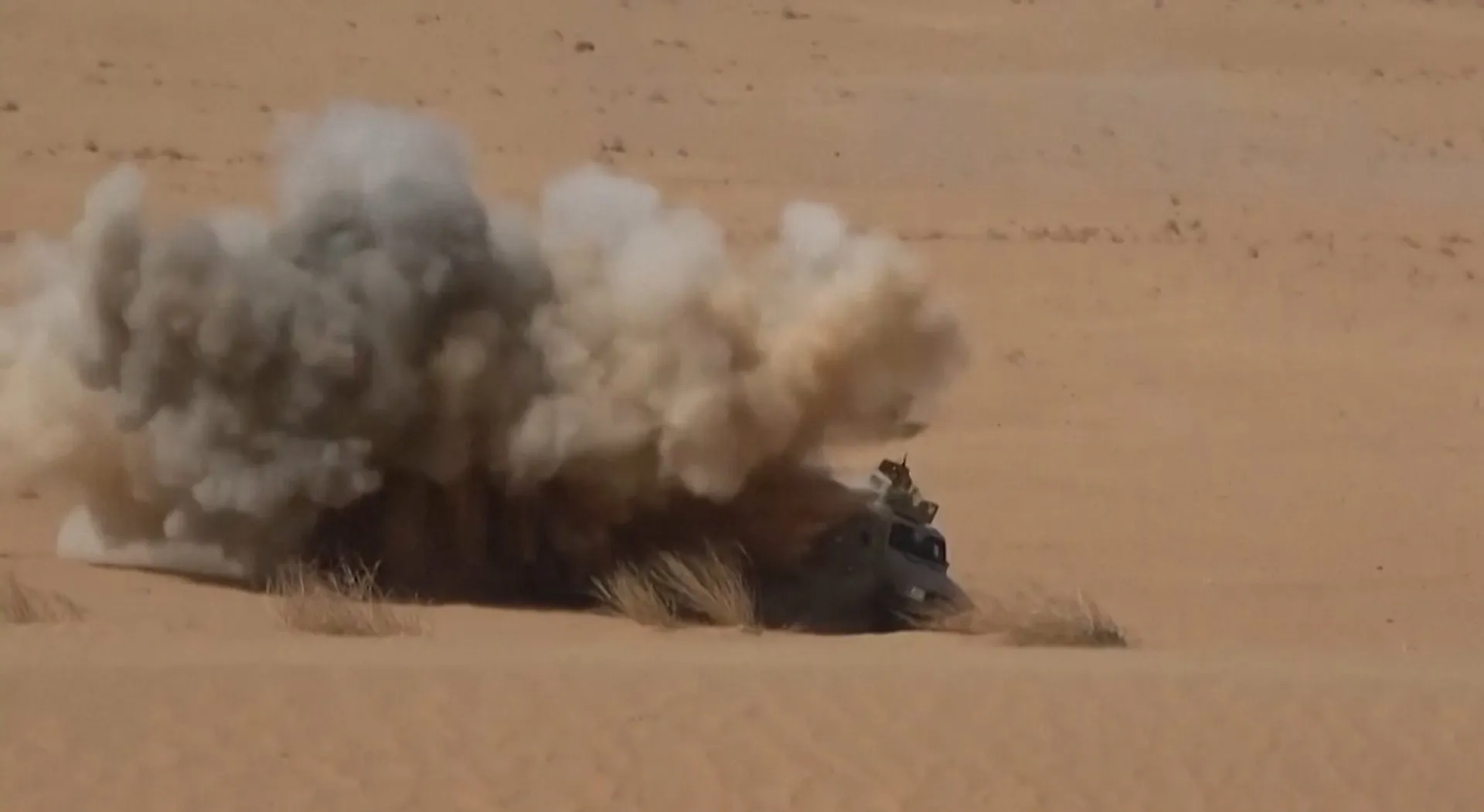
Saudi Arabia says it intercepted missiles targeting Riyadh and Dhahran, with falling debris injuring at least four people, and damaging homes in the capital. Meanwhile, Yemen’s Saudi-backed government says its offensive to retake Houthi-held territory is advancing.
Published On 14 Oct 202614 Oct 2026
Share
US President Donald Trump has accused Houthi rebels of targeting Saudi infrastructure to inflate energy prices before the US midterm elections.


Published On 14 Oct 202614 Oct 2026
Share
The Saudi Arabia-led coalition fighting in Yemen has said its forces intercepted another ballistic missile launched by the Houthis towards the Saudi capital, Riyadh, as the city reels from attacks that have killed at least 14 people in recent days.
In a statement on X, Turki Al-Maliki, the spokesperson for the coalition, said the Houthis fired one ballistic missile at Riyadh and two towards Khamis Mushait, a city in the southwest.
list of 4 itemsend of list
All three were “intercepted and destroyed”, he said.
Residents of Riyadh reported several powerful explosions on Monday night, moments after a text message to their phones warned of an aerial threat.
The Houthis, who control Yemen’s most populous areas, including the capital, Sanaa, said their target in Riyadh had been King Khalid International airport.
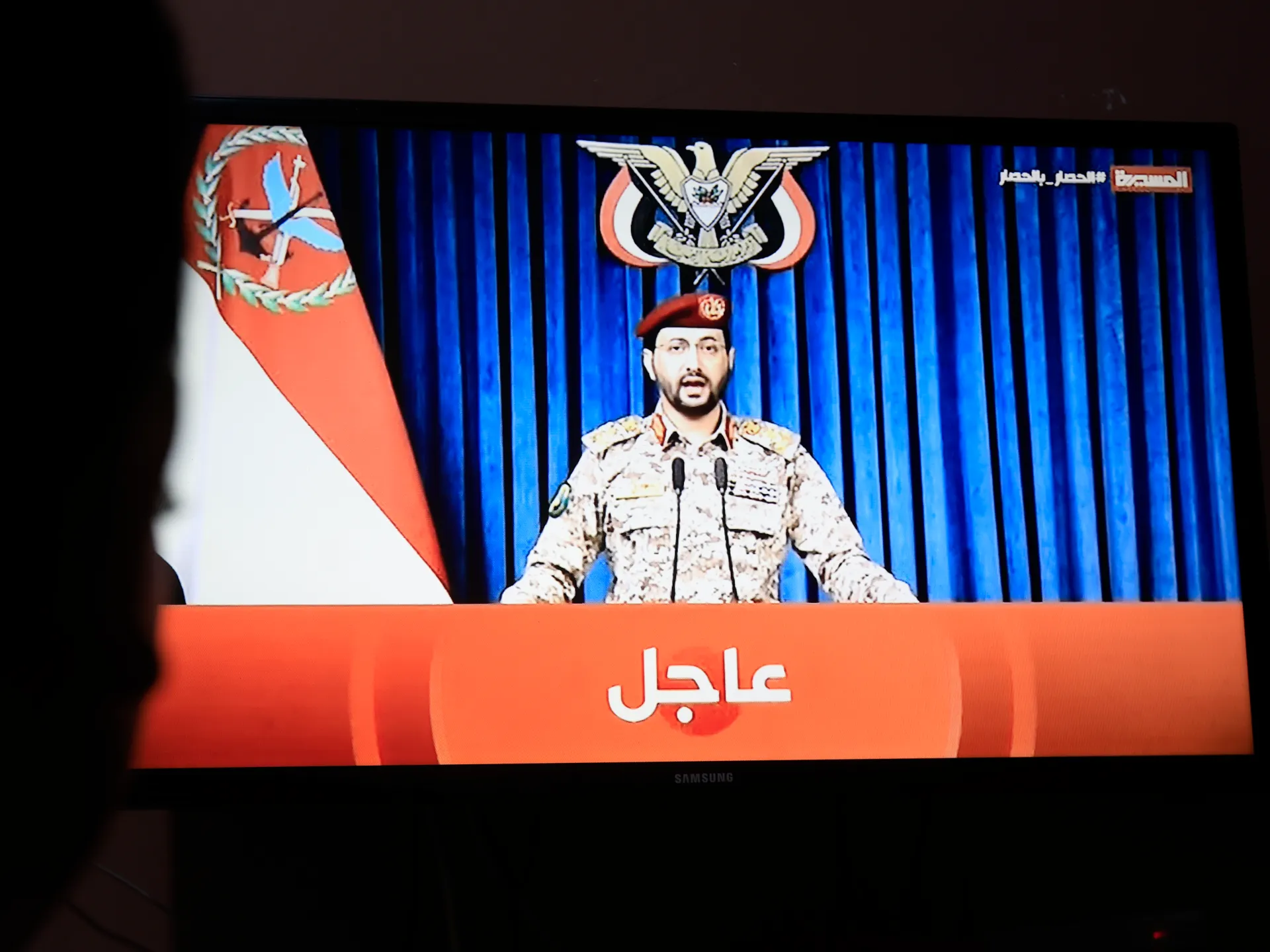
Yahya Saree, a Houthi military spokesman, said the group had also sent a drone towards a military airbase at Khamis Mushait, near the Yemeni border. He again warned international airlines and travellers “against operating flights to airports” in Saudi Arabia, except in the holy cities of Mecca and Medina, saying the facilities were “unsafe”.
The renewed attacks came as King Khalid International airport in Riyadh remains closed after a Houthi attack on Saturday that killed at least 13 people and wounded more than 300 others. Another strike on Sunday killed one person and wounded 11.
Saudi authorities said the airport would remain closed until this Saturday, and airlines have canceled flights. The Houthis have also struck Saudi oil facilities.
The attacks come as the Houthis fight forces aligned with Yemen’s internationally recognised government for control of the country. The Saudi-led coalition has carried out an air campaign against the Houthis and backed the government’s ground forces. The fighting erupted amid regional tensions set off by the United States and Israel’s war on Iran.
Speaking at an energy conference in Riyadh, Saudi Arabia’s Energy Minister Prince Abdulaziz bin Salman Al Saud said the attacks on airports over the last week have tested the kingdom’s resilience.
“The events of recent weeks are serious,” the minister said. “Our response must be equally serious.” He added that Vision 2030, Crown Prince Mohammed bin Salman’s plan to diversify the Saudi economy, “must continue. Investment must continue”.
Saudi authorities have meanwhile opened an investigation into why the country’s air defences failed to stop the barrage, according to two regional officials who spoke to The Associated Press on condition of anonymity. An initial inquiry found that the Houthis first launched several drones to clear a path for a mix of cruise and ballistic missiles, which then reached the airport, the officials said.
The Houthis possess ballistic missiles with warheads that can change direction in flight, posing a challenge to the Patriot interceptors and other systems the Saudis rely on.
One official told AP that investigators also wanted to know why the defences had not given earlier warning of an attack in which missiles and drones flew more than 1,000km, or 620 miles, to reach Riyadh.
US President Donald Trump separately criticised the Houthis but gave no indication that Washington would intervene. “Well, the Houthis are misbehaving very badly. No good,” he told reporters when asked what he planned to do about the group.
A Houthi official warned that US involvement would bring retaliation.
“If the US becomes involved in the aggression against Yemen, we will not deliberate over the decision to respond; rather, there will be a swift and painful response targeting the US and all its interests in the region,” Mohammed al-Bukhaiti, a member of the Houthis’ political bureau, told the AFP news agency.
Al-Bukhaiti also warned “all employees and workers at Saudi oil facilities and airports to stay away from these sites, as they have become legitimate targets”.
The attacks have put events scheduled in Riyadh this month under pressure, including the kingdom’s flagship investment conference and the WPC Energy Congress, where several top oil executives were dropped from the programme.
The United Arab Emirates’s national carrier Etihad Airways announced on Monday that it was cancelling all flights to and from Riyadh until next week. It also suspended flights to Dammam and Jeddah.
Bahrain’s national carrier Gulf Air said it, too, was cancelling all Riyadh flights until Saturday.
US operator Delta announced it would delay the launch of direct flights from Atlanta to Riyadh, scheduled for October 23.
US, Australia, Canada, Japan, South Korea and New Zealand among countries urging citizens to avoid travel to Kingdom.

Published On 12 Oct 202612 Oct 2026
Several countries have warned their citizens against travel to Saudi Arabia following a series of Houthi attacks on airports in the kingdom.
On Monday, Australia and New Zealand became the latest to issue advisories against travelling to the kingdom, following similar warnings from the United States, Canada, the UK, South Korea, and Japan.
list of 4 itemsend of list
Australia’s Department of Foreign Affairs and Trade said Australians should avoid King Khalid International Airport in Riyadh and “reconsider” travel to other Saudi airports.
New Zealand’s Ministry of Foreign Affairs and Trade urged citizens not to travel to the Saudi capital’s main gateway and the provinces of Najran, Jazan and Asir for any reason, and to avoid “non-essential” travel to Saudi Arabia as a whole.
The US embassy in Riyadh on Sunday advised US citizens to reconsider travel to the kingdom, citing the threat of attacks by Iran and the Iranian-backed Houthis.
Global Affairs Canada issued an advisory against non-essential travel to any part of Saudi Arabia.
South Korea’s Ministry of Foreign Affairs recommended that its citizens in Saudi Arabia leave unless they are on essential business and advised anyone planning to travel to the kingdom to cancel their trip.
The UK’s Foreign, Commonwealth and Development Office urged citizens to avoid travel to Jeddah and Dammam, and to all airports apart from Medina International Airport, except for essential reasons.
The warnings come as Saudi Arabia reels from five attacks on its airports in less than a week.
One person was killed and 11 others were injured on Sunday when a projectile struck King Khalid International Airport, according to Saudi Arabia’s General Authority of Civil Aviation (GACA).
A Houthi strike on the same airport on Saturday killed 13 people and injured more than 300 others, marking the deadliest attack on Saudi Arabia in more than a decade.
The Houthis claimed responsibility for all four strikes on Saudi airports before Sunday’s attack, which has yet to be claimed by any group.
King Khalid international airport and King Fahd international airport in Dammam remain closed following the attacks, causing significant disruption to aviation across the Middle East.
The attacks have also disrupted flights to and from King Abdulaziz International Airport in Jeddah.
More than 150 flights were cancelled and 374 flights were delayed at the Jeddah airport on Sunday, according to the flight tracking website Flightradar24.
Brendan Sobie, an independent analyst and consultant in Singapore, said it was too early to predict the ramifications of the attacks for aviation across the region and beyond.
“As has been the case with the Iran war and the impact from that crisis on the UAE, Kuwait and Bahrain, the impact of this latest crisis really depends on how long it lasts, how long Riyadh airport remains closed, and how long and to what extent are the restrictions once it reopens,” Sobie told Al Jazeera.
Saudi authorities say a Pakistani national was killed and several people injured in a second strike on Riyadh’s King Khalid International Airport. Sunday’s strike followed an attack on Saturday that killed 12 people and injured more than 300. Al Jazeera’s Malik Traina reports.
Published On 11 Oct 202611 Oct 2026
Share

CCTV footage released by Al Arabiya shows the moment of a Houthi strike on Riyadh’s international airport on Saturday. The attack killed at least 12 people and injured more than 300. A warning this video contains distressing images.
Published On 11 Oct 202611 Oct 2026
Share
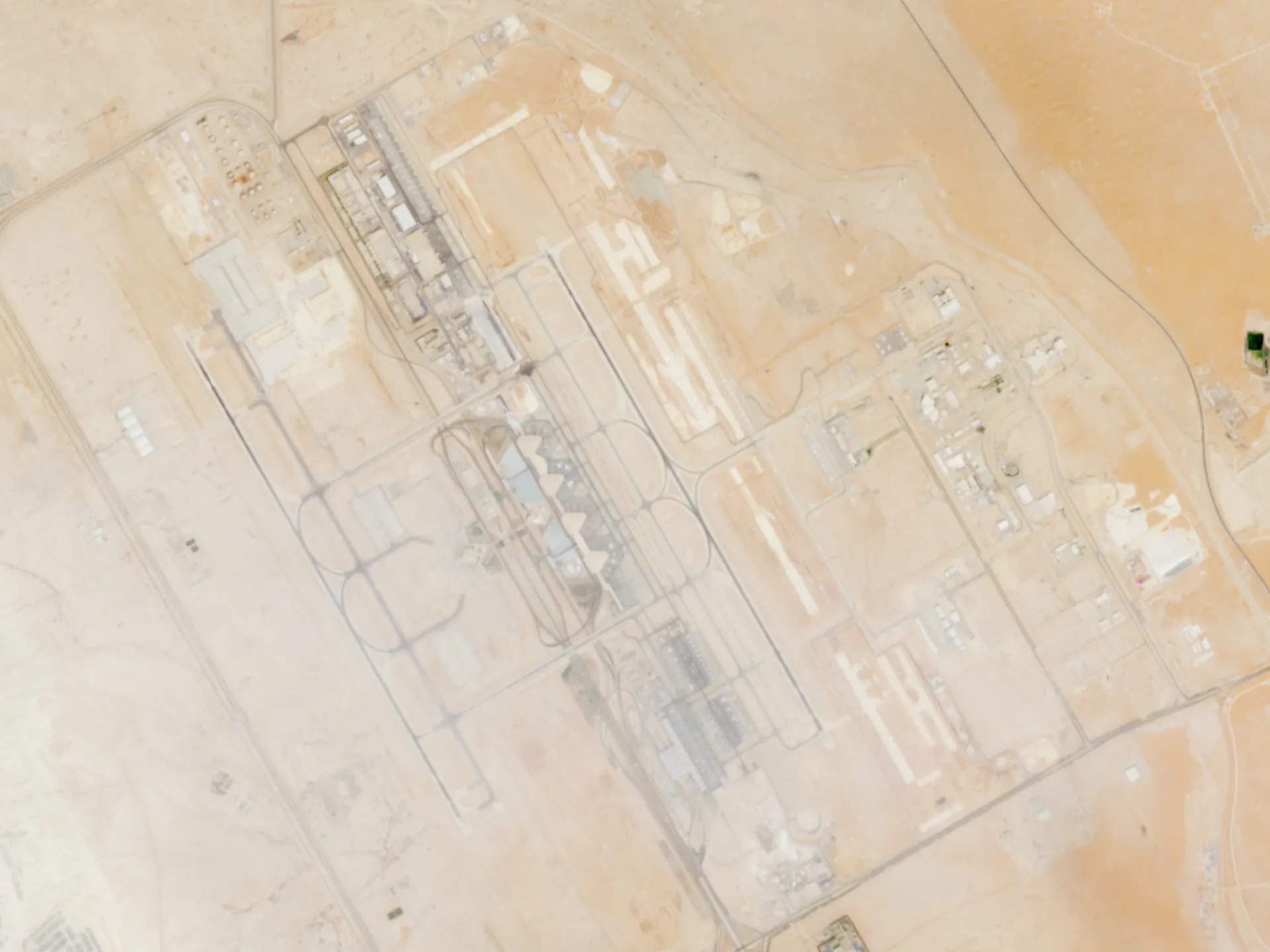
A Houthi attack on Riyadh airport killed at least 12 people and injured more than 300. The Saudi-led coalition fighting the Houthis in Yemen called the missile strike a ‘war crime’, which has been condemned by the UN, Qatar, Pakistan, Canada and others.
Published On 11 Oct 202611 Oct 2026
Share
Saudi civil aviation authorities say Houthi attacks on Abha and King Khalid International airports have killed three civilians, including two women, and injured 36 others.

Published On 8 Oct 20268 Oct 2026
Share
Government forces close a key crossing connecting Houthi-held al-Houban to government-held Taiz city.

Published On 3 Oct 20263 Oct 2026
Yemen’s internationally recognised government forces have carried out nearly 500 military operations, killing or wounding 1,540 Houthi rebels in the past 24 hours, according to the army.
Warplanes, drones, artillery, missiles and rocket launchers were used to target Houthi positions in various parts of Yemen, military spokesman Colonel Majed Abdullah al-Nazili said on Friday evening.
list of 3 itemsend of list
Most of the casualties came in the governorate of Taiz where the operations halted the Houthi advance, al-Nazili said. The government-held city of Taiz has become a focal point of the renewed fighting.
The army spokesman did not mention any casualties among government forces.
On Saturday, the army’s media official Ammar al-Sami’i told Al Jazeera that the government had closed the al-Houban crossing in Taiz.
The crossing had previously been closed for nine years and was later reopened to civilians in 2024 for “humanitarian reasons”, Sami’i said, as the road is one of Yemen’s most important connections between territory held by the opposing sides. It connects Houthi-held al-Houban to government-held Taiz city.
Sami’i said security reasons are behind the closure, following an attempt by the Houthis to infiltrate Taiz via the road, attacks in the vicinity and a general military buildup.
A fragile truce struck between the government and the Houthis in 2022 collapsed in July this year, and fighting in Yemen has escalated significantly since then.
In mid-September, the Houthis swept across parts of western Yemen, seizing the port city of Mocha and key strategic islands in the Bab al-Mandeb strait.
Since then, anti-Houthi forces have largely stabilised the front lines.
Hundreds of thousands of people have been displaced since the fighting restarted.
Yemen has been embroiled in civil war since the Houthis seized the capital of Sanaa in 2014, forcing the internationally recognised government to retreat to Aden.
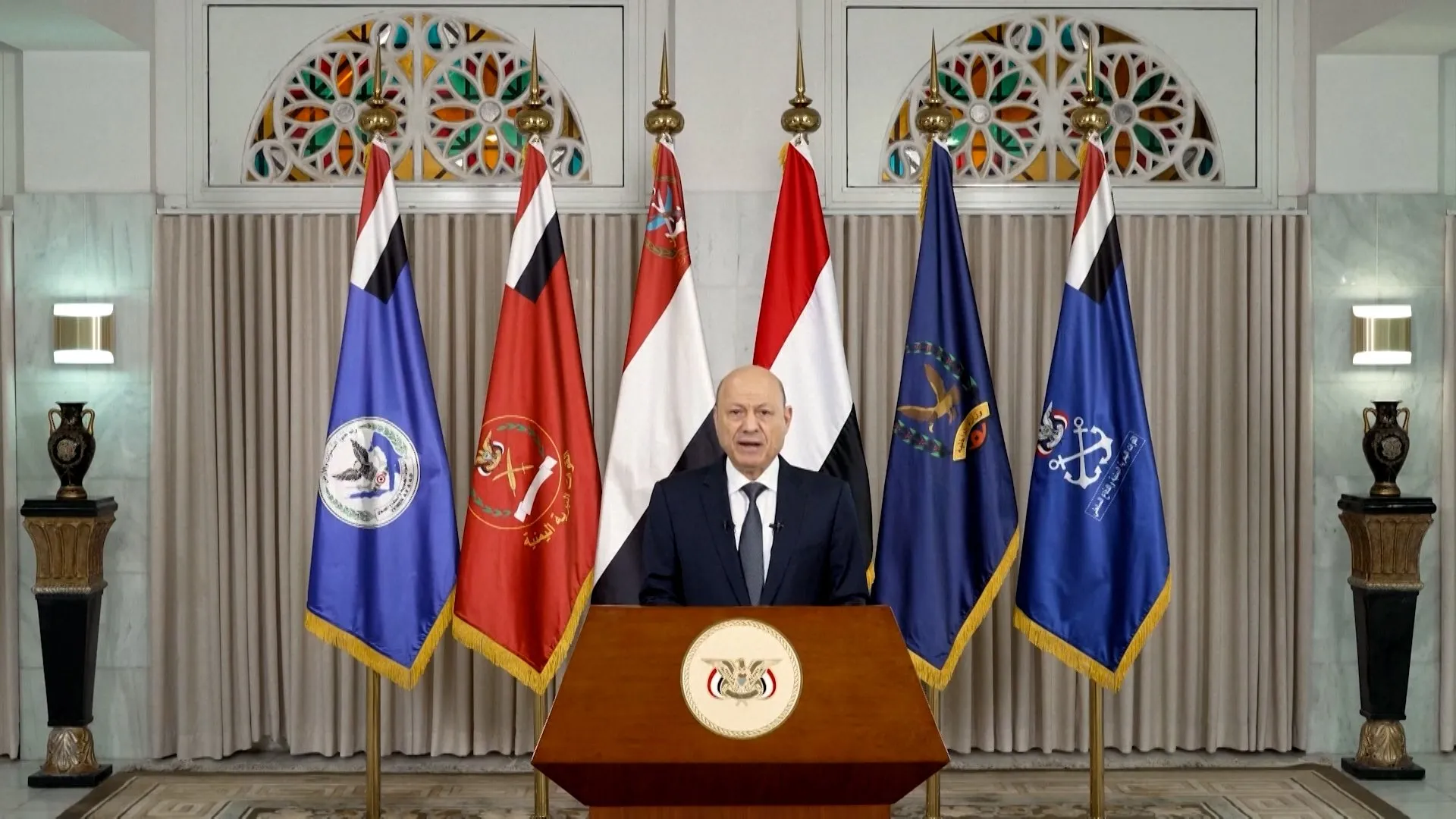
President Rashad al-Alimi called on Yemenis to mobilise and join the armed forces, while offering a general amnesty to Iran-backed Houthi rebels. Fighting between the government and the Houthis has intensified, most recently near the coast of the Bab al-Mandeb strait.
Published On 26 Sep 202626 Sep 2026
Share
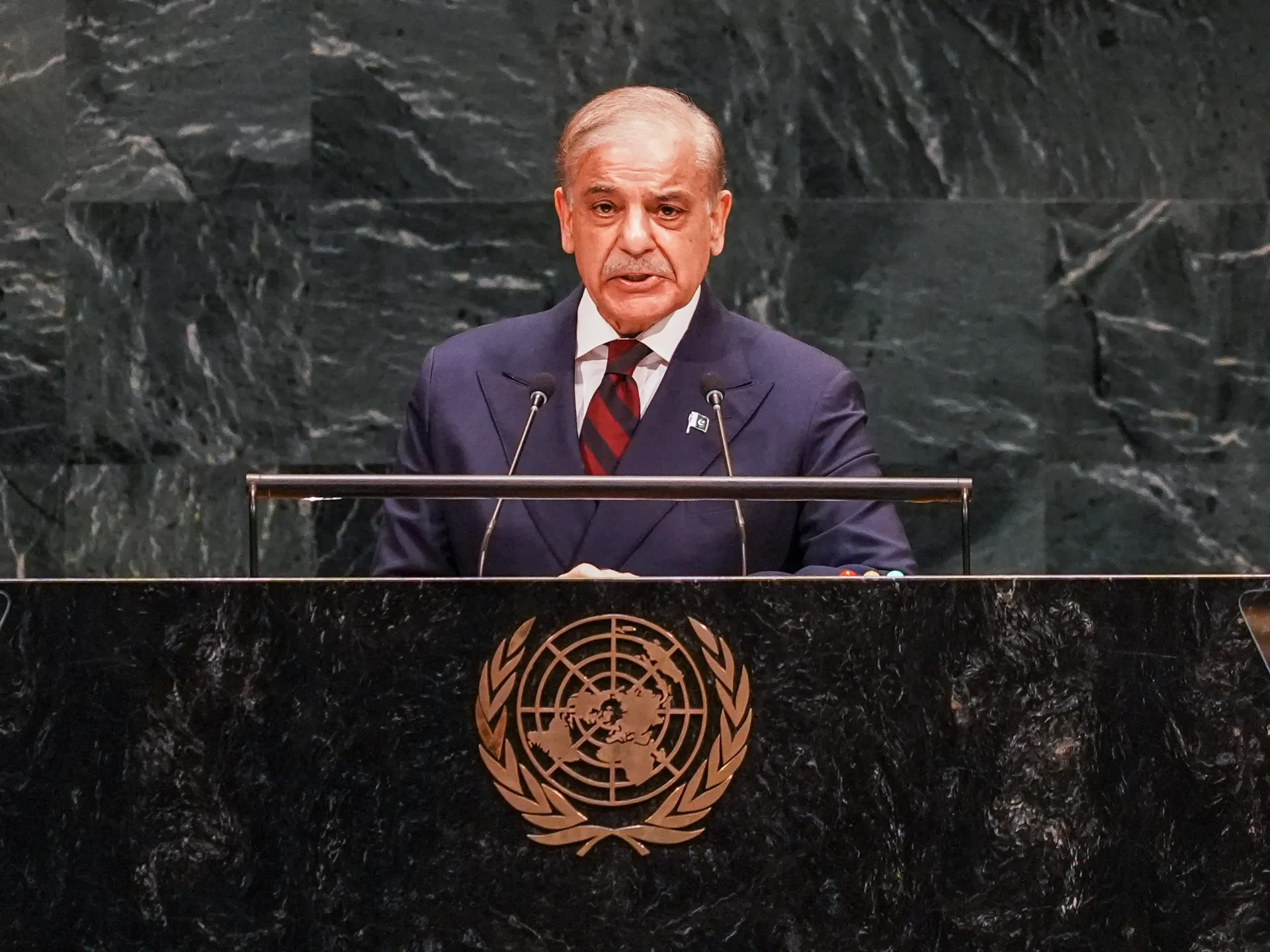
Shehbaz Sharif speaks as Islamabad, Riyadh and Ankara army chiefs meet to discuss Mecca pact, closer military ties.
Pakistan’s prime minister has condemned Houthi attacks on Saudi Arabia, warning that any “threat to the sanctity” of the Muslim holy cities of Mecca and Medina is a “red line that must never be crossed”.
Addressing the United Nations General Assembly in New York on Friday, Shehbaz Sharif denounced recent Houthi attacks as “deplorable”.
list of 3 itemsend of list
He added that an attack by the Iran-aligned Yemeni group, which Riyadh says targeted Mecca, “outraged Muslims across the globe”. The Houthis have dismissed the accusations as a “heinous lie”.
Last month, Pakistan, Saudi Arabia and Turkiye signed a trilateral defence pact, formally known as the Mecca Joint Defence Agreement. The pact states that an attack on any member will be treated as an attack on all. However, Islamabad and Ankara have refrained from getting involved in Riyadh’s ongoing fight with the Houthis.
The military chiefs of all three countries met in Riyadh on Friday and discussed enhancing intelligence sharing and military coordination, the Pakistani military said. The chiefs reviewed the security situation and threats facing Saudi Arabia, affirmed a commitment to collective defence and pledged to turn Mecca Agreement commitments into effective cooperation, the army added.
It is not clear what, if any, support Ankara and Islamabad may provide to Riyadh. In a written interview published by the US media outlet Newsweek on Friday, Turkish President Recep Tayyip Erdogan said support could include “intelligence, logistics or ammunition, with more extensive military assistance possible depending on the scale of the threat”.
In Sharif’s UN address, he also referenced the US-Israeli war that was launched against Iran in late February, as well as Islamabad’s role as a co-mediator.
Pakistan’s efforts culminated in the Islamabad Memorandum of Understanding, signed by Washington and Tehran, which was intended to help end the conflict.
The accord has since unravelled while regional countries push for a conclusive end to the war, which has caused a global energy crisis and exacerbated tensions across the Middle East.
“Yet amid the roar of missiles, drones and guns, the voice for diplomacy must echo even louder and stronger,” Sharif said.
He added that the Strait of Hormuz, which Iran has effectively blockaded, and the Bab al-Mandeb waterway, which is now largely under Houthi control, are “arteries of the global economy” that should remain free and safe.
The Pakistani prime minister also denounced what he described as Israel’s “genocidal agenda” in Palestine, while condemning “Israeli aggression against Lebanon and Syria”. These were sentiments echoed earlier in the day by Lebanese Prime Minister Nawaf Salam in his UN General Assembly address.
Closer to home, Sharif’s speech touched on tensions with Pakistan’s neighbours.
Criticising India, he accused New Delhi of weaponising the Indus waters, which both countries have jointly managed for more than six decades. The two neighbours heavily rely on the Himalayan river network.
Sharif warned that “any attempt to stop, impede or divert Pakistan’s share of the waters will be treated as an act of war”.
He also called for what he described as a “just and fair solution” to the Kashmir dispute, which both Pakistan and India claim in its entirety. Sharif alleged that there have been attempts to “alter the legal status” of Kashmir through demographic engineering.
Another pressing issue for Islamabad is the threat posed by the Tehrik-e-Taliban (TTP), or Pakistani Taliban. Sharif said groups operate from “sanctuaries inside Afghanistan, with the aim of destabilising Pakistan”, insisting that attacks launched from Afghanistan “must come to a grinding halt”.
This comes as the latest cross-border fighting left several Afghan Taliban fighters dead on Friday.
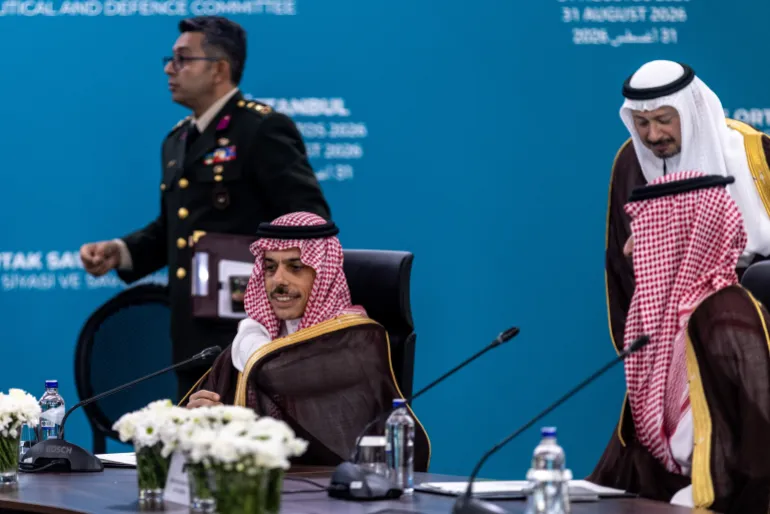
France is sending its military to protect key Yanbu oil terminal; Pakistan and Turkiye to hold military talks with Riyadh.
By Al Jazeera Staff, AP, DPA and Reuters
Published On 25 Sep 202625 Sep 2026
Saudi Arabia’s allies are rallying to support the country as the Houthi rebels step up attacks.
France confirmed on Friday that it is sending troops to guard the major oil terminal at Yanbu. Meanwhile, Saudi officials are meeting with peers from Pakistan and Turkiye to discuss options under their mutual defence pact.
list of 4 itemsend of list
French President Emmanuel Macron told broadcasters TF1 and France 2 that Paris is to send “soldiers, radars, and defence systems” to the Red Sea port of Yanbu.
“Not to involve ourselves in any conflict, but to protect the site,” he said.
Yanbu hosts major oil storage and refining facilities and is connected by the East-West Pipeline, which can carry up to seven million barrels a day.
The Houthis, also known as Ansar Allah (supporters of God), have repeatedly fired missiles and drones into Saudi Arabia, disrupting oil flows from the world’s largest energy exporter.
On Thursday, the rebel group said it had struck the facilities of state oil firm Aramco in Yanbu, and a “sensitive target” in Riyadh. Saudi forces said they had intercepted six ballistic missiles. Authorities have not confirmed any damage.
The foreign ministers of Saudi Arabia, Pakistan and Turkiye met on Thursday to arrange an “urgent meeting” of their military chiefs of staff under the Mecca Joint Defence Agreement, which treats an attack on one member as an attack on all, the Saudi foreign ministry said in a statement.
They also condemned Houthi attacks that they claimed targeted Mecca and other civilian sites.
However, doubt persists over what action Turkiye and Pakistan might take under the pact, which is yet to be officially triggered. Both of the Saudi allies are heavily involved as mediators seeking to bring an end to the conflicts across the Middle East.
Saudi Arabia’s grand mufti called on soldiers to be ready to lay down their lives to fight the Houthis, according to the Saudi state news agency.
The Iran-aligned Houthis have been battling the Saudi-backed government of Yemen for more than a decade. That conflict has been rekindled amid Israel’s wars against the Iran-aligned Hamas group in Gaza and the Hezbollah group in Lebanon, and the United States war on Iran.
At the United Nations General Assembly in New York, Yemen’s Vice President Abdullah Abdulkader al-Alimi-Bawzer warned that the Houthis were using shipping security “as a tool for blackmail”.
“It is taking hostage the entire global economy,” he said.
The US has not renewed military involvement, but Saudi Foreign Minister Prince Faisal bin Farhan Al Saud said the kingdom was “continuing to work with our partners in the US”.

The Houthi targeting of Yanbu adds to the pressure on Saudi Arabia’s oil exports.
Earlier this month, the Houthis seized the Yemeni port of Mocha and several Red Sea islands, giving them significant control over the Bab al-Mandeb strait, which usually carries about 12 percent of global oil trade.
Strikes have also disrupted the operation of the East-West Pipeline linking Yanbu to export routes. Riyadh had been using it to export crude bypassing the Strait of Hormuz, which is restricted amid the Iran-US war.
However, the Houthis have now forced the Saudis to switch some exports back to Hormuz.
Brent crude rose more than 3 percent on Thursday, briefly topping $108 a barrel, before easing to $105.77 on Friday morning.
June Goh, a senior oil market analyst at Sparta Commodities in Singapore, said oil would likely stay above $100 a barrel as long as the war on Iran continued.
“With no clear resolution in sight, the gap in oil inventories globally is getting wider,” Goh told Al Jazeera.

Brent crude jumps above $106 after Houthi attack against Saudi sites
Source link
Fidan highlights Turkiye’s readiness to assist Saudi Arabia militarily, as Houthi attacks escalate in Yemen.
Published On 19 Sep 202619 Sep 2026
Turkish Foreign Minister Hakan Fidan has said that Saudi Arabia may have unmet military needs from the attacks by Yemen’s Houthi rebels and that Turkiye would consider how to support the kingdom as part of a trilateral defence pact.
Speaking to Turkish broadcaster NTV on Friday, Fidan said it was unacceptable for Saudi Arabia to be dragged into the US-Iran war, adding that Riyadh had no desire to join the conflict.
list of 3 itemsend of list
He added that proposals had been conveyed to all sides in an effort to end the fighting, without further elaborating.
The Iran-backed Houthi rebels and Saudi Arabia continue trading attacks in an escalating war in Yemen, as the Houthis press gains that have brought large stretches of the Red Sea coast, including the strategic Bab al-Mandeb Strait, under their control.
Pakistan has made a similar pledge to defend Saudi Arabia under the defence pact.
Lieutenant-General Ahmed Sharif Chaudhry, a spokesperson for Pakistan’s military, told Arab News on Thursday that Islamabad would defend Saudi Arabia “to any extent”, including “physically”, though he did not say whether Riyadh had asked for more Pakistani troops.
Pakistan’s Foreign Office has said no military response is currently under discussion under the pact, adding that Islamabad would act “when time comes”.
The trilateral agreement, known as the Mecca Joint Defence Agreement, was signed on August 7 in Mecca by Saudi Crown Prince Mohammed bin Salman, Turkish President Recep Tayyip Erdogan and Pakistani Prime Minister Shehbaz Sharif.
The three countries formally named the arrangement the Mecca Defence Alliance on August 31, after officials meeting in Istanbul agreed to set up a secretariat in Riyadh, to be headed initially by a Pakistani secretary-general.
Its founding principle is that an armed attack against any one of the three states will be treated as an attack against all three.
Fidan said at the time the alliance was built on “respecting the sovereignty of other states, territorial integrity and not intervening in internal affairs”, and remained open to other countries joining.
Analysts have questioned how much substance lies behind the pact so far, noting it lacks the integrated command structure and standing forces that underpin NATO.
Its institutional shape, including how the mutual defence clause would actually be triggered, remains unclear.
The trilateral pact was struck as Gulf states grow increasingly concerned about being pulled into the wider US-Iran war, which has continued for more than six months since Washington and Israel first struck Iran in February.
This was the first time an alert was sounded in Riyadh since an escalation between the Houthis in Yemen and the Saudis.
Published On 19 Sep 202619 Sep 2026
Saudi-led coalition forces fighting Yemen’s Houthis have said that the Iran-backed group fired a ballistic missile at Riyadh at dawn before it was intercepted and destroyed.
“The Houthis also attempted to target civilians and civilian infrastructure in Bisha, Taif, Farasan and Yanbu,” coalition forces spokesman Major-General Turki al-Maliki wrote on X on Saturday, adding that the attacks were thwarted by the Gulf monarchy’s air defences.
list of 4 itemsend of list
Saudi Arabia warned of a “hostile aerial threat” and issued a string of emergency alerts across the kingdom overnight on Friday.
On Saturday, at least one explosion was heard in Riyadh, with residents near the airport saying they saw a large plume of black smoke later in the morning. Saudi authorities reported no casualties or damage.
It was the first air raid alert sounded in Riyadh since an escalation in fighting with the Houthis in Yemen began in July.
The Saudi spokesman said that the Houthis are escalating their attempts to target civilians and civilian infrastructure in the capital. He also affirmed the coalition command’s right to take “appropriate” action to deter the Houthis, in accordance with international humanitarian law.
Earlier on Saturday, Houthi fighters in Yemen said they attacked “sensitive” sites in Riyadh as well as an Aramco oil facility in the western coastal city of Yanbu, according to a statement shared by Houthi military spokesman Yahya Saree.
Saree said the Houthis attacked Saudi Arabia with cruise and ballistic missiles as well as drones.
“You could see that the Houthis are determining the timelines and the levels of the escalation,” Yasmeen al-Eryani, executive director for knowledge production at the Sana’a Center think tank, told Al Jazeera. “So, depending on the current situation, it seems that the Houthis are the ones in control,” she added.
Meanwhile, on the ground in Yemen, the armed forces of the Saudi-backed internationally recognised government said their fighters thwarted a Houthi infiltration attempt in the al-Fuliahan sector in southern Marib on Saturday, killing 12 Houthi fighters and injuring others.
The army also said 13 Yemeni soldiers were killed in two days of clashes with Houthi forces in the southwestern provinces of Taiz and Lahj.
Renewed clashes are taking place in Yemen’s Marib, Taiz, Lahj, al-Jawf and al-Bayda as part of a military escalation that began in early July – the most intense since the relative calm following an April 2022 truce.
Al-Eryani told Al Jazeera that military options against the Houthis are currently limited because much of the fighting is taking place in mountainous terrain that is difficult for opposing forces to access and hold.
For now, she said, containing the group may be a more realistic option than defeating it militarily. “Without controlling the peaks that are parallel to the coast, you will not be able to control the coast,” said al-Eryani.
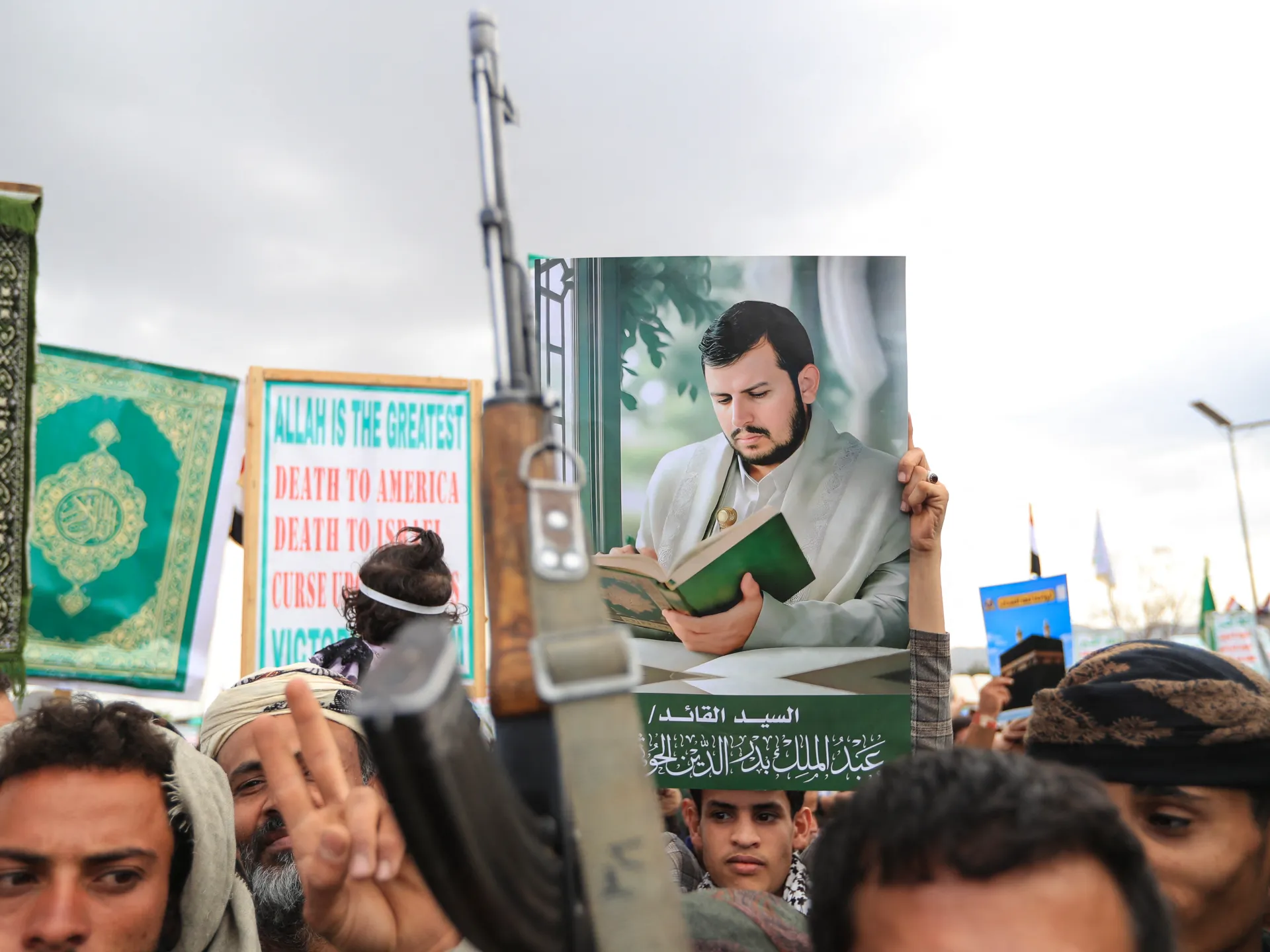
Thousands take to the streets in support of Houthis in Sanaa, Trump extends sanctions on Iran.
Published On 19 Sep 202619 Sep 2026
Share