A GRAND new multi-million hotel is opening in Cornwall right by the beach and it will transport you straight to Italy.
Officially opening on June 15, The Nici in Newquay is “inspired by the sun-soaked glamour of the Amalfi Coast” and has the “indulgence of a Mediterranean escape”.
Sign up for the Travel newsletter
Thank you!
The Nici Newquay will open on June 15Credit: NiciThe hotel has an Amalfi feel, with indoor and outdoor poolsCredit: Nici
The clifftop heated pool is the star of the show, with amazing views over the ocean as well as a poolside bar.
But the hotel will also have a spa described as a “coastal cocoon” with a heated indoor pool, hot tub, an aromatherapy sauna, a steam room and a hydrotherapy suite.
A cinema room and kids club will also be on-site to both adults and kids occupied.
In the restaurant – aptly named Amalfi’s – guests will be able to enjoy Italian-inspired such as handmade pizzas and salads.
A second restaurant is planned for 2027, called Tucker Rocks – a more casual dining spot meant to resemble a “clifftop Italian cafe” with live music and even a gelato counter.
And a unique feature at the hotel is the rare Victorian bathing lift that has been restored, so guests can get to Great Western Beach directly from the clifftop hotel.
Inside the hotel there will be 82 refurbished bedrooms and suites, some of which will have sea views.
Otherwise they will all be kitted out with the extras from Nespresso machines, Bluetooth speakers and fancy toiletries in the bathroom.
For those who like to keep fit, the hotel has a fully-equipped gym and fitness studios and juice bar for post-workout refreshments.
Guests can sign up to The Nici Club and get unlimited access to the spa, as well as exclusive events, too.
Inside there is also a spa with an aromatherapy sauna and steam roomCredit: NiciThe hotel also has a restaurant and cafe as wellCredit: Nici
Rooms at The Nici Newquay cost from £155 per night.
The destination used to be called Hotel Victoria before The Nici took it over and spent £20 million on transforming it.
The hotel is just a five-minute walk from Newquay train station, as well as a five minute walk from Great Western Beach.
If you want to head to one of the most popular beaches in the area – Fistral Beach – then it is just a six minute walk away.
There’s plenty to do in the surrounding area as well, with the hotel just steps away from Great Western Beach – a golden cove which is great for both surfing and rock pooling.
And if you fancy a cheap £1.99 pint, right by the hotel is The Towan Blystra, a Wetherspoons pub.
There’s direct access from the hotel to Great Western Beach tooCredit: Alamy
The Nici Newquay isn’t the only one to open in June, as The Nici New Forest will also open on June 15.
Sitting at the edge of the New Forest in the historic town of Lymington, the hotel is “inspired by the laidback sophistication of the Hamptons”.
Around the hotel, guests can explore woodland trails as well as heading down to the beach.
Another Nici hotel will also be opening in the New Forest on June 15Credit: Nici
She said: “Its chic-as interiors are super-Instagrammable – rooms are fresh white with bold, palm-print textiles and brass lighting, while ice-cream pastels, glitterballs and eye-catching artwork adorn the communal areas.
“As well as the beautiful pool, there’s a dinky cinema showing four films each day and a petite playroom with table football, giant Jenga and board games.
“Some rooms come with hot tubs, while others have freestanding baths – bag one with a sea view and you’ll wake up thinking you’re in the South of France!”
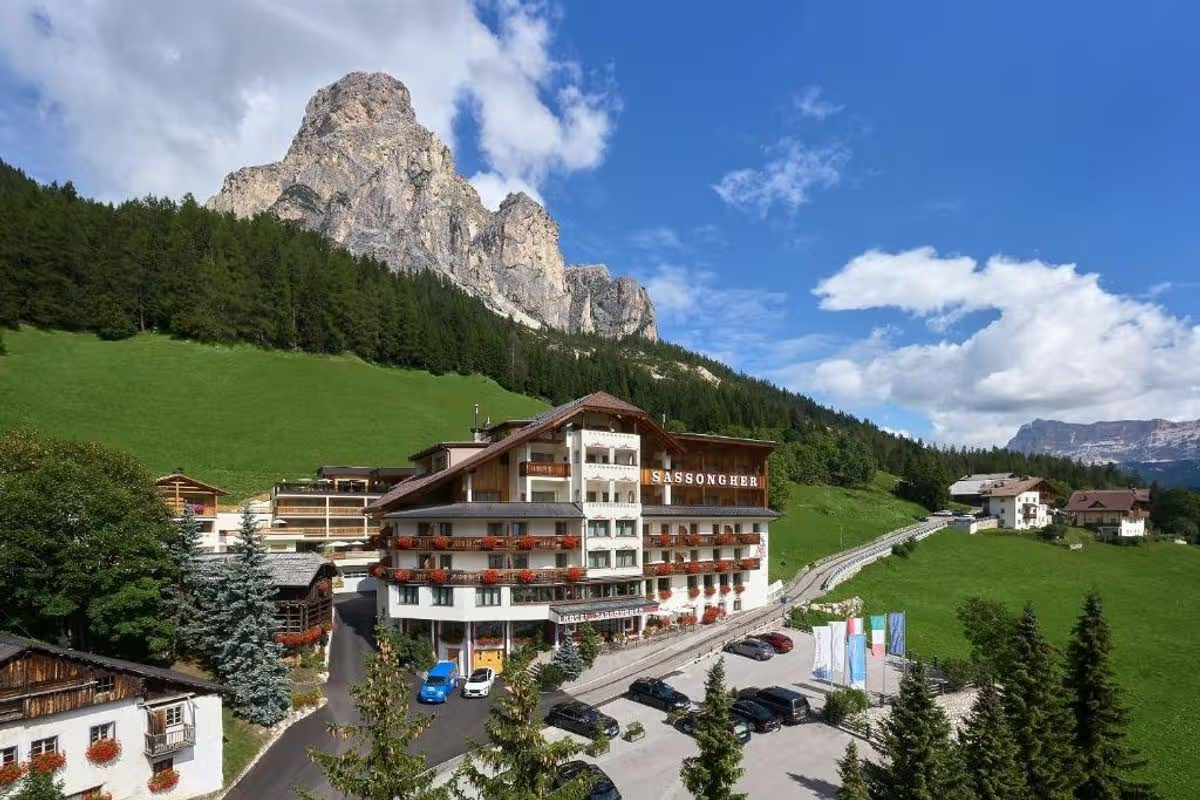
A woman has lost a court battle after she claimed that “water is a natural resource and a universal human right” having been refused a glass of tap water by the Hotel Sassongher in Corvara
The Hotel Assongher in Corvara has won the legal case
A hotel has won a legal fight with a tourist who asked for a glass of water.
In the UK, the right to ask for a glass of water from certain establishments is enshrined in the law. Restaurants that serve alcohol are legally required to provide free tap water to paying customers, although they may charge for the glass or service.
The same cannot be said for other countries.
In Italy, the land’s highest court has just ruled that a five-star Dolomites hotel acted lawfully when it refused to provide tap water to a tourist.
Way back in 2019, the woman, from Rome, asked for a glass of H2O, only to be told that she couldn’t have one and that she’d have to make do with a £6 bottle of mineral water instead.
What followed was a legal fight that has run on until this week. Eventually settled in the Italian Supreme Court, the tourist claimed that “water is a natural resource and a universal human right”.
However, such arguments failed, with the five-star Hotel Sassongher in Corvara eventually victorious and the tourist’s request for £2,300 in compensation for emotional distress and economic damage dismissed.
Silvio Belardi, the lawyer representing the hotel, told the Corriere Alto Adige newspaper that the court held that “there is no obligation to supply tap water”.
According to the lawyer, the case had been rejected first by a court in Rome, then by an appeals court and now the Court of Cassation.
The Roman had argued that her consumer rights had been violated. She compared the denial of tap water to a hotel not putting sheets on a bed or soap in the bathroom.
“The woman claimed she had suffered damage, including financial and moral harm. This was rejected for lack of evidence,” Mr Belardi told the BBC.
Supreme Court judges dismissed her claim, eventually ruling that Italian laws and regulations do not require venues to provide tap water to guests. It is up to individual establishments whether they decide to do so.
“We also argued that if a person wanted running water, they could easily get that in the hotel – just not at the restaurant,” the lawyer added
European countries where free tap water is legally required
France: Requires restaurants to provide a carafe of water with every meal at no extra charge.
Spain: Passed a law in 2022 requiring bars and restaurants to offer unpackaged drinking water for free.
Lithuania: Restaurants must give guests tap water if they ask for it.
What about the EYU as a whole?
The EU as a whole has passed no laws requiring establishments to provide free tap water, although that could change soon. The EU’s Packaging and Packaging Waste Regulation, approved by the EU Council, encourages member states to ensure restaurants, bars, cafés, and catering services provide tap water for free or for a minimal service fee, with rules set to take effect in August this year.
Since then, speculation has congealed into reality.
By almost any measure, tourism to the United States has cratered. Overall, it was down 5.5% last year from the year before. Visitors from Canada, traditionally the largest pipeline of foreign tourism, plummeted 21%.
Even with global anticipation building, the path to the U.S. for many World Cup travelers feels increasingly less like a red-carpet welcome.
— American Hotel & Lodging Association
That’s the largest drop from any country, according to statistics from the Commerce Department’s International Trade Administration cited by the Congressional Research Service. The runner-up is Germany, with a decline of 11.3%.
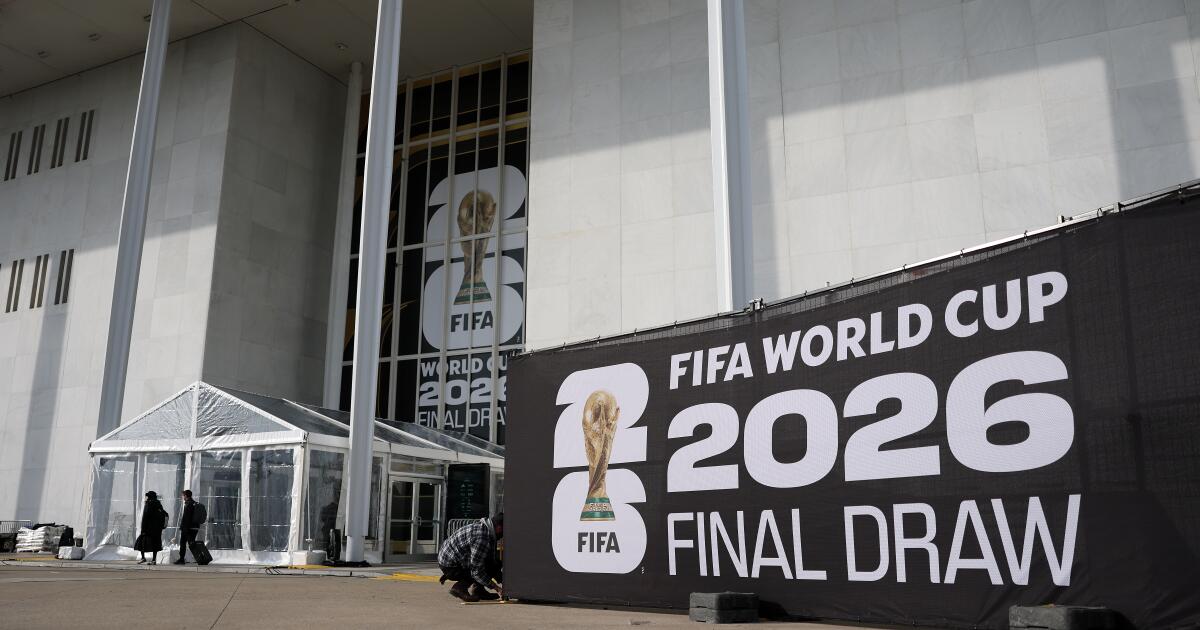
Expectations have faded that this summer’s World Cup games, which begin in the U.S. on June 12 with USA vs. Paraguay at SoFi Stadium, would buoy the flow of foreign visitors. Hotel bookings show that hasn’t happened, as my colleague Caroline Petrow-Cohen reports. According to an April survey by the American Hotel & Lodging Assn., hotel operators in all 11 of the U.S. host cities say that bookings are below their expectations.
Get the latest from Michael Hiltzik
Commentary on economics and more from a Pulitzer Prize winner.
By continuing, you agree to our Terms of Service, which include arbitration and a class action waiver. You agree that we and our third-party vendors may collect and use your information, including through cookies, pixels and similar technologies, for the purposes set forth in our Privacy Policy such as personalizing your experience and ads.
Those figures bode ill for the 2028 Los Angeles Olympics, whose organizers are also counting on a robust flow of foreign visitors.
More than 65% of the Los Angeles hotels responding to the survey reported dashed expectations, the association said. That wasn’t the worst result; the percentage was higher in five host cities, led by Kansas City, where nearly 90% of survey respondents reported booking paces below expectations.
The association identifies several reasons for the lackluster bookings, including botched planning by FIFA, the World Cup’s governing body. But much of the blame falls on issues created by one person: President Donald Trump. These include “increased gas and jet fuel prices,” which are artifacts of Trump’s Iran war and its upward pressure on oil prices.
The survey also points to concerns about visa availability and the treatment of foreign visitors once they land in the U.S. or cross the border.
The administration has disavowed any intention to interfere with the World Cup or the Olympics.
“Thanks to President Trump’s leadership, the FIFA 2026 World Cup will no doubt be one of the greatest and most spectacular events in the history of mankind,” White House spokesman Davis Ingle told me by email.
“International visitors who legally come to the United States for the World Cup have nothing to worry about,” the Department of Homeland Security said. “What makes someone a target for immigration enforcement is whether or not they are illegally in the U.S. — full stop.”
Trump pledged in 2018, when FIFA was weighing bids to host the 2028 World Cup, that “all eligible athletes, officials and fans from all countries around the world would be able to enter the United States without discrimination.” But concerns remain that family members of participating athletes might face restrictions on entering the U.S.
Vance said the U.S. wants foreign visitors “to come, we want them to celebrate, we want them to watch the games. But when the time is up, we want them to go home, otherwise they will have to talk to Secretary Noem.” (Trump subsequently ousted Kristi Noem as Secretary of Homeland Security, replacing her with former Sen. Markwayne Mullin, Republican of Oklahoma.)
Trump also committed himself to safeguarding the L.A. Olympics, stating, “I’m going to be supportive in every way possible and make them the greatest games.”
Yet America’s standing as a world-class tourist destination has plainly soured under Trump.
“Even with global anticipation building, the path to the U.S. for many World Cup travelers feels increasingly less like a red-carpet welcome,” the Hotel & Lodging Assn. observed.
“There is a perception that international travelers may face lengthy visa wait times, increased visa fees, and lingering uncertainty around entry processing. For those who do make the journey, concerns do not end at the border — questions about airport security screening wait times and airport congestion add another layer of hesitation.”
None of this should come as a surprise. As I projected last June, two administration initiatives in particular were poised to affect the World Cup and Olympics. The first was Trump’s crackdown on immigration.
Immigration agents, I noted, were acting as though they had carte blanche to detain people suspected of being in the U.S. illegally, conducting raids that sometimes swept up American citizens. That was before the Immigration and Customs Enforcement raids in Los Angeles, Minneapolis and other communities where immigration agents were accused of targeting specific ethnic and racial groups. And it was before the shootings of Renee Good and Alex Pretti in Minneapolis by immigration agents worsened their image as lawless thugs.
By then, however, stories had surfaced of foreign tourists being detained for weeks, even months, without explanation or apparent cause. A 65-year-old British woman named Karen Newman traveling on a valid tourist visa was arrested in September 2025 at the Montana border, shackled and held for six weeks in an ICE detention center. Other stories involved a German tourist who said she was held by ICE for 45 days, some of that time in solitary confinement; and a New Zealand woman who was detained with her 6-year-old son for three weeks.
The Department of Homeland Security didn’t deny that these incidents had occurred, though in relation to the New Zealand woman, whose visa had been only partially renewed, a U.S. Customs and Border Protection spokesman said, “When someone with an expired parole leaves the country and tries to re-enter the US, they will be stopped in compliance with our laws and regulations.”
The other policy that could interfere with the World Cup and Olympics are Trump’s travel bans and restrictions, which as of January covered 75 countries, including Brazil, Russia and 26 African countries.
Stringent regulations for some visa applicants — notably those coming to the U.S. to study or for work-study programs and their dependents — have further clouded America’s image as a destination. Applicants for those visas are required to open their social media accounts for the last five years for inspection by visa officers.
And Homeland Security Secretary Mullin last month raised the prospect of withdrawing customs officers from airports in so-called sanctuary cities, a move that would effectively shut down international flights at those airports.
The change couldn’t happen in time to affect the World Cup, but it could happen before the 2028 Olympics. Mullin’s idea didn’t win immediate favor with other members of Trump’s cabinet, including Transportation Secretary Sean Duffy.
Last year, the Department of Justice published a list of nearly three dozen states, cities and counties it defined as “sanctuary jurisdictions” because they “obstruct or limit local law enforcement cooperation” with ICE. Most are led by Democrats. They include California, and the cities of Los Angeles, San Francisco and Berkeley.
It’s true that immigration policies and rising travel costs are only part of the problem. The Hotel & Lodging Assn. also flayed FIFA for having block-booked hotel rooms in venue cities. These blocks “manufactured artificial demand by locking up large pools of inventory well ahead of the tournament,” the hotel group complained. The practice upended hotels’ planning by prompting them to increase staff and begin World Cup-themed renovations, preparing for crowds that may have been overestimated from the outset.
The block-booking “masked softer underlying traveler demand,” the association said, “with FIFA returning some blocks without a single reservation having been made.”
The hoteliers also groused that New Jersey and Philadelphia had proposed raising sales or lodging taxes in order to squeeze visitors. New Jersey lawmakers have proposed a short-term increase in its sales tax to 9.6% from 6.6% and in its lodging tax to 7.5% from 5%. Philadelphia is planning to raise its hotel tax to 10.5% from 8.5%.
None of this means that ticket sales for the World Cup won’t be healthy. FIFA has said that 5 million tickets have already been sold for the matches, even though the average price for even the cheapest seats at some venues tops $500. As my colleague Kevin Baxter has reported, fans are beginning to feel mulcted. That’s so especially because ticket buyers only learned the specific location of their seats after plunking down their money, at which point they discovered that they were placed in sections nowhere as desirable as they expected.
Russell Crowe has pushed back against TMZ’s coverage of his recent interactions with a crowd of autograph seekers.
“Clickbait,” the “Gladiator” actor wrote in a Monday post on X. “Everybody got their autograph and selfie, the passage to the hotel was kept free for guests, and I still got to the airport on time. One man, no security. Handled. What’s your problem ?”
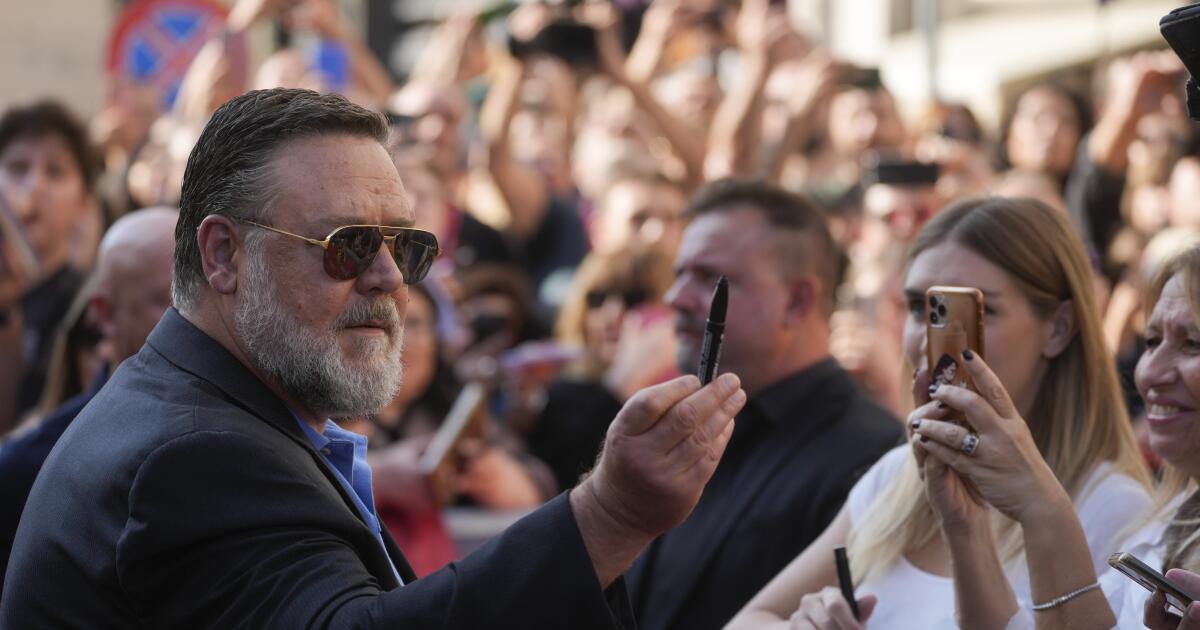
Earlier that day, the outlet had posted a video of Crowe addressing a crowd of fans and autograph seekers outside of a Paris hotel before making his way to them to sign various memorabilia.
“If you needed a reminder that fans are not always priority No. 1 — turn to Russell Crowe — cause the guy was absolutely not having it outside of his Paris hotel,” TMZ wrote in its since-deleted X post sharing the video. The outlet also framed the video as Crowe “explod[ing] on Pushy Autograph Seekers” in its news story.
In the video, the Academy Award winner is shown giving clear directions to those gathered for his autograph or to snap a photo with him.
“Stay where you are, don’t f— push in on me, I’ll come to you,” Crowe says. “Give everybody space. As soon as somebody’s a d—, I’m gone.”
The actor then approaches the crowd to sign various items held out in front of him. The short clip ends soon after Crowe declines a request to also write “Maximus” — the name of his “Gladiator” character — next to his signature as he continues to sign other things.
Crowe’s temperament, blunt demeanor and distaste for certain aspects of “celebrity” have long been fodder for news coverage. In 2005, the actor made headlines for throwing a phone that hit a Manhattan hotel concierge.
“If I ever was going to torture somebody, I’d put them in a room where they can’t leave and have someone new come in every three minutes and ask the same question over a number of days and then weeks,” Crowe said in a 2010 interview with The Times, describing what happens at a movie press junket on the eve of embarking on one.
“Some people believe celebrity is a power that should be used. Ultimately, your dollars are more powerful,” Crowe said in that interview. “I’m famous for making movies. Celebrity just happens to be an unfortunate byproduct of what I do.”
FOR years, I’ve had a personal vendetta against bed runners in hotel rooms.
Upon entering the room, I’d have whipped it off and stuffed it in the wardrobe faster than you could say ‘late check out.’
The Sun’s Head Of Travel (Digital) has waged a war against hotel bed runners for years – but she’s recently done a u-turnIt turns out that the runners on hotel beds actually have an important useCredit: Alamy
Because while I love a crisp, white, freshly-laundered hotel bed, I am fully aware that the runners at the end of the bed see the inside of a washing machine far less than the sheets.
And I really don’t want to think about how many sweaty, bare bottoms have been pressed up against them before I checked in.
But… it turns out the random, possibly quite dirty piece of fabric actually has an important use – it’s to protect the bed sheets while you unpack.
So your bags, which have scraped the underbellies of aircraft, been dragged along airport floors and left to stand on grubby pavements, usually get spread across the duvet once you’ve checked in, so you can unpack.
The bed runner is there to stop any of that suitcase grime coming off onto the sheets.
Once you’ve hung up all your clothes, the runner can then take its rightful place at the back of the wardrobe.
The humble bed runner isn’t the only little-known travel hack provided by hotels, planes and attractions either – here are nine more that have the power to transform your holiday.
Ryanair’s in-flight trolley service usually starts at row 1 and works its way towards the back of the plane.
EasyJet usually starts at row 1 and row 30, at the back of the plane. They work towards each other, with rows 17 and 18 being served last.
British Airways usually starts at the front of each cabin, then works towards the back.
So, if you’re hoping to be the first to get served, keep this in mind when reserving your seats.
Request a ‘special meal’ to get served first on a long-haul flight
Speaking from experience, if you opt for one of the speciality meals when making your flight booking, you’ll almost definitely get served first at mealtimes.
You can usually opt for a whole range of food, from veggie and vegan to religious restrictions.
Reserving sun loungers
There are ways to beat the rush for the sun beds by the hotel pool – but they only work in certain locationsCredit: Alamy
We’ve all been there. You’ve enjoyed a lie-in and a leisurely breakfast, as is your right on holiday, then you get to the pool, for a perfectly respectable 10.30 am… and all of the sun loungers have been bagged.
But there are some unicorn hotels where they will actually let you reserve your sun loungers for the week, so that you can skip the early morning race for the beds.
Cyprus is leading the charge on this front, with the Sunrise chain in Protaras and the Kanika Hotels group both offering the service.
Alternatively, if you’re willing to tip the pool staff on the first day, in destinations like Hurghada in Egypt, many of them will get your sunbeds ready every day.
Some of them even bring your drink over as soon as you’ve arrived and settled in.
Free toothbrushes, razors and other bathroom items
Fancy hotels often come with bathroom amenity kits as standard, with everything from razors and toothbrushes to shower caps and toothpaste included.
But many lower-tier hotels also keep these items stocked behind reception, in case guests have forgotten something.
So next time you’ve left your toothbrush at home by mistake, have a friendly word with the receptionist before you pop out to the shops, as they may already have what you’re looking for, free of charge.
Free magazines at the airport
Magazines that we’ve got free from complimentary stands at UK airports before
One of the most common items to buy at the airport is magazines and newspapers, especially when you have to kill time.
However, this can quickly rack up in price when many of the glossy mags cost as much as £4.99.
But did you know that many airports have free magazine stands?
They can often be found in the corridors when you are travelling to your gate, or even after you have gone through the gate agent and are waiting to board.
But the best are often found near the posh airport lounge exit.
They vary depending on which ones they have, so you can’t always be fussy.
On flights from London Gatwick, we’ve managed to pick up Wallpaper* magazine, as well as Escapism, Conde Nast Traveller and Stylist.
Freebies at Duty Free
Duty Free shops at airports are like Marmite – you either love them and spend a good half hour browsing, or dash through as quickly as possible.
But by skipping it, you could be missing out on some great freebies.
Many of the counters have samples of products to give away – everything from face serums and perfume to hand cream.
A lot of the larger airports often offer mini makeovers at certain high-end makeup counters, too.
Free airport lounge
If you’ve ever wandered past the easyJet Lounge before a flight after spending a small fortune on Pret, more fool you.
EasyJet passengers who book an Inclusive Plus fare automatically receive up to three hours of access to several airport lounges across the UK.
They include lounges at the following airports: Birmingham, Bristol, Edinburgh, Jersey, Gatwick, Luton, Manchester and Stansted.
Visitors can get tea, coffee and soft drinks, as well as beer and alcohol, plus hot and cold food.
The Inclusive Plus fareis more expensive than the standard fare, but it comes with a bunch of extras like fast track security and free meal deals onboard.
Max out the free hot water
This one might seem trivial, but you could save at least £15 on a flight by asking cabin crew for hot water fill-ups.
Bring your reusable cup and some teabags on a flight and have tea for the whole journey.
Alternatively, you can also bring an instant noodle cup and ask them to fill it with hot water for a very affordable and hot in-flight meal.
Loyalty perks
Plenty of hotel chains offer free perks for customers who sign up to their loyalty programmes – and many of those programmes are either free or cost very little to join.
Hyatt, Hilton, Marriott Bonvoy and IHG all have loyalty schemes that give you little extras like late check-outs, free wifi, booking discounts and even ‘extra night free’ offers.
And the best part? You can go back to load up your plate as many times as you like.
So if you try to be healthy at 9am with a fruit plate and a smoothie, then regret it, you can return at 1pm for a sausage sandwich, a plate full of pastries and three cappuccinos.
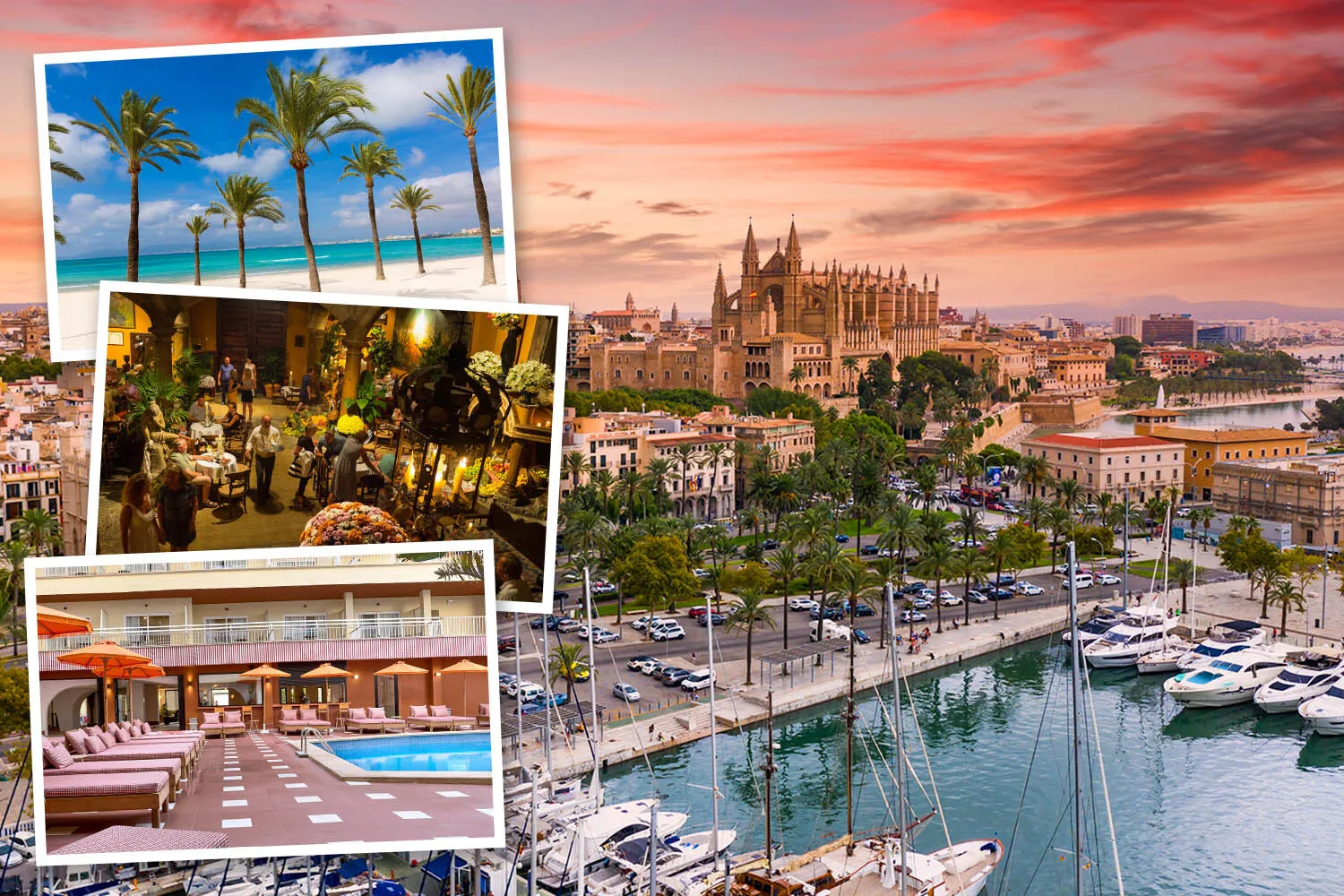
When I stayed at the Tent Bahia de Palma, in the Majorcan resort of S’Arenal about eight miles from capital city Palma, the buffet was overwhelming. It had everything from pastries to a full fry-up, salads and open sandwiches.
At one point I even considered a slice of pizza to go with my chicken sausages — surprisingly nice — and Spanish tortilla.
Bar Abaco is housed in an old mansionCredit: AlamyStop by the pool area at Tent Bahia de PalmaCredit: Supplied
It’s a good thing the gym at the hotel is open 24 hours a day — but then again, so is the bar.
And after a few hours spent digesting my trip — OK, two trips — to the brunch buffet on the hotel’s Instagrammable red-and- white checked sunbeds by the pool, it was time to explore S’Arenal’s beach.
Here, the water is unbelievably clear and the sand — which I watched being lovingly raked each morning — is white and gloriously litter-free.
The main beach is flanked by a strip of bars, as well as wooden umbrellas for shade, and children’s play areas.
The bars all offer fabulous views of the ocean — but be warned, they shut at 6pm, so sunsets are best watched from the sands.
If you’re looking to snorkel, the island’s famed rocky-inlet beaches, called calas, are on the island’s south coast.
The most easily accessible from Tent Bahia de Palma is Cala Mosques. It’s ten minutes from S’Arenal on the 504 bus, then a five-minute stroll through the posh Cala Blava area, to find the steps down to the cove.
As you walk down the hill, you’ll spot a small sandy beach surrounded by majestic rock formations and lapped by the bluest water you’ve ever seen.
Take a mask and snorkel and you’ll be able to spot saddled sea bream and parrot fish — but watch out for brave locals jumping off the cliffs into the sea.
The hotel’s breakfast buffet is worth getting up forCredit: SuppliedThe Sun’s Issy soaks up the sightsCredit: Supplied
If you want to swap beach bars for the island’s capital, Palma, it’s just a short trip from S’Arenal — the 504 bus takes 15 minutes and costs just over £2 one way.
But remember to tap on and off the bus with your bank card to pay the correct fare.
Get off at Le Seu, the Cathedral of Santa Maria of Palma, which was built between 1229 and 1601. It’s one of the biggest cathedrals in Europe. Entry is 11 euros, or 30 euros for a guided tour.
Palma’s streets are lined with tapas restaurants and bars and the capital’s pedestrianised Passeig del Born has a lot of them, as well as a mix of high-end shops and historic buildings.
Stroll down the tree-lined road like Majorcans do after work, or step into the back streets to find Bar Espanya — a traditional tapas bar full of locals eating pintxos — small tapas snacks laid out on the bar — for £2 a plate.
I polished off a tuna paté on bread and Iberian ham croquette pintxos, but they also had prawns, deep-fried cheese and sobrasada, which is a cured pork sausage.
After dinner, don’t miss Palma’s most dramatic place to enjoy a cocktail, Bar Abaco — a no-reservations spot in an old house filled with flowers and very over-the-top decor.
With piles of fake fruit, massive bouquets and a fountain in the courtyard, it’s like stepping into an episode of TV hit The White Lotus.
I recommend getting there soon after it opens at 8pm — and it’s well worth a trip to the loos to fully explore the mansion and snap a few pictures away from the “no photography” signs downstairs.
Just a few minutes’ walk away — and on the way to the bus stop that will take you back to S’Arenal — Bar Rita is a beautiful, old locals’ bar that lies in the shadow of the Nostra Senyora dels Socors church.
With eight tables in a square, a cash-only rule and glasses of white wine for around £3, it’s the perfect place to end the night.
GO: MAJORCA
GETTING THERE: Fly to Palma with easyJet from most UK airports with fares from £19.99 in June. To book, go to easyjet.com.
STAYING THERE: Rooms at Tent Bahia de Palma start from £79 per night. See tenthotels.com/en.
Hotel rooms in Los Angeles and other FIFA World Cup host cities could sit empty, despite high expectations that the global sporting event would be a boon to the city.
The soccer tournament, which has sold more than 5 million tickets so far, has historically triggered a surge of international and domestic tourism and infused host cities with an economic boost.
This year, however, 80% of hotels surveyed by the American Hotel and Lodging Assn. said bookings are lagging behind initial forecasts. The hotel association partly blames FIFA for the slowdown, saying the organization overbooked blocks of hotel rooms that did not reflect true demand.
Travel also is being hampered by higher airfares and gas prices due to the conflict in Iran. Visa barriers and broader geopolitical concerns are suppressing international travel demand, the report said.
“With just two months until kickoff, indicators suggest the anticipated economic lift may fall short of expectations,” the report said. The number of tickets sold for the tournament “has not yet translated into strong hotel bookings.”
In L.A., where World Cup games will be played next month at SoFi stadium, more than 65% of hotel respondents said room bookings were below estimated demand.
Many respondents said bookings were even lagging behind that of a typical summer.
Hotels in Los Angeles cited visa complications and long distances from the venue as obstacles to bookings. According to the report, FIFA booked thousands of rooms in downtown Los Angeles that it canceled.
Ahead of all World Cup tournaments, FIFA places large blocks of rooms on hold across various properties for FIFA staff, mediaand other stakeholders. As the tournament draws closer, FIFA will adjust its plans based on demand.
“All room releases were conducted in line with contractually agreed timelines with hotel partners, a standard practice for an event of this scale,” a FIFA spokesperson said in a statement. “Throughout the planning process, FIFA’s Accommodations team maintained consistent discussions with hotel stakeholders.”
The spokesperson added that global demand for the 2026 World Cup is unprecedented.
“FIFA room block over-commitment created an artificial early demand signal that has since unraveled,” the hotel association report said. “Many hotels indicate that early booking signals overstated true demand.”
About half of hotel respondents reported cancellations or releases of previously booked blocks of rooms, the report said.
The staggering price of World Cup tickets this year could also be keeping away fans, said journalist and author Simon Kuper, who writes about soccer economics. Face values for tickets have climbed as high as $7,875.
“All the ticket prices in this World Cup are inconceivable for previous World Cups,” Kuper said. “It’s very much a new phenomenon.”
FIFA is projecting revenue between $11 billion and $13 billion for the four-year World Cup cycle, which ends when the tournament does.
Nonetheless, L.A. is expecting a major jump in tourism for the World Cup in June and the 2028 Olympic Games.
That would be welcome for an industry that is coming off some tough times.
Last year, tourist spending in L.A. fell for the first time since the pandemic began as wildfires, raids by Immigration and Customs Enforcement agents and trade tensions discouraged people from visiting, including tourists from Canada who traditionally flock to Palm Springs and other cities in Southern California during the winter months.
International air arrivals to L.A. County fell more than 30% from August to November of 2025. In Los Angeles, current international arrivals are fewer than in previous months, though the state saw an overall 3% increase last year.
The L.A. market “faces several challenges that are tempering hotel performance expectations,” said Ralph Posner, chief communications officer for the American Hotel and Lodging Assn.
“L.A.’s purported hotel underperformance is compounded by a unique combination of early FIFA block over-commitment creating artificial demand, concerns about visa barriers and operating costs,” he said. “The market was positioned as a flagship host city but is now absorbing a gap between expectation and reality.”
Surging hotel room costs in host cities are also a deterrent. For example, the Renaissance Hotel in Seattle, within walking distance of Lumen Field, is renting a King guest room for less than $300 the weekend before the World Cup. For the weekend of the U.S. game there, the rate is more than $1,000 for the same room.
To save costs, some fans are choosing to stay farther from the venues or opting for alternative lodgings such as Airbnbs. Airbnb’s chief financial officer said the World Cup is expected to be the largest event in the company’s history.
The hotel association said that even though initial indications are bad, things could still get better.
“We are hopeful that momentum will build over the next few weeks in the lead up to the games,” Posner said.
Times staff writer Kevin Baxter contributed to this report.