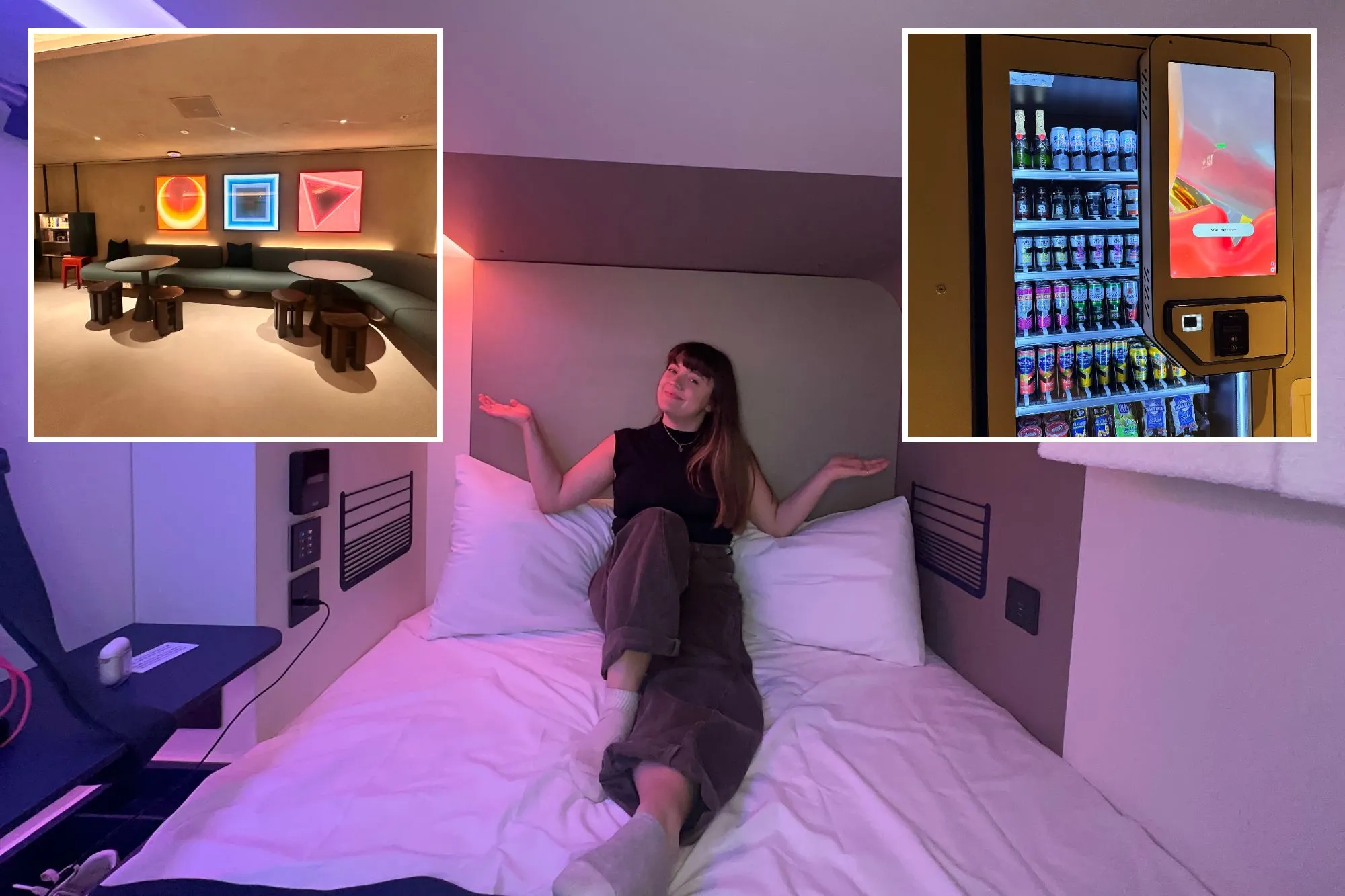
The biggest hotel guest faux pas have been revealed – including jumping the breakfast buffet queue and stealing from rooms.
This article contains affiliate links, we will receive a commission on any sales we generate from it. Learn more
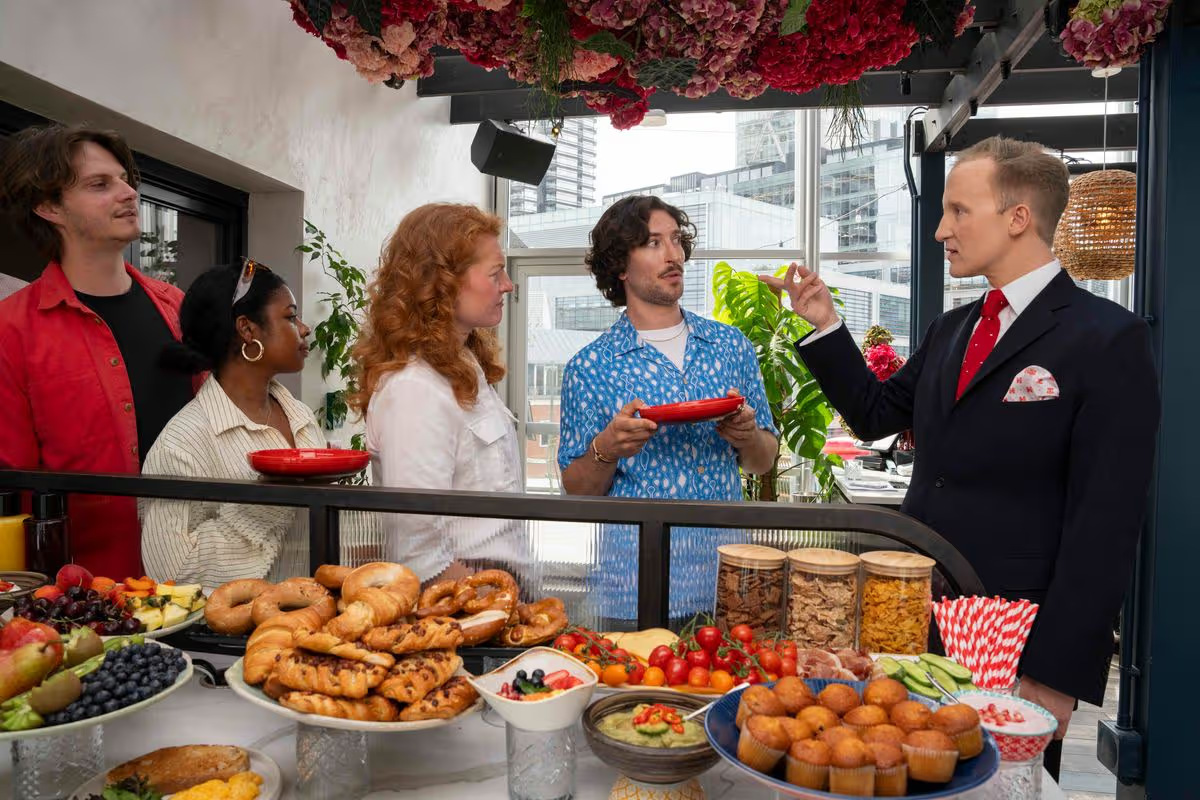
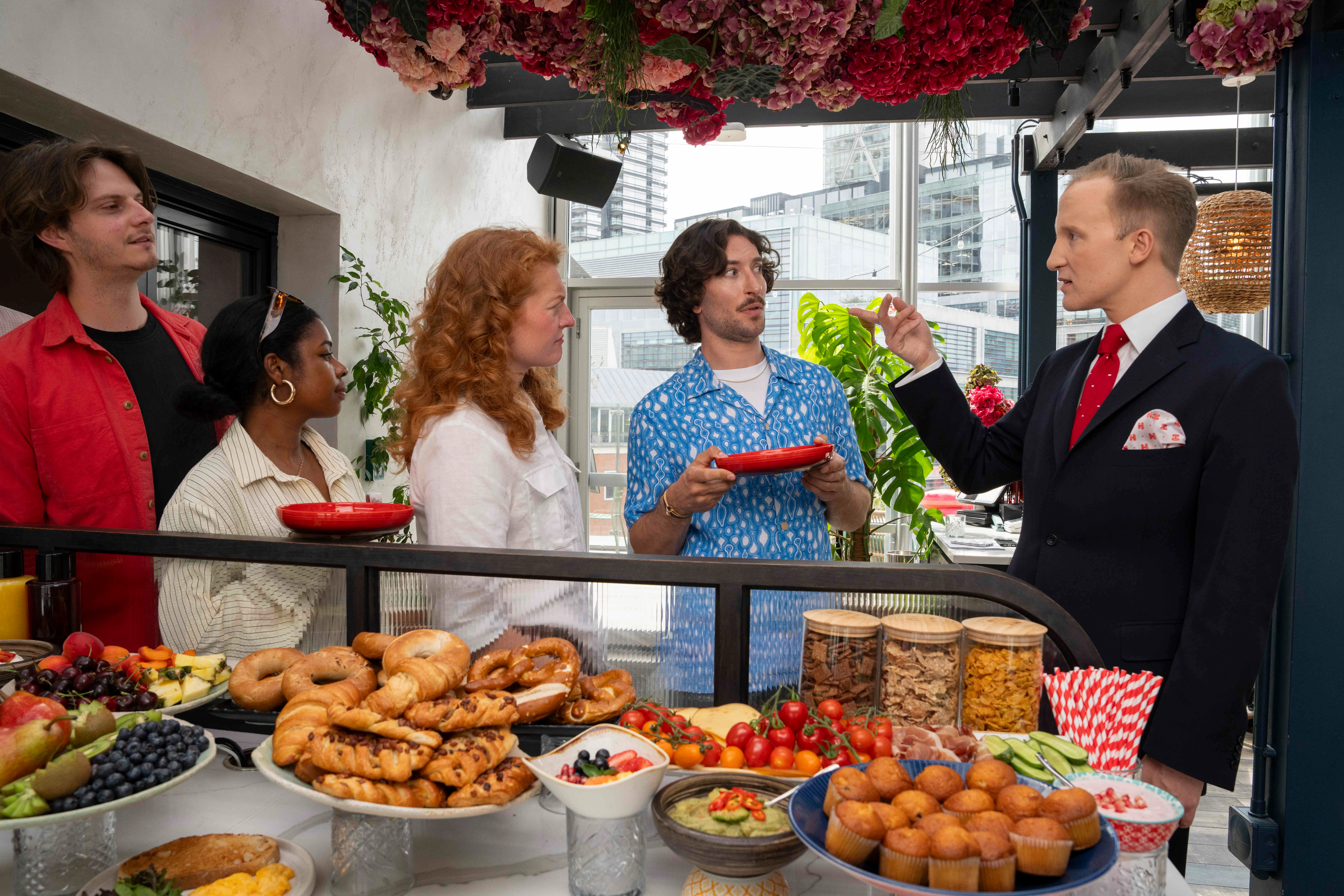
Jumping the breakfast buffet queue was one of the biggest hotel faux pas(Image: Hotels.com)
Frowned upon acts when staying in a hotel include reserving pool chairs with towels for long periods, leaving rooms excessively messy and being loud in the hallways late at night. Other divisive acts include hanging damp laundry on the balcony, not leaving a review after staying and being rude to hotel staff.
Smoking or vaping in hotel rooms is also considered a no-no, as are putting the incorrect number of guests on the reservation and leaving alarms or phones to ring for long periods of time without turning them off. While not reading reviews when booking and not collecting or cashing in rewards points are also viewed unfavourably.
In response to a survey of 2000 people who have ever stayed in a hotel, Hotels.com, which commissioned the research, is offering holidaymakers £100 in ‘Hotels.comCash’ for future trips after staying for 10 eligible nights through its rewards programme.
Melanie Fish, travel expert and spokesperson for the global marketplace, which has also teamed up with William Hanson for a ‘Grand Etiquette Hotel’ guide, said: “Small tweaks can make a world of a difference.
“Taking the time to check reviews or making the most of rewards can turn a good trip into a great one, and help your travel budget stretch further, too.”
Researchers found the vast majority (90%) consider themselves to be considerate guests – although 39% think residents have become less respectful in recent years.
Sneaking extra guests in and constant public displays of affection around the pool are also frowned upon by hotel guests.
Those polled were also asked which nationalities they consider to be the gold standard for politeness – and which ones they think tend to be rudest.
Japanese tourists were ranked as the most considerate, followed by Sweden in second place, with U.K. respondents placing themselves third.
At the other end of the scale, Americans are regarded as the most impolite.
They ranked just beneath those from Germany, according to Hotels.com research conducted through OnePoll.
William Hanson said: “Better hotel etiquette doesn’t just benefit others, it can directly enhance your own stay.
“At the heart of my guide is the idea that small, thoughtful behaviours add up to big rewards: from a better night’s sleep and improved service to savings on future trips.”
THE biggest hotel guest faux pas have been revealed – including jumping the breakfast buffet queue, washing undergarments in kettles and stealing from rooms.
Other frowned upon acts include reserving pool chairs with towels for long periods, leaving rooms excessively messy and being loud in the hallways late at night.
Sign up for the Travel newsletter
Thank you!
Jumping the breakfast buffet queue, washing undergarments in kettles and stealing from rooms are considered major hotel faux paxCredit: hotels.comPutting the incorrect number of guests in for a reservation is frowned uponCredit: hotels.com
Smoking or vaping in hotel rooms is also considered a no-no, as are putting the incorrect number of guests on the reservation and leaving alarms or phones to ring without turning them off.
While not reading reviews when booking and not collecting or cashing in rewards points are also viewed unfavourably.
In response, Hotels.com, which commissioned the research, is offering holidaymakers £100 in ‘Hotels.comCash’ for future trips after staying for 10 eligible nights through its rewards programme.
Melanie Fish, travel expert and spokesperson for the global marketplace, which has also teamed up with William Hanson for a ‘Grand Etiquette Hotel’ guide, said: “Small tweaks can make a world of a difference.
The vast majority of Brits believe they are considerate guestsCredit: hotels.comLeaving rooms excessively messy and returning late at night are big no-nosCredit: hotels.com
“Taking the time to check reviews or making the most of rewards can turn a good trip into a great one, and help your travel budget stretch further, too.”
Researchers found the vast majority (90 per cent) consider themselves to be considerate guests – although 39 per cent think residents have become less respectful in recent years.
Other divisive acts include hanging damp laundry on the balcony, not leaving a review after staying and being rude to staff.
Sneaking extra guests in and constant public displays of affection around the pool are also frowned upon by hotel guests.
WILIAM HANSON’S GRAND ETIQUETTE HOTEL GUIDE:
1. THE ART OF ENGAGING STAFF WITH DIGNITY – Treat every member of staff, from the cleaner to the manager, with genuine respect and an open ear.
2. HALCYON HALLWAYS (AND THE VIRTUE OF SILENCE) – Corridors are not thoroughfares for celebration, but shared spaces requiring a degree of restraint.
3. LIBATIONARY LESSONS – A well-enjoyed drink need not become a public performance. Moderation is key, particularly in shared spaces where one’s behaviour is on quiet display.
4. ON BURNING EMBERS AND BETTER JUDGEMENT – Hotel rooms are designed for comfort, not combustion. Lighting a cigarette indoors undermines both the space and the experience for future guests.
5. HOUSEKEEPING IS NOT AN ARCHAEOLOGICAL ACTIVITY – Keeping your space in reasonable order (not pristine, but certainly not chaotic) ensures that housekeeping can do their job efficiently.
6. LAVATION GENTILITY – The kettle, charmingly utilitarian as it is, exists for hot drinks only. Incredulously, some people attempt to use it for laundry.
7. BORROWING, OWNERSHIP, AND OTHER DANGEROUS ASSUMPTIONS – Hotels provide generously, but not without limits. Slippers and toiletries may accompany you home; larger items most certainly may not.
8. MARSHALLING ONE’S MORNING REPAST – The breakfast buffet is not a free-for-all, but a civilised ritual governed by the simple act of queuing.
9. THE FOLLY OF FLAG PLANTING BY TOWEL – Placing a towel on a sun lounger at dawn and vanishing until mid-afternoon is a practice best left unadopted.
10. LOYALTY, AND WHY IT GETS ONE FURTHER – By consolidating bookings and collecting rewards, one quietly accumulates tangible benefits.
Those polled were also asked which nationalities they consider to be the gold standard for politeness – and which ones they perceive to be rudest.
Japanese tourists came top for being the most considerate, followed by Sweden in second place, with U.K. respondents placing themselves third.
At the other end of the scale, Americans are regarded as the most impolite, just beneath those from Germany, according to Hotels.com research conducted through OnePoll.
William Hanson said: “Better hotel etiquette doesn’t just benefit others, it can directly enhance your own stay.
“At the heart of my guide is the idea that small, thoughtful behaviours add up to big rewards: from a better night’s sleep and improved service to savings on future trips.”
TOP 20 BIGGEST HOTEL FAUX PAS:
Being rude to hotel staff
Being really loud (e.g., loud hallway conversations, blasting music late at night or early in the morning)
Putting the incorrect number of guests on the reservation
Becoming drunk and annoying other guests
Not reading the reviews when booking
Smoking or vaping in hotel rooms
Not looking at the pictures when booking
Leaving rooms excessively messy at check-out
Washing undergarments or personal items in the in‑room coffee maker
Stealing items you’re not supposed to from the room
Jumping the queue at the hotel breakfast buffet
Reserving pool or beach chairs with towels or personal belongings for long periods
Playing music on a personal speaker at the pool
Allowing pets at the table in the hotel restaurant
Bringing children into the adults‑only pool
Sneaking extra guests into rooms
Walking through hotel hallways or common areas wearing only a robe or sleepwear
Not collecting reward points when booking
Not checking out on time
Leaving rubbish or room‑service trays in the hallway
TIJUANA — About 150 miles from SoFi Stadium, south of the Mexican border, sits the hotel housing Iran’s World Cup team for its games at the Inglewood venue.
The entrance to the Marriott in Tijuana is barricaded, flanked by police and members of the Mexican National Guard, guns held close. No one enters without a hotel reservation or special pass.
Despite the tensions and challenges surrounding Iran’s participation in the World Cup, early Saturday morning finds the mood inside the four-star hotel relaxed, even jubilant. Several dozen fans mingle and bond over their shared excitement to see the squad’s players before they depart for their second group-stage match at SoFi.
“I wanted to come down to support Iranian soccer, and cheer for them when they exited the building and make them happy,” says Lucas Zarrabi, 13. The teen, who attended Monday’s 2-2 draw with New Zealand and has a ticket for Sunday’s match against Belgium, is one of several fans from Los Angeles who made the drive to stay with the team. Others flew in from San José and even Miami, turning up at the hotel not quite four miles from the U.S. border crossing.
Showing up is important, some said, because of what they describe as unfair conditions imposed on the team. After the outbreak of war, the Iranian team was forced to move its base camp from Tucson to Tijuana. Eleven team officials and staff members did not receive U.S. visas. The Trump administration has also denied Iran’s requests to arrive two days before matches — and mandated that the team must leave immediately after each game.
“Every little technicality is making it difficult for the team,” says Abbas Eftekhari, 65, who was born in Iran and has lived in the U.S. for more than 40 years. “I think this is going to drain them psychologically and also physically.”
Iran’s soccer federation has been vocal about the obstacles, saying it would lodge a complaint with FIFA.
“Football shouldn’t lose its power to politics,” Hedayat Mombeini, secretary-general of the Iran Football Federation, said Friday. He added that the restrictions “are certainly having a negative effect on us, but we are trying to overcome these problems with our Iranian pride.”
Since the team landed on June 7, Ali Eslami has visited the hotel gates nearly every day.
“It’s the best pleasure for me. I wished them the best luck. I told them it’s hard but they’re doing excellent things,” said Eslami, who splits his time between Southern California and Tijuana.
He was there again Friday, waiting for the players to return from afternoon training blocks away at the Estadio Caliente, home to the Liga MX’s Xolos.
“I have been in America for 50 years — this has been the most emotional thing, to see the team that I have not seen in 50 years,” he said.
Some Iran fans fear reprisal from fellow members of the diaspora for supporting the team, insisting they were in Tijuana for the love of soccer and the players, not politics. Eftekhari worries that the mood at Iran’s first match, where fans and protesters clashed, affected the players.
“As soon as they see that their countrymen have slogans against them, it also has a negative psychological effect on them. But, that’s how things are at this time,” Eftekhari says.
Just over 24 hours until Sunday’s noon kickoff, it’s not just Iranian fans contributing to the atmosphere. A group of flight attendants from China staying at the hotel embrace the excitement, donning jester hats and waving scarves colored red, white and green. And soccer fans from Tijuana are eager to show some local hospitality. Iran has diplomatic ties with Mexico, unlike with the U.S., and sought to move its group-stage matches to the country where it has an embassy.
“We love the Mexican people very much, and for us, the best situation is for our games to be held in Mexico,” Abolfazl Pasandideh, the Iranian ambassador to Mexico, said at the time.
Leonardo Ramirez Lopez, a 10-year-old soccer fanatic from Tijuana, clutches his autograph album in hopes he’ll get new signatures.
“It’s a new team that I don’t have experience with how they play,” he says. But Iran is already his third-favorite team, behind Colombia and Argentina.
After more than two hours of waiting, several dozen fans break into cheers as players finally file through the lobby. The squad smiles and waves, stopping for a few autographs. As each player leaves, he kisses a Quran, pressing his forehead against it before boarding the bus to Tijuana’s airport.
“Iran, Iran! Whoop, whoop!” fans cry, breaking into song.
Civic pride, sure. But what is it really worth to the city of Anaheim to have its name on the hometown baseball team?
Hundreds of millions of dollars, the city has said. As the Angels’ stadium lease approaches its end, and as Anaheim prepares for negotiations either with Arte Moreno or a potential new owner, it’s worth keeping in mind.
So too is a concept floating around City Hall in Anaheim: What if we could put a new stadium and a youth sports complex next to one another?
It’s leverage: If the Angels’ owner wants to build atop the stadium parking lots, the city can pursue an exemption to a state law that currently restricts what can be built there, which could mean more money for the team and its development partners. In exchange for the exemption, the team name would revert to the Anaheim Angels.
If that’s the carrot, this is the stick: The city would have to approve the zoning changes that could make the land “two to three times more valuable than it is as a parking lot,” Anaheim Mayor Ashleigh Aitken said.
Said Aitken: “There are no gifts. For an ownership to truly be a partner to the city in what that property could be, there is going to have to be some realization that Anaheim is not Los Angeles.”
The Angels’ stadium lease expires in 2032, and the team can extend it through 2038. A new owner could move the Angels — or at least leverage the threat of a move — but Anaheim offers a 150-acre site with what every owner in pro sports covets: land around the venue to turn the property into a year-round money-making operation.
The standard ballpark villages include restaurants, shops, hotels, homes, offices and entertainment venues. The Ducks are launching one, called OC Vibe, around Honda Center, and within walking distance of Angel Stadium.
Katie Wright, who books sports events for Anaheim’s tourism bureau, said there would be a market if her city built a sports park.
“The demand for, specifically, soccer, baseball and softball is tremendous,” Wright told the Anaheim City Council in April. “They would be filled every single weekend, I think.”
What Anaheim has that Ontario and Irvine do not: Disneyland down the street for visiting families, a variety of restaurants within walking distance, and hotel rooms aplenty. In Anaheim, 40% of the city’s general fund comes from taxes on hotel rooms.
“With Angels baseball right next to a youth sports facility, to have the synergy of hotels and restaurants, and players interacting with the Little League kids and soccer fields,” Aitken said, “I just think it’s a unique opportunity.”
Everything old is new again: In 1996, Anaheim pitched a youth sports center called the “Little A” in part of the stadium parking lots as part of a ballpark village that never materialized.
What might be in the best interest of the city now might not be in that of the developer, whether that turns out to be the Angels or a real estate partner. While a sports park might drive tax revenues to the city, a developer might pay the most for land used for hotel and retail properties, said Louis Tomaselli, the Irvine-based executive managing director at JLL, a nationally prominent commercial real estate brokerage.
“A youth sports complex would likely be at or near the bottom from a land value perspective,” Tomaselli said.
That’s all part of the negotiation, and for now the city of Anaheim has no party with which to negotiate. That leaves room for all sorts of brainstorming, including Aitken’s curiosity about flanking the development with high-rise residential buildings, similar to the condominiums that have risen next to Petco Park in San Diego. In some of them, you can watch the game from your balcony.
But let’s get back to the value of the Anaheim name on the baseball team.
“A lot of times, we get the question, ‘Exactly where is Anaheim?’” Wright, the Anaheim tourism official, told the City Council. “We’re always fighting to say, ‘We’re not L.A.’”
In 2005, when Anaheim sued the Angels after Moreno slapped the Los Angeles label on the team, the city commissioned experts that testified the name change would cost Anaheim nearly $200 million over the following decade and close to $400 million through 2029. The Angels dismissed both numbers as wildly high, but that is what the city presented in court.
I asked Sean Moran of Los Angeles-based Innovative Partnerships Group for an update. Moran estimated the worth of the Anaheim name at $26.5 million per year — or more than $500 million over the life of a 20-year deal — based on the value of references to the city on game broadcasts, digital and social media, highlight clips, betting sites, in fantasy leagues, and more.
“I don’t think you can put a monetary value on civic pride and respecting your fan base,” Aitken said. “So, if a new owner wants to come in and start fresh and really respect the fan base in Orange County, the name should not even be a negotiating point.
“It should be the first thing you do, out of respect for where this team is located, and the fan base that is so loyal in good times and bad.”
Perhaps. But, if I’m the new owner of the Angels and the city is on record saying its name on the team is worth hundreds of millions of dollars, the first thing I say to the city in negotiations is: You can get your name on the team for that $500 million, which would help me build a new ballpark that could cost $1.5 billion.
Who else could benefit from that? Moreno, as the need for a new owner to pay for a ballpark could lower the sale price.
Even without that exemption from state law, a new owner could pursue a fair amount of development on land Anaheim has failed to develop for 60 years, on a site the city’s own land use plan envisions as “an exciting mix of high energy uses while providing additional housing.” Or a new owner could simply inherit the existing lease and deal with potential development later.
You can start to get the shape of what the bargaining might look like. Avelino Valencia (D-Anaheim), the assembly member who introduced the bill in Sacramento intended to spur the return of the Anaheim Angels name, included a provision that says resolution would take precedence over legislation.
“If there is another outcome that takes place, in negotiations or deal-wise, there would be no need for this, right?” Valencia said.
All of that could be years down the road, so no sense arguing all the finer points now. Aitken promises a series of community meetings first, so that Anaheim residents can share how they envision the future of the Angel Stadium property, with or without a baseball stadium.
This should come up for discussion too: The Anaheim Angels name might be ideal for the city, but what, if anything, should the city give up to get it? The last time the city asked, Moreno just said no. If a new owner would be willing, should the taxpayers of Anaheim consider subsidizing the name?
SHAKIRA has sparked dating rumors with hunky actor Manuel Garcia-Rulfo.
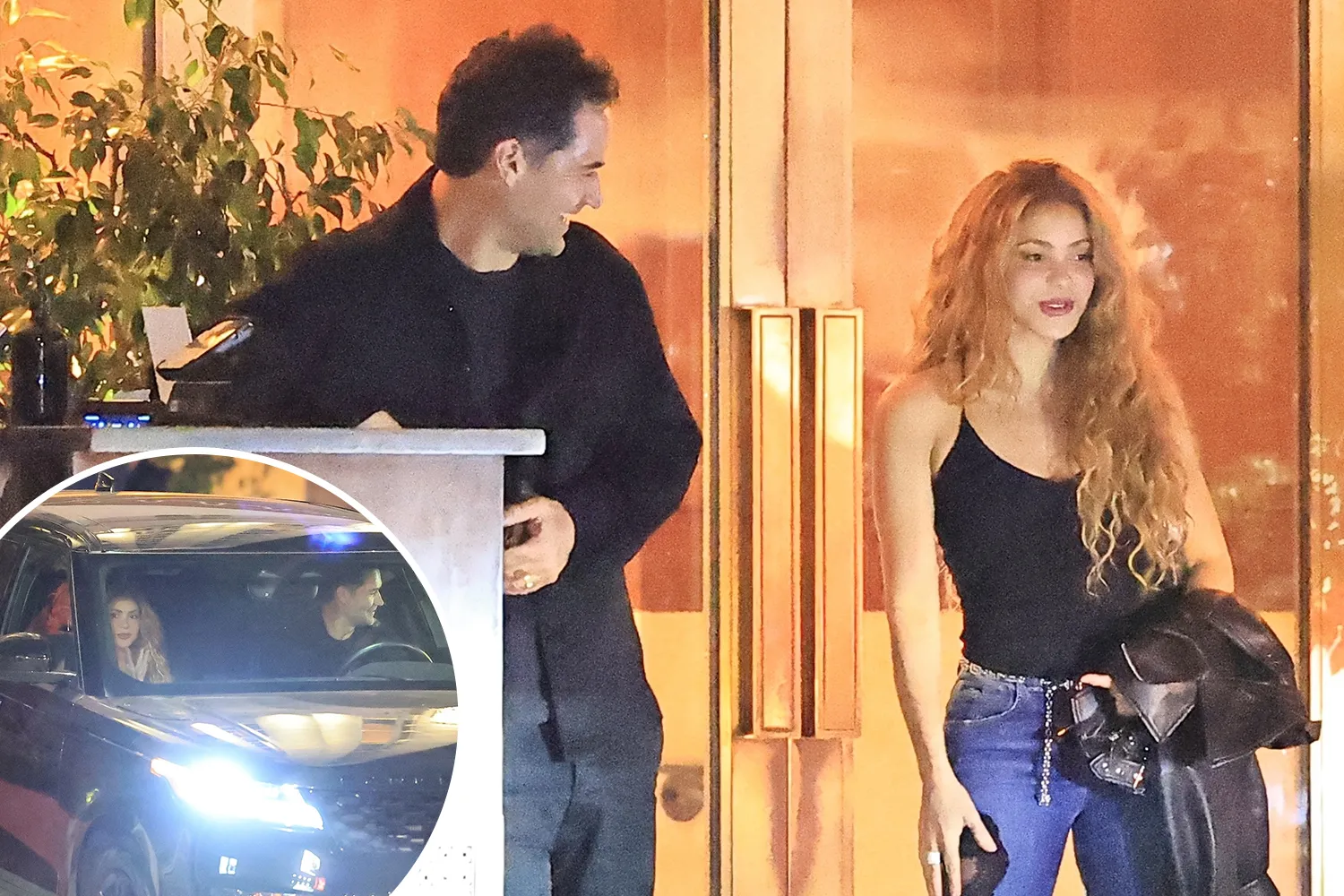
The pair were seen leaving a hotel together in Los Angeles on Monday, days after Shakira turned up the heat at the World Cup opening.
Sign up for the Showbiz newsletter
Thank you!
Shakira and the Lincoln Lawyer hunk were seen looking friendly in West Hollywood on MondayCredit: BackGridManuel Garcia-Rulfo was ever the gentleman for the singerCredit: BackGrid
Hips Don’t Lie singer Shakira and Manuel, who is known for starring in Lincoln Lawyer, were waiting at a valet stand outside the Sunset Tower Hotel.
As they waited for their vehicle in West Hollywood, the pair were seen smiling and chatting.
The photographs show that once their car arrived, Manuel proved chivalry isn’t dead.
He was ever the gentleman and politely opened Shakira’s door and waited for her to get in before he closed it.
The pair were waiting at a valet for their carCredit: BackGridManuel helped Shakira into the car by opening the doorCredit: BackGridHe drove them away as the pair smiledCredit: BackGridThey left the Sunset Tower Hotel looking content and happyCredit: BackGrid
Mexican hunk Manuel then walked around to the driver’s side and got in before driving off.
Shakira, 49, wore a simple outfit comprising of a black tank top with some blue jeans and some black boots.
Meanwhile, 45-year-old Manuel wore blue jeans, a black T-shirt and a matching jacket.
The couple looked incredibly content in one another’s company, and as they drove off they were both beaming.
Most read in Entertainment
The snaps were quick to circulate online, with fans rushing to react.
“Truth is, the dude really is hot. Even if it’s casual, I’m glad. Good for Shaki,” said one person on X.
“Omg what an upgrade,” penned a second.
While a third wrote: “The way those photos look like they’re from 2000 omg Shakira ages like wine.”
Someone else then echoed: “If you tell me it’s from 2002, I’ll believe you.”
And a fifth said: “Baby, doesn’t it feel like you’re seeing an old photo? It looks the same.”
Shakira has most recently been romantically linked to Lucien Laviscount.
Back in February, she took to Instagram to hard launch her relationship with the actor.
The relationship began after they met in early 2024 on the set of her music video for Puntería, in which he played her love interest.
But ahead of the World Cup, Shakira noted that she has “no space or time” for a relationship.
“Oh no, no romance for me for now,” Shakira told The Times recently, hinting she and Lucien were no longer an item.
“There’s no space or time in my life for that. My plate is quite full.
“My kids are my priority. And my career. Strangely enough, I’m in love with my career like I’ve never been in my life. I’m enjoying my time alone as well.”
MOLLIE’S is the brand that’s making budget travel chic.
There’s only one problem with its new Manchester site… it’s so fun that you won’t want to leave. So here’s everything you need to know about staying there.
Sign up for the Travel newsletter
Thank you!
There are several room styles including bunks and doublesCredit: Unknown
Where is Mollie’s Manchester?
Unlike its two sister hotels in Oxfordshire and Bristol – both of which sit roadside and a short drive from the main hub of the city – the Manchester joint is slap bang in the city centre, close to the upmarket Deansgate area.
It’s a 15 or so minute walk from Manchester Piccadilly train station.
What’s it like?
This is the first hotel in the budget-luxe chain not to operate as a motel and has a slightly more sophisticated feel to it.
You’ll likely spot locals popping in for coffee on their way to the shops, or mooching about in the very stylish lobby-cum-cafe where the atmosphere is reminiscent of a cool, unstuffy members club.
All have the exact same Scandi-esque look no matter which county you’re staying in – think light wooden panels and eccentric lamps.
The Manchester hotel features a couple of roomier options like the Studio, which comes with a lounge and freestanding tub, and several giant suites that boast a proper kitchen and living room plus an in-room Peloton bike.
Other options include doubles, twins and four-person bunk rooms.
Mollie’s diner serves American grub including fricklesCredit: Supplied
What is there to eat and drink?
The American-style motel theme runs strong in the kitchen, with a knock-out menu of burgers, hot dogs and milkshakes at the onsite diner.
Dishes are filling so make sure to come hungry.
I tried the frickles – fried pickles – which came with a zingy dipping sauce and reminded me of the ones I ate in America’s Deep South.
Brekkie is a similar affair: pancakes stacked high and dripping in maple syrup and fry-ups that are piled with some of the best hash browns I’ve ever eaten – fluffy inside, wonderfully crispy on the outside.
What else is there to do?
The hotel has a cool, unstuffy members club feel to itCredit: Supplied
Don’t forget to book yourself into the downstairs cocktail bar where the atmosphere is sexy and sultry.
Studio IV rather accurately describes itself as a “lively living room” – plush velvet sofas are framed around a stage where DJs and jazz musicians perform.
It’s got somewhat of a secret speakeasy vibe to it, with dark corners to cosy up in and space for people to boogie.
The cocktails are very fun and staff are extremely attentive.
How much is Mollie’s Manchester?
Rooms cost from £90 per night.
Rooms are well decorated in a Scandi styleCredit: Supplied
Is it family friendly?
Yes, very much so.
There are plenty of adjoining rooms with twin and double options, as well as bunk rooms that are great for families with more than two kids.
There’s a children’s menu at the diner and games in the lobby that kids will love
Is there access for guests with disabilities?
Yes there are accessible rooms and toilets in the public areas, as well as lifts to all floors.
A CENTRAL city hotel with fun rooms? We’ve got you covered.
Here’s everything you need to know about staying at Manchester Marriott Hotel Piccadilly.
Sign up for the Travel newsletter
Thank you!
Here’s everything you need to know about a stay at the hotelCredit: Marriott
What is the hotel like?
The Manchester Marriott Hotel Piccadilly is set over eight floors, so it has great views over the city.
It looks swanky too – with a curvy glass exterior, a huge bar and Elemis spa. We loved the nods to Manchester bands throughout the hotel.
What are the rooms like?
We had a lovely spacious family room on the eighth floor – with two double beds, lots of wardrobe space, big tv, table and chair AND, a big bathroom with separate bath and shower – which you hardly ever get in a city centre.
It was really clean, really fresh looking and had incredible views.
We just missed out on staying at the new Banksy-style suites where the walls are adorned with some of their famous artwork, as well as each package including tickets to the exhibition.
A double room starts at £95 for one night. See marriott.com
The suites are a fun nod to the famous artistCredit: Manchester banksy suites
What is there to eat and drink?
There’s a decent restaurant serving classic fare such as Lancashire cheese and onion pie and ribeye steak, but we chose to go next door to Freight Island.
Tagged an “urban market and festival space” it’s a huge old warehouse filled with bars, food trucks, massive screens, restaurants, a sports bar and roller disco. Nice prices too.
What else is there to do nearby?
There’s info about all the family-friendly activities in the area and a Banksy exhibition that opened on March 13 at Depot Mayfield. Families can explore more than 200 recreated works by the elusive street artist, including the shredding of Girl With Balloon.
Highlights include a fully “Banksified” London Underground carriage and interactive spaces perfect for visitors of all ages.
The hotel is very trendy with a fantastic bar and restaurant areaCredit: Marriott
Is it family friendly?
Some of the rooms sleep up to four people, with ajdoining rooms possible.
Kids can also eat for free at the breakfast buffet, and even get a free goodie bag with an activity book.
Is it accessible?
The hotel has step-free access to the lobby, with lift access to all floors.
There are also 17 accessible rooms with a range of adapted designs such as widened doorways, lower electric outlets, and bathrooms with bath seats and grab rails.
IF you’re looking for an affordable stay that ticks all the boxes, a Premier Inn is one of the best.
Here is everything you need to staying at the Arundel hotel in Sussex.
Sign up for the Travel newsletter
Thank you!
Here is everything you need to staying at the Premier Inn Arundel hotelCredit: Premier Inn
Where is the Premier Inn Arundel?
This charming Premier Inn nestled on the edge of the South Downs, feels more like a cosy, country hotel than a convenient pit stop to explore East Sussex.
On the outskirts of Arundel, the hotel faces picturesque fields and is very conveniently located to explore Arundel Cathedral and Arundel Castle.
Both are less than a ten-minute drive away.
What are the rooms like?
Premier Inn pride themselves on offering budget-friendly comfort in over 800 locations, and this country hotel is no different.
The chain confirmed information exposed in the breach includes ‘certain guests names, email addresses, telephone numbers, and/or home addresses, along with other reservation details’
Hotel guests have been warned they might be targeted(Image: Getty)
Hotel guests have been warned to watch out for convincing scam messages after a data breach at a major hotel chain. Data including personal details of people booked to stay at one of the chain hotels was exposed over a six month period.
BWH Hotels, the parent company for WorldHotels, Best Western Hotels & Resorts, and Sure Hotels notified customers of the breach in an email when it said “certain guests’ names, email addresses, telephone numbers, and/or home addresses, along with other reservation details” had been accessed between October 14, 2025 and April 22. It added: “Importantly, payment and other financial information was not stored in the affected system and therefore was not accessed.”
It confirmed the firm had taken action to stop the unauthorised access and that it was also taking steps to strengthen safeguards to stop any further breaches. And they urged any affected customers to take steps to ensure any scammers did not take advantage of them, warning them to be extra vigilant about unexpected emails, texts, WhatsApp messages or calls referencing hotel stays.
Now privacy experts have warned the concern is not only what was stolen, but how that information could be used next. Hotel booking data can make follow-up scams look far more believable because criminals may be able to reference real stays, dates, locations or reservation numbers.
Peter Nguyen, a privacy expert from Protect My Data, says travellers should not dismiss this kind of breach just because payment details were not exposed. “A hotel reservation contains more useful information than people realise.
“A scammer does not always need your card number to target you. If they know your name, phone number, hotel, stay dates and booking reference, they can make a fake message look extremely convincing.
“That is the risk with travel data. It gives criminals context. Instead of sending a vague scam, they can contact you with details that feel personal and accurate.”
Nguyen says guests should be especially careful with any unexpected message claiming there is a problem with a booking, payment, refund or reservation. He warned a scammer could pretend to be from the hotel, a booking platform, customer support team or payment department.
The message may claim a card needs to be reverified, a stay could be cancelled, a refund is waiting, or extra information is needed before arrival. He said: “The most dangerous message is one that sounds helpful. It might say your booking needs confirming, your payment failed, or your refund is ready. Because it references a real hotel stay, people are more likely to click.
“If the message asks for payment, codes, logins or verification, do not engage through that message. Go directly to the hotel or booking platform yourself.”
Nguyen says WhatsApp and SMS messages are particularly risky because they feel more direct. “A text or WhatsApp message creates urgency. It feels like someone is dealing with your booking right now. That pressure makes people act faster than they would with an email.”
BWH Hotels’ own warning urged customers not to engage with suspicious communications asking for payment, codes, logins or verification, even if they reference a BWH Hotels property or an upcoming reservation.
Why reservation data is so valuable
Many people worry most about card details in a breach, but Nguyen says contact and booking information can still create serious risk. He explained: “Names, phone numbers and email addresses are the starting point for phishing. Add reservation details and the scam becomes much more targeted.”
“A criminal could send a message saying, ‘Your stay at this property on this date needs confirmation.’ That feels completely different from a generic scam email because it contains something real.”
He said postal addresses can also make scams more credible. He explained: “If a scammer has your address, they can make a fake message feel more official. They might use it in a fake invoice, refund notice, complaint response or identity check.”
Special requests may also reveal details guests did not expect to become part of a security issue. “People sometimes include personal information in hotel requests, such as accessibility needs, arrival times, family arrangements or reasons for travel. Even small details can help scammers tailor their approach.”
What guests should do now
Nguyen says anyone who has stayed with, or booked through, a BWH Hotels property during the affected period should be alert, but not panic. He added: “The first step is awareness. If you receive a message about a Best Western, WorldHotels or SureStay booking, slow down and verify it independently.”
He advised guests to avoid clicking links in unexpected messages. “Open the official hotel website yourself, use the original booking confirmation, or contact the property through a trusted number,” he said. “Do not use a number or link sent in a suspicious message.”
Guests should also be careful if they are asked to confirm personal information, he said. “A genuine hotel may need basic details to find your booking, but they should not ask for banking codes, account passwords or card security codes through an unexpected message.”
If someone has clicked a suspicious link or shared card details, Nguyen says they should contact their bank immediately. He warned: “Speed matters. If you entered payment details, call your bank straight away. If you entered a password, change it immediately, especially if you use it anywhere else.”
He also recommends securing email accounts, as email is often the route scammers use to reset other accounts. “Your email account is the front door to much of your digital life,” he said. “Use a strong, unique password and switch on two-factor authentication.”
Why this warning matters for summer travel
The breach comes as many travellers are booking summer stays, weekend breaks and last-minute trips. Nguyen says that makes hotel-related scams especially dangerous.
“Travel season gives scammers a huge advantage. People are expecting hotel messages, payment reminders and booking updates. That makes fake messages easier to hide among real ones.”
He says guests should be particularly wary of messages close to their check-in date. “A message sent shortly before a stay can create panic. If it says your room will be cancelled unless you act now, that is exactly when you need to stop.”
The safest rule, Nguyen says, is to treat unexpected booking messages as suspicious until proven otherwise. He said: “If a message knows your hotel and dates, that does not automatically make it real. It may simply mean the scammer has booking data. Do not let accurate details rush you into clicking. Verify through the official route every time.”
In its email, signed by Bill Ryan Chief Technology Officer of the hotel chain and sent last month, it said: “BWH Hotels, the parent company for WorldHotels, Best Western Hotels & Resorts, and Sure Hotels, takes the privacy and security of our guests’ personal information very seriously. We are writing to let you know that on April 22, 2026, we identified unauthorised activity in one of our web applications that houses certain guest reservation data.
“We have learned that certain guests’ names, email addresses, telephone numbers, and/or home addresses, along with other reservation details (e.g., reservation numbers, dates of stay, and any special requests) for reservations in our system were accessed by an unauthorised third‑party between October 14, 2025 and April 22, 2026, including yours. Importantly, payment and other financial information was not stored in the affected system and therefore was not accessed.
“Upon discovering the incident, we immediately took the application offline and revoked the unauthorised access. We have engaged leading external cybersecurity experts to support our incident response efforts and to assist with the further strengthening of existing safeguards.
“We advise guests to be extra vigilant when viewing any unexpected or suspicious communications about hotel stays. If you receive a suspicious communication such as an unexpected email, text, WhatsApp message, or telephone call that asks for payment, codes, logins, or “verification,” even if they reference a BWH Hotels property or an upcoming reservation, do not engage. Navigate to sites directly rather than clicking links.
As part of protecting your personal information and to prevent payments to fraudulent parties, here are some precautions you can take:
Stay alert for suspicious sender addresses, urgent or unexpected unsolicited requests, and strange links, especially any unexpected request for payment or personal information. Treat any suspicious request with caution. If you have a question regarding a suspicious request, please contact our customer service team
Scammers may create webpages that closely resemble legitimate hotel booking pages. Always review the web address before entering payment details. If a page looks unexpected or unfamiliar, stop and verify it with our customer service team before proceeding. If you entered or shared any payment (credit card) information in response to a scam, please immediately report it to your financial institution and follow security steps they recommend. If you have any questions, please contact BWH Hotels’ data protection office at dpo@bwh.com
TikTok star Becki Jones is currently on an all inclusive holidayCredit: Tiktok/beckijones4She has been tucking into some yummy food while on holidayCredit: Tiktok/beckijones4
Becki, who has denied having usedfat jabsor having surgery to shed the weight in around six months, began her day with some scrambled eggs and one slice of toast.
The slimmed down star then looked at the yummy cakes and pastries before opting for a bowl of yogurt with jam on top of it, a sprinkling of cereal and a tiny cupcake.
After breakfast, Becki headed outside and enjoyed a carton of apple juice.
She later sipped a fruity cocktail, which looked as though it had the consistency of a smoothie.
Becki is keeping her fans informed with what she’s eating while abroadCredit: Tiktok/beckijones4She is seemingly being mindful with her portions following her speedy 10st weight lossCredit: Tiktok/beckijones4Becki looks so different since slimming downCredit: InstagramShe has lost over 10 stone in around six monthsCredit: TikTok
Becki and her husband-to-be then looked at some of the food that was on offer on the beach.
Sitting down, Becki then zoomed into what was on her partner’s plate, which was fries and chicken nuggets, though it is not known if Becki ate anything.
Later on in the day, Becki ate a bowl of food that looked like minced beef, coleslaw, fries and some baguette without any butter.
She then headed outside again and enjoyed a yummy frozen cocktail.
Lounging beneath the sunshine, Becki opted for an ice cream which was in the flavour of ‘berries and cream’.
Back in her room, Becki had showered as she tucked into a packet of savoury snacks with some water.
Heading out again, Becki had a wander around before sitting down to eat two chunky spring rolls with a chilli dip.
She then ate what looked like mashed potatoes with a chicken kiev and broccoli.
Becki then enjoyed what looked like a creamy risotto dish before tucking into a berry-flavoured cake for dessert.
One fan commented on the post: “That risotto looked lush not gonna lie.”
While another said: “Great day of food!!! Looks so yum!”
This comes after Becki confirmed that her partner Chris Beattie had popped the question to her during a dreamy beachside proposal on their holiday.
Becki took to Instagram to share the moment that Chris got down on one knee to pop the question to the TikTok legend.
“We’ve been keeping a secret. I said yes. My fiancé, my Chrissy. What a surprise!!
“I was shocked, emotional, nervous laughing and we’ve been in a little bubble since Monday,” she penned online.
“You’ve not only shown me love but you’ve shown me kindness, respect and what it feels like to be treated like a princess.
“This was so special, romantic and the best kept secret.
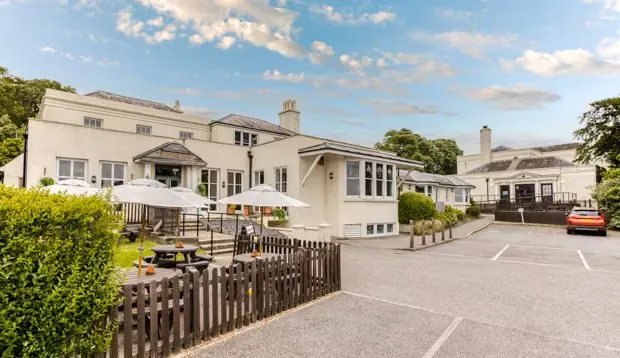
We immediately felt at home in our Privilege double, with decor nodding to Oxford-style vintage fashion.
Our upgrade from a Classic came with complimentary soft drinks, a Nespresso machine, robes and slippers.
All rooms have free fast wifi, bottled water, a mini fridge, hairdryer, tea/coffee facilities and a rainfall shower.
Classic rooms start from £116 a night. See all.accor.com.
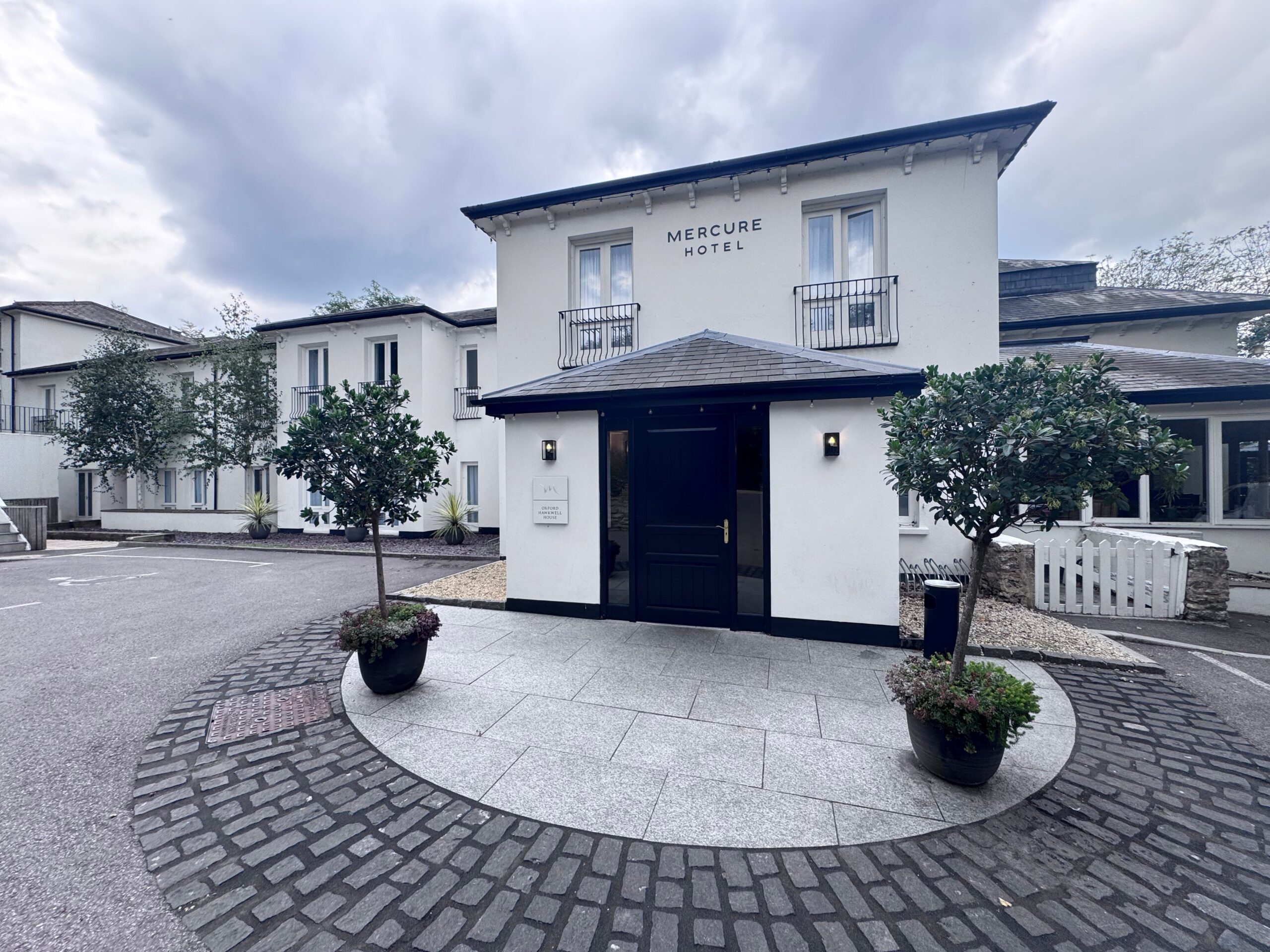
The hotel is a great base for being near OxfordCredit: Supplied
What is there to eat and drink?
The breakfast in Frank’s was excellent, with both continental and full English options and a great juice station.
However, we found Frank’s a bit disappointing for for dinner, with an unimaginative menu offering British fare such as fish and chips and pie of the day. I had the sirloin steak (£35).
The Terrace bar is nice for light bites or afternoon tea (£25pp) with an outdoor area for warmer days.
Hawkwell House was refurbished in 2021 and its vintage fashion design includes quirky details such as the story of the Oxford brogue, which I found fascinating.
What else is there to do there?
The pet-friendly hotel – popular for weddings – has three acres of gardens for walkies, with or without your mutt (£20pn).
Is it family friendly?
The hotel has family rooms that sleep up to four people.
There is also the Family Fun Package from £149 which lets kids eat free as well as includes cuddle toys for kids.
Is it accessible?
There are accessible rooms on the ground floor as well as step free access across the hotel.
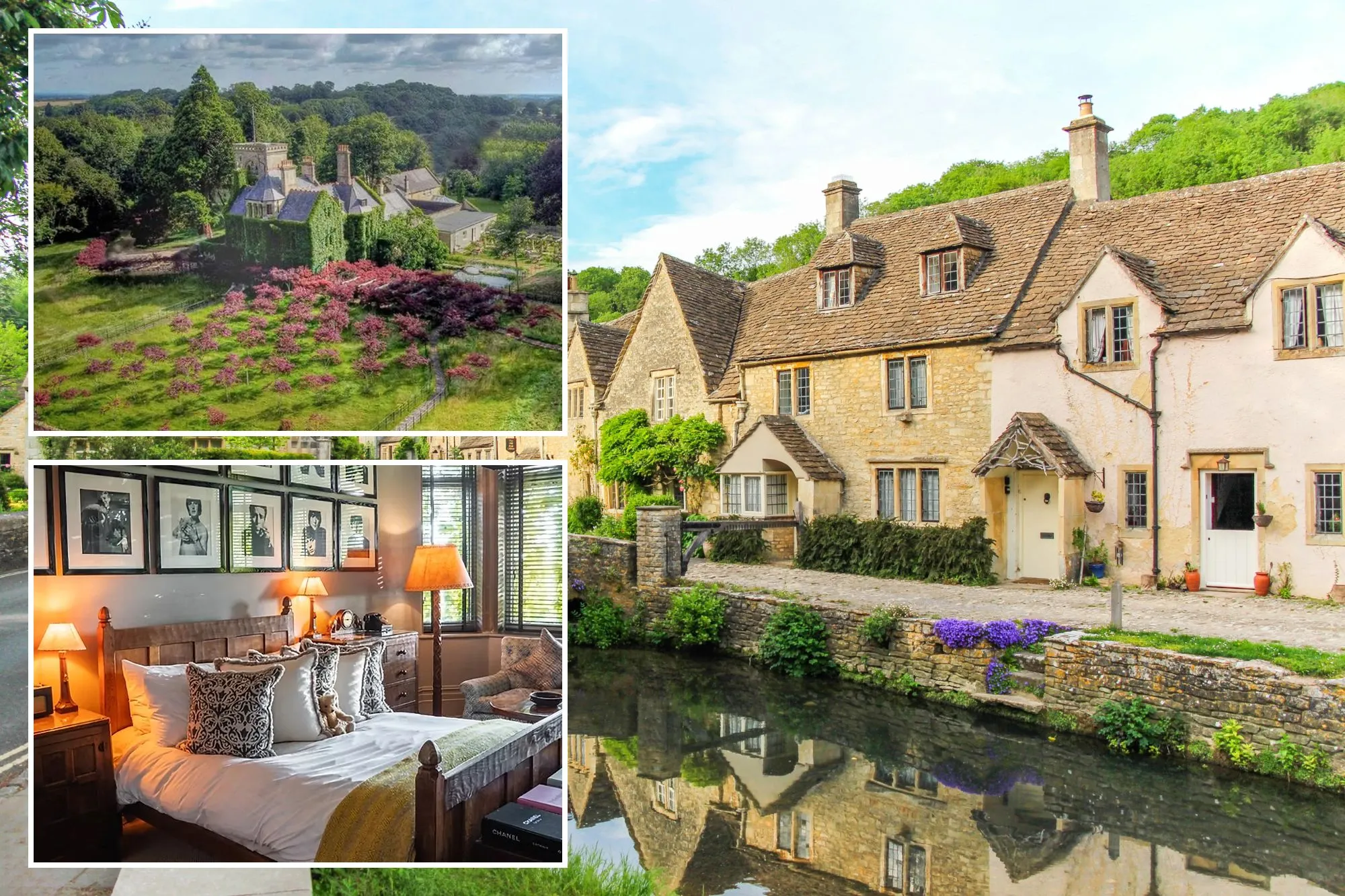
IF you’re into amazing food, glam hotels and total peace and quiet in the countryside, you’re in luck.
Wowcher have a deal offering a luxurious overnight stay for two at Marco Pierre White’s Country House Hotel, The Rudloe Arms, for only £139.
Sign up for the Travel newsletter
Thank you!
The Wowcher deal is for a stay for two at the Rudloe Arms with dinner and breakfast for £139Credit: CollectRooms at the Rudloe Arms each have a unique design and a cosy countryside feelCredit: therudloearms.com
The offer saves you a massive 42% off a full-price stay and includes an overnight break for two, as well as a three-course dinner and a cooked breakfast in the morning.
Whether you’ve got an occasion coming up, want to treat someone special or just want to switch off in the countryside – this bargain break is the ultimate excuse to pack your bags.
The four-star Wiltshire hotel sits in the pretty village of Corsham near the Cotswolds, surrounded by rolling hills and forest with plenty of scenic woodland walks.
The Rudloe Arms is an adults-only property built for relaxation, with its own orchards, gardens and a pond for scenic strolls.
Inside you can sit down for a cocktail in the snazzy Mousehole Bar, plus the Garden Room Restaurant in which dinner is served is full of warm lighting and vibrant greenery.
When it comes to rooms, each is individually designed with a charming countryside feel.
Large beds are topped with plush bedding, plus an ensuite bathroom stocked with luxurious toiletries.
Plus you can dine like royalty with a three-course dinner menu curated by celebrity chef, Marco Pierre White.
The dinner menu is seasonal and uses many local, high-quality ingredients with tasty meat, fish and vegetarian options.
If you fancy extending your trip to a two-night stay, the deal gets even better because dinner is included on both evenings.
After a restful night’s sleep guests can head back down to the Garden Room for a hearty cooked breakfast to fuel your next day.
The scenic villages of the Cotswolds are on your doorstep, just under 20 minutes’ drive awayCredit: GettyThe Rudloe Arms is owned by celebrity chef Marco Pierre WhiteCredit: Alamy
Breakfast comes as your pick of a hot dish served with toast, marmalade and tea or French-pressed coffee.
While it might be tempting to hide away in your luxury room all day, there is plenty to see right on your doorstep.
The hotel is perfectly positioned for exploring top sights in the West Country. You can easily wander into the market town of Corsham for its pretty stone buildings and traditional pubs.
If you want to venture a little further, you’re on the edge of the Cotswolds here, plus the famous architecture of Bath is within easy driving distance.
Deals this good rarely stick around for long. This offer is available until June 30, so make sure to get in early to bag your early summer break.
To redeem the deal simply select the dates you’d like to visit on Wowcher’s website. Once you’ve booked and paid you’ll receive a code by email.
Then simply redeem the code, pack your bags and enjoy your break!
The Wowcher offer is available until June 30, 2026Credit: therudloearms.com
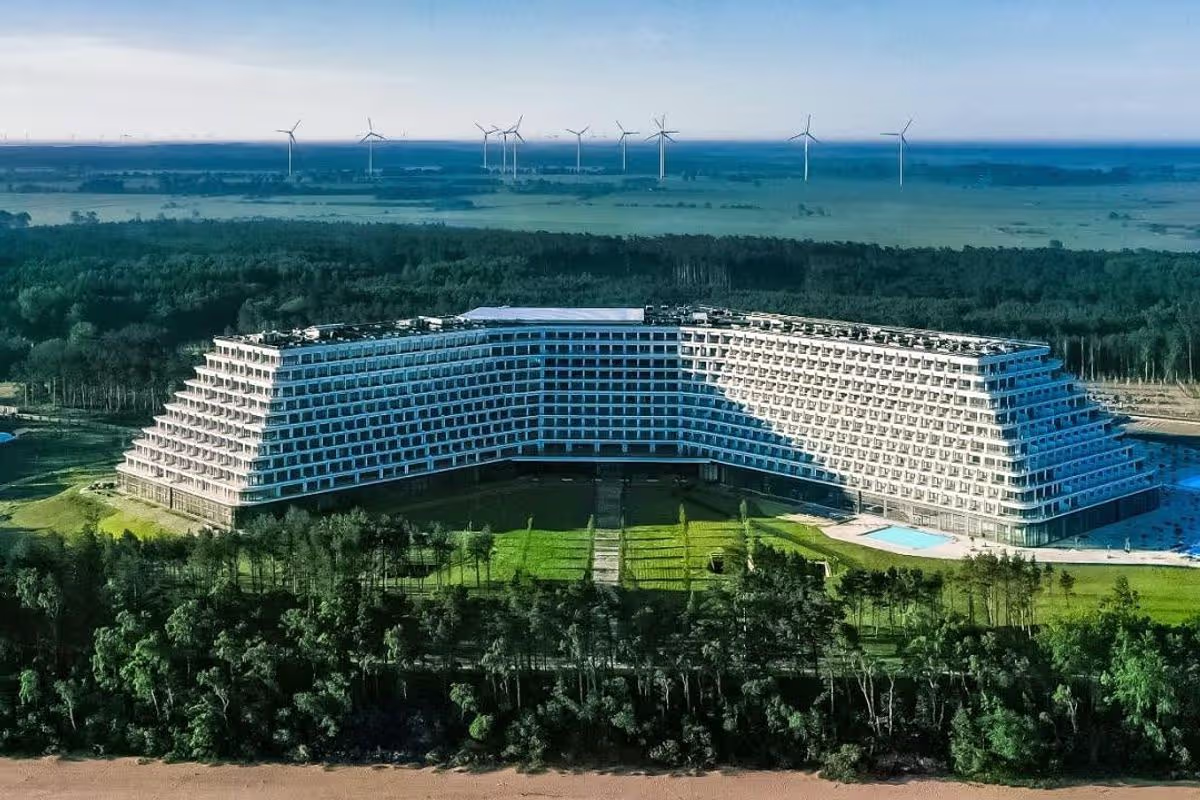
A hotel that’s set to open next week will join the list of the largest properties in Europe with a whopping 1,240 rooms, and it’s the perfect base to explore a lesser-visited coastline
The hotel will soon be one of the largest in Europe(Image: Hotel Gołębiewski Facebook)
This month will see the opening of a vast hotel just a couple of hours from the UK, and it’s already making records due to the sheer size of the brand new property.
On Wednesday, June 17, Gołębiewski Pobierowo will open its doors to the public, with 1,240 guest rooms set over 13 floors to choose from. While it won’t be the largest in Europe: narrowly beaten by the Royal National Hotel in London which has 1,630 rooms and the Rin Grand Hotel in Bucharest with 1,459 rooms, the new hotel will come in at third place.
Gołębiewski Pobierowo will be set on the banks of Plaża w Pobierowie, a two-and-a-half mile long beach that offers soft white sands and the clear blue of the Baltic Sea. The shallow waters are ideal for swimming, and it’s a popular spot for families during the summer season.
The beach isn’t the only place to go for water-based fun. The hotel will feature a waterpark with indoor and outdoor pools and slides, as well as plenty of wellness activities including a salt cave. It also promise a range of fun activities and entertainment for kids, and will have an outdoor terrace with live pianist performing on those long summer evenings. Other facilities include four themed restaurants, each serving different types of international cuisine.
A half-hour walk, or short drive away, is the seaside town of Pobierowo. In the summer, it has an outdoor inflatable park and treetop climbing experience, and it’s a popular destination for active breaks.
Down the road you’ll find the charming Park Miniatur i Kolejek, a cute model village, and Bałtycki Park Dinozaurów i Rozrywki, which features lifesize models of dinosaurs alongside rides and animal experiences.
Follow the pretty coastal roads to explore traditional Polish villages such as Trzęsacz, famous for its 15th-century church and its interactive museum, which gives you the chance to feel like you’re stepping back into the past. Trzęsacz also has incredible white sand beaches and steep cliffs offering broad views across the sea.
Niechorze is another popular seaside town near the hotel, offering family-friendly attractions such as the Oceanarium Niechorze aquarium, and the Victorian-era Lighthouse Niechorze where you can see views across the dense forest on one side and the sparkling sea on the other.
It also has the charming, quaint Museum of Sea Fishery which tells the history of the area’s once thriving fishing industry, and gives you the chance to climb onboard some of the small boats.
Pobierowo is about an hour from Solidarity Szczecin–Goleniów Airport, which offers Ryanair services from Liverpool and London-Stansted. With flight times of under two hours from London, this Polish seaside gem could become popular with Brits looking for a short break.
Have a story you want to share? Email us at webtravel@reachplc.com
Scotland midfielder Scott McTominay was not on the team bus as it arrived at their hotel in Boston after missing Thursday’s training session because of an upset stomach.
The Napoli player, who has been the Scots’ leading man in recent campaigns, was part of the group as they travelled from their base camp in Charlotte.
However, the 29-year-old made his own onward journey with a doctor in what is believed to be a precautionary measure.
Steve Clarke’s side get their first World Cup in 28 years under way when they face Haiti on Saturday evening (Sunday 02:00 BST) at Boston Stadium in Foxborough.
They will also face Morocco and Brazil in the group stage.
McTominay, who has scored 15 goals across 70 caps, found the net in Scotland’s convincing 4-0 win over Bolivia on Saturday.
Scotland fans, who have been flooding to Boston in huge numbers, will be anxious for an update from Clarke who is due to address the media on Friday.
Speaking at Thursday’s media conference, fellow midfielder Kenny McLean said of the situation: “Hopefully that doesn’t spread. Fingers crossed Scott will be fine. I’m sure he will be.
“I don’t need to speak too much on him, everyone knows how big he is.
“It’s a team effort and always will be, but when you have special, special players like that you want them to be available. I’m sure he will be.”
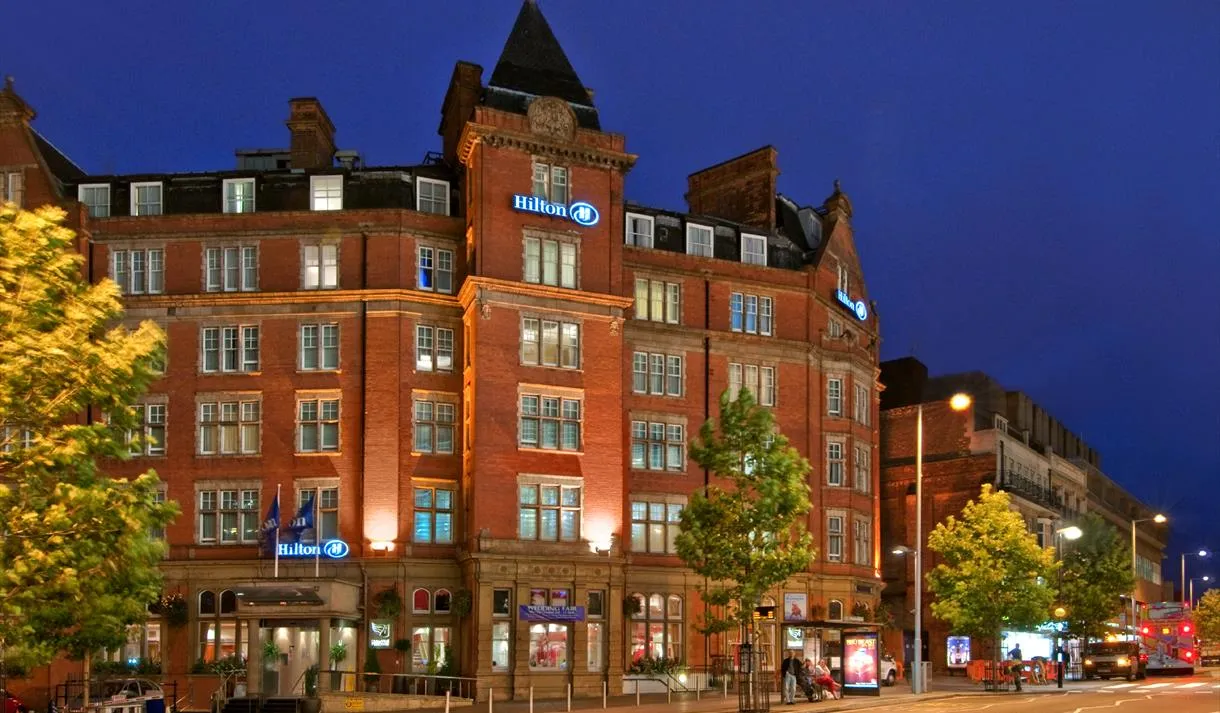
Having originally opened in 1903 as the Victoria Station Hotel, attached to the former train station, the Hilton Nottingham is bursting with character.
Here’s everything you need to know.
Sign up for the Travel newsletter
Thank you!
A warm lobby has cosy nooks where guests can sink into plush armchairsCredit: Hilton
Where is the Hilton Nottingham?
Slap bang in the centre of Nottingham, the Hilton hotel is just a 17-minute walk from the train station.
There is a small on-site car park, or guests can park in the multi-storey across the road, for which they will receive a discount through the hotel.
What’s the Hilton Nottingham like?
The hotel is a home away from home thanks to friendly staff and a warm lobby with cosy nooks where guests can sink into plush armchairs and natter about their weekend ahead.
Things have changed a fair bit since its early days as a station hotel, but a rather grand staircase in the lobby gives a nod to its heritage.
The calm atmosphere is not what you’d expect of a hotel slap bang in the centre of a busy city and every guest checking in at the weekend is treated to a complimentary glass of prosecco on arrival
What are the rooms like?
Rooms are much more modern than the exterior of the building lets on – which is no surprise considering the property underwent a £6.5million renovation a few years back, with particular focus on the bedrooms.
Plump bedding (including one of the deepest, softest pillows I’ve ever slept on) and a stylish design of wooden cabinets and soft lighting are the highlights.
There’s all the usual expected amenities such as tea and coffee making facilities, TVs and bathrooms kitted out with fancy-smelling toiletries.
Formerly a station hotel, the Hilton Nottingham recently underwent a renovationCredit: Hilton
What is there to eat and drink?
The hotel’s Bric Bar & Kitchen opens every morning for slap-up buffet breakfasts of eggs any way you like, hash browns and beans, as well as cereals, pastries and yoghurts with fresh fruit.
All of which is continually topped up, so you won’t have to miss out even if you do arrive just before closing time.
That’s a real perk when you’re visiting at the weekend and have perhaps had a heavy one the night before – there’s nothing like a well-cooked fry up to cure your hangover.
There’s also a small dinner menu of pub-style favourites – margherita pizza, smash burger and fish and chips – served Monday to Saturday from 5:30pm until 9:30pm.
If you don’t fancy staying in, you aren’t short of excellent dinner options nearby.
Less than a ten-minute walk away is Taquero which serves up plates of dressed ceviche and cheese-loaded tacos alongside margaritas that pack a punch.
What else is there to do?
There’s a small gym and indoor pool as well as pet-friendly rooms for a £25 per pet nightly surcharge.
But you’ll really want to take advantage of the city centre location that makes it great for stag and hen dos, with everything – clubs, restaurants, attractions – on your doorstep.
Very. Family rooms are spacious and come with a king sized bed alongside a sofa bed that’s easily large enough for two youngsters.
Anyone staying before December 31 can take advantage of the Perfect Family Package that really does put little ones at the forefront, meaning the grown ups can properly kick back and relax.
Not only will kids be treated to their own in-room teepee, they’ll also receive an activity pack.
Is there access for guests with disabilities?
Yes, there are accessible rooms within the hotel and the restaurant is also accessible with downstairs accessible toilets.
In less than a month, Riverside’s Mission Inn has gained a new owner, lost two prized pieces of art and sparked a heated debate over the line between private property and community history.
The stage for this controversy was set in early May, when hotel owner Kelly Roberts decided to sell the Mission Inn to the Yuhaaviatam of San Manuel Nation, the tribe that owns the Yaamava’ Resort & Casino in Highland and the Palms Casino Resort in Las Vegas.
But it wasn’t the sale (for an undisclosed amount) that started arguments. It was Roberts’ removal of two beloved paintings from the hotel before the sale closed.
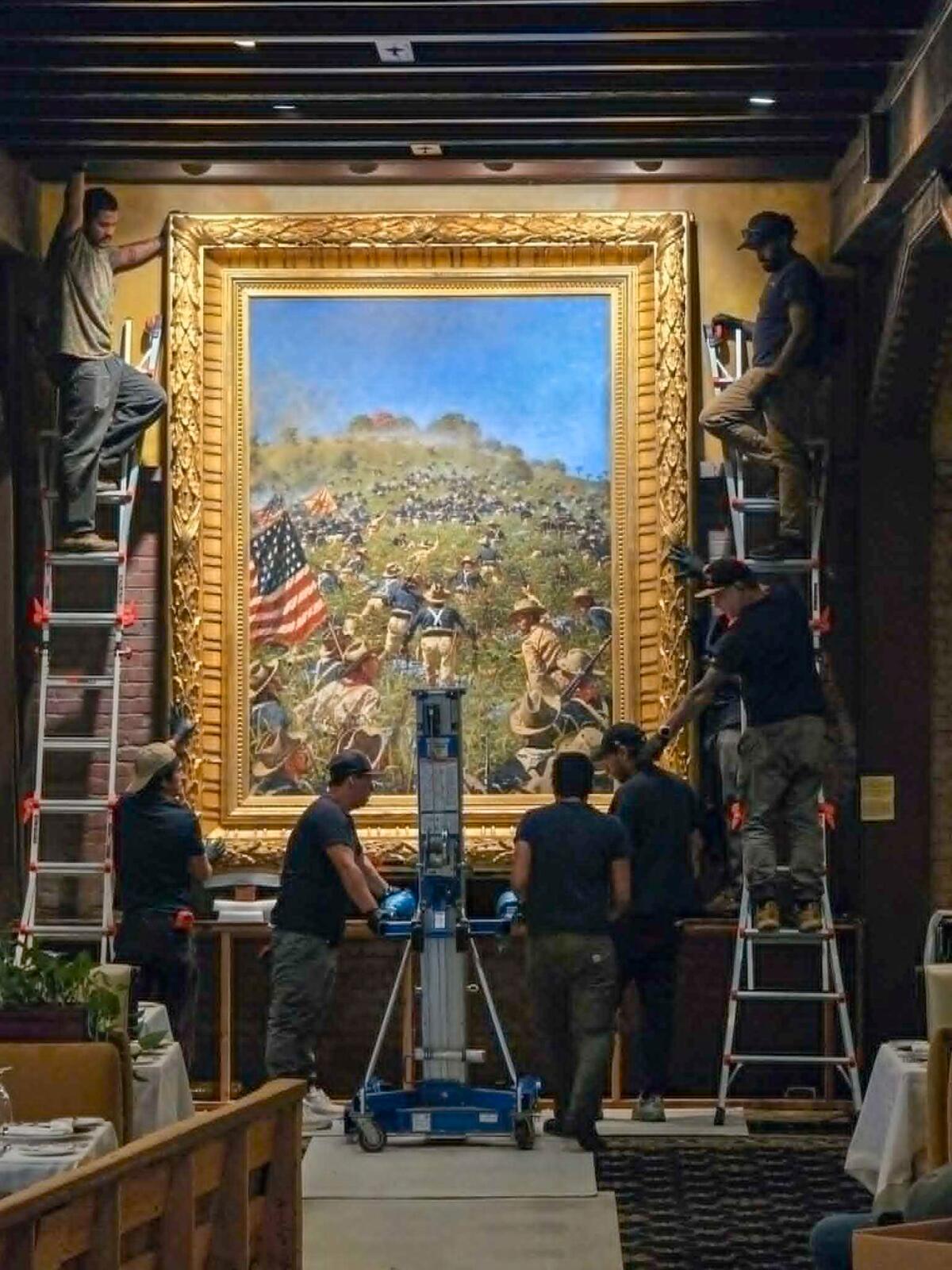
A painting at the Mission Inn in Riverside titled “Charge Up San Juan Hill” is taken down on March 20, shortly before the hotel’s change in ownership.
(James Ranger)
One is an alpine landscape called “California Alps” (1874) by William Keith, which measures roughly 6 feet by 8 feet and was displayed in the lobby near the front desk. The other painting, “Charge Up San Juan Hill” (about 1900) by Vasily Vereshchagin, was displayed on a wall of the steakhouse near the lobby. Both paintings had been a part of the hotel for more than a century.
“It was like a slow-motion version of the Louvre Museum heist, pulled off on a sunny day in Riverside in view of guests, staff and visitors,” wrote David Allen of the Riverside Press-Enterprise.
“There’s an outrage among members of this community,” said Mike Marlatt, a Riverside attorney and former board member of the Mission Inn Foundation.
The issue appears to be what agreements Roberts’ late husband made when he bought the building more than 30 years ago.
Former Riverside redevelopment official Ralph Megna, who facilitated the 1992 sale to Duane Roberts’ Historic Mission Inn Corp., wrote on Facebook that “What Kelly is apparently doing at this point is just pillaging the place in violation of those agreements.” But on a phone call, he was less absolute. He said the original pact included an agreement intended to protect about 180 movable pieces of art and artifacts from removal, but that “there’s shades of gray here.” Megna added, “We trusted people. Good faith turned out to be not so good.”
Duane and Kelly Roberts, photographed in 1998 at their home in Laguna Beach. Duane, who reopened the Mission Inn in the early 1990s, died in 2025.
(Glenn Koenig / Los Angeles Times)
Roberts’ family attorney Alan Jackson, however, said “Kelly is not pillaging anything.” He maintained that when Duane Roberts bought the hotel, “he bought every single item. Every single item was the Roberts family’s personal property.” When Kelly Roberts sold the hotel last month, Jackson said, she was free to keep or sell any of its contents.
In that deal, Jackson said, “the buyers would not close” until the paintings and a sculpture of Duane and Kelly Roberts were removed, because “they’re expensive.” Also, Jackson said that Duane Roberts, “before his passing, made it very clear to Kelly and the family that those are two of his favorite paintings ever.”
Jackson declined to say where the artworks are but said “they are in her possession” and “she has no intention of ever getting rid of those ever.”
The iconic spiral staircase in the rotunda of the historic Mission Inn.
(Gina Ferazzi / Los Angeles Times)
The hotel’s new owner, the San Manuel Investment Authority, declined to address questions about the sale agreement. But in a statement, it said it is “committed to collaborating with the Mission Inn Foundation and the City to respectfully steward and preserve this historic landmark, recognizing its deep history and significance to the Riverside community.”
Despite accolades from groups including Historic Hotels of America, tensions between the Roberts family and Riverside preservationists have risen in recent years. In late 2024, after more than 30 years renting space within the hotel, the nonprofit Mission Inn Foundation and Museum was unable to agree on a lease extension with hotel management and moved to a building on Main Street. Foundation leaders did not respond to messages seeking comment.
“The Mission Inn is so foundational to Riverside that any significant change brings real concern to me and makes me uneasy,” said City Council member Philip Falcone, 28, who has been leading tours of the inn since he was in high school.
The Keith painting is “quintessential California, a romanticized view of the Sierra Nevada range. William Keith, the painter, was friends with John Muir,” Falcone said. As for the San Juan Hill painting, it connects neatly with the history of Theodore Roosevelt, one of nine presidents who have visited the inn.
A guest takes in the view from the Spanish patio at the Mission Inn.
(Gina Ferazzi/Los Angeles Times)
The hotel is largely the creation of Frank Miller, who bought Glenwood Cottage, a modest boarding house, from his father in 1880. Then Miller enlisted investment help from his friend, railroad magnate Henry Huntington, transformed the boarding house into a hotel and renamed it. Over time, Miller built it into an architectural wonderland filled with art and antiques gathered in the U.S. and Europe. By 1931, the enterprise filled a city block.
“It’s a unique property,” said David Stolte, president of the Old Riverside Foundation. “It’s a National Historic Landmark. It kind of sits at the intersection of private commerce and public benefit. The original owner, Frank Miller, intended it as a public space, essentially a cultural museum, in addition to his business of running a hotel.”
After Miller’s death in 1935, the hotel’s reputation spread even further, attracting dignitaries of the day — and the future. It served as the site of Richard and Pat Nixon’s wedding in 1940 and Ronald and Nancy Reagan’s honeymoon in 1952. But by the 1960s, it was much diminished, and a later owner, Benjamin Swig, had sold close to 1,000 antiques and artworks to help pay bills.
By the mid-1980s, the hotel had passed through a period of city ownership and was closed. By 1992, more than $50 million had been spent in restoration and renovation, but the project was scuttled by a bankruptcy. That’s when Duane Roberts, who grew up in Riverside and made his fortune selling flash-frozen burritos, bought the property and reopened it.
Duane and Kelly Roberts, residents of Laguna Beach, also established the hotel’s annual Festival of Lights, an Inland Empire holiday tradition. The hotel today includes 238 guest rooms, four restaurants, two lounges, two chapels, a spa, pool and candy shop.
Besides their stewardship of the hotel, Duane and Kelly Roberts became known as major donors to the Republican party. In 2017, Politico reported that Kelly Roberts was in line to be named the Trump administration’s ambassador to Slovenia, but turned down the post.
After Duane Roberts died at 88 in November, Riverside buzzed with questions over the fate of the hotel, prompting another Roberts family lawyer to offer public assurances.
“Nobody’s buying this hotel. Mrs. Roberts is keeping this hotel,” attorney Patrick O’Brien told a TV news crew in late November. But on May 4, Kelly Roberts and the San Manuel Investment Authority announced the pending sale.
Festival of Lights, Mission Inn’s popular holiday tradition, was created by Kelly and Duane Roberts after they reopened the hotel.
(Allen J. Schaben/Los Angeles Times)
Then on May 20, guests spotted workers removing the two paintings from the lobby area. Longtime hotel-watchers said other items had disappeared in recent years, including an 1876 Steinway piano; a statue of the goddess Pomona; William Wendt’s painting “Houses at Arch Beach”; Ilya Repin’s 1884 painting “Portrait of Madame K.”; and the hotel’s Taft Chair, a sturdy oak armchair commissioned by Frank Miller in 1909 to hold 335-pound President Taft. But the midday, presale removal of the Keith and Vereshchagin paintings prompted immediate outcry.
It was “traumatizing, seeing that stuff on display for so long and then seeing it come down,” said James Ranger, a veteran hotel tour guide and Mission Inn Foundation docent. After all the time and money the Roberts family invested in the property, “leaving on this note puts a sour taste out there,” he said.
The sale closed May 29. Though the Roberts family’s attorneys have insisted that the buyers and sellers are in accord, preservation advocates in Riverside have called for a review of documents associated with Roberts’ purchase of the property.
Meanwhile, the hotel’s new era as a tribal holding begins. Besides the two casino-hotels, the Yuhaaviatam of San Manuel Nation owns several other hotels, including the Waldorf Astoria Monarch Beach Resort & Club in Dana Point. As for the Mission Inn, the tribe has signed on Boston-based Pyramid Global Hospitality to take over management, and several changes are already evident.
Notably, the Roberts’ names have been dropped from the signage. Kelly’s Spa has become simply the spa, Duane’s Steakhouse is now just the steakhouse, and Casey’s Cupcakes, a hotel shop founded by Kelly’s daughter Casey Beau Brown, has closed. The Festival of Lights will continue, a spokesperson said.
Stolte said the Old Riverside Foundation believes the tribe will be “great stewards” for the Mission Inn.
“I wish that their welcome to Riverside was a little smoother,” he said.
Staff writer Alex Wigglesworth also contributed to this story.
The money-saving experts shared a tip for people booking expensive holiday destinations
The tip could help holidaymakers save money (stock photo)(Image: Getty)
A savvy travel tip could help holidaymakers save money on trips to expensive destinations. MoneySavingExpert (MSE), founded by journalist and broadcaster Martin Lewis, often shares money-saving tips for the public. According to a previous blog post from the MSE team, some travellers could save money by booking a hotel they don’t need.
The experts explained that package holidays can sometimes offer better deals than scheduled flights for certain destinations. So travellers could save money by booking their flight as part of a package deal, then booking their preferred accommodation, assuming they’re not keen on the hotel included with the package.
MSE said: “Scheduled flights to some destinations, such as Orlando and Sri Lanka, can be silly money, yet packages there can sometimes come in much cheaper. If you only need the flight, check if there’s a cheaper package holiday, then grab it but DON’T stay in the hotel.”
The guidance added that Martin has previously had success with the trick, helping a friend book a holiday to Sri Lanka. MSE said the passenger paid £300 for the holiday to cover their flights, when the cheapest scheduled deal was over £1,000.”
In another blog post dedicated to cheap package holidays, MSE reiterates the advice. The experts explained: “If you’re going away specifically for seven, 10 or 14 days to a traditional holiday destination, package holidays are often best. They can sometimes be much cheaper than booking a scheduled flight… even if you DON’T want to use the hotel.
“For example, we found flights for a seven-day trip to Florida for £689 per person – a package holiday for the same dates was just £662 per person. It won’t always work, but it’s worth a try.”
When checking flight prices, passengers may wish to compare prices on sites such as Skyscanner. Booking on different days could help customers find the best deals.
Skyscanner says: “Flight pricing changes constantly based on demand, season and route. There’s no fixed ‘cheapest day’ to book but with the right tools, you can stay informed.
“Historically, Skyscanner pricing trends have shown that some airlines release deals late on Mondays, which may lead to lower fares early in the week. Prices tend to rise again as the week progresses and demand increases.”
Some holidaymakers wait until the last minute for deals. Skyscanner explains: “On quieter routes or off-peak travel days, prices may drop as the departure date approaches. But on popular routes or peak dates, fares often increase as the flight fills up.”
A POPULAR English seaside theme park has revealed plans to open its own hotel.
Adventure Island in Southend-on-Sea, Essex – named the best seaside attraction in the south by the UK Theme Park Awards last year – wants to build the accommodation right by its entrance.
Sign up for the Travel newsletter
Thank you!
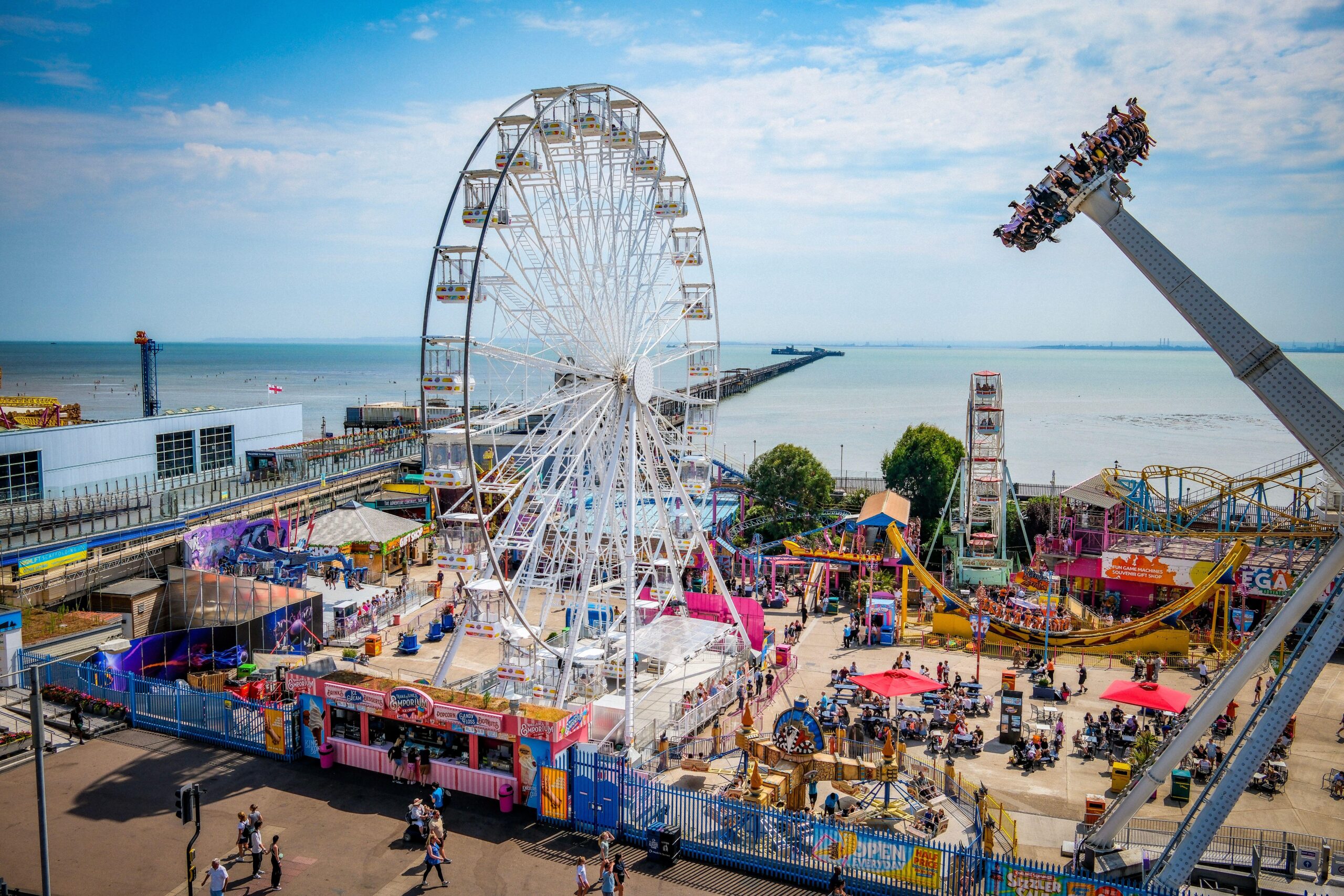
Adventure Island in Southend-on-Sea, Essex, has revealed plans to build a hotelCredit: Alamy
The hotel would have seven rooms and be above the Sands By The Sea fish and chips restaurant.
Currently, the space above the fish and chips restaurant is an empty office that was previously used by Radio Essex.
Few other details have been revealed about the hotel, but SKArchitects – who are behind the project – shared that the accommodation is a “unique” waterfront spot, with a restaurant below and 24-hour staffing at the theme park.
Guests would also have access to the nearby Three Shells Beach and views of the Thames Estuary.
According to the Southend Echo, Matt Dent, Southend Labour councillor for business, culture, tourism and music, said: “I can certainly see the advantages of providing more tourism accommodation on the seafront, particularly having it basically inside the park.
“That is going to be a huge draw and major selling point to families looking to make the most of the abundant offerings at the seafront.”
Recent data from credit card company Aqua revealed the UK’s top 10 affordable theme parks and named Adventure Island in eighth place.
The park is free to enter, but to go on the rides you’ll need to buy a wristband, which is either £25 online or £28 on the gate.
The hotel would feature seven rooms and be right by the entranceCredit: Alamy
In total, there are 40 rides to explore, including seven rollercoasters such as Rage, which boasts several twists and turns.
If you were to break down the cost of a £25 wristband, each ride would be as little as 63p to go on.
The park also has a couple of waterslides, as well as rides for smaller kids such as a carousel, small land train and a soft play area.
Today, if you wanted to visit Adventure Island and stay close to the theme park, you’d have to book into one of the hotels or B&Bs along the seafront.
Nearby options include The Palace Hotel from £102 a night and just steps away from the entrance of the pier or The Hope Hotel, which sits at the end of Southend Beach and costs from £85 a night.
A number of other hotels around the UK have hotels near the entrance, including Alton Towers, which has the Alton Towers Hotel, Splash Landings Hotel and the CBeebies Land Hotel, all within the entrance plaza.
A Four in a Bed star was moved to tears after receiving mixed feedback on their B&B.
Holly and Dennis were crowned winners (Image: Channel 4)
A Four in a Bed contestant broke down in tears just moments into the episode.
Father-daughter team Dennis and Holly were competing in the show, which broadcast a repeat episode on Saturday.
The pair had been first to host their rivals at their Norwich B&B, impressing them with the spotless standards and Holly’s culinary talents at breakfast.
So taken were the guests that when the final round arrived, Holly and Dennis were showered with such glowing feedback that she became emotional.
During payment day, the duo heard responses from Kent hosts Harry and Sarah, Oxfordshire B&B proprietor Dawn, and Ollie, who runs a boutique hotel in Kent, reports Cambridgeshire Live.
While Ollie settled the full amount owed for his visit, Dawn deducted £10 citing the absence of a wardrobe in her room and unclean windows.
Addressing her remarks, Dennis confessed: “I’m genuinely disappointed by [the windows] because our standards should be much higher and generally are, so apologise for that. Not good enough.”
He subsequently told the camera: “Taking the money off was arguably a bit harsh, but I get it. We can’t complain too much, although it was uncomfortable.”
Dawn, however, defended her position, stating: “I stand by my payment because I believe that a wardrobe is a facility that should be in a B&B. And the window not being clean, everything should be spotless.”
Yet Harry and Sarah adopted a completely different approach, and actually paid Holly and Dennis more than expected for their accommodation. After presenting them with a £12 overpayment, Harry praised: “We had an amazing stay at your place. Everything you needed and more.”
Overwhelmed by his kind words, Holly broke down in tears, saying: “Thank you, sorry I get really emotional!”
Sarah, also becoming emotional, responded: “You’ll get me going!”
“It means a lot,” Holly added, while Harry later told the camera: “They ticked every box,” as Sarah commented: “They rival some of the best hotels that I’ve ever stayed in.”
Holly continued: “It means so much for us, and we’ve put so much into the business.”
Shortly afterwards, it emerged that Harry and Sarah’s overpayment had secured Holly and Dennis the top spot.
“I’m delighted,” Dennis said, as Holly added: “It’s the best feeling.”
He joked in front of the group: “We are all winners, but we’re the best winners.”
Dennis then told his daughter: “I’m very proud of Holly,” as she replied: “It wouldn’t be possible without you!”
This is San Diego’s backyard, a condensed, flatter version of Griffith Park, but with more historic buildings, more museums and a zoo with a global following. If you’re a Balboa Park rookie, start with the San Diego Zoo, which may take your entire day. (Admission: $68-$74 per adult, $58-$64 per child age 3-11.) If you’ve already done that, well, it’s lucky for you that the zoo is less than 10% of Balboa Park’s 1,200 acres, and the park’s other institutions have been growing and changing.
The park’s emblematic 1914 Botanical Building is open again after major reconstruction that ended in late 2024. The Mingei International Museum, which focuses on global folk art, won Michelin praise in 2023 for its eclectic restaurant, Artifact at Mingei (which serves lunch Tuesday through Sunday, dinner Thursday and Friday).
The park’s museums and other institutions cover art (fine, folk, contemporary and photographic), natural history, anthropology, flight, model railroading and all the imagined worlds that come with Comic-Con (which opened its museum here in 2021).
The Old Globe theater complex includes three stages. The big lily pond between the promenade and the Botanical Building may be the most wholesome over-the-counter tranquilizer in town. The Centro Cultural de la Raza, housed in an enormous former water tank, covers Chicano, Latin and Indigenous culture. The park’s Japanese Friendship Garden & Museum fills 12 acres with greenery, koi ponds and bonsai displays.
If you’re planning to hit several museums over a couple of days, look into a park Explorer Pass, which might save you money.
About parking: In January, after years of free parking, the city imposed a fee system charging non-residents $10-$16 per day and residents slightly less. San Diegans rose in outrage, and in late May city officials announced a plan to end the parking fees by Jan. 1, 2027.
HAVANA — Spanish hotel chain Meliá has joined a growing list of companies with a long-standing presence in Cuba that are withdrawing or limiting their operations on the island after the U.S. announced new sanctions while upholding an oil embargo.
Meliá will cease operations at 15 of the 34 hotels it manages on the island, according to state website Cubadebate, dealing a blow to Cuba’s vital tourism sector, which has plummeted since its 2018 peak.
The report on Wednesday stated that Meliá’s decision was based on “a sense of corporate responsibility and external factors that have significantly affected the operation, legality and security of these establishments.”
The decision was announced May 26, just weeks after President Trump signed an executive order expanding sanctions against the island. Most of the sanctions targeted Grupo de Administración Empresarial S.A., a business conglomerate operated by the Cuban Revolutionary Armed Forces, with the U.S. asserting it was a threat to its national security.
The executive order freezes the assets of foreign companies, seizes their accounts in the United States and prohibits travel by their shareholders, investors and employees— virtually eliminating their activity in the U.S. financial system.
GAESA, a Cuban conglomerate created in the 1990s, owns a wide range of businesses, from car rentals and retail stores to transportation companies. It is Meliá’s partner in hotel management through one of its subsidiaries, Gaviota.
Meliá deals new blow to Cuba’s crumbling tourism sector
Meliá is one of Cuba’s most important partners in its vital tourism sector. Until its partial withdrawal, it operated some 14,000 rooms.
Spanish and Canadian firms are the biggest investors in Cuba’s hotel sector, noted Lee Schlenker, a research associate at the Quincy Institute’s Global South program, a Washington think tank.
“With the lack of international tourism, the fuel shortages, and just the broader decline since COVID…I’m sure that these companies will be rethinking their operations in Cuba with major implications for the people of Cuba, not just GAESA,” he said. “There are thousands of Cubans who work in these hotels.”
Several of the hotels that Meliá abandoned in idyllic destinations like the resorts of Varadero, Cayo Santa María and Jardines del Rey “were already closed and inactive due to energy problems and the drop in demand in Cuba,” according to Cubadebate.
Cuba’s government has blamed the U.S. energy blockade for prolonged blackouts, water shortages, supply problems, deficiencies in the healthcare system and disruptions in all aspects of daily life.
Those who work in Cuba’s crumbling tourism sector lamented Meliá’s announcement.
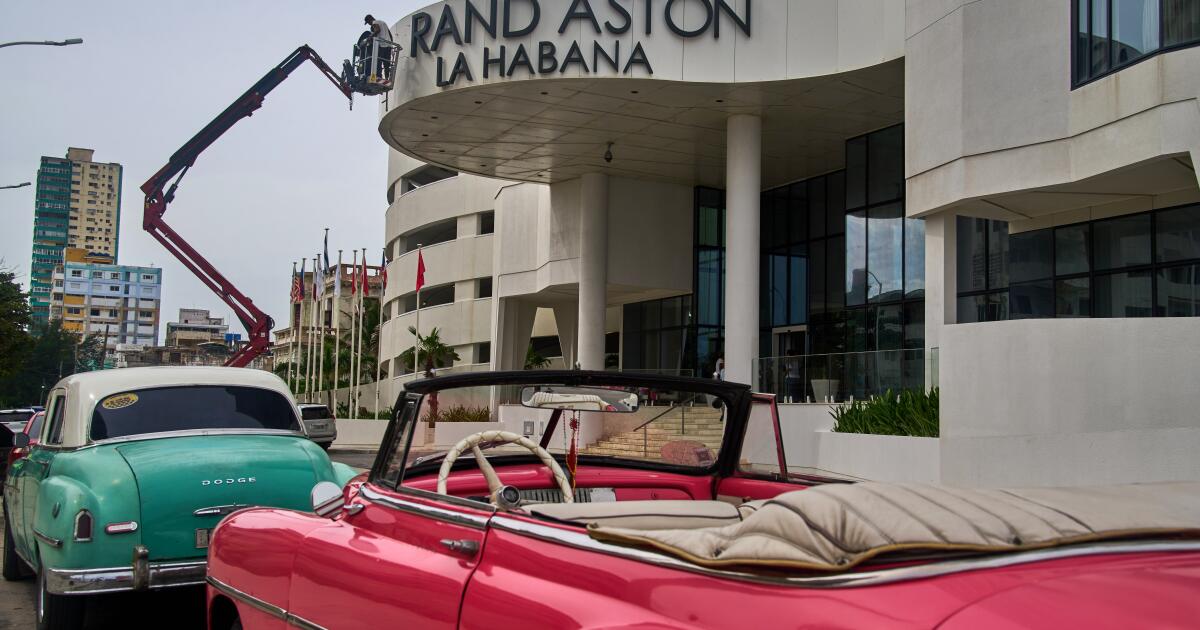
“It’s going to affect us, our families, and everyone involved in tourism. Our pay and income depend on this,” said Erich López, a driver of a green 1950s Dodge who has been driving for two decades to support his family.
For Carlos Luis Carbonel, a 62-year-old parking attendant who works in front of the giant Meliá Cohiba hotel in Havana, the situation “is going to be a blow.”
“This is terrible for everyone: for tour guides, for parking attendants, for hotel workers, for everyone,” he said.
Other major hotel chains including Canadian-owned Royalton and Spain’s Iberostar have limited or suspended operations in Cuba in the past week.
Tourism in Cuba, which reached a peak of 4.3 million visitors in 2019, saw a significant drop in the number of tourists arriving in the first quarter of this year, 48% lower than in the same period in 2025.
Only 298,000 tourists arrived in Cuba in January, February and March, compared to 573,300 international visitors during the same period last year, according to government data.
Cuba struggles to breathe
On Wednesday, the enormous and iconic sign of the Royalton Paseo del Prado hotel at the entrance of Old Havana was removed, as confirmed by The Associated Press during a visit. Meanwhile, the 500-room Iberostar Selection — also known as Tower K — the most modern and luxurious of the hotels slated to open in 2025, standing over 490 feet tall, has remained closed for days.
Airlines including World2Fly, Air France and Iberia have canceled flights to and from Cuba.
Also on Wednesday, Cuba’s Central Bank announced that Visa and MasterCard operations on the island would be suspended following the termination of relationships between foreign entities and FINCIMEX S.A., a Cuba-based agency affiliated with GAESA.
Last month, Canadian miner Sherritt International Corp. signed a non-binding agreement with Gillon Capital LLC, a family office linked to a former Trump adviser, to sell its stake in a mining business in Cuba.
In late January, Trump threatened tariffs on any country that sells or supplies oil to Cuba, as his administration pressures for a change in its political system and government. The move has deepened a crisis caused by seven decades of U.S. sanctions.
While U.S. and Cuban officials held talks earlier this year, tensions have risen. In late May, former President Raúl Castro was charged in a U.S. indictment for his alleged role in the downing of two civilian aircraft operated by Miami-based exiles in 1996 in Cuban waters.
POD hotels the latest hotel trend taking over – and another one has just landed in the UK’s capital.
Also known as capsule hotels, Japan started the trend back in the late 1970s.
Sign up for the Travel newsletter
Thank you!
A new pod-based hotel has opened in central LondonCredit: OtherWanderOtherwander in Soho features both single and double pods or nestsCredit: Cyann Fielding
The main idea? Maximise space at the hotel and cut costs – and for guests this means a cheaper stay.
Otherwander has just opened in the very heart of Soho, approximately 30 seconds away from Oxford Street’s Elizabeth Line entrance.
As far as location goes, you can’t get much better with most of London‘s top spots within walking distance.
Stepping inside, I felt as if I had entered a swanky London office with a huge multicoloured LED screen and clinical white entry gates.
Before you arrive, Otherwander will send you a text with your pod (or nest as they like to call them) number as well as email you your Wanderpass, which is essentially your key to everything – getting into the hotel, getting into the lift, getting into your dorm and getting into your own nest.
You then use your Wanderpass to get through these gates.
To get in and around the hotel, you use your very own Wonderpass QR codeCredit: Cyann FieldingThe pass will even get you into your nestCredit: Cyann Fielding
Once on the other side, you’ll find the social area – which for a budget hotel is both surprisingly big and stylish (more on this space later).
To get to the floors with the pods – all 566 of them – you hop in the lift – once again scanning your Wanderpass.
Each floor is separated into different ‘dorms’, each packed with about 40 nests (which makes finding your own feel a little like going on a treasure hunt).
Once I eventually found my dorm and entered, it felt like a corridor of lockers, with the square doors actually being the doors to each nest.
When you book, you can opt between an upper or lower pod; I opted for an upper pod, which feels more like climbing into a UFO.
You can also choose between a double (£80 per night or £40 per person, per night) or a single (£70 per night).
In each dorm, there are a mix of single and double nestsCredit: Cyann FieldingSingle nests cost from £70 per nightCredit: OtherWander
I was surprised to find my upper double not boxy nor claustrophobic, despite being only the width of a standard double bed.
On either side of the bed is a handy elasticated pocket for your phone or book, with a USB and USB-C charging point next to each as well.
Down one side of the bed, you’ll find the air conditioning control system and lighting options including a reading light, night light and even surprise option, mine was colour-changing so ideal for post-club vibes.
You’ll also find a shelf, complete with a strap to secure your backpack or cabin-sized suitcase and three hooks for coats, jackets or towels.
On the other wall, the final feature is a rail with two towels on – though if you want another, you can rent one from a vending machine in the corridor, for £5 a time.
There is also a slight design flaw – a handy ‘wet tray’ is great for your shoes but if you pop your water bottle in its designated slot, you block the door from opening or closing.
As for the bed itself, while it a bit firm, was comfortable and the bedding felt as plush as you get in a more premium hotel.
The pod room didn’t feel stuffy either, despite the small space thanks to a high-tech purifying system too.
Double pods – like I stayed in – cost from £80 per night, which is equal to £40 per personCredit: Cyann Fielding
As for the door, it self-locks when you shut and on the back there is a small mirror, which was ideal for doing my makeup in the morning, as well as a QR code in case you need to communicate with staff.
If you start to feel a bit claustrophobic, there is a small window in the door with a shutter for privacy.
Being a pod hotel, don’t expect your own private bathroom.
You’ll have to head out to the main corridor on your floor where you’ll find men’s, women’s and mixed-gender bathrooms.
Downstairs there is also a social areaCredit: Cyann Fielding
The real test of this came at 3am when I had to crawl out of my pod backwards down the ladder and shuffle to the toilet, awaking all the motion-sensored lights and having to open my phone with blurry eyes, just to scan my Wanderpass to get back in.
The bathrooms do feel like a slice of luxury though, with terrazzo- style tiles lining the sinks and walls and music being played from the ceiling.
Each rain shower has heaps of room, so your items are safe from getting wet and there’s also free soap and shampoo.
Vanity areas are then kitted out with hairdryers and shaving sockets.
In the social area there are a few bookcases as well if you want to chill and read somethingCredit: Cyann Fielding
If you fancy being social, back downstairs you’ll find the hotel’s ‘guest-exclusive social hub’ with warm yellow lighting adding a glow to the space and complementing the burnt orange modular sofas.
It is the ideal space to hang out with other guests, work or even snuggle into a corner with a book – which you can pick up from shelves around the space.
There are even plans for live DJ drop ins in the future.
Fancy a pint? The back wall features several vending machines full of everything you could possibly want – even Moet champagne.
There are also a couple of coffee machines and if you have forgotten something, there’s even a vending machine with essentials from make- up wipes and deodorant to umbrellas and Uno cards.
If you have bigger luggage you don’t want to store in your nest, there are lockers you can rent on site.
The funky design throughout and clever lighting really does make you feel as if you are in a luxury space ship.
There’s also a number of vending machines with everything from Moet champagne to Uno cardsCredit: Cyann Fielding
At no point did I feel like I was steps away from the busiest street in the UK as it was completely silent (albeit there were very few guests in my dorm, so this might be different on busier days).
But while the hotel is a huge bargain, the rise of pod hotels in the city means there are other options that pip it to the post when it comes to being the cheapest in the city.
If sharing a double with someone, £40 each isn’t terrible – but £70 for a single pod – which obviously are much smaller – seems rather steep.
Other alternatives in London include a single pod at Zedwell’s Capsule Hotel in Piccadilly for £32, while a double room with an ensuite and breakfast included at Zedwell Soho for £77.
Not only that, but if you have a large suitcase (which many tourists do) the price will increase to pay for it to be stored.
If you fancy the novelty of a pod hotel – go for it – but if you are wanting to save cash, I think you can find better bargains elsewhere.