After her colleague and mate Dylan Keogh (William Beck) uncovered she’d been conducting a clandestine romance with his son and junior medic Matty Linlaker, he informed Clinical Lead Flynn Byron (Olly Rix).
Explaining that the accusations levelled against her ‘amount to sexual coercion’, Matty, Dylan and Stevie were all required to attend hearings with HR panel members during Saturday’s instalment (June 20).
Throughout the medical drama, the three clashed yet again as Stevie subsequently apologised to Matty for the entire situation.
Nevertheless, Matty responded: “You’re not sorry, Stevie. You’ve realised I’ve got the power to end your career and you’re worried what I’m going to say, right?”
When she questioned what he intended to tell the HR panel, he remained silent, while Stevie was subsequently shown in floods of tears confiding in Flynn, confessing she didn’t wish to lose her position, reports the Daily Star.
As the episode drew to a close, audiences witnessed Stevie facing the panel members as she declared: “Look, before we get started. I just wanted to apologise unreservedly for my behaviour.
“I have no doubt whatsoever that I’ve made mistakes. But, I’m a bl**dy good doctor. I deserve to be here, and I’ll fight tooth and nail to make sure I stay.”
Can Stevie preserve her position at the hospital? Or will Matty destroy her career for spurning him?
It didn’t take long for viewers to react to the episode, with many divided over Stevie and her future on the long-running medical drama. One viewer wrote: “WE CAN’T LOSE STEVIE.”
While another urged: “Fight for your job, Stevie.” A third chimed in: “THE WAY STEVIE ENDED THE EPISODE. I’m so happy.”
With one fan commenting: “Stevie is going to fight for her job. Hopefully, she isn’t leaving now.”
Yet not everybody shared the same excitement about Stevie’s decision to fight for her position, with a number of viewers keen to see her go.
One wrote: “Don’t like this storyline. Add in real life, Stevie would be on suspension, I would’ve thought.” While another simply declared: “So tired of Stevie.”
Former EastEnders actress Gurlaine Kaur Garcha, who previously played Ash Panesar on the long-running BBC soap, has married her partner Max after a year-long engagement
Gurlaine Kaur Garcha has married her partner after a year-long engagement(Image: WireImage)
EastEnders star Gurlaine Kaur Garcha has married her partner after a year-long engagement. The actress, 32, is best known known for having previously played Ash Panesar on the long-running BBC soap, but she left the programme just over three years ago.
A slew of Gurlaine’s former co-stars were quick to congratulate her. Former Strictly Come Dancing star Balvinder Sopal, who plays Gurlaine’s on-screen mum Suki, wrote: “Gorgeous baby. Congratulations.”
Emma Barton, known for her role as Honey Mitchell, wrote: “Gorgeous… congratulations beautiful,” whilst Denis Fox actress Diane Parish simply said; “Congrats”
Last year, the actress, who last year was seen in an episode of the Amazon Prime hit The Girlfriend, shared the happy news of her engagement with fans on Instagram, flashing a huge diamond ring while sipping a cocktail abroad.
“v happy & v engaged!!!!!!” she wrote, keeping the caption short and sweet. Although Gurlaine’s kept her partner’s identity private, she confirmed the romantic proposal took place while on holiday in Ibiza.
Gurlaine made her debut in Albert Square back in 2019 as Ash; a confident, no-nonsense doctor who immediately made an impression. She arrived as the first member of the Panesar clan, with her brothers and mum Suki introduced shortly after.
Her character quickly became a key figure in several dramatic storylines from tense family fallouts and fractured relationships to fast-paced scenes at the hospital. She was also part of a same-sex romance with Iqra, making Ash one of the few LGBTQ+ South Asian characters in soap at the time.
Ash wasn’t afraid to speak her mind, often clashing with her mum Suki, whose controlling nature added even more fuel to their fiery dynamic. Her arrival was also seen as a big moment for representation, with viewers praising EastEnders for spotlighting a British Sikh woman in a lead medical role – something rarely seen on mainstream TV.
Gurlaine took a short break from the show in 2022 before officially bowing out in early 2023. At the time, soap bosses thanked her for her contribution, while the actress told fans she was “excited for what’s to come”.
Since then, Gurlaine’s kept a low profile but still shares snippets of her life online – posting travel pictures, moments with friends, and positive messages with her followers.
And while she’s stayed off-screen for now, fans will no doubt be thrilled to see her celebrating such a personal milestone.
The 28-year-old was on a six-week trip when she was involved in an accident in the motorhome she had hired
Emma Blood was badly hurt in the crash(Image: SWNS)
A Brit’s dream holiday turned into a nightmare after a horror motorhome crash left her unable to walk. Emma Blood, 28, was travelling in Western Australia when the collision left her trapped, seriously injured and facing a year-long recovery.
The hospitality worker from Milton Keynes had travelled to Australia on March 19, 2026, with plans to spend six weeks exploring. Inspired by stories from other travellers, she teamed up with three women she had met through a travel group and hired a motorhome to travel around and live in while exploring the region.
Just nine days into the trip, on March 29, Emma and the three women were travelling towards Margaret River when she lost control of the motorhome, due to slipping on the Western Australia mud roads, and crashed into a tree. Two passengers suffered minor injuries, but Emma was trapped from the waist down in the wreckage and had to be cut free by firefighters.
She was then airlifted to Perth Trauma Hospital, where she spent 10 days before flying back to the UK to continue her recovery. She said: “There are still a lot of blank spaces in my memory, I’m not sure whether I lost consciousness or whether it’s just a trauma response.
“I recall the moment of impact, when the vehicle struck a tree on the driver’s side where I was sitting. The force of the crash pushed everything forward, and I ended up trapped from the waist down.”
While the other passengers escaped with relatively minor injuries, Emma suffered devastating damage to her leg. One passenger required stitches to her face, and another was left with a bruised finger, but Emma faced a far more serious outcome.
Emergency services were alerted after her phone automatically contacted them following the collision. Upon arrival, a fire crew had to cut Emma free before she was airlifted to Perth Trauma Hospital.
Doctors discovered she had broken her femur in three places. She underwent emergency surgery lasting around six hours, during which surgeons inserted an intramedullary nail – a metal rod fixed inside the bone with six screws to stabilise the fractures.
Emma said: “I remember being in and out of consciousness, having scans and being moved around the hospital. It felt like something out of 24 Hours in A&E or Casualty, being rushed about.
“One of the most difficult moments was definitely standing for the first time after surgery. It was terrifying because I had no control over my leg, at first they thought there could be spinal injuries but it turned out to be okay.”
Complications continued when doctors discovered her haemoglobin levels had dropped dangerously low, resulting in a blood transfusion several days later. Emma spent 10 days in the hospital in Australia before her father flew out to help bring her home.
She said: “I couldn’t have travelled back on my own, I needed someone with me the whole way. If my dad hadn’t come to pick me up, I would have had someone to take me who I didn’t know.”
After arriving back in the UK on April 8, she was admitted to Milton Keynes Hospital for around another week before continuing her recovery at home.
In the early stages of recovery, Emma could not move her injured leg without using a strap around her foot and required assistance with everyday tasks, including showering.
She said: “It felt like I had lost all independence. I have been told a full recovery could take up to a year, but I am making great progress.
“My older brother is helping me, he’s a sports physiotherapist and thanks to him I progressed from a walking frame to two crutches, and now I only rely on one.”
She spends time in the gym every day, rebuilding strength and mobility and recently celebrated a major milestone by getting back behind the wheel of a car.
She said: “Driving again was huge for me, both physically and mentally. Although the accident cut short my dream trip, I will go back to finish it.
“There is still a lot of trauma attached to what happened, but for now, I am going to focus on getting back to my full health and independence.”
The Retirement Abroad Index 2026 has ranked 20 countries across five key areas including healthcare, cost of living and visa accessibility – and the results may surprise you.
The place you want to retire may be about to change(Image: Getty)
While you might be drawn to these sunny spots for a holiday, have you ever considered they could be the perfect place to spend your retirement?
As Brits approach retirement age, plenty contemplate purchasing a property in well-loved retirement havens such as Spain and France, but there are warmer, more affordable locations that could offer greater advantages, according to the latest figures.
The Expatriate Group, a specialist provider of international health insurance serving expats and retirees globally, has published The Retirement Abroad Index for 2026. The study assessed 20 countries, evaluating them across five crucial categories, including healthcare, visa accessibility, health insurance requirements, cost of living, and community and integration.
Drawing from these essential factors, it’s evident which destinations emerged as frontrunners for retirees and which have fallen in the rankings, with some surprising contenders.
Lee Gerry, director of Expatriate Group, said: “Retiring abroad has never been more achievable, but the decisions that matter most – healthcare access, visa routes, and the reality of day-to-day costs – are often the least well understood.”
“This index is designed to cut through the noise and give people an honest, data-led picture of where the real opportunities are.”
The top destination for retirement, according to the index, was the Philippines, with a Special Resident Retiree’s Visa that ranks among the most accessible globally. It requires a fixed deposit of roughly £11,000 for those receiving a pension.
What’s more, it achieved impressive marks for affordability and anticipated integration, which, combined with its tranquil beaches and stunning scenery, makes it an idyllic spot to enjoy your retirement years.
The second choice is perhaps less of a shock, as it’s certainly more familiar to Brits, though still not typically considered the top pick: Thailand.
The nation boasts several well-established and vibrant cities, each providing a flavour of its rich culture, but most prominently, Bangkok, Chiang Mai and Phuket all feature internationally recognised private hospital networks.
Thailand secured a perfect 20 out of 20 on the scoring index, excelling in the healthcare category alongside Spain and France. Regarding visas, their Non-Immigrant O-A Visa demands coverage of at least $100,000, approximately £74,000, per policy, per year, as a visa requirement.
The third country, which may surprise some retirees, is Colombia, offering one of the most straightforward retirement visa routes among the 20 destinations and, remarkably, achieving a cost of living score of 18 out of 20.
According to their findings, the report indicates a retired couple can generally enjoy a comfortable lifestyle in Medellín, the capital of Colombia, on roughly £1,000 to £1,500 per month. In contrast to most British cities, it boasts reliably warm weather and possesses a lively atmosphere that’s difficult to match elsewhere.
Portugal emerged as the first European nation to feature on the list as an ideal spot to spend your golden years, claiming fourth place. Joint fifth went to Sri Lanka and South Africa, while Malaysia and the UAE shared sixth position, before Mexico secured a solid seventh spot.
While Spain continues to be among the most favoured destinations for British retirees, it didn’t appear until eighth on the list, achieving 18 out of 20 for healthcare, though it was let down by the cost of living and visa complications.
It also shares eighth place with Indonesia, which is cherished for its relaxed way of life and renowned for its strong emphasis on wellness culture. Packed with stunning beaches and particularly attracting visitors to Bali, it has climbed to the top of countless people’s bucket lists as a must-visit destination.
Coming in at number nine is Panama, followed by Qatar. Panama has made headlines in recent years for its ‘Pensionado’ programme, which offers a generous range of discounts designed to make retirement far more affordable.
The scheme also requires retirees to demonstrate a lifetime income of just £738 or so per month, with an extra £184 for each dependant.
Due to several countries sharing identical scores, the top 10 is actually made up of 13 nations in total. These are:
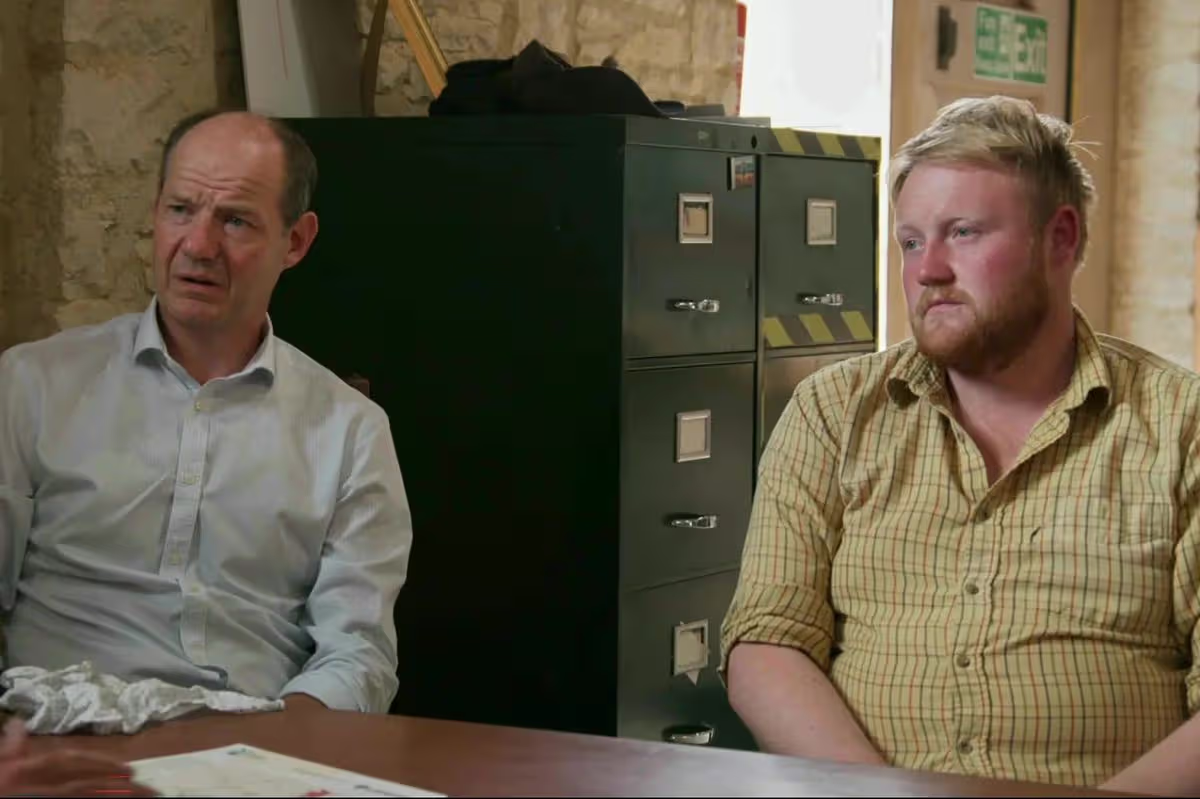
The farmer was visibly upset, breaking into tears, when Jeremy Clarkson announced his cancer diagnosis in the latest episodes of the TV show Clarkson’s Farm
04:56, 17 Jun 2026Updated 04:58, 17 Jun 2026
Kaleb breaks down in tears as Clarkson breaks the news (Image: Prime)
Jeremy Clarkson’s devastating cancer diagnosis left farm manager Kaleb Cooper in tears.
“I’ve got cancer,” Clarkson said during a conversation about the farm’s harvest.
Kaleb replied, “No, you haven’t. Where?”
The former Top Gear host has continued: “Where it is, is of no concern of anybody. I’ve known since May.”
“I had a medical, you remember back in May? I disappeared off the other week and I had a biopsy and it is cancer and it’s aggressive, but it’s really early so the treatment will be, you know…
“I was praying we could get the harvest done and then I could go and get some treatment but it’s going to be slap bang in the middle.”
Kaleb, wiping away tears, then said, “Look after yourself, you go and do… if you need anything just ring.”
Later in the show, Clarkson spoke about how the year had been challenging while talking to Kaleb, his girlfriend Lisa, and his two other employees.
“We started the year and I had coronary heart disease and ended it with me with cancer,” he explained.
“We can dwell as much as we like on all the bad things that have happened on the farm, but I think it’s better now, at the end of the year, to focus on things that have happened that are good.”
Kaleb asked, “When will we know the treatments worked?”
In response to Kaleb’s tears, the Who Wants to be a Millionaire host jests at him to “cheer up”.
“Not for another few weeks. Come on cheer up, it probably did work.”
The emotional episode has now been added to Prime Video.
Ahead of the episodes the TV star warned fans that they may be “a difficult watch”.
He posted on Instagram: “Ordinarily we try to keep the show bucolic and charming and cheerful. But the final two episodes which drop in the middle of the night tonight are none of those things really.”
In the clip, he took a deep breath and added: “They’re a difficult watch. They’re really, really difficult.”
After he announces the news to the farmers, Clarkson is later seen in a hospital bed set to undergo surgery.
However, Clarkson appears to maintain a positive attitude as he says he hopes to be back for a sixth season, before joking that if the treatment isn’t successful ‘take care everyone’.
Juba, South Sudan – In the days before Lankien was attacked, doctors at the local hospital rushed to evacuate patients. Some were women in labour. Others were being treated for gunshot wounds. By the evening of February 3, just hours after the last patients were carried out, a bomb struck the empty facility, ripping a crater through its warehouse.
Fighting was underway in surrounding areas as South Sudan’s military pressed forward with a counteroffensive aimed at retaking territory seized by opposition armed groups. As the army advanced eastward through Jonglei State, it captured town after town, pushing opposition fighters towards the Ethiopian border.
In the aftermath of the bombing, residents said they were forced to flee into surrounding marshland on the morning of February 7 as mortar fire struck the town. Some eventually returned and described extensive destruction.
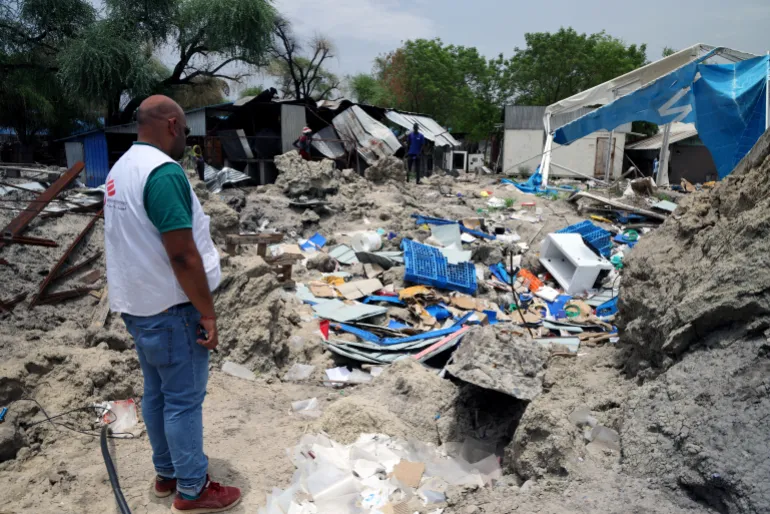
The hospital had been looted and burned. Its cold-chain storage unit, used to preserve vaccines, was set on fire. Vehicles were sprayed with bullets and stripped for parts. Solar-powered water systems had been dismantled. The local market was reduced to twisted metal sheets, while homes on the outskirts appeared to have been burned.
“Anything that can support the life of human beings was deliberately destroyed,” said Emmerson Gono, deputy head of mission for Doctors Without Borders, known by its French initials MSF, who visited Lankien in April, adding that this was his assessment based on what he observed.
A counteroffensive across Jonglei
Since the start of what authorities refer to as “Operation Enduring Peace,” satellite imagery analysed by the Centre for Information Resilience (CIR), combined with verified videos, images and witness accounts, indicates widespread destruction across a swathe of Jonglei that has long been a stronghold of opposition groups.
Both the military and opposition forces have been accused of razing villages and attacking civilians in recent months. In this area of Jonglei, which is home to a section of the Nuer ethnic group that officials often cast as hostile to the state, more than a dozen residents who spoke to Al Jazeera said they believed the military was responsible for targeted destruction that experts say has pushed tens of thousands of people towards the brink of famine.
Lankien hospital was evacuated, and patients were discharged hours before the attack, following increased tensions and after MSF received information about a possible attack against the city. [Courtesy of MSF]
In most of the 23 incidents CIR documented between late January and February, civilian structures, including homes, health facilities and markets, appear to have been burned and looted. CIR said the destruction was “likely to be more widespread and potentially part of what it described as a deliberate military strategy”.
“Using satellite imagery, we were able to map how troop movements from west to east followed a path of burning and looting,” said CIR researcher Kiria Borak, stressing that satellite imagery alone cannot determine intent or responsibility.
Some officials and humanitarian actors have attributed the destruction in Jonglei to clashes between government troops and opposition forces. However, residents told Al Jazeera that opposition fighters were not present when their villages were attacked. Those accounts could not be independently verified due to restricted access to the area.
Government officials did not respond to requests for comment on the specific allegations described in this report. In earlier statements, authorities have said military operations are conducted in self-defence and that civilians are not deliberately targeted.
Political backdrop
Violence has escalated since 2025, when opposition leader and first vice president Riek Machar was arrested on charges of subversion, allegations he denies. Machar and President Salva Kiir were once on opposing sides of the country’s 2013–2018 civil war, which killed hundreds of thousands of people before a peace agreement brought them into a fragile unity government.
The implementation of that agreement stalled amid delays in unifying armed forces into a national military and repeated postponements of national elections.
Following Machar’s arrest, the government undertook a campaign of aerial bombardments to beat back a simmering rebellion in rural areas. Machar’s political group declared the peace deal dead and began launching hit-and-run attacks on military positions.
Between December and January, opposition fighters, buoyed by support from local armed youth, seized several military garrisons in Jonglei, prompting the government to announce a counteroffensive on January 28.
Then-army chief Paul Nang ordered forces, drawn from the national army, intelligence units, police and allied militias, according to UN investigators, to retake territory held by opposition groups.
Analysts say the involvement of allied militias operating alongside formal units has complicated the determination of command responsibility.
‘Burning homes’
Five individuals who fled Lankien told Al Jazeera they witnessed events unfold on February 7.
They said government-aligned forces reached the outskirts of the town after fighting in a nearby village. Around late morning, mortar fire struck the town, followed by the arrival of ground forces in armoured vehicles.
Gai Ket, 32, said he had been cutting firewood when explosions began. He rushed back to town to look for his wife and children.
“The first thing I saw was smoke. SSPDF was burning homes,” he said, referring to the national army.
When he reached his house, he found his wife dead, with a severe wound to her chest. Bodies lay scattered across the neighbourhood. “Everything was gone,” he said.
The hospital’s main warehouse was destroyed during the attack, and we lost most of our critical supplies for providing medical care. [Courtesy of MSF]
Another resident, Puoch Duol, said he returned at night to search for his grandmother, who had been too weak to flee. He said he found her body among several others near the ruins of burned homes.
Satellite imagery reviewed by CIR indicates significant destruction in Lankien between February 7 and 9. On February 7, the army announced it was in control of the town.
MSF has said government forces were in control of Lankien in the days after the attack but has not assigned responsibility for the destruction. It said the government is the only party to the conflict with the capability to carry out aerial bombardments.
Government-appointed officials told Al Jazeera that opposition fighters looted the town during their withdrawal. Opposition representatives deny this, saying their forces were not present at the time. Neither account could be independently verified.
A pattern of destruction
Residents described a similar pattern of destruction across towns and villages stretching from the Nile River to the Ethiopian border. Armed men in military-style uniforms arrived in armoured vehicles, often after opposition forces were reported to have withdrawn, according to residents.
Homes and markets were burned, while health facilities and humanitarian compounds were looted. Civilians took refuge in swamps and forests, while those too weak to flee were killed or went missing.
CIR geolocated social media footage from Pathai showing fighters moving among burning structures towards a road leading into the town’s western entrance. The identities of those in the footage could not be independently verified.
Jany, an aid worker based in the town of Walgak, described an attack on February 5.
“We saw smoke everywhere. They were firing guns and burning houses,” he said.
Satellite imagery shows significant structural damage in Walgak between February 3 and 7, shortly after the town changed hands.
Humanitarian sources tracking developments in the area reported that multiple villages in the vicinity of Walgak were burned or destroyed during the same period. These accounts could not be independently verified due to restricted access and ongoing insecurity.
Remote sensing data shows clusters of fire activity across the region during the same period. However, satellite imagery alone cannot determine the cause or responsibility for the fires.
Command rhetoric and discipline
From the start of military operations, remarks by commanders raised concerns over civilian safety.
A video circulated on social media shows Johnson Olony, a deputy army chief who is also head of the Agwelek armed group, telling troops not to spare lives or property during operations. The government later said the remarks did not reflect official policy, and Olony apologised.
In another video, a commander identified as Wal Nyak appears to threaten violence against perceived opposition supporters. “Whether you are a woman or a girl, we will kill you all … We don’t want supporters of Riek Machar here,” he says.
Reports and satellite imagery point to burned villages and mass displacement across Jonglei. [Satellite imagery/Vantor]
The authenticity and full context of the footage could not be independently verified.
Humanitarian impact
Aid agencies say the consequences of the destruction reported in the area are severe and likely to last for months or longer.
At least 28 health facilities in Jonglei were damaged or looted this year, according to the UN. Seventy percent are no longer functioning.
The Integrated Phase Classification (IPC), a United Nations-backed analysis body, says there is a risk of famine in multiple counties, while more than 70,000 people are already facing the highest possible severity of hunger.
Nicholas Kerandi of the UN Food and Agriculture Organization said the impacts on food security and public health “are likely to persist through the remainder of the year and potentially beyond”.
Others say the alleged abuses in Jonglei have pushed South Sudan’s already fractured state to breaking point.
“The tribes don’t trust one another, the citizens don’t trust the government, and the government doesn’t trust its citizens,” Ter Manyang Gatwech, a human rights advocate from Jonglei, told Al Jazeera.
“Unless there is a miracle, South Sudan will disintegrate,” he said.
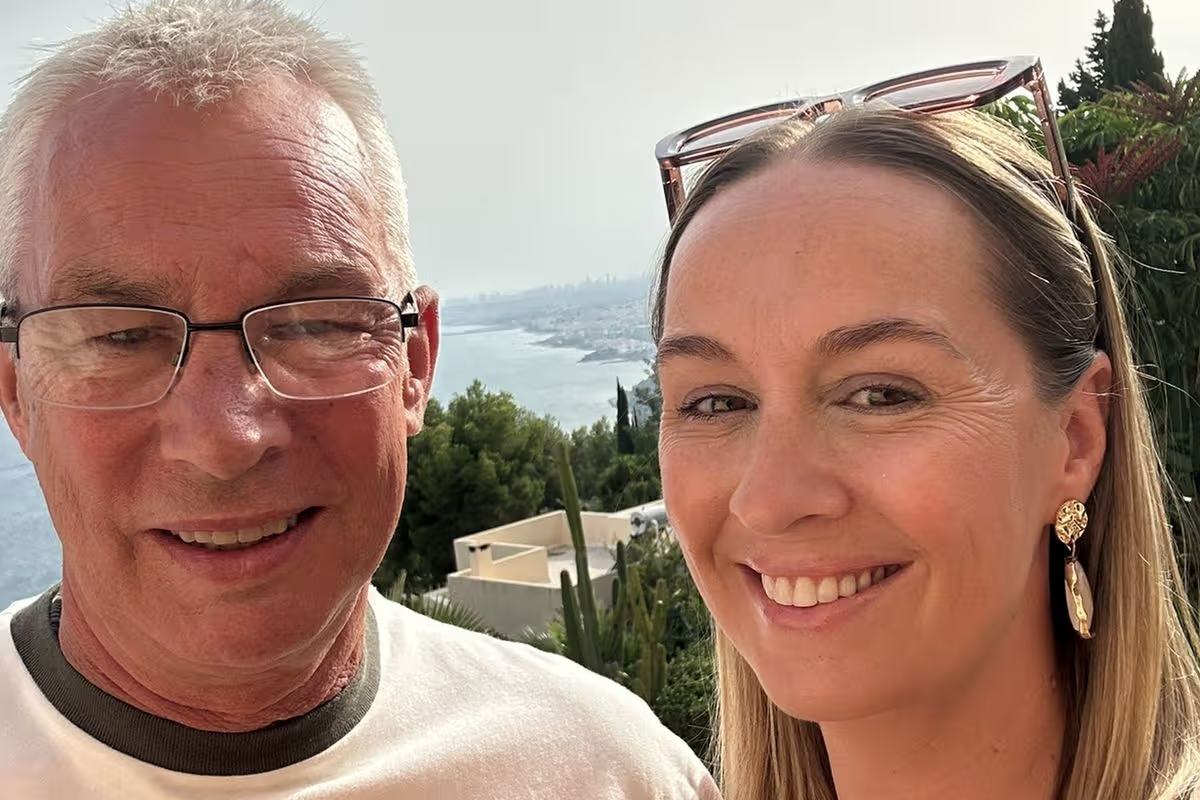
Kevin and daughter Natalie (Kennedy News and Media)
A dad faces a £30,000 medical bill after falling ill on holiday because he didn’t declare a common ailment on his travel insurance. Kevin Turner flew to Alicante with his partner Joy Peck in May after feeling poorly the week before with a chest infection.
After taking antibiotics and steroids, the 63-year-old said he felt assured by his GP that he was ‘good to go’ and was prescribed more medication to account for being away. The retired painter and decorator felt ‘off’ when he landed but put it down to the journey. It was when his chest pains worsened the following day that Joy called an ambulance.
After being rushed to a hospital in Alicante, doctors discovered Kevin had a pierced lung and pneumonia and he was put in intensive care. Despite having holiday insurance, Kevin’s family says his medical bills aren’t covered as he didn’t declare his chest infection before travelling – meaning he faces bills of at least £30,000.
Kevin’s daughters Sam Turner, 44, and Natalie Fowell, 40, have set up a GoFundMe to help pay his medical bills and get him home to the UK. Sam, from Winsford, Cheshire, said: “It was really, really scary because obviously you’re helpless. You’re over here and you don’t know what’s going on.
“He did have an existing chest infection that he had visited the doctor for that week and had been given antibiotics and steroids. He did also say that he was due to go on holiday and there were no warnings or concerns around that [from the GP] so he thought he was good to go.
“They just gave him enough medication for the fact that he was going away and that was it. He’d arrived at midnight, had something to eat and drink and gone to bed, feeling a bit off but just put it down to travel. It got progressively worse from there.
“By the next day the pains were just so much that in hindsight he probably already had pneumonia when he got on the flight, but he wasn’t aware. Joy rang me from the hotel and said ‘I’ve had to call him an ambulance, he’s not good’ and we were like ‘right, ok get him to the hospital’, trying to get updates all the time.
“They [doctors] said he had a pierced lung and chest and stomach pain where it’s believed air and gases had built up and had to be drained.”
Wedding co-ordinator Sam flew out to be with her dad on May 30 to be by his bedside. After contacting the insurance company, Sam says she was told that Kevin’s medical bills wouldn’t be covered as he didn’t declare the ongoing chest infection on his travel insurance before flying.
Sam said: “It very much looks like it’s a case of, the small print says if there are any significant health changes up to the date of travel then you must notify them. He’s still in intensive care and we’re trying to find out what the prognosis is.
“He hasn’t been out of bed, he hasn’t used his legs or feet and he’s just really worried because he’s lost all feeling in them. The insurance took about two weeks for them to decide that they weren’t going to pay out. It involved a lot of chasing from us.
“I would always say read the small print of the insurance document, make sure you go with a reputable company and look at their reviews.”
Martin Lewis’s team has issued urgent advice for the summer
Martin Lewis’s MoneySavingExpert has issued urgent advice for anyone travelling to Europe this summer, as more than two million people will see a key document expire before they head off. MoneySavingExpert.com has a holiday warning for anyone visiting countries including France, Spain, Portugal, Greece and Italy.
Martin’s team has urged holidaymakers to check if their European Health Insurance Card (EHIC) or Global Health Insurance Card (GHIC) is still valid, as 1,285,250 GHICs and 926,954 EHICs are set to expire this year. The EHIC is being replaced by the new Global Health Insurance Card (GHIC). These cards are totally free to get and they give you access to state-run hospitals or GPs in EU countries for the same price as a local.
They last for up to five years, and the final EHICs issued after Brexit are expiring this year. The MSE newsletter reads: “These cards give access to state-run hospitals or GPs in EU countries for the same price as a local – so if it’s free for them, it’s free for you.”
You need to check your card for the expiry date, and apply for a new one if necessary.
The team said: “You’ll need to get a new card – it’s now called a GHIC (as it’s been rebranded a ‘Global’ card, though in essence still covers mostly the same European countries).” However, MSE also warned people not to fall for websites that charge you for these cards.
MSE said: “Never pay to get an EHIC or GHIC. It is always free, beware shyster sites trying to charge you for ‘fast tracks’ or other stuff, that’s nonsense. See how to safely get a free GHIC.” If you have an existing EHIC, it remains valid until the expiry date runs out – after this, you’ll need to apply for a GHIC card.”
The NHS explains: “The UK Global Health Insurance Card (GHIC) lets you get necessary state healthcare in the European Economic Area (EEA), and some other countries, on the same basis as a resident of that country. This may be free or it may require a payment equivalent to that which a local resident would pay.
“The UK GHIC has replaced the existing European Health Insurance Card (EHIC). If you have an existing EHIC you can continue to use it until the expiry date on the card. Once it expires, you’ll need to apply for a UK GHIC to replace it.
“The ‘Global Health Insurance Card’ (GHIC) and its predecessor, the EHIC, give access to state-run hospitals or GPs, mainly in European countries, for the same price as a local. So if they don’t pay, you don’t either. Over two million expire this year, check yours.”
A UK GHIC is free, and you can apply through the NHS website. The NHS advises avoiding unofficial websites, which may charge an application fee. People can apply for a new card up to nine months before their current card expires.
The NHS says: “Every member of your family needs their own card. You can add your spouse, civil partner and children to your application when you apply. You must enter your own details first and apply for any additional cards when prompted.”
Watch out for blue, red or dark patches on your skin
A doctor has explained the red flag warning signs that should never be ignored after a flight. Millions of people will jet off on their summer holidays in the coming months and a vascular consultant says holidaymakers should be aware of tell-tale signs before they become a medical emergency.
Dr Mark Regi, Consultant Interventional Radiologist at VeinCentre, said: “Air travel, particularly long-haul flights, can put extra strain on your circulatory system as most people will have limited movement for a long period of time. People with poor circulation or varicose veins can be at greater risk of deep vein thrombosis (DVT), a blood clot usually found in the leg.
“For most people, a walk around the cabin and some compression socks will do the trick, but it’s always worth knowing the signs to look out for that something potentially serious could be happening.”
Last year influencer Molly-Mae Hague told how she feared she had suffered a blood clot after experiencing severe pain in her leg following a flight home from Dubai. After rushing to hospital doctors gave the former Love Island star the all clear. She told fans: “It needs to be taken so much more seriously because it can happen to anyone at any age.”
Symptoms of DVT include a throbbing pain in the calf or thigh, swelling in one leg, swollen veins and the skin around the leg becoming red, blue or darkened. Dr Regi said: “If any swelling doesn’t ease after a flight and you experience a dull ache or heavy cramping then it’s always worth speaking to a doctor.
“DVT can be serious so keep a close eye on any changes that don’t settle down. If you experience shortness of breath or chest pain, together with these symptoms, seek medical advice straight away as this could be a sign a clot has travelled to the lung.”
Dr Regi continued: “People who already know they have poor circulation, for example if they have varicose veins, should try and move around as much as is practical during any long-haul flights. That’s because twisted or bulging veins can struggle to circulate blood effectively during extended periods of immobility.
“I always recommend investing in medical-grade compression stockings if you have varicose veins. You should also keep hydrated and keep alcohol and caffeinated drinks to a minimum. Exercises such as calf raises and ankle pumps can also keep blood pumping around your legs when you can’t get up for a wander.”
Dr Regi says varicose veins are often seen as purely a cosmetic issue, but they should be taken seriously and treatment is available. He said: “Varicose veins mean they are not working as they should. Treatments are available which focus on the underlying venous insufficiency to alleviate symptoms and prevent complications. Endovenous Laser Ablation (EVLA) is a minimally invasive procedure that uses laser energy to close off affected veins, treating the root cause of varicose veins.”
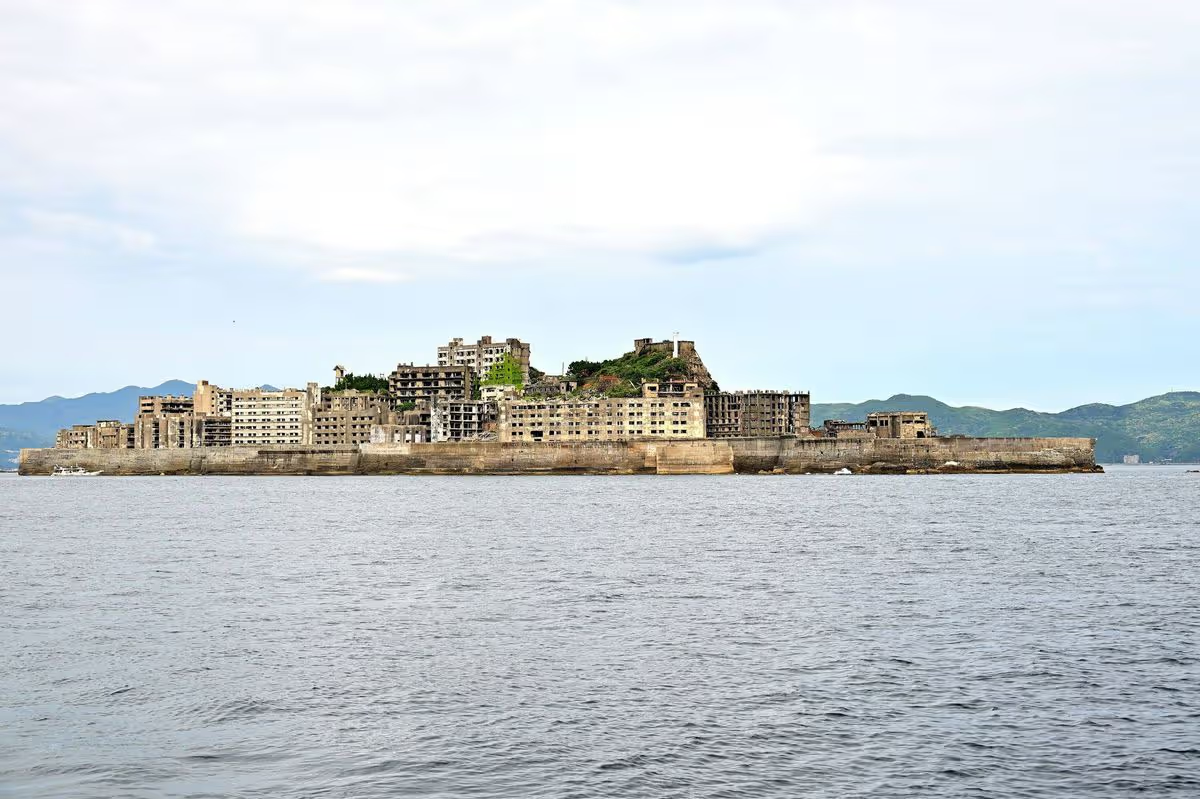
The island’s dark history of forced labour and harrowing conditions for prisoners of war has left a haunting legacy
This island has been abandoned for decades(Image: Getty)
In the late 19th century, this isolated Japanese island was a bustling town fuelled by its coal-mining industry. Today, it’s gradually being swallowed by the sea and reclaimed by nature, but given the island’s sinister past, perhaps it’s for the best that this once-thriving community has fallen into silence.
Hashima Island sits roughly 15 kilometres off Nagasaki, and was formerly a mining settlement. At its height in the late 1950s, the island housed more than 5,000 residents who lived in its towering apartment blocks — the ruins of which remain visible today.
Initially renowned for its undersea coal mines, the island also harbours a deeply troubling history.
The island was purchased by Mitsubishi in the late 19th century, and in 1916, work commenced on apartment blocks to house workers. There was a school, a kindergarten, a community centre and a hospital.
For leisure, residents could head to the cinema or visit the numerous shops, reports the Express.
Following the end of World War 2, Chinese and Korean prisoners of war were forced to labour on the island, either erecting buildings or toiling in the mines. These prisoners endured appalling and perilous conditions under Mitsubishi’s control.
Many perished from exhaustion and starvation — the precise death toll on the island ranges from 137 to as many as 1,300.
The people who laboured here dubbed the island “Jail Island” or even “Hell Island” — a stark contrast to the tranquil mining town it seemed to be. By the 1970s, coal reserves had largely run dry and the industry was in terminal decline.
This prompted many residents to abandon the island, and by the mid-70s, the mine had shut its doors for good, leaving the island completely deserted.
In 2009, Japan put forward a request for the island to be added to the UNESCO World Heritage List.
The move drew sharp criticism from the governments of North and South Korea and China, with Seoul arguing it would “violate the dignity of the survivors of forced labour”.
Eventually, South Korea and Japan struck a deal allowing the island to be included on the list, on the condition that Japan provided information acknowledging the use of forced labour.
However, in 2021, it emerged that Japan had failed to honour its side of the agreement, having not displayed adequate information regarding the use of forced labour.
The museum in Nagasaki, which documents the island’s history, reportedly contains no testimonies from Koreans about forced labour or discrimination, and the sole Korean testimony on display actually denies that forced labour was ever used.
The looming impact of federal Medicaid cuts has reignited a long-simmering, costly battle between California’s medical industry and one of its largest health worker unions.
SEIU-United Healthcare Workers West, with about 120,000 members, has put forward two ballot initiatives to cap the pay of medical executives and require community clinics to spend the bulk of their revenues on patient care.
The California Hospital Assn. has responded with its own ballot proposal that would make it tougher for unions to spend money on political initiatives in the future. It would require approval by a union’s rank-and-file membership for any spending of $1 million or more on statewide measures, or $100,000 or more on local ones.
The competing measures, which have drawn enough verified signatures to qualify for the November ballot, come at a time when the rising cost of healthcare is emerging as a top voter concern.
The Service Employees International Union affiliate has seized upon affordability angst to resurrect a proposal for a cap on healthcare executive compensation, which it has failed to achieve multiple times before. The proposed measure garnered more than 1 million petition signatures.
“This initiative reflects the serious crisis we face and that affordability is a real thing,” said Vikas Saini, president of the Lown Institute, a Massachusetts-based healthcare think tank. “I think it also reflects grassroots anger and a desire to do something.”
Mikey Vaughn, a certified nursing assistant at Cedars-Sinai Medical Center, said the hospital often lacks supplies and staffing levels that he and his colleagues need in order to do their jobs effectively and without undue stress, despite its reputation as the go-to place for the rich and famous.
“The executive pay initiative would, I hope, be used to hire staff and to actually provide better resources for our patients,” he said. Vaughn is also a member of SEIU-UHW’s executive board and political committee.
Thomas Priselac, then-president and CEO of Cedars-Sinai Medical Center, made $8.8 million in fiscal year 2024, according to the organization’s most recent available federal tax filing. Kaiser Permanente’s CEO, Gregory Adams, made nearly $13 million in 2024. Warner Thomas, head of Sutter Health, made just under $12 million.
Cedars-Sinai spokesperson Duke Helfand said the hospital would be unable to recruit and retain physicians, nurses, and specialists if the measure passed, dramatically impairing its ability to provide healthcare.
“Such a scenario would be disastrous not only for Cedars-Sinai but for hospitals across Los Angeles and California,” Helfand said.
The union wants to cap compensation at $450,000 a year for senior hospital and medical group executives, as well as other administrative and managerial staff. However, the initiative does not stipulate how dollars diverted from payroll must be spent.
Carmela Coyle, CEO of the hospital association, called the measure a cynical political ploy.
“It’s bad policy and it’s going to have bad consequences across California,” she said.
Glenn Melnick, a healthcare economist at the University of Southern California, said even if the initiative were fully implemented and pay cuts enacted, he doubts it would reduce the cost of healthcare for patients.
SEIU-UHW does not have an estimated total amount the initiative would claw back from pay packages that exceed the limit.
Opponents of the initiative note that it doesn’t just target executive pay; it would affect medical practitioners who are also managers. That could include chief medical officers and chief nursing officers, as well as heads of surgery, emergency rooms, oncology, obstetrics, cardiology and other specialties, they say.
It would be up to each hospital, health system and physician group to report which staff members exceed the cap and by how much.
Ultimately, who is subject to the pay cap “probably will have to be battled out in court,” Coyle said . “That’s why we are throwing everything we can at it.”
The second SEIU-UHW ballot initiative, on community clinics, is already in court. The California Primary Care Assn., which represents clinics, filed a federal lawsuit in April seeking to invalidate it before it reaches the November ballot.
The proposed measure would require federally designated community clinics to spend at least 90% of their revenues on activities directly related to their mission of providing care for low-income populations. If it were to pass, more than 90% of those clinic organizations would be on the hook for penalties totaling $1.7 billion in the first year alone and “would face similarly crippling penalties every year,” according to a report commissioned by the primary care association and conducted by the Berkeley Research Group, an international consulting company.
Louise McCarthy, president and CEO of the Community Clinic Assn. of Los Angeles County, said many pivotal services the clinics provide — such as translation and transportation — would likely not be counted toward the spending requirement.
“They are targeting a group of what they see as employers and we see as the safety net,” she said.
The lawsuit cites the harm to clinics and claims the proposed spending requirement would interfere with federal authority.
Renée Saldaña, a spokesperson for SEIU-UHW, characterized the lawsuit against the initiative as “a really desperate attempt by the clinic industry to try and avoid accountability.”
SEIU-UHW, proud of its political activism, is also behind a controversial billionaire tax proposal that would impose a one-time 5% levy on California residents with fortunes over $1 billion to backfill the funding gap created by federal cuts coming down the pike under Republicans’ One Big Beautiful Bill Act. The law, passed last July and signed by President Trump, is projected to squeeze nearly $1 trillion from the Medicaid health coverage program for low-income people by 2034, including as much as $30 billion annually in California.
The hospital association, the community clinic group and the California Medical Assn., which represents physicians, are neutral on the wealth tax proposal thus far. But Saldaña said all three of the union’s ballot proposals tie into an overarching strategy to counter the widening healthcare disparities caused by the federal law.
“We believe the primary concern of healthcare providers, including executives, should be to serve the community, heal patients, and not be in healthcare just to enrich themselves,” she said on the proposed pay cap.
Over the years, the union has submitted dozens of local and statewide ballot initiatives, including ones to cap the pay of hospital executives, regulate dialysis clinics, and raise the minimum wage of healthcare workers.
The hospital association calculates that SEIU-UHW has spent nearly $125 million on local and statewide initiatives since 2012. But healthcare industry groups have spent far more opposing them. The hospital association data shows that the union spent nearly $36 million on three ballot proposals to regulate the dialysis industry, but dialysis companies poured in $302 million to defeat them, according to state campaign finance records.
The union’s ongoing political efforts “threaten patient access to quality health care,” according to the hospital association’s ballot initiative, which could limit how much unions spend on future ballot measures.
Saldaña hinted at a possible lawsuit should that measure pass, saying “we don’t see the legal viability” of it. The proposal, she said, is an attempt “to silence the front-line healthcare workers.”
Ultimately, a ballot initiative won’t cure the ills that plague healthcare in the United States, said the Lown Institute’s Saini. What’s needed, he said, is “an evaluation and reimagination of healthcare.”
Wolfson writes for KFF Health News, anational newsroom that produces in-depth journalism about health issues and is one of the core operating programs at KFF — an independent source of health policy research, polling, and journalism.









![evacuated, and patients were discharged hours before the attack, following increased tensions and after MSF received information about a possible attack against the city. [Courtesy of MSF]](https://i0.wp.com/occasionaldigest.com/wp-content/uploads/2026/06/MSF366127High-1781523402.jpg?w=640&ssl=1)

![Reports and satellite imagery point to burned villages and mass displacement across Jonglei. [Satellite imagery © Vantor]](https://i0.wp.com/occasionaldigest.com/wp-content/uploads/2026/06/6970434469048635518-copy-1781418505.jpg?w=640&ssl=1)