Hospitals

Latest Foreign Office advice with ‘at least 80 deaths’ as Ebola sweeps Democratic Republic of the Congo

Multiple burials have been reported by locals

At least 80 deaths have been reported as a country battles an outbreak of a highly contagious disease.

The deaths were confirmed in the Democratic Republic of the Congo’s new Ebola disease outbreak in the eastern Ituri province, authorities said, as health workers raced to intensify screening and contact tracing to contain the disease. Officials first announced the outbreak on Friday, with 65 deaths and 246 suspected cases. Meanwhile, journalists in Ituri’s capital, Bunia, interviewed local people who recounted their fears and constant burials.

“Every day, people are dying … and this has been going on for about a week. In a single day, we bury two, three, or even more people,” said Jean Marc Asimwe, a resident of Bunia. “At this point, we don’t really know what kind of disease it is.”

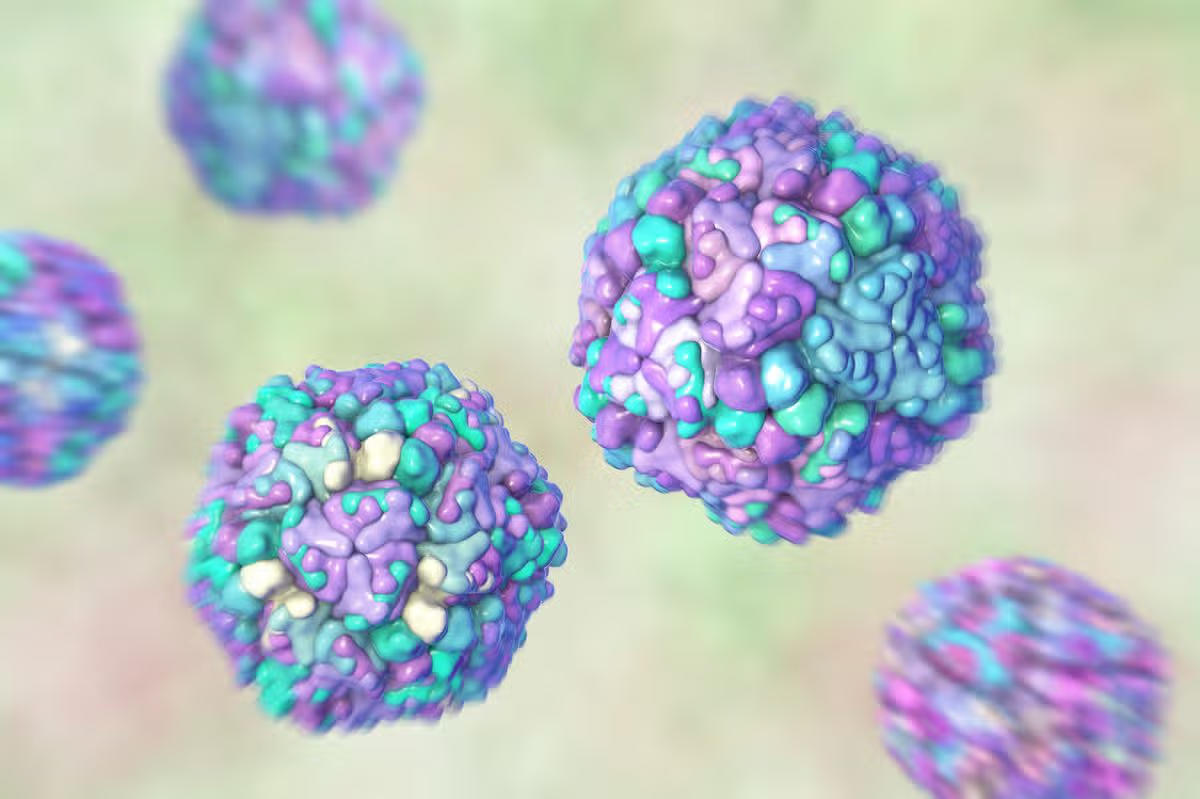
Congolese health minister Samuel-Roger Kamba said late on Friday that there have been eight laboratory-confirmed cases, among them four deaths. Test results confirmed the Bundibugyo virus, a variant of the disease that has been less prominent in Congo’s past outbreaks.

This is the country’s 17th outbreak since Ebola first emerged in the country in 1976, the Associated Press reproted. Ebola is highly contagious and can be contracted through bodily fluids such as vomit, blood, or semen. The disease it causes is rare, but severe and often fatal.

The suspected index case in the latest outbreak is a nurse who died at a hospital in Bunia, Mr Kamba said, with the case dating back three weeks to April 24. He did not say whether samples from the nurse were tested, but said the person presented symptoms suggestive of Ebola.

DR Congo has experience in managing Ebola outbreaks, but often faces logistical challenges in getting expertise and supplies to affected regions. As Africa’s second-largest country by land area, Congo’s provinces are far from one another and mostly battling conflict. Ituri, for instance, is around 620 miles from the nation’s capital, Kinshasa, and is ravaged by violence from Islamic State-backed militants.

The disease is so far confirmed in three health zones in the Ituri province, including the capital city, Bunia, as well as in Rwampara and Mongwalu where the outbreak is concentrated.

Foreign Office advice for Democratic Republic of the Congo

As of Saturday afternoon, the Foreign, Commonwealth and Development Office had not given specific advice about travel to the Democratic Republic of the Congo in regards to the Ebola outbreak.

Its current advice, which it said remained valid on May 16, was that UK citizens should avoid travel to muliple parts of the country due to political instability.

It said: “If you are in North or South Kivu and judge it safe to do so, and if routes are available, you should leave. M23 rebels and Rwanda Defence Forces (RDF) have captured the cities of Goma and Bukavu and the surrounding areas in North and South Kivu. M23 rebels and RDF captured the city of Uvira in December 2025, and then withdrew from the city in January 2026, though clashes continue in the surrounding areas. The situation remains highly unstable and unpredictable. Routes to depart Uvira, Goma and Bukavu are limited and may change at short notice.

“The border crossings between Rwanda and the DRC at Gisenyi-Goma and Ruzizi-Bukavu could close at short notice. Goma and Bukavu airports have been attacked and commercial flights are no longer operating from the airports.

“Support from the UK government is severely limited outside Kinshasa. You should not assume that FCDO will be able to provide assistance to leave the country in the event of serious unrest or crisis.”

The FCDO advises against all but essential travel to:

  • The districts of N’djili and Kimbanseke in Kinshasa city south of the main access road to N’djili airport, in Nsele commune
  • The N1 road in Kinshasa Province, between and including Menkao to the west, Kenge to the east, the border of Mai-Ndombe province to the north, and 10km to the south

The FCDO advises against all travel to within 50km of the border with the Central African Republic and to the provinces of:

  • Haut-Uélé and Ituri, including the entire DRC-South Sudan border
  • North Kivu
  • South Kivu
  • Maniema
  • Tanganyika
  • Haut-Lomami

It also advises against all travel to the Kwamouth territory of Mai-Ndombe Province. This is between, and including, the towns of Kwamouth, Bandundu and the southern border of Mai-Ndombe province. Further, it advises against all travel to the province of Kasaï Oriental and against all but essential travel to the provinces of Kasaï and Kasaï Central and to Bangoka International Airport in Kisangani.

Source link

Judge blocks Trump administration’s demand for Rhode Island hospital’s records of transgender kids

A federal judge has blocked the Trump administration’s sweeping demands for confidential transgender patient information from Rhode Island’s largest hospital that provides gender-affirming care to minors.

U.S. District Judge Mary McElroy’s Wednesday ruling is the latest setback for the U.S. Department of Justice, where at least seven other federal courts have agreed to quash or limit the expansive civil subpoenas sent to more than 20 doctors and hospitals last summer.

McElroy’s decision also echoed similar concerns raised by judges surrounding the expansive scope of the subpoenas, describing the Justice Department as having “immense prosecutorial authority and discretion” but no longer trustworthy it will enforce its power fairly and honestly.

“DOJ has proven unworthy of this trust at every point in this case,” McElroy wrote.

A Justice Department spokesperson said Thursday that it would appeal and continue with its investigations.

“The Rhode Island court’s attack on the professionalism and integrity of DOJ attorneys is outrageous and unjustified,” the department said.

According to the subpoenas, the Justice Department had demanded Rhode Island Hospital hand over the birth dates, Social Security numbers and addresses of every patient who received transgender care over the past five years. It also included instructions to provide all documents detailing adverse side effects in minor patients who received gender-related care, assessments that formed the basis for prescribing puberty blockers or hormone therapy, as well as patient intake forms and guardian authorization.

The Justice Department has repeatedly argued that the information sought in the subpoenas is needed to investigate possible fraud or unlawful off-label promotion of drugs. Most recently during a hearing in Rhode Island, the DOJ said that the investigation was taking place in the Northern District of Texas, where the court’s chief judge ordered Rhode Island Hospital to comply with the subpoena before McElroy’s decision voided the subpoena.

Assistant U.S. Atty. Brantley Mayers told McElroy during the hearing that the Justice Department is investigating potential “misbranding” of drugs approved by the U.S. Food and Drug Administration, such as puberty blockers for young people. While off-label prescribing is legal, Mayers said that the DOJ is concerned that pharmaceutical companies are providing “financial incentives” to Rhode Island doctors to prescribe the drugs.

The subpoenas were crucial in getting the names of children and their families so the Justice Department could interview them.

McElroy rejected that argument.

“The administration has publicly characterized gender-affirming care for minors as abuse, directed the DOJ to bring its practice to an end, and celebrated when hospitals curtailed such programs as a result of this subpoena campaign,” McElroy wrote.

The Rhode Island decision is the latest development in the fight over transgender youth health records. Earlier this week, 11 families filed a class-action lawsuit seeking to block the Justice Department from obtaining the documents. The lawsuit, filed in Maryland’s federal court, is backed by families with transgender children who have received care from hospitals across the U.S.

And separately, a New York hospital announced that it received a grand jury subpoena from federal prosecutors in Texas seeking information about children who received gender-affirming care and the medical providers who administered it.

NYU Langone is the first hospital system to publicly acknowledge receiving a subpoena for such records as part of a federal criminal investigation. But the institution said in its statement Tuesday it was one of several that received a subpoena out of the Northern District of Texas on May 7. It said it was deciding on how to respond.

“The government cannot use its subpoena power to intimidate families out of seeking lawful medical care. To trans and gender-diverse children and their families, we want you to know that you are valued, you are not alone,” Kevin Love Hubbard, an attorney with the Lawyers’ Committee of Rhode Island, who represented the plaintiffs in the case, said in a statement.

Gender-affirming care includes a range of medical and mental health services to support a person’s gender identity, including when it’s different from the sex they were assigned at birth. It may include counseling, medications that block puberty, hormone therapy to produce physical changes or surgeries to transform chests and genitals, although those are rare for minors.

Most major medical groups say access to the treatment is important for those with gender dysphoria and see gender as existing along a spectrum.

At least 27 states have adopted laws restricting or banning the care for minors, while several others have adopted laws or policies protecting access to transgender healthcare.

Kruesi writes for the Associated Press.

Source link

BAFTA TV winner takes swipe at the BBC during live show over Gaza documentary decision

A BAFTA winner broke the fourth wall during the awards’ ceremony to ask BBC bosses if they would cut footage of Gaza: Doctors Under Attack winning the prize for best film about current affairs

A BAFTA winner took aim at the BBC during the ceremony after a documentary about Gaza triumphed at the prestigious television awards ceremony.

The current affairs film Gaza: Doctors Under Attack picked up a major prize at the BAFTA Television Awards tonight (Sunday, 10 May). But the moment quickly turned political when executive producer Ben De Pear used his acceptance speech to question the broadcaster that originally commissioned the programme.

The one-off documentary, which features testimonies from Palestinian healthcare workers and documents attacks on medical facilities in Gaza, was initially commissioned by the BBC before being shelved over impartiality concerns. It was later broadcast by Channel 4 instead.

When he took to the stage after the film won in the current affairs category, Ben thanked the journalists involved in making the documentary before addressing the BBC directly.

He fired his parting shot, asking: “Finally, just a question for the BBC: given you dropped our film, will you drop us from the Bafta screening later tonight?”

BBC One was responsible for the TV coverage of the BAFTA Awards night, but did not air the ceremony live. The reception of each award was broadcast to the public around two hours after the actual events took place.

Ben was joined on stage by journalist Ramita Navia, who delivered a powerful speech about the findings of the investigation featured in the film.

He shared: ” Israel has killed over 47,000 children and women in Gaza. So far, Israel has bombed and targeted every single one of Gaza’s hospitals.

“It’s killed over 1,700 Palestinian doctors and health care workers. It has imprisoned over 400 in what the UN now calls the medicide. These are the findings of our investigation that the BBC paid for but refused to show.

“But we refuse to be silenced and censored. We thank Channel 4 for showing this film. Right now, there are over 80 Palestinian doctors and healthcare workers being held in detention centres that Israeli human rights groups describe as torture camps. We dedicate this award to them.”

The documentary was originally commissioned over a year ago by the BBC via their independent production company Basement Films.

However, the broadcaster delayed its release while an internal review into a separate Gaza-related programme was carried out. After that review process, the corporation ultimately decided not to air the film.

At the time, the BBC said it had concerns the programme could create “a perception of partiality that would not meet the high standards that the public rightly expect”.

The corporation also confirmed that production on the documentary had been paused while the review was was being conducted. Despite dropping the programme, the BBC said it remained committed to reporting on the conflict.

In a statement previously issued by the BBC, the broadcaster said it was “committed to covering the conflict in Gaza and has produced powerful coverage”.

Like this story? For more of the latest showbiz news and gossip, follow Mirror Celebs on TikTok , Snapchat , Instagram , Twitter , Facebook , YouTube and Threads .

Source link

Hantavirus Tenerife travel update issued by World Health Organisation after cruise ship outbreak

The island is a popular holiday destination for Brits

The World Health Organisation (WHO) has moved to reassure concerned residents in Tenerife that they will not come into contact with passengers from a hantavirus-affected cruise ship due to arrive on the island. Nearly 1million people call the island home, which also serves as a major holiday destination for British tourists and visitors from across Europe.

The UN health body confirmed there had been six cases of hantavirus linked to the MV Hondius vessel, with four patients currently receiving hospital treatment. It revealed that a total of eight cases, including three fatalities, had been recorded — though one suspected case has since been ruled out after returning a negative hantavirus test.

Around 22 British passengers and crew members aboard the ship are due to arrive in Tenerife on Sunday, with plans to fly them back to the UK on the same day. Representatives from the UK Health Security Agency (UKHSA) and the Foreign Office will meet the MV Hondius when it arrives in Spain’s Canary Islands, with British nationals on board undergoing hantavirus testing before disembarking.

Those who test negative and show no symptoms will be transported directly to a specially arranged repatriation flight with medical staff on board. British citizens returning home will be required to self-isolate for 45 days and will be prohibited from using public transport to reach their residences. The WHO confirmed on Saturday that no symptomatic passengers were currently aboard the vessel. In a letter to the residents of Tenerife, WHO director-general Dr Tedros Adhanom Ghebreyesus acknowledged locals were “worried”.

READ MORE: Parents using baby product told to ‘stop immediately’ after urgent recallREAD MORE: Ryanair passengers with flights booked to Portugal issued EES update

The Ethiopian public health official described the virus as “serious” but stressed the outbreak was “not another Covid” and the “current public health risk from hantavirus remains low”.

He explained: “Spain’s authorities have prepared a careful, step-by-step plan: passengers will be ferried ashore at the industrial port of Granadilla, far from residential areas, in sealed, guarded vehicles, through a completely cordoned-off corridor, and repatriated directly to their home countries.

“You will not encounter them. Your families will not encounter them. Nearly 150 people from 23 countries have been at sea for weeks, some of them grieving, all of them frightened, all of them longing for home. Tenerife has been chosen because it has the medical capacity, the infrastructure, and the humanity to help them reach safety.”

Two British men are currently being treated for hantavirus in the Netherlands and Johannesburg, South Africa, while a third British man with symptoms is being cared for on the isolated South Atlantic island of Tristan da Cunha. The Foreign Office confirmed that a total of 30 passengers and crew aboard the MV Hondius are British nationals, with 22 still remaining on the vessel. The outbreak has been linked to a birdwatching trip in Argentina, which two of the passengers attended prior to embarking on the ship.

Source link

BBC Ambulance paramedic breaks down in tears as he makes devastating admission

BBC Ambulance took an emotional turn as one paramedic was brought to tears

A BBC Ambulance paramedic was left sobbing as he made a heartbreaking admission.

Healthcare professional Jeff tackled an emergency call that he said “hit close to home” as his dad passed away from a similar issue he had to take on.

Fans of the BBC hit show see real-life emergencies and high-pressure environments as frontline workers give everything they have to save lives in the most critical of circumstances.

During tonight’s (April 15) instalment, which is the final episode of the season, Castleford crew paramedic Jeff and associate ambulance practitioner Eddie receive a call to attend to a 51-year-old man, who has been having trouble getting his dialysis most of the week.

The duo rushed to the scene and after arriving it was clear Dale was uncomfortable as they found him lying in his bed struggling to move.

Dale’s mum explained to Jeff and Eddie that he has been feeling drowsy, has been suffering with pain in his chest and was being sick all morning.

After running some checks, Jeff quickly informed his mum that if they had left it any longer he would have gone into cardiac arrest. Acting quick, Jeff and Eddie rushed Dale to hospital and made sure he got treated immediately.

While sitting in the ambulance, things took an emotional turn as Jeff broke down in tears and revealed: “Quite close to home for me because my dad passed away from renal failure. So it’s quite close to home for me.”

Jeff struggled to control his emotions as he stepped out of the car to have a moment to himself.

Stepping back into the vehicle, he explained to colleague Eddie: “My dad went into renal failure. British National in South Africa, during COVID as well so I couldn’t go and see him and he passed away before he really knew what was happening.”

Visibly moved, he continued: “I think as a bloke sometimes emotionally we don’t deal with what’s going on in the background. The baggage becomes quite heavy until you get to the point where it’s overflowing and your whole world comes crumbling down.”

Jeff added: “I think half the problem is that I don’t do good talking about emotions. People deal with grief in different ways. It’s the little things that can trigger it and it can come out of the blue. My dad dying has definitely been life changing for me.”

At the end of the show it was revealed that after a long illness and multiple hospital admissions Dale died 6 months later

You can catch up on Ambulance on BBC iPlayer

Source link