Hood

Pentagon says the firing squad execution of Fort Hood shooter Nidal Malik Hasan will be livestreamed

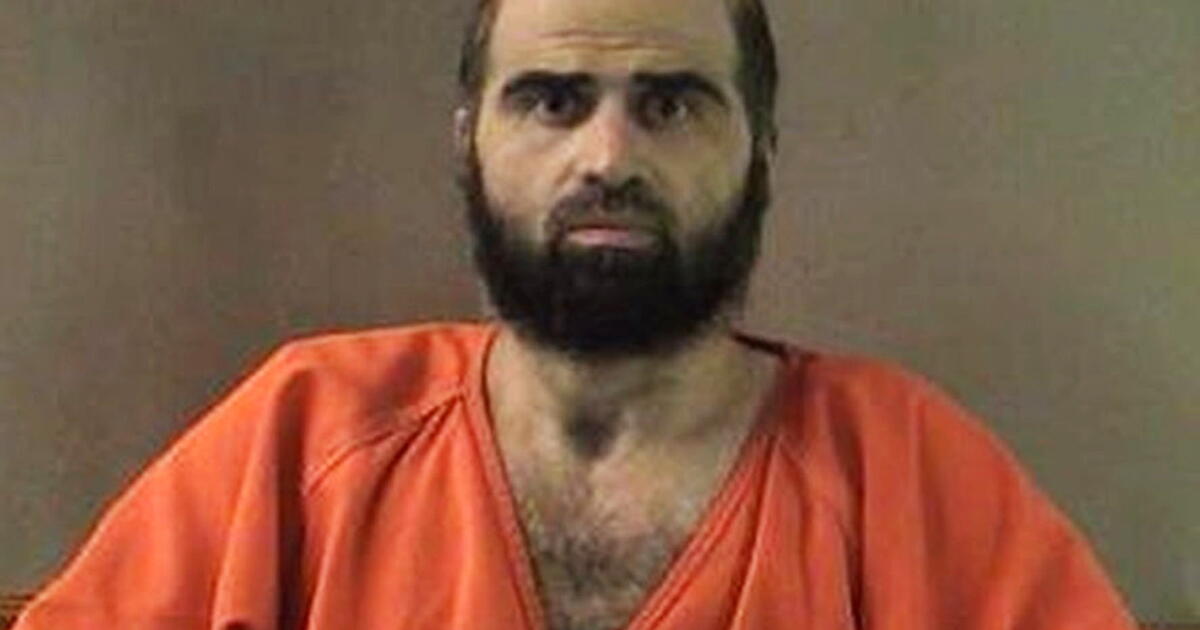
The Pentagon says the firing squad execution of Fort Hood shooter Nidal Malik Hasan will be livestreamed after Defense Secretary Pete Hegseth said the execution would be “public.”

Hegseth, speaking to the conservative TV outlet Real America’s Voice News on Wednesday, said the execution of Hasan will take place at Fort Hood on Dec. 3. Hasan was convicted of killing 13 people and injuring 32 others in a shooting at the military base in 2009.

“We’ll make sure that people are able to watch it, that it’s public,” Hegseth said.

Hegseth spoke to the outlet aboard the USS Abraham Lincoln aircraft carrier while visiting the long-deployed crew, who supported the Iran war, before their arrival at their home port in San Diego.

When asked if Hasan had made any final requests or reached out to the Trump administration, Hegseth simply replied: “Don’t care. We’ll see him on December 3rd.”

Officials in the Pentagon clarified Thursday that the execution will be livestreamed and that more details would follow.

Pentagon spokesperson Sean Parnell had said Monday that President Trump had approved the execution of Hasan.

Trump has previously been critical of public executions in Iran, at times using the possibility of protesters being killed by the Iranian government as a possible rationale for military action. Those warnings preceded his ultimate choice to attack Iran at the end of February over its ballistic missiles and the risk of it developing nuclear weapons.

“We’ve been told that the killing in Iran is stopping,” Trump told reporters on Jan. 14 of this year. “It’s stopping and there’s no plan for executions.”

He repeated that claim on Jan. 20 at a White House press briefing, saying: “We let them know that if that happens, that will be a very bad day for them. And they decided not to do it. They didn’t hang the people.”

Slightly more than a month later in his State of the Union address, Trump said, “We stopped them from hanging a lot of them with the threat of serious violence.”

The White House on Thursday immediately referred questions about the plans for the livestreamed execution to the Pentagon.

However, experts on military law said Hasan could choose to resist execution and file a habeas petition in civilian court, which could significantly delay the execution.

“It frankly might outlast the current administration, and who knows if the next one will have the same penchant for executions,” said Eugene R. Fidell, a visiting lecturer at Yale Law School specializing in military law.

Hasan, an Army psychiatrist who held the rank of major, walked into a medical building where soldiers were waiting in long lines to receive immunizations and medical clearance for deployment. He shouted “Allahu akbar” — Arabic for “God is great!” — and opened fire with a laser-sighted handgun.

During the trial it was revealed that Hasan spent weeks planning the deadly attack, and his preparation included videotaping a sales clerk showing him how to change the magazine on the pistol that he purchased. He would later go to a gun range outside Austin and ask for advice on how to reload with speed and precision from an instructor.

Soldiers later testified that Hasan’s rapid reloading made it all but impossible to stop the shooting. Investigators recovered 146 shell casings inside the building and dozens more outside, where Hasan shot at the backs of soldiers fleeing toward the parking lot.

Hasan said it was an effort to stop them from going to Afghanistan and killing his fellow Muslims. A military judge barred him from presenting that as a defense during his trial. Hasan made almost no effort to defend himself in court, telling jurors when he acted as his own counsel that evidence would show he was the shooter and describing himself as a soldier who had “switched sides.”

Hegseth said the military hasn’t executed a servicemember by firing squad since World War II. The last military execution took place on April 13, 1961, when Army Pvt. John Bennett was executed by hanging.

Toropin writes for the Associated Press.
Source link

Fort Hood shooter to be executed by firing squad: All to know | Crime News

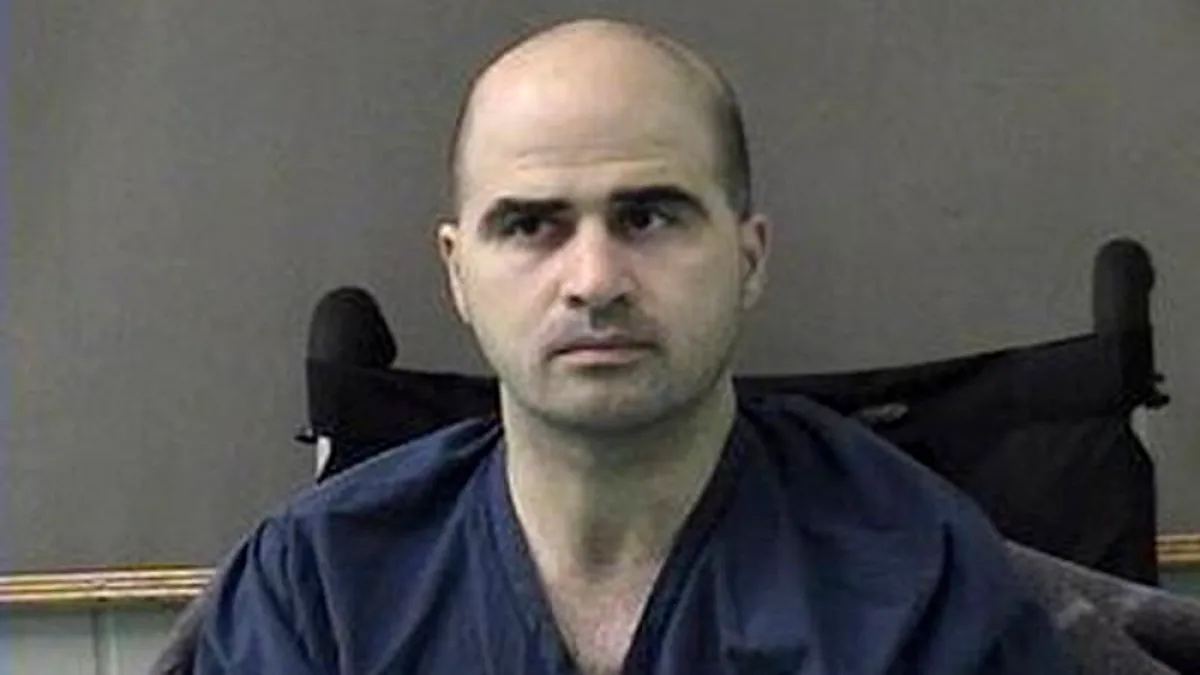
United States President Donald Trump has approved the death by firing squad of Nidal Malik Hasan, a former army officer convicted of carrying out a 2009 mass shooting at Fort Hood, an army base in Texas.

The move, if it proceeds, will revive executions in the army, which has not carried one out since 1961.

Recommended Stories

list of 4 itemsend of list

Death sentences, as well as executions in the US military, are rare and require presidential approval.

Under the army’s code of military justice, premeditated murder does carry the death penalty, but the process is often strict and prolonged.

However, the Trump administration has shown more willingness to seek death penalties for serious crimes, including against civilians.

Here’s what we know about the case:

What is the presidential order?

Defense Secretary Pete Hegseth had initially recommended an execution order for Hasan, and Trump has now approved it, according to an X statement posted by Pentagon spokesperson Sean Parnell.

Parnell said the time and date of the execution will be set by Army Secretary Adam Telle, who is serving in an acting capacity.

“Judgement day for Hasan has finally come,” he wrote.

What happened at Fort Hood?

On November 5, 2009, the US-born army major, Hasan, a psychiatrist in the force, walked into an army processing centre in Fort Hood, shouted “Allahu Akbar” (God is great) and opened fire on fellow staff members waiting to get medical attention.

Thirteen people were killed, including a pregnant soldier, and 32 others were wounded during 10 minutes of shooting. Analysts have called it the worst shooting at a US military base targeting members of armed forces.

Hasan was shot several times after two officers engaged him and remains paralysed from the waist down.

What happened during the trial?

Hasan was immediately court-martialled, and military prosecutors, from the start, sought the death penalty against him.

However, the process would play out over the course of several years even after his conviction – largely because the US military is averse to capital punishment.

During the trial, Hasan represented himself and admitted to the attacks, saying he was trying to stop deployments to Afghanistan and the killing of his fellow Muslims. He was due to be deployed weeks later.

Investigations revealed Hasan had exchanged emails with Yemeni-American scholar Anwar al-Awlaki, accused of ties to al-Qaeda, before the shooting. He had also repeatedly voiced opposition to the US wars in Iraq and Afghanistan to colleagues and the treatment of Muslims in the army.

Hasan made little effort to defend himself, and his assigned lawyers claimed his testimony aided the opposing side.

He was charged and convicted on 13 counts of premeditated murder in 2013, and jurors recommended the maximum sentence of death. Controversially, Hasan was charged with “workplace violence” because the military justice code does not address the crime of “terrorism”.

The judgement was further delayed by appeals mandated by the military, not because Hasan sought them.

In 2020, the US Army Court of Criminal Appeals upheld the death penalty for Hasan, and in 2023, the US Court of Appeals for the Armed Forces did the same. In March 2025, the US Supreme Court denied a mandatory petition for a judicial review.

In September 2025, Hegseth announced he was seeking presidential approval for Hasan’s execution.

At the time, there was no report of Hegseth specifically seeking death by firing squad.

The president holds the ultimate authority to specify the designated method of execution.

Other forms of execution could have been lethal injection or hanging, which the US military has used in the past.

What next?

While Trump’s approval will begin a series of steps towards preparing for the execution, Hasan can still put the process on hold for years with an appeal in the civilian federal court system.

However, that might be unlikely as Hasan made no effort to defend himself during the trial.

He has been remanded to the US Disciplinary Barracks at Fort Leavenworth in Kansas, where three other men have also been on the military death row for years.

Among them is Hasan Akbar, convicted of two counts of murder after attacking fellow army members on a Kuwait base in 2003, during the invasion of Iraq.

Another is the convicted serial killer and rapist Ronald Gray, who was found guilty of four counts of murder and eight counts of rape in 2008. He was approved for execution in the same year under President George W Bush, but the process was put on hold by a judge.

Timothy Hennis, a former sergeant, was convicted in 2010 of a triple murder and is also on death row.

The last military execution took place in 1961, when former soldier John Bennett was hanged for the rape of an 11-year-old girl.

Source link

Converse apologizes after ad is slammed for imagery likened to KKK

Converse has pulled a controversial ad after it was slammed online by social media users who said it evoked Ku Klux Klan imagery.

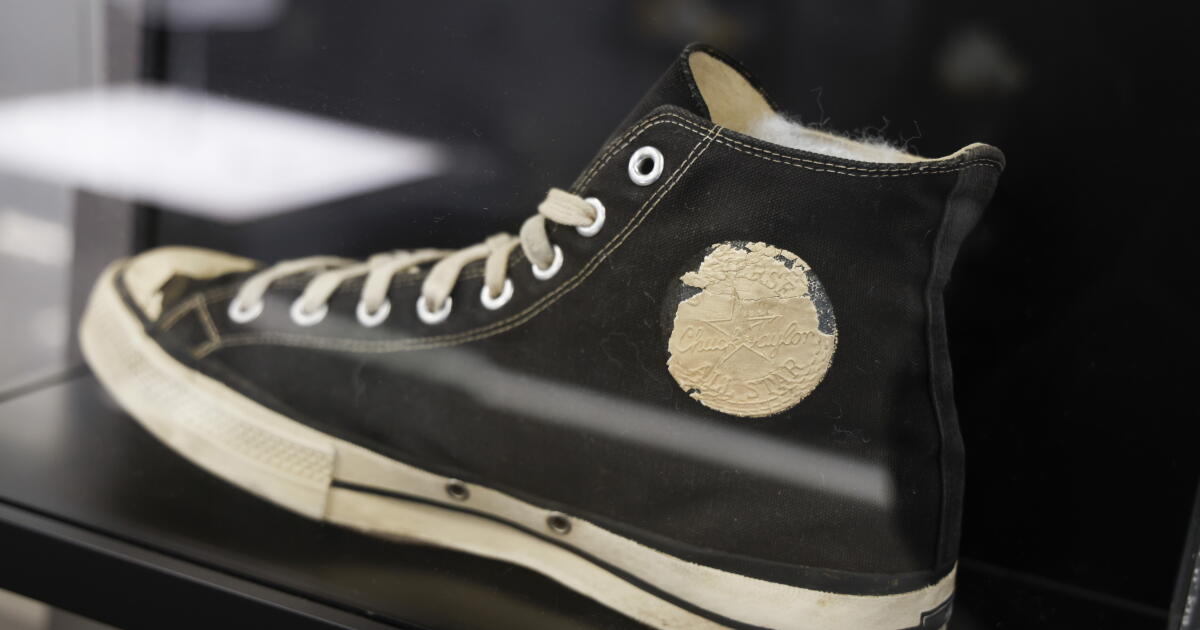
Two ads promoting Converse’s global Chuck 70 X campaign came under fire. One featured K-pop star Karina clutching a pair of the brand’s classic high-top black sneakers by her side and wearing a white skirt, with a star spotlight in center frame.

The problem, according to social media users, was that the lighting and cropping created an outline that evoked a white pointed hood, with the shoes dangling against it. The other image showed models climbing a ladder to reach shoes that hung from a tree branch.

“We’re sorry. We understand why this image is deeply upsetting and recognize that we got this wrong,” Converse said in a statement to Footwear News on Friday. “We removed it from our channels and are working to remove it everywhere it appeared. This should not have happened, and we will do better.”

Photographer Stephanie Schwartz posted on Threads that she thought the imagery was no accident.

“Shadow, light, and composition. Every photographer can tell you, whoever did this ad knew EXACTLY what they were doing,” she wrote.

Educator Kendall C. Peacock posted a video on Instagram asking followers whether a boycott of the brand was warranted.

“Converse, converse, converse! You’ve been called to the carpet. Who approved this? … As a Black man and someone who loves Converse shoes, I find this very insensitive and distasteful.”

“How and why did nobody question these visuals?” he continued. “Deliberate racist intent hasn’t been established yet, but that doesn’t erase the impact.”

Peacock acknowledged the sneaker brand’s apology, but added that “must come with accountability.” He asked who approved the ad and what will change after its removal, and further suggested that “withholding our dollars is a reasonable demand for answers … How dare you try to make a dollar off of Black pain, Converse?”

DJ SoulChild AC said on TikTok that even if it wasn’t Converse’s intention, “We can see the symbolism from a mile away.”

“That is a depiction of the triple K right there,” he continued. “Pointed hood, dangling converses, as if someone’s being strung up … Black people ain’t stupid, bro.”


Source link