Homeland

U.S. Not Prepared To Handle Drone Attack From Inside Homeland: NORTHCOM Deputy Commander

The deputy commander of United States Northern Command (NORTHCOM) was asked on Thursday if he could defend against an attack by a swarm of drones in the homeland. His reply was blunt and chilling: “No.”

“We don’t have the sensors, and depending on where that swarm is going to attack, it depends on whether we have any sensors at all, and also on whether we’ve got any effectors to go after that problem,” stated Army Lt. Gen. Joseph Jarrard, who also serves as the Vice Commander, United States Element, North American Aerospace Defense Command (NORAD). He was addressing an audience at the Space and Missile Defense Symposium (SMD) in Huntsville, Alabama, attended by TWZ.

“So we are ill-equipped right now to handle something like that, and obviously we’ve seen it used,” the general added. “We’re seeing it used on a daily basis around the world, and we’ve got to figure out how to mitigate that threat, but we’re not there yet.”

2026 SMD Symposium Day 3 thumbnail

2026 SMD Symposium Day 3


Jarrard’s statements were a sharp admission by a U.S. military leader of a number of interconnected gaps, including the lack of domain awareness over the homeland. It is a topic TWZ has frequently raised over the years, but one that U.S. officials would not admit to or address until after the Chinese spy balloon floated over much of the country in 2023 before being shot down off the Carolinas. He was also raising other concerns we have often highlighted, like having the right systems in place to take drones down once they are detected and the proper authority to use them when needed.

Though Jarrard didn’t offer any specific examples of potential threat scenarios, the most glaring is Ukraine’s Operation Spiderweb attack on Russian air bases. Drones stored in pre-positioned trucks were launched nearby remotely and destroyed a large number of Russian bombers and other critical aviation assets.

You can see a video of one of those attacks below.

Another example of a similar near-field attack was the first-person view (FPV) drone strike on a U.S. Army helicopter in Iraq earlier this year, which you can read more about here.

The following video captures that incident.

These incidents underscore the very real risk faced by military infrastructure, other critical assets and VIPs in the United States, a point that TWZ has repeatedly raised for a decade. In particular, near-field attacks like Operation Spiderweb pose a huge threat and one that would be hard to stop once it began. Compared to a combat theater, there are fewer defenses and far less surveillance, let alone similar alert levels, at sensitive installations all over the U.S. With advances in drone technology and accessibility, attacks coming from within the U.S. could be executed by longer-range drones, as well, which presents additional challenges for preparing defenses.

Speaking at SMD, Jarrard acknowledged many of these concerns and offered some insights into the challenges the command faces and how it is working to address them.

While the authority to use counter-drone systems is still catching up with the technology, Jarrard noted that his commands are working to apply lessons from Operation Noble Eagle (ONE) on the counter-drone effort. ONE, which came into being following the September 11th attacks, changed America’s air defense posture. It included putting fighters on higher readiness and upping the surveillance over the United States with regular air patrols and flights by AWACS surveillance aircraft. In addition, new rules of engagement were put in place and trained for.

“We are integrating some of the TTPs [tactics, techniques and procedures] that we use in that mission to also incorporate with the counter-UAS mission, so some of that is just a natural flow from the ONE mission,” the general proffered at SMD without offering further details. “But the other problem is detection. That is obviously the biggest issue, and so how we are able to detect is one of our biggest concerns right now.”

“We’re using the assets that we have, radars, et cetera, but it’s going to be also involving local law enforcement because it’s not just installations, Army or military installations, but it’s also things like we did [by] interacting with the federal authorities and local law enforcement with respect to the FIFA World Cup,” Jarrard suggested. “We’ve got to be interoperable with the systems that they’re procuring, using, utilizing, and they’ve all got to talk together, and so that’s where we’ve got to get to with respect to the interoperability between not just military systems, but also those that are protecting our cities, critical infrastructure, et cetera, that are off our installations.”

Inside Look at US Drone Security During FIFA World Cup 2026 thumbnail

Inside Look at US Drone Security During FIFA World Cup 2026


As we have previously noted, NORTHCOM has taken measures to help base commanders protect against drones once they arrive. One example came earlier this year, after incursions over two installations, including Barksdale Air Force Base in Louisiana, home of B-52 Stratofortress bombers and nuclear weapons storage facilities, and a key part of the airborne leg of America’s nuclear triad. NORTHCOM deployed its new counter-drone fly-away kit, designed to give installation commanders the ability to detect, quantify, and defeat small drones that they cannot defend against on their own.

The NORTHCOM fly-away kit. (U.S. military)

However, given that these systems have to be requested and then delivered, there is a limit to just how much protection they can provide, especially against an attack like Spiderweb that popped up with no warning. The fly-away kits would not arrive until after such an attack occurred, unless there was intelligence that gave some kind of warning. Meanwhile, there is a huge lack of capacity when it comes to installing these systems on a more permanent basis at installations that really need them, let alone critical civilian infrastructure and other high-value targets.

Moreover, for years now, U.S. military officials have often pushed back on the utility and cost-effectiveness of investing more in the physical hardening of bases and other critical facilities, especially shelters to shield aircraft from drones and other threats. However, that is starting to change. In a notable shift in department policy, the Pentagon in February issued new guidance for defending critical infrastructure against drone attacks through the increased use of netting, cables, and other kinds of passive physical defenses.

Jarrard’s comments at SMD, while troubling, were also a refreshing acknowledgment by someone in charge of protecting the U.S. that we remain woefully vulnerable to the kind of attack Ukraine launched against Russia last year, and admitting the problem will hopefully help with putting real solutions in place in the not-so-distant future.

Contact the author: howard@twz.com

Howard is a Senior Staff Writer for TWZ. He writes frequently about conflict, focusing heavily on the Middle East and Ukraine, and interviews with military and intelligence officials and industry leaders from around the globe. He lives near Tampa, Florida, home of U.S. Central Command, U.S. Special Operations Command.


Source link

U.S. Not Prepared To Handle Drone Attack From Inside Homeland: NORTHCOM Deputy Commander

The deputy commander of United States Northern Command (NORTHCOM) was asked on Thursday if he could defend against an attack by a swarm of drones in the homeland. His reply was blunt and chilling: “No.”

“We don’t have the sensors, and depending on where that swarm is going to attack, it depends on whether we have any sensors at all, and also on whether we’ve got any effectors to go after that problem,” stated Army Lt. Gen. Joseph Jarrard, who also serves as the Vice Commander, United States Element, North American Aerospace Defense Command (NORAD). He was addressing an audience at the Space and Missile Defense Symposium (SMD) in Huntsville, Alabama, attended by TWZ.

“So we are ill-equipped right now to handle something like that, and obviously we’ve seen it used,” the general added. “We’re seeing it used on a daily basis around the world, and we’ve got to figure out how to mitigate that threat, but we’re not there yet.”

2026 SMD Symposium Day 3 thumbnail

2026 SMD Symposium Day 3


Jarrard’s statements were a sharp admission by a U.S. military leader of a number of interconnected gaps, including the lack of domain awareness over the homeland. It is a topic TWZ has frequently raised over the years, but one that U.S. officials would not admit to or address until after the Chinese spy balloon floated over much of the country in 2023 before being shot down off the Carolinas. He was also raising other concerns we have often highlighted, like having the right systems in place to take drones down once they are detected and the proper authority to use them when needed.

Though Jarrard didn’t offer any specific examples of potential threat scenarios, the most glaring is Ukraine’s Operation Spiderweb attack on Russian air bases. Drones stored in pre-positioned trucks were launched nearby remotely and destroyed a large number of Russian bombers and other critical aviation assets.

You can see a video of one of those attacks below.

Another example of a similar near-field attack was the first-person view (FPV) drone strike on a U.S. Army helicopter in Iraq earlier this year, which you can read more about here.

The following video captures that incident.

These incidents underscore the very real risk faced by military infrastructure, other critical assets and VIPs in the United States, a point that TWZ has repeatedly raised for a decade. In particular, near-field attacks like Operation Spiderweb pose a huge threat and one that would be hard to stop once it began. Compared to a combat theater, there are fewer defenses and far less surveillance, let alone similar alert levels, at sensitive installations all over the U.S. With advances in drone technology and accessibility, attacks coming from within the U.S. could be executed by longer-range drones, as well, which presents additional challenges for preparing defenses.

Speaking at SMD, Jarrard acknowledged many of these concerns and offered some insights into the challenges the command faces and how it is working to address them.

While the authority to use counter-drone systems is still catching up with the technology, Jarrard noted that his commands are working to apply lessons from Operation Noble Eagle (ONE) on the counter-drone effort. ONE, which came into being following the September 11th attacks, changed America’s air defense posture. It included putting fighters on higher readiness and upping the surveillance over the United States with regular air patrols and flights by AWACS surveillance aircraft. In addition, new rules of engagement were put in place and trained for.

“We are integrating some of the TTPs [tactics, techniques and procedures] that we use in that mission to also incorporate with the counter-UAS mission, so some of that is just a natural flow from the ONE mission,” the general proffered at SMD without offering further details. “But the other problem is detection. That is obviously the biggest issue, and so how we are able to detect is one of our biggest concerns right now.”

“We’re using the assets that we have, radars, et cetera, but it’s going to be also involving local law enforcement because it’s not just installations, Army or military installations, but it’s also things like we did [by] interacting with the federal authorities and local law enforcement with respect to the FIFA World Cup,” Jarrard suggested. “We’ve got to be interoperable with the systems that they’re procuring, using, utilizing, and they’ve all got to talk together, and so that’s where we’ve got to get to with respect to the interoperability between not just military systems, but also those that are protecting our cities, critical infrastructure, et cetera, that are off our installations.”

Inside Look at US Drone Security During FIFA World Cup 2026 thumbnail

Inside Look at US Drone Security During FIFA World Cup 2026


As we have previously noted, NORTHCOM has taken measures to help base commanders protect against drones once they arrive. One example came earlier this year, after incursions over two installations, including Barksdale Air Force Base in Louisiana, home of B-52 Stratofortress bombers and nuclear weapons storage facilities, and a key part of the airborne leg of America’s nuclear triad. NORTHCOM deployed its new counter-drone fly-away kit, designed to give installation commanders the ability to detect, quantify, and defeat small drones that they cannot defend against on their own.

The NORTHCOM fly-away kit. (U.S. military)

However, given that these systems have to be requested and then delivered, there is a limit to just how much protection they can provide, especially against an attack like Spiderweb that popped up with no warning. The fly-away kits would not arrive until after such an attack occurred, unless there was intelligence that gave some kind of warning. Meanwhile, there is a huge lack of capacity when it comes to installing these systems on a more permanent basis at installations that really need them, let alone critical civilian infrastructure and other high-value targets.

Moreover, for years now, U.S. military officials have often pushed back on the utility and cost-effectiveness of investing more in the physical hardening of bases and other critical facilities, especially shelters to shield aircraft from drones and other threats. However, that is starting to change. In a notable shift in department policy, the Pentagon in February issued new guidance for defending critical infrastructure against drone attacks through the increased use of netting, cables, and other kinds of passive physical defenses.

Jarrard’s comments at SMD, while troubling, were also a refreshing acknowledgment by someone in charge of protecting the U.S. that we remain woefully vulnerable to the kind of attack Ukraine launched against Russia last year, and admitting the problem will hopefully help with putting real solutions in place in the not-so-distant future.

Contact the author: howard@twz.com

Howard is a Senior Staff Writer for TWZ. He writes frequently about conflict, focusing heavily on the Middle East and Ukraine, and interviews with military and intelligence officials and industry leaders from around the globe. He lives near Tampa, Florida, home of U.S. Central Command, U.S. Special Operations Command.


Source link

Homeland Security finds itself back in the headlines after 3 fatal ICE encounters

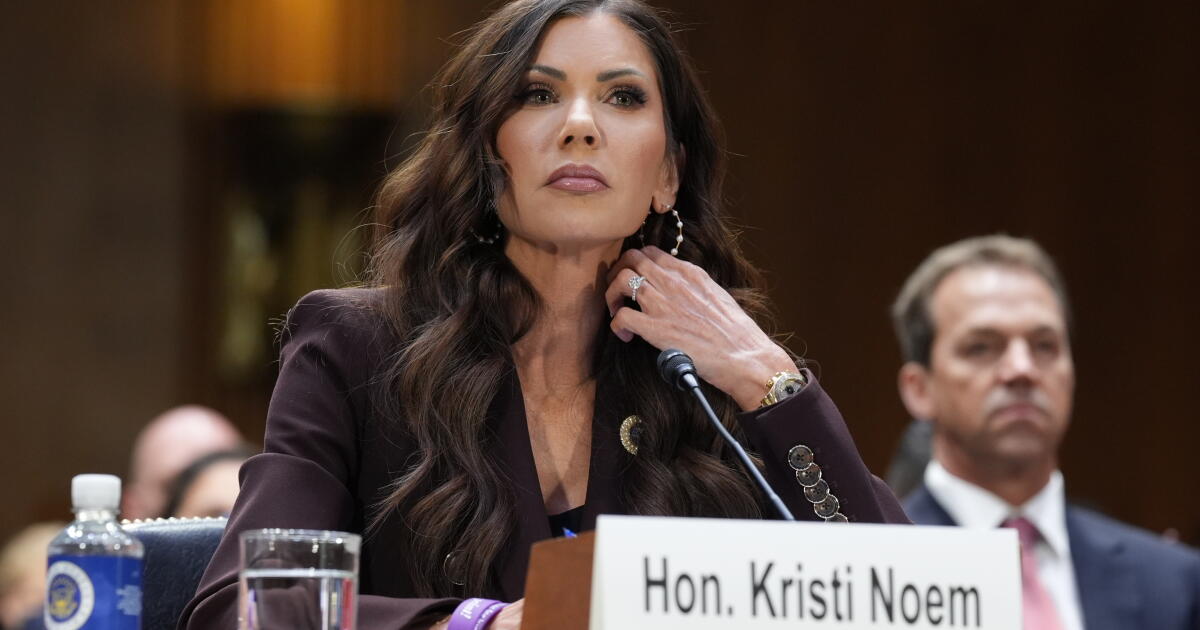
When Markwayne Mullin took over as Homeland Security secretary from fired Kristi Noem, he pledged to get the department responsible for carrying out the Trump administration’s mass deportations policy out of the headlines.

But just months into Mullin’s time in office, the department is squarely in the center of controversy again after three people were killed in encounters with Immigration and Customs Enforcement officers in the span of less than a week.

The events are the first major test for Mullin, who promised a steady hand for a department roiled by his predecessor’s conduct and the Trump administration’s immigration crackdown.

As he navigates the uptick in violence, he is being forced into a balancing act that has him juggling pressures from a White House eager to carry out mass deportations and his former colleagues in Congress seeking answers — all while attempting to ease tensions in American cities over the deaths.

“When he took his position, Secretary Mullin said that his goal was to get the department off the front page of the news,” Democratic Rep. Seth Magaziner said on the House floor Tuesday. Then, waving a newspaper, he said: “Well, you’re back on the goddamn front page now.”

Mullin’s approach is a marked change from his predecessor, Kristi Noem

Mullin, a former senator from Oklahoma, was a surprise pick to run the sprawling department after Noem was fired in the wake of two deadly shootings of American protesters at the hands of federal immigration officers in Minneapolis earlier this year.

As the secretary in charge of carrying out the administration’s mass deportations vision, Noem pushed an aggressive style of immigration enforcement where she was front and center, including most famously, a visit to a Salvadoran detention center. She was quick to speak publicly on controversial events, weighing in on both Minneapolis shootings with statements accusing the killed protesters of being agitators.

President Trump, who made mass deportations a central promise of his second administration, ultimately soured on Noem over a $200 million ad campaign and her handling of the Minneapolis operation.

Mullin promised a different approach, while still pledging to deliver on the president’s priorities. His first trip as secretary was not to promote immigration enforcement but to observe hurricane recovery efforts in North Carolina. Noem frequently went out on immigration raids with her officers — Mullin has not.

Since he became secretary and in the aftermath of the Minneapolis violence, the administration has also moved away from high-profile and unpopular immigration operations in American cities to a quieter approach to enforcement that has largely shifted media attention away from the crackdown. Under Mullin, Immigration and Customs Enforcement is also retreating from a plan to use warehouses to detain migrants.

But immigration arrests continue under Mullin and often with little fanfare: ICE arrested 10,000 people over a five-day period in late June, averaging out to about to 2,000 arrests per day. And legal pathways to immigration have also faced new restrictions.

Trump, during Mullin’s tenure, has hailed the secretary as “so incredible,” and “amazing,” lauding him for giving up his Senate seat to run DHS.

For months, it appeared as though Mullin’s change in approach was taking hold. While advocates and civil rights activists accused the department of mistreating immigrants under his leadership, Mullin’s less confrontational approach seemed to keep the department out of the spotlight.

But the events of the past week have posed a new challenge for Mullin as he walks a tightrope between his softer approach and the president’s demands.

“Trying to deal with competing policy objectives is a challenge for any Cabinet secretary, but Mullin has this worse than most,” said Tom Warrick, a former counterterrorism official at Homeland Security who’s now at the Atlantic Council.

“In the case of Homeland Security, the White House wants both to meet their immigration quotas at the same time that they keep public trust, and how you do that — even with the funding that Mullin has — is a really difficult challenge.”

ICE officers in Houston and Maine shot and killed individuals in their cars during immigration operations. In Florida, a man fleeing ICE officers was killed in a car crash.

Mullin has not spoken publicly about the deaths while the department’s public affairs office has released only brief statements following each.

Behind the scenes, Mullin, who frequently talks about how he shares his cellphone number with members of Congress and encourages them to call him directly, has talked with lawmakers and shared information, including talking with both senators from Maine.

And after the second shooting death in Maine, as criticism surged from both protesters and Mullin’s former colleagues in Congress, ICE was ordered to suspend most vehicle stops.

Trump heaps pressure on Mullin over vehicle stop order

That decision infuriated Trump’s supporters.

Conservative influencer Nick Sorter called it a “TOTAL CAPITULATION to the left,” in a post on X. Conservative activist Mike Davis accused Mullin of heeding the advice of Maine Sen. Susan Collins, who said she’d suggested the vehicle stop pause to the secretary.

A day later, Trump appeared to contradict the guidance to ICE, saying in a social media post “we must be strong, tough and smart and we CANNOT give up one of ICE’s most important and effective Crime Fighting tools, THE TRAFFIC STOP!”

Mullin then reposted Trump’s words, adding that people in the country would be “arrested and deported wherever they are.” He later said on X that he and the president are “on the same page.”

It was not immediately clear whether vehicle stops were back on.

But it showed the friction between Mullin’s attempts to maintain calm and the president’s demands that illegal immigrants, which the administration has in many instances portrayed as criminals, be arrested in large numbers.

Democrats have slammed the new secretary, saying that they see little change at the department.

“Secretary Mullin, if he wants to, and if he has the backing of the White House, he has the ability to get ICE under control and make them follow the law,” said Rep. Joaquin Castro, a Democrat from Texas. “So either he has no interest in doing that, or the White House is not backing him up, or the agents are simply out of control.”

Republican lawmakers have come to Mullin’s defense.

“I think the Secretary has lived up to what he’s wanted to do to try to change the atmosphere over there,” said Rep. Andrew Garbarino of New York, who as chair of the congressional Homeland Security Committee has requested a bipartisan briefing on ICE’s use of force policies from DHS.

“I don’t think anybody is celebrating that ICE is back in the headlines,” Garbarino said.

Santana writes for the Associated Press. AP writer Lisa Mascaro contributed to this report.

Source link

Trump signs $70B bill to fund Homeland Security Dept. through 2028

June 10 (UPI) — President Donald Trump signed a bill to fund the Department of Homeland Security’s immigration enforcement agencies through 2028 after months of battles to prevent it from happening.

“This morning I’m thrilled to sign the Secure America Act to immediately and fully fund the Department of Homeland Security through the end of my term, so we won’t have to be talking about it anymore,” the president said in the Oval Office.

The Senate passed the $70 billion funding package on Friday, and the House approved it on Tuesday.

Democrats fought the funding for months, refusing to agree to the bill unless there were reforms to the organization after two American citizens — Renee Good and Alex Pretti — were killed by federal agents in Minneapolis earlier this year. But the measure was passed via reconciliation, which only requires a majority vote instead of 60 votes needed to overcome a filibuster.

“We’ll give the heroes of ICE and Border Patrol — and that’s what they are, they’re heroes, what they have to go through to keep us safe — the support and resources they need to defend our borders, protect our homeland and to keep America safe,” the president added He also gave House Speaker Mike Johnson, R-La., credit for passing the bill with a slim majority in the House.

“Despite Democrat efforts to shut down ICE and Border Patrol, Republicans have now fully funded these agencies through President Trump’s entire second term to the tune of nearly $70 billion,” Sen. Lindsey Graham, R-S.C., in a statement. “Thanks to President Trump, our border has gone from its weakest point to its most secure point in less than two years.”

Source link