THE UK is getting hot again, and with the sunny weather what better way to keep yourself cool than by heading to a leisure centre.
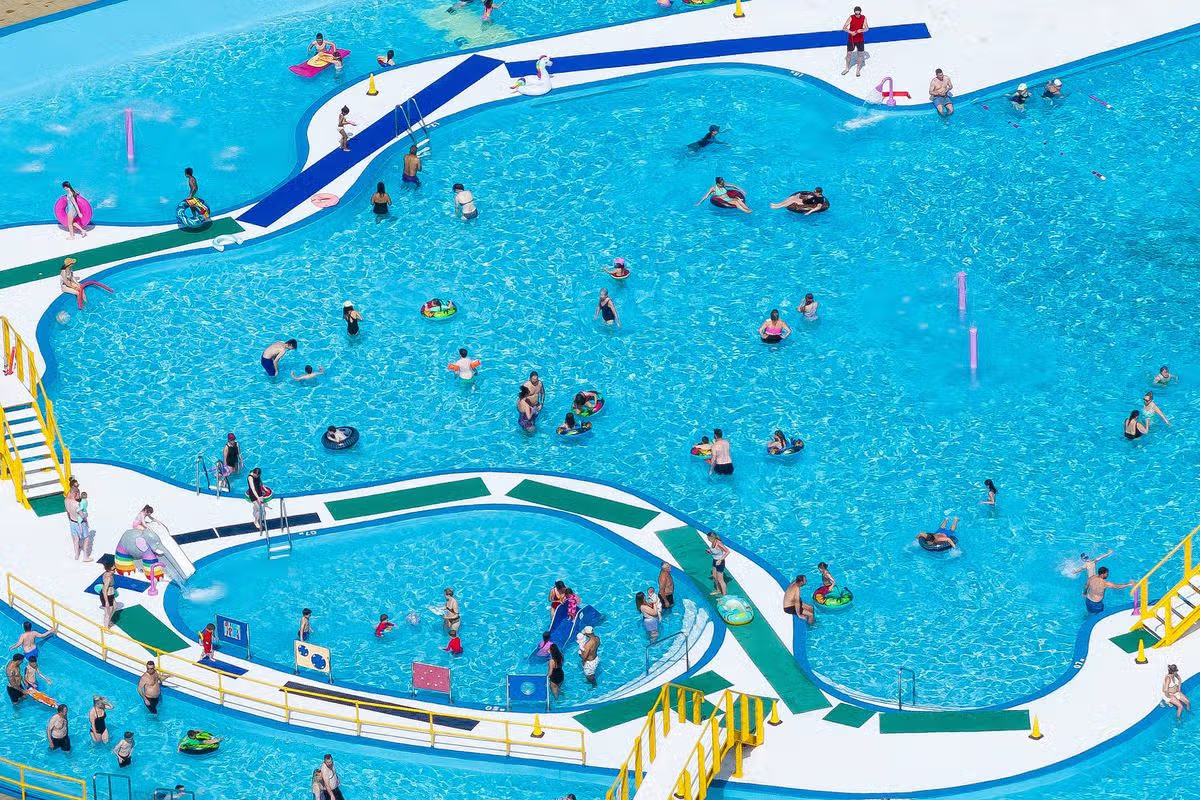
And gone are the days where leisure centres just have big pools – there are now many across the UK that boast flumes, water coasters and sunken pirate ships.
Sign up for the Travel newsletter
Thank you!
Some leisure centres in the UK are more like waterparksCredit: Coral Reef
What makes them even better? They don’t cost as much to visit as a waterpark.
Here are some of the best leisure centres across the UK:
Coral Reef Waterworld, Berkshire
Coral Reef Waterworld in Bracknell has an indoor pool with some flumesCredit: Not known, clear with picture desk
Coral Reef Waterworld in Bracknell is home to a giant indoor pool with a pirate ship and flumes.
Unlike your usual leisure centre, Coral Reef Waterworld is one of the largest “interactive water worlds in England“.
Slides include Aqua Splash, which is ideal for smaller children thanks to its gentler water.
Though if you do fancy something that is a little more thrilling, then head to Storm Chaser, which haschoppiery water and rocks riders from side to side.
Then there’s also Poseidon’s Peril, themed around the Greek God of the sea, where you hop into an inflatable, two-person raft and head down into a “super crater” with lots of flashing lights.
Adult tickets cost from £20.55 per person, kids’ tickets cost from £14.55.
LC Swansea
At LC Swansea in Wales you can try out surfing or bodyboardingCredit: LC Swansea
Over in Wales, you could head to the LC Swansea, which is a large indoor pool with a surf simulator and even a water coaster.
In addition to a large pool, families can relax on the lazy river or have a go on the slides.
Or if you want to have a go at something new, there is the Boardrider – a wave machine ideal for those wanting to learn to surf or bodyboard.
There’s also the MasterBlaster water coaster, where you ride on a rubber ring before being splashed into the pool.
There’s also a water-themed Climb and Play area with four storeys of obstacles.
Tickets start at £5.31 per adult or child for a General Splash session, with infant tickets for ages one to three starting at £2.97 each.
Water Meadows Complex, Nottinghamshire
Water Meadows ComplexCredit: Water Meadows
Water Meadows Complex in Mansfield has its own pirate pool, alongside splash pads and flumes.
For little ones, there is the Clock Fun Pool, which is specifically designed for those aged under five.
The Pirate Pool is then suitable for all ages, but if you want more of a thrill there are a few different flumes to enjoy, including the Twister Flume, which stretches 50 metre, s and the Fast Drop Flume, which has a plunging drop.
Twice per hour you can also enjoy waves in the pool.
Tickets cost from £9.95 per person – but you’ll need to sign up to a pay as you go membership to book a session, which is free to do.
Tickets cost from £13.13 per adult and £10.50 per child.
Waterfront Leisure Centre, London
Waterfront Leisure Centre has a 65metre snaking slide and lazy riverCredit: Supplied
If you are in the capital, make sure to visit Waterfront Leisure Centre in Woolwich.
Inside you’ll find a 65 metre snake slide, lazy river and can enjoy ‘Wet and Wild’ sessions.
Toddlers can enjoy the training pool and splash zone as well.
Or for adults who want to chill out, there is also a hot tub.
Tickets cost from £9.70 per adult and £7.05 per child.
The Pavilion, London
The Pavilion Leisure Centre in Bromley has a splash area ideal for little onesCredit: The Pavilion
Also in London, but this time in Bromley, you could drop into The Pavilion, which boasts a wave machine with a gradual entry pool, ideal for all age groups.
In addition to the large wave pool, there is a toddler splash area with shallow water, ideal for those getting confident in the water.
Tickets cost from £5.65 per adult and £2.80 per child.
Waves Leisure Pool, Devon
Waves Leisure Pool in Devon has a wave machine as well a shallow entry to the poolCredit: Torquay Riviera
Down in the southern county of Devon, you could drop by Waves Leisure Pool in Torquay, with a wave machine, flume and inflatable obstacle course.
Having grown up nearby, Travel Reporter Cyann Fielding said: “Growing up, my parents would often take me to the Waves Leisure Pool on the English Riviera.
“Set not too far from the beach, it was the ideal day out.
“Every half-an-hour the waves will run and depending where you are in the pool, they range from a gentle bob to waves that throw you up in the air.
“It is heated to 29C year-round and has a sloped entry floor so is ideal for little ones too.
“The waterslide adds some fun, with many twists and turns and for toddlers, there is a splash area with enough to keep them occupied for hours on end.”
Tickets cost from £7.40 per adult and £6.10 per child.
London Aquatics Centre
At the London Aquatics Centre, you can head to an inflatable disco sessionCredit: Alamy
In Stratford you could head to the London Aquatics Centre and while the venue doesn’t boast flumes, it does have an inflatable course with climbing walls and slides.
You can even opt to do an inflatable disco session with giant floats on the water as well.
These sessions cost from £10.50 per adult and £7.35 per child.
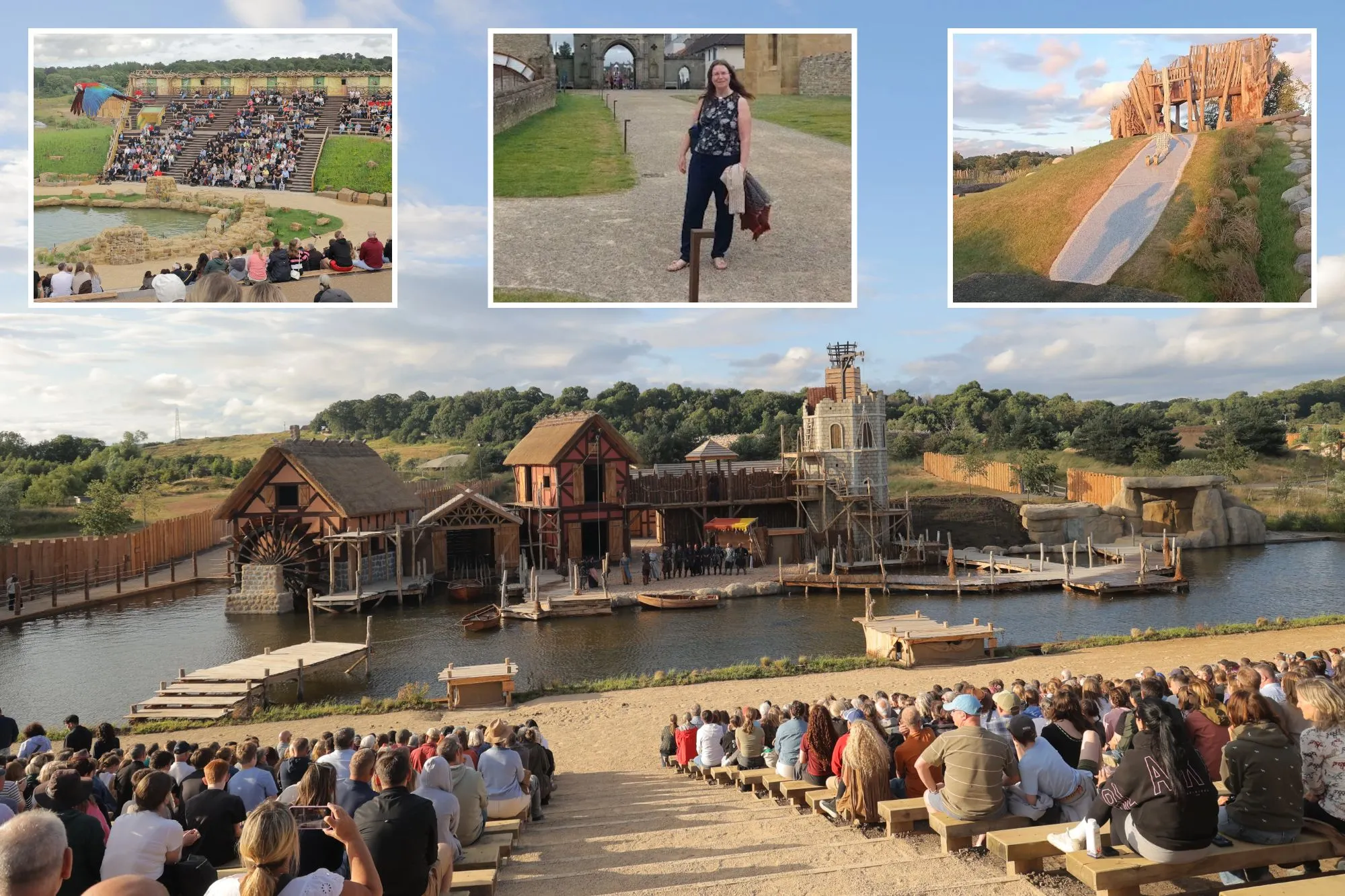
A NEW, first-of-its-kind historical theme park has finally opened in the UK – and I was the first to experience it.
Kynren – The Storied Lands, at Bishop Auckland, has no rides or rollercoasters; just a day full of spectacle, followed by an evening extravaganza like nothing you’ve seen before.
Sign up for the Travel newsletter
Thank you!
I went to the new historical theme park in the UKCredit: NNPKynren – The Storied Lands is found at Bishop AucklandCredit: Catherine Lofthouse
If you love knights on horseback, Vikings fighting with flaming axes, exotic birds swooping overhead, clever aquatic acrobatics and a fireworks finale – this is the experience for you.
There’s five immersive experiences to enjoy over the course of the day, as well as a wooden kids’ play space for little ones to let off steam.
Visitor are given an itinerary to follow to maximise their time on site and we started with the Trusty Steed, which showcases the jaw-dropping horseback prowess of its performers.
Then it was on to the Lost Feather, featuring more than 250 birds in a huge arena built to look like a nest.
This is certainly an ambitious undertaking – the sheer range of animals from ravens to cranes, from macaws to birds of prey, is unlike anything I’ve seen at other falconry shows.
The stunning set and the theming are quite something to behold, but what I really love is how the whole park feels at one with its surroundings, drawing on the the fields, trees and the 11 arches of the nearby viaduct.
Eventually the park will expand to include 11 experiences based on different eras, including adding more to the Victorian village over the next year.
For now, we got a taster of what’s to come with characters from the age, including a maid, a pickpocket and the aptly named Professor Flambard inside his Imaginarium.
The shows are a tale of England throughout hundreds of yearsCredit: Catherine LofthouseEvery stop has amazing themes throughoutCredit: Catherine Lofthouse
Our next stop was the Viking amphitheatre, where flaming torches and the wreckage of longboats set the scene for the combat to come.
Outside the arena is a Viking village, with tents and workshops showcasing day-to-day life.
The finale to our tour through time was the Legend of the Wear, loosely based on the local tale of the Lambton Worm, a monster that terrorised villagers in the time of the crusades.
This show draws on the elements of witchcraft and water in the story with its aquatic stunts and parkour.
Obviously launching a new theme park with animals, special effects and plenty of performers is a tricky business, but thanks to the high standards at Kynren, you’re in safe hands when it comes to the old adage that the show must go on.
Whether it’s dealing with a burning bush set alight by falling fireworks, an eagle going AWOL or just a horse pooing as it arrives centre stage, there’s an authenticity in these unexpected moments that somehow adds to the experience.
Kynren’s evening show, An Epic Tale of England, has been running for a decade now, takes place on Saturdays and a couple of Fridays over the summer (this is booked separately from the daytime park).
It’s a romp through time, with buildings and boats rising up from nowhere, a huge cast of performers, animals and vehicles to marvel over and memorable moments aplenty during its 90 minutes.
I was so impressed by the scale of the performancesCredit: NNPThere is also a woodland playground for kids tooCredit: Catherine Lofthouse
The new daytime park takes all the impressive elements from this evening extravaganza and builds on them, weaving in local and national history.
It’s something that’s proved popular at parks on the continent and it’s great that we finally have it here too, in homage to the rich heritage of this corner of the British Isles.
One extra experience that’s been introduced this summer is the Time Travellers‘ Feast, which takes place early evening, so you can add it on to your day or night ticket.
For £68, you get a Roman-inspired welcome cocktail, three-course sharing feast, a glass of wine with your main, and tea or coffee to finish, all inspired by the Roman and Viking era.
Food stalls offering pizza, curry, sweet treats and drinks are also available for those not feasting.
If you’re travelling from further afield, the Auckland Project has some great accommodation options to make a weekend of it.
We enjoyed a cosy heritage stay at Churchill Cottage, perfectly positioned on the historic Market Place and steps away from the newly renovated Auckland Palace and its deer park.
Park Head Hotel is another great shout for a place to stay.
It opens this month on July 18Credit: NNPMy whole family loved it and its worth every pennyCredit: Catherine Lofthouse
Kynren is the Anglo-Saxon word for generations and this park more than lives up to its name – building on the success of the past decade to offer visitors something unique in the present with much more to come over the next few years.
The experience opens on July 18, running until September 12. Tickets start from £20.
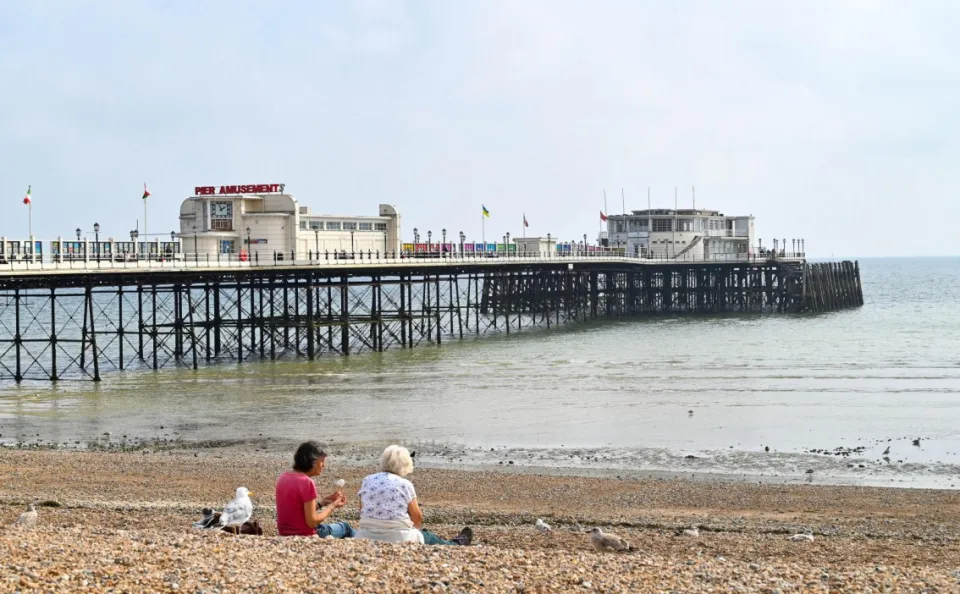
A CHARMING English pier is finally getting a £550,000 upgrade next month.
The Grade ll-listed Victorian structure was forced to close two years ago after it was damaged during a heavy storm.
Sign up for the Travel newsletter
Thank you!
Worthing Borough Council has said work will start on the pier in AugustCredit: Alamy Live News.A storm damaged Worthing pier in October 2024 but it reopened two months laterCredit: Alamy Stock Photo
Worthing Borough Council has said work will start in August on new foundations for the town’s pier.
It comes after the original £930,000 cost estimate was reportedly revised to £550,000.
A storm damaged the pier in October 2024 but it reopened two months later with a temporary steel support in place.
Council bosses have said the pier, which was built in 1862, will continue to remain open while the work is undertaken.
It is expected to be fully refurbished by the end of 2026.
In a statement, the council said the works “will give the pier new foundations to allow it to stand against the elements without the need for the steel support structure”.
Routine maintenance will take place on the underside of the pier during the structural works, according to the local authority.
Officials said the cost reduction to the project was due to contractors no longer requiring the removal and refitting of the pier’s timber deck.
Worthing Borough Council leader Caroline Baxter said: “Our pier is one of Worthing’s best-loved landmarks and a huge part of our coastal heritage.
“Looking after it isn’t just about maintaining a structure – it’s about protecting a place that means so much to local people and continues to attract visitors from across the country.”
A SPRAWLING new entertainment venue has opened in a major UK hub – and it features more than 170 games.
The £11million attraction will offer visitors a wide range of virtual reality, sporting and gaming experiences.
Sign up for the Travel newsletter
Thank you!
The venue is expected to generate at least 80 jobs for the local areaVR games add to the immersive experience of the venueCredit: Matt Ben Stone
Mega City has thrown open its doors in Slough today (July 6), bringing a new immersive family entertainment venue to the town.
Spanning more than 55,000 sq ft, the site offers a wide range of virtual reality experiences, 10 bowling lanes and even a karaoke room set across its three floors.
Located just eight minutes from the Elizabeth Line, the 170-game venue also features arcade machines, interactive football, a laser tag arena and an AR clay pigeon shooting experience.
Built on the site of a former Wilko, the entertainment destination comes as part of an £11million investment into Slough’s regeneration.
This comes as part of Slough’s town centre regenerationMore than 170 games will be on offer at the facilityCredit: Matt Ben Stone
Its opening is expected to create more than 80 local jobs, as well as generate footfall for the town centre.
Jeet Grewal, co-founder of Mega City, said: “At its heart, Mega City is about bringing people together. We wanted to create a place where different generations can enjoy shared experiences, feel welcome and make real memories.”
The late-night spot is also open until 2:30am on Fridays and Saturdays and until 1:30am the rest of the week, with a number of food and drink facilities on offer, including a restaurant, desserts bar and cocktail bar.
Grewal added: “Slough is incredibly diverse, vibrant and now well-connected through the Elizabeth Line, and we saw a real opportunity to create a large-scale leisure space that reflects that spirit.”
This follows Slough’s projected £3.5 billion transformation, with plans submitted last month for a £640million housing and leisure development.
The town has experienced a dramatic decline in recent years, with retail closures, a housing shortage and a degrading high street all contributing to the area’s deterioration.
AS a family, we absolutely love a theme park holiday – it’s a chance to escape everyday life – and, if we’re honest, the adults probably need that just as much as the kids do.
Whether it’s white-knuckle rollercoasters, splash zones, storybook castles, safari adventures or pint-sized rides for mini adrenaline junkies; Europe has a theme park for it all.
I travel for a living and have found the most family-friendly theme parks in Europe
But when you consider ticket prices, crowds, endless queues and the familiar challenge of keeping every age group entertained, choosing the right destination can feel less like a holiday and more like a logistical marathon.
I’m a travel expert and mum-of-two and I love sharing tips on my page Instagram@thetravelmumon how to travel the world without spending a fortune.
Here are my pick of Europe’s best family theme parks that strike a balance between adventure and convenience, and how to enjoy them without the stress.
Plus, the best cheap accommodation to stay in while you’re there.
Europa Park, Germany
Europa park has 21 themed lands and over 100 attractions to exploreEuropa is Germany’s largest theme park and even has a waterparkCredit: Getty
At Germany’s largest theme park, and Europe’s second largest (behind Disneyland Paris) – you’re absolutely spoilt for choice.
There’s 21 lands all themed on a different country, with world-class rollercoasters, over 100 attractions and 20 different shows.
It’s also home to waterpark, Rulantica, where you could easily spend a day in itself. Here there’s more rides and slides, as well as a toddler splash pool and a spa area for those over twelve years old.
The scale of this park, which costs Adults (12+) €67.00 (£57) – €76.00 (£65) and Child/Senior: €56.50 (£47) – €65.00 (£55) for a one-day ticket, means you’re best to explore it over a few days – stay at one of the park’s six hotels – and it’s better suited to families with older children and teens.
Getting there: 6.5 hour drive from Calais.
The nearest airports are Strasbourg, Baden Baden and Basel.
Flights:Ryanair: London Stansted to Baden Baden – return flights August 6 to August 8 August 2026 (summer holidays) from £107 per person.
Easyjet: London Gatwick to Basel – is another route often offering cheap fares.
Accommodation: Stay on-site at the new Riverside Western Lodge – a comfort plus room coming in at £1,035.50 for a family of four, on a bed and breakfast basis for three nights in October half term (October 26-29).
Kids will love the Wild West themed rooms, the free shuttle ‘Rust’ bus makes getting around easy and, as a hotel guest, you get VIP early access to the waterpark – Rulantica.
On a budget? The on-site ‘Tipi Town’ offers a variety of glamping and lodge options – some are shared ‘dorm’ style, and some are private, but with shared bathroom facilities. From €172 (£147) for a 4-bed tipi this August, or alternatively, bring your own tent and pitch up in the Europa park campsite from €59 (£50) a night.
The savings can be substantial compared to the on-site hotels, but it’s worth noting that some options require you to bring your own bedding.
Staying on-site guarantees you access to best price park tickets, and free parking across all the accommodation types.
Our top tips:
Book accommodation early
Utilise budget airlines and for best prices be flexible on which airport you fly into as they’re all an easy 1-1.5 hr drive from Europa Park
Buy tickets in advance online to save money
Use the park app to plan your day
Take advantage of the excellent baby facilities onsite
Bring refillable water bottles
Plan for two full days in the park (three if doing Rulantica).
Efteling, Netherlands
Efteling is one our favourite theme parks to visit – especially with young childrenCredit: Jen CarrEfteling is a fairy-tale inspired theme park in the NetherlandsCredit: Efteling
One of our personal favourites to visit with our two young children, this fairy-tale inspired park with tickets ranging from €40-€56 (£34-£48), does a great job of catering to a wide range of people.
It blends rides, gentle attractions and some great rollercoasters, with beautifully detailed storytelling.
Families love the enchanting Fairytale Forest, while older children will enjoy thrill rides like Baron 1898 and Python.
The on-site accommodation is fab and, if you do want to spend more than one day in the park, it’s worth pricing up an overnight stay as it can work out better value as you typically get park tickets for both your arrival and departure days included.
Getting there: Three-hour drive from Calais.
The nearest airports are Eindhoven and Amsterdam Schiphol, with fights from £27 return.
Getting to the Netherlands from the UK is easy – whether you prefer to drive, fly or take a ferry – you’ve got plenty of options.
Accommodation: Staying off site – we love Guesthouse Hotel Kaatshuevel – it’s not onsite but it’s within walking distance to Efteling and is perfectly designed for families.
Think spacious rooms with bunk beds for the kids, pancakes for breakfast and a rooftop garden terrace with mini golf and games.
It’s affordable too – in October half term you can get rooms from £135 per night.
In the summer, I’d recommend Bosrijk Village, woodland cottages dotted around in a pretty forest setting – with playgrounds and little streams, perfect for cooling off.
There’s an indoor pool complex too. I also loved the Efteling Grand Hotel which opened in August 2025 and has a cosy fairytale vibe – which really adds to the magic when visiting Efteling in the colder months.
Our top tips:
You’ll want at least two full days in the park – three would be ideal
If staying onsite – use your early entry to do the big attractions before the queues build
Download the app for site map, queue times and route planning
Pack for all weathers – the Netherlands (just like the UK!) can be unpredictable
Plan your lunchtime to avoid busy times – eat at 11.30am or 14.00pm – the popular restaurants get busy
Don’t skip the shows – great for giving little legs a break.
PortAventura World, Spain
You get everything at PortAventura – it’s a theme park and waterpark in oneCredit: Jen CarrYou can stay on-site at its hotels with easy access to the park and it’s quieter on weekdaysCredit: Alamy
Located on Spain’s Costa Dorada, PortAventura World combines a major theme park, waterpark and Ferrari Land resort in one destination, along with six on-site hotels.
The theme park area is divided into six lands, each with its own atmosphere and character.
One thing we did notice is that the height requirements were higher than we have seen anywhere else, so make sure you take this into account.
There is still plenty to do for younger visitors, including the Sesame Street themed land.
We stayed in the Wild West themed Colorado Creek hotel when we visited, having booked our stay as a package from the UK – with flights, transfers, accommodation and park tickets included, it felt so easy.
On The Beach currently has a package holiday including flights, hotel and park tickets for four nights from £303pp for a family of four in August.
If you’re able to travel off-peak, it was noticeably quieter on weekdays than weekends, and another tip we learnt was that, as far as theme park fast passes go, they were relatively good value here.
For instance, On the Beach has the same 4-night offer in early September from £218pp, for a family of four.
Tickets to just the park cost £45 euros per adult and £36 for kids for two days, and also allow access to Ferrari Land.
Getting there: The nearest airport is Reus, followed by Barcelona El Prat.
Flights: Ryanair, EasyJet and Jet2 both fly from London Stansted or Manchester to Reus.
For example, you can fly with Ryanair from Manchester to Reus from 27th July to 30th July for just £65.98 return, excluding luggage.
Accommodation: The onsite hotels start from €130 (£112) per night, and come with their own swimming pools and park tickets included.
They can also be booked as a package with Jet2Holidays too.
For example, a family of four can stay onsite at the 4* Hotel Gold River in October half term on a half board basis for £3,411 – which is a great price considering it includes your flights, transfers and theme park tickets for everyday you’re there.
Our top tips:
Travel off-peak – it was noticeably quieter on weekdays compared to weekends
Avoid July / August (if you can) – it’s busy and it gets hot!
Express passes offer good value here, compared to other theme parks
If staying onsite – retreat back to your hotel and make the most of the pools or air con during the hottest part of the day.
Puy Du Fou, France
Puy du Fou has no rides but is still very entertaining for familiesCredit: AlamyThe theme park has previously been voted the best in the world, twiceCredit: AFP via Getty Images
Puy du Fou is different from the other theme parks on our list, as there’s no rides.
Instead, all the action centres around 20 spectacular historical shows, featuring Viking battles, Roman gladiators, birds of prey, sword fights, thundering horses, fire and unbelievable stunts.
While the shows are all spoken in French, most people say it doesn’t matter as they’re so visual, but you can listen to a translation via a headset.
If you’re thinking this doesn’t sound like your thing, Puy du Fou (tickets from £38.25 (€46) for adults and kids ages 3–11 from £27.67 (€33)) was voted best theme park in the world twice.
It’s best suited to families with children aged six and over.
There’s a range of themed accommodation on site, or plenty of places to stay nearby, as you need at least two full days there to ensure you can see everything, especially as some of the shows happen after dark.
The park is huge, so prepare for long days and a lot of walking.
Use the app to map out your day in advance as you want to arrive at the shows around 30 minutes before they start to ensure entry.
It might not be your traditional theme park, but if you enjoy theatre, history and live action, immersive experiences – it’s definitely one for the list.
Getting there: It’s a six hour drive from Calais. Or the nearest airport is Nantes.
Ryanair and easyJet both serve Nantes airport from London airports, with flight prices as low as £37 return in October.
Unless you only plan on visiting Puy du Fou, you’d be best hiring a car if travelling to France by plane.
Accommodation: If you’d like to stay onsite then I strongly advise you book accommodation as far in advance – especially during the summer holidays – with prices starting at around €60 (£51.62) per person per night.
Nearby towns like Les Epesses and Les Herbiers have plenty of accommodation available on booking sites and are just a few kilometres away from Puy du Fou.
Eurocamp has two sites within an hour’s drive of Puy de Fou Castel Camping La Garangeoire or Château La Forêt, which would make for an easy way to combine a visit here with a longer family break in the area.
You can stay for a week at the latter for a family of four in the summer holidays for just under £600.
Our top tips:
Download the official app and map out your day in advance – the site is huge
Comfortable shoes are a must
Arrive at shows 30 minutes before the start time to secure your space
Allow for two full days in the park
Book restaurants in advance – they get busy
LEGOLAND Billund, Denmark
My family and I prefer Billund’s Legoland to the one in the UKCredit: Jen CarrLegoland Billund is considered one of the best LEGOLAND parks in the worldCredit: Alamy Stock Photo
Built beside the original LEGO factory in Denmark, Legoland Billund is widely considered one of the best LEGOLAND parks in the world.
We actually prefer the park in Billund to the one in the UK.
Packed with interactive attractions, mini cities and creative play zones, it perfectly suits younger families and tickets cost from 349 DKK (£40).
The atmosphere is relaxed, clean and easy to navigate, with plenty of rides children can enjoy together with parents.
Staying in one of the themed hotels adds extra magic for younger children.
Ideal for ages two to 12, particularly primary school-aged LEGO fans.
Whilst Billund is a fairly small place, you can also tie in a trip to Lalandia Waterpark, Lego House and Wow Park.
Getting there: The nearest airport is Billund.
Billund Airport couldn’t be any closer to Legoland – it’s just a five minute drive or bus away.
However, since Ryanair stopped flying there, flight options are more limited – you can fly directly with British Airways or Norwegian from Heathrow, Gatwick and Edinburgh.
We found return flights with British Airways from Heathrow to Billund 2nd to September 7 for less than £104 return.
The next best option is to fly to Copenhagen and take a three-hour drive or train from there.
This could be a great excuse to explore Copenhagen too, we think it’s one of the best city breaks you can do with kids.
Accommodation: For the full Lego experience, you need to go all in and stay onsite at Legoland.
There’s a choice of accommodation, similar to the Windsor park – Legoland Hotel, Castle Hotel plus cabins and glamping barrels.
A night in September including park tickets at the Legoland hotel for a family of four is around £415 in total.
We’d recommend using the Legoland short breaks website – as it brings up the availability and prices of not only all of the onsite accommodation but also off site options too – some of which can include your park tickets.
Just remember to consider how far away you want to be from the park – and factor in the cost of car hire or public transport.
Our top tips:
Don’t just focus on the rides, there’s so much more to do here – two full days would be ideal
Packed lunches are allowed to be brought into the park and a great way to save money
Denmark’s weather can be unpredictable – you’ll want to pack layers, waterproofs and suncream at most times of the year
Always book your tickets in advance – it’s never the best price at the gate on the day
Energylandia, Poland
Energylandia in Poland has some thrilling rides and rollercoasterCredit: InstagramYou can easily get to Energylandia by heading to KrakowCredit: Energylandia
Poland’s largest theme park has fast secured a spot as one of Europe’s biggest thrill-ride destinations, known for rides like Hyperion – one of Europe’s tallest, and Zadra with its huge vertical drop.
It boasts the joint largest number of roller coasters (20) at any theme park around the world.
However, there’s still plenty to do for those looking for a more gentle experience, with dedicated areas for younger children, as well as an open-air water park included within the entry price 169PLN (£34) for kids up to 140cm and from 209PLN (£46) for anyone over 140cm.
Compared with other parks, Energylandia often comes up as one of the more budget-friendly options.
The park is do-able in a day, especially if you’re able to visit off-peak, but two days would give you a more relaxed experience – especially if you’re catering to multiple ages.
With many regional airports flying to Krakow, you can really shop around for a great deal on flights – great if you’re keen to keep costs down.
For example, we found Wizz Air flights from Gatwick to Krakow from September 8-11 for under £80 return.
Accommodation: Stay at Western Camp, just 1km away from the park – about as close as you could get. You can walk in less than 20 minutes or there’s a free shuttle.
There are often offers when booking accommodation here which include entry tickets and even a fast pass.
From Wild West themed wagons, log cabins – perfect for larger families, to tipis and even house boats – wooden lodges on stilts over the lake, it’s the perfect place for a unique and memorable family stay.
Prices start from £60 per night, and include a buffet breakfast.
Our top tips:
The waterpark is included in the theme park entry fee – so remember to pack swimwear
The food onsite here is very reasonably priced – but queues for food can be long at peak times, so plan for an earlier or later lunch
It’s a huge site with lots of walking between areas, so wear comfy shoes!
Download the app to see live queue times
Buy your tickets online – not only is it cheaper, but you’ll get in quicker too
Tivoli Gardens, Denmark
Tivoli Gardens in Copenhagen is one of the oldest amusement parks in the worldCredit: Jen CarrIt’s a beautiful spot filled with classic family ridesCredit: Alamy
One of the world’s oldest amusement parks, Tivoli Gardens combines vintage charm with modern attractions right in the heart of Copenhagen, and is said to have provided Walt Disney with some of his inspiration for Disneyland.
Unlike some of the other theme parks included in this guide, UK visitors tend to include Tivoli Gardens as part of a city break rather than as a dedicated theme park holiday.
It’s a unique place to visit, with shows, classic rides, and a few larger coasters all within beautifully landscaped gardens.
It’s not on the same overwhelming scale as some of the parks, and its range of attractions within a relatively compact area makes it a great option for all ages.
Entry tickets to the park and rides cost tickets cost 249DKK (£28) for kids aged 1-7 years and 499DKK (£57) for anyone 8 and upwards.
But you can also buy park access tickets for to 190DKK – 95DKK (£21 – £10) (but kids under three go free and children aged 3-7 are half price).
But that only gets you access to the gardens, events and concerts – you also need to pay for a ride pass 349 DKK (approx. £39) for visitors 8 and older, and 174 DKK (approx. £19) for children aged 1–7.
separately – which is great if not all of your family want to go on the rides.
Tivoli Gardens really comes to life after dark, the twinkling lights adding to the cosy, magical vibes – for extra atmosphere, we’d recommend visiting during their popular Halloween and Christmas event weeks too.
Getting there: The nearest airport is Copenhagen.
Just a short 1.5 hour flight will land you in Copenhagen, we found bargain £55 return flights from Manchester with Ryanair from November 17-20 – which would make for a great trip to kick off the festive season.
Accommodation: A great family-friendly hotel just 10 minutes out of the city by bus, or an easy 20- minute walk is Tivoli Hot. This place has a huge indoor play area – complete with bouncy castle and games room for older childr -n, along with a swimming pool.
Based on a family of three sharing a room, a three-night stay between November 17-20 would be around £660 in total – which includes a fab buffet breakfast.
Our top tips:
Combine Tivoli Gardens with a city break to Copenhagen – but remember it isn’t open all year round
Visit at night for extra magic – although expect it to be busier!
You can leave and re-enter the park during the day (handy if you want to hunt out cheaper food options)
Bring refillable water bottles – tap water is free and safe
Parque Warner Madrid, Spain
Parque Warner is perfect for fans of superheroes
The perfect destination for superhero fans, Parque Warner Madrid is themed around DC Comics and Warner Bros across its five areas.
With six rollercoasters, Looney Tunes attractions for younger visitors, and live stunt shows, there’s plenty to do for all ages.
Being a slightly under the radar option, you can find lower queue times than at some of the larger European parks we’ve featured, particularly if you’re visiting midweek and outside of Spanish holiday periods.
It’s worth noting though that the park, with tickets costing from €32.90 (£28) doesn’t open until midday – but stays open late.
With Madrid temperatures soaring over the summer, you might want to factor in some time out of the heat.
If you fancied more than a day trip here, there’s a separate waterpark attraction that’s open over the peak summer months.
Whilst there’s no hotels on site, there’s a range of accommodation nearby, from apartment rentals to hotels.
As you’d expect, reaching the capital of Spain is straightforward from the UK, with flights from most major cities.
We found return flights with Ryanair from Birmingham for just £72.98 in October half term – leaving on October 24 and returning on October 29.
Accommodation: Whilst there’s no hotels on site, there’s a range of accommodation nearby, from apartment rentals to hotels.
The best location will depend on whether you are intending to combine the park with other activities in the local area.
I’d recommend either staying centrally to Madrid and using the official shuttle bus (easier than public transport which requires a train and a bus), or in Pinto – the closest town to the park.
In Pinto, the 4* Princesa de Eboli has family rooms for around £150 per night, and is 13kms away from Parque Warner.
Our top tips:
Plan your route to the park in advance – especially if relying on public transport
Arrive at opening time when it’s quieter, and head for the big attractions first
Don’t skip the shows, note down the timings and plan your day accordingly
The water park is seasonal and separate to the park – it does sell out on hot days – make sure to buy tickets in advance
The shops stay open after the rides close – so save souvenir shopping to the end of the day to maximise ride time
Gardaland, Italy
Gardaland is in one of the prettiest locations in Europe – Lake GardaCredit: Jen CarrIt has high thrill rollercoasters and children’s rides tooCredit: Getty
Set beside Italy’s Lake Garda, Gardaland combines family rides, themed areas and impressive scenery in one of Europe’s most picturesque locations, with tickets costing from €44 (£37).
The park caters well to younger children, but also offers major attractions including Oblivion and Blue Tornado for thrill-seekers.
Many UK families combine a visit with a relaxing Italian lakes holiday, making it ideal for mixed itineraries.
Nearby hotels and campsites provide plenty of family accommodation options. Best suited to children aged four to 15.
Getting there: The nearest airport is Verona, with flights from low-cost airlines like Ryanair, EasyJet and Jet2.
Milan Bergamo and Venice airports are also within travelling distance, so you can definitely shop around for the best flight times and prices.
You can fly from London Stansted to Verona with Ryanair on October 1-6 for just under £83 return.
Accommodation: The original Gardaland resort, Gardaland Adventure and Gardaland Magic all have access to an outdoor swimming area.
Two nights in a Princess themed room within the Gardaland resort at the end of August is around £800 for a family of four, but does include two days entry to Gardaland, plus entry to the Legoland Water Park and to the Sealife Centre.
The highly rated Bella Italia Eurocamp is just a 10-minute drive away – where a week’s stay in a safari lodge tent would cost £1326 for a family of four, arriving on August 24.
Our top tips:
Arrive early to make the most of the quietest (and coolest) part of the day
Visit midweek and avoid Italian public holidays for fewer crowds and shorter queues
Ditch the flip flops – many rides require closed footwear!
You will get wet on the water rides – bring a spare change of clothes and a towel!
If you’re arriving by public transport, the nearest train station is Peschiera del Garda – there’s a free shuttle service to the park from there
These are the nine best family-friendly theme parks in Europe
Ultimately, there’s no single “best” theme park in Europe for families – it all comes down to what kind of trip you’re looking for.
Whether you want all-out thrills, immersive storytelling, toddler-friendly rides, spectacular live shows or a more relaxed atmosphere, there’s a park to suit every style of family holiday.
Above all, remember that the moments your children will remember most probably won’t be the perfectly planned itinerary – but the excitement of choosing the next ride together, the shared laughs, and the feeling of escaping normal life.
Enjoying the local produce is one of the great pleasures of travel – and a trip that coincides with a food festival is a win-win. We’d love to hear about foodie festivals you’ve discovered on holiday in Europe or the UK – from tiny village affairs to well-established events that draw the crowds, tell us where you went, what you ate and why it was so good.
The best tip of the week, chosen by Tom Hall of Lonely Planetwins a £200 voucher to stay at a Coolstays property – the company has more than 3,000 worldwide. The best tips will appear in the Guardian Travel section and website.
Keep your tip to about 100 words
If you have a relevant photo, do send it in – but it’s your words we will be judgingfor the competition.
We’re sorry, but for legal reasons you must be a UK resident to enter this competition.
The competition closes on Monday 13 July at 10am BST
Your responses, which can be anonymous, are secure as the form is encrypted and only the Guardian has access to your contributions. We will only use the data you provide us for the purpose of the feature and we will delete any personal data when we no longer require it for this purpose. For alternative ways to get in touch securely please see our tips guide.
If you’re having trouble using the form click here. Read terms of service here and privacy policy here.
THERE’S nothing quite like a day at the seaside – and just in time for the school summer holidays the best beaches across the UK have been named.
The UK’s 50 best beaches by The Times for 2026 have been revealed, including lesser known spots and family favourites – here’s the lowdown of the best spots in each region.
Sign up for the Travel newsletter
Thank you!
Summerleaze Beach in Bude is not only the best beach in the southwest but also overallCredit: Facebook
Summerleaze Beach, Cornwall
Not only did Summerleaze Beach in Bude, Cornwall win for the South West region but it was also named the best beach overall.
The Blue Flag-awarded beach is a popular spot for surfing but is also home to lots of facilities that make for a great family day out.
There’s the Bude Sea Pool for example, which is an outdoor swimming pool and you can also head to the harbour with boats bobbing up and down on the water.
Direct from the beach you can also rent kayaks and stand up paddleboards.
Shanklin Beach on the Isle of Wight is in an old fishing villageCredit: Getty
Shanklin Beach on the Isle of Wight won the title for the south.
Just an hour on the ferry from Southampton, the beach is in an old fishing village and still has the charm, with striped deckchairs sitting on the sand.
The golden sand beach stretches for over a mile and is loved by families for its calm waters.
Surrounding the beach are also a number of sandstone cliffs and you can also head along the Esplanade, where you will find ice cream parlours, cosy cafes and gift shops.
In addition to the deckchairs available for hire, you can have a go at paddleboarding and kayaking as well.
Cromer, Norfolk
Cromer on the Norfolk Coast is the best beach in the east of EnglandCredit: Alamy
Cromer in Norfolk won the title for the east of England.
The white sand beach is backed by cliffs dotted with Victorian buildings and is a great spot for a beach day or even having a surfing session.
Make sure to head to one of the nearby cafes too to have a taste of local, fresh seafood.
Along the beach you will also find Cromer Pier which is over a century old and is Grade II listed.
The pier will soon undergo a £2.4million revamp too, which could include refurbishing the theatre.
Travel Reporter Jenna Stevens, who has visited the town said: “Cromer mixes old-school seaside town tradition with trendy places to eat and shop, meaning this is a staycation spot that will please the whole family.”
“Perched at the end of the pier is the Pavilion Theatre, which puts on shows from Beatles tribute acts to Mamma Mia-themed parties.
“Plus it’s well worth a visit to catch the Cromer Pier Show with dazzling guests with high-production singing, dancing and comedy.
“And in the lanes behind the seafront, Cromer has recently seen a wave of new vintage shops, cool cafes and quirky art galleries arrive.
“Pop into Grey Seal Coffee for a smooth flat white in a beachy, boho setting, or have a nosey in Cromer Artspace to admire local artists’ landscapes.”
Low Newton-by-the-Sea, Northumberland
Low Newton-by-the-Sea was then named the best beach spot in the north of England and is owned by the National TrustCredit: Alamy
In the north of England, Low Newton-by-the-Sea won.
Low Newton-by-the-Sea is a small fishing village that is almost entirely owned by the National Trust and is home to quaint cottages as well as its curving beach.
The beach is a popular spot for walks and investigating rock pools.
Though, it is also a great place for windsurfing if you are feeling a little more adventurous.
And don’t forget to check out the ruins of Dunstanburgh Castle, which sit at the end of the beach.
When exploring the ruins, you’ll see amazing panoramic views of the coast as well.
Horgabost, Outer Hebrides
Horgabost Beach won in Scotland and you can even camp directly above the sandCredit: Getty
The winner in Scotland is Horgabost Beach, which stretches for two miles across Losgaintir Bay.
And if you want to enjoy the beach for longer, you can stay at Horgabost Campsite which is at the far end of the beach, sitting right above the beach.
The beach itself also boasts fine white sand, making it the perfect spot for a walk.
One recent visitor said: “Horgabost Beach is a serene slice of paradise on the Isle of Harris.
“The beach is just a short walk from the nearby campsite, making it super easy to reach.
“Once you arrive, you’re greeted by soft sands, clear waters, and a peaceful atmosphere that’s perfect for unwinding.
“Whether you’re strolling along the shore or just soaking in the views, it’s a beautiful spot that feels wonderfully remote yet welcoming.”
Others have described it as looking like the Maldives, thanks to the white sand.
Tyrella, Co Down
In Northern Ireland, Tyrella Beach was named the bestCredit: Getty
When it comes to Northern Ireland, Tyrella Beach in Co Down won.
The beach is a dune conservation area, meaning its natural beauty remains largely untouched.
Stretching more than a mile long, the Blue Flag spot has clean waters as well as a flat beach ideal for picnics.
You can stay nearby as well, with a number of B&Bs and caravans looking straight onto the beach.
One recent visitor said: “One of the best beaches in the country.
Many popular holiday spots are struggling with overtourism
One country has taken the top three spots(Image: Berk Ucak/Getty)
Holidays are a chance to get away and immerse yourself in new culture, see world-famous landmarks and experience new foods. However, it can be less than enjoyable if there are hundreds of other tourists there as well.
After years not travelling due to the pandemic, it seems most of us want to get back out there and see as much as we can. Tourists from all over the world have headed to popular destinations, with some now feeling overcrowded.
In the UK, Edinburgh Castle claimed the top spot of the world’s most overcrowded landmark. But, a 2023 study from MoneyTransfers.com revealed the most overcrowded destinations in the world.
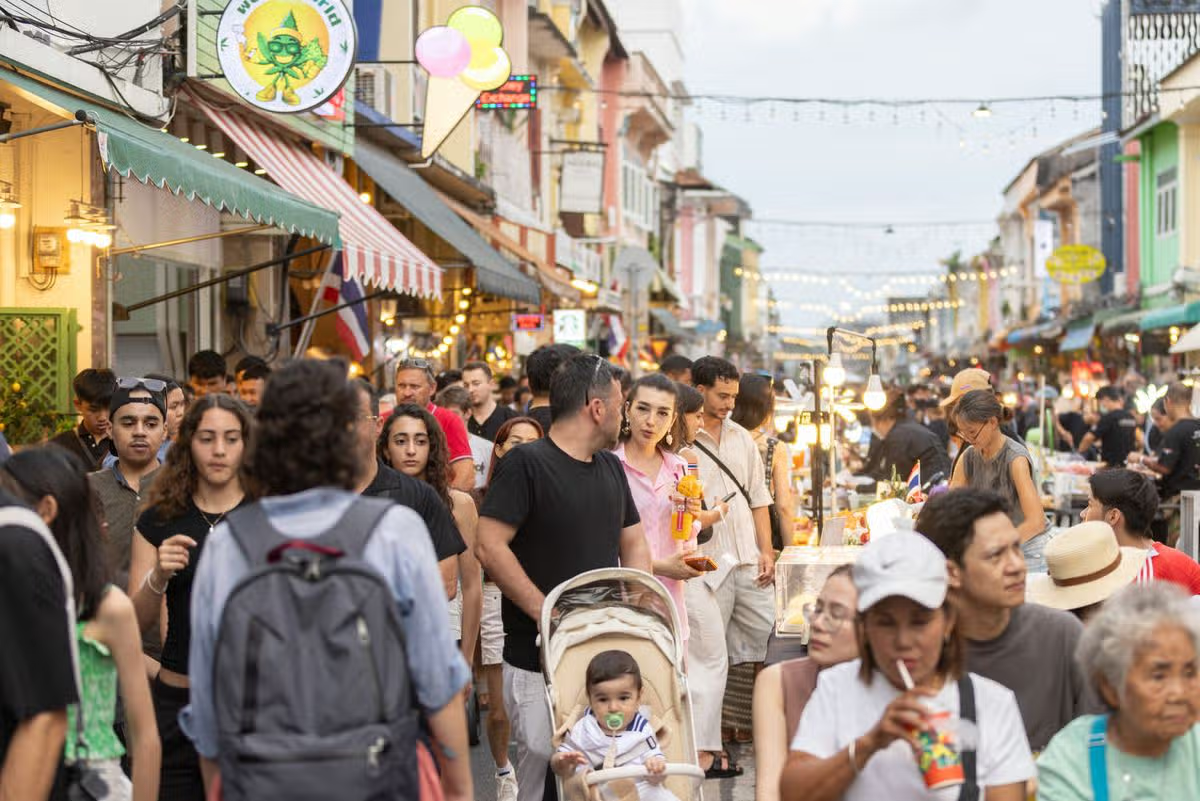
According to their research, Phuket in Thailand is the most crowded tourist destination in the world. It has staggering 118 tourists to every local resident.
Phuket is one of the leading beach destinations in Thailand and is home to several of the world’s best. Kata and Karon rank as some of the best beaches in the world.
Due to its stunning scenery and popularity, tourists may find overcrowded beaches particularly during peak season. Thailand’s Pattaya and Krabi also ranked as the second and third most overcrowded spots in the world.
It means Thailand has the most spots on the top 10 list, followed by Greece and Turkey. Heraklion in Greece took the seventh spot on the overcrowded list as it has 22 tourists to every local resident.
Not surprisingly, Venice in Italy also ranked on the list as it has 21 tourists to every resident.
Now, Mr Venturini is now pushing to raise the entry fee to as much as €50. Rhodes in Greece also made the list with over 20 tourists for every resident, while Miami in the US has 18 tourists to every local.
This town’s market is over 900 years old and has a breath-taking high street filled with historic buildings, family-run businesses and lots of independent shops you cannot get anywhere else.
13:44, 06 Jul 2026Updated 13:48, 06 Jul 2026
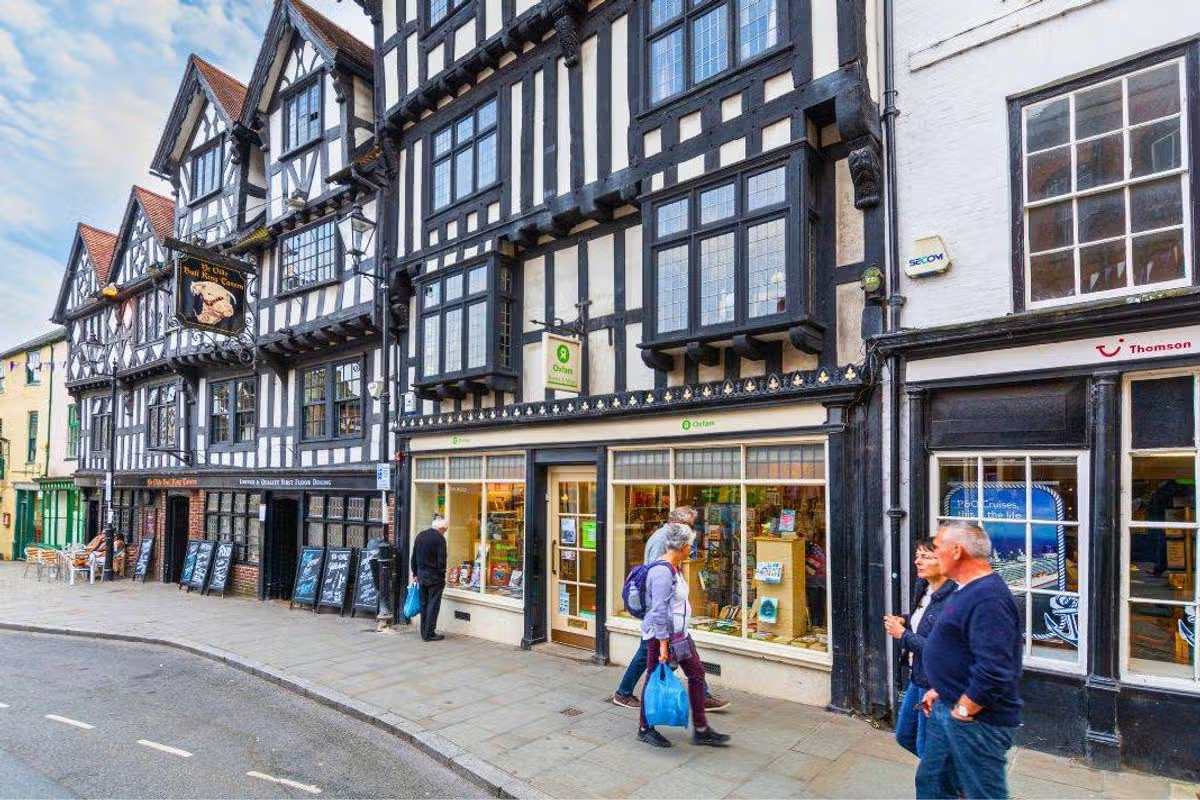
Ludlow is known for having lots of quirky independent shops(Image: Getty)
While many people splash out on pricey holidays this summer, you can have an equally magical experience right here in the UK. With a wealth of stunning destinations to discover, there are countless charming towns ideal for a short break but this gem, nestled in the West Midlands, deserves to be at the very top of your list.
This historic market town is brimming with character and as you stroll through its centre you’ll uncover a breath-taking blend of medieval, Tudor and Georgian architecture. It has been named by The Guardian among Britain’s 10 “best independent high streets”, not for its looks alone, but for being “full of cool independents rather than the usual chains”.
They said: “Ludlow has long been known as a gastro-hub, with specialist producers dotted along the high street and market place. Visit the Mousetrap Cheese Shop, Harp Lane Deli and the Chocolate Gourmet for festive eats, or browse around Bodenhams, which sells clothes in a quirky, 600-year-old building.”
Why visit Ludlow?
There are so many one-of-a-kind businesses to explore when you arrive in Ludlow, but your first port of call should be the traditional marketplace sitting right at the heart of the town square.
Having been trading for over 900 years, it boasts all manner of stalls ranging from flea markets to artisan crafts, ensuring there is something to suit every pocket.
Ludlow Market is a treasure trove of finds, and is also well regarded for its monthly specialist events, including the Food and Craft Market, the Local to Ludlow Producers’ Market, and an Antique Market.
Once you’ve had a good rummage through the local shops, your suitcase will be packed to the brim with gifts to take home, thanks to a wealth of family-run businesses such as Bensons, which stocks jewellery, and Florabunda, a florist.
If you work up an appetite, head to the Ludlow Farmshop, selling locally sourced meats, cheeses, baked goods and other regional delicacies you won’t find anywhere else.
What else is there to do in Ludlow?
Ludlow has built a reputation for championing independent businesses, but should you tire of shopping and eating, there is plenty more to discover. Perhaps the most unmissable attraction is Ludlow Castle, a stunning 11th-century ruin built by the Normans that boasts breathtaking views across the surrounding countryside.
It is also well worth taking a leisurely stroll along the River Teme to admire Ludford Bridge, which not only looks spectacular but also dates back to medieval times.
Just a short drive away lies Mortimer Forest, offering miles of gorgeous scenery, whether you fancy a gentle woodland walk or fancy tackling the climb up to High Vinnalls, the loftiest point within the forest.
Ludlow ticks every box for those seeking a quintessential English town getaway, boasting historic streets, charming independent shops, mouth-watering local cuisine and stunning countryside right on its doorstep — making it an ideal destination for anyone in search of a laid-back summer staycation.
‘We are over 100 businesses strong’
Jodie Deakin, who owns local independent business, Eclectica, and is chair of Ludlow Chamber of Trade and Commerce, which members pay £50 a year to join, told a visiting journalist earlier this year: “We are over 100 businesses strong and have everything from retail businesses like mine to professional services like solicitors.”
Of the market, she said: “These are permanent market stores, so they’re here seven days a week. It’s owned by our town council, so it’s the revenue stream for them and they run the market most days, but also lease it. Ludlow Local Produce Market is one of the leased markets. To be a vendor, you have to produce everything within a 30-mile radius.”
Manager Tish Dockerty said of Ludlow Local Produce Market at the same time: “Everything that’s sold is either made by the person on the stall or the person that’s selling it, so they can tell you how it’s made.”
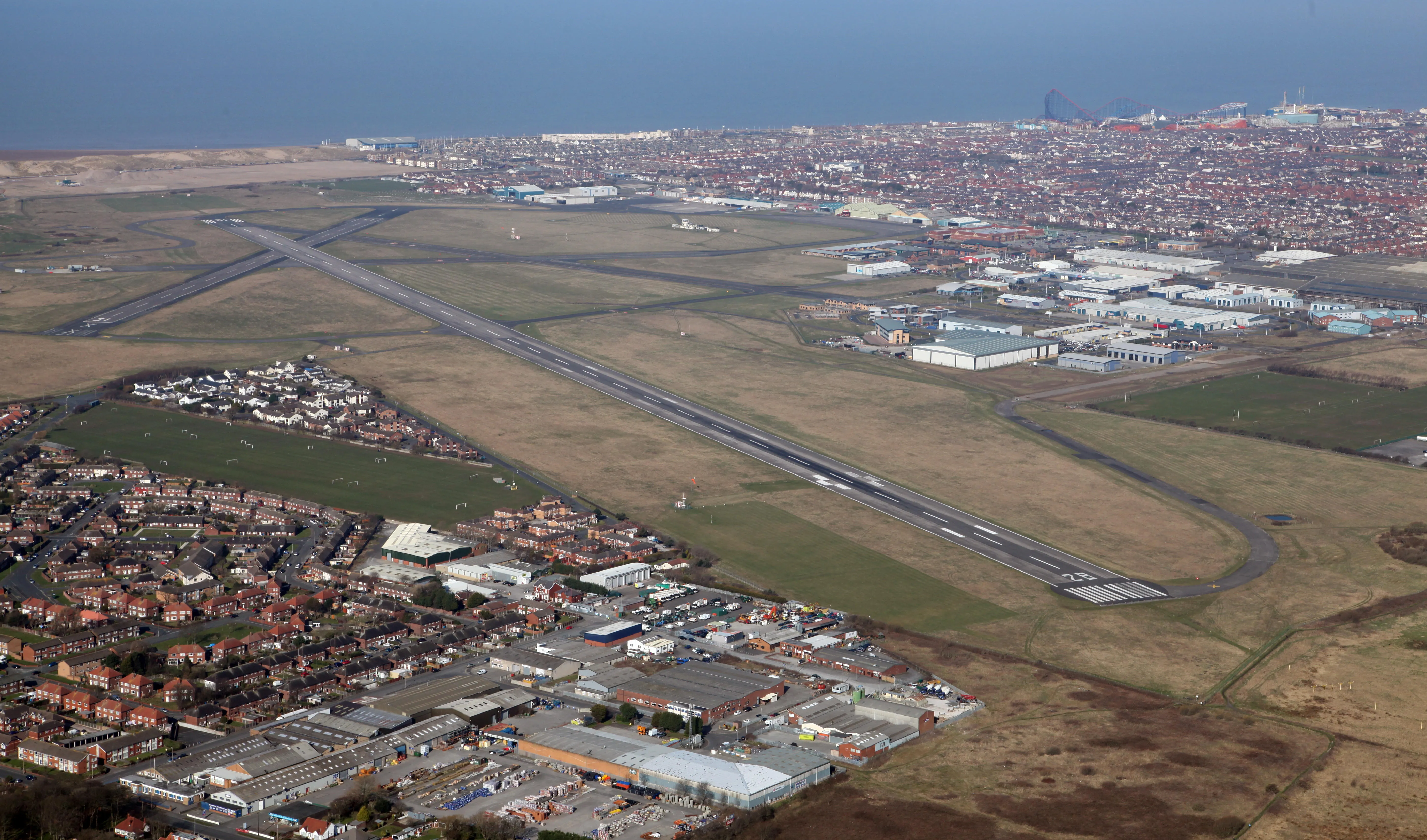
A SMALL airport in the UK could relaunch flights that would take Brits right to the beach.
Blackpool Airport once offered passenger flights to places in Europe such as Spain.
Sign up for the Travel newsletter
Thank you!
Blackpool Airport could get new regional routes – 12 years after passenger flights were axedCredit: Alamy
However, these ended back in 2014 when the airport went into administration.
Now, the airport remains open as a training centre, such as for pilots and helicopter operations.
But there could be hope for relaunching passenger flights from it in the next few years.
Sadly, none of the major airlines have said they would want to launch flights, Blackpool South MP Chris Webb said, which include previously operating ones like Jet2.
He told local media: “I have spoken with all the airlines and they don’t have any interest in flying from Blackpool again.”
Despite this, an anonymous London businessman has suggested the launch of a small-scale airline which would connect London to Blackpool.
If it went ahead this could launch as quickly as two years – and connect the main city to one of the UK’s most iconic beach resorts.
However Mr Webb said a lot of things would have to change first, including “better facilities, bigger passenger lounge and a better building”.
He added: “But it would certainly be viable, if handled correctly.
“Blackpool is one of the biggest tourism destinations in the UK, it is crying out for a properly run airport.”
Airlines like Jet2 have expressed no interest in returningCredit: AlamyBut a new small airline based in London could connect the airport to the cityCredit: Alamy
It isn’t the only airport hoping to relaunch passenger flights in Britain.
A UK city that is often overlooked and at the centre of brutal jokes could welcome back a beloved lido following concerns over open-water deaths amid the balmy heatwaves
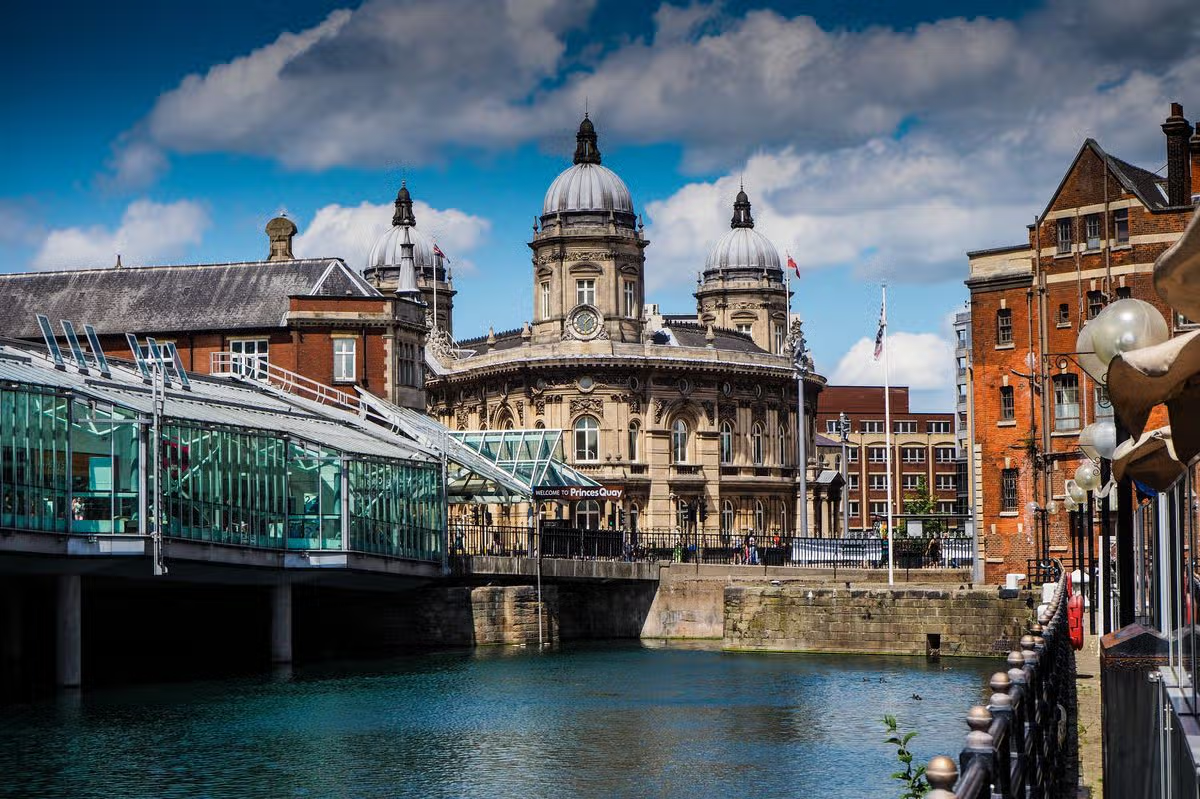
A former lido could return to this often overlooked UK city(Image: Getty Images)
A UK city that has often been ridiculed is planning to restore its mega lido after it was demolished almost 40 years ago.
For countless years, Hull has been the subject of mockery, partly due to its previous reputation as one of the ‘UK’s worst places to live’ and its sharp industrial decline in the fishing and shipping industries. Even those who have never visited the East Yorkshire city find themselves going along with the unfair narrative, despite its significant progress.
Today, the city, officially called Kingston upon Hull, boasts lively independent bars, restaurants, art galleries, and hidden gems dotted along the waterside, as well as the mega amphitheatre Stage@TheDock. It’s also home to one of the ‘UK’s best wildlife attractions’, The Deep, a colossal aquarium with more than 3,500 marine animals. It has ahistoric quarter, the Old Town, with cobbled lanes, medieval architecture and museums.
Proving just how far it’s come as a city, Hull was named as one of the ‘best places in the world to travel to in 2026’ by National Geographic, and was the only UK destination to make the acclaimed list. And there’s much more to come from the city, with proposed plans to welcome back its once thriving lido.
During the summer months, the open-air swimming pool in East Park, which opened in 1964, was a haven for locals looking for a refreshing dip. But after 24 years, the lido closed in 1985 and was demolished in 1988.
While East Park maintains a children’s water play area, an Animal Education Centre, the Pavilion Cafe, a boat house, play areas and an outdoor gym today, its former lido is still yearned for. Even more so now, in the hope of providing another safe, outdoor swimming environment after tragic events unfolded during the UK’s recent hot weather, which has seen at least 18 people die in open water.
Now, the local council in Hull has agreed to look into the prospect of restoring the former lido in East Park. According to the BBC, Councillor Jessica Smith said: “As the weather gets warmer, we see the same tragic stories repeated year after year. Open water is unforgiving; it doesn’t matter how confident you are, it doesn’t matter how fit you are.”
The proposal, put forward by Jessica during Drowning Prevention Week, has been supported by Councillor Kalvin Neal, who noted that it might need to be relocated. “Although it is something that could be looked at, potentially that isn’t the best place, it could be somewhere else that might be better,” he commented.
It would undoubtedly be a welcome addition back to Hull, with the city’s only council-run lido located at Albert Avenue Pools and Fitness. This outdoor heated swimming pool, which was opened in 2023 after a £10.5 million refurbishment, is available to use from May to September, and has proven to be a huge success in the city.
On swimming safety, Cllr Jessica previously commented: “As local councillors we have a duty to do our best to provide safe swimming facilities and adequate education to our young people,” as reported by Hull Live.
“In a city surrounded by water and home to many lakes, drains and other bodies of water, this is a crucial issue for our communities this summer.” Councillor George Grozav is seconding the proposal. “Every death in open water is a tragedy, and far too many of these incidents involve children and young people.”
Do you have a travel story to share? Email webtravel@reachplc.com
And the theme park has since announced that they will cut prices by 15 per cent this summer.
This includes the Tiny Tots Wristband which includes unlimited goes on nine rides such as the Margate Express and Caterpillar Coaster, and now costs £10.99.
Otherwise there is the Mega Ride Wristbands which includes all ride entry, all day for £20.99.
If you want a quiet and peaceful summer break, this island needs to be on your list.
This article contains affiliate links, we will receive a commission on any sales we generate from it. Learn more
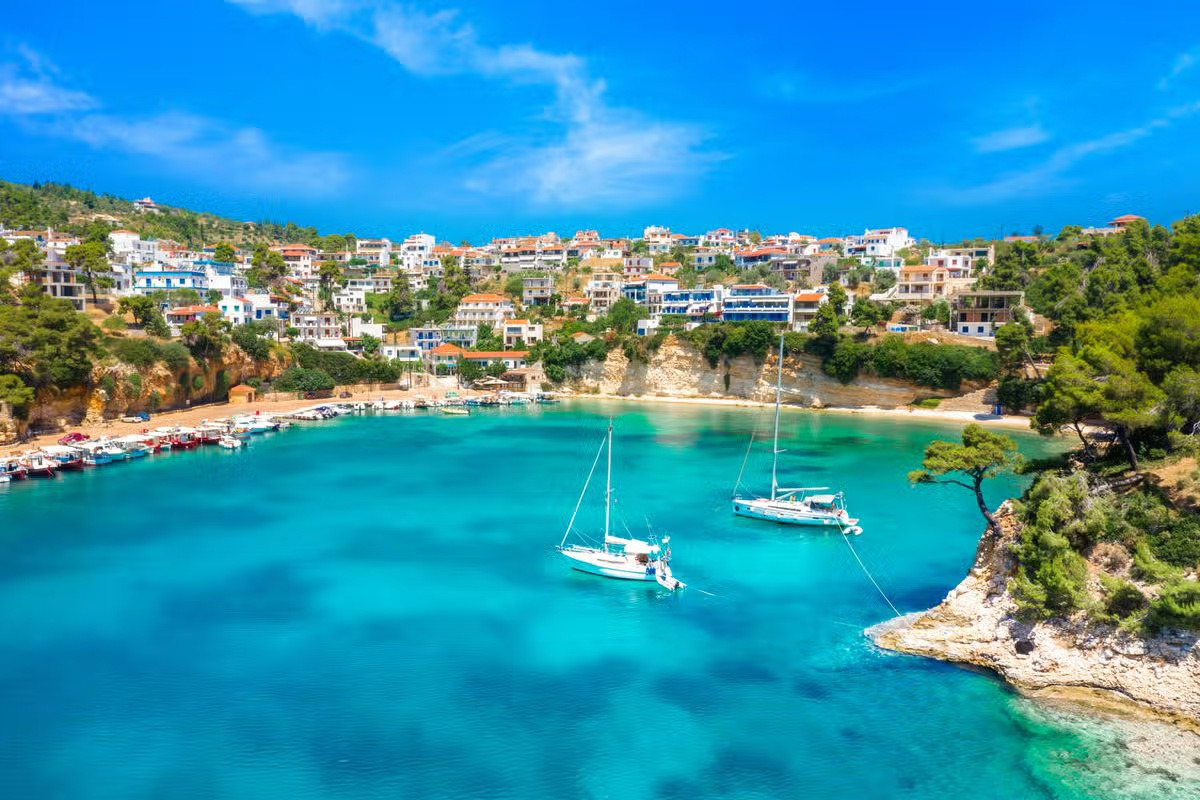
This island is a must-see(Image: Getty)
The summer holidays are approaching, and if you’re planning a holiday, then you know it can be tricky to decide where to go. Living in the UK means we’re lucky enough to have Europe on our doorstep.
With so many dream locations to choose from, it can be difficult to decide where to go. If you value peace and quiet, it’s a good idea to look for places that are a little off the beaten path while still providing a relaxing, sunny getaway.
That’s why travel experts at Solmar Villashave researched data from more than 160 places to reveal which are the best for a crowd-free holiday.
Where to visit for a peaceful holiday
Coming in first place was Alonissos, Greece. This stunning island is located in the northern Sporades and is famous for its laid-back charm and unspoiled beauty.
It’s the smallest of the inhabited islands in the Sporades archipelago and offers a totally relaxed holiday.
It’s home to the largest marine protected area in Europe which offers birds, reptiles and mammals a safe breeding ground.
You can visit the park and perhaps catch a glimpse of the rare Mediterranean Monk Seal as you dive beneath the crystal clear water.
There’s no shortage of gorgeous beaches to spend a day at, and the Old Town is well worth a visit too.
The Old Town sits above the island on a hill 200 metres above sea level. There’s narrow winding alley ways, colourfully painted doors and plenty of charming cages and tavernas to stop in for a bite to eat or a drink.
You can enjoy awe-inspiring views out over the island and the sea that surrounds it while sitting in the shade of the island’s greenery.
How to get there
There is no airport on the island, so the best way to get there is to get a ferry from the neighbouring island of Skiathos. The ferry takes around two hours to the largest town on the island – Patitiri.
From Patitiri you can explore the rest of the island, whether you want to lounge on the beach, explore the marine reserve or soak up the rich history of the city – all without the crowds that flock to other Greek islands like Mykonos and Santorini.
Sharon Bradbury, travel expert at Solmar Villas said: “Many families don’t have the option of travelling outside the school holidays, so choosing the right destination becomes even more important.
For families looking to make the most of their summer break, it can be worth looking beyond the usual hotspots. A quieter destination often means a more relaxed experience from the moment you arrive. “
The 20 quietest places to visit on school holidays
A BRIT has been left devastated after she was refused boarding her flight to Spain due to a simple mistake.
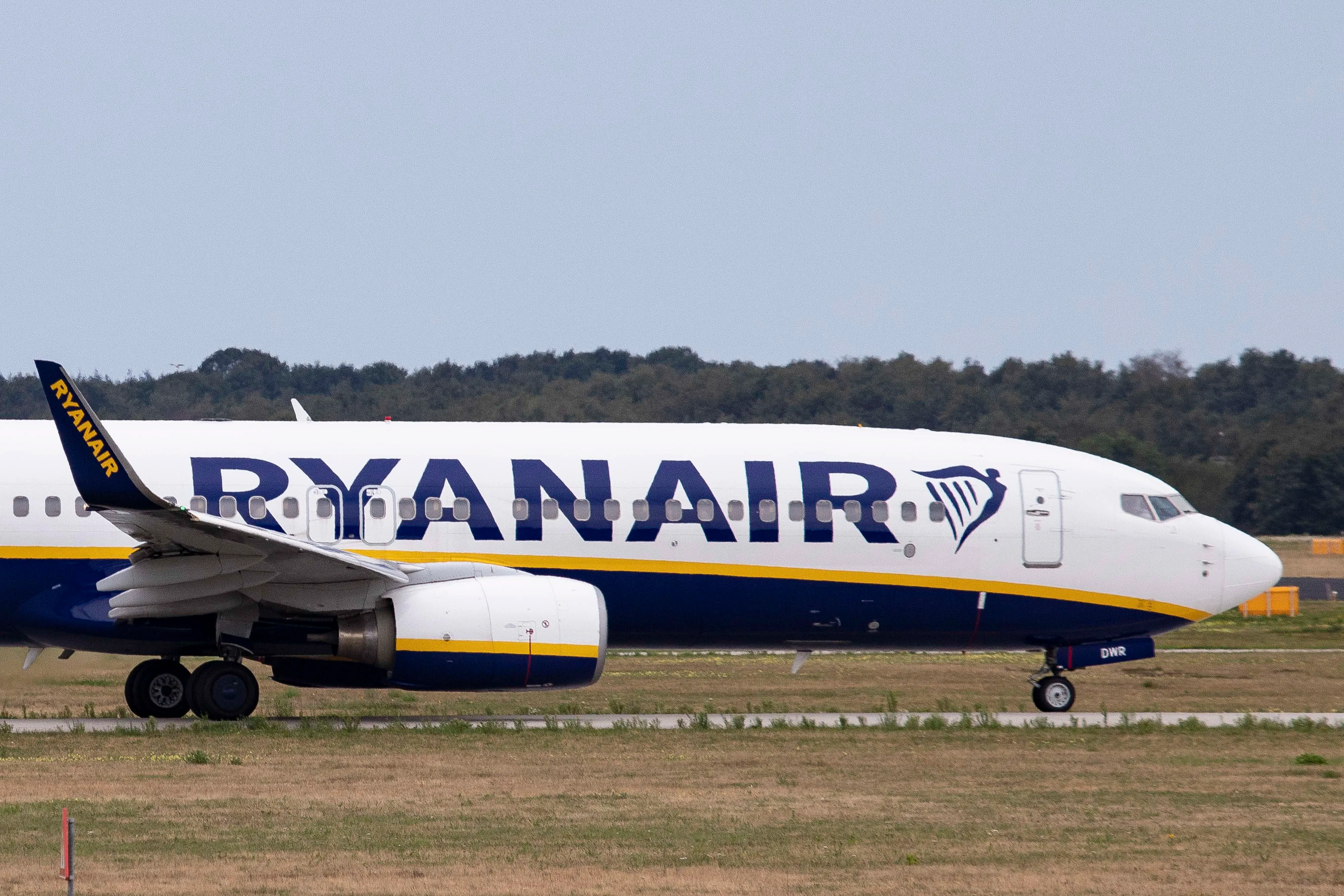
Rachael Norton-Voysey, 33, was stopped before boarding her Ryanair flight from Birmingham to Lanzarote.
Sign up for the Travel newsletter
Thank you!
A woman has warned about travelling with a damaged passportCredit: Kennedy News
The Brummie-based woman had a 1.5cm rip in her passport, though she claimed it did not impact any of the details in her passport or her photo page.
Rachael said: “We got to the gate and handed in my passport at that point to get onto the plane and he said it was ripped and they wouldn’t let us through.
“It was horrible – that feeling where your stomach just drops knowing we wouldn’t be going on holiday at that point.
Rachael and her friend were due to spend five days in Lanzarote, having spent £700 on the holiday but instead they both ended up heading home.
The duo were made to wait though, until the entire plane had boarded before they were escorted out of the airport.
Rachael added how she had travelled several times on the passport without an issue before.
She added: “I understand where they’re coming from but it is really petty in my opinion.”
She noted that when they went back through the airport, even the immigration officer mentioned it was harsh.
The UK Government’s website states: “If your passport is damaged you must replace it. You may not be able to travel with it.
Ryanair said they were following the official guidelines regarding damaged passportsCredit: Getty
“HM Passport Office will consider your passport damaged if: there are stains on the pages (for example, ink or water damage); you cannot read any of your details; any of the pages are ripped, cut or missing; there are holes, cuts or rips in the cover or the cover is coming away.”
“You may not be able to travel with it.”
Rachael is now hoping that her experience will warn other Brits to check their passports before travelling, and also calling out Ryanair to be clearer on the rules around damaged passports.
A spokesperson for Ryanair said: “This passenger was correctly refused travel from Birmingham to Lanzarote as her passport was damaged and therefore not valid for travel.”
A man has died after a holiday in Turkey when he suddenly fell seriously ill hours before flying home. David Kelly was at the airport when his health rapidly deteriorated.
Within hours, the joiner was rushed into intensive care and placed in an induced coma. He was kept alive on life support as he fought for his life miles from home. His devoted wife, Dawn, remained at his bedside in a Turkish hospital for four weeks.
A fundraiser set up with the permission of David’s family said: “What was meant to be a relaxing holiday in Turkey turned into a nightmare that none of us could have imagined. Just hours before his flight home, David suddenly became seriously unwell at the airport.
“Within a matter of hours, his condition deteriorated rapidly, and he was rushed to intensive care. Placed into an induced coma and kept alive by life support, David was fighting for his life thousands of miles from home.
“For four long weeks, his devoted wife, Dawn, remained by his side in a Turkish hospital, never leaving him as he battled with incredible strength and courage.”
David, from Barrhead, Renfrewshire, was eventually repatriated on 8 June aboard a specialist flying intensive care unit. He was taken to the Intensive Care Unit at the Royal Alexandra Hospital in Paisley.
The fundraiser said he continued his fight while receiving “outstanding care” from hospital staff. But David sadly died peacefully on 18 June surrounded by his family. The fundraiser added: “Despite everyone’s best efforts, our warrior David passed away peacefully on 18 June, surrounded by his loving family.”
His family later announced the devastating news through his business’ Facebook page, Barrhead Joinery. They said: “We would like to share the devastating news that sadly after fighting as hard as he could, our lovable, amazing David Kelly passed away on Thursday 18 June.
“Barrhead Joinery will now cease trading, as a family we’d like to thank you all for the work you all have given David over the years. Lots of love from his wife Dawn and daughters Gemma & Sophie.”
David was described as a much-loved husband, father, brother, uncle and friend. The fundraiser said: “He was someone who was always there to lend a hand, offer support, and put others before himself. Now it is our turn to be there for those he loved most.”
Tributes have also poured in from members of the local community. Noreen McHugh wrote: “I am devastated to hear this sad news about Davie. He was an excellent professional who I counted on over the years.
“But upmost a wonderful human being who was always friendly and honest. My sincerest condolences to you and your daughters. A huge loss for you all. RIP Davie, you will be sorely missed.”
Another person added: “So sorry to hear this very sad news. David did some work for me when I moved into my home in Newton Mearns some years ago. Such a lovely, lovely man. Sending you all my heartfelt condolences. x”
The UK Foreign and Commonwealth Development Office issued a travel warning on Monday following an incident in Rotterdam that has caused disruption for the past six days
The travel warning was issued on Monday morning (Image: AFP via Getty Images)
Eurostar passengers heading to Europe had their trips disrupted by a fire.
Eurostar services between the UK and the Netherlands have been severely disrupted following a fire near Rotterdam Central station. The UK Foreign and Commonwealth Development Office issued a travel warning on Monday following last week’s blaze.
Last Monday, multiple London–Amsterdam services were canceled after a fire broke out in a cable duct near Rotterdam Stadion. It caused a major power failure that shut down rail traffic south of Rotterdam.
“Completely messed up my travel plans, ended up getting the ferry,” one unlucky customer who got caught up in the disruption wrote online. Another added: “We had to take the coach to Brussels. I hope we will get our refund.”
The outage disabled signaling and switch systems between Rotterdam Centraal and destinations, including Dordrecht and Breda
“Eurostar services between the UK and the Netherlands are severely disrupted following a fire near Rotterdam Central station,” the FCDO statement issued this morning read.
“Eurostar has advised that they expect trains to be disrupted until at least 6 July 2026. Travel times are expected to be significantly longer due to trains having to take alternative routes due to fire damage and trains between London and Amsterdam will not stop in Rotterdam.
“If you are planning to travel between the UK and the Netherlands, check the latest information with your travel operator before you travel and the latest updates on the Eurostar website.”
Passengers are warned to check with their booking operator before they travel between the UK and the Netherlands.
A statement from the rail firm reads: “Due to fire damage to the railway near Rotterdam, we expect our trains to be disrupted until at least 6 July 2026. Trains running between London and Amsterdam will not stop at Rotterdam and trains running between France/Belgium and Amsterdam will not stop at Schiphol or Rotterdam.
“As these trains need to take an alternative route around the damaged area, journey times will be significantly longer, and seat availability is very limited. We expect the disruption to last until at least 06 July 2026. We apologise for the inconvenience the situation has caused.”
The update comes after the Foreign Office has issued fresh travel advice for Brits heading to Greece. In the update on Thursday, July 2, the FCDO warned that “terrorists are likely to try to carry out attacks in Greece.”
While there is no current advice against travel to Greece for British holidaymakers, the FCDO said that “attacks could be indiscriminate, including in places visited by foreign nationals.”
The FCDO outlined: “There have been several attacks involving explosives and automatic weapons against Greek institutions, shopping malls, banks, media offices, diplomatic premises and the police.”
One tragic attack took place on Wednesday, July 1, which saw “three improvised incendiary device attacks against the residential properties of Greek political figures killed one person, with four others being injured.”
Heathrow Airport has issued a reminder to travellers
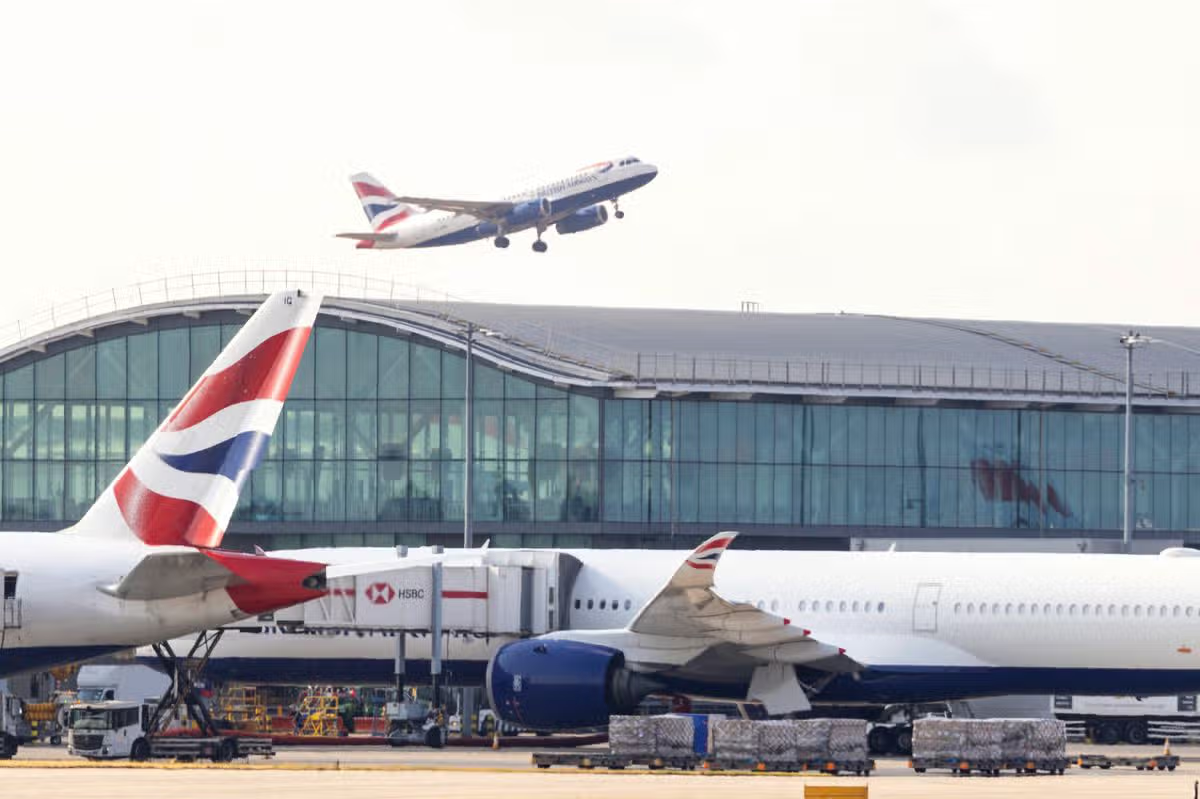
Heathrow is the country’s busiest airport(Image: Jason Alden/Bloomberg via Getty Images)
A major UK airport has issued a reminder to travellers ahead of what is anticipated to be an exceptionally busy summer period for international travel.
Hundreds of thousands of people transit through Heathrow Airport daily, and a message on the airport’s official X account is encouraging those with upcoming trips to “just remember”. The social media post reads: “With over 100 touchless water stations at Heathrow, you’re never too far from staying hydrated. Just remember to empty your reusable metal or double-walled water bottle before security, and top it up before you fly.”
Heathrow scrapped the 100ml rule earlier this year, meaning travellers passing through the nation’s largest airport can now keep liquids in containers up to two litres in their bags while going through security, following the completion of its deployment of new advanced CT scanners.
Content cannot be displayed without consent
Electronics such as laptops can also remain in luggage, while transparent plastic bags for liquids are no longer required. The regulation change only applies to departures from Heathrow, and travellers must verify restrictions on baggage at the airports they are flying back from before boarding flights to the UK.
Back in January a DfT spokesperson said: “Heathrow is the latest UK airport to complete its rollout of next-generation security equipment for passengers, helping ensure security checks remain robust and can be completed smoothly.
“Airports are responsible for the installation and operation of security equipment. Passengers should continue to check security requirements with airports before they travel and come prepared with liquids in containers no larger than 100ml in hand baggage unless advised otherwise.”
The former theme park has remained vacant since it closed in 2016, but plans to transform the site into a ‘Center Parcs-by-the-sea’ style holiday resort with a Lidl supermarket have been recommended for approval
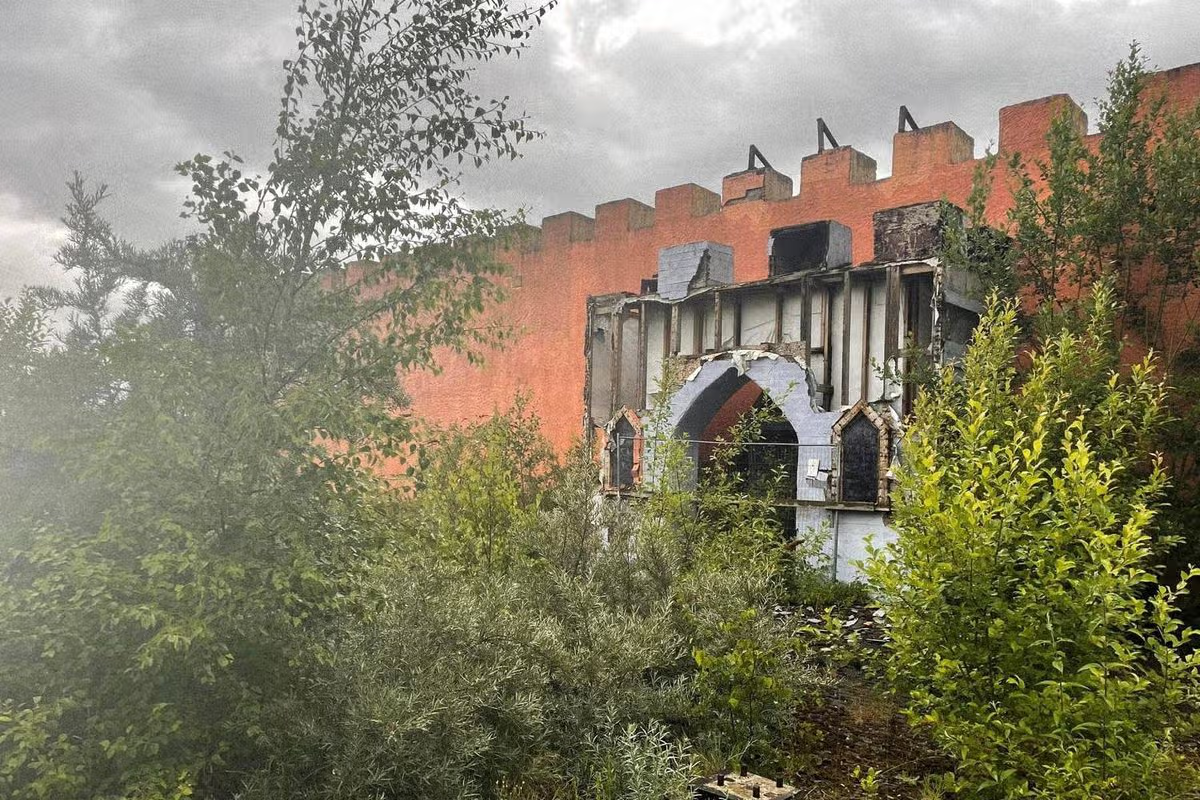
The park was shuttered in October 2016(Image: Pleasure Island Archive)
A theme park that was shuttered back in October 2016 and has been left abandoned ever since could be given a new lease of life in new holiday park plans that have been dubbed “Center Parcs-by-the-sea”.
Pleasure Island in the seaside town of Cleethorpes opened in 1993, and in its heyday it was much loved by locals and tourists thanks to its selection of 50 rides, live shows, and family-friendly entertainment.
After being closed, most of the rides were sold off, and the land has lain abandoned, with only a few rotting buildings and rusting structures giving away that this was once a vibrant attraction. However, there are now plans to redevelop the former Pleasure Island site into a £70million complex featuring a Lidl superstore, hotels and holiday park.
The plans have been put forward for approval by council officers. The proposal for the 60-acre location is expected to generate approximately 400 jobs for the local area, with a further 400 during the construction period. An application to overhaul the disused theme park was originally lodged in January 2023. Environmental assessments, flood risk evaluations and ecological impact studies have needed to be completed before councillors could fully consider the scheme.
At North East Lincolnshire Council’s planning committee on Wednesday, July 8, councillors will be urged to support the plan, subject to conditions.
The site changed hands six years ago, with developers unveiling their ambition for a “Center Parcs by the sea” featuring 272 lodges, hotels, restaurants and retail units with car parking. Lidl GB Ltd, YPG Fab2 ltd, Seaside Getaways and Church Lane Humberston Ltd sought permission in January 2023 to demolish the site and establish the new holiday centre, Lidl superstore and hotels, reports Grimsby Live.
The agent, Lichfields, based in Leeds, has put forward plans to clear the theme park site of the remaining structures and replace them with a large Lidl store and garden centre. The total size of the site within the proposal is around 60 acres.
Pleasure Island covered approximately 25 acres. Two hotels are proposed for the site, one boasting 58 rooms and another offering 148 rooms, both standing at five storeys tall. A drive-thru coffee shop, widely expected to be a Costa, features in the application, alongside a reception area serving 272 lodges, which will offer holiday accommodation ranging from two to four bedrooms.
Retail units and a cycle hire centre are also part of the plans. A lake remains at the heart of the site, and developers are keen to build an anglers’ hub beside it, complete with toilets, lockers and changing facilities for fishing enthusiasts.
Councillors gathered at Grimsby Town Hall to consider objections raised by rival retailers Tesco and Aldi, as well as local residents who have flagged concerns over traffic and the potential impact on wildlife. However, a significant number of people have voiced their support for the development, citing job creation, a boost to tourism and the removal of a long-standing eyesore from the area.
In a report presented to councillors, officials said: “It is considered in principle that a large proportion of the scheme, if not all of it, would support tourism and the visitor economy, in line with the policy aims, widening the choice and availability of such uses as a comprehensive scheme.
“The main site and overflow car park have been vacant for many years since the unfortunate closure of Pleasure Island in 2016. The main site has a derelict appearance which is now beginning to degrade the character and appearance on this key route through the resort.”
The comprehensive planning application report examined the ecological impact alongside access and traffic concerns, but found no serious or harmful effects.
Officials also evaluated the impact of expanding the Meridian Showground, situated next to the proposed holiday development. The Showground may soon accommodate crowds of up to 15,000 people and draw more prominent musical acts.
The noise assessment determined there would be no adverse impact on residents of the lodges or hotels. They described the proposal as “an effective use of the land” and stated it would “contribute to the local economy and the vitality of the resort.”
Adrian Smith, Director of Church Lane Humberston Limited, which is spearheading the development, told Grimsby Live: “We’re delighted that the proposal has been recommended for approval and has reached Committee stage.
“Together with our partners Lidl UK, and with great thanks to planning consultants Lichfields and to Cheryl Jarvis who heads NELC’s planning team, we are thrilled that the recommendation for approval of this £70m project, which will create nearly 400 jobs in the local market and provide an unprecedented boost to the local economy is nearer to delivery.”
Have a story you want to share? Email us at webtravel@reachplc.com
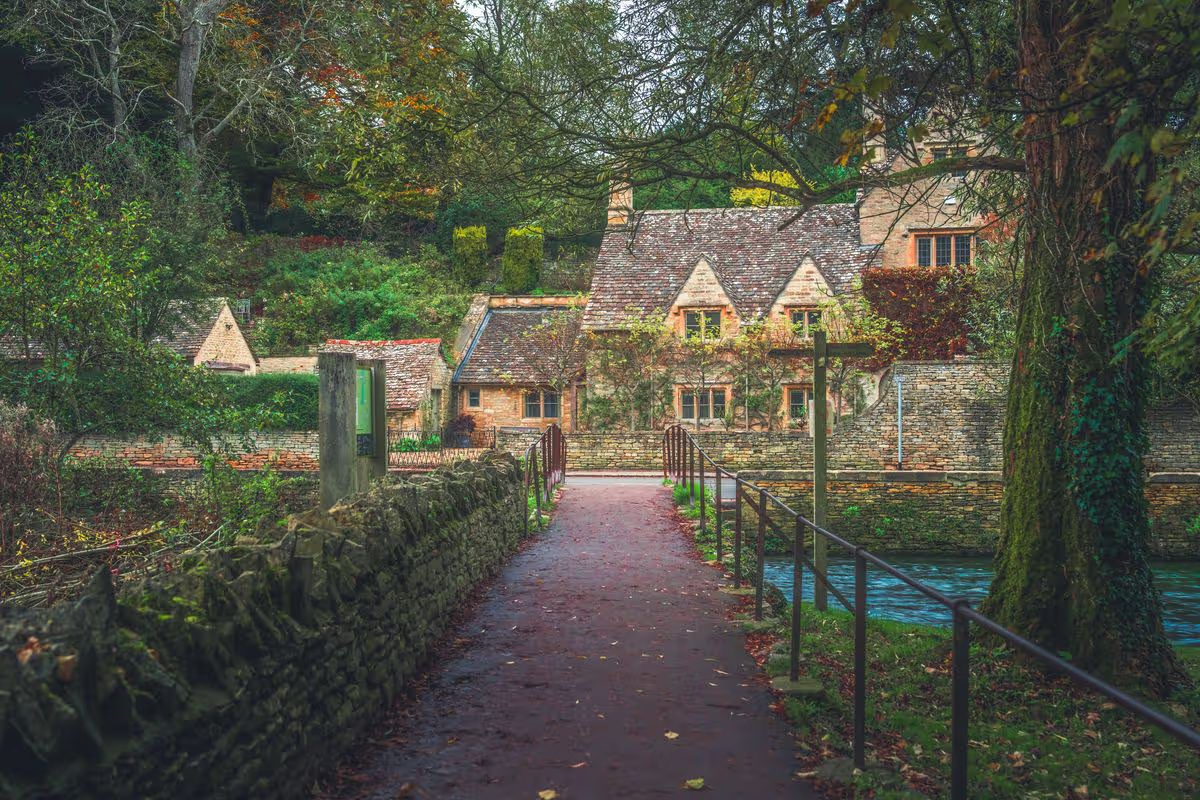
This village in the Cotswolds has been named the world’s most beautiful village in a Forbes-featured ranking, with its honey-slicked cottages and River Coln setting beating Mediterranean destinations
The village is predominantly owned by The National Trust (Image: CHUNYIP WONG via Getty Images)
Travel lovers have awarded this charming village with cobbled streets a top spot as the most picturesque village on the planet.
Now a thriving tourist destination, Forbes crowned the Cotswolds settlement as the most beautiful village in the world, giving Mediterranean coastal hotspots a real run for their money.
While England has no shortage of stunning landscapes, from the rugged beauty of the Lake District to the sweeping coastlines of Cornwall, the Cotswolds continues to attract visitors from across the globe with its fairytale villages and quintessentially English charm.
Yet it’s one particular village that has truly made a name for itself. Forbes, in partnership with Unforgettable Travel Company, revealed the 50 most stunning villages in the world — and placed Bibury firmly at the top.
The publication wrote: “Bibury unfurls like a watercolour dream-where honey-slicked cottages line Arlington Row; their mossy roofs whispering tales of 14th-century weavers. The River Coln murmurs gently here-weaving through golden buttercups and forget-me-nots, while plump ducks paddle lazily beneath canopies of willow.”
Visitors travel from all corners of the globe to admire these honey-coloured cottages and sweeping willow trees, located just a 15-minute drive outside of Cirencester. However, locals are increasingly vocal about the issue of overtourism, as thousands descend upon the tiny village during peak season.
Residents are calling for greater action to preserve the peaceful and intimate atmosphere that makes the area so beloved in the first place. Nestled on the banks of the River Coln, Bibury is steeped in history and natural beauty, with the cottages on Arlington Row dating back as far as 1380.
Today, the village’s character is safeguarded by the National Trust, who own most of the properties along the row, except for two that are now operated as holiday lets.
The historic row was subsequently transformed into weavers’ cottages during the 17th century and has remained unchanged ever since. Their characteristics appear to be straight from a storybook, and their location beside the meadow, which is inhabited by water-loving plants and birds, feels like something from a fantasy novel.
One visitor shared their thoughts on Tripadvisor, saying: “Quintessential English rural scene. Okay, we were one of the many tourists doing the same thing in admiring the buildings, but it didn’t spoil our time.
“We managed to park nearby for free, and the walk by the beautiful clear river is all part of the experience. Worth a visit.”
With nature forming the essence of this small village, many choose to visit England’s oldest trout farm, Bibury Trout Farm, where they can wander the grounds and observe vibrant wildlife. Tucked away within the village, this is a destination where you can catch a fish, hire a barbecue, enjoy a round of Crazy Golf, or simply relax in the welcoming onsite cafe.
One visitor who made the trip to the farm wrote: “We had such a fun trip at Bibury Trout Farm! The grounds were beautifully maintained, everything was clean, and the trout fishing and BBQ experience were fantastic.
“The staff were incredibly friendly, and we really appreciated the effort they made to make our visit enjoyable. Highly recommend it!”.
Should you be considering a day out to Bibury, it’s worth planning your parking arrangements ahead of time to avoid causing unnecessary disruption to the village. Where possible, experts advise visiting during the off-peak season and mid-week to ensure a more relaxed experience.
The lido is a beloved outdoor swimming pool for families, and with its Mediterranean-inspired design and 300-metre lazy river, it’s reminiscent of a luxury hotel pool abroad
This vast lido is the perfect place to cool off(Image: Dan Kitwood, Getty Images)
A lido that is often likened to pools found in Greece and across the Mediterranean has opened its doors for the summer season, just in time for the third expected heatwave to hit the UK.
The pool has been loved by local families ever since it first welcomed visitors in 1896, and nowadays draws tourists from far and wide too. It’s not difficult to understand why.
One glance at the lido, with its strikingly blue waters, splashpad and 300 metre-long lazy river, and you’d be forgiven for thinking you were lounging at an overseas hotel pool.
Yet this dazzling blue pool is actually tucked away in Kent, just over an hour from London. The Strand Lido in Gillingham also holds the unique distinction of being the only riverside saltwater pool in the entire UK.
Fed directly from the River Medway, the water is filtered and chlorinated to ensure it’s perfectly safe for swimmers of all ages. The Lido Guide wrote about the Strand: “Nothing about the exterior gives away what lies within. What lies within is a riot of Mediterranean-resort-style colour and fun. Any children in the party will be completely unable to contain their excitement.
“The whole thing is a freeform riot of bright white painted concrete, edged in royal blue, that gives the treated river water that fills the pool a hue that is more reminiscent of Greece than Kent.”
There are six 25-metre long lanes for swimming, alongside a paddling pool for toddlers and enjoyable extras such as water fountains. As the pool is unheated, it operates on a seasonal basis only, and it reopened for 2026 on May 23.
The pool then opens at weekends until the school summer holidays, when it operates daily before closing at some point in September. Tickets must be booked online through the Medway Council website to secure your spot at this much-loved pool.
During opening days, the pool offers two sessions: the first from 10.30am to 1.30pm and the second from 2.30pm to 5.30pm. There’s also a free to use Splash Pad in the park that has the same opening hours as the lido.
Alongside the pool itself, the complex boasts sunbathing and relaxation areas, a café serving food — though you’re more than welcome to bring a picnic and enjoy it in one of the park’s shaded spots — as well as play areas. There are changing rooms, poolside showers and a shop stocking inflatables, though you can also bring your own rubber ring.
The Strand Leisure Park is also home to a miniature railway that operates seasonally, trundling around the park on sunny days, along with plenty of riverside walks to explore.
One glowing review read: “We travelled from Suffolk and booked the afternoon session. Stopped for some lunch on the way. Lovely day out. Pool has a lazy river, kids pool and adult pool, changing rooms, toilets, café. Lots of space to set up camp for the afternoon but not a lot of shade.”
Another visitor commented: “Very good few hours. Looks like we are on holiday. Lazy river all around the outside (take a rubber ring). “
Have a story you want to share? Email us at webtravel@reachplc.com
Many holiday hotspots have seen anti-tourism protests thanks to overcrowding and the issues it causes for locals. But the European island that’s the most overcrowded wants to pack more visitors in
The island has a tourist to local ratio of seven to one(Image: Getty Images/iStockphoto)
The most overcrowded island in Europe has seen no over-tourism protests – and bosses want more visitors.
A study has named the Continent’s most packed island, based on tourism density, and it’s not in the Balearics or Canaries.
In fact, the local tourism board wants to bring more visitors to the island and triple the tourism sector’s contribution to the economy. The plans would see the island’s visitor numbers rise from just over four million last year to 4.5 million by 2035.
With a total area of 316 km², Malta is roughly a fifth of the size of London and has a population of around 575,000, about a third of which are foreign residents. This means there’s a ratio of roughly seven tourists for each resident, so locals are already outnumbered.
The study was carried out by BookRetreats.com, which “analysed the latest data from the European Commission, focusing on overnight stays in tourist accommodation per square kilometre (km²)—a measure of tourism density.”
While Mallorca (Majorca) had the most visitors out of the islands in the study, nearly 14 million last year, Malta’s mainland came on top as the most overcrowded island due to its relatively small size. Brits account for the largest number of visitors year-round, and the island has long been a winter sun destination thanks to its 16C days in January and a majority of the island being fluent in English.
The capital, Valletta, has become a popular spot for sun-soaked city breaks thanks to its colourful 16th-century architecture, and the ancient walled city of Mdina is also a hit with tourists thanks to its winding medieval streets. It’s also famous for its beaches, especially in the north of the island, which has turquoise blue seas and calm, shallow waters.
But there have been some measures put in place on Malta’s islands to help ease overcrowding. For example, the Blue Lagoon on Comino used to get daily crowds of up to 12,000 in the summer, and in response, authorities capped tourist numbers to the white sand beach at 4,000 a day. There have since been calls to halve this number to protect the delicate ecosystem.
The islands of Gozo and Comino came 14th on the list, meaning while they’re still overcrowded, they don’t have the same tourism density as Malta’s mainland.
Perhaps unsurprisingly, Spanish islands dominated much of the list of the most overcrowded spots, with Lanzarote, Ibiza, Tenerife, and Gran Canaria ranking highly. Greek islands including Corfu and Zakynthos (Zante), also made the top ten, as well as the Portuguese island of Madeira, which is also a winter sun favourite with Brits.
As someone with Cypriot roots and distant Greek heritage, I’m often asked the question: which is the best island? People lean in, expecting a secret – some tiny, untouched haven, known only to locals. My answer is always the same: Crete. With its fiercely proud identity, warm communities and exceptional food, it feels both deeply Greek and entirely itself.
For our anniversary weekend, my husband and I head to Lassithi, in the island’s far eastern corner. As a chef and food writer, I’m drawn to the area’s reputation for exceptional produce: Sitia extra virgin olive oil, creamy xigalo cheese, mountain honey and an abundance of excellent tavernas.
After an early start, we check into our hotel and freshen up. The Sand Suites is a new, adults-only retreat with just seven suites and a pathway leading directly to the wide, sandy Almyros beach and its clear shallow waters. Our suite is a serene hideaway with a private pool overlooking dramatic mountains.
Photograph: Guardian Graphics
For our first evening, we head to Karnagio in the pretty harbour town of Agios Nikolaos, a 10-minute drive up the coast (or a 45-minute walk). We’re told it offers the perfect introduction to the flavours of Lassithi. Despite a warning from Dimitri, the knowledgable manager at the Sand Suites, we order far too much food. We begin with Cretan classics: dakos (barley rusks softened with grated tomato, olive oil and mizithra cheese), alongside mizithropitakia (delicate mizithra-filled pies). More plates arrive. Spring onion-topped fava, tender horta (wild greens dressed generously with lemon), followed by melt-in-the-mouth sauteed lamb with locally made pasta and torched anthotyro cheese. Weeks later, and I am still thinking about that lamb.
Sand Suites, near Agios Nikolaos.
Eventually, we admit defeat. Unfazed by the unfinished dishes, the waiters arrive with a tray of complimentary sweets. Then comes a small carafe of raki. “Only if you join us,” I tell our waiter in my Cypriot-Greek. He needs little encouragement. “Yamas!” we declare, raising our glasses before downing the fiery spirit. The glasses are refilled. I know I’ll regret it in the morning, but we drink again, buoyed up by good food and excitement.
The next morning, fuelled by a delicious breakfast of fresh juice, coffee, pastries and freshly cooked eggs, delivered to our room, we jump in the car and drive half an hour south-east down the coast to Evotry, a roadside bakery that we are told to visit early to stand any chance of getting the best of the day’s bakes. Inside, it is a treasure trove: cakes and biscuits, alongside trahana (cracked wheat fermented with yoghurt), are all made by Stefanos and his wife Maria. Like many families in Greece, they press their homegrown grapes each September to make petimezi – a dark, naturally sweet grape molasses. As well as being sold in bottles, it also forms the base of many of their bakes, most notably kalitsounia (traditional Cretan sweet cheese pies). Found all around Lassithi, here they are distinct: Stefanos does not use refined sugar, relying solely on his petimezi for sweetness. We leave with a box and some cookies, and regret travelling with hand luggage only.
En route to our next stop of Mochlos, we are told about a 3,000-year-old olive tree so make a detour. The road climbs into the mountains, winding and steep. The tree is exactly as expected – vast and commanding, yet somehow gentle, like a great grandmother rooted in the landscape. We sit beneath its branches and eat the kalitsounia, surrounded by birdsong and the hum of bees.
We carry on east to Mochlos, a peaceful fishing village steeped in Minoan history on the far side of Mirabello Bay, and settle into Ta Kochilia, a waterfront taverna, for lunch. Octopus hangs drying in the sun; the sea sits just beyond the edge of the path. We keep things simple: grilled squid, horiatiki (Greek salad) and bread with local olive oil. The squid is tender, slightly charred, perfect. As always, there is fruit at the end, followed by something sweet – here, halva dusted with cinnamon – and strong Greek coffee, which briefly resets us before we continue inland.
Dakos at Karnagio, in Agios Nikolaos. Photograph: Georgina Hayden
After a 10-minute drive into the hills above Mochlos, we arrive at Nektaria’s Kitchen, an open-air cookery school where every detail, from the rustic tables and benches built by Nektaria’s father Tassos, to the wood-fired oven and herb-filled demonstration kitchen, feels considered.
On Nektaria’s website a range of four-hour cookery classes are on offer, from vegetarian and meat menus to olive oil tours and local wine tastings. However, I get the impression that whatever it is you want to learn, Nektaria will be able to teach you.
Over coffee, we chat with Nektaria, her partner, her father, her best friend. We are offered homemade treats: more kalitsounia, this time perfumed with orange blossom, and mounds of biscuits – spiced melomakarona and almond honey patouda, both traditionally made for celebrations. A slow-cooked joint of pork is pulled out of the wood oven to entice us to stay and join them for a meal later on. And while the food is delicious, it is Nektaria herself who is the star of the show. Having left a career in finance just four years ago, it is clear what she has created is less a cookery school than a gathering point – a life reorganised around food, hospitality and community.
We begin our last full day in quaint Kritsa, one of Crete’s oldest villages, just a 15-minute drive inland from our hotel. A winding main street is dotted with a range of shops, traditional cafes and a fascinating natural history museum and tapestry centre.
We begin at the women’s cooperative, where biscuits and cakes are being prepared for nearby restaurants. A demonstration is also being set up in the outdoor kitchen and dining area. We stock up on boxes of syrupy sweet pastries and a bag of skioufichta, a type of rolled Cretan pasta, ready to recreate the lamb dish from Karnagio on our return home.
The writer with the eponymous chef of Nektaria’s Kitchen, in Kavousi. Photograph: Georgina Hayden
Our penultimate stop is an olive oil tasting at the family-owned Mourello, where visitors can book a range of olive oil experiences. Escaping the midday heat, we’re seated in a cool, quiet room overlooking valleys of olive groves. Over two hours, Eleni guides us through her family’s growing, harvesting and pressing process in such detail that I leave feeling I could semi-confidently turn my hand to making my own olive oil. We taste and compare different grades and types. Mourello’s Vedema oil is outstanding – peppery, punchy and silky. We leave with several bottles under our arms.
For our last evening we drive up into the hills again to the village of Kroustas. Sitting at 520m above sea level, the view over Mirabello Bay is dramatic. We’ve booked a table at Xatheri, a destination restaurant that feels deeply rooted in family life and is much loved in the area. Chef Konstantinos has built the menu around recipes from his parents and grandmother, who we are told has just stopped by to check in on service. We start with one of her recipes, dolmadakia, small, delicate stuffed vine leaves. Goat stew arrives rich and slow-cooked, tossed through spaghettoni and topped with aged graviera cheese. And finally gamopilafo, also known as “wedding rice”, which feels appropriate given it’s our anniversary. It is deeply comforting and impossibly rich.
Despite protesting, dessert appears – a generous slice of galaktoboureko, a just-set vanilla cream encased in crisp syrupy filo, which is somehow light enough to avoid being cloying. There is dessert wine, then raki, of course. We leave not just full, but slightly reoriented – already thinking about returning to this calm corner of Crete.
The trip was provided by Simpson Travel, which offers a week at the Sand Suites from £1,124pp B&B, including flights and car hire