These locations are perfect for anyone looking for an affordable getaway
Isobel Pankhurst Audience Writer
13:57, 26 Mar 2026
Enjoy a deliciously chilled glass of white wine in a beautiful country(Image: Catherine Falls Commercial via Getty Images)
After arriving at your holiday destination, many travellers fancy unwinding with a simple glass of vino. While the price of wine might not be top of your list when arranging a getaway, you could find yourself gobsmacked by the costs once you land.
To help avoid this, Holiday Pirates have shared on Instagram the most budget-friendly wine destinations across Europe, where you can grab a glass for well below £5. Leading their rankings were Hungary and Portugal, where a typical glass will set you back between £1.70 and £3.40.
Plus, Portugal is only a two-to-three-hour flight away from the UK. And timing it right, Skyscanner shows return flights to Portugal starting at £26, and to Hungary from £35. This means you’ll savour some quality wine without having to empty your wallet just getting there.
It’s not only individual glasses that work out cheaper overseas, with Drink Merchants having previously disclosed that in Portugal, a bottle averages merely £3.91.
Content cannot be displayed without consent
Both Portugal and Hungary boast their own wine-producing regions, and with numerous vineyards scattered throughout, you can sample the nation’s wines at bargain prices during your stay.
Alternative choices for those seeking somewhere to purchase a glass of wine for less than £4 included Bulgaria and Spain, where you’ll be spending between £2 and £3.80.
These destinations can prove economical in other respects too, with Skyscanner showing return flights to Bulgaria from £32 and to Spain from only £24.
A YouTuber who visited Riga, Latvia, was stunned by the four-star hotel prices in the city voted one of Europe’s cheapest by Post Office Travel
13:41, 26 Mar 2026Updated 13:41, 26 Mar 2026
Ed Chapman travelled to Riga in Latvia(Image: YouTube/@EdChapman23)
A YouTuber who toured Europe‘s most affordable city was taken aback by the cost of one item he purchased during his journey.
Ed Chapman, who shares his adventures on his eponymous YouTube channel, visited Riga, the capital of Latvia, and filmed a video about his experiences in the city after it was named one of Europe’s cheapest in a survey by Post Office Travel.
His primary reason for visiting Riga was to compare it with one of the priciest cities in Europe, Oslo, Norway. According to Skyscanner, flights to Riga can be purchased for as little as £28 from Leeds Bradford Airport.
One of the most striking differences between the two, Ed pointed out, was the disparity in hotel prices.
In Oslo, he stayed at a three-star hotel for one night, while in Riga, he lodged at a four-star hotel, but the price difference was significant, reports the Express.
After exploring and commenting on his hotel room, he remarked: “We’re in the heart of the city centre, literally one street away from the main stuff. Four-star hotel. £62 a night. Now that’s tasty. For a capital city, for the middle of the city centre that’s a bit mad isn’t it?
“Bearing in mind in Oslo I stayed in a three-star hotel, also bang in the city centre and that was £140 for a night there. Less than half price that’s crazy.”
Ed isn’t alone in highlighting Riga’s charm. The city, home to approximately 600,000 residents, is located at the centre of the Gulf of Riga where the Daugava River flows into the Baltic Sea.
Additionally, the city’s historic centre has been designated a UNESCO World Heritage Site, with its Jugendstil and Art Nouveau architecture standing out as two of its main attractions.
Among Riga’s most distinctive landmarks is the Riga Central Market. Built using repurposed German Zeppelin hangars, these structures rank amongst the city’s most recognisable buildings, spanning 778,000 square feet and housing approximately 3,000 trading stalls.
Furthermore, Riga offers convenient access to nearby coastal areas such as Jurmala. The Mirror previously reported that one visitor was impressed not just by the affordability, but by the amenities available.
They commented in a review: “Changing pods are available on the beach and the sand is soft and flat. We paid €5 each for a sun lounger for the day, although in the afternoon people could help themselves to ones that were left or that people had finished with.
“Well worth the journey from Riga which is about 25 mins by train from central Riga and very cheap. We booked the day before online and it cost us about €6 return for both of us – amazing value.”
INSTEAD of spending loads on heading to the French Riviera, Brits could venture to a dupe for a fraction of the cost.
The French Riviera is known for its glamour but often comes with eye-watering prices.
Sign up for the Travel newsletter
Thank you!
Hammamet is dubbed the Tunisian St TropezCredit: AlamyAnd holidays to the destination cost a fraction of the price of heading to St TropezCredit: Alamy
Though, heading to Hammamet on the ‘Tunisian Riviera’ is just 35 per cent of the cost of a holiday to the French Riviera.
And bookings have also increased by 50 per cent following Brits ditching holidays to Turkey and Egypt following the Iran crisis.
With First Choice, Brits could pay just £516 for a week’s all-inclusive holiday to Hammamet, whereas the same holiday in St Tropez would be likely to set you back almost three times that – £1,500.
Hammamet – which is also affectionately known as the Tunisian St Tropez – is often associated with artists and actors as well as a vibrant beach-club culture.
Visitors can head to the Yasmine district, where they will find a palm-lined promenade, waterfront cafés and Tunisia’s largest marina with many superyachts.
Beach lovers can enjoy the long stretch of golden sand, with water sports and the Carthage Land theme park.
A spokesperson for First Choice said: “[The theme park] offers kids and adult-sized rollercoasters, large-scale water slides, museum-style educational exhibits and a 5D cinema.”
Tickets cost between £6 and £8 for the day.
Or for something more active, have a go at the quad bike tours, which take you on and around the hills surrounding Hammamet.
Local recommendations from the First Choice team also include heading to Bel Canto restaurant, which is Italian-Mediterranean.
Inside, the interiors are modern, and the restaurant serves a vast array of dishes including pizza and seafood, with prices ranging from around £5 to £15 per dish.
Another option is Yuman which serves a more European range of dishes and is open from breakfast to dinner.
The cafe also has great views of the beach and the city walls.
A week’s all-inclusive holiday to Hammamet costs as little as £516Credit: Alamy
Breakfast ranges between £4 and £8, dinner ranges between £10 and £18 and cocktails don’t cost more than £9.
If you are looking for a bar, then head to the Beer Garden Brasserie in Yasmine.
The beach-view bar is open until 4am on Wednesdays and Saturdays, and there are always live music events and karaoke nights.
Compared to the French Riviera, Hammamet has more all-inclusive accommodation, with daily costs working out at around £73.
But on the French Riviera you will have to fork out cash for meals out.
For example, a mid-range dinner is likely to set you back up to £80 per person. Local beers cost between £4.50 and £7 and a glass of rosé can even be as much as £20.
And if you wanted to soak up the sunshine, even this will set you back as much as £130 in the peak season.
As a result, a daily spend is over £200 more for the French Riviera compared to Hammamet.
In the Yasmine district, there are palm trees, waterfront cafés and Tunisia’s largest marina with many superyachtsCredit: Alamy
If you want to travel to Hammamet you could book seven-nights all-inclusive at the Sentido Marillia Resort & Spa with flights from Newcastle Airport on May 11 (hand luggage only) for £516 per person.
The resort sits right by the beach and features 10 bars and restaurants including a wood-fired pizzeria.
Inside the hotel, families will find 352 rooms, including family options, twin rooms, and suites.
The hotel even has its own nightclub, and a cocktail party once a week, although there is also a kids’ club too, which is open until midnight.
Outside, there are two pools, including one that is Olympic-sized, and there is also an additional kids’ pool.
Kevin Nelson, Managing Director for First Choice, said: “Brits are tired of saving destinations for ‘someday’.
“They want experiences that feel bucket-list-worthy but actually fit into their budgets and availability.
“Hammamet is a great example of a budget friendly luxury swap, all the French‑Riviera perks, without the French‑Riviera price tag.”
Flights to Hammamet cost from £83 return in April, with the flight taking just over three hours.
Our favourite loveholidays deals
*If you click on a link in this box, we will earn affiliate revenue.
Belpoint Beach Hotel, Antalya, Turkey
This hotel is surrounded by the forests of the Toros Mountains, giving your outdoor swim a pretty impressive backdrop. With a pool decorated with colourful parasols and a waterslide, this pretty resort also has plenty to do indoors, including a sauna and a Turkish bath to unwind in.
The huge resort has 363 rooms, each with a balcony or terrace overlooking the sea or gardens. All-inclusive food includes three daily meals in the main buffet restaurant, as well as drinks and snacks such as pizza, hot dogs and burgers at the pizzeria snack bar. If you fancy getting out and exploring, the town centre is a 10 minute drive away.
Terramar Calella puts you right in the thick of the action, with the sea on one side and the buzzing promenade on the other. Here, days start with sea swims and end with sunset drinks. Platja Gran Calella is the area’s largest beach, and here it’s right on your doorstep.
This Corfu resort was built for families, buzzing with entertainment and activities. With four adult pools, three kids pools, a mini waterpark and a beach on your doorstep, there’s plenty of spots for you to stretch out on a sun lounger and for the kids to splash around. And as the day winds down to a close, the party starts with mini discos, Greek dancing, lively quiz nights and karaoke.
THE must-visit destinations across the UK have been revealed and North Yorkshire has made the list.
With sweeping beaches, beautiful towns and movie backdrops – it’s no wonder Condé Nast Traveller as one of the ‘Best Places to Go in the UK in 2026’ – and here are some of our favourite spots to go in the county.
Sign up for the Travel newsletter
Thank you!
Robin Hood’s Bay is a must-visit for anyone heading to North YorkshireCredit: AlamyScarborough is considered a cheap seaside breakCredit: Alamy
Knaresborough
Along the River Nidd is this beautiful town which is often described as being ‘postcard perfect’, or looking like a ‘fairytale’.
It’s a few miles away from Harrogate and is known for having a huge viaduct as well as pretty riverside restaurants and cafes.
“There are a lot of pubs in Knaresborough – so many, I always lose count. I found 15 online, but I’m sure there’s more. There are traditional pubs with rich history, such as Blind Jack’s in the market square.
“One of my favourite pubs is Carriages, with its cosy atmosphere and tasty food. The outdoor area is great in summer, with views of pretty Knaresborough train station.”
Some of her other favourite things to do is heading up to Knaresborough Castle which is where you’ll get the best view of the viaduct.
Get onto the river itself in a row boat and get a bite to eat from Marigolds and an ice cream.
One popular attraction is Mother Shipton’s Cave which is named after the Yorkshire prophetess.
Whitby
The charming seaside town of Whitby has red-roofed houses, winding streets as well as huge cliffs.
Of course the nearby Gothic Whitby Abbey was Bram Stoker’s inspiration for his book, Dracula.
If you want to feel like you’re in the novel, walk up the 199 steps from the Old Town to St Mary’s Church and the Abbey ruins.
Travel Reporter Jenna Stevens who visited Whitby said: “In my trip to the North Yorkshire town, I ticked off all the staple activities. A Mr Whippy enjoyed by the harbour, spare change spent in Funland’s Amusements, and fish and chips for tea.
“Plus my stroll along the sands, backed by spectacular moss-green cliffs, was an ideal way to soak up those breath-taking views of the rugged Yorkshire coast.
One of the things that makes Whitby stand out amongst other seaside spots is its connection to a famous explorer, Captain Cook and the ‘House on the Harbour’ museum is a must-visit.”
Another must-visit in Whitby is Trenchers – which is the best fish and chip shop in the UK.
A takeaway cod and chips will set you back £13.50.
Here’s where to stay in Whitby…
*If you click on a link in this box, we will earn affiliate revenue
Whitby, North Yorkshire
With a history of sailors and vampires, a dramatic coastal path, and the very best in pints and scampi, it takes a lot to beat Whitby. Pop in the amusements, eat award-winning fish and chips, and board the all-singing Captain Cook boat tour on the harbour. The Royal Hotel overlooks the harbour with stays from just £68 per room.
She continued: “In summer, you’ll find dogs sprinting along the sands, while owners tuck into fresh crab sandwiches from the beachside hut and little ones fish for treasures in the rock pools.
“I prefer the village in winter, though, when visitors can stroll the rows of higgledy-piggledy boutiques and cafes dishing up wedges of homemade cakes piled high with buttercream.
“What’s more, there’s a restriction on visitor vehicles and cars are even banned from the harbour area, making it a great place for a car-free
Scarborough
Scarborough, which is known as England‘s first seaside resort, is split into two bays – the South and North Bay.
Each is worth exploring with the South Bay having most of the shops, restaurants and amusement arcades.
Meanwhile, the North Bay is much quieter and is a great place to simply enjoy the beach or go for a surf.
She described it as the “perfect family day out” where you spend “hardly any money.”
You can rent out a beach chalet from £50 a day and have a go on the cliff-railway for £2.50.
If you’re lucky enough, and bring a pair of binoculars you might spot bottlenose dolphins, porpoises and minke whales.
There is plenty of entertainment too and Alex explored the South Cliff Gardens, a hillside adventure playground and the arcades at Olympia Leisure.
Yorkshire Dales National Park
The Dales are known for glorious views and dramatic scenery and it is seeing a boom in popularity thanks to its appearance in Wuthering Heights.
The new film starring Margot Robbie and Jacob Elordi certainly had Brits talking when it came to cinemas last month.
Travel Writer Tracey Davies explored the gothic region and said: “Heathcliff is not the only mysterious, brooding beast in Yorkshire. The scenery provides just as much drama as the Wuthering Heights character.”
She added: “Largely shot on location in the Yorkshire Dales National Park — amid the landcapes of Swaledale and Arkengarthdale valleys and the peaceful village of Low Row — the movie shines a well-deserved spotlight on this glorious corner of England.
“With its scarred limestone hills, scattered with rocks, and rolling green pastures, criss-crossed with drystone walls and peppered with honeyed-stone villages, this region is the picture of a period drama.”
The sweeping Yorkshire Moors appeared in Wuthering HeightsCredit: AP
The Best Places to Go in the UK in 2026
Here are ‘The Best Places to Go in the UK in 2026’ according to CondéNast Traveller…
L.A.’s only dedicated cinnamon roll shop was born during the pandemic, when stay-at-home orders prevented Lindsay Sears-McDonald from going to her family’s favorite bakery to satisfy her craving for sticky sweet buns.
Instead, she attempted the dessert at home. When her first try yielded delicious results, she set out to perfect the recipe. Soon, she and her husband Lawrence were popping up at events across Los Angeles, and in 2023 they nabbed a vendor spot at Smorgasburg L.A.
They named their outfit All About the Cinnamon, a play on the hit song “All About the Benjamins” that features Lil’ Kim and Notorious B.I.G. The menu follows a similar theme, with plush cinnamon rolls named after the rap and R&B artists that Lindsay and Lawrence grew up listening to, such as the Em dotted with milk-chocolate M&M’s or the Busta topped with warm Nutella. Last summer the couple opened a small storefront in Sherman Oaks, complete with a mural of hip-hop greats.
In pastry cases across the city, you’ll see a diverse range of sweet buns inspired by the comforting flavors of childhood. That translates to vegan cinnamon rolls with ube halaya and pandan at a Filipino bake shop in Long Beach and miso-honey milkbread buns sprinkled with sesame seeds at a Korean-inspired bakery in Highland Park. Here are 11 of our favorite cinnamon rolls in L.A.
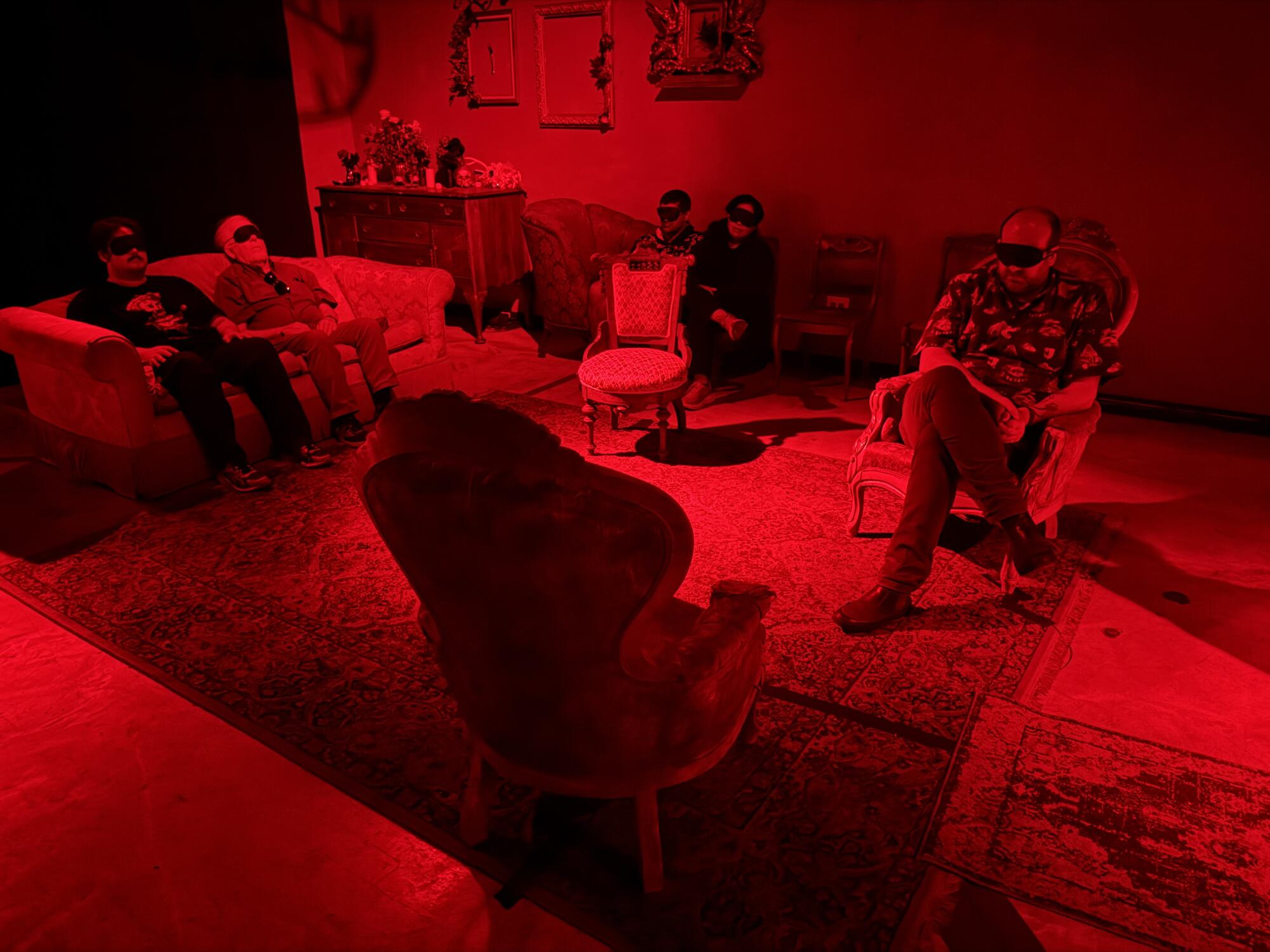
I am blindfolded and seated in a vintage armchair set in the center of a darkened, red-lit room with Gothic accents. An actor is performing nearby. I hear their voice, but cannot, of course, see them. I suddenly spring upward in my seat, alarmed at the touch of some sort of cloth — or perhaps a feather? — across my ankles.
I’ll never be entirely sure. For wearing the small veil across my eyes was a requirement to participate in “Poe: Pulse & Pendulum,” the debut offering from new troupe Theatre Obscura L.A. The company’s initial performance contains two one-act plays, modern interpretations of Edgar Allan Poe’s “The Pit and the Pendulum” and “The Tell-Tale Heart.”
While the stories are familiar to many, Theatre Obscura increases the levels of discomfort. In this room, I am at times unsettled, at once tracking the movements of the actors while attempting to remain hyper aware of any sudden touch or scent. “The Pit and the Pendulum,” the first half of the program, translates especially well to this setting, its dark sense of demented confinement keeping my nerves on high alert.
Conjuring such a state of anxiety was the point.
“If you take the visual away, it’s going to make you feel uneasy,” says Paul Millet, who devised the concept.
There are jump scares. Downtown event space the Count’s Den has been outfitted with about 50 speakers for the Obscura shows, which run through April 12. Some are visible before one puts on the blindfold. Many, though, are hidden under seats or couches, as the audio will trail the actors around the room, or perhaps a sudden crash or door opening will have me jolting my attention elsewhere.
“The Pit and the Pendulum” is a story of torture, and as the narrator, here played by Melissa Lugo, desperately speaks of a blade swinging above, actors will fan us, timing their waves with each swoosh of the audio. I was prepared for that one, as a fellow theatergoer nearby let out a soft yelp when the unseen gestures first arrived above their head.
For many, sight is the most coveted sense. “If you take that away, you’re already naturally uncomfortable,” Millet says. “So we lean into that. We know you’re going to be uncomfortable. We know this is not the norm. But get on that ride with us. Be willing to be uncomfortable. Discomfort, I think, helps to heighten the experience, and ideally allow it to trigger the emotional reactions that the story does.”
“Poe: Pulse & Pendulum” is two one-act, audio-focused performances of Edgar Allan Poe stories.
(Joe Camareno / Theatre Obscura)
Still, touch is limited in the show. Occasionally a rattling of a chair, but little more. The fluttering I felt near my ankles was to mimic the sensation of a running critter. The troupe will ask for audience consent, and participants can opt out. While I went in wondering if “Poe: Pulse & Pendulum” would seek to recall more extreme haunt experiences with lengthy waivers, Millet wanted to keep it light — an audio play, primarily, with just a few in-the-flesh signals.
“We want people to feel unease, but I don’t want anyone taken out of the story because a boundary or line was crossed,” Millet says.
Scent, too, is used with restraint. There are moments when guests will get a whiff of a fragrance that pairs with the storyline. Millet considers the first run of Theatre Obscure to be an experiment in how much touch and scent audiences may want to endure. Smell, he says, is tricky, as the aroma may linger and become a distraction.
Millet has been honing the concept since 2023. Previously, he was part of the team behind Wicked Lit, which ended in 2019 after running for a number of years at unique locations such as Altadena’s Mountain View Mausoleum. Those immersive performances would feature casts and guests walking the venue. Theatre Obscura, however, is fully seated.
“Poe: Pulse & Pendulum” focuses on the fear that something may happen to us when stripped of sight.
(Joe Camareno / Theatre Obscura)
And while the stories of Poe lend themselves to the Halloween season, spooky events increasingly occur year round. Long-running production “The Willows” is set to wrap in early April, and “Monster Party,” a period piece that takes guests to a devilishly extravagant cocktail party, is re-launching in mid-April. Millet, a longtime theater producer who has a day job in television editing, is hoping to stand out by avoiding “the glut” of horror events that occur each September and October.
Theatre Obscura may face challenges, namely persuading potential guests that “The Pit and the Pendulum” is more than simply a live reading with audio effects.
“You can feel the movement of the characters around you,” Millet says. “You’re in the environment with the story as it unfolds. You can experience it on a more visceral level.”
Blindfolded, I felt Theatre Obscura was mostly playing off our fears rather than giving in to them, largely keying in on our anticipation that something may happen to us when stripped of sight. Lugo in much of “The Pit and the Pendulum” circles guests, who are seated sporadically around the room, allowing each of us to imagine how close or far we may be from the hole we are told is at its center. Each show deals with claustrophobia in some way, either of a space, or of a mind.
“The Tell-Tale Heart” is louder, more crowded. The sounds of crashing glass and creaky floorboards had my head working overtime to draw a floorplan, only to then have it distorted when actors would unexpectedly whisper in both of my ears to bring forth the protagonist’s nightmares. While I expected Theatre Obscura to be slightly more aggressive in its uses of touch and scent, it’s a show that asks us to live in our heads, and to sit in our own feeling of trepidation.
“I was intrigued,” Millet says, “with really trying to engage the audience’s imagination.”
Imagine waking up early, eager to peep dazzling carpets of brilliant orange flowers at the Antelope Valley California Poppy Reserve. Instagram posts promised a spectacle.
You drive to the reserve north of Los Angeles, but the rolling hills aren’t alive with color.
Bummer. The bloom is over.
Thanks to AI, and a local scientist, such disappointment may soon be a thing of the past.
This year, Steve Klosterman, a biologist who works on natural climate solutions, launched a “wildflower forecast,” powered by a deep-learning model, satellite imagery and weather data.
In a sense, Klosterman, of Santa Monica, developed the tool to meet his own need.
Last spring, the Midwest transplant was hankering to see some wildflowers. He assumed there was some online resource that offered predictions or leveraged satellite images.
“Surely, there must be something,” he recalled thinking. “But there was nothing.”
There are tools. The state reserve operates a live cam trained on one swath of land. Theodore Payne, a California native plant nursery and education center, runs a wildflower hotline, where people can call in and hear weekly recorded reports on hot spots.
“These are all essential resources,” Klosterman said. “At the same time, they’re limited.”
Klosterman isn’t green when it comes to plants. His PhD, at Harvard, focused on the timing of new leaves on trees in the spring and color change in the fall.
For a class project, a team he was part of built a website that predicted those leaf changes in the Boston area. It was a hit.
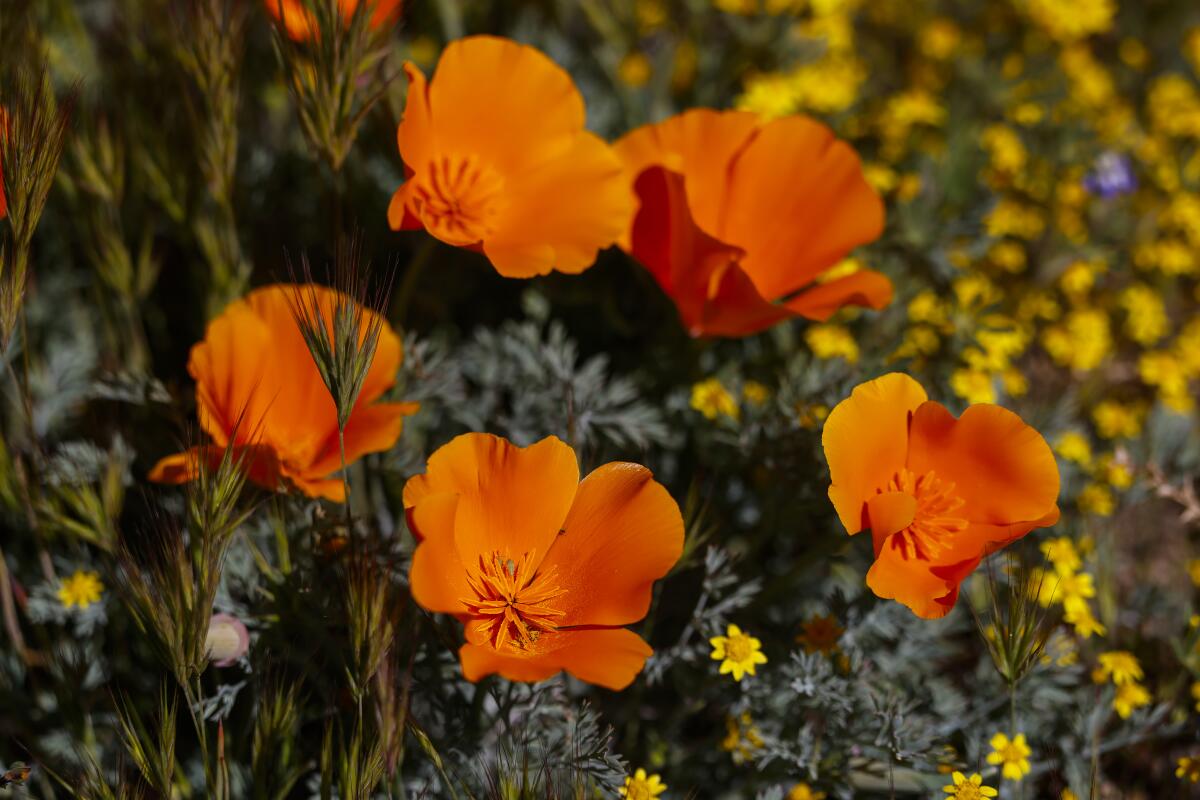
California poppies bloom in Lancaster, near the state natural reserve, in mid-March.
(Kayla Bartkowski / Los Angeles Times)
To create the poppy bloom predictor, Klosterman turned to AI initially developed for medical imaging. He has harnessed it to instead analyze satellite images of the Antelope Valley.
The model scans 10-by-10-meter squares of land to determine whether poppies are present by their telltale orange color. (It also identifies tiny yellow flowers called goldfields.)
The model is trained on satellite images — which go back nine years — along with past weather data.
It then uses the current forecast, and recent flower status, to peer into the future.
If the mercury is going to hit 100 degrees and wind is picking up — and in previous years that led to withering flowers — that will guide the prediction.
Right now, the model can forecast five days out and is, as Klosterman puts it, “very much a work in progress.” It would be better, more powerful, if it had 100 years to learn from.
As more data are collected, it might someday be able to forecast a week or two out.
Right now, poppies are popping at the reserve in the western Mojave Desert.
It rained throughout the fall and into winter, and poppies need at least seven inches of rain to make a good showing, said Lori Wear, an interpreter at the reserve.
Snowfall in January seems to push them to another level, but that didn’t happen this season. So it’s a good bloom, but not extraordinary, she said.
Still, poppies — California’s state flower — blanket swaths of the protected land.
“It almost looks like Cheeto dust,” she said, “like somebody had Cheetos on their fingers and just smeared it on the landscape.”
Poppies here have typically peaked around mid-April, but variable weather in recent years has made it hard to predict, she said. Klosterman believes right now is likely the zenith.
Also blooming now: goldfields, purple grape soda lupine and owl’s clover. Wear described the latter, also purple, as looking like a “short owl with little eyes looking at you and a little beak.”
An SUV drives through blooms near the reserve. “It almost looks like … somebody had Cheetos on their fingers and just smeared it on the landscape,” said Lori Wear, an interpreter at the reserve.
(Kayla Bartkowski / Los Angeles Times)
On Sunday, Klosterman experienced the blooms for himself, using his technology as a guide.
It offers predictions in two forms. The first is the amount of the valley — shown in a satellite image — covered in poppies and goldfields, expressed as a percentage. The other is an overlay of orange and yellow splotches on the land.
The map showed a fairly high concentration of poppies near a stretch of Highway 138. He went there and, lo and behold, vibrant flowers awaited him. He sent proof: a smiling selfie in front of a sea of blossoms.
Klosterman’s tool may help answer arguably more complex questions than poppy or no poppy, such as a more precise understanding of the conditions the flowers need to thrive.
Experts know rain is key, but it’s more complicated than that.
Steve Klosterman takes a selfie in a field of California poppies.
(Steve Klosterman)
Heavy rain can supercharge invasive grasses, crowding out the blooms. Natives actually tend to do better after several years of drought, once invasives not adapted to the arid climate die out. That’s what led to an epic superbloom in 2017, Joan Dudney, an assistant professor of forest ecology at UC Santa Barbara, told The Times in 2024.
Klosterman wondered if the recent heatwave would desiccate them. But his model didn’t show that, and neither did his trip. So it’s possible other factors play a significant role in their persistence, such as length of day.
The model could also shed light on what could happen to the flowers as the climate warms. Will they migrate to the north? Will there be fewer blooms?
To game that out, Klosterman said you could invent and plug in a weather forecast with higher temperatures.
For now, Klosterman’s forecast is limited to the Antelope Valley. But if it expands to other areas, and other flower types, it could help people like Karina Silva.
Silva woke up at 5 a.m. last Wednesday to travel from her Las Vegas home to Death Valley National Park, hoping to beat the heat and the crowds to the superbloom.
But several hours later, she and her husband, David, were still trying to find it.
The hillside behind her was sprinkled with desert golds, but the display fell short of the riotous eruption of flowers posted on social media. The superbloom ended in early March, according to park officials.
“I was just thinking it was going to be this explosion of different colors,” Silva said by the side of the road overlooking Badwater Basin.
Over the past few weeks, I’ve been driving all over Los Angeles doing something I haven’t done in a long time: playing pretend.
I pretended I was in a medieval castle at a French cafe in Miracle Mile and that I was looking for trolls on a fern-filled hike in Griffith Park. I imagined that Tolkien’s elves built the creekside restaurant where I met a friend for brunch in Topanga and that I was eating alongside real witches in a forest-themed dining room in North Hollywood.
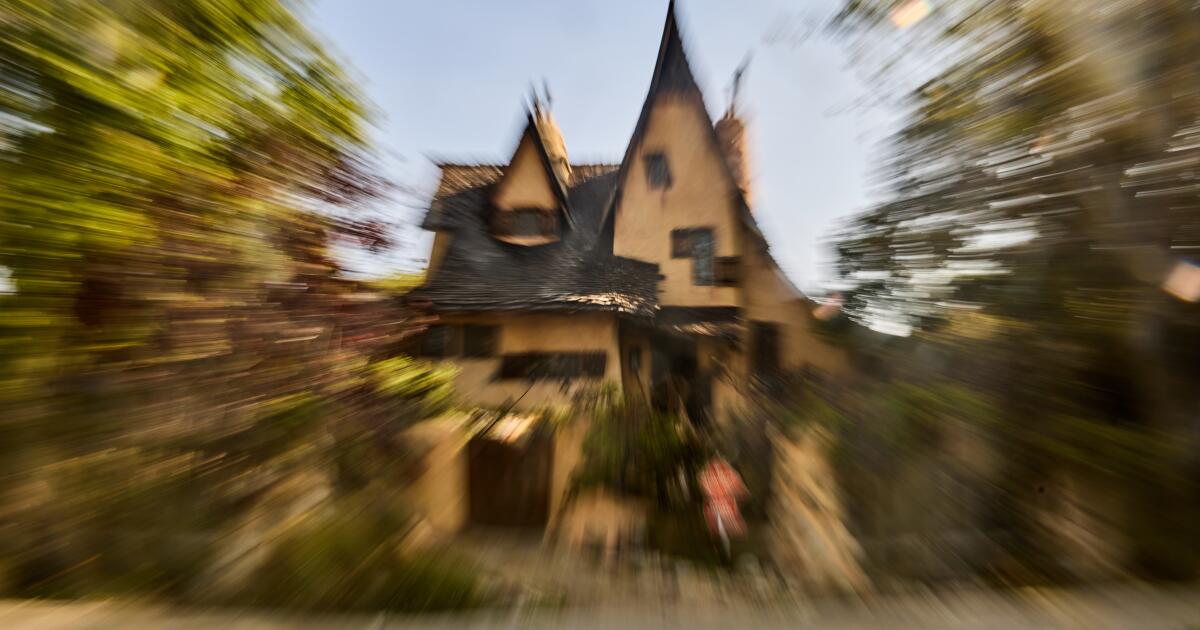
In a Whittier tea room, I poured a glittering potion that said “Drink Me” into a glass of Champagne and in Beverly Hills, I stared awestruck at the platonic ideal of a witch’s house, half expecting a bent old lady with a wart on her nose to come out and turn me into a toad.
It’s been a rough start to 2026 and these brief moments of make-believe have served as a joyful balm in sad and scary times. I’m not looking to bypass reality, but taking a break from it every once in a while can be a welcome reprieve. Fortunately, Los Angeles is especially good at creating transporting experiences that drip with fairy-tale ambience. This is the home of Hollywood after all, the land of artifice, the spot where Walt Disney dreamed up the Happiest Place on Earth. Seeking and finding moments of happily ever after, even if they last just a few minutes, is part of the city’s collective DNA.
So grab your broom and make sure to leave a trail of bread crumbs behind you. L.A. has plenty of magic to share. All you need to do is open your mind and explore.
About This Guide
Our journalists independently visited every spot recommended in this guide. We do not accept free meals or experiences. What should we check out next? Send ideas to guides@latimes.com.
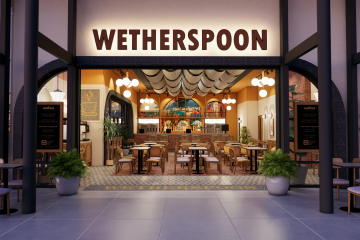
Wetherspoon’s is opening two new Spanish pubs after the success of one in Alicante last month (pictured)Credit: WetherspoonThe two new Wetherspoons pubs will be at Barcelona AirportCredit: Alamy
Following this, two more pubs will now open at Barcelona-El Prat Airport in the capital city.
The first one will be at Terminal 1, set to open by September 2026.
This will be followed by a second at Terminal 2 by January 2027.
Passengers will have to go through security to drink at them as they are both airside rather than landside.
Little else is known about the pubs, including what they will be called, but they will have space for almost 600 passengers.
You can get an early drink too – they’ll be open every day from 5am to 11pm, including real ale.
The menu is likely to be similar to the Alicante menu, which is mainly the British classics with a few Spanish dishes as well.
Drink prices haven’t been confirmed, although the also similar to the Spanish pub, beers are around £3.50.
Wetherspoon boss Tim Martin said: ” We are delighted to have secured two fantastic sites at Barcelona airport.
“In the short time since opening our pub at Alicante airport has proven popular with travellers and we are confident we can replicate that at our two new pubs in Barcelona.”
He added that they aim to open more pubs in mainland Europe in the next few years, particularly at airports.
The Sun’s Assistant Travel Editor Sophie Swietochowskiwas one of the first to try the new Wetherspoons in Alicante, called Castell de Santa Barbara.
She explained: “The pub has pitched close to the gates for UK flights to draw in the near 650,000 Brits that pass through this airport monthly.
“Floor-to-ceiling windows flood the small space with light, while candy floss, glossy tiles give it a warm atmosphere.
“There’s a tea and coffee station in the corner, while behind the bar there’s not a whiff of scampi fries or Walkers in sight but instead European holiday favourite, Lays.
“This one boasts something that all other airport Wetherspoons do not, however – an outdoor terrace, where you can catch those last glimpses of Spanish sunshine before jetting off home to drizzly England.”
Imagine cutting the cost of accommodation on your next holiday to about £5 a day. You can have a whole house, rather than just a bedroom. And you can go almost anywhere in the world and stay as long as you like, within reason. Welcome to house swapping.
You’re sceptical, I know. I was, too. Our terrace house was too small. Too overflowing with stuff. The 1980s kitchen was too old (and battered). We aren’t in a nice enough neighbourhood. Who would want to stay here? Lots of people, it turned out.
Our first swap was with a pair of retired Australian judges who had lived in the UK decades before. They came to our house first and, over a cup of tea and cake in our living room, we talked about where to find a good pint and the best fish and chips locally, as well as mastering the idiosyncrasies of how to run our dishwasher. They told us about their favourite local parks (warned us about snakes) and when to put out the bins, before we headed for our month-long stay at their house in Perth. It’s these conversations and connections that really make house swapping special.
Yes, we have stayed in some truly extraordinary homes. There was a house in Florida where we watched rocket launches while lounging in the pool; a clapboard cottage with a hot tub in the Stockholm suburbs; and a swanky five-bedroom villa in the south of France that we shared with friends. We couldn’t have afforded any of these if it were not for house swapping. In fact, the swaps themselves are free, but I pay $235 (£177) a year to use Home Exchange, a house swap booking platform, which works out at about £5 a night for the 35 or so nights I used it last year.
Rory Boland and family on a house swap holiday in New York. Photograph: Rory Boland
The greatest pleasure, however, is in the genuine relationships forged. Through the messages exchanged before and during the swap, friendships are created. You become, however briefly, part of each other’s lives. We have swapped pets and cars, and watered plants along the way. For a week, we became passionately involved in helping pick a summer school for our Basque guests’ kids. Warm welcomes are universal. We’ve had olive oil from the garden grove of a house in Greece and marmalade from Seville. In return, guests at our house can expect to find sparkling wine from Kent, Essex jam and a pile of Cadbury chocolate bars to try – French guests are big fans of the Crunchie.
Even in challenging moments we found friendship, such as when our shower sprang a leak and rained all over the dining table. We had to arrange an emergency repair via video call with our Spanish guests, an Albanian plumber and a UK insurer, all while frantically looking for a reliable phone signal in the countryside. The babel of languages resulted in a tube of silicone being applied and both parties leaving five-star reviews.
I won’t go back to hotels. I have saved tens of thousands of pounds over the past five years, but what has really hooked me is the interactions with hosts and guests that make my holidays more fulfilling. It’s like having a friend everywhere you go.
Q&A – Everything you need to know
Will I be comfortable house swapping? If you’re precious about the things in your home or anxious about someone sleeping in your bed, a swap is not for you. Likewise, if spending the last day of your holiday cleaning is a deal-breaker.
How do I house swap? For some sites, you pay a flat annual membership fee (£100-£200) to use a booking platform with thousands of homes. I use Home Exchange because it verifies member identities and offers some guarantees such as damage, theft and cancellation protection. Kindred is a smaller and generally more expensive rival, focused on upmarket homes. Instead of locking you into membership, it charges variable service and cleaning fees.
How does it work? Classic swaps are simultaneous; you exchange houses on the same dates. But non-direct swaps are also allowed via a points system: you are awarded credits for stays at your house, which you can then spend to stay somewhere else.
What about scams and safety? Everyone on Home Exchange is a host and a guest, so there is a high degree of trust. Most swaps don’t involve money, so scams are rare. The only exception is a cleaning fee, payable when the stay is at an end. If you’re asked for money in advance, it’s a scam.
The Home Exchange website. Photograph: Home Exchange
How do I pick my accommodation? This is time-consuming. The website looks similar to Airbnb, where you filter by availability, destination and the type of property you want, but you need to match with a host, too. Hosts and guests both have ratings from previous stays, but some people still like to phone or video call before agreeing to an exchange. Then once the exchange is agreed, there are messages to organise the swap and answer questions such as how to use the cooker or where the bedding is. Many hosts prepare a house manual. Cancellations are rare but do happen, usually due to illness in our experience. The one time it happened to us, Home Exchange helped us find a new host in the same city, and it will pay for a hotel in a true last-minute emergency.
Do I need to own a luxury house? No. If you have a pool, hot tub or luxurious mansion, you will certainly get more offers, but flats and smaller houses near popular UK destinations (whether that’s Edinburgh, or the Dorset coast) do just as well. Most houses, like ours, are completely ordinary.
Do I need to put my stuff in storage? Clear a few drawers, perhaps a wardrobe, for guests, and that’s it. Most of the houses on Home Exchange are family homes.
What about cleaning? You do need to scrub that oven and clean that grout. Cleanliness expectations are high (and should be agreed upfront). We usually spend much of the last day of our holiday cleaning, and return to find our own house absolutely sparkling. Some hosts give you the option of paying a cleaner.
And DIY? One of the fringe benefits of house swapping is that it has made us look after our house a little better. Sticky door handles and dripping taps need to be dealt with.
What if I break something? We have broken small things, as have our guests; usually this is simply forgiven. Put more precious items away. For more expensive items, such as a TV or screen door, house swap platforms usually offer a level of cover, but you should make sure you have home insurance.
Will my home insurance cover my house swap? Ask. Some insurers offer no cover, others offer it for a certain number of exchanges, or you may need to buy a bolt-on. House swapping is still relatively unusual, so persevere to get a clear answer. Insurers that cover holiday lets, such as Pikl, are also useful.
Are there legal restrictions? Because no money is exchanged, house swapping is not restricted in the same way as Airbnb and similar services – except in Amsterdam, where only reciprocal swaps are allowed (so no paying with points). You do need to check visa rules if looking after someone’s pet – some countries (such as the US) may view this as providing a service and in breach of a visitor visa.
The cost of a family summer staycation can vary significantly
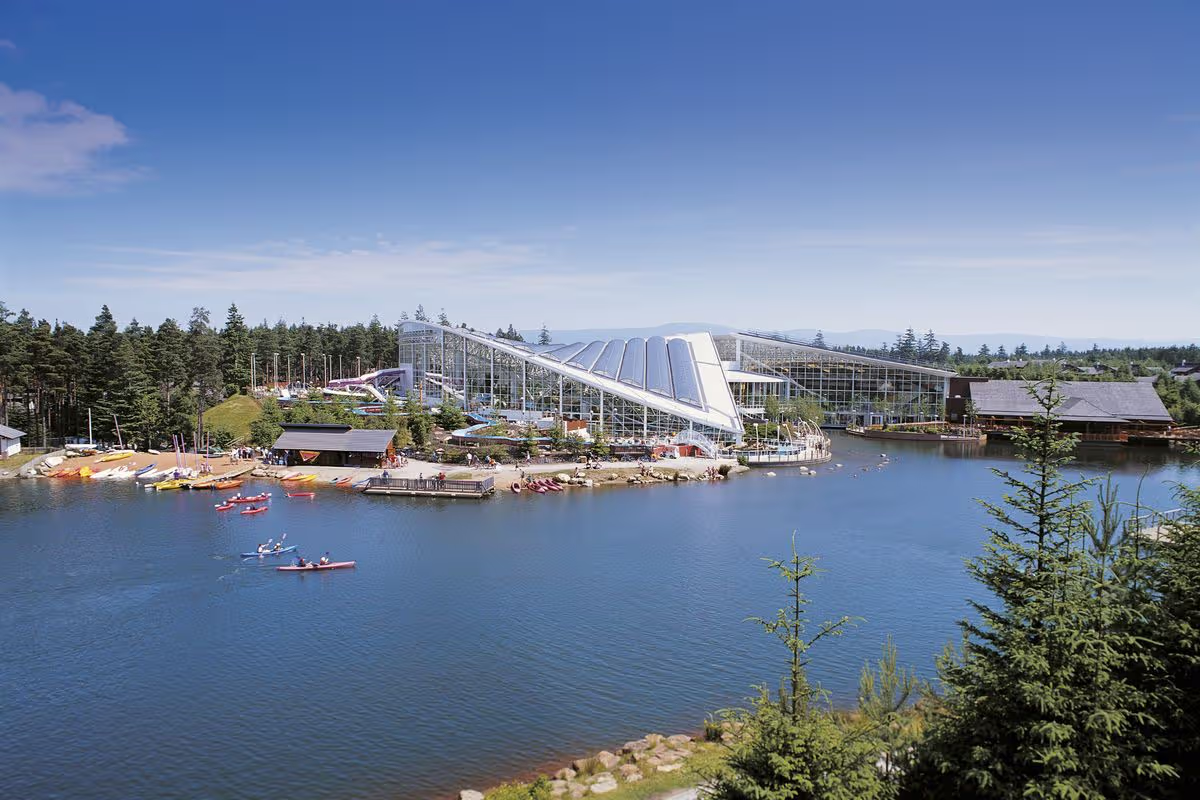
Center Parcs Whinfell Forest(Image: Daily Record)
With the UK experiencing some milder weather this week, and with April just around the corner, many parents are likely thinking ahead to the summer holidays. As children are off school for, usually, around six weeks, the summer is an ideal time to take a family trip.
However, as anyone who has looked at going abroad over the summer will know, prices jump up significantly while the schools are closed. Going on a break in the UK, then, can be a more affordable option. But how much it will cost you depends on where you go – and prices can differ hugely.
We have compared the price of a week-long break at some of the UK’s best loved holiday parks. Prices are based on the cheapest accommodation available for seven nights, from August 7, for a family of four.
Starting with Center Parcs, a week’s stay in a Woodland Lodge at the Whinfell Forest resort will set you back from £2138. The lodge has two bedrooms, a kitchen, a bathroom and an extra toilet, and comes with a dishwasher, brick-built barbecue stand, furnished private patio, safe, a cot and a highchair, a fully-equipped kitchen, a 40″ flat screen TV, and more.
Over at Butlin’s in Skegness, a family of four can book a Comfort Room for the same dates from £962. There are two bedrooms – one with a double bed, the other with two single beds – as well as a bathroom. However there is no kitchen, and no other facilities are mentioned on the booking site – and towels and housekeeping are not included.
And at Haven’s Marton Mere site, a family of four can book a break from £639 – although this jumps to £809 if you want access to swimming pools, activities, and entertainment venues. The cheapest accommodation is the Saver Caravan which is described online as having two bedrooms, a bathroom, and a kitchen.
Other facilities mentioned on the Haven website include a heater or gas fire in the lounge, a 32″ TV, an under-counter fridge, and beds being made up ahead of your arrival.
All of the above prices were correct at the time of publication. Across all three holiday parks there are a range of accommodation available, with these varying in price. The types of accommodation mentioned in this article were the cheapest available at the time of publication.
MANY hotels claim to be big on wellness, but the recently-opened Cotswolds escape Hyll has mastered it.
Here’s everything you need to know.
Sign up for the Travel newsletter
Thank you!
Hyll is buried deep in the Cotswolds countryside, near Chipping CampdenCredit: HyllEach of the three lounge areas are kitted out with bookshelvesCredit: Hyll
Where is Hyll?
Buried deep in the Cotswolds countryside, near Chipping Campden and fancy members clubs like Soho Farmhouse, Hyll is undoubtedly as stylish as its plush neighbours – only you won’t need to sell out for an extortionate members fee.
Named after the old English word hill, meaning elevated piece of ground, rural views are pretty spectacular from this retreat’s high perch.
There’s a car park on site or the hotel can arrange transfers from the train station.
What’s it like?
Not just a hotel, Hyll is more of a sanctuary where guests are gently encouraged to switch off – whether that’s with a board game in front of a freshly-stoked fire or with a scenic stroll around the 60 acres of manicured grounds.
Views are just as gorgeous from within the Grade-II listed 14th century manor house thanks to its original stone frame, timber beams and framed artwork that wouldn’t look out of place in a French farmhouse.
What are the rooms like?
The 26 unique bedrooms (some in the main house and some in the courtyard) feel homely yet luxurious with plump feathered cushions, freestanding bathtubs and chic coffee table books.
If the strict colour palette of neutral browns and sandy tones doesn’t soothe you, a guided yoga nidra (a type of specific relaxation yoga) session sure will.
A series of wellness videos have been designed exclusively for hotel guests and are text to your phone ahead of bedtime.
What is there to eat and drink?
Eat in the dining room, living room, outside or wherever you please, thanks to the laid back “mi casa, su casa” ethos.
Dinner relies on local ingredients sourced from nearby farms, mills and distilleries.
Star dishes include Briar Hill Farm hogget served with salsa verde and baklava tart soaked in the hotel’s own honey.
Post dinner, retire to the marshmallow-like sofas next door with a book and signature cocktail – I liked the yuzu and plum sour, both tart and sweet.
Non-drinkers are catered for, too, with a decent selection of no and low cocktails including a sharp No-groni.
Breakfast is a farm-style mix of homemade granola and hot options like full English and scotch woodcock (scrambled eggs on toast, topped with salty anchovies) both on the menu.
Breakfast hampers can also be delivered straight to your bed.
The 26 unique bedrooms feel homely yet luxuriousCredit: HyllGuests can have breakfast in bedCredit: Hyll
What else is there to do?
Small books labelled ‘Do Nothing’ and ‘Do something’ are left on bedside tables with suggestions on how to fully embrace and unwind in the Cotswolds nature.
In-room massages can be booked on request and dogs are welcome in certain bedrooms and throughout living rooms and restaurants in the main house.
The essence of the place, in general, is to do very little.
I’d recommend just kicking back with a book – each of the three lounge areas are kitted out with bookshelves and artsy side tables covered in fiction and non-fictions reads that you can borrow for the duration of your stay.
Thanks to a partnership with Borzoi Books, these are refreshed on a monthly basis.
You can even arrange to take a book home with you, for a fee.
How much are rooms at Hyll?
Rooms cost from £210 per night including breakfast.
Is Hyll family friendly?
Kids are welcome but it’s not the most child-friendly of places.
Cost and additional child beds are available on request, however.
Is there access for guests with disabilities?
Although, staff are always on hand to help, Hyll is not the ideal place for wheelchair users.
Given the historic property is Grade II listed, a lift cannot be installed and therefore bedrooms are accessed via stairs.
Looking for a place to stay? For more hotel inspiration click here.
The restaurant relies on local ingredientsCredit: Hyll
Lucy Young has lived in Benidorm for over 20 years and shares insights on her YouTube channel – she’s warning British tourists that April will see stag and hen parties in full force after a busy Easter
YOU can explore a Santorini-like island with whitewashed villages for a fraction of the price of the real deal.
Folegandros is an island in the Cyclades known for both pretty beaches and cheaper hotels than its sister island.
Sign up for the Travel newsletter
Thank you!
The island is a quiet alternative to Santorini with beautiful beaches like LivadakiCredit: AlamyChora is the main town with whitewashed buildings and blue doorwaysCredit: Alamy
Unlike its neighboursMykonos and Santorini, Folegandros doesn’t have an airport or huge hotels – the island didn’t even have electricity until 1974.
It’s been dubbed an ‘under-the-radar Greek island’ seeing much fewer visitors.
Santorini gets around 3.4million visitors each year, meanwhile Folegandros gets 50,000.
There’s still lots to see and visitors will find most of the island’s life in the main town of Chora of which is perched on a cliff around 200 metres high.
It’s where most of the shops, restaurants, cafes and tavernas are found.
Make sure to try Matsata, which is a handmade fresh pasta, which looks similar to tagliatelle, that was founded on Folegandros.
Usually it’s served with cooked meats like rooster, rabbit, or goat in a rich tomato sauce and topped with grated cheese.
For those who want the best island view, take the steep, winding path up to the Church of Panagia.
CNNlisted Chora in their top seven most beautiful villages in Europe, writing: “Santorini’s streets sag with admirers.
“But on Folegandros, a nearby island, you’ll find similar architecture—streets paved in slate, whitewashed buildings decorated with colourful flowers, the occasionalGreekOrthodox church with a bright blue dome—without the crowds.”
Being a Greek island in the Aegean Sea, Folegandros has plenty of beautiful beaches and has been praised for its “emerald-blue” waters.
Some of the island’s top ones include Katergo Beach which has white sands and blue waters.
Visitors have gone as far as to say it’s the “prettiest beach on Folegandros.”
Stays in Kallisti Hotel start from £82 per nightCredit: KallistiThe hotel has incredible views across Chora and its hilltop churchCredit: Kallisti
Another is Livadaki Beach which most visitors access by boat rather than foot.
Its remote location means it is less busy than other beaches on the island and it’s said to be an ideal spot for snorkelling.
Agios Nikolaos Beach is family-friendly with a small bar and taverna on the shoreline.
Depending on the season, the average price of a hotel in Santorini varies but typically ranges from £143–£251 per night – but luxury stays can be as high as £1,000.
While Folegandros does have some luxe stays, there are some more affordable stays too.
The Beachfront Cycladic House can be booked from £74 per night on Booking.com.
The holiday home has a bedroom, a bathroom, a living room, a balcony and it’s just minutes’ walk away from multiple beaches.
Rooms at the Kallisti Hotel which is built in the style of a small village can be booked from £82 per night.
It has a swimmingpool, bar, breakfast room and rooms with balconies with beautiful island views.
The easiest way for Brits to get to Folegandros is by a ferry from Athens which takes around four hours.
Brits can also fly from the UK to Athens in under four hours from as little as £22.
Nate McFall has spent the past six years travelling the globe curating tourism content for social media, but he says a cold North East beach town is still one of his favourite places
Alan Johnson Politician and Alan Johnson
15:52, 25 Mar 2026
A travel content creator has highlighted a North East town as one of his favourite places in the world(Image: palliki via Getty Images)
A globetrotter who has dedicated the last six years to travelling the world claims the finest destination he’s discovered is a “cold little beach town” in the North East of England.
Nate McFall, whose videos focus on highlighting unusual accommodation and travel adventures, posted on Instagram where he admitted there’s nowhere quite like home.
“I spent six years travelling the world, and yet somehow this is still one of my favourite places I have ever been,” he opened in a clip filmed on the shoreline. “I didn’t realise when I left, but this place shaped me in more ways than I can explain.”
While he may have visited Australia, New Zealand and South East Asia recently, Nate maintains this chilly North East coastal spot still “hits different” whenever he returns.
Content cannot be displayed without consent
“It was actually here about eight years ago that I tried surfing for the first time,” he went on, displaying a photograph from the moment in 2018.
“It was cold – like properly cold – but something shifted in me that day because if I could surf in the freezing cold North Sea, what else is possible?”
Nate admitted that throughout his journeys he had been “chasing something” he’d already discovered.
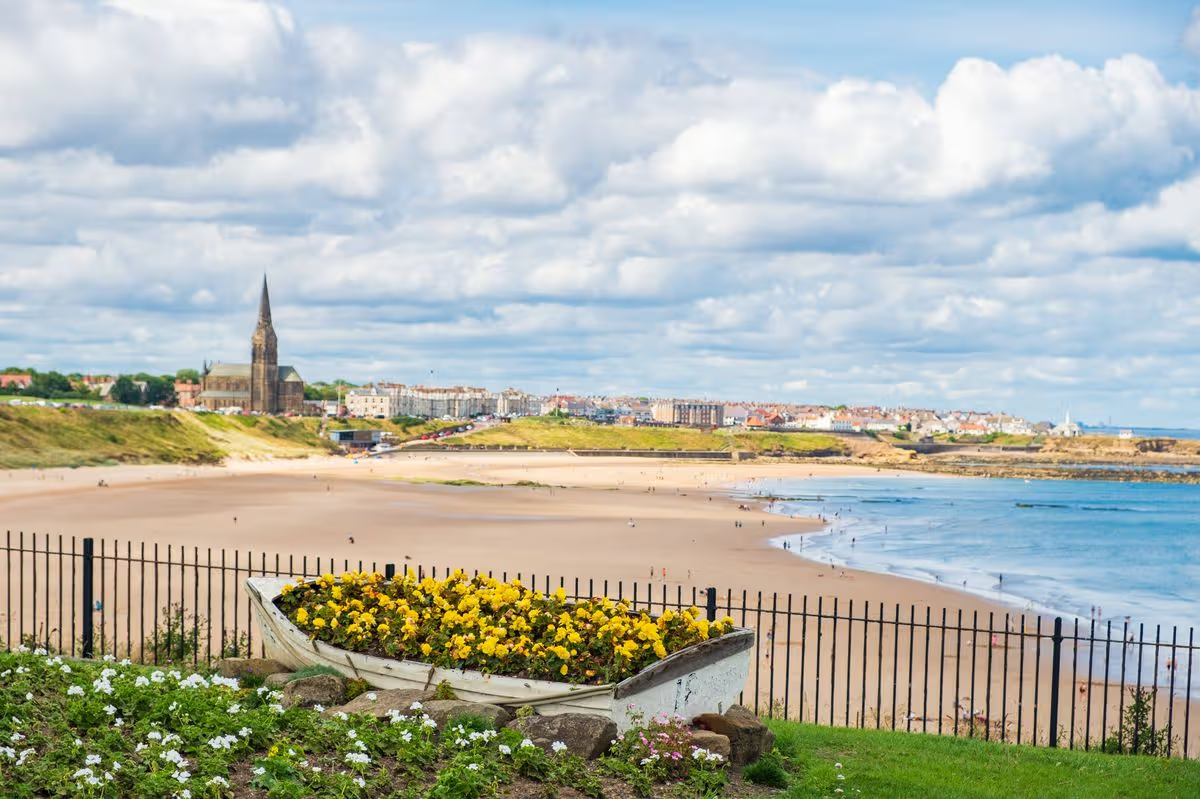
“This is Tynemouth,” he revealed. “A small coastal town, but it’s full of life. Wherever you look, people are enjoying this place running along the seafront, swimming in the sea and surfing.”
Nate also pointed out the wealth of coffee shops dotted around the town, noting that at weekends, Tynemouth’s Victorian railway station “turns into a bustling market” of people selling “delicious food, crafts and handmade trinkets.”
The traveller also declared Tynemouth home to the “best chip shop in England”. He made his way back down towards the beach to show the reasons why.
“It’s served out of what is basically a shipping container [called The View],” he explained. “There’s a fresh sea breeze and with fishcake in hand, I top it off by looking at 1,000 year old ruins [Tynemouth Priory and Castle] right next to me.”
Nate concluded by stating he’s utterly convinced the UK possesses beauty that countless people fail to appreciate.
Enjoying a chilli fish empanada from Riley’s Fish Shack, he closed: “It’s proof that you don’t always need palm trees or plane tickets. Some of the most unreal places are right here on our doorstep.”
Writing in response, one Instagram user enthused: “I love this – I’m from Whitley Bay and am a wild swimmer so am always at the beach when I visit home. It’s such a special place.”
A second person declared: “Love Tynemouth and Riley’s fish shack, on a summers night as it gets a little chillier, sitting around one of the fire pits with friends is such a good way to finish a weekend.”
A third commented: “Love this. I am in New Zealand. So many beautiful places in the world. No country has the title of best place. Tynemouth looks cool. I will visit it now when I next visit UK.”
And a fourth person praised: “Thanks Nate. Spent many lovely days at Tynemouth as a child. Haven’t been back in 50 years since my family moved to Florida, USA. But still have fabulous memories. Thanks so much for reminding me.”
TRAVELLING by car over the Easter break can be a challenge.
As Brits across the nation hit the road to enjoy the school holiday, traffic can reach a peak – and so can frustration.
Sign up for the Travel newsletter
Thank you!
Although you can’t control potential jams, planning your route and choosing the best time to travel, as well as getting your car and the kids prepared beforehand, can help smooth out bumps along the way.
Run through the checklist below to help reduce last-minute mayhem, costly breakdowns and tears on long journeys.
Follow National Highways’ T.R.I.P. tips for hassle-free motoring.
Safe T.R.I.P. Checks
The most essential hack for a smooth ride is to make sure your car is ready for the road before leaving your driveway.
Taking a bit of time in the days leading up to your journey can potentially save hours of hassle and significant costs if your vehicle were to break down.
The checks every driver needs to perform are easy to remember with T.R.I.P.:
TOP UP your fuel or battery charge, oil and screen wash
REST with planned stops every two hours for at least 15 minutes
INSPECT tyre pressure and tread before setting out, to make sure you can drive safely. See how
PREPARE for all weather conditions
Running out of fuel and tyre issues are among the top causes of breakdowns and incidents on roads.
Taking the right precautions will help you get to your Easter break safely and on time – and the good news is that they only take a few minutes to complete.
For help with performing Safe T.R.I.P. Checks, head to the National Highways website for everything you need to get them right, including some handy how-to videos.
Care necessities
After ticking off your Safe T.R.I.P. Checks list, it’s time to make sure you have all your travel essentials to hand.
It might feel like you’re packing for a week on safari, but being prepared for any eventuality means you can enjoy your journey with less stress.
As well as the kids’ snacks and activities, keep coats handy even if the weather looks fine.
Other helpful kit includes travel pillows and blankets, a travel potty for little ones and a first aid kit.
Sunscreen and sunglasses are a must because car windows don’t fully protect us from UV rays and there may be glare from the sun.
If you’re travelling with more than one child, headphones can be a godsend, while a power bank will make sure they don’t run out of juice.
Finally, to keep things clean and tidy, think about packing a seat organiser, a carrier bag for rubbish, a change of clothes in case of accidents and a pack of wet wipes.
Break it up
Make sure the driver doesn’t get tired. As well as planned stops to give everyone the chance to stretch their legs, this means getting a good rest the night before.
When planning your journey, allow enough time for those breaks. Aim to stop every two hours for at least 15 minutes.
As a guide, a baby shouldn’t be in a car seat for longer than two hours at a stretch, while newborns and premature babies need a break every half hour.
Before heading out, try looking for rest spots on your route that will make the journey more interesting.
Twenty minutes at a farm shop, café or garden centre can be a great alternative to a service station.
Snack attack
There’s nothing worse than being stuck in bumper to bumper traffic with a gaggle of hungry kids on board. So make sure you have plenty of goodies to tide them over.
As well as treats, try to include some healthy choices so you don’t have to deal with a sugar crash.
Avoid grapes, which could be a choking hazard, and anything that could trigger car sickness such as greasy or rich foods and dairy products.
It’s important to bring plenty of water, especially on a warm day, so replenish those refillable bottles before hitting the road.
Play time
Entertainment and games on your journey will make getting there part of the fun.
Try trusted favourites like I-spy, 20 Questions or the Alphabet Game, listen to music or audiobooks, or download a film onto the kids’ devices before you leave home.
Sticker books or reusable window stickers are also a winner, while older children will enjoy car-friendly board and card games, like magnetic Ludo or Monopoly Deal.
Visit National Highways to learn more and get ready to have a safe T.R.I.P.
IF you’re planning a trip to the Cotswolds, one of the most popular areas is the ‘Golden Triangle’.
Not to be confused with the Indian Golden Triangle (covering New Delhi, Agra and Jaipur) the Golden Triangle of the Cotswolds covers three of the most popular towns.
Sign up for the Travel newsletter
Thank you!
The Cotswolds has its own ‘Golden Triangle’Credit: AlamyChipping Norton is where a lot of the celebs like The Beckhams liveCredit: Alamy
In between these towns are the famous fancy attractions such as Soho Farmhouse and Daylesford organic farm shop.
The first town is Chipping Norton, which is where a number of famous celebs live.
Storm Therese has wreaked havoc across the Canary Islands, but a British expat is urging holidaymakers not to cancel as he claims big changes are coming at the start of April
Alice Sjoberg Social News Reporter
15:21, 25 Mar 2026
Holiday paradise Tenerife was recently hit by severe weather in Storm Therese (stock image)(Image: Getty Images)
Weather chaos has been wreaking havoc across Spain recently as Storm Therese sweeps through the Canary Islands, particularly Tenerife and La Palma – prompting numerous holidaymakers to abandon their plans after anticipating days basking in the sunshine.
The storm is currently bringing an unusual mix of torrential rain, 100 km/h (62 mph) winds, and significant snowfall at higher elevations. Authorities have issued a full-scale emergency in Tenerife, calling it one of the most serious storms to strike the archipelago in more than a decade. Despite this, it appears locals are beginning to see light at the end of the tunnel, as they’re encouraging people to maintain their holiday plans.
Taking to TikTok, one British expat named Mattie Barnett posted on the Tenerife First Excursions account, where he works, to reveal that a major shift is anticipated to arrive in Tenerife in April.
“Bollocks to the rain in Tenerife,” Mattie declared at the opening of the video, before briefly outlining that they’d been forced to endure days of rainfall in the Spanish holiday hotspot. But now, the sunshine had finally returned.
Content cannot be displayed without consent
Gesturing towards the popular Playa del Camisón beach, he remarked: “There were people queuing at eight this morning to get the sun beds after half a day of rain.”
Mattie, who hails from Lincolnshire, went on to predict that the weather will likely remain sunny with pleasant temperatures of around 24 degrees through to the weekend. While early April may bring some overcast conditions, Mattie expressed optimism that the warm summery weather would return shortly afterwards.
It appears holidaymakers are placing their trust in Mattie’s forecast, as numerous people confirmed they’re pressing ahead with their travel plans.
“Coming next Wednesday. Need to be seeing blue skies, palm trees and everything in between,” one person commented. Another user stated: “I come on the 28th hopefully still good weather.”
Spain’s meteorological agency, AEMET, is forecasting that the rainfall will cease by Friday, 27 March, when sunshine will return, with temperatures hovering around 21 degrees for the remainder of the week and throughout Easter weekend, which is typical for this period.
Meanwhile, weather maps from WXCharts suggest that portions of the UK could be battered by heavy snowfall and temperatures plummeting to -9C between April 3 and April 5 – Easter weekend.
Weather charts indicate the snow zone stretching approximately 480 miles from the Scottish Highlands across northern England and the Midlands down towards areas of southern England.
At least 12 major cities could find themselves in the trajectory of the wintry conditions, which may trigger worries about travel chaos, school closures and hazardous driving conditions.
Air Passenger Duty (APD) is set to increase, with the tax usually passed on to passengers
Airlines will have to pay more tax, and this is usually passed on to customers(Image: Grant Faint via Getty Images)
British holidaymakers are being warned that flight prices are soon very likely to rise.
Among many other price hikes Brits are likely to encounter this April, Air Passenger Duty (APD) is poised to rise on flights departing from most parts of the UK from April 1. While APD is levied on airlines and aircraft operators, the costs are typically transferred to passengers at the point of booking. Charges vary depending on the distance travelled, with categories for domestic journeys as well as distances spanning 0 to 2,000 miles, 2,001 to 5,500 miles, and beyond 5,500 miles.
From April onwards, passengers taking an economy domestic flight within the UK will fork out an additional £1, bringing the cost to £8 per leg. Travellers will pay £2 extra for economy short-haul flights, with the rate climbing from £13 to £15. The levy on an economy medium-haul flight – covering 2,001 to 5,500 miles – will jump by £12 to £102, and by £12 – from £94 to £106 – on a long-haul journey.
The surcharge is considerably steeper for those travelling in premium class, escalating to £32 for short-haul, £244 for medium-haul, and £253 for long-haul. And for those opting for private jets, the hike will see APD rocket from £673 to £1,141.
The aforementioned rates exclude Northern Ireland and the Scottish Highlands and Islands. HM Revenue and Customs (HMRC) clarifies that passengers on flights departing from airports in the Scottish Highlands and Islands region are exempt. This region encompasses:
the Highland Region, Western Isles Islands Area, Orkney Islands Area, Shetland Islands Area, Argyll and Bute District, Arran, Great Cumbrae and Little Cumbrae.
in the Moray District, it includes the parishes of Aberlour, Cabrach, Dallas, Dyke, Edinkillie, Forres, Inveravon, Kinloss, Kirkmichael, Knockando, Mortlach, Rafford and Rothes.
Passengers on flights from other parts of the UK to airports in this area are not exempt.
Direct long-haul flights leaving from Northern Ireland airports are exempt from APD. However, for domestic and short-haul flights departing Northern Ireland, the standard rates apply.
AN American airline’s plan for new couches in economy has been hailed as a “game changer.”
It means a far more comfortable flight for travelers seeking additional space to sleep.
Sign up for the Travel newsletter
Thank you!
United Airlines has revealed that it will launch a new couch option for travelers booked for economy class from next yearCredit: GettyCustomers traveling in United relax row will receive additional amenities for their flight including a custom-fitted mattress padCredit: PRNewswireYou put the arm rests up, and then angle the adjustable, flip-up leg rests to form a couchCredit: YouTube/United
United Airlines has announced a “relaxed row” to allow travelers to stretch out and have a better rest in economy class.
It involves transforming economy seats into a couch between two rows of seats.
The initiative will provide more comfortable international travel, the airline said yesterday.
“Customers will get a custom-fitted mattress pad, specially sized blankets, extra pillows and a stuffed plush for children to help create a cozy, tranquil environment,” the carrier explained.
“Sounds like heaven to me,” said one thrilled customer.
United‘s relax row option is expected to be available from 2027.
Prices for the perk haven’t been released as yet.
“Customers traveling in United economy on long-haul flights deserve an option for more space and comfort, and this is one way we can deliver that for them,” said Andrew Nocella, executive VP.
Once available, United will be “the first North American airline to offer this kind of seating option and holds North American exclusivity on the design,” the carrier said.
The lie-down couch-style seating will eventually be rolled out across some 1,000 United planes by 2030.
More on United Airlines’ ‘relaxed row’ economy seats that transform into a couch
The option will be available for United customers traveling in the economy cabin on long-haul flights from 2027
A new, dedicated row of three seats will be outfitted with individually adjustable leg rests that fold up at a 90-degree angle.
The formation of the couch will create more room to sleep, stretch out or watch a movie.
Customers traveling in United relax row will receive additional amenities for their international flight.
This includes a custom-fitted mattress pad, a specially sized plush blanket, two additional pillows, as well as a plush toy and children’s travel kit for families.
The airline plans to offer it on more than 200 Boeing 787 and 777 widebody aircraft by 2030.
The seats will be located between United economy and premium plus, with up to 12 relax row sections on each plane.
They aren’t just available for families, as single travelers can also purchase the row, added United.
Around nine to 12 couches will be available per aircraft.
The seats will have individually adjustable, flip-up leg rests.
These can then be angled to create more room to sleep, stretch out or watch a movie.
Their provision follows a similar option offered by Air New Zealand, which already offers a row of economy seats that convert into a lie-flat couch after takeoff.
Travelers commenting on United’s version have said that it will be worth the extra money.
United Airlines chief commercial officer Andrew Nocella introduces the United relax row for the economy cabin during on March 24Credit: AFPThey will eventually be rolled out across 200 Boeing 787 and 777 widebody aircraft by 2030Credit: AFP
“I’ve used the sky couch a bunch, and for traveling with young kids on long haul flights it’s an absolute game changer, worth every penny,” raved one flyer on Reddit yesterday.
“I love the skycouch on Air New Zealand and have used it multiple times between the US and Auckland,” wrote another traveler.
“Obviously you don’t get the bells and whistles of a first class seat, but the lie flat feature is the only thing that allows me to sleep on airplanes so for me it’s perfect.”
“Family and I use the Air NZ sky couch every time we travel between NZ/US,” shared one parent.
“It’s a game changer and we always choose Air NZ for that reason. Will start looking seriously at UAL now for our travels.”
Those traveling by themselves can pay for the whole rowCredit: YouTube/UnitedUp to 12 ‘relax rows’ will be available on about 1,000 United planes used for long-haul flightsCredit: YouTube/UnitedUnited hasn’t as yet revealed the price for the new couch perkCredit: Getty