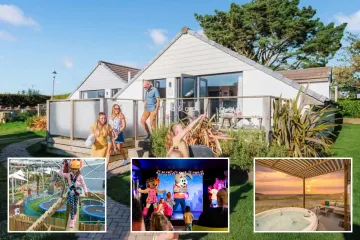
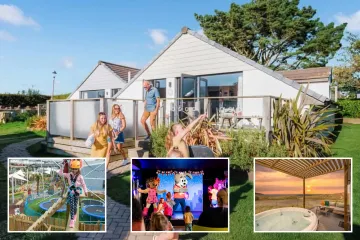
FROM the Highlands of Scotland down to the shores of Cornwall, Britain has plenty of historical sites and stunning nature to explore, featuring everything from fairytale castles to historic coastal houses.
Thanks to our Hols from £9.50, you can do it without breaking the bank too.
Sign up for the Travel newsletter
Thank you!
Find out where you can book a UK break from £9.50 to see some of Britain’s best natureCredit: Alamy
And what better time to book a scenic staycation, when thousands of new Sun holidays from £9.50 are set to be released this coming week?
Hols from £9.50 are set to be restocked this Tuesday, with thousands of new holidays AND new holiday parks – and you can get priority access with Sun Club.
If you fancy signing up to Sun Club to access the £9.50 Hols deals early, head tothesun.co.uk/club and join for £1.99 a monthor £12 for a year.
Once you’re a member, go to the Sun Club Offers huband find the Hols From £9.50 page.
Follow the link from the offers page, and you can book your break from midnight on Tuesday, March 31.
If you’re looking for some holiday inspiration, here’s our pick of some of the most beautiful sites across the UK that are oozing with history – plus where to stay nearby with Hols from £9.50.
Welsh countryside
With 17 holiday parks to pick from in Wales, Sun Hols from £9.50 has got you covered when it comes to finding a staycation in the Welsh countryside.
In North Wales, history buffs can take a trip to Conwy Castle (£11.80 per adult, £8.20 per child 5+) or Gwrych Castle (£11.50 per adult, £7 per child).
Meanwhile UNESCO-listed Conwy Castle is one of the best preserved medieval castles in the world.
The medieval Conwy Castle is a UNESCO World Heritage Site close to Parkdean Ty Mawr resortCredit: Alamy
The medieval fortress is over 700 years old, and you can climb its staircases to the top for fantastic views over the River Conwy.
Conwy Castle is only a 20-minute drive from Parkdean Resorts Ty Mawr, which boasts both seaside and mountain views.
Over in West Wales, you can explore magnificent landscapes listed as Outstanding Areas of Natural Beauty.
Sun reader Ian Peabody, 67, visited the Devil’s Bridge Waterfalls in the Cambrian Mountains – just half an hour’s drive from his stay at Parkdean Resorts Brynowen.
He said: “The waterfalls were spectacular. The path is very steep in places, so you do need some level of fitness and decent footwear.
“We did both sides, including the Punchbowl, which was easier to navigate and also provided better views of the Three Bridges.”
The Punchbowl and Three Bridges trail is a quick 15-minute route, which Ian recommends over the circular gorge trail. The Punchbowl is also the cheaper option – costing £2pp instead of £4.75 in peak seasons.
This quick but beautiful walk takes you to a breath-taking viewpoint where you can see three bridges built on top of one another, with waves crashing against rocks underneath.
Explore the rocky natural waterways of Cambria in WalesCredit: Alamy
In Porthcawl, South Wales, popular resort Trecco Bay is close to the stunning 850-acre estate Margam Country Park.
Chantelle Hawkins, Guest Experience Manager at Trecco Bay, has tips for holidaymakers who want to make a dent in exploring this sprawling estate.
She said: “At Margam Country Park, all you need to pay for is parking (around £7.70 all day), and then you have the whole thing for free.
“There are adventure playgrounds, wildlife, walking trails, you can take your dogs and they’ve even got a little cafe.
Plus if you’re got some spare change in your pocket for paid activities, there’s paddle boarding, kayaking and a Go Ape Treetop Challenge available too.
Stay with Hols from £9.50 at your pick of 17 holiday parks in Wales.
Scottish countryside
There’s a reason Scotland consistently ranks among the most beautiful countries in the world.
With waterfalls, lochs, mountains and caves to explore, there’s adventure waiting at every corner.
Plus you don’t need to be by the seaside to swim out in nature.
Daniel Start, author of Wild Swimming Britain, recommends the rivers river pools in Glen Etive in the Scottish Highlands for a true wilderness dip.
Author of Wild Swimming Britain Daniel Start recommends exploring Glen EtiveCredit: Michael Schofield
He said: “The river here winds through a dramatic glen, surrounded by soaring peaks and breathtaking Scottish scenery, offering a series of deep, clear pools with smooth rock ledges perfect for jumping.
“The water, crisp and tinged with peat, is invigorating and wonderfully clean, making for an unforgettable swim.”
Further south, on the edge of Loch Lomond and The Trossachs National Park, Rob Roy’s Bathtub is a massive plunge pool fed by the spectacular Falls of Falloch.
Daniel says: “Surrounded by woodland and steeped in Highland history, this inviting spot is named after the famed Scottish folk hero who is said to have hidden out here.
“Easy access just off the A82 and the beauty of the falls make it a great introduction to wild swimming in Scotland.”
You could try out wild swimming in the seas and rivers of ScotlandCredit: Alamy
Lossiemouth is known as “the Riviera of the North”, and its stunning waters are best explored by kayak, paddleboard, or even surfboard when the waves are large enough.
Silver Sands has a Blue Flag, golden beach to enjoy on hot days, as well as the scenic Fife Coastal Path which spans from Kincardine to Newburgh.
Stay with Hols from £9.50 at your pick of six resorts in Scotland.
Devon
Devon is packed full of natural and historic attractions, making it a top pick for your £9.50 holiday.
Devon is blessed with natural wonders such as its two national parks, Dartmoor and Exmoor, complete with its dark sky status.
You’ve also got five Areas of Outstanding Natural Beauty (AONB) to explore: Blackdown Hills, East Devon, North Devon Coast, South Devon and the Tamar Valley.
These are packed with natural and historical attractions, like the Tamar’s rich mining heritage landscape and the North Devon Biosphere, England’s largest sand dune system located around Braunton Burrows.
The Valley of the Rocks in North Devon is full of unique formations to explore by footCredit: Alamy
Among the top-rated historic attractions in Devon are Saltram, a Georgian house and gardens in Plympton, the 600-year-old Dartmouth Castle and Coleton Fishacre, a 1920s house with a grand garden in Kingswear.
Surrounded by Croyde’s crashing waves and spectacular cliffs, Baggy Point is an impressive headland in North Devon.
The 300-ft-high site has an interesting history.
During the Second World War, it was used by the American forces to train for the Normandy Landings (lookout for the telltale remnants of this past, including dummy pillboxes on the plateau).
Devon also has two national parks, Exmoor and Dartmoor.
Both free to visit, they are incredible places to explore whether on foot, by bike or even on horseback (guided rides available).
While landlocked Dartmoor is famous for its granite “tors” and ponies, in north-east Devon, Exmoor meets the coast, and is also the UK’s first dark skies conservation area.
Exmoor National Park is home to free-roaming herds of wild poniesCredit: Alamy
During the day, keep your eyes peeled for rare species, including butterflies, wild ponies and birds such as red grouse.
The Valley of Rocks and Lynton circular walk offers plenty of wildlife spotting and coastal views.
Stay with Hols from £9.50 at your pick of seven resorts in Devon.
All the ways to book a holiday from £9.50
There are five routes to book our Hols From £9.50
Book online: Simply collectcodewords printed in The Sun paper up until Wednesday, April 1. Then enter them at thesun.co.uk/holidays to unlock booking from April 1.
Book with Sun Club: Join Sun Club at thesun.co.uk/club for £1.99 per month or £12 for the year. Go to the Sun Club Offers hub and click through to the Hols from £9.50 page. You do not need to collect any codewords or Sun Savers codes. Booking opens for Sun Club members onTuesday, March 31.
Book with Sun Savers: Download the Sun Savers app or register at sunsavers.co.uk. Then go to the ‘Offers’ section of Sun Savers and click ‘Start Collecting’ on the ‘Hols From £9.50’ page. Collect TWO Sun Savers codes from those printed at the bottom of the Sun Savers page in the newspaper up until April 1. Then enter or scan the codes on Sun Savers to unlock booking.
Book by post: Collect TWO of the codewords printed in The Sun each day up until Wednesday, April 1. Cut the codeword out and send it back with the booking form – found in paper onApril 1 or online at thesun.co.uk/holidays.
Book with The Sun Digital Newspaper: Sign up to The Sun Digital Newspaper at thesun.co.uk/newspaper. Then download the Sun Savers app or sign up at sunsavers.co.uk, log in to Sun Savers with your Sun account details (the same email and password you use for your Digital Newspaper) and enjoy automatic access to Hols, without the need to collect Sun Savers codes daily. Booking opens onApril 1.
THERE’S no better way to make the most of the sun coming out than heading off on a beach holiday.
2026 is shaping up to be a record year for staycations, with Brits keen to stay close to home and explore the coastal gems across the UK.
Sign up for the Travel newsletter
Thank you!
You could stay at Sandaway Beach or Combe Martin Beach resort with Hols from £9.50Credit: Alamy
Plus with thousands more breaks being added to the Hols from £9.50 website, including dates in the spring and summer, its not too late to bag that last-minute holiday.
Hols from £9.50 are set to be restocked this Tuesday, with thousands of new holidays AND new holiday parks – and you can get priority access with Sun Club.
If you fancy signing up to Sun Club to access the £9.50 Hols deals early, head tothesun.co.uk/club and join for £1.99 a monthor £12 for a year.
Once you’re a member, go to the Sun Club Offers huband find the Hols From £9.50 page.
Follow the link from the offers page, and you can book your break from midnight on Tuesday, March 31.
If you’re looking for some inspiration on where to book, here’s some of our favourite beach resorts across the UK, plus our pick of £9.50 holiday parks nearby…
Combe Martin, Devon
Combe Martin is a small seaside resort in North Devon, home to Combe Martin Bay.
Combe Martin Bay is split into two main beaches: the sandy beach by the harbour, and the stony Newberry beach. Both are beautiful, with calm shallow waters protected by the cove.
As an Access for All beach, Combe Martin Bay is fully accessible. There’s plenty of parking, loos and even beach wheelchairs to rent with easy access down to the shore if needed.
This village also sits on the edge of Exmoor National Park, where wild horses roam the rolling hills and moorland.
Bring your bikes and cycle one of the many paths, go fishing in the rivers, or rent a canoe at Wimbleball Lake.
In the village itself, take your pick of cosy pubs like The Dolphin and The Pack O’Cards – pub culture is very big here, and you’ll be welcomed in to enjoy a local pint.
The coastal town of Looe is a working fishing port split into two halvesCredit: Getty
Looe, Cornwall
If you’re looking for a classic Cornish escape, Looe is the ultimate catch.
This traditional fishing town is split into two by a large arched bridge. The east side full of shops and pubs, and the west has a quieter feel with rockpools and beach walks.
Over in East Looe you can walk the Banjo Pier (named after its shape) and laze out on East Looe Beach, the main and largest beach in the area.
Or for somewhere quieter, head towards Hannafore Point in West Looe.
On the way you will come across a small stretch of sand which is also home to Nelson, the bronze seal statue that overlooks the village.
Popular pubs include The Jolly Sailor Inn and The Fishermans Arms, both of which serve local pints and food with a home-cooked feel.
The pink, thatched-roof cottage in Shanklin Old Village is the Old Thatch TeashopCredit: GettyThe beach at Shanklin in the Isle of Wight is accessible via a giant lift down from the townCredit: Getty
Shanklin, Isle of Wight
Shanklin in the Isle of Wight is popular for its pretty Old Village with thatched roof houses, as well as picturesque beach with dramatic cliffs.
Shanklin Beach sits on the south east coast of the Isle of Wight, and has a bustling seafront with arcades, fish and chip shops and an ice cream parlour.
Here you can have a go at the colourful Caddyshack 18-hole mini golf, which costs £8.50 per adult, £7.50 per child or £30 for a family of four.
The beach is just as colourful as the village behind it, lined with colourful beach huts and blooming flowers.
You can get up to the Old Village from the beach via a giant lift. Here you can wander its famous old-fashioned streets – plus the famous pink thatched-roof cottage which you’ll see on postcards.
The pink cottage is a tearoom called the Old Thatch Teashop, where inside you can sit down to traditional afternoon tea or cream tea starting at £7.95. Plus there’s even a fairy garden inside.
Tenby in Pembrokeshire, Wales is a coastal gem that offers boat trips to a nearby islandCredit: Getty
Tenby, South Wales
Tenby is a walled Welsh seaside town, famous for its rows of pastel-coloured houses and three soft sand beaches.
There’s several beaches to pick from at Tenby, from the two-mile long golden stretch of the South Beach to the smaller Castle Beach, which is popular for watersports.
There’s lots of family attractions here too, like the Folly Farm Adventure Park with its vintage fairground, and go-karting or bumper boating at Heatherton World of Activities.
For something more relaxing, you can wander the historic harbour, which runs regular boat trips to Caldey Island from April through to October.
It’s well worth taking a day trip to the island, where you’ll find forests with red squirrels and the magnificent Caldey Abbey.
Food and drink in Tenby is both budget-friendly and tasty. Tuck into a Neopolitan pie at Top Joe’s Pizza, or listen to live music with sea views at Salty’s Beach Bar and Restaurant.
Dumfries is a coastal resort with plenty to do for both adults and childrenCredit: Alamy
Dumfries, Scotland
In south west Scotland, Dumfries is a Scottish seaside town with plenty of activities for kids and fascinating history for grown-ups.
Southerness beach is a vast stretch of sand overlooked by a striking white lighthouse, which is one of the oldest in Scotland.
The shallow waters are ideal for paddling or swimming, and at low tide plenty of rockpools are revealed, which make for fun family explorations.
Another option in Sandyhills Bay, a quiet, sheltered cove surrounded by greenery. The giant rock arch here, called the Needle’s Eye, makes for a great photo spot.
For families, Dumfries is a total playground.
Dalscone Farm Fun (admission £10) and (£12) offer soft play and animal feeding, while the nearby Dino Park (adults £6, kids £12) lets kids hunt for fossils among life-sized dinosaurs.
If you want to take in the history of the town, you can wander down the River Nith past the 15th-century Devorgilla Bridge, or explore the Robert Burns House to see where the famous writer penned his last works.
Whitley Bay has a long sandy stretch of beach overlooked by St Mary’s lighthouseCredit: Alamy
Whitley Bay, North Tyneside
Whitley Bay is a traditional North East seaside town, with an unspoilt Blue Flag beach where you can paddle, swim or surf.
The beach is the star of the show here, and runs from the main promenade north to St Mary’s Lighthouse, which sits on a tiny island.
You can visit the lighthouse by walking across a causeway – just make sure to check the tide times so you don’t get stranded!
For a bit of local history, head into Spanish City. Once a fairground, it’s now a beautiful building full of restaurants and tea rooms.
Inside you can grab try award-winning fish and chips at Trenchers, or enjoy an ice cream looking out over the sea.
Families will love the dinosaur-themed Lost World Adventure Golf, which is £5 per adult and £6 for children. There are also plenty of traditional arcades along the seafront to dip into.
If you like a coastal walk, follow the coastal path south to the trendy coastal village of Tynemouth to see the historic Priory and Castle.
Book online: Simply collectcodewords printed in The Sun paper up until Wednesday, April 1. Then enter them at thesun.co.uk/holidays to unlock booking from April 1.
Book with Sun Club: Join Sun Club at thesun.co.uk/club for £1.99 per month or £12 for the year. Go to the Sun Club Offers hub and click through to the Hols from £9.50 page. You do not need to collect any codewords or Sun Savers codes. Booking opens for Sun Club members onTuesday, March 31.
Book with Sun Savers: Download the Sun Savers app or register at sunsavers.co.uk. Then go to the ‘Offers’ section of Sun Savers and click ‘Start Collecting’ on the ‘Hols From £9.50’ page. Collect TWO Sun Savers codes from those printed at the bottom of the Sun Savers page in the newspaper up until April 1. Then enter or scan the codes on Sun Savers to unlock booking.
Book by post: Collect TWO of the codewords printed in The Sun each day up until Wednesday, April 1. Cut the codeword out and send it back with the booking form – found in paper onApril 1 or online at thesun.co.uk/holidays.
Book with The Sun Digital Newspaper: Sign up to The Sun Digital Newspaper at thesun.co.uk/newspaper. Then download the Sun Savers app or sign up at sunsavers.co.uk, log in to Sun Savers with your Sun account details (the same email and password you use for your Digital Newspaper) and enjoy automatic access to Hols, without the need to collect Sun Savers codes daily. Booking opens onApril 1.
BUCKETS and spades, ice creams on the promenade, whizzing around on the dodgems… family trips to the seaside are where the best memories are made.
And seaside staycations are made even better when there’s a thrilling theme park nearby.
Sign up for the Travel newsletter
Thank you!
These UK seaside towns have beaches, fairgrounds, theme parks – plus holiday parks from £9.50Credit: Getty
With tens of thousands of new dates and breaks being added to Sun Hols from £9.50, you’ll have plenty of cool coastal spots to choose from.
Hols from £9.50 are set to be restocked this Tuesday, with thousands of new holidays AND new holiday parks – and you can get priority access with Sun Club.
If you fancy signing up to Sun Club to access the £9.50 Hols deals early, head tothesun.co.uk/club and join for £1.99 a monthor £12 for a year.
Once you’re a member, go to the Sun Club Offers huband find the Hols From £9.50 page.
Follow the link from the offers page, and you can book your break from midnight on Tuesday, March 31.
If you’re looking for some inspiration, these are some of our top seaside towns across the UK with theme parks and fairgrounds… plus the nearby holiday parks you can book with Hols from £9.50.
Great Yarmouth, Norfolk
Great Yarmouth on Norfolk‘s east coast has been welcoming holidaymakers as a seaside resort since 1760.
The town boasts a soft sand beach known as ‘the golden mile’, with plenty of shops, cafes and restaurants within a short walking distance.
Smack-bang on the beachfront is Joyland, a historic amusement park with plenty of classic rides that are sure to fill you with nostalgia.
This colourful family theme park is perfect for little ones, home to mini rollercoasters and the award-winning Super Snails. The attraction is free to enter, with ride tokens costing £3 each.
For the older kids, Great Yarmouth Pleasure Beach is sure to go down a treat with an exciting mix of white-knuckle thrills, child friendly rides and even a 4D cinema.
Undoubtedly the star of the show is a traditional wooden roller coaster, which first opened in 1932 and one of only two still standing in the UK.
You can enter Pleasure Beach with either a wristband or fun card. Wristbands give you unlimited rides, starting at £20 for younger children and £27 for ages 7+.
Fun Cards can be purchased for just £5 per person and come pre-loaded with 5 credits that can be used on rides, food or drinks, and they even come with unlimited park entry for the 2026 season.
Keep the good times rolling with a stroll down Britannia Pier to take in the coastal views from the Victorian promenade, or try your luck in the arcades.
The mix of sun, fresh sea air and entertainment will be sure to leave you feeling delightfully exhausted!
Great Yarmouth Britannia Pier is packed with amusement arcades and ridesCredit: AlamyStroll the pier on a visit to Skegness, or visit Pleasure Beach for thrill ridesCredit: Alamy
Skegness, Lincolnshire
The seaside resort of Skegness is a huge hit with families, with a seemingly-endless amount of exciting activities and things to do.
Find the fun of fairground rides and more at Pleasure Beach Skegness, with classic bumper cars all the way up to the swinging heights of Freakout.
Get competitive at the Pebble Beach 9-hole adventure golf course, or make a splash at the Wild River Log Flume.
The theme park is free-to-enter, with rides costing credits. You can purchase an all-day access wristband online (from £17.50) or make the most of the Token Savers scheme if you want to only visit particular rides.
There’s plenty of tickets to be won at the classic amusement arcades on Skegness Pier which can be exchanged for prizes, but the entertainment doesn’t stop there.
With ten pin bowling, Captain Kids Soft Play, escape rooms and Laser Quest, there really is something for everyone in the family.
And after a busy day, there’s no better place to unwind than Playa at the Pier, a seaside bar that’s perfect for watching the sun go down.
You can even enjoy your drink in one of the bar’s stylish pool pods, perfect for cooling down after a day of sun.
Clacton Pier in Essex is Europe’s largest pleasure pierCredit: Getty
Clacton-on-Sea, Essex
As the largest town on Essex‘s aptly-named Sunshine Coast, Clacton-on-Sea delivers on the classic British seaside holiday experience.
The main attraction at Clacton-on-Sea is Clacton Pier, Europe‘s biggest pleasure pier with its own fairground.
The pier is packed with activities like bowling, mini golf, arcades, a soft play, thrill rides and more – not to mention plenty of cafes and restaurants to retreat into for a sit down once you’ve burned off all of your energy.
When it comes to rides, there’s plenty of crowd-pleasing classics like a helter skelter, dodgems and loop-the-loop coasters.
However there’s plenty for the little ones too, like the gentle Wild Mouse Coaster and Dumbo ride.
Rides cost between 2-7 credits, which you can load onto a fun card from a ticket box or online. £1 = 1 credit.
Just next door you’ll find Clacton Pavillion and Fun Park where another 20 rides await, including a swinging pirate ship, high ropes course and even a waterpark.
An unlimited-ride wristband here costs £15 and includes a ticket to the soft play – not too shabby for a full day out!
Luna Park in Scarborough, North Yorkshire has lots of rides for mixed-ages familiesCredit: Alamy
Scarborough, North Yorkshire
With its sweeping golden beaches, spectacular castle ruins plus your pick of family attractions, Scarborough is a top seaside holiday destination.
The seafront is dotted with colourful beach huts, sweet shops selling rock and ice cream, and plenty of coastal walking paths.
There are two main bays, North and South, both of which have wide beaches with flat sands and calm waters that are perfect for paddling.
You could easily spend a day walking along the seafront, stopping to build sandcastles and dipping into the arcades, but there’s also amusement parks and rides for the thrill-seekers.
Luna Park is an amusement park with plenty for kids of all ages. There’s traditional activities like a carousel and hook-a-duck, plus more thrilling rides like the twisting Cyclone and jump ride King Frog.
Rides are paid for in credits, which are loaded onto fun cards with 1 credit costing £1. Fun cards are purchased on-site.
There’s also waterpark Alpamare Scarborough, with four adrenaline-fuelling waterslides and its own spa.
And if you don’t mind a 30-40 minute drive, Flamingo Land is renowned for its 33 rides and attractions.
There’s plenty for the whole family here, from a CBeebies Peter Rabbit experience to the terrifying cliff hanger ride Pterodactyl. Admission starts at £29 online, with under 3’s going free.
Fans of loop-the-loop coasters will love Pleasurewood Hills in LowestoftCredit: TripAdvisorThe beaches at Lowestoft are vast with flat, soft sands and shallow waters – perfect for familiesCredit: Alamy
Lowestoft, Suffolk
Lowestoft is a seaside town on the coast of East Suffolk, with its beaches such as South Beach winning awards for its cleanliness, safety and beauty.
South Beach is also an RNLI lifeguarded beach, and has its own Children’s Corner with activities such as crazy golf, making it the perfect pick for families.
The North Beach sits between Claremont and South Pier, with a bustling seafront with plenty of snack kiosks and souvenir shops.
Lowestoft’s family theme park, Pleasurewood Hills, is home to the biggest roller coaster in East Anglia: Wipeout.
Plus there’s plenty of other thrill rides, like the ultra-fast Cannonball Express and seaside-themed Jolly Roger.
There’s also a miniature train called the Pleasurewood Hills Express, and you may want to bring a change of clothes for water rides like the Wavebreaker.
Admission tickets to Pleasurewood Hills start from £18.75 online, which includes access to all of the rides.
Towyn in Wales has a beautiful secluded beach, but the joys of Knightly’s Fun Park are nearbyCredit: Alamy
Towyn, North Wales
Towyn in Conwy is a seaside resort with plenty of activities to keep families entertained, plus plenty of spectacular scenery for nature lovers.
The secluded shores of Towyn Beach are backed by sloping green cliffs, and you can even see the mountains of Snowdonia on the horizon.
Further along the seafront, Knightly’s Fun Park is a free-to-enter amusement park with day-to-night entertainment including kids discos, bingo and karaoke.
There’s also 20 rides and attractions at the funfair, including Waltzers, go karts and a fun house.
Rides cost credits, and if you stock up on ride credits online you can get up to 120 extra .
There’s plenty of jaw-dropping sights a short drive away, too. The Grade-II llisted Gwyrch Castle is a 12-minute drive away, and looks like something straight out of a fairytale.
History lovers will enjoy strolling through its Gothic ruins with sea views, which looks especially fantastic at sunset. Plus you can enter the castle for £11.50 per adult and £7 per child.
Eight minutes away in Rhyl you’ll find Britain’s oldest miniature railway line, which first opened in 1911. The railway fare is £4 per adult and £3 per child.
Book online: Simply collectcodewords printed in The Sun paper up until Wednesday, April 1. Then enter them at thesun.co.uk/holidays to unlock booking from April 1.
Book with Sun Club: Join Sun Club at thesun.co.uk/club for £1.99 per month or £12 for the year. Go to the Sun Club Offers hub and click through to the Hols from £9.50 page. You do not need to collect any codewords or Sun Savers codes. Booking opens for Sun Club members onTuesday, March 31.
Book with Sun Savers: Download the Sun Savers app or register at sunsavers.co.uk. Then go to the ‘Offers’ section of Sun Savers and click ‘Start Collecting’ on the ‘Hols From £9.50’ page. Collect TWO Sun Savers codes from those printed at the bottom of the Sun Savers page in the newspaper up until April 1. Then enter or scan the codes on Sun Savers to unlock booking.
Book by post: Collect TWO of the codewords printed in The Sun each day up until Wednesday, April 1. Cut the codeword out and send it back with the booking form – found in paper onApril 1 or online at thesun.co.uk/holidays.
Book with The Sun Digital Newspaper: Sign up to The Sun Digital Newspaper at thesun.co.uk/newspaper. Then download the Sun Savers app or sign up at sunsavers.co.uk, log in to Sun Savers with your Sun account details (the same email and password you use for your Digital Newspaper) and enjoy automatic access to Hols, without the need to collect Sun Savers codes daily. Booking opens onApril 1.
Spring has arrived at Wicken Fen, one of Europe’s most important wetlands, and with it the first summer migrants. Chiffchaffs are usually the earliest, with their rhythmic song ringing out across the fens. Then, if the weather is mild, blackcaps and willow warblers might join them. Listen closely, especially early morning or at dusk, for the foghorn-like calls of the booming bittern across the reedbeds. There’s a pushchair- and wheelchair-friendly boardwalk around Sedge Fen, and wheelchair-accessible wildlife hides. Look out for the electric blue flash of a kingfisher, and male marsh harriers performing their dramatic sky-dancing flights as the breeding season gets under way, before the cuckoos arrive in late April. From £10 adults, £5 children (under-5s free), nationaltrust.org.uk
Artful planting in East Sussex
Spring evening at Petworth House. Photograph: Slawek Staszczuk/Alamy
When Dan Pearson created the landscape design at Goodwood Art Foundationsculpture park, which opened last May, he planned 24 seasonal moments to complement the art-dotted trails through woodland, glades and meadows. This is the first spring visitors will see his graphic plantings of daffodils and bluebells, cherry blossoms and the katsura grove coming into copper-coloured leaf. Over the Easter holidays, children can pick up a free Art in Nature pack to create rubbings and collages inspired by the shapes and textures.
There is artful nature of a different kind at nearby Petworth’s spring festival, with more than 100 pots of spring bulbs in flower, willow foraging and basket making workshops, and other garden-themed kids’ activities. Goodwood Art Foundation, £15 adults, under-18s free,goodwoodartfoundation.org. Spring festival at Petworth, from £21 adults, £10.50 children(under-5s free), 4-19 April,nationaltrust.org.uk
Feast by the sea in Kent
Morelli’s ice-cream parlour in Broadstairs. Photograph: Eye35/Alamy
From Italian small plates in Margate to Japanese ramen in Deal, the Kent coast has upped its foodie credentials. Dig in at the Broadstairs food festival, which pops up on the seafront over Easter (3-5 April). There’s a delicious lineup of chefs, street food stalls and local artisan producers, plus food-themed arts and crafts workshops, from chocolate lollipop making to screen printing napkins with fig, oyster, crab or seaweed designs. Broadstairs is a treat to eat your way around anytime, with seafood at Kebbells, tapas at Bar Ingo and, of course, a sundae at Morelli’s Formica-tastic ice-cream parlour. Free entry, 3-5 April, broadstairsfoodfestival.org.uk
Treetop thrills and stargazing in the Lake District
Go Ape high ropes course in Grizedale Forest. Photograph: Michael/Giant Peach
The deep dark woods at Grizedale Forest in the Lake District offer an action-packed day out for families, with Go Ape treetop thrills, adrenaline-pumping mountain biking and sculpture-filled walking trails (including a Gruffalo orienteering route and a Room on the Broom nature walk for Julia Donaldson fans). Now you can add stargazing to the list. The new Grizedale Observatory opened last May, the Lake District’s first public observatory and planetarium. There are family sessions every Saturday at 4pm, where budding astronomers can touch real meteorites and watch a show in the planetarium. Easter holiday events include Jupiter viewings, aurora nights and afternoon planetarium shows. Grizedale Forest, free (bar Go Ape), forestryengland.uk. Observatory events, from £13 adults, £8 children, grizedaleobservatory.com
See grand designs and baby lambs in North Yorkshire
Castle Howard. Photograph: Eye35/Alamy
Sir John Vanbrugh was a playwright with no architectural experience when he was commissioned in 1699 to build a massive new house for a fellow Kit-Cat Club member, the Earl of Carlisle. It would be fair to say that Castle Howard was a decent first stab. In celebration of the tercentenary of its creator, there are new tours giving unprecedented access to areas of the house, follies and monuments not usually open to the public. Plus you can meet baby lambs born on the estate at the magical Skelf Island adventure playground (4 and 5 April). Garden tickets, which include Skelf Island, from £17 adults, £8.50 children (under-3s free), castlehoward.co.uk
Woodland blooms in Cornwall
Magnolia at the Eden Project. Photograph: Douglas Lander/Alamy
Each year, six champion Magnolia campbellii are eagerly watched in six of the Great Gardens of Cornwall, including the Eden Project. The moment they come into full bloom (counted as 50 flowers), spring is declared to have officially arrived in England. This year it happened on 27 February. The Gulf Stream helps hurry the start of the season along here, and means you may see a few bluebells popping their heads up in the Easter holidays. Tehidy woods is famous for its carpets of bluebells – the first were spotted in early April last year. That will be just in time for fantastical theatre company Rogue Otherworld’s Wild Awake show, which weaves between the trees telling the story of the forest awakening, guided by the Wild Spring Hare. Wild Awake show, £10-£15 adults (pay what you can; under-3s free), 3-6 and 8-12 April, rogueotherworld.co.uk
Poohsticks in Ashdown Forest
AA Milne’s famous bridge in East Sussex. Photograph: Andrew Hasson/Alamy
It’s the 100th anniversary of AA Milne’s Winnie-the-Pooh this year, so good reason to follow the honey-loving bear and his friends down to the real-life Hundred Acre Wood in Ashdown Forest. Milne wrote the children’s classic at Cotchford Farm (now a holiday rental) on the edge of the forest, where he lived with his wife and his son, Christopher Robin. Follow the Pooh Walks (0.6 or 2 miles) from Gills Lap to trace out spots from the book, including The Enchanted Place, the Heffalump trap and Roo’s sandy pit. Don’t leave without playing a game of poohsticks on the Poohsticks Bridge. Pooh fans can plot a return trip for the summer holidays to catch The Big One Hundred celebration, which will include a giant puppet roaming through the woods, interactive performances and five new walking routes. Free, ashdownforest.org
A wild coastal walk in County Antrim
Gobbins cliff path, County Antrim. Photograph: Vincent Lowe/Alamy
The walkways, bridges and steps that make up the Gobbins cliff pathcling to sheer basalt rock, the waves crashing below. This elemental trail was built by the railway engineer Berkeley Deane Wise in 1902, and now can only be followed on 2.5hr guided tours, which have been paused since last year due to rockfall. They are due to restart on 20 March, and it’s a thrilling stop on the Causeway Coastal Route. Alternatively, the Blackhead Path is almost as dramatic and free, starting at nearby Whitehead. The route hugs the coast past smuggler’s caves and rocky coves, before taking the steep steps up to the clifftop Blackhead Lighthouse. A Mauds ice-cream at Coastal Coffee back in Whitehead is just reward for the climb. £22.75 adults, £16.50 under-16s(minimum 4ft tall, roughly seven years old), thegobbinscliffpath.com
Relive Springwatch in the Peak District
Padley Gorge. Photograph: Suxxes Photo/Alamy
Last year, BBC’s Springwatch was based at the Peak District’s Longshaw Estate. Over the weeks of live broadcasts, Chris Packham and Michaela Strachan spotted short-eared owls feeding voles to their chicks, kept an eye on pied flycatcher nests, and tracked hares, deer and a host of other wildlife across the estate’s habitats. The Padley Gorge and Burbage Brook walking route is particularly good in spring, winding past the pond to the ancient woodland of Padley Gorge, with its twisting oak trees and moss-covered boulders. Back out on the meadow, watch for birds of prey overhead – buzzards, red kites, peregrine and kestrels – and adders emerging from hibernation in the grass (so dogs need to stay on leads). Free,nationaltrust.org.uk
Go mudlarking on the Thames
Photograph: Julio Etchart/Alamy
For a hands-on dig into London’s history, try one of the Thames Explorer Trust’s In the Footsteps of Mudlarks tours. Normally anyone searching the river’s foreshore needs a permit from the Port of London authority, which has a waiting list running into the thousands. These two-hour guided tours give combers the chance to temporarily jump the queue, with archaeology experts on hand to help find and identify surface artefacts – maybe smoking pipes, pottery or even bones. Children over eight can join regular scheduled tours, while during the school holidays there are special family sessions (aimed at ages 5-12) meeting at the Brunel Museum in Rotherhithe. Children’s Footsteps of Mudlarks tour, £30 adults, £17 under-12s, on 4, 7, 9 April,thames-explorer.org.uk
Take a seabird safari in North Berwick
Gannets flying over Bass Rock. Photograph: Feldman1/Getty Images
Off the coast of North Berwick, the Bass Rock is home to the world’s largest colony of northern gannets. After spending the winter in warmer seas, the birds, with their distinctive black wingtips and yellow heads, return in February. Boat trips from the Scottish Seabird Centre restart in late March, and range from exhilarating RIB “seafaris” to gentler catamaran cruises, which loop around Craigleith (home to almost 10,000 breeding puffins) and Bass Rock, sometimes accompanied by dolphins and seals. Back on dry land, the centre has live wildlife cameras, as well as exhibits, games and films, or join a spring beach clean (10 April) along the sand. Boat trips, from £32 adults, £15 children (3 and under free); Scottish Seabird Centre Discovery Experience, £13.50 adults, £9 children (under-3s free), seabird.org
Join the Famous Five in Dorset
Swanage Railway and Corfe Castle, which inspired Enid Blyton. Photograph: Janet Carmichael/Alamy
“In the very middle … on a low hill, rose the ruined castle,” wrote Enid Blyton in the first Famous Five adventure, Five on a Treasure Island.Blyton holidayed for decades on Dorset’s Isle of Purbeck, and the imposing remains of Corfe Castle are believed to be the inspiration for Kirrin Castle. The most storybook way to arrive is in the vintage carriages of the Swanage Railway, which the author herself took, chugging through the countryside in a plume of smoke and steam. Try to catch the new Magic Faraway Tree film (out now) at a cinema to complete the Blyton jolly. Swanage Railway, from £14 adults, £7.50 children (under-5s free) one way, swanagerailway.co.uk
Iron age living at Loch Tay
Reconstructed roundhouses at the Scottish Crannog Centre. Photograph: PR
Back in the iron age, crannogs – roundhouse settlements built on artificial islands of stone and timber – would have been a common sight on lochs across Scotland. Their remnants have been remarkably preserved thanks to being buried beneath the cold, dark, peaty waters. The remains of 17 have been found in Loch Tay alone, and on its shores the Scottish Crannog Centre reconstructed these ancient structures in an immersive living museum, until it was destroyed by fire in 2021. It reopened nearby in 2024, and this spring will complete its first new crannog. To celebrate, join The Crannog is Hatching event on 4-5 April, exploring the traditions of birth and renewal, with springtime foods in the Feasting Hall. £15 adults, £10 children (under-5s free), crannog.co.uk
Dive into art near Edinburgh
Gateway pool was constructed with thousands of hand-painted tiles. Photograph: PA Images/Alamy
At the Scottish sculpture park Jupiter Artland, you can get a unique perspective on two of its works of art – by swimming in them. Joana Vasconcelos’s wiggling, vibrantly coloured Gateway pool and Charles Jencks’s Teletubbyland-like Cells of Life are open to bathers. Gateway is created from 11,366 hand-painted Portuguese tiles, and is bookable for half hour sessions from 2 April. Jencks’s lakes, surrounded by undulating grassy landforms, are open for swimmers every Sunday from 11am to 12pm (both over-3s only). There are pieces by Tracey Emin, Antony Gormley, Anish Kapoor and Andy Goldsworthy elsewhere in the 120-acre park, which is a half-hour drive from Edinburgh. Budding artists can also give it a go in the Make Studio, filled with materials – an invitation to get messy with paint, clay and more. From £11.80 adults, £7.50 children (3 and under free; swims included in ticket price but must be prebooked), jupiterartland.org
Find dragons in Caerphilly
The Great Hall at Caerphilly Castle. Photograph: Cadw Photographic Library/Crown
Wales’s largest castle, Caerphilly, reopened last July after a two-year, £8m renovation by Cadw, the Welsh government’s historic environment service. Built in the 13th century, the whole stronghold covers about 12 hectares (30 acres), with wide water defences, hulking great walls, stern-looking gatehouses and a leaning tower that’s even more leaning than Pisa’s (reputedly the result of gunpowder damage during the civil war). The most head-turning of the recent upgrades is the Great Hall dining room, now dressed for its medieval heyday. Elsewhere interactive exhibits bring the castle’s long history to life, and a family of giant, smoke-snorting (animatronic) dragons live in a lair beside the moat. £12.90 adults, £9 children (under-5s free), cadw.gov.wales
Ride a carousel in Flintshire
The Hawarden Estate. Photograph: Louise Roberts
On Saturday 4 April the grounds of the Hawarden Estate will be filled with vintage fairground rides for its Great Easter Show – the ferris wheel spinning, the carousel cranking out the waltz and squeals coming from the red-and-white-striped helter-skelter. Alongside there are circus skills workshops, a dog show, craft sessions and an egg-and-spoon race. If you miss out on the fete do not fear – the fun continues all season with a kids’ Explorer Club every Saturday and classes at the Walled Garden School (how to build a birdhouse on 7 April; a spring foraging walk on 11 April). There is also a self-guided explorer trail from the farm shop, with a 10-metre trumpet to blast and secret mirrors to spot among the trees. The Great Easter Show, £18.50 adults, £12.50 children (under-5s free; tickets include unlimited rides). The Walled Garden School events, from £30a person; Explorer Club, £10 a child (accompanying adults free), hawardenestate.co.uk
Highland tales in Inverness
An exhibition on Celtic music in the north tower at Inverness Castle. Photograph: John Paul
Sitting grandly on the banks of the River Ness, the red sandstone Inverness Castle isn’t really a castle at all: it was built in 1836 as a court and prison. There have been plenty of “real” castles on the strategic site since the 11th century, destroyed by everyone from Robert the Bruce to Bonnie Prince Charlie. This January, after a £47m redevelopment, it opened as the snazzy new Inverness Castle Experience, where visitors follow the voices of the seanchaidhean (Gaelic storytellers) to learn about Highland history and culture. Sure, there are clans and tartan, but also Celtic music, the sport of shinty and a tapestry created by more than 600 stitchers from across the Highlands and Islands. Finish on the rooftop platform looking out towards Ben Wyvis and the Highlands. £20 adults, £14 children (under-5s free),invernesscastle.scot
Cruise the world’s highest canal aqueduct in the Dee valley
Pontcysyllte aqueduct, north Wales. Photograph: Travelling Light/Getty Images
Standing 39 metres above the Dee valley in north Wales, the Pontcysyllte Aqueduct is the highest canal aqueduct in the world and, at 307 metres, the longest in Britain. It’s described in its Unesco World Heritage listing as “a masterpiece of creative genius”. See it up close on a 45-minute trip on board the Little Star, which departs from close to the Canal & River Trust’s Trevor Basin Visitor Centre five times a day from 1 April.Alternatively, walk across the towpath for free (you will need a good head for heights, although there are railings) and continue along the Llangollen canal to Llangollen. There, hike up to the ruins of Castell Dinas Brân overlooking the town, then pick up some homemade butter fudge at Cottage Cream’n’Candy. Trips on AngloWelsh’s Little Star, from £10.48 adults, £6.29 children, anglowelsh.co.uk
Hike the new Teifi Valley Trail
Poppit Sands, Pembrokeshire. Photograph: Robin Weaver/Alamy
West Wales has plenty of stunning walks, and these will be joined in April by a new waymarked route: the 83-mile (134km) source-to-sea Teifi Valley Trail. Designed as an eight-day hike, the route starts up at Strata Florida Abbey and follows the River Teifi downstream. For a lovely day walk, join it for the final leg at Cilgerran Castle, perched dramatically above the Teifi gorge. The path wiggles almost 8 miles through the Teifi Marshes Nature Reserve (kids can have a whiz around the willow maze), past Cardigan (lunch stop at Crwst), to the quaint village of St Dogmaels with its ruined Tironensian abbey. The finishing line is the dunes at Poppit Sands, where you can unlace boots and treat tired feet to a chilly dip. teifivalleytrail.wales
Car-free Cotswolds garden tour
Sezincote House in Gloucestershire. Photograph: Stuart Black/Alamy
The lively market town of Moreton-in-Marsh is the ideal jumping off point for a car-free Cotswolds jaunt – it’s only 1h 30min direct from London’s Paddington, or one change from Birmingham or Bristol. From there, strike out along the Monarch’s Way about 1.7 miles to Batsford Arboretum, home to the UK’s national collection of Japanese flowering cherry trees, with more than 120 covered in frothy blossom. Continue on to Bourton House Garden, which reopens for the season on 7 April, for perfectly clipped topiary and cakes in the tearoom. Finish the loop at Sezincote House and Garden, a little slice of India in the English countryside, with its water garden, elephant statues and stepping stones across a winding stream. Batsford Arboretum, from £10.90 adults, £3.15 children (under-4s free), batsarb.co.uk. Bourton House Garden, £10 adults (under-16s free), bourtonhouse.com. Sezincote House and Garden, from £9 adults (garden only), £3 children, sezincote.co.uk
HOLS from £9.50 are set to be restocked this Tuesday, with thousands of new holidays AND new holiday parks – and you can get priority access with Sun Club.
There are two ways to unlock the bargain breaks at Hols from £9.50.
Sign up for the Travel newsletter
Thank you!
Golden Coast Holiday Park in Devon is one of the top-booked parks with Hols from £9.50Credit: Golden Coast holiday park
The first is by collecting codes from The Sun newspapers to enter online, with the final code printed in the paper on Wednesday, April 1.
The other way is to sign up to Sun Club for just £1.99 a month, where members gain automatic access onto the website one day earlier than everyone else on Tuesday, March 31.
This means members can have a better chance at bagging the holiday parks that sell out the fastest.
Plus there’s been thousands of new dates added ready for spring and summer this year.
So why not make the most of the sunshine and bag that last-minute family holiday for cheap?
Some of the most popular UK holiday parks listed on the Hols from £9.50 website include Seal Bay in West Sussex, Hendra in Cornwall and Golden Coast in Devon.
Plus there’s also parks in Scotland and Wales like Silversands in Lossiemouth and Lido Beach in Prestatyn.
Once you’re a member, go to the Sun Club Offers huband find the Hols From £9.50 page.
Follow the link from the offers page, and you can book your break from midnight on Tuesday, March 31.
Alternatively, you can collect the codes from physical Sun newspapers, and enter them online at club950.co.uk from Wednesday, April 1.
And if you choose to sign up to Sun Club, there’s plenty of other benefits that come with your membership.
Sun Club members get exclusive perks such as discounted tickets to top UK attractions and the chance to win free tickets to sports events.
In fact, one Sun Club member saved £974 on family holidays and days out in just one year by signing up to Sun Club.
Parkdean Camber Sands in East Sussex is a popular choice as it sits on the East Sussex beachCredit: Parkdean Camber Sands
All the ways to book a holiday from £9.50
There are five routes to book our Hols From £9.50
Book online: Simply collectcodewords printed in The Sun paper up until Wednesday, April 1. Then enter them at thesun.co.uk/holidays to unlock booking from April 1.
Book with Sun Club: Join Sun Club at thesun.co.uk/club for £1.99 per month or £12 for the year. Go to the Sun Club Offers hub and click through to the Hols from £9.50 page. You do not need to collect any codewords or Sun Savers codes. Booking opens for Sun Club members onTuesday, March 31.
Book with Sun Savers: Download the Sun Savers app or register at sunsavers.co.uk. Then go to the ‘Offers’ section of Sun Savers and click ‘Start Collecting’ on the ‘Hols From £9.50’ page. Collect TWO Sun Savers codes from those printed at the bottom of the Sun Savers page in the newspaper up until April 1. Then enter or scan the codes on Sun Savers to unlock booking.
Book by post: Collect TWO of the codewords printed in The Sun each day up until Wednesday, April 1. Cut the codeword out and send it back with the booking form – found in paper onApril 1 or online at thesun.co.uk/holidays.
Book with The Sun Digital Newspaper: Sign up to The Sun Digital Newspaper at thesun.co.uk/newspaper. Then download the Sun Savers app or sign up at sunsavers.co.uk, log in to Sun Savers with your Sun account details (the same email and password you use for your Digital Newspaper) and enjoy automatic access to Hols, without the need to collect Sun Savers codes daily. Booking opens onApril 1.
You could book a stay at Sand le Mere holiday park at club950.co.ukCredit: park holidays uk
Millions of pieces of luggage are lost of delayed each year, and you may be wondering where the items that can’t be returned to their owners end up. At one facility, they’ve seen all the weird and wonderful things that get left behind
Sonni Hood and her cousin Adam outside the shop
When you check your bag into the hold, there’s always the risk that you are waving it off for good. Despite technology improving at tracking our luggage, some bags seemingly disappear into the void, never to be seen again.
Lost or unclaimed luggage that can’t be reunited with its owner is sometimes sold to companies that auction it off. And if you lose your luggage in the USA, it may well end up at the Unclaimed Baggage warehouse in Scottsboro, Alabama. This vast facility resembles a huge charity shop, but instead of donations, it sells items that airlines have been unable to return to their owners. It even has agreements with some airlines to buy their unclaimed luggage.
While most unclaimed bags contain little more than dirty laundry, the facility has in the past seen suitcases full of fascinating items, leading it to release an annual Found Report. This shows some of the weird and wonderful items they’ve found in cases, the most valuable, and the most common things people lose.
“We don’t sell anything that has had skin to skin contact,” explained public relations manager Sonni Hood, who works at the shop alongside her cousin Adam. That means sex toys are thrown away, as are diaries, human ashes, used make-up and guns.
“We go through everything to ensure there’s nothing harmful, dangerous or too embarrassing inside,” Sonni continues. “Thrifts stores are full of things people want to throw away, but these are things people liked so much they wanted to take away with them on holiday.”
The weirdest find for 2026? There are some odd ones on the list, from a bionic knee to a didgeridoo, but coming in at number one was a fully assembled robot. It’s not clear what the robot was used for, though the team says it looks advanced enough to be a research project. One suitcase contained a giant stuffed goose, a frog-shaped handbag, and an entire fake skeleton.
Some valuable items have also turned up at the facility. In 2026, the most expensive item was a pair of diamond earrings valued at $43,000 (around £32,000). Rolexes, expensive camera equipment, and designer bags were among the most expensive finds.
The report also gave a breakdown of the most common items found in lost luggage. At the top of the list was men’s t-shirts, and over 200,000 found their way to Unclaimed Baggage in 2026. 128,000 pairs of trousers were found, and over 57,000 pieces of jewellery.
Fashion finds included a stunning beauty pageant outfit from a Miss Dakota competition and a lynx fur coat, while international finds included a Tibetan singing bowl and African masks. Historic items included a 1945 army magazine with a cover story on the occupation of Japan and a nuclear radiation detector.
The report also includes some interesting stories about things they’ve bought and sold, such as the time the team opened a suitcase to find it packed entirely with rat poison. An item covered in bubble wrap in the bargain basement was sold for just $2.99 (about £2.25), only to turn out to be a 1930s art deco statue worth nearly £1,500.
Previous years have also seen some unusual finds, such as a jar of whiskey containing an entire preserved rattlesnake and an old French book with instructions for performing exorcisms.
One extremely heavy bag had the team excited, until they opened it and found it was simply full of rocks. Whether it was a collection for a geologist or simply someone making the most of their baggage weight allowance, we shall never know.
Have a story you want to share? Email us at webtravel@reachplc.com
It offers world-famous sporting and medieval history, amazing food, and charming independent shops perfect for an Easter weekend staycation
Nicola Roy Multimedia content creator
03:08, 28 Mar 2026
The town is an absolute must-visit in spring(Image: Nicola Roy)
The Easter bank holiday weekend is nearly upon us, and if you’ve managed to get a few days off work and want to make the most of it, a staycation is ideal.
And if you’re after somewhere boasting exceptional food, stunning scenery, rich heritage and an truly charming atmosphere, there’s one destination that’s worth a visit.
Home to one of Britain’s oldest universities, St Andrews on Scotland’s east coast is genuinely one-of-a-kind. Where else could you stumble upon a 170 year old pub just moments away from an Oliver Bonas? It’s a place I’ve returned to so many times, but every visit reveals something different to explore.
On a recent weekend getaway to Lower Largo, a small village in Fife, we decided to spend the afternoon exploring St Andrews. From Edinburgh it’s roughly an hour and a half by car, while from Glasgow it takes about an hour and three quarters.
Whether you’re passionate about the sport or not, most people probably know that St Andrews is best known for its golfing heritage.
The Old Course, one of the world’s most famous courses, features an iconic structure that you have to get a photo with, regardless of how often you’ve visited.
The Swilcan Bridge, built over 700 years ago, was our first stop on this trip. Positioned on the course’s 18th hole, strolling onto the green feels surreal, but it offers the perfect photography moment.
You’ll inevitably encounter fellow tourists there, so you may need to queue briefly for your picture, but it’s worthwhile. Conveniently, there’s a fantastic pub named the Jigger Inn just a two-minute stroll away, which was our next stop for some food.
With roots dating back to the 1850s, the Jigger Inn is a cosy, inviting pub with crackling fires that overlooks the golf course. There’s an excellent array of beverages at the bar, or you can settle down and order food, which is exactly what we did.
You can’t convince me there’s a better combination than a caesar salad, chips and wine, and the Jigger Inn did all of these perfectly.
Well nourished, it was then time to venture into the actual town itself. It’s not the biggest, and most of the shops and attractions are located on one of about three main streets, but you could easily wander around for hours without getting bored.
St Andrews is a truly unique place with distinct medieval influences that remain very apparent as you wander around the town. The university began teaching in 1413, which is utterly mind-boggling to think about, especially as it’s still a flourishing educational institution today.
There’s no denying that it’s an incredibly affluent area. Students from across the globe flock here to study, and the multiculturalism only enhances its appeal. It’s also famously the location where William and Catherine met and sparked their romance.
One of the main attractions is the remains of St Andrews Cathedral, situated near the seafront. Constructed way back in 1158, it was formerly Scotland’s largest church. Little remains of the original structure today, and it has since been converted into a graveyard.
Unfortunately, protective barriers surrounded numerous graves due to possible safety concerns, but it’s still a haunting yet fascinating spot to wander through.
There’s so much going on in St Andrews that you can easily forget that the sea is right there. Just past the Old Course sits the West Sands Beach, which famously appeared in that memorable opening sequence of Chariots of Fire.
Had the weather been warmer, this would have been an ideal spot for a walk, but the fierce wind was battering us from all directions so we opted to retreat to the shelter of the town centre.
St. Andrews boasts an excellent range of shops, from high street names like H&M and Jo Malone to unique boutiques and retailers you won’t find elsewhere. As a passionate book lover, I was eager to check out Topping and Company, a well-known family-run bookshop with a handful of branches throughout the UK.
The team were welcoming and helpful, and the range of titles available was outstanding. An entire display of signed first editions greeted visitors at the shop entrance, and the bookcases appeared to extend upwards and deeper into the shop endlessly.
It’s the sort of place where you could easily spend hours browsing – and rack up quite a bill too. Luckily, I succeeded in limiting myself to just one book, which demonstrated admirable self-control on my part.
There was just one final destination to visit on our trip, and if you like a sweet treat, you’ll want to hear about it.
You can’t visit St Andrews without stopping at Fisher and Donaldson. Founded in Fife in 1919, this family bakery is known for one thing and one thing only – its fudge doughnuts.
Widely regarded as the very best in Scotland, these indulgent delights are filled with fresh custard and topped with a delicious fudge icing.
Naturally there are other cakes and biscuits available, but the fudge doughnut honestly beats everything else on offer. We brought some home to enjoy with a coffee later on, and it’s fair to say they didn’t last very long.
St Andrews is just a wonderful place to spend the day or even the weekend if you prefer taking things at a slightly more relaxed pace. It’s brilliant regardless of the weather, but I can’t wait to return in the summer when it’s a little warmer.
If you’re looking for inexpensive holidays in parks with caravans or lodges that offer plenty of activities and access to nature, then here are some picks for the May half-term dates
This article contains affiliate links, we will receive a commission on any sales we generate from it. Learn more
There are a number of Center Parcs alternatives across the UK (pictured: Tattershall Lakes)(Image: Away Resorts)
May half-term can be an excellent time to book a staycation. It’s usually warm and pleasant, but avoids the intense heat of summer, and popular tourist areas can be less crowded than in July and August.
Many parents will be looking for UK holidays like Center Parcs, with cosy lodges, lots of natural beauty nearby, and plenty to keep the kids entertained. While Center Parcs is an excellent choice for families, May half-term is a pricey time to book. A four-night break in its Whinfell Forest venue in Sherwood Forest for two adults and two children will set you back £1,349. Although if you can go the week before the same break is £599.
However, there are plenty of alternatives to Center Parcs across the UK that offer similar accommodation, activities and vibes for less, and here are a few cheaper breaks you could consider for May half-term. All prices are based on two adults and two children on a four-night midweek break from May 25. All prices are subject to availability and may change.
Tattershall Lakes, Lincolnshire – from £542
In the heart of the Lincolnshire countryside is Tattershall Lakes, a 300-acre resort that sits around serene lakes. Its list of activities is impressive, both on water and dry land, and guests can tackle high ropes and zip wires, take on the inflatable aqua course, swim in the indoor pool or outside lido, or hire a bike and explore the park’s many country trails.
This holiday park offers both caravans and lodges, the former being the cheapest option for May half term at £542 for four nights. However, you can upgrade to a Comfort Lodge for the same dates for £737, or Luxury Alpine Lakeside Lodge for £948. Some accommodation options also have private hot tubs for cosy evenings in. Check availability and book via the Away Resorts website.
Keldy, North Yorkshire – from £895
Lodges at Keldy are deep in the forest, some of them just peek through the trees, while others look out over vast, unspoilt meadows. If you’re looking for a half-term break in nature, this peaceful park is a great option. Accommodation is in well-equipped cabins, and the cheapest option for half-term is the Silver Birch. Priced at £895 for four nights, this cabin has two-storey accommodation that includes two bedrooms, two bathrooms, and its own private hot tub on the decking. Book online at Forest Holidays.
Part of the park’s appeal is that there are not huge amounts of amenities. You simply enjoy the peace of the forest, whether that’s relaxing on your deck or taking a walk or cycling in the forest. There is a shop and coffee lounge for food, a children’s play area, plus a few activities such as archery and a zipwire on offer.
The park is set within the North Moors National Park and is close to the quaint market town of Pickering, where you can hop on the North Yorkshire Moors Railway or explore the ruins of a medieval castle. Or you could just simply enjoy the peace and quiet of this part of England.
Plassey Holiday Park, North Wales – from £945
Within 250 acres of park and woodland in the Dee Valley, you’ll find Plassey Holiday Park, Retail Village and Golf Course, an impressive luxury holiday park with plenty of indoor and outdoor fun. Half-term breaks start at £945 for a two-bedroom studio lodge, which offers modern, open-plan accommodation and includes an outdoor hot tub. These lodges can be booked via Hoseasons, which also offer options such as upmarket safari tents.
The complex includes a large indoor pool, retail village with unique shops and boutiques, a 9-hole golf course, fishing ponds, and walking trails through surrounding farmland. Guests can play badminton or table tennis, enjoy the lively entertainment schedule, or explore the countryside around Wrexham, such as the vast National Trust – Erddig manor house.
Billing Aquadrome Holiday Park, Northamptonshire – from £559
If you’re looking for a half-term packed with activities from axe-throwing to slime-making, then Billing Aquadrome may be the park for you. Lots of activities are included in your holiday price, and there is also a range of extras you can add to your booking if you are a family who likes to always be on the move.
Included in your break are activities such as fitness classes, immersive adventures for kids, live stage shows and family games. There’s an indoor swimming pool, outdoor splash park, soft play, and fishing lakes within the park’s grounds. Once you’ve booked your break, you can also add on extras such as sessions on the lake’s inflatable aqua park, alpaca feeding, or even survival skills courses.
A stay in a three-bedroom Bronze caravan costs £559 for a midweek half-term holiday, but the park offers lots of accommodation options, such as the riverfront Brook glamping pod or Platinum caravans with decking and hot tubs.
Landal Kenwick Woods, Lincolnshire – from £579
Despite having 24 parks across the UK, Dutch holiday park brand Landal Greenparks isn’t as well-known here as it is on the continent. Its parks focus on enjoying nature, outdoor activities, and cosy accommodation, and are worth a visit if you’re looking for a family break. At Landal Kenwick Woods, you can enjoy a four-night half-term break in May for £579 if you stay in one of its wooden six-person lodges, which have three bedrooms and a classic cosy cabin interior. You can book online on Landal’s website.
Kenwick Woods has a heated indoor pool with a hydrotherapy section, spa and thermal suite, 18-hole golf course, and gym alongside a café and restaurant. Outside, it’s in a great location for exploring Lincolnshire Wolds, an Area of Outstanding Natural Beauty known for its chalk hills, valleys, and miles of unspoilt greenery.
Have a story you want to share? Email us at webtravel@reachplc.com
If you are planning a holiday abroad, you will want to double check your passport is valid
Sophie Buchan Money and Lifestyle Writer
21:04, 27 Mar 2026
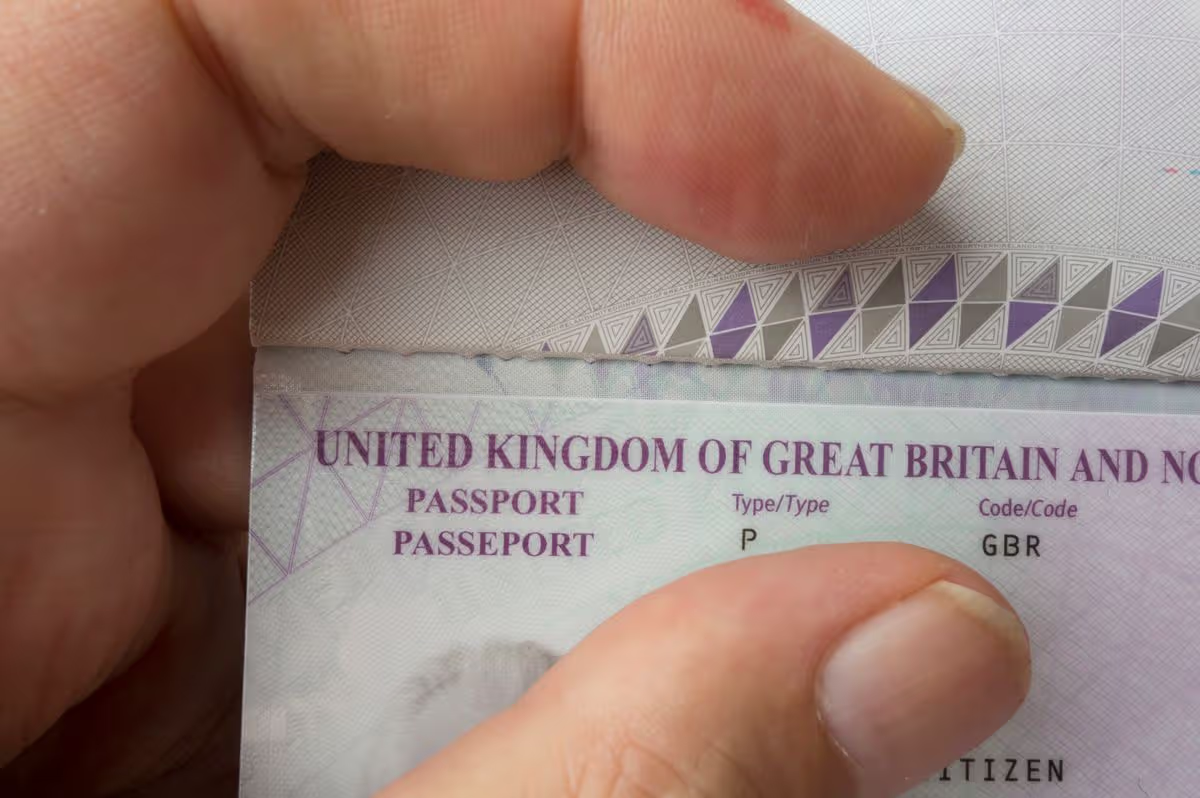
If you’re looking to save money, it’s worth knowing that it’s £12.50 cheaper to apply for a passport online than by post(Image: Getty)
If you’re planning a trip overseas soon, it’s crucial to ensure your passport is valid for travel. This means, depending on your destination, you might need to renew it earlier than anticipated.
For example, if you’re jetting off to Spain, the Foreign Office warns travellers that the country adheres to Schengen area rules. This means your passport must have a ‘date of issue’ less than 10 years before the date you arrive.
If you renewed your passport before October 1, 2018, it may have a date of issue that is more than 10 years ago. The rules also mean that you should have an ‘expiry date’ at least three months after the day you plan to leave the Schengen area – the expiry date does not need to be within 10 years of the date of issue.
In other places, like Cyprus, you need to have “at least one blank page for stamping”. So if you need to get a new passport, here’s what you need to know before you’re set to travel abroad.
How long did it take me to get my new blue UK passport?
I submitted an application for a new passport on July 13 last year and posted my old passport, as directed, on July 14. The Passport Office received my old one on July 15 – this step is necessary as you cannot possess two passports.
I received my next update on July 23, informing me that my passport application had been approved. This was followed by an email on July 24 letting me know my new passport had been printed.
The next day, I received my blue passport with a new photo I had taken myself at home. So it took me less than two weeks to get my new travel document – and I didn’t pay for fast track.
And if you need a passport urgently, you can opt for their Online Premium or 1 week Fast Track services. They warn: “Do not book travel until you have a valid passport – your new passport will not have the same number as your old one.”
How to apply for a new UK passport?
You can submit an application via the GOV.UK website. It caters for various needs, whether you need to apply for, renew, replace or update your passport, and you can also pay for it online.
How much does a UK passport cost?
If you’re looking to save money, it’s worth knowing that it’s £12.50 cheaper to apply for a passport online than by post. It’s worth noting that prices increase on April 8, 2026.
Apply Online
Adult (16 and over) standard 34-page passport – £94.50
Adult (16 and over) 54-page frequent traveller passport – £107.50
Child (under 16) standard 34-page passport – £61.50
NEWLY reopened in the UK last year, The Hide Hotel is one for the families who love the great outdoors.
Here is everything you need to know
Sign up for the Travel newsletter
Thank you!
The Hide has some beautiful viewsCredit: As Per Licence – 2024It is great for families tooCredit: As Per Licence – 2024
Where is The Hide Hotel?
Right up in the hills on the edge of Chatsworth Estate in Chesterfield lies this The Hide Hotel.
You’ll most likely need a car to get there although there is a bus stop outside that connects to Chatsworth and Bakewell.
What is the hotel like?
The thick stone-walled hotel is complete with dog and boot washing facilities, a roaring log fire in its restaurant and a tasty local pint for walkers to reward themselves with after a ramble in the Peaks.
The views across the moorland are breathtaking, and while the building is 200 years old, it was given a complete refurb last year, so all the furnishings look shiny and new.
All neutral tones with cosy throws strewn over the beds, rooms at The Hide Hotel are comfortable and inviting.
You can choose from double, triple, quad, or like us a bunk room, where a family of four could happily stay in the king size beds and very cute cabins.
Rooms cost from £79 per night including breakfast. See here.
What is there to eat and drink at the hotel?
There’s a great restaurant focusing on big plates of ribs, brisket, burgers and more.
They also offer a terrific range of stone baked pizzas and the cooked breakfasts are worth waking up for.
For something more refined, The Beeley Inn, also owned by the Chatsworth Estate, is well worth a visit.
Here we enjoyed whipped goats cheese with balsamic beetroot, and local lamb saddle with hispi cabbage.
What else is there to do there?
There’s a footpath out of the back door that leads directly to Chatsworth House (albeit via a 9km walk), where guests can book multi-entry tickets for their stay.
The Hide is also right at the entrance to The Peak District National Park which has amazing rambles for all abilities.
You’ll find a handy walking guide in every bedroom, and the staff are super knowledgeable and inspired us to climb the nearby snow topped Mam Tor, an unforgettable experience.
Is the hotel family friendly?
Yes, there are four-person rooms with bunk beds and king beds, so perfect for families, although kids re an extra £15 a night.
They also have everything else from high chairs to cots, and a play area in the restaurant with toys and games.
The hotel team are also on hand to recommend family-friendly activities.
is it accessible?
The hotel has accessible rooms, with wide entry bathrooms as well.
Some of the rooms sleep up to four peopleCredit: As Per Licence – 2024
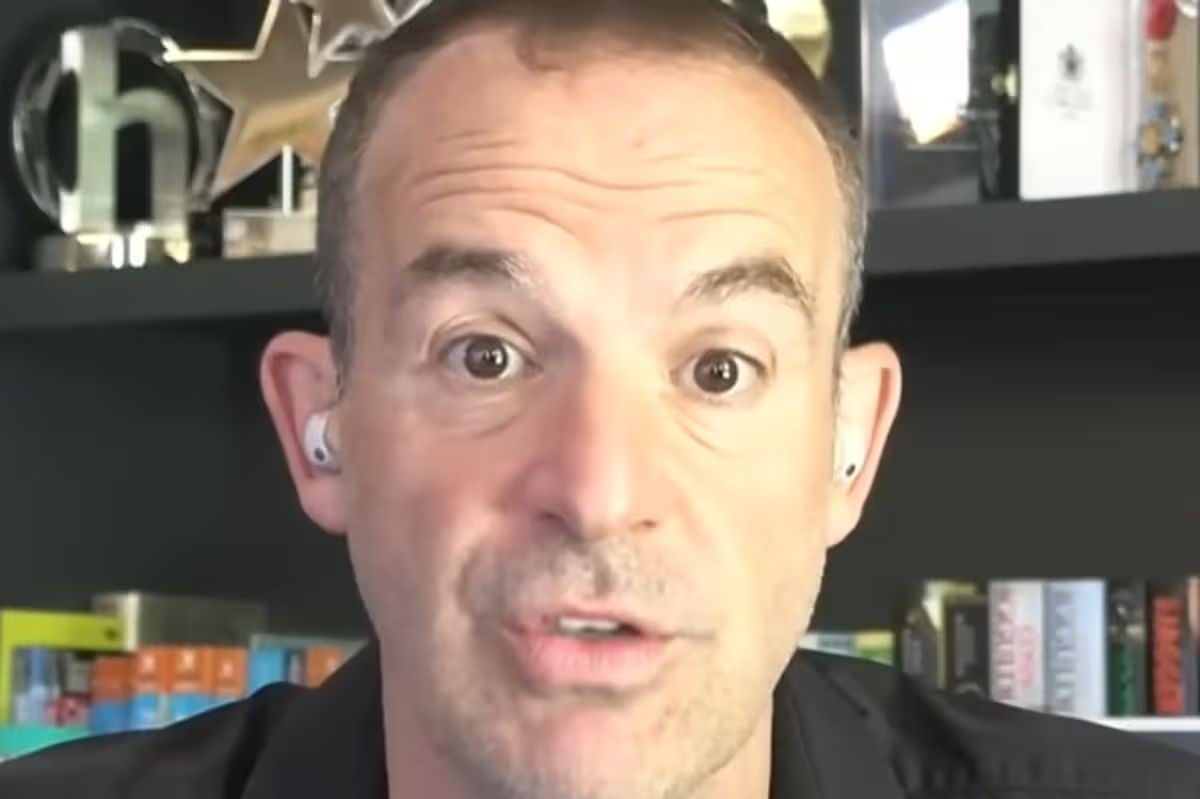
Money Saving Expert Martin Lewis urged Brits to check if they need to renew passports now
Martin Lewis has issued advice to UK travellers over their passports(Image: ITV screengrab)
Brits have been urged to “check now” or face being hit by costly passport fees come April. Next month is set to bring a hike in passport charges.
At present, a standard adult passport costs £94.50 when applying online. However, this is due to increase to £102 from 8th April. The price of a child’s passport will also climb from £61.50 to £66.50.
“Check NOW if yours is due for renewal, there’s still time to get the lower rate.” Additional guidance on securing the best deal was also published elsewhere on MSE.
“If you need a new passport, it’s cheapest to apply online,” MSE said. “The only site you’ll ever need to go to is the GOV.UK website.
“It has options for getting your first passport, renewing an old one or getting one for your child. You can apply online, which is the cheapest option, or by paper at the Post Office.
“Last year, over seven million Brits saved by applying online.”
Adult: takes up to three weeks to arrive – online cost now – £94.50, online cost from April 8 – £102, postal cost now – £107, postal cost from April 8 – £115.50
Adult fast-track – arrives one week after appointment – online cost now – £178, online cost after April 8 – £178
Adult ‘Premium’ – given at the appointment – online cost now – £222, online cost after April 8 – £239.50 Child – takes up to three weeks to arrive – online cost now – £61.50, online cost after April 8 – £66.50, postal cost now – £74, postal cost after April 8 – £80
Child fast-track – arrives one week after appointment – online cost now – £145, online cost after April 8 – £145
It’s worth noting that there’s no child equivalent one-day service. Also, for all these types, you can pay £12 extra for a 54-page passport, which is “useful” for frequent travellers.
The Government website also cautions that no refund will be issued should you cancel your application or if you’re not entitled to a passport.
Burgundy passport
If you’re still in possession of a burgundy passport, there’s no need to panic – you won’t be required to renew it until closer to its expiry date, as they remain perfectly valid. MSE added: “Got a burgundy passport? Newly-issued UK passports have a blue cover, but you DON’T need to get a new passport straightaway – you can keep using your burgundy passport until it’s due for renewal. The blue passports will only be issued when you renew or apply for a new passport.
“Passports can take up to three weeks to be processed, so apply early. The Passport Office warns that renewing can take three weeks for both online and postal applications, so don’t leave it too late if you’re planning a trip.
“If you need a passport urgently, you’ll need to book an appointment at a passport office and pay online. Alternatively, call HM Passport Office (HMPO) on 0300 222 0000 to book an appointment and pay.” Responding to the price increase, the Home Office released a statement saying: “The new fees will help the Home Office to continue to move towards a system that meets its costs through those who use it, reducing reliance on funding from general taxation. The Government does not make any profit from the cost of passport applications.
“The fees contribute to the cost of processing passport applications, consular support overseas, including for lost or stolen passports, and the cost of processing British citizens at UK borders.”
BRISTOL Airport has submitted plans to expand with thousands more flights and long-haul journeys.
Along with more passengers the terminal will be larger, there will be new shops, restaurants as well as an extended runway at the cost of £500million.
Sign up for the Travel newsletter
Thank you!
Bristol Airport has submitted new £500million expansion plans to the local councilCredit: AlamyIt has submitted new plans for a £500million investmentCredit: Farrans
New plans have been submitted to North Somerset Council for Bristol Airport to extend its runway which will allow for long-haul flights.
The proposal revealed the airport had plans to reach “world cities within Europe and beyond”.
The amount of travellers that pass through Bristol Airport is currently 10.8million.
The increased take-offs and landings mean that there could be up to 100,000 flight movements a year- up from 85,990.
On the busiest days, there could be as many as 35 aircraft movements.
Bristol Airport added: “The plans would see around £500 million invested in improvements at the airport and local infrastructure.
“These include extending the runway to accommodate larger aircraft and increasing capacity of the terminal that includes a number of improvements to enhance the customer experience, including more space, a wider choice of retail and restaurants and the ability to walk onto aircraft without getting on a bus.”
Along with the extended runway are plans for a larger terminal with more space for a bigger immigration hall, baggage handling facilities, shops and restaurants.
Other improvements detailed in the plans include travelators, better public transport and the expansion of car hire facilities.
Chief executive Dave Lees said: “Our proposals deliver what customers have told us they want to see at their local airport.
“We will open up opportunities to visit places further afield and for businesses to expand into new international markets.”
The plans reveal increased flights and a runway expansionCredit: Farrans
There are currently 14 airlines operating from Bristol Airport which go to 115 destinations including Alicante, Majorca, Amsterdam, Edinburgh, Tenerife and Barcelona.
In 2024, Amsterdam was the most popular destination, followed by Alicante and Majorca.
A GERMAN theme park is being completely transformed by a famous French theme park.
Parc Astérix in northern France, which is inspired by the iconic comic series of the same name, is taking over a destination in Germany.
Sign up for the Travel newsletter
Thank you!
Belantis Park in Germany which is being rebrand to Astérix Park Germany will open a new land this yearCredit: AlamyThe first parts of the transformation will open this year with a new land called Idefix’ AdventureCredit: Belantis Park
Currently known as Belantis Park, located near major cities including Dresden and Berlin, the theme park will be completely rebranded by 2031.
And work has already begun with the first new land opening at the theme park this spring.
The new land called Idefix’ Adventure Land will be for families with children and is themed around Idefix the dog from the Astérix universe.
There will be four new attractions and while they are yet to be announced, renders of the land show a small flume-style ride, a drop tower, a wagon ride and a spinning chair ride.
And there are some reports that they will include the ‘Aerobix Flying Machine’, ‘Driving school Frischling’, ‘Idefix’s River Journey’ and ‘Soapbox derby’.
The new land is the first part of the theme park’s transition into the Astérix and Obélix universe, with the park being completely rebranded Astérix Park Germany by 2031.
The next part of the transition – an expansion phase – is set for 2027, which includes a new family rollercoaster that will begin to be built this year.
Once fully complete, the theme park hopes to attract up to 900,000 visitors each year.
In the meantime, the park officially reopens for this year on March 28, however, the new land will not open then.
For those visiting the theme park before the new land opens, they can get a discount on another ticket if they want to return to see the new land.
Filip De Witte, Managing Director of Belantis, said: “At Belantis, we aim to create experiences where the whole family can enjoy thrilling adventures together.
“This year, we’ve lowered our admission prices to make it even easier for families to visit.
The new land will feature four rides and open in springCredit: Belantis ParkFrom the renders of what the land will look like, there will be a log flume includedCredit: Belantis Park
“At the same time, we’re expanding our offerings – from a new season pass and the Belantis app to a brand-new themed area opening later in the season.”
The park also has a new show called ‘Why do spiders spin webs?’ which is both educational and entertaining.
There’s also ‘Pirates on the Loose!’, which has been refreshed to include more music, show-fighting moments and interactions that mean audience members can train as a pirate or even discover a hidden treasure chest.
Existing rides include looping rollercoaster, a bobsled coaster and Fluch des Pharao which is a water ride inside a pyramid.
One recent visitor even noted: “There was hardly any queues when we got there, we went on a Sunday, the only time there was queues was in the evening from about 3-5pm.”
Tickets to the park cost €29 (£25.13) per person.
In other theme park news, here are nine of the best theme parks with something new in 2026 from multi-million lands to epic thrill rides.
FORGET the white sand beaches of the Caribbean – actress Michelle Keegan has opted for a quiet and beautiful village in Majorca for her latest holiday.
The tiny destination is in the heart of the Tramuntana mountains, but is right next to the coast and is within walking distance to a little bay with clear waters.
Sign up for the Travel newsletter
Thank you!
Deia is a beautiful mountain village near the coast in MajorcaCredit: AlamyMichelle Keegan has posted being in Majorca on her social mediaCredit: Instagram
We’ve all heard of Majorca, the Balearic Island loved by Brits gets over two million visitors every year.
Lots will flock to the capital of Palma, but there are so many other beautiful spots to explore – and Michelle Keegan is exploring it right now.
The former Coronation Street actress posted images of herself enjoying the Spanish sunshine on Instagram.
So what is there to do in the pretty village of Deià?
The coastal village has the best of both worlds as it’s tucked away in the mountains and is minutes from the coast.
To explore Deià, be prepared to take on a hill or two as visitors do comment on how steep the cobbled streets are, with the highest point being the church.
The roads are narrow too so your best bet to get around is taking a local taxi, walking or hiring a bike.
Just a short walk from the village is Cala Deià, a small pebbly cove that has crystal-clear waters and is popular for swimming and snorkelling.
One visitor said: “It is very rocky but absolutely gorgeous and great for swimming.”
Another added: “This cove is amazing – we are already ready to return.”
If you get peckish, there are cliffside restaurants including Ca’s Patró MarchandCan Lluc.
Cala de Deià is just a short walk from the hilltop villageCredit: Alamy
Check out this Majorca hotel near a beautiful beach cove…
*If you click on a link in this box, we will earn affiliate revenue
Gavimar Cala Gran Costa Del Sur, Majorca
This hotel sits on Majorca’s Cala Gran Beach, a beautiful cove just a short drive away from the coastal town centre, with its trinket shops and relaxed bars. The hotel itself has all the activities and entertainment you’d expect, including bingo and live music – as well as some unique extras like mini golf and archery. Week-long breaks start from £478pp.
Back in the 1980s Richard Branson transformed the crumbling mansion into a luxury hotel – which he then sold in 2002.
The Belmond Hotel has pretty suites, a swimming pool and is surrounded by palm trees.
Luckily it’s not all luxury hotels. At Hostal Villa Verde which has simple rooms with enviable views, holidaymakers can book a stay from £60 per person per night.
There are lots of local restaurants to try too. One visitor recommended sitting on the terrace at Es Punt to try padrón peppers and patatas bravas.
Another is Restaurante Miró which has a beautiful patio area and visitors have said it’s a great place to watch the sunset.
If you want to explore Deià, head to Majorca’s capital of Palma and from there it’s a 40-minute drive.
Michelle has also shared snaps of her exploring the neighbouring destination of Valldemossa.
It’s another mountain village which sits around Real Cartuja, a huge palace and monastery.
Just like Deià, Valldemossa is considered one of the most beautiful towns and villages in the country.
The closure at Liverpool Street Station will take place to improve roof drainage and track drainage, as well as vegetation management.
While most of the work has already been carried out, passengers have been told that Liverpool Street’s mainline station will experience its final closure on March 28 and March 29.
The Elizabeth line will still be running, however, there will be no access to the main concourse. Commuters have been also been warned that there will be no Overground Weaver line trains operating this weekend.
Train operating company, Greater Anglia, stated on its website: “On both days, Liverpool Street Main Line station will be closed (including the concourse) to all Greater Anglia, Stansted Express, c2c, Elizabeth line and London Overground services.
“Greater Anglia services to/from Cambridge, Bishop’s Stortford, Hertford East and Stansted Airport will start/terminate at Stratford.”
They added: “On both days, Elizabeth line’s low level Liverpool Street station remains open however services will not run beyond Stratford due to closures on the Great Eastern mainline.
“On both days London Overground Weaver line services will not run between London Liverpool Street and Enfield Town/Cheshunt/Chingford.”
Commuters have been directed to use rail replacement buses where possible. The services will run between Seven Sisters and Enfield Town/Cheshunt and Hackney Downs and Chingford.
Officials have urged passengers to plan their journeys ahead of time. It comes as the station recorded a staggering 98 million entries and exits between April 2024 and March 2025.
Trish Ashton, TfL’s Director of Rail, said: “We’re sorry for any disruption caused by weekend engineering work impacting London Overground and Elizabeth line services during March.
“These planned works are essential to help keep our services safe and reliable. Customers are advised to ‘check before they travel’ using the TfL Go app or at TfL.gov.uk, and allow a little extra time for their journeys.”
You can also check the Network Rail website here for more information on planned works.
SPLIT between heading to a seaside town or the Cotswolds over Easter? Well, what if you could head to the Cotswolds but still get time on the beach…
A beach isn’t the first thing that comes to mind when thinking of the Cotswolds, but near the village of Somerford Keynes you’ll find one, and you can head there from this week.
Sign up for the Travel newsletter
Thank you!
Cotswolds Country Park and Beach features the UK’s largest inland beachCredit: Facebook/Cotswold country Park and BeachFamilies can chill on the beach or have a dip in the waterCredit: Facebook/Cotswold country Park and Beach
Cotswolds Country Park and Beach features the largest inland beach in the UK, as well as swimming lagoons.
This is despite the Cotswolds beach being more than 70 miles from the sea.
And the attraction reopens on March 27, including the Main Beach Swimming spot where visitors can have a paddle or sunbathe on the sand.
The beach also looks out across the lake, which means you can keep an eye on kids splashing in the water or watch people pedal on pedalo swans.
Each session lasts around an hour and costs from £15 per person.
There are a number of other activities you can do at the park, like an inflatable course on the waterCredit: Facebook/Cotswold country Park and Beach
If you think the water is a little nippy or would rather stay firmly dry, there is a minigolf course as well, which costs £5 per play.
And children needing to burn some energy can have a go on the climbing wall for the same price, or head to the two playgrounds.
You will also need to pay to get into the park in the first place, which varies depending on the time of the year.
In May, you could enjoy the sun while mid-season prices are available, which costs £4.09 per person or £13.64 per car of up to five people, so about £2.73 each.
However, during the high season, it usually costs £5 per person, or £18.18 for a car of up to five people (so about £3.64 each)
Our favourite UK holiday parks
*If you click on a link in this box, we will earn affiliate revenue.
Park Holidays UK Sand le Mere, Yorkshire
This holiday park in Yorkshire is a thriving family resort, just steps from Tunstall Beach. Entertainment is what this resort does best, with costume character performances, Link-up Bingo, and cabaret shows. Accommodation ranges from fully-equipped Gold Caravans to Platinum Lodges with sun decks and luxury bedding.
This beachfront resort in St Ives, Cornwall, is a true beach bum’s paradise – whether you want to laze out on the sand or take to the waves for some surfing. Activities include disc golf, a Nerf challenge, and an outdoor cinema, as well as indoor activities for the colder months like karaoke, bingo, and DJ sets.
This holiday park has loads of unique activities on offer, including TikTok dance classes, alpaca feeding, a pump track for BMX riding, and taking a ride on the resort’s very own miniature railway. Throw in bug hotel and den building, pond dipping, survival skills workshops, and a lake for paddleboard and pedalo hire, and you’ve got yourself an action-packed park.
This beachfront resort is a classic family favourite. If you’re not up to swimming in the sea, there’s four fantastic pools here, as well as water flumes, underwater jets, inflatable jet skis and kayak races. Plus if you’ve got any little fans of Paw Patrol or Milkshake!, you’ll be glad to know there’s Milkshake! Mornings and Paw Patrol Mighty Missions to keep your tots entertained.
In the surrounding area, there are a few places you can choose to stay at as well.
For example, you could head to Cotswold Lakes Camping at Field Farm, which is surrounded by lakes, wildlife and rolling hills.
The site boasts hardstanding pitches with electrical hook-ups, grass pitches, and open field grass pitches, as well as hot showers, indoor and outdoor kitchens, and is dog-friendly.
A standard grass pitch sleeping up to six people costs from £40 a night.
And if you want to explore the wider area, Cirencester is down the road.
The pretty market town sits on the River Churn, and it is the largest town in the Cotswolds.
If you are looking for more places to explore in the Cotswolds, head to the ‘Golden Triangle’, where you will find some of the UK’s prettiest towns.
Plus, the ‘Gateway to the Cotswolds’ that had the first English king, has been named one of the best places to live in the UK.
Admission costs as littler as £2.73 per personCredit: Facebook/Cotswold country Park and Beach
Talks broke down this week that would lead to widespread disruption for travellers over Easter to airports in places like Mallorca and the Canary Islands
Robert Rowlands Deputy editor, money and lifestyle, content hub and Maria Ortega
13:52, 27 Mar 2026
Palma de Mallorca Airport is one of the airports that has been at the centre of debate over industrial action(Image: Getty)
UK tourists have been given a significant update over planned strike action at multiple airports in Spain. Talks broke down this week before officials announced that strikes would be held over several dates in March and April.
Airports set to be affected by the measures included Barcelona, Palma de Mallorca, , Gran Canaria, Málaga, Alicante, and Tenerife (South and North). Now an update has been reported in the Spanish press.
Two sets of strikes at Spanish airports have been partly cancelled, according to Spanish media reports. There had been concerns about extensive disruption at major airports throughout Spain owing to industrial action.
Larazon now reports that trade unions have postponed imminent strikes due to start today that would have seen staff at airport services operators Groundforce and Menzies walk out. The update comes after advances in wage negotiations – but strikes planned for later on have yet to be cancelled, according to local media.
Spanish reports say that trade unions have called off the first day of strike action at Groundforce, Air Europa’s ground handling company, and the first two days of the strike scheduled for this weekend at Menzies, another airport ground handling operator. This is according to sources from the UGT trade union speaking to Efe.
The partial and indefinite strikes planned Groundforce strikes were set to began this Friday. They would have coincided with the beginning of the Easter holiday exodus.
Ultimahora reports that the industrial action at Groundforce had been scheduled for the morning, afternoon and night shifts (from 5am to 7am, from 11am to 5pm, and from 10pm to midnight) with plans set to continue indefinitely. Additionally, the UGT has agreed to call off the first two days of industrial action at Menzies, planned for this Saturday and Sunday. In Menzies’ case, the strike had been called exclusively by UGT – the main union at the firm – for 28 and 29 March, and between 2 and 6 April.
The English language Majorca Daily Bulletin reports that 24-hour strikes for Menzies staff from April 2 to April 6 have not yet been scrapped. It also reported that there is no sign of further suspensions to the other planned strike action for Groundforce staff.
The strike notice at the ground handling operator covered all businesses within the group (Menzies Aviation Ibérica and Menzies Ground Services) and around 3,000 employees. The union had cautioned that, should no deal be struck with the company, the strikes would be rolled out to every weekend until the year’s end.
Groundforce operates at Madrid, Barcelona, Palma de Mallorca, Alicante, Málaga, Gran Canaria, Valencia, Ibiza, Bilbao, Lanzarote and Fuerteventura. Menzies operates at Barcelona, Palma de Mallorca, Málaga, Alicante, Gran Canaria, Tenerife South and Tenerife North.
The Victorian Pavilion in West Sussex has a huge arching glass roofCredit: Alamy Stock Photo
The Winter Gardens, Harrogate
The Winter Gardens began its life as part of the Royal Baths in Harrogate where people went to unwind.
The baths had first opened in 1897 and even though it later turned into a Wetherspoons, it still has lots of its original features.
There’s two grand staircases leading up to the bar and it has a huge glass ceiling which lets the light in.
The Corn Exchange, Bury St Edmunds
One of the most stunning Wetherspoons in the UK can be found in West Suffolk inside a building that was originally a place for Victorian merchants and farmers to trade in the 1800s.
It has a grand interior features an arching glass roof and elegant wooden panelling.
Unlike lots of other pubs, this one is found on the first floor as there are shops underneath.
The Royal Victoria Pavilion, Ramsgate
Not only is the Royal Victoria Pavilion one of the prettiest pubs, it’s also the biggest ever Wetherspoons.
As its name suggests, the pub is inside a former Grade II listed pavilion that dates back to the Victorian period.
To make it ever better, it’s just a short walk from the beach.
For those who want to make the most of being at the seaside, step out onto the balcony where you can see the sweeping beach in all its glory.
Samuel Peto, Folkestone
Right by the beach, Samuel Peto is inside an old church that has painted cloud ceilings and the organ still sits at the back of the pub.
It has pretty chandeliers with huge stained glass windows letting in most of the light.
Deputy Travel Editor Kara Godfrey called it “certainly one of my favourites I’ve ever been to.”
You can still see the old organ in Kent’s Samuel Peto WetherspoonsCredit: Alamy Stock PhotoThe Corn Exchange in Bury St Edmunds is one of the most beautiful WetherspoonsCredit: AlamyOn a summer’s day the balcony is the perfect place to enjoy a drink in RamsgateCredit: Alamy
The Caley Picture House, Edinburgh
The former art-deco cinema is now a unique Wetherspoons that looks like it could be in the backdrop if a 1920s movie.
It still has original features including a large screen area and balcony – and you can enjoy a pint up on the mezzanine level which has views over the bar.
The building used to be part of a hotel before it was transformed into a cinema.
Hamilton Hall, London Liverpool Street
Outside of Liverpool Street Station is a Hamilton Hall – the Wetherspoons is inside what was once the Great Eastern Hotel.
It might not look like much from the outside, but the pub is actually inside an old ballroom.
It has a huge circular bar, enormous windows and a hanging chandelier.
The Caley Picture House is a former art-deco cinema in EdinburghCredit: News Group Newspapers LtdLondon Liverpool Street’s Hamilton Hall is inside what was once the Great Eastern HotelCredit: AlamyAt the opera house in Royal Tunbridge Wells, you can sit in the old theatre seatsCredit: Alamy
As its name suggests, the Opera House, is inside a former opera house that welcomed the public through its doors for performances back in 1902.
Later on, it was used as a cinema and a bingo hall.
It has original features from its hey-day as a theatre like its colourful booths and stalls – and of course it has Wetherspoons touches too, like the bar and classic patterned carpet.
The North Western, Liverpool
Inside the 330-room North Western Hotel that once was a stopping point for Liverpool Lime Street Station passengers is this pretty Wetherspoons.
The hotel first opened in 1871 but later fell vacant until 1996 when it became university student accommodation.
Eventually it opened as a Wetherspoons pub in 2015 and is very popular with commuters thanks to it being right next to Liverpool Lime Street.
Inside this historic hotel in Liverpool is the North Western WetherspoonsCredit: AlamyThe Palladium in Llandudno was built in the 1920sCredit: JD WETHERSPOONSThe Counting House in Glasgow has an impressive glass dome above the barCredit: Alamy Stock Photo
The Palladium, Llandudno
Another Wetherspoons pub that used to be a cinema is in north Wales – and it’s a showstopper.
It first opened to the public in the 1920s, has eye-catching decor with a ceiling with gold detailing and red carpet.
The pub stretches across three floors thanks to its remaining stalls, dress circle and balcony.
The Counting House, Glasgow
Another Scottish Wetherspoons is The Counting House which is inside a former bank.
It’s an Italian Renaissance style building and inside has high ceilings with pretty detailing including a glass dome over the bar.
You can even have a drink in the old underground banking vaults.
Waterend Barn, St Albans
St Albans is known as having lots of places to enjoy a drink, and it’s home to a pretty Wetherspoons too next to the River Lea.
It’s formed of two listed barn buildings and inside has high ceilings lined with beams and an outside area with picnic tables.
The Velvet Coaster, Blackpool
One pub that has incredible beach is The Velvet Coaster which is right next to Blackpool’s South Pier and metres from Blackpool Pleasure Beach.
It’s been described by punters as a Wetherspoons with “beautiful views”.
The pub opened in 2015, it’s set across three floors including a bar on each level and there’s a beer garden on the ground floor.
There’s also a balcony on the first floor, and a roof garden on the top level.
The interior is inspired by elements from Blackpool’s surroundings like the sea and nearby rollercoasters.
St Albans’ Wetherspoons has high ceilings with beamsCredit: UnknownThe Velvet Coaster has a modern decor and is close to Blackpool Pleasure BeachCredit: Google mapsThe beautiful Winter Gardens is inside a former Royal Baths in HarrogateCredit: Unknown
IT MIGHT feel like we have been waiting forever for spring and now you can enjoy it by seeing lots of different sights in bloom.
National Trust sites and properties across the UK are home to an abundance of plants and trees.
Sign up for the Travel newsletter
Thank you!
There are tons of places to see blossom across the UK this spring, including National Trust propertiesCredit: Shutterstock EditorialAnglesey Abbey is less than six miles from Cambridge and features a country house that was built on the remains of a prioryCredit: AlamyThe house is surrounded by gardens, which is where you will find the blossomCredit: Alamy
And with that, there’s a lot of blossom to see.
Whether it be an apple or cherry tree, here are some of the top National Trust sites to see blossom this spring.
Acorn Bank, Cumbria
Acorn Bank is known for having an extensive herb collection as well as sprawling orchards and a working watermill.
And tucked behind its 17th-century walls, visitors will find the orchard with over 175 apple varieties.
From early May, many of the trees bloom with a soft pink-white blossom.
It costs £11 per adult and £5.50 per child to visit.
Anglesey Abbey, Cambridgeshire
Less than six miles outside of Cambridge, Anglesey Abbey features a country house that was built on the remains of a priory.
The house is surrounded by gardens, which is where you will find the blossom.
Back in 2021, Olympian Way was planted with cherry blossoms that bloom pink in March and April.
Visitors will also be able to find cherry blossom in the woodland and Rose Garden.
It costs from £19 per adult and £9.50 per child to visit.
Ardress House, County Armagh
Found in the ‘Orchard County’ of County Armagh, Ardress House features a 17th-century house with 18th-century interiors, as well as a traditional farmyard.
Each May, the property’s apple blossom appears and visitors can also head on a walk which encircles the farmhouse to see more blossom.
Attingham Park, Shropshire
Attingham Park is an 18th-century estate with a mansion and around 200 acres of parkland.
Blossom appears on the apricot trees each year in the Walled Garden from around mid-March, and then other trees follow, such as peach, pear and apple.
Admission to the house and gardens costs from £18 per adult and £9 per child.
Attingham Park in Shropshire has over 130 apple trees in totalCredit: PA:Empics SportBatemans used to be the home of Rudyard Kipling who wrote The Jungle BookCredit: Alamy
Bateman’s, Sussex
Bateman’s in Sussex is the family home of the writer of The Jungle Book, Rudyard Kipling, and was built in 1634.
Each year the orchard becomes alive with blossom from April to mid-May including apple trees and pear trees.
It costs £18 per adult and £9 per child to visit the estate.
Beningbrough, Yorkshire
At Beningbrough, visitors can explore a hall and gallery, eight-acre garden and even a wilderness play area.
And during the spring, the blossom emerges in the walled garden.
The blossom comes from many traditional and newly planted fruit trees.
It costs £16 per adult and £8 per child to visit Beningbrough.
At Beningbrough, visitors can explore a hall and gallery, eight-acre garden and even a wilderness play areaCredit: AlamyThe blossom at Beningbrough comes from many traditional and newly planted fruit treesCredit: Alamy
Blickling Estate, Norfolk
At Blickling Estate, visitors can see a Jacobean mansion which boasts a large collection of books as well as a 55-acre garden.
In the West Garden is where visitors will find magnolias blooming from March in shades of white and pink.
The orchard also features fruit trees which blossom.
It costs £18 per adult and £9 per child to visit.
Brockhampton, Herefordshire
Brockhampton estate features a medieval manor house and is home to the largest orchard in the National Trust, spanning more than 145 acres.
In the orchard, visitors will find prune damsons as well as apple varieties, all of which bloom between March and May.
There are also five interlocking ‘orchard rooms’ which have been designed to reflect the structure of an apple.
Admission to the entire estate costs £12 per adult and £6 per child.
Brockhampton estate features a medieval manor house and is home to the largest orchard in the National Trust, spanning more than 145 acresCredit: AlamyCalke Abbey has 50 varieties of rare and local apple treesCredit: Alamy
Calke Abbey, Derbyshire
At Calke Abbey, visitors can see a Baroque-style mansion that has peeling paintwork and abandoned rooms, as well as the physic garden and a sprawling estate.
In the garden, there are around 50 varieties of rare and local apple trees which means by May the garden is full of pink and white flowers.
At the beginning and end of the season, visitors can also enjoy Calke’s Festival of Blossom with a number of activities.
To visit the house, it costs £15 per adult and £7.50 per child and to visit the park and gardens it costs £8.50 and £4.25 per child.
Coleton Fishacre, Devon
Coleton Fishacre is a 1920s country retreat which also has a tropical garden.
In the garden, visitors can see apple and cherry blossom on a number of self-led trails.
As part of the Festival of Blossom, visitors can also write haiku or tanka poems using blossom poetry cards.
And there are guided mindful walks on March 31, April 13 and 29.
Coleton Fishacre costs £18 per adult and £9 per child to visit.
What’s it like to visit Coleton Fishacre?
TRAVEL Reporter Cyann Fielding has visited Coleton Fishacre and here’s what she thought:
Growing up I visited Coleton Fishacre several times and with each visit, I fell in love with it more.
The 1920s country house with a thatched roof sits on a hill overlooking the Devon coastline.
And inside the house, it is just as special with kitsch interiors that feel cosy.
Make sure to spend some time in the Library and the Saloon.
In the Library, you see tonnes of books with a huge painted map above the fireplace.
And then in the Saloon, there is a theatre-like atmosphere with lots of Art Deco features.
Coleton Fishacre features a subtropical garden with lots of blossomCredit: Alamy
Cotehele, Cornwall
Cotehele in Cornwall is a Tudor house with a mill, garden and estate.
On the estate, the orchard is the earliest to bloom with apple, cherry, plum and pear trees.
Across spring the estate also hosts a number of events including walks, music, creative workshops and community activities.
It costs £18 per adult and £9 per child to visit.
Just outside of Durham, you will find Crook Hall Gardens with a medieval hall and pretty gardensCredit: Alamy
Crook Hall Gardens, Durham
In the north of England, you can head to Crook Hall Gardens.
Here you will find a medieval hall with pretty gardens, just outside of Durham city.
In the orchard all the apple varieties bloom and as the season goes on, more species in the orchard flower.
It costs £10 per adult and £5 per child to visit the gardens.
Dunham Massey in Manchester is often noted as one of the best places to see blossom in Northern EnglandCredit: AlamyThere is also the Orangery, with small waterways and seasonal flowers to exploreCredit: Alamy
In the spring, cherry blossom blooms and is often noted as one of the best places in Northern England to see blossom.
There is also the Orangery, with small waterways and seasonal flowers to explore.
It costs £20 per adult to visit and £10 per child.
Dunster Castle and Watermill, Somerset
Dunster Castle doesn’t just feature a castle, but also a country home and subtropical gardens.
Throughout spring, blossom inspired decorations welcome visitors as well as there being a blossom themed display at the Stables Shop.
Families can also head on the ‘Bees and Blossoms Spotter Trail’ and toward the end of April, there will be a new willow sculpture by artist Woody Fox.
Outdoors, blossom will also appear in the subtropical and riverside gardens.
It costs £19 per adult and £9.50 per child to visit.
Dunster Castle doesn’t just feature a castle, but also a country home and subtropical gardensCredit: Alamy
Dyffryn Gardens, Vale of Glamorgan
At Dyffryn Gardens, visitors can see a number of small themed gardens that reflect different countries and styles, as well as a kitchen garden, arboretum, glasshouse and natural play areas.
During the spring, visitors can expect Dyffryn Gardens has a self-led Blossom Watch Walk through the estate and Edwardian garden rooms.
Visitors can grab a dedicated map which helps to show the highlights of the gardens.
It costs £14 per adult and £7 per child to visit.
Erddig Hall and Garden, Wrexham
Erddig Hall is a late 17th-century country house with an 18th-century Grade I listed walled garden.
Across the 1,200 acre estate there are meadows, lakes, ponds and rivers, to explore.
During the spring, Erddig has blossom across its walled garden, orchards and lime tree avenues.
Visitors can also see cherry, plum, pear and apple blossom appearing in stages across the garden’s fruit trees.
It costs £19 per adult and £9.50 per child to visit.
Felbrigg Estate is home to a 17th-century Hall with one of the largest collections in the National trustCredit: Alamy
Felbrigg Estate, Norfolk
Felbrigg Estate is home to a 17th-century Hall with one of the largest collections in the National Trust.
In the Walled Garden visitors can see blossom across fruit trees as well as historic varieties.
It costs £16 per adult and £8 per child to visit.
Gibside, Tyne and Wear
At Gibside – a Georgian landscape garden – visitors can explore pear, apple and apricot trees all blooming from March to May.
The Walled Garden is also colourful, with lots of pink blossom.
There are a number of events too including blossom bathing sessions, beekeeping demonstrations, pollinator counts, and creative workshops.
It costs £18 per adult and £9 per child to visit.
Greenway Mansion used to be the home of crime author Agatha ChristieCredit: Alamy
Greenway, Devon
Agatha Christie’s home in Devon is a great spot to explore the life of the crime writer as well as see blossom in spring.
Between March 21 and April 30, Greenway has its Festival of Blossom, with large magnolias blooming overhead, lots of fruit trees in bloom and wild hedgerow flowers appearing.
Admission to the whole property costs £18 per adult and £9 per child.
Gunby Estate, Hall and Gardens, Lincolnshire
Gunby Estate features an 18th-century country house with Victorian walled gardens near the Lincolnshire Wolds.
During the spring, visitors can expect to see the fruit trees in the walled gardens spring into bloom with different pastel pinks.
There is also a cherry walk which is great to visit in late April and pear blossom appears in the kitchen garden, alongside apple blossom in May.
Between March 29 and April 23, visitors can also catch some blossom indoors as the ‘Springtime Wonderland’ exhibition by Laura Andrew will be on.
And from April 13 to May 31, there is the Blossom Wellbeing Trail – a self-guided route to appreciate the sights, scents, and sounds of the season.
It costs £12 per adult and £6 per child to visit Gunby Estate.
At Hanbury Hall, there is an 18th-century house featuring original wall paintings by Sir James Thornhill as well as formal gardens.
The site is home to several species of blossom trees, including pear, apple, and cherry blossom, which all flower anytime from March to May.
Later in April and May, visitors can try out blossom bathing in the walled orchard, which has 56 varieties of heritage apple trees.
It costs £19 per adult and £9 per child to visit.
Ham House, London
Ham House is a Stuart house situated on the banks of the River Thames and boasts a unique collection of antiques and furniture.
The house even has its own cherry garden, with lavender and a 17th-century statue of Bacchus.
In the Outer Courtyard, lots of new blossom trees have been planted and even though they are young, more and more sprigs of colour are appearing each spring.
It costs £18 per adult and £9 per child to visit.
Hinton Ampner was rebuilt and today features a large house with a pretty gardenCredit: Alamy
Hinton Ampner, Hampshire
Following a fire in 1960, Hinton Ampner was rebuilt and today features a large house with a pretty garden.
During the spring blossom can be found across the orchard and wild garden.
And don’t miss the sweeping views of the Hampshire Downs.
It costs £18 per adult and £9 per child to visit.
At Killerton in Devon, visitors can head on a waymarked blossom trailCredit: Alamy
Killerton, Devon
Killerton is home to a Georgian house as well a chapel and historic garden and the gardens are one of the first to awaken in Devon according to the National Trust.
Visitors can head on a waymarked blossom route, which is around one-mile.
Along the way, they can read gardener’s notes that highlight the different blossoms.
It costs £18 per adult and £9 per child to visit.
Lyme, Manchester
Lyme in Manchester features a 600-year-old house with 1,400-acre grounds.
Visitors can explore ornamental cherry trees with soft pinks as well as creamy white blossoms.
In the Vicary Gibbs area of the garden, there’s a mindful walk where visitors can bathe beneath the Japanese Mt. Fuji cherry tree.
It costs £19 per adult to visit and £9.50 per child.
Visitors at Nostell in Yorkshire can explore a large Georgian house, landscaped gardens, parkland and stables courtyardCredit: Alamy
Nostell, Yorkshire
Nostell in Yorkshire boasts a large Georgian house, landscaped gardens, parkland and stables courtyard.
Visitors can see blossom across the Kitchen Garden, orchard and pleasure grounds with the season beginning in March.
There’s also a nice walk from the rose garden and orangery to the orchard’s heritage pear espalier.
In the pleasure grounds, make sure to look out for the magnolia with large flowers budding overhead.
It costs £14 per adult and £7 per child to visit.
Paycockes House and Garden, Essex
Paycockes House and Garden is a Tudor merchant’s house and in the gardens this spring, visitors can see blossom across the entire garden,
It costs £12 per adult and £6 per child to visit.
Sissinghurst in Kent has 1,100 fruit trees blooming each springCredit: Alamy
Sissinghurst, Kent
Sissinghurst is a castle with a world-renowned garden, where you will find 1,100 fruit trees blooming each spring.
The garden also has a particularly large blossom tree, known for its fluffy white flowers.
It costs from £20 per adult and £10 per child.
Waddesdon Manor, Buckinghamshire
Waddesdon Manor is a French Renaissance-style château, built by Baron Ferdinand de Rothschild, and it boasts Victorian-style gardens with statues and a wooded playground.
Between March 25 and April 12, visitors can head to Waddesdon’s Festival of Blossom which has fresh floral displays and a blossom trail inside the house.
In the gardens, visitors can see horse chestnut trees which have creamy-white or pink blossom in May.
It costs £27.50 per adult and £13 per child to visit.
Between March 25 and April 12, visitors can head to Waddesdon’s Festival of Blossom which has fresh floral displays and a blossom trail inside the houseCredit: Alamy
Wimpole Estate, Cambridgeshire
Wimpole Estate is home to a 17th-century mansion with Georgian interiors, a walled kitchen garden, and parkland.
Visitors heading to Wimpole’s orchard will see over 300 fruit trees which blossom between April and May.
Also in the Walled Garden are a number of cherry trees which have soft pink blossom.
It costs £21 per adult and £10.50 per child to visit.
What’s it like to visit Wimpole Estate?
TRAVEL ReporterAlice Penwill has visited Wimpole Estate and here’s what she thought:
One of my favourite National Trust spots that I visit throughout the year, in rain or shine is Wimpole Estate in Cambridgeshire.
It’s enormous, all spaced around its 17th-century hall and has a pretty garden which you can visit in the springtime.
But I love to explore the grounds (and it’s free of charge), you can walk for miles through cow fields, around the large ponds and up to the ruins in the folly – which if you’re a Slow Horses fan was used for filming in season one.
Afterwards you can duck into The Old Rectory to get a drink or something to eat, but what lots of visitors do, and myself included, is pack up a picnic and have it on the grass outside.
British holidaymakers in Tenerife admit they have “booked early flights home” recently. A specific issue seems to have impacted their holidays over the past few weeks
12:05, 27 Mar 2026Updated 12:06, 27 Mar 2026
Brits in Tenerife admitted to booking early flights home (stock image)(Image: Gabriel Mello via Getty Images)
UK holidaymakers visiting a beloved travel hotspot say they’ve been “booking early flights home” after their breaks were disrupted by an unexpected issue. While many jet off abroad hoping to bask in the sunshine, unwind and enjoy some well-deserved rest, things don’t always go according to plan – no matter how much we’d like them to.
Brits in Tenerife recently discovered this first-hand, with some suggesting their holidays were “ruined” due to an unlikely problem. A string of videos have gone viral on TikTok, with visitors expressing their frustration after trips to the destination over recent weeks, catching many completely off guard.
A man, known online as Gazza, posted a video of his recent getaway, stating: “Come here every year and this is the first bad downpour experience.” He also described the weather as “brutal” for four days due to the relentless rainfall.
The clip has since racked up thousands of views, sparking hundreds of responses. It appears many fellow travellers have encountered similar situations.
Content cannot be displayed without consent
One commented: “Had wind, clouds and cold one year for four days out of the seven. Never went back.” Another added: “I was there last week and got an early flight home.”
Gazza responded to this remark, saying: “Was debating it too.” While a third chimed in: “I just got back. It was mental.”
A further user wrote: “It’s been almost a week!!! Everywhere/everything closed!!!” While another remarked: “That’s pretty unlucky. I would feel gutted.”
Others, however, claimed to have had a wonderful time during their visit, with some reporting an entirely different experience.
One holidaymaker shared: “It’s heaven. Chill.” Another added: “Here at the moment and not that bad. People need to chill out.”
Someone else also weighed in with: “Still rather be there than here. It’s the getting away that matters.”
What’s actually been going on?
While heavy rainfall is uncommon in Tenerife during March, a powerful storm has recently battered the Canary Islands. Storm Therese is reported to have wreaked havoc on the Canary Islands, particularly Tenerife and La Palma, with an unexpected mix of heavy rain, 100 km/h (62 mph) winds and even snowfall at high altitudes.
Authorities confirmed it was amongst the most devastating storms to strike the archipelago in over 10 years, which may well explain why so many visitors encountered such dreadful weather during their stays.
The silver lining, however, is that conditions appear to be on the mend. Current forecasts predict sunny spells over the coming days, with temperatures potentially reaching highs of up to 26 degrees, which could explain why some travellers have recently reported a marked improvement in the weather.
One visitor said: “It’s sunny now.” Another wrote: “I’m just back yesterday. Was there for a week. We had a ball even with the storm and rain.”
Tourism chiefs are predicting a near two million jump in the number of Brits holidaying at home this Easter
11:40, 27 Mar 2026Updated 11:47, 27 Mar 2026
Around five million more Brits plan to holiday at home rather than go abroad this Easter(Image: Parkdean Resorts)
Around 12.5 million Brits are planning an Easter staycation – as the Middle East war deters families from jetting abroad.
The number of people who say they intend to holiday in the UK over the Easter weekend is up sharply from 10.6 million last year. The near two million surge will help deliver a bumper £4.8billion boost to tourism and the wider economy, according to VisitEngland, which published the data.
The number saying they hope to holiday at home dwarfs the estimated 7.4 million who are planning a trip abroad this Easter. Of those definitely aiming to take a staycation during the Easter break, the majority will be short breaks of one to three nights.
It came as VisitEngland’s Trip-Tracker revealed that more than a quarter of those it surveyed, 28%, were worried about the impact of the Middle East conflict on their upcoming travel plans in April and May. The top concern was having less money to spend due to the economic impact. There have already been fears of air fare price hikes and possible flight cancellations.
The number of people planning an Easter staycation this year also marks a big jump on 2024’s 11 million, and nearly double the 6.5 million in 2023. A further 5.1 million people surveyed said they were undecided about whether to take an overnight holiday trip in the UK during the Easter weekend. The top reasons were “waiting to see if I can afford it” and “waiting to see what the weather is like”. Forecasts for the weather suggest it will be a mixed bag next week, but with settled conditions over the Easter weekend itself.
However, those driving for days out and holidays in the UK face a hit to the wallet from soaring fuel prices on the back of the Iran war. The nationwide average for unleaded has jumped to 150p a litre, up 17p since before the conflict erupted. Diesel drivers have been hit even harder, with diesel now averaging 176.68p per litre, a leap of 34p in recent weeks.
RAC head of policy Simon Williams said: “Petrol has now broken through the unwelcome milestone of 150p a litre (150.11p), something drivers haven’t seen since mid-May two years ago while the average price of diesel is now approaching 180p at 177.68p.
“With the long-awaited four-day Easter weekend almost within touching distance, the cost of getting away by car is going to be noticeably higher this year.
“And with average prices at motorway services at 166p for unleaded and 182p for diesel, drivers on long journeys will need to plan very carefully where they refuel. The best advice remains to shop around for fuel and make use of free apps such as myRAC to never pay a penny more for fuel than is absolutely necessary.”
Some families may also think twice given another wave of bill increases – including water and council tax – from the start of April, and warnings that food price inflation could jump again.
Kate Allen, owner of Devon-based Finest Stays, said: “For now, we’re not seeing a slowdown. Bookings are up around 10% on this time last year, with more guests opting to stay in the UK rather than travel further afield to places like Dubai.
“The Great British holiday is very much in favour, as we’re a nation that prioritises getting away, and domestic breaks are benefiting from that shift. That said, there’s a nervous undercurrent. Fuel costs feel like a slow leak, pressure building rather than bursting.
“We’re expecting more guests to postpone or cancel, and that’s where it gets tricky. Terms and conditions may cover it, but it doesn’t make refund conversations any easier when the wider impact on businesses and homeowners isn’t fully understood.”
Tourism Minister Stephanie Peacock said: “It is wonderful that so many people are planning on having a staycation this Easter weekend, whether that’s spending time visiting our stunning landscapes and coastlines or exploring our vibrant towns, cities and cultural landmarks. Supporting domestic tourism helps local areas thrive – fuelling small businesses, boosting pride, and strengthening community economies.”
VisitEngland chief executive Patricia Yates said: “Tourism businesses and destinations will be looking to the critical Easter weekend for much needed cash flow so it’s encouraging to see so many of us are planning a holiday at home, with its ease, convenience and certainty of budgeting. We also know that the cost of living remains a concern for holidaymakers, leaving it difficult too for businesses to plan in advance.
“We have incredible activities, experiences and places to stay for all tastes and budgets, and there really is nowhere quite like Britain in springtime. From walks in our beautiful countryside with the promise of a pub lunch or discovering contemporary culture in our buzzing cities to enjoying fish and chips on the beach, there is something for everyone. So, a rallying cry to please go out and explore the amazing destinations and events here on our doorstep this spring. Tourism businesses will be very pleased to welcome you, you will have an amazing time and create memories to make you smile all year.”
It came as trade body UKHospitality stepped up criticism of what has been dubbed a new “tourist tax”. Labour is proposing to allow regional mayors in England to introduce a “visitor levy” on overnight stays, as already happens in some European countries. While details of how it would work are still to be finalised, it could either be a per head charge or a percentage of the cost of the stay. Small businesses – from guesthouses to B&Bs – say it could lead to closures.
Modelling by Oxford Economics, commissioned by UKHospitality, which assumed a 5% levy, warned it could lead to a £1.6billion tax increase for holidaymakers by 2030, and a £2.2billion hit to the economy.
POPULAR airline JET2 has launched its first flights from a major UK airport.
Jet2 flights to Tenerife and Alicante in Spain have taken off from London Gatwick, marking its first flights from the airport.
Sign up for the Travel newsletter
Thank you!
Jet2 has launched its first flights from London Gatwick AirportCredit: AlamyLebos is one of the destinations on the listCredit: Alamy
This summer, travellers can fly to 29 destinations with Jet2 from Gatwick, including the Canary Islands, Greece, Turkey, Portugal, Malta, Italy, Croatia, Bulgaria and Cyprus.
And the airline won’t stop at the end of the season either, as for the winter season it will fly to 14 winter sun destinations, ideal for Brits wanting to escape the cold.
Jet2 will also fly to five ski destinations and four Christmas market spots over the winter period.
Looking ahead to next year, even more routes will be added.
The airline’s routes will rise from 29 to 34 destinations including flights to Lesbos – a large island in Greece – which will operate weekly.
Lesbos is Greece’s third largest island and boasts a lot of history as well as sprawling olive groves.
For those flying from Gatwick with Jet2, there will be six aircraft including the new Airbus A321neo aircraft.
Jet2’s arrival at the UK’s second largest airport comes after increased demand, especially with travellers from the South East of England and marks the airline’s 14th base.
Steve Heapy, CEO of Jet2.com and Jet2holidays, said: “Today is an incredibly exciting moment for Jet2, as we welcome our first customers at London Gatwick and wave off our inaugural flight.
“After years of demand to come to London Gatwick, we are delighted to be bringing our award-winning service, recognised 11 years in a row by Which? as its recommended travel provider, to the UK’s largest beach and city leisure destination airport.
He added: “Since going on sale, we have experienced phenomenal demand from customers and independent travel agents, and we are looking forward to a hugely successful future from our newest UK airport base.”
The arrival of Jet2 at London Gatwick Airport is the airport’s largest airline launch in more than a decade.
Pierre-Hugues Schmit, Chief Executive, London Gatwick said: “Today’s inaugural Jet2 flights mark an exciting moment for London Gatwick and for passengers across the region.
“The launch of 29 new routes and the creation of more than 300 jobs demonstrate the strength of demand for travel from our airport and the confidence airlines have in London Gatwick as a place to grow.”
According to The Independent, Jet2 has been trying to get slots at Gatwick Airport for years and it was only when slots were freed up that the airline could move in, first announcing this four months ago.
The first flight to Alicante took off todayCredit: Alamy
Full list of destination Jet2 will fly to in summer 2026 from London Gatwick Airport
HERE are all the destinations Jet2 will fly to from London Gatwick in summer 2026: