The ex-HGV driver left the UK with his family to interrail and now works just 10 hours a week

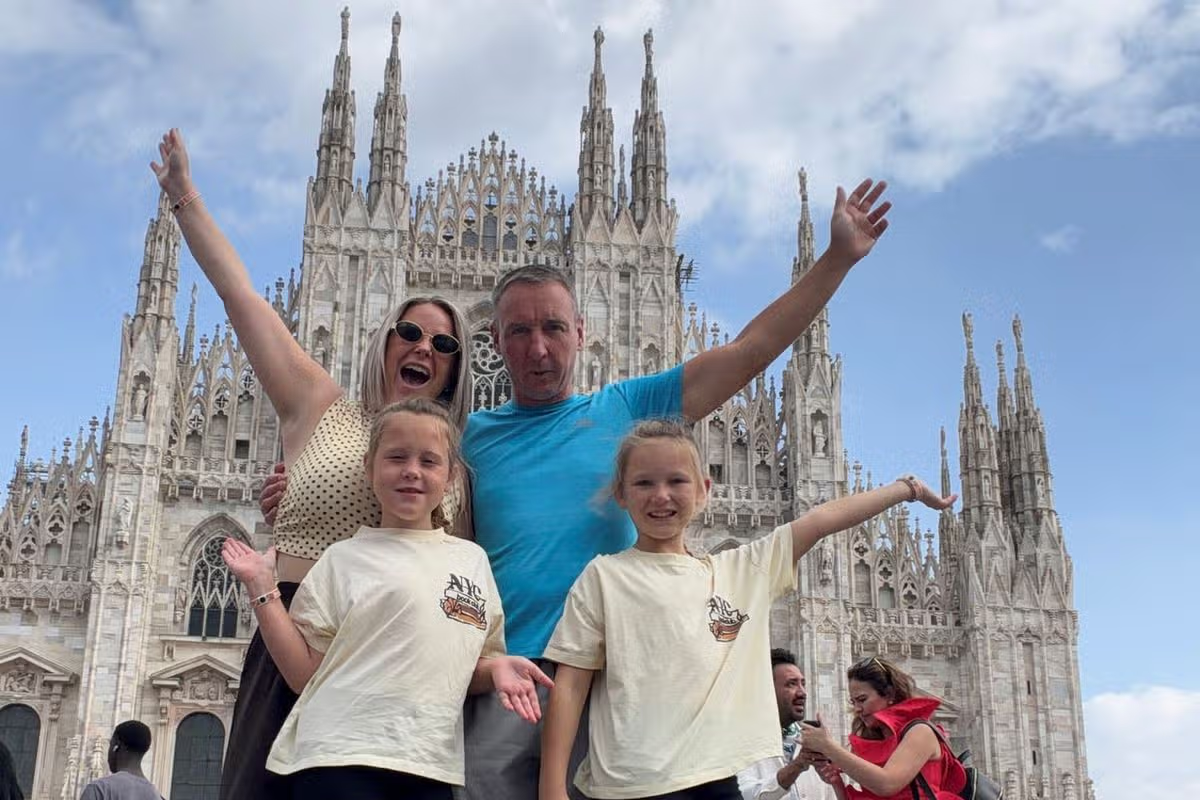
Aimee Bedford, 38, and Lee Bodell, 47, sold their house and all their belongings in July 2026(Image: Aimee Bedford/SWNS)
A former “workaholic” ditched the UK with his family to interrail Europe – and is funding it by working just 10 hours a week selling solar panels on eBay. Lee Bodell, 47, hadn’t taken a sick day in eight years from his job working 50-hours a week as a HGV driver when the pandemic forced him to spend time off at home.
The dad-of-four said it completely changed his mindset and he quit his job and Lee and his partner Aimee Bedford, 39, sold their house and all their belongings in July 2026 and flew to Paris in September. Along with daughters Matilda-May, 10, and Mila, nine, they have since visited seven countries in just three weeks, spending £1,800 on 60-day continuous first-class train tickets that allow them to travel across the continent.
By November, when their tickets expire, they plan to visit as many European countries as possible before heading to Thailand to spend Christmas and New Year. In the future, they hope to settle somewhere abroad but plan to “see where life” takes them.
They are funding their travels through Lee’s remote job selling solar panels for mobile homes on eBay and his own website, which he spends just 10 hours a week doing, making between £500 and £1,000 a week. The family reckon they have spent around £6,000 in total so far, including the Interrail tickets, but once they fly to Southeast Asia, they plan to budget around £1,500 per month.
Lee, a former HGV driver from Birkenhead, Merseyside, says: “What first triggered it off was during Covid, I was placed on furlough and was off work for 10 weeks. I was always a workaholic and never missed a day off work in eight years being sick and I was constantly doing overtime.
“Spending 10 weeks at home with the family completely changed my mind set on life and I thought ‘I want to do this full-time’. I started thinking about ideas and online businesses and stuff like that.
“I’ve built it up over the past few years. It’s mostly buying and selling on eBay and Amazon and I have my own Shopify store. It should give us enough income to keep us travelling and even settle down somewhere in the future.”
In May 2025, the couple decided to see if running Lee’s business abroad was possible and hired out a villa in Cyprus for 10 days to “test the waters”. On their return home, they put their four-bed home up for sale, and it sold in July 2026 for £330,000, leaving them with £140,000 in equity.
Mum Aimee, who used to work as a family support worker at a primary school prior to their travels, says: “We set a couple of grand aside from the house sale and Lee’s wages top that up, with some savings as well. The money that was made from selling our belongings and cars has gone towards the trip.
“We’ve invested the rest of the house money and hope to earn off that as well. We were spending with a mortgage, bills, days out, running the house and cars with four children around £3,000 to £4,000 a month.
“Obviously we’ve been travelling for one month and to get set up it’s 100% cheaper to be doing what we’re doing at the moment. We knew it would be more expensive in Europe and at the end of it when we get to Southeast Asia we will easily be living on £2,000 per month all in.”
Jetting off to Paris in September, the family have since visited the Netherlands, Austria, Germany, Switzerland, Belgium and Italy. “We’d reached the point where we really felt like we just existing rather than living,” Aimee says.
“We had jobs and the kids were attending school all day long and we were lucky if we had two hours with them at the end of the day. We wanted more time to experience life together. We came away with three suitcases”.
Daughters Matilda-May and Mila have been de-registered from school and despite being “initially sad” to leave behind family and friends, are settling into life on the move. “I think we’re deliberately choosing to give them these experiences, and I think we want them to learn through travel rather than just recreating school at the kitchen table if you like,” Aimee says.
“They do enjoy learning but we’re not shoving it in their faces as it’s very early days. I think personally I’d be ok with them not attending school for at least two years.
“But that can change and we’re led by them. If they want to learn more and there are other subjects they are interested in, we will make it happen, but that will be online.
“We’re not planning on sending them to international schools. It’s definitely sparked curiosity and they’re forever asking questions so as long as that continues, we’ll be happy.”
Despite not having a set budget, the family choose to stay outside of tourist hotspots and city centres and instead travel in to see the sights, keeping costs low. “We don’t keep tabs on our spending but also equally we will go shopping for food,” Aimee says.
“We’ve been staying at a Eurocamp in Italy and have been shopping at Lidl. We’re very clear about it not being a holiday as well. We do have to make decisions about money like not eating out every night.
“It’s about being mindful and the things we want to splurge on are experiences. Travelling on a gondola in Venice cost a fortune but we’ll eat in for two days because of that. We’re living life and taking the hit.”
The couple’s eldest two children Billy, 18, and Lyla, 17, chose to stay at home with family but have flown out with Aimee’s sister Katie, 37, to celebrate Aimee’s 39th birthday in Italy. They hope to eventually settle outside the UK, but are not sure where that will be yet.
“We’ll see where life takes us,” Aimee says. “The beauty of being able to travel is we might find somewhere and it might be our forever home.”
Sharing their decision to ditch the UK online, they want to “inspire” other families to make the leap. You can follow Aimee and Lee on TikTok @the.bodells and Instagram @the_bodells.