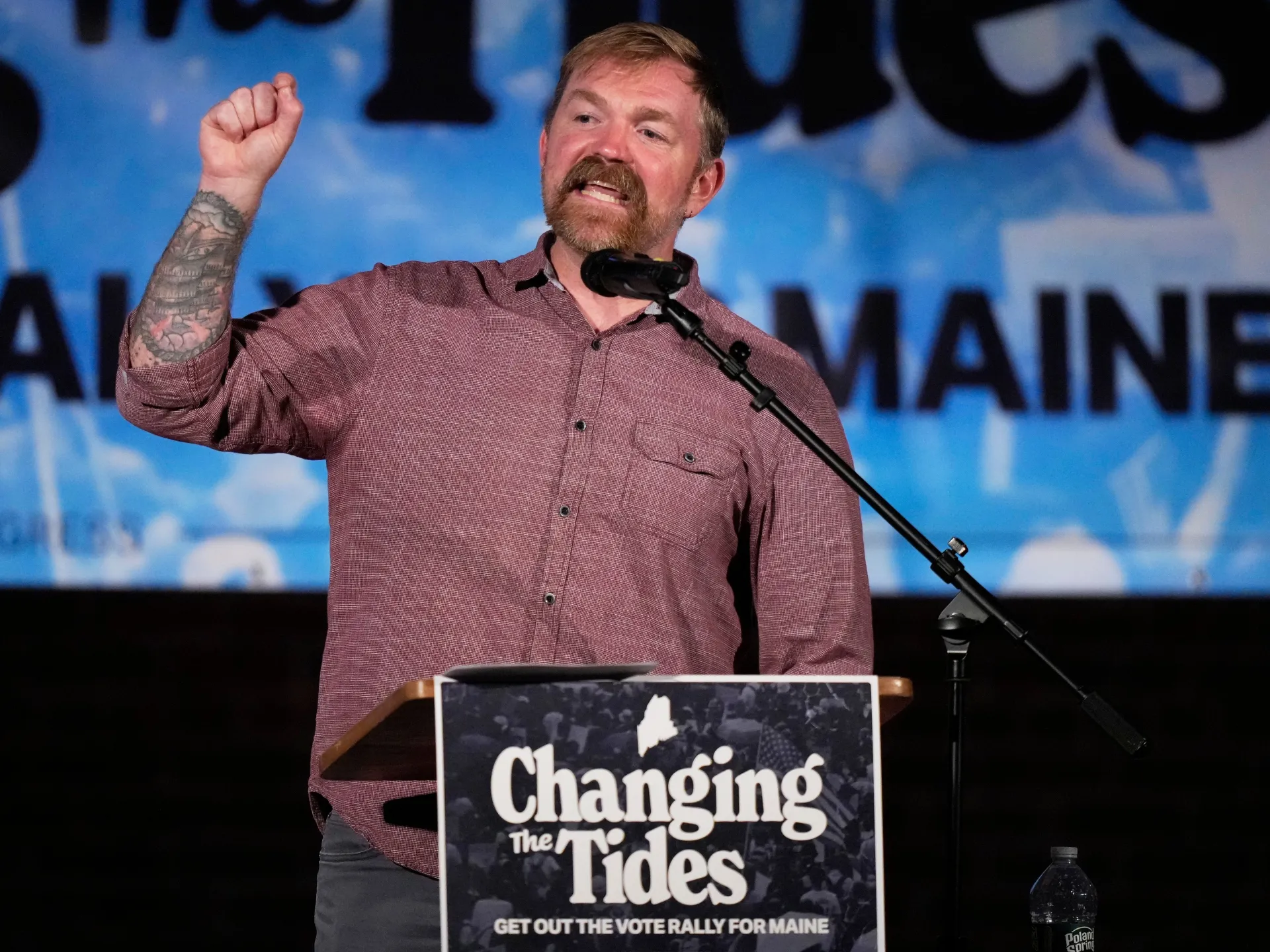
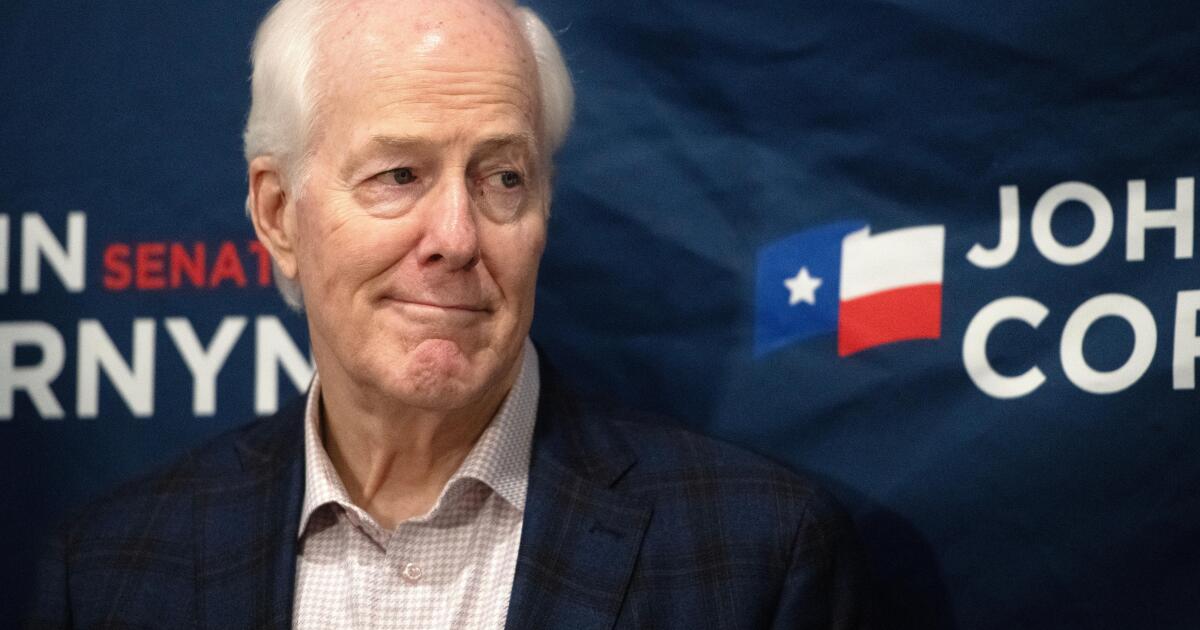
While Massie has long dominated elections in Kentucky’s 4th district, polling this year shows a tighter race than expected.
A Quantus Insights survey conducted from April 6 to 7 showed Massie leading Gallrein 46.8 percent to 37.7 percent.
Another survey conducted by Big Data Poll in early April had Massie ahead with 52.4 percent to Gallrein’s 47.6 percent.
The relatively close primary could be a bellwether for Republican voting trends nationwide, according to Stephen Voss, a political science professor at the University of Kentucky.
“Massie is an early opportunity to see what Republican voters will do when their pro-Trump leanings clash with their conservative leanings,” Voss said. “That is the great puzzle of this race.”
This is not the first time Trump has turned against Massie, though. In 2020, another election year, Trump famously petitioned to “throw Massie out of the Republican Party”.
But by 2022, Trump had reversed course, endorsing Massie over a challenger who questioned the congressman’s commitment to the president.
Still, the past year has widened the rift between Trump and Massie, leading the president to make his most aggressive moves yet to unseat the congressman.
The two Republicans clashed on a range of issues in 2025. Massie, for example, opposed the president on his tax and spending measures, fearing increases to the national debt.
That meant voting against Trump’s signature piece of legislation, the One Big Beautiful Bill Act, last July.
The Kentucky Republican also denounced Trump’s campaign of foreign intervention. Last June, NBC News reported that it was after Massie criticised Trump’s strikes on Iran that the president’s allies began laying the groundwork for a primary challenge.
Massie also led the charge to compel the Department of Justice to release all the files related to the investigation into Jeffrey Epstein, the late financier and convicted child sex offender.
Shortly thereafter, Trump gave his stamp of approval to Gallrein, posting on his Truth Social site, “RUN, ED, RUN.”
By that point, Gallrein, a military veteran and fifth-generation farmer, had yet to enter the race. Four days later, on October 21, he launched his bid.
Critics argue Gallrein’s platform does not offer much of a distinction from Massie’s. His campaign website lists his priorities as cutting taxes, reducing government spending, protecting gun rights and opposing abortion — issues Massie also supports.
“I don’t think he’s offering any kind of alternative, except for being the selection of Donald Trump,” Kahne said. “I think that’s it. That’s the only thing he has to offer.”
But Gallrein has drawn heavily from Trump’s endorsement, using it as a badge of loyalty and authenticity.
“You deserve an authentic, true Republican conservative that stands shoulder to shoulder with our president and the Republican Party,” Gallrein declared at the Trump rally in March.
Trump, meanwhile, told the crowd he had grown so frustrated that he just wanted “somebody with a warm body to beat Massie”.
Welcome to this week’s Lakers newsletter, where the brooms are going back in the closet.
The Lakers squandered their first playoff sweep since 2010, but are still one win away from their first playoff series win of the JJ Redick era.
Three weeks ago, even this moral victory of a 3-1 lead seemed out of reach. Now actually grabbing a spot in the conference semifinals could take more than one super-human performance.
All things Lakers, all the time.
Get all the Lakers news you need in Thuc Nhi Nguyen’s weekly newsletter.
By continuing, you agree to our Terms of Service, which include arbitration and a class action waiver. You agree that we and our third-party vendors may collect and use your information, including through cookies, pixels and similar technologies, for the purposes set forth in our Privacy Policy such as personalizing your experience and ads.
Help needed
The forceful drives turned into desperation jumpers. The dominant dunks became limp layups that dribbled off the rim.
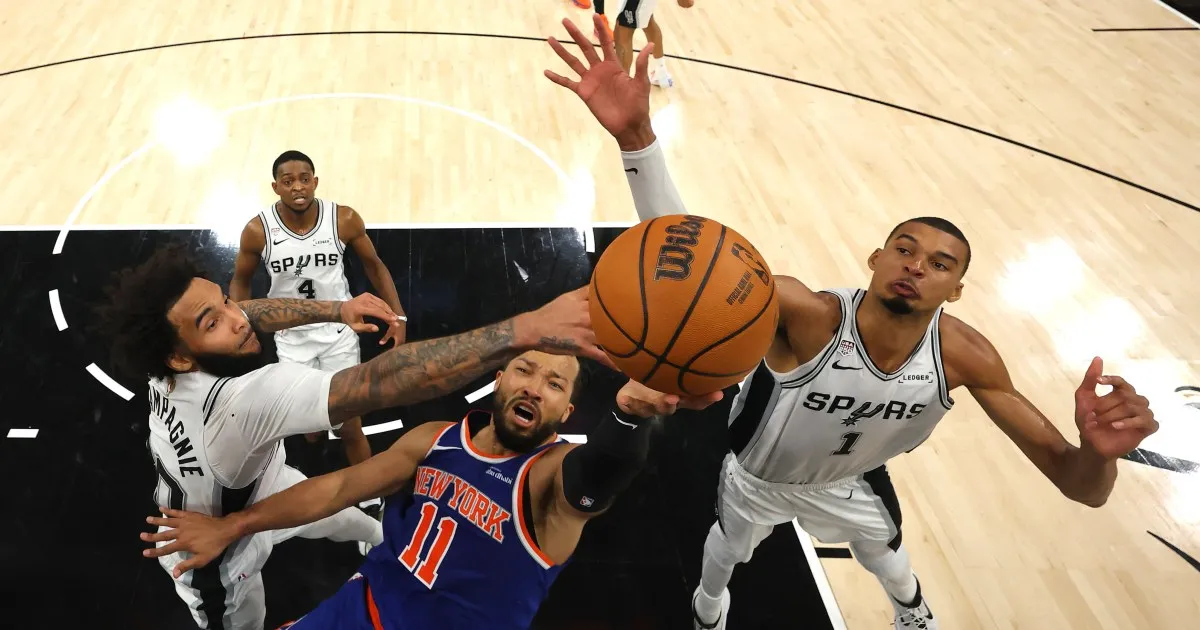
LeBron James carried the Lakers to a historically insurmountable 3-0 lead in the best-of-seven first-round series against the Houston Rockets. But with a chance to clinch the series Sunday, he showed just how much the Lakers need someone else to help carry the team across the finish line.
James had his worst shooting game of the season, settling for 10 points on two-of-nine shooting. The nine field-goal attempts he took were tied for the fewest he’s taken in a playoff game. He didn’t extend his streak of consecutive playoff games with double-digit scoring to 144 until the fourth quarter.
Just after accepting a third-option role behind Luka Doncic and Austin Reaves, James was thrust back into the top spot when the star guards were injured April 2. The NBA’s all-time leading scorer had no problem putting on his Superman cape again. He started taking — and making — more shots than he had in months. His usage rate spiked.
But with the ball back in his hands more, James had eight turnovers in each of the last two games. The turnovers, 24 total by the Lakers on Sunday, were their “kryptonite,” James said.
The Lakers’ lack of guard play is becoming a glaring weakness.
“That’s the biggest challenge we have is just the ballhandling and downhill drivers, not having those guys,” Redick said.
Doncic and Reaves are progressing in their returns. Just three weeks after his oblique injury, Reaves was questionable for Games 3 and 4. He even warmed up before the games. But his timeline for return is still indefinite.
Considering the Lakers’ 3-0 start to the series, it might be safe to think the team would just wait until the conference semifinals for Reaves’ return. Redick said it’s fair to consider all factors when deciding when to bring Reaves back. But after a long conversation with the guard Saturday, Redick said the most important variable is the player’s confidence.
“That’s always the final hurdle coming back from an injury,” Redick said, “is the psychological component of it.”
Doncic, hampered by a balky hamstring, is ramping up, but is still not as close as Reaves.
The hope of getting their two most important players back was “a carrot” for the Lakers to keep extending their season, Redick said. A two-day break between games could be just as significant of a lifeline.
The one day of rest between Games 3 and 4 was the shortest of the series so far. The Lakers, led by 41-year-old James and 32-year-old Marcus Smart, looked especially desperate for the extra downtime.
Smart was wearing inflatable compression boots on both legs in the locker room before the game. Lakers were dropping passes like they were loose coffee plans with someone who lives across town.
Meanwhile the 23-year-old Alperen Sengun was doing spin moves in transition, finishing through contact and flexing toward the crowd in the third quarter with the Rockets up by more than 20.
Smart insisted the mistakes were mental. They looked like physical fatigue manifesting as mental blunders.
“It’s something we gotta clean up,” said Smart, who had four turnovers Sunday. “We know it, we understand it.”
The Lakers have time to fix it. The two-day break between Games 4 and 5 will be the last such break of this series if the Lakers let this stretch on.
Games in mirror are closer than they appear
This series is 30 inexplicable seconds away from being 2-2.
NBA teams that have a 3-0 lead in a best-of-seven playoff series are 159-0. Since 1984 – when the NBA expanded its playoffs to 16 teams – teams with home-court advantage in the current series format are 125-42. Had that comeback never materialized, the Lakers would still have the upper hand in this series but they surely wouldn’t be invincible.
In a tighter-than-it-appears series, the Lakers have their 3-1 lead thanks to a run of hot shooting.
They were already the NBA’s most efficient shooting team, but the early part of the playoff success came from a sudden uptick in three-point shooting. The Lakers’ 40.8% three-point shooting through the first four games was 5.1 percentage points better than their regular-season mark. On the other hand, the Rockets are shooting 5.1 percentage points worse than their regular-season rate.
The Lakers identified turnovers and limiting offensive rebounds as the two most important items against the Rockets. They’ve struggled on both. The Lakers averaged 20 turnovers per game in the first four games and gave up 16.8 offensive rebounds. The Rockets’ 39% offensive rebounding rate is almost identical to their league-leading 38.8% from the regular season.
The Lakers have turned the ball over on 20.9% of their possessions, the highest turnover rate in the playoffs.
The Rockets have scored 21.5 points per game off the Lakers’ turnovers, the second-most of any team in the playoffs. Only Oklahoma City — the team that’s waiting for the winner of this series — has scored more points off turnovers in the playoffs.
On tap
Wednesday vs. Rockets, 7 p.m.
The Lakers can clinch the series at home and earn extra rest days before facing the Oklahoma City Thunder in the conference semifinals. The Thunder finished a sweep of the No. 8 seeded Phoenix Suns in the first round Monday.
Friday at Rockets, 6:30 p.m. (if necessary)
If this game is necessary, it will be especially difficult to win for the Lakers. Both teams will have to travel from L.A. to Houston and we just watched what happens when the shorthanded Lakers play on one day of rest in the playoffs.
Sunday vs. Rockets, TBD (Game 7, if necessary)
The Rockets are trying to become the fifth team in NBA history to force a Game 7 after trailing 3-0 in a best-of-seven series. The 2023 Celtics were the last team to even a series after a three-game deficit. Smart’s Celtics lost Game 7 of the Eastern Conference finals to the Miami Heat.
Status report
Luka Doncic (left hamstring strain)
Approaching the four-week mark, Doncic is ramping up his on-court work. On Sunday, he progressed to more movement instead of standstill shooting. He is still out indefinitely.
Austin Reaves (left oblique muscle strain)
Reaves’ return has been faster than many expected. He was questionable for Games 3 and 4, a quick three-week turnaround from his initial injury on April 2.
Kevin Durant (left ankle sprain)
After missing Game 1 with a knee bruise, Durant sprained his ankle in the fourth quarter of Game 2 and missed the next two games. Rockets coach Ime Udoka said Sunday pain and limited range of motion because of a bone bruise in Durant’s ankle are keeping him sidelined, but there’s a chance he returns this series.
Favorite thing I ate this week
Seafood boil with the Combo No. 4 (crawfish, snowcrab, shrimp, corn and potato) at Crawfish Cafe in Houston.
(Thuc Nhi Nguyen / Los Angeles Times)
This was a culinary bucket list item for me: Viet cajun food in Houston.
At Crawfish Cafe, you choose your seafood combination for a delicious, and slightly messy, seafood boil. I went for a combination of crawfish, shrimp and snow crab tossed in a mix of Viet cajun and Thai basil sauces. But there are more than a half-dozen sauce choices, so with that many options left to explore, maybe I wouldn’t be mad if this series returns to Houston.
Pete Wicks and Olivia Attwood were spotted holding hands on a date night in LOndonCredit: Not known, clear with picture deskThe pair were spotted in posh Mayfair – seen here at the back of the bar towards the rightCredit: SuppliedEarlier in the day the pair were spotted looking smitten outside a London officeCredit: GoffRomance rumours between the pair started at this year’s Brit AwardsCredit: Alamy
Olivia, who was wearing a £2k leather jacket from Magda Butrym, and Pete were snapped by a fan at the Broadwick Hotel in London’s Soho on Friday evening.
The fan said: “Everyone knows they’re dating now even though they’ve not confirmed it, but it was still surprising to see the PDA.
“It goes beyond the hand on arm and hugging we’ve seen from them in public since the pics of them kissing first emerged.
“They just looked like a normal couple on date night, holding hands.
Earlier in the day, Olivia and Pete looked equally loved up as they smoked a cigarette outside a London office.
The pair only had eyes for each other as they chatted happily together.
Olivia was dressed casually in a white tracksuit, as she enjoyed her new man’s company.
It comes after the new couple have just returned from a secret getaway to the South of France.
The pair, who were also spotted on a romantic dog walk, were seen collecting their luggage from the baggage carousel at Nice Côte d’Azur Airport in the South of France on Sunday.
The pair seemed in deep conversationCredit: GoffOlivia seemed smitten with her new manCredit: GoffPete put his arm around his new girlfriendCredit: Goff
Former Love Island star Olivia, and podcast co-host Pete flew Business Class on British Airways from London’s Heathrow to Nice.
An onlooker said: “They were seen at the gate and they were very loved-up and cuddling each other.
“They were trying to keep a low profile by wearing baseball caps.
“They were kissing at the gate and couldn’t keep their hands off each other.
The new couple have been spending a lot of time togetherCredit: Goff
“They were sitting in Business Class together.
“At the luggage carousel they were cuddling and kissing and headed off together.”
Olivia and Pete usually host their own Kiss FM radio show together on Sundays but were absent from the programme this week as they jetted off on their secret holiday.
The Sun revealed how the pair enjoyed a three-night break at the luxury Lily of the Valley hotel in St Tropez – costing £1,000 a night.
Eagle-eyed fans mused how they had spotted Pete’s trademark glasses on the table in one of Olivia’s social media pics from the trip
It led one fan to remark to The Sun: “It seems they tried to keep it all under wraps but seeing Pete’s glasses in the background of Olivia’s snaps appeared to give the game away.”
The Sun has contacted reps for Olivia and Pete for comment.
Petro was the first head of state to visit Caracas since the January 3 US attacks. (Presidential Press)
Caracas, April 24, 2026 (venezuelanalysis.com) – Venezuelan Acting President Delcy Rodríguez hosted Colombian President Gustavo Petro for bilateral talks in Caracas on Friday.
The meeting marked the first official visit by a head of state since the kidnapping of President Nicolás Maduro during a US military operation on January 3.
Following talks at Miraflores Presidential Palace, Rodríguez said both governments committed to tackling organized crime along their shared border, one of the longest in the region at over 2,200 kilometers.
“We have undertaken a very serious and concrete approach to combating criminal groups and transnational crime,” she said, announcing the development of joint military plans and “immediate” mechanisms for intelligence sharing in a new level of security cooperation.
Petro, for his part, stated that both countries would work toward the “liberation of border communities” through coordinated military, police, and social action.
“Building a fully coordinated common effort to free border populations from mafias engaged in various illegal economies,” he said, accusing irregular groups of human trafficking, drug trafficking, and illegal gold trade activities.
The leaders also agreed on economic initiatives aimed at supporting Venezuelan and Colombian populations in border regions. Petro expressed hope that these efforts would help reintegrate the two territories and boost food security.
The joint action commitments come amid escalating violence in the Catatumbo region of Colombia’s Norte de Santander department, which borders Venezuela’s Táchira state, where clashes between armed groups have displaced thousands in recent weeks.
Armed organizations operating in the area include the National Liberation Army (ELN), the Estado Mayor Central (EMC) and the Segunda Marquetalia, both descendants of the former FARC, and the Clan del Golfo, among others.
Friday’s talks also included the neighboring nations’ trade relations. Rodríguez highlighted discussions on “import substitution” between the two countries.
“It makes no sense for Colombia or Venezuela to look to other regions or hemispheres for what we can produce within our own territories,” she said, noting that bilateral trade currently stands at approximately $1.2 billion per year.
The leaders further addressed electrical interconnection projects for western Venezuela, a region heavily affected by blackouts, as well as reopening a pipeline that would allow Venezuela to export natural gas to Colombia and beyond.
Rodríguez and Petro also discussed the revival of air connectivity to boost tourism, including the development of multi-destination travel initiatives.
Present at the private meeting were Colombia’s foreign minister Rosa Villavicencio and defense minister Pedro Sánchez, alongside Venezuela’s foreign minister Yván Gil and Interior Minister Diosdado Cabello. The presidential summit followed an earlier meeting of the two countries’ Neighborhood and Integration Commission, with bilateral working groups established for a number of areas, including trade, energy and defense.
A prior meeting scheduled between Rodríguez and Petro on the border in early March was suspended due to security concerns.
Rodríguez hosts new US chargé d’affaires
Venezuelan Acting President Delcy Rodríguez also welcomed the Trump administration’s new chargé d’affaires to Venezuela John Barrett at the presidential palace on Friday.
Alongside Cabello and Gil, Rodríguez held a private meeting that reportedly focused on energy and a “long-term cooperation agenda.” For its part, the US embassy in Caracas stated that Barrett will continue implementing Washington’s “three-phase plan” for the Caribbean nation.
Barrett recently replaced Laura Dogu, who had been on the post since January. A career diplomat, he last served as chargé d’affaires in Guatemala, where he was accused of interference in magistrate elections in March.
Washington and Caracas fast-tracked a diplomatic rapprochement following the January 3 military strikes and kidnapping of Maduro. In March, the White House recognized Rodríguez as Venezuela’s sole leader, while the acting president recently thanked Trump and Secretary of State Marco Rubio for their “good disposition” in establishing “cooperation” between the two countries.
The diplomatic reengagement and US recognition have likewise led to a resumption of ties between Caracas and the International Monetary Fund (IMF).
Edited and with additional reporting by Ricardo Vaz in Caracas.
California’s trial attorneys and Uber — longtime courtroom foes — are officially bringing their fight to the November ballot.
A coalition of lawyers and advocates announced Thursday that it has gathered enough signatures to ask voters to support a “first in the nation” law that would make rideshare companies legally responsible for sexual assaults that happen to a driver or customer during a trip. Uber has argued it’s not liable for assaults committed by drivers, who are considered independent contractors.
“We must hold Uber accountable today,” said Danielle Tudahl, who recounted being sexually harassed and chased by an Uber driver after ordering a ride through the app, at a Sacramento news conference. “Californians are finally demanding action to try and close some of these gaps and put people’s safety over corporate profits.”
Uber has described the ballot measure, which is sponsored by the Consumer Attorneys of California, or CAOC, as retaliation for its own November ballot push to cap how much attorneys can earn in car crash cases in California.
“This ballot measure is a cynical ploy by billboard lawyers,” said Nathan Click, a spokesperson for A More Affordable California, an Uber-backed coalition. “CAOC didn’t spend millions to put this on the ballot to protect survivors — their goal is protecting billboard lawyer profits.”
The coalition that supports Uber announced last week it had gathered enough signatures for a measure that would cap attorney fees for car crash cases at 25%, among other changes.
Uber says its ballot measure will give victims a larger cut of their settlement money, rather than the payout getting siphoned off primarily to attorneys and doctors. Attorneys fire back that it will leave thousands of people with small or thorny cases without a lawyer because they won’t have financial incentive to sue.
Both sides are gearing up for an expensive fight. Uber has given more than $77 million. The Alliance Against Corporate Abuse, the CAOC-backed coalition pushing the sexual assault measure, has raised more than $68 million from law firms across the state, according to campaign finance records.
The money has helped pay for billboards that have sprouted across L.A. informing drivers that, according to the New York Times, Uber received a report of sexual assault or misconduct every eight minutes on average between 2017 and 2022. The company was the subject of a series of investigations by the paper into sexual assault by drivers. The company says it has invested billions in keeping riders safe and has “done more than any other company to confront” sexual violence.
The proposed sexual assault measure would require ride-share companies to let riders know if the person picking them up has a history of sexual misconduct and conduct yearly fingerprint and background checks for drivers.
The company is currently fighting more than 3,000 lawsuits from passengers who claim they were sexually assaulted or harassed by Uber drivers. Those cases are being coordinated by a federal judge in California.
The attorney coalition had also pushed an initiative aimed at nullifying Uber’s fee-capping measure if it passed. Alex Stack, a spokesperson for the campaign, said they were “pausing/withdrawing” the measure to “focus the fight on our sexual assault prevention measure and beating Uber’s initiative.”
Hezbollah warns it has its ‘finger on the trigger’ in case of Israeli violations of the temporary ceasefire.
Published On 17 Apr 202617 Apr 2026
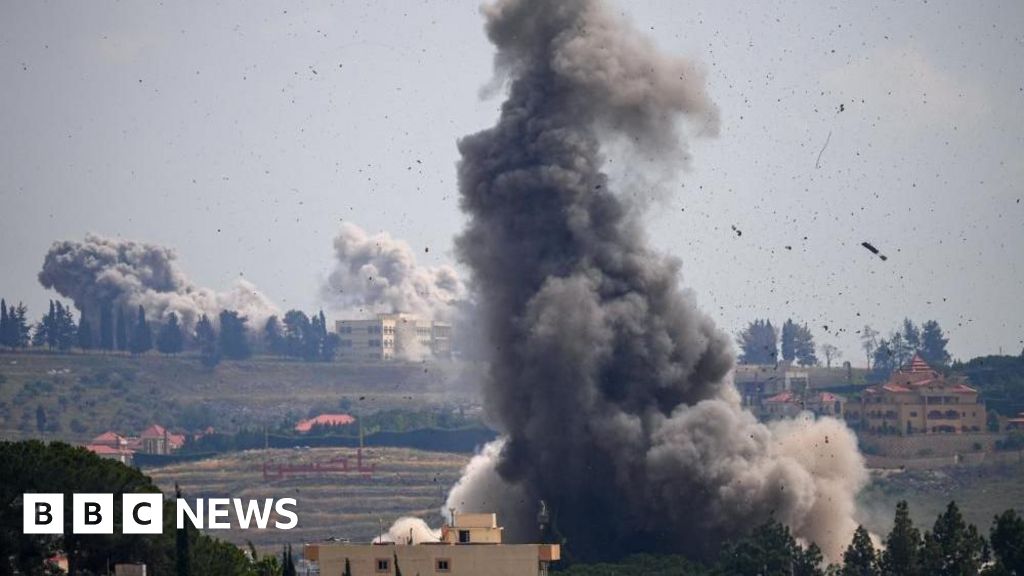
Displaced Lebanese have begun cautiously returning to their homes in the south after Lebanon and Israel agreed to a 10-day truce, even as the Lebanese army calls on residents to delay their return and Hezbollah warns it has its “finger on the trigger” in case of Israeli violations.
Tens of thousands of people poured into areas of southern Lebanon on Friday morning hours after the truce went into effect, many heading back to homes and villages battered by more than a month of Israeli attacks.
Recommended Stories
list of 3 itemsend of list
“People just couldn’t wait,” reported Al Jazeera’s Zeina Khodr from Nabatieh, one of the hardest hit areas.
“Even if it’s 10 days, they want to return to their homes. Some of them are just coming to see what remains of their homes, what remains of their lives.
“They want to show that they don’t want to give up their lands,” added Khodr.
While the ceasefire largely appeared to hold, Lebanon’s army accused Israel of several early violations on Friday, including intermittent shelling of southern Lebanese villages.
Lebanon’s National News Agency also reported that unexploded ordnance killed a boy in the town of Majdal Selem, while rescuers uncovered the bodies of at least a dozen people killed in earlier attacks in Tyre.
French President Emmanuel Macron warned that the ceasefire “may already be undermined by ongoing military operations” and called for “the safety of civilians on both sides of the border”.
Hezbollah said its fighters “will keep their finger on the trigger because they are wary of the enemy’s treachery”.
Israeli air strikes and a ground invasion of parts of southern Lebanon have killed more than 2,100 people and displaced some 1.2 million in the latest round of fighting, according to Lebanese authorities.
Hezbollah attacks, meanwhile, killed two Israeli civilians, while 13 Israeli soldiers were killed in Lebanon, according to Israel.
Israeli officials have said they intend to maintain control over Lebanese territory extending to the Litani River as a “buffer zone” against Hezbollah.
‘Unliveable’
As residents assessed the damage to their hometowns, some pledged to stay, while others – finding nothing to return to or fearing the fragile truce could collapse – said they would leave again.
“There’s destruction and it’s unliveable. Unliveable. We’re taking our things and leaving again,” said Fadel Badreddine, who returned to Nabatieh with his young son and wife. “May God grant us relief and end this whole thing permanently – not temporarily – so we can return to our homes and lands.”
Al Jazeera’s Khodr said “wherever you look you see damage, destruction” in Nabatieh. “So much has been lost in this conflict in the past 46 days.”
If the ceasefire holds, it could ease one of the main points of tension in US-Iran negotiations. Iran and mediator Pakistan had maintained that Lebanon should be covered in a separate US-Iran ceasefire framework, while Israel claimed it was not part of that deal and continued its attacks.
Ali Akbar Dareini, a researcher at Iran’s Center for Strategic Studies, said the Israel-Lebanon ceasefire had removed one obstacle to wider negotiations between the US and Iran because Tehran views the regional conflict as interconnected, describing this as a “unity of fronts”.
Pakistani Prime Minister Shehbaz Sharif, whose country hosted last week’s ceasefire talks between the US and Iran, welcomed the Israel-Lebanon truce on Friday and expressed “hope that it will pave the way for sustainable peace”.
He also praised the mediation role of US President Donald Trump, who has invited Israeli Prime Minister Benjamin Netanyahu and Lebanese President Joseph Aoun to the White House for “meaningful talks”.
“Pakistan reaffirms its unwavering support for the sovereignty and territorial integrity of Lebanon, and will continue to support all efforts aimed at lasting peace in the region,” Sharif said on X.
After rare talks, a ceasefire in Lebanon raises one question: what happens on the ground next?
Israel and Lebanon have held their first direct talks in more than 30 years, and on Thursday, US President Donald Trump announced that they had reached a 10-day ceasefire. But months of fighting have reshaped parts of southern Lebanon. As people begin to return, what will they find? And can diplomacy hold while the reality on the ground remains fragile?
This episode was produced by Noor Wazwaz and Chloe K. Li with Spencer Cline, Tuleen Barakat, Catherine Nouhan, David Enders, and our host, Malika Bilal. It was edited by Tamara Khandaker and Sarí el-Khalili.
Our sound designer is Alex Roldan. Rick Rush mixed this episode. Our video editors are Hisham Abu Salah and Mohannad al-Melhem. Alexandra Locke is The Take’s executive producer.
Anyone planning on boarding a plane with hold luggage has been urged to make one change to their suitcases before they fly – as it will help keep belongings safe
Changing one thing about your luggage could help make it much safer (stock photo)(Image: Jackyenjoyphotography via Getty Images)
Plane passengers need to make one crucial change to their hold luggage. If you’re jetting off and you’ve got bags destined for the plane’s cargo hold, you’ll know just how nerve-wracking it can be to be parted from your belongings. There’s always that nagging worry that your luggage could be lost or stolen before you reach the baggage carousel at your destination, leaving you stranded without clothes, toiletries and other essentials during your holiday.
To tackle this, most travellers will attach luggage tags to their bags. These hold small pieces of paper where you can jot down vital information, such as your email address and phone number, so that should your bag go missing or end up on the wrong flight, airport staff can reach out to you if and when it’s located.
However, one woman on social media has flagged that these tags might not be the most secure option when you’re separated from your bags, particularly as some people inscribe their full name and home address on them.
In a TikTok video, Sammy urged fellow passengers to do something different with their tags, claiming it would help safeguard their personal details from anyone who might attempt to sneak a peek at their information.
She said: “This is something I’ve never seen anyone talk about, and I had to figure it out on my own. This is not safe for you for a plethora of reasons. You have your full name on there, you have your phone number, you have all of your contact information.
Content cannot be displayed without consent
“These will flip over. You’re going to have your luggage, and it’s going to flip over, and anyone who sees it can not only take a photo of it, but also anyone who sees your content online that shows your luggage can get all of your information.”
Sammy described the risk of having your details stolen from your luggage tag as “so dangerous” and “so not worth it”. In its place, she advised opting for a luggage tag featuring a full cover. These typically open like a book and fasten with a popper or Velcro, ensuring nobody can access your personal details without deliberately taking your luggage.
You can also accomplish the same outcome by removing the piece of paper from your tag and flipping it around so your details aren’t visible from the outside. You could then write something along the lines of “information overleaf” or “please turn over” on the blank side facing outwards, so airport staff know exactly where to look should they need to get in touch with you.
Those commenting on the post put forward further alternative solutions, such as listing a dummy email address that you can monitor should you ever lose your luggage, but don’t use for anything else.
One person said: “I have a fake name with my spam email that I’ll check if I ever lose my bag.”
Another added: “I write my name and flight number on the front, then put ‘see reverse for personal details’ with my address.”
A third wrote: “Thank you!! I’ve been saying the same thing for years, and people think I’m nuts. Same with names on kids or pets clothing!”
Should you opt to include only your email address without your name, ensure the email itself doesn’t contain your name within the address.
Using a false name, as one commenter proposed, is not recommended, as should your bag go missing, you won’t be able to verify it’s yours if your ID fails to match the name on the luggage tag. That said, you can choose to display only your surname or initials on the card to safeguard as much of your personal details as possible.
After the first direct talks in decades, Israel and Lebanon have agreed to begin ongoing negotiations for the ‘security of both countries’. Al Jazeera’s Mike Hanna explains why US Secretary of State Marco Rubio sees this ‘milestone’ meeting as just the ‘start of the process’.