hits

Cunha hits Brazil double against Haiti to seal first World Cup 2026 win | World Cup 2026 News

Manchester United’s Matheus Cunha scores Brazil’s first two goals in 3-0 win against Haiti as FIFA event progress nears.

Vinícius Junior scored and assisted on one of Matheus Cunha’s two goals as five-time champion Brazil eliminated Haiti from the World Cup with a 3-0 victory.

Haiti, the Western Hemisphere’s poorest nation that qualified for the World Cup for the first time since 1974, became the first team guaranteed not to reach the knockout round. Meanwhile, the Selecao got the decisive performance they needed on Friday.

Recommended Stories

list of 4 itemsend of list

Cunha, the Manchester United standout, got the start and showed with every surf-and-slide goal celebration why he should have been in the starting lineup in Brazil’s listless 1-1 draw against Morocco. Brazil coach Carlo Ancelotti made the surprising decision in the opener to instead insert Cunha as a late substitute.

Cunha thrilled the Brazilian fans who made up the bulk of the 68,324 spectators at Philadelphia Stadium when he tapped in a rebound for his first career World Cup goal. He then sent a left-footed strike into the upper left corner for a 2-0 lead in the first half against the overmatched Haitians.

Brazil forward Raphinha, who was subbed out with an injury in the first half, had an early goal disallowed on an offside call that only temporarily muted the yellow-clad Seleção fans in an otherwise festive atmosphere at the home of the two-time Super Bowl champion Philadelphia Eagles — whose cheerleaders did their part to rally the crowd.

Haitian fans danced and sang “Grenadye Alaso” (“Grenadiers to the Attack”), the traditional battle cry of the national team. Brazilians chanted back, reminding them their country is the five-time World Cup champion and the home of the king of soccer: “A thousand goals, a thousand goals, a thousand goals, a thousand goals, a thousand goals! Only Pele, only Pele!”

Cunha added to the frivolity in Philadelphia, home to nearly 6,000 Brazilian immigrants, when he flashed his familiar surfing celebration.

Vinícius, whose 32nd-minute goal helped Brazil earn the tie against Morocco, helped Brazil get on the board when his shot was stopped by goalkeeper Johny Placide and Cunha was there to slam home the rebound to make it 1-0. Cunha extended both arms as if trying to catch some tasty waves and was mobbed his teammates.

Vinícius slid a pass through the defense to find Cunha and he powered one high into the net that Placide never had a chance to stop to make it 2-0. Cunha slid on his stomach and mimicked a swimming motion that all but put Haiti in the drink — and validate the Brazilians’ fans decision not to tempt fate and dress the Rocky statue in team gear for bad luck.

Vinícius closed the half with a goal and that was enough to keep Brazil — seeking its first World Cup title since 2002 — happy before it closes Group C play against Scotland on Wednesday in Miami Gardens, Florida.

Neymar was ruled out of Brazil’s second straight match because of a lingering calf injury.

Source link

Ukraine hits Moscow refinery as Zelenskyy seeks Trump support to end war | Russia-Ukraine war News

Russia’s oil refineries have been heavily targeted, damaging its energy facilities and the country’s fuel crisis.

Ukrainian drones have hit a Moscow oil refinery for the second time ⁠this week while Russia fired missiles at Kyiv, as President Volodymyr Zelenskyy seeks support from the United States and Europe to reach a deal to end the war.

Russia’s Defence Ministry said on Thursday that its air defences shot down 555 Ukrainian drones over several regions overnight, with almost 200 intercepted as they were approaching the Russian capital.

Recommended Stories

list of 4 itemsend of list

Moscow Mayor Sergey Sobyanin said several drones hit an oil refinery.

“Air defence forces continue to repel a massive attack. Several drones managed to reach the Moscow oil refinery,” Sobyanin said, adding that a shopping centre also suffered minor damage.

The attack on the oil facility is the second this week, after a drone attack on Tuesday halted operations at the refinery, according to the Reuters news agency, as widespread damage to Russian energy facilities worsens the country’s fuel crisis.

The regional governor said that in the surrounding Moscow region, a high-rise residential building, an industrial facility and a number of private houses were also damaged in the drone attack. The Sheremetyevo airport, Moscow’s busiest, suspended flights and evacuated people, as several sought shelter in the car park, the airport said in a statement.

Kyiv meanwhile came under a second Russian air attack this week, as ballistic missiles were unleashed on the Ukrainian capital, city officials said. Earlier this week, a major attack on Kyiv by Russia killed 11 people and damaged a UNESCO-listed 1,000-year-old monastery, drawing condemnation from European leaders. Russia denied striking the monastery.

The attacks come as Zelenskyy works to pressure Russia into negotiating an end to its more than four-year-long war. Zelenskyy said he had spoken to US President Donald Trump, French President Emmanuel Macron and other leaders from G7 countries to coordinate ways to end the ⁠war.

G7 leaders pledged to strengthen Ukraine’s air defences and increase pressure on Moscow’s war economy, including by tightening sanctions on the Russian oil and gas sectors.

Trump told reporters he was “gonna do whatever I can” to end the war.

Zelenskyy said he received important commitments from the G7, including “more air defence missiles along with licenses to produce them, and a winter support package.”

“Importantly, the US is ready to provide backstop across these lines of effort,” Zelenskyy wrote on X. “It is key that everything discussed be implemented. Russia must come to learn that its war will never be normalised.”

Source link

Libya Oil Output Hits 12-Year High; Revenues Trickle In| Global Finance Magazine

Central bank bottlenecks and massive import costs delay the impact of a $4B windfall.

War-torn Libya is pumping oil at its fastest pace in more than a decade, averaging about 1.4 million barrels per day in April, according to National Oil Corp. operating data.

Still, refining capacity, distribution networks, and subsidy-financed imports remain strained by years of institutional division since the 2011 conflict, when production fell sharply from about 1.5 million barrels per day to near-collapse levels during the civil war.

The imbalance reflects Libya’s fragmented downstream system, where crude oil exports continue but refining capacity, distribution networks, and subsidy-financed imports remain strained by years of institutional disruption since the 2011 uprising and the overthrow of longtime dictator Muammar Gaddafi, when production fell sharply.

Tracking Libya’s Hydrocarbon Windfall

The state-owned NOC reported $2.82 billion in gross oil revenue in April, followed by nearly $4 billion in May, the highest monthly intake in over 10 years, according to local energy reports citing official data. Crude flows through Es Sider, Ras Lanuf, and Zawiya terminals into Mediterranean markets, where it is priced against Brent-linked benchmarks.

Translating stronger production and upstream earnings into direct benefits to the state and its people remains challenging, however.

The May surge coincided with a sharp increase in fuel imports; NOC Chairman Masoud Suleman confirmed the contracting of 17 gasoline tankers, the highest monthly fuel import volume in Libya’s history. Even as import activity rose, several cities in western Libya reported fuel shortages and long queues at filling stations, exposing persistent breakdowns in domestic distribution.

The cash conversion of oil earnings is still structurally uneven. In April, only $1.91 billion of $2.82 billion in gross revenue reached the Central Bank of Libya after fuel-import and settlement deductions routed through the Libyan Foreign Bank mechanism. That left roughly $910 million stuck within upstream settlement layers awaiting final transfer into the sovereign liquidity system.

On June 3, the central bank launched a $3.5 billion foreign currency allocation program to cover letters of credit (LOCs), foreign transfers, and retail foreign-currency demand, according to Libyan financial disclosures, amid persistent import financing pressure on food, fuel, and industrial inputs.

Central Bank at the Center of Fiscal Fault Line

The central bank sits at the center of this fiscal roundelay. It is the sole legal recipient of hydrocarbon revenues and converts inflows into domestic liquidity for salaries, imports, and foreign exchange allocations, making it the clearing hub for the national economy.

That role has repeatedly placed it at the center of political escalation. Last August, a dispute over central bank leadership triggered a production shutdown in the eastern half of the country that quickly cut output from nearly 959,000 barrels per day to 591,000, according to NOC data. The United Nations Support Mission in Libya warned that disruption of the central bank’s clearing function would freeze LOCs and salary payments, given that hydrocarbons account for more than 90% of export earnings.

The underlying political structure remains split between the UN-backed Government of National Unity in Tripoli and the Government of National Stability based in Benghazi and Tobruk in the east; UN mediation is ongoing, but national elections remain stalled. A rare shift occurred on April 11, however, when the rival eastern and western legislative bodies signed a landmark agreement to unify public spending, creating Libya’s first consolidated budget framework since 2013.

Foreign Majors Return as Political Risk Persists

Production recovery continues. Libya is targeting 1.6 million barrels per day by the end of 2026, supported by the rehabilitation of mature fields across the Sirte and Murzuq basins and incremental drilling gains.

Investment is also returning at scale.

In February, Libya awarded oil and gas exploration licenses for the first time in 17 years, granting acreage to Chevron, Eni, QatarEnergy, and Repsol, alongside other global operators competing for the Sirte, Murzuq, and offshore Mediterranean blocks. The round followed broader upstream agreements involving TotalEnergies and ConocoPhillips, BP, Shell, and ExxonMobil, signaling renewed international exposure to Libya’s estimated 48.4 billion to 50 billion barrels of proven reserves, the largest in Africa.

Libya’s constraint is now fiscal rather than geological, the analytics firm Geopolitical Desk notes; production has stabilized, but “funding flows remain irregular, procurement cycles constrained, and fiscal authority contested across parallel administrations.”

The result is a landscape where record output, rising revenues, and partial political coordination coexist with fragmented financial execution, ensuring that Libya’s oil recovery is measured in barrels but constrained in how fully it translates into state power.

Source link

One killed as Israel hits south Lebanon, issues forced displacement orders | Israel attacks Lebanon News

The Israeli military has ordered residents of 20 Lebanese towns and villages to leave their homes immediately.

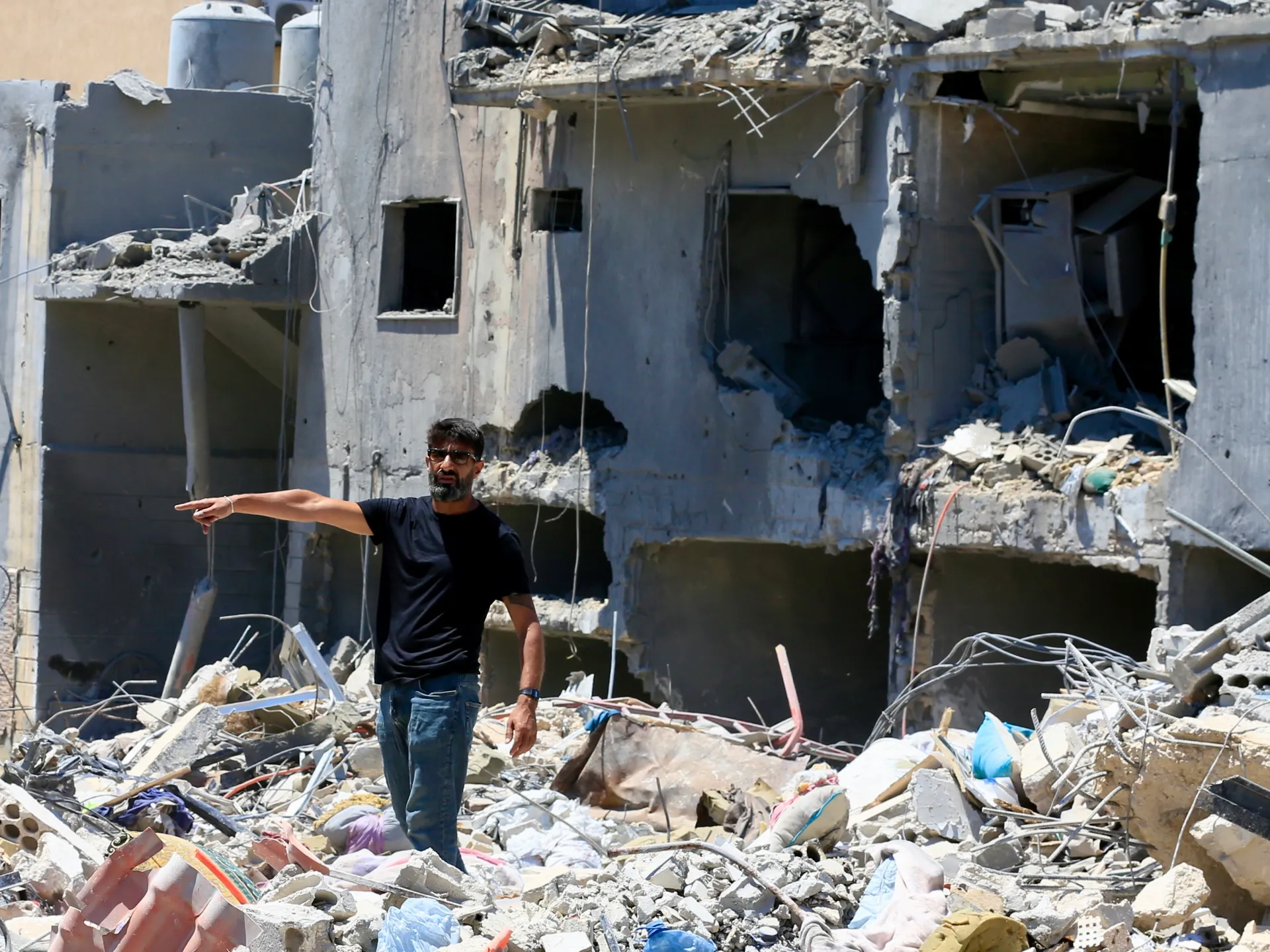
Israeli air raids across southern Lebanon have killed one person as attacks continue despite a United States-brokered “ceasefire”.

Lebanon’s National News Agency (NNA) reported that the person was killed in an Israeli air raid in the municipality of Maarakeh, in the Tyre district of southern Lebanon.

Recommended Stories

list of 4 itemsend of list

Al Jazeera’s Heidi Pett, reporting from Beirut, said that over the course of Friday and into the evening, there were continued Israeli air attacks on towns and villages that are well north of what the Israelis call the “Yellow Line” – the part of southern Lebanon that they have been seeking to control and to occupy.

The attacks come after an announcement by Pakistani Prime Minister Shehbaz Sharif on Friday that the United States and Iran have agreed on the wording of an agreement aimed at ending their war, and that mediators were working with both sides to finalise a deal.

Iranian media report the initial agreement would declare an end to the war “on all fronts, including Lebanon”.

This has led to fears that Israel’s actions in Lebanon could scupper a deal, since Israel is not a party to the negotiations between the US and Iran, and its leaders have said they do not plan to withdraw from Lebanon.

The attacks also come amid a supposed ceasefire, agreed between Israeli and Lebanese officials earlier this month, that would require a “complete cessation” of fire by Hezbollah, yet the fighting continues.

The next round of talks between the two countries is expected on June 22, with a view towards reaching a comprehensive agreement.

Israel issues forced displacement orders, demolishes homes

Israeli attacks at dawn have demolished homes and government buildings in southern Lebanon’s Bint Jbeil, the country’s NNA reports.

The Israeli military also ordered residents of 20 Lebanese towns and villages to leave their homes immediately and move “north of the Zahrani River”.

The forced displacement orders apply to Deir al-Zahrani, al-Namirieh, al-Sharquieh, al-Dewayr, Harouf, Habboush, Kfarjoz, Zibdine (Nabatieh), Nabatieh al-Tahta, Nabatieh al-Fawqa, Kfar Rouman, Al-Mahmoudieh, Sajed (Jezzine), Reihan, Aaramta, Kfarchouba, Mlki, Al-Lawiza (Jezzine), Jarjouh and Arab Salim.

On Saturday, the Israeli military said an air raid alert had been activated in the northern town of Metula due to the “infiltration of a hostile aircraft” from Lebanon, but did not name the armed group Hezbollah.

Source link

Venezuela Fury, 16, hits back after being branded ‘too young’ to wed husband Noah Price

VENEZUELA Fury has furiously hit back at critics who claim she is too young to be married.

The eldest Fury offspring, who wed partner Noah Price last month, had so far remained silent on the controversy – but has now issued a defiant response.

Loved-up Venezuela and Noah celebrate becoming husband and wife Credit: Instagram
The happy couple shared a kiss after tying the knot Credit: Splash

In a defiant new social media post shared on Instagram, the 16-year-old shared a loved-up snap from her wedding day, with a clear message to trolls in her caption.

“For everyone who said I was too young,” she wrote, looking to silence the subject once and for all.

The photo shared showed Venezuela and Noah grinning from ear to ear on their wedding day as they posed together following the lavish ceremony.

Venezuela’s marriage raised eyebrows among some critics, who argue that 16 is too young to fully understand the lifelong commitment of marriage.

BUFF BRIDE

Venezuela Fury’s starts post-wedding health kick with Noah in matching gym sets


GYPSY QUEEN

Venezuela Fury, 16, in talks for new TV series about her ‘chaotic’ life

Venezuela showed off her huge fairytale wedding dress before tying the knot with Noah Credit: Splash
The 16-year-old bride wore a towering lace creation complete with a show-stopping 50ft train Credit: Splash

The debate intensified after England and Wales raised the minimum legal age for marriage to 18 in 2022 as part of efforts to tackle child marriage.

The couple tied the knot on the Isle of Man, where 16 and 17-year-olds can still legally marry with the written consent of a parent or legal guardian.

When the wedding was discussed on Loose Women, the panel were generally positive, while viewers commented on social media: “Are we really celebrating child marriage?”

Parents Tyson and Paris Fury have publicly backed the marriage, with Tyson proudly walking his daughter down the aisle on her big day.

Paris has also defended the decision, pointing out that she was engaged at 17 after meeting Tyson when she was just 15.

Venezuela left formal schooling at 11 as part of Traveller tradition and has since moved from family life into married life.

With 1.3 million TikTok followers, the eldest daughter of Tyson and Paris is reportedly being lined up to star in her own reality show alongside husband Noah, 19.

It is believed Netflix would be the frontrunner to produce the series following the success of the family’s hit show, At Home With The Furys.

Source link

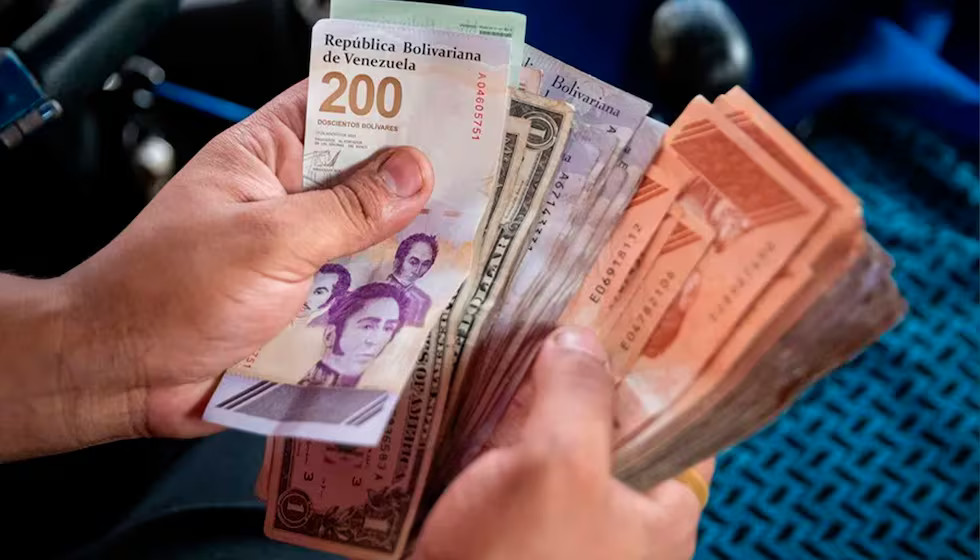
Venezuela: Monthly Inflation Hits 18-Month Low, Exchange Rate Gap Persists

The USD-bolívar exchange rate has nearly doubled in 2026. (EFE)

Caracas, June 9, 2026 (venezuelanalysis.com) – Venezuela has registered the lowest month-to-month inflation figure since October 2024.

According to the Venezuelan Central Bank (BCV), consumer prices went up by 6.3 percent in May. Inflation has fallen for four consecutive months after hitting 32.6 percent in January, following the US military attack and kidnapping of President Nicolás Maduro.

Overall, prices have more than doubled in the first five months of 2026, and accumulated 12-month inflation currently stands at 525 percent. 

Despite the widespread use of the US dollar in cost structures, prices have likewise gone up by 12.5 percent over the last year when measured in USD, meaning a loss of purchasing power even for those with incomes pegged to the official exchange rate.

Venezuela’s inflation remains heavily correlated with currency instability. Despite the Central Bank devaluing the USD-bolívar exchange rate by more than 30 percent since March and providing significantly increased volumes offoreign currency to the private sector, a 30-40 percent gap remains between the official and parallel market rates.

Since January, the BCV has directed over US $5.5 billion in foreign currency via bank-run exchange tables, at more than double the rate of 2025, according to figures from Banca y Negocios. However, the chasmbetween official and parallel rates has persisted.

Many economists have identified the stabilization of the foreign exchange market as a necessary step for macroeconomic recovery, but critics have pointed to a lack of regulation and accountability in forex allocation as fueling currency speculation.

Caracas’ monetary and fiscal policy is presently subject to US control. Since January, the Trump administration has mandated that Venezuelan export revenues, principally oil sales, be deposited in US Treasury accounts. Washington returns an undisclosed portion of the proceeds at a time of its choosing.

The White House has likewise imposed that disbursed funds be channeled directly to the private sector via foreign exchange auctions, as well as outside auditing of Central Bank accounts by consulting giant Deloitte. Secretary of State Marco Rubio indicated in January that the Venezuelan government headed by Acting President Delcy Rodríguez would need to submit a “budget request” before accessing its own resources.

For its part, the Rodríguez administration has fast-tracked a series of pro-business reforms tailored to attract foreign investment, including in the oil, mining, and electricity sectors. 

As part of efforts to court US investors, Economic Vice President Calixto Ortega reportedly took part in a closed-door meeting with US officials and corporate representatives hosted by the Atlantic Council, a hawkish Washington-based think tank funded by the US government, its allies, and major corporations.

The opening to foreign investment has seen Western business executives flock to Caracas in recent weeks, often escorted by White House officials, to explore opportunities. Pro-Trump tech billionaires such as Fred Ehrsam have made repeated visits, while Peter Thiel’s Erebor Bank struck a corresponding banking agreement with Venezuela’s largest public bank.

Javier Kulesz, a strategist from investment bank Jefferies, relayed optimism after a visit to the South American country and forecast an imminent “stream of announcements” related to the country’s debt restructuring and investments in key economic sectors.

Edited by Lucas Koerner in Caracas.

Source link

Trey Mancini has three hits in Angels debut, a loss to Astros

Angels first baseman Trey Mancini, a cancer survivor and former Baltimore slugger, had three hits in his first major league game since 2023 on Monday night in a 5-4 loss to the Houston Astros in 10 innings.

Mancini delivered a run-scoring single in the second inning in his first at-bat. He singled again leading off the fourth before adding a third single in the eighth.

The Angels selected the contract of Mancini and put him in the lineup at first base against the Astros after putting infielders Vaughn Grissom (left oblique strain) and Adam Frazier (right elbow inflammation) on the 10-day injured list.

Mancini, 34, agreed to a minor league contract with the Angels in February, a deal that included an invitation to major league spring training. Mancini hit .273 with six homers, 29 RBIs and three steals for triple-A Salt Lake this year.

Mancini has batted .263 with 129 homers and 400 RBIs over parts of seven seasons in the majors. He played parts of six seasons with the Orioles and hit a career-high 29 homers in 2019.

Mancini then missed the 2020 season after surgery to remove a malignant tumor from his colon. He made a successful return to the Orioles in 2021, and he won a World Series ring in 2022 after Baltimore traded him to Houston.

He spent part of the 2023 season with the Chicago Cubs. He has since played in the minor league systems of the Reds, Marlins and Diamondbacks.

Mancini opted out of a minor league deal with Arizona last July after batting .308 with 16 homers for triple-A Reno.

Grissom’s move to the IL was retroactive to Friday. Frazier’s move was retroactive to Saturday.

The Angels also recalled infielder Denzer Guzman from Salt Lake and transferred infielder Yoán Moncada to the 60-day injured list.

Source link

Botswana diamond slump hits miners living on the edge of survival | News

Orapa, Botswana – It is a year since Motshwegwa Rakhudu lost his job after 14 years working as an installer at Debswana diamond mining operations in northern Botswana. He says he had been on rolling three-year renewable contracts with Enabler Hires (Pty) Ltd, and expected the arrangement would continue through to 2027.

Instead, he was retrenched and made redundant without warning.

“The shock was too much,” Rakhudu, (not his real name), told Al Jazeera.

“In early 2025, I took a loan of 26,000 pula (about $1,900) to buy a car because I believed my job was secure. By mid-May, I was out of work.” He said the sudden retrenchment left him struggling with debt and household responsibilities, including school fees, with no compensation received.

“Being caught unprepared has been very difficult. Jobs are scarce, and even when work is available outside mining, the pay is much lower. I am still looking for work,” he said.

Rakhudu said he has considered farming or starting a small business, but lacks the capital. Selling his car, he added, would only cover the outstanding loan.

“I would want to go into farming, but if I sell the car, the money will only clear the loan,” he said.

Al Jazeera contacted Gaotlhobogwe Radikwata, a senior management official at Enabler Hires (Pty) Ltd, for comment on the retrenchments.

“I am not going to answer your questions even if you convince me you are from Al Jazeera. Who gave you my number? I never shared my contacts with journalists. I am not at liberty to share information,” she said.

Jobs vanish as diamond production slows

The retrenchments come as Botswana’s diamond sector, the backbone of its economy, slows sharply.

Debswana Diamond Company, a joint venture between the government and De Beers, cut production by about 27% in 2024 to 17.9 million carats amid weak global demand, and plans further reductions to around 15 million carats in 2025. The company accounts for roughly 90% of Botswana’s diamond sales.

That slowdown has rippled through the wider economy. Botswana’s output contracted by about 5.3% in the second quarter of 2025, the sharpest fall since the pandemic, driven largely by declining diamond production, according to Reuters.

Diamonds account for around 70% of export earnings and roughly a third of government revenue, according to Reuters and S&P Global Ratings, which in 2025 downgraded Botswana’s sovereign credit rating to BBB-, citing sustained pressure from the global diamond downturn and weakening fiscal revenues.

Household pressure builds across mining communities

For workers, the impact is no longer abstract.

“The diamond downturn is no longer just a business issue. It is a human issue affecting workers, families, contractors and entire mining communities,” said Mbiganyi Gaekgotswe, General Secretary of the Botswana Mineworkers Union.

He said uncertainty now defines everyday life.

“The first question on everyone’s mind is whether they will still have a job next year,” he said. “Will contracts be renewed? Will overtime be reduced? These are not abstract concerns. They affect school fees, loans, medical bills and family responsibilities.”

Even where jobs remain, pressure is rising as wages stagnate while food and transport costs increase.

Beyond diamonds: searching for new growth

Restructuring has already filtered through contractors and service providers, with more workers shifted onto short-term agreements, said Dominic Obusitse Mapoka, Chairperson of the Botswana Diamond Workers Union.

“Workers who remain employed are increasingly on short-term or temporary contracts,” he told Al Jazeera. “This makes it difficult for families to plan because they do not know whether contracts will be renewed.”

He said many earn between $190-250 a month, while the cost of living continues to increase, with knock-on effects for small businesses tied to mining activity.

Since independence in 1966, Botswana’s diamond wealth has transformed what was once among the world’s poorest countries into a middle-income economy, financing infrastructure, public services and sustained growth.

But that success has also left it heavily exposed to global shocks. The sector is now under pressure from weak demand, competition from lab-grown diamonds and reduced luxury spending in key markets, according to S&P Global Ratings.

The downturn exposes the risks of economic concentration, said Levy Ndou, a political scientist at Tshwane University of Technology.

“When citizens depend heavily on one sector, a fall in global demand becomes very damaging.”

He called for faster diversification into agriculture and beef production, alongside stronger regional trade links.

Botswana’s Minister of Labour and Home Affairs, Pius Mokgware, said the government is responding by trying to absorb job losses, including expanding copper mining and opening new projects. He added that diversification efforts are also targeting agriculture, tourism and Information and Communication Technology.

Minister of Minerals and Energy, Bogolo Joy Kenewendo, did not respond to repeated requests for comment.

Tshepo Modibedi, President of the Small Scale Miners Association of Botswana, said smaller operators remain largely excluded from the diamond value chain, which is dominated by large firms.

While not directly involved in diamonds, the downturn still spreads through households nationwide, he said.

“Lab-grown diamonds and strict regulations are challenges,” he told Al Jazeera. “But they could also be opportunities, if policy becomes more inclusive.”

For Rakhudu, however, structural shifts in the global diamond market remain distant from daily survival.

“I am still looking,” he said. “I just want another chance to work.”

Source link

Office Romance cast as Netflix rom-com hits #1

Source link

Ukraine hits St. Petersburg in overnight strikes

Saturday is the last day of Russian President Vladimir Putin’s St. Petersburt International Economic Forum. Ukraine struck military targets near the city overnight Friday. Photo by Anatoly Maltsev/EPA

June 6 (UPI) — A drone attack launched by Ukraine hit St. Petersburg, Russia, overnight as Russian President Vladimir Putin wraps up an economic forum there.

Ukrainian President Volodymyr Zelinsky had asked Putin to meet face to face and discuss peace talks, but Putin responded that there was no point.

“It is time to end this war. But Russia’s ruler wants to keep fighting,” Zelensky wrote on X early Saturday. “That is why Ukrainian sanctions against this aggression are working. Last night, our drones covered a distance of about 1,000 kilometers to the St. Petersburg region — to the enemy navy’s arsenals and a base in Kronstadt. Our long-range sanctions also reached about 500 kilometers into the Krasnodar region — and hit an oil depot.”

Kronstadt is home to a naval academy and is the main base, repair and supply hub for the Russian navy in the Eastern Baltic.

Leningrad Governor Aleksandr Drozdenko said more than 140 drones were shot down in his region. St. Petersburg Governor Alexander Beglov told residents to stay indoors, CNN reported. He also said three people were injured.

Drozdenko said more than 600 people were evacuated from Bolshaya Izhora, a village on the Gulf of Finland near St. Petersburg, as efforts continued to put out a fire. The area is also home to a Russian naval arsenal, CNN reported.

St. Petersburg is Russia’s second-largest city, behind Moscow.

The New York Times reported that St. Petersburg’s main airport, Pulkovo, suspended operations for almost five hours, according to Rosaviatsia, the Russian aviation authority. Residents reported smoke in the sky and roaring noises and bangs, according to Fontanka, a local news website.

Ukrainian Foreign Minister Andrii Sybiha said on X Saturday that “Things will only get worse for Russia. Battlefield losses will continue to grow. Failures will get more humiliating. … “The international pressure will not ease. It will only get stronger. Including the use of frozen assets, travel bans and inevitable accountability for crimes,” Sybiha said.

Zelensky is scheduled to meet with leaders of France, Germany and Great Britain in London Sunday to discuss support for Ukraine and peace talks, Politico reported.

President Donald Trump discusses renovations to the Lincoln Reflecting Pool and makes an announcement on coal in the Oval Office at the White House on Thursday. Photo by Samuel Corum/UPI | License Photo


Source link

Iran attacks Bahrain, Kuwait after U.S. hits surveillance radar sites

June 6 (UPI) — The United States said it intercepted several Iranian ballistic missiles and drones shot toward the Strait of Hormuz, the Persian Gulf, Bahrain and Kuwait Friday night.

The U.S. Central Command said seven missiles were fired toward Kuwait and Bahrain Friday after it shot down four Iranian drones headed toward the strait. It said six of the missiles were intercepted and one didn’t reach its target.

Bahrain and Kuwait said there were no injuries, but Kuwait said there was some “material damage.”

The Kuwaiti Army, attributed to the official spokesperson for its defense ministry Brigadier General Saud Abdulaziz Al-Otaibi, posted on X: “The armed forces detected and responded at dawn today to 7 hostile ballistic missiles within Kuwaiti airspace, which were intercepted over several residential areas, resulting in the fall of some debris.

“The Iranian criminal aggression caused material damage with no human casualties.”

CENTCOM also said there were no American casualties.

“There are currently no reports of harm to U.S. personnel, and Iranian claims of damaging U.S. 5th fleet headquarters in Bahrain are false,” CENTCOM said in a press release.

Kuwait and Bahrain called the strikes a violation of their sovereignty and a threat to regional security. Egypt, Jordan and Qatar also condemned the strikes Saturday.

Iran said it launched the strikes against U.S. military bases in the region after the United States struck Iran. CENTCOM said it hit coastal surveillance radar sites in Goruk and Queshm Island “to defend against further maritime attacks.”

Iran called the U.S. attacks a “flagrant” violation of the cease-fire, which has been in place since April. It said the American side “not only lacks the will to reduce tensions,” but “seriously endangers the security of the region.”

“These facilities are tasked with safeguarding the country’s border security and ensuring the security of navigation in international waterways,” the Iranian Foreign Ministry said in a statement. “The attack constitutes a clear violation of the April 8 ceasefire and an act of military aggression against the national sovereignty and territorial integrity of the Islamic Republic of Iran.”

Iran said the U.S. strikes violate international law.

“This action, which comes as a continuation of the hostile and provocative conduct of the U.S. regime against the Islamic Republic of Iran, demonstrates the complete disregard of the U.S. ruling establishment for the fundamental principles of international law and the Charter of the United Nations,” the foreign ministry said.

Tehran also said the U.S. is responsible for “all the effects and consequences of these illegal actions, as well as any possible escalation of tension.”

Iran’s Revolutionary Guard claimed the clash started when the U.S. military tried to “illegally” escort oil tankers through the waterway, which Iran has largely closed off during the war.

The Gulf Cooperation Council condemned the Iranian missile attacks Saturday.

“These treacherous Iranian terrorist acts represent a dangerous and irresponsible escalation, a blatant violation of all international laws and norms, and a direct threat to regional stability,” Jasem Mohamed Albudaiwi, secretary general of the Gulf Cooperation Council, said in a statement.

The Gulf Cooperation Council, formed in the 1980s, is an economic pact that includes Bahrain, Kuwait, Oman, Qatar, Saudi Arabia and the United Arab Emirates.

“The Council countries stand in a united and steadfast position alongside the Kingdom of Bahrain and the State of Kuwait, fully supporting all measures and steps they undertake to protect their security, safeguard their sovereignty and territorial integrity, as well as ensure the safety of their peoples,” Albudaiwi said.

Source link

Freddie Freeman hits walk-off homer in Dodgers’ victory over Angels

Freddie Freeman battled in the batter’s box.

No stranger to coming through in a big moment, the Dodgers star was hoping to see a fastball up in the zone from Angels reliever Kirby Yates.

So Freeman stayed patient, working his way into a full count.

Then Yates gave him what he wanted — and Freeman delivered the 20th walk-off hit of his career.

The Dodger Stadium crowd erupted in celebration as Freeman watched the ball soar over the right-center field wall in the ninth inning of a 1-0 victory over the Angels.

Freddie Freeman hits a walk-off home run for the Dodgers in a 1-0 win over the Angels at Dodger Stadium on Friday night.

Freeman grinned as he rounded the bases. He threw a thumbs up at his teammates before they swarmed him in celebration. He finally had given the Dodgers something to cheer for after being held to just two hits over 25 at-bats.

“I’ve been feeling good lately,” Freeman said. “I was tweaking things early on, just trying to find a consistent feel for things. Sometimes it’s just get a couple of hits, get confidence and get going. Nothing really crazy. It’s the same routine, hitting some soft line drives at the shortstop, and things have been working.”

Through most of the game, the excitement was contained to a pitcher’s duel — a chess game of defensive plays, waiting to see who flinched first.

Dodgers pitcher Roki Sasaki was red hot in what would tie for his longest outing of the season. Sasaki, for the first time this season, threw triple digits in back-to-back appearances, topping 100.6 mph. The Japanese pitcher threw all three of his pitches harder than his yearly average.

Freddie Freeman watches his walk-off home run clear the wall in center field.

Freddie Freeman watches his walk-off home run clear the wall in right-center field to cap a 1-0 win over the Angels at Dodger Stadium on Friday night.

(Ronaldo Bolanos / Los Angeles Times)

“I’ve been experiencing a lot of good and bad since 2024,” Sasaki said through interpreter Kensuke Okubo. “But I feel like I’m able to maintain this velocity. I think I’m confident about that, but I’m just keeping working on it to make sure I’m in a better place.”

With the speed uptick, Sasaki has also seen an inverse downtick in the earned runs column on his statline. His monthly ERA reached its zenith at 7.23 in his April starts, descending to its current 4.03 ERA.

In Sasaki’s best starts, the elevated velocity and pitch mix makes the right-hander lethal, giving him extended runway to pitch further into the game. Against the Angels (24-40), the elevated velocity allowed him to throw 4⅓ hitless innings in his career-high 11th appearance of the season. He pitched seven innings, giving up two hits and two walks while striking out 10.

It’s a return to how Sasaki looked when he played in Japan, manager Dave Roberts said. Confidence might be the clearest sign things are clicking. Sasaki thumped his chest after striking out Adam Fraizer in the fifth inning, a rare show of emotion.

“I certainly think we can all agree that the floor for Roki is much higher, and the expectation every time he takes the ball is high, and he’s earned that,” Roberts said. “If you look at the last six or seven stats, it’s been as good as any starter in the big leagues in the consistency of performance. So really proud of him and I know that he wants more, and the floor has just been raised.”

Dodgers pitcher Roki Sasaki delivers in the first inning of a 1-0 win over the Angels at Dodger Stadium on Friday night.

Dodgers pitcher Roki Sasaki delivers in the first inning of a 1-0 win over the Angels at Dodger Stadium on Friday night.

(Ronaldo Bolanos / Los Angeles Times)

Some quick thinking from second baseman Miguel Rojas also helped preserve Sasaki’s strong start. On Nick Madrigal’s sharp line drive in the third inning, the pitcher reached for the ball and popped it up with the tip of his glove. The ball ricocheted off its intended course, but Rojas nabbed it with his bare hand, throwing it to first where a lunging Freeman caught it. The play was initially ruled as an infield single, but it was overturned on review.

“When it hits off a pitcher — you’re already going, committed to one way, then you gotta make another,” Freeman laughed. “The old guy’s still got it.”

Madrigal would break the Angels’ hitless run in the fifth with a double off the left-field wall. But, he was left stranded when Sasaki induced a groundout before his strikeout of Frazier.

The Dodgers (41-23) didn’t fare much better against Angels starter Reid Detmers. In the fourth, Freeman singled and moved to third on a forceout on Kyle Tucker. But, with two outs on the board, Will Smith struck out.

Andy Pages squandered a potential scoring opportunity when he was caught stealing in the sixth. The center fielder, who went one for four, has struggled at the plate in recent games. Against Arizona this week, Pages batted .176, collecting only three hits.

As the innings dragged, both the Dodgers and the Angels failed to find momentum. Reliever Chase Silseth took over in the seventh for Detmers, who gave up just two hits, walked two and struck out six. Silseth silenced the opposing batters, issuing only a walk to Smith.

Edgardo Henriquez took over in the eighth, striking out the first two batters he faced. Then, he hit Zach Neto with a pitch, and after Neto stole second, the Dodgers found themselves in a precarious position with Mike Trout at the plate. Not for long, though, as Henriquez struck out Trout.

Roberts, who had watched Rojas and Santiago Espinal go a combined 0 for 4, pinch-hit for both in the eighth. To a roaring applause, Max Muncy entered the batter’s box, his first plate appearance since a scary collision with the Arizona Diamondbacks’ Ildemaro Vargas on Thursday. Muncy, though, went down swinging.

Tanner Scott took the mound in the ninth a day after he gave up a walk-off home run to Arizona’s Ketel Marte. Jo Adell hit a one-out single then moved to second on a sacrifice bunt by Donovan Walton. Roberts then put Blake Treinen into the game, and he got Oswald Peraza to ground out to first.

With Freeman’s sixth career walk-off home run, the Dodgers beat the Angels for the fourth consecutive time this season.

“Freddie just has aura,” Roberts said. “There’s not too many guys in baseball that you’d want in a game-winning situation, and Freddie does it once again.”

Angels second baseman Oswald Peraza walks back to the dugout after grounding out during the ninth inning against the Dodgers.

Angels second baseman Oswald Peraza walks back to the dugout after grounding out during the ninth inning against the Dodgers.

(Ronaldo Bolanos / Los Angeles Times)

Source link

European markets open mixed as AI stocks sell-off hits Asia, South Korea drops 5%

As the rally in AI stocks fades, investors were cautious at the open on Friday, with European markets opening to mixed sentiment following steep falls in Asian markets.


ADVERTISEMENT


ADVERTISEMENT

Indices in London and Frankfurt quickly moved into negative territory, with the FTSE 100 dropping nearly 0.4% and the DAX losing 0.3% right after the opening. The Paris CAC 40 and the IBEX 35 in Madrid were both up 0.3%, while Milan’s main index was flat. So was the EURO STOXX 50, a benchmark index of 50 blue-chip companies from the eurozone.

Investors are awaiting the latest US non-farm payrolls report and keeping an eye on developments in the Middle East.

The US job data is important for forecasting what the Fed’s next move could be. Kathleen Brooks, research director at XTB, said in a market note, “There is now a near 40% chance of a rate hike by year-end. We expect financial markets to be extremely sensitive to today’s data,” adding that this will be the first such report with Kevin Warsh as chairman of the Federal Reserve.

In the UK, the latest data from Halifax showed that house prices unexpectedly declined in May. House prices fell 0.1% month on month, but were still up 0.5% year on year, missing expectations for a 1% jump.

Oil markets are awaiting further direction

Oil prices stabilised after falling on Thursday. Brent crude, the international benchmark, was slightly down and traded at $94.73 per barrel at 10:00 CET. It had been trading at about $70 per barrel before the start of the war in late February.

Benchmark US crude was little changed at $92.51 a barrel.

Oil prices remain under pressure as the Strait of Hormuz, a narrow waterway crucial for global oil and natural gas transport, remains effectively closed, and the war-induced energy shock is threatening to slow economic growth and fuel inflation in many countries.

American and Iranian negotiators reached a tentative deal last week to extend their ceasefire, but the agreement has not been finalised. Meanwhile, developments in Lebanon have cast doubt on the prospects for a permanent end to the conflict.

On Thursday, the Iran-backed Lebanese militant group Hezbollah rejected the latest ceasefire agreement between the Lebanese and Israeli governments.

“While there are few signs of progress in US-Iran talks, the oil market continues to trade on expectations of an imminent deal that would resume flows through the Strait of Hormuz,” ING commodities strategists Warren Patterson and Ewa Manthey wrote in a report.

Asian markets lose steam as AI craze cools

Wall Street rallied on Thursday after falling oil prices and bond yields eased pressure on US stocks. Banks, small-cap companies and other stocks that had previously been left behind by the euphoria around artificial intelligence led the gains.

Banks also helped lead the market, including gains of 5% for Goldman Sachs, 4.7% for Fifth Third Bancorp and 4.4% for U.S. Bancorp.

They helped to more than make up for losses among some AI stocks, which took a sudden back seat after dominating the market. Analysts have been saying AI stocks may have run too high, becoming too expensive, and that the broader US stock market may be set for a slowdown following an unrelenting streak of nine straight winning weeks for the S&P 500, its longest since 2023.

On Wall Street on Thursday, computer chipmaker Broadcom’s shares sank 12.6% after it issued guidance that fell short of investors’ expectations, raising concerns about the wider AI and technology sector.

US memory chip maker Micron Technology dropped 7.7%, and cybersecurity company CrowdStrike Holdings fell 3.8%.

Still, the benchmark S&P 500 climbed 0.4%, and the Dow Jones Industrial Average gained 1.7% to a record high. The tech-heavy Nasdaq Composite edged 0.1% lower.

But in Asia, investors dumped key AI-related shares, with South Korea’s SK Hynix plunging 8.6% and Samsung Electronics shedding 5.4%.

The Kospi dropped 5.1% to 8,199.44. The index has roughly doubled over the past year, lifted by gains in major technology companies.

Japan’s Nikkei 225 slipped 1.3% to 66,573.85, with technology shares leading the decline, even as official data showed that Japan’s real wages rose for the fourth consecutive month. Chip equipment maker Tokyo Electron’s shares fell 7%.

Hong Kong’s Hang Seng declined 1.2% to 24,948.96, while the Shanghai Composite Index fell 0.3% to 4,045.45.

Australia’s S&P/ASX 200 fell 0.7% to 8,623.50.

Taiwan’s Taiex gave up 1.3%, while India’s Sensex was up 0.1%.

In other trading early on Friday, the US dollar fell to 159.96 Japanese yen from 160.03 yen. The euro was trading at $1.1635, up 0.2%. Gold prices were down 0.3%, trading at around $4,490.70.

Source link

Women’s World Cup qualifying: Wales diverted as weather hits trip to Montenegro

Wales’ preparations for Friday’s Women’s World Cup qualifier in Montenegro have been badly disrupted after the team flight was forced to divert to Italy due to bad weather.

Rhian Wilkinson’s squad took off from Cardiff at 16:30 BST on Wednesday and had been due to arrive in Montenegro around three hours later.

However, they were unable to land in Podgorica due to electrical storms around the Montenegrin capital and eventually diverted to the Italian port city of Brindisi.

After more than three hours on the tarmac in southern Italy, during which Wales had hoped weather conditions would ease, the decision was taken to stay in Brindisi on Wednesday night.

That left Football Association of Wales (FAW) officials scrambling to secure hotel rooms for the travelling party, as well as trying to arrange travel plans for Thursday.

“Due to storms in Podgorica, the Cymru women’s national team flight was diverted this evening, landing safely in Brindisi airport in south Italy,” the FAW said on social media.

“The team will stay overnight in Italy and will arrange alternative travel to Montenegro ahead of Friday evening’s match.”

Wales take on Montenegro in Podgorica in their penultimate Group B1 fixture at 17:00 BST on Friday.

They then host Czech Republic, their rivals to finish top of the group, in their final fixture in Cardiff on Tuesday.

Source link

Major airline hits passengers with new in flight charge from July

A major airline is cutting complimentary meals offered to passengers on flights with the introduction of a chef curated menu that has to be pre ordered ahead of takeoff

A major airline has announced a new in flight charge that will impact passengers from July, with meals no longer being complimentary.

Hawaiian Airlines services included the free perk of meals when flying between Hawaii and the US mainland.

However, in a recent announcement the airline stated that passengers will not longer automatically receive complimentary meals.

Travellers will now have to purchase pre-ordered dishes from a new menu, between two weeks before departure and 20 hours ahead of takeoff.

Prices are expected to range from about $10 (£7.45) to $17 (approx £12.66) per meal.

However, according to the airline, flights between Honolulu and New York’s John F. Kennedy International Airport, will continue to include a complimentary meal for Main Cabin passengers.

The menu has been curated by Maui-based chef Sheldon Simeon, who developed a menu featuring elevated local favourites including crispy mochiko chicken with garlic noodles, barbecue teriyaki chicken bento, and corned beef hash with eggs.

Passengers will also be able to try signature dishes inspired by Simeon’s restaurants including his popular K mayo, teriyaki sauce, and banana bread syrup.

“At the heart of this transformation is what has always defined Hawaiian Airlines: authentic Hawaiian hospitality,” Alisa Onishi, the Managing Director of Hawai‘i Marketing at Hawaiian Airlines, said in a statement.

“We’re still going to keep the authentic parts of our hospitality, free beverages, free local snacks, (and) the sweet treat at the end of the flight. We’re really proud to offer this new option in our main cabin for our guests to explore and enjoy a little more from our island home.”

The airline added: “By moving to a pre-order model, we’re expanding beyond a single standard meal to offer a broader menu that reflects how our guests want to dine today.”

Business Class and First Class menus are also being revamped, with complimentary snacks remaining available on flights.

Source link

Japan’s stock market hits new record as AI boom gathers steam | Financial Markets News

Benchmark Nikkei 225 tops 68,000 for first time as AI-driven buying frenzy shows no signs of slowing down.

Japan’s stock market has hit an all-time high as a global buying frenzy driven by AI shows no signs of slowing down.

The Nikkei 225 rose nearly 3 percent on Wednesday, lifting the benchmark index above 68,000 for the first time.

Recommended Stories

list of 4 itemsend of list

The latest surge continues a banner year for Japan’s stock market, which is up nearly 33 percent so far in 2026.

“Investor enthusiasm over the AI boom is helping drive Asian equity markets higher,” Khoon Goh, head of Asia research at ANZ, told Al Jazeera.

“While strong demand for high-end chips has seen the top semiconductor companies in Taiwan and South Korea rally strongly, this is also benefiting Japanese markets, which are also getting some tailwind from a weak yen.”

Japanese firms involved in the semiconductor business led the gains.

Tokyo Electron, Japan’s largest manufacturer of semiconductor equipment, soared as much as 14 percent in morning trading.

Advantest, which supplies testing equipment to the semiconductor industry, rose more than 5.5 percent.

Shin-Etsu Chemical, a supplier of silicon wafers used in integrated circuits, gained about 4 percent.

Softbank, which is heavily invested in AI models, chips and data centers, fell about 3 percent, after overtaking auto giant Toyota on Monday to become Japan’s biggest company by market capitalisation.

Ferocious demand for AI chips has been driving record-breaking rallies in stock markets across the globe, taking key indexes in the US, Japan, South Korea, Taiwan to record highs.

During the past month, three memory chip makers – South Korea’s SK Hynix and Samsung Electronics, and US-based Micron – entered the elite club of firms with a market capitalistion of at least $1 trillion.

Only 17 companies have hit the milestone, all but five of which are based in the United States.

Despite concerns about the sustainability of the sky-high valuations in the sector among some investors, tech companies are continuing to commit huge sums to AI-related infrastructure.

US tech giants are expected to spend about $800bn on AI-related capital investment in 2026, according to Goldman Sachs.

Google parent company Alphabet on Monday became the latest Silicon Valley giant to outline its AI-related investment plans, announcing that it would sell $80bn worth of shares to help fund expected capital expenditures of $180-190bn in 2026.

Source link

Junior Andre hits back at nepo baby critics insisting ‘I don’t want handouts’ after getting job on London Underground

SINGER Junior Andre, the son of Katie Price and Peter Andre, has hit back at nepo baby critics and insisted he “doesn’t want handouts” after getting a job on the London Underground.

Junior revealed earlier this year during an episode of ITV‘s The Princess Diaries that he secretly worked nights for TFL to help fund his music career.

Junior Andre has hit back at critics calling him a ‘nepo baby’ Credit: Getty
Junior Andre is the son of former glamour model Katie Price Credit: PA

The 20-year-old opened up on his “hard” reality in a candid conversation with his sister.

He worked through the nights, full time, while he sorted out “differences” with his record label.

Now, in a new interview alongside his girlfriend, Jasmine, Junior has shut down trolls, making it clear that he’s paving his own way in the industry.

Junior said: “My dad was brought up very strict, so regardless of anything he says, ‘You’ve got to work son.’

Read more on Junior Andre

PETE’S FAN CLUB

Princess & Junior Andre support dad Peter – as Katie Price searches for Lee


PRICE CUT

Junior Andre reveals mum Katie Price ‘crushed his dreams’ of being a footballer

“As much as he’s there for me, and my mum is there for me, I don’t want handouts. I need to learn life the proper way.

“So when things get hard, instead of sitting there doing nothing I was like, ‘I need to do what I’ve got to do.’ I threw myself in the deep end, but I never gave up on my dream.”

Junior has told how he ‘doesn’t want handouts’ from his famous parents Credit: Splash
Reality TV star Princess is very close with her brother and he opened up about working for TFL on her show Credit: Getty

He continued: “It made me [the job] understand the value of money and grafting. People say, ‘You’ve never done a hard days work in your life,’ and I’m like ‘I have!”

Elsewhere in the chat, Junior and Jasmine, who have been together for two years, confessed their future plans as a couple.

Reality TV star Junior said: “I get scared if I think about kids, marriage, because we’re not there. There’s so much more we want to do before we think about that stuff.”

Jasmine added: “We’re on the same page in that they’re such big things. Having a child – that’s a full human!”

“We’ll know when the time is right,” added Junior.

Junior used to work for TFL, “grafting, lifting heavy metals, cutting, filing, painting,” so he could fund his music career.

Princess, 18, gushed over her brother saying: “So proud of Junior, his last two singles went in at number one , but while he was sorting differences out with his label he went to work through the nights and work a full time job so he was fully self sufficient.

“Which I’m super proud of.”

Junior has previously told fans that despite his parents celebrity status, he doesn’t want to live of them.

His dad, Peter, is a huge pop star, topping the UK charts in the mid-90s with his tunes “Mysterious Girl” and “Flava.”

And Junior’s mum, Katie, also shot to fame in the 90s but as a glamour model using the alter ego Jordan.

Source link

Horror hits ‘Backrooms’ and ‘Obsession’ Beat Star Wars at box office

Internet culture is showing up in a big way in theaters, as low-budget horror films “Backrooms” and “Obsession” led this weekend’s box office and beat out big franchise films like “Star Wars: The Mandalorian and Grogu.”

A24’s “Backrooms” topped the charts with $81.5 million in the U.S. and Canada in its opening weekend, according to studio estimates. The film is directed by 20-year-old YouTuber Kane Parsons, who based it on his internet series of the same name.

“Backrooms,” which reportedly had a production budget of about $10 million, stars Chiwetel Ejiofor as a furniture store owner who finds a mysterious portal in his basement. The film made a total of $118 million worldwide.

In second place was Focus Features’ “Obsession,” which hauled in $26.4 million in its third weekend in theaters, up 10% from the previous weekend’s total. The film, which had a production budget of less than $1 million, has now grossed $104.7 million domestically for a global total of $148 million.

“Obsession” director Curry Barker is also known for his YouTube sketch comedy channel.

The success of two YouTube-native filmmakers at the box office indicates the growing power of the platform — and online culture as a whole — in attracting audiences to cinemas.

Walt Disney Co. and Lucasfilm’s “The Mandalorian and Grogu” fell to third place this weekend with a domestic gross of $25 million. Lionsgate’s musical biopic “Michael” ($11.7 million) and Sony Pictures’ family comedy “The Breadwinner” ($7.5 million) rounded out the top five at the box office, according to Comscore data.

Source link

Iran ambassador hits out at ‘country to the north’ in US World Cup visa row | World Cup 2026 News

Iran’s football team still lacks US visas and is not competing on ‘equal terms’, Tehran’s envoy to Mexico says.

Iran’s football team still lacks US visas and is not competing in the World Cup on “equal terms” because of its difficulty in training ahead of the tournament, Tehran’s ambassador to Mexico said on Thursday.

Abolfazl Pasandideh visited the northwestern Mexican border city of Tijuana, where Iranians have relocated their training camp. They were originally planned to be based in Tucson in the US state of Arizona.

Recommended Stories

list of 4 itemsend of list

The ambassador told a news conference that “the country to the north” – meaning the United States – had not followed through on its responsibility of hosting the Iranian team.

“We don’t know whether or not they’re going to give the players their visas,” he added.

Iran will play their three World Cup group games in two West Coast US cities: Los Angeles and Seattle. The head of the Iranian Football Federation has said there was hope that the players would be granted multiple entry visas.

“We aren’t participating in the World Cup on equal terms,” Pasandideh said.

“We haven’t been able to train our team like they should,” he said, because of the US-Israel war on his country that began on February 28.

On Wednesday, Iranian diplomats visited the stadium where the team is training, a source from Club Tijuana that plays there told the news agency AFP. The diplomats also met with local security officials, the source said.

Iran are due to play in Los Angeles on June 15 against New Zealand, and on June 21, against Belgium. They then play in Seattle against Egypt on June 26.

Source link