Hilton

Times columnists on what’s ahead in California governor’s race

The votes are still being tallied but the result of Tuesday’s top-two primary election in California seems pretty clear.

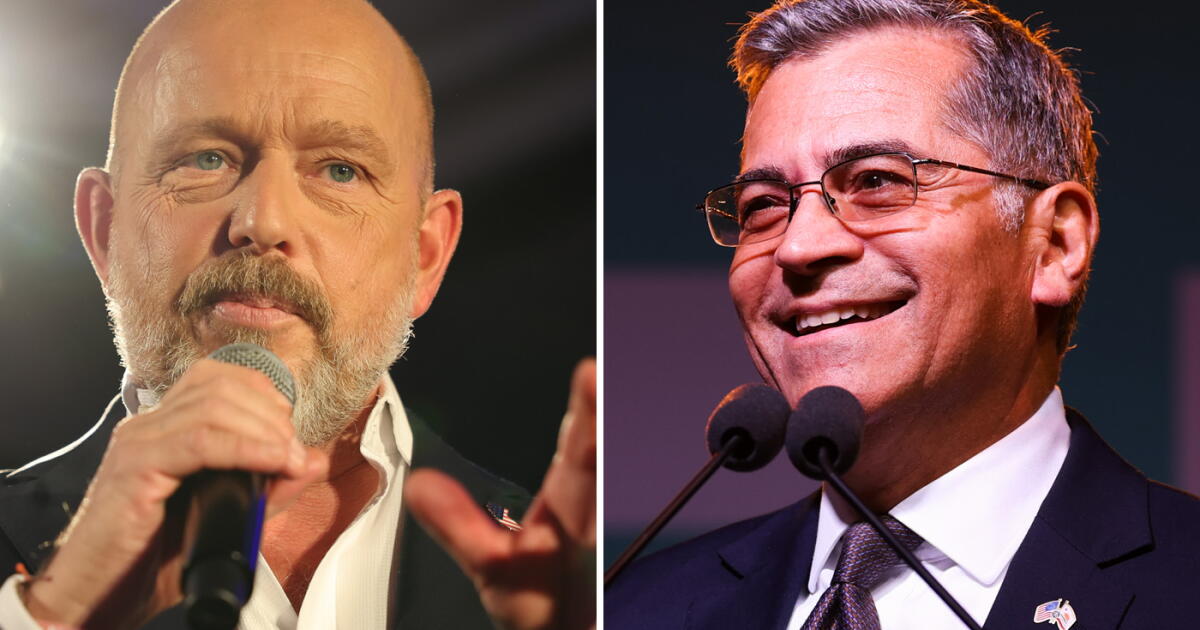
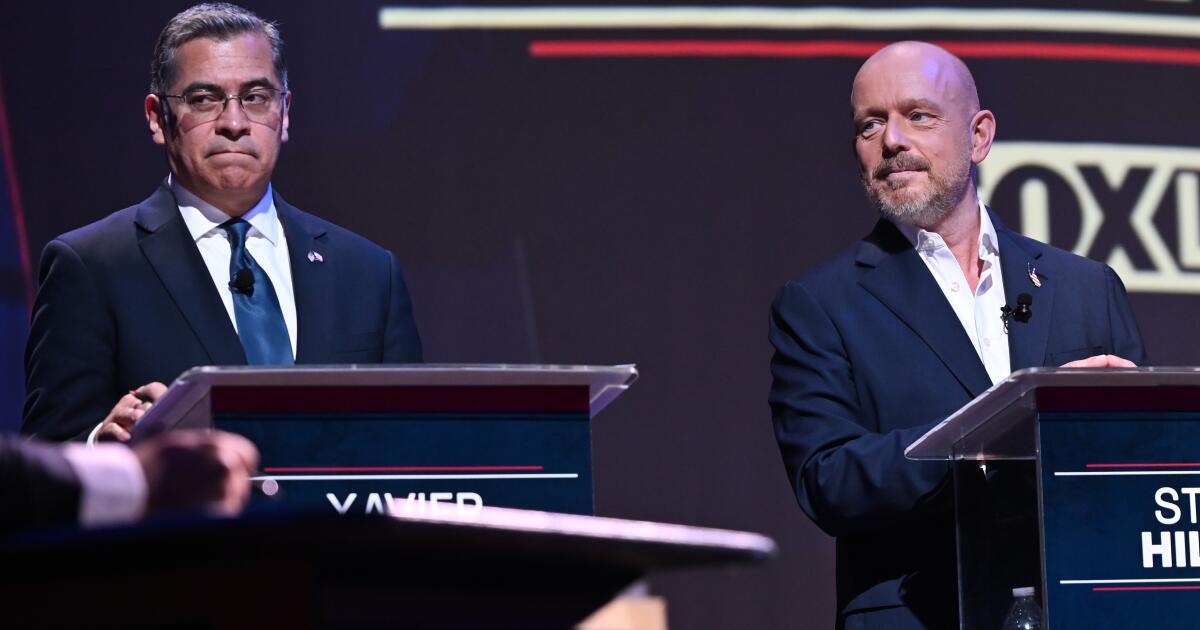
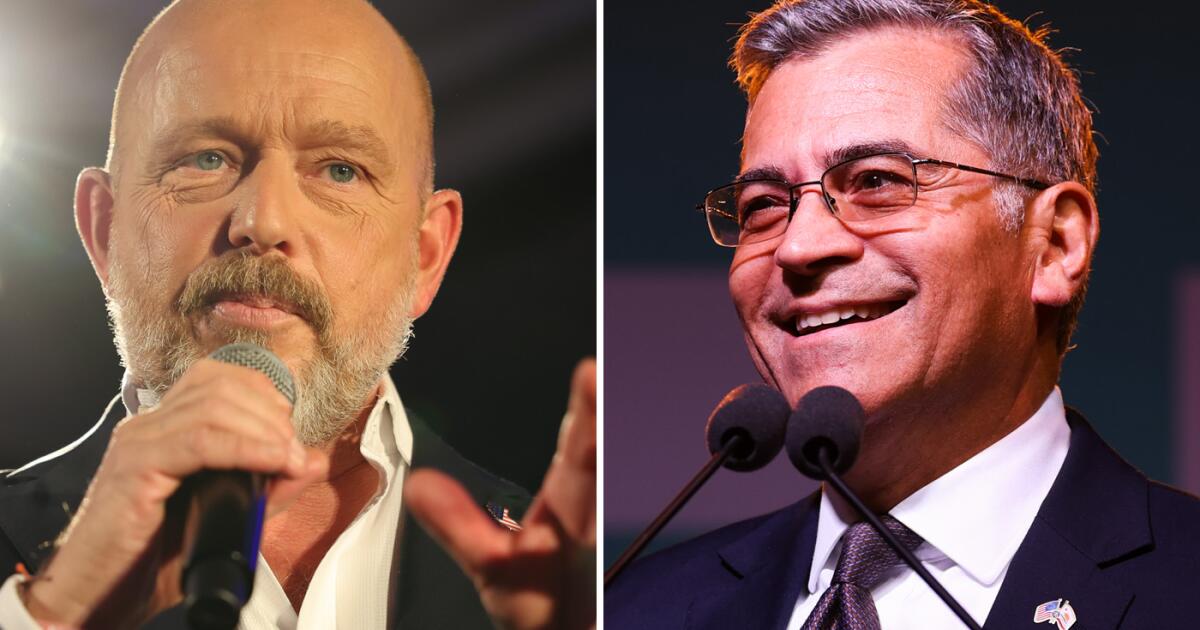
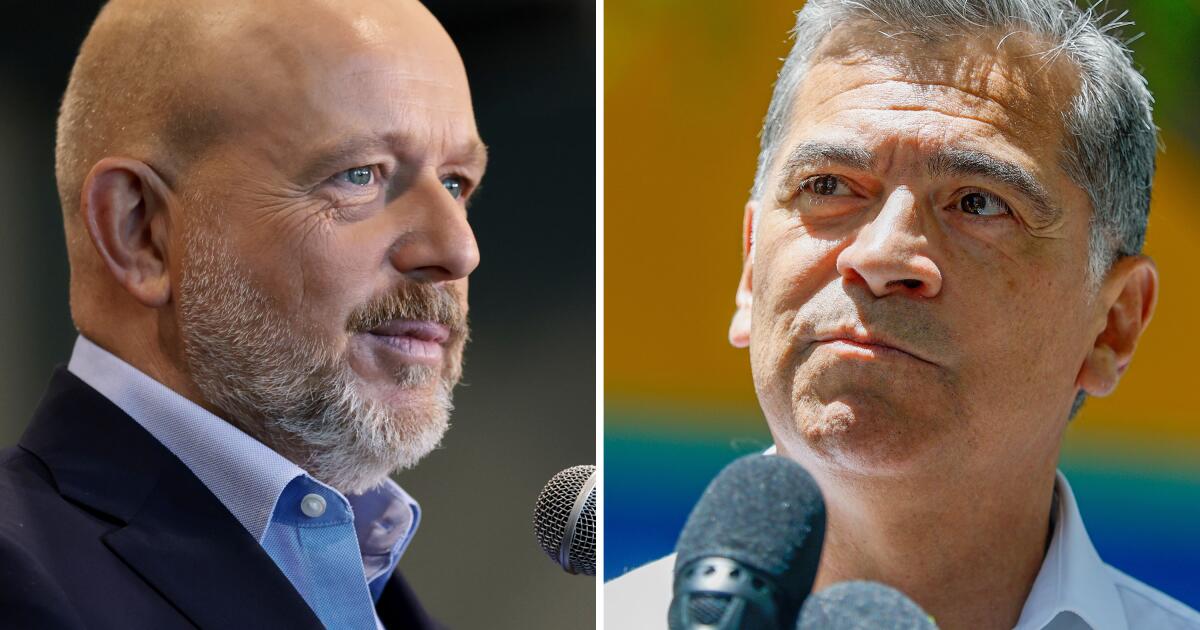
Despite an uptick in his performance, hopes for third-place finisher Tom Steyer are fading along with the number of uncounted ballots, suggesting Democrat Xavier Becerra and Republican Steve Hilton will face off in November.

Given the overwhelming Democratic advantage — both attitudinally and in registration — the outcome of the governor’s race might seem preordained. But it’s voters who decide elections, not know-it-all columnists.

Two of that breed, Mark Z. Barabak and Anita Chabria, can’t see into the future. But they can try to make sense of what just passed, starting with a primary season that was a strange mix of ennui and white knuckles.

Barabak: So Anita, now that the election is over how are you feeling? Relieved? Giddy? Depressed?

Chabria: Tired, with five months to go. And while it’s true neither of us can see into the future, it’s not too much of a long shot to predict that in a state where registered Democrats vastly outnumber Republicans, the next governor will likely be blue.

So while the primary was bruising and confusing, the general election will be much more predictable — it’s Becerra’s to lose, and he’d have to try really hard to do that.

But here’s what I’ll be looking for in the lead up to November: How far will Hilton go to capitalize on this moment for personal gain? There are plenty of real issues to be discussed where the Republican-Democrat divide could offer worthy debate. What should we do about gas prices? What is the right balance between environmental regulation and building housing?

But my fear is, with little chance of winning, Hilton will instead focus on boosting his MAGA credentials.

In the past week, we’ve seen him dive headfirst into voter-fraud conspiracies, following the lead of President Trump. Hilton’s campaign is providing Trump with the biggest platform for this false propaganda of rigged elections that California has ever endured.

That is bad for our state and bad for democracy, and it’s troubling that we will likely be subjected to these lies — and that California could be used to further erode voting rights nationally — for the entire summer leading up to the midterms.

What will you be keeping an eye on?

Barabak: How Becerra spends the next five months.

One presumes he’s smart enough not to take anything for granted. Meaning he won’t spend the time between now and Nov. 3 at some swank beach resort, sipping one of those colorful cocktails with a little paper parasol while musing over his inaugural address.

So it will be interesting to see how Becerra campaigns and whether he uses the next several months to build a mandate and also to prepare California voters for the rough road ahead.

Becerra is smart enough, one would think, not to run as Mr. Sky Is Falling and tell voters, “Boy, oh, boy things are really gonna suck going forward.” But the next governor is going to face some really tough challenges, including a structural budget deficit that’s probably going to require both painful cuts and unpopular tax hikes.

On top of that, there are the inevitable disasters, be they earthquake, fire or flood, the latter quite possibly exacerbated this winter by what may be an epic El Niño. There’s also the continued challenge of dealing with a president who treats California the way a dog regards a fire hydrant.

Finally, there’s the unknowable but certain catastrophes the next governor will face.

All of it makes you wonder why anyone would want the job — though Steyer panted after it enough to burn through more than $215 million of his fortune in a bonfire of vanity.

Chabria: Steyer was bashed for being a self-funded billionaire, but what his support showed is that there is a significant contingent of voters who are tired of the status quo and want a governor with bold ideas.

California definitely faces many problems, but we are also historically a state that pushes forward on hard issues.

Universal healthcare and standing our climate ground in the face of federal rollbacks were two of Steyer’s big talking points, along with standing up to corporate influence. Becerra now inherits those thorny problems if he wants to form a more cohesive Democratic base.

Becerra hasn’t yet offered up his vision of the Golden State, as you point out. As much as it may benefit Hilton to focus on Trump in coming months, the same could be true for Becerra.

Why get into messy policy when you can run on opposing MAGA in a very blue state? I fear the next few months will be more about Trump than California.

Barabak: That’s a charitable way to look at $teyer’s campaign.

Sure, he had plenty of ideas, though I think the promise of delivering universal healthcare — a political nonstarter — was cheap pandering, not visionary leadership.

There’s no shortage of people with good ideas. The only reason anyone paid attention to Steyer, who’s never served in any elected office, was the obscene amount of money he spent on his luxury-class ego trip. So it pleases me voters didn’t reward his arrogance or buy his billionaire-turned-populist, “Amazing Grace” spiel. (“I once was blind, but now I see.”)

And I’m be gladder still that voters showed — once again — the governor’s office is not for sale.

I do agree, however, that Becerra should to more than just cry MAGA! MAGA! MAGA! for the next five months, as if that incantation is magic and will solve all our problems. That applies, by the way, to Democratic candidates everywhere.

All of that said, we should note the governor’s race has yet to be officially decided and Steyer still has at least a theoretical possibility of slipping into the top two.

What do you think about California’s prolonged, much-derided long ballot count? Is the criticism warranted?

Chabria: First, we’ll have to agree to disagree. California is on a healthcare cliff and even middle-class Americans (not just Californians) can’t afford either insurance or care.

Single-payer may be a dream, but it’s my dream — for my kids, for my community and for my state, because healthcare shouldn’t be just for the rich and that is increasingly the direction we are going. So any politician, Steyer included, who fights for inclusion rather than accepting exclusion will get my consideration.

And let’s be real — self-funded or corporate-funded — our elections are, to their detriment, too much about money. My outrage is for the 2010 Citizens United Supreme Court decision, which unleashed the current no-limits mess and created a system in which it requires hundreds of millions from somewhere, anywhere to run for our highest offices.

But back to ballots: Slow is not fraud. Slow is not bad if it’s accurate. Slow allows for greater voter participation by allowing mail-in ballots, and carefully checking all ballots for problems. Slow takes into account the federal mangling of the post office that has, yes, slowed down our mail.

And, slow happens because most of our county elections offices are understaffed and budget-starved. If you want fast, you’ve got to pay for it.

So keep your britches on people and don’t buy Trump’s (or Hilton’s) manufactured hype. Every system can be improved, but there’s far worse problems than slow.

What’s your take on the ballot controversy?

Barabak: Here’s one where we agree.

California goes out of its way to make it easy to vote, which, I believe, is a very good thing. Kim Alexander of the non-partisan California Voter Foundation, who’s spent decades on the matter, has suggested ways we can have both wide access and a faster count, starting with better funding of the state’s over-extended county election offices.

This prolonged count is something Gov. Gavin Newsom and the Democratic-run Legislature could have anticipated. Shame on them for not doing more to address it.

Chabria: Any final thoughts?

Barabak: Just this. I’ve read the many plaintive pieces written about this boring, wholly-unworthy-of-the-Great-Golden-State field of gubernatorial candidates.

I, too, yearn for that perfect candidate who is firm but flexible, old but youthful in his or her thinking, masculine but also feminine, brilliant but not too smart and larger than life but also totally relatable.

Maybe in 2030.

Source link

Becerra advances to November, moves closer to becoming California’s first elected Latino governor

Veteran Democratic politician Xavier Becerra won one of the top two spots in California’s primary election for governor, according to the Associated Press, a finish that puts him in a prime position to win in November and make history as California’s first elected Latino governor.

“The people of the great state of California, in the greatest nation on earth, have spoken — loudly and proudly,” Xavier Becerra said in a statement Friday. “We will not be bought. We will not be bullied. And we are never backing down. November, here we come.”

Former Fox News host Steve Hilton, a Republican, remains in a close second and appears on the cusp of securing the right to face off with Becerra in the November general election.

Tom Steyer, a hedge fund manager turned climate change activist, may be destined to finish in third place — which would be a disappointing end to a campaign that saturated California’s television screens, social media scrolls and mailboxes thanks to the progressive Democrat spending $216 million of his own wealth.

Becerra’s victory was declared by the Associated Press on Friday evening, three days after the June 2 election — an indication of the competitive race to replace termed-out Gov. Gavin Newsom and California’s lengthy process of counting ballots. Still, Becerra and Hilton were within a percentage point of each other, though that could change as the vote tally continues. While his fate is not sealed, Steyer faces long odds to finish in the top two.

Under California’s primary system, only the two candidates who receive the most votes in the primary advance to the November general election, regardless of their party affiliation.

Becerra would enter the general election campaign with a significant edge over Hilton since Democratic voters in California outnumber Republicans by almost a 2-to-1 margin, a telltale reason why no GOP candidate has won a statewide race since 2006.

President Trump’s endorsement of Hilton helped consolidate support from Republican voters, which was pivotal to his success in the primary, but would likely hurt him in a face-off against Becerra. Nearly two-thirds of voters in the state want a governor who will fight Trump’s policies, according to the survey by UC Berkeley’s Institute of Governmental Studies that was co-sponsored by the Los Angeles Times.

Becerra could make history by becoming the first Latino to be elected governor — and the first to lead the state in more than 150 years. The last time a Latino held the office was in 1875, when then-Lt. Gov. Romualdo Pacheco was elevated to fill a vacancy and served for 10 months.

“California has made history. Xavier Becerra’s advancement to the general election is a defining moment both for the state, and for the millions of Latino families who have been instrumental in shaping the state’s future. … As home to the nation’s largest Latino population, California will once again demonstrate the decisive power of Latino voters,” said Voto Latino Executive Director Beatriz Lopez.

Though Latinos make up about 40% of the state’s population and are California’s largest ethnic group, they historically have lower turnout in elections and are underrepresented in government. Though Becerra often cites his upbringing as a child of working-class Mexican immigrants, he will still need to demonstrate he can deliver for those communities, said Christian Arana, vice president of civic power and policy at the California-based Latino Community Foundation.

“There’s a lot of excitement about the representation side,” Arana said. “You can have Latino representation, but whether or not that will actually lead to tangible outcomes for Latino communities, that’s what people want to know.”

Once stuck in the single-digits in public opinion polls with a handful of other Democratic candidates, Becerra rose quickly and unexpectedly following the political demise of former Rep. Eric Swalwell.

Becerra’s rise began days after Swalwell dropped out in April following allegations of sexual assault and misconduct, which he denies. Becerra quickly consolidated support from elected officials including Assembly Speaker Robert Rivas and influential groups like Planned Parenthood Affiliates of California and the California Medical Assn.

But both supporters and critics of Becerra struggle to explain exactly how or why he became the main beneficiary of Swalwell’s downfall.

Becerra’s campaign credits the timing of a major television and digital advertising push. The political ads began running just before the allegations against Swalwell came out and depicted Becerra as a calm, experienced leader with a record pushing back against Trump and support from Young Democrat groups.

Steyer’s campaign hired an intelligence firm to look into the online surge favoring Becerra and found thousands of bot accounts had amplified Becerra on various social media platforms. Becerra’s campaign denied any involvement and dismissed the influence of the fake accounts.

Political experts describe it as the stars aligning for the longtime Democratic politician. In the aftermath of the scandal, voters were apparently drawn to Becerra’s long resume and calm, thoughtful demeanor.

“He just never overreacted. Even when attacked [during debates], he was calm,” said Fernando Guerra, professor of Chicano Studies at Loyola Marymount University. That “gave the sense of being a moderate, while he’s really a liberal, so he was able to appeal not only to Latinos, but to liberals and to moderates.”

After Swalwell’s campaign crumbled, members of the political brain trust — many with ties to Newsom — that had been advising the former congressman began working for Becerra, including digital strategist Alf LaMont and veteran consultants Courtni Pugh and Lindsey Cobia.

“There was nothing going for him for a long, long time,” said Jason McDaniel, associate professor of political science at San Francisco State University. “I do think it was just people looking for someone who had a lot of experience who could win.”

Becerra’s first election victory was to the state Assembly in 1990. He served one term before successfully running for a Los Angeles congressional seat, which he held for 24 years.

Then-Gov. Jerry Brown appointed Becerra as state attorney general in 2017, a post he used to challenge Trump administration policies in the courts more than a 100 times — with great success. Becerra helped craft the Affordable Care Act in Congress and defended it as attorney general, and Joe Biden nominated him to serve as Health and Human Services secretary.

The 68-year-old veteran elected official has faced criticism on the campaign trail for his record leading the massive federal agency, particularly over a New York Times investigation that found thousands of unaccompanied migrant children ended up working in dangerous jobs after they were released to sponsors.

Some former Biden administration officials, many of them anonymous, have also criticized Becerra’s leadership of the agency.

Still, Becerra’s supporters said the candidate’s experience, particularly when it comes to fighting the Trump administration, qualifies him for California’s top job.

“He’s had some very important positions in government,” labor leader Dolores Huerta said at Becerra’s election night party in downtown Los Angeles. “He is qualified. He doesn’t have to go into a learning mode.”

“He’s a legal scholar,” said David Dixon, a political science professor at Cal State Dominguez Hills and brother to a longtime Becerra aide. “When our Constitution is threatened, we need people like him to be in positions of power to reclaim things we are losing now.”

Times staff writers Seema Mehta, Dakota Smith and Andrew Khouri contributed to this report.

Source link

No, Mr. Hilton, our elections are not ‘a joke.’ It’s time for you to stand up to Trump

Well, that didn’t take long.

A day after California’s primary election, President Trump took to social media with baseless claims of election fraud — predictable, but also dangerous.

“Look what’s happening in California, the Dumocrats, right before our very eyes, are stealing the Vote,” Trump wrote in one post.

“There’s BIG cheating by the Dumocrats in California,” he wrote in another, apparently enamored of his latest juvenile slur.

Never mind that his candidate, Steve Hilton, is in the lead — for now anyway.

California has once again become the main dish on Trump’s buffet of bull-hockey as he continues to undermine democracy and consolidate authoritarian power, using this disingenuous and patently untrue narrative that American elections are rigged by shadowy Democratic forces working in collusion with illegal immigrants.

That last part is called the Great Replacement Theory, the idea that “elites” are replacing white people — and white voters — with Black and brown immigrants in a bid to destroy white culture. It’s at the heart of Trump’s voter fraud allegations.

The twist this time is that Hilton, the man who wants to represent all Californians, seems to be jumping on the election fraud conspiracy train with the president. I get it, there’s the MAGA base to feed, and it’s a base that feasts on outrage and fakery. Serving up resentment glazed with lies and propaganda has been the MAGA playbook for years under Trump, a strategy that no one can deny has been heartbreakingly effective.

But Hilton is a smart man and must certainly know that voter fraud is rare, to the point of being inconsequential to election outcomes. Hilton by his own admission understands voting patterns, and that in this cycle, Republicans have voted early and often by mail, despite Trump’s claims that all vote-by-mail should be suspect. So Hilton understands that early votes have skewed his way, and that later vote tallies will likely favor Democrats.

And Hilton is definitely intelligent enough to expect that in a state where Democrats outnumber Republicans nearly three to one, he will not keep the top spot in this primary, and a slim chance remains that he will not make it into the top two. That’s just simple math.

So if Hilton truly seeks to represent this state as its top elected executive, now is the time to renounce election fraud myths and stand up to Trump’s lies. If Hilton can’t say that he believes our recent election was free and fair, then he has no business being our governor.

Unfortunately, that doesn’t seem to be the path he’s taking, even as it seems increasingly likely that he will advance to the general election.

This week, speaking with far-right podcaster and former Turning Point USA creative director Benny Johnson (who was allegedly duped into working for a Russian influence operation), Hilton said that while “so far we’re not seeing any signs” of cheating, “we’re going to be all over it. We’re not going to let them do that.”

Hilton was responding to a question from Johnson on whether Hilton will sue over “cheating.”

On a post-election appearance with Laura Ingraham, the conservative Fox News host who has repeatedly promoted the Great Replacement Theory, Hilton delved into more conspiracy.

“Just to really underline the point that you made about the corruption,” he told Ingraham an anecdote about supposed fraud in a previous election cycle when a “whistleblower” at the post office told him that they were instructed that a handwritten postmark was acceptable when sorting ballots to deliver to the county registrar.

“It’s just unbelievable, and of course, that’s why so many people don’t believe the results, but it just undermines confidence,” he told Ingraham, certainly knowing that the post office forwarding a ballot on to a county registrar in no way means it will be certified or counted. Would we really want the USPS deciding which ballots to deliver? Disingenuous on Hilton’s part at best.

“The whole thing is a joke,” Hilton went on to say of California elections, which of course, is absurd.

Thursday, when I asked Hilton’s team to speak with him about his views on voter fraud, they sent back a response that focused on the slowness of the California vote count; voter rolls Hilton has described as “wildly inaccurate,” which is a wildly inaccurate claim; and two instances of actual fraud with voter registration — not examples of votes that were counted.

To be sure, all those items are important. Any malfeasance should be punished, and the system should always strive to improve.

But how hard is it to simply be against fraud, while accurately acknowledging that it is rare and our current system provides accurate results?

I am against voter registration fraud. I am against vote fraud. I am absolutely pro-democracy, including policies such as mail-in voting that increase participation.

I do not believe that there is widespread fraud in the California primary, or in American elections in general, because the evidence does not support that conspiracy. I do not believe that Democrats are running a decades-long, nationwide conspiracy to replace white voters with votes from Black and brown undocumented immigrants, because that is both false and racist.

Pretty basic stuff, and statements in line with the values and common sense of the majority of Californians Hilton says he will represent.

If Hilton can’t come out and clearly say that Trump is wrong — about fraud and about the Great Replacement Theory — can he really be trusted to represent the values of the Golden State?

Source link

Kathy Hilton out as WeHo Pride grand marshal after backlash

Kathy Hilton will no longer be the grand marshal of West Hollywood’s pride parade.

The city and WeHo Pride on Wednesday released a joint statement, announcing that “The Real Housewives of Beverly Hills” star would no longer serve as the Grand Marshal Icon for the 2026 WeHo Pride Parade. The event is scheduled for Sunday.

“After thoughtful discussions, the City of West Hollywood, the WeHo Pride production team, and Kathy Hilton have determined that the 2026 WeHo Pride Parade will not designate a Grand Marshal Icon honoree,” read the statement.

The decision comes less than a week after Hilton was announced. That May 28 announcement was met with swift backlash from the LGBTQ+ community and allies, who called out Hilton’s ties to President Trump and alleged MAGA-leaning politics. Critics also cited accusations that the socialite had used a homophobic slur while on a trip with other cast members of “The Real Housewives of Beverly Hills,” an action she has previously denied.

In their joint statement, West Hollywood and the WeHo Pride team expressed their appreciation for “the respectful and sincere dialogue” around both the event and the “role and significance” of Pride honorees.

“The City of West Hollywood has always believed that Pride belongs to the community,” the joint statement said. “Since its earliest days, Pride has served as both a celebration and a platform for activism, visibility, resilience, and the ongoing pursuit of equality, dignity, and justice for LGBTQ+ people. … These conversations reflect the passion people have for WeHo Pride and underscore the importance of ensuring that WeHo Pride continues to honor the history, values, and diverse voices of the LGBTQ+ community.”

In a statement, Hilton expressed gratitude for being considered for grand marshal and reaffirmed her commitment to the LGBTQ+ community and causes.

“My reason for wanting to be involved in this year’s WeHo Pride weekend was simple: to celebrate, support, and share in the joy of a community that means a great deal to so many people,” Hilton said. “Pride is, and always will be, about celebrating and uplifting LGBTQ+ voices, experiences, and achievements. … My support for the community and WeHo Pride is unwavering.”

She also mentioned several queer advocacy organizations and events she has supported over the years, including GLAAD, the Elton John AIDS Foundation, the Elizabeth Taylor AIDS Foundation, Dr. Mathilde Krim, God’s Love We Deliver and Project Angel Food.

The latest Pride-related dust-up follows the abrupt cancellation of the Long Beach Pride Festival in May. The city’s Pride Parade took place as planned.

Both snafus have occurred as conservative politicians and advocates continue to attack LGBTQ+ rights and visibility nationwide. Some Republican governors have even pushed for conservative alternatives to Pride month festivities. A recent Gallup poll has found that after years of steady gains, support for marriage equality and same-sex relationships has slipped, particularly among Republicans.


Source link

Republican Hilton, Democrat Becerra lead California governor primary

1 of 2 | Former Secretary of the Department of Health and Human Services Xavier Becerra speaks during a Senate Finance Committee hearing on former President Joe Biden’s proposed budget request for the Department of Health and Human Services for fiscal year 2025 at the U.S. Capitol in Washington, D.C., on March 14, 2024. File Photo by Bonnie Cash/UPI | License Photo

June 4 (UPI) — Republican Steve Hilton and Democrat Xavier Becerra are leading a crowded field in California’s primary for governor on Thursday with millions of ballots left to count.

The two candidates that receive the most votes will advance to the November election, regardless of party. Democrat Tom Steyer has the third most votes so far.

Sixty-one candidates qualified to appear on the primary ballot to replace Gov. Gavin Newsom.

Polls closed on Tuesday night at 8 p.m. PDT. It is common for California to take days if not weeks to tally enough votes to declare a winner.

Despite millions of votes still being counted, President Donald Trump has alleged that Democrats have cheated in California’s primaries.

“There’s BIG cheating by the Dumocrats in California,” Trump posted on social media. “Votes are all tied up. May not be in for weeks. Under investigation by the U.S. Attorney’s Office in Los Angeles. Why the vote counting DELAY?”

Trump also declared Hilton the winner of the primary, even though not enough votes have been counted to make that determination.

“Congratulations to Steve Hilton on coming in first, last night, in the California Vote for Governor,” Trump wrote.

Hilton, a former Fox News host, is the top overall vote-getter as of Thursday morning.

Becerra is the former Biden administration U.S. human services and health secretary. Steyer, a billionaire, is a philanthropist and climate activist.

Source link

Hilton and Becerra lead California governor’s race; Steyer faces elimination

As election officials continued tallying ballots Wednesday, Republican Steve Hilton and Democrat Xavier Becerra continued to lead in the unsettled race to replace termed-out Gov. Gavin Newsom, with billionaire Democrat Tom Steyer hoping for a surge in late-arriving votes to push him into one of the top-two spots to advance to the November general election.

Hilton, a British immigrant and former Fox News commentator, told reporters outside the state Capitol in Sacramento Wednesday morning that he was “very encouraged” by the latest results, though he stopped short of declaring victory.

“It does look as if change is coming to California, and that is good news for everyone, every small business, every working family, everyone who wants to see our state set back on track,” he said.

Becerra and Steyer did not hold public events as of Wednesday afternoon.

Election data analyst Paul Mitchell said it would be nearly mathematically impossible for Steyer to close the gap.

“As we start to get more data, the runway is going to get shorter and shorter,” he said.

He said Steyer, to finish in the top two in the primary, would have to get about 30% of the remaining uncounted votes while Becerra would need to be limited to 15%. The self-funded billionaire has “a very high hill to overcome, and the challenge gets steeper and steeper as we get more data from the counties,” Mitchell said.

Once mired near the bottom of a crowded pack of Democrats in opinion polls, Becerra, a former Biden administration cabinet member, rocketed ahead of his rival candidates after former Rep. Eric Swalwell dropped out of the race in April amid allegations of sexual assault and misconduct. The scandal triggered an upswing of voter interest in California’s once sluggish governor’s race and in Becerra, who seized the moment.

“Here in Hollywood’s hometown, we love a good underdog story,” Becerra told cheering supporters at his election night party at La Plaza de Cultura y Artes in downtown Los Angeles.

Becerra spoke about his Mexican immigrant parents and becoming the first in his family to attend college. Though a longtime California politician, Becerra said that his campaign for governor was outspent and that he faced calls to drop out of the race.

“The underdog stayed in the fight,” he said. “Like my parents, I never gave up. … Never stopped believing in the beacon-light goodness of California and thankfully, neither did you.”

Steyer, who spent more than $216 million of his wealth on the race, has not conceded defeat.

His campaign manager, Heather Hargreaves, wrote in a letter to supporters Wednesday that “we’re going to give democracy time to work. County election officials are still counting ballots and don’t expect to know how many people voted in total until” Thursday, when officials are required to report the estimated number ballots left to process.

The billionaire former hedge fund owner campaigned against the corporate and special interests that have a powerful presence in Sacramento and often spend heavily in elections, including this year against Steyer.

Billionaires “do everything they can to hoard their wealth and avoid paying taxes, and we see corporations continue to rig the system for themselves — raising your prices to juice their profits. Screw that,” Steyer said at his election watch party at the Regency Ballroom in San Francisco.

Other candidates in the race included Republican Riverside County Sheriff Chad Bianco and Democrats including former Rep. Katie Porter, San José Mayor Matt Mahan, former Los Angeles Mayor Antonio Villaraigosa and state Supt. of Public Instruction Tony Thurmond.

Villaraigosa, Mahan and Porter conceded the race Tuesday night.

California’s 2026 race for governor started slow but ended with a flourish, including the demise of a scandal-ridden Democratic favorite, the anointing of a Republican by Trump and Becerra’s unexpected rise from the depths of the candidate field.

Unlike gubernatorial elections in the last quarter of a century, this year’s race lacked a clear crowd-pleasing front-runner able to win over voters, such as movie star Arnold Schwarzenegger or Jerry Brown, a sage of the California electorate and scion of a storied political family. But it unfolded at a time when the state’s residents are overwhelmed by high housing costs, steep gas prices and overall unaffordability that threatens the “California dream” that once drew millions of people to the state.

“Normal people are not living and breathing politics on a daily basis,” said Tim Rosales, a strategist who ran Republican John Cox’s unsuccessful 2018 gubernatorial campaign. In today’s information-saturated environment, Rosales said, the race and its roster of “extremely milquetoast candidates” didn’t break through until the Swalwell scandal grabbed voters’ attention.

The 2026 gubernatorial primary has been one of the most unpredictable and expensive in decades and a race that was shaped early on by a number of heavyweight Democrats staying on the sidelines.

Though supporters urged them to run, former Vice President Kamala Harris, Sen. Alex Padilla and Atty. Gen. Rob Bonta passed on the race. It was in a state of limbo for months last year as Harris, one of the state’s most high-profile politicians, weighed whether to jump in.

“I don’t ever recall a playing field that looks like this one. Usually there’s a clear front-runner,” said veteran Democratic strategist Darry Sragow. “It’s easy to say that it reflects a lack of talent [but] that’s absolutely not true. Almost any of the candidates running could make a good governor.”

Still, candidates struggled for months to break through to voters.

In February, polls showed the crowded field of Democrats splitting liberal voters and opening a statistical possibility that the party would be boxed out of November under California’s open, top-two primary, which places all candidates on the same ballot. Only the first- and second-place finishers in the primary advance to the general election, regardless of their party affiliation.

Just when Swalwell appeared on the cusp of becoming the Democratic front-runner the San Francisco Chronicle and CNN published allegations that he sexually assaulted a former staffer and acted inappropriately with other women. Swalwell suspended his campaign.

It was Becerra who benefited the most. In less than two months, he vaulted from polling in the low single digits to the top of the field of candidates, according to surveys conducted by UC Berkeley’s Institute of Governmental Studies that were co-sponsored by the Los Angeles Times.

“Becerra caught lightning in a bottle,” Rosales said. “It could have easily gone to any of the other candidates,” but many had baggage. Videos of Porter losing her temper hurt her image, the source of Steyer’s wealth and his unbridled campaign spending weighed on voters’ minds, and Villaraigosa and Mahan were “more centrist than what most Democrats wanted, and so Xavier Becerra was really the safe choice,” Rosales said.

Before Democratic voters began to narrow down their choices, Trump endorsed Hilton in early April. It helped the former Fox News host break away from Bianco, his main GOP rival.

In the days before the primary election, the race solidified into a three-way contest involving Becerra, Steyer and Hilton.

Steyer stepped up his fight in the remaining days, seeking to squeeze into one of the top two spots by battering Becerra in ads and at campaign rallies as a politician propped up by corporate special interests.

“We cannot afford to have a governor who’s been bought off by Big Oil. Period,” he said at a Sunday rally in Los Angeles.

Corporations, along with labor unions and interest groups including the California Assn. of Realtors, had spent more than $18.7 million to boost Becerra, according to the election spending tracker California Target Book. Many of the same groups also gave money to a committee intended to attack Steyer.

As the election neared, Becerra sharpened his attacks against Steyer, calling the billionaire a “liar” and accusing him of trying to buy the election.

“We are not going to let a billionaire or Trump’s handpicked candidate take over this state,” he said during a Sunday rally in Long Beach.

If Becerra faces off with Hilton in November he’ll have a distinct advantage. Democratic voters outnumber Republicans nearly 2 to 1 in left-leaning California.

Winning the general election would make the 68-year-old Becerra the first elected Latino governor of California. At roughly 40% of the state’s population, Latinos are California’s largest ethnic group but have not been represented in the governor’s mansion since 1875, when then-Lt. Gov. Romualdo Pacheco was elevated to fill a 10-month vacancy.

Times staff writers Iris Kwok, Susanne Rust, Andrew Khouri and Christopher Goffard contributed to this report.

Source link

3 things to watch on California election night as ballots are counted

The most important thing political junkies might need this week is patience.

With so many key races expected to be tight, officials are warning it could takes days — perhaps even more than a week — to know the outcome of Tuesday’s primary election.

Here are some important things to watch as the results roll in:

From left; Steve Hilton; Tom Steyer; and Xavier Becerra.

From left; Steve Hilton at the California Republican Convention in San Diego; Tom Steyer campaigning in downtown Santa Ana; and Xavier Becerra in San Diego.

(Los Angeles Times)

1. The fight for the second top spot

Most polls and pundits say Democrat Xavier Becerra is likely to be the top voter-getter in the primary to replace Gavin Newsom as California governor.

Until recently, it was assumed that Republican Fox News host Steve Hilton would also advance, especially after he was endorsed by President Trump.

But a new poll suggested Hilton was in a tight race for second place with Democratic billionaire Tom Steyer, who is spending heavily from his own fortune. If he is successful, California could see a competitive Democrat-versus-Democrat general election come November.

Under California’s election rules, the top two vote-getters move on to the general election regardless of party preference.

Hilton is urging Republicans to unite around him to avoid being shut out. His main GOP opponent is Riverside County Sheriff Chad Bianco.

A few months ago, Hilton and Bianco led some polls amid a crowded Democratic field, prompting fears that Democrats might be locked out of November’s general election. But those concerns have subsided somewhat with Becerra’s rise in the polls.

More to read:

Karen Bass on Friday, April 8, 2022; Spencer Pratt on April 16, 2025; Nithya Raman on March 3, 2026.

Left to right: Karen Bass on Friday, April 8, 2022; Spencer Pratt on April 16, 2025; Nithya Raman on March 3, 2026.

(Christina House / Los Angeles Times; Jordan Strauss / Invision/AP; Genaro Molina / Los Angeles Times)

2. Is the mayor’s race really a tossup?

It’s rare for the Los Angeles mayor’s race to become a national story. But that has happened this year thanks to a showdown few would have predicted.

Former reality TV star Spencer Pratt is a big reason for all the attention, running from the right in a very liberal city. Embattled Mayor Karen Bass is the incumbent, with City Councilwoman Nithya Raman running from the left.

A UC Berkeley-L.A. Times poll released last week found a close race with Bass at 26%, Raman at 25% and Pratt at 22% among likely voters. Other polls have shown Pratt doing better.

Pratt had overshadowed his opponents when it came to social media (and old media) attention. But is that enough to get him into the runoff? Bass has big labor on her side, and we’ll see whether that helps her get out the vote. But Bass is also unpopular, according to polls. Does that give Raman an opening among Democrats who are looking for an alternative?

More to read:

Dan Egelhoff plays with his dog in a room with patriotic decorations

Dan Egelhoff plays with his dog at a “Barbecue, Beer and Ballots” event at Rep. Ken Calvert’s office.

(Christina House / Los Angeles Times)

3. The fallout from California redistricting

When it comes to congressional elections, this should be a good night for Democrats, by design. That’s because California voters last year approved Proposition 50, which redrew congressional districts to favor Democrats.

It was part of a national battle by both red and blue states designed to help their respective parties secure control of Congress. The new California maps give Democrats an advantage in some areas, but it’s still unclear how sweeping the victories will be. There are some notable intra-party battles in “safe” districts as well.

The Times’ data and graphics team has identified a few races to watch:

  • Rep. Ken Calvert (R-Corona) lost his seat in redistricting and is now challenging incumbent Young Kim (R-Anaheim Hills) in the 40th District.
  • In San Francisco, several factions of the Democratic Party are vying to replace former House Speaker Nancy Pelosi in the 11th District.
  • California’s 48th Congressional District in San Diego and Riverside counties has traditionally been red. But the sudden retirement of longtime Republican incumbent Darrell Issa and redistricting puts it in play.
  • Veteran Rep. Brad Sherman is facing a strong challenge from fellow Democrat Jake Levine in the 32nd District.

More reading:

Want more information about the ballot-counting process? Times reporter Grace Toohey breaks it down, including how to track your mail-in ballot, how races get called and why it takes so long.

Source link

Why a loss for Hilton would be a win for Trump

If the last few weeks have shown us anything, it’s that the gubernatorial primary is an unexpectedly close race among a trio unlikely leaders: MAGA Republican Steve Hilton, and Democrats Xavier Becerra and Tom Steyer.

Though Trump endorsed Hilton, a former Fox News host, a Hilton loss may be just what Trump wants — more fuel to fire up his MAGA base with false claims of rigged elections.

“Whether Hilton finishes first, second, or third, Trump will declare with zero evidence that there is voter fraud.,” Matt Barreto told me. He’s a professor of political science at UCLA and a founder of its Voting Rights Project, meant to promote free and fair elections.

And since California will probably take days or weeks to count all the ballots, a tight race will be fertile ground for those fraudulent fraud claims. President Trump has already started, clearly planning to use our primary to further his push to assert federal control of state-run elections.

“You have a really rigged vote in California,” Trump said last week, when asked about Hilton and Los Angeles mayoral candidate Spencer Pratt, another unlikely right-wing contender. “California’s one of the most dishonest states for voting.”

California is not, of course, dishonest in its voting, and Trump has whined about elections for so long that this rhetoric might elicit little more than a shrug from most. But California elections matter at this pivotal moment only months before the midterms. Fraud claims here will further erode trust in our electoral system and could provide Trump with ammunition for interference across the country.

Voter fraud claims may also test a new California law meant to protect real election integrity and trust — a law (Senate Bill 73, signed by Gov. Gavin Newsom last week) that has received little notice but one that could provide a model of protection for the rest of the U.S. It stops law enforcement agents, including federal agents, from “providing unauthorized access, disruption, modification, or seizure of voter rolls, voter lists, or certified voting technology,” without a court order.

Call it the Sheriff Chad Bianco Act.

Bianco, another MAGA gubernatorial hopeful, seized hundreds of thousands of ballots from a recent election, claiming he was investigating the kind of wrongdoing Trump constantly alleges without proof. State Sen. Tom Umberg (D-Santa Ana), a former federal prosecutor, said the warrant Bianco obtained from a friendly judge was “woefully deficient.”

So Umberg helped pass the measure to “protect the integrity of California elections” from “rogue law enforcement officials,” he said.

And he’s not just talking about Bianco.

“I am worried about interference in the election by federal authorities,” Umberg said. “I believe Donald Trump when he says, ‘I’m going to interfere in the election.’”

Umberg is so concerned that he has two other bills in the works he hopes will be law by November. One would stop Immigration and Customs Enforcement agents from being present at polling places. The other would make it illegal for anyone running for a third term as president to appear on the California ballot.

The buildup of fraud claims around California elections and the pushback from legislators like Umberg is a background battle that hasn’t received much attention, but one that is real and consequential.

Trump, through demands for voter rolls by the U.S. Department of Justice, the promotion of the SAVE Act, vague threats of ICE or other federal agents at polls, and the placement of election deniers in key federal rolls has gutted safeguards for voting on the national level.

States have been slow to meet the threat, largely waiting for November to see how it plays out. California, to it’s credit, isn’t so complacent.

The strange circumstances of this particular California election may be a test for both sides. Barreto, the UCLA voting expert, said he thinks “Hilton has the highest probability of finishing first on Tuesday with Becerra close by in second, and Steyer in third.”

But that could — and probably would — change as more ballots are counted.

By Thursday, Barreto said, it’s probable (far from certain) that Becerra is in the lead and Hilton is second.

“There will definitely be millions more ballots counted on Wednesday and Thursday and they will be disproportionately Democratic and contribute to both Becerra and Steyer numbers,” he said.

Maybe pushing Steyer into second? Again, a long shot. But possible.

Democrats have been holding on to their ballots until the last minute this year, with a huge number waiting until just the last few days to vote. It’s possible (though unlikely) that by sheer numbers, Democratic voters will propel both Steyer and Becerra toward November.

We do know that Republicans, despite their smaller numbers, have been voting, and trusting the postal service with their ballots this time around at a fairly high rate. That’s despite Trump’s claims that mail-in voting is inherently fraudulent.

So at the same time that we are expecting a big influx of Democratic ballots in coming days, Republicans may be closer to their voting peak, meaning Hilton’s numbers could top out on election night.

If Hilton doesn’t make the top three, after having been in the lead during in-person voting, MAGA will most certainly lose its collective mind.

And Trump will have something just as good as a Republican governor in the Golden State — “proof” we cheated.

Source link

Steyer and Hilton scrap for 2nd place in Tuesday gubernatorial primary

As Californians dawdle about casting ballots before Tuesday’s primary, the leading candidates hoping to succeed Gov. Gavin Newsom crisscrossed the state making their closing arguments to voters.

With former Biden Cabinet secretary Xavier Becerra surging in recent polls, the two candidates battling to win the second spot in this week’s primary and advance to the November election highlighted the strategic reasons why they believe voters ought to support them.

Republican Steve Hilton — a former conservative commentator who rocketed past his main GOP rival, Riverside County Sheriff Chad Bianco, after President Trump endorsed him in April — urged voters to back him to avoid the possibility of two Democrats facing off in November.

“I want us to fight like we are third. We aren’t going to let this slip away,” Hilton told a few hundred people at the Santa Monica Hilton Hotel & Suites on Sunday morning.

Steve Hilton gestures while speaking into a microphone

Steve Hilton surged ahead of his GOP rival, Riverside County Sheriff Chad Bianco, after receiving an endorsement from the president.

(Kayla Bartkowski/Los Angeles Times)

The former British political strategist once led the polls, but has slipped slightly behind Becerra. Not too far behind Hilton is billionaire hedge fund founder turned climate change activist Tom Steyer, a Democrat.

During his hour and a half appearance, Hilton veered between his oft-repeated criticisms about 16 years of Democrat-led rule in California to jabs at the top Democrats in the race.

Steyer’s nonstop advertising blitz is “one reason alone to defeat him,” while Becerra is the “living embodiment of more of the same.”

“Our secret weapon? The Democrat candidates,” Hilton said to chuckles.

Asked why voters shouldn’t back Bianco, Hilton said it was simple math. Only the first- and second-place finishers in the June 2 primary will advance to the general election, regardless of party affiliation.

“Every vote for Chad Bianco is a vote for two Democrats in the top two,” he said.

If a GOP gubernatorial candidate fails to make the November ballot, it would depress the Republican vote, harming the party’s down-ballot candidates, as well as handicap a Republican-led ballot initiative that would require voters to show government-issued ID to cast ballots.

Tom Steyer takes a picture with a volunteer during a rally

California gubernatorial candidate Tom Steyer takes a picture with a volunteer during a Get Out the Vote rally at Los Angeles Trade Technical College on Sunday.

(Eric Thayer/Los Angeles Times)

Steyer, who has spent a record-breaking $216 million of his wealth on his gubernatorial bid, argued that he is the only candidate in the race who is not beholden to special interests. He hammered Becerra for the support he has received from corporations including Meta, Airbnb, Uber and Chevron. Steyer argued that Becerra, if elected governor, would be more responsive to special interests than financially strapped Californians.

“We’ve seen it in this race. Chevron cuts you a check and you look the other way when they hike prices at the pump. Meta gives you money and your AI plan starts sounding like ChatGPT,” Steyer, sporting a ball cap labeling himself a “class traitor,” told more than 500 supporters at a community college near downtown Los Angeles on Sunday afternoon. “That’s the story of Xavier Becerra.”

Corporations, along with labor unions and interest groups including the California Assn. of Realtors, have spent more than $18.7 million to boost Becerra as of Sunday, according to the election spending tracker California Target Book.

“These companies may be selfish, but they’re not stupid. They don’t give hundreds of thousands of dollars to get someone elected unless they know he’s going to be on their side,” Steyer said.

Though Steyer earned his fortune in part through past investments in private prisons, fossil fuels and private equity, his supporters described him as a reformed billionaire who stepped away from those industries more than a decade ago.

Francesca Fiorentini, a comedian and podcaster, compared Steyer to Charles Dickens’ fictional miser Ebenezer Scrooge.

“At the end of ‘A Christmas Carol,’ nobody turns to Ebenezer and is like, ‘No, I’m not gonna accept your gifts.’ No, they welcome him. They might clown him a little bit, but we need to welcome someone like Tom Steyer,” Fiorentini said. “Tom Steyer is actually listening, he actually cares, he’s actually changing his belief system and he’s acting accordingly.”

Though he mainly went after Becerra, Steyer also made sure to criticize Hilton.

“You are not voting for who’s on the ballot, you’re voting for the California that comes after,” Steyer said. “The California that Steve Hilton is running on sounds exactly like what Trump wants: higher prices, lower wages, and less freedom.”

His campaign underscored his attacks against Becerra by having a handful of supporters dressed as zombies speak outside of Becerra’s Sunday evening rally in Long Beach. Waving signs naming businesses that have supported Becerra, they wore lanyards describing “Big Oil,” “Big Tech” and other corporate sectors as Becerra’s “bestie.”

At a raucous rally, elected officials, labor leaders and reproductive rights advocates were among the speakers who introduced Becerra, who attacked Steyer and Hilton, though not by name.

“We are not going to let a billionaire or Trump’s handpicked candidate take over this state,” he told more than 1,000 people at the city’s convention center. “We are not going to let them gut Medicaid while Californians work hard to build a future. We are not going to let them buy an election…. Not here, not in this state, not on our watch.”

Becerra seemed in awe as he stood in front of the packed room.

“Look around this room. One of our opponents has a billion dollars in a checkbook,” he said. “We have something better… We don’t have the money, but we have the movement. We don’t have the money, but we’ve got the momentum. And in this state, if you’ve got the momentum, you run across the finish line, and you win, baby, you win.”

Becerra also released a new video that ostensibly attacks Hilton as “Trump’s favorite” — a thinly veiled effort to prop up Hilton among Republicans to ensure he finished ahead of Steyer in the primary. Given that Democratic voters outnumber Republicans by almost 2 to 1, Becerra would much rather face Hilton than Steyer in the general election.

Newsom’s campaign employed this strategy to boost GOP businessman John Cox in the 2018 gubernatorial election, as did then-Rep. Adam Schiff against Republican Steve Garvey in Schiff’s successful 2024 U.S. Senate race.

California gubernatorial candidate Tom Steyer gestures before taking the stage.

Billionaire Tom Steyer has argued that he is the only candidate not beholden to special interests.

(Eric Thayer/Los Angeles Times)

Steyer launched an ad this weekend titled “Risky” that implies Becerra could face criminal charges related to the acts of two former advisors who have plead guilty to federal charges related to stealing campaign funds from a dormant Becerra campaign account.

Becerra’s campaign called the ad defamatory in a cease and desist letter sent to the Steyer campaign on Saturday.

Becerra, Hilton and Steyer, the front-runners in the race, barnstormed the state in the final days before the June 2 primary. They devoted much of their attention to voters in Southern California, which is home to many of the state’s 23.2 million registered voters. Lower-polling candidates also stumped in the Southland — San José Mayor Matt Mahan greeted diners at Grand Central Market in downtown Los Angeles, and former Orange County Rep. Katie Porter kicked off a union canvassing event in Orange on Saturday.

Unlike recent contests to lead the nation’s most populous state, this year’s gubernatorial contest failed to energize the electorate. Despite a crowded field of candidates with notable resumes, as well as record-breaking spending by Steyer and independent-expenditure committees. Californians only recently tuned in.

Political experts of both parties believe voters malaise was due to fatigue about the nation’s political polarization, as well as Trump administration policies such as federal tariffs that drove up prices everywhere and some that disproportionately affected California, such as immigration raids. Southern Californians were also reeling from the devastating wildfires in the Pacific Palisades and Altadena and last year’s special election to redraw the state’s congressional boundaries.

Earlier this year, Democratic leaders worried that their voters would splinter among their candidates, creating a scenario where two Republicans advanced to the general election. They controversially urged their party’s candidates to assess their viability, effectively urging several low-polling candidates to drop out of the race.

Democratic turnout also prompted concerns. As of May 22, mail ballots returned by Democrats were 9.2% lower compared with the 2022 gubernatorial primary, while ballots returned by Republicans were 11.6% higher, according to Political Data Intelligence. But the return rates are shifting — as of Friday, Democrats were 7% behind their 2022 return rate, while Republicans were 6.8% higher.

The most recent polls suggest that the prospect of two Republicans advancing to the general election is nonexistent, and there is now a slim chance that two Democrats win the top two spots in the June 2 primary.

Source link

Steyer vs. Becerra? It’s possible

With just days left to campaign and polls putting him in an unexpectedly strong third place — maybe even second — Tom Steyer is down-not-out. But Riverside’s favorite MAGA sheriff and Republican contender Chad Bianco is almost definitely shoulders-to-the-mat done.

That means there’s no chance of a Republican sweep in this blue state, and suddenly, what has up until now been a pretty dry governor’s primary race has turned into one that has a slim-but-genuine chance at a surprise ending — two Democrats on the November ticket.

“It’s a low probability,” political data guru Paul Mitchell told me, “But there’s always a chance.”

He puts it somewhere under 10%. But stranger things have happened. Spencer Pratt, for instance.

Those of you who have hung on to your ballots like winning lottery tickets, and those who plan on voting in person, will largely decide what happens next: An Xavier Becerra-Steve Hilton top two is a virtual election for Becerra since there just aren’t enough Republican voters in the state to carry a general election. A Becerra-Steyer face-off would force both candidates to define a vision of California beyond generic liberal ideas.

Personally, I wouldn’t mind seeing California have that Dem-on-Dem showdown so that voters of all parties (or none) have the chance to pin these would-be leaders down on the details of their policies. So far, this election has been light on the specifics, but the state faces real problems — from a failing healthcare system to gas prices that literally mystify even lawmakers.

Everything changes when a candidate becomes a winner, so maybe it would be good for democracy to have an old-fashioned war of ideas in this moment when the future of California holds so many unknowns.

Is Steyer just a billionaire dilettante trying to buy an office? Is Becerra beholden to the many corporate interests who have funded his campaign? Those are just the top-line questions many voters still have.

“There’s lots of shades of blue,” pointed out Chad Peace of the Independent Voter Project, on a press call to support open primaries. “When we only look at things as, ‘Oh, there’s red and there’s blue,’ we forget that.”

But voters remain nervous, and the ballot is still packed — along with the top three, former Rep. Katie Porter and San José Mayor Matt Mahan are still campaigning, though with falling support.

Voters, Mitchell said, “are really thinking about the implications” of their vote, and perhaps don’t want to throw it away on a candidate they perceive as having no chance. That’s why the new polls showing Steyer as a contender have the potential of stirring up momentum, especially for voters who originally saw themselves filling in the bubble for one of those candidates on the decline.

Recent polls have put Steyer in a near-dead-heat with Republican front-runner Hilton, both hovering slightly above or below 20%. Becerra, the former California attorney general and a former Biden Cabinet secretary, leads them both by a few points, especially among Latino voters. As my colleague Gustavo Arellano has pointed out, Becerra would be the state’s second Latino governor, after Romualdo Pacheco, who held the office for 10 months in 1875.

“A Dem-Dem race, maybe we’ll get more people involved, because it’s going to be a harder fight, you know?” Diane McClure told me. She’s a board member of the California Nurses Assn., which endorsed Steyer early — in large part because he supports a plan for single-payer health insurance, which that union has long fought for.

McClure, of course, would love to see Steyer take the top spot in that easy-win scenario against Hilton, though that seems doubtful. But a Steyer-Becerra race?

“Maybe it’s a good thing, maybe it’ll wake some people up,” she said.

For his part, Steyer is staying the course. At a Sacramento stop Friday, he bounded around chatting with about four dozen mostly union supporters, wearing trademark Nikes, this time a vintage pair with a tartan plaid swoop.

“Four days,” Steyer said when he finally took the microphone. “I really need you to stand with me. But let me say this: you stand with me, I stand with you.”

Unlike his debate performances, Steyer is passionate, and, though it seems unlikely based on his television appearances, has an amiable charisma dotted with a fair amount of light profanity.

“Make a decent living, buy a house, have a great education for your kids, and retire,” he said. “That’s what we’re trying to build here. We can easily do that. When people say that’s not possible, bull—, that’s bull—.”

It was enough to sway Ricky Carter, one of the few non-union members in the room, who was invited because his wife, Barbara, was on a prayer chain with another invitee. An older Black man originally from South Los Angeles, Carter represents a demographic where Steyer has growing popularity.

“I believe him. He got it right in here,” he said, pounding a fist over his heart. “It ain’t about no color, creed and race. … It’s about the people.”

Indeed, elections are about the people, though it doesn’t always feel like it. But suddenly, this one does.

Source link

Pleas and political attacks fill the home stretch of California governor’s race

The top candidates for California governor crisscrossed the state Friday, all venturing to friendly political territory to woo voters and undermine their rivals as the June 2 primary election fast approaches.

The top Republican in the race, former Fox News host Steve Hilton, spent the day railing against transgender athletes before a high school track event in the Central Valley, an event sure to appeal to his base of President Trump supporters.

The front-running Democrats, former Biden administration Cabinet member Xavier Becerra and billionaire environmentalist Tom Steyer, rallied one of their party’s most influential constituencies: union members.

While both stuck with mostly an upbeat message and reiterated promises to lift up Californians struggling to make ends meet, Steyer afterward accused Becerra of being “a corporate Democrat who’s taking money from all these big corporations” who “doesn’t want to change things.”

Steyer’s had good reason to go after Becerra.

A new poll from the UC Berkeley Institute of Governmental Studies and co-sponsored by the Los Angeles Times showed Becerra leading the race with 25% support from likely voters, followed by Hilton at 21% and Steyer within striking distance at 19%. The two candidates who finish in first and second place in the primary will advance to the November general election, leaving the third-place finisher on the sideline.

Though he told reporters Friday morning that “I don’t pay attention to polls,” Steyer was energetic at a Northern California campaign event, where he held a private meeting with leaders of a union representing long-term caregivers. In brief remarks at the offices of SEIU Local 2015, Steyer described the race as a choice between a billionaire champion of working people and the corporate-backed Becerra.

“Does California work for Californians or does California work for corporations? The corporations think it works for them. They want it to continue to work for them and they’re putting up tens of millions of dollars to make sure they continue to make record profits,” he told dozens of home-care workers, teachers, construction workers and nurses at the West Sacramento gathering.

Groups including PG&E, the California Assn. of Realtors and the California Chamber of Commerce have spent more than $34 million opposing Steyer’s candidacy. The former hedge fund manager has pledged to lower energy bills by breaking up large electric utility monopolies.

As a billionaire who has so far poured $216 million of his own money into his gubernatorial campaign, Steyer has faced skepticism from some left-wing and working-class voters. But he is endorsed by progressives, including Rep. Ro Khanna (D-San Jose), and unions including the California Nurses Assn. and both major teachers unions.

“I voted for Tom. I was looking for a change,” said Alvenia Scott, a union board member who works as an in-home caregiver to her disabled sister.

“He really has some good ideas,” she said, adding that she had more qualms about Steyer’s lack of government experience than his wealth. “He made his way in life, more power to him.”

Hundreds of miles south in the Inland Empire, Becerra pledged to be on the side of unions if he is elected governor and urged voters to turn in their ballots in what has so far been a remarkably low-turnout election.

“I am with you. When I become governor and I sit behind that desk, you’ll have a union man sitting at that desk,” Becerra told about 500 people at the United Food and Commercial Workers hall in Bloomington.

He asked the crowd if they had cast their ballots and noted that not everyone raised their hand.

“Less than one in five Californians have actually cast their vote so far. We got to get that number way, way up,” he said, arguing that the election is about “sending a message all across the country that California will be counted, that California cannot be neglected, and that California will not take a knee to anyone in Washington, D.C.”

Only 12% of the state’s registered voters have cast ballots as of Thursday evening, according to the election tracking firm Political Data Inc.

Community college counselor Diego Rodriguez, 32, said he decided to vote for Becerra in recent weeks after seeing the former U.S. Health and Human Services secretary’s momentum in the race and researching his record.

“Also just his story. As someone who works in higher education, and seeing how Xavier, being first-generation, has benefited from higher education, and how he advocates for higher education,” the Rialto resident said. “Additionally, today, him being here at a labor union and advocating for the working class and labor, I think, is very important.”

Rodriguez said he first started looking into Becerra after he was among the candidates excluded from a USC debate that was ultimately canceled.

“I think that people became aware of him more because of that,” Rodriguez said. “There was a lot of conversation online regarding that, but I think it allowed the spotlight to be brought onto him and it made people aware of his record.”

At a campaign stop in Clovis in the central part of the state, Hilton marveled that his campaign had spent only about $2 million in campaign advertising but was still polling above Steyer, according to the latest Berkeley IGS survey.

“We’re feeling confident,” said Hilton, standing in a suburban stretch of the city. Still, he warned that voters need to get out to support him and avoid a “complete disaster for California” of two Democrats advancing to the November election.

Hilton, who was endorsed by Trump in April, joined other politicians and leaders in Clovis in opposing trans athletes from competing at the 2026 CIF State Track & Field Championships.

The group met near where the championship events were scheduled to take place this weekend.

Asked why he was focusing on sports and gender in the final days of the race, Hilton said it’s “one of the main issues” that come up at town halls. If elected, he said he would seek to overturn the state’s 13-year-old law that allows students to participate in school activities and use facilities such as bathrooms based on their gender identity.

Hilton argues the law violates the state Constitution and will “suspend” it while he initiates legal proceedings to overturn it.

He also praised Spencer Pratt, a Republican and former reality TV star who is running for Los Angeles mayor, saying his candidacy has brought “excitement and energy” to the state’s primary election.

“For a long time in California, there’s been this sense that it’s all inevitable — there’s nothing you can do, Democrats run this place, just the way it is,” Hilton said. “I think that that’s changing. I think there’s this sense that something’s happening.”

Source link

Becerra leads governor’s race; Hilton, Steyer in tight contest for second spot

On the cusp of California’s gubernatorial June 2 primary, voters are closely divided among three candidates vying to succeed Gov. Gavin Newsom at a perilous moment in the state and nation’s history, according to a poll released Thursday.

Among likely California voters, 25% support Xavier Becerra, a Democrat and former Biden Cabinet secretary, according to the survey by UC Berkeley’s Institute of Governmental Studies that was co-sponsored by the Los Angeles Times. Republican Steve Hilton, a former Fox News commentator and British political strategist, has the backing of 21%, while 19% backed billionaire hedge fund founder turned environmental activist Tom Steyer, a Democrat.

California gubernatorial candidate Xavier Becerra takes a selfie at an event while campaigning

California gubernatorial candidate Xavier Becerra takes a selfie at an event while campaigning on May 26, 2026 in San Francisco, California. Becerra is the former United States Secretary of Health and Human Services and is running as a democratic candidate for governor. California’s statewide election is on June 2.

(Benjamin Fanjoy / Getty Images)

The survey provided the clearest indication yet that the three have separated themselves from the rest of the field. Support increased for Becerra, Hilton and Steyer since the last Berkeley IGS poll in March. Becerra leapfrogged everyone. In early March he wallowed near the bottom of the pack at just 5% support among likely voters, and now is the front-runner.

The other candidates floundered. Support for Riverside County Sheriff Chad Bianco, a Republican, dropped 5% and he now finds himself in a distant fourth place. Former Democratic Rep. Katie Porter of Irvine dropped by almost half to 7%. San Jose Mayor Matt Mahan, former Los Angeles Mayor Antonio Villaraigosa and state Supt. of Public Instruction Tony Thurmond — all Democrats — remained mired in the single digits.

Poll director Mark DiCamillo cautioned that it remains unclear which candidates will finish in first and second place in the June 2 primary, a pivotal question since only the top two finishers will advance to the November general election regardless of party affiliation. The low voter turnout thus far makes predicting the outcome especially difficult.

Although every registered voter in California was sent a mail-in ballot, many have not returned them or dropped them off at voting locations — a telltale sign of the uncertain nature of this year’s governor’s race. The survey, which included all 61 of the gubernatorial candidates on the ballot, found that Democratic turnout thus far is noticeably lower compared with past primary elections, DiCamillo said.

Steve Hilton, Republican gubernatorial candidate for California, arrives for a news conference

Steve Hilton, Republican gubernatorial candidate for California, arrives for a news conference at the San Jose Diridon Station in San Jose, California, US, on Tuesday, May 26, 2026. Republican gubernatorial candidate Steve Hilton is announcing his intention to halt future taxpayer-funded payments for California’s High-Speed Rail project, if elected in November.

(Jason Henry/Bloomberg via Getty Images)

“We’re assuming that … the Democrats will in fact turn out in the final week after we had concluded our poll and begin to make up ground on what looks like an early lead for Hilton, and those voters favor Becerra,” DiCamillo said.

The survey, conducted between May 19 and 24, found that likely Democratic voters favored Becerra over Steyer by 11 percentage points. Voters registered as “no party preference” were evenly divided between Becerra, Steyer and Hilton. Among likely Republican voters, Hilton led Bianco by almost 2 to 1.

Becerra also had a notable edge over Steyer among women and Latino voters, while Steyer had an advantage among Black voters. Hilton was favored over the two Democrats among self-identified libertarians and among voters in Orange County, the Central Valley and northern coast and Sierra region.

The poll found that 7% of voters remained undecided.

For the first time in more than a quarter of a century, the contest to lead the nation’s most populous state and the world’s fourth-largest economy has consistently lacked a front-runner despite a plethora of candidates.

Two of California’s best-known Democrats, former Vice President Kamala Harris and U.S. Sen. Alex Padilla, both toyed with a run for governor before deciding not to run, which contributed to the sluggishness of the race. The 2026 campaign for governor also languished in the shadow of the mayhem stirred up by President Trump, including his immigration raids throughout Southern California, and the devastation wrought by the 2025 Pacific Palisades and Altadena wildfires.

But a whirlwind of recent developments has drawn attention to the race.

Former Rep. Eric Swalwell (D-Dublin), once a front-runner in the contest, withdrew from the race and resigned from Congress in the aftermath of multiple allegations of sexual misconduct and assault that he denies.

Tom Steyer, Democratic gubernatorial candidate for California, during a campaign event

Tom Steyer, Democratic gubernatorial candidate for California, during a campaign event in Santa Rosa, California, US, on Wednesday, May 27, 2026. California is holding its primary election on June 2. Photographer: David Paul Morris/Bloomberg via Getty Images

(Bloomberg/Bloomberg via Getty Images)

Additionally, record-breaking amounts of money have flowed into the race. Steyer has smashed state self-funding records by contributing $212 million to his campaign as of Tuesday, according to the California secretary of state’s office. Nearly $85 million has been donated to independent expenditure committees by corporations, labor unions, tech titans, Native American tribes and other special interests, most of which will have policy interests that will be in front of the next governor.

Although the 2026 California governor’s race lacks the allure of recent contests that featured candidates such as global movie star Arnold Schwarzenegger, political scion Jerry Brown and former San Francisco mayor and likely 2028 presidential candidate Gavin Newsom, it is unfolding at a crucial time for Californians.

The state’s most vulnerable residents are facing severe reductions to medical care because of looming federal healthcare funding cuts, and California’s budget, already volatile because of its reliance on the state’s wealthiest residents, may grow more unpredictable. California’s highest-in-the-nation gas prices increased even more because of the U.S.-Iran war, adding to the state’s entrenched affordability crisis, which has driven many residents out of the state.

The cost of living, homelessness and public safety were among the top concerns expressed by voters, according to the poll. Protecting voting rights was also supported by most voters, though their underlying concerns could be starkly different based on their political views.

Democrats have been focused on the disenfranchisement of voters, a fear that has heightened in the aftermath of a recent Supreme Court decision that gutted a section of the Voting Rights Act that forced states to draw voting districts to help elect Black or Latino representatives to Congress. Republicans echo President Trump’s claims of elections being rigged.

Chad Bianco is interviewed after the California Gubernatorial debate

Los Angeles, CA – MAY 06, 2026: Chad Bianco is interviewed after the California Gubernatorial debate at Skirball Cultural Center on Wednesday, May 6, 2026 in Los Angeles, CA.

(Jason Armond/Los Angeles Times)

Voters split largely along party lines about issues such as Trump’s policies about climate change, immigration and taxes.

Voters’ uncertainty in the governor’s race is partly driven by California’s unique, voter-approved “jungle” primary system, in which the two candidates who win the most votes in the June 2 primary advance to the November general election, regardless of party affiliation.

Although the state’s voters are largely registered Democrats, the party’s leaders feared earlier this year that they would splinter among the multiple Democrats on the ballot, leading to Hilton and Bianco advancing to the November general election and ensuring that a Republican would be elected governor. Bianco had the backing of 11% in the new Berkeley survey.

The Republicans were once roughly tied in polls, until Trump endorsed Hilton in April. More than one-third of likely Republican voters said Trump’s endorsement of Hilton made them more likely to support him. Among voters who identified with the “Make America Great Again” movement, nearly two-thirds supported Hilton while less than 3 in 10 backed Bianco.

Though Bianco’s followers seem to be more passionate, “Hilton has got the much broader base of support, and then he got Trump’s endorsement,” DiCamillo said.

He added that Hilton’s rise is unusual in California, where statewide candidates typically spend enormous sums of money to raise their visibility among the state’s 23.1 million registered voters.

“What’s interesting about Hilton is that he hasn’t really done much of his campaigning in the traditional way. He hasn’t run huge amounts of television advertising, you don’t see his name out there in the traditional media, other than in free media,” DiCamillo said. “You can see that in the data, because almost a third of voters still have no opinion of Hilton … about what it was back in March, which is startling for a candidate who is among the leaders.”

Democrats’ fear of being locked out of the November general election led party leaders and allies to effectively urge low-polling candidates to drop out of the race in remarkable public statements in March.

The tables have since turned — the prospect of two Republicans winning the top spots in the June primary appear nonexistent, while polling shows a small possibility of two Democrats advancing to the general election.

“I’m not saying it’s likely, but it’s possible that two Democrats could emerge, and that would have huge implications on turnout in the [November] election,” DiCamillo said, pointing to California congressional races that could shape control of the U.S. House of Representatives. “If you don’t have a Republican at the top of the ticket, it would be dismal for the Republicans’ chances.”

The poll of 8,578 registered California voters was conducted online in English and Spanish and has a margin of error of about 2 percentage points in either direction.

Source link

GOP governor hopefuls give closing arguments to oft-forgotten Central Valley Republicans

In the waning days before California’s primary election, the two top Republicans running for California governor delivered closing arguments in front of a friendly Central Valley audience Friday evening.

Though Riverside County Sheriff Chad Bianco and former Fox News host Steve Hilton have attacked each other throughout the campaign, they abstained from feuding and instead focused on common enemies — Gov. Gavin Newsom and Democratic lawmakers who control the Legislature.

Hilton criticized Newsom’s new $20-million program to provide free diapers for families of newborn babies, referring to the outgoing governor as “the great loaded diaper of California himself.”

Earlier this year, Hilton and Bianco topped the governor’s race polls as a packed field of Democrats split many of the state’s liberal voters. Under California’s “jungle primary” system, where the top two candidates advance from the primary to the general election regardless of political affiliation, that led to fleeting hope among Republicans that the two candidates could shut Democratic candidates out of the November election.

“That idea was always a fantasy,” Hilton wrote in an op-ed published in the New York Post earlier this week in which he urged Bianco to drop out of the race “for the sake of the state we both love.”

“Steve, it is time for you to drop out,” Bianco retorted in a video posted to social media soon after. “In no world, no world does Steve Hilton beat a Democrat in November.”

After winning an endorsement from President Trump in early April, Hilton has steadily outpaced Bianco in polls. A poll commissioned by the California Democratic Party released last week showed Hilton leading the field with support from 22% of likely voters, followed by Democrat and former Biden Cabinet member Xavier Becerra with 21%. Bianco was at 10%, down from 15% in a previous poll conducted two weeks prior.

Still, Bianco, the two-term sheriff of California’s fourth most populous county, is a favorite of many Republicans in the state and won more support from delegates during the party’s recent endorsing convention than Hilton, though neither reached the necessary 60% to win the party backing.

While the two candidates have needled each other with personal digs and insults throughout much of the campaign, they appeared to set that energy aside during the Clovis forum and even traded some compliments. Hilton praised “sheriffs like Chad who actually understand what public safety looks like” while Bianco acknowledged that his opponent “should be very proud” to have Trump’s endorsement.

State Sen. Shannon Grove (R-Bakersfield), who moderated the more than 90-minute event, praised their “extraordinary civility” before she pressured each to commit to backing whichever Republican makes it through the June 2 primary — or if they both advance, continue to focus on policy debates over attacks.

The forum was hosted by the Fresno County & City Republican Women Federated as part of a fundraiser and dinner honoring the upcoming 250th anniversary of the nation’s founding. About 450 attendees were served dishes inspired by presidential favorites including sirloin steak for Theodore Roosevelt, a chopped salad from Chasen’s, a favorite Los Angeles eatery for Ronald Reagan, and a chocolate pie with cherry vanilla ice cream for Trump.

The Central Valley stretches from Bakersfield to Redding and is home to some of the nation’s most lucrative farmland. It also includes the heart of California oil country in Kern County. Yet residents feel largely neglected by statewide politicians who are more drawn to the ample votes and wealthy donors in Southern California and the Bay Area.

“We are the breadbasket of the world but we’ve been overlooked for too long,” said Andrea Shabaglian, a vice president of the Fresno Republican women’s group. “When gubernatorial candidates come here to sit down and listen to our communities, they realize that a stronger Valley means a stronger California.”

Though he lost California handily to former Vice President Kamala Harris in the 2024 election, Trump dominated in the state’s midsection. Even in Fresno County, where the Republican forum was held, Trump beat Harris by a four percentage point margin despite Democratic voters slightly outnumbering Republicans.

“We need a Republican in office because California is a mess. I mean, anybody with common sense can see that,” said LuAnne Pinedo-Madden, a retiree living in the Sierra foothill community of Coarsegold who listed transgender girls being allowed to compete in girls’ sports and government corruption as her top concerns.

Pinedo-Madden said she was “pretty sure” she had decided which of the Republican candidates to vote for but declined to say whom. “I feel that if we don’t get a Republican in office, we’re looking at moving” to Utah, Idaho or Nevada, she said. “We can’t take this anymore.”

Bianco and Hilton spoke about their plans to improve public safety, small businesses, homeowner’s insurance and water management, a crucial issue for the conservative-leaning owners of vast swaths of California’s agricultural heartland.

Signs along the major highways that straddle California’s Central Valley proclaim that “Food grows where water flows” and criticize Newsom for allowing water to flow into the ocean instead of capturing and storing more of it for farming.

Both of the GOP candidates described their visions for the state, which include building new dams and raising existing ones to store more water.

“We don’t have the water problem. We have a water management problem,” Bianco said before falsely arguing that “we get more water every single year than any other state in the country” and that California has “never, ever, ever been in a drought.”

“The water will be flowing to our farmers, the oil will be flowing to our refineries, the forests will be managed, the timber will be harvested” and used to build new single-family homes, Hilton said. “We’ve got the best weather, we’ve got the best people, we’ve got the best farmers, we’ve got everything we need to make this place amazing, except a good governor. Very soon we’ll have that as well.”

Though a Republican governor would likely face a hostile Legislature intent on blocking many priorities, Bianco and Hilton both promised sweeping cuts and cutbacks of state agencies. Both pledged on Friday to replace every member of the state’s parole review board, which drew criticism in February when it granted elderly parole to a man convicted of 16 counts of kidnapping and child molestation in 1999.

“California criminal justice is absolutely broken and it was forced upon us in the name of reform. What I’m going to do is make it a crime to hear the word reform again, because we lost track of what that word even means,” Bianco said.

He also pledged to eliminate laws and environmental regulators often blamed for slowing housing development: the California Environmental Quality Act, the California Coastal Commission and the state Air Resources Board.

Though his opponent has the coveted Trump endorsement, Bianco argued that it will hurt Hilton’s chances of winning the general election. The Republican president has never been popular in deep-blue California; just 25% of adults in the state approved of Trump’s performance according to a February survey by the Public Policy Institute of California.

“Steve should rightfully be proud of being endorsed by President Trump [but] we have to actually realize, is that a good thing in California? It’s a good thing in this room,” Bianco said as the crowd cheered at the mention of the president’s name. “We have to realize strategically that President Trump ran three elections in this state, and he lost 60-40 in all three of them.”

The Riverside sheriff argued he is “the only person that can actually sway Democrats to vote for a Republican across party lines on a public safety platform.”

Source link

Steve Hilton and Spencer Pratt need Latinos, not Trump

With less than two weeks before the primary election, Steve Hilton is leading in the polls for governor, and Los Angeles mayoral hopeful Spencer Pratt is making the city’s progressive class sweat.

If the former Fox News commentator and the reality television bad boy move on to November’s general election, they’ll be running as conservatives in a super-blue state and city where most voters loathe President Trump.

The president endorsed Hilton last month, posting on social media that he “is a truly fine man, one who has watched as this once great State has gone to Hell.” On Wednesday, Trump said he wants Pratt to “do well … I heard he’s a big MAGA person,” before claiming that California elections are rigged and that he would have won the state two years ago “if we had Jesus Christ come down and count the votes” because “I do great with Hispanics.”

Trump was right about one thing — the importance of Latino voters. If Hilton and Pratt are to pull off historic upsets, they’ll need this bloc, which has emerged as a mercurial swing vote in local, state and national elections — but only if stirred into action by anger. And if ever there was a year for Latino anger, 2026 is it.

In recent years, Latinos in California have drifted rightward as they tire of Democratic policies, from L.A. City Hall to Sacramento. Rick Caruso captured a majority of the Latino vote in his unsuccessful bid for L.A. mayor four years ago, and there are more Latino Republicans in the state legislature than ever. Some of the most Latino areas in Southern California saw the biggest shifts toward Trump from 2020 to 2024.

Hilton has held town halls in small, Latino-majority cities across a state that’s about 41% Latino. He frequently appears alongside lieutenant governor candidate Gloria Romero, a pioneer in challenging disaffected Latinos to not always vote Democrat.

Pratt has shared AI-generated salsa and merengue songs that hail him as a savior and uses Spanglish when referring to Mayor Karen Bass as “Basura” — trash. He’s starting to roll out endorsements from Latino business groups and held a block party in South L.A. this week for which a Instagram post tried to draw supporters with the promise of a taco truck.

So if the candidates know that Latinos are essential to their long-shot campaigns, why the hell aren’t they running as far and fast from Trump as possible?

Two years ago, Trump — the most anti-Latino president since James Polkgrabbed a larger share of the Latino electorate than any Republican presidential candidate ever had. GOP leaders predicted that Latinos were finally theirs. But Trump annihilated that advantage by launching his deportation deluge. Now, he has turned off even some die-hard supporters by starting a war in Iran, which has further strained an already shaky economy.

President Donald Trump

Trump annihilated the advantage the GOP had with Latinos by launching his deportation deluge.

(Manuel Balce Ceneta / Associated Press)

A New York Times/Siena poll released this month found that only 20% of Latinos support Trump — the lowest during his two terms. A Pew Research Center survey, meanwhile, found that only 66% of Latinos who voted for Trump now approve of him, compared to 81% of white Trump supporters.

Instead of running away, Hilton and Pratt seem fine with hitching their prospects to this political Titanic.

Hilton sought and received Trump’s endorsement, arguing that it’s better to have a friendly relationship with the White House than the antagonistic path California’s elected leaders have chosen.

But most voters want no part of Hilton’s kumbaya. Proposition 50, a direct rebuke of Trump’s gerrymandering efforts in other states, passed with more than two-thirds of the vote last fall. A CalMatters analysis found that Latino-majority precincts voted in bigger numbers for the ballot initiative than for Kamala Harris two years earlier.

Hilton can promise Latinos his “Califordable” agenda and eat all the tacos he wants. But our economic malaise was caused in large part by Trump, who recently said he thinks about Americans’ financial struggles “not even a little bit.”

For Hilton not to decry such cluelessness is almost as ridiculous as his recent boasts that he — the British son of Hungarian refugees who became a U.S. citizen just five years ago — is the candidate of “legal” immigrants. That’s a callback to the days of Proposition 187, when Republicans obsessed with the state’s changing demographics turned off my generation of Latinos by demonizing our undocumented friends and family. The GOP was finally starting to emerge from the political wilderness with Latinos, but Hilton cozying up to Trump will drag the party back into that weak salsa place.

Pratt has been coyer on his thoughts about Trump, but at least he seems to realize that the president might be a liability. The Republican said his party affiliation doesn’t since the mayor’s race is nonpartisan. He has portrayed himself as focused solely on improving Los Angeles, telling CBS News, “I don’t do national politics. I don’t do tribal politics.”

But for someone who says he wants to make L.A. a world-class city, Pratt seems unconcerned about Trump’s assault on us, including last summer’s unchecked immigration raids and temporary occupation by the Marines and the National Guard. Rather than denounce those moves, Pratt has instead denounced L.A.’s sanctuary city ordinance and vowed to work with ICE and other federal immigration agencies to target bad hombres if he becomes mayor, even though a majority of those rounded up in the raids had no criminal history.

It’s as if Pratt’s understanding of Latino L.A. ends with an Erewhon burrito. He continually platforms supporters who portray L.A. as a multicultural wasteland. And when another mayoral candidate, City Councilmember Nithya Raman, posted Trump’s praise of Pratt on social media, he responded with a snippet of himself making a dismissive face during a debate.

But this is nothing to dismiss. For Pratt and Hilton to win, they need Latinos to believe in them. And why would we believe anyone who hitches their wagon, even a little, to Trump?

Source link

Hilton, Becerra in tightening race in final weeks of California governor’s campaign

Former Biden Cabinet member Xavier Becerra remains the top Democrat in the California governor’s race despite being targeted by a barrage of negative political ads and enduring sharp attacks from his rival candidates during recent debates, according to a new poll released Tuesday by the state Democratic Party.

Billionaire Tom Steyer, a Democrat who is shattering self-funding records for statewide office, has been flooding the television airwaves, internet and social media with ads ripping Becerra’s long record in public office, as well as for accepting campaign donations from oil giant Chevron. But, thus far, that has not been enough for Steyer to overtake Becerra.

The survey found that 21% of likely voters backed Becerra, who also served in Congress and as California’s attorney general, while 15% backed Steyer. Among the other top Democrats: Former Orange County congresswoman Katie Porter received 7%; San José Mayor Matt Mahan came in at 4%; and state Supt. of Public Instruction Tony Thurmond and former Los Angeles Mayor Antonio Villaraigosa registered at 1%.

Becerra on Tuesday said he believes he has climbed in the polls because voters are now paying attention to the race.

“They’re really looking closely at who’s out there, and I think I’ve been one of the beneficiaries of folks looking for a place that they can feel comfortable, where they can trust,” Becerra told reporters after a campaign event in South Los Angeles. “I think more and more as people look at the candidates, they’re going to start to crystallize behind somebody who won’t need training wheels, as I say, when they get into the governor’s office and can hit the ground running, day one.”

He said he thinks Steyer’s attacks aren’t working because Californians are skeptical of the billionaire.

“He’s spending like no one before, and he’s hitting like no one before, and so far, it hasn’t made a difference,” Becerra said. “We continue to surge, even after weeks of his barrage of lies and attacks…. California voters are not anxious to have someone who wants to buy the office.”

Leading all candidates in the race was Republican Steve Hilton, a former Fox News host, who was supported by 22% of likely voters. His top GOP challenger, Riverside County Sheriff Chad Bianco, was backed by 10%, the poll showed.

While Hilton and Becerra right now appear to be the likeliest candidates to finish in the top two in California’s June 2 primary, which is required to advance to the November general election, there still remains plenty of time for political fortunes and voter support to rise or fall. Ballots were mailed to the state’s 23.1 million registered voters and early voting sites opened earlier this month, but most Californians have not sent them in thus far.

For Becerra, the strong poll results indicate an astounding turnaround for a campaign that appeared all but dead just weeks ago. In early April, the California Democratic Party tracking poll showed Becerra with support from just 4% of likely voters. That changed after then-Northern California Rep. Eric Swalwell, who had been the front-running Democrat in the race, withdrew from the campaign and resigned from Congress after he was accused of sexual assault and misconduct.

The California Democratic Party launched a series of tracking polls in March after leaders and allies grew increasingly concerned that Republicans would win the top two spots in the primary, shutting the party out of the November general election. This prospect, while statistically possible given the crowded field of candidates running for governor, has grown increasingly less likely as California voters finally focused on the contest to lead the nation’s most populous state and the world’s fourth-largest economy.

Under California’s top-two primary system, only the candidates who finish in first and second place in the primary advance to the general election, regardless of their political party or affiliation.

The poll of 1,200 likely voters took place between May 14 and 16 and has a margin of error of 2.83% in either direction.

Source link

Top takeaways from final governor’s debate: Knives out for Becerra

As Californians cast ballots in the most unsettled governor’s race in recent history, former U.S. Health and Human Services Secretary Xavier Becerra, a Democrat surging in the polls, once again took most of the heat during a contentious debate among the top candidates for California governor.

Becerra’s rapid rise as the top Democrat in the race was greeted on stage by a fusillade of political attacks from rival Democrats and Republicans, notably regarding his former campaign manager’s guilty plea to federal corruption charges hours before the clash.

Then came accusations that he wavered on support for single-payer healthcare, and failed to stem healthcare and unemployment fraud while serving as California’s attorney general.

“This is what happens when you take the lead in the polls and you’re ahead of everyone else. They all come at you,” Becerra said. “I get it. So they have to try to beat you down. This is a great Trump tactic that’s used. I didn’t expect it to come from fellow Democrats.”

“With friends like that, who needs enemies?” Becerra later said.

The face-off took place at a critical moment before the June 2 primary. Republican voters appear to be consolidating behind Hilton, who was endorsed by President Trump, while Becerra and billionaire hedge fund founder Tom Steyer are favored most by Democrats.

Xavier Becerra, right, listens to Antonio Villaraigosa, second from right, during a break

From left, Katie Porter, Chad Bianco, Antonio Villaraigosa and Xavier Becerra at Thursday’s debate.

(Godofredo A. Vásquez / Pool via Associated Press)

Up for grabs

As ballots land in mailboxes, California voters are finally tuning in to the race to lead the nation’s most populous state and fourth-largest economy in the world. Thursday’s 90-minute CBS debate may have been the final opportunity for candidates to directly address large numbers of voters.

Until now, scandal drew the most attention to the contest, as former U.S. Rep. Eric Swalwell (D-Dublin), once an establishment favorite and nominal front-runner, dropped out in April amid allegations of sexual assault and misconduct

Five Democrats — Becerra, Steyer, San José Mayor Matt Mahan, former Orange County Rep. Katie Porter and former Los Angeles Mayor Antonio Villaraigosa — and two Republicans — Riverside County Sheriff Chad Bianco and former conservative commentator Steve Hilton — clashed about affordability, housing, public safety, climate, education and healthcare. State Supt. of Public Instruction Tony Thurmond, a Democrat, failed to reach the polling threshold to qualify for the debate.

CBS News Bay Area reporter Ryan Yamamoto, CBS News Los Angeles reporter Tom Wait, and San Francisco Examiner Editor-in-Chief Schuyler Hudak Prionas moderated the face-off in front of nearly 200 people at the historic Julia Morgan Ballroom in San Francisco’s Financial District, with sweeping views of the city.

The opulent Beaux-Arts venue contrasted with the tense confrontations among the candidates that underscored Becerra’s swift rise among Democrats in the field after Swalwell dropped out of the race. Even before the face-off, his Democratic rivals began ramping up their focus on Becerra.

Becerra under attack

The candidate faced a barrage of attacks over a string of unfavorable publicity this week, including a widely circulated exchange with a KTLA reporter in which the Democratic candidate asked, “This is a profile piece, this is not a gotcha piece, right?”

Earlier Thursday, his former campaign manager Dana Williamson, who also spent time as Newsom’s chief of staff, pleaded guilty to federal corruption charges alleging she and Becerra’s former top advisor were among those who illegally siphoned $225,000 from Becerra’s campaign accounts.

Although Becerra has not been accused of wrongdoing, that did not temper criticism from his political rivals during Thursday’s debate. They questioned his judgment and said Becerra should have noticed where his money was going.

Hilton said Becerra should be preparing his own criminal defense, rather than running for governor. Porter warned that damning evidence against Becerra could come out later — which, if he finishes as the top Democrat in the primary election, could undercut his campaign and lead to a Republican being elected California’s next governor.

Becerra defended himself, pointing out that federal prosecutors never accused him of being involved and stated that none of the candidates for governor were implicated in scandal.

Democrats also painted Becerra as a leader who allowed fraud and mismanagement to fester under his watch.

“He wasn’t minding the shop” as state attorney general, Mahan said, pointing to fraudulent unemployment and hospice claims early in the COVID-19 pandemic. “I mean, the Biden administration had to sideline him during COVID. This is not good leadership.”

Matt Mahan, left, is polling in the single digits and made a last-ditch effort to leave an imprint during Thursday's debate.

Matt Mahan, left, is polling in the single digits and made a last-ditch effort to leave an imprint during Thursday’s debate.

(Godofredo A. Vásquez / Godofredo A. Vásquez/pool Ap Via Ap)

Major focus on kitchen table issues, a critical concern among voters

Affordability was a major theme in the debate, which included an introductory video of a single mother struggling to fill her gas tank and buy groceries.

Steyer said he would reduce costs by taking on special interests and bringing about structural change and breaking up monopolies.

“I am the person who will tax the billionaires like me, and the big corporations so we can afford to make the changes” to pay for healthcare and great education, he said.

Mahan said the answer was to “put more money in people’s pockets by bringing down costs,” and that that would not occur under either Steyer or Hilton.

“Tom Steyer’s structural change sounds to me more like socialism. His plans literally would double the size of state government,” Mahan said. “That’s not going to drive affordability. Steve Hilton is touting his Donald Trump endorsements. You’ve got tariffs and wars driving up costs.”

Hilton returned fire: “I love the way Matt talks about how he’s going to lower costs when his city was recently rated the most expensive, the least affordable for housing, in the world.”

Daylight between Republicans about climate change

The Republican candidates avoided attacking each other during the debates, offering compliments instead. But the two split when asked about whether climate change was having a real-world impact.

Bianco said California is destroying itself with its environmental policies.

“Of course we can say that temperatures are increasing,” he said, but he also said he was not “naive” enough to think that humans can affect or control the climate, which has been changing since he was a child, and that California has to stop all the environmental regulations that are “activist related” and destroying the state’s economy.

Tom Steyer spoke Thursday of affordability, a hot-button issue: "I am the person who will tax the billionaires like me."

Tom Steyer spoke Thursday of affordability, a hot-button issue: “I am the person who will tax the billionaires like me.”

(Godofredo A. Vásquez / Pool via Associated Press)

Hilton said he believes in climate change but that California needs to have “common sense” on the issue rather than ideological responses. He said it is “of course” right to want clean water and air but that policies in California are not working — as has been made clear by the recent “mega-fires” in the state.

The Democrats on stage were closely aligned on the need to respond to the climate crisis and ensure that environmental protections are not dismantled by the Trump administration.

Last-ditch efforts by struggling candidates

Candidates in the crowded field who have struggled to break through — centrist Democrats Mahan and Villaraigosa, who have languished in the single digits in the polls — made a last-ditch effort to leave an imprint during Thursday’s gathering.

Mahan went after nearly every candidate on the stage in the opening moments of the debate.

“The change we need is rooted in accountability for results,” Mahan said. “It’s not the change billionaire Tom Steyer’s offering, which is higher taxes and bigger government. It’s not the change Fox News talking head Steve Hilton’s offering — fear, division and more Donald Trump. And let’s be honest, Xavier Becerra is not offering change; he’s the embodiment of the status quo.”

Villaraigosa leaned heavily into his experiences leading Los Angeles and in the state Assembly to argue that he was most qualified to lead the state while castigating his fellow Democrats’ policies.

“This is a state with big challenges, the challenge of affordability, the challenge of healthcare, homelessness, and dirty streets and crime-filled streets,” Villaraigosa said. “The fact is, I’m the only candidate on this stage who, in addition to hitting Donald Trump, which I do, have challenged us, challenged this party, and said, ‘Hold it, a lot of the problems that we face have come from Sacramento policies.’ We need someone with the courage to take on Donald Trump, but also take on our friends when they’re wrong. I’ve had a record of doing that.”

Mehta reported from Los Angeles and Nixon from San Francisco.

Source link

Winners and losers of the CBS California gubernatorial debate

For the sixth and final time before votes are counted, the leading contenders for California governor gathered Thursday night for a televised debate, this one a 90-minute session in San Francisco.

Times columnists Gustavo Arellano, Mark Z. Barabak and Anita Chabria absorbed the rhetorical blows, followed the heated back-and-forths and took in each and every one of the candidates’ myriad policy prescriptions. Here’s their assessment:

Arellano: Near the end of the debate, co-moderator and San Francisco Examiner editor-in-chief Schuyler Hudak Prionas groaned as candidates talked over each other while trying to answer a question that was supposed to elicit a yes or no response.

That’s pretty much how California voters have reacted to this primary.

In an era where politics are far too often about choosing the least worst option, voters in this election are left with the political version of the Angels baseball team.

No candidate has polled higher than 20-some percent — a testament to how many are in the running, but also an indication that none of them has truly captured the zeitgeist of today’s California.

This year’s debates have done little to catapult anyone to the top, and tonight was more of the same. I still don’t know who I’m going to vote for, and no one inspired me to side with them. No one offered a clear vision of how they would pull Californians out of a spiritual malaise that has so many of us leaving the state, or thinking about leaving.

Instead, what I heard too many of the candidates evoke was the glories of the past — their past.

Antonio Villaraigosa’s closing remarks made a mantra out of “Dream with me,” a slogan he used back when he was L.A. mayor — that was 13 years ago.

Xavier Becerra bragged about how he stood up to President Trump as California attorney general — that was five years ago.

Katie Porter pulled out a white notebook with something written on it and directly challenged Becerra to answer a question — a callback to her time as a congressmember grilling people on Capitol Hill with a whiteboard and a marker, which she first made famous seven years ago.

The two Republicans, Riverside County Sheriff Chad Bianco and conservative commentator Steve Hilton, spoke of a halcyon California destroyed by feckless Democrats and vowed a return to those days.

The only candidates who didn’t live in the past were San José Mayor Matt Mahan and hedge fund billionaire Tom Steyer — but they seemed particularly out of their league, with Steyer too often looking down at notes instead of speaking off the cuff with his well-rehearsed populist pluck.

The word “nostalgia” first emerged to describe what doctors back then considered a malady, thinking it unwise to long for the past. It’s a concept historically antithetical to California, long boosted as the land of today and tomorrow by everyone from the Mission fathers to orange barons, developers to politicians. Indeed, nostalgia has sometimes been a dangerous factor in California politics, unleashing the Spanish fantasy heritage movement, Prop. 13, Prop. 187 and all sorts of other nonsense.

The two candidates who advance to the general election would be wise to offer Californians a hope for the future that doesn’t call back to our yesterdays. For now, the only real winners are the political consultants, and the only real losers are Californians, because we still don’t know for sure that any of the candidates can make things better.

All we can expect is that they’ll turn things for the worse.

Barabak: A popular expression — which Steyer mentioned — defines insanity as doing the same thing over and over and expecting a different result.

By that measure, was the audience for Thursday night’s throwdown insane? Masochistic? Or a group of high-minded, dutiful, quite-conscientious California voters?

The leading gubernatorial candidates have been at this so long that they’re like actors in a stage troupe, delivering well-rehearsed lines, or an old band getting together to play their greatest hits, though far less melodious.

Among those reprising familiar roles were Steyer as the boastful billionaire; Bianco as the angry white avenger; Hilton as the chipper doomsayer; Mahan as the kid brother insinuating his way into the conversation; Porter as the left-wing tribune promising a progressive Valhalla; and Villaraigosa as the old political war horse.

Once more, Becerra was the focal point of attacks, befitting his newfound status as the candidate to beat. “This is what happens when you take the lead in polls,” he rightly noted.

And so rivals again assailed Becerra’s performance as state attorney general and Health and Human Services secretary in the Biden administration. They accused of him being a shill for Big Oil. They tried, implying guilt-through-association, to rope Becerra into the scandal involving his former aides who embezzled from a dormant campaign account.

(Becerra, crisper and more lively than he’s previously been, noted that prosecutors in the case have described him as a victim and not a perpetrator or co-conspirator.)

It’s hard to see all the jostling and thrown elbows making a huge difference. The promises made and attacks scattered like buckshot on the San Francisco soundstage all seem much less important than the numbers that show up in opinion polls between now and Election Day.

Many Democrats, spooked by the prospect of their party being frozen out in June’s top-two primary, have been clinging to their ballots, intending to vote at the last moment for whichever Democrat appears likeliest to finish first.

In that way, the race seems to be shaping up as less a competition than a self-fulfilling prophecy. And Thursday night’s performance, while not wholly irrelevant, was just another television rerun broadcast to a less-than-mass audience.

Chabria: Here’s what I’ll say about Thursday night: It was a debate. The old-school kind where everybody is mostly well-behaved and polite, and the audience scrolls on their phones to stay awake.

The candidates themselves seemed low-energy, even with their jabs — which were largely directed at Becerra, as Mark said.

But no sparks also means we have more clarity. Barring an Eric Swalwell-style blow-up, the top three — Becerra, Steyer and Hilton — are really the only true contenders.

But I’ll give a shout-out to Porter, who had her best performance to date with answers that were clear and laid out policy with detail. Still, I fear it’s too little, too late.

Becerra, on the other hand, seemed subdued to the point of flat (sorry, Mark, he came off crisp like a week-old apple to me) often relying on the line that he sued Trump more than a hundred times as attorney general of California during Trump’s first term. I’m not sure that’s inspiring, though it did lead to some court victories.

Granted, Becerra has had a hard week, with a gaffe with a reporter that went viral and a plea deal by a former aide in that case of money misappropriated from his dormant campaign account. It’s not clear yet if voters care about either of those glitches — but if they stick in people’s minds, that could open a path for Steyer to scrape up the small margin he needs to get through the primary.

But Thursday night also did little to help Steyer’s cause — or hurt it. He made some clear, forceful points that positioned him as the changemaker progressive, especially around his policies on moving away from fossil fuels. He also had some convoluted answers that didn’t land. He didn’t give undecided voters much to work with.

I’ll end with one answer from Hilton that women should pay attention to: He said that if elected, he would allow California abortion providers to be extradited to states such as Louisiana to face criminal charges for mailing abortion medications.

Women across the U.S. now must rely on states such as California for any access to abortion care. Hilton’s position is not just bad for California but presents a risk to women everywhere.

For me, that answer should disqualify him for the highest office in our pro-choice state.

Source link

How a Del Taco in Barstow exposed Steve Hilton for who he really is

Out in the high desert city of Barstow stand three Del Tacos that bill themselves as better than their corporate cousins.

They’re the last ones owned and operated by Ed Hackbarth, the founder of the Mexican fast food chain. Two of them feature the word “Original” under their marquees, even though that’s historically inaccurate — Hackbarth opened the first Del Taco in the nearby town of Yermo in 1964.

That hasn’t stopped thousands of devotees — myself included — from trekking to these Cal-Mex shrines to buy memorabilia, gawk at historical photos and gorge on hard shell tacos, burritos and bun tacos that they insist are tastier than the ones at regular Del Tacos.

Among those visitors was Republican gubernatorial candidate Steve Hilton.

He stopped by the Original Del Taco off 1st Avenue on Saturday after a town hall with lieutenant governor candidate and Barstow native Gloria Romero. His campaign posted a short video on social media of him standing outside the spot — the oldest operating Del Taco — while holding something that looked like a melted Frisbee.

It was what the place calls a Barstow Taco: ground beef, a few strips of lettuce, a blizzard of bright yellow cheese and a thick red tomato slice on top, all inside a hard taco shell.

Hilton gleefully wielded the crunchy mass with one hand as he pointed to the Original Del Taco sign with the other.

“My Barstow street taco, I’m going to enjoy,” he concluded in an accent from his native England, while giving a thumbs-up. “See you soon.”

He didn’t take a bite.

The social media blowback exploded like a digital Montezuma’s revenge. Haters ridiculed Hilton for visiting a Mexican restaurant in what seemed like an attempt to attract Latino voters — if he was going to do that, why on Earth pick a multimillion-dollar empire founded by a gringo? Others noted that “street tacos” are made with corn tortillas and bought from a food truck or street stall. As the author of a book about the history of Mexican food in the United States, I pointed out that this Del Taco isn’t actually the original, despite what the marquee says.

A humble man would have immediately owned up to his mistakes. Hilton is not a humble man.

To someone who pointed out that “Barstow street taco” is a misnomer, Hilton shot back, “It’s what they call it!” To someone who accused him of supporting bland corporations instead of mom-and-pop shops, Hilton responded that he went there because Romero once worked there.

“Not everything in life has to be turned into a political argument!!” he whined.

Hilton and his followers are treating Del Taco-gate as much ado about nada — and yet it tells voters everything they need to know about the man.

Three hard shell tacos on a plate.

Three hard shell beef tacos from Mitla Cafe, the San Bernardino restaurant that indirectly served as the inspiration for Taco Bell and Del Taco.

(Jenn Harris / Los Angeles Times)

Endorsed by President Trump, he has consistently topped the polls this year, mainly because the many Democratic candidates have split the vote. Hilton has outperformed his main Republican rival, Riverside County Sheriff Chad Bianco, by promoting a message of positivity with weak-salsa slogans like “Make California Golden Again” and “Califordable.”

During debates, the former Fox News host has relied on his dry wit and posh tone to make his answers sound stronger than they are. He has especially focused on selling himself to Latinos. Months before announcing his run, we sat down at my wife’s restaurant in Santa Ana as he tried to pick my brain about this crucial swing vote, asking questions I kept telling him I had already answered in my columna.

Hilton is no pendejo. But I have to wonder about his judgment after that Del Taco video.

I have no problem with Hilton campaigning at a Mexican restaurant — it’s a political trope practiced by candidates of all persuasions. It’s unfair to expect a British immigrant who’s been in California only since 2012 to be fully versed in taco culture, as essential to the state as it is. And people shouldn’t bash him for highlighting a California culinary institution that’s one of the better legacy fast food chains out there, even though the Barstow Taco is, well, whatever. (Del Taco’s half-pound bean and cheese burrito, on the other hand, is as silky as a Luther Vandross slow jam.)

A proper hard shell taco is a beautiful thing. Just head out to San Bernardino’s Mitla Cafe, where Hackbarth’s former boss, Glen Bell, learned to make the tacos that turned the two of them into millionaires. But bragging about enjoying a hard shell taco nowadays is like showing up to a street takeover in a horse buggy.

As relevant to modern-day California as tamale pie, hard shell tacos are a reflection of Hilton’s pitch to voters: Instead of offering a bold vision for the future, he offers a return to a past that will never happen again and that wasn’t as great as people make it out to be.

I’ve tried to be as open as possible to Hilton’s campaign. California could benefit from a governor who didn’t emerge from the Sacramento swamp. It might even benefit from a Republican, as in the 2000s when Arnold Schwarzenegger forced Democrats to fight instead of fester.

But Hilton disappoints again and again. He launched his campaign in Huntington Beach, enamored of politicians there who seek to silo their city from the rest of California and humiliate liberals at every opportunity. His embrace of Trump‘s endorsement and refusal to admit that Joe Biden legitimately won the 2020 presidential election expose him as a toady. Hilton’s ongoing boast that he is the candidate for legal immigrants disqualifies my father, who originally came to this country without papers yet has contributed more to the California experiment (and is now a U.S. citizen) than Hilton ever has.

I’ll even be gracious and excuse Hilton for wrongly calling the Del Taco he visited the original one — the background is admittedly confusing. But his Barstow street taco flub is a stand-in for his campaign, which will flop come November if he doesn’t get his Mexican meals straight.

Hilton told me over the phone that it was his first time eating at a Del Taco (he enjoyed the Barstow Taco off-camera but felt their fish taco was better). He didn’t stop by “for the food, frankly,” but rather for its meaning to Romero and to California entrepreneurship.

“The idea of going to the first location of a business that ends up going big is actually pretty cool,” the former restaurateur said, noting that he had shot a video at the San Bernardino location of the first McDonald’s, which is now a museum.

He didn’t get defensive when I told him the Del Taco wasn’t the first one and that what he ordered wasn’t actually a street taco — “I would say I’m learning, and I love learning and I love food, and exploring places and community through food, and I really would love to learn more, for sure.”

Hilton said he does enjoy “real” tacos but couldn’t name any places he favored. He asked for recommendations. I suggested we go get some tacos with my dad, and he immediately agreed.

“So you can explain to him how you’re the candidate of legal immigrants,” I added. “My dad came to this country in the trunk of a Chevy.”

Hilton stayed silent for a second. “OK, let’s have that conversation,” he said.

Dear reader: Where should we eat?

Source link

‘Cálmate, Antonio’: The most fiery moments from the governor’s debate

The top candidates in California’s wide-open race for governor took the stage Wednesday night in a Los Angeles debate that began politely but quickly devolved into another raucous clash.

Former Biden Cabinet member Xavier Becerra and billionaire Tom Steyer, both Democratic frontrunners, were primary targets of the political attacks — Becerra for his record as U.S. Health and Human Services secretary and Steyer over his past investments, including in private prisons that housed immigrant detainees.

San José Mayor Matt Mahan started off the debate by lashing out at both Republicans and Democrats.

“We do not need the leadership that MAGA candidates on this stage are offering that’s divisive. We don’t need the leadership of a billionaire who’s now against everything he made his money in, or a career politician who has failed again and again to deliver results,” Mahan said, taking shots at conservative commentator Steve Hilton and Riverside County Sheriff Chad Bianco, Steyer and Becerra, respectively.

Mahan had good reason to go on the attack. The moderate Democrat has struggled to meet early expectations that he would emerge as a top-tier candidate.

The California Democratic Party’s latest poll, released Monday, showed Hilton and Becerra tied at 18%, and Bianco, a Republican, with 14%. Steyer received the backing of 12%, while support for the other top Democrats in the race — former Orange County Rep. Katie Porter, Mahan, former L.A. Mayor Antonio Villaraigosa and state Supt. of Public Instruction Tony Thurmond — were in the single digits. Thurmond did not meet the polling threshold to qualify for the televised debates this week.

Sanctuary state policy leads to kerfuffle

In a tense exchange on immigration and the state’s sanctuary laws, Porter said, “We ought to enforce our sanctuary laws everywhere so we don’t have crazy cowboys taking the law into their own hands.”

It was a shot at Bianco, who has criticized the law that blocks local law enforcement from assisting federal immigration agents.

“Tell that to the crazy mother who lost her child,” Bianco said, referring to a case in his county involving a 14-year-old who was hit and killed by a driver who he said had two prior DUI arrests and was in the country illegally.

“Sir, I don’t need any lectures from you about being a mother,” Porter, a single mother of three and the only woman on the debate stage, shot back.

“You might,” Bianco said, prompting a nasty look from Porter and groans and boos from the studio audience.

The one-hour clash followed another Wednesday evening debate, among candidates for Los Angeles mayor, part of a doubleheader hosted and broadcast by NBC4 and Telemundo 52 in Los Angeles. Both took place at the Skirball Cultural Center and were moderated by NBC4 News anchor Colleen Williams, chief political reporter Conan Nolan and Telemundo 52 News anchor Enrique Chiabra.

Republicans and Democrats divided on immigration

Democrats were in lockstep on most issues related to immigration, including opposing Immigration & Customs Enforcement raids and supporting the sanctuary law that prohibits police from coordinating with the federal agency.

Republicans said the controversial state law, which was approved in 2017 during President Trump’s first term, has hurt public safety.

“I have someone in my jail right now … he’s convicted of a felony, but the three prior convictions for DUI, he was released from jail,” Bianco said. “He was deported on two of them, [came] back into the country, and then he killed a 14-year-old boy with another DUI. So we have to wait until somebody dies before we deport criminals who are in our jail.”

Villaraigosa countered that the law allows for violent criminals to be deported and that thousands have been by state and local law enforcement agencies.

Hilton, a British national who became a U.S. citizen in 2021, declared himself “the candidate of the legal immigrant community” and said the governor’s job is to enforce laws, whether they agree with them or not.

All the Democrats said they would restore full Medi-Cal coverage for undocumented immigrants, which has been rolled back due to budget constraints, while Republicans said they would not.

Courting Latino voters

One of the many undercurrents of Wednesday’s debate was the ongoing tussle between Becerra and Villaraigosa. Both have been competing for California’s pivotal Latino vote, and the former Los Angeles mayor’s attacks have become increasingly aggressive as Becerra has ascended in the governor’s race.

At about 40% of the state’s population, Latinos are California’s largest ethnic group but also among the groups least likely to vote, casting just 21% of ballots in the 2022 primary election.

Mindy Romero, director of the Center for Inclusive Democracy at USC, said Becerra’s surge in momentum could boost Latino turnout, “but I don’t see any evidence right now that actually tells us that will happen. The thing about primaries, unfortunately, is that turnout is always low. Even in a competitive primary like this.”

On Wednesday, Villaraigosa launched a new digital ad highlighting a former member of the Biden administration questioning Becerra’s record as U.S. Health and Human Services secretary.

He highlighted the issue during Wednesday’s debate after the moderates asked the candidates how they would address homelessness in California.

“Mr. Becerra, are you proud that you pushed out 85,000 migrant children? They were, according to the New York Times, they were maimed, they were exploited,” Villaraigosa said. “Some were even killed. You said those are MAGA talking points, it’s a MAGA hoax. Tell that to the children who died.”

“So I’m not sure what that had to do with homelessness, but cálmate, Antonio, cálmate,” Becerra responded, urging his opponent to “calm down.” He accused Villaraigosa of parroting the unfounded attacks that Trump deployed against former Democratic Vice President Kamala Harris in the 2024 presidential election.

“We protected kids. We did not let them be abused,” Becerra said. “Stop lying.”

Speaking of homelessness

The Democrats and Republicans on stage were sharply divided on the best way to address California’s ongoing homelessness crisis.

People living on the streets are “pawns in the homeless industrial complex,” Bianco said, adding: “This is not and has never been about homes. This is about drug and alcohol addiction.”

Mahan, Villaraigosa and Becerra touted their records building housing and expanding mental health services, saying those will help reduce homelessness. They, along with Porter, also called for more oversight of state homelessness spending.

Hilton said the issue is one of the state’s biggest failures and blamed the Democrats — the party that has controlled state government for the past 16 years.

“Some of these Democrats are on this stage, they talk as if we’re in some parallel universe where Democrats haven’t been running this state for the last 16 years of one-party rule,” he said.

Democratic shift on nuclear plants, high-speed rail

A series of lightning-round questions highlighted some subtle shifts on traditional Democratic policies as candidates aim to make the state more affordable.

Democrats led the charge to decommission nuclear power plants in California over concerns of potential environmental and health catastrophes, but as the state struggles with energy affordability, all the Democrats (and both Republicans) said they would support further extending operations at the state’s only remaining nuclear plant, Diablo Canyon in San Luis Obispo County.

Most of the Democrats also said they support finishing a high-speed rail line from Bakersfield to Modesto, despite the massive cost overruns and delays, but said the project should be done cheaper and more efficiently. Hilton and Bianco want to scuttle the project.

And all Democrats except Steyer said they would vote against a proposed billionaire tax that will likely be on the November ballot mostly to backfill federal cuts to healthcare coverage. Although most of the Democratic candidates aside from Mahan say they support higher taxes on the wealthy, they have raised issues with the details of the proposal, including the fact that it is a one-time tax.

Source link

California governor debate: Candidates scrap over gas tax, homelessness

The top candidates for California governor clashed over the high costs of gas, housing and homeowner’s insurance in a testy debate Tuesday evening, a fiery exchange that may finally draw voter attention as the June 2 primary election fast approaches.

Former U.S. Health and Human Services Secretary Xavier Becerra, whose campaign blossomed after former Rep. Eric Swalwell dropped out amid sexual assault and misconduct allegations, came under persistent attack during the 90-minute debate but also went on the offensive.

Former Fox News host Steve Hilton, a Republican who leads all candidates in the most recent opinion polls, ripped Becerra for promising to declare a state of emergency to address rising homeowner’s insurance rates, saying the governor lacks that constitutional authority.

“We can’t have a governor who doesn’t understand how the government works,” Hilton said.

Becerra, who served as California attorney general before joining the Biden administration, quickly defended himself, saying he knows the law better than Hilton does.

“We don’t need a talking head from Fox News to tell us how the government works,” he said.

And that was after Becerra got in an early dig at Hilton, who has been endorsed by President Trump, by referring to Trump as “Hilton’s daddy.”

The debate was broadcast and livestreamed by CBS stations around the state. Hundreds of people watched from Pomona College’s historic Bridges Auditorium, a Renaissance Revival-style landmark with Art Deco flourishes that was once among the premier performance venues in Southern California.

With eight major candidates from both parties participating, CBS moderators billed it as “the largest and most inclusive debate of the election.” Becerra and Hilton were joined by Republican candidate Riverside County Sheriff Chad Bianco and Democratic candidates San José Mayor Matt Mahan, former Orange County Rep. Katie Porter, billionaire Tom Steyer, state Supt. of Public Instruction Tony Thurmond and former Los Angeles Mayor Antonio Villaraigosa.

Some takeaways from the debate:

Candidates didn’t shy away from the top issues

Moderators set the theme for the first half-hour of the debate as “affordability,” a top concern among California voters, and almost immediately the candidates began sniping and talking over one another.

Almost all of them vowed to accelerate home construction in California, pivotal to reducing the state’s high cost of housing.

There was no shortage of ideas for other ways to ease the financial burdens facing Californians, but few specifics on how they would deliver on those promises given the state’s complex and arduous legislative process.

Hilton promised to cap the price of gas at $3 per gallon, and Mahan vowed to suspend the state gas tax. Bianco said Democrats have long overregulated and overtaxed Californians, and the state’s supermajority Democratic Legislature would have to get in line with him and end those things if he’s elected.

Becerra said he would reduce prescription drug prices. Thurmond said he would provide down-payment assistance grants to those trying to own their first home.

Barbs traded over climate-caused emergencies

Anchors and reporters from local CBS stations moderated the debate, including Los Angeles anchor Pat Harvey, Sacramento anchor Tony Lopez, Bay Area anchor Ryan Yamamoto and national investigative correspondent Julie Watts. They were joined by Sara Sadhwani, an assistant professor of politics at Pomona College and a member of California’s independent redistricting commission.

Moderators pointed to the surge in catastrophic wildfires across the state in recent years due to climate change, as well as the threat of earthquakes, and asked the candidates how they would respond to future emergencies.

As he did throughout most of the debate, Bianco responded by bashing California’s Democratic leadership, which he said created most of the ills facing the state.

Bianco said the root causes of fire disasters in the state are “not because of climate change” but due to “failed environmental activist policies” that prevented fire departments from clearing highly flammable brush around communities for years.

Mahan, after touting his actions as a Silicon Valley mayor during emergencies, quickly pivoted to take shots at Becerra and his role as U.S. Health and Human Services secretary during the pandemic.

He said Becerra had “never met a crisis that he couldn’t ignore” and accused Becerra of failing to deal with COVID-19, monkeypox and the surge of unaccompanied minors at the U.S.-Mexico border during the Biden administration.

Becerra responded by saying that his agency dealt with the crises by working with all 50 states and the federal government to quickly roll out vaccines and other resources.

“You’re not wearing a mask, are you, Matt? You’re not worried about catching monkeypox, right?” Becerra said.

Steyer also came under attack when he starting discussing his plans to “make polluters pay” for the effects of climate change. Porter criticized the former San Francisco hedge-fund founder for making millions off the oil and gas industry, and using those profits to fund his campaign for governor. Steyer has spent more than $143 million of his own money on his campaign, according to fundraising disclosures filed with the California secretary of state’s office.

“How about profiteers pay? You pay the lowest tax rate on this stage, and yet you made the billions that you’re using to fund your campaign off fossil fuels,” Porter said to Steyer.

Steyer responded that he is a “change agent” candidate opposed by special interests and pointed to campaign committees funded by utility and other industry groups opposing his bid. PG&E, the California Chamber of Commerce and the California Assn. of Realtors have put more than $29 million into a pair of committees to fund attack ads against the billionaire.

Republicans focus on blaming Democrats

Just weeks before the June 2 primary, the race to replace term-limited Newsom remains wide open, with many voters still undecided.

Republicans Hilton and Bianco have led numerous public opinion polls while the large field of Democrats have split the vote, leading to fears among Democrats that the party could get shut out of the general election, despite outnumbering Republicans nearly two-to-one among the state’s registered voters. In California’s open primary, the top two finishers advance to the general election, regardless of party affiliation.

The two Republicans avoided overtly attacking each other at the debate but were regularly the targets of other candidates on the stage.

Becerra, speaking about federal healthcare funding cuts approved by President Trump and congressional Republicans last year, referred to the president’s endorsement of Hilton. “The first thing we have to do is stop Steve Hilton’s daddy,” Becerra said.

Hilton responded jokingly that his father, who was the goalie for the Hungarian national ice hockey team, hadn’t weighed in on the race. And he said Becerra’s comment pointed to what is wrong with California politics — a fixation on Trump despite Democrats controlling the state for more than a decade.

“We’ve had the same people in charge for 16 years now, and it’s such a disaster and such a high cost of living for everyone, and the highest poverty rate in the country and the highest unemployment rate in the country, and the worst business plan,” Hilton said. “All these things going wrong, they can’t do anything except blame Trump. Let’s see how many times you hear that tonight.”

Bianco grew visibly frustrated several times over the debate’s format and his opponents’ answers. At different points, he compared the event to “The Twilight Zone” and called it “the hour and a half that [viewers] are never going to get back.”

Pressed on what he would do differently if elected, the Riverside sheriff also focused on criticizing Democrats and accusing them of lying.

“We have a group of of 20-ish-year-old kids and we’re just sitting here lying to them about broken Democrat policies in California for the last 20 years, and we’re going to sit here and blame a president who’s been president for a year. This is absolutely ridiculous,” he said.

Hilton has seen a bump in his polling numbers since he was endorsed by President Trump earlier this month. A CBS News/YouGov poll of more than 1,400 registered voters released Monday showed Hilton leading with 16%, followed by Steyer with 15%, Becerra with 13%, Bianco with 10%, Porter with 9%, Mahan and Villaraigosa with 4% and Thurmond with 1%. The largest group of voters — 26% — was undecided.

Nixon reported from Sacramento and Mehta reported from Claremont. Times staff writers Kevin Rector, Dakota Smith and Blanca Begert contributed to this report.

Source link

Worst-run state? In Britain, Steve Hilton was inspired by California

Steve Hilton is a former Fox News host who has unexpectedly emerged as a leading candidate in the race for governor with a message that California is a failed state in need of radical reform.

But his sudden rise in California politics comes a decade and a half after he pitched the U.K. Conservative Party with a very different idea: Britain could learn a lot from the Golden State.

Back in 2010, when Hilton was a top strategist during David Cameron’s rise to power as Conservative prime minister, he looked to Silicon Valley’s high-charged ethos of techno-optimism and green innovation for inspiration as he sought to revitalize the ailing Conservative Party and the U.K.

Splitting his time between London and the Bay Area — his wife worked for Google — Hilton was instrumental in getting California companies to invest in the U.K. and persuading Google to open its first wholly owned and designed building outside the U.S. in London. So infatuated was he with California that one British political commentator dubbed the Cameron administration’s philosophy ”Thatcherism on a surfboard.”

But Hilton is now utterly unsparing in his criticism of California.

After moving to the Bay Area full time, teaching at Stanford University and hosting Fox News’ “The Next Revolution,” Hilton is running as a Republican on a platform of “Making California Golden Again.”

To the dismay of many Democrats, the 56-year-old British immigrant, a supporter of President Trump who dubs California “America’s worst-run state,” is ahead in multiple polls in a crowded race with no front-runner.

Even after former Democratic Rep. Eric Swalwell dropped out April 12 after multiple women accused him of sexual assault, Democrats are struggling to unite around one candidate. And Trump’s endorsement of Hilton this month almost seems to guarantee Hilton will secure enough Republican votes to make it past the June primary.

Hilton accuses Democratic leaders of turning the state into the “Wuhan lab of modern leftism.” As Democrats amassed power in Sacramento, seizing control of statewide offices and the Legislature, he argues, California government has become “a massive, bloated, bureaucratic nanny state,” so overregulated and poorly run, it is failing its people.

“We have the highest poverty rate in the country in California, tied with Louisiana, which is shameful, really, for a state that prides itself on being the home of innovation and opportunity,” he told The Times. “We’re ranked by U.S. News and World Report 50 out of 50 for opportunity. The performance of California, when measured against the rest of the country, is really dire.”

Most California voters rank affordability and cost of living as important as they weigh whom to elect as governor. But whether Hilton can persuade them that Democrats are responsible for the state’s problems, or make inroads as a Republican aligned with Trump on immigration and abortion, is unlikely in a state where Democrats outnumber Republicans nearly two to one.

Many Californians who do not watch Fox News know little about Hilton. Even some of Britain’s political observers who followed Hilton for years admit it’s been a struggle at times to make sense of his political odyssey.

Dubbed a “barefoot revolutionary” for his habit of striding around Downing Street without shoes, Hilton was credited with pulling the Conservatives into the 21st century and ushering in a more green, socially liberal strain of British conservatism. He helped turn around their image by highlighting climate change and supporting gay marriage.

Fraser Nelson, a columnist for the Times in London, said Hilton had been seen in Britain as a figure closer to Democratic Gov. Gavin Newsom than to Trump.

“When he popped up on Fox, it was like somebody reborn,” Nelson said. “Somebody who seemed to be on the left of politics was somehow on the Trumpish right. We thought it was like a joke. I’m not saying he is not sincere, just … the political journey of Steve Hilton … to being Newsom’s nemesis is something to behold.”

Born in London to Hungarian refugees who fled their homeland during the 1956 revolution, Hilton grew up in a household without much money.

After studying at Oxford University, a life-changing experience for a son of immigrants, Hilton worked at Conservative Party headquarters and as an ad executive on the Conservatives’ 1997 election campaign. When Labour’s Tony Blair won in a landslide, Hilton co-founded a consulting firm, Good Business, advising corporations on how to make money by investing in social and environmental causes.

In 2001, Hilton voted Green. But he returned to the Conservative fold in 2005 to try to detoxify the Tory brand. As an author of the party’s 2010 manifesto, he came up with Cameron’s “Big Society” agenda, which sought to scale back the state and hand more power to local communities. Critics, however, argued that the focus on local control was a fig leaf for austerity and dismantling the welfare state.

When Cameron won in 2010, Hilton infuriated colleagues in the coalition government, the British press reported, proposing a stream of wacky ideas: scrapping maternity leave, abolishing job centers, even buying cloud-bursting technology so Britain would have more sunshine.

Hilton ultimately became disillusioned with Westminster, deciding U.K. politics was stymied by excessive bureaucracy. In 2012, he moved full time to the Bay Area.

Hilton says he was drawn to California because of its “rebel spirit.”

But what he liked about California was the specific Silicon Valley ethos of disruption that emphasized meritocracy and risk-taking, not the state’s ascendant liberal identity politics.

Hilton settled in California precisely when Democrats were consolidating their political and cultural power. Just months after his move, Democrats gained full control of the Legislature with a two-thirds supermajority.

Meanwhile, populism was rising across the U.S. and Britain.

On the 2016 Brexit referendum on whether the U.K. should leave the European Union, Hilton was firmly pro Leave.

Hilton also disagreed with many fellow conservatives on Trump. In November 2016, George Osborne, chancellor of the exchequer under Cameron, watched the U.S. election on Hilton’s couch in Atherton, Calif. “Steve was the only person in the room who said, ‘I think Donald Trump’s going to win,’” Osborne said. “I think he identifies with Trump, although they’re obviously very different. … The outsider challenging the system.”

After the election, Hilton joined Fox News as a contributor and in 2017 was given his own Sunday night show, “The Next Revolution.” Produced out of Los Angeles, it explored populism in the U.S. and globally.

Like many conservatives, Hilton became agitated in 2020 by the COVID-19 lockdowns and Black Lives Matter protests that swept U.S. cities.

Early in the pandemic, Hilton invited Jay Bhattacharya, a professor of health policy at Stanford, to discuss COVID-19 after his study in Santa Clara County indicated the virus was more widespread and less deadly than initially thought. Bhattacharya argued the best path forward was not a general lockdown, but focused protection of the vulnerable. California leaders went on to impose some of the nation’s most stringent lockdowns.

After Joe Biden defeated Trump in November 2020, Hilton repeated Trump’s false allegations of voter fraud on air and called for an investigation.

Hilton became a U.S. citizen in 2021. Asked how his worldview changed in 2020, Hilton said: “I don’t think it changed. I think it actually enhanced my skepticism of centralized bureaucracy and it made me even more determined to dismantle it in California, because you saw all the worst features of it in California.”

In 2023, Hilton left Fox to launch a supposedly nonpartisan policy group, Golden Together, to develop “common sense” solutions to California’s problems. Two years later, he published “Califailure: Reversing the Ruin of America’s Worst-Run State,” a screed against Democrats. He accused them of spending “their time — and taxpayers’ money — pushing increasingly fringe race, gender, and ‘climate’ extremism instead of attending to the basics of good governance.”

A month later, Hilton announced he was running for governor “to make this beautiful state, that we love so much, truly golden again.”

On the campaign trail, Hilton has pledged to slash taxes, make housing more affordable and bring the cost of gas down to $3 a gallon. But how he plans to achieve some of these goals is controversial.

Hilton advocates scaling back environmental regulations. State agencies such as the California Coastal Commission and the California Air Resources Board, he argues, are a “massive roadblock” to housing development.

To lower gasoline prices, Hilton would ramp up California domestic production of oil and natural gas and reduce regulations on refineries.

Hilton would likely struggle to persuade a majority of voters to roll back environmental protections. According to the Public Policy Institute of California, about 55% of Californians think stricter state environmental regulations are worth the cost, while 43% believe they hurt the economy and jobs market.

Hilton is also at odds with most Californians on major issues from immigration to abortion.

If elected, he would foster more local cooperation with U.S. Immigration and Customs Enforcement and rescind state healthcare to undocumented immigrants. He would work with states such as Louisiana to extradite California doctors accused of prescribing and mailing abortion pills to women in states where abortion is illegal. He would also establish a Covid Accountability Commission to examine officials’ decisions during the pandemic.

Asked if Newsom and other Democrats could face prosecution, Hilton said: “They need to be held accountable for these crimes.”

With Trump in the White House, 2026 is a difficult year to mount a right-wing populist campaign for California governor, said Christian Grose, a professor of political science and public policy at USC.

“That message of ‘Newsom and the Democrats have been a disaster for California,’ that’s like, if you’re running in South Carolina,” Grose said. “It’s a caricature of California. While many California voters think there have been problems and the state is not doing as well, a Fox News presentation for East Coast viewers … that’s not going to win 50%.”

To make inroads past the primary, Grose said, Hilton would need to focus on governance and affordability and ditch the anti-Democratic red meat: “He has to massively soft pedal the kind of Fox News conservative stuff.”

Hilton’s Republican rival in the race, Riverside County Sheriff Chad Bianco, has questioned Hilton’s MAGA credentials, raising his green advocacy in the U.K. to cast him as an unprincipled opportunist.

Hilton, however, said he considers himself a “very strong environmentalist.” The problem, he argued, is the movement has become too narrowly focused on climate change and CO2 reduction. As crude oil production within California has fallen in recent decades and refineries have closed, he questioned California importing the bulk of its oil from as far away as Iraq and Ecuador.

“We are shipping oil halfway across the world in giant supertankers that run on bunker fuel, the most polluting form of transportation you can think of, rather than producing in Kern County and sending it in a nice, clean pipeline to the refineries in Long Beach,” Hilton said. “It’s total insanity. We are increasing carbon emissions in the name of climate change.”

Some political observers in the U.K. argue that Hilton’s questioning of California’s policy isn’t necessarily intellectually inconsistent.

“Perhaps in 2010 we needed more environmental policies,” Nelson said. “Perhaps in 2026 they’re doing more harm than good.”

Nor is it so odd, he argued, that Hilton now views California with a more critical eye.

“Even from a distance, when you look at California, there’s so much going fundamentally wrong,” Nelson said, citing its energy policy, homelessness and the exodus of residents to other states. “I’m not surprised by that, and I think it’s entirely consistent with Steve Hilton in 2010.”

Times staff writer Stephen Battaglio contributed to this report

Source link