Hilton

California governor debate: Candidates scrap over gas tax, homelessness

The top candidates for California governor clashed over the high costs of gas, housing and homeowner’s insurance in a testy debate Tuesday evening, a fiery exchange that may finally draw voter attention as the June 2 primary election fast approaches.

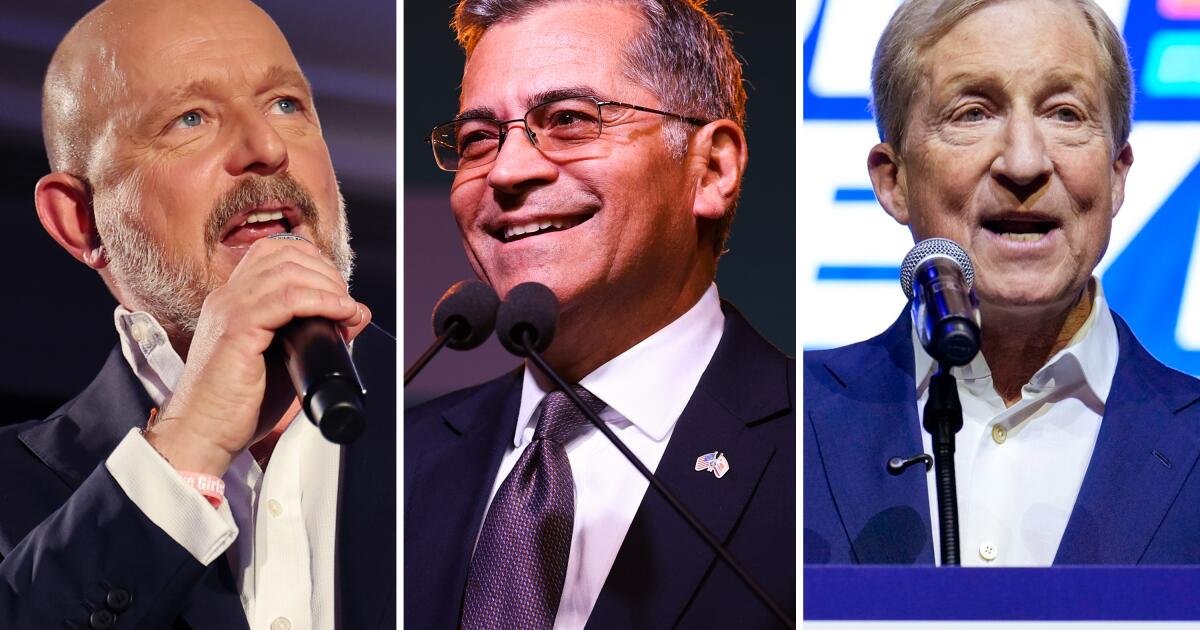
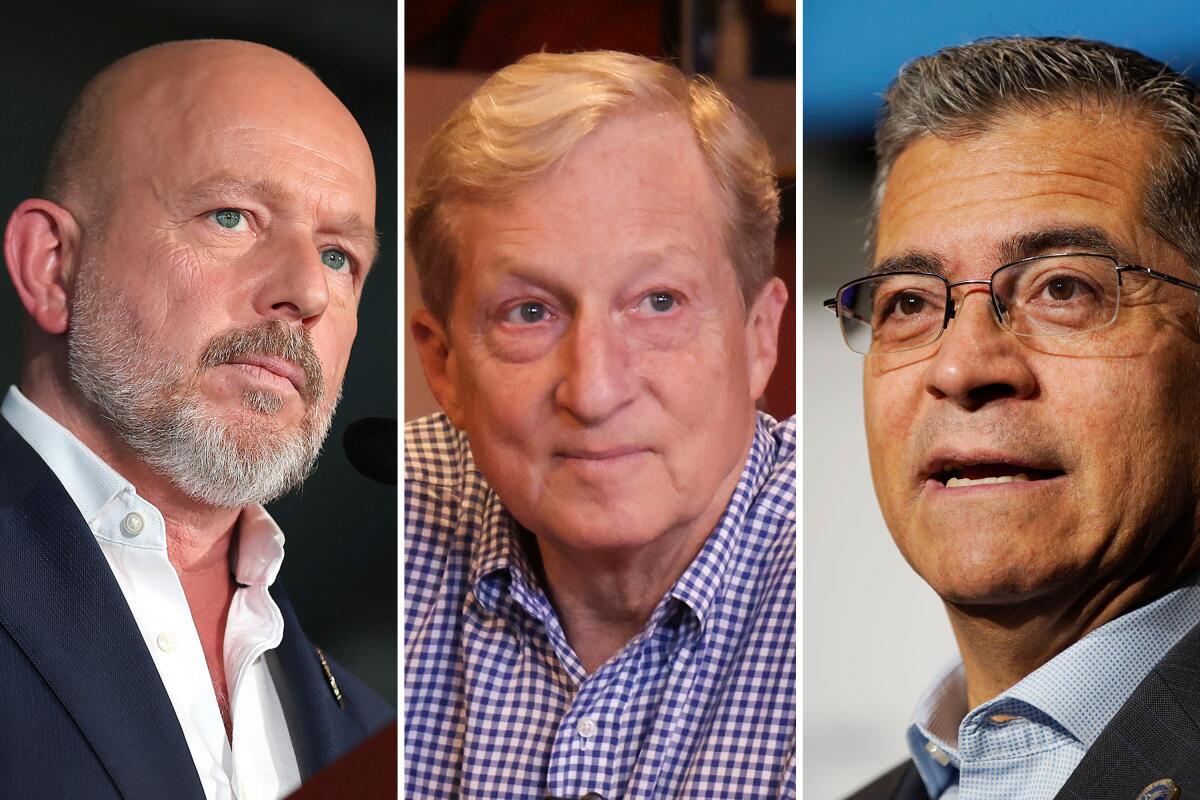
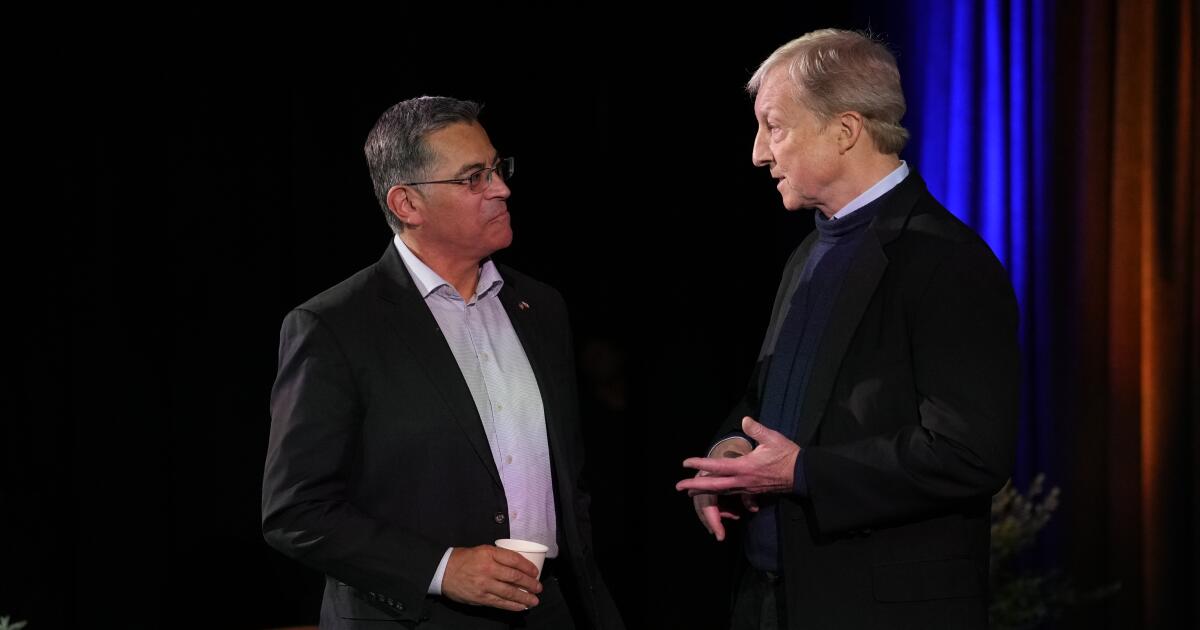
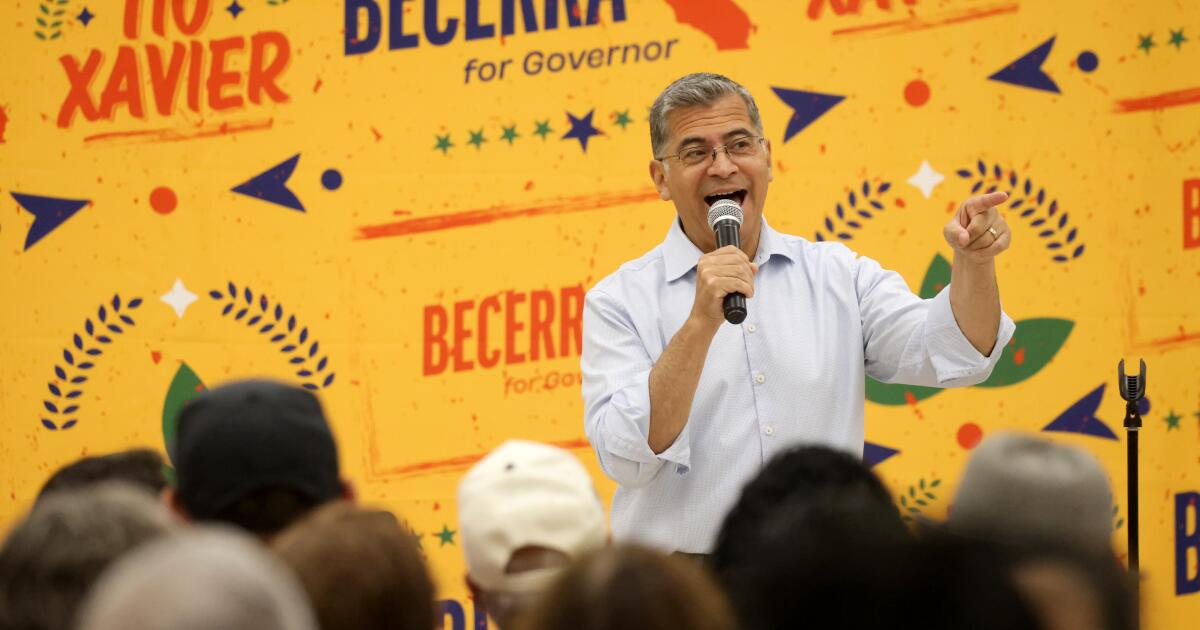
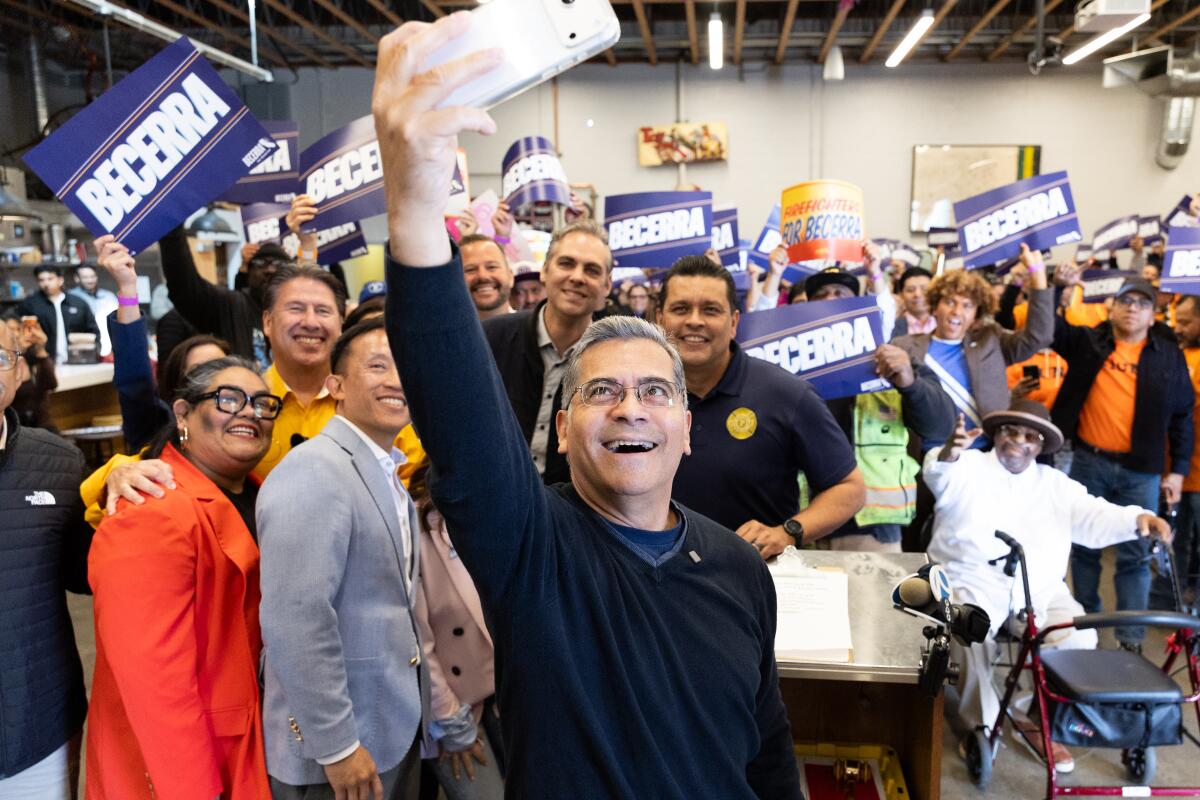
Former U.S. Health and Human Services Secretary Xavier Becerra, whose campaign blossomed after former Rep. Eric Swalwell dropped out amid sexual assault and misconduct allegations, came under persistent attack during the 90-minute debate but also went on the offensive.

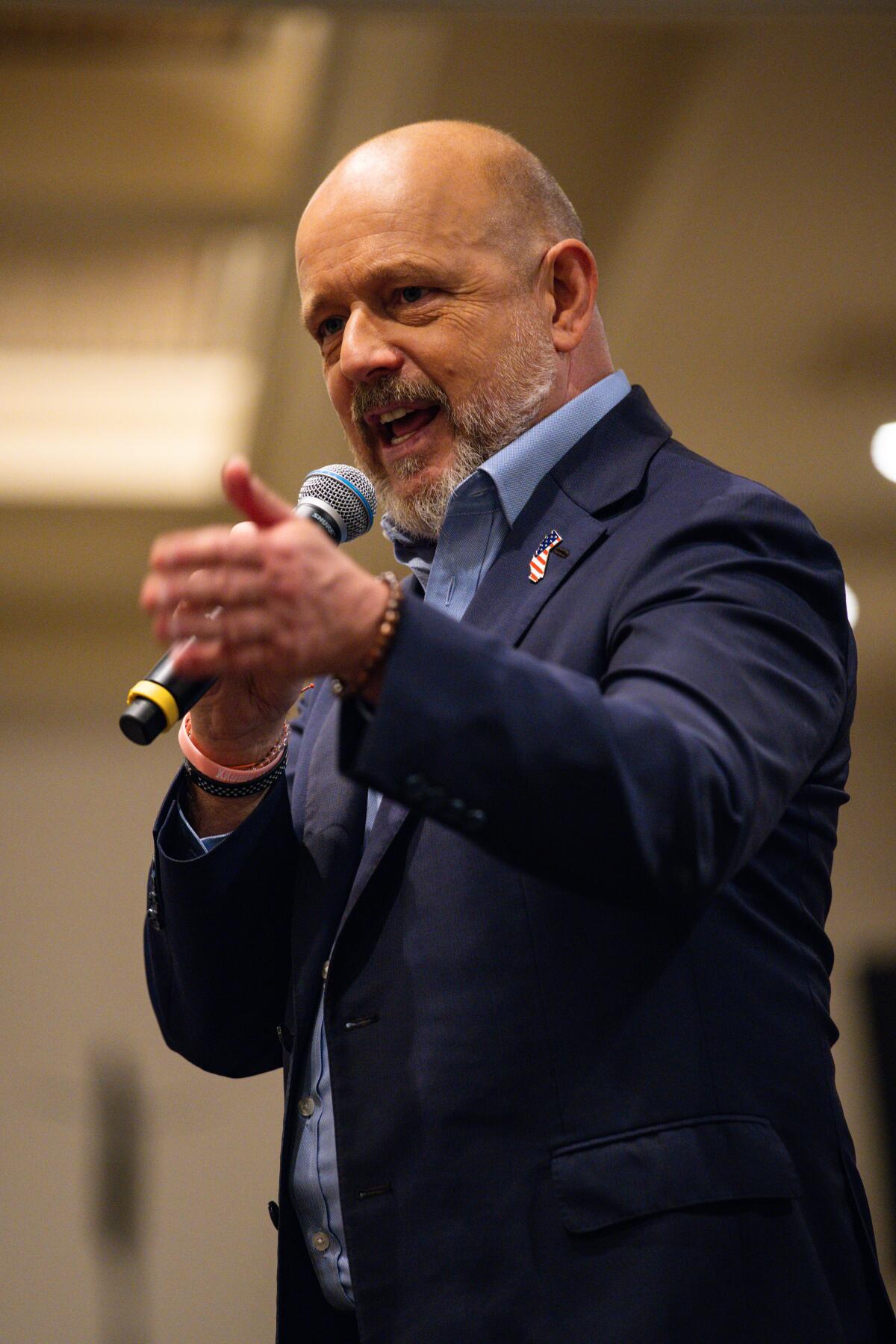
Former Fox News host Steve Hilton, a Republican who leads all candidates in the most recent opinion polls, ripped Becerra for promising to declare a state of emergency to address rising homeowner’s insurance rates, saying the governor lacks that constitutional authority.

“We can’t have a governor who doesn’t understand how the government works,” Hilton said.

Becerra, who served as California attorney general before joining the Biden administration, quickly defended himself, saying he knows the law better than Hilton does.

“We don’t need a talking head from Fox News to tell us how the government works,” he said.

And that was after Becerra got in an early dig at Hilton, who has been endorsed by President Trump, by referring to Trump as “Hilton’s daddy.”

The debate was broadcast and livestreamed by CBS stations around the state. Hundreds of people watched from Pomona College’s historic Bridges Auditorium, a Renaissance Revival-style landmark with Art Deco flourishes that was once among the premier performance venues in Southern California.

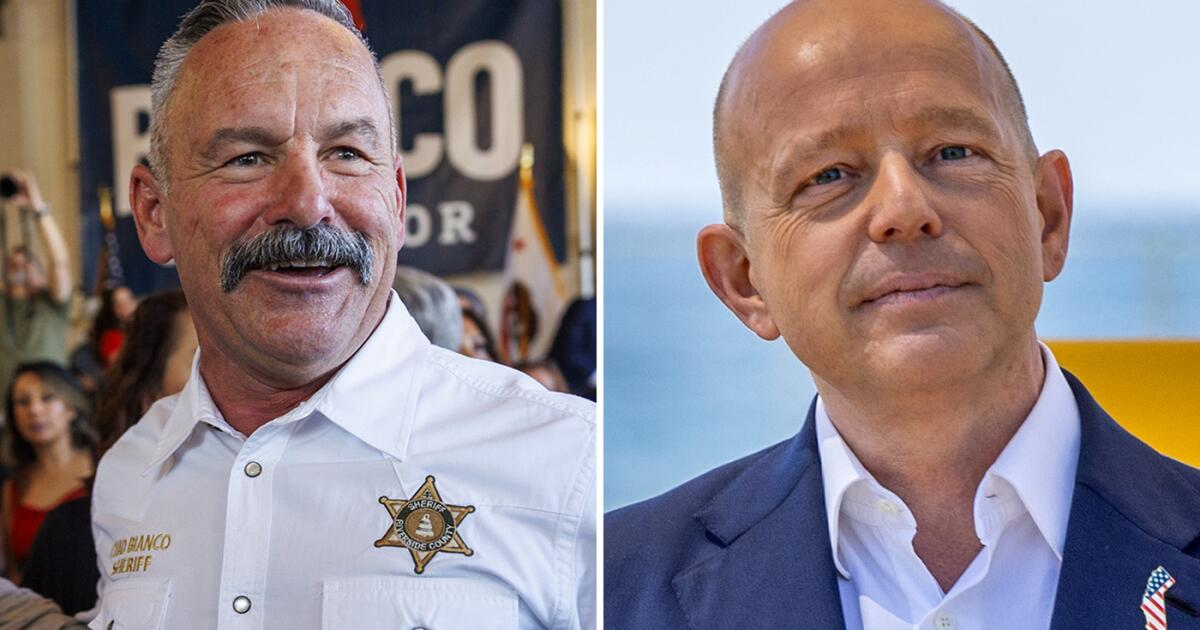
With eight major candidates from both parties participating, CBS moderators billed it as “the largest and most inclusive debate of the election.” Becerra and Hilton were joined by Republican candidate Riverside County Sheriff Chad Bianco and Democratic candidates San José Mayor Matt Mahan, former Orange County Rep. Katie Porter, billionaire Tom Steyer, state Supt. of Public Instruction Tony Thurmond and former Los Angeles Mayor Antonio Villaraigosa.

Some takeaways from the debate:

Candidates didn’t shy away from the top issues

Moderators set the theme for the first half-hour of the debate as “affordability,” a top concern among California voters, and almost immediately the candidates began sniping and talking over one another.

Almost all of them vowed to accelerate home construction in California, pivotal to reducing the state’s high cost of housing.

There was no shortage of ideas for other ways to ease the financial burdens facing Californians, but few specifics on how they would deliver on those promises given the state’s complex and arduous legislative process.

Hilton promised to cap the price of gas at $3 per gallon, and Mahan vowed to suspend the state gas tax. Bianco said Democrats have long overregulated and overtaxed Californians, and the state’s supermajority Democratic Legislature would have to get in line with him and end those things if he’s elected.

Becerra said he would reduce prescription drug prices. Thurmond said he would provide down-payment assistance grants to those trying to own their first home.

Barbs traded over climate-caused emergencies

Anchors and reporters from local CBS stations moderated the debate, including Los Angeles anchor Pat Harvey, Sacramento anchor Tony Lopez, Bay Area anchor Ryan Yamamoto and national investigative correspondent Julie Watts. They were joined by Sara Sadhwani, an assistant professor of politics at Pomona College and a member of California’s independent redistricting commission.

Moderators pointed to the surge in catastrophic wildfires across the state in recent years due to climate change, as well as the threat of earthquakes, and asked the candidates how they would respond to future emergencies.

As he did throughout most of the debate, Bianco responded by bashing California’s Democratic leadership, which he said created most of the ills facing the state.

Bianco said the root causes of fire disasters in the state are “not because of climate change” but due to “failed environmental activist policies” that prevented fire departments from clearing highly flammable brush around communities for years.

Mahan, after touting his actions as a Silicon Valley mayor during emergencies, quickly pivoted to take shots at Becerra and his role as U.S. Health and Human Services secretary during the pandemic.

He said Becerra had “never met a crisis that he couldn’t ignore” and accused Becerra of failing to deal with COVID-19, monkeypox and the surge of unaccompanied minors at the U.S.-Mexico border during the Biden administration.

Becerra responded by saying that his agency dealt with the crises by working with all 50 states and the federal government to quickly roll out vaccines and other resources.

“You’re not wearing a mask, are you, Matt? You’re not worried about catching monkeypox, right?” Becerra said.

Steyer also came under attack when he starting discussing his plans to “make polluters pay” for the effects of climate change. Porter criticized the former San Francisco hedge-fund founder for making millions off the oil and gas industry, and using those profits to fund his campaign for governor. Steyer has spent more than $143 million of his own money on his campaign, according to fundraising disclosures filed with the California secretary of state’s office.

“How about profiteers pay? You pay the lowest tax rate on this stage, and yet you made the billions that you’re using to fund your campaign off fossil fuels,” Porter said to Steyer.

Steyer responded that he is a “change agent” candidate opposed by special interests and pointed to campaign committees funded by utility and other industry groups opposing his bid. PG&E, the California Chamber of Commerce and the California Assn. of Realtors have put more than $29 million into a pair of committees to fund attack ads against the billionaire.

Republicans focus on blaming Democrats

Just weeks before the June 2 primary, the race to replace term-limited Newsom remains wide open, with many voters still undecided.

Republicans Hilton and Bianco have led numerous public opinion polls while the large field of Democrats have split the vote, leading to fears among Democrats that the party could get shut out of the general election, despite outnumbering Republicans nearly two-to-one among the state’s registered voters. In California’s open primary, the top two finishers advance to the general election, regardless of party affiliation.

The two Republicans avoided overtly attacking each other at the debate but were regularly the targets of other candidates on the stage.

Becerra, speaking about federal healthcare funding cuts approved by President Trump and congressional Republicans last year, referred to the president’s endorsement of Hilton. “The first thing we have to do is stop Steve Hilton’s daddy,” Becerra said.

Hilton responded jokingly that his father, who was the goalie for the Hungarian national ice hockey team, hadn’t weighed in on the race. And he said Becerra’s comment pointed to what is wrong with California politics — a fixation on Trump despite Democrats controlling the state for more than a decade.

“We’ve had the same people in charge for 16 years now, and it’s such a disaster and such a high cost of living for everyone, and the highest poverty rate in the country and the highest unemployment rate in the country, and the worst business plan,” Hilton said. “All these things going wrong, they can’t do anything except blame Trump. Let’s see how many times you hear that tonight.”

Bianco grew visibly frustrated several times over the debate’s format and his opponents’ answers. At different points, he compared the event to “The Twilight Zone” and called it “the hour and a half that [viewers] are never going to get back.”

Pressed on what he would do differently if elected, the Riverside sheriff also focused on criticizing Democrats and accusing them of lying.

“We have a group of of 20-ish-year-old kids and we’re just sitting here lying to them about broken Democrat policies in California for the last 20 years, and we’re going to sit here and blame a president who’s been president for a year. This is absolutely ridiculous,” he said.

Hilton has seen a bump in his polling numbers since he was endorsed by President Trump earlier this month. A CBS News/YouGov poll of more than 1,400 registered voters released Monday showed Hilton leading with 16%, followed by Steyer with 15%, Becerra with 13%, Bianco with 10%, Porter with 9%, Mahan and Villaraigosa with 4% and Thurmond with 1%. The largest group of voters — 26% — was undecided.

Nixon reported from Sacramento and Mehta reported from Claremont. Times staff writers Kevin Rector, Dakota Smith and Blanca Begert contributed to this report.

Source link

Worst-run state? In Britain, Steve Hilton was inspired by California

Steve Hilton is a former Fox News host who has unexpectedly emerged as a leading candidate in the race for governor with a message that California is a failed state in need of radical reform.

But his sudden rise in California politics comes a decade and a half after he pitched the U.K. Conservative Party with a very different idea: Britain could learn a lot from the Golden State.

Back in 2010, when Hilton was a top strategist during David Cameron’s rise to power as Conservative prime minister, he looked to Silicon Valley’s high-charged ethos of techno-optimism and green innovation for inspiration as he sought to revitalize the ailing Conservative Party and the U.K.

Splitting his time between London and the Bay Area — his wife worked for Google — Hilton was instrumental in getting California companies to invest in the U.K. and persuading Google to open its first wholly owned and designed building outside the U.S. in London. So infatuated was he with California that one British political commentator dubbed the Cameron administration’s philosophy ”Thatcherism on a surfboard.”

But Hilton is now utterly unsparing in his criticism of California.

After moving to the Bay Area full time, teaching at Stanford University and hosting Fox News’ “The Next Revolution,” Hilton is running as a Republican on a platform of “Making California Golden Again.”

To the dismay of many Democrats, the 56-year-old British immigrant, a supporter of President Trump who dubs California “America’s worst-run state,” is ahead in multiple polls in a crowded race with no front-runner.

Even after former Democratic Rep. Eric Swalwell dropped out April 12 after multiple women accused him of sexual assault, Democrats are struggling to unite around one candidate. And Trump’s endorsement of Hilton this month almost seems to guarantee Hilton will secure enough Republican votes to make it past the June primary.

Hilton accuses Democratic leaders of turning the state into the “Wuhan lab of modern leftism.” As Democrats amassed power in Sacramento, seizing control of statewide offices and the Legislature, he argues, California government has become “a massive, bloated, bureaucratic nanny state,” so overregulated and poorly run, it is failing its people.

“We have the highest poverty rate in the country in California, tied with Louisiana, which is shameful, really, for a state that prides itself on being the home of innovation and opportunity,” he told The Times. “We’re ranked by U.S. News and World Report 50 out of 50 for opportunity. The performance of California, when measured against the rest of the country, is really dire.”

Most California voters rank affordability and cost of living as important as they weigh whom to elect as governor. But whether Hilton can persuade them that Democrats are responsible for the state’s problems, or make inroads as a Republican aligned with Trump on immigration and abortion, is unlikely in a state where Democrats outnumber Republicans nearly two to one.

Many Californians who do not watch Fox News know little about Hilton. Even some of Britain’s political observers who followed Hilton for years admit it’s been a struggle at times to make sense of his political odyssey.

Dubbed a “barefoot revolutionary” for his habit of striding around Downing Street without shoes, Hilton was credited with pulling the Conservatives into the 21st century and ushering in a more green, socially liberal strain of British conservatism. He helped turn around their image by highlighting climate change and supporting gay marriage.

Fraser Nelson, a columnist for the Times in London, said Hilton had been seen in Britain as a figure closer to Democratic Gov. Gavin Newsom than to Trump.

“When he popped up on Fox, it was like somebody reborn,” Nelson said. “Somebody who seemed to be on the left of politics was somehow on the Trumpish right. We thought it was like a joke. I’m not saying he is not sincere, just … the political journey of Steve Hilton … to being Newsom’s nemesis is something to behold.”

Born in London to Hungarian refugees who fled their homeland during the 1956 revolution, Hilton grew up in a household without much money.

After studying at Oxford University, a life-changing experience for a son of immigrants, Hilton worked at Conservative Party headquarters and as an ad executive on the Conservatives’ 1997 election campaign. When Labour’s Tony Blair won in a landslide, Hilton co-founded a consulting firm, Good Business, advising corporations on how to make money by investing in social and environmental causes.

In 2001, Hilton voted Green. But he returned to the Conservative fold in 2005 to try to detoxify the Tory brand. As an author of the party’s 2010 manifesto, he came up with Cameron’s “Big Society” agenda, which sought to scale back the state and hand more power to local communities. Critics, however, argued that the focus on local control was a fig leaf for austerity and dismantling the welfare state.

When Cameron won in 2010, Hilton infuriated colleagues in the coalition government, the British press reported, proposing a stream of wacky ideas: scrapping maternity leave, abolishing job centers, even buying cloud-bursting technology so Britain would have more sunshine.

Hilton ultimately became disillusioned with Westminster, deciding U.K. politics was stymied by excessive bureaucracy. In 2012, he moved full time to the Bay Area.

Hilton says he was drawn to California because of its “rebel spirit.”

But what he liked about California was the specific Silicon Valley ethos of disruption that emphasized meritocracy and risk-taking, not the state’s ascendant liberal identity politics.

Hilton settled in California precisely when Democrats were consolidating their political and cultural power. Just months after his move, Democrats gained full control of the Legislature with a two-thirds supermajority.

Meanwhile, populism was rising across the U.S. and Britain.

On the 2016 Brexit referendum on whether the U.K. should leave the European Union, Hilton was firmly pro Leave.

Hilton also disagreed with many fellow conservatives on Trump. In November 2016, George Osborne, chancellor of the exchequer under Cameron, watched the U.S. election on Hilton’s couch in Atherton, Calif. “Steve was the only person in the room who said, ‘I think Donald Trump’s going to win,’” Osborne said. “I think he identifies with Trump, although they’re obviously very different. … The outsider challenging the system.”

After the election, Hilton joined Fox News as a contributor and in 2017 was given his own Sunday night show, “The Next Revolution.” Produced out of Los Angeles, it explored populism in the U.S. and globally.

Like many conservatives, Hilton became agitated in 2020 by the COVID-19 lockdowns and Black Lives Matter protests that swept U.S. cities.

Early in the pandemic, Hilton invited Jay Bhattacharya, a professor of health policy at Stanford, to discuss COVID-19 after his study in Santa Clara County indicated the virus was more widespread and less deadly than initially thought. Bhattacharya argued the best path forward was not a general lockdown, but focused protection of the vulnerable. California leaders went on to impose some of the nation’s most stringent lockdowns.

After Joe Biden defeated Trump in November 2020, Hilton repeated Trump’s false allegations of voter fraud on air and called for an investigation.

Hilton became a U.S. citizen in 2021. Asked how his worldview changed in 2020, Hilton said: “I don’t think it changed. I think it actually enhanced my skepticism of centralized bureaucracy and it made me even more determined to dismantle it in California, because you saw all the worst features of it in California.”

In 2023, Hilton left Fox to launch a supposedly nonpartisan policy group, Golden Together, to develop “common sense” solutions to California’s problems. Two years later, he published “Califailure: Reversing the Ruin of America’s Worst-Run State,” a screed against Democrats. He accused them of spending “their time — and taxpayers’ money — pushing increasingly fringe race, gender, and ‘climate’ extremism instead of attending to the basics of good governance.”

A month later, Hilton announced he was running for governor “to make this beautiful state, that we love so much, truly golden again.”

On the campaign trail, Hilton has pledged to slash taxes, make housing more affordable and bring the cost of gas down to $3 a gallon. But how he plans to achieve some of these goals is controversial.

Hilton advocates scaling back environmental regulations. State agencies such as the California Coastal Commission and the California Air Resources Board, he argues, are a “massive roadblock” to housing development.

To lower gasoline prices, Hilton would ramp up California domestic production of oil and natural gas and reduce regulations on refineries.

Hilton would likely struggle to persuade a majority of voters to roll back environmental protections. According to the Public Policy Institute of California, about 55% of Californians think stricter state environmental regulations are worth the cost, while 43% believe they hurt the economy and jobs market.

Hilton is also at odds with most Californians on major issues from immigration to abortion.

If elected, he would foster more local cooperation with U.S. Immigration and Customs Enforcement and rescind state healthcare to undocumented immigrants. He would work with states such as Louisiana to extradite California doctors accused of prescribing and mailing abortion pills to women in states where abortion is illegal. He would also establish a Covid Accountability Commission to examine officials’ decisions during the pandemic.

Asked if Newsom and other Democrats could face prosecution, Hilton said: “They need to be held accountable for these crimes.”

With Trump in the White House, 2026 is a difficult year to mount a right-wing populist campaign for California governor, said Christian Grose, a professor of political science and public policy at USC.

“That message of ‘Newsom and the Democrats have been a disaster for California,’ that’s like, if you’re running in South Carolina,” Grose said. “It’s a caricature of California. While many California voters think there have been problems and the state is not doing as well, a Fox News presentation for East Coast viewers … that’s not going to win 50%.”

To make inroads past the primary, Grose said, Hilton would need to focus on governance and affordability and ditch the anti-Democratic red meat: “He has to massively soft pedal the kind of Fox News conservative stuff.”

Hilton’s Republican rival in the race, Riverside County Sheriff Chad Bianco, has questioned Hilton’s MAGA credentials, raising his green advocacy in the U.K. to cast him as an unprincipled opportunist.

Hilton, however, said he considers himself a “very strong environmentalist.” The problem, he argued, is the movement has become too narrowly focused on climate change and CO2 reduction. As crude oil production within California has fallen in recent decades and refineries have closed, he questioned California importing the bulk of its oil from as far away as Iraq and Ecuador.

“We are shipping oil halfway across the world in giant supertankers that run on bunker fuel, the most polluting form of transportation you can think of, rather than producing in Kern County and sending it in a nice, clean pipeline to the refineries in Long Beach,” Hilton said. “It’s total insanity. We are increasing carbon emissions in the name of climate change.”

Some political observers in the U.K. argue that Hilton’s questioning of California’s policy isn’t necessarily intellectually inconsistent.

“Perhaps in 2010 we needed more environmental policies,” Nelson said. “Perhaps in 2026 they’re doing more harm than good.”

Nor is it so odd, he argued, that Hilton now views California with a more critical eye.

“Even from a distance, when you look at California, there’s so much going fundamentally wrong,” Nelson said, citing its energy policy, homelessness and the exodus of residents to other states. “I’m not surprised by that, and I think it’s entirely consistent with Steve Hilton in 2010.”

Times staff writer Stephen Battaglio contributed to this report

Source link