highway

With Highway 1 open, Big Sur braces for its busiest summer in years

On a 75-mile cliff-hugging stretch of highway in California, traffic is way up, despite soaring gas prices. And locals expect the busiest summer in years.

The road is Highway 1 in Big Sur, which reopened in January after three years of repair and reconstruction following a pair of landslides. Drivers can once again embark on the state’s most famous road trip, covering the 100 miles between Cambria to the south and Carmel to the north without leaving the two-lane coastal highway. And they’re heading out in big numbers.

Caltrans estimates that as of May, Big Sur restaurant and retailer guest counts are up 40% from last year, and that northbound traffic at Ragged Point, the southern gateway to Big Sur, has risen 900% year-over-year.

People pose for photos near Bixby Bridge.

People pose for photos near Bixby Bridge. Monterey County’s Board of Supervisors voted to explore a 12-month ban on parking around the bridge.

Safety cones prevent parking along Coast Road near the Bixby Bridge.

Safety cones prevent parking along Coast Road near the Bixby Bridge.

“Take your time,” said Kirk Gafill, co-owner of the popular Nepenthe restaurant and president of the Big Sur Chamber of Commerce, offering advice to travelers. “You’re going to be sharing the road with a number of people.”

As travelers rediscover the road, the cost of driving has been shooting skyward. California’s average gas price ($6.11 per gallon as of May 26) is up 26% from the year before. In early April, rates hit $9.99 at the isolated gas station in the Big Sur community of Gorda.

For spring and summer travelers, these numbers would seem to pose a stark question: Stay home and save money, or head for the coast because the road is finally open and it’s still cheaper than flying?

So far, the latter answer is winning big.

Fog lingers off the coast of Highway 1.

Fog lingers off the coast of Highway 1.

“We are definitely seeing a huge uptick in our reservations,” said Megan Handy, assistant general manager at the upscale Treebones resort. She estimated that bookings are 30% or more ahead of last year, and rates are unchanged since then. But “it’s still not feeling super crowded, which is nice. Everything still feels kind of calm.”

But added traffic has raised some anxiety. On May 19, Monterey County’s Board of Supervisors voted to explore a 12-month ban on parking at Bixby Bridge, one of the region’s top photo spots.

Over the years, the number of cars parking near the bridge — often illegally, sometimes impeding emergency vehicles — has risen. The proposed parking moratorium won’t take effect until the supervisors discuss it further.

  • Share via

Busy as things are, several business owners pointed out that many international travelers have not yet returned — perhaps because most make their plans more than six months ahead, perhaps because of global politics, perhaps a little of each.

The biggest challenge for businesses during this resurgence? “Restaffing and retaining,” said Handy at Treetops.

At Nepenthe, Gafill said his business has seen a 45% boost in guest volume since the road’s reopening. Gafill said he would have expected a 35% pickup, “simply by virtue of reopening the highway.” The additional 10%, he said, might be “all that pent-up demand,” aided by “a very beautiful and very dry winter,” followed by a mild spring.

A lunch crowd dines at popular restaurant Nepenthe.

A lunch crowd dines at popular restaurant Nepenthe.

Another possible factor: Nobody can be sure how long the road will remain open.

To cope with the influx of people, Gafill said, “everybody is trying to recruit and retain their existing staff.”

At the Ragged Point Inn, where rates dropped as low as $149 nightly last fall, rates are back over $200 and staffers are suggesting that customers book at least six months ahead. The inn has reopened its snack bar for the first time since early 2023, and management is investing in capital upgrades and staging live music on weekends throughout the summer.

Business “is up over 100%,” said Diane Ramey, whose family owns the inn. “I know not all of our neighbors are having the same lift, but everybody is doing better.”

Traffic approaching Bixby Bridge.

A visitor poses in an oversized chair at Big Sur River Inn.

A visitor poses in an oversized chair at Big Sur River Inn.

Even at the New Camaldoli Hermitage, a Benedictine monastery above Lucia, the road’s reopening and coming summer season have made a difference. Bookings are up an estimated 30% at the hermitage, which rent rooms and cottages (for two nights or more) to visitors who agree to its requirement of silence.

Big Sur business owners advise visitors to travel on weekdays for less traffic and the best hotel rates, and to get on the road as early as possible.

Since its opening in 1937, the highway has been vulnerable to landslides and shifting ground, operating on a longstanding cycle of landslide, closure, repair, reopening and then another landslide, or sometimes a fire. The U.S. Geological Survey has identified the Big Sur coastline as one of the most landslide-prone areas in the western United States. The 2023-2026 closure was the longest in the highway’s history.

Over time, road crews have used increasingly sophisticated strategies. In the most recent efforts, Caltrans said, it used drones to help survey the slopes and remotely operated bulldozers and excavators to reduce risks to workers.

During the closure, no traffic was allowed on 6.8-mile span from just north of Lucia until about a mile south of the Esalen Institute. Drivers detoured inland by way of U.S. 101.

Source link

How damaged is Angeles Crest Highway? I hiked it to find out

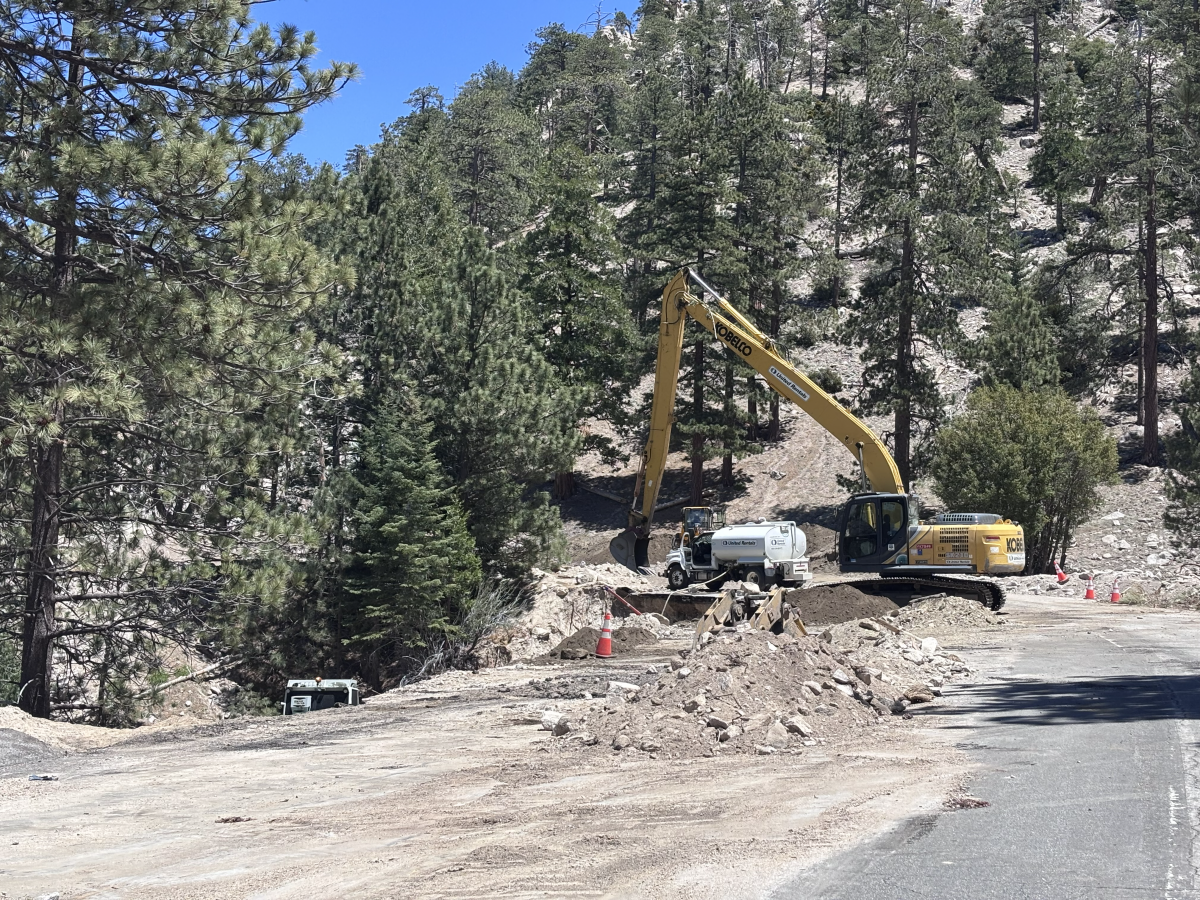
I stood last week in the middle of a highway, marveling as construction workers used large excavators to repair the collapsed roadway.

I was walking a segment of Angeles Crest Highway that closed about five months ago when winter storms pummeled the roadway, ripping off hunks of pavement and collapsing large sections of the road. I wanted to survey the damage and also enjoy a car-free highway in the beautiful backcountry.

In this edition of The Wild, The Times’ weekly outdoors newsletter, I will share what I observed and include details about how you can repeat my trip. I’d say it is a rare opportunity, but it’s starting to feel, especially as human-caused climate change worsens, like Angeles Crest Highway is closed more often than it’s open.

You are reading The Wild newsletter

Sign up to get expert tips on the best of Southern California’s beaches, trails, parks, deserts, forests and mountains in your inbox every Thursday

Angeles Crest Highway, completed in 1956 (in part by prison labor), is a 66-mile curvy road that climbs from around 1,300 feet to nearly 8,000 feet, taking travelers from La Cañada Flintridge to the mountain town of Wrightwood. A large segment, 55 miles, received federal distinction in 1990 as a National Scenic Byway.

For the record:

4:04 p.m. May 21, 2026A previous version of this article said Angeles Crest Highway climbs from 800 feet. The highway begins at an elevation of around 1,300 feet.

In case, like me, you’ve lost the plot of the many recent closures and reopenings of Angeles Crest Highway, here’s a brief refresher.

  • Winter 2022/spring 2023: Winter and early spring storms, including atmospheric rivers, blow out multiple sections of the roadway, prompting several closures, including: from near Mt. Wilson Red Box Road to Upper Big Tujunga Road; from Upper Big Tujunga Road to Islip Saddle; and from Islip Saddle to Vincent Gap.
  • October 2023: A 20-mile stretch from Upper Big Tujunga to Islip Saddle reopens; road remains closed from Mt. Wilson Red Box Road to Upper Big Tujunga, requiring drivers to take a detour to reach a newly open section; segment from Islip Saddle to Vincent Gap remains closed.
  • July 2024: Mt. Wilson Red Box Road to Upper Big Tujunga reopens, ending the need for a detour.
  • August 2025: Islip Saddle to Vincent Gap reopens.
Pavement covered in sandy rock with a chunk taken out, pine trees grow along the road with a mountain peak in the distance.

A portion of Angeles Crest Highway where the curved shoulder broke off.

(Jaclyn Cosgrove / Los Angeles Times)

The hiking community celebrated when that final 10-mile stretch from Islip Saddle to Vincent Gulch reopened. The closure blocked access to Dawson Saddle and made the drive to Vincent Gulch to hike the Mt. Baden-Powell trail much longer, as you had to take multiple freeways to maneuver from L.A. around the San Gabriels.

For the first time in three years, all of Angeles Crest Highway was open — for about five months.

Grape soda lupine, left, Grinnell's beardtongue, snow plant and western wallflower.

Grape soda lupine, left, Grinnell’s beardtongue, snow plant and western wallflower.

(Jaclyn Cosgrove / Los Angeles Times)

Last December, Southern California experienced another round of a damaging atmospheric river. “More than 10 inches of rain fell in parts of the San Gabriel Mountains in Los Angeles County during a 48-hour period,” The Times reported.

Soon, photos emerged of washed-out segments of Angeles Crest Highway, and the California Department of Transportation announced that, yet again, the highway was closed, this time from 3.3 miles east of Newcomb’s Ranch to State Route 138.

Curious to see the damage for myself, I headed up the highway last week to walk a segment of the closure. My plan was to park at the large lot at the 6,000-foot snow play area and then walk along Angeles Crest Highway for about 4½ miles to Buckhorn Campground, a forested enclave where I’ve spent many nights staring up at the stars.

After having lunch at Buckhorn, I planned to backtrack to Cloudburst Summit where I would take the Pacific Crest Trail back to where I parked. The total trip is just shy of nine miles and gains about 1,200 feet in elevation.

A large white metal gate with two stop signs and two signs reading "Road closed."

The closed gate near the 6,000-foot snow play area in Angeles National Forest.

(Jaclyn Cosgrove / Los Angeles Times)

I walked from the lot past the closed gate, appreciating several grape soda lupine, one of my favorite native wildflowers, blooming along the hillside.

I was alone on the empty highway, a scene that was stunningly gorgeous and eerily dystopian. For the first three-fourths of a mile, the road appeared to be in good condition. But then, I trudged around a bend and observed the first segment of collapsed roadway on my trip.

For anyone considering cycling this route, I am happy to report that CalTrans and its contractors have done a nice job creating dirt and rock berms around the damaged portions of road that I observed. I mention that in case, like me, you watched the 1991 TV series “Land of the Lost” and developed an illogical fear of dropping through a crack in the road and unknowingly discovering a time portal to the Jurassic period.

I continued past this first damaged section, listening to the dark-eyed junco and mountain chickadee, laughing as the chipmunks scampered to and fro.

A large yellow machine with a hydraulic arm and large metal scoop on its end sits on a roadway covered in sandy dirt.

An excavator works to repair a segment of Angeles Crest Highway.

(Jaclyn Cosgrove / Los Angeles Times)

Soon, at 1.2 miles, I encountered construction workers driving excavators to move earth and repair a drainage area where it appeared water had rushed down the steep mountains and blasted the road away. As you hike or bike, please respect instructions from construction workers and also make sure they see you before you try to pass them.

Just a fifth of a mile farther, and I saw more portions of the roadway that had collapsed, although these sections were smaller than the area the heavy machine operators were trying to repair.

As you hike along, you’ll likely realize that the pavement warms up quickly. It’s important to either start this journey early in the day or on a cooler day — and pack plenty of water.

At about 1.75 miles in, you will reach a junction where the Pacific Crest Trail, a 2,650-mile route that spans from Mexico to Canada, intersects with the roadway. You can turn and head back to your car here if you’d like by taking the PCT. You’ll initially walk west before the trail starts moving southward.

I continued eastward on the highway, pausing at times to appreciate the vista points that you can only observe for a few seconds in a car. At one turnout, I paused to smell the delicious bark of a Jeffrey pine, which has an aroma similar to butterscotch or vanilla.

A view of the San Gabriel Mountains and desert beyond.

A view of the San Gabriel Mountains and desert beyond.

(Jaclyn Cosgrove / Los Angeles Times)

For about a mile-and-a-half, there’s minimal damage, enough of a break to briefly forget why the road is closed. But as you near the Buckhorn Campground entrance, you’ll find serious damage, including where the Mt. Waterman ski lifts used to take travelers up the mountain.

I turned off the highway onto the Buckhorn Campground road, finding it to be in fairly good condition — until you get to the creek crossing. A massive chunk of the road is just gone, washed away presumably by water charging down the steep hillsides. This is the only technically tricky part of the hike, and you’ll want to take good care to discern the best path here. There are a lot of branches and boulders that aren’t stable and could be napping spots for rattlesnakes.

Past here, you’ll find rocks and other debris scattered along the roadway. As I neared the campground, I noticed a Stellar’s jay observing me. Maybe it misses the days when all it had to do for food was wait for clumsy campers to drop bits of sandwiches and trail mix that it could swoop down and enjoy.

A narrow shady mountain road with a segment gone.

A washed-out segment of the road that leads to Buckhorn Campground in Angeles National Forest.

(Jaclyn Cosgrove / Los Angeles Times)

I sat atop a picnic table at Buckhorn, comforted that the campsites and tall old pines that I’ve camped under multiple times were still there. Although much of the campground remains intact, some campsites near the creek were washed away. I’ve always wanted to camp there. This is why you shouldn’t put off adventure!

After enjoying lunch and chatting with a few PCT hikers, including one who was lost and grateful for my map, I headed back down the highway. Just over a mile in, you’ll turn left near Cloudburst Summit onto the PCT. Your feet will thank you from this break from pavement.

As I trudged along, the quiet monotony of the day allowed me to make oh-so-brilliant observations to myself, like, “Wildflowers are like spring’s Christmas lights,” a note I left for my future self to remember. I bet you’re glad I wrote that down.

Round purple flowers grow in sandy soil in an area that is a mix of chaparral and pine forest.

Grape soda lupine blooms along the Pacific Crest Trail in Angeles National Forest.

(Jaclyn Cosgrove / Los Angeles Times)

I was pleased to see so many wildflowers still in bloom along the trail, including several grape soda lupine plants, the alienlike snow plants and a bit of Grinnell’s beardtongue.

Returning to my car, I thought about how much I enjoyed the walk but also how special Highway 2 is, regardless of how you traverse it.

There is no timeline of when the road will reopen. The analysis from CalTrans of what it will take to repair Highway 2 is grim.

“To date, Caltrans crews have identified approximately 40 locations requiring repair, though this number may increase as assessments continue. In several areas, portions of the highway were washed out and remain temporarily inaccessible,” according to the CalTrans website.

A damaged segment of Angeles Crest Highway near the Buckhorn Campground entrance.

A damaged segment of Angeles Crest Highway near the Buckhorn Campground entrance.

(Jaclyn Cosgrove / Los Angeles Times)

It’s becoming increasingly difficult to remain optimistic that we won’t see a growing number of closures along Angeles Crest Highway.

Highway 2 seems to face similar challenges to its coastal cousin, California’s Highway 1, which is increasingly plagued by storms exacerbated by human-caused climate change.

My colleague Grace Toohey spoke to an expert about Highway 1, who made a point that’s unfortunately equally applicable to the plight of Highway 2.

“If our storm and other conditions were normal, we would expect closures and losses at some points,” said Michael Beck, director of UC Santa Cruz’s Center for Coastal Climate Resilience. “The challenge is that we’re now clear that the events that are going to cause impacts — these particularly extreme events — are getting more common. … Climate change is here and now, it’s no longer a problem of the future.”

A wiggly line break

3 things to do

Hikers head up a trail.

Hikers head up Icehouse Canyon Trail.

(Brian van der Brug / Los Angeles Times)

Editor’s note: Because of recent wildfires, events might be canceled on short notice. Check event pages before heading out.

1. Eliminate trail obstacles near Mt. Baldy
The San Gabriel Mountains Trailbuilders need volunteers on Sunday to help clear fallen trees and remove overgrown brush along the Chapman Trail in Icehouse Canyon near the Mt. Baldy community. Volunteers will meet at 7:30 a.m. at the Glendora Park and Ride before heading to the worksite. Volunteers will hike between four miles and seven miles with an elevation gain of up to 2,000 feet. Register at meetup.com.

2. Mosey past movie scenes near Calabasas
Retired park ranger Mike Malone will guide a three-mile moderate hike from 10 a.m. to 12:30 p.m. Sunday through Malibu Creek State Park, highlighting locations where the park served as a backdrop for film and TV productions. Malone will also share history about when the park was owned by 20th Century Fox from 1946 to 1974. Hikers should meet at 10 a.m. at the park’s main trailhead by the restrooms. Learn more at parks.ca.gov.

3. Hike along historical routes in Chatsworth
A docent at Santa Susana Pass State Historic Park will host a 3½-mile hike from 8 to 11 a.m. Monday through the Santa Susana Mountains. Hikers will learn about the park’s ancient quarry, Indigenous culture and the Butterfield Overland Stagecoach route. Hikers will meet at the Andora trailhead in Chatsworth. Learn more and register at meetup.com.

A wiggly line break

The must-read

A large half-dome structure with teal buoys near it floats on a body of water.

A trash interceptor made by the Dutch nonprofit the Ocean Cleanup grabs trash from Ballona Creek that could otherwise end up in the Pacific Ocean. Since its installation in 2022, the interceptor has collected more than 200 tons of trash.

(Christina House / Los Angeles Times)

It can be peaceful to take a stroll along the San Gabriel or Los Angeles rivers amid the cottonwood trees, willows and herons. But it’d be impossible not to notice the garbage too. For years, our local rivers have suffered at the hands of humans and the heaps of waste we produce. That could change. “By the 2028 Olympics, a coalition of city, county, state and private partners hopes to change that by deploying trash-intercepting devices in the Los Angeles and San Gabriel rivers, officials announced [last] Wednesday,” Times staff writer Lila Seidman wrote. “The plan is to prevent hundreds of tons of garbage from getting to the ocean.” Could our rivers be clean that soon?

Happy adventuring,

Jaclyn Cosgrove's signature

P.S.

Will Southern California’s roving wolf ever find a mate? I can’t be the only one stressing about this. BEY03F, affectionately called “bae” or “Valentine” by some, has been making headlines since early this year when she became the first wolf to enter L.A. County in more than 100 years. She has since traversed hundreds of miles and through multiple counties, with her latest travels bringing her to Sequoia National Park. This again marks the first time in a century that a wolf was documented there. BEY03F keeps making history because humans wiped out her canine kin. Will she ever find a connection that helps her repair some of the harm done?

For more insider tips on Southern California’s beaches, trails and parks, check out past editions of The Wild. And to view this newsletter in your browser, click here.

Source link

5 moments in history that still echo along Route 66

p]:text-cms-story-body-color-text clearfix”>

Richard Mitchell, 84, of Albuquerque, N.M., used the "Green Book" to drive across the U.S. in 1964.

Richard Mitchell, 84, of Albuquerque in 2016. Mitchell used the Green Book to drive across the United States in 1964. The travel guide “assured protection for Negro travelers.”

(Photo by Craig Fritz / For The Times
)

Forty-four of the 89 counties along Route 66 were sundown towns, communities where it was encouraged for Black people to leave before dark — or else. Route 66 diners, motels and gas stations routinely refused service to Black travelers. In 1936, a Harlem postal worker named Victor Green began publishing the Negro Motorist Green Book, a guide to the hotels, restaurants and gas stations along the route that would serve Black travelers. More than 1,400 tourist homes (private residences that took in guests when hotels wouldn’t) were listed during the guide’s run.

For Black families on Route 66, the Green Book was as essential as a spare tire. In Tulsa, the Greenwood District was once known as “Black Wall Street.” White thugs destroyed it in the 1921 Race Massacre. The community rebuilt and became a hub of Black commerce near the route. Springfield, Ill., was one of the first cities on Route 66 to offer services to Black travelers. It was also the site of the 1908 Race Riot, which helped spur the founding of the NAACP.

Lily Ho, 78, holds a photo of the Hayes Motel in Los Angeles. Her family has owned the motel for nearly 40 years

A vintage photo of the Hayes Motel in Los Angeles. It was featured in the Green Book, which listed places that served African Americans during the era of segregation.

(Brian van der Brug / Los Angeles Times)

See what remains today: Only about 30% of Green Book sites along Route 66 are still standing. The DuBeau in Flagstaff, Ariz., once a Green Book listing, now operates as a motel. The recently shuttered Clifton’s in downtown Los Angeles sits at 7th and Broadway, the original terminus of Route 66. Route History Museum in Springfield is the only museum in the country dedicated to the Black experience on Route 66, housed in a 1930s Texaco station one block off the road. It offers a virtual reality experience that walks visitors through the Green Book cities of Illinois, including sundown towns.

Beyond the Green Book, other businesses that are worth a visit include Threatt Filling Station in Oklahoma, a Black-owned gas station (and safe haven for Black travelers) during the era of segregation, and the neon sign from Graham’s Rib Station, a beloved Black-owned restaurant for many years. It’s located at the local History Museum on the Square in Springfield, Mo.

Source link

At least 20 killed in Colombia highway blast | Drugs News

Colombia’s President Gustavo Petro has blamed a ‘narco-terrorist group’ led by a former FARC fighter for the attack.

The death toll from a deadly highway bombing in southwestern Colombia has risen to at least 20, the governor of the Cauca region has said.

Governor Octavio Guzman said on Monday that the death toll included 15 women and five men.

Recommended Stories

list of 4 itemsend of list

There were also 36 people injured, including three who remained in intensive care as of Monday and “five minors who are out of danger”, Guzman said in an update shared on social media.

Some media reports put the death toll from the lethal explosion, near a tunnel on the Pan-American Highway, at 21 as of late on Monday.

A dozen of the victims were from a village near the town of Cajibio, where hundreds of mourners held a vigil on Monday.

The mourners were dressed in white and waved white sheets or balloons as a sign of peace.

“Please, no more death, no more violence,” Joao Valencia, 42, a relative of a woman killed in the attack, told the AFP news agency, holding up her picture.

“These kinds of women should die of old age, not have their lives taken from them in such a tragic way,” he added.

The bombing was one of the deadliest attacks in Colombia since the now-defunct Revolutionary Armed Forces of Colombia (FARC) blew up a Bogota nightclub in 2003, killing 36 people.

Colombia’s President Gustavo Petro said a “narco-terrorist group” was responsible for the attack, specifically naming a group led by Nestor Vera, commonly known as Ivan Mordisco, one of Colombia’s most wanted men.

Mordisco is a dissident former member of FARC, which signed a landmark peace agreement with the government in 2016.

The attack comes just more than a month before national elections, in which voters will pick a successor to President Gustavo Petro.

Security is one of the central issues of the May 31 presidential election, with a suspect recently arrested in the assassination of young conservative presidential hopeful Miguel Uribe Turbay last June.

Source link

Bomb attack on Colombia highway kills 19 ahead of election | Conflict News

A highway bomb attack in southwestern Colombia has killed 19 people and injured at least 38, the latest spate of violence ahead of next month’s presidential election.

Buses and vans were left mangled in the blast Saturday on the Pan-American Highway, in the restive southwestern Cauca department.

Several cars were flipped over by the force of the explosion and a large crater was blown out of the roadway.

The department’s governor on Saturday evening provided a death toll of 14, with more than 38 injured, but the National Institute of Legal Medicine and Forensic Sciences said Sunday morning it had begun the examination of 19 bodies.

Military chief Hugo Lopez told a news conference on Saturday that the bomb had exploded after assailants stopped traffic by blocking the road with a bus and another vehicle.

The attack comes just over one month ahead of national elections, in which voters will pick a successor to President Gustavo Petro.

Petro blamed the bombing on Ivan Mordisco, the South American country’s most-wanted criminal, whom the president has compared to late cocaine kingpin Pablo Escobar.

The violence came after a bomb attack on Friday on a military base in Cali, Colombia’s third-largest city, injured two people and set off a string of attacks in the Valle del Cauca and Cauca departments.

According to Lopez, 26 attacks have been recorded in the two departments over the past two days.

Authorities have boosted military and police presence in the areas, Defence Minister Pedro Sanchez said.

Security is one of the central issues of the May 31 presidential election. Political violence was brought into sharp focus last June, when young conservative presidential frontrunner Miguel Uribe Turbay was shot in broad daylight while campaigning in the capital Bogota and later died from his wounds.

Leftist Senator Ivan Cepeda, an architect of Petro’s controversial policy of negotiating with armed groups, is ahead in polls.

He is trailed by right-wing candidates Abelardo de la Espriella and Paloma Valencia, both of whom have pledged to take a hard line against rebel groups.

All three have reported receiving death threats and are campaigning under heavy security.

Source link

County prosecutor charges ICE agent with assault for pointing gun at people on Minneapolis highway

An ICE agent is charged with assault for allegedly pointing his gun at people in a car while driving on a Minneapolis highway, prosecutors in Minnesota said Thursday.

An arrest warrant in Hennepin County, which includes Minneapolis, says Gregory Donnell Morgan Jr. is charged with two counts of second-degree aggravated assault. The warrant says Morgan was working as an Immigration and Customs Enforcement officer in the Minneapolis area on Feb. 5 when he pointed a gun at the occupants of a vehicle on Minnesota State Highway 62.

Hennepin County Atty. Mary Moriarty said she believes it is the first criminal case brought against a federal immigration officer involved in the Trump administration’s crackdown on immigration enforcement that surged federal authorities into cities including Los Angeles, Chicago, Portland and New Orleans.

Department of Homeland Security and Justice Department officials didn’t immediately respond to emails seeking comment. The Associated Press called a number associated with Morgan and sent a message to his possible email address but did not receive any immediate response.

Moriarty said during a news conference that Morgan was driving a rented, unmarked SUV on the shoulder of the highway when a car on the road moved into the shoulder to try to slow Morgan down, not knowing he was a federal officer. After the car returned into the legal lane, Morgan pulled up alongside and pointed his service weapon at the people in the car.

Morgan, 35, and his partner, who was not charged, were on their way to the federal building to end their shift when they were caught in traffic. Charging documents note Morgan did not say the incident occurred during an enforcement action.

According to the charging documents, Morgan told a Minnesota State Patrol officer that he pulled up alongside the victim’s vehicle, drew his firearm and yelled “Police Stop.” The warrant says the victims couldn’t hear him because their windows were up.

Morgan is charged with two counts of assault because he threatened both people in the vehicle, and there is a warrant out for his arrest, Moriarty said.

The charges could intensify a clash between the Trump administration and Minnesota officials over the crackdown. Todd Blanche, the acting attorney general, has warned that the Justice Department could investigate and prosecute state or local officials who arrest federal agents for performing their official duties.

Moriarty said she is not concerned about blowback from the Trump administration and that her office’s goal is to “hold people accountable if they violate the laws of the state,” she said.

She said Morgan’s actions were beyond the scope of a federal officers’ authority.

“There is no such thing as absolute immunity for federal agents who violate the law in the state of Minnesota,” she said.

In Minnesota, felony second-degree assault is punishable by up to seven years in prison, or up to 10 years imprisonment if the assault inflicted “substantial bodily harm.”

The Department of Homeland Security deployed about 3,000 federal officers to the Minneapolis-St. Paul area from December through February in what the agency called its “largest immigration enforcement operation ever.” The Minnesota operation led to thousands of arrests, angry mass protests and the fatal shootings of two U.S. citizens.

Backlash over the aggressive tactics mounted, and two of the crackdown’s most high-profile leaders were soon gone. Trump fired Homeland Security Secretary Kristi Noem in March shortly after the Minnesota surge ended. That same month, Gregory Bovino, the Border Patrol sector chief who led immigration operations in several large cities, announced his retirement.

In a letter to California officials last year, then-Deputy Atty. Gen. Blanche wrote that “the Justice Department views any arrests of federal agents and officers in the performance of their official duties as both illegal and futile.”

“Numerous federal laws prohibit interfering with and impeding immigration or other law-enforcement operations,” Blanche wrote. “The Department of Justice will investigate and prosecute any state or local official who violates these federal statutes (or directs or conspires with others to violate them).”

Sullivan and Bynum write for the Associated Press. Bynum reported from Savannah, Ga. AP reporter Alanna Durkin Richer in Washington, contributed to this report.

Source link