high court

Vance, eyeing 2028, navigates a diplomatic minefield with Iran

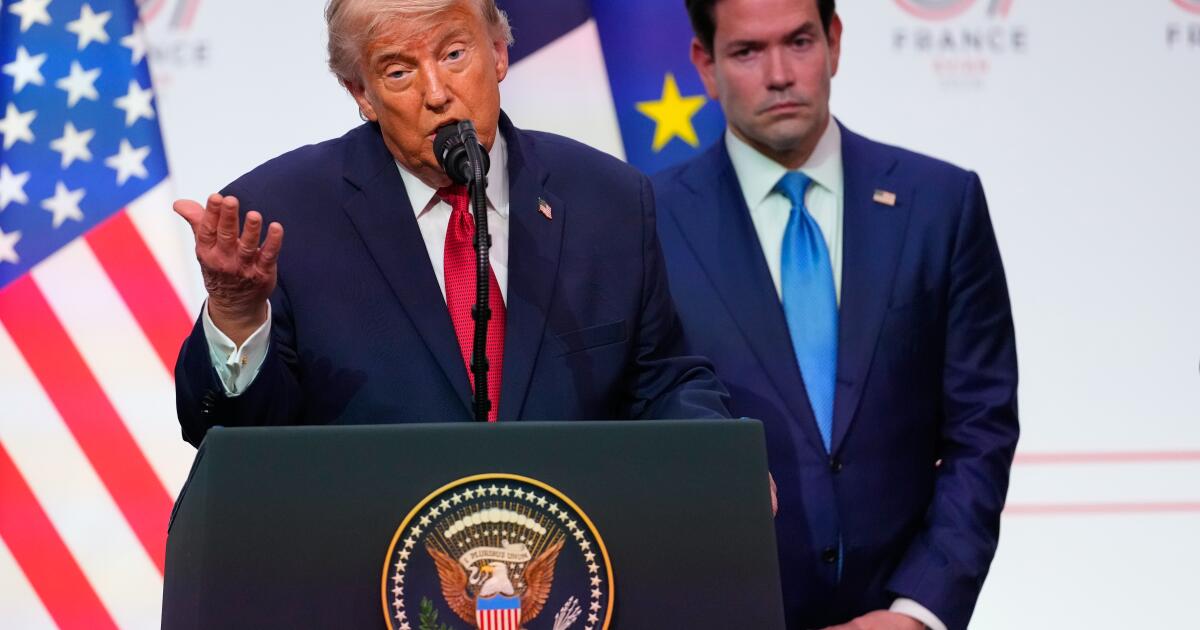
Reporters assigned to travel aboard Air Force Two were told to prepare for an early morning departure on Tuesday for Islamabad until an unexplained delay — followed by a detour by Vice President JD Vance to the White House — revealed clues that something was wrong.

Iranian diplomats had not yet responded to U.S. proposals intended to form the basis of a new round of talks. Some were questioning whether they would attend at all. Had he departed as planned, Vance risked a humiliation, spending hours flying to Pakistan only to be stood up on arrival.

A crisis meeting at the White House led President Trump to announce an indefinite extension to a ceasefire deadline that had been set as a pressure tactic. Now, unable to bring the Iranians to heel, that pressure was suddenly off.

It was an early lesson for Vance in the many ways high-stakes diplomacy can veer off-course.

“There are obvious risks for Vance,” said Chester Crocker, who served as an assistant secretary of State in the Reagan administration, “being associated with failure or with a dubious deal.”

Trump’s aides are clear on the stakes in negotiations with Iran over its nuclear program and an end to the war. Control of the Strait of Hormuz could determine global oil prices for years. Any final deal will shape whether Americans ultimately conclude the fight was worth it — and could sway the outcome of the midterm elections.

But for America’s lead negotiator, the stakes are also personal.

Vance, a diplomatic novice, has found himself at the helm of an effort rife with political risk that has stymied seasoned diplomats ahead of an anticipated run for president.

You’re reading the L.A. Times Politics newsletter

George Skelton and Michael Wilner cover the insights, legislation, players and politics you need to know. In your inbox Monday and Thursday mornings.

The potential payoff is substantial, placing Vance at the center of an international stage with the power to end a historically unpopular war.

But he also may be forced to attach his name to a nuclear deal that provides Tehran access to billions of dollars in sanctions relief, in exchange for limits on its nuclear work that will ultimately expire over time, under conditional monitoring access for international inspectors — an agreement with striking echoes to a 2015 nuclear deal negotiated by a Democratic administration that was disparaged by his party for over a decade.

Vance is negotiating not on his own terms, but on behalf of a mercurial president whose decisions will ultimately determine whether an agreement can be reached. And the Iranians know that Trump’s days in office are numbered, with Vance, a war skeptic, possibly in line to succeed him.

One U.S. official familiar with the negotiations said the vice president is “a pragmatist,” realistic about the prospects of a deal.

“What he has to gain is an image that he can operate effectively on the world stage on a fraught issue. Even if he will give credit to the president, he will be seen as capable of resolving really hard, security-related problems,” said Dennis Ross, a veteran diplomat on the Israeli-Palestinian conflict who served in the George H.W. Bush, Clinton and Obama administrations. “What he has to lose is that he was given the role and did not succeed.”

Failure could raise doubts about his statecraft. But even success at the negotiating table could result in an agreement that turns off Republican voters he may need in a 2028 presidential bid.

“Vance is put in an impossible position,” said Arne Westad, a professor of history at Yale.

“Any deal with the current Iranian regime will be seen as problematic by many Republicans,” Westad said. “If he fails to secure a deal, he will be attacked by those who want an end to the U.S. war — and be seen as ineffective by the president.”

Reputation ‘on the line’

Trump has publicly acknowledged that Vance, a Marine Corps veteran who has consistently opposed U.S. military engagements in the Middle East, had reservations over launching the Iran war in the first place. “He was, I would say, philosophically a little bit different than me,” the president told reporters in March. “I think he was maybe less enthusiastic.”

For that reason, according to Iranian state media reports, Vance was seen by Tehran as their preferred interlocutor in negotiations. Iranian officials expressed gratitude when, during fevered talks ahead of the initial announcement of a ceasefire, they learned that Steve Witkoff, the president’s roving negotiator, had recommended that the vice president be included in the delegation — an exceptional gesture that marked Washington’s highest-level engagement with the Islamic Republic in history.

Republican strategists said Vance’s participation is a demonstration that Trump trusts him, an essential trait for any future Republican presidential nominee and aspiring heir to the MAGA movement.

“It’s rare that a vice president has been put in the position of directly negotiating with a foreign adversary,” said Terry Nelson, a longtime Republican media strategist. “We are engaging a very senior political leader in negotiations with a country that has killed U.S. soldiers and sown chaos in the region. I do think it’s an indication of our resolution and seriousness.”

Whit Ayres, a veteran Republican pollster who has consulted Republican senators and governors for more than three decades, said the vice president’s appointment as lead negotiator “elevates Vance as Trump’s heir-apparent even more than before.”

“Whether that becomes a plus or a minus depends on the outcome of the negotiations,” Ayres added, “and Trump’s ultimate standing with the Republican electorate, both of which are unknowns.”

Talks are currently deadlocked over long-standing demands from Tehran that its leadership has held since the early 2000s, when previously undisclosed nuclear activities first triggered international alarm over Iran’s expanding program.

Iran has periodically accepted temporary limits on its nuclear work — pausing uranium enrichment during talks and, under the 2015 deal, committing to a prolonged cap on enrichment at levels beyond any clear civilian need. But it has always insisted on a “right to enrich” on its own soil, rejecting U.S. attempts to permanently end the program as a foreign attempt to thwart Iran’s scientific progress.

Returning from the first round of ceasefire negotiations, Vance dismissed that position, articulated to him in Islamabad by the speaker of Iran’s Parliament.

“He said, ‘We refuse to give up the right to enrichment,’” Vance said. “And I thought to myself, you know what, my wife has the right to skydive, but she doesn’t jump out of an airplane, because she and I have an agreement that she’s not going to do that, because I don’t want my wife jumping out of an airplane.”

Echoes of a broken deal

The 2015 deal known as the Joint Comprehensive Plan of Action — negotiated by veteran, nonpolitical U.S. diplomats and nuclear scientists over two years of near-constant negotiations — removed roughly 98% of Iran’s nuclear stockpile from the country, while keeping the country’s nuclear infrastructure largely in place, save for the decommissioning of a heavy-water plutonium reactor that could have provided Tehran with a second path to a nuclear bomb.

Under the agreement, Iran consented to limit its use of advanced centrifuges for 10 years, and to restrict uranium enrichment to below weapons-grade levels for 15 years. Inspectors from the U.N.’s International Atomic Energy Agency were granted unprecedented access to monitor the program, though some of these enhanced inspection measures were set to expire after roughly two decades.

In exchange, Iran regained access to tens of billions of dollars of its frozen assets, and settled a long-standing legal dispute with Washington that led the Obama administration to transfer $400 million in cash to Tehran. The episode prompted scandal on the political right, which accused Democrats of fueling terrorism through the funding of Iran’s proxy militias.

Now, after just two weeks of negotiations, the Trump administration is already acknowledging that a final deal with Iran would rely on a familiar formula: temporary caps on Iran’s nuclear work in exchange for substantial sanctions relief. Trump withdrew from the JCPOA in 2018.

Iran comes to the talks with added leverage today, able and willing to disrupt the flow of 20% of the world’s energy through the Strait of Hormuz. And the United States is negotiating alone, without its former partners in the “P5+1” — Russia, China, France, the United Kingdom and Germany — at its side.

Anna Kelly, principal deputy press secretary at the White House, told The Times that “after Democrats like Joe Biden and Barack Hussein Obama weakened our country on the world stage, President Trump has effectively restored American strength with the help of Vice President Vance, who is doing a great job leading the United States in negotiations with Iran.”

“The president and his entire national security team have an incredible track record in making good deals for our country, and the American people can rest assured that the United States will not enter any agreement that does not put our national security interests first,” Kelly said.

Matt Gorman, a longtime Republican strategist and chief communications officer at Targeted Victory, said the JCPOA was viewed particularly critically because it “was negotiated in peacetime.”

“Vance would essentially be ending a war, if successful, and that allows him to make a very different argument,” Gorman said.

The vice president is currently polling as the front-runner for the 2028 Republican presidential nomination, ahead of Marco Rubio, who — despite serving as Trump’s secretary of State and national security advisor — is not directly involved in the Iran talks.

Vance’s role at the negotiating table could help position him as a peacemaker, Crocker noted, distinguishing him from advocates of the war entering the presidential primaries.

But Vance “has been tasked by a president incapable of staying on message, with limited stores of credibility with adversaries as well as allies and a disregard for the complexities of the issues,” said Barbara Bodine, former U.S. ambassador to Yemen. “His task? A credible end to the war without clear objectives.”

“At best, this will be a faux-gilded JCPOA 2.0. Victory will be declared to no applause. On the line is not just Vance’s own reputation, but a demerit in his run for the 2028 presidency,” Bodine added. “The Iran portfolio was no gift.”

What else you should be reading

The must-read: How a Trump-endorsed Republican could become California’s next governor
The deep dive: Palisades reservoir that was empty during fire is dry again. Residents aren’t happy about it
The L.A. Times Special: The Flores twins built a drug empire with El Chapo — then betrayed him

More to come,
Michael Wilner

Was this newsletter forwarded to you? Sign up here to get it in your inbox.
Source link

Column: Swalwell scandal exposed flaws in top-two primary

California Democrats caught a huge break with Eric Swalwell’s sexual assault scandal. It surfaced in early spring rather than midsummer.

Just think of the Democratic debacle that could have occurred.

What if the accusations of sexual misconduct, including alleged rape, had come to light after the gubernatorial candidate had triumphed in the June 2 primary and qualified for the November ballot?

Under California law, it would have been impossible to remove him from the ballot and insert a Democratic replacement.

“It would have been pretty devastating,” notes Assemblywoman Gail Pellerin (D-Santa Cruz), who heads the Assembly Elections Committee.

“It has given us a lot to think about.”

There’s a glaring flaw in California’s election system that should be fixed for the future. But exactly how is trickier than it might seem.

Here’s what I’m talking about:

Prior to April 10 — doomsday for Swalwell — the then-congressman from the East San Francisco Bay was leading the large field of Democratic candidates for governor. Just barely. But he was starting to pull away, based on polling and endorsements.

A survey conducted by the independent Public Policy Institute of California just before Swalwell’s accusers went public showed him leading all candidates — Democrats and Republicans — with 18% support among likely voters.

He was closely trailed by Republican Steve Hilton, a former Fox News host, with 17%. Another Republican and a Democrat — Riverside County Sheriff Chad Bianco and billionaire climate activist Tom Steyer respectively — were tied for third at 14% each. Democratic former Orange County Rep. Katie Porter followed at 10%.

You can now toss all those numbers in the trash. But the point is that Swalwell was headed for victory in the primary. His next stop was the governor’s mansion because no Republican has won a statewide race in California in two decades.

The Democratic front-runner was raking in endorsements from interest groups and democratic politicians. He was considered the safest bet in a generally unimpressive field, a regular middle-class guy — and a white male, the only ethnicity and gender that has ever been elected governor in California.

Former state Controller Betty Yee, a Democratic darkhorse candidate for governor, was pretty much on target when she observed after Swalwell’s campaign collapsed:

“The obsession with who looks the part [of governor] almost got us an alleged sexual predator in Sacramento — ignoring the reality we need to actually fix our fraught state.”

But what if the victims of Swalwell’s alleged sexual improprieties — five women at last count — had waited a few more months to go public? And that’s conceivable. After all, they had remained silent for years. Apparently the nightmare of their alleged assailant becoming governor inspired them to talk now.

Although Swalwell quickly dropped out of the race, there’s no way to erase his name from the primary ballot. But at least voters can choose among seven other “major” Democratic contenders.

If he had already won in the top-two primary, however, and a Republican had also qualified for the November ballot, Democratic voters would have been left high and dry.

Presumably no sane person, no matter how partisan, would vote to elect an alleged rapist as governor. But the only other choice would have been a Republican lackey of President Trump. He’d undoubtedly win by default in a landslide.

“If Democrats had been stupid enough to nominate Swalwell, they’d have been stuck with him,” says Tony Quinn, a Republican elections analyst.

“Even dying doesn’t get you off the ballot. You don’t want to be the party nominee? So what, you are.”

No write-in candidacies are allowed in California’s general elections, although they are in the primary. That’s an inexplicable flaw.

“I’ve thought for years there should be a write-in option to deal with such a problem,” says UCLA law professor Rick Hasen, an expert on elections law.

Also, he points out, California’s top-two primary system — which advances only the top two vote-getters regardless of party — “cuts out minor parties from being relevant. You ought to be able to write in a minor party candidate.”

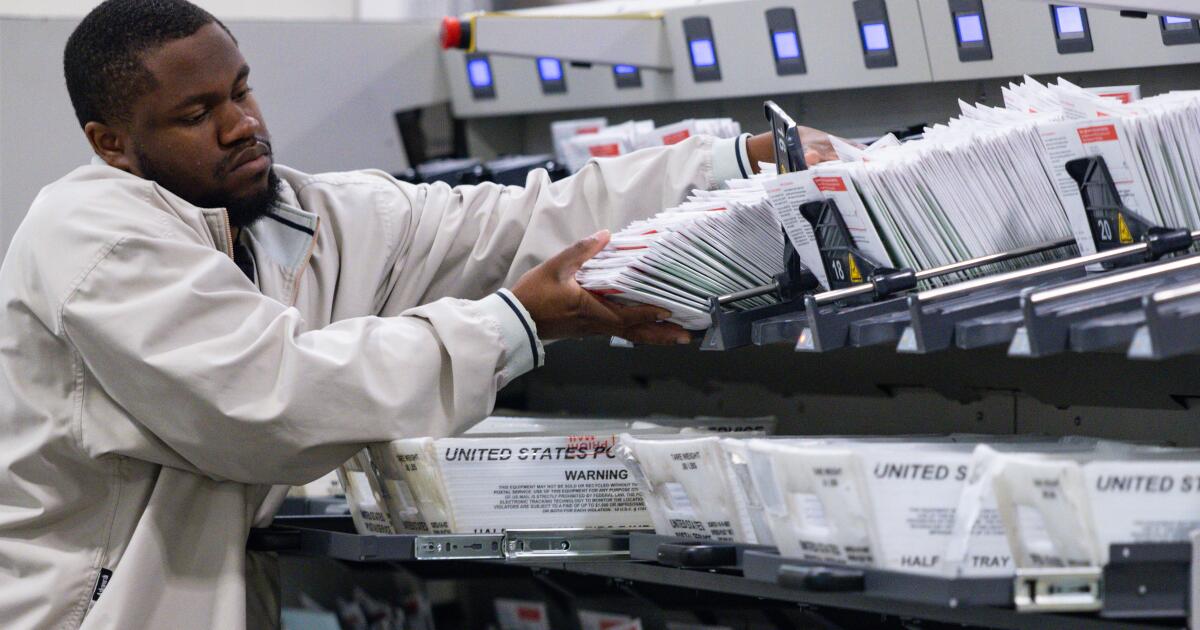
One reason a candidate can’t be removed from the ballot, election officials claim, is that tens of millions ballots have to be printed early enough to mail to every registered voter one month before election day.

Nonsense. In this era of rapidly expanding technology, you’d think that dilemma could be resolved even within snail-paced government bureaucracies. If nothing else, mail out a supplemental ballot just for the governor’s race.

But a bigger question is exactly who would choose the replacement for a departed candidate.

In a presidential election, the party hierarchy — a convention or national committee — would choose another nominee.

But there are no party nominees in California’s top-two open primary system. Parties don’t choose candidates for the November election. Voters regardless of their party do. So, in Swalwell’s case, the Democratic Party alone wouldn’t be entitled to select his substitute — unless the law were changed.

Or, perhaps the No. 3 vote-getter in the primary could automatically be elevated to the general election. We then could wind up with two candidates from the same party. But at least there’d be a better choice than an alleged sexual predator.

“I kind of miss those days” when parties nominated, says Pellerin, who was Santa Cruz County’s chief elections official for 27 years. “It’s something I’ve been thinking about — whether this is the best primary system.”

As I recently wrote, my vote would be to junk the top-two system and return to pre-”reform” party-nominating primaries.

Advocates of the top two primary — including myself — thought it would produce more centrist officeholders. It really hasn’t. It has just caused additional problems — like occasionally sending two candidates of the same party to the November runoff.

Meanwhile, all California voters should be grateful that Swalwell’s accusers courageously went public in April, not August.

You’re reading the L.A. Times Politics newsletter

George Skelton and Michael Wilner cover the insights, legislation, players and politics you need to know. In your inbox Monday and Thursday mornings.

What else you should be reading

The must-read: Swalwell supporters scramble after he drops out of governor’s race. Who will benefit?
California love: Californians are pouring money into Democrats’ Senate races in other states
The L.A. Times Special: There’s a wide gap between rumor and fact. That’s where Eric Swalwell lurked

Until next week,
George Skelton


Was this newsletter forwarded to you? Sign up here to get it in your inbox.
Source link

Jackie Speier would like her former congressional colleagues to zip up and shape up

It seems like a simple ask that male politicians don’t sexually harass or even rape women, but also, it seems like an open secret in Congress that sexual misconduct is too common.

Take Eric Swalwell, whose epic political immolation has captivated this week’s national political news, including a TMZ-obtained video of the then-congressman bleary-eyed in a bathrobe on a yacht that was literally the least-worst revelation.

For years “there were swirling rumors about Eric,” former Rep. Jackie Speier told me. Speier in 2018 thought she’d put in place tough new rules to stop sexual misconduct among her former colleagues, and the type of backroom shrugs that allowed men to prowl unchecked.

But despite her efforts, Speier, who represented a part of the Bay Area near Swalwell’s district until 2023, said the problem remains Congress itself, and the “crippling” power that elected officials have over their staffs. Don’t get her started on how that power imbalance is even worse for young lobbyists.

“I’ve always said that Congress is Hollywood for ugly people,” she said. “It’s a whole environment that becomes, I think, toxic.”

But also one that, she added, isn’t inevitable.

The 2018 change

In 2017, the #MeToo movement had swept into the public consciousness and ignited calls for change.

Armed with that outrage and the roiling fire of public opinion, Speier set out to change archaic rules that governed how sexual misconduct was handled in Congress.

“I’ll just run through what it was like,” she told me. “If you wanted to file a complaint, you had to be prepared to go through some period of counseling; to have a cooling off period; to participate in mandatory mediation; and sign an NDA, and then the taxpayers picked up the tab if there was a settlement. It was kind of jaw dropping to think that that was the policy.”

It wasn’t just policy, it was culture. Speier herself had been the victim of an assault when she was a young staffer — a senior staffer pushing her against a wall and forcibly kissing her. And like so many women, she put the episode aside and went on with her career because speaking out would have likely brought her more grief than justice.

But by 2017, she realized the public was at a “tipping point,” and, as she said then, “Congress has been a breeding ground for a hostile work environment for far too long.”

With Rep. Bradley Byrne, a Republican from Alabama, they passed the Congressional Accountability Act of 1995 Reform Act.

It did away with the weird and coercive requirement for counseling and a cooling off period and most significantly, forced sexual harassers to pay for their own settlements instead of pinning the cost on taxpayers.

But even with the new rules, some colleagues didn’t seem to get it. Speier recalled one man who, informed of possibility he would have to pay sexual harassment settlements out of his own pocket, asked if he could purchase insurance to cover those costs.

“How about you keep your zipper up?” Speier wondered.

The bigger problem

Still, Speier said she thought the law made a difference not just in how claims of misconduct were handled, but in the culture of Capitol Hill.

But, “over time it just was relaxed,” she said.

When Speier left office in 2023, Rep. George Santos (R-N.Y.) was under investigation for sexual harassment — a claim Congress deemed unfounded, but bounced Santos from its ranks for a bunch of other misconduct.

Let’s be real — Congress has never been without scandal.

But Speier said that doesn’t mean sexual abuse can’t be stopped. She just thinks the rules she put in place need to be even tougher: A zero-tolerance approach similar to what corporate America often enforces.

“I’m thinking now that the way to fix this may be something more direct and straightforward and simple, much like they do in the private sector,” she said.

“When the CEO is having an affair with a subordinate and it becomes known, he’s history. He’s relieved of his duties, and if we made it clear that if you sexually harass a staff member, or you have an affair with a staff member, you will be expelled, or you will be subject to expulsion of Congress, that will change their behavior.”

I love her enthusiasm and I support tossing out miscreant members, but I’m not sure even that will keep the zippers up. But there is always hope.

And something has to be done.

“These cases underscore the fact that these women do not feel comfortable coming forward,” she pointed out. “So we’ve got to figure out why and close that hole.

“Is it because they’re fearful that they’ll be retaliated against or that they’ll be ostracized or blackballed? I don’t know the answer, but I’m really urging my colleagues on both sides of the aisle to fix this, and part of fixing it is talking to these women who were, in fact, sexually harassed and assaulted and find out why they didn’t feel comfortable coming forward.”

That’s the real issue, and the real demand we should be making. From the Oval Office to district offices, too many elected leaders have proven they’ll use their power to obtain sex — by coercion or even force.

And too many women remain afraid to speak out because they still suffer both career and social consequences — a realistic fear that coming forward could end their own ambitions, or at least leave them battling to not be defined by the abuse.

Yes, Swalwell and others have been shamed into resigning.

But it’s past time to make sexual abuse a one-strike-you’re-out offense — for the perpetrator, not the survivor.

You’re reading the L.A. Times Politics newsletter

George Skelton and Michael Wilner cover the insights, legislation, players and politics you need to know. In your inbox Monday and Thursday mornings.

What else you should be reading

The must-read: Swalwell supporters scramble after he drops out of governor’s race. Who will benefit?
The deep dive:Rebuilding After Fires, L.A. Neighbors Join Forces and Innovate
The L.A. Times Special: In L.A. County, many homeless people enter shelters, only to end up back on the streets

Stay Golden,
Anita Chabria

Was this newsletter forwarded to you? Sign up here to get it in your inbox.
Source link