high court

Vance, eyeing 2028, navigates a diplomatic minefield with Iran

Reporters assigned to travel aboard Air Force Two were told to prepare for an early morning departure on Tuesday for Islamabad until an unexplained delay — followed by a detour by Vice President JD Vance to the White House — revealed clues that something was wrong.

Iranian diplomats had not yet responded to U.S. proposals intended to form the basis of a new round of talks. Some were questioning whether they would attend at all. Had he departed as planned, Vance risked a humiliation, spending hours flying to Pakistan only to be stood up on arrival.

A crisis meeting at the White House led President Trump to announce an indefinite extension to a ceasefire deadline that had been set as a pressure tactic. Now, unable to bring the Iranians to heel, that pressure was suddenly off.

It was an early lesson for Vance in the many ways high-stakes diplomacy can veer off-course.

“There are obvious risks for Vance,” said Chester Crocker, who served as an assistant secretary of State in the Reagan administration, “being associated with failure or with a dubious deal.”

Trump’s aides are clear on the stakes in negotiations with Iran over its nuclear program and an end to the war. Control of the Strait of Hormuz could determine global oil prices for years. Any final deal will shape whether Americans ultimately conclude the fight was worth it — and could sway the outcome of the midterm elections.

But for America’s lead negotiator, the stakes are also personal.

Vance, a diplomatic novice, has found himself at the helm of an effort rife with political risk that has stymied seasoned diplomats ahead of an anticipated run for president.

You’re reading the L.A. Times Politics newsletter

George Skelton and Michael Wilner cover the insights, legislation, players and politics you need to know. In your inbox Monday and Thursday mornings.

The potential payoff is substantial, placing Vance at the center of an international stage with the power to end a historically unpopular war.

But he also may be forced to attach his name to a nuclear deal that provides Tehran access to billions of dollars in sanctions relief, in exchange for limits on its nuclear work that will ultimately expire over time, under conditional monitoring access for international inspectors — an agreement with striking echoes to a 2015 nuclear deal negotiated by a Democratic administration that was disparaged by his party for over a decade.

Vance is negotiating not on his own terms, but on behalf of a mercurial president whose decisions will ultimately determine whether an agreement can be reached. And the Iranians know that Trump’s days in office are numbered, with Vance, a war skeptic, possibly in line to succeed him.

One U.S. official familiar with the negotiations said the vice president is “a pragmatist,” realistic about the prospects of a deal.

“What he has to gain is an image that he can operate effectively on the world stage on a fraught issue. Even if he will give credit to the president, he will be seen as capable of resolving really hard, security-related problems,” said Dennis Ross, a veteran diplomat on the Israeli-Palestinian conflict who served in the George H.W. Bush, Clinton and Obama administrations. “What he has to lose is that he was given the role and did not succeed.”

Failure could raise doubts about his statecraft. But even success at the negotiating table could result in an agreement that turns off Republican voters he may need in a 2028 presidential bid.

“Vance is put in an impossible position,” said Arne Westad, a professor of history at Yale.

“Any deal with the current Iranian regime will be seen as problematic by many Republicans,” Westad said. “If he fails to secure a deal, he will be attacked by those who want an end to the U.S. war — and be seen as ineffective by the president.”

Reputation ‘on the line’

Trump has publicly acknowledged that Vance, a Marine Corps veteran who has consistently opposed U.S. military engagements in the Middle East, had reservations over launching the Iran war in the first place. “He was, I would say, philosophically a little bit different than me,” the president told reporters in March. “I think he was maybe less enthusiastic.”

For that reason, according to Iranian state media reports, Vance was seen by Tehran as their preferred interlocutor in negotiations. Iranian officials expressed gratitude when, during fevered talks ahead of the initial announcement of a ceasefire, they learned that Steve Witkoff, the president’s roving negotiator, had recommended that the vice president be included in the delegation — an exceptional gesture that marked Washington’s highest-level engagement with the Islamic Republic in history.

Republican strategists said Vance’s participation is a demonstration that Trump trusts him, an essential trait for any future Republican presidential nominee and aspiring heir to the MAGA movement.

“It’s rare that a vice president has been put in the position of directly negotiating with a foreign adversary,” said Terry Nelson, a longtime Republican media strategist. “We are engaging a very senior political leader in negotiations with a country that has killed U.S. soldiers and sown chaos in the region. I do think it’s an indication of our resolution and seriousness.”

Whit Ayres, a veteran Republican pollster who has consulted Republican senators and governors for more than three decades, said the vice president’s appointment as lead negotiator “elevates Vance as Trump’s heir-apparent even more than before.”

“Whether that becomes a plus or a minus depends on the outcome of the negotiations,” Ayres added, “and Trump’s ultimate standing with the Republican electorate, both of which are unknowns.”

Talks are currently deadlocked over long-standing demands from Tehran that its leadership has held since the early 2000s, when previously undisclosed nuclear activities first triggered international alarm over Iran’s expanding program.

Iran has periodically accepted temporary limits on its nuclear work — pausing uranium enrichment during talks and, under the 2015 deal, committing to a prolonged cap on enrichment at levels beyond any clear civilian need. But it has always insisted on a “right to enrich” on its own soil, rejecting U.S. attempts to permanently end the program as a foreign attempt to thwart Iran’s scientific progress.

Returning from the first round of ceasefire negotiations, Vance dismissed that position, articulated to him in Islamabad by the speaker of Iran’s Parliament.

“He said, ‘We refuse to give up the right to enrichment,’” Vance said. “And I thought to myself, you know what, my wife has the right to skydive, but she doesn’t jump out of an airplane, because she and I have an agreement that she’s not going to do that, because I don’t want my wife jumping out of an airplane.”

Echoes of a broken deal

The 2015 deal known as the Joint Comprehensive Plan of Action — negotiated by veteran, nonpolitical U.S. diplomats and nuclear scientists over two years of near-constant negotiations — removed roughly 98% of Iran’s nuclear stockpile from the country, while keeping the country’s nuclear infrastructure largely in place, save for the decommissioning of a heavy-water plutonium reactor that could have provided Tehran with a second path to a nuclear bomb.

Under the agreement, Iran consented to limit its use of advanced centrifuges for 10 years, and to restrict uranium enrichment to below weapons-grade levels for 15 years. Inspectors from the U.N.’s International Atomic Energy Agency were granted unprecedented access to monitor the program, though some of these enhanced inspection measures were set to expire after roughly two decades.

In exchange, Iran regained access to tens of billions of dollars of its frozen assets, and settled a long-standing legal dispute with Washington that led the Obama administration to transfer $400 million in cash to Tehran. The episode prompted scandal on the political right, which accused Democrats of fueling terrorism through the funding of Iran’s proxy militias.

Now, after just two weeks of negotiations, the Trump administration is already acknowledging that a final deal with Iran would rely on a familiar formula: temporary caps on Iran’s nuclear work in exchange for substantial sanctions relief. Trump withdrew from the JCPOA in 2018.

Iran comes to the talks with added leverage today, able and willing to disrupt the flow of 20% of the world’s energy through the Strait of Hormuz. And the United States is negotiating alone, without its former partners in the “P5+1” — Russia, China, France, the United Kingdom and Germany — at its side.

Anna Kelly, principal deputy press secretary at the White House, told The Times that “after Democrats like Joe Biden and Barack Hussein Obama weakened our country on the world stage, President Trump has effectively restored American strength with the help of Vice President Vance, who is doing a great job leading the United States in negotiations with Iran.”

“The president and his entire national security team have an incredible track record in making good deals for our country, and the American people can rest assured that the United States will not enter any agreement that does not put our national security interests first,” Kelly said.

Matt Gorman, a longtime Republican strategist and chief communications officer at Targeted Victory, said the JCPOA was viewed particularly critically because it “was negotiated in peacetime.”

“Vance would essentially be ending a war, if successful, and that allows him to make a very different argument,” Gorman said.

The vice president is currently polling as the front-runner for the 2028 Republican presidential nomination, ahead of Marco Rubio, who — despite serving as Trump’s secretary of State and national security advisor — is not directly involved in the Iran talks.

Vance’s role at the negotiating table could help position him as a peacemaker, Crocker noted, distinguishing him from advocates of the war entering the presidential primaries.

But Vance “has been tasked by a president incapable of staying on message, with limited stores of credibility with adversaries as well as allies and a disregard for the complexities of the issues,” said Barbara Bodine, former U.S. ambassador to Yemen. “His task? A credible end to the war without clear objectives.”

“At best, this will be a faux-gilded JCPOA 2.0. Victory will be declared to no applause. On the line is not just Vance’s own reputation, but a demerit in his run for the 2028 presidency,” Bodine added. “The Iran portfolio was no gift.”

What else you should be reading

The must-read: How a Trump-endorsed Republican could become California’s next governor
The deep dive: Palisades reservoir that was empty during fire is dry again. Residents aren’t happy about it
The L.A. Times Special: The Flores twins built a drug empire with El Chapo — then betrayed him

More to come,
Michael Wilner

Was this newsletter forwarded to you? Sign up here to get it in your inbox.
Source link

Column: Swalwell scandal exposed flaws in top-two primary

California Democrats caught a huge break with Eric Swalwell’s sexual assault scandal. It surfaced in early spring rather than midsummer.

Just think of the Democratic debacle that could have occurred.

What if the accusations of sexual misconduct, including alleged rape, had come to light after the gubernatorial candidate had triumphed in the June 2 primary and qualified for the November ballot?

Under California law, it would have been impossible to remove him from the ballot and insert a Democratic replacement.

“It would have been pretty devastating,” notes Assemblywoman Gail Pellerin (D-Santa Cruz), who heads the Assembly Elections Committee.

“It has given us a lot to think about.”

There’s a glaring flaw in California’s election system that should be fixed for the future. But exactly how is trickier than it might seem.

Here’s what I’m talking about:

Prior to April 10 — doomsday for Swalwell — the then-congressman from the East San Francisco Bay was leading the large field of Democratic candidates for governor. Just barely. But he was starting to pull away, based on polling and endorsements.

A survey conducted by the independent Public Policy Institute of California just before Swalwell’s accusers went public showed him leading all candidates — Democrats and Republicans — with 18% support among likely voters.

He was closely trailed by Republican Steve Hilton, a former Fox News host, with 17%. Another Republican and a Democrat — Riverside County Sheriff Chad Bianco and billionaire climate activist Tom Steyer respectively — were tied for third at 14% each. Democratic former Orange County Rep. Katie Porter followed at 10%.

You can now toss all those numbers in the trash. But the point is that Swalwell was headed for victory in the primary. His next stop was the governor’s mansion because no Republican has won a statewide race in California in two decades.

The Democratic front-runner was raking in endorsements from interest groups and democratic politicians. He was considered the safest bet in a generally unimpressive field, a regular middle-class guy — and a white male, the only ethnicity and gender that has ever been elected governor in California.

Former state Controller Betty Yee, a Democratic darkhorse candidate for governor, was pretty much on target when she observed after Swalwell’s campaign collapsed:

“The obsession with who looks the part [of governor] almost got us an alleged sexual predator in Sacramento — ignoring the reality we need to actually fix our fraught state.”

But what if the victims of Swalwell’s alleged sexual improprieties — five women at last count — had waited a few more months to go public? And that’s conceivable. After all, they had remained silent for years. Apparently the nightmare of their alleged assailant becoming governor inspired them to talk now.

Although Swalwell quickly dropped out of the race, there’s no way to erase his name from the primary ballot. But at least voters can choose among seven other “major” Democratic contenders.

If he had already won in the top-two primary, however, and a Republican had also qualified for the November ballot, Democratic voters would have been left high and dry.

Presumably no sane person, no matter how partisan, would vote to elect an alleged rapist as governor. But the only other choice would have been a Republican lackey of President Trump. He’d undoubtedly win by default in a landslide.

“If Democrats had been stupid enough to nominate Swalwell, they’d have been stuck with him,” says Tony Quinn, a Republican elections analyst.

“Even dying doesn’t get you off the ballot. You don’t want to be the party nominee? So what, you are.”

No write-in candidacies are allowed in California’s general elections, although they are in the primary. That’s an inexplicable flaw.

“I’ve thought for years there should be a write-in option to deal with such a problem,” says UCLA law professor Rick Hasen, an expert on elections law.

Also, he points out, California’s top-two primary system — which advances only the top two vote-getters regardless of party — “cuts out minor parties from being relevant. You ought to be able to write in a minor party candidate.”

One reason a candidate can’t be removed from the ballot, election officials claim, is that tens of millions ballots have to be printed early enough to mail to every registered voter one month before election day.

Nonsense. In this era of rapidly expanding technology, you’d think that dilemma could be resolved even within snail-paced government bureaucracies. If nothing else, mail out a supplemental ballot just for the governor’s race.

But a bigger question is exactly who would choose the replacement for a departed candidate.

In a presidential election, the party hierarchy — a convention or national committee — would choose another nominee.

But there are no party nominees in California’s top-two open primary system. Parties don’t choose candidates for the November election. Voters regardless of their party do. So, in Swalwell’s case, the Democratic Party alone wouldn’t be entitled to select his substitute — unless the law were changed.

Or, perhaps the No. 3 vote-getter in the primary could automatically be elevated to the general election. We then could wind up with two candidates from the same party. But at least there’d be a better choice than an alleged sexual predator.

“I kind of miss those days” when parties nominated, says Pellerin, who was Santa Cruz County’s chief elections official for 27 years. “It’s something I’ve been thinking about — whether this is the best primary system.”

As I recently wrote, my vote would be to junk the top-two system and return to pre-”reform” party-nominating primaries.

Advocates of the top two primary — including myself — thought it would produce more centrist officeholders. It really hasn’t. It has just caused additional problems — like occasionally sending two candidates of the same party to the November runoff.

Meanwhile, all California voters should be grateful that Swalwell’s accusers courageously went public in April, not August.

You’re reading the L.A. Times Politics newsletter

George Skelton and Michael Wilner cover the insights, legislation, players and politics you need to know. In your inbox Monday and Thursday mornings.

What else you should be reading

The must-read: Swalwell supporters scramble after he drops out of governor’s race. Who will benefit?
California love: Californians are pouring money into Democrats’ Senate races in other states
The L.A. Times Special: There’s a wide gap between rumor and fact. That’s where Eric Swalwell lurked

Until next week,
George Skelton


Was this newsletter forwarded to you? Sign up here to get it in your inbox.
Source link

Jackie Speier would like her former congressional colleagues to zip up and shape up

It seems like a simple ask that male politicians don’t sexually harass or even rape women, but also, it seems like an open secret in Congress that sexual misconduct is too common.

Take Eric Swalwell, whose epic political immolation has captivated this week’s national political news, including a TMZ-obtained video of the then-congressman bleary-eyed in a bathrobe on a yacht that was literally the least-worst revelation.

For years “there were swirling rumors about Eric,” former Rep. Jackie Speier told me. Speier in 2018 thought she’d put in place tough new rules to stop sexual misconduct among her former colleagues, and the type of backroom shrugs that allowed men to prowl unchecked.

But despite her efforts, Speier, who represented a part of the Bay Area near Swalwell’s district until 2023, said the problem remains Congress itself, and the “crippling” power that elected officials have over their staffs. Don’t get her started on how that power imbalance is even worse for young lobbyists.

“I’ve always said that Congress is Hollywood for ugly people,” she said. “It’s a whole environment that becomes, I think, toxic.”

But also one that, she added, isn’t inevitable.

The 2018 change

In 2017, the #MeToo movement had swept into the public consciousness and ignited calls for change.

Armed with that outrage and the roiling fire of public opinion, Speier set out to change archaic rules that governed how sexual misconduct was handled in Congress.

“I’ll just run through what it was like,” she told me. “If you wanted to file a complaint, you had to be prepared to go through some period of counseling; to have a cooling off period; to participate in mandatory mediation; and sign an NDA, and then the taxpayers picked up the tab if there was a settlement. It was kind of jaw dropping to think that that was the policy.”

It wasn’t just policy, it was culture. Speier herself had been the victim of an assault when she was a young staffer — a senior staffer pushing her against a wall and forcibly kissing her. And like so many women, she put the episode aside and went on with her career because speaking out would have likely brought her more grief than justice.

But by 2017, she realized the public was at a “tipping point,” and, as she said then, “Congress has been a breeding ground for a hostile work environment for far too long.”

With Rep. Bradley Byrne, a Republican from Alabama, they passed the Congressional Accountability Act of 1995 Reform Act.

It did away with the weird and coercive requirement for counseling and a cooling off period and most significantly, forced sexual harassers to pay for their own settlements instead of pinning the cost on taxpayers.

But even with the new rules, some colleagues didn’t seem to get it. Speier recalled one man who, informed of possibility he would have to pay sexual harassment settlements out of his own pocket, asked if he could purchase insurance to cover those costs.

“How about you keep your zipper up?” Speier wondered.

The bigger problem

Still, Speier said she thought the law made a difference not just in how claims of misconduct were handled, but in the culture of Capitol Hill.

But, “over time it just was relaxed,” she said.

When Speier left office in 2023, Rep. George Santos (R-N.Y.) was under investigation for sexual harassment — a claim Congress deemed unfounded, but bounced Santos from its ranks for a bunch of other misconduct.

Let’s be real — Congress has never been without scandal.

But Speier said that doesn’t mean sexual abuse can’t be stopped. She just thinks the rules she put in place need to be even tougher: A zero-tolerance approach similar to what corporate America often enforces.

“I’m thinking now that the way to fix this may be something more direct and straightforward and simple, much like they do in the private sector,” she said.

“When the CEO is having an affair with a subordinate and it becomes known, he’s history. He’s relieved of his duties, and if we made it clear that if you sexually harass a staff member, or you have an affair with a staff member, you will be expelled, or you will be subject to expulsion of Congress, that will change their behavior.”

I love her enthusiasm and I support tossing out miscreant members, but I’m not sure even that will keep the zippers up. But there is always hope.

And something has to be done.

“These cases underscore the fact that these women do not feel comfortable coming forward,” she pointed out. “So we’ve got to figure out why and close that hole.

“Is it because they’re fearful that they’ll be retaliated against or that they’ll be ostracized or blackballed? I don’t know the answer, but I’m really urging my colleagues on both sides of the aisle to fix this, and part of fixing it is talking to these women who were, in fact, sexually harassed and assaulted and find out why they didn’t feel comfortable coming forward.”

That’s the real issue, and the real demand we should be making. From the Oval Office to district offices, too many elected leaders have proven they’ll use their power to obtain sex — by coercion or even force.

And too many women remain afraid to speak out because they still suffer both career and social consequences — a realistic fear that coming forward could end their own ambitions, or at least leave them battling to not be defined by the abuse.

Yes, Swalwell and others have been shamed into resigning.

But it’s past time to make sexual abuse a one-strike-you’re-out offense — for the perpetrator, not the survivor.

You’re reading the L.A. Times Politics newsletter

George Skelton and Michael Wilner cover the insights, legislation, players and politics you need to know. In your inbox Monday and Thursday mornings.

What else you should be reading

The must-read: Swalwell supporters scramble after he drops out of governor’s race. Who will benefit?
The deep dive:Rebuilding After Fires, L.A. Neighbors Join Forces and Innovate
The L.A. Times Special: In L.A. County, many homeless people enter shelters, only to end up back on the streets

Stay Golden,
Anita Chabria

Was this newsletter forwarded to you? Sign up here to get it in your inbox.

Source link

Column: Bye, bye Eric. Swalwell needs to go

There has never been a California governor’s race like this one. And that was even before the leading Democrat was shoved aside by shocking accusations of sexual assault.

For months, the contest has been uninspiring, unexciting and unwatchable. It really shouldn’t have been called a “race.” It was more like a slow trot. No candidate has drawn even 20% of voters’ support in independent polling. Half the 10 main candidates have been stuck in single digits.

And in less than a month, voters will start casting mail-in ballots.

But suddenly eyes and ears have opened.

Democratic frontrunner Eric Swalwell, a congressman from the East San Francisco Bay, was accused by a former young female staffer of twice sexually assaulting her when she was too intoxicated to consent.

The San Francisco Chronicle reported that Friday and CNN soon followed with a similar report, adding accusations of sexual misconduct from three other women.

“I was pushing him off of me saying no,” the anonymous former staffer told CNN. “He didn’t stop.”

Swalwell, who is married and has three children, strongly denied the accusations.

The incidents “never happened,” he said. “I will fight them with everything I have….

“I have certainly made mistakes in judgment in my past, but these mistakes are between me and my wife. And to her I apologize deeply for putting her in this position.”

Sorry, congressman, but if someone is running for governor of the nation’s largest state, the mistakes aren’t just between him and his wife.

Former House Speaker Nancy Pelosi of San Francisco told Swalwell, in essence, that it’s his right to fight the accusations, but he should do it on his own time, not the Democratic Party’s. She was among the first of party leaders to call on him to abandon the race.

Bye, bye Eric. Might as well depart the House, too.

A leading candidate for California governor has never crumbled so fast. It was like a dam bursting.

Powerful interests and major politicians had been coalescing behind the 45-year-old congressman because he charmed them or they were loyal colleagues or — most important — he seemed like a potential winner.

Political players, including campaign donors, seek to invest their capital in anticipated victors. Their expected return is access and favors. And Swalwell had been racking up lots of endorsements.

But almost immediately after the sex scandal broke, supporters began fleeing the reeking corpse.

Marital infidelity is one thing, but alleged sexual assault — rape — cannot be tolerated, especially by a party dominated by female voters.

Labor unions, other interests and influential politicians began backing off their endorsements. Many urged Swalwell to fold his campaign. And with his support collapsing, he really was left ultimately with no other choice.

So, now the most pertinent question is which candidate will replace Swalwell as the Democrat with the best chance of surviving the June 2 top-two primary and winning a spot on the November ballot.

If it’s a Democrat against a Republican in November–the most likely matchup–the Democrat is a virtual cinch to succeed the termed out Gov. Gavin Newsom. No Republican has won a statewide race in California in 20 years.

State Democratic Chairman Rusty Hicks — as part of his effort to pressure lagging candidates to exit the race and make more room for faster runners — released a nonpartisan, party-paid poll last week. It was conducted before Swalwell’s collapse.

It showed two Republicans tied for the lead with 14% each: Riverside County Sheriff Chad Bianco and conservative commentator Steve Hilton.

Among Democrats, Swalwell led with 12%, slightly ahead of billionaire hedge fund founder Tom Steyer at 11%. Former Orange County Rep. Katie Porter had 7%. Then came former U.S. Health Secretary Xavier Becerra, San José Mayor Matt Mahan and former Los Angeles Mayor Antonio Villaraigosa, each with 4%.

Former state controller Betty Yee and state schools chief Tony Thurmond barely registered at 1% each.

For weeks, it has been deemed conceivable that both Republican candidates would finish ahead of all Democrats in the June 2 primary. Democratic voters would splinter their support among the party’s crowded field. That would lock out Democrats from the November ballot and guarantee the election of a Republican.

But President Trump seemed to botch that for the GOP last week by endorsing Hilton. Trump presumably will help the former British politico draw votes from Bianco and indirectly assist a Democrat in finishing second.

There’s a new twist, however. Where will Swalwell’s votes go? If enough go to the Democratic laggers rather than the party frontrunners, both Republicans could still wind up one-two.

No gubernatorial contest in modern times has been this wide open.

These candidates’ failure to make waves isn’t all their fault. Some were slow diving into the water. But even those who tried to make a splash were inundated by Trump.

Practically all the public’s attention has been on the president and his oddball or vengeful or unprincipled actions.

Now the Democratic race is more wide open than ever.

Steyer — a liberal climate fighter — has run an energetic campaign, spending more than $100 million of his own money on TV ads. But will Californians elect a mega-rich governor? They never have.

Porter has been running better in polls than the latest Democratic survey showed. She’s straight forward on all the issues, but a bit too liberal and feisty for some establishment Democrats. Swalwell’s fall is her opportunity to rise.

Becerra — a former state attorney general and congressman — has an impressive resume, but was too slow out of the starting gate. This is his chance to sprint, if he can.

No candidate is more qualified to be governor than centrist Villaraigosa, a former state Assembly speaker. But voters apparently are looking for someone younger. He’s 73.

Mayhan is a moderate who started too late and has fallen far short of expectations. He now has a second chance.

It soon will all be in the hands of voters, whether they’re interested or not.

You’re reading the L.A. Times Politics newsletter

George Skelton and Michael Wilner cover the insights, legislation, players and politics you need to know. In your inbox Monday and Thursday mornings.

What else you should be reading

The must-read: Eric Swalwell’s bid for California governor is over. Let the political scrambling begin
Knives out: GOP’s best shot at California governor’s office in decades mired in angry internal debate
The L.A. Times Special: Newsom reluctant to endorse a successor, break gridlock in governor’s race

Until next week,
George Skelton


Was this newsletter forwarded to you? Sign up here to get it in your inbox.
Source link

News Analysis: A turnabout from Trump gives Iran the upper hand

Morning broke in the Middle East on Wednesday with a wave of attacks by Iran. Air defenses in Kuwait were overwhelmed. Three dozen drones and 17 ballistic missiles were shot down over the United Arab Emirates. The most important oil pipeline in Saudi Arabia suffered a hit. Sirens flared in Tel Aviv, and a devastating drumbeat of Israeli strikes targeting Iran’s allies in Lebanon killed scores in Beirut.

A day after President Trump hailed a ceasefire in his war with the Islamic Republic, reversing course on his threat to escalate, the only country spared from attack appeared to be Iran itself.

The “fragile truce,” as Vice President JD Vance called it, began with a calculated show of force from an Iran militarily weakened by six weeks of U.S.-Israeli strikes, yet strategically positioned to press for sweeping concessions from an American president eager to end the war.

You’re reading the L.A. Times Politics newsletter

George Skelton and Michael Wilner cover the insights, legislation, players and politics you need to know. In your inbox Monday and Thursday mornings.

Strait flush

A ship in the Strait of Hormuz

A naval vessel sails on March 1 in the Strait of Hormuz, a vital waterway through which much of the world’s oil and gas passes.

(Sahar al Attar / AFP/Getty Images)

The president’s main conditions for a truce were the reopening of the Strait of Hormuz and, through negotiations, a definitive end to Iran’s nuclear work. But Tehran offered no sign of relenting on its enrichment program, and by Wednesday afternoon, had warned that tanker traffic would halt through the strait until Israel paused its attacks in Lebanon.

It was the clearest demonstration yet of Iran’s emboldened position to use the strait — treated for decades as a free and open international waterway — as a bargaining tool, threatening its closure over any number of demands, or else implementing a toll system as reparations for its war damage.

By Friday, U.S. negotiators flying to Islamabad for talks can expect Iran’s hold on the strait to weigh against all other priorities, including American demands that Iran relinquish its right to enrich uranium, the source of decades of tortured diplomatic efforts.

The White House said that traffic had increased through the strait on Wednesday. But it also described reports of its closure, briefed to a displeased president, as “completely unacceptable,” serving as a stark reminder in the West Wing of the new world its war had brought.

James Acton, co-director of the nuclear policy program at the Carnegie Endowment for International Peace, called the ceasefire framework “a foreign policy disaster” for the United States that revealed Iranian leverage long predicted by independent experts and intelligence analysts.

“Let’s assume the ceasefire actually takes hold — and as far as I can see, it hasn’t done so far,” Acton said. “Iran has the upper hand, and frankly, it’s not close.”

“The negotiations are likely to focus on opening the Strait of Hormuz, which is clearly Trump’s top goal, not Iran’s nuclear program,” he added. “Because Iran has demonstrated it can close the strait — and inflict large economic costs on the U.S. and large political costs on Trump — it now has plenty of leverage over the United States.”

White House Press Secretary Karoline Leavitt speaks during a news briefing in the James S. Brady Press Briefing Room

White House Press Secretary Karoline Leavitt speaks during a news briefing in the James S. Brady Press Briefing Room on Wednesday. Leavitt spoke to reporters on a range of topics including a two-week ceasefire deal between the U.S., Iran and Israel.

(Anna Moneymaker / Getty Images)

Unclear terms

The Trump administration reportedly urged two allies of Tehran — China and Pakistan — to pressure the Iranians into a ceasefire ahead of a Tuesday evening deadline, self-imposed by Trump, to escalate the conflict. The resulting truce was described not in a shared statement among the warring parties, but in separate, differing social media posts that all but guaranteed misinterpretation between the two sides.

A statement from the Pakistanis, who have helped mediate the talks, said the ceasefire extended to hostilities in Lebanon. The Israeli statement said it did not; Trump’s post omitted any mention of Lebanon at all.

But the president’s statement did say that a 10-point plan from Iran could serve as the basis for negotiations over a long-term truce going forward. The White House was forced to walk that back Wednesday afternoon, claiming that Iran had presented its diplomats with another, secret 10-point plan substantially revised from those detailed in the press.

“They put forward a more reasonable and entirely different and condensed plan to the president and his team,” White House Press Secretary Karoline Leavitt told reporters. “The idea that President Trump would ever accept an Iranian wish list as a deal is completely absurd.”

In social media posts and interviews with select reporters on Wednesday, Trump appeared to suggest exactly that — floating sanctions relief for Tehran and proposing a plan to share revenue from a Strait of Hormuz toll system that could raise global oil prices while directly funding the Iranian government.

Limited achievements

Experts agree that the U.S.-Israeli campaign succeeded in significantly degrading Iran’s drone and ballistic missile infrastructure. But in a statement on Wednesday, Israel’s prime minister, Benjamin Netanyahu, said any deal between Washington and Tehran had to include structural limits on those programs — suggesting concern in Israel that Iran could reconstitute its military within a matter of years.

Iran’s continued attacks on its neighbors Wednesday, its downing of American aircraft last week, and its retention of its nuclear material have raised doubts among U.S. allies about whether Washington’s military capabilities can deliver on its promises.

“There is less respect for what the United States — and Trump in particular — can accomplish, be it through military force or diplomacy, and for the strategic thinking that underlies U.S. policy,” said Patrick Clawson, director of the Iran program at the Washington Institute for Near East Policy. “These attitudes are even stronger in Europe, Russia and China.”

Iran’s military weaknesses have been uncovered as well. Few of its missiles and drones inflicted physical damage throughout Israel and the Arab world.

Yet the psychological impact — on local populations, on the economy of metropolitan Dubai, on the commercial shipping sector and the oil market — has proven Iran is capable of exacting greater pain than its conventional military capabilities would suggest.

Whether the United States can return the Strait of Hormuz to its status before the war, as a free and open waterway, may depend on longstanding allies that Trump has ostracized over the course of the war.

“We launched a war that affected the rest of the world, with little consideration for its effects,” said Dennis Ross, a veteran diplomat on the Israeli-Palestinian conflict who served in the George H.W. Bush, Clinton and Obama administrations.

“When you berate allies and leave them out but expect them to be there when you need them, you discover that you don’t have them,” Ross added. “No one is going to assume that the U.S. is more reliable after this.”

What else you should be reading

The must-read:The new LACMA is divisive. It’s also ambitious, disorienting — and radically alive
The deep dive: Excitement over ‘affordable’ L.A. Olympics turns to angry sticker shock over high-priced tickets
The L.A. Times Special: Bruce Springsteen’s comeback at Kia Forum is no victory lap. It’s a battle against Trump

More to come,
Michael Wilner

Was this newsletter forwarded to you? Sign up here to get it in your inbox.

Source link

Column: Trump’s cries of cheating on mail-in ballots defy logic

Why would an immigrant living here illegally risk jail and deportation by trying to vote? That has always puzzled me.

And why would a political pro waste time and money soliciting votes from noncitizens when there are millions of legal voters available to persuade?

The answer is that undocumented immigrants don’t. And neither do campaign consultants.

President Trump and MAGA Republicans who echo his diatribe are hallucinating or outright lying when they claim without evidence that there’s widespread fraud in American elections — specifically in blue states like California that vote for Democrats.

Trump reiterated the fabrication last week when he signed an executive order seeking to place tight federal controls on increasingly popular mail-in voting.

“Mail-in voting means mail-in cheating,” Trump reiterated. “Cheating on mail-in voting is legendary. It’s horrible what’s going on.”

“See you in court,” California Gov. Gavin Newsom replied.

California and several states partnered in filing a lawsuit accusing the president of an illegal power grab. They pointed out that states have a constitutional right to administer elections pretty much as they see fit.

Trump hypocritically voted by mail himself in a recent Florida special election.

“You know what, because I’m president of the United States,” he told reporters when asked about the vote. “I had a lot of different things” to do. For him, voting by mail was convenient.

As for the rest of us, apparently in Trump’s mind we don’t do anything important enough to warrant handy mail voting.

The reality is that egotistical Trump still can’t admit to himself that he lost the 2020 presidential election to Joe Biden fair and square. Democrats must have cheated, he thinks — or says he does.

The main way Democrats cheat, Trump and his followers assert, is to round up noncitizens and register them to vote — especially immigrants from Latin America.

It’s nonsensical. As if some undocumented immigrant struggling to survive and dodge ICE agents really gives a rat who’s elected governor or senator. Voting fraudulently is a crime — a misdemeanor or a felony, punishable by a steep fine and/or jail time.

And a campaign pro is going to break the law by offering cash or groceries to a noncitizen for her vote? That would be felony stupid.

“We can’t get Latinos who have been here legally for three generations to vote. If you’re going to spend money getting votes, that’s where you’re going to spend it,” says Republican consultant Mike Madrid, who has written a book about Latino political influence.

“The notion that Democratic operatives are going after undocumented immigrants is absurd.”

People who migrated here illegally, Madrid adds, “don’t want to touch the government in any shape or form. They just want to put in a hard day’s work and retreat to the shadows. They couldn’t care less about politics and voting in the United States.”

No hard evidence of significant election fraud in America in recent years has been produced by Trump or anyone else.

Riverside County Sheriff Chad Bianco, a leading Republican candidate for governor, apparently was trying to impress Trump and win his endorsement by seizing more than 650,000 ballots cast in November’s Proposition 50 election.

The sheriff said he was investigating claims — unsubstantiated — of election fraud. But the project is now on hold. A good place for it.

It was a waste of the sheriff’s resources to collect the ballots and would be an even bigger misuse of personnel and money to sift through all of those documents in a fruitless search for fraud.

I called Assemblywoman Gail Pellerin, a Democrat who was Santa Cruz County’s chief elections official for 27 years. She chairs the Assembly Elections Committee.

In all of those years supervising elections, Pellerin told me, she encountered only one clear case of fraud. A landlord snatched a ballot that had been mailed to a tenant and illegally cast it.

But a voter must sign the envelope containing a mailed ballot and the landlord’s signature didn’t match the intended voter’s as given when she originally registered. Election officials contacted the intended voter, who said she hadn’t received her ballot yet. The landlord was prosecuted and convicted.

Signatures are checked with the use of technology in California. That’s the main method of verifying a mailed ballot’s legality.

Pellerin says her own signature didn’t match up once. “I got sloppy and my signature had changed since I registered 20 years earlier.” She was contacted by an elections official and her ballot ultimately was counted.

In every election, she says, there are cases of a mother signing the ballot for a daughter who’s away at college, or someone signing for an aging parent. The signatures invariably don’t match and the voters are contacted.

But that’s about the extent of so-called cheating, Pellerin says.

“Immigrants are here to make their lives better,” she says. “They’re not going to risk any path to citizenship by trying to participate in an election.”

When voters register, they must answer under penalty of perjury whether they’re a citizen.

Trump’s convoluted intervention in state-operated voting would, among other things, direct the United States Postal Service to design new envelopes with bar codes that verify voter legality. The feds would refuse to send ballots to people deemed ineligible to cast them.

Gosh, what could possibly go wrong under the Trump administration?

Californians have embraced mail-in voting. In the gubernatorial election 40 years ago, only 9% of ballots were cast by mail; 20 years ago, 42% were. In November, it was up to 89%.

But baseless claims by Trump and his grovelers of “cheating” will persist. It fires up the conservative base and raises political money.

It also maligns noncitizens and dedicated elections officials who keep voting fraud-free.

You’re reading the L.A. Times Politics newsletter

George Skelton and Michael Wilner cover the insights, legislation, players and politics you need to know. In your inbox Monday and Thursday mornings.

What else you should be reading

The must-read: California election experts sound alarm as rate of rejected ballots quadruples
What the … : Californians may need to mail ballots early as Supreme Court signals support for new election day deadline
The L.A. Times Special: The loophole that keeps a Trump loyalist serving as L.A.’s top federal prosecutor

Until next week,
George Skelton


Was this newsletter forwarded to you? Sign up here to get it in your inbox.
Source link

A year after ‘Liberation Day,’ what did Trump’s tariffs achieve?

One year ago, Donald Trump stood in a sun-kissed, unpaved Rose Garden and defiantly announced a new era of global trade, raising tariffs on countries worldwide and sending shock waves through the global economy.

The president promised short-term pain rippling through American households would make way for a U.S. economy that would soon take off. But experts say they are still waiting for receipts — and question whether they will ever come.

You’re reading the L.A. Times Politics newsletter

George Skelton and Michael Wilner cover the insights, legislation, players and politics you need to know. In your inbox Monday and Thursday mornings.

A year of turbulence

Tariff rates shifted so unpredictably for so long — across countries and with remarkable speed — that companies are still struggling to build stable, long-term supply chains capable of supporting future planning and growth. U.S. markets recorded one of the most volatile years in history, marked by extreme swings and modest gains driven by a handful of stocks for tech companies largely inoculated from import duties.

A customer visiting a Costco food court

A customer visits a Costco food court in San Diego on March 18.

(Kevin Carter / Getty Images)

Federal customs duties brought in tens of billions of dollars. But a study published this week by the European Central Bank found that U.S. importers and consumers, not foreign exporters, bore the brunt of the costs that paid for it — and that an even larger share of the burden will fall on American households and companies the longer Trump’s tariff policies stay in place.

Despite the president’s pronouncements, tariff earnings have barely made a dent in the federal debt.

Tax cuts and additional spending on defense and immigration enforcement have increased the annual deficit. In the months of January and February alone, net customs duties hit an average of $27 billion — a significant figure that has essentially offset the costs of Trump’s war with Iran, now estimated to be more than $57 billion since its start.

In February, the Supreme Court ruled that Trump had exceeded his authority by bypassing Congress to impose tariffs on an emergency basis. But the decision has merely prompted the Trump administration to look for ways to bypass the high court, as well.

“Even after the court ruling, the Trump administration continues to wield tariffs in a haphazard and ill-conceived fashion,” said Kimberly Clausing, a professor of tax policy and law at UCLA School of Law. “One year in, Trump’s tariffs have only generated higher prices, economic disruption, frayed alliances, and manufacturing job loss.”

Indian farmers taking part in a protest

Farmers in New Delhi take part in a March 19 protest demanding a minimum support price for crops.

(Sajjad Hussain / AFP / Getty Images)

Since the court ruling, Trump has moved away from using broad emergency powers to justify tariff rates, now citing laws on national security and unfair trade practices to keep them in place. Those are being challenged, as well.

“Trump’s tariff mania injected uncertainty into global business supply chains that he is refusing to let the Supreme Court undo,” said Aaron Klein, chair of economic studies at the Brookings Institution.

“It would be one thing if Trump replaced the existing tariff system with a coherent strategy approved by the very Republican Congress he controls,” Klein added. “Instead, Trump’s on-again, off-again tariff by tweet and let the courts figure it out months later destroys business’ ability to plan and undermines global confidence in America’s trustworthiness.”

‘Mounting downside’

Whether or not the president’s tariff policies survive, they have succeeded in ushering in a new era of international trade, shifting global reliance on the U.S. dollar and on the American consumer market, experts said.

“The euro, the Chinese yuan and crypto will be the biggest beneficiaries as the dollar loses market share,” said Kenneth Rogoff, an economist and professor at Harvard. “Future historians may well look back some day and see Liberation Day as marking the beginning of the end of the dollar’s absolute dominance in global markets, and the ‘exorbitant privilege’ it has given to the United States as issuer of what once upon a time was the world safest currency.”

Mary Lovely, a senior fellow at the Peterson Institute for International Economics, said that Trump’s tariff policies have upended global shipping, prompted China to increase offshore investments in countries like Vietnam to process Chinese inputs for the U.S. market, and elevated long-term uncertainty over investing in North America — a trifecta that has ensured that U.S. companies and consumers bear the costs.

“While the president promised an American ‘industrial renaissance,’ manufacturing jobs have been lost every month since early 2023,” Lovely said. “Easy to see the mounting downside of his tariff barrage, hard to find much upside.”

More than 100,000 net jobs in the U.S. manufacturing sector have been lost over the last year, in part due to the increased costs facing U.S.-based manufacturing companies for parts and inputs, said Michael Strain, director of economic policy studies at the American Enterprise Institute.

That has made domestic manufacturing less competitive. “The trade war has also increased the prices facing consumers at a time when affordability is their top concern,” Strain added.

Customers shopping in Sanya, China

Customers shop at the Sanya International Duty Free City in Sanya, in south China’s Hainan province, on Jan. 10. In December 2025, China launched special customs operations in the Hainan Free Trade Port, allowing easier entry of overseas goods and expanding zero-tariff coverage.

(Guo Cheng / Xinhua / Getty Images)

The policy has become a political albatross for the president, who now proceeds through a midterm year with a bipartisan majority of Americans dissatisfied with his approach to their top concern. Seven in 10 Americans believe that tariffs have increased their costs of living, according to a recent poll, including 64% of Republicans and 67% of independents.

Sung Won Sohn, a former commissioner at the Port of Los Angeles, said that inflation aggravated by Trump’s tariff actions has complicated policy at the Federal Reserve, fueling uncertainty in the U.S. stock market.

The Supreme Court’s decision, which prompted legal ambiguity on the administration’s path forward and opened the door to a flood of litigation for potential tariff refunds, further added to uncertainty. “The net result is decreased economic efficiency,” Sohn said.

Trump faces worse poll numbers on inflation than former Presidents Carter and Biden, both of whom faced challenges with increased prices on goods. Today, 72% of Americans disapprove of the president’s handling of rising prices, according to a CNN poll released this week.

“The real damage from the tariffs — and their uneven unwinding — is not captured in headline GDP figures,” Sohn added. “It shows up in slower decision-making, reduced productivity, and a persistent fog over the economic outlook.”

What else you should be reading

The must-read: A serial arsonist terrorized Hollywood. It ended only after two sisters died in a house fire, authorities say
The deep dive: The books that created the César Chávez myth — and those that brought him down
The L.A. Times Special: Electric bikes can be fast and dangerous. Here’s how to stay safe

On a personal note, hats off to my colleagues for stepping in during my parental leave — it’s great to be back.

More to come,
Michael Wilner


Was this newsletter forwarded to you? Sign up here to get it in your inbox.
Source link

Column: The time has come to discard California’s top-two open primary

It’s probably time for California to reform the outdated “reform” that could be leading us into an absurd November election with no Democratic candidate for governor allowed on the ballot.

The absurdity is that Democratic voters outnumber Republicans in California by nearly 2 to 1. But the voters’ choices for governor could be restricted to just two Republicans — both disciples of President Trump, who is despised in this state.

We’d be electing our first GOP governor in 20 years.

The odds against this scenario are high. But it’s an increasing possibility.

It’s conceivable because of a crowded Democratic field of candidates and a 2010 reform placed on the ballot after a late-night deal demanded by a Republican state senator — Abel Maldonado of Santa Maria — in exchange for his vote to pass a stalled budget and tax increase.

The compromise led to voter approval of California’s unique top-two open primary. The top two vote-getters advance to the November runoff, regardless of party. It’s called an open primary because voters can choose any candidate, no matter their party.

So two Democrats or two Republicans might be the only choices in November — in statewide, congressional and legislative races. That doesn’t happen often, but it has a few times.

It doesn’t reflect the current reality of American politics, with voters sharply polarized between Democrats and Republicans. They want to vote for someone from their own party and are not interested in choosing among two perceived evils.

We should consider returning to a primary system that produces party nominees — one Democrat and one Republican — to give voters a more varied selection in November. Maybe even allow a third or fourth candidate to emerge from minority parties.

It’s too late to change for this year, but we could for future elections. It would require voter approval.

For the present, we’re saddled with the unwieldy dilemma of there being eight major Democratic candidates and just two Republicans. If the combined Democratic vote is splintered among the eight Democrats in the June 2 primary, the two Republicans could end up finishing first and second.

Political data guru Paul Mitchell, who has been running primary election simulations, pegs the chances of a Democratic lockout at 20%.

“There’s only a one-in-five chance, but you don’t want to see a one-in-five chance with something this important,” says the statistician, who works mostly for Democrats.

“To be safe, the Democratic Party needs to have a candidate polling at 20% or more. And none of the Democratic candidates are half way there. It’s scary.”

Mitchell bases his assessment on a poll released last week by state Democratic chairman Rusty Hicks, part of an effort to pressure low-polling Democratic candidates to step out of the race.

The survey showed both Republicans leading the field — former Fox News host Steve Hilton with 16% and Riverside County Sheriff Chad Bianco at 14%. At 10% each were three Democrats: Rep. Eric Swalwell of the San Francisco Bay Area, former Orange County Rep. Katie Porter and wealthy climate activist Tom Steyer. No other Democrat registered above 3%. There were 24% undecided.

The straggling candidates need to ask themselves, Hicks says: “if you’re polling 1% to 2%, do you have a path to get to 20?

“All of these candidates are experienced. They know in their gut when they’re viable or not.”

Mitchell says, “A lot of folks are now looking at why we have a wacky system that causes [a party chair] to tell candidates they should drop out of a race.”

Yes, it does smack of being undemocratic even if it’s practical politics.

Mitchell says the top-two system should be scrapped.

Hicks agrees.

“Things that were promised [by top-two promoters] have not been delivered,” the state party chairman told me. “It’s time to consider going back to the kind of system voters like.”

Appealing to the middle

I called around and got different views from veteran Democratic strategists.

“It was sold as reform, but it’s not reform. It’s a distortion of the process,” one former political consultant told me, asking for anonymity because of his current employment. “Everybody thought it would yield more moderate, consensus candidates, but that’s not what’s happening.”

Consultant Steve Maviglito, who ran the 2010 campaign against the top-two system, says it’s undemocratic because it risks not giving voters “a chance to cast a ballot for a candidate they have some belief in. That’s what our system is built on.”

The grand theory, he notes, was that candidates would be forced to appeal to the middle.

“Just the opposite,” Maviglio argues. “Democrats want a strong Democrat and Republicans want a strong Republican. The only thing in the middle of the road is a dead armadillo.”

Moreover, he points out, the top-two system has been manipulated by Democrats — including Sen. Adam Schiff and Gov. Gavin Newsom — to boost a Republican in the primary to guarantee a non-competitive, easy election in November.

That’s a bit sleazy.

“The top-two has actually been hugely good to Democrats,” says Democratic strategist Garry South. “They need to think this through. Since the top-two primary was implemented, there have only been three same-party runoffs for state office out of 26 races — all three of them Democrats.

“The current specter of two Republicans [in November] is not the fault of the top-two primary system. It’s due to every Democrat and their brother — or sister — taking a flier and filing for governor.”

“Never,” replies consultant David Townsend when asked whether the top-two primary should be junked. He ran the ballot campaign authorizing it. Townsend insists today’s Legislature contains more moderate Democrats because of the top-two and that they provide a check on the liberal majority.

That’s true to some degree.

OK, we could leave the top-two system for the Legislature and scuttle it for statewide offices.

The thought of being limited to a choice between two Republicans — or two Democrats — for governor is unacceptable and un-American.

You’re reading the L.A. Times Politics newsletter

George Skelton and Michael Wilner cover the insights, legislation, players and politics you need to know. In your inbox Monday and Thursday mornings.

What else you should be reading

The must-read: USC cancels gubernatorial debate amid uproar over candidates of color being excluded

The L.A. Times Special: It’s been decades since California had a governor’s race like this one. That was a shocker

Until next week,
George Skelton


Was this newsletter forwarded to you? Sign up here to get it in your inbox.

Source link

Bianco’s fraud crusade is a campaign stunt. It’s also dangerous

Voter fraud conspiracies are like methamphetamine running through MAGA veins, stirring up equal parts passion and paranoia.

President Trump, of course, is the king pusher of this particular addiction, pathologically certain he won the 2020 presidential election (he did not). In his second term, and in advance of the November election, Trump has supercharged voter fraud lies; installed election deniers in key positions; and is attempting through the so-called SAVE America Act to disenfranchise poor and female voters.

Here in California, the seductive power of Trump’s crusade can be seen in Riverside County, where gubernatorial candidate and Sheriff Chad Bianco is definitely not pursuing a vote fraud investigation for political reasons.

“From the very, very beginning, Chad Bianco didn’t say this was political,” Bianco told me, referring to himself in the third person. “Chad Bianco said we have an allegation of fraud with numbers that don’t add up, and no one has an exact reason why. So we have to find out the exact reason why. It’s plain and simple. Plain and simple.”

If you’re clueless as to what Bianco is talking about, let me give you the short version. A citizens group of election “auditors” claimed that in the last election over Proposition 50 in November, there were about 45,800 more ballots counted than cast.

The Riverside County Registrar of Voters, Art Tinoco, a highly respected election official, gave a long presentation explaining why that number was not accurate. He said that the actual difference in ballots cast and counted is only 103, within the acceptable margin of error for the 1.4 million voters in his area.

But unhappy with that answer, the group apparently took their concerns to Bianco, who decided to use his powers of criminal investigation to circumvent the many established avenues for vote audits through his own county and the California secretary of state (though he hasn’t revealed publicly exactly what led to the investigation).

Using a secret, sealed warrant — so none of us actually know what he’s alleging — he seized more than half a million ballots. The court has apparently appointed a special master to count those ballots, though Bianco at first said his deputies would do their own counting. But we don’t know who that special master is, or even if he or she has yet been appointed.

Here’s what we do know, and why it counts as a danger not just to Riverside, but also to American democracy writ large, when a politically ambitious lawman decides to run elections himself.

The fraud fiasco

So where did the citizen-auditors get their 45,800 number? Like many California counties, Riverside tallies ballots as they come in. So for the 11 days voting was happening (and for the mail-in ballots that came later) someone was making a handwritten note for every ballot that the county received.

Yes, I said handwritten, for more than 600,000 ballots going through 2,500 workers and volunteers. It’s often inaccurate and not every ballot is going to end up being a good one — some lack signatures, for example.

Tinoco, the registrar, called these handwritten logs “raw data” that also are missing ballots from other sources that increases the final tally, such as people who register on the day they vote. So no one who understands elections expects this number to be accurate or final.

Once all these ballots are checked to make sure they should be counted, they are sent to an entirely separate system, which reads them electronically and provides the election results.

When the number of vetted ballots is compared with the number of ballots that are counted by the second system, the difference is 103, Tinoco said.

So no fraud, only human frailty with the difficult business of counting by hand.

Matt Barreto, a UCLA political science professor and director of its Voting Rights Project, said Bianco’s actions were similar to what happened in Fulton County, Ga., where the FBI seized ballots after Trump’s debunked claims of fraud — despite plain and simple explanations from election officials.

“In both cases, Georgia and Riverside, independent elections offices had already verified the accuracy of the ballot count, and in both cases the results had been certified by the Secretary of State,” Barreto said. “It is worrisome that a very partisan law enforcement officer is questioning the integrity of an election, perhaps because he did not support the results.”

The investigation

Bianco has been investigating the 45,000 claim for months, but it came to a head in recent weeks, in no small part thanks to a news conference he held. Bianco’s office, as first reported by the Riverside Record, served a warrant on the election office one day before Tinoco made his presentation to the Board of Supervisors in early February.

Since then, the California secretary of state, which handles elections, and the state Department of Justice have both tried to intervene to stop Bianco from taking ballots or doing his own recount, Pillow Guy-style. But they’ve had little luck.

Secretary of State Shirley Weber called the allegations “unsubstantiated” and questioned the legality — and common sense — of having deputies hand count ballots. Now, her office is trying to make sure folks trained in elections are involved in whatever happens next.

“The sheriff’s assertion that his deputies know how to count is admirable,” Weber said. “The fact remains that he and his deputies are not elections officials.”

Separately, California Atty. Gen. Rob Bonta has gone to the courts to try to keep Bianco from spiriting away the ballots. Bonta’s office went straight to the California Court of Appeals to ask it to force the sheriff to comply with their requests to take no further action and supply the Justice Department with the probable cause evidence used to obtain the search warrant — basically tell them exactly what proof he’s using to claim a crime might have been committed.

The appeals court declined to intervene until Bonta went to the lower Riverside County Superior Court. But in the meantime, Bianco went back to his judge and asked for another secret, sealed warrant — which he got.

The bigger problem

And that brings us to why we should all be concerned about Riverside County.

First, why all the secrecy? Shouldn’t elections and everything about them be transparent, so we all can feel confident any investigation is on the up and up?

I asked Bianco why the warrants are sealed, and he told me I didn’t understand investigations.

“In an ongoing investigation, we never unseal the warrants,” Bianco said. “No, I can’t say never. I can’t say never. Why are you coming at me like I’m the bad person here, instead of like a rational person?”

When I asked him why a sheriff needed to be involved, rather than allowing the state officials who handle elections to investigate, he told me this was a crime investigation just like any other — domestic abuse or murder, for example.

“It’s called fraud,” he said. “Let me ask you this: Do we just let, do we let doctors investigate themselves for medical malpractice?”

The implication there is that election officials are in a conspiracy to commit an actual crime — fraud — and can’t be trusted. That jumps the shark from maybe election staff counting sloppy in their handwritten tallies of ballots received, to a — yes, folks, here it is — a conspiracy of Democrats, from those volunteers up to the highest state officials.

That is a political vendetta, straight from Trump, and has little to do with tracking down crime — which, by the way, Bianco’s office is not great at. It has some of the lowest clearance rates in the state.

“Oh, please,” Bianco said regarding my questions on whether this was, in fact, political. “I’m the sheriff of Riverside County, and my investigators are responsible for crime. I have nothing to do with this investigation.”

His news conference would beg to differ.

And now we have a precedent for a politics-driven sheriff seizing ballots, maybe to make headlines, maybe to please Trump, maybe both. What happens if other Republican sheriffs across the country decide to do some ballot seizing of their own in swing states or contested races come November?

Is it all fair game now for whoever can physically take the ballots to be the arbitrator of results?

“The political corruption in California just gets bigger and bigger,” Bianco said on social media recently.

On that, we can agree.

You’re reading the L.A. Times Politics newsletter

George Skelton and Michael Wilner cover the insights, legislation, players and politics you need to know. In your inbox Monday and Thursday mornings.

What else you should be reading

The must-read: Landmark L.A. jury verdict finds Instagram, YouTube were designed to addict kids
The deep dive:He’s an election skeptic. And he’s in charge of elections in Shasta County
The L.A. Times Special: Court denies AG’s petition to block Republican sheriff’s investigation of 650,000 ballots

Stay Golden,
Anita Chabria

P.S. Here’s Bianco on social media not long ago, once again definitely not espousing partisan voter conspiracies.

Was this newsletter forwarded to you? Sign up here to get it in your inbox.
Source link

Supreme Court makes it harder for music and movie makers to sue for copyright infringement

The Supreme Court made it harder for music and movie makers to sue for online piracy, ruling Wednesday that internet providers are usually not liable for copyright infringement even if they know their users are downloading copyrighted works.

In a 9-0 decision, the justices threw out Sony’s lawsuit and a $1-billion verdict against Cox Cable for copyright infringement.

Lower courts upheld a jury’s verdict against Cox’s internet service for contributing to music piracy, which the company did little to stop.

Sony’s lawyers pointed to hundreds of thousands of instances of Cox customers sharing copyrighted works. Put on notice, Cox did little stop it, they said.

But the high court said that is not enough to establish liability for copyright infringement.

“Under our precedents, a company is not liable as a copyright infringer for merely providing a service to the general public with knowledge that it will be used by some to infringe copyrights,” Justice Clarence Thomas wrote for the court.

Two decades ago, the court sided with the music and motion picture producers and ruled against Grokster and Napster on the grounds their software was intended to share copyrighted music and movies.

But on Wednesday, the court said “contributory” copyright infringement did not extend to internet service providers based on the actions of some of their users

“Cox provided Internet service to its subscribers, but it did not intend for that service to be used to commit copyright infringement,” Thomas said. “Cox neither induced its users’ infringement nor provided a service tailored to infringement.”

In its defense, Cox argued that internet service providers could be bankrupted by huge lawsuits for copyright infringement, which they said they did not cause and could not prevent.

Source link

Trump attacking Newsom’s dyslexia proves president’s incompetence

You’re reading the L.A. Times Politics newsletter

George Skelton and Michael Wilner cover the insights, legislation, players and politics you need to know. In your inbox Monday and Thursday mornings.

President Trump claims Gov. Gavin Newsom is unfit to be president because he has a “learning disability.” It’s a classic case of the pot calling the kettle black.

The centuries-old pot-kettle idiom points out hypocrisy — as when one person accuses another of a flaw that afflicts himself.

California’s governor has battled dyslexia all his life — very successfully, by any measure. Dyslexia is a learning disability that makes reading and writing difficult. But it doesn’t mean a stricken person is unable to learn. He just needs to learn differently, as Newsom has done since he was a teen.

Trump apparently isn’t dyslexic. But he clearly has some learning disabilities — including stubbornness, narrow-mindedness and intolerance.

The president still hasn’t learned, for example, that he lost the 2020 election. He persists in the belief — or maybe it’s merely another boldface lie — that the election was stolen in a Joe Biden conspiracy. That’s a bizarre fantasy.

He also didn’t learn from past administrations that a commander in chief should not wage war against Iran without a concrete plan to keep open the Strait of Hormuz so Middle Eastern oil can keep flowing to the world.

And he never has learned what most of us were taught by our parents: that you don’t berate your friends if you expect to keep them friendly — lashing out, for instance, at allies before and after their balking at sending warships to help protect the vital strait.

Moreover, he didn’t learn that the nation’s founders embedded a checks-and-balances governing system in the Constitution and that Congress has a role in imposing tariffs.

When the normally Trump-friendly Supreme Court ruled against his unilateral tariff agenda, the spoiled president did what he usually does: attack, insulting the justices who struck down his edicts.

“Fools,” “lapdogs” and a “disgrace to our nation,” he whined. “It’s an embarrassment to their families.”

Trump still hasn’t learned to shut up and try to be civilized.

Not even after shocking everyone by saying of the late Republican Sen. John McCain, a Navy Pilot who spent more than five years as a tortured POW in the Hanoi Hilton: “He’s a war hero because he was captured. I like people that weren’t captured.”

Any respect I might have had for the guy vanished in 2015 when the then-candidate for president publicly mocked a New York Times reporter’s disability. At a campaign rally, Trump jerked his arms and flailed his hands while making fun of the reporter’s palsy-like ailment.

So it wasn’t a surprise recently when Trump tore into Newsom for his dyslexia four times in one week.

Yes, Newsom has his eye on the 2028 presidential election and has been scoring points nationally with Democratic activists by using Trump as a punching bag. But Trump keeps offering himself up as an irresistible target.

Regardless, there’s no excuse — even in hard knocks politics — for attacking someone because of his disability.

“Gavin Newscum” — Trump’s synonym for the governor — ”has admitted he has learning disabilities, dyslexia,” he told reporters in the Oval Office. “Honestly, I’m all for people with learning disabilities but not for my president.”

“Everything about him is dumb,” Trump added.

In a Fox News Radio interview, Trump said that “presidents can’t have a learning disability.” And on Facebook, Trump wrote: “I don’t want the president of the United States to have a cognitive deficiency.”

A quick Google search could have shown Trump that several presidents have had learning disabilities, including dyslexia.

Start with George Washington, who struggled with grammar and spelling. And Thomas Jefferson, author of the Declaration of Independence, who had trouble with reading and spelling.

Other presidents with learning disabilities: Andrew Jackson, Woodrow Wilson, Dwight Eisenhower, John F. Kennedy and Lyndon Johnson. “It’s a poor mind that can think of only one way to spell a word,” Jackson asserted.

Scientist Albert Einstein was dyslexic. So were Apple co-founder Steve Jobs and Thomas Edison.

Dyslexia affects roughly one in five Americans to some degree — more than 40 million people, although relatively few are aware of it, according to researchers.

Newsom has spoken openly for years about his struggles with dyslexia. It’s difficult for him to read, especially prepared speeches. So he reads and re-reads, underlines and highlights and meticulously takes notes. When a speech must be read off a teleprompter, he practices for hours.

In January, the governor began his State of the State address to the Legislature with this ad-lib:

“I’m not shy or, you know, embarrassed about my 960 SAT score. But I am a little bit about my inability to read the written [speech] text. And so it’s always been something that I have to work through and I’m confronting.”

In his recently released autobiography, “Young Man in a Hurry,” Newsom writes: “My high school grades were all over the place and I scored lousy on the SAT, three hours of dyslexic torture.”

Early in his political career as a San Francisco supervisor, he writes, “speaking to a crowd was not unlike the fear I felt in third grade reading to my classmates …. So I learned to memorize my talking points and best lines … and wing it from there.

“This is how I discovered one of the secret powers of dyslexia. I could read a room with the best of them. I’d walk in and immediately size up the faces, mood and manners. … I learned that an audience didn’t mind occasional hiccups of speech as long as you looked them in the eye.”

Newsom was twice elected mayor and twice governor.

None of this means he should necessarily be elected president.

There may be policy and political reasons to consider him unfit — but not because of any learning disability.

What else you should be reading

The must-read: Newsom leads Harris for president among California Democrats, poll finds
The TK: Democrats excluded from USC gubernatorial debate urge rivals to boycott in solidarity
The L.A. Times Special: Rep. Eric Swalwell’s private AI company raises money, questions

Until next week,
George Skelton


Was this newsletter forwarded to you? Sign up here to get it in your inbox.
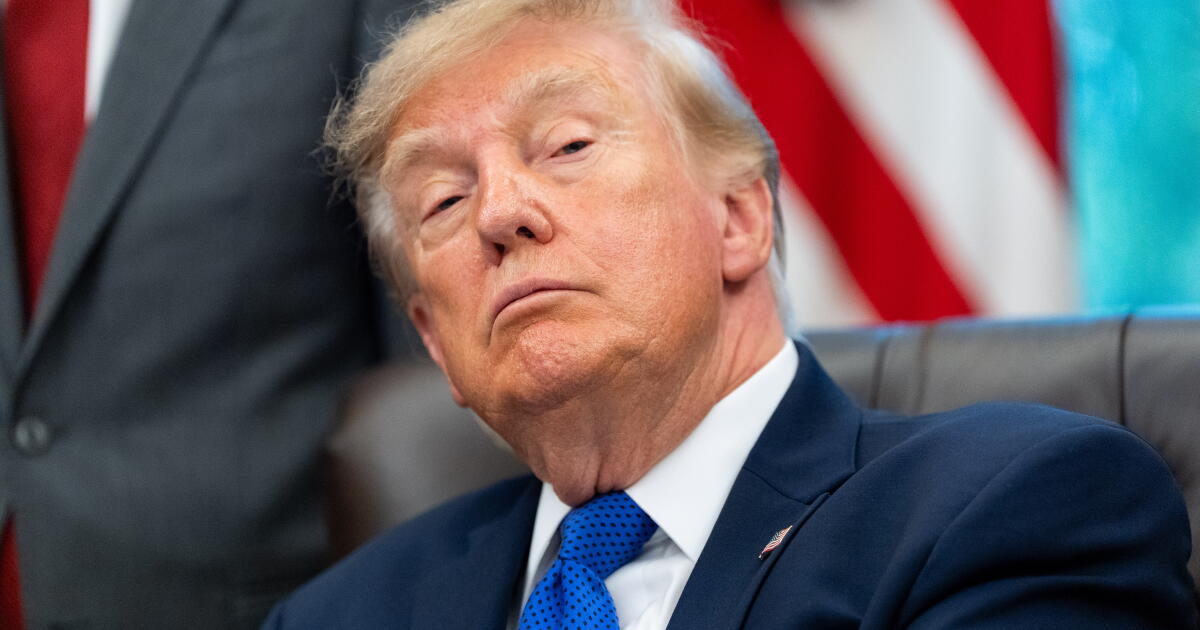
Source link

Schools left wondering how to proceed after ruling on transitioning students

The Supreme Court broke new ground this month when it ruled the Constitution forbids school policies in California that prevent parents from being told about their child’s gender transition at school.

But the reach of this new parental right remains unclear.

Does it mean all parents have a right to be informed if their child is using a new name and pronouns at school?

Or is the right limited to parents who inquire and object to being “shut out of participation in decisions involving their children’s mental health,” as the high court said in Mirabelli vs. Bonta.

Both sides in this legal battle accuse the other of creating confusion and uncertainty. And that dispute has not subsided.

UC Davis law professor Aaron Tang says understanding the Supreme Court’s order calls for a close reading of the statewide injunction handed down by U.S. District Judge Roger Benitez in San Diego.

That order prohibits school employees from “misleading” or “lying” to parents. It did not say school officials and teachers had a duty to contact parents whenever they saw that a student changed their appearance or used a new name, he said.

By clearing this order to take effect, the Supreme Court’s decision “means that schools must tell parents the truth about their child’s gender presentation at school if the parents request that information,” Tang said.

“But the initial burden is on the parents. This is not a rule that schools have an affirmative obligation to inform any and all parents if their child is presenting as a different gender,” he said.

The high court’s 6-3 order also indicated the reach of the judge’s injunction was limited.

It “does not provide relief for all the parents of California public school students, but only those parents who object to the challenged policies or seek religious injunctions.”

Religious conservatives who sued say they seek to end “secret transition” policies that encourage students to adopt a new gender identity without their parents knowing about the change.

The lawsuit challenging California’s “parental exclusion” policies was first filed by two teachers in Escondido.

Peter Breen, an attorney for the Thomas More Society, said many of the parents in Escondido “had no clue” their children were undergoing a gender transition at school.

“We need to activate parents,” he said.

Ruling for them, Benitez said the state’s “parental exclusion policies are designed to create a zone of secrecy around a school student who expresses gender incongruity.”

His injunction also said schools must notify their employees that “parents and guardians have a federal constitutional right to be informed if their public school child expresses gender incongruence.”

The Supreme Court’s order cited a dramatic example of nondisclosure.

Two parents who joined the suit had gone to parent-teacher meetings and learned only after their eighth-grade daughter attempted suicide that she had been presenting as a boy at school and suffered from gender dysphoria.

John Bursch, an attorney for Alliance Defending Freedom, argues the Supreme Court’s opinion goes further to empower parents.

“Fairly read, the Mirabelli opinion creates an affirmative obligation on school officials to disclose,” he said. “It’s consistent with the way [the court] describes the parental right: ‘the right not to be shut out of participation in decisions regarding their children’s mental health.’ School officials’ silence (rather than lying) is not notice to and is shutting out parents.”

“All that said, the California attorney general is obviously not getting that message,” Bursch said.

He said the Supreme Court needs to go beyond an emergency order and fully decide a case that squarely presents the issue of parents rights.

“School officials should not be socially transitioning children without parental notice and consent. Period,” he said.

He filed an appeal petition with the Supreme Court in a case from Massachusetts that dissenting Justice Elena Kagan described as a “carbon copy” of the California dispute.

It takes only four votes to grant review of a case, but since November, the justices have repeatedly considered the case of Foote vs. Ludlow and taken no action.

The case is set to be considered again on Friday in the court’s private conference.

Meanwhile, California Atty. Gen. Rob Bonta went back to the 9th Circuit Court of Appeals seeking a clarification to limit the potential sweep of Benitez’s order.

He objected to the part of the judge’s order that said schools must post a notice that “parents and guardians have a federal constitutional right to be informed if their public school student child expresses gender incongruence.”

Bonta said that goes beyond what the Supreme Court approved.

This “could be understood to suggest that public school officials have an affirmative constitutional duty to inform parents whenever they observe a student’s expression of ‘gender incongruence,’ effectively imposing a mandatory ‘see something, say something’ obligation in all circumstances,” he said.

But the 9th Circuit said it would not act until he first presented this request to Benitez.

Meanwhile, transgender rights advocates say the voices and the views of students have been ignored.

“This case has been about states’ and parents’ rights but students have been left out of the conversation. Their voices have not been heard at all,” said Andrew Ortiz, an attorney for the Transgender Law Center. “School should be a place where young people can feel safe and confident they can confide in a teacher.”

“We’re hearing about fear and anxiety,” said Jorge Reyes Salinas, communications director for Equality California, the nation’s largest statewide LGBTQ+ civil rights organization.

“There are students who are unable to speak with their parents. Teachers can encourage them to have a conversation with their parents. But this will weaken the trust they have in their teachers,” he said.

In the past, the court had been wary of reaching into the public schools to decide on education policies and the curriculum, but it took a significant step in that direction last year.

In a Maryland case, the court said religious parents had a right to “opt out” their young children from classes that read “LGBTQ+-inclusive” storybooks.

The 1st Amendment protects the “free exercise of religion” and “government schools … may not place unconstitutional burdens on religious exercise,” wrote Justice Samuel A. Alito, the lone conservative who attended public schools.

The same 6-3 majority cited that precedent to block California school policies that protect the privacy of students and “conceal” information from inquiring parents if the student does not consent.

But the California case went beyond the religious-rights issue in the Maryland “opt out” case because it included a “subclass of parents” who objected without citing religion as the reason.

The justices ruled for them as a matter of parents’ rights.

“Parents — not the state — have primary authority with respect to the upbringing and education of children,” the court said.

That simple assertion touches on a sensitive issue for both the conservative and liberal wings of the court. It rests on the 14th Amendment’s clause that says no state may “deprive any person of life, liberty or property without due process of law.”

In the past, a liberal majority held that the protection for “liberty” included rights to contraceptives, abortion and same-sex marriages.

Conservatives fiercely objected to what was dubbed “substantive due process.”

In the California case, Kagan, speaking for the liberals in dissent, tweaked the conservatives for recognizing a new constitutional right without saying where it came from.

“Anyone remotely familiar with recent debates in constitutional law will understand why: Substantive due process has not been of late in the good graces of this Court — and especially of the Members of today’s majority,” she wrote.

She noted that when the court struck down the right to abortion in the Dobbs case, Justice Clarence Thomas said he would go further and strike down all the rights that rest on “substantive due process.”

In response to Kagan, Justice Amy Coney Barrett filed a concurring opinion that staked out a moderate conservative position.

Since 1997, the court has said it would stand behind rights that were “deeply rooted in the nation’s history and tradition,” she wrote. That includes “a parent’s right to raise her child … and the right to participate in significant decisions about her child’s mental health.”

She said California’s “non-disclosure policy” is unconstitutional and violates the rights of parent because it applies “even if parents expressly ask for information about their child’s gender identification,” she wrote.

Chief Justice John G. Roberts and Justice Brett M. Kavanaugh signed on to her opinion.

While Kagan dissented on procedural grounds, she did not disagree with bottom-line outcome.

“California’s policy, in depriving all parents of information critical to their children’s health and well-being, could have crossed the constitutional line,” she said. “And that would entitle the parents, at the end of the day, to relief.”

Source link

‘My silence ends here’: The heartbreaking burden of Dolores Huerta

At 95, labor icon Dolores Huerta made a shocking and heartbreaking revelation Wednesday, in the wake of a New York Times investigation into sexual abuse allegations against her fellow icon, Cesar Chavez.

She was raped by Chavez, she said. Twice — both times resulting in pregnancies.

“I have never identified myself as a victim, but I now understand that I am a survivor — of violence, of sexual abuse, of domineering men who saw me, and other women, as property, or things to control,” Huerta wrote in a statement Wednesday. “I have kept this secret long enough. My silence ends here.”

Like so many women who have carried the burden of their own attacks behind an iron curtain of guilt and shame, Huerta now finds herself in the difficult, painful position of having not only to relive this trauma as it becomes public, but explain it to the rest of us.

Like the brave women of the Epstein files; like our First Partner Jennifer Siebel Newsom and the courageous women who spoke out against Harvey Weinstein; like Cassie Ventura; like E. Jean Carroll; like Christine Blasey Ford, Huerta joins the ranks of women forced to justify their response to abuse by powerful men.

Huerta shouldn’t have to engage in this rite of self-flagellation, of course, but she and Chavez are linked by their legacies as two of the greatest civil rights fighters in our history. Now, this hidden truth rewrites not just his story, not just hers — but the entire legend of a workers’ movement that grew from the grape fields of California into a defining story of Golden State fortitude and hope.

If Chavez was a predator, where do we even go from here? What do we believe in when even our heroes are ghosts, as Pink Floyd long ago warned?

“It’s just a very heavy day,” said Huerta’s spokesperson, Erik Olvera. “It is incredibly overwhelming for her.”

And for all of us, really.

Reports of abuse

The New York Times investigation detailed the molestation and abuse by Chavez of two women who were teens at the time the events took place. Huerta, the sharpest 95-year-old I’ve even seen, also told the reporters that Chavez had forced sex on her when she was in her 30s, once by manipulation and once by force.

“The first time I was manipulated and pressured into having sex with him, and I didn’t feel I could say no because he was someone that I admired, my boss and the leader of the movement I had already devoted years of my life to,” she wrote in her statement. “The second time I was forced, against my will, and in an environment where I felt trapped.”

Huerta had two daughters from these encounters and gave them to other families to be raised, though she is close to both of them, Olvera, the spokesman, said.

Olvera said that Huerta was unaware of the allegations of the two other women interviewed by the New York Times until the reporters contacted her several weeks ago.

“She literally thought she was the only one,” Olvera said. “The guilt is really heavy for her.”

As the news broke this week, shock — but not disbelief — rippled through the political and union worlds where Chavez remains revered (he died in 1993) and Huerta remains active. Despite her age, she speaks at multiple events each week and is a fixture at the state Capitol advocating for workers’ rights.

While Huerta has never spoken before about Chavez’s attacks on her, his infidelities and autocratic leadership style — and rumors of misconduct — have been documented for years. In her 2014 biography, journalist Miriam Pawel detailed some of these complaints as well as Chavez’s troubled relationship with his wife.

In a statement, the United Farm Workers union called the allegations “profoundly shocking.”

It canceled all events celebrating the upcoming Cesar Chavez Day — a state holiday — and is working on a survivor-centered response with outside experts to help ensure a fair and inclusive pathway for other people to tell their stories.

Sen. Alex Padilla, who has worked for years with Huerta but who was a child when Chavez was organizing, called for “zero tolerance for abuse, exploitation, and the silencing of victims, no matter who is involved.”

“Confronting painful truths and ensuring accountability is essential to honoring the very values the greater farmworker movement stands for — values rooted in dignity and justice for all,” Padilla said.

Changing times

If there is the slightest bit of solace to be found in this tragedy, it is in the response. So far, we have been spared the usual attacks on victims — though almost certainly they are happening outside the public eye.

Though Huerta may carry guilt, as all survivors so unfairly do, coming forward now has quickly and forcefully changed the narrative. I suspect there are few people who would dare call Huerta a liar, or challenge her motives. I suspect without her revelations, the other women coming forward would be treated differently.

I imagine that had she spoken out back then, as a young mother in the 1970s, a Latina woman in the male-dominated culture of the Central Valley, she would likely have found little relief.

What must it have been like for her all these years to know the man we idolized had this monstrous side?

But after 60 years of hard work, Huerta is now powerful in her own right. And after 60 years of silence, Huerta wanted to use that power to support the other women speaking out. Olvera said Huerta came to that decision reading the New York Times piece, and for the first time understanding that these other survivors were children when their abuse happened.

“When she learned that, that’s when she was like, I need to come out and tell my story,” he said. “She didn’t want them to stand alone.”

In the end, every survivor stands alone because what needs to heal is a soul shattered by the trivial evil of carnal greed, a pain so personal and unique even another survivor can’t fully understand it. It is daring and noble in the crucible of that personal destruction, which lasts years if not decades, to demand accountability. Not all of our heroes are ghosts.

“Your courage and your voices matter,” Siebel Newsom said. “They open the door for so many others to follow suit and tell their stories so that one day soon, we will break this horrific cycle of repetitive abuse by powerful men.”

These women have now made it clear: Chavez was a predator — a powerful man who used his authority to manipulate and force women and girls into sexual encounters.

In the end, all the good Chavez did, the strength and dignity he brought not just to farmworkers but to immigrants across the country, will forever be bound up with this ugly truth — though the movement is far more than one man.

Chavez earned this ending. Hopefully, for Huerta and the other survivors, speaking out is the beginning of healing.

You’re reading the L.A. Times Politics newsletter

George Skelton and Michael Wilner cover the insights, legislation, players and politics you need to know. In your inbox Monday and Thursday mornings.

What else you should be reading

The must-read: Cesar Chavez, a Civil Rights Icon, Is Accused of Abusing Girls for Years
The deep dive:Profoundly shocking’ allegations against Cesar Chavez spark soul-searching in movement
The L.A. Times Special: Democrats face the possibility of a historic upset in California governor’s race, poll finds

Stay Golden,
Anita Chabria

Was this newsletter forwarded to you? Sign up here to get it in your inbox.
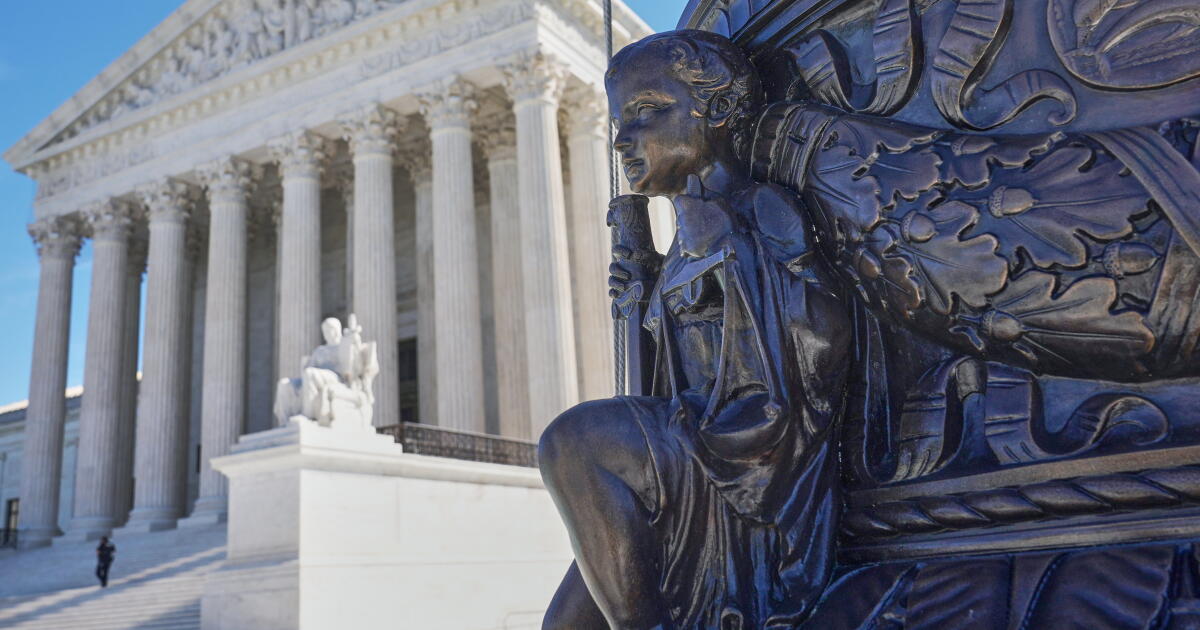
Source link

Should child rapists be released just because they’re old? Maybe

Murder is considered the worst crime out there, but for my money, it’s child rapists who are the worst of the worst — especially the serial ones who destroy one life after another.

That’s wholly subjective on my part, but I doubt I’m alone. Which is why I was far from surprised at the outrage that accompanied two recent, successful parole hearings for convicted serial child predators in Sacramento.

Gregory Lee Vogelsang, 57, and David Funston, 64, both attacked children and were granted parole through California’s elderly parole program — though both remain behind bars for now.

But the fury over the possibility of their freedom has put the state’s controversial elderly parole program under scrutiny — again — and led to a flurry of legislation to add new restrictions. Should sex offenders be excluded? Especially heinous murderers? Everyone under the age of 75?

It’s easy to answer “yes” to all of the above.

“Part of the problem we have is we shouldn’t be making policy decisions based on speculation and on scary rhetoric that’s disconnected from the facts,” Keith Wattley told me. He’s the founder and director of UnCommon Law, a nonprofit that provides legal services and parole advocacy.

“That’s how politicians make people afraid, but it shouldn’t be how we make law,” he said.

And he’s right, as grotesque as these headline-grabbing cases are. In 2024, there were 3,580 elderly parole hearings and 606 people were granted that relief. Most have remained law-abiding. In the 2019-20 year, the most recent recidivism statistics available from CDCR, 221 people were granted elderly parole. Within three years, only four had been convicted of new crimes, and only one of those was a felony for a crime against a person. That tracks with lots of data that shows men generally age out of violent crimes.

But Funston and Vogelsang are the worst of what we fear when we talk about parole, and their cases rightfully make us wonder what the heck the parole board is doing. Though Gov. Gavin Newsom sent both of these decisions back for review, it’s easy to imagine the attack ads should he run for president: Under Newsom’s watch, child rapists walked free.

“Elder parole has gone too far,” Thien Ho, the Sacramento district attorney whose office prosecuted both men, told me. “I support the opportunity of people to be rehabilitated. But I think that certain individuals, in my opinion, and in my experience, cannot be rehabilitated.”

Here’s where I’m going to make a lot of folks mad on both sides of this issue. I agree with Ho, but also, I agree with Wattley. I don’t think we can pass laws based on our grimmest view of humanity. Removing hope from the system turns our prisons into dungeons and does not ultimately serve public safety.

But then, neither does releasing child molesters into our communities.

Lost in all the wrath about these two cases is the difficult business of justice that led to the early release law in 2014, and any interest in the hard and nuanced conversation that we need to have around terrible crimes. It’s easy and popular to say no violent criminal should ever be released, but we can’t just lock up everyone with no possibility of ever getting out because the “R” in CDCR stands for “rehabilitation,” and also — we just can’t afford the forever scenario, morally or fiscally.

California tried the throw-away-the-key model in the 1980s and ‘90s and ended up with prisons so overcrowded that the federal courts stepped in. The original elderly parole effort came through a 2014 court decision on overcrowding that gave inmates 60 or older who had served at least 25 years a chance to go before the parole board. A chance — no guaranteed freedom, and usually it takes multiple hearings years apart before the board approves it.

Later, the Legislature expanded elderly parole to inmates 50 or older who had served 20 years, but excluded those sentenced under the “three strikes” law or those who had murdered peace officers.

The reality is California has a lot of old, aging and sick people behind bars — at great expense. As we grapple with the idea of universal healthcare, there’s one place in California where it already exists — our prisons and jails. We currently pay more than $41,000 in healthcare costs per inmate per year, according to the Legislative Analyst’s Office.

I’m not going to tell you it’s the best healthcare, but it’s taxpayer-funded, and includes even long-term dementia care. And yes, we do have incarcerated dementia patients.

“This is about reducing our prison population and our liability to cover housing and healthcare for an aging prison population, and we have to balance that with the safety of the community and the rights of victims,” state Assemblymember Maggy Krell (D-Sacramento) told me. She’s sponsoring a bill that would create an additional layer of safety around sex crimes by referring these possible parolees to the civil system that evaluates sexually violent predators for confinement in mental facilities after their prison terms.

“Under some circumstances, it is worth considering paroling some of these defendants,” she said, with the kind of thoughtful rationality sure to offend many. “But the cases that you’re seeing right now are completely egregious, and those defendants should not be released.”

Vogelsang was convicted of almost 30 counts of kidnapping and sex crimes, against kids as young as 5. He’s served 27 years of a 355-year sentence.

David Allen Funston, a child predator convicted in 1999 of multiple counts of kidnapping and child molestation.

David Allen Funston, a Sacramento County child predator convicted in 1999 of multiple counts of kidnapping and child molestation. Funston was granted parole suitability under California’s Elderly Parole Program after serving more than two decades in prison.

(Sacramento County Sheriff’s Office)

David Allen Funston was convicted in 1999 of 16 counts of kidnapping and child molestation for kids as young as toddlers. He was sentenced to three consecutive 25-to-life prison sentences. Newsom bounced his first successful parole bid back to the parole board for a review, and on Feb. 18, it affirmed its decision.

But Placer County prosecutors quickly charged him with an old crime that had never been filed due to the Sacramento case, and he remains incarcerated awaiting trial on those charges.

Vogelsang’s case particularly raised a red flag for me. He told the parole board he’s been working successfully for about five years to control his thoughts about children.

“I don’t want to become aroused, but I know it’s always going to be there,” he said during the hearing.

Newsom also sent Vogelsang’s case back for review, and he will go before the board again on March 18. Vogelsang’s testimony was concerning enough that if I had a vote in this, I’d probably ask him to come back again in a few years, but we’ll see what the board does.

I’ll admit my decision would be emotional, and these cases do make me wonder. But Wattley is right that condemning elderly parole based on the monstrous deeds of these child predators is shortsighted. There is likely little to no public safety benefit in raising the overall age for elderly parole, and certainly no fiscal benefit.

“When you’re paying for older, sicker people to be incarcerated, and they don’t pose a risk to public safety, what are we actually getting for that? We’re not getting anything that supports survivors. We’re not getting anything that prevents crime. We’re just spending taxpayer dollars on something that doesn’t correlate with the public safety risk,” Wattley pointed out.

As hard as it is to wrap our minds around, it’s best for public safety to allow even the worst of the worst their chance in front of the parole board. It may even make sense for some who have committed truly terrible crimes decades ago to be released, if there is strong evidence of change and a low risk to public safety. That’s the kind of fair and realistic justice that no one on either side of the issue wants to talk about.

I’m not convinced Vogelsang and Funston have met those bars. But that doesn’t mean we should throw out the bars.

You’re reading the L.A. Times Politics newsletter

George Skelton and Michael Wilner cover the insights, legislation, players and politics you need to know. In your inbox Monday and Thursday mornings.

By continuing, you agree to our Terms of Service and our Privacy Policy.

What else you should be reading

The must-read: USC and ABC7 criticized for exclusion of all candidates of color in upcoming gubernatorial debate
Money, it’s a gas: Poison-pill effort to cancel proposed billionaire tax hits voters’ mailboxes
The L.A. Times Special: China-backed Big Pork wants to override 63% of California voters. Even conservatives are mad

Stay Golden,
Anita Chabria


Was this newsletter forwarded to you? Sign up here to get it in your inbox.
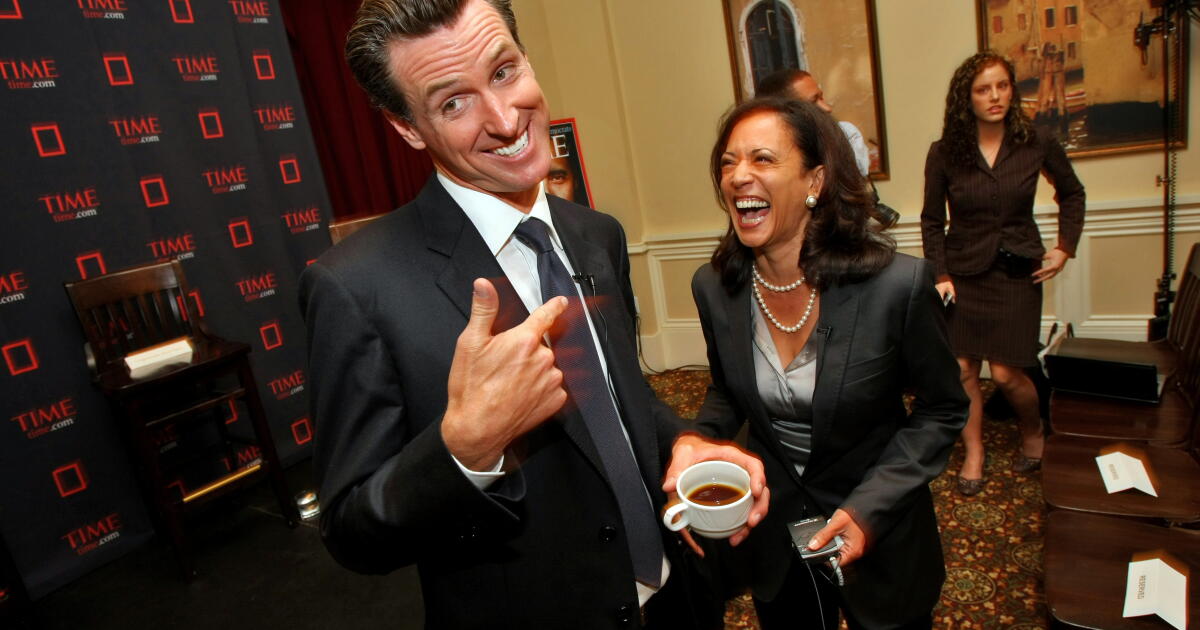
Source link

Big Pork attacks California law on caging

Spring has sprung on Leo Staples’ family farm in Oklahoma, and his Berkshire pigs couldn’t be happier about it.

Weighing in at about 550 pounds, Woody, his largest hog (named by a grandson after the “Toy Story” icon) plays “like a puppy” in his free-range paddock, Staples told me, gobbling up the rye, clovers and winter peas that have grown knee-high under the Southern sun.

Swine life on Staples’ sustainable family farm is a jarring contrast to the existence of a pig on one of America’s “intensive” corporate-owned mega-farms, where some sows are confined to cages so small they literally can’t turn around or take more than a step or two in any direction.

“It’s not necessary and it hasn’t proven to be good science,” Staples, a self-described conservative Republican, said of Big Ag porcine lockups. “It’s also cruel.”

That confinement is at the heart of a congressional fight over animal welfare standards that Staples — and California — is likely to lose, though we shouldn’t.

At issue is the Save Our Bacon Act, a sneak attack backed by foreign corporations currently hidden deep inside the farm bill. It would severely curb the ability of states to enact limits on animal confinement and maybe accidentally open the door for ending all kinds of state-level food safety laws.

The SOB Act, an apt nickname, would not only cripple small family farmers such as Staples (though its supporters claim it helps family farmers), it would negate the will of California voters, potentially introduce risk into the food chain, and turn greater power of our food supply over to China.

It would also limit consumer choice at a time when more Americans — from fans of far-right Health Secretary Robert F. Kennedy Jr. to far-left granola grandmas — are demanding a say in how their food is produced.

Let’s break that down.

What is the SOB Act?

For the vegetarian hard-liners out there, it is true that Woody himself will someday likely be bacon.

But, increasingly over the past decades, meat-friendly consumers have moved toward wanting animals to “live a really great life and have one bad day,” as Nate Beaulac, another conservative Oklahoma pork farmer, describes it.

In 2018, to further that aim, about 63% of California voters passed Proposition 12, which increased the space that breeding sows were required to have, from something about the size of a small car trunk to the size of a coat closet. We’re not talking rolling acres here — just enough room to turn around. Some of these sows are basically caged for the majority of their breeding life — years — and are about the size of a black bear.

But here was the real bite in Proposition 12: No pork from any state could be sold in California if it didn’t come from a farm that met the new standard.

Overnight, the corporate breeders were locked out of the Golden State market. They sued bigly, and lost bigly in 2023 at the Supreme Court, which upheld California’s right to impose the state standard.

Big Pork tried to revive the issue with the Supreme Court in 2025 and was rebuffed. Surprise, surprise, the drums started pounding for the SOB Act shortly after (though various legislative attempts have floated since Proposition 12 was passed) backed by a Midwestern congresswoman from a Big Pork state.

The SOB Act would negate Proposition 12 (and a similar law in Massachusetts) and forbid states from making laws regarding animal confinement, according to an analysis by the Animal Law & Policy Program at Harvard Law.

That would emphatically overturn the will of the majority of California voters who want those standards.

But hey, Big Pork would make big bank.

“They want to limit American consumers’ ability to fight,” Beaulac told me. “They wanted to limit Americans’ ability to pursue any sort of change. And that is why me, not only as a farmer, but as an American and a capitalist, I’m strongly opposed to the Save Our Bacon Act, and in staunch support of Proposition 12.”

What Prop. 12 did

Beaulac was once a Californian himself, before heading to the Sooner State for college. He describes himself as a “Christian, capitalist, conservative environmentalist,” and a sustainable farmer who depends on consumers’ desire for healthy food to sell his pigs, chickens and cows.

Proposition 12, Beaulac said, “was a huge help to smaller farms, and the only people that it really hurt were the huge multinational conglomerates.”

“I mean very simply, we want the opportunity to compete,” he said.

Staples, Woody’s owner, who is also an expert in project management and environmental compliance from a previous career in the power industry, makes the case that the mega-farms can also come with mega-dangers.

“You have 100,000 pigs within two miles of each other, the chance of issues with a swine flu or natural disaster just increases,” he said. He points out that issues such as disease, groundwater contamination and waste disposal have already become problems for some large farms.

The flaws in the SOB Act don’t stop there.

The Harvard Law analysis points out that the loose language of the bill could have other consequences, maybe even gutting some state safety, labeling and cleanliness standards.

And some Republicans in Congress, including Californian Reps. David Valadao and Young Kim, oppose the measure and sent a letter to the Agriculture Committee late last year urging them to dump the act, pointing out that at least a quarter of Big Pork is owned by Chinese companies and does not represent American interests.

“Foreign-owned corporations — particularly those tied to adversarial nations — already hold a disturbing amount of control over U.S. agricultural assets,” the letter read, citing Chinese-owned Smithfield Foods, the largest pork producer in the United States.

The SOB Act “could further consolidate the influence of such foreign entities,” the letter‘s authors warned.

Armed with those arguments and others, Staples and Beaulac traveled to Washington recently to make their case against the SOB Act with lawmakers.

But, both men told me, they were met with a wall of lobbyists and money.

“It’s very eye-opening in terms of how many lobbyists are there every day,” Beaulac said. “The reality is Big Ag donates big money to the senators, and so when they need their bill to go through or they need a bill shut down, they’re going to have a lot more leeway than the small farmers.”

The lobbyists, Staples said, had the debate wrapped up tight long before the farmers even knocked the dirt off their boots and entered Congress.

“It was very obvious,” he said. “I was not prepared for what Big Ag had done, how they had prepared members of Congress to address the issues we wanted to address.”

Beaulac said he’s discouraged and fears the SOB Act will pass, but also isn’t giving up hope. He sees it as a bipartisan issue, and one he hopes for which people will stand up. This week, a social media post featuring a sad photo of a caged pig went viral, drawing attention across party lines.

“Blue, red. It doesn’t matter. People want healthy food,” Beaulac said. “They want to know how it’s raised. They genuinely care how they’re feeding their family, and it has nothing to do with who they vote for in November.”

What else you should be reading

The must-read: Thune Is in a Vise as Trump and Far Right Demand Fight on Voter Bill
The deep dive: The exodus of California’s tech billionaires from the Golden State to Florida’s Gold Coast
The L.A. Times Special: California could be attacked by drones because of Iran war, memo warns. Officials downplay threat
Stay Golden,
Anita Chabria

P.S. Here’s a post by right-wing commentator Michael Cernovich on the SOB Act, just a taste of how much some of the MAGA folks don’t like this measure.


Was this newsletter forwarded to you? Sign up here to get it in your inbox.
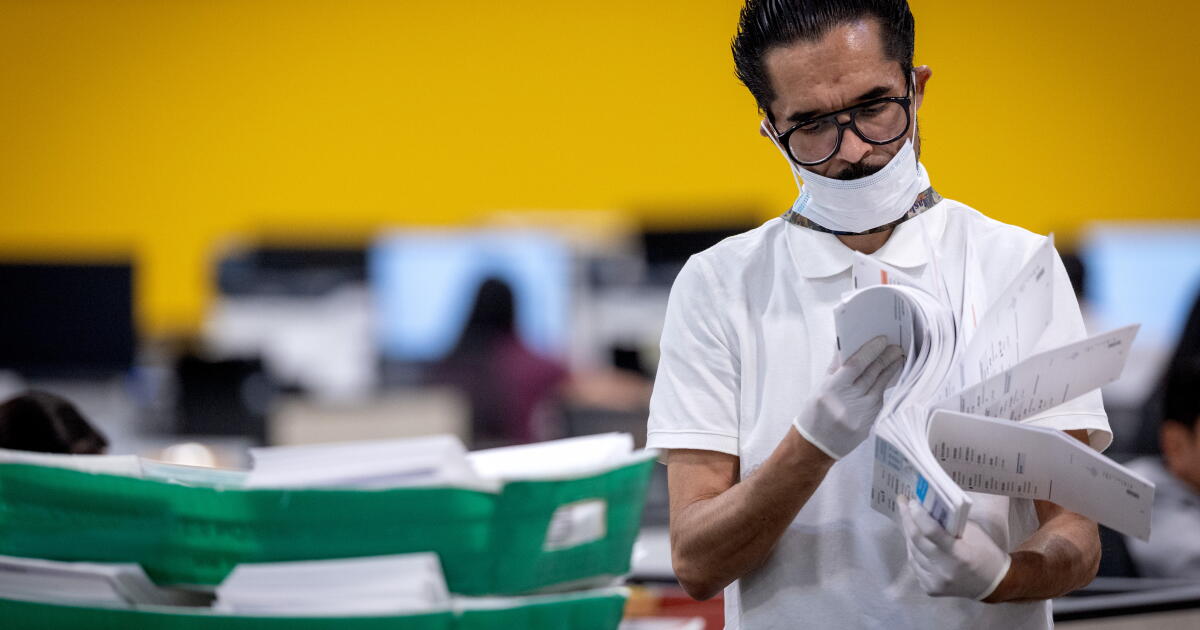
Source link