
High school football: Friday's scores
Results from CIF City and Southern Section high school football games on Friday, Oct, 16.
Source link
Results from CIF City and Southern Section high school football games on Friday, Oct, 16.
Source link

MONDAY’S RESULTS
City Section
Carson 19, Narbonne 12
El Camino Real 12, Cleveland 0
Los Angeles Roosevelt 19, Huntington Park 0
South Gate 26, Bell 22
Southern Section
Alemany 34, Flintridge Sacred Heart 7
Anaheim 38, Rancho Alamitos 7
Aquinas 33, Arrowhead Christian 0
Bellflower 14, Mayfair 12
Bell Gardens 20, Keppel 8
Bishop Montgomery 32, Cantwell-Sacred Heart 6
Bolsa Grande 36, Century 0
California Military Institute 42, San Jacinto Valley Academy 0
Canyon Springs 18, Riverside North 12
Carter 24, Colton 0
Cathedral City 19, Banning 6
Cerritos 30, La Mirada 0
Chaparral 19, Great Oak 0
Compton 25, Long Beach Cabrillo 8
Corona Santiago 21, Norco 14
Covina 33, Rowland 6
Cypress 13, Canyon Country Canyon 12
Eastvale Roosevelt 12, Corona Centennial 6
Eastvale Roosevelt 30, Riverside King 25
Edison 25, Corona del Mar 19
Eisenhower 26, Bloomington 18
El Rancho 7, Schurr 6
El Toro 22, Beckman 12
Etiwanda 68, Los Osos 0
Fullerton 22, Garden Grove 7
Gahr 34, California 18
Garden Grove 28, Savanna 6
Glenn 34, Whitney 0
Godinez 15, Buena Park 14
Hacienda Heights 18, Charter Oak 0
Hemet 13, Hillcrest 6
Heritage 44, Citrus Hill 0
Indio 33, Xavier Prep 6
Irvine 19, Newport Beach Pacifica Christian 12
La Canada 38, Temple City 12
Lakewood 20, Long Beach Jordan 0
Lakewood St. Joseph 40, Quartz Hill 0
La Palma Kennedy 33, Laguna Hills 26
La Quinta 32, Rancho Mirage 0
Linfield Christian 34, Ontario Christian 14
Loara 8, Orange 7
Long Beach Poly 31, Millikan 6
Los Alamitos 40, Marina 0
Los Altos 13, Colony 12
Los Amigos 13, Westminster 6
Montebello 19, Alhambra 7
Moreno Valley 15, Arlington 13
Mountain View 39, El Monte Arroyo 0
Murrieta Mesa 24, Murrieta Valley 2
Newport Harbor 34, Fountain Valley 0
Nogales 6, Garey 0
Norco 33, Corona 24
Norwalk 26, Pioneer 6
Ocean View 7, Katella 0
Orange Vista 19, Liberty 13
Palm Desert 19, Desert Hot Springs 6
Paloma Valley 19, Rancho Verde 15
Paramount 6, Artesia 0
Patriot 50, Norte Vista 0
Placentia Valencia 20, Estancia 0
Pomona 14, Edgewood 0
Ramona 19, La Sierra 7
Ramona Convent 12, St. Bernard 6
Rancho Cucamonga 14, St. Lucy’s 7
Rosemead 6, El Monte 0
San Marino 27, Gabrielino 7
Santa Ana Foothill 26, Garden Grove Pacifica 20
Santa Ana Valley 20, Western 7
Segerstrom 20, Westminster 12
Shadow Hills 18, Palm Springs 6
Sonora 7, Villa Park 0
South El Monte 27, San Gabriel 0
South Hills 45, San Dimas 8
St. Margaret’s 40, Laguna Beach 19
St. Paul 54, Sacred Heart of Jesus 0
Summit 19, Jurupa Hills 6
Sunny Hills 19, El Dorado 13
Upland 7, Chino Hills 0
Temescal Canyon 32, Jurupa Valley 6
Temecula Prep 32, Nuview Bridge 6
Tesoro 33, Dana Hills 0
Tustin 20, Costa Mesa 0
Valley View 19, Lakeside 0
Vasquez 26, Palmdale 6
Victor Valley 36, Fontana 0
Vista Murrieta 18, Temecula Valley 6
Warren 36, La Serna 34
West Covina 21, Northview 0
Whittier 33, Oxford Academy 12
Woodbridge 35, Sage Hill 7
Woodcrest Christian 7, Riverside Notre Dame 0
Workman 30, Bassett 0
Yorba Linda 32, Crean Lutheran 14
TUESDAY’S RESULTS
Southern Section
Adelanto 15, Victor Valley 0
Agoura 14, Oaks Christian 7
Alhambra 39, El Monte 0
Alta Loma 13, Colony 0
Antelope Valley 6, Lancaster 0
Antelope Valley 12, Lancaster 7
Arroyo Valley 6, Indian Springs 0
Banning 19, Entrepreneur 14
Bishop Amat 28, South El Monte 0
Bonita 14, Ayala 12
Brentwood 7, SEED LA 0
Brentwood 33, Shalhevet 6
Cajon 13, Redlands East Valley 12
California Military 32, Riverside Notre Dame 12
Camarillo 38, Moorpark 7
Canyon Country Canyon 20, Golden Valley 12
Capistrano Valley 32, Irvine 26
Castaic 32, Saugus 0
Cerritos Valley Christian 61, Vista Meridian 0
Chaminade 26, Louisville 0
Channel Islands 25, Santa Barbara 9
Chino Hills 38, Los Osos 8
Dos Pueblos 14, San Marcos 6
Eastside 22, Knight 6
Etiwanda 45, St. Lucy’s 0
Glendora 32, Claremont 19
Grand Terrace 26, Carter 13
Hart 14, West Ranch 0
Harvard-Westlake 32, Alemany 14
Hemet 19, Riverside North 7
Heritage 29, Rancho Christian 14
Highland 19, Palmdale 13
Hueneme 39, Santa Paula 27
JSerra 40, Mater Dei 12
Kaiser 13, Summit 0
Loma Linda Academy 53, Calvary Baptist 0
Miller 7, Norte Vista 0
Mission Viejo 7, Trabuco Hills 6
Montclair 20, Chaffey 6
Moreno Valley 40, Lakeside 13
Newbury Park 25, Calabasas 0
North Torrance 19, Long Beach Jordan 0
Ontario 6, Don Lugo 2
Orange Lutheran 18, Santa Margarita 6
Oxnard 54, Rio Mesa 6
Oxnard Pacifica 39, Del Sol 0
Pacific 19, Jurupa Valley 12
Paloma Valley 56, Orange Vista 14
Pasadena Poly 31, Westridge 14
Patriot 24, Ramona 0
Quartz Hill 2, Littlerock 0
Rancho Cucamonga 32, Upland 24
Rancho Verde 35, Citrus Hill 6
Redlands 20, Citrus Valley 13
Rialto 12, San Gorgonio 6
Riverside Poly 31, Hillcrest 12
San Bernardino 46, Rubidoux 0
San Clemente 34, San Juan Hills 14
San Dimas 32, Los Altos 12
Sierra Canyon 41, Sherman Oaks Notre Dame 14
Simi Valley 25, Royal 7
Sr. Bonaventure 40, Oak Park 0
Sunny Hills 38, Loara 6
Tahquitz 25, Elsinore 12
Temescal Canyon 7, West Valley 6
Torrance 19, West Torrance 0
Valley View 27, Vista del Lago 26
Ventura 35, Buena 0
Western Christian 38, Fairmont Prep 0
Westlake 46, Thousand Oaks 0
Windward 54, YULA 0
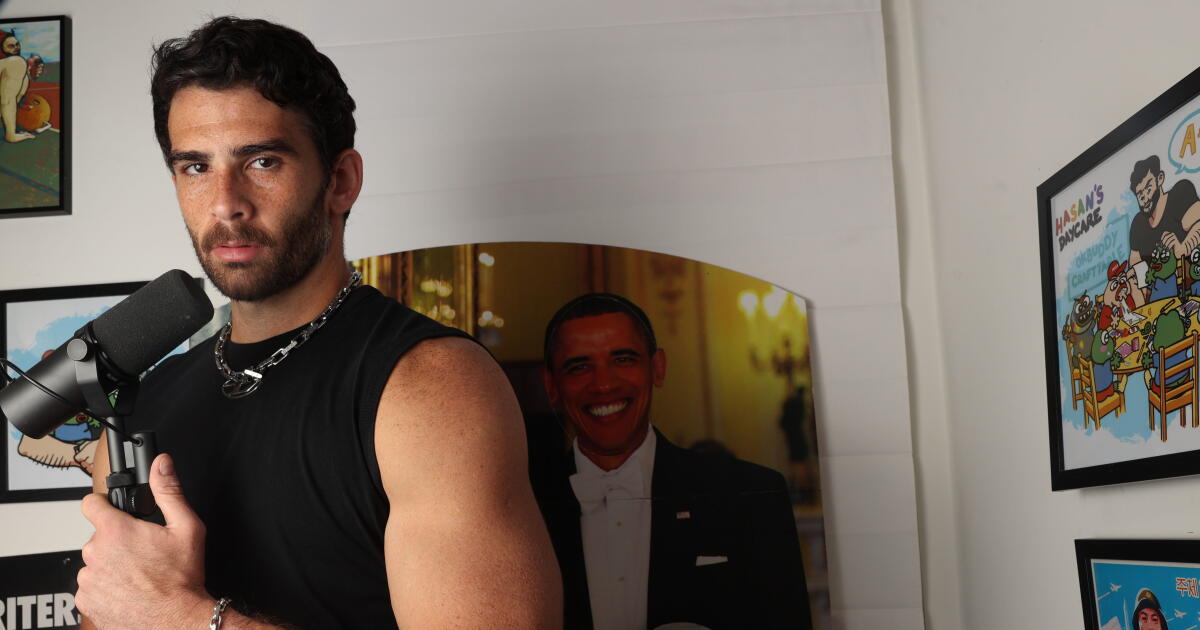
Hours before Nithya Raman took the stage at Jewish Federation L.A.’s mayoral forum this week, Mayor Karen Bass’ campaign blasted out a press release accusing the council member of skipping a City Council Jewish Heritage Month event to appear on Hasan Piker’s livestream.
The Raman camp’s response: “The Mayor is deliberately spreading misinformation that the public record directly contradicts,” said Liz Garcia, a campaign spokesperson.
Piker is a left-wing streamer on the platform Twitch and a fierce critic of Israel. Raman appeared on his stream on May 15, where he asked her if she thought Israel was committing genocide in Palestine. She said she did.
That same day, Raman missed a Jewish Heritage Month event at City Hall. Debbie Paperman, who is on the executive board of Democrats for Israel Los Angeles, said Raman told her that she had not been feeling well.
The Bass campaign, citing the fact that Raman appeared on Piker’s stream the same day, fired off an email to reporters claiming the councilmember had lied about her reasons for missing the Jewish heritage event.
The Raman campaign said that Raman was, in fact, ill.
Video from the May 15 council meeting shows Raman was present at the start of the meeting, but no longer at her seat during the heritage event, in which Councilmember Bob Blumenfield celebrated Jewish athletes. More than an hour later, Raman was back in council to make a speech and introduce other speakers for Hapa Day, celebrating people of mixed Asian and Pacific Island heritage, during which she said she wasn’t feeling well.
Raman’s team said she was still at City Hall during the Jewish Heritage Month event, but that she left council chambers due to her illness.
She felt better later that afternoon, the Raman camp said, allowing her to appear on Piker’s show.
Paperman said she wasn’t convinced. “It happened that you were sick for the multiple hours this was going on and you happened to get better to go on this psycho’s stream?” said Paperman. “I don’t believe that.”
Piker, meanwhile, shot back at the mayor for using his name to try to dissuade voters from supporting Raman.
“Karen Bass is deploying the same nasty tactic that Donald Trump used recently at a press conference, wondering out loud why any Jewish person would vote for Democrats, due to my presence in the big tent,” he told The Times in a text message.
Piker said he will vote for Raman, though he supported Bass against billionaire Rick Caruso in 2022.
“I was also a fan of [her] past work in Cuba,” he told The Times. “Karen Bass used to be quite the radical.”
Bass will need to rely on undecided Republican and conservative voters to propel her to a mayoral victory, a new poll paid for by a group supporting her found.
The incumbent mayor is trailing Raman by 4 percentage points, 39% to 35%, with a quarter of the electorate still undecided, according to the initial results from an FM3 Research poll that was commissioned by the Central City Assn.’s PAC, an independent expenditure group supporting the mayor.
Sign up to make sense of the often unexplained world of L.A. politics.
By continuing, you agree to our Terms of Service, which include arbitration and a class action waiver. You agree that we and our third-party vendors may collect and use your information, including through cookies, pixels and similar technologies, for the purposes set forth in our Privacy Policy such as personalizing your experience and ads.
When the pollsters gave likely voters additional, critical information about both candidates, Bass shot up by 5 points and took a narrow lead over Raman, 40% to 39%, with 21% undecided, according to FM3.
“The undecided voters — including many that say they will refuse to make a choice between Bass and Raman by Election Day — are disproportionately: Republicans, conservatives, 65+, homeowners, Democratic women over the age of 50 and those who do not hold a college degree,” wrote the research company in a polling memorandum.
The poll surveyed 809 likely L.A. voters from Sept. 21-28. It has a 3.5% margin of error.
“The mayoral race remains a statistical tie,” said Nella McOsker, the president of the Central City Assn. “Our poll demonstrates that some of the most reliable voting blocs swing to Bass once they fully learn both candidates’ records.”
A poll conducted between Sept. 15 and Sept. 20 by the UC Berkeley Institute of Governmental Studies, co-sponsored by The Times, found Raman was ahead 39% to 28%.
A woman walks out of her home carrying a full garbage bag, then starts venting about the high cost of trash pickup.
“Karen Bass has nearly bankrupted L.A., so the city doubled my trash fees. Isn’t L.A. expensive enough?” the woman says angrily, before slamming the lid on a black trash bin.
That message is at the heart of a campaign video created by Streets For All, a transportation advocacy group now spending about $1.2 million to promote Raman and tear down Bass.
That ad is missing a key piece of information: Raman voted to hike those trash fees several times last year, even as two of her council colleagues spoke out against them.
“I was one of two no votes,” said City Councilmember Monica Rodriguez, who is supporting Bass’ reelection, in an interview. “She never once pushed back.”
Rodriguez called the ad misleading, saying it implies that Raman was an opponent of the fee hikes.
Michael Schneider, who runs the Streets For All campaign committee, defended the 14-second spot, saying council members hiked the trash fees to make up for bad budget decisions made by the mayor — including her support for a $2.6-billion upgrade of the Convention Center.
The council boosted the trash fee to $55.95 per month last year for small apartment buildings, up from $24.33. For single-family homes, the monthly fee was also hiked to $55.95, up from $36.32.
The city’s budget advisors said the increases were needed in large part because the monthly fees had not been increased in 17 years. As a result, L.A.’s residential trash customers were not being charged the full cost of garbage pickup, leaving the city budget to cover the difference.
L.A.’s summer of 2026 will be remembered for stifling heat, innumerable Dodgers injuries and, especially, World Cup watch parties.
Teams, corporate sponsors and the city of Los Angeles welcomed in the world, producing large crowds and kumbaya moments — with fans of opposing teams partying side-by-side in (relative) peace and harmony.
Mayor Karen Bass’ “Kick it in the Park” events drew a total of 45,000 fans over the length of the quadrennial soccer tournament. A survey of about 2,000 of them registered overwhelming support for the free shindigs.
Paul Krekorian, executive director of the mayor’s Office of Major Events, declared victory in a meeting with City Council members this week. He also said that substantial planning is already underway to bring the city even more viewing parties and “activations” during the 2028 Olympics.
While the city hosted a maximum of three viewing parties a day during the World Cup, it plans to stage as many as 15 a day when the Olympics come to town. A list has been drawn up of possible locations for the festivities — spread around every corner of the city and distant from Olympic venues to avoid overcrowding.
Among the possible viewing party locations: MacArthur Park, the Greek Theatre, Pan Pacific Park, Leimert Park Plaza, Koreatown, Penmar Recreation Center, Echo Park Lake, Angels Gate Park and the Watts Towers.
Given the welter of Olympic events, it will be a challenge to schedule the parties, whose centerpieces are usually big screen projections of the live events, with food and live performances often thrown in.
— SPLIT ON GAZA: Bass and Raman split on Tuesday over whether Israel has committed genocide in Gaza during the Israel Gaza war. The two candidates gave their opinions during a forum hosted by Jewish Federation Los Angeles. Raman said she agrees with the experts who use the term, while Bass said she would not use the term genocide to describe Israel’s counteroffensive in Gaza.
— WILDFIRE FAILURES: A long-awaited independent investigation commissioned by Gov. Gavin Newsom offered the most in-depth review of the Jan. 7, 2025, Palisades and Eaton fires, describing the chaos and poor communication that made firefighting, rescues and evacuations even more difficult. The 724-page report also cited the Los Angeles Fire Department’s failure to fully extinguish the Jan. 1 Lachman fire, which reignited days later, and Los Angeles County’s failure to provide timely evacuation alerts in Altadena.
— ESTAMOS CON WHOM?: Recent polling by the UC Berkeley Institute of Governmental Studies, co-sponsored by The Times, found that likely Latino voters favor Councilmember Raman over incumbent Bass by a wide margin — 45% to 21%, with 34% undecided. That’s an even bigger lead than Raman had over Bass with voters overall in the most recent Berkeley IGS/L.A. Times poll.
— VOTER GUIDES: The Times released its much-anticipated voter guides for the November election this week, including a mayoral guide and a guide to the Council District 9 race, among many others.
— OLYMPIC OBSCURA: The nonprofit organizer of the 2028 Summer Olympics, LA28, has provided less information in its annual reports than it agreed to in a 2021 contract with the city. The group has stopped reporting the contracts it signs over $1 million, leaving taxpayers with less information about the work going into the Games. LA28 says it has provided all necessary info.
The city also asked LA28 to take out a $650-million insurance policy, and agree to cover any potential losses above that amount, should the Games be canceled by a calamity.
— LAPD BLUES: Secret recordings documenting LAPD officers making racist comments have renewed questions about whether the force, which is now less than 50% white, has made forward progress on stamping out prejudice in its ranks.
— STORM’S BREWING: L.A.’s sanitation agency is bracing for the coming ‘Super’ El Niño, which could wreak havoc with the city’s Hyperion sewage treatment plant.
That’s it for this week! Send your questions, comments and gossip to LAontheRecord@latimes.com. Did a friend forward you this email? Sign up here to get it in your inbox every Saturday morning.

The 39th annual Hispanic Heritage Awards — which will honor the contributions and accomplishments of Latinos in the U.S. and Latin America — will air nationwide Friday on PBS.
In a historic decision by the Hispanic Heritage Foundation, which presents the annual awards, the event departed from its home base of Washington. Instead, Latino luminaries gathered at the Orchestra Hall in Minneapolis, where the celebratory occasion was taped for broadcast Sept. 10.
The move to the Midwest was a timely decision for members of the Hispanic Heritage Foundation, a nonprofit organization established by the White House in 1988. They took into consideration Minnesota’s response to a large-scale immigration enforcement campaign that began in December, known as “Operation Metro Surge.”
“We went to Minneapolis because we wanted to recognize what’s great about our community, [our] courage, resilience, strength, unity and looking out for each other,” said Antonio Tijerino, president and CEO of the Hispanic Heritage Foundation, in a phone call with De Los.
The Department of Homeland Security called the undertaking the “largest DHS operation ever” earlier this year on X, with an estimated 2,000 agents deployed to the Minneapolis–St. Paul metropolitan area. Thousands of Minnesota residents rallied against the tactical and militant methods used by Immigration and Customs Enforcement agents.
Civil unrest hit a boiling point following the killings of Renée Good and Alex Pretti on Jan. 7 and 24, respectively, by federal agents.
“ We actually went with a delegation of national Latino leaders to offer our support of the community during this crisis and we were overwhelmed by the heroism,” said Tijerino, who recalled a group visit to Minneapolis in February. There, he and his colleagues learned more about the rapid response efforts underway in the city.
“It was an American story that we wanted to tell,” he added.
At the 39th ceremony, Los Tigres del Norte presented a bit of that story to the people of Minnesota — who were collectively honored with the Humanitarian Award.
“Peaceful, hard-working communities of immigrants and refugees found themselves in fearful chaos as more than 4,000 parents, grandparents, neighbors, friends and families were taken by force, U.S. citizens among them,” Los Tigres del Norte announced in English while presenting the award. The players closed the show with a rendition of their 1984 song “Jaula de Oro,” which speaks to the plight of the undocumented community.
“I think Minnesota [is] a reflection of all of our Latino communities across the nation,” said Henry Jiménez, president and CEO of Propel Nonprofits, who was one of the individuals on stage representing the people of Minnesota.
“It uplifted the people. I think people felt validated for all of their hard work and effort that they’ve had to endure, not just the last couple months, but really a lifetime of work,” said Jiménez, whose organization helps consult and raise funds for budding nonprofits.
The relocation of the Hispanic Heritage Awards also comes as D.C. deals with the temporary closure of the John F. Kennedy Center for the Performing Arts — which hosted the Hispanic Heritage Awards in years prior.
The Kennedy Center closed its doors indefinitely on Sept. 15 after an inspection found acute public safety concerns, among them roofing issues. In a letter to Congress, various former employees allege that leadership was aware of the issues but halted plans for repair in April.
The closing also comes after a federal judge blocked the board’s decision to include President Trump’s name on the building in September. Trump’s takeover of the Kennedy Center began in February 2025, when he dismissed half its board members and installed himself as chairman.
“We were [at the Kennedy Center] for a very long time. It brought a lot of prestige and to fill a historic venue like that with Latinos was wonderful,” said Tijerino. “After many years of being at the Kennedy Center, we decided we wanted to go to another venue.”
In April 2025, the Hispanic Heritage Foundation announced that it would host its 38th annual awards at the Warner Theater instead; previous versions of the ceremony have also taken place at the historic Warner Theater venue, including in 2015 for the 28th Annual Awards and 2017 for the 30th celebration.
Hosted by comedian Anjelah Johnson-Reyes, the other honorees of the 39th Hispanic Heritage Awards included Venezuelan artist Oscar D’León, the salsa singer behind notable hits such as “Llorarás” and “Me Voy Pa’ Cali,” who received the Legend Award for his lifelong contributions to the genre.
Chilean singer-songwriter Mon Laferte, the vocal powerhouse behind power ballads like “Tu Falta de Querer” and “Amárrame (feat. Juanes),” also received the Social Justice Award. The Latin Grammy-winning artist has long championed feminist causes and challenged sexual harassment in the entertainment industry — a topic central to her 2024 Netflix documentary, “Mon Laferte, Te Amo.”
Puerto Rican rapper Eladio Carrión, whose trap flow famously featured in songs like “Coco Chanel” with Bad Bunny and “Sigue Bailandome,” was also honored with the Inspira Award.
Mexican singer-actor Ximena Sariñana, whose early composition appeared on the soundtrack of the 2002 teen film “Amar Te Duele,” received the Music Award as well.
Following the success of their Minneapolis awards show, the Hispanic Heritage Foundation is now toying with the idea that the ceremony can take place anywhere where there is a strong Latino presence.
“Who knows if L.A. is the [next] spot!” said Tijerino, who hails from Long Beach,
Though Jiménez assures that he is not swayed by any particular city at the moment, he offers one idea: “I hope that the community that’s chosen [to host] doesn’t have to go through a difficult time to be chosen.”