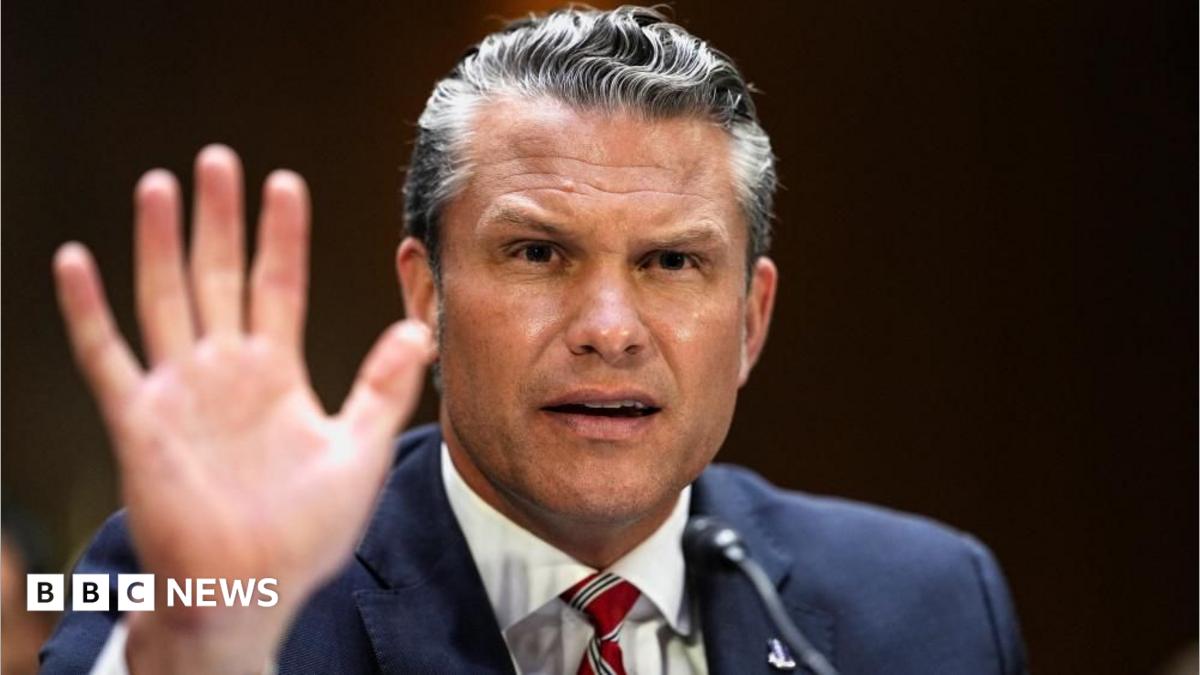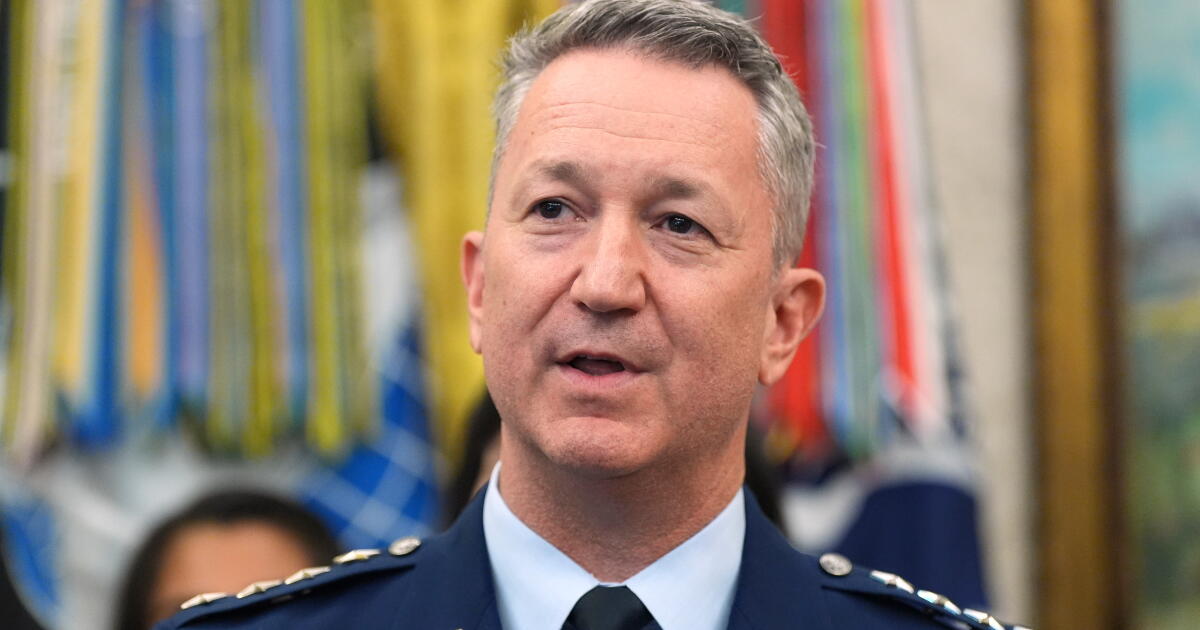
July 21 (UPI) — U.S. Secretary of Defense Pete Hegseth told a Senate committee Tuesday that the financial cost of the Iran war has now reached about $37.5 billion according to Defense Department estimates.
Lawmakers questioned Hegseth and Joint Chiefs of Staff Chair Gen. Dan Caine during a Senate Appropriations Committee meeting as the Pentagon and President Donald Trump are seeking up to $70 billion in emergency military funds.
This is in addition to the $1.5 trillion the Pentagon has requested in the upcoming defense budget. Trump has also asked for about $18 billion more in emergency funds for unrelated programs, including $11 billion for agriculture. Agriculture Secretary Brooke Rollins was also present at the hearing, although the focus remained on military spending.
Some Senate lawmakers, both Democrats and some Republicans, questioned the need for the money on top of the defense request and the roughly $150 billion in additional funding the military received through Trump’s so-called Big Beautiful Bill.
“The problem is not a lack of money, but poor planning,”Murray said. “So I’ll be blunt. The truth is, your request does not make a lotof sense.”
Hegseth, in response, blamed “gross negligence and neglect”by the Biden administration.
Some asked about Iran’s military capabilities and theobjectives of the war, as Hegseth and Trump have both previously said that the war had been won. The defense secretary also said in the early days of the war that Iran’s military had already been “destroyed and made combat-ineffective.”
Hegseth said that he never meant that Iran would be unable to launch any attack. He said he meant Iran “can lob missiles, but it’s not an effective military.”
Sen. Lisa Murkowski, R-Ala., asked Hegseth if the Trump administration believes it does not need authorization from Congress to continue the war. Hegseth replied that the administration believes it already has the authority it needs.
The hearing lasted more than three hours and ended in a shouting match between Hegseth and Sen. Gary Peters, D-Mich., who questioned the war’s objectives, called Hegseth a “failure” and said the Trump administration has created another “forever war.”
Hegseth responded by telling Peters “shame on you” and saying he has “Trump derangement syndrome.”
WASHINGTON — The Trump administration urged Congress on Tuesday to approve roughly $70 billion in emergency defense funding to sustain U.S. military capabilities amid its escalating war against Iran, warning that without it the Pentagon could face “critical shortfalls” disrupting its readiness.
The request comes as the United States and Iran have traded strikes for 10 consecutive days in a renewed conflict, deepening concerns in Washington over an expanding war that could inflame the global economy and trap the president in a quagmire.
The collapse of a ceasefire agreement and the sudden resumption of war have raised alarms within the Pentagon over its ability to protect U.S. forces and assets in the Middle East over a prolonged conflict, with defensive munitions in dangerously short supply, two Defense Department officials told The Times.
Yet the administration is facing bipartisan skepticism from lawmakers over the continuation of a war unpopular with a vast majority of Americans, over which they have had little oversight, and that in recent days has led to deaths of U.S. soldiers.
Those tensions became clear as Defense Secretary Pete Hegseth and Gen. Dan Caine, the chairman of the Joint Chiefs of Staff, testified before the Senate Appropriations Committee to make their case for the tens of billions of dollars and offer their first in-depth public remarks about the war since May.
Hegseth told senators the United States is at a “moment where we cannot afford inaction,” while Caine argued the funding request is coming to Congress “while time is still on our side.”
“It is critical that we stay ahead of our adversaries and we must have the funds before we are out of time,” Caine said.
Hegseth said the war is now expected to cost Americans $37.5 billion, up from a $29-billion estimate from early May. The war, initially projected by President Trump to last four to five weeks, is now entering its fifth month.
With no end in sight, senators from both parties signaled frustrations with the administration’s plans.
Sen. Patty Murray (D-Wash.), the top Democrat on the Appropriations Committee, said Democrats will not support more funding for the war.
“This administration’s refusal to explain what it is doing, or how this war is protecting Americans, its refusal to seek authorization from Congress, and its expectations that Americans will just pay for it all without any explanation or transparency is disrespectful,” she said.
Republican lawmakers also confronted Hegseth and Caine on several fronts.
Sen. John Kennedy (R-La.) told the Pentagon leaders that lawmakers “need some proper answers and some straight talk” about the administration’s plans to ensure Iran does not choke traffic through the Strait of Hormuz.
Asked whether Iran would impose tolls on merchant vessels passing through the vital waterway, Caine said it was a “hypothetical” scenario — a response Kennedy rejected.
Sen. Lisa Murkowski (R-Alaska) also put pressure on Hegseth, as she asked him whether the administration was still taking the position that it needed no authorization from Congress to continue hostilities against Iran.
“Senator, I know there’s a long-standing legal debate on this particular topic, but we certainly at the department share the position with the White House that we have all the necessary authorities at this moment,” Hegseth said.
Murkowski’s remarks come just weeks after Republicans joined Democrats in both the House and Senate in voting to reassert Congress’ constitutional role over the war, underscoring the simmering tensions over Trump’s decision to sideline Congress in the matter.
Hours before the hearing, Trump downplayed concerns over the war’s effect on the midterm elections and further threats in the war, as Houthis, the Iran-backed militia in Yemen, declared a maritime blockade Monday on Saudi Arabia.
“So far, it hasn’t happened. It might happen but we take care of things, if something like that happens,” Trump told reporters in the Oval Office.
Trump maintained that Iranian leaders are “desperately” trying to reach a deal to end the war but said he has no interest in meeting with them until he is convinced the talks will be “meaningful.”
“If we left right now, it would take Iran 20 to 25 years to rebuild. We are not finished at all,” Trump said. “We are not leaving right now.”
A protester interrupts Defense Secretary Pete Hegseth as he testifies at Tuesday’s hearing.
(Jacquelyn Martin / Associated Press)
Asked if he thought Iran was trying to have an effect on the midterm elections by threatening the Strait of Hormuz, Trump said, “probably.”
“It won’t have any impact on me,” he said. “The election, I can’t think about that having to do with this.”
An agreement reached in June between the United States and Iran proposed an end to a U.S. naval blockade of Iranian ports and to U.S. sanctions on Iranian oil exports in exchange for Tehran allowing unfettered commercial shipping traffic through the Strait of Hormuz. But the agreement fell apart, with Iran firing on commercial vessels and pursuing a toll system for transit that had not existed before the war started.
The deal was supposed to set up a structure for more detailed negotiations on Iran’s nuclear program, a prime target of the U.S. campaign launched in February in partnership with Israel.
Much of Iran’s nuclear infrastructure was degraded in a U.S. strike conducted last year that targeted three major facilities. But the fissile material required to build nuclear weapons remains in the country, under the watch of U.S. satellite surveillance. Iran has vowed to continue pursuing civilian nuclear work.
“How about these people? They’re in this because of nuclear weapons, and they’re trying to possibly reconstitute a site? We’ll hit that site. Any site where they’re even thinking about nuclear — we’ll be hitting it very, very powerfully,” Trump said.
As the war expands, there’s been heightened concern about the infrastructure that civilians in neighboring countries rely on for water and power.
Iranian officials said U.S. strikes hit the Bunji desalination plant on Iran’s southeastern coast, leaving 20 villages — where some 10,000 people reside — without water, according to reports from Iran’s semi-official news agency Tasnim.
Meanwhile, the Kuwaiti government said its power plants and desalination plants were struck by Iran on Monday — the fourth consecutive day of attacks on a key source of drinking water for the small desert nation.
The attacks spurred the Kuwaiti government over the weekend to launch an ad campaign calling on residents to reduce their water and power usage, especially during peak hours between 11 a.m. and 5 p.m.
A concerted campaign targeting desalination plants would be devastating both for Iran and the Persian Gulf nations it has peppered with drones and missiles since the start of the war.
Bahrain, Kuwait, Oman, Qatar, the Emirates and Saudi Arabia are among the world’s eight most water-stressed countries. Israel ranks 9th, while Iran is 14th, according to the Washington, D.C.-based Water Resources Institute.
All of them suffer from “absolute water scarcity,” according to metrics used by the U.N.’s Food and Agriculture organization.
Times staff writer Nabih Bulos in Beirut contributed to this report.
Latest cost comes as Hegseth and Joint Chiefs of Staff Chairman Caine ask for $1.5 trillion budget, including $70bn for Iran war.
United States Secretary of Defense Pete Hegseth has put the latest official price tag on the US-Israel war on Iran at $37.5bn.
Hegseth confirmed the figure during a hearing before the Senate appropriations committee on Tuesday, in which he and Chairman of the Joint Chiefs of Staff Dan Caine were questioned about their request for a $1.5 trillion US defence budget, including nearly $70bn for the war with Iran.
Recommended Stories
list of 3 itemsend of list
Still, the number is significantly lower than other estimates, especially those that include knock-on expenses for US consumers. For instance, Moody’s Analytics has estimated the domestic cost of the war to be up to $150bn, accounting for factors such as higher US energy prices.
“The estimate we have as of today is $37.5bn,” Hegseth said upon questioning from Democratic Senator Dick Durbin.
Hegseth added that the price includes some operations and maintenance costs extending through the end of September, but did not provide specifics.
The latest quote is about $8bn higher than the previous figure released by the administration of President Donald Trump of $29bn in May.
Hegseth appeared before the committee as fighting between the US and Iran continued to rage, after a memorandum of understanding (MoU) that had seen a halt in attacks since June 17 collapsed last week.
On Monday, ahead of the 10th consecutive night of US strikes, Trump said Iran would “pay” after two more US soldiers were killed over the weekend.
Over the last week, Trump has threatened to target energy plants and bridges in Iran; send ground forces to seize Iran’s Kharg Island; and bomb a deep-underground nuclear-linked site known as Pickaxe Mountain.
Attacks have so far targeted sites Iran uses to assert influence over the Strait of Hormuz, its key point of leverage in the conflict.
Iran, meanwhile, has pledged to continue to strike US assets in the region. The latest round of strikes saw desalination and power plants set ablaze in Kuwait, as well as other sites hit in Bahrain and Jordan. The Houthis in Yemen, close allies of Iran, have also declared a maritime blockade against Saudi Arabia.
During his opening statements, Hegseth referenced strains on the US weapons stockpile from the war, which the US and Israel launched on February 28.
He said funding was needed “to expand production lines and accelerate delivery of high-demand munitions. We’re talking about solid rocket motors, JDAMs [Joint Direct Attack Munition], hypersonics, and counter-drone capabilities”.
The Pentagon chief also pointed to a pending budget crunch amid the war, saying that “training in the future would have to be curtailed if we do not get our budget needs met and met urgently, and yes, some of that has to do with the current budget cycle and how things come together”.
Democratic Senator Patty Murray questioned the sprawling budget request, which also included funding requests for the National Guard deployment in Washington, DC, US operations against alleged drug smugglers in the Caribbean, and military patrols of the US border.
“So I’ll be blunt,” she said. “The truth is, your request does not make a lot of sense.”
July 16 (UPI) — Secretary of Defense Pete Hegseth has announced that all service members aged 30 and older will undergo mandatory screening for testosterone deficiency during their annual health assessments, as the Trump administration continues to emphasize traditional masculine ideals in its public presentation of the U.S. military.
The former Fox News host announced the new policy in an online video statement, saying the new testosterone-screening program is to ensure all U.S. soldiers “have the right testosterone levels to operate at your absolute best.”
“We owe our warriors the absolute best medical care in the world, and this program delivers on that obligation,” he said.
According to a Department of Defense statement, while mandatory for all active-duty and reserve personnel over the age of 30, younger service members may also request screening during their periodic health assessments.
Hegseth said if treatment for a deficiency is recommended, it is up to the service member to decide whether to undergo testosterone replacement therapy.
“This initiative — it’s not about artificial enhancement. It’s about restoring and optimizing your natural capabilities, protecting your longevity and ensuring you have the biological foundation required to sustain the fight,” he said.
Testosterone is produced in the testicles and helps maintain men’s bone density, fat distribution and muscle strength and mass, among other functions, according to the Mayo Clinic, which said that after the age of 30 or 40, men’s testosterone levels decline at a rate of about 1% a year.
Testosterone replacement therapy seeks to alleviate issues caused by low levels of the hormone, though the Mayo Clinic states that its unclear if such treatment would benefit older men who are otherwise healthy.
The announcement comes as testosterone and testosterone-replacement therapy has been a focus of the Trump administration.
Last month, the Department of Health and Human Services announced it had requested to remove labeling from testosterone-replacement therapy that stated the safety and effectives of the treatment in men with age-related have not been established.
It also comes as Hegseth has sought to cultivate a more traditionally masculine image and culture within the U.S. military, implementing President Donald Trump‘s ban on transgender services members and imposing male physical standards for combat positions, a move critics say could reduce the number of women serving in those roles.
He has also sought to instill a “warrior ethos” in the military and routinely refers to service members as warriors. The Trump administration also refers to the Department of Defense as the “Department of War,” though a permanent change to the department’s name requires congressional approval.
Some Democrats were quick to point out that testosterone-replacement therapy is a form of gender-affirming care, which the Trump administration and Republicans have sought to restrict and ban.
“This, by the way, is gender-affirming care,” Rep. Pramila Jayapal, D-Wash., said during a congressional hearing held shortly after Hegseth’s announcement.
“And, by the way, male members of this committee, watch what you vote for. Do you really want the government getting into your business, taking your testosterone levels and determine whether or not you have enough testosterone? Are you male enough to be in Congress?” she said, mocking the policy.
WASHINGTON — The Pentagon has told senators it needs roughly $80 billion, mostly to cover the cost of the U.S. war against Iran, adding to what is already a sizable military spending boost being sought by President Trump.
Meanwhile, the Senate for the first time approved a war powers resolution Tuesday seeking to block U.S. military action against Iran, as lawmakers warily watch President Trump’s efforts to resolve a conflict that the administration launched on its own and now needs Congress to fund.
It was the 10th time the Senate has tried to stop the war, and the outcome, on a vote of 50-48, was a stunning turnaround from past efforts. Although the resolution is largely symbolic, and does not fully carry the force of law, it reflects the growing concerns from a number of Republican lawmakers in the House and Senate over the war and the deal Trump struck with Iran to end it. The House approved the resolution earlier this month.
The White House Office of Management and Budget has yet to make a formal request to Congress for more money for the war. But Defense Secretary Pete Hegseth has been making the rounds on Capitol Hill, including Monday evening. A top deputy Defense secretary told senators about the Iran funding request last week, according to two people familiar with the situation but not authorized to discuss it publicly.
The Wall Street Journal first reported on the developments.
The push for billions of dollars in Iran war funding comes at a fraught political moment. Lawmakers are not only skeptical of the deal Trump struck with Iran to bring an end to the war, but also wary of next steps. The White House has requested a remarkable $1.5 trillion for the Pentagon — a nearly 50% increase over the current fiscal year’s funding levels.
Senate Majority Leader John Thune said he’s expecting a supplemental spending request from the administration for the war, and when it arrives, “we’ll work through it and see where the votes are.”
“We need to make sure we’re doing everything we can to replenish, resupply a lot our munitions that have been depleted — not only just with what’s happening with Iran, but prior to that,” said Thune (R-S.D.).
Deputy Defense Secretary Stephen Feinberg spoke to several senators about the proposal in calls last week and he notified congressional committees that the $80-billion request had been sent to the Office of Management and Budget. The Pentagon did not immediately respond to a request for comment.
However, the funding package will almost certainly run into trouble from lawmakers who refuse to support Trump’s decision to go to war and are reluctant to give the Pentagon more money at a time of high costs of living for Americans at home.
“You’re spending families’ hard-earned tax dollars on a war that many strongly oppose,” Democratic Sen. Patty Murray of Washington told Hegseth in a hearing last month.
In addition to the Iran funding, Republicans hope to secure about $1.1 trillion through the regular appropriations process, which typically requires support from both parties for approval. Then, they hope to secure an additional $350 billion through a mostly party-line vote later this summer.
The amount being sought by the Pentagon is far higher than the $29-billion estimate of war costs that Hegseth gave Congress during his testimony last month. The bulk of that amount was related to replacing munitions and repairing equipment but also included operational costs to keep forces deployed. That estimate did not include the cost to repair or rebuild U.S. military sites damaged in the region.
It’s also far lower than the initial $200 billion the Pentagon floated as the costs at the start of the war. An early estimate put the cost of the first week of the war at $11.3 billion.
Sen. Brian Schatz of Hawaii, a member of Democratic party leadership, said he expects the actual price tag could be much higher than the $80 billion being proposed.
Schatz said he hasn’t done any counting of Democrats about whether there is support for an Iran-focused bill, “but I haven’t found anyone who wants to do this.”
But Republican Sen. Jim Banks of Indiana said, “To me it’s less about the war, it’s more about the stockpiles.”
Banks said, “I would sell it to my state as an investment in our defense industrial base, reshoring defense production to Indiana.”
Sen. Jack Reed of Rhode Island, the top Democrat on the Senate Armed Services Committee, said funding for an Iran supplemental can’t be done in isolation. It has to be done after lawmakers from both parties have agreed to a total spending amount for both defense and non-defense programs, “then the rest of this would follow pretty quickly,” Reed said.
And Sen. John Hoeven of North Dakota, a member of the Appropriations subcommittee on Defense, said he has been working with the administration to broaden the package to include funds for disaster aid for California, Hawaii and other states hard hit by fires and weather problems, as well as agricultural aid for farmers.
“I think that’s the kind of combination that could pass,” Hoeven said.
Hegseth declined to answer questions from reporters late Monday as he strode around the Capitol.
But on the issue of the cost of the war, Hegseth responded rhetorically during a Senate hearing last month, asking, “What is the cost of Iran obtaining a nuclear weapon?”
He acknowledged the president’s decision to confront the threat of a nuclear Iran “comes with cost — and we recognize that.”
Freking and Mascaro write for the Associated Press. AP writers Konstantin Toropin and Ben Finley contributed to this report.
WASHINGTON — After Defense Secretary Pete Hegseth cut nine Navy officers, including all the women, from a promotion list, several female officers say they see the unusual intervention as a sign that their careers now have a ceiling and worry for the future generation of female military leaders.
The Navy had selected 31 sailors to promote from the rank of captain to one-star admiral, but Hegseth recently intervened to strike nine people from the list, including three women and two Black men, according to a Defense official who spoke on condition of anonymity to discuss information not permitted to be released publicly.
As a result, the Navy is not promoting a single woman to the one-star admiral rank this year even though women make up about one-quarter of all Navy officers and nearly one-third of the sea service’s midgrade ranks, according to military data from 2024.
The Associated Press spoke with eight female Navy officers of varying ranks and time in service after Hegseth’s cuts, which were reported earlier by the New York Times, became public. They spoke on condition of anonymity out of fear of retribution from their superiors.
The more junior officers said they saw the development as a sign that their careers would become politicized if they rose too far in the ranks, and some said they felt they now had a limit on how far they could be promoted. Some said it made them feel less valued within the military and wondered whether that wasn’t part of the intent.
The Pentagon has not offered any rationale on why the women, or any of the other six people, were removed from the promotion list.
Sean Parnell, the Pentagon’s top spokesman, said on social media last week that “military promotions are given to those who have earned them” and that the Pentagon “will never consider the color of a service member’s skin or their gender as a factor in promotions.” The Pentagon did not immediately respond to a request seeking further comment.
The Navy’s process for choosing which officers to promote to the one-star rank has been relatively constant and transparent over the years. The service convenes a group of officers, called a promotion board, that examines the records of eligible officers and chooses those deemed to be the most qualified.
The board that selected the initial slate of 31 officers for promotion was directed by then-Navy Secretary John Phelan, an appointee of President Trump, to “recommend for promotion the best qualified officers within their respective competitive category.”
The order from Phelan, who abruptly departed his post in April, said the board should consider an officer’s performance, competence and character, among other traits, as part of those qualifications.
It also said that given China’s prominence in the Trump administration’s National Defense Strategy, “special consideration shall be given to officers who have excelled in their knowledge of the political military affairs and U.S. strategic interests in the Indo-Pacific region, and operational contingency planning for Indo-Pacific war plans.”
Hegseth has long argued, without offering evidence, that women in the military benefit from preferential treatment and are not suited for combat roles.
“For too long, we’ve promoted too many uniformed leaders for the wrong reasons based on their race, based on gender quotas, based on historic so-called firsts,” Hegseth told hundreds of military leaders in September.
The approach, he asserted, made the Pentagon “less capable and less lethal.”
‘A break from tradition’
Phelan’s order said the Navy cannot discriminate based on criteria such as race and sex, and it specifically noted that “this guidance shall not be interpreted as requiring or permitting preferential treatment of any officer or group of officers on the grounds of race, religion, color, sex.”
The full list of 31 people to be promoted was approved by Phelan, other Navy leaders and the chairman of the Joint Chiefs of Staff, Gen. Dan Caine, before it reached Hegseth, who chose to make the changes, the Defense official said.
While Hegseth is within his rights to intervene in the list, “it’s just not the norm” and is “a break from tradition,” said Katherine Kuzminski, a researcher specializing in military recruiting and retention at the Center for New American Security think tank. She said that promotions historically have been seen as “the services’ business.”
Kuzminski noted that “this is a decision that’s not being made by the Navy — it’s being made by the secretary of Defense,” and she said Hegseth’s growing interference in operational aspects of the military services such as promotions is creating “tension” about what “normal” will look like going forward.
Some of the more senior Navy officers who spoke with the AP expressed concerns about the message it sends to the next generation of young sailors.
In addition to pulling the recent promotions of three women to admiral, Hegseth shortly after he took office fired Adm. Lisa Franchetti, the service’s top officer and the first woman to hold the job. He never explained his rationale.
Since then, he also has fired two other female three-star admirals without explanation.
Some of the officers who spoke to the AP said that while they were encouraging female sailors to stick with the Navy, they acknowledged that message is coming at a difficult time.
Kuzminski said the rhetoric and actions surrounding women in the military “affects individual service member decision-making and it also affects family unit decision-making,” including whether people make a career of the military.
Kuzminski said that following the months-long hold on military promotions by Sen. Tommy Tuberville (R-Ala.) during the Biden administration, surveys showed that partisan politics spilling into the day-to-day lives of troops affected their decision-making.
One officer said this impact was not confined to women.
In conversations with other sailors in her unit, she said that male sailors were hesitant to deal with what appears to be a growing politicization of simply following the orders of previous administrations.
PARIS — U.S. Defense Secretary Pete Hegseth gave a D-day anniversary speech Saturday that appeared to link immigration by sea to the wartime liberation of Europe, warning that the freedom won by Allied troops could prove temporary if leaders failed to defend it against today’s “invasion.”
Hegseth, speaking at the Normandy American Cemetery in Colleville-sur-Mer overlooking Omaha Beach in northwestern France during commemorations for the 82nd anniversary of the June 6, 1944, landings, said that today, “different European beaches are stormed by different dangerous ideologies.”
“Beaches in Spain and Italy and Greece and Bulgaria. Boats and men arrive,” he said.
“When will European capitals do something about that invasion? Or is it too late?” he added. “I pray not, and I believe not.”
Hegseth did not use the word “immigration,” but his remarks echoed broader Trump administration criticism of Europe over migration, borders and what U.S. officials have described as censorship of nationalist and far-right voices.
On Saturday, British Prime Minister Keir Starmer’s office condemned Vice President JD Vance’s remarks blaming immigration for the killing of Henry Nowak, an 18-year-old British student stabbed to death in Southampton, even though both Nowak and his killer were British.
In December, the Trump administration’s national security strategy warned that Europe faced the “prospect of civilizational erasure” and could become “unrecognizable” within 20 years.
U. S. Defence Secretary Pete Hegseth called on Asian allies to increase military spending to counter China’s rising influence during his speech at the Shangri-La Dialogue in Singapore. He expressed concern over China’s military buildup and its potential to disrupt the regional balance of power. Hegseth emphasized the need for a robust network of allies that can deter aggression and maintain stability. The U. S. expects allies to raise defense spending to 3.5% of GDP, while the U. S. itself is investing $1.5 trillion in its military.
Hegseth addressed the need for action over discussions, suggesting that the region requires more military resources, such as ships and submarines, rather than just conferences. He underlined that partners want stability and that the U. S. must exhibit strength and disciplined leadership. He also noted improvements in U. S.-China relations, citing increased military communication to help manage tensions, while acknowledging that the relationship remains complicated.
Zhou Bo, a Chinese delegate, recognized a better tone in Hegseth’s remarks compared to the previous year, attributing this change to previous diplomatic engagements. He stated that both nations have communication channels open and that the situation might not be as severe as perceived. Hegseth reiterated President Trump’s call for allies to take more responsibility for their defense costs, proclaiming an end to U. S. defense subsidies for wealthy nations, emphasizing the need for allies to contribute actively.
Hegseth praised contributions from various allies and highlighted Japan’s efforts to enhance its defenses alongside the U. S. Regarding the Middle East, he stated the U. S. is prepared to resume strikes on Iran if diplomatic efforts fail and emphasized the ability to focus on both Asian and Middle Eastern interests simultaneously.
On the topic of arms sales to Taiwan, Hegseth avoided directly addressing concerns but affirmed that decisions about such sales are ultimately up to President Trump. The U. S. is reportedly considering a substantial arms package for Taiwan, which China views as its territory. Hegseth assured that there has been no change in U. S. policy towards Taiwan despite the ongoing dynamics in U. S.-China relations.
May 23 (UPI) — Secretary of Defense Pete Hegseth delivered a graduation speech to graduating West Point cadets Saturday, and told them they are “ready” for war.
“West Point is set apart. It’s special. It’s above politics,” Hegseth said at the U.S. Military Academy in West Point, N.Y., Saturday. “Success here is based on merit. It’s how you perform that matters.”
He accused former “foolish and feckless leaders” of pushing identity politics on the academy.
“The battlefield does not grade on a curve, and you can’t throw your pronouns at the enemy,” The Hill reported Hegseth said. “Combat is the ultimate test, and our best Americans must ace it.”
He said previous “woke and weak leaders” tried to transform the school into “woke Princeton.” Hegseth got a bachelor’s degree from Princeton.
“They embraced the [diversity, equity and inclusion] craze and tried to introduce diversity and inclusion studies,” Hegseth said. “They hired professors who advocated for anti-American ideologies right here in these halls, but no more.
“You are fit, not fat. You are disciplined, not distracted,” Hegseth told the cadets.
While he didn’t mention the war in Iran, he told the graduates that they “are stepping into the arena at a time when the stakes could not be higher.”
“We’re sending you to lead, we’re sending you to forge warriors, and we are sending you, perhaps, to war, and you are ready,” he said.
On stage were also Rep. Steve Womack, R-Ark., Rep. Pat Ryan, D-N.Y., Army Secretary Dan Driscoll and other military officials.
Last year, President Donald Trump delivered the graduation speech.
The Blue Angels perform a flyover during graduation and a commissioning ceremony at the U.S. Naval Academy in Annapolis, Md., on May 22, 2026. Photo by Bonnie Cash/UPI | License Photo
Rep. Tom Cole, an Oklahoma Republican, asked Hegseth for an update on the E-7 during a hearing before members of the House Appropriations Committee earlier today. In his question, Cole, who is Chairman of the committee, also highlighted the loss of one of the Air Force’s existing E-3s, also known as Airborne Warning and Control System (AWACS) aircraft, in an Iranian attack on Prince Sultan Air Base in Saudi Arabia in March. That has put new emphasis on the Wedgetail program. The latest conflict with Iran has also just added to the already significant strains on the dwindling fleet of aging E-3s, as TWZ has previously explored in detail.
“Let me ask you a specific question, and you may want to get back to me on this, I don’t know, but we’ve had some discussion over – you know, we lost one E-3. On the ground, thank goodness. Looks like no crew loss,” Rep. Cole said, leading into his question. “This committee has been interested in investing in the E-7. The Pentagon signed the contract for five additional planes. [It is] not in the Air Force budget [for Fiscal Year 2027]. Is there going to be a fix to that? Where are we at on thinking about the E-7?”
As of April, the Air Force had awarded contracts to Boeing for a total of seven developmental E-7s. Versions of the Wedgetail are already in service in Australia, South Korea, and Turkey. The United Kingdom is also set to field a fleet of these aircraft. However, a U.S.-specific configuration is now in the works.
A render of an E-7 Wedgetail in US Air Force service. USAF
“I am well aware of that dynamic. I know our department had taken the position that it was … other satellite ISR [intelligence, surveillance, and reconnaissance capabilities] that was probably going to be capable of a lot of that in the future,” Hegseth said in response to Rep. Cole’s question. “But I think that mindset was indicative of a mindset that we’ve shed, which is the divest-to-invest mindset, which was an austerity mindset, that we’re going to get continuing resolution after continuing resolution. So, we [sic] got to get rid of these platforms in order to invest in these platforms. And there are gaps that need to still be filled. And there are systems that still need to be funded that are used on the battlefield right now, say, MQ-9s, A-10s, you name it.”
“And the E-7 is one of those,” Hegseth continued. “So, we’ve actually sent a budget amendment to OMB [Office of Management and Budget at the White House] to add that. I think it has a future. It has a place on the battlefield. And we’ll get more information for you on that, as well.”
The continuing resolutions referenced here are short-term federal government spending packages that Congress routinely approves when it cannot pass a full annual budget.
Secretary Hegseth also touched on the Air Force’s long-term plan, which remains unchanged publicly, to eventually push most, if not all, air moving-target indicator (AMTI) tasks into orbit. His comments today implicitly acknowledge that cancelling the E-7 program would have risked a serious capability gap in the near term, with the hopes of a better solution coming in the future. This is something TWZ had been sounding the alarm on since last year. Despite major investments and prototyping activities already underway, those space-based capabilities are still years away, at best, from becoming a reality. The Air Force’s original plan to replace a portion of its E-3 fleet with E-7s underscored the expectation that airborne early warning aircraft would also continue to play a vital role for years to come.
As a replacement for the E-3, the E-7 is a much more modern and capable aircraft. The Wedgetail is arguably the best airborne look-down sensor platform anywhere in the world at present, which is especially valuable for spotting long-range kamikaze drones, as well as cruise missiles. The Boeing 737-based design is also adaptable to other mission needs, including battle management and serving as a networking node using its own expansive communications and data-sharing suite. TWZ highlighted all of this in March, when Australia announced it was sending one of its E-7s to the Middle East to help Gulf Arab States defend against Iranian attacks.
Northrop Grumman MESA Radar – Boeing E-7 AEWC
Hegseth’s comments today on the change in mindset at the Pentagon do not touch on the argument that he and others made last year, that the E-7 was too vulnerable to be viable in future conflicts. This was despite an accompanying plan for the acquisition of more of the E-2D Advanced Hawkeyes that the U.S. Navy currently flies to fill airborne early warning capability gaps in the absence of an Air Force Wedgetail fleet. TWZ and others had quickly pointed out that the same survivability questions applied equally to the E-2D, which is also not as capable an aircraft as the E-7, which you can read more about here.
A US Navy E-2D Advanced Hawkeye. USN
When previously arguing for its cancellation, Hegseth and others had also cited cost overruns and delays that had befallen the Air Force’s Wedgetail program since it first kicked off back in 2022.
As noted, Congress had interceded to save the E-7 from purgatory, at least in Fiscal Year 2026, appropriating more than $1 billion in new funding for the program. Of the seven Wedgetails the Air Force has on order now, five were put on contract just this past March. The service had previously ordered two other jets to support rapid prototyping efforts. Even so, the Air Force had continued to sound somewhat noncommittal about the future of the E-7 program.
“We, of course, as we always do, follow congressional direction, and we will do the [E-7] rapid prototypes. We will fund those rapid prototypes,” Secretary of the Air Force Troy Meink told TWZ and other outlets at a roundtable on the sidelines of the Air & Space Forces Association’s (AFA) annual Warfare Symposium in February. “They told us to deliver a plan for additional aircraft. Now we will do that.”
“By the way, ‘deliver a plan’ does not mean we’re going to put it in the budget,” Meink also said at that time. “We will deliver a plan of what it takes to do it, and then we’ll have a discussion with them [Congress].”
This is what turned out to be the case, at least initially, with the E-7 again being absent from the Air Force’s proposed 2027 Fiscal Year budget when it was rolled out in full last month.
A Royal Australian Air Force E-7A Wedgetail. RAAF
“The Department [of the Air Force] is committing to work with you to figure out how to adjust the [20]27 budget submission to fund the E-7, and then work the [20]28 [budget] going forward,” Meink said at a separate hearing more recently, according to Air & Space Forces Magazine.
Despite the Pentagon saying its position on the E-7 has now completely changed, when the Air Force might begin flying the jets operationally remains to be seen. The service’s original goal was to have Wedgetails flying real-world missions in 2027, but the schedule had already slipped to 2032 by the beginning of last year. Though it is back underway now, the program was effectively frozen for much of 2025, which could easily have set the timeline back even further. Steps could also now be taken to try to accelerate the acquisition and fielding of the aircraft.
As it stands now, the Pentagon and the Air Force look to have fully dropped their opposition to moving ahead with fielding the already sorely needed fleet of new E-7s.
WASHINGTON — Defense Secretary Pete Hegseth faced tough questions Tuesday from Republican and Democratic lawmakers about the Trump administration’s end game for the Iran war, the cost of the conflict and its impact on diminishing U.S. weapons stockpiles.
For his part, the Pentagon chief softened his tone from hearings before Congress nearly two weeks ago, notably avoiding the same pointed criticism of lawmakers in his opening remarks as he outlined the Trump administration’s efforts to ramp up production of weapons and other military capabilities.
Even so, Hegseth insisted that the military has plenty of missile defense systems and other munitions for the Iran war or future conflicts as both Republicans and Democrats hammered him with those concerns.
“I take issue with the characterization that munitions are depleted in a public forum,” Hegseth said. “That’s not true.”
The cost of the Iran war has risen to about $29 billion, the vast bulk of which — $24 billion — is related to replacing and repairing munitions but also includes operational costs to keep forces deployed, Pentagon comptroller Jay Hurst said. That’s up from $25 billion that he told lawmakers nearly two weeks ago.
The powerful House and Senate Appropriations subcommittees that oversee defense spending are holding back-to-back hearings to review the Trump administration’s 2027 military budget proposal, which calls for a historic allocation of $1.5 trillion. The discussions in the House quickly veered into the handling of a war that appears locked in a stalemate as higher fuel prices pose political problems for Republicans in the midterm congressional elections.
Hegseth and Caine face bipartisan pushback on munitions stockpiles
Rep. Rosa DeLauro, the ranking Democrat on the House Appropriations Committee, told Hegseth that the “question must be answered at the end of this crisis: What have we accomplished and at what cost?”
“This administration has not presented Congress with any kind of clear or coherent strategy week to week, day to day, hour to hour,” DeLauro said. “The rationale shifts, the objectives change. The end game is ill-defined when it is defined at all.”
California Republican Rep. Ken Calvert, the House subcommittee’s chair, also asked about the impact of the Iran war on military funding as well as the U.S. military’s weapons stockpiles.
“Questions persist about whether we are building the depth and reliance required for a high-end conflict,” Calvert said.
Minnesota Rep. Betty McCollum, the defense subcommittee’s ranking Democrat, pressed Hegseth on whether the military has a plan to draw down troops in the Middle East if Congress passes so-far-unsuccessful efforts to end the Iran war.
“We have a plan to escalate if necessary,” Hegseth said. “We have a plan to retrograde if necessary. We have a plan to shift assets.”
He said he would not reveal any next steps publicly. Noting repeated questions from lawmakers over the military’s weapons stockpiles, drawn down from the Iran war, Hegseth said the concerns have been “unhelpfully overstated” and that “we have plenty of what we need.”
He said the defense industry has been told to “build more and build faster,” blaming the military industrial base’s inadequate capacity on previous administrations and U.S. aid to Ukraine in its war with Russia.
Trump administration faces pressure from impact of the Iran war
President Trump is facing increasing pressure from the economic shocks of Iran effectively closing the Strait of Hormuz, a vital shipping corridor where 20% of the world’s oil normally flows. The U.S. military in turn has blockaded Iranian ports and the two sides have traded fire, with American forces thwarting attacks on their warships and disabling Tehran-linked oil tankers.
Trump said Monday that the ceasefire is on “massive life support” and criticized Iran for its latest proposal, pointing to his demands that Iran significantly limit its nuclear program.
“I would call it the weakest right now after reading that piece of garbage they sent us,” Trump said.
The Republican president also said he wanted to suspend the federal gas tax to help Americans shoulder surging fuel prices. He has previously said higher costs are worth it to prevent Iran from getting a nuclear weapon.
Tuesday’s hearings are giving a mostly new group of lawmakers the chance to grill or applaud Hegseth and Gen. Dan Caine, chair of the Joint Chiefs of Staff, on the planning and execution of the war.
The Senate hearing later Tuesday will include Sen. Susan Collins of Maine, a Republican whose reelection this year is far from guaranteed. She voted with Democrats on an effort to halt the conflict late last month, saying she wants to see a defined strategy for bringing the war to a close.
Alaska Sen. Lisa Murkowski, another Republican on the Senate Appropriations defense subcommittee, has voted against the string of unsuccessful war powers resolutions but spoken of the need for congressional authorization so Americans will know the war’s limits and objectives.
He also will face plenty of friendly Republicans, including the Senate subcommittee’s chair, Sen. Mitch McConnell of Kentucky, and perhaps the Iran war’s biggest booster in Congress, Sen. Lindsey Graham of South Carolina.
Finley, Toropin and Barrow write for the Associated Press. Barrow reported from Atlanta.
1 of 2 | Sen. Mark Kelly, D-Ariz., speaks at the U.S. Capitol in Washington, D.C., on February 24. He said Sunday that he was concerned about the depletion of the U.S. military’s weapons stockpile amid the war in Iran. File Photo by Bonnie Cash/UPI | License Photo
May 11 (UPI) — Defense Secretary Pete Hegseth said his department will “review” comments made by Sen. Mark Kelly, D-Ariz., about the U.S. military’s weapons stockpiles.
Hegseth’s renewed criticism into Kelly came in response to the senator’s appearance Sunday on CBS’ Face the Nation. Kelly, a retired Navy captain and former astronaut, said he received Pentagon briefings and it was “shocking … how deep we have gone into these magazines.”
“We’ve expended a lot of munitions. And that means the American people are less safe. Whether it’s a conflict in the western Pacific with China or somewhere else in the world, the munitions are depleted,” Kelly said.
In a post on X on Sunday evening, Hegseth questioned whether Kelly violated his oath by discussion the matter publicly.
“Now he’s blabbing on TV (falsely & dumbly) about a *CLASSIFIED* Pentagon briefing he received,” Hegseth said in his post, promising to have the Pentagon’s legal counsel review the comments.
Kelly said the information he shared wasn’t classified because Hegseth spoke on the topic during a hearing of the Senate Committee on Armed Services last week.
“We had this conversation in a public hearing a week ago and you said it would take ‘years’ to replenish some of these stockpiles. That’s not classified, it’s a quote from you.”
Kelly also shared a video of Hegseth’s comments from the hearing in his response on X.
The two leaders have been embroiled in a legal battle after Hegseth tried to censure and demote Kelly from his military rank over comments he made in November telling service members that they have the right and duty to ignore “unlawful orders” made by the Trump administration. Hegseth also sought to reduce Kelly’s retirement pay, calling his remarks “seditious.”
President Donald Trump delivers remarks at an event he is hosting for a group that includes Gold Star Mothers and Angel Mothers in honor of Mother’s Day in the Rose Garden of the White House on Friday. Photo by Aaron Schwartz/UPI | License Photo
WASHINGTON — The United States has launched a new military operation to ensure commercial shipping vessels can safely pass through the Strait of Hormuz, deploying scores of warships, fighter jets and drones to counter Iranian efforts that have threatened the narrow waterway that carries a fifth of the world’s oil.
At a news conference Tuesday at the Pentagon, Defense Secretary Pete Hegseth said the new initiative — dubbed “Project Freedom” — is a temporary and defensive operation meant to resume the flow of traffic through the international waterway as hostilities have continued in the region.
“We are not looking for a fight, but Iran cannot be allowed to block innocent countries and their goods from an international waterway,” Hegseth said, while calling Iran’s tactics “international extortion.”
The operation comes nearly a month after the United States reached a fragile ceasefire deal with Iran, a truce that Hegseth said remains in effect even though Tehran has continued to attack U.S. forces and commercial vessels.
“The ceasefire is not over,” Hegseth said.
Gen. Dan Caine, the chairman of the Joint Chiefs of Staff, said that since the ceasefire took effect, Iran has fired at commercial vessels nine times, seized two container ships and attacked U.S. forces more than 10 times. All of these instances, he said, are “below the threshold of restarting major combat operations at this point.”
Those attacks have left more than 1,550 vessels trapped in the Arabian Gulf, unable to transit, disrupting global trade and pushing energy markets toward crisis, with fuel prices climbing and shipping costs surging.
The new U.S. mission was cast as separate from the broader military campaign over Iran’s nuclear weapons program. As negotiations to denuclearize Iran continue, Caine said commercial vessels wanting to cross the strait will now “see, hear and frankly feel the U.S. combat power around them, on the sea, in the skies and on the radio.”
Two U.S. commercial vessels, escorted by Navy destroyers, have already moved through the Strait, Hegseth said.
“We know the Iranians are embarrassed by this fact,” Hegseth said. “They said they control the strait, they do not.”
Hegseth called the operation a “direct gift from the United States to the world,” aimed at resuming traffic through one of the world’s most vital waterways.
“To what remains of Iran’s forces: if you attack American troops or innocent commercial shipping, you will face overwhelming and devastating American firepower,” Hegseth said. “The president has been very clear about this.”
On Tuesday evening local time, the UAE’s defense ministry said in a statement on X that the country’s defensive systems “are actively engaging with missiles and UAV threats and that “sounds heard across the across the country are the result of ongoing engaging operations.”
Tuesday’s barrage marks the second consecutive day of attacks targeting the UAE since the U.S.-Iran ceasefire took hold on April 8. On Monday, the UAE said it engaged a total of 12 ballistic missiles, three cruise missiles and four drones launched from Iran.
Times staff writer Nabih Bulos, in Beirut, contributed to this report.
If you were to go by “Saturday Night Live” hosting performance alone, you might think that the best way to ensure a memorable, well rounded and surprisingly funny show is to book a female pop star — preferably one with some child-acting experience.
With apologies to Harry Styles, it’s been pop stars including Ariana Grande, Sabrina Carpenter, Dua Lipa and now Olivia Rodrigo who’ve shown themselves to be naturals at adapting their on-stage talents to the Studio 8H stage for “SNL.”
And while she might not have crushed it to the degree of Grande (something about the Bowen Yang era of the show and Grande seemed in perfect lockstep with each other), Rodrigo was a very good host. Whatever she lacked in sketch comedy chops, she more than made up for as musical guest, world-premiering a new song called “begged,” and singing in several sketches, including a memorable one about a girl in a zoo on a planet of bug people (we’ll get to that).
After a charming monologue in which she also sang, Rodrigo played a scheming woman in a “Dynasty”-like nighttime soap opera from the 1980s, “Edge of Destiny,” where people kept falling down the stairs. The mix of physical comedy, distant cue cards and having to keep from breaking character as cast members flopped down a set of fake stairs seemed almost too much for the guest host. But she recovered nicely in another solid (and hilariously gross) “Shop TV” sketch about a baker (Rodrigo) who makes lava cakes that look a lot like anuses.
She also played a woman competing with her ex-boyfriend (Ben Marshall) at a birthday party by pretending to have a date (he does the same with a wacky Ashley Padilla). She also played a cheating romantic partner in a musical sketch about getting busted, a rideshare passenger whose driver (Andrew Dismukes) discovers he has a talent for Jamaican dancehall rapping, and a TikToker employed by a home security company to take viral videos of burglars.
Rodrigo’s songs were tremendous, especially “begged,” but it was hard for any of the sketches to top Aziz Ansari’s appearance as FBI Director Kash Patel, which drew the biggest non-musical audience reaction of the show when he appeared in the cold open.
As musical guest, Rodrigo performed her latest single “drop dead,” introduced by Debbie Harry, and a new song, “begged,” introduced by recent host and “Heated Rivalry” star Connor Storrie.
It was the rare cold open without a rambling James Austin Johnson performance as President Trump. Instead, after a clever opening title card (“You’re watching A-Span. Of your life disappear. Watching C-SPAN.”), White House press secretary Karoline Leavitt (Padilla) talked about her upcoming maternity leave before introducing “The man, the myth, the liability,” Secretary of Defense Pete Hegseth (Colin Jost). Hegseth talked about the war in Iran with its “sick air raids. This war has been a movie … specifically ‘The Neverending Story.’ ” Hegseth fielded a few questions, belittling reporters as he’s done before, answering the question of when the war will end: “That’s like asking when is sex gonna be over,” he replied, “Answer: when the man is done.” Hegseth introduced Patel (Ansari), who fast-talked his way through a defense of his alleged drinking and spending. From low hanging fruit (“We dotted every T and bulged every I”) to a much sharper takedown of Patel (“I’m the first Indian person to suck at their job”), Ansari brought his Tom Haverford from “Parks and Recreation” energy, particularly when describing jumping on the couch at a night club screaming, “Who wants the nuclear codes? J/K, I ain’t got ‘em!”
Rodrigo’s monologue began by acknowledging how young the 23-year-old pop star really is: they say your favorite “SNL” cast is the one you saw when you were a teenager and hers, she said, was the current cast. After teasing her new album out next month, she showed a clip of a commercial she did for Old Navy and mentioned working with Jake Paul on the Disney Channel show “Bizaardvark.” Paul, she said, once told her, “I really want to beat up old guys on Netflix!” and they both achieved their dreams. Rodrigo then played at a piano a take of her first hit single “drivers license,” focused on getting a Real ID at the DMV and all that it requires. “Passport, W2, first-born son / Gas bill, body count, bra size, how long will this be? I’ll just use my old fake ID,” she sang.
Best sketch of the night: They even have Olivia-shaped popsicles!
Unsurprisingly, the best of the night was one of Rodrigo’s musical performances, this time a pre-taped music video about a girl who loves her perfect bedroom. It’s got a purple corded phone, a lava lamp, a beanbag chair … and it happens to be a habitat at a zoo on a planet of bug people. The wistful, lovely song is accompanied by weird visuals of the aliens, who look like praying mantises, admiring the human specimen through the room’s windows, applauding when she goes to the bathroom and taking pictures. There are enough bizarre touches, such as a VHS version of “A League of Their Own” with aliens in human skin suits, a bug protester and an unsuccessful male mate (Johnson), that quite a bit of world building happens in the short span of the very catchy tune. Can we get this song on Apple Music and Spotify, please?
Also good: Cute — cake frosting on the nose. Sexy — mashed potatoes all over the face.
Former “SNL” cast member Kristen Wiig had a talent for introducing characters whose one bizarre trait, expertly performed, could drive a whole sketch. These days, it’s Ashley Padilla (maddeningly, she’s still billed as a “Featured Player”) who is able to elevate a potentially annoying character with a collection of hilarious tics and a lot of boundary overstepping. In a sketch about a broken-up couple (Rodrigo and Marshall) who try to make each other jealous by glomming on to fake new dates, Padilla laughs too loudly, smears mashed potatoes all over Marshall’s face, gives an unhinged speech that includes, “We are to be married at midnight! Now let us pray.” It seems like every episode of late has had one sketch reserved for Padilla to show her way with these types of self-unaware characters, and this was another great showcase for her.
‘Weekend Update’ winner: Podcasters are at war and it’s hard to understand why
If you don’t know why “Call Her Daddy” podcaster Alex Cooper (Chloe Fineman) and TikToker and “Hot Mess” podcaster Alix Earle (Veronika Slowikowska) are feuding, trust us, you are not alone. Their apparent beef, which has been speculated about by very online people and, weirdly, business reporters, is now “Weekend Update” fodder, with the women comparing their fight to a “literal Chernobyl for white women.” Perhaps the best part was Michael Che’s complete bafflement as to who these women are and why they’re mad at each other. Elsewhere, Kam Patterson continued his streak of clunky “Update” segments, this time vying for a date with Megan Thee Stallion after her breakup with NBA player Klay Thompson. In describing himself, Patterson said, “Some say he’s finding his voice more every week.” Unfortunately for Patterson, there’s only two episodes left in the season.
“Implementing the U.S. blockade is not without risk, and itself is hostilities. Given the fragility of the ceasefire and President Trump’s own messaging about resuming strikes on Iran, there is a risk that they may need to use force, and they have been and remain in hostilities,” she continued.
WASHINGTON — Making his first appearance before Congress since the Trump administration went to war in Iran, Defense Secretary Pete Hegseth faced withering questioning from skeptical Democrats Wednesday over a costly conflict being waged without congressional approval.
The war has cost $25 billion so far, according to Pentagon numbers presented to the House Armed Services Committee during the contentious hearing, ostensibly focused on the administration’s 2027 military budget proposal, which would boost defense spending to a historic $1.5 trillion.
While Republicans focused on the details of military budgeting and voiced support for the operation, Democrats pivoted to the ballooning costs of the war, the huge drawdown of critical U.S. munitions and the bombing of a school that killed children. Some lawmakers also questioned President Trump’s dealings with allies and his shifting justification for the conflict.
Hegseth dismissed the criticism as political and rebuked lawmakers who pushed him for answers.
“The biggest challenge, the biggest adversary we face at this point are the reckless, feckless and defeatist words of congressional Democrats and some Republicans,” Hegseth said.
Democrats press about reasons for war
Wednesday’s hearing stretched nearly six hours as Democrats and some Republicans questioned Hegseth over the war and his ouster of several top military leaders.
In one tense exchange, Hegseth told Rep. Adam Smith (D-Wash.) that Iran’s nuclear facilities were obliterated in a 2025 attack by the U.S., prompting Smith to question the Trump administration’s reasoning for starting the Iran war less than a year later.
“We had to start this war, you just said 60 days ago, because the nuclear weapon was an imminent threat,” said Smith, the ranking Democrat on the committee. “Now you’re saying that it was completely obliterated?”
Hegseth responded by saying that Iran “had not given up their nuclear ambitions” and still had thousands of missiles.
Smith said the war “left us at exactly the same place we were before.”
Democrats accused Hegseth of misleading Americans about the reasons for the conflict and said rising gas prices are now threatening the pocketbooks of millions of people in the U.S.
“Secretary Hegseth, you have been lying to the American public about this war from day one and so has the president,” said Rep. John Garamendi of Walnut Grove, who called the war “a geopolitical calamity,” a “strategic blunder” and a ”self-inflicted wound to America.”
Hegseth blasted Garamendi’s remarks.
“Who are you cheering for here?” he asked the lawmaker. ”Your hatred for President Trump blinds you” to the success of the war.
Hegseth defends firings of officers
The Defense secretary faced intense questions from Rep. Chrissy Houlahan (D-Pa.) about his decision to oust the Army’s top uniformed officer, Gen. Randy George, one of several top military officers to be dismissed since Trump’s reelection.
Houlahan said George was deeply respected by both members of the military and Congress and asked why Hegseth fired him. Hegseth’s response that “new leadership” was needed failed to satisfy Houlahan.
“You have no way of explaining why you fired one of the most decorated and remarkable men —” Houlahan began before Hegseth interrupted her. “We needed new leadership,” he repeated.
The Pentagon announced this month that Navy Secretary John Phelan was stepping down. Hegseth previously removed Adm. Lisa Franchetti, the Navy’s top uniformed officer, and Gen. Jim Slife, the Air Force’s No. 2 leader, while Trump fired Gen. Charles “CQ” Brown Jr. as chairman of the Joint Chiefs of Staff.
Republican Rep. Don Bacon of Nebraska said that while Hegseth is empowered to make personnel changes, he shares what he called “bipartisan concern” about the firings.
“We had a huge bipartisan majority here that had confidence in the Army chief of staff and the secretary of the navy,” Bacon said. “And I would just point out it may be constitutionally right … but it doesn’t make it right or wise.”
Hegseth has said the changes are part of building a “warrior culture” at the Pentagon.
Republican Rep. Nancy Mace of South Carolina defended Hegseth’s personnel moves, saying he is “trying to innovate and trying to change the way we do business.”
“I’m glad that you’re firing people,” Mace said. “There are people there that are getting in your way. They need to go.”
Republicans back Trump on Iran
During the extended hearing, Hegseth detailed plans to increase pay for service members and upgrade munitions while also announcing that, as of Tuesday, the Pentagon had authorized $400 million in military aid for Ukraine in its fight against Russia.
But the debate and the questions were dominated by the war in Iran.
While a fragile ceasefire is now in place, the U.S. and Israel launched the war Feb. 28 without congressional oversight. House and Senate Democrats have failed to pass multiple war power resolutions that would have required Trump to halt the conflict until Congress authorizes further action.
Republicans say they back Trump’s wartime leadership, for now, citing Iran’s nuclear program, the potential for talks to resume and the high stakes of withdrawal. Still, GOP lawmakers are eager for the conflict to end, and some are eyeing future votes that could become an important test for the president if the war drags on.
Democrats questioned Hegseth over the war’s economic impact and rising gasoline costs, noting Trump’s promise to lower consumer costs. Hegseth responded by citing the threat posed by Iran.
“What is the cost of Iran having a nuclear weapon that they wield?” he said.
Republicans expressed support for Trump’s decision to strike Iran, including Mace, who in late March had expressed concerns about the justification for the war. “The longer this war continues, the faster it will lose the support of Congress and the American people,” she wrote in a social media post.
On Wednesday, Mace noted her past concerns but said she is “impressed with where we are today.” She told Hegseth: “Everything I have seen, you have surpassed all of my expectations.”
Iran’s closing of the Strait of Hormuz, a vital shipping corridor for the world’s oil, has sent fuel prices skyrocketing and posed problems for Republicans ahead of the midterm elections. The U.S. has imposed a naval blockade of Iranian shipping and three American aircraft carriers are in the Middle East for the first time in more than 20 years.
The countries appear locked in a stalemate. Trump told Axios on Wednesday that he is rejecting Iran’s proposal to reopen the Strait of Hormuz in exchange for lifting the U.S. blockade.
Finley, Groves, Klepper and Toropin write for the Associated Press.
WASHINGTON, Apri; 29 (UPI) — Secretary of Defense Pete Hegseth alternated between championing a proposed massive increase to defense spending and fielding attacks from Democratic lawmakers during testimony on Capitol Hill Wednesday.
It marked the secretary’s first appearance before lawmakers since the start of a war that has roiled the global economy and decimated Iran’s military.
Hegseth appeared before the House Armed Services Committee alongside Gen. Dan Caine, chairman of the Joint Chiefs of Staff, and the Pentagon’s comptroller, Jules Hurst III. They entered the hearing room past protesters’ chants of “arrest Hegseth” and yells of “war criminal.” The secretary appeared unfazed.
“We’re rebuilding a military that the American people can be proud of — one that instills nothing less than unrelenting fear in our adversaries.” Hegseth said in his opening statement.
Hegseth’s testimony was intended to serve as a defense of the White House’s petition to Congress for $1.5 trillion in defense spending for 2027, a 44%t increase from the 2026 budget.
It’s an increase that, by itself, would be more than the total defense spending of any other nation, according to recently released figures. The spending level exceeds that spent on the Reagan-era military buildup and would be only overshadowed by levels seen during World War II.
The spending boom would come at the cost of domestic programs and at a time when federal tax revenue is set to take a $4.5 trillion hit over the next 10 years, mostly from tax cuts codified in last year’s One Big Beautiful Bill Act, according to the Bipartisan Policy Center, a Washington-based think tank.
But rather than question Hegseth on the specifics of the budget proposal, many Democratic members grilled him about the war in Iran, recent firings of senior leaders in the Pentagon and lethal strikes against alleged drug traffickers in the Pacific and Caribbean oceans.
In one heated exchange, Rep. John Garamendi, D-Calif., delivered a sharp critique of the war in Iran when questioning the defense secretary, calling it a “blunder” in which the United States had expended much to gain little.
Garamendi said it would take years for the U.S. and global economies to recover. The war has hiked average unleaded gas prices in the country to more than $4.20 a gallon and inflation to its highest level in nearly two years.
“Secretary Hegseth, you have been lying to the American public about this war from Day 1,” Garamendi said. “The strategy has been an astounding example of incompetence.”
Hegseth counterattacked. With his voice raised, he accused the congressman of “handing propaganda to our enemies.”
“I hope you appreciate how reckless it is,” Hegseth said of Garamendi’s description of the two-month-long war as a quagmire. “Shame on you.”
Hurst, the comptroller, told lawmakers the Iran war has cost the Pentagon $25 billion. Committee ranking member Rep. Adam Smith, D-Wash., responded that was the first time he had been given a cost figure, despite repeated inquiries to the department.
In March, the Pentagon reportedly petitioned Congress for an additional $200 billion to replace stocks from the war and prepare for future operations, should they be ordered. When asked about it at the time, Hegseth indicated the report’s veracity.
“That number could move, obviously,” Hegseth said then. “It takes money to kill bad guys.”
Hegseth’s central defense of the war during the hearing was arguing that it served to prevent Iran from obtaining a nuclear weapon. Republican members echoed his contention.
Iran maintains uranium supplies that could eventually be used to build a nuclear weapon if it were to be further enriched. But since the U.S. bombed Iran’s nuclear facilities in June, Iran has made “no efforts since then to try to rebuild their enrichment capability,” Tulsi Gabbard, the director of national intelligence, said in a written statement to Congress in March.
“What is it worth to ensure Iran never gets a nuclear weapon?” Hegseth asked rhetorically in Wednesday’s hearing.
A defense budget unprecedented in modern times
The Pentagon’s budget request is composed of $1.1 trillion in base discretionary funding and an additional $350 billion in mandatory spending.
The mandatory funds, which are earmarked mostly for munitions and the expansion of the defense industry, would go through the budget reconciliation process and therefore would be shielded from a potential Democratic filibuster in the Senate.
The expansion of America’s defense industrial base — the network of private manufacturers that supply the Pentagon — is a central facet of the proposed budget.
“President Trump inherited a defense industrial base that had been hollowed out by years of ‘America Last’ policies,” Hegseth said. “Under the leadership of President Trump, our builder-in-chief, we are reversing this systemic decay and putting our defense industrial base on a war-time footing.”
Another of the administration’s top defense funding priorities, as reflected in the budget document, is the procurement of munitions.
“Critical munitions are vital to the administration’s priorities to defend the homeland and deter potential aggression after years of neglect by the previous administration,” the White House wrote in a recent budget justification. Limited munitions stockpiles and the United States’ inability to quickly produce them have long troubled U.S. war planners.
While the Trump administration has pushed to expand munitions stockpiles, it has also expended massive amounts of scarce ordnance in the Middle East in recent months.
An April analysis by the Center for Strategic and International Studies estimated that the U.S. military has expended more than 850 Tomahawk cruise missiles in the Iran war from an estimated prewar inventory of 3,100.
Key U.S. capabilities like the Patriot and THAAD air defense systems have also seen stockpiles dwindle by about half since the start of the war, according to the report.
“We’re fighting wars”
The administration’s request for the massive infusion of cash comes as Trump has said that federal spending on healthcare and social programs should take a back seat to “military protection.”
In its proposed budget, the White House moved to cut non-defense discretionary spending by 10%. The spending category comprises public health, scientific research and scores of other domestic programs, but excludes mandatory programs like Medicare and Medicaid.
In a speech at a private Easter luncheon, Trump said spending on childcare, Medicare and Medicaid should be left to the states, while the federal government should be focused solely on national defense.
“We’re fighting wars,” Trump said.
The sentiment runs contrary to Trump’s long-held foundational critique of his predecessors — that money spent on foreign wars from Iraq, to Afghanistan, to Ukraine, should have been used to benefit Americans at home.
1 of 2 | Kid Rock speaks during a Senate Committee on Commerce, Science, and Transportation subcommittee hearing in the Russell Senate Office Building near the U.S. Capitol in Washington, D.C., on January 28. On Monday, he wrote in a U.S. Army Apache helicopter with Defense Secretary Pete Hegseth. File Photo by Bonnie Cash/UPI | License Photo
April 28 (UPI) — Defense Secretary Pete Hegseth said he shared a ride in a U.S. Army helicopter with Kid Rock weeks after the military came under fire for carrying out an Apache flyby of the musician’s home in Nashville.
Hegseth posted photos of himself and Kid Rock with members of the military on Monday.
“Joined my friend @KidRock — and some of our great @USArmy Apache pilots — for a ride this morning. (More to come on that!)” Hegseth wrote.
“Kid Rock is a patriot and huge supporter of our troops. The War Department is wasting no time celebrating America’s 250th — home of the free because of the brave.”
Joined my friend @KidRock – and some of our great @USArmy Apache pilots – for a ride this morning. (More to come on that!)
Kid Rock is a patriot and huge supporter of our troops. The War Department is wasting no time celebrating America’s 250th – home of the free because of the… pic.twitter.com/7EyhlaCeUj— Secretary of War Pete Hegseth (@SecWar) April 28, 2026
Sean Parnell, a spokesman for the Pentagon, said Monday’s helicopter ride for Kid Rock was part of the government’s plans to celebrate the country’s 250th birthday, The New York Times reported. CNN reported that Parnell said Kid Rock filmed videos to mark Memorial Day, the 250th birthday and his own Freedom 250 concert tour.
“The visit today provided an opportunity for Kid Rock to thank service members, highlight the professionalism of the men and women supporting the mission, and recognize their continued sacrifice in honor of our nation. The department is grateful for Kid Rock’s long-time support of our troops.”
In late March, the U.S. Army said it was conducting an administrative review after Apache helicopters performed a flyby of Kid Rock’s home. Days later, Hegseth shut down the investigation.
“@USArmy pilots suspension LIFTED,” he wrote in a post on X.
“No punishment. No investigation. Carry on, patriots.”
On March 28, Kid Rock posted two videos showing two Apache helicopters flying by and hovering near his home, which he has dubbed “The Southern White House.” In one of the videos, the musician can be seem saluting one of the helicopters before raising his fist in the air.
The performer has made several appearances in support of President Donald Trump during his second term in office.
Maj. Jonathon Bless, a spokesman for the 101st Airborne Division, said the Army’s probe would verify the helicopters were in compliance with safety and airspace regulations.
“Army aviators must adhere to strict safety standards, professionalism and established flight regulations,” he said.
Britain’s King Charles III and Queen Camilla are greeted by President Donald Trump and first lady Melania Trump as they arrive at the White House on Monday. Photo by Allison Robbert/UPI | License Photo