
Health

Iranian Nobel laureate Narges Mohammadi hospitalised as health deteriorates | Human Rights News

Mohammadi has lost consciousness twice and suffered a severe cardiac crisis, her foundation has announced.

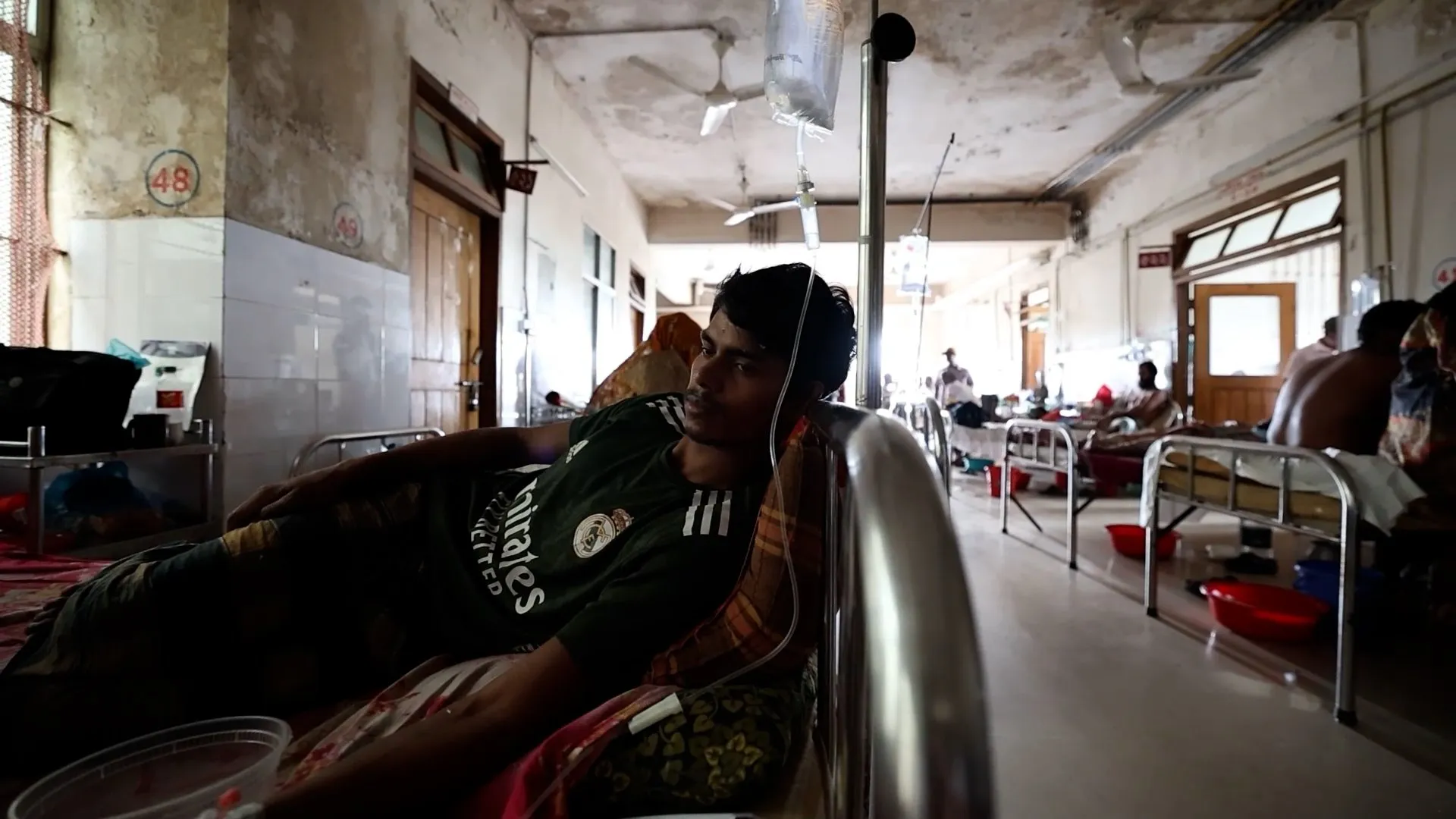
Iranian human rights activist and 2023 Nobel Peace Prize laureate Narges Mohammadi has been transferred from prison to a hospital due to a sharp decline in her health.

Mohammadi had two episodes of complete loss of consciousness and a severe cardiac crisis, her foundation announced on Friday.

Recommended Stories

list of 3 itemsend of list

“This transfer was done as an unavoidable necessity after prison doctors determined her condition could not be managed on-site, despite standing medical recommendations that she be treated by her specialized team in Tehran,” the Narges Mohammadi Foundation said.

Earlier on Friday, Mohammadi had fainted twice in prison in Zanjan in northwestern Iran, according to the foundation.

She was believed to have suffered a heart attack in late March, according to her lawyers, who visited her a few days after the incident. At the time, she appeared pale, underweight and needed a nurse to help her walk.

‘Life-threatening mistreatment’

Mohammadi, 53, has been imprisoned since December 12 after she was arrested during a visit to the eastern Iranian city of Mashhad.

In February, she was sentenced to more than seven years in prison. Her lawyer said six years of that sentence was for the accusation of “gathering and collusion to commit crimes”.

Her family said in February that her health was worsening in prison, in part because of an alleged beating she had endured during her arrest in December. They said multiple men hit and kicked her in her side, head and neck.

The Nobel committee condemned the “ongoing life-threatening mistreatment” of Mohammadi in a statement in February.

The Iranian government has not commented on the alleged attack.

Prior to her arrest in December, Mohammadi had already been serving a sentence of 13 years and nine months on charges of collusion against state security and propaganda against Iran’s government, but had been released on furlough since late 2024 due to medical concerns.

Source link

EasyJet says passengers should always keep one item in their hand luggage

The airline advises passengers to avoid putting it in their hold luggage if possible

EasyJet says passengers should keep one type of item with them, ideally in their hand luggage rather than their check-in bags. All passengers can bring one small under-seat cabin bag per person on board for free. It can be a maximum size of 45 x 36 x 20 cm (including any handles and wheels) and must be kept under the seat in front of you.

Regarding what travellers should keep in their hand luggage or handbags, the airline stresses the importance of carrying any medication so it’s always within reach. A statement on EasyJet‘s website reads: “We do advise you to pack your medication in your hand luggage where possible, especially if it is medication that you may need to take during the flight.”

In an additional note, the airline says: “If you pack medicines in your hold luggage, we do not require a letter from your healthcare practitioner.” It adds: “We’re unable to refrigerate medication on board.”

There are certain types of medication and equipment passengers can bring on board. EasyJet says: “If you need to bring medication with you, please pack it in your cabin bag wherever possible.” A letter from your healthcare practitioner is only required if you are bringing any of the following items on board:

  • Liquids that exceed 100ml.
  • Sharp objects such as needles.
  • Oxygen cylinders and concentrators.
  • Any medical equipment that may be considered as dangerous goods in the aircraft cabin, a list of which can be found here.

EasyJet explains: “The letter should confirm that this medication is prescribed to you and it’s necessary for you to bring the items on board. We do not require a letter from your healthcare practitioner for all other medications and equipment.”

These include gel packs and cooler bags to maintain the temperature of your medication. As well as food and specialist devices such as dialysis machines (subject to size regulations), CPAP machines and nebulisers.

If travelling with medication containing a controlled drug, EasyJet advises passengers to check with their doctor or pharmacist if their prescription contains a controlled drug, as some countries have strict laws regarding these medications. Controlled drugs are medications that are subject to high levels of regulation as a result of government decisions, such as Diazepam, Lorazepam, Codeine or Tramadol.

EasyJet said: “If you need to travel with medicine that contains a controlled drug, please check the embassy rules for the country you’re travelling to, as well as the entry requirements before you fly. You will need to prove your medication is yours, either with a prescription or a letter from your doctor.”

Crutches and walking frames can be brought on board. EasyJet’s cabin crew can store them and return them after landing. Walking frames can be stored on board if space is available, or they will be put into the aircraft hold and returned after landing.

Portable medical equipment can be brought on board in addition to your cabin bag allowance. Portable medical devices must be no larger than 56 x 45 x 25 cm, otherwise they will have to travel in the hold. If you need to carry a small portable medical device, such as:

  • CPAP machines
  • TENS machines
  • Nebulisers
  • Portable dialysis machines

EasyJet said: “Then this may be carried in addition to your cabin bag allowance, provided that it’s no larger than 56 x 45 x 25 cm and that you have informed our Special Assistance Team, at least 48 hours before your flight that you require an additional medical bag for your journey. Non-essential medical equipment which exceeds your cabin-bag allowance will be charged in line with our baggage policy and may need to be placed in the hold.

“If you need to bring several medical devices or a large piece of medical equipment, please contact our Special Assistance team at least 48 hours before your flight so that they can advise you.”

Source link

Global hunger report warns of rising malnutrition and famine risks | Infographic News

Famine was confirmed in two places in 2025 – areas of the Gaza Strip and Sudan – the first such dual confirmation since formal famine reporting began, according to the Global Report on Food Crises (GRFC) 2026.

The annual report, produced by a coalition of 18 humanitarian and development partners, found that acute food insecurity remained widespread in 2025.

Recommended Stories

list of 4 itemsend of list

Across 47 countries and territories experiencing food crises, 22.9 percent of their populations – or about 266 million people – experienced acute food insecurity last year, a marginal rise from 22.7 percent in 2024 but nearly double the 11.3 percent recorded in 2016.

INTERACTIVE_FAO_GLOBAL_REPORT_2025_APRIL23_2026-02-1777011588

The proportion of analysed populations facing acute hunger has now stayed above 20 percent every year since 2020. In absolute terms, the number of people affected has grown from 108 million in 2016 to 265.7 million in 2025, having peaked at 281.6 million in 2023.

The GRFC cautioned that the slightly lower headline figure compared with 2024 mainly reflects a reduction in the number of countries covered – from 53 to 47 – rather than any real decline in needs.


Famine, catastrophe and emergency

Famine – the most extreme classification under the hunger-monitoring Integrated Food Security Phase Classification (IPC) system – was confirmed in parts of the Gaza Strip and Sudan in 2025. The risk of famine remained in other areas of Gaza, Sudan and South Sudan, and those projections extended into 2026.

According to the IPC, famine is when:

  • At least 20 percent of households face extreme food shortages.
  • Acute malnutrition affects more than 30 percent of the population.
  • The death rate due to starvation or hunger-related causes exceeds two deaths per 10,000 people per day.
INTERACTIVE - Famine Gaza measurement
(Al Jazeera)

Six countries and territories had populations facing “catastrophic conditions”, or Phase 5, the highest level in the IPC’s classification of food insecurity. They numbered 1.4 million people, a more-than ninefold increase since 2016.

The Gaza Strip was the worst affected, with 640,700 people facing famine conditions, equivalent to 32 percent of its population, the highest share recorded globally. Sudan followed with 637,200 people, or 1 percent of its population.

Four other countries recorded catastrophic food shortages among specific groups of people: South Sudan – 83,500 (1 percent of the population), Yemen – 41,200 (0.1 percent), Haiti – 8,400 (0.1 percent) and Mali – 2,600 (0.01 percent).

Additionally, more than 39 million people in 32 countries were in Phase 4, or emergency conditions, representing 3.8 percent of the population analysed, a marginal increase from 2024.

INTERACTIVE_FAO_GLOBAL_REPORT_2025_APRIL23_2026-01-1777011625

Conflict remains the main driver of hunger

Conflict and violence were the primary drivers of acute food insecurity in 19 countries where 147.4 million people were affected. They represented more than half of those facing acute hunger globally.

Weather extremes were the primary driver in 16 countries, affecting 87.5 million people, while economic shocks led in 12 countries, with 29.8 million people affected.

Against that backdrop, humanitarian and development financing for areas facing food crises declined in 2025, falling back to levels last seen in 2016-2017, the report said.

As for 2026, the report said that based on a partial picture as of March, severity levels remain critical in multiple contexts. It added that the escalation of conflict in the Middle East exposes food-crisis countries to direct and indirect risks of global agricultural and food market disruptions.

A generation of malnourished children

An estimated 35.5 million children were acutely malnourished in 2025 across 23 countries experiencing nutrition crises, including just under 10 million with severe acute malnutrition, the most life-threatening form.

A further 25.7 million children suffered from moderate acute malnutrition. About 9.2 million pregnant and breastfeeding women were also acutely malnourished across 21 countries with available data.

Interactive_WorldFoodDay_October16_2025-01-1760613556
(Al Jazeera)

Displacement is concentrated in food-crisis countries

The number of forcibly displaced people in the 46 countries covered fell slightly in 2025 to 85.1 million.

About 62.6 million of them were internally displaced across 34 countries, and 22.5 million were refugees and asylum seekers in 44 countries.

Without a sustained push to address the structural drivers of hunger, the world’s most fragile countries will continue to bear a disproportionate share of the global hunger burden well into 2026, the report concluded.

Source link

Jane Fallon gives fans health update after having second surgery following breast cancer diagnosis

JANE Fallon has given her fans a health update after having her second surgery following her cancer diagnosis.

The author, 65, who is the partner of Ricky Gervais, told fans earlier this month that she was suffering with breast cancer, despite having no symptoms before the diagnosis.

Jane Fallon has given her fans a health update after having her second surgery following her cancer diagnosis Credit: Instagram
The author who is the partner of Ricky Gervais, told fans earlier this month that she was suffering with breast cancer Credit: Getty

Posting a sweet pic alongside her cat Pickles on Instagram, Jane wrote: “Little update. So, my 2nd surgery went well.

“They got the clear margin they need on the original excision, which is great. 

“They did hit a new little patch of precancerous cells on the other side of the new bit they took out but, thankfully, everyone agrees more surgery would be overkill. 

“A huge % of pre cancer doesn’t develop into cancer. 

SECRET BATTLE

Gemma Collins reveals there’s ‘behind the scenes’ drama in I’m A Celeb feud


TEARFUL THOMAS

Adam Thomas breaks down in tears again as I’m A Celebrity sees star sobbing

“I saw the oncologist today & we’ve agreed the risks of radiation outweigh the benefits in my case.

“Which leaves Tamoxifen (or similar) or wait and see (my preferred option). 

“I’m very nervous about going the drug route, because I know the side effects can be hideous, but I’m taking all the info on board & luckily there’s no pressure to make a quick decision.

“So, all good & I’m just looking forward to getting back to normal.”

Jane’s followers flocked to support her, including author Jojo Moyes who wrote: “Well done for getting through another surgery.

“Wishing you some reassuring news very soon x”

A fan added: “Happy to hear the update and it sounds very positive … yes take your time to decide , & so all the research … as of course you will x”

Another said: “That’s such uplifting news , so pleased your doing well. onwards and upwards x And cats will always upstage.”

This comes just days after Jane slammed a fake obituary that was published online after she was revealed she had cancer.

She said: “I’ve taken the post about the obituary down, because I don’t want people to think I’m upset by it. I’m not. P***ed off yes.

Breast Cancer Screening

Most women will have been told to check their own breasts for signs of lumps and bumps, but after a certain age you’ll be invited for a free NHS breast cancer screening.

You’ll automatically get your first invite for up to three years after you hit 50, as long as you’re registered to a GP surgery.

After that, you’ll be invited every three years until you turn 71.

If you’re a trans man, trans woman or are non-binary, you may be invited automatically, or you may need to talk to your GP surgery or call the local breast screening service to ask for an appointment.

If you have not been invited for breast screening by the time you are 53 and think you should have been, contact your local breast screening service.

But if you’re experiencing symptoms of breast cancer before you reach screening age, don’t wait to be invited – see a GP.

Do this even if you’ve recently had a breast screening.

Read more about screening here.

“But more, I just want people to know that any photos you see of me in hospital, looking sad or with tubes sticking out of me are 100% fake – AI generated.”

Following her recent procedure, Jane told her followers she was feeling “remarkably fine” and in good spirits.

She assured people she wold update them once she had the medical all clear.

“Then 8-10 days wait for confirmation that they’ve got it all & the margins are clear (small % chance of more surgery if not),” Jane wrote.

She has been resting up at home with the support of cat Pickles.

When Jane announced her diagnosis, Jane asked fans not to “panic” and said her prognosis was “excellent”.

She has been with comedian Ricky for more than 40 years after meeting back in 1982.

Jane is the author of 14 bestselling books and has penned titles such as Getting Rid of MatthewGot You BackQueen BeeWorst Idea Ever, and Faking Friends

Jane has been with comedian Ricky for more than 40 years after meeting back in 1982 Credit: X/JaneFallon
When Jane announced her diagnosis, Jane asked fans not to “panic” and said her prognosis was “excellent” Credit: Instagram
Jane is the author of 14 bestselling books such as Getting Rid of Matthew and Queen Bee Credit: Instagram/janefallon2

Source link

Rep. David Scott, a Georgia Democrat seeking his 13th term in Congress, dies at age 80

U.S. Rep. David Scott, a Georgia Democrat and the first Black chairman of the House Agriculture Committee, has died. He was 80.

Scott, who was seeking his 13th term in Congress despite challenges from within his party, was once a leading voice for Democrats on issues related to farm aid policy and food aid for consumers and a prominent Black member of the party’s moderate Blue Dog caucus. But he faced criticism and concerns in recent years because of declining health, enduring a primary challenge in 2024 and facing another one at the time of his death.

Democrats on Capitol Hill praised the longtime lawmaker.

“The news of Congressman Scott’s passing is deeply sad,” House Minority Leader Hakeem Jeffries told reporters on Wednesday.

“David Scott was a trailblazer who served district that he represented admirably, rose up from humble beginnings to become the first African American ever to chair the House Ag Committee,” Jeffries said. “He cared about the people that he represented. He was fiercely committed to getting things done for the people of the great state of Georgia, and he’ll be deeply missed.”

News of Scott’s death came during the Congressional Black Caucus’ weekly luncheon on Capitol Hill. The Black Caucus’ chair, Rep. Yvette Clarke, told lawmakers at the outset of the meeting, according to a person who insisted on anonymity to discuss a private conversation. Many lawmakers in the room, some of whom had served with Scott for decades, were shocked and saddened by the news.

Scott’s death slightly widens Republicans’ narrow House majority going into the thick of this midterm election year.

The congressman was not especially active on the campaign trail in 2026. But he had been dismissive of pressure to retire.

“Thank God I’m in good health, moving and doing the people’s work,” Scott said in 2024.

David Albert Scott was born in rural Aynor, South Carolina, on June 27, 1945, in the era of Jim Crow segregation. He graduated from Florida A&M University, one of the nation’s largest historically Black college campuses — and in office he was an outspoken advocate for federal support of HBCUs. Scott also earned an MBA from the University of Pennsylvania’s Wharton School.

He was already a veteran state lawmaker in Georgia before being elected to Congress in 2002.

Barrow, Brown and Amy write for the Associated Press. Brown reported from Washington.

Source link

Kerry Katona shares new worrying health update after she was rushed to hospital over stroke fears

KERRY Katona has revealed she’s experiencing speech difficulties after she was rushed to hospital over stroke fears.

The Atomic Kitten singer said she was with her partner Paolo Margaglione and her daughter Heidi who noticed that her mum’s face didn’t ‘appear right’.

Kerry Katona has shared a new health update after her recent hospital dash Credit: Getty
The TV personality said she’s suffering with aftereffects following the ordeal Credit: Instagram / @kerryboutique.co.uk

Kerry, 45, was in London at the time of the incident, watching her eldest daughter Molly in a new play, when she fell unwell midway through the performance.

The TV personality was then rushed to hospital in an ambulance where it was treated “as a stroke”.

Although it was later ruled out as a stroke and most likely a result of stress, the mother-of-five said she’s still dealing with aftereffects.

Writing in her New column, she said: “I know I’m talking differently and I know my face looks different after my suspected stroke, but it’s actually loads better.

READ MORE ON KERRY KATONA

jungle snub

The heartbreaking reason I’m a Celeb will NEVER sign Kerry Katona for All Stars


HEALTH WOES

Kerry Katona reveals she was rushed to hospital over stroke fears

“It comes and goes.”

Kerry admitted that the terrifying ordeal had sent her anxiety through the roof.

She continued: “I’ve just got to try and not think about it, because I’m the worst hypochondriac in the world.

“It’s awful for my family, I think they’re all fed up and sick of me at this point.

“I have severe health anxiety, so when I start reading all the comments and I start learning all these new things that could be wrong, it makes me truly panic.”

Kerry opened up about the hospital dash earlier this month.

She told the Mirror: “I went to the toilet and noticed my face wasn’t right.

“And Heidi was like, ‘Mum, what’s wrong with your face?’ I started panicking. I discreetly left, went to my hotel and asked to see a doctor. I told the staff, ‘Something’s not right.’”

The mum-of-five was subsequently rushed to hospital in an ambulance.

“I got there, and they said, ‘We’re treating this as a stroke,’ so they blue-lit me in an ambulance from St Thomas’ to King’s College Hospital,” explains Kerry.

“They were shining lights in my eyes while my face and speech were getting worse.

“An hour ago I was watching our Molly in a play and now I’m being treated for a stroke. What the actual f**k? It just shows how quickly things can change.”

She said she felt ‘really scared’ and feared the worst but a stroke was later ruled out after a CT scan.

The Celebs Go Dating star revealed that her health scare was down to ‘delayed stress’ that can affect a person after they’ve ‘found peace’.

Following the incident, Kerry jetted off on holiday to Spain with her family to celebrate Dylan-Jorge’s 12th birthday but said she would see follow-up care when back in the country.

Kerry has Molly, 24, and Lilly-Sue, 23, with ex Brian McFadden; Heidi, 19, and Max, 17, with ex Mark Croft; and daughter Dylan-Jorge (known as DJ), 12, with late-husband George Kay.

Kerry exclusively told The Sun how things have been looking up for her ever since coupling up with new beau Paolo – 12 years her junior.

“Paolo is just a complete one-off,” she said.

“I’ve never met a human being like him. It actually makes me anxious, because I keep thinking it’s just too good to be true. I get emotional talking about him.

“I am so lucky I found him. I feel loved and wanted. I’ve never felt like that. I don’t think I’ve ever really truly been in proper love until I met Paolo. I don’t think I realised how starved I was of affection.

“I wasn’t even looking for a boyfriend or to get married again – I couldn’t think of anything worse. I wanted a pay cheque, exposure and a therapist [from the show]. Then I met him and thought, ‘You’re different.’”

Kerry said it was ruled out as a stroke but was likely the result of stress Credit: PA

Source link

Flu vaccine no longer mandatory for soldiers, says US military chief | Military News

Pete Hegseth says the decision is based on the principle of ‘medical autonomy’ and criticises the mandate as ‘overreaching’.

United States Defense Secretary Pete Hegseth has said that the flu vaccine will no longer be obligatory for members of the country’s military, the latest step under President Donald Trump to shift vaccine policy in the federal government.

Hegseth said in a video shared on social media on Tuesday that the decision was based on principles of “medical autonomy” and religious freedom.

Recommended Stories

list of 3 itemsend of list

“We’re seizing this moment to discard any absurd, overreaching mandates that only weaken our warfighting capabilities. In this case, this includes the universal flu vaccine and the mandate behind it,” said Hegseth.

“The notion that a flu vaccine must be mandatory for every service member, everywhere, in every circumstance at all times is just overly broad and not rational.”

The Trump administration has framed vaccine refusal as a matter of personal moral and religious principle, rolling back some policies meant to safeguard against preventable diseases.

Hegseth’s directive allows various military services to request that the mandate be kept in place, giving them a window of 15 days to do so.

The announcement comes after what health officials described as a particularly severe flu season when infections surged in the US. Public health experts have recommended that everyone aged six months or older get an annual flu vaccine.

The second Trump administration has reflected some of the backlash to public health guidelines and mandates that were implemented during the COVID-19 pandemic.

Hegseth himself has called that period an “era of betrayal” for the country’s armed forces. More than 8,400 members of the military were ejected for failure to abide by a 2021 mandate to take the COVID-19 vaccine.

The Trump administration has also rolled back vaccine recommendations in other areas, announcing earlier this year that it would not recommend flu shots and other forms of vaccines for all children. A lawsuit was filed challenging that effort, and the policy was temporarily blocked by a federal judge as the legal challenge plays out.

Source link

Christina Applegate shares health update after reported hospital visit

Christina Applegate is speaking out amid reports of an extended hospitalization.

The acclaimed comedy actor, who was diagnosed with multiple sclerosis in 2021, has been the subject of regular news coverage in the years since her health first began to decline. TMZ on Thursday reported that she had been hospitalized in Los Angeles for undisclosed reasons, leading her friends and fans to extend messages of support.

“Thank you for the outpouring of love and well wishes,” Applegate said Monday in a social media post seemingly referencing such messages. The post included a photo of the actor’s recently released memoir, “You With the Sad Eyes,” and a coffee mug resting on what appears to be a home parapet.

She continued: “Health issues are a constant for me, but I’m a strong chick and I’m getting stronger and better every day. I’m taking a moment to focus on my health, but I’ll be back with more to say soon enough.”

Several of Applegate’s fellow actors offered support in the comments section, with Cheyenne Jackson writing, “Christina, just in case today’s mail got lost: We the public would like to formally submit that we adore you, support you, and RIDE AT DAWN FOR YOU ALWAYS.”

“Days of Our Lives” star Greg Rikaart echoed his sentiment: “Can’t think of anyone the collective culture roots for more than you.”

Applegate’s representative previously declined to comment on the hospitalization reports, telling Entertainment Weekly that the “Married … With Children” alum has “had a long history of complicated medical conditions that she has been refreshingly open about, as evidenced in her memoir and on her [‘MeSsy’] podcast.”

Applegate in March released “You With the Sad Eyes,” detailing everything from her unstable childhood to her decades-spanning acting career and the health issues that have plagued it.

“This book is not cathartic for me — let’s just go there,” Applegate recently told The Times. “I just needed to dump this s— out somewhere. It’s almost like you guys are now my therapists in the world.”

“There’s going to be really f— horrible s— and then we’re going to have fun stuff — because that’s what my editor told me to have (that’s a joke!) — and crap again,” the “Dead to Me” star said. “That’s my life.”


Source link

Gonadorelin: Molecular Signaling, Temporal Dynamics, and Expanding Research Horizons

Gonadorelin, a decapeptide identical in sequence to gonadotropin-releasing hormone, is believed to occupy a foundational position in endocrine signaling research. Since its structural elucidation in the twentieth century, the peptide has served as a conceptual bridge between neurochemical signaling and systemic hormonal coordination within the research model.

Contemporary scientific discourse increasingly frames Gonadorelin not merely as a reproductive regulator, but as a finely tuned molecular signal whose rhythmic release, receptor interactions, and downstream cascades offer insight into broader principles of cellular communication, feedback regulation, and temporal encoding. This article explores Gonadorelin through a research-oriented lens, supporting  its molecular characteristics, signaling properties, hypothesized systemic roles, and emerging investigative domains. The discussion relies on established scientific knowledge while maintaining speculative language appropriate to ongoing inquiry.

Molecular Identity and Structural Considerations

Gonadorelin is a linear decapeptide composed of ten amino acids arranged in a highly conserved sequence across vertebrate species. This conservation has long intrigued researchers, as it suggests evolutionary pressure to preserve both structure and function. From a biochemical perspective, the peptide’s relatively small size belies its extensive signaling reach within the research model.

At the molecular level, Gonadorelin may be viewed as an archetypal neuropeptide, synthesized as part of a larger precursor molecule and subsequently processed into its active form. Its tertiary simplicity allows it to interact with a specific G protein-coupled receptor, commonly referred to as the gonadotropin-releasing hormone receptor. Research indicates that subtle alterations in amino acid composition or terminal modifications may significantly alter receptor affinity, signaling bias, and degradation kinetics. These observations have fueled interest in Gonadorelin analogs as experimental tools for probing receptor dynamics and intracellular signaling selectivity.

Receptor Interaction and Intracellular Signaling Cascades

The interaction between Gonadorelin and its receptor represents a classic model for ligand-receptor specificity in mammalian endocrine research. Upon binding, the receptor undergoes conformational changes that may activate multiple intracellular pathways, including phospholipase C signaling, calcium mobilization, and protein kinase activation. Rather than functioning as a simple on-off switch, Gonadorelin signaling appears to encode information through frequency and amplitude modulation.

Research suggests that pulsatile exposure to Gonadorelin might generate distinct intracellular responses compared to continuous exposure, even when total peptide availability remains constant. This phenomenon has positioned Gonadorelin as a central example in studies of temporal signaling, where timing itself becomes a biologically meaningful variable. Investigations purport that this temporal encoding may influence gene transcription patterns, receptor recycling, and cellular sensitivity over time.

Temporal Dynamics and Rhythmic Signaling

One of the most compelling research properties of Gonadorelin lies in its rhythmic release pattern. Unlike many signaling molecules that operate through steady concentrations, Gonadorelin appears to function optimally through discrete pulses. Scientific inquiry has long theorized that this pulsatility allows the mammalian model to maintain responsiveness while avoiding receptor desensitization.

From a systems biology perspective, Gonadorelin may serve as a model for understanding how oscillatory signals regulate complex physiological networks. Computational analyses and laboratory-based research models have explored how variations in pulse frequency, duration, and interval might translate into differential downstream signaling outcomes. These explorations extend beyond reproductive endocrinology, offering conceptual frameworks potentially relevant to circadian biology, metabolic regulation, and adaptive feedback systems as they prove relevant to mammalian models.

Genetic Regulation and Transcriptional Influence Research

Beyond immediate signaling cascades, Gonadorelin is thought to potentially exert a longer-term interaction with or modulation of gene expression. Research indicates that activation of its receptor may alter transcriptional programs associated with cellular differentiation, hormone synthesis, and receptor expression itself. This layered regulatory architecture suggests that Gonadorelin signaling may participate in both rapid and delayed regulatory loops within the research model.

Epigenetic considerations have also entered the conversation. Some investigations hypothesize that repeated Gonadorelin signaling might influence chromatin accessibility or transcription factor recruitment in target cells. While these concepts remain under active exploration, they underscore the peptide’s potential relevance to developmental biology and long-term cellular adaptation.

Possible Role in Neuroendocrine Integration Research

Gonadorelin seems to occupy a unique intersection between neural signaling and endocrine output. Synthesized within specialized neurons, the peptide appears to translate neural inputs into hormonal coordination. This positioning has encouraged researchers to use Gonadorelin as a proxy for studying neuroendocrine integration more broadly.

Research models have examined how external stimuli such as environmental cues, stress signals, and metabolic states might modulate Gonadorelin synthesis and release. These lines of inquiry suggest that the peptide may function as an integrative node, aligning internal physiological states with external conditions. Such hypotheses elevate Gonadorelin from a single-pathway regulator to a dynamic mediator of cell-wide coherence.

Investigative Implications in Endocrine Research Models

Within laboratory settings, Gonadorelin has been widely referenced as a molecule suited for evaluationg receptor responsiveness, signaling fidelity, and feedback regulation. Its well-characterized sequence and receptor interaction profile make it an ideal benchmark for experimental design. Researchers often employ Gonadorelin to calibrate assays measuring gonadotropin synthesis, second messenger generation, or transcriptional responses.

Beyond traditional endocrine studies, Gonadorelin has found relevance in comparative signaling research. By examining how different cell types respond to identical Gonadorelin stimuli, investigators gain insight into cell-specific signaling architectures and receptor coupling strategies. These approaches may inform broader theories of cellular specialization within multicellular models.

Emerging Hypotheses Beyond Reproductive Signaling

While historically associated with reproductive axis regulation, Gonadorelin has increasingly been discussed in the context of broader biological roles. Some research indicates that its receptor may be expressed in tissues not classically associated with gonadotropin regulation. This observation has led to hypotheses that Gonadorelin signaling might support processes such as cellular proliferation, differentiation, or metabolic coordination in context-dependent ways.

In systems-level analyses, Gonadorelin has been theorized to contribute to network stability by participating in feedback loops that extend beyond a single hormonal axis. These speculative models propose that the peptide’s rhythmic signaling might synchronize multiple physiological subsystems, thereby supporting cellular homeostasis under changing conditions.

Conclusion

Gonadorelin remains one of the most intellectually rich peptides in contemporary biological research. Far from being limited to a narrow endocrine function, the peptide embodies key principles of molecular signaling, temporal regulation, and systems integration within the mammalian model. Its conserved structure, rhythmic signaling properties, and multifaceted intracellular impacts continue to inspire investigation across disciplines ranging from neuroendocrinology to computational biology. Researchers interested in further studying this compound are encouraged to visit Core Peptides.

References

[i] Stamatiades, G. A., & Kaiser, U. B. (2017). Gonadotropin regulation by pulsatile GnRH: Signaling and transcriptional control.Endocrinology, 158(11), 3369–3380.
 https://doi.org/10.1210/en.2017-00425

[ii] Navarro, V. M., & Tena-Sempere, M. (2012). New insights into the control of pulsatile GnRH release.Frontiers in Endocrinology, 3, 48. https://doi.org/10.3389/fendo.2012.00048

[iii] Whitlock, K. E., & Schlarb, J. E. (2019). Is gonadotropin-releasing hormone neurons dispensable for reproductive neuroendocrine function?Journal of Neuroendocrinology, 31(1), e12696. https://doi.org/10.1111/jne.12696

[iv] Flanagan, C. A., & Manilall, J. D. (2017). Gonadotropin-releasing hormone receptors: Structure, ligand binding and intracellular signaling.Frontiers in Endocrinology, 8, 274. https://doi.org/10.3389/fendo.2017.00274

[v] Ohlsson, B. (2016). Gonadotropin-Releasing Hormone and its physiological and pathophysiological roles in relation to the structure and function of the gastrointestinal tract.European Surgical Research, 57(1-2), 22–33. https://doi.org/10.1159/000445717

Source link

Trump signs order to speed research on psychedelics for mental health

April 18 (UPI) — President Donald Trump signed an executive order Saturday to accelerate research for some psychedelic drugs to treat mental health disorders.

Surrounded by podcaster Joe Rogan and veterans, the president signed the order that could lead to use of the psychedelics in controlled, therapeutic settings.

“We’re taking this decision, this decisive step, to confront one of the most urgent public health challenges facing our nation, the mental health crisis,” Trump said Saturday in the Oval Office.

“Today’s order will ensure that people suffering from debilitating symptoms might finally have a chance to reclaim their lives and lead a happier life,” Trump said.

The order directs the Food and Drug Administration to speed its review of new treatments. Trump said the order applies to certain drugs that are already in the “advanced stages of clinical trials.”

Rogan said he sent the president “some information” about the drugs after he heard about them on his podcast, The Hill reported.

“I sent him that information. The text message that came back: ‘Sounds great. Do you want FDA approval? Let’s do it.’ Literally that quick,” Rogan said.

Trump mentioned ibogaine, which has been used to treat post-traumatic stress disorder in other countries. He said the administration would be “opening the pathway” for the drug to be included in the Right to Try Act, which allows terminally ill patients to participate in clinical trials for treatments still under FDA review, The Hill reported. Trump signed that act into law in 2018.

“Under this new program in this administration, drugs can get approved in weeks, not a year or year plus, but in weeks, if they are in line with our national priorities,” FDA Commissioner Martin Makary said at the signing.

“This is an unmet public health need, and there are potentially promising treatments,” Makary said. “That’s why there’s a sense of urgency around this. That’s why we’re doing it now.”

In 2024, 471 U.S. service members died by suicide, and there were 1,515 attempts reported, according to the Pentagon’s Annual Report on Suicide in the Military.

Some of the drugs included are ibogaine; LSD; psilocybin; known as magic mushrooms; and MDMA, known as ecstasy. Trump added that the government had just committed $50 million in additional funding for ibogaine research, The Post reported.

“Federal prohibition of psychedelic medicine in America is over,” said W. Bryan Hubbard, an advocate for access to ibogaine, The Washington Post reported.

Kevin Sabet, who was a White House drug policy adviser over three presidential administrations, disagreed. He said the order will “send the wrong message” and encourages hasty, potentially dangerous research.

“People need to realize there is little to no evidence for most of these drugs and most of the conditions they claim to alleviate,” Sabet, president of Smart Approaches to Marijuana, wrote in a text message to The Post.

Health and Human Services Secretary Robert F. Kennedy Jr. has championed the idea of using psychedelics to help with mental health conditions. On Saturday, he said officials owed it to veterans “to turn over every stone.”

“It’s disturbing to me and to the president that hundreds, in fact, thousands of veterans are having to travel to Mexico or other countries to experiment with interventions that hold great promise,” Kennedy said.

Source link

Gov., Nunez forge a health plan

After nearly a year of often tortuous negotiations, Gov. Arnold Schwarzenegger and Assembly Speaker Fabian Nunez have settled on a plan to extend health insurance to 3.6 million Californians who lack it through a new tax on all employers and tobacco sales, officials said Friday.

The leaders have agreed to ask voters in November to require employers to spend between 1% and 6.5% of their payroll costs on healthcare. The measure would also levy a tax on tobacco sales of at least $1.50 a pack, although it could be as high as $2 a pack, the aides said.

“It’s an incredible plan,” Nunez (D-Los Angeles) said in an interview. “I couldn’t tell you there is one single outstanding issue that is a make-or-break issue.”

Daniel Zingale, a senior advisor to Schwarzenegger, said the leaders “have agreed on the framework of the healthcare reform that will go before voters.”

Nunez’s office on Friday filed a companion bill that contains the details of how the plan would work and scheduled an afternoon vote in the Assembly on Monday, presuming a few details will be resolved over the weekend.

That bill does not contain the taxes or other measures that would provide the $14 billion a year needed to finance the ambitious overhaul and would not take effect unless the ballot measure passes. That puts Democratic lawmakers in the highly unusual position of voting on the plan without being able to assess whether the intricate financing scheme will be adequate. Republicans have already vowed to vote against the measure.

The moves came as Schwarzenegger promised to call an emergency session of the Legislature for early January to make cuts to the state’s budget. The governor’s office estimates the projected gap may reach as high as $14 billion by July 2009, which is threatening to sap political momentum from the healthcare plan.

On Thursday, Senate President Pro Tem Don Perata (D-Oakland) said that while he supported most of the Nunez-Schwarzenegger plan, he intends to delay a Senate vote on the measure until the governor outlines how his proposed budget cuts will affect existing healthcare programs for the poor and disabled

The Nunez-Schwarzenegger plan would require almost all Californians to obtain private medical insurance. Those earning below 2 1/2 times the poverty level — or $51,625 for a family of four — would receive state subsidies to pay for most of their premiums.

Families earning more than that but no more than four times the poverty level — $82,600 for a family of four — would be able to fully deduct any premium costs that exceed 5.5% of their incomes, which translates to $4,543 for a family at the top of that range. There would also be tax credits for people who retire before they qualify for Medicare at age 65 so that they would not spend more than 10% of their savings on insurance.

Under the plan, California employers with payrolls of up to $250,000 a year would have to spend at least 1% on healthcare for their workers. Those that didn’t would pay into a state-run health insurance pool that would help secure coverage for the employees. Companies with payrolls up to $1 million would have to pay 4% and those with payrolls up to $15 million would have to pay 6%. All larger companies would pay 6.5%.

The plan would extend coverage to 800,000 low-income children and many impoverished adults who currently do not qualify for public programs. It would omit about 1 million illegal immigrants as well as another 500,000 people who are poor but either refuse public coverage or cannot document that they are legal residents.

The bill the Assembly will consider Monday would upend the way California’s insurance market works. Insurers would be barred from denying coverage to people because of existing medical ailments and would have to spend at least 85% of premiums on medical care.

Many insurers, including Kaiser Permanente and Blue Shield of California, have supported this approach for months, but the state’s largest insurer, Blue Cross of California, is preparing to fight the ballot measure.

The plan also contains a $2.3-billion tax on hospitals, supported by the industry, that would pay for increased MediCal payments to doctors and institutions that treat the poor. That tax would also qualify California to draw another $2.3 billion from the federal government.

Those involved in the negotiations said the only major piece still to be ironed out is the tax on tobacco. Schwarzenegger and Nunez have been negotiating with the tobacco companies to see if they can craft the provision in a way that will win their acquiescence, if not their support. But aides said they are also still discussing whether $1.50 a pack will be enough to fund the plan, or whether they will need $2 a pack — an amount tobacco industry leaders say they will oppose.

We “don’t think funding expanding programs with a declining revenue source makes sense,” said David Sutton, a spokesman for Philip Morris USA in Richmond, Va.

Perata also expressed major reservations about the tobacco tax, and said that provisions being insisted upon by the tobacco industry, including immunity from civil and criminal lawsuits, would doom the deal.

The California Nurses Assn., which has favored replacing private insurers with a state-run provider of medical coverage, said the bill was being pushed through the Legislature. “Just as with the energy deregulation fiasco, legislators are being rushed into voting in the dark on a sweeping bill with massive loopholes and serious financial ramifications that no one has adequately reviewed,” said Donna Gerber, the union’s chief lobbyist.

Even some supporters of lawmakers’ efforts were worried that the broader political climate would be insurmountable.

Bob Ross, president of the California Endowment, a Los Angeles-based foundation that favors expanded healthcare, cited as obstacles the state’s weakening economy, the budget gap and the continued standoff between President Bush and the Democratic-led Congress about expanding federal health insurance for children.

“When you do the math on that set of realities, it doesn’t bode well,” Ross said. “So it comes as welcome news that the governor and the speaker are fighting and trying to get something done.”

jordan.rau@latimes.com

Times staff writer Nancy Vogel contributed to this report.

Source link

Trump joined by Joe Rogan as he signs order to speed up psychedelic review | Health News

The order calls on the federal government to relax restrictions on psychedelics, including ibogaine, for potential treatments.

United States President Donald Trump has signed an executive order to speed up the review of a handful of psychedelic drugs, including the controversial ibogaine.

Trump was joined by podcaster Joe Rogan during Saturday’s Oval Office event.

Recommended Stories

list of 3 itemsend of list

Rogan, considered one of the most influential podcasters in the country, has been a leading proponent of ibogaine, which is derived from a plant that grows in West Africa and has been embraced by some military veteran groups as a treatment for post-traumatic stress.

Speaking at the event, Rogan recounted how he had previously texted information to Trump about ibogaine.

He recalled that the president quickly texted back: “Sounds great. Do you want FDA [Food and Drug Administration] approval? Let’s do it.”

Advocacy groups have long pushed for more research into the possible use of psychedelics to treat an array of issues, including depression.

“Today’s order will ensure that people suffering from debilitating symptoms might finally have a chance to reclaim their lives and lead a happier life,” Trump said at the signing.

“If these turn out to be as good as people are saying, it’s going to have a tremendous impact.”

At one point, the president quipped that he would be open to taking psychedelics himself: “Can I have some, please? I’ll take some.”

But he quickly pivoted away from the joke. “I don’t have time to be depressed. You know, if you stay busy enough, maybe that works, too. That’s what I do,” he said.

Increasing research into psychedelics has proven a rare issue with bipartisan support in the US, where ibogaine and other psychedelics remain banned under the federal government’s most restrictive category for illegal drugs.

Health Secretary Robert F Kennedy Jr had previously pledged to ease access to psychedelics for medical use.

Trump’s executive order calls on the Department of Health and Human Services to direct at least $50m to states that have enacted or are developing programmes to advance psychedelic drugs for serious mental illness.

It also arrives ahead of several actions from the FDA to loosen restrictions.

This week, the agency will issue so-called “national priority” vouchers for three psychedelics, which the agency’s commissioner, Marty Makary, said will allow certain drugs to be approved quickly “if they are in line with our national priorities”.

The FDA is also taking steps to clear the way for the first-ever human trials of ibogaine in the US. Previous research had been stalled by concerns over the drug potentially triggering fatal heart problems.

Ibogaine was first used by members of the Bwiti religion in African nations like Gabon for religious ceremonies.

Rogan’s endorsement helped boost Trump ahead of the 2024 presidential election. He has since publicly questioned the administration’s war with Iran, saying it runs counter to Trump’s campaign pledges.

Also present on Saturday was Marcus Luttrell, a former Navy SEAL whose memoir about his time in Afghanistan, Lone Survivor, was later made into a film.

He praised ibogaine during the ceremony: “It absolutely changed my life for the better.”

Source link

I’m A Celebrity’s Adam Thomas’ health battles amid David Haye’s nasty ‘unwell’ comment

Adam Thomas has been battling a health condition, brought on by an autoimmune disease, which means he struggles to walk and was enduring ‘pretty unbearable’ pain

Adam Thomas has been battling a health condition, brought on by an autoimmune disease, for years. During a conversation on I’m A Celebrity tonight, boxer David Haye will be seen trying to get Adam to take taking part in the Termite Terror, unable to accept that the former soap actor just isn’t feeling up to it.

Trying to sleep, Adam admits it would be hard to get through it today because he is feeling dehydrated, but David is seen raging: “Dehydrated?! We’ve all got the same amount of water! Adam is doing it and that’s it!”

David’s co-stars continually try to remind him that their campmate isn’t feeling well enough to get through it, but he becomes hellbent on trying to force Adam into it. He continues: “When is your top form gonna come? Why aren’t we forcing this dude to go and do it? Coincidentally, every time there’s something to do, he’s not feeling well!”

It is at that point that Scarlett, clearly in despair at the situation developing, says: “Stop it David, he’s not well!” Adam previously said he had been in pain every day since his diagnosis – but he had finally found something that would help.

“I’ve been struggling with this autoimmune disease now for about two and a half years. It’s been tough. I’m not overexaggerating when I say this but literally within two and a half years, every day I’ve been in pain,” he explained.

“It’s difficult but now I feel like I’ve found – because I’ve been on so many different meds and trying so many different things, back and forth from doctor’s and hospitals.” Back in 2024, Adam explained that he could “barely walk” and was enduring “pretty unbearable” pain due to his arthritis. Adam took to Instagram and told his followers: “The pain is pretty unbearable at the moment, it’s as if my whole body is seizing up!! The pain was bad before, but it’s a lot worse now… how why???

“Now I wish I never came off the methotrexate because I would take that pain to this every day of the week! I’ve just started my new medication today which takes 12 weeks to take effect and even then it might not work so am not too sure what I can do to ease the pain until then?? I’ve had my steroid injections and it literally lasted a week …

“Going to check in at the hospital tomorrow to see what pain relief I can get, because I can’t carry on like this!” Arthritis is a common ailment causing pain and inflammation in the joints, according to the NHS. Main treatments include lifestyle changes, physiotherapy, medication, and in severe cases, surgery. However, there’s no known cure.

An orthopaedic surgeon said that arthritis can be “very debilitating” and may appear in unexpected areas. He explained that while people often think of hips and knees being affected, they don’t usually consider the hands.

Talking about the pain which is often overlooked, Dr Tom Naylor said that “when you’ve got arthritis pain in the thumb right there (video below) it affects so much of what you do on a daily basis. And it really is debilitating for people who have this”.

Speaking on BBC Morning Live, he explained arthritis as a term that causes pain, stiffness and inflammation in the joints. He said: “It literally means inflammation of a joint.”

Talking about CMCJ, which stands for Carpometacarpal joint, he said that it was all to do with the “joint down at the bottom of the thumb and what happens is the joint starts to wear away and the cartilage starts to get more and more worn.

“Even a deformity can start to form and it impacts everything that you do with your hands.” Speaking about treatments for this type of arthritis, the doctor said: “With all types of arthritis, we tend to follow was called a stepwise approach to treatment.”

Like this s tory? F or more of the latest showbiz news and gossip, follow Mirror Celebs on TikTok , Snapchat , Instagram , Twitter , Facebook , YouTube and Threads .


Source link

A vaccine standoff and other key moments from RFK Jr.’s first congressional hearing in months

Health Secretary Robert F. Kennedy Jr. on Thursday faced federal lawmakers for the first time since September as he sought to defend a more than 12% proposed cut to his department’s budget and dodge arrows from angry Democrats along the way.

In his testimony before the House Ways and Means Committee, kicking off an expected sprint of seven budget hearings he’ll attend across congressional committees and subcommittees over the next week, Kennedy emphasized the administration’s work to reform dietary guidelines and crack down on waste, fraud and abuse.

Republicans on the committee praised Kennedy as a “breath of fresh air” and asked him to promote his department’s recent actions. Democrats, who have been furious over Kennedy’s sweeping overhaul of the U.S. Department of Health and Human Services, largely had a different agenda.

They needled Kennedy on what they viewed as the Trump administration’s hypocrisy on fraud, demanded to know why he was cutting budgets for various programs and slammed his efforts to pull back vaccine recommendations and messaging, which they said have caused unnecessary deaths.

Kennedy fired back, often raising his voice as he accused the Democrats of misrepresenting his work and past statements.

Here are three standout moments from Thursday’s hearing:

A standoff over measles

One heated exchange early in the hearing came between Kennedy and Rep. Linda Sanchez. The California Democrat decried recent measles outbreaks across the U.S. and asked Kennedy to answer for the fact that under his leadership, the Centers for Disease Control and Prevention pulled back public health messaging supporting vaccination.

“As a mother, this horrifies me,” Sanchez said. “Did President Trump approve your decision to end CDC’s pro-vaccine public messaging campaign?”

Kennedy repeatedly refused to answer, saying first he wanted to respond to the “misstatements that you’ve made” and later praising the Trump administration’s record on preventing measles, although protections against the disease have eroded in some parts of the country as vaccination rates have dropped.

“That’s not answering my question,” Sanchez said as the two talked over each other.

But Sanchez also got Kennedy, a longtime anti-vaccine activist before he entered politics, to acknowledge that a 6-year-old who died of measles last year in West Texas could have potentially been saved with vaccination.

“Do you agree with the majority of doctors that the measles vaccine could have saved that child’s life in Texas?” she asked.

“It’s possible, certainly,” Kennedy said.

RFK Jr. denies talking about Black children being ‘re-parented’

A fight erupted between Kennedy and Rep. Terri Sewell, a Democrat from Alabama, when Kennedy vehemently denied making remarks he’d said in 2024.

The comments dated back to when Kennedy was a presidential candidate. On the “High Level Conversations” podcast last July, he said, “Psychiatric drugs — which every Black kid is now just standard put on Adderall, SSRIs, benzos, which are known to induce violence, and those kids are going to have a chance to go somewhere and get re-parented to live in a community where there’ll be no cellphones, no screens, you’ll actually have to talk to people.”

“Have you ever re-parented, or parented, I should say, a Black child?” Sewell asked, as her staff held up a poster featuring an abbreviated version of the quote.

“I don’t even know what that phrase means,” Kennedy said. “I’m not going to answer something I didn’t say.”

“You’re making stuff up,” he later claimed.

A recording of the podcast shows he made the comments during a conversation about free rehabilitation facilities he was proposing opening at the time in rural areas around the country.

Health and Human Services spokesperson Emily Hilliard said Kennedy before joining the administration was referring to spaces where young people facing alienation, mental health challenges and despair could get re-parented, which she said was a psychotherapy term for “developing the emotional regulation, discipline, boundaries, and self-worth that may not have been established in childhood.”

For Kennedy and his former party, civility is the exception

Kennedy spent most of his life as a Democrat, the scion of one of the nation’s most famous political families. Both Republicans and Democrats during the hearing began their remarks by expressing their admiration of Kennedy’s relatives, among them former President John F. Kennedy.

But again and again throughout Thursday’s hearing, the fraying of bonds between Kennedy and his former party was on full display as spiteful comments were passed back and forth.

The Health secretary grew defensive and visibly agitated. He repeatedly criticized Democratic lawmakers for not giving him a word in edgewise.

“They’ve all shut me up,” Kennedy said at one point. “They give a little speech that they can go and market, you know, for fundraising, and they don’t allow me to answer the question.”

On a few rare occasions, the exchanges were civil. One representative, Gwen Moore of Wisconsin, used humor to make that happen.

“I promise to give you easy, comfortable questions if you don’t yell at me and hurt my feelings,” she told Kennedy. He promised he wouldn’t.

Swenson writes for the Associated Press.

Source link