heads

Carney heads to Europe for high-stakes speech and deeper EU ties as Canada clashes with Trump

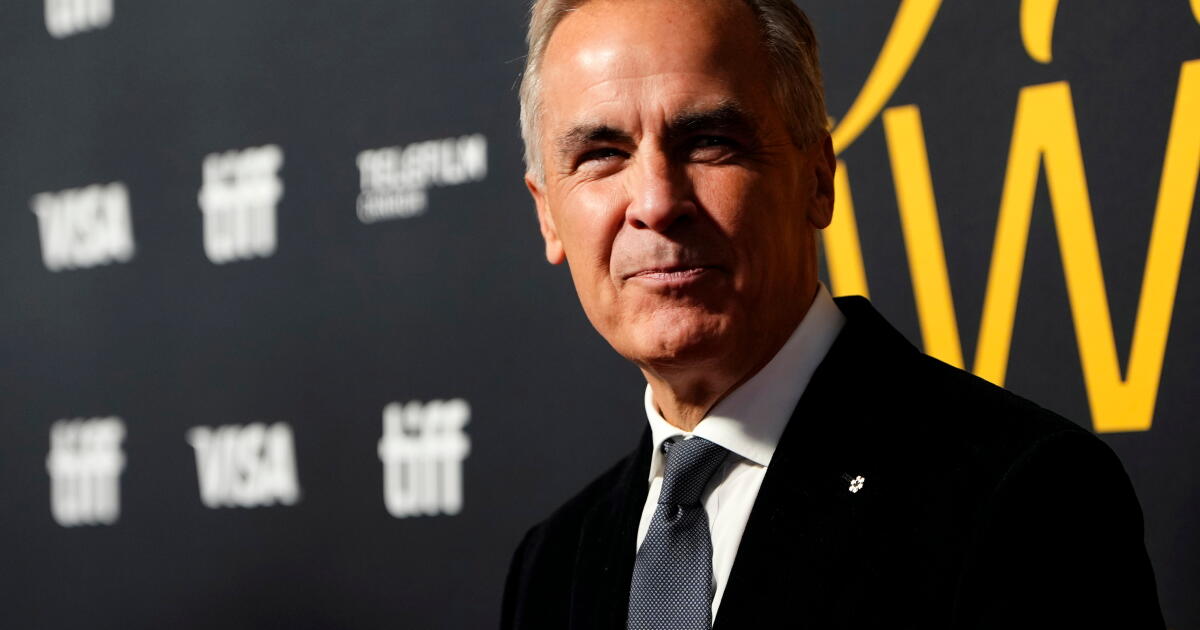
Canadian Prime Minister Mark Carney is heading to Europe in the middle of a trade war with President Trump, seeking a deeper relationship with the European Union that could give Canadians greater freedom to work and study there.

Canada will seek an arrangement that would allow Canadians to live and work in Europe without visas as part of a strategic partnership, according to a senior Canadian official familiar with the discussions.

The official said Ottawa is not seeking to replicate the arrangements Norway or Switzerland have with the EU and did not propose “associate membership,” a term used in a recent report. Canada instead wants a partnership tailored to its priorities, with investment at its core.

Roughly 70% of Canadian exports go to the United States. Europe is central to Carney’s effort to reduce that dependence.

Carney has ruled out EU membership, saying Canada instead wants “a unique security and economic alliance” with the bloc. He said formal discussions will begin next month.

Economics is only part of the push, Carney said Tuesday. “The core of this, yes, there is an economic component, but it is about greater sovereignty,” he said.

Canadian government officials have consulted provinces and labor groups but have not settled on what form the relationship should take. The official spoke on condition of anonymity because they were not authorized to discuss the talks publicly.

Carney’s Trump challenge returns to Europe

Carney will attend European Commission President Ursula von der Leyen’s State of the Union address Wednesday as a guest of honor before addressing the European Parliament on Thursday.

Carney cautioned against expecting a major announcement in Europe, saying the “real deepening discussions” will begin at the Canada-EU summit in Montreal in late October.

The trip puts him back on the European stage as relations with Washington reel from tariffs, threats and personal attacks since trade talks collapsed.

Carney said Tuesday that economic integration, once viewed largely as an asset, is increasingly “being used as a weapon by certain countries,” making it more important for Canada to deepen ties with trusted partners. He is also carrying to Europe a message that has won praise there but that European governments have been reluctant to follow in dealing with the United States: Middle powers should resist economic coercion and be willing to walk away from a bad deal.

Carney’s Davos speech on middle powers in January drew a personal rebuke from Trump, and another forceful defense could raise the temperature again.

Canada has retaliated against U.S. tariffs and rejected terms Carney says would weaken its sovereignty. Europe, by contrast, shelved retaliation and accepted a deal leaving most EU exports to the U.S. facing tariffs of up to 15%.

That choice is striking given the EU’s economic weight as the world’s largest trading bloc.

At Davos in January, Carney urged middle powers to band together rather than bow to great powers. When countries negotiate alone with a hegemon, he said, “we negotiate from weakness. We accept what is offered.”

“This is not sovereignty,” Carney said. “It is the performance of sovereignty while accepting subordination.”

In a European Parliament debate in March, French lawmaker Chloe Ridel said Carney had “said out loud what many Europeans think quietly,” while German lawmaker Tobias Cremer urged Europe to “show the same courage as the Canadians have done in this moment of rupture.”

Tobias Gehrke of the European Council on Foreign Relations said Europe accepted economic pain in hopes of preserving U.S. support for NATO and Ukraine, but gained neither firm security commitments nor stable ties with Washington.

“European governments will be watching closely to see whether retaliation creates leverage or simply produces more escalation and an increasing bill,” Gehrke said.

Building a hedge against Washington

Canadian Finance Minister Francois-Philippe Champagne rejected the idea that Canada’s push toward Europe is simply an effort to gain leverage over Washington, saying Ottawa intends to keep working with the United States even as it builds stronger partnerships elsewhere.

“It’s always about us,” Champagne told the Associated Press. “We will still do things with the United States.”

But Champagne also said the geopolitical landscape has fundamentally shifted. “The world has changed and America has changed,” he said. “And I think the world has taken notice.”

Carney’s trip follows his global investment summit in Toronto, part of a broader push to attract international capital and reduce dependence on the United States.

Canada and the EU already cooperate on trade, defense, energy, technology and critical minerals. Bilateral trade reached about $147 billion in 2025, making the EU Canada’s second-largest trading partner.

Europe moves closer to Canada too

Underscoring the push for closer ties, the European Parliament said Monday that it will open an office in Ottawa, its 10th outside the EU, with a regional mandate extending to the Arctic.

“At a time when the world is becoming more unpredictable, like-minded partners need to work even more closely together,” European Parliament President Roberta Metsola said.

Canada this year became the first non-European country to join the EU’s $173-billion SAFE defense program, giving Canadian companies access to joint procurement.

Ian Lesser of the German Marshall Fund in Brussels said Trump’s tariffs and policies toward the North Atlantic Treaty Organization and his stated intention to acquire Greenland for the U.S. have accelerated efforts by Canada and Europe to diversify their economic and security ties.

“The sheer unpredictability emanating from Washington has given history a shove,” Lesser said. He said many in Brussels still prefer to accommodate Washington or “wait and see” whether November’s midterm elections produce a Congress able to constrain Trump.

Carney will also travel to Britain to meet Prime Minister Andy Burnham for the first time. Both men are supporters of Everton soccer club and are expected to meet at the team’s League Cup match against Wolverhampton on Wednesday.

Gillies writes for the Associated Press. AP reporter Sam McNeil in Brussels contributed to this report.

Source link

Braless Brooks Nader turns heads in totally see through dress as she enjoys night out ahead of Baywatch reboot

IT’S totally transparent how Baywatch actress Brooks Nader turns heads as she has a night out in a see-through dress.

The 29-year-old finished off the look with black high heels.

Baywatch actress Brooks Nader turned heads in this see-through dress Credit: Instar Images
Brooks has made her name as a swimsuit model, pictured last month Credit: Getty

The US star, who made her name as a swimsuit model, was in New York at an event as part of Fashion Week in the city.

Brooks, who also features with her sisters in reality show Love Thy Nader, is a lifeguard in the reboot of TV series Baywatch, which will air next year.

Earlier in the week, The Sun also revealed the star attended a CDFA event to kick off New York Fashion Week, and was spotted in the glam outfit on the night out.

Brooks opted to wear a sheer black dress made entirely from lace, which hugged her curves.

SHEER DELIGHT

Brooks Nader stuns in risky outfit as she goes braless in see-through top


LACY LADY

Brooks Nader stuns as she flashes her boobs and bum in see-through lace outfit

Her matching underwear cheekily peeked through under the fabric.

Brooks also ditched her bra for the occasion, baring her figure for all to see.

She finished the look off with a pair of black high heels and left her hair loosely flowing in a subtle wave down her back.

This isn’t the first time Brooks has been bold with her fashion choices.

The actress also features with her sisters in reality show Love Thy Nader Credit: Getty
Stunner Brooks is a lifeguard in the reboot of TV series Baywatch Credit: Splash

Less than two weeks ago she ditched her underwear again in France in a sexy white gown.

Brooks wore a white, T-shirt cut backless dress in the City of Love, which featured high cutouts on the sides of her hips and bum.

A large bruise was visible on her left buttock.

Source link

Dodgers Dugout: Welcome back, Teoscar Hernández. Shohei Ohtani heads to the IL.

Hi, and welcome to another edition of Dodgers Dugout. My name is Houston Mitchell. I hope you all had a nice Labor Day and took the time to celebrate all the pregnant women around you. Wait, I am being told now that that is not what Labor Day is for. That explains all the strange looks at my local hospital’s maternity ward.

Are you a true-blue fan?

Get our Dodgers Dugout newsletter for insights, news and much more.

Teoscar is back

On Aug. 23, Teoscar Hernández went 0 for 4 in a victory over the Pittsburgh Pirates, striking out twice. That lowered his season numbers to .244/.305/.390, which, to go along with his poor defense, made him a below average player, with a WAR below zero.

The Dodgers were off the following day, and Dave Roberts gave Hernández the Aug. 25 game off for a mental reset. Which seems to have worked. Since Aug. 26, Hernández is hitting .440/.525/.660, going 22 for 50 with three doubles, one triple, two homers, 14 RBIs, seven runs, two steals and eight walks. His WAR has gone up to 0.7 and he is as responsible as anyone for the Dodgers’ seven-game winning streak.

And, strangely, his defense doesn’t seem quite as bad when he is hitting that well.

When asked about this resurgence by SportsNet LA’s Kirsten Watson after Tuesday’s win, Hernández did what he usually does, deflect the spotlight away from himself, saying:

“I feel really good at the plate. Now, it’s just being consistent with it, see good pitches and make contact. We’re going in a good direction, taking the right approach and it shows. I think everybody is doing what everybody expected us to do at the right time. Everybody is having good at-bats. The pitchers are throwing really good games. Everything is clicking right now for us.”

Hernández told reporters after the game that his injuries the last two seasons made him adjust his swing and he’s finally feeling close to 100%.

“Last year, I used [my regular swing] before I had the [adductor] injury. That’s the way I was hitting. Then when I came back, I was doing the same thing, but I was feeling it in my [injured] leg, so that’s why I stopped.”

“This year when I got my hamstring issue, I had to get rid of [the swing] because it was putting so much pressure on the hamstring. Little, little things that people barely notice or realize can change the swing and the results in games.”

And let’s point something else out. Despite the subpar season, who was the first Dodger to leap out of the dugout to celebrate a teammate’s success? Hernández. He didn’t sit around and brood and feel sorry for himself. He was there for his teammates. There are some things that aren’t measurable by OPS+, WAR or any other stats, and in some of those areas, Hernández is a superstar.

In 2024, there were two things that helped the Dodgers find a gear they never had been able to reach before: Shohei Ohtani and Hernández. They both rose to every occasion, where in the past it seemed the Dodgers would shrink in the big moments. Ohtani and Hernández had big hit after big hit during the season and postseason. The same last season, even with Hernández having a down year. This year, however, Hernández had been mainly a nonfactor. Until Aug. 26. The Dodgers can only hope it continues, because if it does, their chances to win the World Series get a lot better.

Ohtani heads to the IL

The Dodgers announced after Wednesday night’s game that they put Ohtani, who is dealing with soreness in seemingly every part of his body (left knee, right biceps, neck and left hip), on the injured list. Two-way players have to go on the 15-day IL, so he will be out until the final week of the season.

“Talking to Shohei, the doctors, the training staff, it’s the right thing to do,” Roberts told reporters after Wednesday’s game. “We tried to kick the can as much as we could. It’s more of let’s take the 15 days and get him reset, get him feeling better, and then build him back up to get the best of him for the postseason.”

With the Dodgers’ penchant to obfuscate when it comes to injuries, the fear here is he is hurt worse than they are saying. We won’t know for sure until he comes off the IL and starts playing again.

To replace Ohtani on the roster? In a bit of a surprise, the Dodgers are turning to their top prospect, Josue De Paula, who never has played above double A. The Dodgers never had promoted a player from double A to the majors since Andrew Friedman took over the front office before the 2015 season.

De Paula, 21, has spent the season with double-A Tulsa, hitting .303/.401/.547 in 588 plate appearances, with 37 doubles, 27 home runs, 104 RBIs and 31 stolen bases. That’s extra impressive considering he is about three years younger than the average double-A player.

He will start at DH tonight, so the Dodgers are throwing him right into the fire.

De Paula has walked 81 times and struck out 87 times this season, so he has a decent eye at the plate. He is considered a subpar fielder though, with one scout telling me during a game De Paula played with Rancho Cucamonga two seasons ago, “As an outfielder, he makes for a hell of a DH.”

The intriguing thing is — and I know I’m putting the cart about a mile ahead of the horse — that if De Paula plays well, he could be added to the postseason roster. Unlike the old days, you don’t have to be on the 40-man roster by Sept. 1 to be considered for the postseason, you just have to be with the organization by that date. The Dodgers would need to petition MLB to allow De Paula to be on the postseason roster, but that type of petition generally is approved.

The Dodgers will have to make room on the 40-man roster for De Paula, either by removing a player or putting someone, such as Dalton Rushing, on the 60-day IL.

Injuries R Us

The Dodgers have another injury concern as the season winds down: Freddie Freeman.

Freeman is bothered by a troublesome knee. He sat out Wednesday’s game.

“The right knee has been bothering him, and so just on the heels of an off day [Thursday], we felt it was best to just give him [the day off] and then see how he is on Friday,” Roberts said.

There are 16 games left in the season, and the Dodgers are without Ohtani, Freeman, Rushing and Andy Pages. That’s not ideal. It seems unlikely Rushing will be back, and you really need two of the other three back for the postseason.

The postseason race

The Dodgers’ magic number to clinch the NL West is six. Here are the postseason seedings as of Thursday’s games. The three division winners get the top three seeds, followed by the three teams with the best records. The top two division winners get a first-round bye.

Division leaders
1. Milwaukee, 91-56
2. Dodgers, 89-57
3. Atlanta, 86-61

Wild cards
1. Philadelphia, 82-65
2. Chicago, 81-66
3. San Diego, 78-68
4. Arizona, 78-69
5. Pittsburgh, 74-73

Remember, there are no extra games to break ties anymore. It all comes down to tiebreakers. Atlanta and Milwaukee both have the tiebreaker over the Dodgers. For the wild card, the Cubs have the advantage over the Phillies, having won six of seven games against each other. The Diamondbacks and Padres have split 10 games, but their final three games this season are against each other, so that very well could determine the final wild-card spot.

The Dodgers won it all last season without a first-round bye, but with all the injuries, it would be nice to get that bye this season. They have only three games remaining against a team with a winning record, so they really have no one to blame but themselves if they don’t get it.

These names seem familiar

How notable players who were with the Dodgers the last couple of seasons are doing with their new teams (through Wednesday). Click on the player’s name to be taken to their full stats page:

Anthony Banda, Twins: 2-0, 4.46 ERA, 2 saves, 34.1 IP, 31 hits, 15 walks, 33 K’s, 95 ERA+, out for the season

Cody Bellinger, Yankees: .264/.343/.418, 502 PA’s, 23 doubles, 3 triples, 13 homers, 63 RBIs, 111 OPS+

Walker Buehler, Padres: 8-6, 4.61 ERA, 138.2 IP, 135 hits, 53 walks, 121 K’s, 88 ERA+

Mike Busch, Cubs: .235/.345/.388, 647 PA’s, 26 doubles, 2 triples, 18 homers, 72 RBIs, 102 OPS+

Michael Conforto, Cubs: .242/.342/.489, 266 PA’s, 14 doubles, 14 homers, 40 RBIs, 126 OPS+

Justin Dean, Cubs: .375/.500/.625, 10 PA’s, 1 triple, 3 RBIs, 209 OPS+, in the minors

Caleb Ferguson, Cardinals: 1-0, 5.18 ERA, 1 save, 33 IP, 37 hits, 19 walks, 31 K’s, 81 ERA+

Jack Flaherty, Tigers: 3-8, 4.59 ERA, 86.1 IP, 80 hits, 42 walks, 102 K’s, 93 ERA+, on the IL

Kenley Jansen, Tigers: 4-6, 3.63 ERA, 18 saves, 39.2 IP, 24 hits, 22 walks, 44 K’s, 118 ERA+

Craig Kimbrel, Royals: 1-4, 4.43 ERA, 1 save, 44.2 IP, 39 hits, 20 walks, 40 K’s, 96 ERA+

Gavin Lux, Rays: on the IL

Dustin May, Brewers: 6-9, 4.69 ERA, 132.1 IP, 130 hits, 45 walks, 127 K’s, 84 ERA+

Zach McKinstry, Tigers: .211/.291/.311, 395 PA’s, 15 doubles, 4 triples, 4 homers, 26 RBIs, 69 OPS+

James Outman, Tigers: .172/.235/.318, 157 PA’s, 4 doubles, 2 triples, 5 homers, 17 RBIs, 54 OPS+, in the minors

Joc Pederson, Rangers: .234/.329/.481, 421 PA’s, 11 doubles, 2 triples, 25 homers, 50 RBIs, 133 OPS+

Luke Raley, Mariners: .225/.284/.439, 287 PA’s, 9 doubles, 1 triple, 15 homers, 39 RBIs, 105 OPS+, on the IL

Corey Seager, Rangers: .230/.325/.435, 366 PA’s, 14 doubles, 17 homers, 40 RBIs, 120 OPS+

Justin Turner, Tijuana (Mexican League): .295/.395/.469, 263 PA’s, 21 doubles, 6 homers, 28 RBIs

Trea Turner, Phillies: .243/.295/.391, 628 PA’s, 27 doubles, 1 triple, 19 homers, 56 RBIs, 82 OPS+

Miguel Vargas, White Sox: .249/.359/.479, 630 PA’s, 30 doubles, 1 triple, 30 homers, 79 RBIs, 133 OPS+

Kirby Yates, Pirates: 2-5, 3.40 ERA, 3 saves, 39.2 IP, 31 hits, 17 walks, 47 K’s, 125 ERA+, on the IL

Up next

Friday: Dodgers (TBD) at Miami (Ryan Gusto, 1-4, 4.23 ERA), 4:10 p.m., SportsNet LA, AM 570, KTNQ 1020

Saturday: Dodgers (TBD) at Miami (Tyler Phillips, 5-6, 3.51 ERA), 1:10 p.m., SportsNet LA, AM 570, KTNQ 1020

Sunday: Dodgers (TBD) at Miami (Eury Pérez, 7-11, 3.94 ERA), 10:40 a.m., SportsNet LA, AM 570, KTNQ 1020

All times Pacific

*-left-handed

In case you missed it

‘He’s not supernatural.’ Shohei Ohtani’s injury management raises tough questions

What Shohei Ohtani’s latest injury scare reveals about Dodgers’ late-season plans

Will Smith and Dalton Rushing among Dodgers activated as rosters expand for September

Plaschke: No two ways about it — Shohei Ohtani should not pitch again this season

Shohei Ohtani still ‘not 100%’ and will not pitch Sunday against the Tigers

And finally

Vin Scully calls Hank Aaron’s 715th home run. Watch and listen here.

Until next time …

Have a comment or something you’d like to see in a future Dodgers newsletter? Email me at houston.mitchell@latimes.com. To get this newsletter in your inbox, click here.

Source link

‘Majority do not welcome him’: Trump heads to Ireland amid fury over Gaza | Donald Trump News

Donald Trump is set to arrive in Ireland on Saturday, but most Irish people aren’t happy about it.

A recent poll by the Sunday Independent and Ireland Thinks reported that 69 percent do not support the US president’s visit.

Recommended Stories

list of 4 itemsend of list

“Thousands of us will march on Saturday because we refuse to normalise a man who has facilitated genocide,” Sean Radcliffe, an economics undergraduate student at Trinity College Dublin, told Al Jazeera.

Taoiseach Micheal Martin “should say it clearly, firmly, and publicly: the United States is facilitating genocide,” added Radcliffe, who is a leader of the student body’s Boycott, Divestment, Sanctions campaign.

Sean Corcoran, an environmental artist based on the Copper Coast in Waterford, spent five hours with three others carving “No Kings” – a nod to anti-Trump protests under the same name in the US, along with “Gaza, Iran, Ice,” into the sand of Dublin Bay Beach.

“As an Irish artist and citizen, I believe it is important for me to use my voice to share my opinion about the Trump administration,” he told Al Jazeera. “Despite the diplomatic and security welcome that Mr Trump will receive when he lands in Ireland, the majority of Irish do not welcome him to Ireland.”

Many in Ireland are using Trump’s visit as a way to show their anger over US policies [Courtesy: Uplift]

Trump is expected to meet with several figures in Ireland’s leadership, including Martin and antiwar President Catherine Connolly, who has previously said the US is, along with France and England, a nation Ireland “certainly cannot trust”.

Protests are planned throughout Ireland, including in Dublin’s Garden of Remembrance. Many are themed against Trump’s role in supporting Israel’s actions in Palestine.

Ireland, one of the West’s most vocal critics of Israel, was the first European Union country to ban imports from illegal Israeli settlements.

Roughly 4,000 security personnel will be enlisted to protect the US leader from protests and other risks during his visit, including roughly 1,000 US Secret Service agents and “anti-drone weaponry”.

Following his visits with Ireland’s political elites and the US ambassador to Ireland, resulting in the temporary shutdown of Phoenix Park, one of Europe’s largest parks, he is expected to visit the Irish Open golf tournament in Doonbeg, where Trump owns a resort.

Connolly, whose role is largely ceremonial, has said that she is “not afraid to stand against the consensus”. She secured a landslide victory in October 2025.

During her campaign, Connolly said she would meet the US president in her official capacity, but added that “I doubt that [genocide] would be the discussion, I doubt that [Gaza] would be on the agenda”.

“People expect a slightly more activist president who might speak out,” Johan Dornschneider-Elkink, professor of Computational Political Science at University College Dublin, told Al Jazeera. “The high level of consensus in the Irish population means that the president can also feel a bit comfortable pushing it a bit.”

Still, the limitations of Connolly’s role, and the economic obligations of the taoiseach are expected to overshadow the issue of Palestine during high-level conversations.

‘Ireland is very much aligned in spirit’

“I think [the protest] shows that Ireland is very much aligned in spirit and policy-wise with the Palestinian people; they very much identify with Palestine,” Stephanie Dornschneider-Elkink, associate professor of Political Science at University College Dublin, told Al Jazeera.

“But there’s also only so much space to be critical. Ireland depends on the US, and there’s an economic relationship at stake.”

Johan added that the visit is more an opportunity for Irish people who want to make known their stance on both Palestine and the Trump administration.

“There’s an understanding that Trump is one president among many, and there will be another president. There’s a longer history of the Irish-US relationship which nobody wants to see damaged.”

Leader of the Opposition Mary Lou McDonald of Sinn Fein, told journalists this week that she hoped Connolly would raise issues like “ongoing facilitation of a genocide in Gaza,” adding that the party will take part in Saturday’s protests.

The party’s spokesperson on foreign affairs, trade, and defence, Donnchadh O Laoghaire TD, shared on his Instagram that he would join the protest in the Garden of Remembrance, asking others to join him “to stand up against genocide and against war”.

U.S. President Donald Trump and Irish Taoiseach (Prime Minister) Micheal Martin attend a St. Patrick's Day reception in the East Room at the White House in Washington, D.C., U.S. March 17, 2026. REUTERS/Kylie Cooper
US President Donald Trump and Irish Taoiseach (Prime Minister) Micheal Martin attend a St Patrick’s Day reception in the East Room at the White House in Washington, DC, on March 17, 2026 [Kylie Cooper/Reuters]

The demonstration is organised by the Irish Neutrality League, in coalition with the Irish Anti-War Movement and social justice movement Tonn na Cle, and has received endorsements from the Social Democrats, Labour, People Before Profit-Solidarity, and the Green Party, in addition to Sinn Fein.

Student groups in Ireland have been among the loudest voices of pro-Palestine organising in the country, with Trinity College Dublin becoming the first university in the world to officially sever ties with Israel.

Radcliffe said there is no generational divide “of any significance” over the Israel-Palestine conflict in Ireland.

“Some of the best [pro-Palestine] activists I know in Ireland are pensioners,” he said.

Source link

Rubio heads to Latin America to push U.S. counter-drug priorities with Trump-friendly leaders

Matthew Lee and Astrid Suárez

Secretary of State Marco Rubio begins a three-nation tour of Latin America on Tuesday, visiting U.S.-aligned conservative leaders as the Trump administration steps up military operations to combat drug trafficking and seeks further inroads in the Western Hemisphere aimed at improving America’s energy standing and combating illegal migration.

Just a week after sealing a massive oil deal with Venezuelan leaders after a U.S. military operation in January deposed then-leader Nicolás Maduro, Rubio was traveling to neighboring Colombia to meet President Abelardo de la Espriella. Colombia’s new leader has embraced President Trump’s policies on issues ranging from drugs to immigration and energy.

De la Espriella is one of a new generation of right-wing conservatives to win election and show support for Trump’s muscular approach to a region that had tilted leftward in recent decades.

In announcing the trip last week, which also will take Rubio to Ecuador and Peru, the State Department said Rubio and all three leaders would be discussing “enhanced cooperation in the shared fight against narcoterrorism, which threatens our hemisphere.”

Rubio visits as Latin American allies help expanded efforts to fight drug trafficking

The trip comes a day after U.S. forces intercepted and sank another Ecuadorian vessel that Washington accuses of links to the criminal group Los Choneros.

It was the latest action by the U.S. against boats and vessels in Latin America that it says are involved in drug trafficking. Expanded operations in the Caribbean Sea and eastern Pacific Ocean began a year ago, coinciding with an extreme crackdown on migrants in the U.S. illegally, many of them from Latin America.

The vessel sunk Monday was the fifth targeted by U.S. forces in the region in less than two weeks — in most cases with the cooperation or at least tacit support of the conservative leaders with whom Rubio will meet.

But unlike strikes on alleged drug-trafficking boats in Latin American waters that began in September 2025, those on board the vessel were removed and transferred to Ecuadorian authorities. It appears to be a shift after a series of strikes on boats over the year have killed at least 227 people, which the Trump administration accuses of being “narcoterrorists” but without providing evidence.

The U.S. military carried out at least two of those deadly strikes last month before starting to intercept floating refueling stations that it says support illicit drug trafficking operations at sea.

Colombia’s president vows to crack down on drug trafficking and immigration

Colombian Foreign Minister Omar Bula said in a video released Tuesday that Rubio’s visit marks the beginning of “rebuilding a strategic alliance with the United States, our main partner in the region.” He affirmed that Colombia will focus on discussing security, which includes combating drug trafficking, trade, and the defense of “shared values.”

De la Espriella has promised to take a hard line against drug traffickers and pledges to deport thousands of migrants who are in Colombia without residence permits, mainly Venezuelans, as he tries to make significant changes to the nation’s immigration policies that he says will reduce crime.

After taking office last month, De la Espriella brought Colombia into the Americas Counter Cartels Coalition and strengthened long-standing security cooperation with the United States, following strained relations during the 2022-2026 administration of progressive Gustavo Petro.

In just a month in office, De la Espriella has carried out at least three bombings against illegal armed groups and increased military operations. However, several minors have died during the bombings, which has drawn criticism from opposition leaders.

As part of his security strategy, he has focused his efforts on showcasing the results of military operations. However, there was criticism from the opposition and the state-run Ombudsman’s Office after De la Espriella displayed the bodies of alleged criminals wrapped in white bags on the ground alongside seized ammunition.

After winning the election, De la Espriella identified several leaders of Colombia’s illegal armed groups as “military targets.” Last week, he announced that the first of these, Naín Andrés Pérez Toncel, alias “Bendito Menor,” one of the leaders of the Self-Defense Forces of the Sierra Nevada, an illegal armed group in the north of the country, had been killed by police.

Nicknamed “El Tigre,” or The Tiger, the president has shifted the country’s security policy, closing the peace negotiations initiated by Petro during his administration, which he considers a failed effort that only increased violence in Colombia.

Colombia grapples with illegal armed groups vying for control of territories strategically important for drug trafficking and illegal mining, despite the fact that a decade ago the state signed a historic peace agreement with the FARC rebel group.

After meeting De la Espriella in Barranquilla on the Caribbean, where he will sign a civil nuclear cooperation deal and a critical minerals agreement, Rubio will make a brief stop in Quito.

He will meet Ecuadorian President Daniel Noboa whose government has steadily increased counternarcotics operations conducted with the U.S. military.

Rubio will round out the visit with a stop in Lima, Peru, where he will meet new President Keiko Fujimori — the daughter of former leader Alberto Fujimori — as the government also has taken a rightward turn.

Lee and Suárez write for the Associated Press. Suarez reported from Bogota, Colombia.

Source link

Rubio heads to Ecuador, Colombia, Peru after right-wing victories in region | Donald Trump News

Rightward shift in Latin America comes as Washington pledges to grow influence, take militaristic approach to cartels.

United States Secretary of State Marco Rubio is travelling to three South American countries whose recently elected leaders have closely aligned with President Donald Trump’s administration.

Rubio will travel to Colombia on Tuesday to meet with newly elected President Abelardo de la Espriella. He will then visit Ecuador to meet with President Daniel Noboa before going to Peru, where he will meet with another newly elected leader, Keiko Fujimori.

Recommended Stories

list of 3 itemsend of list

The State Department has not yet released a more in-depth agenda for the trip, saying only that Rubio will discuss “US support for Colombia’s earthquake response; enhanced cooperation in the shared fight against narcoterrorism, which threatens our hemisphere; and the benefits of deeper commercial relationships between our countries”.

The trip comes amid a rightward shift in Latin America that has seen several Trump-aligned leaders take office. Beyond the three countries, Trump also backed Honduran President Nasry Asfura, who won the presidency in November, and Bolivia’s Rodrigo Paz, who won in October.

Beyond the new leaders, Trump has also closely aligned with Argentina’s Javier Milei, who took office in 2023, and El Salvador’s Nayib Bukele, who became the leader in 2019.

US influence over Western Hemisphere

Rubio’s visit comes as the Trump administration has pledged to assert more influence over the Western Hemisphere in what Trump has referred to as the “Donroe Doctrine”, a reference to the 19th-century Monroe Doctrine that opposed European interference in the Americas.

It has shifted to a militaristic approach to security in Latin American countries, while broadly reframing efforts to combat drug trafficking as a war against “narco-terrorists”.

In August, Colombia’s de la Espriella upped cooperation with the US by joining the Trump administration’s so-called “Shield of the Americas”.

The 19 members of the group have jointly pledged a “commitment to using lethal military force to destroy the sinister cartels and terrorist networks”.

Unlike his predecessor, leftist Gustavo Petro, de la Espriella has also praised US military strikes on alleged drug smugglers in the Caribbean and eastern Pacific. At least 227 people have been killed in those strikes, in what rights groups have condemned as extrajudicial killings.

Family members of those killed have charged that the targets were fishermen, not drug smugglers.

The US has proven a major supporter for de la Espriella in the wake of a devastating earthquake in Colombia last month in which at least 330 people were killed and thousands left homeless.

In March, the US military announced it was collaborating with Ecuador, under Noboa’s leadership, to target drug trafficking groups in the country.

Ecuador’s Interior Minister John Reimberg defended the US strikes on vessels allegedly carrying drugs in an interview with broadcaster Teleamazonas last week.

Peru’s Fujimori, the daughter of former leader Alberto Fujimori, who notoriously dissolved the country’s Congress and Supreme Court to consolidate power during his government from 1990 to 2000, has also pledged closer ties with the US and a military crackdown on criminal groups.

Conservative shift

Rubio’s visit comes after the US announced a controversial agreement with Venezuela’s interim leader, Delcy Rodriguez. The deal, struck in the wake of the January 3 US abduction of Venezuela’s ex-President Nicolas Maduro, grants US companies access to 65 billion barrels of crude oil reserves over the next 100 years.

It also comes as Washington has continued to up its pressure campaign against Cuba, with Foreign Minister Bruno Rodriguez on Monday rejecting any talks with the US despite its ongoing fuel blockade of the island.

Brazil and Mexico remain the only regional powers with leftist leaders. Rubio has called the region’s conservative lurch an “extraordinary achievement”.

The shift has accompanied the strengthening of ties between Israel and several Latin American countries since Trump took office.

Brazilians will go to the polls in October, when Flavio Bolsonaro, a son of former right-wing leader Jair Bolsonaro, seeks to unseat Luiz Inacio Lula da Silva.

Trump has remained a staunch ally of the elder Bolsonaro, who has been sentenced to 27 years in prison for leading a conspiracy to hold onto power.

The US president has also shown strong support for the younger Bolsonaro, including inviting him to the White House in May.

Source link

Haaland heads Man City to the top of Premier League with win over Coventry | Football

Erling Haaland score the only goal of Manchester City’s unconvincing home win against newly promoted Coventry City.

Manchester City maintained their winning start to the season to move to the top of the Premier League, but Erling Haaland’s solitary strike against newly promoted Coventry City couldn’t hide the nerves in the Etihad Stadium.

The Enzo Maresca era has started with three consecutive Premier League wins, but it was a far from perfect performance on Saturday as the hosts needed a pair of late saves from Gianluigi Donnarumma to deny Coventry a first top-flight point for 25 years.

Haaland’s header midway through the first half proved decisive for his third goal in as many games this season.

Maresca was able to unleash summer signings Enzo Fernandez and Iliman Ndiaye after their arrivals completed a record outlay by any club of £460 million ($622m) in the transfer market to refresh the City squad after Pep Guardiola’s decade in charge.

Fernandez was supposed to start on the bench after completing his £125 million move from Chelsea to match the Premier League transfer record.

However, an injury to Nico O’Reilly in the warm-up meant the Argentine was thrust into the starting line up.

Ndiaye was also handed his City debut by Maresca alongside Haaland, Antoine Semenyo and Rayan Cherki in a fearsome front four.

Coventry had failed to score in three consecutive defeats to mark their return to the top flight after 25 years.

Yet, Frank Lampard’s men could not have come closer to breaking their duck early on thanks to a gift from Donnarumma.

The giant Italian miscontrolled a backpass and recovered to clear off his own line with inches to spare.

Taiwo Awoniyi and Jack Rudoni also missed big chances to give the visitors the lead before City began to find their stride.

Cherki smashed off the post before Fernandez was involved in the opening goal.

His pass fed Semenyo sprinting down the right and his cross was hung up perfectly for Haaland to head home at the back post.

The Norwegian was denied a second by Carl Rushworth before half-time, but City failed to build on their advantage and were left clinging on for the three points.

Donnarumma was needed to produce two huge saves to deny Loum Tchaouna and Ellis Simms an equaliser and a historic moment for Coventry.

Despite another defeat, there was plenty of encouragement for Lampard that Coventry can compete back in the big time.

Maresca will know City will need to be much improved when they travel to local rivals Manchester United next weekend.

But the blue half of the city move to the top of the table ahead of champions Arsenal’s clash against Chelsea on Sunday.

Source link

Heads or tails? $1 coin with Trump’s face and gold finish to go on sale

The $1 coin designed to celebrate America’s 250th birthday and seemingly President Trump, whose face gazes from one side of the gold finish, will go on sale Wednesday, according the U.S. Mint.

The coin’s design — Trump’s visage as “heads” and the Great Seal of the United States as “tails” — was given the stamp of approval this year by the U.S. Commission of Fine Arts, whose members Trump appointed. In past comments, the president said that the idea to stamp his face on a coin was “very unusual” but that he was “honored by it.”

The president’s second term has come with several such brandings, or attempts at them that have become tangled up in lawsuits. That includes moves to put Trump’s name on the Kennedy Center, as well as the U.S. Institute for Peace, as Trump works to leave his stamp on history and Washington, D.C.

The coins, which can be used as legal tender, stirred some criticism particularly because of federal law that bars the depiction of a living president on U.S. currency. But in some circumstances, the treasury secretary does have authority to authorize the minting and issuance of special coins.

The coins were struck to “honor 250 years of great American heritage,” the U.S. Mint wrote on its website. In an arc above Trump’s face is written “LIBERTY,” and below is “1776 — 2026.” On the flip side is the Great Seal of the United States, with the bald eagle gripping arrows in one claw and an olive branch in the other. In a banner clutched in its beak is written “E PLURIBUS UNUM,” Latin for “out of many, one”

A roll of 25 coins will cost $61, and a bag of 100 will cost $154.50, and the U.S. Mint said they randomly hid some special-issue coins among the rolls and bags. Those will be marked “July 4th,” because they were stuck on that day, the anniversary of the Declaration of Independence.

Households are limited to only two orders, the U.S. Mint wrote, but that cap will lift at 2 p.m. Eastern time on Thursday.

Bedayn writes for the Associated Press.

Source link

Iceland heads to the polls in knife-edge vote on restarting EU talks | European Union News

Icelanders head to the polls on Saturday to decide whether their country should reenter negotiations to join the European Union, a vote that could have economic and security implications beyond the small Arctic country.

The election comes 13 years after Iceland, under a Eurosceptic government, paused the last EU accession talks, believing the country would fare better outside the bloc.

Recommended Stories

list of 3 itemsend of list

But much has changed since then.

Arctic security concerns have grown amid Russia’s war against Ukraine and United States President Donald Trump’s threats to invade neighbouring Greenland, the cost of living has climbed and Iceland’s currency has kept wavering.

Prime Minister Kristrun Frostadottir, whose Social Democrats party is pro-EU, said she will honour whatever choice the public makes.

If Icelanders vote “yes”, the country would likely start years of negotiations with Brussels to hammer out membership terms. It would then hold a second referendum on whether to formally become part of the EU.

Frostadottir has said a “yes” vote would see the nation “enter negotiations with our heads held high and stand together in seeking a good agreement”.

If the result is “no”, “all speculation about what [EU membership] might involve will be set aside”, she said.

Knife-edge vote

Recent surveys show Icelanders are almost evenly split on the proposal.

A Gallup opinion poll conducted this week found that 51.6 percent of respondents were against new EU membership talks, while 48.4 percent favoured them.

An earlier survey by Icelandic pollster Maskina showed a narrow majority of 51.3 percent of respondents backing new EU accession talks.

Gabriella Gricius, associate professor of strategy at the Norwegian Military Academy, said Iceland’s lack of armed forces has always left it “reliant on NATO and specifically the US for its security”.

“As the US has grown more unpredictable, and specifically, its rhetoric around Greenland has grown more concerning, it is not surprising that Iceland is seeking additional security guarantees through the EU,” Gricius told Al Jazeera.

Adam Fishwick, a lecturer in international relations at the University of Iceland, said the expected benefits of membership would be reduced inflation, a more stable currency and fewer customs barriers for consumers.

“There may also be opportunities for regional development in Iceland, which is an important issue here, with access to dedicated EU funds,” he told Al Jazeera.

However, the debate over EU accession remains “quite polarised”, he noted. Opponents fear the small nation of 395,000 people would “lose control over everyday policy decisions” and have limited sway in a bloc filled with larger European powers, Fishwick said.

Voters to weigh impact on inflation, currency

The benefits of EU membership for Iceland are not as obvious as for other potential candidates.

Iceland is a relatively wealthy country that, as a member of Schengen and the European Economic Area, already gets a lot of the single-market access that would come with EU membership.

However, the country has experienced growing economic pains in recent years, primarily regarding the cost of living. Consumer prices in 2025 exceeded those of any EU state and were 87 percent higher than the EU average.

Iceland’s currency, the krona, meanwhile, has been prone to exchange-rate swings that opponents say lower investment confidence and make it more costly to borrow money. Earlier this year, the Ministry of Finance and Economic Affairs concluded that the costs of maintaining Iceland’s own currency probably outweigh the benefits. Adopting the euro, it said in a report, may help reduce interest rates and transaction costs.

Joining the EU could help address both issues.

Iceland would become a part of the bloc’s customs union, in which goods move freely between members and face a common tariff when imported from non-member countries. It could also adopt the more stable euro as its currency.

Fishing industry concerns: ‘Backbone of the economy’

A major concern, though, is the impact on the country’s fishing industry, an economic pillar that in 2024 directly contributed about 8 percent of gross domestic product (GDP) and much more indirectly.

By joining the EU, Iceland would become subject to the EU’s Common Fisheries Policy, which governs European fishing fleets and fish stocks.

Iceland’s fishing industry fears this change could lead to new catch quotas, increased foreign competition and, more broadly, less control over local fishing policy.

GRINDAVIK, ICELAND - DECEMBER 20: A fishing boat battles rough seas on December 20, 2025 in Grindavik, Iceland. The town of Grindavík, about 50km southwest of the capital, Reykjavík, was home to roughly 3,700 people before repeated volcanic eruptions along the Sundhnúkur crater row first forced evacuations in November 2023. In January 2024, lava intrusions destroyed several houses after a fissure opened inside defensive berms, while a tectonic fissure cuts through the town. One worker was killed after falling into the fissure during repairs. The Svartsengi power plant and Blue Lagoon lie just north, directly above accumulating magma, with both facilities crucial for Iceland's economy and tourism. The most recent eruption ended in August 2025, but the Icelandic Meteorological Office warns that "life-threatening conditions remain" and "an eruption is considered likely." The fishing community has since partially reopened, with limited services. Despite warnings, some residents have returned, as debate continues over the town's future. (Photo by Brook Mitchell/Getty Images)
A fishing boat battles rough seas in Grindavik, Iceland [File: Brook Mitchell/Getty Images]

“The fundamental objection to EU membership is that Iceland would not retain full control over its fisheries – the traditional backbone of the economy,” Valur Ingimundarson, professor of contemporary history at the University of Iceland, told Al Jazeera.

Even if Icelanders vote “yes” to proceed with EU negotiations, the country is unlikely to go forward with EU membership unless it secures “ironclad” exemptions regarding its fishing industry, said Ingimundarson.

‘Additional security guarantees’

Mounting security pressures in the Arctic, coupled with uncertainty about US commitment to its traditional European partners, are also contributing to Iceland’s renewed interest in the EU, say analysts.

Though Iceland is a founding member of NATO and has a 75-year defence treaty with the US, it has no standing armed forces of its own and is located in a geopolitical hotspot that both Russia and the US have sought to project power in.

While Russia has expanded its military presence in the Arctic in recent years, President Trump has repeatedly threatened to use force to seize nearby Greenland.


Ingimundarson said pro-EU Icelanders see “the EU as a source of political and economic protection for a small state confronted by coercive great-power politics and uncertainty about the US as a reliable security partner”.

Iceland’s Foreign Minister Thorgerdur Gunnarsdottir has said membership would be “a valuable addition” for Iceland, even though NATO and the US would still be its core security partners.

In comments to Reuters, Gunnarsdottir said Iceland has been “disappointed” with the US’s “pressure campaign waged against both Greenlanders and Denmark”.

Russia poses a security threat “in our waters and nearby, in the North Atlantic”, said Gunnarsdottir.

For the EU, bringing Iceland into its orbit would expand EU territory much deeper into the North Atlantic, potentially deepening its strategic focus there, said Gricius, the professor.

“Icelandic membership in the EU wouldn’t necessarily change Arctic security dynamics, as Iceland is and will continue to be an Arctic state,” she said. “However, it may influence how the EU behaves in the Arctic, as the EU would then include four of the eight Arctic states – Iceland, Finland, Sweden and Denmark.”

Source link