Half Term

‘We tried a DIY family digital detox and there was one unexpected benefit’

As new research reveals young people could spend 42% more time on their phones during the school holidays, mum of two Hannah Britt took matters into her own hands on a DIY digital detox

With half term approaching, screen time may be about to soar. In fact, young people could spend 42% more time on their phones during the summer holidays compared to term time, according to research by Vodafone. But it doesn’t have to be this way. Mum of two Hannah Britt booked her family into a remote farmhouse in France for a DIY digital detox to reap the rewards of going screen-free…

I’m not going to lie, I’m completely addicted to my phone. As is my partner John. We spend our evenings scrolling social media, sending endless Reels back and forth. We work on small screens during the day, take breaks and look at our tiny screens… then watch the big screen in the living room to unwind.

Thankfully our two young children don’t have a phone, but they do both own a Kindle and are quite partial to a Peppa Pig marathon. Like many, during school holidays their screen time soars. And this is something I’m determined to change. When I read the research that young people could spend 42% more time on screens on school holidays, it gave me an idea.

Leaving the Kindles at home, I booked a remote French farmhouse on Airbnb and packed us off for a DIY digital detox. And I’m so glad I did. The stone farmhouse, in Saint-Sauveur-de-Cruzieres provided the perfect backdrop for old fashioned family fun – not a telly or smartphone in sight.

Parenting expert Kirsty Ketley explains. “School provides children with structure and built-in limits on screen use, and of course, once home, there are less hours in the day for screens, but once the holidays arrive, that structure disappears,” she says.

“Parents are often juggling work, childcare, and the cost of keeping kids entertained, so screens naturally become a convenient option. On top of that, digital entertainment is designed to be engaging and hard to switch off from, so it’s no surprise children gravitate towards it when they have long stretches of free time.”

So what’s the issue? “It’s not that screens are inherently ‘bad’,” says Kirsty. “In fact, they can be educational, social, and even calming at times. However, when screen time dominates, it can crowd out other important activities like active play, real-world socialising, outdoor time, and rest.

High levels of screen use are also linked to disrupted sleep, reduced concentration, and higher stress levels in both children and adults. The key issue isn’t the screen itself, but what’s being displaced when usage creeps up too high. It’s why having consistent boundaries around screen time is important, so that kids strike a healthy balance.”

But back to the Airbnb farmhouse. It was a Guest Favourite (easy to recognise as they have a special logo on the properties, and a collection of the most-loved homes on Airbnb, according to guests), and soon became a home from home.

On arrival, John and I placed our phones in a drawer, along with the children’s Kindles. Finding the TV remote, we hid it on the top shelf of a bookcase. The DIY digital detox had begun!

And soon we found there was plenty to do that didn’t involve a device. The pool, of course, provided hours of entertainment, as did the swings, hammock and garden games. With no phone to check, I found myself truly engaged the whole time, present and in-the-moment. The girls were the same.

Peppa Pig was replaced with a performance of the Backstreet Boys in the outdoor dining area, and Instagram was shunned in favour of a nature walk in the grounds. We saw a rabbit, hundreds of crickets and the back end of a badger for our troubles.

The farmhouse’s long indoor table was close to the aircon, and provided a place to draw and read when the weather outside reached boiling point. And we spread blankets out on the parched grass to lounge upon and play tea parties.

We did use a satnav (technically a screen) when exploring the local area, but car games provided entertainment on journeys to Barjac for its antique market, and and phones were stashed in bags when out and about, only taken out to pay for fridge magnets and snacks.

As the days wore on, the kids stopped asking for their Kindles, or to watch TV, and I missed my phone less and less. I felt more relaxed than I had in ages, more present and calm. By the time our week at the farmhouse was up I was almost sad to take my device from its drawer, something totally unexpected. And I can’t wait to go screen free again.

Exploring Saint-Sauveur-de-Cruzières and beyond

  • Barjac: Stroll through the shady, cobbled streets of this neighbouring Renaissance village (about 7.4 km away), known for its stone architecture, local artisan shops, and vibrant markets.
  • Saint-Montan: Wander around a beautifully restored medieval village clinging to the rocks near the Sainte-Beaume gorges.
  • Local Markets: Visit nearby regional open-air markets, such as Barjac on Fridays or Saint-Ambroix on Tuesdays, to sample local goat’s cheese, honey, and charcuterie.
  • Gorges de l’Ardèche & Pont d’Arc: See the famous natural stone arch of Le Pont d’Arc (about 16 km away) and enjoy canoeing, swimming, or lounging on the river beaches.
  • Bois de Païolive: Hike through a magical, labyrinth-like stone forest filled with bizarrely shaped limestone rocks and ancient oak trees.

Plan fun offline activities

  • Cook and bake together: Involve children in prepping meals, measuring ingredients, or baking treats to build teamwork and practical skills.
  • Head outdoors: Go for family bike rides, visit a local park, or kick a football around to boost physical health and burn energy.
  • Play together: Break out board games, card games, puzzles, or building blocks like Lego for low-stress, interactive group play.
  • Create easy access to crafts: Keep colouring books, crafting supplies, and building kits in a visible, reachable spot so family members can grab them out of boredom instead of reaching for a screen

*For more information on Airbnb, see HERE
Source link

New airport Wednesday alert over £5,000 fine for bringing duty free items into UK

Officials said today ‘don’t try to smuggle them across the border in your luggage’

A new warning has been issued for anyone bringing food into the UK from the EU – even if it was bought at the airport. In an update today the Department for Environment, Food and Rural Affairs issued an alert for anyone going to Eurpean hotspots like Spain, France, Greece and Italy this half term.

An outbreak of disease on the continent means that a number of foood items are banned – and there is a high chance anyone buying a sandwich, or bringing back produce will infringe the laws. Since last April, those arriving risk having goods seized at UK borders and may face penalties reaching as much as £5,000.

In a new post on X today DEFRA said: “Meat and dairy products from the EU can spread animal diseases. Stay faithful to our biosecurity and don’t try to smuggle them across the border in your luggage.” It’s against the law for travellers entering Great Britain from any EU country to carry items including sandwiches, cheese, cured meats, raw meats, or milk. Therefore, picking up a sandwich at a Spanish airport and taking it into the UK could get you into trouble.

Officials have confirmed that the new rules, which came into force last year, continue to apply as the holiday season gets underway with the start of June. The current legislation states that anyone discovered importing banned products such as sandwiches, cheese, cured meats, raw meats, or milk into Great Britain will face enforcement measures at customs.

Content cannot be displayed without consent

These measures have been put in place following a foot and mouth disease outbreak affecting Europe. In a recent development, those travelling to Greece have been alerted to a newly identified outbreak in the country. This recent information confirms that the prohibition on all food products – including duty free purchases – will continue for an extended period.

Border officers will be on the lookout for illegal food products, with offenders given the option of handing over their items or having them seized and disposed of. Officials warn that “In serious cases, those found with these items run the risk of incurring fines of up to £5,000 in England.”

As confirmed cases of foot and mouth disease (FMD) continue to increase across Europe, the UK Government has introduced bans aimed at halting its spread.

The restrictions, intended to protect domestic animal health, farmers’ livelihoods and UK food security, prohibit the personal importation of meat and dairy products from cows, sheep, goats and pigs originating from the EU, reports Wales Online.

Authorities have confirmed that Foot and Mouth Disease (FMD) presents no danger to humans, and there are currently no recorded cases within the UK. Nevertheless, it remains a highly contagious viral illness affecting cattle, sheep, pigs and other cloven-hoofed animals, including wild boar, deer, llamas and alpacas.

Labour MP Ben Goldsborough has questioned whether adequate steps are being taken to inform the public through a parliamentary written question. He asked Environment, Food and Rural Affairs Secretary Emma Reynolds: “If she will make an assessment of the potential merits of funding public awareness campaigns, including advertisements at airports and ports, on (a) foot and mouth disease and (b) African swine fever.”

DEFRA minister Dame Angela Eagle detailed the extensive actions recently taken to publicise the ban: “Biosecurity is a priority for this Government. To protect UK farmers and animals from serious diseases like Foot and Mouth Disease and African Swine Fever, we used the Christmas period as an opportunity to remind the public about the personal imports ban on travellers from the EU and EEA countries bringing dairy and meat products to GB, that came into force last year.”

She further stated: “This included promoting awareness of the rules to the travelling public and extending our reach through partnership channels across Government and with industry. Our insights survey results indicate that over 90% of respondents are aware that they should not bring back meat and dairy products from these countries.”

Dame Angela added: “Any decisions on funding paid campaigns will be made based on the current threat level, evidence of effectiveness and available resources, ensuring maximum impact in protecting UK biosecurity.”

The outbreak on the continent represents a considerable threat to farming businesses and livestock. FMD can trigger significant economic losses through reduced production in affected animals, as well as restricted access to overseas markets for livestock, meat and dairy products.

Following confirmed outbreaks of FMD in Germany, Hungary, Slovakia and Austria earlier this year, the Government has already prohibited personal imports of cattle, sheep and other ruminants, pig meat and dairy products from those nations.

The new measures apply exclusively to travellers entering Great Britain, and will not be enforced on personal imports arriving from Northern Ireland, Jersey, Guernsey or the Isle of Man. Speaking at the launch, Farming Minister Daniel Zeichner said: “This government will do whatever it takes to protect British farmers from foot and mouth. That is why we are further strengthening protections by introducing restrictions on personal meat and dairy imports to prevent the spread of the disease and protect Britain’s food security.”

Restrictions on meat, dairy and animal products for human consumption

You cannot bring in any of the following:

  • cheese, milk and dairy products like butter and yoghurt
  • pork
  • beef
  • lamb
  • mutton
  • goat
  • venison
  • other products made from these meats, for example sausages

You can bring the following into Great Britain from any country without any restrictions:

  • bread, but not sandwiches filled with meat or dairy products
  • cakes without fresh cream
  • biscuits
  • chocolate and confectionery, but not those made with a lot of unprocessed dairy ingredients
  • pasta and noodles, but not if mixed or filled with meat or meat products
  • packaged soup, stocks and flavourings
  • processed and packaged plant products, such as packaged salads and frozen plant material
  • food supplements containing small amounts of an animal product, such as fish oil capsules

Dr Jorge Martin-Almagro, UK Deputy Chief Veterinary Officer for international and trade affairs, issued a stark warning: “Following the detection of foot and mouth disease in EU countries resulting in a rising risk of introduction into Great Britain, we have extended restrictions on the personal imports of food products that pose a risk in FMD transmission.”

He went on to emphasise the Government’s preparedness, adding: “Robust contingency plans are already in place to manage the risk of this disease to protect farmers and Britain’s food security. This biosecurity measure combined with all others we have implemented are critical to limit the risk of FMD incursion. I would urge livestock keepers to continue exercising the utmost vigilance for signs of disease, ensure scrupulous biosecurity is maintained and to report any suspicion of disease immediately to the Animal and Plant Health Agency.”

Nevertheless, Dr Martin-Almagro points out that certain exceptions to these restrictions do exist, explaining: “A limited set of exemptions from these rules in place. For example, a limited amount of infant milk, medical foods and certain composite products like chocolate, confectionery, bread, cakes, biscuits and pasta continue to be allowed.”

For further details click here.

Source link

Travel advice issued for Brits this half term after changes to 100ml liquid rules

New rules have been introduced at some UK airports, and holidaymakers have been issued a warning ahead of the busy October half-term, as thousands are expected to jet off abroad

Airports across the nation will be bracing for another busy travel season as we head towards the October half-term, with thousands of families set to jet off abroad on a sun-soaked getaway. But amid the excitement, holidaymakers have been issued a warning and advised to be well prepared for the new rules.

Some UK airports have upgraded their security scanners, meaning that travellers can carry up to 2 litres of liquid through security and no longer need to remove liquids from their hand luggage. Additional rules have also been introduced for security checks, which can vary from airport to airport, making it even more confusing when travelling abroad.

To ensure that holidaymakers are fully prepared before jetting off abroad in the coming weeks, Heathrow Airport issued an update to all travellers. Taking to X, formerly Twitter, the UK’s largest airport shared its “top tips” for going through security and warned: “Security requirements may vary by destination, both within and outside the UK.”

It comes as Heathrow has upgraded its security scanners. On the airport website, they confirmed: “You can now keep liquids and large electronic items in your cabin bag, so getting through security is quicker and easier”. They then outlined that passengers passing through Heathrow should:

  • Keep liquids in your cabin bag
  • Carry liquids in containers of up to 2 litres each
  • Empty metal and insulated bottles before security. You can refill them after security
  • Keep laptops, tablets and other large electronic items in your bag

The change is thanks to new CT scanners that provide security staff with detailed 3D images of bags, allowing travellers to keep their two-litre liquids in their hand luggage when passing through airport security. However, it’s important to understand that “not all airports use the same security equipment”, as Heathrow warned.

They said: “If you’re flying from another UK or international airport, check the local security rules before you travel. Liquid limits and security checks may be different.” They further explained that “many airports outside Heathrow still have a 100ml liquids limit” and it’s best to check the rules before travelling. This also applies to UK airports, with many still obtaining the 100ml rule.

UK airports that have ditched 100ml rule

  • Belfast International
  • Belfast City
  • Birmingham
  • Bournemouth
  • Bristol
  • Edinburgh
  • London Gatwick
  • London Heathrow

UK airports that still have 100ml liquid rule

  • Aberdeen
  • Bournemouth
  • Cardiff
  • East Midlands
  • Glasgow International
  • Glasgow Prestwick
  • Inverness
  • Isle of Man
  • Leeds Bradford
  • Liverpool
  • London City
  • London Stansted
  • London Luton
  • Manchester
  • Newcastle
  • Norwich
  • Southampton
  • Teesside

While many UK airports still have the 100ml liquid rule in place, some have relaxed measures. A number of airports no longer require travellers to store their liquids in a clear plastic bag, and they can also be kept in their hand luggage when going through security. However, as specific rules can vary, it’s best to check directly with the airport you’re flying from, especially in the run-up to the October half-term.

Do you have a travel story to share? Email webtravel@reachplc.com

Source link

Travel expert warns Brits to make 4 key passport checks before half term

A travel expert has issued a crucial warning about the four key checks holidaymakers should make before jetting off abroad, including during the upcoming October half-term

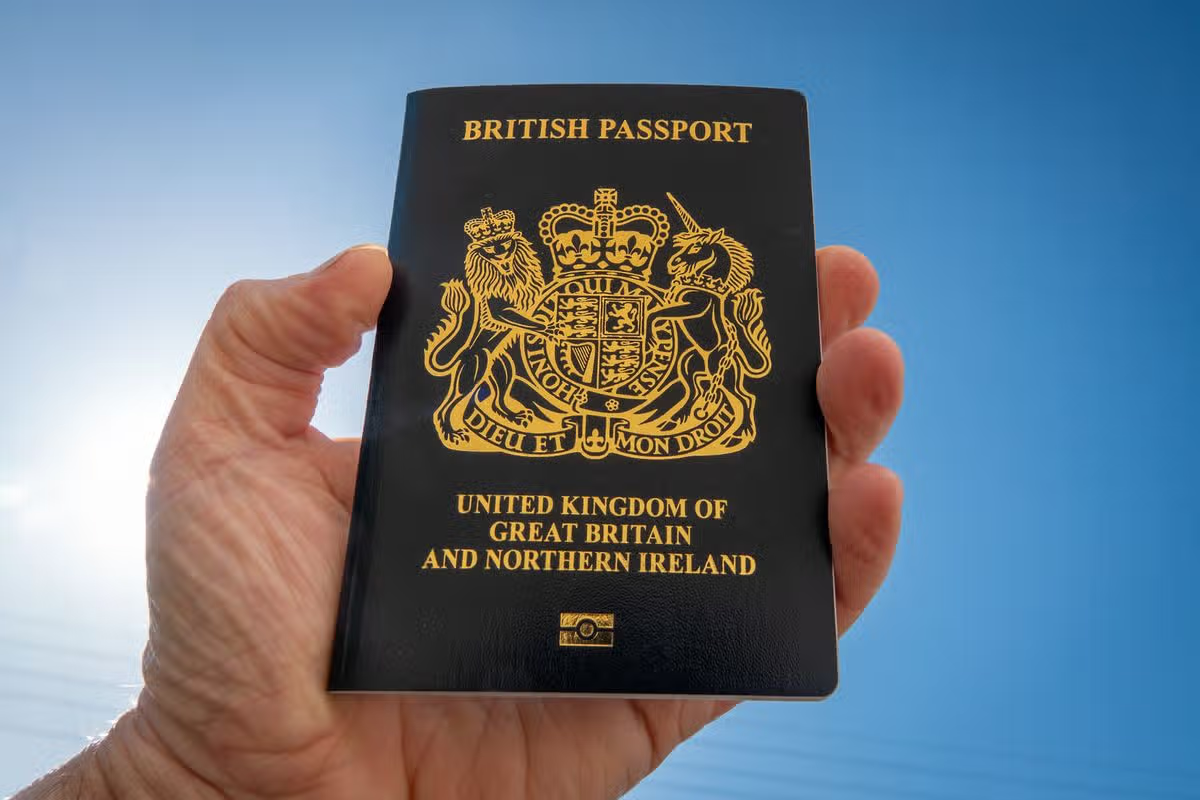
Jetting off abroad is always an exciting time, but it’s easy to get caught out at the airport by common passport mistakes. The passport’s expiry date is an obvious check, while the 10-year rule is equally crucial when travelling to the Schengen area.

However, holidaymakers must also be aware of blank pages in their passports and the overall condition of their travel document. Even the slightest defect in a passport can render it invalid, leaving the traveller unable to fly and missing their holiday altogether.

To help Brits feel prepared before jetting off abroad, particually ahead of the October half-term, a travel expert has issued a warning and highlighted the four key checks to make. It’ll take just a few minutes and could be the difference between soaking up the sun in Malta during that well-earned winter escape and being stuck indoors in the grizzly British weather, wishing you had just checked your passport sooner.

Four key passport checks

On what other crucial checks are required before jetting off abroad, Rhys Jones, travel insurance expert at Go Compare Travel, said: “It’s important to remember that passport rules are about more than expiry dates.” He advised: “Travellers should check whether their passport was issued within the accepted period for their destination, is valid for long enough after their trip, has enough blank pages where required, and is not too damaged to travel.

Brits travelling to countries in the Schengen area must make sure their passport was issued less than 10 years before the date they enter the country. They must also ensure that their passport is valid for at least three months after the day they plan to leave the country.

Passport damage

Inspecting for passport damage is an easy thing to forget to do, particularly by seasoned travellers, but it’s a crucial part of pre-holiday checks. Rhys warned: “A damaged passport can quickly become a much bigger problem than many travellers realise. Water damage is particularly risky because it can warp pages, blur personal details, affect stamps or visas, and make the passport harder to scan or verify. Even if it looks usable to you, airline staff or border officials may decide it is too damaged for travel.

“If you turn up at the airport with a passport that is visibly damaged, you could be refused boarding before you even reach border control. Airlines have to be confident that passengers will be accepted at their destination, so a passport with water stains, peeling laminate, torn pages, missing pages, unreadable details or a damaged chip can lead to serious disruption.”

He advised: “The key guidance is to check your passport well before departure, keep it dry and protected while travelling, and replace it if there is any doubt about whether it will be accepted.”

The expert added: “If you notice damage while you are still in the UK, the safest option is to replace the passport before you travel. But if you are already abroad and your passport is lost, stolen, damaged, full, recently expired or otherwise unusable, you may need to apply for an Emergency Travel Document (ETD). This is designed to help British nationals travel urgently from abroad when they cannot use their passport.

Can travel insurance help me?

It depends on what your policy says. Rhys said: “Travel insurance can sometimes help here, but it depends on the policy and the circumstances. Some policies include cover for lost or stolen passports abroad and may contribute towards the cost of an ETD, replacement documentation, or reasonable extra travel and accommodation costs if the issue disrupts the trip. However, cover limits, excesses and exclusions vary, and insurers will usually expect travellers to report the issue promptly, keep receipts, and take reasonable care of their documents. If your passport was lost because of your own negligence, it’s likely your insurer won’t pay out.”

For more information on passport rules to check, you can visit Go Compare’s guide on their website.

Do you have a travel story to share? Email webtravel@reachplc.com

Source link

UK theme park crowned ‘best in the world’ – and it’s not Alton Towers or Thorpe Park

A UK-based theme park has beaten competition from across the globe to be named the best in the world, and a brand-new ride that only opened this summer also scooped a major award

The Park World Excellence Awards has named its top theme park picks for 2026, and the coveted Best of the Best award has been given to a British theme park that has beaten competition from across the world.

The north west resort scooped the prestigious prize at the awards ceremony held on Wednesday (September 23). The awards, which focus on parks in Europe, the Middle East and Asia, included categories from the Best Roller Coaster to the Best Water Park, and competition was stiff, with nominations for huge theme parks including PortAventura, Futuroscope, and Land of Legends.

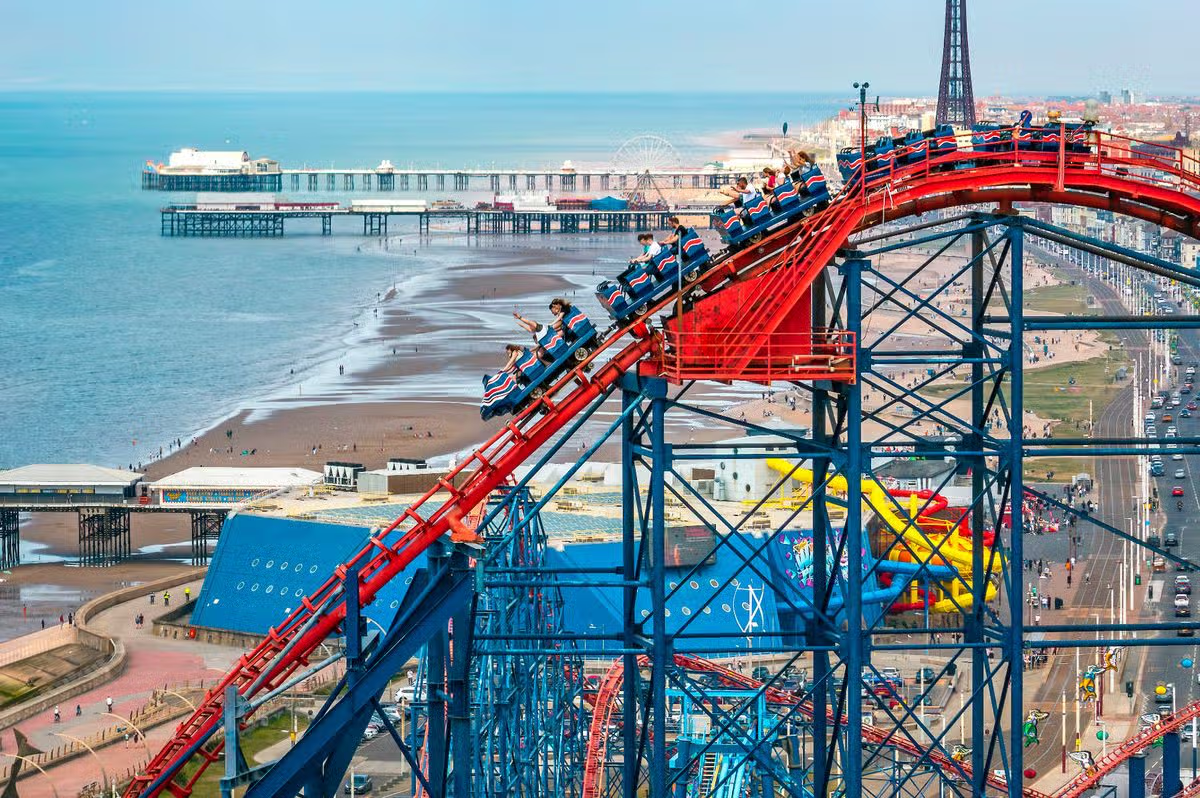
Pleasure Beach Resort in Blackpool took the top prize, which was described as being awarded to “theme parks, rides, or tourist attractions recognised for excelling as the best of all time within its respected industry.” The Best of the Best award is given to parks that offer “the absolute pinnacle, reflecting everything that is great about our industry”.

Formerly known as Blackpool Pleasure Beach, the iconic theme park has been celebrating its 130-year anniversary in 2026, making it one of Europe’s oldest, and it is fourth-generation family-owned. It’s the first UK theme park to win the award, with former recipients including Germany’s Europa Park and Siam Park in Tenerife.

The theme park also scooped Best Ride of the Year for Aviktas, the largest ride of its kind in the UK, which swings passengers 138ft in the air on a rotating pendulum. Aviktas opened in May 2026 and was an £8.27 million addition to the park. Meanwhile, Valhalla, a Viking-themed attraction, was the runner-up in the Best Water Ride category. It’s the fifth time the water-based ride has been nominated in this category.

The Pleasure Beach Resort is also home to the UK’s only Nickelodeon Land, which includes SpongeBob SquarePants and PAW Patrol-themed rides for all the family.

It’s Halloween event, Journey to Hell, is set to open on October 17, just in time for half term. Described as an “immersive scare experience”, it’ll include three new scare mazes and a selection of rides that stay open until 9pm.

Amanda Thompson, managing director of the Pleasure Beach Resort, said in a statement: “To be named Best of the Best is a massive achievement for our park. Our industry is full of so much talent, so to be recognised among the best speaks volumes on the dedication and hard work that has kept us moving forward for 130 years.

“Avitkas has been a hugely valuable addition to the park and I’ve been delighted by its reception so far. If they haven’t already I’d absolutely encourage people to visit Pleasure Beach and give our ride, now recognised as one of the world’s best a go!”

Have a story you want to share? Email us at webtravel@reachplc.com

Source link

I’m a family travel expert – here’s my top tip for saving money during school holidays

Finding cheap holidays during the school holidays may feel like an impossible task for parents but according to one travel pro there are some easy tricks that could help

When it comes to cheap holidays, most parents have already resigned themselves to the fact that prices surge during school holiday dates – but according to one travel expert, there are some minor tweaks that could actually help families save money on their next getway.

Mum-of-two and avid traveller Jen Carr has built up a following of over 349,000 on Instagram where she shares her top tips for finding cheap family travel deals.

While the peak holiday season comes with inevitably higher prices, according to Jen just changing the dates of travel by a few days could mean you save hundreds of pounds, without having to take the kids out of school during term time.

“Booking at the end of summer,” she told the Mirror exclusively. “It’s so much cheaper to go the last week of August compared to the first week of August. I guess that’s just because demand’s probably a lot less. Nobody really wants to get back off holiday the day before the kids go back to school, but if you’re willing to do that, it is a lot cheaper.”

It’s not a hack that’s specific to summer holidays either, as Jen recommended considering dates for the upcoming October half term. She added: “If, for example, in the October half term you fly three days before half term starts, you’re going to save literally hundreds of pounds. So I mean, it’s just how much you want/appreciate that attendance!”

Of course it’s worth noting that parents who do consider taking their kids out of a school for a few extra days may need to check their school’s policy on absences of this nature, or they could risk being fined per child. Currently the fine for school absences around the UK are £80 if paid within 21 days, but this can go up to £160 if paid within 28 days. This is for unauthorised absences; if you can get permission from the school for the absence, then you won’t be fined.

As for the best destinations where families can get more bang for their buck? Jen suggested that while the major hotspots are popular for a reason, there are some alternatives that deliver the same levels of experience but without the hefty price tags.

She explained: “There are destinations that are a lot cheaper than others and it seems to kind of go on a bit of a cycle with what’s popular. But places like Menorca and Majorca and Ibiza are always going to be a lot more expensive than somewhere like Agadir in Morocco, but you’re still getting the beach, the pool, holiday vibes and the sunshine. Go where the destinations are cheaper, and that does seem to change year-on-year. I’m sure next year Agadir will be really expensive, but this year it’s been really good value, all-inclusive.”

Speaking about further alternatives, Jen urged parents not to discount the likes of a city break; in fact, she herself enjoyed a family trip to Paris earlier this year, and said that both the kids and grown-ups had a brilliant time. She added: “I think it’s about knowing where to look. It’s, a like-for-like holiday is going to be more expensive in the school holidays. I guess it’s just being a bit more flexible and thinking, ‘Okay, well, it’s the August summer holidays. Do we need to go to Menorca for a week all-inclusive or could we maybe go for a road trip around Austria?’ Because it’s going to be a lot cheaper to do something a bit more off-piste.”

  • Jen Carr, family travel expert and founder of The Travel Mum, shares the best affordable holiday deals for families throughout the week. Jen’s new book ‘Yes You Can Travel With Kids’ is available now.

Source link