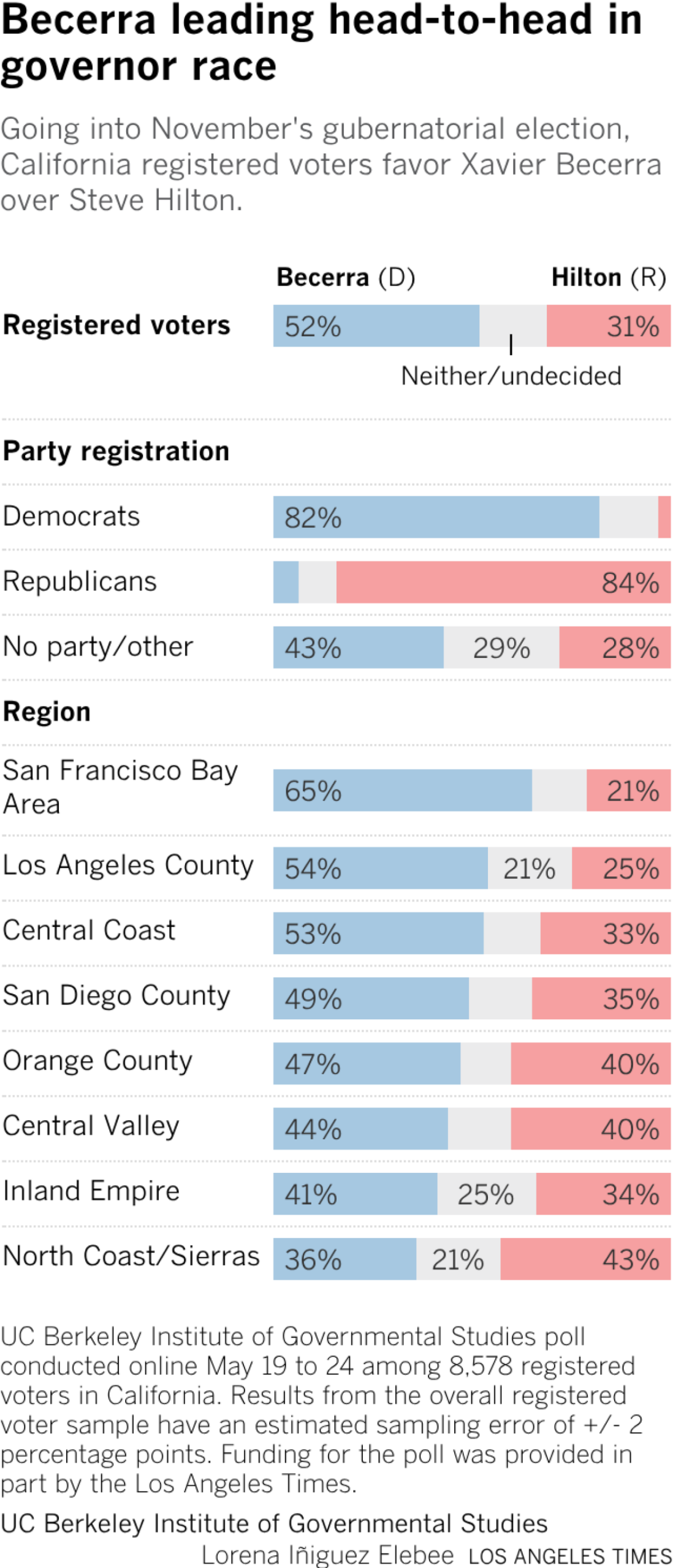
governor

Becerra’s surge in California governor race draws fresh attention to candidacy, long government record

After winning his first race for Congress in 1992, 34-year-old Xavier Becerra credited a wave of community supporters in Los Angeles, many Latino, for backing his upstart campaign, saying he hoped his win was proof that grassroots politics was more valuable than “heavy dollars.”

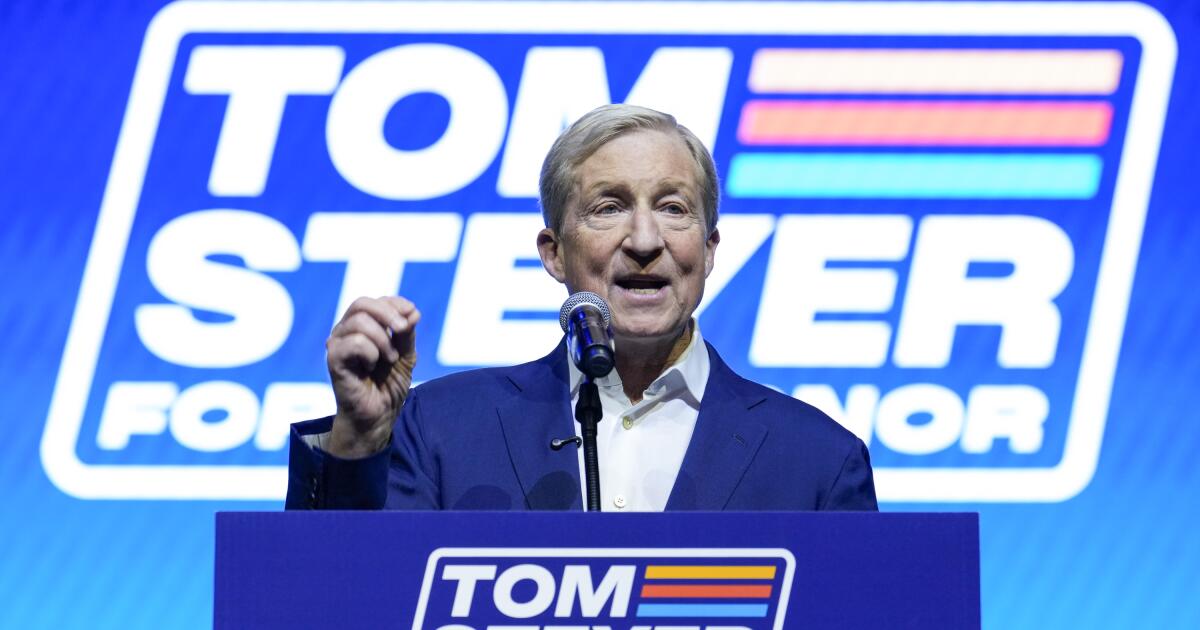
More than 30 years later, Becerra, 68, is again an upstart candidate — this time for California governor. Again he is facing monied competition — including from chief Democratic rival Tom Steyer, a self-funded billionaire — and relying on Latino and other grassroots support.

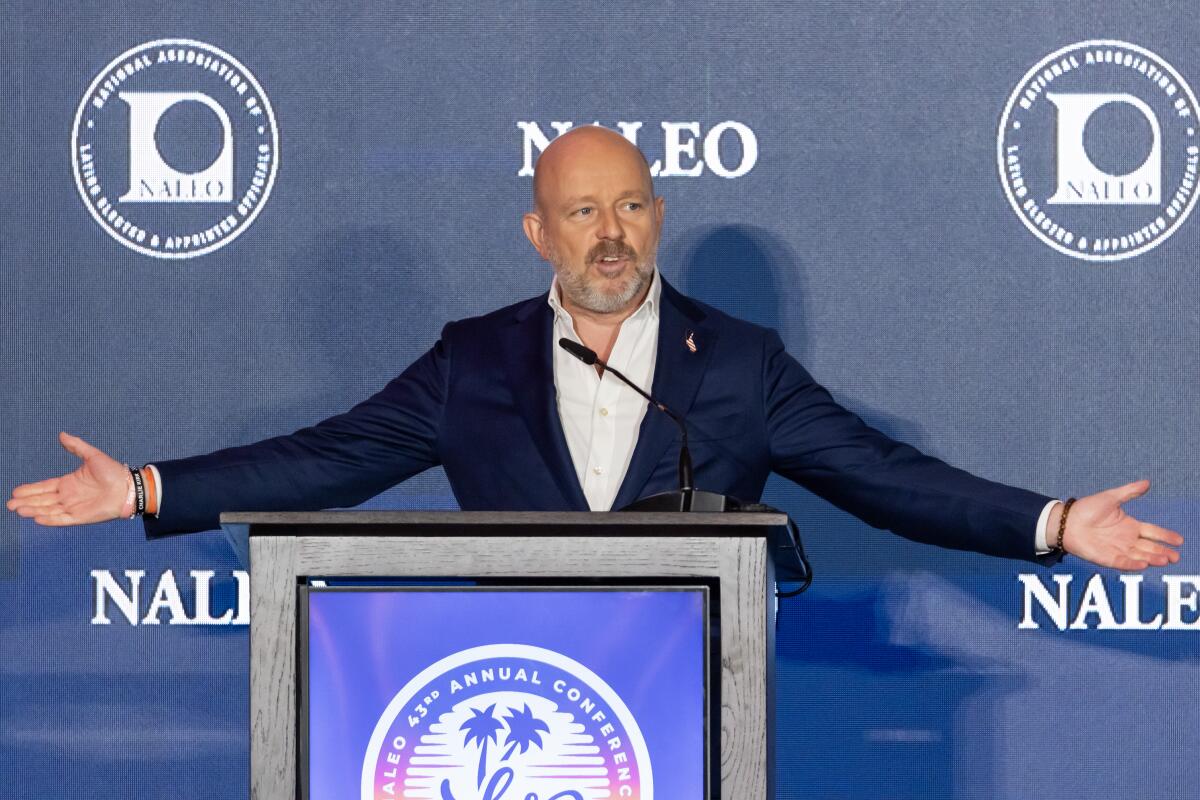
California gubernatorial candidate Xavier Becerra speaks during a campaign event in Los Angeles on April 18.

California gubernatorial candidate Xavier Becerra speaks during a campaign event in Los Angeles on April 18.

(Jae C. Hong / Associated Press)

“You are the people power that it takes,” he told a crowd of supporters at a recent “Fighting for the California Dream” town hall in Los Angeles. “California wasn’t built by billionaires. It was built by your families. It was built by our families.”

That Becerra is still fighting in the race — and drawing new people to his events — reflects a remarkable and hard-to-explain turnaround for a campaign that appeared all but dead less than a month ago, then bounded back into contention after Rep. Eric Swalwell dropped from the race and resigned from Congress amid sexual assault allegations.

Before Swalwell’s collapse, Becerra’s biggest splash in the race came in March, when USC excluded him and other low-performing candidates from a planned debate. The criteria left every candidate of color out, and after Becerra and others complained, the forum was canceled.

A California Democratic Party tracking poll, released in early April before the Swalwell scandal broke, showed Becerra near the bottom of the field with 4% support among likely voters. In a party poll taken after it broke, Becerra’s support jumped to 13% — the biggest increase of any candidate.

Certainly some of Swalwell’s supporters shifted to Becerra, but political observers are still pondering why so many did — and not to Steyer, former Orange County Rep. Katie Porter or other Democrats with single-digit support, such as former L.A. Mayor Antonio Villaraigosa or San José Mayor Matt Mahan.

Whatever the answer, Becerra’s surge has sparked fresh interest in his candidacy. It also has raised questions about his time as California attorney general, when he sued the first Trump administration more than 120 times, and U.S. Health and Human Services secretary, when he backed the Biden administration’s strict COVID-19 rules and oversaw the agency’s response to a massive influx of unaccompanied minors at the southern border.

It has also put a growing target on Becerra’s back — including at Wednesday night’s gubernatorial debate, when rivals criticized him as a “D.C. insider” with poorly detailed plans for the state — and sparked hope among many Latinos that California will elect one of them as governor for the first time in state history, sending a strong message of resistance to the intensely anti-immigrant Trump administration.

Of course, Becerra faces hurdles. Steyer, a hedge fund founder who has donated more than $130 million to his own campaign, has been ahead of him in polling, as have two Republicans: Silicon Valley entrepreneur and former Fox News host Steve Hilton, who has President Trump’s endorsement, and Riverside County Sheriff Chad Bianco. Only the top two candidates in the June 2 primary advance to the November election.

Still, Becerra now has a path to victory, one that did not exist even a month ago, and new funding. Many Democratic voters remain undecided, and many — shocked by the Swalwell scandal — are looking for another Democratic front-runner to back.

In an interview with The Times, Becerra said he’s the man for the job, because “California needs a work horse, not a show horse.”

Los Angeles mayoral candidates gather for a portrait in 2000.

Xavier Becerra, left, gathers with other candidates for Los Angeles mayor in 2000.

(Gary Friedman / Los Angeles Times)

Rising wave of Latino political power

A Sacramento native and the son of a Mexican immigrant mother and a Mexican American father, Becerra graduated from Stanford Law School and served as a deputy to California Atty. Gen. John K. Van de Kamp before being elected in 1990 to the California Assembly.

In 1993, Becerra entered Congress on a rising wave of Latino political power and the heels of a fractious presidential election in which former White House aide Pat Buchanan challenged President George H.W. Bush in the Republican primary on a stridently anti-immigrant, “America First” message — one Trump repurposed in both 2016 and 2024.

It was a defining political moment for Latinos across the country, and for Becerra personally, said Fernando Guerra, founding director of the Center for the Study of Los Angeles at Loyola Marymount University.

“He certainly has been and is part of the incorporation of Latinos into California history and California politics, and it really begins in the early ’90s,” Guerra said. “His rise and political career is really a reflection of the rise and political incorporation of Latinos.”

In 1994, Becerra helped oppose Proposition 187, a state initiative to deny undocumented immigrants access to public education and healthcare. In 1996, he sharply criticized the passage of the Personal Responsibility and Work Opportunity Reconciliation Act, which cut federal benefits for many legal immigrants. By 1997, Becerra — just 39 — was chair of the Congressional Hispanic Caucus and the first Latino member to serve on the powerful House Ways and Means Committee.

By 2016, Becerra, 58, was the highest-ranking Latino in Congress when then-Gov. Jerry Brown tapped him to replace a Senate-bound Kamala Harris as California attorney general. There, Becerra played a key role in defending the Affordable Care Act, known as Obamacare, against Republican attacks.

In early 2021, Becerra was confirmed to serve as President Biden’s health secretary, another first for a Latino and a critical post given the COVID-19 crisis, and remained in that role until Trump’s second inauguration.

Xavier Becerra removes a face mask during a hearing

Then-U.S. Health and Human Services Secretary Xavier Becerra arrives for a hearing to discuss reopening schools during the COVID-19 pandemic in 2021.

(Greg Nash / Associated Press)

Criticism and praise

In a rush of endorsements in recent days, Becerra’s supporters have lauded his executive experience, calling him a “proven leader” who, amid constant threats from the Trump administration, is “ready to fight back on day one.”

Becerra’s critics also have pointed to his leadership record, but to highlight what they contend are glaring failures.

Steyer spokesman Kevin Liao alleged Becerra was “absent, ineffective, or too late” in responding to COVID-19 and other public health crises as health secretary, and that California “cannot afford incompetence, or someone who disappears when things get hard.”

The remarks echoed others made during the pandemic, including by Eric Topol, who is executive vice president of Scripps Research in La Jolla, a professor of translational medicine and a cardiologist. During the pandemic, Topol accused Becerra of being “invisible” in the fight to control it. In a recent interview, he said he still believes that.

Topol said the Biden administration’s COVID response was defined by poor data collection and “infighting” among agencies such as the National Institutes of Health, the Centers for Disease Control and Prevention and the Food and Drug Administration, including on vital issues such as when Americans should receive booster shots and how long they should isolate after infection.

Becerra “basically took a very absent, low profile — didn’t show up, didn’t harmonize the remarkable infighting,” Topol said. “The buck stops with him.”

Dr. David A. Kessler, the Biden administration’s top science official on COVID-19 and now a professor of pediatrics and epidemiology at UC San Francisco, fiercely defended Becerra, crediting him with rolling out some 676 million vaccines and steering the nation out of a wildly unfamiliar health crisis with substantial success — what Kessler called a “historical achievement” that proved government “can do big things.”

Kessler said Becerra rightly assessed that the country needed to hear from medical experts, not politicians, and so deferred at times to the doctors, epidemiologists and vaccinologists he smartly surrounded himself with and trusted — but he was never absent. “He enabled us. He was there. Anything I needed, he helped deliver,” Kessler said.

Becerra said there were a lot of people involved with the COVID-19 fight, including a White House team launched before his confirmation as health secretary. Still, it was his agency that ultimately led the response, and helped bring the pandemic to an end, he said.

“At the end of four years, when we had put some 700 million COVID shots into the arms of Americans and pulled the country and our economy out of the COVID crisis, it was HHS — and I was the secretary of HHS,” he said.

Becerra’s rivals in the governor’s race also have attacked him for how he responded to an influx of unaccompanied immigrant minors during the pandemic. They allege Becerra rushed their release to relatives and other sponsors while ignoring concerns from career health staff that some of those placements weren’t safe — resulting in thousands of kids being lost to the system, forced into child labor or trafficked.

The criticism stems in part from a sweeping New York Times investigation that found the health department couldn’t find some 85,000 children it had released, that Becerra had relaxed screening processes for sponsors and that placement concerns from career health staff went ignored or were silenced.

The investigation by reporter Hannah Dreier found that thousands of the 250,000 or so migrant children who arrived in the U.S. between early 2021 and early 2023 had “ended up in punishing jobs across the country — working overnight in slaughterhouses, replacing roofs, operating machinery in factories — all in violation of child labor laws.”

Atty. Gen. Xavier Becerra holds a news conference in Border Field State Park in San Diego in 2017.

Atty. Gen. Xavier Becerra holds a news conference in Border Field State Park in San Diego in 2017.

(Francine Orr/ Los Angeles Times)

It found there were many signs of “the explosive growth of this labor force,” and that staff had repeatedly flagged concerns about it in reports that reached Becerra’s desk. It also reported that, during a staff meeting in the summer of 2022, Becerra had pressed staff to move children even more quickly through the process, comparing them to factory parts.

“If Henry Ford had seen this in his plants, he would have never become famous and rich. This is not the way you do an assembly line,” Becerra said, according to a recording of the meeting obtained by the newspaper.

Danni Wang, another Steyer spokesperson, said children “were handed to gang members, traffickers, and abusers because [Becerra] stripped the background checks that had protected them for years.”

Becerra said the controversy is one he has addressed publicly for years, including in multiple congressional hearings. He said his team worked diligently to properly vet sponsors and do right by the thousands of children in their care, despite Congress failing to provide the budget needed to restore a system of licensed care facilities that the first Trump administration had dismantled.

“It was a wreck. They had closed facilities, they had fired the licensed caregivers. And remember, this was during COVID, [when] you didn’t want anyone to be near each other,” he said. “How do you take care of thousands of kids in a center that could house maybe 50 kids?”

He said he led an aggressive push to stand up temporary facilities — including in places like the San Diego Convention Center — while rebuilding the licensed care facilities Trump had dismantled and working to place kids into the community as quickly and safely as possible.

Ron Klain, who served as Biden’s chief of staff for the first two years of the administration, said Becerra helped lead the administration out of the crisis by being “an outspoken advocate” for the children in its care.

“Xavier was very, very insistent in meetings and very outspoken on the risk that some of these people [the kids] were being placed with were not the proper people to place them with, and pushed hard for more rigor in the process,” Klain said.

Becerra also has faced criticism and questions related to the federal indictment of his former chief of staff Sean McCluskie, who pleaded guilty to conspiracy to commit fraud after authorities accused him of stealing some $225,000 from Becerra’s dormant state political campaign account.

Becerra was not implicated in the scandal — which he’s previously described as a “gut punch” — and said he did everything he could to ensure McCluskie and others were held accountable once it came to light, including by providing “testimony and documents” to the FBI and federal prosecutors.

Hilton has said the scandal, which also implicated a former aide to Gov. Gavin Newsom, showed that “corruption has become totally ingrained and systemic” under Democratic rule in California.

Looking ahead

Experts said Becerra’s long resume will help him stand out in a race with less experienced competitors and no household names — and that Californians electing a Latino for the first time, as the Trump administration conducts one of the largest ever deportation campaigns, dismantles immigrant rights and targets people on the street based largely on their looking and sounding Latino, would be a major political moment.

Becerra said his extensive experience should matter to voters, because such experience will be necessary in the pivotal and no doubt chaotic Trump years ahead, when “pizzazz and dazzle” will matter less than steady competence from “someone who’s actually been in the midst of that hurricane” before.

“It helps to have gone through these things. I’ve been there, I’ve done that, and I’ve done it successfully,” he said. “I’ve proven that, whether it was taking on Donald Trump toe to toe as the [attorney general], whether it was getting us out of COVID working closely with the White House to deploy the resources and get that done, we made it happen.”

Source link

Explosion in southwest Colombia kills at leat seven, state governor says | Crime News

Authorities in Cauca region demand ‘decisive’ government action after deadly explosion on Pan-American Highway.

At least seven people were killed, and 20 were wounded following a suspected explosive attack in the southwestern province of Cauca, Colombia, according to regional authorities.

Governor Octavio Guzman said that an explosive was detonated on the Pan-American Highway in the El Tunel sector of Cajibio on Saturday. He condemned what he called an “indiscriminate attack” against the civilian population.

Recommended Stories

list of 3 itemsend of list

“There are not sufficient words for the pain we feel,” Guzman said in a social media post, demanding a “decisive, sustained” response from the government against the “terrorist escalation”.

A video shared by the governor appeared to show the aftermath of the bombing, with ambulances on site and mangled vehicles and debris covering the road.

“Cauca cannot continue facing this barbarity alone,” he added, stating that other actions had also been carried out in El Tambo, Caloto, Popayan, Guachene, Mercaderes, and Miranda.

The deadly incident comes after a series of attacks on Friday, attributed to criminal groups formed by dissident members of the FARC rebel group, who split with the group following a landmark peace agreement with the government in 2016.

On Saturday, Minister of Defence Pedro Sanchez was convening a security council in Cali to assess the regional security situation when the latest attack occurred.

President Gustavo Petro responded to the deadly explosion by saying that powerful criminal groups are seeking to control the population through fear.

While details of the attack are still emerging, Petro appeared to blame a drug trafficker and FARC dissident leader known by the alias Ivan Mordisco.

“I want the maximum worldwide pursuit against this narco-terrorist group,” Petro said.

Source link

Houston eases limit on cooperation with ICE after pressure from governor

A Houston city ordinance that limited police officers’ cooperation with federal immigration agents was amended on Wednesday after Texas’ governor threatened to take away millions of dollars in public safety grants.

Houston, Austin and Dallas — three of the state’s biggest cities and Democratic strongholds — are being confronted by GOP Gov. Greg Abbott with threats of losing public safety dollars over policies that dictate how law enforcement interacts with federal immigration authorities. The three cities are being threatened with the loss of about $200 million in public safety funding, including tens of millions expected to cover security at World Cup matches this summer in Dallas and Houston.

Two weeks ago, the Houston City Council passed the ordinance, which eliminated a requirement that Houston police officers wait 30 minutes for agents with U.S. Immigration and Customs Enforcement to pick up someone with a nonjudicial administrative warrant. If ICE agents didn’t show up in time, police officers took a detained person’s information and then released them.

But Abbott warned city officials that the new ordinance and its limitation on cooperating with ICE agents violated the terms of $110 million in state grants Houston had received for police and security during the World Cup games the city is hosting in June.

Texas Atty. Gen. Ken Paxton had also filed a lawsuit against Mayor John Whitmire and members of the City Council over the ordinance, accusing them of violating a 2017 state law that prevents cities from adopting policies that limit the enforcement of immigration laws and that also banned “sanctuary city” policies in the state. There is no strict definition for sanctuary policies or sanctuary cities, but the terms generally describe limited cooperation with ICE.

After more than two hours of discussion during its weekly meeting, the Houston City Council voted 13 to 4 to make changes to the ordinance. Whitmire said he had consulted with Abbott’s office about making changes that would prevent Houston from losing its funding.

The amended ordinance deletes language that highlighted that administrative warrants — versus warrants signed by a judge — that ICE agents use to take individuals into custody are not enough for officers to arrest or detain an individual.

Houston Mayor John Whitmire speaks during a City Council meeting on Wednesday.

Houston Mayor John Whitmire speaks during a City Council meeting on Wednesday.

(Raquel Natalicchio/AP)

“We have no alternative for Houston to survive, prepare for [the World Cup], patrol these neighborhoods,” Whitmire said. “We’ve got to have today the restoration of the $114 million.”

Andrew Mahaleris, a spokesperson for Abbott, said the governor expects any policy Houston police adopt has to comply with the city’s certification that it will fully cooperate with the Department of Homeland Security.

“This vote is a step in the right direction after Houston leaders put public safety at risk with reckless policies that undermined law enforcement,” Mahaleris said in a statement.

Councilmember Abbie Kamin, one of three members who had pushed for the ordinance, voted against amending it, saying that doing so was giving in to bullying tactics from state leaders.

“If we roll over now to a bully, what will he come for next?” Kamin said.

Councilmembers Edward Pollard and Alejandra Salinas, who also pushed for the ordinance, said they remained hopeful the changes approved Wednesday would not violate individuals’ constitutional rights and wouldn’t result in people being held on nonjudicial warrants.

Nikki Luellen, an advocate for criminal justice reform for the ACLU of Texas, called the amended ordinance “a green light for deeper collaboration between ICE and the Houston Police Department.”

Martha Castex-Tatum was one of several council members who had supported the ordinance but voted in favor of amending it in order to protect the city’s finances.

“For some people, this may feel like surrender. It’s not. It’s real stewardship,” Castex-Tatum said.

Dallas officials have said they are committed to ensuring public safety.

Austin Mayor Kirk Watson, a moderate Democrat, said the local policy complies with state law. He said Abbott’s threat to cut nearly $3 million in Austin would cut trauma aid for police officers and sexual assault victims.

“We don’t have the time and will not play into this political theater,” Watson said.

Austin officials have since indicated they could try to negotiate with Abbott.

The debate in Houston and other Texas cities comes during fraught times. Whitmire and other local leaders in many of Texas’ left-leaning urban areas have tried not to draw the federal government’s attention amid the aggressive immigration crackdown by President Trump’s administration.

Lozano writes for the Associated Press. AP writer Jim Vertuno in Austin contributed to this report.

Source link

Democrats win in Virginia but it won’t be the final say in a national redistricting competition

Democrats on Wednesday celebrated an election win in Virginia that could put them slightly ahead in the national redistricting competition that President Trump triggered in an attempt to preserve his party’s House majority in this year’s midterms, but it will not be the final round.

Now that it’s been approved by voters, the new Virginia map will have to clear additional legal hurdles. On Wednesday, the state attorney general’s office said it would immediately appeal a ruling earlier in the day from a judge in rural southern Virginia who ordered that the results of Tuesday’s vote not be certified.

Ultimately, the Virginia Supreme Court will decide whether Democratic lawmakers violated procedural rules when they referred a constitutional amendment to the ballot authorizing the new U.S. House districts that could help Democrats win as many as four additional seats in the state. If so, that could invalidate the map voters narrowly approved Tuesday.

What happens next in Florida also will matter.

The state’s Republican-controlled Legislature is to meet in a special session next week that GOP Gov. Ron DeSantis called in part to draw a new map to expand the party’s congressional majority there. The U.S. Supreme Court is scheduled to issue an opinion by the end of June in a Louisiana case that could overturn a key provision of the Voting Rights Act and lead to redrawn political maps across the South, though almost all of those could not happen until 2028.

After voters passed the Virginia amendment, Democrats could tentatively claim that they netted 10 seats nationally from the mid-decade redistricting, compared with the nine that Republicans claim. Even if things swing again in the GOP’s favor, the net result of Trump’s campaign would be at best an incremental increase in the number of GOP-leaning House seats at a time when his approval rating is dropping and Republican anxiety over losing control of Congress in November is rising.

“We have successfully blunted Trump’s attempt to completely hijack the midterms,” said John Bisognano, president of the National Democratic Redistricting Committee.

Many Republicans agreed.

“The GOP will now lose net seats across the country. If you’re going to pick a fight, at least win it,” Ari Fleischer, who was a spokesman for President George W. Bush, posted on the social media site X after the Virginia vote. “All this was foreseeable and avoidable. We should not have started this fight.”

Adam Kincaid, executive director of the National Republican Redistricting Trust, argued that it is too soon to declare one party a victor.

“It’s an ongoing process with many legal challenges pending, and it’s far too early for sweeping statements on the final outcome,” he said.

Trump on Wednesday tried to undermine the Virginia result by leveling groundless accusations of fraud similar to ones he made after losing the 2020 presidential election. He called the Virginia vote “RIGGED” and “Crooked” in a post on his social media site and added, “Let’s see if the Courts will fix this travesty of ‘Justice.’”

Redistricting spread from Texas to other states

Redistricting is typically done every 10 years after each census, unless ordered by a court. But last summer, Trump pushed a redrawing in Texas, prodding the state’s Republican-controlled Legislature to add up to five winnable House seats for his party. Trump then began pressuring other Republican-run states to follow. Missouri, North Carolina and Ohio have since created more GOP-leaning seats in addition to Texas.

Democrats began to fight back, even though they were more constrained because several Democratic-controlled states had maps drawn by independent commissions rather than lawmakers and governors.

To counter Texas, California’s Democratic governor, Gavin Newsom, pushed the Democratic-controlled Legislature to place a redistricting initiative on last fall’s ballot. After voters overwhelmingly approved it, the measure will replace a commission-approved map with one that could gain Democrats five seats.

Democrats reclaimed the Legislature and governor’s office in November in Virginia and swiftly moved to replicate California’s move with an even more aggressive redistricting plan. It replaces a congressional map imposed by a court after the last census that had resulted in a 6-5 edge for Democrats with one that could allow Democrats to win as many as 10 seats.

“We are not going to let anyone tilt the system without a response,” state Senate President L. Louise Lucas said at a news conference Wednesday.

Courts could still have a say on redistricting

In Washington, U.S. House Democratic leader Hakeem Jeffries of New York warned Florida Republicans, who have been openly nervous about redrawing their district boundaries and potentially spreading their core voters too thin before an election that appears to be trending against them.

“Our message to Florida Republicans right now is, ‘F around and find out,’” Jeffries said.

House Majority Forward, the nonprofit arm of the super political action committee aligned with House Democrats, has spent nearly $60 million to push back against Republicans’ redistricting efforts. Some $40 million of that was on the Virginia campaign.

Another obstacle in Florida is an anti-gerrymandering constitutional amendment that was approved by state voters in 2010. It is likely that any new Florida map would trigger significant litigation, although six of the state Supreme Court’s seven justices were appointed by Republicans.

Nicholas Stephanopolous, a Harvard law professor, said a challenge for DeSantis is that the Florida amendment forbids drawing lines for purely partisan purposes, so he has to find some other excuse for revising the map. “Even with that sort of acquiescent state supreme court, I don’t think it’s a done deal,” Stephanopolous said.

The Virginia move comes with its own legal issues. Republicans have challenged the process that Democrats used to place the measure on the ballot and the state Supreme Court opted to wait for the vote before even scheduling arguments in the case. It is unclear when a ruling could come.

Wednesday’s ruling stopping certification came from a separate case that Republicans filed with the same lower court judge, whose initial ruling against the initiative was put on hold by the state supreme court.

“The ballot box was never the final word here,” Terry Kilgore, the Virginia House Republican leader, said in a statement after Tuesday’s vote. “Serious legal questions remain about both the wording of this referendum and the process used to put it before voters.”

The biggest legal wild card is held by the U.S. Supreme Court. Its conservative majority could throw out a requirement under the Voting Rights Act that in areas with a large minority population, mapmakers draw districts that are more favorable to the election of minority candidates.

That provision has led to the creation of several majority-minority congressional seats, especially in the South. Without it, Republicans in conservative states could shrink the number of U.S. House seats winnable by Democrats even further.

But it’s unlikely that any state other than Louisiana, which brought the lawsuit the high court will rule on, would be able to adjust its congressional lines in time for November even if the court eliminates that provision, known as Section Two. That’s because the November election is already officially underway in most states and candidate filing deadlines — and, in some cases, primary elections — have already passed.

Riccardi and Lieb write for the Associated Press. AP writers Lisa Mascaro and Leah Askarinam in Washington contributed to this report.

Source link

As primary election nears, top candidates for California governor debate tonight

With the California governor’s race quickly approaching, six candidates will face off Wednesday evening in the first debate since former Rep. Eric Swalwell dropped out of the race in the aftermath of sexual assault and misconduct allegations.

The debate takes place at a critical moment in the turbulent contest to replace termed-out Gov. Gavin Newsom. Ballots will start landing in Californians’ mailboxes in less than two weeks, and voters are split by a crowded field of eight prominent candidates. The debate also takes place after former state Controller Betty Yee ended her campaign because of a lack of resources and support in the polls.

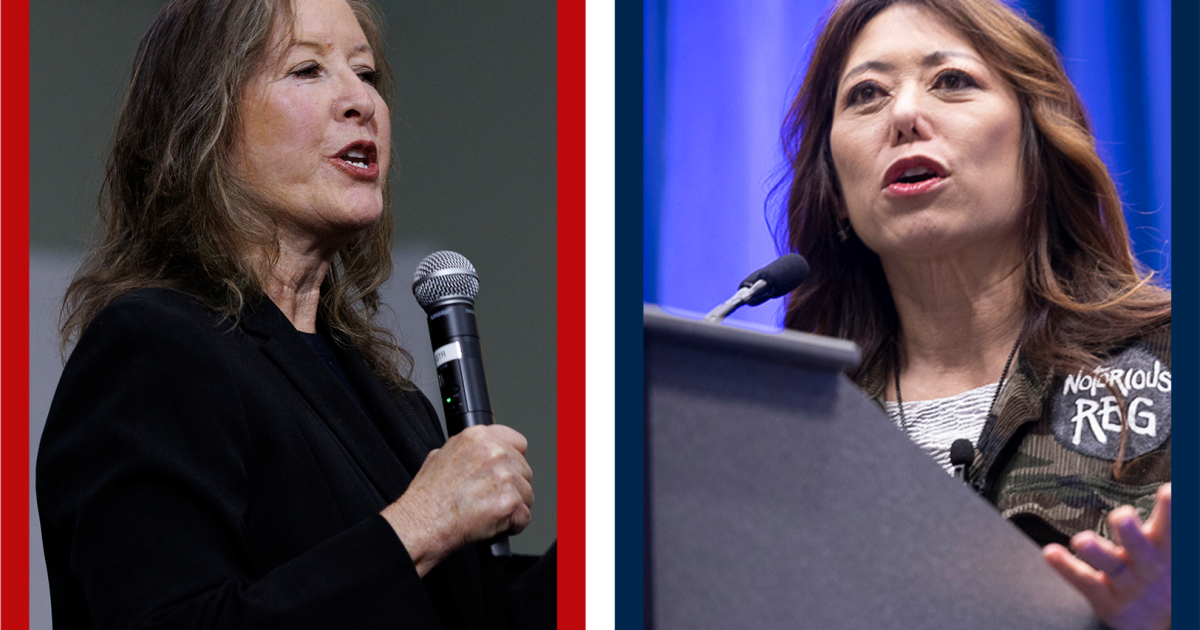
Two Republicans — Riverside County Sheriff Chad Bianco and conservative commentator Steve Hilton — and four Democrats — billionaire Tom Steyer, former Biden administration Secretary Xavier Becerra, former Orange County Rep. Katie Porter and San Jose Mayor Matt Mahan — will take the stage at Nexstar’s KRON4 studios in San Francisco. Former Los Angeles Mayor Antonio Villaraigosa and state Supt. of Public Instruction Tony Thurmond, both Democrats, were not invited to participate because of their low polling numbers.

As the candidates strive to distinguish themselves in a crowded field, the debate could include fiery exchanges about the role of money in politics and potential heightened attacks on Becerra, who has surged in the polls since Swalwell dropped out. With the debate taking place on Earth Day, environmental issues are also likely to be raised.

The Wednesday night gathering is the first televised debate in the gubernatorial contest since early February. Last month, USC canceled a debate hours before it was set to begin over mounting criticism that its criteria excluded all major candidates of color.

The 7 p.m. debate is hosted by Nexstar and will be moderated by KTXL FOX40 anchor Nikki Laurenzo and KTLA anchor Frank Buckley. It can be viewed on KRON4 (San Francisco), KTLA5 (Los Angeles), KSWB/KUSI (San Diego), KTXL (Sacramento), KGET (Bakersfield) and KSEE (Fresno). NewsNation will also air the debate.

Source link

Becerra sees momentum, money and movement in the polls in governor’s race

Xavier Becerra, a former cabinet secretary in President Biden’s administration, appears to be surging in the curiously unsettled California governor’s race.

Until recently, the former U.S. Health and Human Services secretary had been mired in the single digits in polling to replace termed-out Gov. Gavin Newsom and lead the nation’s most populous state.

But after former Rep. Eric Swalwell, (D-Dublin) dropped out of the race earlier this month amid accusations ofsexual assault and other misconduct Becerra has seen a boost in polls, fundraising and endorsements.

On Tuesday, Assembly Speaker Robert Rivas endorsed Becerra alongside 14 Democratic members of the legislative body.

Arguing that Californians are under constant threat from President Trump’s policies, Rivas cited Becerra’s decades-long record in public office, including defending Obamacare and young immigrants, or dreamers, to argue that Becerra is best positioned to lead the state.

“There’s no time to learn on the job — we need a governor who’s ready to fight back on day one,” Rivas said in a statement, noting that Becerra sued the Trump administration 122 times while he was California’s attorney general. “We have a strong Democratic field for governor. But right now, we need someone ready on day one. Xavier Becerra is that leader.”

Becerra said he was honored to receive the legislators’ backing.

“I look forward to working with the Speaker and legislators on Day One to tackle the problems Californians care about most — from the skyrocketing cost of groceries and housing to our unyielding fight against the Trump Administration’s disastrous policies,” he said in a prepared statement. “Californians need an experienced and trusted leader who doesn’t need on-the-job training.”

Despite Becerra’s long tenure in state and federal office, the unflashy politician is not well-known among California voters. He was among the underdogs in the 2026 gubernatorial race. Swalwell, by contrast, was among the leading Democratic candidates.

Amy Thoma, a former Republican strategist who is no longer affiliated with a political party, noted that Becerra’s surge comes at a critical moment in the election, shortly before ballots land in Californians’ mailboxes.

“Voters are starting to tune into the race. Yes, they want someone who will stand up to Trump, but it also seems they want someone with experience who can address the very real issues facing the state,” Thoma said.

She added that Becerra’s life story is “incredibly compelling.”

“The word authentic is overused, but every time he talks about his love for this state, for his family and wanting to make California work for everyone, it comes across incredibly sincere,” Thoma said. “Voters can see through candidates who fake it.”

Becerra was respected by colleagues across the aisle, including former GOP legislative leader and state Republican party chairman Jim Brulte. Both men were elected to the state Assembly in 1990 and though their politics often sharply differed. However, they had a warm relationship.

“He was progressive and I am a conservative,” Brulte said. “We never agreed much on policy, but he is a good man with a great heart.”

The 2026 governor’s race has been unlike any in recent memory, with no clear front-runner in a crowded field of candidates and voters just beginning to pay attention to the contest shortly before the June 2 primary.

There were two prominent Republicans and eight prominent Democrats in the race, leading to fears among Democratic leaders in the state that their party’s candidates could be shut out of the governor’s race in the general election because of California’s unique primary system. The two candidates who win the most votes in the June 2 primary will move onto the November general election, regardless of party affiliation.

Democratic leaders remain concerned that despite California’s sapphire-blue tilt, the number of their party’s candidates in the race could lead to a splintering of Democratic voters that results in two Republicans advancing to the November ballot.

Six prominent Democrats remain in the race, after Swalwell and former state Controller Betty Yee dropped out.

The race — lacking a global superstar such as Arnold Schwarzenegger or the scion of a storied political family and former governor like Jerry Brown — is ephemeral. Anything can happen before the June 2 primary.

But Becerra is having a moment. In addition to the new endorsements, he has seen notable movement in polls, most recently in a survey released Monday by the state Democratic party. Becerra jumped nine points from the party’s last poll, tying with billionaire Tom Steyer at 13%.

While Becerra will never be able to match Steyer’s deep pockets, he raised more than $1 million on ActBlue, the top Democratic fundraising platform, in the week ending on April 18, making him the biggest fundraiser on the site in the nation.

“Ninety-seven percent were first-time donors,” Becerra’s campaign said in a statement. “This is not a donor base being recycled. It is a movement being born.”

Source link

Governor’s race wildly unpredictable two weeks before Californians receive ballots

The most unpredictable California governor’s race in recent history took another set of dizzying turns on Monday, with former Health and Human Services Secretary Xavier Becerra surging after former Rep. Eric Swalwell dropped out in the face of sexual assault and misconduct allegations, and former state Controller Betty Yee ending her bid.

The race to replace termed-out Gov. Gavin Newsom is the first in a quarter of a century with no clear front-runner and a sprawling field of candidates who have been jockeying for the attention of Californians, who are just beginning to pay attention to the campaign two weeks before ballots arrive in their mailboxes.

“I certainly could not have imagined the twists and the disturbing turns that this race has taken,” Yee said as she announced she was dropping out. “But through it all, my values and my vision for California has never wavered.”

A poll released Monday by the state Democratic Party — its first since Swalwell (D-Dublin) dropped out — showed Becerra’s support jumped nine points to 13%, placing him in a tie with Tom Steyer, the billionaire hedge fund founder turned environmental warrior. Former Rep. Katie Porter of Orange County saw a slight bump to 10% from 7%, while the remaining Democrats in the contest were mired in the low single digits.

The party began the surveys out of concern that Democrats could be shut out of the governor’s race because of California’s unique primary system, where the top two vote-getters in the June 2 primary move on to the November general election regardless of political party.

“I continue to believe there are too many Democrats in the field,” California Democratic Party Chairman Rusty Hicks told reporters Monday. “My call for candidates to honestly assess the viability of their candidacy and campaigns still stands, especially if you are stalled in the single digits, seeing financial resources dry up and/or are failing to pick up additional support.”

Hicks and other party leaders and allies had unsuccessfully urged low-polling candidates to reconsider their candidacies before the filing deadline in an attempt to cull the field and avoid splintering the Democratic vote. Though most did not name candidates who they thought should think about their viability, Yee was widely believed to be among them.

Yee became emotional as she said on Monday that she decided to withdraw from the race because she wasn’t able to raise the resources necessary to compete in the state. She also said her message of competency and experience wasn’t resonating among voters who were seeking a fiery foil to President Trump, not “Boring Betty,” as she dubbed herself. Yee said she would assess the field before making an announcement on whether she would endorse one of her fellow Democrats.

Becerra was another candidate believed to be a target of party leaders’ efforts to shrink the field. But he held on and apparently benefited from Swalwell’s downfall.

“I’m not the richest candidate, I’m not the slickest candidate, but I am the guy that’s got you,” Becerra said, rallying supporters in Los Angeles on Saturday.

The audience was filled with members of labor groups backing the longtime politician, and Becerra told them he’d serve as a “union man” in the governor’s office.

Pro- and anti-Becerra forces tussled outside the town hall after two people, who declined to identify whom they were working for, passed out fliers highlighting critical media investigations of the U.S. Department of Health and Human Services during the migrant crisis when the agency was led by Becerra.

Pro-Becerra attendees grabbed the fliers and told the men to go away, prompting a security guard to intervene.

The question is whether Becerra, who also served as state attorney general, a member of Congress and a state Assembly member, can raise the funds necessary to compete in a state with some of the nation’s most expensive media markets. And he was tied in the state party poll with a billionaire who dumped an additional $12.1 million of his own money into his campaign last week.

Steyer’s total investment in his bid reached $133 million, according to the California secretary of state’s office. He also received the endorsement of Our Revolution, a progressive political organization founded by U.S. Sen. Bernie Sanders (I-Vt.).

“We’ve never endorsed a billionaire — but Tom Steyer is using his position to upset the system,” the group posted on X on Monday. “As Our Revolution executive director Joseph Geevarghese told @theintercept, ‘He’s been a partner in the movement. Most billionaires have used their wealth and privilege to lock in the status quo. Tom is doing the opposite.’”

San Jose Mayor Matt Mahan, who is also running for governor, accused Steyer of hypocrisy for the hedge fund he founded profiting from investments in private prisons being used to house ICE detainees, and Steyer calling for the abolishment of ICE.

Steyer got “rich investing off the ICE infrastructure he now wants to abolish,” Mahan posted on Instagram.

Steyer, who sold his stake in the hedge fund in 2012, has said he ordered the company to divest from the private prison company and has repeatedly expressed remorse about his former firm’s ties with the detention company.

Mahan also appeared Monday at a Hollywood production lot to announce his proposal for a special fund to lure sporting events, concerts and other productions to California as part of his plan to help the struggling film and television industry.

An independent effort supporting Mahan has also raised roughly $11 million since Swalwell left the race.

Mehta reported from Los Angeles and Nixon from Sacramento. Times staff writer Dakota Smith contributed to this report.

Source link

Former state Controller Betty Yee drops out of the governor’s race

Former state Controller Betty Yee dropped out of the 2026 governor’s race on Monday, citing low levels of support from voters and donors.

Yee, a Democrat, was part of a sprawling field of politicians vying to replace termed-out Gov. Gavin Newsom. But despite the bevy of prominent candidates running to lead the nation’s most populous state and the world’s fourth-largest economy, this year’s governor’s race has long lacked a clear front-runner well known by the electorate.

“The whole notion that voters are looking for experience and competence is not a top priority, and that’s been really my wheelhouse in terms of how we grounded this campaign was based on my experience,” she said in a virtual press conference Monday morning. “The donors have felt the chill of the polling … and it really just came down to where I’m not going to have sufficient resources to get us to the finish line.”

The former two-term state controller did not immediately endorse another candidate and said she would take a few days to assess the field before making an announcement.

The race was upended earlier this month when then-Rep. Eric Swalwell, among the leading Democrats in the race, was accused of sexual assault and other misconduct. The East Bay Democrat, who is facing multiple criminal investigations, promptly ended his gubernatorial bid and resigned from Congress.

Yee, 68, was well regarded by Democrats during her tenure in Sacramento. And she highlighted her no-drama persona on Thursday.

“California — had enough chaos, fear and horrendous political scandals? Ready for calm, cool, collected change? Some may consider that boring. But that’s the point. We need Boring Betty,” Yee posted on the social media site X. “No crisis. No circus. Just competent, drama-free leadership you can trust. #BoringisBetter”

But she never had the financial resources to aggressively compete in a state with many of the most expensive media markets in the nation.

Yee reported raising nearly $583,000 for her gubernatorial bid in 2025, according to campaign fundraising reports filed with the California secretary of state’s office. Yee’s announcement that she is dropping out of the race came days before the latest financial disclosures will be publicly reported.

Despite being elected to the state Board of Equalization twice and as state controller twice, Yee was not widely known by most Californians. She never cracked double digits in gubernatorial polls.

Her name will still appear on the ballot. She was among the candidates who rebuffed state Democratic Party leaders’ request earlier this year to reconsider their viability amid fears that the party could be shut out of the November general election because of the state’s unique primary system. The top two vote-getters in the June primary will move on to to the November general election, regardless of party affiliation.

Though California’s electorate is overwhelmingly Democratic, the makeup of the gubernatorial field makes it statistically possible for Republicans to win the top two spots if Democratic voters splinter among their party’s candidates. Yee said fear of that scenario playing out “kind of took over” the gubernatorial race.

“Was it possible? Yes. Was it plausible? No, we’re in California. That was not going to happen,” she said, adding that the top-two primary system should be done away with.

Still, Yee was beloved by Democratic Party activists, and previously served as the party’s vice chair.

No Democratic candidate reached the necessary threshold to win the party’s official endorsement at its February convention, but Yee came in second with support from 17% of delegates despite calls for her to drop out of the race.

“Every poll shows that this race is wide open, and I know this party,” she said in an interview at the convention. “Frankly, I’ve been in positions where it’s been a crowded field, and we work hard and candidates emerge.”

The gubernatorial primary will take place June 2, though voters will start receiving mail ballots in about two weeks.

Source link