governor

Google co-founder Sergey Brin confronted Gavin Newsom — then launched a political war

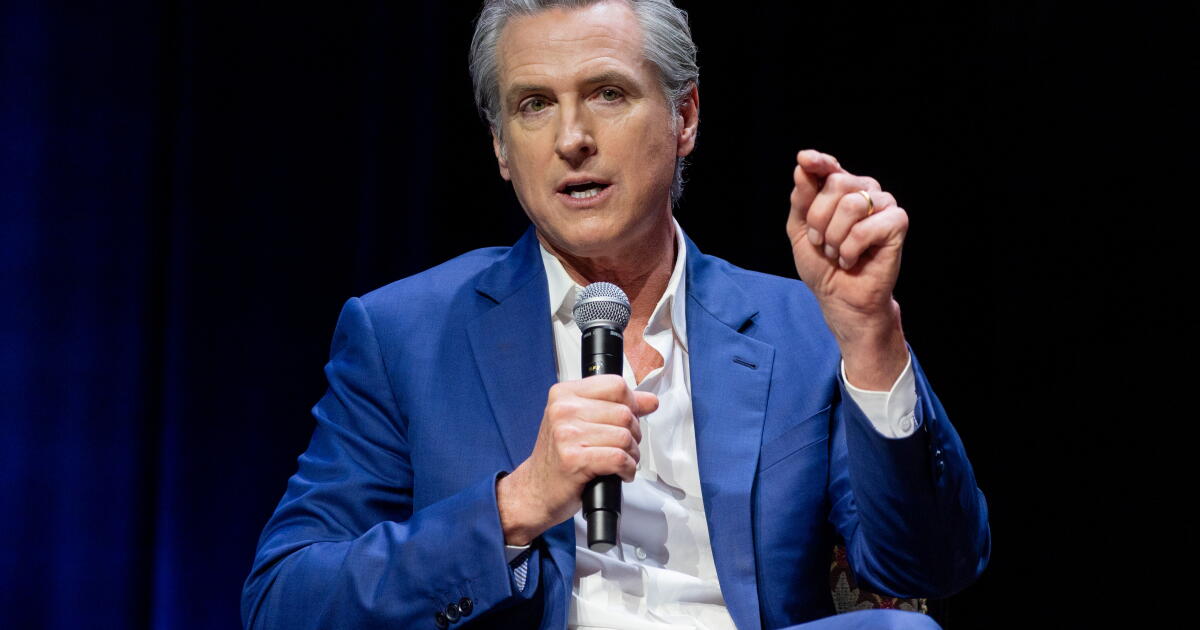
In a treehouse nestled in redwoods north of San Francisco, Gov. Newsom stood cold and hungry as Sergey Brin, the world’s fourth-richest man, and his wellness-influencer girlfriend told him they were leaving the state.

It was late in the evening at a Christmas party hosted by crypto titan Chris Larsen — featuring singer Janelle Monáe and a towering abominable snowman with glowing red eyes — when Brin and his partner, Gerelyn Gilbert-Soto, confronted Newsom about a new proposal to tax billionaires in California, according to people who’ve spoken with the governor. Such a levy could hit Brin’s stake in Alphabet Inc. and his $272.6 billion fortune.

Newsom, who opposes the wealth tax, was still telling people about the lengthy exchange at the party months later, complaining of a lingering cold the pair had given him, according to the people, who asked not to be named discussing private conversations with the governor.

Brin, meanwhile, followed through. He left the state, bought a lakeside mansion in Nevada, and started bankrolling a billionaire political uprising in California.

Newsom, through a spokesperson, declined to comment on the interaction. “The governor has been very clear with everyone, no matter who they are, that this effort will do serious damage to the state, including for public safety workers and schools, at the expense of one special interest group,” Izzy Gardon, a spokesperson, said.

A representative for Brin didn’t respond to requests for comment.

Brin’s political push reflects a broader awakening among California’s ultrawealthy. Over the past six months, the proposed billionaire tax and a heated governor’s race have drawn tech titans and business leaders more directly into the state’s affairs — a space many of them have traditionally kept at arm’s length.

Prior to this year, Brin’s last contribution in a California election cycle was 2010 when Arnold Schwarzenegger was governor and the Google co-founder largely backed climate causes. He’s now spent more than $58 million in the last four months, including an extra $9 million disclosed late Friday, but more importantly has helped mobilize a network of fellow tech titans in a push to sway state issues.

“The wealth tax was a wake up call, it was a fire that just lit up Silicon Valley literally in a matter of weeks,” said Steven Maviglio, a veteran Democratic strategist. “I’ve never seen anything like it.”

Altogether, ultrawealthy donors have injected more than $270 million into California’s political scene in this election cycle. Outside of the wealth tax, billionaire Tom Steyer is emerging as a top Democratic candidate for governor after the downfall of former Representative Eric Swalwell following allegations of sexual assault. Steyer, a former hedge fund manager, has spent more than $140 million in his election bid, crowding TV airwaves with ads and labeling himself a “class traitor” with a campaign modeled after Vermont Senator Bernie Sanders.

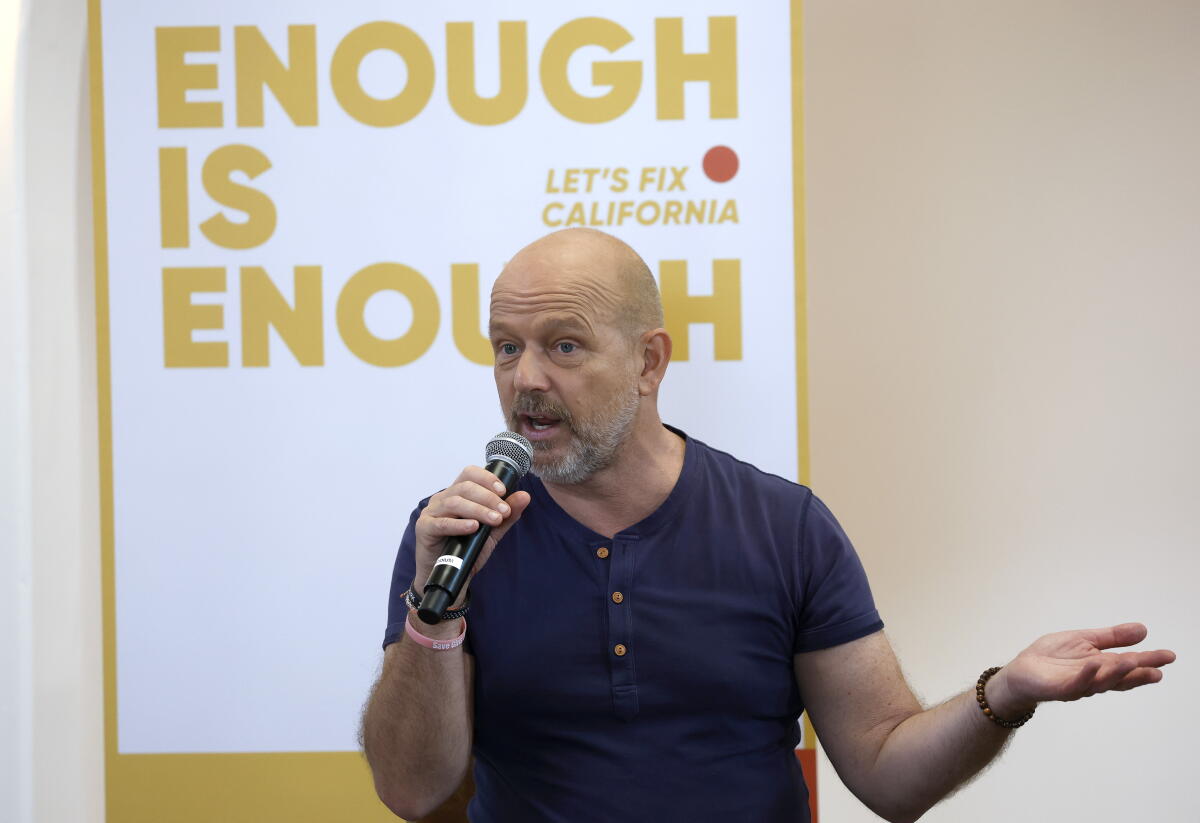
Ballots for the June 2 primary election start going out next week. Brin and a cohort of the ultrawealthy including Coinbase CEO Brian Armstrong and venture capitalists Vinod Khosla and John Doerr have plowed millions into supporting Matt Mahan, a Silicon Valley mayor, with a back-to-basics agenda and a penchant for taking on the state’s Democratic establishment.

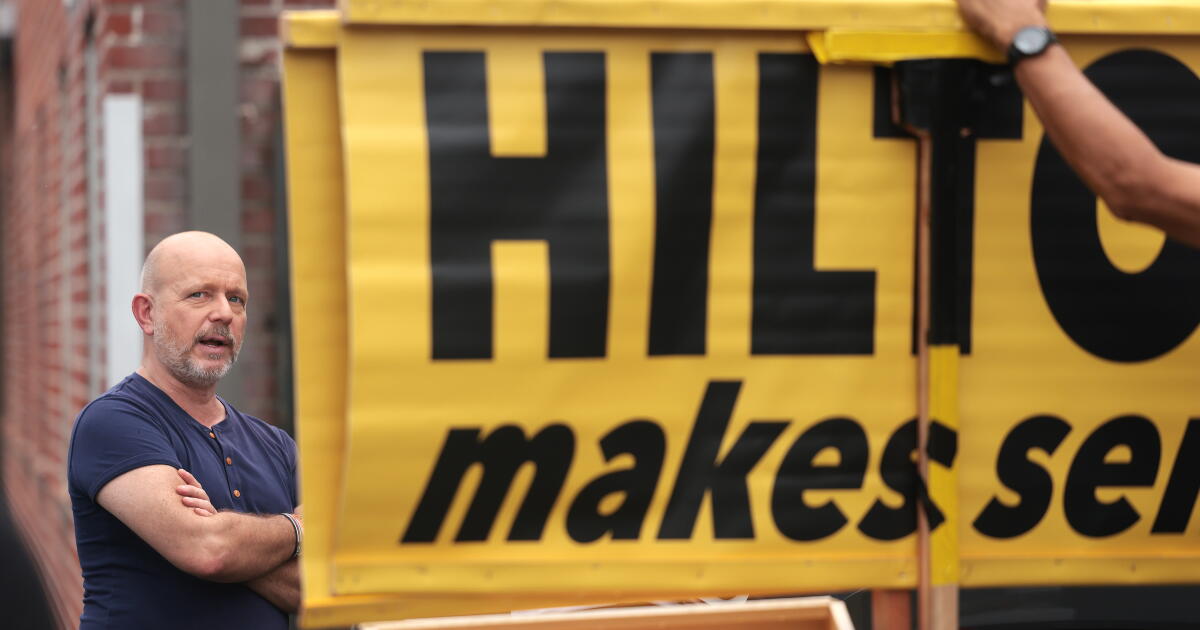
That money has helped Mahan buy airtime and attracted controversy, but his polling numbers remain stuck in the single digits while Steyer’s well-funded progressive campaign is gaining favor with voters. Brin has also backed Republican Steve Hilton, who’s currently leading polls.

“You have two polar opposites going on. You have a billionaire running who has actually fully adopted an agenda that the vast majority of voters agree with: Taxing billionaires, funding healthcare, fighting back against ICE,” said Lorena Gonzalez, head of the state’s largest union group, the California Federation of Labor Unions. “And then you have billionaires pushing a candidate whose talking points are apologetic to the tech industry.”

The billionaire political activism in California mirrors larger shifts in Silicon Valley and the nation. President Donald Trump has given tech billionaires broad access to the White House, inviting Brin and other industry captains over for dinner and to join advisory boards.

Back in September, Trump singled out Gilbert-Soto as Brin’s “really wonderful MAGA girlfriend” at a White House dinner also attended by Mark Zuckerberg, Tim Cook and Sam Altman. She has publicly supported Republican Steve Hilton for California governor, a candidate Trump endorsed and Brin has also donated to.

In California, Brin’s newfound political action was catalyzed by the wealth tax proposal, which would levy a one-time 5% tax on billionaires to help offset federal healthcare cuts. In a Signal group chat earlier this year with other Silicon Valley elite, Brin floated the idea of raising hundreds of millions of dollars to influence California politics, according to a person who saw the message.

Brin left California for Nevada ahead of a Jan. 1 residency deadline for the proposed wealth tax. He moved to a $42 million mansion on the Nevada side of Lake Tahoe, featuring two glass-walled funiculars.

Shortly after leaving California, Brin contributed $20 million to a new group dedicated to fighting the tax while also pushing pro-business and housing affordability policies, Building a Better California, making him the single largest contributor. He added $37 million over the spring, as the group quickly started supporting a trio of anti-wealth tax measures that could nullify a billionaire tax if it gets passed in an election. One of the measures, the so-called Transparency Act, has enough signatures to qualify for the November ballot, its backers claimed on Monday.

Building a Better California “remains fixed on long-term reforms supported by most Californians: housing affordability, stable funding for education, infrastructure investments, and government accountability,” a spokesperson said.

Joining Brin in the effort were other billionaires, including former Google CEO Eric Schmidt, Stripe CEO Patrick Collison and venture capitalist Michael Moritz. Peter Thiel, who also left California ahead of the New Year’s Day deadline, gave $3 million to a separate committee opposing the wealth tax.

“They don’t trust California anymore,” said David Lesperance, a tax attorney who specializes in relocations and has helped move five families out of the state because of the wealth tax threat.

Brin and his fellow billionaires helped push up the costs to gather the more than 870,000 signatures required to qualify a ballot measure. This forced the union behind the wealth tax, SEIU-UHW, to spend more on their efforts.

Now, the union says it has succeeded in getting the signatures it needed, which will likely force the business leaders opposing it into further spending.

“A very small group of the most controversial billionaires on the planet tried to stop Californians from being able to save their local emergency rooms and hospitals — but our current signature tally proves frontline healthcare workers will prevail in bringing this commonsense proposal to voters,” said Suzanne Jimenez, SEIU-UHW’s chief of staff. “When our growing coalition files these signatures, David will have won the first round against Goliath.”

Other billionaires have bankrolled their own political initiatives, including Larsen, who set up his own network of influence groups with names like Grow California and Golden State Promise.

Many in Sacramento are skeptical that Brin and his fellow ultra-rich will succeed in swaying California state politics. They point to the failed candidacy of former eBay executive Meg Whitman, who spent around $144 million of her own fortune to become governor, or even venture capitalist Tim Draper’s longshot initiative to split California into six separate states.

“They’re trying to extrapolate from their own industry, which might have been fabulously successful, that they know something about political advertising, when they don’t,” said Garry South, a veteran Democratic strategist. “They think, ‘Hey, I’ve got money I can throw it around,’ and they don’t really do their homework.”

Political consultants describe their frustration with some wealthy tech donors, who often view their political giving through an investment lens, promising big checks and not following through if they don’t see momentum. That’s led to questions about whether the California billionaire activism would continue if Mahan’s governor bid fails and the wealth tax passes.

Even Larsen, who’s worth around $13 billion, has expressed anxiety that not enough business leaders are stepping into politics. “It’s a lot of talk, and they’re happy, but we don’t see the firepower we need to take on the SEIUs,” he said, referring to the state’s largest union.

Newsom, for his part, acknowledges that many of the state’s wealthiest residents are willing to donate significant sums of money, but want to do it on their own terms and not through a tax.

“Some will never give a penny away,” he said at a Bloomberg News event in January, not long after his encounter with Brin in the treehouse. “Some I respect. Some I don’t.”

Kamisher and Carson write for Bloomberg.

Source link

Becerra’s surge in California governor race draws fresh attention to candidacy, long government record

After winning his first race for Congress in 1992, 34-year-old Xavier Becerra credited a wave of community supporters in Los Angeles, many Latino, for backing his upstart campaign, saying he hoped his win was proof that grassroots politics was more valuable than “heavy dollars.”

More than 30 years later, Becerra, 68, is again an upstart candidate — this time for California governor. Again he is facing monied competition — including from chief Democratic rival Tom Steyer, a self-funded billionaire — and relying on Latino and other grassroots support.

California gubernatorial candidate Xavier Becerra speaks during a campaign event in Los Angeles on April 18.

California gubernatorial candidate Xavier Becerra speaks during a campaign event in Los Angeles on April 18.

(Jae C. Hong / Associated Press)

“You are the people power that it takes,” he told a crowd of supporters at a recent “Fighting for the California Dream” town hall in Los Angeles. “California wasn’t built by billionaires. It was built by your families. It was built by our families.”

That Becerra is still fighting in the race — and drawing new people to his events — reflects a remarkable and hard-to-explain turnaround for a campaign that appeared all but dead less than a month ago, then bounded back into contention after Rep. Eric Swalwell dropped from the race and resigned from Congress amid sexual assault allegations.

Before Swalwell’s collapse, Becerra’s biggest splash in the race came in March, when USC excluded him and other low-performing candidates from a planned debate. The criteria left every candidate of color out, and after Becerra and others complained, the forum was canceled.

A California Democratic Party tracking poll, released in early April before the Swalwell scandal broke, showed Becerra near the bottom of the field with 4% support among likely voters. In a party poll taken after it broke, Becerra’s support jumped to 13% — the biggest increase of any candidate.

Certainly some of Swalwell’s supporters shifted to Becerra, but political observers are still pondering why so many did — and not to Steyer, former Orange County Rep. Katie Porter or other Democrats with single-digit support, such as former L.A. Mayor Antonio Villaraigosa or San José Mayor Matt Mahan.

Whatever the answer, Becerra’s surge has sparked fresh interest in his candidacy. It also has raised questions about his time as California attorney general, when he sued the first Trump administration more than 120 times, and U.S. Health and Human Services secretary, when he backed the Biden administration’s strict COVID-19 rules and oversaw the agency’s response to a massive influx of unaccompanied minors at the southern border.

It has also put a growing target on Becerra’s back — including at Wednesday night’s gubernatorial debate, when rivals criticized him as a “D.C. insider” with poorly detailed plans for the state — and sparked hope among many Latinos that California will elect one of them as governor for the first time in state history, sending a strong message of resistance to the intensely anti-immigrant Trump administration.

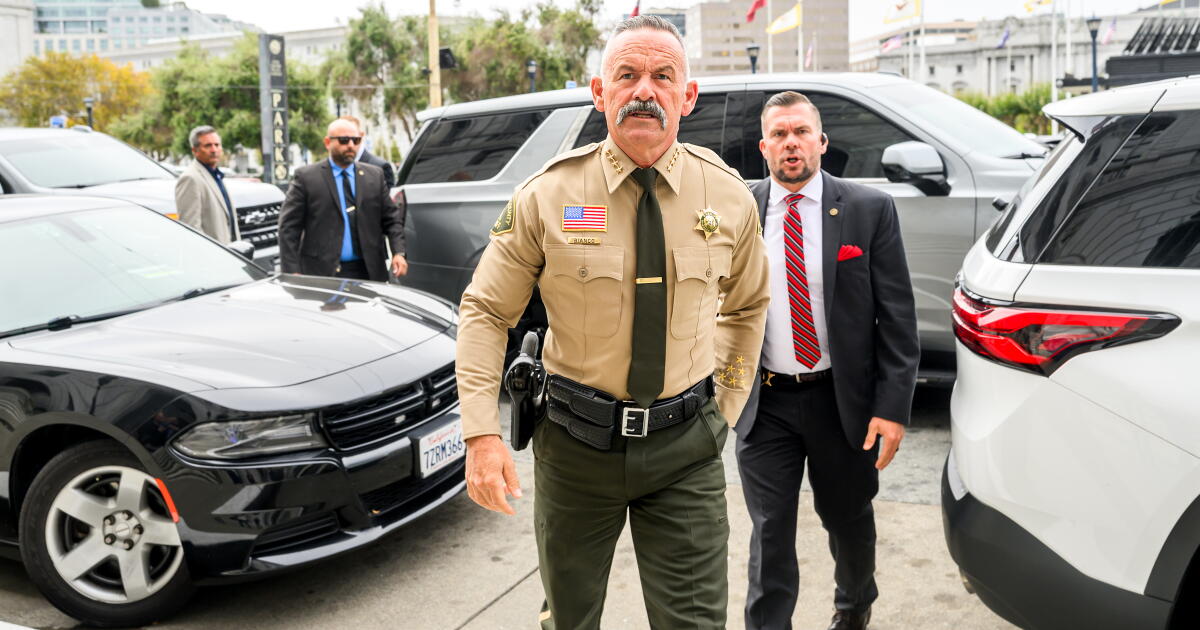
Of course, Becerra faces hurdles. Steyer, a hedge fund founder who has donated more than $130 million to his own campaign, has been ahead of him in polling, as have two Republicans: Silicon Valley entrepreneur and former Fox News host Steve Hilton, who has President Trump’s endorsement, and Riverside County Sheriff Chad Bianco. Only the top two candidates in the June 2 primary advance to the November election.

Still, Becerra now has a path to victory, one that did not exist even a month ago, and new funding. Many Democratic voters remain undecided, and many — shocked by the Swalwell scandal — are looking for another Democratic front-runner to back.

In an interview with The Times, Becerra said he’s the man for the job, because “California needs a work horse, not a show horse.”

Los Angeles mayoral candidates gather for a portrait in 2000.

Xavier Becerra, left, gathers with other candidates for Los Angeles mayor in 2000.

(Gary Friedman / Los Angeles Times)

Rising wave of Latino political power

A Sacramento native and the son of a Mexican immigrant mother and a Mexican American father, Becerra graduated from Stanford Law School and served as a deputy to California Atty. Gen. John K. Van de Kamp before being elected in 1990 to the California Assembly.

In 1993, Becerra entered Congress on a rising wave of Latino political power and the heels of a fractious presidential election in which former White House aide Pat Buchanan challenged President George H.W. Bush in the Republican primary on a stridently anti-immigrant, “America First” message — one Trump repurposed in both 2016 and 2024.

It was a defining political moment for Latinos across the country, and for Becerra personally, said Fernando Guerra, founding director of the Center for the Study of Los Angeles at Loyola Marymount University.

“He certainly has been and is part of the incorporation of Latinos into California history and California politics, and it really begins in the early ’90s,” Guerra said. “His rise and political career is really a reflection of the rise and political incorporation of Latinos.”

In 1994, Becerra helped oppose Proposition 187, a state initiative to deny undocumented immigrants access to public education and healthcare. In 1996, he sharply criticized the passage of the Personal Responsibility and Work Opportunity Reconciliation Act, which cut federal benefits for many legal immigrants. By 1997, Becerra — just 39 — was chair of the Congressional Hispanic Caucus and the first Latino member to serve on the powerful House Ways and Means Committee.

By 2016, Becerra, 58, was the highest-ranking Latino in Congress when then-Gov. Jerry Brown tapped him to replace a Senate-bound Kamala Harris as California attorney general. There, Becerra played a key role in defending the Affordable Care Act, known as Obamacare, against Republican attacks.

In early 2021, Becerra was confirmed to serve as President Biden’s health secretary, another first for a Latino and a critical post given the COVID-19 crisis, and remained in that role until Trump’s second inauguration.

Xavier Becerra removes a face mask during a hearing

Then-U.S. Health and Human Services Secretary Xavier Becerra arrives for a hearing to discuss reopening schools during the COVID-19 pandemic in 2021.

(Greg Nash / Associated Press)

Criticism and praise

In a rush of endorsements in recent days, Becerra’s supporters have lauded his executive experience, calling him a “proven leader” who, amid constant threats from the Trump administration, is “ready to fight back on day one.”

Becerra’s critics also have pointed to his leadership record, but to highlight what they contend are glaring failures.

Steyer spokesman Kevin Liao alleged Becerra was “absent, ineffective, or too late” in responding to COVID-19 and other public health crises as health secretary, and that California “cannot afford incompetence, or someone who disappears when things get hard.”

The remarks echoed others made during the pandemic, including by Eric Topol, who is executive vice president of Scripps Research in La Jolla, a professor of translational medicine and a cardiologist. During the pandemic, Topol accused Becerra of being “invisible” in the fight to control it. In a recent interview, he said he still believes that.

Topol said the Biden administration’s COVID response was defined by poor data collection and “infighting” among agencies such as the National Institutes of Health, the Centers for Disease Control and Prevention and the Food and Drug Administration, including on vital issues such as when Americans should receive booster shots and how long they should isolate after infection.

Becerra “basically took a very absent, low profile — didn’t show up, didn’t harmonize the remarkable infighting,” Topol said. “The buck stops with him.”

Dr. David A. Kessler, the Biden administration’s top science official on COVID-19 and now a professor of pediatrics and epidemiology at UC San Francisco, fiercely defended Becerra, crediting him with rolling out some 676 million vaccines and steering the nation out of a wildly unfamiliar health crisis with substantial success — what Kessler called a “historical achievement” that proved government “can do big things.”

Kessler said Becerra rightly assessed that the country needed to hear from medical experts, not politicians, and so deferred at times to the doctors, epidemiologists and vaccinologists he smartly surrounded himself with and trusted — but he was never absent. “He enabled us. He was there. Anything I needed, he helped deliver,” Kessler said.

Becerra said there were a lot of people involved with the COVID-19 fight, including a White House team launched before his confirmation as health secretary. Still, it was his agency that ultimately led the response, and helped bring the pandemic to an end, he said.

“At the end of four years, when we had put some 700 million COVID shots into the arms of Americans and pulled the country and our economy out of the COVID crisis, it was HHS — and I was the secretary of HHS,” he said.

Becerra’s rivals in the governor’s race also have attacked him for how he responded to an influx of unaccompanied immigrant minors during the pandemic. They allege Becerra rushed their release to relatives and other sponsors while ignoring concerns from career health staff that some of those placements weren’t safe — resulting in thousands of kids being lost to the system, forced into child labor or trafficked.

The criticism stems in part from a sweeping New York Times investigation that found the health department couldn’t find some 85,000 children it had released, that Becerra had relaxed screening processes for sponsors and that placement concerns from career health staff went ignored or were silenced.

The investigation by reporter Hannah Dreier found that thousands of the 250,000 or so migrant children who arrived in the U.S. between early 2021 and early 2023 had “ended up in punishing jobs across the country — working overnight in slaughterhouses, replacing roofs, operating machinery in factories — all in violation of child labor laws.”

Atty. Gen. Xavier Becerra holds a news conference in Border Field State Park in San Diego in 2017.

Atty. Gen. Xavier Becerra holds a news conference in Border Field State Park in San Diego in 2017.

(Francine Orr/ Los Angeles Times)

It found there were many signs of “the explosive growth of this labor force,” and that staff had repeatedly flagged concerns about it in reports that reached Becerra’s desk. It also reported that, during a staff meeting in the summer of 2022, Becerra had pressed staff to move children even more quickly through the process, comparing them to factory parts.

“If Henry Ford had seen this in his plants, he would have never become famous and rich. This is not the way you do an assembly line,” Becerra said, according to a recording of the meeting obtained by the newspaper.

Danni Wang, another Steyer spokesperson, said children “were handed to gang members, traffickers, and abusers because [Becerra] stripped the background checks that had protected them for years.”

Becerra said the controversy is one he has addressed publicly for years, including in multiple congressional hearings. He said his team worked diligently to properly vet sponsors and do right by the thousands of children in their care, despite Congress failing to provide the budget needed to restore a system of licensed care facilities that the first Trump administration had dismantled.

“It was a wreck. They had closed facilities, they had fired the licensed caregivers. And remember, this was during COVID, [when] you didn’t want anyone to be near each other,” he said. “How do you take care of thousands of kids in a center that could house maybe 50 kids?”

He said he led an aggressive push to stand up temporary facilities — including in places like the San Diego Convention Center — while rebuilding the licensed care facilities Trump had dismantled and working to place kids into the community as quickly and safely as possible.

Ron Klain, who served as Biden’s chief of staff for the first two years of the administration, said Becerra helped lead the administration out of the crisis by being “an outspoken advocate” for the children in its care.

“Xavier was very, very insistent in meetings and very outspoken on the risk that some of these people [the kids] were being placed with were not the proper people to place them with, and pushed hard for more rigor in the process,” Klain said.

Becerra also has faced criticism and questions related to the federal indictment of his former chief of staff Sean McCluskie, who pleaded guilty to conspiracy to commit fraud after authorities accused him of stealing some $225,000 from Becerra’s dormant state political campaign account.

Becerra was not implicated in the scandal — which he’s previously described as a “gut punch” — and said he did everything he could to ensure McCluskie and others were held accountable once it came to light, including by providing “testimony and documents” to the FBI and federal prosecutors.

Hilton has said the scandal, which also implicated a former aide to Gov. Gavin Newsom, showed that “corruption has become totally ingrained and systemic” under Democratic rule in California.

Looking ahead

Experts said Becerra’s long resume will help him stand out in a race with less experienced competitors and no household names — and that Californians electing a Latino for the first time, as the Trump administration conducts one of the largest ever deportation campaigns, dismantles immigrant rights and targets people on the street based largely on their looking and sounding Latino, would be a major political moment.

Becerra said his extensive experience should matter to voters, because such experience will be necessary in the pivotal and no doubt chaotic Trump years ahead, when “pizzazz and dazzle” will matter less than steady competence from “someone who’s actually been in the midst of that hurricane” before.

“It helps to have gone through these things. I’ve been there, I’ve done that, and I’ve done it successfully,” he said. “I’ve proven that, whether it was taking on Donald Trump toe to toe as the [attorney general], whether it was getting us out of COVID working closely with the White House to deploy the resources and get that done, we made it happen.”

Source link

Explosion in southwest Colombia kills at leat seven, state governor says | Crime News

Authorities in Cauca region demand ‘decisive’ government action after deadly explosion on Pan-American Highway.

At least seven people were killed, and 20 were wounded following a suspected explosive attack in the southwestern province of Cauca, Colombia, according to regional authorities.

Governor Octavio Guzman said that an explosive was detonated on the Pan-American Highway in the El Tunel sector of Cajibio on Saturday. He condemned what he called an “indiscriminate attack” against the civilian population.

Recommended Stories

list of 3 itemsend of list

“There are not sufficient words for the pain we feel,” Guzman said in a social media post, demanding a “decisive, sustained” response from the government against the “terrorist escalation”.

A video shared by the governor appeared to show the aftermath of the bombing, with ambulances on site and mangled vehicles and debris covering the road.

“Cauca cannot continue facing this barbarity alone,” he added, stating that other actions had also been carried out in El Tambo, Caloto, Popayan, Guachene, Mercaderes, and Miranda.

The deadly incident comes after a series of attacks on Friday, attributed to criminal groups formed by dissident members of the FARC rebel group, who split with the group following a landmark peace agreement with the government in 2016.

On Saturday, Minister of Defence Pedro Sanchez was convening a security council in Cali to assess the regional security situation when the latest attack occurred.

President Gustavo Petro responded to the deadly explosion by saying that powerful criminal groups are seeking to control the population through fear.

While details of the attack are still emerging, Petro appeared to blame a drug trafficker and FARC dissident leader known by the alias Ivan Mordisco.

“I want the maximum worldwide pursuit against this narco-terrorist group,” Petro said.

Source link

Houston eases limit on cooperation with ICE after pressure from governor

A Houston city ordinance that limited police officers’ cooperation with federal immigration agents was amended on Wednesday after Texas’ governor threatened to take away millions of dollars in public safety grants.

Houston, Austin and Dallas — three of the state’s biggest cities and Democratic strongholds — are being confronted by GOP Gov. Greg Abbott with threats of losing public safety dollars over policies that dictate how law enforcement interacts with federal immigration authorities. The three cities are being threatened with the loss of about $200 million in public safety funding, including tens of millions expected to cover security at World Cup matches this summer in Dallas and Houston.

Two weeks ago, the Houston City Council passed the ordinance, which eliminated a requirement that Houston police officers wait 30 minutes for agents with U.S. Immigration and Customs Enforcement to pick up someone with a nonjudicial administrative warrant. If ICE agents didn’t show up in time, police officers took a detained person’s information and then released them.

But Abbott warned city officials that the new ordinance and its limitation on cooperating with ICE agents violated the terms of $110 million in state grants Houston had received for police and security during the World Cup games the city is hosting in June.

Texas Atty. Gen. Ken Paxton had also filed a lawsuit against Mayor John Whitmire and members of the City Council over the ordinance, accusing them of violating a 2017 state law that prevents cities from adopting policies that limit the enforcement of immigration laws and that also banned “sanctuary city” policies in the state. There is no strict definition for sanctuary policies or sanctuary cities, but the terms generally describe limited cooperation with ICE.

After more than two hours of discussion during its weekly meeting, the Houston City Council voted 13 to 4 to make changes to the ordinance. Whitmire said he had consulted with Abbott’s office about making changes that would prevent Houston from losing its funding.

The amended ordinance deletes language that highlighted that administrative warrants — versus warrants signed by a judge — that ICE agents use to take individuals into custody are not enough for officers to arrest or detain an individual.

Houston Mayor John Whitmire speaks during a City Council meeting on Wednesday.

Houston Mayor John Whitmire speaks during a City Council meeting on Wednesday.

(Raquel Natalicchio/AP)

“We have no alternative for Houston to survive, prepare for [the World Cup], patrol these neighborhoods,” Whitmire said. “We’ve got to have today the restoration of the $114 million.”

Andrew Mahaleris, a spokesperson for Abbott, said the governor expects any policy Houston police adopt has to comply with the city’s certification that it will fully cooperate with the Department of Homeland Security.

“This vote is a step in the right direction after Houston leaders put public safety at risk with reckless policies that undermined law enforcement,” Mahaleris said in a statement.

Councilmember Abbie Kamin, one of three members who had pushed for the ordinance, voted against amending it, saying that doing so was giving in to bullying tactics from state leaders.

“If we roll over now to a bully, what will he come for next?” Kamin said.

Councilmembers Edward Pollard and Alejandra Salinas, who also pushed for the ordinance, said they remained hopeful the changes approved Wednesday would not violate individuals’ constitutional rights and wouldn’t result in people being held on nonjudicial warrants.

Nikki Luellen, an advocate for criminal justice reform for the ACLU of Texas, called the amended ordinance “a green light for deeper collaboration between ICE and the Houston Police Department.”

Martha Castex-Tatum was one of several council members who had supported the ordinance but voted in favor of amending it in order to protect the city’s finances.

“For some people, this may feel like surrender. It’s not. It’s real stewardship,” Castex-Tatum said.

Dallas officials have said they are committed to ensuring public safety.

Austin Mayor Kirk Watson, a moderate Democrat, said the local policy complies with state law. He said Abbott’s threat to cut nearly $3 million in Austin would cut trauma aid for police officers and sexual assault victims.

“We don’t have the time and will not play into this political theater,” Watson said.

Austin officials have since indicated they could try to negotiate with Abbott.

The debate in Houston and other Texas cities comes during fraught times. Whitmire and other local leaders in many of Texas’ left-leaning urban areas have tried not to draw the federal government’s attention amid the aggressive immigration crackdown by President Trump’s administration.

Lozano writes for the Associated Press. AP writer Jim Vertuno in Austin contributed to this report.

Source link

Democrats win in Virginia but it won’t be the final say in a national redistricting competition

Democrats on Wednesday celebrated an election win in Virginia that could put them slightly ahead in the national redistricting competition that President Trump triggered in an attempt to preserve his party’s House majority in this year’s midterms, but it will not be the final round.

Now that it’s been approved by voters, the new Virginia map will have to clear additional legal hurdles. On Wednesday, the state attorney general’s office said it would immediately appeal a ruling earlier in the day from a judge in rural southern Virginia who ordered that the results of Tuesday’s vote not be certified.

Ultimately, the Virginia Supreme Court will decide whether Democratic lawmakers violated procedural rules when they referred a constitutional amendment to the ballot authorizing the new U.S. House districts that could help Democrats win as many as four additional seats in the state. If so, that could invalidate the map voters narrowly approved Tuesday.

What happens next in Florida also will matter.

The state’s Republican-controlled Legislature is to meet in a special session next week that GOP Gov. Ron DeSantis called in part to draw a new map to expand the party’s congressional majority there. The U.S. Supreme Court is scheduled to issue an opinion by the end of June in a Louisiana case that could overturn a key provision of the Voting Rights Act and lead to redrawn political maps across the South, though almost all of those could not happen until 2028.

After voters passed the Virginia amendment, Democrats could tentatively claim that they netted 10 seats nationally from the mid-decade redistricting, compared with the nine that Republicans claim. Even if things swing again in the GOP’s favor, the net result of Trump’s campaign would be at best an incremental increase in the number of GOP-leaning House seats at a time when his approval rating is dropping and Republican anxiety over losing control of Congress in November is rising.

“We have successfully blunted Trump’s attempt to completely hijack the midterms,” said John Bisognano, president of the National Democratic Redistricting Committee.

Many Republicans agreed.

“The GOP will now lose net seats across the country. If you’re going to pick a fight, at least win it,” Ari Fleischer, who was a spokesman for President George W. Bush, posted on the social media site X after the Virginia vote. “All this was foreseeable and avoidable. We should not have started this fight.”

Adam Kincaid, executive director of the National Republican Redistricting Trust, argued that it is too soon to declare one party a victor.

“It’s an ongoing process with many legal challenges pending, and it’s far too early for sweeping statements on the final outcome,” he said.

Trump on Wednesday tried to undermine the Virginia result by leveling groundless accusations of fraud similar to ones he made after losing the 2020 presidential election. He called the Virginia vote “RIGGED” and “Crooked” in a post on his social media site and added, “Let’s see if the Courts will fix this travesty of ‘Justice.’”

Redistricting spread from Texas to other states

Redistricting is typically done every 10 years after each census, unless ordered by a court. But last summer, Trump pushed a redrawing in Texas, prodding the state’s Republican-controlled Legislature to add up to five winnable House seats for his party. Trump then began pressuring other Republican-run states to follow. Missouri, North Carolina and Ohio have since created more GOP-leaning seats in addition to Texas.

Democrats began to fight back, even though they were more constrained because several Democratic-controlled states had maps drawn by independent commissions rather than lawmakers and governors.

To counter Texas, California’s Democratic governor, Gavin Newsom, pushed the Democratic-controlled Legislature to place a redistricting initiative on last fall’s ballot. After voters overwhelmingly approved it, the measure will replace a commission-approved map with one that could gain Democrats five seats.

Democrats reclaimed the Legislature and governor’s office in November in Virginia and swiftly moved to replicate California’s move with an even more aggressive redistricting plan. It replaces a congressional map imposed by a court after the last census that had resulted in a 6-5 edge for Democrats with one that could allow Democrats to win as many as 10 seats.

“We are not going to let anyone tilt the system without a response,” state Senate President L. Louise Lucas said at a news conference Wednesday.

Courts could still have a say on redistricting

In Washington, U.S. House Democratic leader Hakeem Jeffries of New York warned Florida Republicans, who have been openly nervous about redrawing their district boundaries and potentially spreading their core voters too thin before an election that appears to be trending against them.

“Our message to Florida Republicans right now is, ‘F around and find out,’” Jeffries said.

House Majority Forward, the nonprofit arm of the super political action committee aligned with House Democrats, has spent nearly $60 million to push back against Republicans’ redistricting efforts. Some $40 million of that was on the Virginia campaign.

Another obstacle in Florida is an anti-gerrymandering constitutional amendment that was approved by state voters in 2010. It is likely that any new Florida map would trigger significant litigation, although six of the state Supreme Court’s seven justices were appointed by Republicans.

Nicholas Stephanopolous, a Harvard law professor, said a challenge for DeSantis is that the Florida amendment forbids drawing lines for purely partisan purposes, so he has to find some other excuse for revising the map. “Even with that sort of acquiescent state supreme court, I don’t think it’s a done deal,” Stephanopolous said.

The Virginia move comes with its own legal issues. Republicans have challenged the process that Democrats used to place the measure on the ballot and the state Supreme Court opted to wait for the vote before even scheduling arguments in the case. It is unclear when a ruling could come.

Wednesday’s ruling stopping certification came from a separate case that Republicans filed with the same lower court judge, whose initial ruling against the initiative was put on hold by the state supreme court.

“The ballot box was never the final word here,” Terry Kilgore, the Virginia House Republican leader, said in a statement after Tuesday’s vote. “Serious legal questions remain about both the wording of this referendum and the process used to put it before voters.”

The biggest legal wild card is held by the U.S. Supreme Court. Its conservative majority could throw out a requirement under the Voting Rights Act that in areas with a large minority population, mapmakers draw districts that are more favorable to the election of minority candidates.

That provision has led to the creation of several majority-minority congressional seats, especially in the South. Without it, Republicans in conservative states could shrink the number of U.S. House seats winnable by Democrats even further.

But it’s unlikely that any state other than Louisiana, which brought the lawsuit the high court will rule on, would be able to adjust its congressional lines in time for November even if the court eliminates that provision, known as Section Two. That’s because the November election is already officially underway in most states and candidate filing deadlines — and, in some cases, primary elections — have already passed.

Riccardi and Lieb write for the Associated Press. AP writers Lisa Mascaro and Leah Askarinam in Washington contributed to this report.

Source link

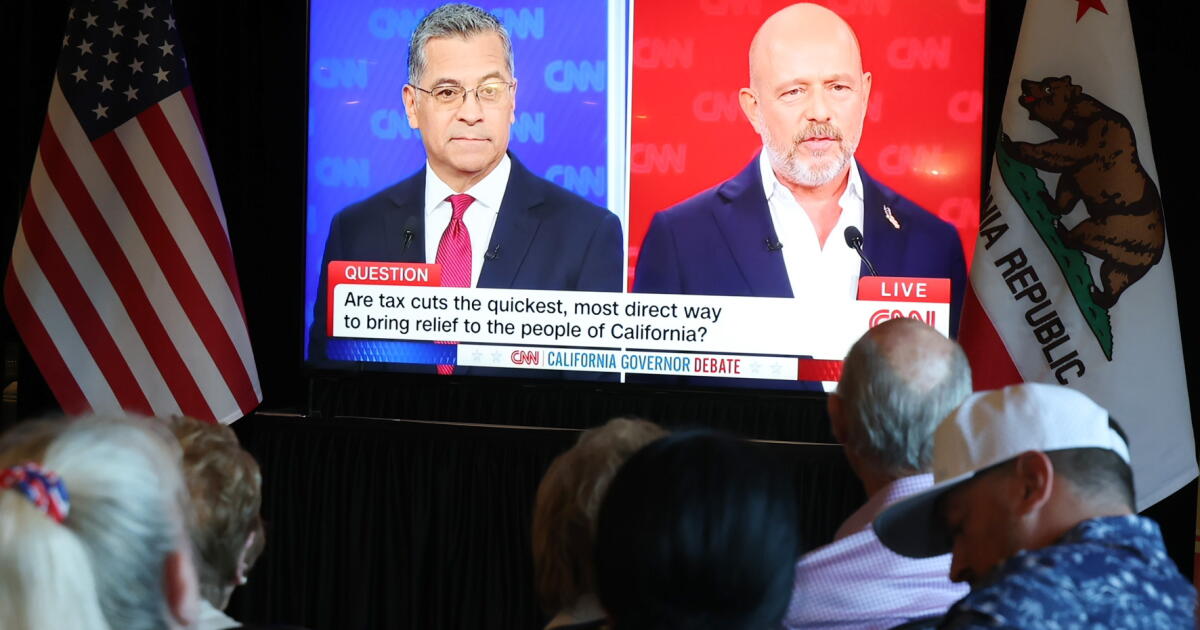
As primary election nears, top candidates for California governor debate tonight

With the California governor’s race quickly approaching, six candidates will face off Wednesday evening in the first debate since former Rep. Eric Swalwell dropped out of the race in the aftermath of sexual assault and misconduct allegations.

The debate takes place at a critical moment in the turbulent contest to replace termed-out Gov. Gavin Newsom. Ballots will start landing in Californians’ mailboxes in less than two weeks, and voters are split by a crowded field of eight prominent candidates. The debate also takes place after former state Controller Betty Yee ended her campaign because of a lack of resources and support in the polls.

Two Republicans — Riverside County Sheriff Chad Bianco and conservative commentator Steve Hilton — and four Democrats — billionaire Tom Steyer, former Biden administration Secretary Xavier Becerra, former Orange County Rep. Katie Porter and San Jose Mayor Matt Mahan — will take the stage at Nexstar’s KRON4 studios in San Francisco. Former Los Angeles Mayor Antonio Villaraigosa and state Supt. of Public Instruction Tony Thurmond, both Democrats, were not invited to participate because of their low polling numbers.

As the candidates strive to distinguish themselves in a crowded field, the debate could include fiery exchanges about the role of money in politics and potential heightened attacks on Becerra, who has surged in the polls since Swalwell dropped out. With the debate taking place on Earth Day, environmental issues are also likely to be raised.

The Wednesday night gathering is the first televised debate in the gubernatorial contest since early February. Last month, USC canceled a debate hours before it was set to begin over mounting criticism that its criteria excluded all major candidates of color.

The 7 p.m. debate is hosted by Nexstar and will be moderated by KTXL FOX40 anchor Nikki Laurenzo and KTLA anchor Frank Buckley. It can be viewed on KRON4 (San Francisco), KTLA5 (Los Angeles), KSWB/KUSI (San Diego), KTXL (Sacramento), KGET (Bakersfield) and KSEE (Fresno). NewsNation will also air the debate.

Source link

Becerra sees momentum, money and movement in the polls in governor’s race

Xavier Becerra, a former cabinet secretary in President Biden’s administration, appears to be surging in the curiously unsettled California governor’s race.

Until recently, the former U.S. Health and Human Services secretary had been mired in the single digits in polling to replace termed-out Gov. Gavin Newsom and lead the nation’s most populous state.

But after former Rep. Eric Swalwell, (D-Dublin) dropped out of the race earlier this month amid accusations ofsexual assault and other misconduct Becerra has seen a boost in polls, fundraising and endorsements.

On Tuesday, Assembly Speaker Robert Rivas endorsed Becerra alongside 14 Democratic members of the legislative body.

Arguing that Californians are under constant threat from President Trump’s policies, Rivas cited Becerra’s decades-long record in public office, including defending Obamacare and young immigrants, or dreamers, to argue that Becerra is best positioned to lead the state.

“There’s no time to learn on the job — we need a governor who’s ready to fight back on day one,” Rivas said in a statement, noting that Becerra sued the Trump administration 122 times while he was California’s attorney general. “We have a strong Democratic field for governor. But right now, we need someone ready on day one. Xavier Becerra is that leader.”

Becerra said he was honored to receive the legislators’ backing.

“I look forward to working with the Speaker and legislators on Day One to tackle the problems Californians care about most — from the skyrocketing cost of groceries and housing to our unyielding fight against the Trump Administration’s disastrous policies,” he said in a prepared statement. “Californians need an experienced and trusted leader who doesn’t need on-the-job training.”

Despite Becerra’s long tenure in state and federal office, the unflashy politician is not well-known among California voters. He was among the underdogs in the 2026 gubernatorial race. Swalwell, by contrast, was among the leading Democratic candidates.

Amy Thoma, a former Republican strategist who is no longer affiliated with a political party, noted that Becerra’s surge comes at a critical moment in the election, shortly before ballots land in Californians’ mailboxes.

“Voters are starting to tune into the race. Yes, they want someone who will stand up to Trump, but it also seems they want someone with experience who can address the very real issues facing the state,” Thoma said.

She added that Becerra’s life story is “incredibly compelling.”

“The word authentic is overused, but every time he talks about his love for this state, for his family and wanting to make California work for everyone, it comes across incredibly sincere,” Thoma said. “Voters can see through candidates who fake it.”

Becerra was respected by colleagues across the aisle, including former GOP legislative leader and state Republican party chairman Jim Brulte. Both men were elected to the state Assembly in 1990 and though their politics often sharply differed. However, they had a warm relationship.

“He was progressive and I am a conservative,” Brulte said. “We never agreed much on policy, but he is a good man with a great heart.”

The 2026 governor’s race has been unlike any in recent memory, with no clear front-runner in a crowded field of candidates and voters just beginning to pay attention to the contest shortly before the June 2 primary.

There were two prominent Republicans and eight prominent Democrats in the race, leading to fears among Democratic leaders in the state that their party’s candidates could be shut out of the governor’s race in the general election because of California’s unique primary system. The two candidates who win the most votes in the June 2 primary will move onto the November general election, regardless of party affiliation.

Democratic leaders remain concerned that despite California’s sapphire-blue tilt, the number of their party’s candidates in the race could lead to a splintering of Democratic voters that results in two Republicans advancing to the November ballot.

Six prominent Democrats remain in the race, after Swalwell and former state Controller Betty Yee dropped out.

The race — lacking a global superstar such as Arnold Schwarzenegger or the scion of a storied political family and former governor like Jerry Brown — is ephemeral. Anything can happen before the June 2 primary.

But Becerra is having a moment. In addition to the new endorsements, he has seen notable movement in polls, most recently in a survey released Monday by the state Democratic party. Becerra jumped nine points from the party’s last poll, tying with billionaire Tom Steyer at 13%.

While Becerra will never be able to match Steyer’s deep pockets, he raised more than $1 million on ActBlue, the top Democratic fundraising platform, in the week ending on April 18, making him the biggest fundraiser on the site in the nation.

“Ninety-seven percent were first-time donors,” Becerra’s campaign said in a statement. “This is not a donor base being recycled. It is a movement being born.”

Source link

Governor’s race wildly unpredictable two weeks before Californians receive ballots

The most unpredictable California governor’s race in recent history took another set of dizzying turns on Monday, with former Health and Human Services Secretary Xavier Becerra surging after former Rep. Eric Swalwell dropped out in the face of sexual assault and misconduct allegations, and former state Controller Betty Yee ending her bid.

The race to replace termed-out Gov. Gavin Newsom is the first in a quarter of a century with no clear front-runner and a sprawling field of candidates who have been jockeying for the attention of Californians, who are just beginning to pay attention to the campaign two weeks before ballots arrive in their mailboxes.

“I certainly could not have imagined the twists and the disturbing turns that this race has taken,” Yee said as she announced she was dropping out. “But through it all, my values and my vision for California has never wavered.”

A poll released Monday by the state Democratic Party — its first since Swalwell (D-Dublin) dropped out — showed Becerra’s support jumped nine points to 13%, placing him in a tie with Tom Steyer, the billionaire hedge fund founder turned environmental warrior. Former Rep. Katie Porter of Orange County saw a slight bump to 10% from 7%, while the remaining Democrats in the contest were mired in the low single digits.

The party began the surveys out of concern that Democrats could be shut out of the governor’s race because of California’s unique primary system, where the top two vote-getters in the June 2 primary move on to the November general election regardless of political party.

“I continue to believe there are too many Democrats in the field,” California Democratic Party Chairman Rusty Hicks told reporters Monday. “My call for candidates to honestly assess the viability of their candidacy and campaigns still stands, especially if you are stalled in the single digits, seeing financial resources dry up and/or are failing to pick up additional support.”

Hicks and other party leaders and allies had unsuccessfully urged low-polling candidates to reconsider their candidacies before the filing deadline in an attempt to cull the field and avoid splintering the Democratic vote. Though most did not name candidates who they thought should think about their viability, Yee was widely believed to be among them.

Yee became emotional as she said on Monday that she decided to withdraw from the race because she wasn’t able to raise the resources necessary to compete in the state. She also said her message of competency and experience wasn’t resonating among voters who were seeking a fiery foil to President Trump, not “Boring Betty,” as she dubbed herself. Yee said she would assess the field before making an announcement on whether she would endorse one of her fellow Democrats.

Becerra was another candidate believed to be a target of party leaders’ efforts to shrink the field. But he held on and apparently benefited from Swalwell’s downfall.

“I’m not the richest candidate, I’m not the slickest candidate, but I am the guy that’s got you,” Becerra said, rallying supporters in Los Angeles on Saturday.

The audience was filled with members of labor groups backing the longtime politician, and Becerra told them he’d serve as a “union man” in the governor’s office.

Pro- and anti-Becerra forces tussled outside the town hall after two people, who declined to identify whom they were working for, passed out fliers highlighting critical media investigations of the U.S. Department of Health and Human Services during the migrant crisis when the agency was led by Becerra.

Pro-Becerra attendees grabbed the fliers and told the men to go away, prompting a security guard to intervene.

The question is whether Becerra, who also served as state attorney general, a member of Congress and a state Assembly member, can raise the funds necessary to compete in a state with some of the nation’s most expensive media markets. And he was tied in the state party poll with a billionaire who dumped an additional $12.1 million of his own money into his campaign last week.

Steyer’s total investment in his bid reached $133 million, according to the California secretary of state’s office. He also received the endorsement of Our Revolution, a progressive political organization founded by U.S. Sen. Bernie Sanders (I-Vt.).

“We’ve never endorsed a billionaire — but Tom Steyer is using his position to upset the system,” the group posted on X on Monday. “As Our Revolution executive director Joseph Geevarghese told @theintercept, ‘He’s been a partner in the movement. Most billionaires have used their wealth and privilege to lock in the status quo. Tom is doing the opposite.’”

San Jose Mayor Matt Mahan, who is also running for governor, accused Steyer of hypocrisy for the hedge fund he founded profiting from investments in private prisons being used to house ICE detainees, and Steyer calling for the abolishment of ICE.

Steyer got “rich investing off the ICE infrastructure he now wants to abolish,” Mahan posted on Instagram.

Steyer, who sold his stake in the hedge fund in 2012, has said he ordered the company to divest from the private prison company and has repeatedly expressed remorse about his former firm’s ties with the detention company.

Mahan also appeared Monday at a Hollywood production lot to announce his proposal for a special fund to lure sporting events, concerts and other productions to California as part of his plan to help the struggling film and television industry.

An independent effort supporting Mahan has also raised roughly $11 million since Swalwell left the race.

Mehta reported from Los Angeles and Nixon from Sacramento. Times staff writer Dakota Smith contributed to this report.

Source link

Former state Controller Betty Yee drops out of the governor’s race

Former state Controller Betty Yee dropped out of the 2026 governor’s race on Monday, citing low levels of support from voters and donors.

Yee, a Democrat, was part of a sprawling field of politicians vying to replace termed-out Gov. Gavin Newsom. But despite the bevy of prominent candidates running to lead the nation’s most populous state and the world’s fourth-largest economy, this year’s governor’s race has long lacked a clear front-runner well known by the electorate.

“The whole notion that voters are looking for experience and competence is not a top priority, and that’s been really my wheelhouse in terms of how we grounded this campaign was based on my experience,” she said in a virtual press conference Monday morning. “The donors have felt the chill of the polling … and it really just came down to where I’m not going to have sufficient resources to get us to the finish line.”

The former two-term state controller did not immediately endorse another candidate and said she would take a few days to assess the field before making an announcement.

The race was upended earlier this month when then-Rep. Eric Swalwell, among the leading Democrats in the race, was accused of sexual assault and other misconduct. The East Bay Democrat, who is facing multiple criminal investigations, promptly ended his gubernatorial bid and resigned from Congress.

Yee, 68, was well regarded by Democrats during her tenure in Sacramento. And she highlighted her no-drama persona on Thursday.

“California — had enough chaos, fear and horrendous political scandals? Ready for calm, cool, collected change? Some may consider that boring. But that’s the point. We need Boring Betty,” Yee posted on the social media site X. “No crisis. No circus. Just competent, drama-free leadership you can trust. #BoringisBetter”

But she never had the financial resources to aggressively compete in a state with many of the most expensive media markets in the nation.

Yee reported raising nearly $583,000 for her gubernatorial bid in 2025, according to campaign fundraising reports filed with the California secretary of state’s office. Yee’s announcement that she is dropping out of the race came days before the latest financial disclosures will be publicly reported.

Despite being elected to the state Board of Equalization twice and as state controller twice, Yee was not widely known by most Californians. She never cracked double digits in gubernatorial polls.

Her name will still appear on the ballot. She was among the candidates who rebuffed state Democratic Party leaders’ request earlier this year to reconsider their viability amid fears that the party could be shut out of the November general election because of the state’s unique primary system. The top two vote-getters in the June primary will move on to to the November general election, regardless of party affiliation.

Though California’s electorate is overwhelmingly Democratic, the makeup of the gubernatorial field makes it statistically possible for Republicans to win the top two spots if Democratic voters splinter among their party’s candidates. Yee said fear of that scenario playing out “kind of took over” the gubernatorial race.

“Was it possible? Yes. Was it plausible? No, we’re in California. That was not going to happen,” she said, adding that the top-two primary system should be done away with.

Still, Yee was beloved by Democratic Party activists, and previously served as the party’s vice chair.

No Democratic candidate reached the necessary threshold to win the party’s official endorsement at its February convention, but Yee came in second with support from 17% of delegates despite calls for her to drop out of the race.

“Every poll shows that this race is wide open, and I know this party,” she said in an interview at the convention. “Frankly, I’ve been in positions where it’s been a crowded field, and we work hard and candidates emerge.”

The gubernatorial primary will take place June 2, though voters will start receiving mail ballots in about two weeks.

Source link

Swalwell supporters scramble after he leaves governor’s race. Who benefits?

The big-money backers and Democratic heavyweights who tried to crown Rep. Eric Swalwell as California’s next governor before his scandal-plagued exit from the political arena are now scrambling to find a new favorite among the candidates they either spurned or actively tried to undercut.

Swalwell (D-Dublin) announced Monday he would resign his seat in Congress. He faced potential expulsion and an ongoing criminal investigation after reports were made public Friday alleging he sexually assaulted a young female staff member and engaged in inappropriate behavior with three other women, including sending them nude photographs. Swalwell denied the allegations and, in his announcement Sunday that he was dropping out of the governor’s race, vowed to fight to clear his name.

The immediate beneficiaries of Swalwell’s fall are likely former Orange County Rep. Katie Porter and billionaire financier Tom Steyer. Both were challenging Swalwell to be the top Democrat in the race even though each has faced attacks from within the party on various issues.

This new round of chaos only feeds the anxiety that has enveloped the California Democratic Party for months, stirred by fears that the lack of a singular party front-runner might lead to two Republicans winding up on the November ballot. Swalwell’s exit from the race also may revive candidates who have been languishing in the midsection of recent opinion polls — former U.S. Health and Human Services Secretary Xavier Becerra, former Los Angeles Mayor Antonio Villaraigosa and San José Mayor Matt Mahan — adding to the uncertainty.

“What happens now depends on what campaigns do to take advantage of this,” said Andrew Acosta, a Democratic political consultant who is not involved in any of the campaigns. The other candidates, he said, “can use this as an opportunity to make their case.”

They wasted no time.

Porter’s campaign on Sunday circulated internal polling showing that nearly half of Swalwell’s supporters listed her as their second choice. Steyer announced endorsements from lawmakers including Northern California Rep. Jared Huffman, who was among the first House Democrats to call on Swalwell to resign from Congress.

Others quickly used Swalwell’s departure as a fundraising tool.

“This changes the race,” Mahan’s fundraiser Stephanie Daily Smith wrote in an email blast to supporters on Sunday, adding that Swalwell “had been gaining real traction in the Bay Area media market and now that vote share is up for grabs.”

Former state Controller Betty Yee told her email list on Monday that “we can forget the polls” that showed Swalwell as a front-runner, suggesting he led because of an “obsession with who looks the part.”

“I’m not flashy, and I don’t ‘look the part’ of what the talking heads think wins,” she said.

Swalwell’s campaign had been gathering momentum over the last month. A poll released in mid-March by UC Berkeley’s Institute of Governmental Studies and co-sponsored by The Times showed that Swalwell and Porter were both supported by 13% of likely voters, with Steyer not too far behind. The top Republicans in the race, former Fox News commentator Steve Hilton and Riverside County Sheriff Chad Bianco, led with 17% and 16% support, respectively.

Elected officials, labor unions and other groups that had endorsed Swalwell abandoned him en masse after the allegations against him were publicized. But it’s unclear which candidate those influential voices will lend their support to next.

While many Democrats see Steyer and Porter as the next-most viable candidates, they each have their own baggage. Steyer has faced criticism on the campaign trail over his former hedge fund’s investments in a private prison company that is now housing people detained by federal immigration authorities, while Porter’s campaign is still haunted by embarrassing videos in which she berated a staffer and belittled a television reporter.

Primary election ballots will begin hitting California voters’ mailboxes in just a few weeks, and Swalwell’s campaign had been gaining steam and financial support that may now be up for grabs by other candidates.

Powerful organizations including the California Medical Assn. and SEIU California have poured millions into independent expenditure committees supporting Swalwell. But as the scandal unfolded, their leaders called emergency meetings to withdraw their support and pulled the plug on ads supporting him. Neither has indicated whether they would re-endorse in the race.

Over the weekend, Democratic members of the Legislative Women’s Caucus hastily organized calls with Porter and Yee — the only women left in the field of top candidates — according to two people familiar with the conversations. Though several of the lawmakers had not planned on backing either candidate, they’re reconsidering, driven by anger at Swalwell and frustration that other qualified women, Lt. Gov. Eleni Kounalakis and former state Senate President Pro Tem Toni Atkins, previously dropped out of the race.

“Epstein files keep coming, Cesar Chavez rocked California and now this,” one lawmaker on the calls said. “If we cannot elect a woman to the state’s highest office in 2026, what is wrong with us?”

Swalwell reported raising more than $7.4 million in direct donations through April 9, according to a Times analysis of campaign finance data. About 60% of the contributions were from California donors.

Stephen Cloobeck, another Swalwell benefactor and longtime Democratic donor, said he is changing his party registration and is considering endorsing Hilton for governor.

“Don’t be surprised,” Cloobeck said in an interview on Monday.

“We agree on probably 90% of the issues,” he said, adding that he had met Hilton about a half-dozen times and appreciated his campaign message. “We are friends. I’m for unity. I come from old-school unity. I don’t cast aspersions.”

A protege of the late Sen. Harry Reid (D-Nev.), Cloobeck entered the gubernatorial contest but dropped out once Swalwell, with whom he had a long-term friendship, jumped into the contest. Cloobeck endorsed the congressman and put about $1 million into an independent expenditure committee backing him. Swalwell stayed at Cloobeck’s Beverly Hills mansion after the news of the allegations against him broke — until Cloobeck kicked him out.

Cloobeck said he knows all of the seven prominent Democrats who remain in the governor’s race and has long said he isn’t impressed by any of them. He said he wished the California Legislature would amend the state Constitution so he could file to reenter the race.

Donna Bojarsky, a longtime Democratic political insider in Los Angeles, attended Swalwell fundraisers this year thrown by Hollywood business leaders.

“People are horrified,” Bojarsky said. She said there have been rumors about sexual indiscretions, but nobody suggested allegations of sexual assault.

Swalwell has close ties to the industry and was set to be an executive producer on a film about the nation’s gun crisis before pulling his name over a labor dispute. He also maintains a real estate investment firm and media company geared toward producing television, film and online content.

Actors Sean Penn, Robert De Niro and Jon Hamm are among several Hollywood figures who donated to Swalwell’s campaign for governor.

Bojarsky hopes the silver lining of the scandal is that there “might be more of a race” as people scrutinize the field of candidates.

“People are paying attention,” she said.

Source link

Rep. Eric Swalwell suspends Calif. governor campaign amid sexual misconduct allegations

April 13 (UPI) — Eric Swalwell, the Democratic congressman running for California governor, announced that he was suspending his gubernatorial campaign as he faces accusations of sexual misconduct and assault from several women, including a former staffer.

“To my family, staff, friends and supporters, I am deeply sorry for mistakes in judgment I’ve made in the past,” Rep. Swalwell said Sunday night in a social media statement announcing his campaign’s suspension.

“I will fight the serious, false allegations that have been made — but that’s my fight, not a campaign’s.”

The statement did not mention his House position, which many colleagues, including members of his own party, have asked him to step down from.

“Good first step,” Rep. Nancy Mace, R-S.C., responded to Swalwell’s announcement on her personal X account.

“Now resign from Congress or face expulsion.”

Allegations of sexual misconduct, including rape, by four women against Swalwell were first reported Friday by CNN and the San Francisco Chronicle. One accuser, a former staffer, alleged she was raped by the 45-year-old congressman while she was drunk in 2024. She said she was left bruised and bleeding after trying to resist.

On Saturday, the Manhattan district attorney’s office confirmed to The Washington Post that it had opened an investigation into the allegations.

Swalwell refuted the allegations in a weekend video statement, framing them as political.

“For nearly 20 years, I have served the public — as a prosecutor and a congressman — and have always protected women,” he said. “I will defend myself with the facts and, where necessary, bring legal action.”

The suspension of his campaign came after a series of high-profile resignations and rescinded endorsements.

Rep. Jimmy Gomez, D-Calif., resigned as his campaign’s co-chair, while Rep. Adam Gray, D-Calif., his other co-chair, said he withdrew his support for Swalwell.

Sen. Adam Schiff, a veteran Democratic lawmaker from California, also withdrew his endorsement, as did Sen. Ruben Gallego from Arizona.

On Sunday, more than 50 former Swalwell staffers signed a letter stating the allegations against the House member were “serious, credible and demand accountability,” while demanding that he suspend his gubernatorial campaign and resign from Congress.

“The people of California’s 14th Congressional District, and the people of this country, deserve representation from someone whose conduct reflects the values of public service,” the staffers said.

“Remaining in either role while these allegations hang unresolved is an insult to every person who has ever worked for him, reported to him or placed their trust in him.”

Rep. Anna Paulina Luna, R-Fla., said she will file a motion to expel Swalwell from Congress if he does not resign first.

“You have 24 hours to announce you are resigning,” she said late Sunday in a social media statement.

Swalwell was a leading Democratic candidate ahead of June’s gubernatorial primary election to replace incumbent Gov. Gavin Newsom, who is term-limited from running for a third time in the blue state. The gubernatorial election is scheduled for Nov. 3.

Source link

Eric Swalwell exits California governor race after sex assault allegations | Sexual Assault News

Democratic Representative Eric Swalwell suspends campaign to succeed Gavin Newsom after media reports detailed alleged accounts of sexual assault.

US Congressman Eric Swalwell has dropped out of the California state gubernatorial race following sexual assault allegations.

“I am suspending my campaign for Governor,” he said in a social media statement on Sunday.

Recommended Stories

list of 3 itemsend of list

“To my family, staff, friends, and supporters, I am deeply sorry for mistakes in judgment I’ve made in my past. I will fight the serious, false allegations that have been made – but that’s my fight, not a campaign’s,” the Democrat added.

Swalwell’s statement came after several influential Democratic Party lawmakers called on him to exit the race and resign from the United States Congress following reports from CNN and the San Francisco Chronicle that detailed alleged accounts of sexual assault from a former staffer and misconduct allegations from several other women.

“What he did is sick and disgusting,” Congressman Ro Khanna told the news programme Fox News Sunday, calling for investigations into the allegations by law enforcement and the US House of Representatives.

A March poll from Emerson College suggested that Swalwell was ahead of Democratic and Republican challengers by several points in the race to replace Governor Gavin Newsom.

But the reports shook his campaign, with powerful figures and organisations revoking their endorsements and calling for him to drop out over the weekend. The Manhattan District Attorney’s Office confirmed on Saturday that it was investigating the allegations.

California gubernatorial candidate, Rep. Eric Swalwell, D-CA, appears at a town hall meeting in Sacramento, Calif., Tuesday, April 7, 2026. (AP Photo/Rich Pedroncelli)
Eric Swalwell appears at a town hall meeting in Sacramento, California, on Tuesday, April 7, 2026 [Rich Pedroncelli/AP Photo]

Republican US Representative Anna Paulina Luna said she would submit a motion to begin the process of expelling Swalwell, a move some Democrats in Congress said they could support.

“This is not a partisan issue,” Representative Pramila Jayapal said on Sunday. “This cuts across party lines. And it is the depravity of the way that women have been treated.”

Democrats have also called for the expulsion of Representative Tony Gonzales, a Republican from Texas, who is also facing sexual misconduct allegations.

Khanna and Republican Representative Byron Donalds have said they could support a bid to eject both Gonzales and Swalwell from Congress.

“As far as I’m concerned, both gentlemen need to go home,” Donalds said.

Source link

Swalwell “suspends” campaign for governor’s race following allegations of sexual assault, nude photos

Embattled Rep. Eric Swalwell suspended his campaign for California governor on Sunday but continued to deny he sexually assaulted anyone.

His campaign to succeed Gov. Gavin Newsom has all but collapsed as key Democratic supporters, including Rep. Nancy Pelosi and Sen. Adam Schiff, abandon him.

“To my family, staff, friends, and supporters, I am deeply sorry for mistakes in judgment I’ve made in my past,” Swalwell wrote on social media Sunday.”

“I will fight the serious, false allegations that have been made — but that’s my fight, not a campaign’s.”

House ethics rules bar members from having sex with a subordinate, and House Democratic Leader Rep. Hakeem Jeffries from New York is seeking an investigation into the allegations.

Rep. Anna Paulina Luna (R-Fla.) announced plans to force a House vote to expel Swalwell, a motion supported by some House Democrats. Rep. Jared Huffman, a Democrat representing Northern California, is among those calling on him to resign.

The Manhattan district attorney’s office opened an investigation into sexual assault allegations against Swalwell by the former staffer, and the Alameda County District Attorney’s Office on Saturday said the office was in the process of evaluating “whether any alleged criminal conduct occurred” in the agency’s Bay Area jurisdiction.

The 45-year-old Democratic candidate established himself as a frontrunner in the race to succeed Gov. Gavin Newsom, despite not having a broad base of supporters in California.

A one-time member of the House Intelligence Committee and a savvy social-media user, Swalwell relished his role as a foil to President Donald Trump, using his many platforms to attack and taunt the twice-impeached, criminally convicted president.

He previously worked as a criminal prosecutor, and was elected to Congress in 2012 after he defeated Rep. Pete Stark, a fellow Democrat.

He cast himself as a centrist middle-class guy and featured his wife and three young children prominently in his campaign for governor. In an interview with the Times last year, he talked about his decision to continue in politics, despite the toll on his family.

Reports published in the San Francisco Chronicle and CNN offered a stark contrast to Swalwell’s wholesome image, alleging that he forced himself on a young staffer and sent women pictures of his penis and sexy messages.

CNN also reported on another woman’s alleged account of a sexual encounter with Swalwell that involved fending off his advances over drinks, and then waking up in his hotel room with no memory of how she got there.

Swalwell and his team threatened legal action against several individuals, Swalwell’s attorney Elias Dabaie confirmed to the Times. Swalwell himself took to social media on Friday night and called the allegations “lies” intended to hurt him in the race.

But campaign staffers resigned, his fundraising website went offline and even his self-described “best friend” in Congress, Sen. Ruben Gallegos from Arizona, withdrew his endorsement. Powerful labor groups, including the California Labor Federation, SEIU California and the California Police Chiefs Assn., withdrew their support.

Other Democrats in the race include billionaire Tom Steyer; former Orange County Rep. Katie Porter; State Supt. Tony Thurmond; former U.S. Health and Human Services Secretary Xavier Becerra,; San José Mayor Matt Mahan; former Los Angeles Mayor Antonio Villaraigosa, and former state Controller Betty Yee.

The top GOP gubernatorial candidates are Steve Hilton, a former Fox News commentator, and Riverside County Sheriff Chad Bianco.

Source link

California Republicans rejoice over Swalwell scandal, but split on best GOP candidate for governor

While their spring convention was held beneath mostly sunny San Diego skies, delegates and leaders of the California Republican party basked in a different sort of glow over the weekend as the campaign for a leading Democratic candidate for governor imploded because of allegations of sexual assault and misconduct.

The party did not endorse a candidate for governor on Sunday because neither of the top Republicans — Riverside County Sheriff Chad Bianco and former Fox News host Steve Hilton — received the support of 60% of delegates. Bianco won 49% while Hilton had 44%; 7% of delegates voted not to endorse in the race.

“We’re very happy,” Bianco said after the vote. “We got the popular vote here, right? Ultimately, our goal is to win California, and you win California with the popular vote … Californians are looking for a leader. Californians are looking for integrity. Californians are looking for honesty. And they want someone that they know is going to be looking out for them, working for them, and that’s why I won this vote.”

Hilton also said he was pleased by his showing.

“Chad came into this convention thinking he had it in the bag,” Hilton said. “I think we made a lot of progress this week and I think the endorsement of President Trump is the one that’s gonna be decisive in the primary.”

The convention took place as a former staff member for Rep. Eric Swalwell (D-Dublin) accused him of forcing himself on her twice when she was too intoxicated to consent, according to reports published by the San Francisco Chronicle and CNN. Three other women also accused Swalwell of misconduct that included sending and soliciting explicit photos and messages.

Swalwell has not withdrawn from the race, but within hours of the allegations top supporters withdrew endorsements of the East Bay Area congressman, including Sen. Adam Schiff, campaign co-chairs Reps. Jimmy Gomez and Adam Gray, and prominent labor unions including the California Teachers Assn.

The collapse of Swalwell’s campaign brought a surge of energy to leaders and hundreds of die-hard members of a state Republican Party that holds a superminority in the state Legislature and no statewide elected offices. The news broke Friday, just as the party convention was getting underway at the bayside Sheraton San Diego Resort and hours before the Artemis II crew splashed down off the nearby coast.

Sean Spicer, a former press secretary during President Trump’s first term who is promoting a new book, joked during a Saturday brunch panel about landing in San Diego just in time to see “the fall.”

“Sorry, I was talking about Swalwell,” he said to laughter. “It was also cool to see Artemis come back down.”

Republicans have not won a statewide election since 2006 and some hoped Swalwell’s controversy would fuel voters already beleaguered by the cost of living to consider supporting GOP candidates this year.

“Quite frankly, Californians are, by and large, looking for viable alternatives. They’re looking towards the California Republican Party,” Chairwoman Corrin Rankin told reporters.

Republicans running to succeed Democratic Gov. Gavin Newsom shared similar visions during five-minute speeches at a Saturday afternoon candidate forum.

“We meet here today, full of energy and hope and optimism, with a spring in our step on this beautiful spring day. Why? Because every party has its season, and for the California Democrats, the leaves are cascading from the trees,” Hilton told delegates.

Hilton, who served as a top political advisor to U.K. Prime Minister David Cameron, argued that 16 years of Democratic rule has led to dysfunction, chaos and scandal that alarmed voters in the overwhelmingly blue state even before the Swalwell scandal.

“And now, it’s been a couple of hours, so I think we’re due for another Eric Swalwell intern eruption,” he said.

Hilton touted Trump’s endorsement, describing it as a “tremendous asset for us, the energy, the resources, the precious gift of having the boost that makes the biggest difference in a midterm year turnout.”

Bianco emphasized his decades serving in law enforcement in the state, one of his main selling points to Californians concerned about liberal criminal justice policies of past Democratic administrations.

“I have spent every day serving California residents, making our lives better and safer. I have fought for you, and I have bled for you,” Bianco said.

Bianco refuted Hilton’s allegations that he coddled undocumented immigrants, sympathized with Black Lives Matter protesters and threatened county residents with punishment if they did not abide by mask mandates during the pandemic. He said he was the first law-enforcement official in the nation to defy a lockdown order after the pandemic. Bianco said that while he prayed with protesters in the aftermath of George Floyd’s death, he also “forcefully” expelled “rioters and domestic terrorists” from his county.

Bianco also obliquely referred to attacks Hilton has lobbed against the sheriff on the campaign trail.

“This was never supposed to be about a dishonest smear campaign and bullseyes,” Bianco said, referring to a mailer Hilton’s campaign sent to voters that pictured Bianco’s head with circles around it that resemble a shooting target.

As Bianco walked through the bayfront convention hotel after the forum, he was swarmed by supporters chanting his name.

Saturday night, Bianco hosted a western-saloon themed party for delegates. Attendees wearing cowboy hats line danced, petted fluffy white calves and posed for pictures in front of an inflated cactus.

A Hilton-hosted party took on the feel of a candidate forum as he and Republican allies running for other statewide offices gave another round of speeches, often punctuated by shushing attendees who chattered in the back of the room.

Under California’s top-two primary system, the two leading candidates advance to the general election regardless of party affiliation. For weeks, Hilton and Bianco have led polls while eight prominent Democrats including Swalwell split the support of liberal voters, stoking anxiety among Democrats that the party could end up shut out of the November election.

The chances of that happening diminished with Swalwell’s fall from grace and Trump’s endorsement of Hilton, political experts said, but those in the conservative wing of California politics celebrated the apparent downfall of the once-powerful Democrat.

Swalwell is “in denial right now, but once he realizes he doesn’t have any friends left and his campaign team is leaving him, people are laughing at him in the restaurant, I think, and I hope for his sake, he has enough self-awareness that he’ll quietly drop out and go to the south coast of France and put on a wig,” said Republican National committeeman Shawn Steel.

One of the convention’s celebrated speakers, Sen. Ted Cruz (R-Texas) took shots at other California Democrats during a Saturday evening banquet, describing Los Angeles Mayor Karen Bass as “the Democrats’ national ambassador for disaster management” and Newsom as a contender for “Texas Realtor of the year, because no person in human history has sold more homes in the state of Texas.”

“Look, as a Texan, I gotta say, just isn’t fair. [You have] an economy that has been a monstrous engine driving America forward for decades, and yet you were cursed with idiot politicians,” Cruz said.

While Hilton‘s and Bianco’s campaigns have sparred about their respective records, the candidates largely avoided direct confrontation until a debate earlier this month in Rancho Mirage. The two GOP candidates tore into each other about issues such as immigration, their credentials and their honesty.

Delegates also sparred about Bianco and Hilton’s records in the halls of the convention.

Shiva Bagheri, a Bianco supporter from Beverly Hills, said that Hilton’s political positions are not constitutional.

“Steve said that anybody that makes under $100,000 shouldn’t pay [income] taxes,” said Bagheri, 52. “That’s against the 14th Amendment. I’m a constitutionalist.” She said she preferred Bianco’s plan to cut income taxes for everyone to avoid class warfare.

Celeste Greig, a Hilton supporter from Northridge, initially supported Bianco and donated to his campaign. But she grew troubled after hearing about Bianco’s comments about immigration, seeing images of the sheriff taking a knee alongside BLM protesters and learning of what she believes was an unlawful arrest of a person outside of President Trump’s 2024 rally in the Coachella Valley.

Some Republicans longed for a return to a bygone era when state lawmakers regularly worked across the aisle. State Sen. Tony Strickland (R-Huntington Beach) described teaming up with Democratic Sen. Alex Padilla when they served in the Legislature, adding that he still considers Padilla, now the state’s senior U.S. senator, a friend.

“We’re in a divided era right now,” Strickland said. “If we actually pick up a few more seats, I think it will give more comfort to some of those moderate Democrats to come over and work with us.”

Source link

Swalwell accused of sexually assaulting female staff member, sending nude photos

Rep. Eric Swalwell, a Democratic front-runner in the hotly contested California governor’s race, was accused of sexual assault and misconduct by a former staff member and other women, according to reports published on Friday.

The woman who worked for the Northern California congressman said she had a consensual relationship at times, but that he sexually assaulted her twice when she was too inebriated to consent, according to a report by the San Francisco Chronicle. Three other woman also have accused Swalwell of sexual misconduct, including receiving unsolicited nude photos from the Democrat, according to CNN.

The allegations against Swalwell has his campaign teetering on collapse, with powerful labor organizations and other major supporters pulling their endorsements and dropping political ads promoting the once-promising candidate. U.S. Sen. Adam Schiff, one of many prominent Democrats who supported Swalwell, and others have called on him to drop out of the race.

Swalwell had been gaining traction in the crowded field, and the controversy completely upends the race just as voters are starting to pay attention.

“It’s like a bomb went off,” said Mike Madrid, a Republican strategist who runs the research nonprofit Latino Working Class Project.

Swalwell’s staff member was 21 years old when she started working for the congressman, who is nearly two decades her senior, and said she did not report the incidents to police because of fears she would not be believed.

“I have no skin in the game of who becomes governor of California, but I feel people have a right to know whether the person who leads a state that is a safe haven for so many women actually treats women with dignity and will protect their rights,” the woman, who was not identified because she is the alleged victim of sexual assault, told the Chronicle. “No one protected me from him, and so I have to protect the other young women like me who aspire to work in this field and he could prey upon.”

Swalwell on Friday denied the accusations.

“These allegations are false and come on the eve of an election against the front-runner for governor,” he said in a statement. “For nearly 20 years, I have served the public — as a prosecutor and a congressman and have always protected women. I will defend myself with the facts and where necessary bring legal action. My focus in the coming days is to be with my wife and children and defend our decades of service against these lies.”

State Supt. Tony Thurmond and San José Mayor Matt Mahan, other Democrats running for governor, immediately called on Swalwell to drop out of the race. Multiple staff members working for Swalwell’s campaign have resigned, according to a source close to the candidate who was not authorized to speak about the matter.
.

Allegations of inappropriate behavior by the congressman have been circulating on social media and in political circles for weeks. On Thursday, an attorney representing Swalwell sent a cease-and-desist letter to at least one person demanding that they stop accusing the congressman of sexual assault.

Two days earlier, the congressman denounced online claims that he had inappropriate relationships with young congressional staff members.

“It’s false,” he told reporters after a town hall in Sacramento, saying he had never behaved inappropriately with female staff members or had a sexual relationship with a staff member or an intern, and denied allegations that his staff members were asked to sign nondisclosure agreements or entered into legal settlements.

In 2025, another woman said after drinking with Swalwell, she ended up in his hotel room without recollection of how she got there and that her memory of what happened is “a blur,” according to CNN. Two other women told the cable network’s reporters that the congressman sent them unsolicited photos of his penis and other sexual messages on Snapchat.

The allegations come at a pivotal time in the race to replace termed-out Gov. Gavin Newsom. The primary is June 2, but ballots start landing in voters’ mailboxes in less than a month.

The race to lead the nation’s largest state remains up for grabs, with eight prominent Democrats and two top Republicans jockeying to finish in first or second place in the primary and advance to the November election.

Swalwell, 45, is among the leading Democrats with the support of 13% of likely voters in a recent UC Berkeley poll co-sponsored by the Los Angeles Times. That places him tied for first place among Democrats with former Orange County Rep. Katie Porter, with billionaire Tom Steyer not far behind.

Swalwell has won the support of powerful unions, including the California Teachers Assn., along with Schiff (D-Calif.) and many of his Democratic colleagues in Congress.

CTA President David Goldberg called the allegations “incredibly disturbing and unacceptable.”

“We are immediately suspending our support,” he said. “Our elected board will be meeting as soon as possible to follow our union’s democratic process to determine next steps.”

Rusty Hicks, the chairman of the California Democratic Party, said victims must be believed and also reiterated his call for Democratic candidates to gauge their viability.

“The allegations against Congressmember Swalwell are deeply disturbing,” he said in a statement. “Any person engaged in misconduct must take responsibility and be held accountable for their actions — including a Member of Congress and candidate for Governor. Finally, my call for all — repeat, all — candidates for Governor to ‘honestly assess the viability of their candidacy and campaign’ still stands. In fact, that call is more important now than ever before.”

The woman told the Chronicle that she was hired in 2019 to work in Swalwell’s Castro Valley district office when she was 21. He quickly began sending her messages and then nude pictures on Snapchat.

In September of that year, she said she had drinks with the congressman, blacked out and could feel the effects of intercourse when she woke up naked in Swalwell’s hotel bed, according to the report. In 2024, when she no longer worked for Swalwell, she said she attended a charity event honoring the congressman and met him for drinks afterward. She was intoxicated, but recalled Swalwell forcing himself upon her, and pushing him away and saying, “No,” according to the Chronicle.

The Chronicle corroborated her report with texts she sent a friend at the time and interviews with the friend and the woman’s then-boyfriend. The Chronicle’s reporters also reviewed medical records about a pregnancy and tests for sexually transmitted diseases a week after the alleged assault. She told them she had kept quiet about the alleged assaults because of fears about professional and personal repercussions.

Concern began brewing among Democrats before the allegations were published.

Cheyenne Hunt, a Laguna Hills attorney and executive director of a progressive advocacy group, and social media influencer Arielle Fodor, known online as Mrs. Frazzled, are among those publicizing the allegations online. Republican Rep. Anna Paulina Luna of Florida, who has sparred with Swalwell in the past, has amplified the allegations on social media as well.

The Times has not independently corroborated reports of sexual misconduct.

Many politicians have survived serious allegations of sexual misconduct, including President Trump, who was accused of rape before winning the White House in 2016.

Others have seen a swift reckoning. In the hours and days after the late farmworkers rights leader César Chávez was accused of sexual abuse, his name and image were stripped from schools, streets and murals.

Two recent California governors have been accused of sexual impropriety; former Gov. Arnold Schwarzenegger admitted to behaving improperly during his movie career and Gov. Gavin Newsom acknowledged an affair with a married staffer while mayor of San Francisco.

Swalwell, a former prosecutor, is married and has three children. The Iowa native briefly ran for president in 2020. On Thursday, he canceled a town hall in Palm Desert, reportedly because he was sick.

He has previously spoken out against sexual misconduct, most recently in support of women who told the New York Times that they were assaulted by Chávez.

“The women who have come forward are carrying years of pain. Speaking about that takes real courage,” Swalwell wrote in a tweet last month. “Ana Murguia, Debra Rojas and Dolores Huerta are speaking with clarity and strength. I stand with them and condemn all instances of sexual assault.”

The congressman also defended women who accused Brett Kavanaugh, then a nominee to serve on the U.S. Supreme Court, of sexual misconduct in 2018.

“The more and more cases that are separate and independent that look the same, pretty soon a prosecutor starts to say to a jury … that the arrows are pointing in the same directions and what are the chances that three or four women independently, who never met each other, would have similar experiences with one person,” he said on MSNOW’s Ari Melber in September 2018 amid Kavanaugh’s confirmation hearings.

In Congress, Swalwell has been a prominent critic of President Trump, serving as a manager of the second impeachment of the president and frequently blistering Trump on cable news shows.

In late March, the Washington Post reported that FBI Director Kash Patel may release documents about a decade-old investigation about Swalwell’s connections with a suspected Chinese spy. Swalwell cut off ties with Christine Fang, or Fang Fang, in 2015 after intelligence officials warned him and other members of Congress about Chinese efforts to infiltrate legislators’ offices. Swalwell was not accused of impropriety.

After news of the potential release of the files broke, Swalwell accused Trump of trying to sway the gubernatorial election and weaponizing the federal government against his political enemies.

Swalwell’s attorneys filed a cease-and-desist letter with Patel and the FBI. No documents have been released as of Friday.

He was previously accused of mortgage fraud by Federal Housing Finance Agency Director Bill Pulte. Swalwell sued Pulte last year but dropped the suit this month.

In the gubernatorial race, Swalwell has faced criticism from fellow Democrat Tom Steyer that he was ineligible to run for governor because he did not truly live in California. Earlier this year, a Sacramento County judge ruled against a similar claim made by a conservative filmmaker.

Times staff writer Melody Gutierrez in Sacramento contributed to this report.

Source link

Accusation of sexual assault threatens Swalwell governor bid

For weeks, salacious talk swirled in campaign circles, ricocheted through email chains and was served up, like a buzzy side dish, over gossipy lunches from Sacramento to San Diego.

The talk revolved around Eric Swalwell, the 45-year-old congressman from the East Bay and one of the top Democratic contenders for California governor. The rumors involved allegations of inappropriate behavior with young staffers.

Pressed by rival camps, pursued by the political press corps, the claims were largely confined to unvetted corners of the internet until this week, when Swalwell’s campaign — knowing the whispers were getting louder — issued a public statement denying any wrongdoing.

The move was a prebuttal. Strategists figured it better to get out front of the chatter and address the online innuendo, even if it meant exposing the allegations to a much wider audience. The campaign’s statement was followed hours later by a categorical denial from the congressman.

“It’s false,” Swalwell told reporters Tuesday night in Sacramento. He said he never behaved inappropriately with female staff members or had a sexual relationship with any staffer or intern. There were no quiet legal settlements, he said. No hiding behind nondisclosure agreements.

Then, on Friday, the San Francisco Chronicle published a lengthy report — filled with highly specific and graphic details — quoting a woman who worked nearly two years for Swalwell, stating she had sexual encounters with him while he was her boss. Twice, she alleged, he sexually assaulted her when she was too intoxicated to consent.

The woman, who is 17 years younger than Swalwell, said the congressman began pursuing her within weeks of her hiring at age 21 to work in his district office in the East Bay Area. That was in 2019.

The woman said she largely kept quiet about Swalwell’s behavior out of fear she would suffer personal and professional consequences. She told the Chronicle she did not share her account with authorities because she was afraid they would not believe her. The newspaper said medical records show the woman obtained pregnancy and STD tests a week after one of the alleged assaults.

Swalwell issued another categorical denial.

“These allegations are false and come on the eve of an election against the front-runner for governor,” he said in a statement, somewhat overstating his status in the neck-and-neck gubernatorial race. “For nearly 20 years, I have served the public — as a prosecutor and a congressman and have always protected women.

“I will defend myself with the facts and where necessary bring legal action,” Swalwell said. “My focus in the coming days is to be with my wife and children and defend our decades of service against these lies.”

Even before the Chronicle published its article, once the privately bandied rumors were suddenly the open, you could almost hear the sound of a dam bursting. Swalwell’s competitors were quick to amplify the assertions, grappling for advantage in a race that remains stubbornly knotted up.

“Very, very troubling,” said fellow Democrat Katie Porter. “Deeply troubling,” echoed Betty Yee, another of the Democratic hopefuls.

A third Democrat running, Antonio Villaraigosa, was more inventive, accusing Swalwell “of skipping town” — he did not attend a Wednesday candidate forum in Sacramento — “as more and more women come forward with sexual harassment allegations.”

At that point no one with firsthand knowledge had come forward to contradict Swalwell’s denial of wrongdoing.

But with Friday’s article in the Chronicle, opponents escalated their attacks. San Jose Mayor Matt Mahan and state schools superintendent Tony Thurmond both called on Swalwell to quit the race.

One of his highest-profile backers, Democratic Arizona Sen. Ruben Gallego, withdrew his endorsement and expressed regret he had defended Swalwell on social media prior to the Chronicle’s account. Democratic Rep. Jimmy Gomez of Los Angeles also withdrew his endorsement and urged Swalwell to abandon his candidacy.

Behind closed doors, other major Swalwell backers were reassessing their support.

It’s understandable — and probably necessary — for the congressman to retreat, as he suggested, to spent time with his wife and family.

But in light of the Chronicle’s report, and its damning allegations, he’ll need to do more than issue strongly worded statements on threatened legal action if he has any hopes of salvaging his gubernatorial candidacy and political career. (Swalwell gave up his congressional seat to run for governor.)

If the allegations are false, he needs to refute each and every detail in thorough, incontrovertible fashion. If they’re true, then what could Swalwell possibly have been thinking — not just forcing himself on his alleged victim, but running for governor knowing what he’d done? Was he convinced his behavior would never come to light? Did he believe that adamant denials would allow him to brazen his way through?

Swalwell has a lot of explaining to do — about his behavior, his disclaimers, his judgment.

And even though the June primary is still many weeks away, he has very little time to do so.

Source link

Newsom reluctant to endorse a successor, break gridlock in governor’s race

Gov. Gavin Newsom has dismissed questions about the race to succeed him in California for much of the last year.

“You know my position,” he said to reporters last month. “I don’t talk about this governor’s race.”

But as his party runs the risk of losing the most powerful office in the state, Newsom recognizes that he may need to step in and endorse one of the Democratic candidates whether he wants to or not.

California Democrats have put themselves in an unnecessary pickle in the 2026 gubernatorial election: Too many candidates, with few policy distinctions between them, are running to replace Newsom. Opinion polls show no clear favorite and Democrats largely splitting votes.

The tepid support raises the possibility that two Republicans in the race could place first and second in the June primary and advance to the general election. By their own strategic blunder, Democrats could be knocked out of the contest in a state where they outnumber Republicans nearly 2 to 1.

It’s a disaster everyone saw coming and no Democrat, except perhaps Newsom, has the power to stop, said Thad Kousser, a professor of political science at UC San Diego.

“Gavin Newsom’s megaphone is loud enough to echo across this race, leading other prominent members of the party to endorse whomever he chooses and vaulting someone, finally, out of the crowded pack,” Kousser said. “This could be the last remaining chance for the party to avoid splitting its vote in June and being locked out of November.”

Endorsing a successor before the primary carries inherent risk and perhaps more so for Newsom, who is positioning himself as a potential leading candidate in the 2028 presidential contest. Publicly backing a candidate for governor ties Newsom to the outcome of the race and the candidate.

“If it doesn’t work, his endorsement would broadcast his political vulnerabilities and attach him to his party’s weakness just at the time when he needs to project his personal strength,” Kousser said. “But if his intervention rescues the party and elevates his chosen successor into being an overwhelming favorite in the general, it would further elevate his national profile while winning him a close friend in Sacramento.”

Newsom is taking a wait-and-see approach for now, tracking polls to determine whether his intervention is necessary.

President Trump’s decision to endorse conservative commentator Steve Hilton over the weekend could relieve some pressure on Newsom to weigh in.

Hilton and Riverside County Sheriff Chad Bianco, the top two Republicans in the race, were leading the field of candidates before the president got involved, according to a recent poll by UC Berkeley’s Institute of Governmental Studies.

If Trump’s support causes support for Hilton to rise and Bianco to drop, it’s more likely that one Democrat and one Republican will place in the top two in the primary.

Trump’s endorsement left Kousser and other California political observers scratching their heads. If a candidate from each party advances to November, the Democrat is expected to easily win the race because of the voter registration advantage.

Until this week, Newsom had held back from responding to Bianco’s controversial investigation into voter fraud, in which the Sheriff’s Department seized thousands of ballots in Riverside County. State Atty. Gen. Rob Bonta led the court challenges. Bianco said he paused his inquiry in late March, citing “politically motivated lawsuits and court filings.”

But the governor publicly celebrated a California Supreme Court ruling this week that Bianco halt the investigation.

“This rogue sheriff chased conspiracy theories, tried to undermine our elections, and got the ruling he deserved,” Newsom posted on X, the social media platform owned by Elon Musk. “Trump and MAGA’s election denialism is a cancer, a danger to our democracy, and it must be stopped.”

Rob Stutzman, a Republican political consultant in California, compared Newsom’s posts about Bianco to “trying to return a gift.” The Democratic governor’s attack could boost Bianco’s profile and support among Newsom-hating voters.

“Trump has probably bailed the Democrats out of their dilemma by elevating Hilton and for Newsom’s response to be to elevate and draw attention to Bianco, just doesn’t make any sense, and it’s everything Bianco wanted out of this whole ballot seizure gambit to start with,” Stutzman said.

Newsom’s reluctance to endorse a Democrat in the race is, in part, a reflection of his feelings about leaving a position he’s held for eight years and a recognition of his own “sell-by date” in the post. His answers to questions about the contest vary from declining to comment to pointing out that voters don’t appear interested in the race, either.

The focus on national politics, attention Trump draws “24 hours a day” and earlier speculation over whether former Vice President Kamala Harris or U.S. Sen. Alex Padilla would run for governor distracted from the candidates in the field, he said.

“But when I’m out in the community, people aren’t talking to me about it, which is interesting this late, just weeks and weeks before early voting,” Newsom said in March. “And so, as a consequence, I’m not directly as engaged as perhaps I might need to be.”

His comments suggesting that he isn’t paying attention to the race haven’t sat well with some of the candidates. Some Democrats, including San Jose Mayor Matt Mahan, were already running against Newsom’s record.

For Newsom, inaction is more risky than picking a losing candidate, Kousser said. Though California’s top-two system and poor leadership from the state party would mostly be to blame if Democrats lose, giving control of California to the GOP would bolster criticism of Newsom’s leadership.

“A Republican victory in the state Newsom leads would be read, on the national stage, as a rejection of his legacy,” Kousser said.

Source link

‘We got our butts kicked’: Republicans reckon with Democratic success ahead of the midterms

The bluntest assessment of Republican failures during this week’s elections in Wisconsin came from one of their own.

“We got our butts kicked,” said U.S. Rep. Tom Tiffany, who is running for governor.

He was referring to Democratic victories in campaigns for the Wisconsin Supreme Court and the mayor’s office in Waukesha, a conservative suburb outside Milwaukee. But some Republicans were also rattled by a special election in Georgia, where their candidate to replace Marjorie Taylor Greene in Congress won by a much slimmer margin than the party enjoyed in the past.

Taken together, the swings from red to blue added more data points to an increasingly clear picture of Democratic momentum heading into the November midterms, when control of the U.S. House, the U.S. Senate and state governments around the country are up for grabs.

“In rural, urban, red, blue, Democrats have overperformed everywhere,” said Jared Leopold, a Democratic consultant whose clients include Keisha Lance Bottoms, a candidate for Georgia governor. “That is a significant canary in the coal mine about what November of ’26 is going to look like.”

Some Republicans insisted there was no need to panic, and their fundraising remains stronger than Democrats’. Stephen Lawson, a Georgia strategist, said “the sky is not falling.”

But he also said his party is running behind where it has been in the past, and Republicans need to be “looking at these results carefully.”

‘A red alarm for Republicans’

Special elections can be notoriously unreliable as political benchmarks, but Democrats have consistently demonstrated surprising strength. They flipped a Texas state Senate district. They won a Florida state House seat in a district that includes President Trump’s Mar-a-Lago resort in Palm Beach.

Then they gained ground on Tuesday in the race to replace Greene, who resigned from Congress in January after a falling out with Trump.

Clay Fuller, the Republican candidate, prevailed by 12 percentage points. Two years ago, Greene won by 29 percentage points and Trump carried the district by almost 37 percentage points.

“That’s a red alarm for Republicans,” said Democratic strategist Meredith Brasher.

Fuller defeated Shawn Harris, who plans to challenge him again in November.

Jackie Harling, the district’s Republican chairwoman, said she believed that Greene’s resignation energized Democrats while her party is suffering from “election fatigue.”

“Marjorie Taylor Greene was like a freight train that you couldn’t stop, and when she pulled out, it gave Democrats hope and it gave them a shot at winning something they believed was unwinnable,” Harling said.

‘Slightly bluer side of purple’

Georgia has key races this year, including an open contest for the governor’s office. Sen. Jon Ossoff, a Democrat, is trying to defend his seat as well.

There’s reason to think that simmering discontent could boomerang on Republicans just two years after Trump harnessed voters’ anger with his comeback presidential campaign.

In November, Democrats defeated two Republican incumbents in statewide races for seats on the Public Service Commission, which regulates utilities. Rising electricity rates have been a fault line in recent campaigns, especially as enormous data centers are built to power artificial intelligence.

But Georgia Democratic Party Chair Charlie Bailey is trying to maintain modest expectations.

“We could cement ourselves, put ourselves, on the slightly bluer side of purple,” he said. ”We’re not going to overnight turn into Colorado.”

‘A very clear sign of momentum’

Wisconsin holds statewide elections for Supreme Court seats, and liberals expanded their majority with a 20-percentage-point blowout victory on Tuesday.

Democrats saw gains in red, blue and purple counties when compared with another judicial race last year, which was also won by the liberal candidate.

“This to me was a very clear sign of momentum and enthusiasm for Democrats in the fall,” said Wisconsin Democratic Party Chairman Devin Remiker.

The state has its own open race for governor this year, and Democrats are hoping to take control of the state Legislature and oust Republican U.S. Rep. Derrick Van Orden.

“It’s time for us to put this thing in overdrive,” said Mandela Barnes, a Democratic former lieutenant governor who is running for governor.

Milwaukee County Executive David Crowley, another Democratic candidate for governor, said it’s clear that “people are really upset with the Republican Party and their brand right now.”

“But that doesn’t mean that they’re automatically going to come over to the Democrats,” Crowley said. “And that’s why we have to continue to focus on the issues and speak to the values of all the voters here in the state of Wisconsin.”

‘A lot of anxiety’

Tiffany, the Republican candidate for governor in Wisconsin, cautioned against reading too much into Tuesday’s results.

He said “every election is unique,” and he wasn’t making any changes to his campaign. He said the key to winning will be to “paint that clear contrast of how we are going to help everyday Wisconsinites.”

But Democrats seemed to be making inroads, including in Waukesha. The city is located outside of Milwaukee in the Republican stronghold of Waukesha County.

Democrat Alicia Halvensleben, president of the city’s Common Council, defeated Republican Scott Allen, one of the most conservative members of the state Assembly.

She said Trump came up “a lot” when she was campaigning, although she thinks her victory came down to local issues and how the state legislature wasn’t addressing them.

“There’s so much uncertainty at the national level,” Halvensleben said. “I think that level of uncertainty is causing people a lot of anxiety, all the way down to the local level.”

Bauer, Amy and Cooper write for the Associated Press. Amy reported from Atlanta, and Cooper from Phoenix.

Source link

‘Revolution’ or ‘chaos’: The massive stakes if a Republican becomes California governor

If conservative commentator Steve Hilton is elected California’s next governor, as President Trump wants, it would mark a “political revolution” for the liberal state, the candidate said.

The state’s Democrat-controlled Legislature, “after all their years of lecturing us about democracy,” would be forced to work with him “to enact the changes that Californians just voted for,” and he would be willing to work with them too, the Silicon Valley entrepreneur and former Fox News host said.

If firebrand Riverside County Sheriff Chad Bianco is elected governor, he will take a decidedly different approach, he said.

“You want to know how I’m gonna work with a Democrat Legislature? I’m not. I’m gonna get every single one of them unelected,” Bianco said. “Every single day, I’m gonna stand on the steps of the Capitol, and I’m gonna tell the California voting public about the idiots in Sacramento that are ruining their lives.”

For the first time in years, the state GOP is riding into its convention this weekend on a wave of optimism about the upcoming gubernatorial race.

According to recent polling, Hilton and Bianco both stand a chance of winning more votes in the June 2 primary than any of the many Democratic candidates, who have spread thin their party’s nearly 2-1 advantage in voter rolls. If the GOP candidates do that, they would advance to a head-to-head contest in November’s general election, and one would become the state’s first Republican governor since Arnold Schwarzenegger.

Much could change to prevent that scenario. More Democrats could drop out. Voters could coalesce around one or two of those left. Hilton, with Trump’s endorsement, could consolidate Republican support and push Bianco out of contention.

Still, the prospect of a Republican governing California, a stronghold of the anti-MAGA movement, has captivated political experts and spectators alike.

A person, seen from behind, walks with hands behind his back in front of another person next to rows of prison cells

Gov. Gavin Newsom imposed a moratorium on the death penalty shortly after taking office, a policy the next governor could reverse. At San Quentin, an inmate is moved from his cell on death row.

(Robert Gauthier / Los Angeles Times)

Trump, in his recent endorsement, said he has “known and respected” Hilton for many years and would help him “turn it around” in California after an “absolutely horrendous job” by Gov. Gavin Newsom and other state Democrats.

“With Federal help, and a Great Governor, like Steve Hilton, California can be better than ever before!” Trump wrote.

Many Democrats predict the opposite: grandstanding and gridlock as either Hilton or Bianco’s MAGA-aligned agenda meets stiff resistance from powerful state Democrats repulsed by the president’s movement.

“If the new governor decided to go hard MAGA, they would face enormous pushback,” said state Sen. Ben Allen (D-Santa Monica), who considers it unlikely for both Republicans to advance.

“I don’t think there’s any question that the state would descend into chaos,” said Phil Angelides, a Democrat and former state treasurer who lost to Schwarzenegger in the 2006 gubernatorial race.

The limits of power

California governors hold substantial power.

They direct and appoint leaders to the state’s many executive agencies, boards and commissions, which oversee vast portfolios in vital areas, such as the environment, California’s university systems and the state parole board. They craft the state budget and have a line-item veto to eliminate legislative appropriations. They can make major unilateral decisions — such as welcoming federal troops into California cities — and command a bully pulpit to drive public opinion and policy, including through statewide ballot measures.

People holding signs face a row of uniformed guards in helmets, holding shields with the words California National Guard

Demonstrators confront California National Guard troops and police outside a federal building during protests in Los Angeles in 2025 after the Trump administration sent in the National Guard. The Republican candidates for California governor said they would welcome similar orders by the Trump administration.

(David McNew / Getty Images)

California’s next governor would have the power to end Newsom’s moratorium on the death penalty, appoint state judges and grant state pardons. During emergencies the governor would be able to reshape state regulations, suspend laws and redirect funding, as Newsom did during the COVID-19 pandemic by banning price gouging, halting evictions and postponing the 2020 tax deadline.

But their power also has limits.

Many of the governor’s appointees are subject to state Senate confirmation. The Legislature can change and amend the governor’s proposed budget and pass a budget bill distinctly different from his proposal. Democrats, with their supermajority, can also override the governor’s vetoes.

The independently elected state attorney general can sue to defend state laws, regulations and residents, a power current officeholder Rob Bonta, a Democrat, has exercised more than 60 times to challenge the Trump administration. The California Supreme Court, which leans liberal, can rein in the executive branch if it determines it has violated the state Constitution or other statutes.

Trump has repeatedly pushed the limits of executive authority and benefited from having a Republican-controlled Congress and a conservative U.S. Supreme Court majority that holds an expansive view of executive power. Hilton or Bianco would face the opposite in California, where many legislators would refuse to acquiesce to a Republican governor, especially one almost certain to face a swift recall, political experts said.

Hilton or Bianco could “potentially build alliances” with Democrats on issues such as housing and affordability and drive change that way, said Kim Nalder, a political science professor and director of the Project for an Informed Electorate at Sacramento State. But “if the Democratic majority in the Legislature decides to dig in its heels, then they could oppose practically everything [the new governor] would do.”

Nalder said Hilton or Bianco could also “try to rule in a Trumpian way” by testing the boundaries of their authority. She expects Bianco would do so given his recent decision to “violate the norms of democracy” by seizing more than half a million 2025 ballots as part of an unusual local sheriff’s investigation into allegations of voter fraud that state and county officials say have no merit.

But he “wouldn’t have the public support or the hold on the other branches of government that Trump has,” she said, “so it would be much more difficult.”

Angelides said electing either Hilton or Bianco would put someone “deeply associated with the MAGA movement” atop a deeply blue state government in which many career employees hold opposing views, which would cause a cascade of disruptions.

“There’s no reason to believe it will be different than the chaos we’ve seen in the Trump administration: an evisceration of a number of state agencies, as well as the departure of a lot of talented people who will not stay and would not jeopardize their careers, their reputations, to work under a governor from the MAGA movement,” Angelides said.

State employees are protected by powerful unions with deep ties to Democratic leaders, which Hilton said he would sever.

A Bonta spokesperson said in a written statement that the attorney general “works in service of the people of California — not the Governor,” and would not hesitate to exercise his independent authority under the state Constitution.

“We hope to maintain a close working relationship with whomever California’s next Governor is, but our mission and our priorities will not change,” the spokesperson said. “Regardless of who is in that office, we will continue to enforce civil rights laws, investigate and prosecute complex crimes, protect public safety, stand up for consumers and the environment, and fulfill our duty to Californians.”

Senate President Pro Tempore Monique Limón (D-Goleta) also offered a diplomatic response, saying in a statement that “it is critical that whoever our next Governor may be helps advance the lives and goals of California and its communities.”

In their own words

Hilton and Bianco both said they would radically reshape state government, in part by dismantling regulations that are hampering development and making basic necessities — housing, food, gas, electricity — too expensive.

Hilton, a top advisor in British Prime Minister David Cameron’s coalition government more than a decade ago, would install agency leaders who would be hyper-focused on slashing costly regulations in order to “reduce the burden of cost and hassle on California families and businesses,” he said. “Elections have consequences, and so it would be irresponsible not to use maximum aggression to make the changes as quickly as possible.”

A man in a dark shirt, left, gestures toward the chest of another man, in dark suit and ballcap, while speaking

The top two Republican candidates running for California governor said they would have a much better relationship with President Trump than Democratic Gov. Gavin Newsom, who challenged the president’s policies in court and mocked him on social media.

(Mark Schiefelbein / Associated Press)

Bianco said “every single regulation in this state is leaving” if he wins, with California becoming far more business friendly. “The environmental activism, the environmental activism terrorists who are controlling state government, are going to be put in their place, which is outside where nobody hears from them.”

Both Hilton and Bianco also sharply criticized California Democrats for challenging Trump at every turn, a practice they would end.

“I would be wanting to work with the administration to help Californians,” Hilton said.

“Why would you ever push back on a president unless they were seriously trying to destroy your state?” Bianco said. “California is failing because of its own policies.”

Hilton said he expects Bonta to lose to his Republican running mate for attorney general, Michael Gates. Bianco said that if Bonta remains in office, he would completely “defund” the state Justice Department.

Hilton and Bianco also shared similar thoughts on Trump’s immigration crackdown and deployment of the National Guard to Minneapolis and Los Angeles, the latter without Newsom’s approval.

Hilton said that he “certainly would never want to see, in California, the scenes that we saw in Minneapolis, nor would I want to see repeated the scenes that we saw in our state last summer,” but that those clashes were “provoked and instigated by Democrat sanctuary policy,” which he would end.

California’s sanctuary policies largely bar local police and corrections officials from conducting or assisting federal authorities in immigration enforcement, which state leaders say is not their responsibility and could undermine community trust in local police.

Bianco said that Trump sent in troops because Newsom “was derelict in his duties to protect the people of California,” and that it is more important to address “failed Democrat policies for the last 20 years.”

“President Trump has done not one single thing to harm California in the last year,” he said.

Matt Lesenyie, an assistant professor of political science at Cal State Long Beach, said that if Hilton or Bianco becomes governor, Sacramento will see “a lot of gridlock and grandstanding, and that’s from both parties.”

But he also said he does not expect that to happen, because undecided voters are going to “figure it out” and coalesce behind a Democrat — even if at the last moment.

“That last slice of the electorate,” he said, “doesn’t wake up until the last two weeks.”

Times staff writer Katie King contributed to this report.

Source link

Huntington Beach’s MAGA revolution sets its eyes on Sacramento

Michael Gates is basing his run for California attorney general on his decade-long reign as Huntington Beach’s top lawman.

When we met at a Starbucks a block away from City Hall, he rattled off his hometown’s bona fides: A drop in crime and homelessness. Tourists from across the world. A thriving Main Street. A small-town feel “almost like the Midwest.”

His biggest obstacle in trying to convince voters that he should replace Rob Bonta, besides his Republican Party membership? Um, Huntington Beach.

For years, Surf City conservatives like Gates have reveled in playing the burr in the saddle of deep blue California. From a torrent of lawsuits against Gov. Gavin Newsom’s administration to protests against COVID restrictions to the City Council’s vote to place a plaque outside the public library spelling out “MAGA,” Huntington Beach’s GOP leadership has yet to meet an anti-liberal stunt they didn’t characterize as a stance against tyranny worthy of Bunker Hill.

Their antics made Huntington Beach a national laughingstock — but Gates and his pals so far have had the last giggle.

They ran as a slate in two elections that transformed the City Council from a narrow Democratic majority in 2022 to an all-Republican body in an era when Orange County is turning more and more purple. The takeover became a sensation among California conservatives looking for victories in a state where Democrats maintain a supermajority in both legislative chambers and have held every statewide office for 15 years.

“We’ve morphed into this epicenter of fighting back,” said Mayor Casey McKeon, a third-generation Huntington Beach resident who’s up for reelection this year. “We are the model every city can follow. If I were running for state office, I’d run it on that.”

That’s exactly what the architects of MAGA-by-the-Sea plan to do this November.

In addition to Gates’ bid, gadfly-turned-Councilmember Gracey Van Der Mark is seeking an Assembly seat. Her former council colleague Tony Strickland won his state Senate seat last spring and is the co-author of a proposed state ballot initiative that would require voter ID for all elections. Huntington Beach voters approved a similar initiative in 2024, which was later struck down by the California Supreme Court.

The Huntington Beach red revolution now includes conservative commentator Steve Hilton, who launched his campaign for governor last spring near the city’s world-famous pier — even though he lives in Silicon Valley.

Hilton told me he has long loved Huntington Beach because it reminds him of Brighton, the seaside British town where he grew up. His affection for Surf City deepened the more he talked to people like Gates and Strickland, who sold him on their vision to stick it to Sacramento.

“There’s such a joy about it — it’s a place where it’s well-run and clean and orderly,” said the candidate, who has consistently led in polls as his Democratic opponents cannibalize each other’s share of the vote. “When I was thinking where to launch my campaign, it made sense [in Huntington Beach], because it felt like home.”

Tony Strickland and Gracey Van Der Mark

Then-City Council candidates Tony Strickland, left, and Gracey Van Der Mark attend a “meet and greet” event in Huntington Beach in 2022.

(Allen J. Schaben / Los Angeles Times)

Better not tell anyone in H.B. you’re an immigrant, Steve!

California Republican Party Chairwoman Corrin Rankin is confident the Huntington Beach crew can win.

“What happened there proves that conservative leadership works,” she said. “Currently, we have a former mayor of San Francisco who’s the governor. You look at the contrast of how each of those cities are.”

Strickland, who is Hilton’s campaign chair, swears that he and his former colleagues didn’t plan to take their crusade statewide, but “when you do a great job, other opportunities present themselves.”

“I think California is on the wrong track — most think that,” he added. If his team pulls off a November sweep — governor, attorney general, Assembly seat and the voter ID proposition — “it would be known as the major turnaround in the Golden State that made it golden again.”

Does drinking Surf City’s water grant you magical powers, too?

It’s easy to dismiss what Strickland, Gates and the others have created as a lucky local run that’s about to crash into the reality of running statewide as a Republican. Even in Huntington Beach, residents tired of perpetual culture wars rejected two ballot measures last year seeking to give the City Council more control over a municipal library system that Van Der Mark long claimed was essentially providing pornography to children.

But if there’s one thing I’ve learned while tracking H.B.’s ever-aggrieved conservatives for a quarter century, it’s to never underestimate them — the more you do, the more they fume, the more they scheme. They plan with the discipline of a Dodgers World Series team and brawl like hometown hero and mixed martial arts legend Tito Ortiz, who was on the council for a few months in 2021 before stepping down because he said the job “wasn’t working for me.”

Gates, 51, is so Huntington Beach that he looks it: Bull-necked. Blue-eyed. Bro-y. No-nonsense haircut. An aw-shucks countenance barely hiding a righteous anger that seeks to pile-drive progressive California into submission.

“I know what it looks like to be from a working-class family, a hardworking family, and find it very difficult to make ends meet,” said Gates, noting that his Irish American parents sometimes had to grab food and diapers for their children from the St. Bonaventure Catholic Church pantry. “So frankly, let’s take control away from the government and give control back to the working-class people.”

Fullerton College political science professor Jodi Balma teaches her students about Huntington Beach as an example of how “the power of a slate can really work” in an era of polarization. But when I asked if she thought the Surf City insurgents could upend California politics, the professor quickly said, “No.”

A majority of California voters think the state is heading in the wrong direction, and the number of undecided voters in elections ranging from California governor to the L.A. mayor’s race is putting the fear of God into Democratic leaders. But how deluded can Strickland and company be to think that aligning themselves more with President Trump — who just endorsed Hilton — is a winning strategy in a state where Democrats outnumber Republicans by nearly 2 to 1? And propping up Surf City — a wealthy beach town so full of itself that it makes Santa Monica seem as humble as Santa Ana — as the last, best hope to save California?

Hilton demurred when I asked if he agreed with everything his pals on the City Council have done over the years. “I’m not there, so I don’t see the day-to-day operation,” was his weak salsa reply.

Gates was more forthright.

“I think probably everybody in city leadership would admit the library thing got out of control,” he said. By then, Gates was working for the Department of Justice in Washington as a deputy assistant attorney general in the civil rights division, resigning after just 10 months because he said he missed home.

Someone wrote "Trump Time" on the sand at Huntington City Beach

Sand art at Huntington City Beach in 2020.

(Raul Roa / Los Angeles Times)

Gates talked a good talk for most of our hourlong conversation. He and Hilton are pushing especially hard for Latino voters — they “can save California because they understand that new leadership can turn the state around.”

But for everything Gates said that might appeal to a frustrated Democrat like me, his Huntington Beach braggadocio continually won out.

He alternately hailed his own political astuteness (“You be patient, bide your time, be disciplined, keep your mouth shut. The long game will win.”), brought up transgender issues (“I want to protect our young girls. I want to stop all the mutilation surgeries happening in hospitals to our young people.”) and inveighed against out-of-control Democrats (“[Californians are] abused. And honestly, we’re pissed off. We’re getting really mad.”).

Most of all, Gates proclaimed time and time again just how darn special Huntington Beach is.

“We love our freedoms. We love flying our American flags,” he said. “We love our beach. I don’t know, it’s a different culture here.”

Good luck selling Californians on it.

Source link

DeSantis signs Florida law to label groups as terrorists and expel student supporters

Gov. Ron DeSantis signed a measure into law Monday that gives him along with other Florida leaders the ability to label groups as domestic or foreign terrorist organizations and expel state university students who support them.

The law, criticized by free speech advocates, allows a top official at the Florida Department of Law Enforcement to designate a group as a domestic or foreign terrorist organization, with the governor and three other members of the Florida Cabinet approving or rejecting the designation. Besides the governor, the Cabinet is made up of the attorney general, the chief financial officer and the agriculture commissioner, all of whom are elected separately.

Once designated a terrorist organization, a group can be dissolved and it can no longer receive any state funding through school districts or state agencies. Universities also would have to report the status of expelled students attending on visas to U.S. Immigration and Customs Enforcement.

“So this will help the state of Florida protect you. It’ll help us protect your tax dollars,” DeSantis said at a news conference in Tampa. “It’ll help us protect things that should not be happening in the United States of America, but certainly shouldn’t be happening in the free state of Florida.”

DeSantis in December designated the Council on American-Islamic Relations and the Muslim Brotherhoods as foreign terrorist organizations. A federal judge last month temporarily blocked the enforcement of DeSantis’ executive order.

PEN America, a free speech advocacy group, said the new law has vague language that could restrict education programs deemed to be “promoting” terrorism and that it could target student protesters who criticize Florida officials.

The new law “could chill education at every level,” said William Johnson, PEN America’s Florida director. “The implications are fraught.”

Source link

Billionaire candidate for California governor catching heat for past business interests, wealth

Billionaire hedge fund founder turned environmental warrior Tom Steyer, a leading Democratic candidate for California governor, is facing mounting questions about how he earned his wealth — notably investments in private prisons that are now being used to house undocumented immigrants facing deportation.

Some of the most vicious political attacks come from his Democratic rivals and Sacramento special interest groups as the June 2 primary election fast approaches, but Steyer has been dogged for years about his past, controversial business ventures and how they help fund his unbridled campaign spending.

Steyer, 68, faced that ire during a town hall event in San Diego last week.

“Tom, you’re not going to come to San Diego and ignore this detention center,” Holly Taylor, a 37-year-old Democrat screamed at Steyer, holding signs with QR codes to help detainees at an Otay Mesa private prison that Steyer’s hedge fund backed. “It’s a concentration camp. They’re drinking water out of a toilet.”

Taylor, a crime scene cleaner from Pacific Beach, is among scores of people who gather weekly at the facility to raise money for detained immigrants to provide them some comfort amid the Trump administration’s Immigration and Customs Enforcement raids.

In 1986, Steyer, co-founded Farallon Capital, which had shares valued at $89.1 million in the Corrections Corp. of America in 2005, according to the Securities and Exchange Commission. That company, now known as CoreCivic, operates private prisons around the nation that are housing people picked up by federal immigration agents, including the one in Otay Mesa.

It is not the first time Steyer has faced criticism about the connection with private detention facilities. At the California Democratic Party convention in February, protesters dressed in orange prison jumpsuits sought to draw attention to the controversy.

His Democratic rivals have also seized upon the issue to question the billionaire’s progressive credentials.

“Before he was a progressive, he made millions off of companies that operate ICE detention centers, that operate private prisons that incarcerated young children,” state Supt. of Public Instruction Tony Thurmond said during a recent interview with a political influencer known as Mrs. Frazzled.

“His entire campaign is built on the backs of kids in cages,” Rep. Eric Swalwell, (D-Dublin) wrote Tuesday in a post on X.

People protest outside of a lunch held by California gubernatorial candidate Tom Steyer

People protest outside of a lunch held by California gubernatorial candidate Tom Steyer at the 2026 California Democratic Party State Convention in San Francisco on Feb. 21.

(Jeff Chiu / Associated Press)

Several years earlier, Yale University’s graduate teachers union called upon the school — Steyer’s alma mater — to divest from Farallon because of concerns about how the private prison company treated detainees, notably minorities.

Steyer has repeatedly expressed remorse about his former firm’s ties with the detention company. In 2012, he sold his stake in Farallon, which was named in reference to islands off the coast of San Francisco and was once one of the largest hedge funds in the world.

“I deeply regret that Farallon made that investment, and I personally ordered the investment in CCA to be sold because it did not accord with my values then or now,” Steyer told The Times in 2019 after he launched a short-lived presidential campaign.

Asked to comment about the latest iteration of the controversy, Steyer’s campaign pointed to comments he made in March at a town hall in San Francisco about how among the hundreds of thousands of companies his hedge fund invested in, the private prison company changed the course of his life.

“It was a mistake, and I sold it over 20 years ago, thinking, not that it won’t be profitable, it’s just a mistake. I don’t want to be in that business. But let me say this, it wasn’t just a mistake,” Steyer said. “It was also a big wake-up call that I was in the wrong place, that I was in a business that was taking me to places I absolutely didn’t want to go. And there’s a reason I walked away from that business and walked away from a ton of money, because I felt like that is not the life I want.”

He added that he and his wife, Kat Taylor, have spent the past two decades pushing for rehabilitative justice — treatment instead of mass incarceration except for violent felons.

“Am I a perfect person? No, have I made mistakes? Yes,” Steyer said. “But for those of you who like to read the Bible, there is a moment on the road to Damascus when someone makes a change, and I have made a big change, and I did it a long time ago, and I’ve been pushing very, very hard the other way.”

Farallon also invested in fossil fuel projects, including an Australian coal mine that denuded thousands of acres of koala habitat and generated an enormous amount of carbon emissions.

Steyer, who has a net worth of $2.4 billion according to Forbes, has painted himself as a reformed billionaire who walked away from Farallon because of angst about how he earned his fortune. He has spent hundreds of millions of dollars supporting Democratic causes, notably efforts to fight climate change.

“The truth is that is not where I think there is value, and that is not what I’m seeking in my life,” he said at a Sacramento town hall in March when retired state employee Gina Coates asked how, as a woman of color, she could believe his promises given his privilege as a wealthy white man.

“In terms of trusting me, let me say this, I left my business 14 years ago, and anybody who cared about money would not have done it,” Steyer said.

Steyer later said at the town hall that he left Farallon because he realized that he didn’t want to remain on that path.

“I want to have a meaningful life,” he said. “I want to stand with the people of this state and have actual prosperity. Twelve trillionaires and 40 million people who can’t make rent is not success.”

But Steyer and his wife continue to receive significant income from the hedge fund, including millions of dollars in investments, holdings and various complicated transactions in 2024, according to a statement of economic interest and tax returns he was required to file with the California Secretary of State’s office because of his gubernatorial run.

A Steyer campaign spokesman said Steyer created guardrails to ensure that he does not profit off companies he morally disagrees with.

“Tom has put in place an investment policy to ensure that he does not directly invest in fossil fuels, payday lending, or private prisons,” spokesman Anthony York said. “To the extent he inadvertently incurs exposure to those industries through third-party managers or liquid legacy investments, Tom will donate all profits to charity.”

After leaving Farallon, Steyer became one of the nation’s top Democratic donors. And he has used his wealth to fund his political ambitions. Steyer contributed nearly $342 million of his own money to his short-lived 2020 presidential campaign, according to the Federal Election Commission.

In the 2026 governor’s race, Steyer has donated nearly $112 million to his campaign as of Thursday, according to the California secretary of state’s office. He has been an ubiquitous presence on the airwaves, including local news programs and campaign ads that aired during the “Puppy Bowl” on the Animal Planet channel on Super Bowl Sunday. In the past month, Steyer has aired more than 5,000 ads, according to iSpot, which tracks television commercials.

California, home to 23.1 million registered voters, is home to some of the nation’s most expensive media markets. And candidates, particularly those who are not well known, need to spend heavily on television advertising if they hope to have a successful campaign.

But money is no guarantee of success. Billionaire Meg Whitman, the former eBay chief and formerly a longtime Republican donor, spent $144 million of her money on her 2010 gubernatorial bid. That set a record for a candidate’s contribution in a state race at the time, but Whitman lost to Jerry Brown by nearly 13 percentage points.

In 1998, Democratic multimillionaire Al Checchi who had been the co-chair of Northwest Airlines spent $40 million of his wealth on an unsuccessful run for governor, also a record at the time.

Steyer is one of the top three Democrats in the sprawling field to replace termed-out Gov. Gavin Newsom. And his liberal positions are drawing the ire of powerful forces in Sacramento. On Tuesday , the state’s Realtors donated $5 million to an independent expenditure committee opposing Steyer’s bid.

Taylor, who confronted Steyer at the San Diego town hall, said she had not planned to be so vocal. But as the event unfolded, she decided she had to speak, not only to Steyer but to the attendees. She and her compatriots gather every Sunday outside the Otay Mesa facility to raise money to help detainees buy food in the prison commissary and call their families.

“My main issue is that he has gotten financial gain off of these people suffering,” she said.

Source link