Government

Pro-Palestinian activist Mahmoud Khalil wants Supreme Court to weigh in on deportation fight

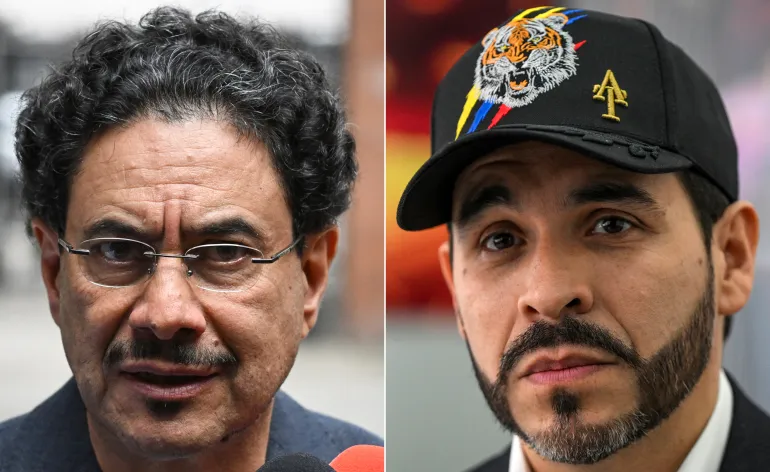
Former Columbia University graduate student Mahmoud Khalil will ask the U.S. Supreme Court to intervene after a federal appeals court on Friday declined to reconsider a decision that put the government a step closer to deporting him, the pro-Palestinian activist’s lawyers said.

Judges on the 3rd U.S. Circuit Court of Appeals in Philadelphia voted 6-5 against having the court’s full complement of judges review the ruling. In January, a three-judge 3rd Circuit panel found that a federal judge in New Jersey who had sided with Khalil and ordered his release last year from immigration detention didn’t have jurisdiction to decide the matter.

The American Civil Liberties Union, which is involved in representing Khalil, said his lawyers will ask the 3rd Circuit for an order preventing the decision from taking effect — and barring Khalil from being detained or deported — while it asks the Supreme Court to take up the case.

An appeal to the high court is expected in the coming months, possibly in late summer.

“Today’s decision is not the final word, and we still strongly believe in our arguments going forward,” ACLU senior counsel Brett Max Kaufman said in a statement.

In its January ruling, the 3rd Circuit found that Khalil’s lawsuit challenging his detention and U.S. District Judge Michael Farbiarz’s subsequent rulings in the case were premature because federal law requires that such challenges first move through the separate immigration court system. That system is part of the Justice Department, not the judicial branch.

The decision didn’t decide the key issue in Khalil’s case: whether the Trump administration’s effort to throw Khalil out of the U.S. over his campus activism and criticism of Israel is unconstitutional.

Judge Cheryl Ann Krause, who had voted for the 3rd Circuit to review the decision, wrote in a dissent that the court was “abdicating our duty to meaningfully review Khalil’s constitutional claims. The Judicial Branch, she wrote, cannot fulfill its role as a check on the other branches of government, “if we write ourselves out of relevance and leave the Executive Branch to check itself.”

Khalil, 31, has also appealed to the 5th U.S. Circuit Court of Appeals in Louisiana, where he was detained, after the Board of Immigration Appeals upheld his removal order.

Through his lawyers, Khalil argued that the immigration judge who issued the order failed to consider relevant evidence and wrongly upheld a charge that he had misrepresented information on his application for legal permanent resident status. That charge, Khalil’s lawyers said, was brought in retaliation for his protest activity.

The immigration judge suggested Khalil could be deported to Algeria, where he maintains citizenship through a distant relative, or Syria, where he was born in a refugee camp to a Palestinian family. Khalil’s lawyers have said he would face mortal danger if forced to return to either country.

An outspoken leader of the pro-Palestinian movement at Columbia, Khalil was arrested in March 2025. He then spent three months detained in a Louisiana immigration jail, missing the birth of his child.

Federal officials have accused Khalil of leading activities “aligned to Hamas,” though they have not presented evidence to support the claim and have not accused him of criminal conduct. They also accused Khalil of failing to disclose information on his green card application.

Khalil has dismissed the allegations as “baseless and ridiculous,” framing his arrest and detention as a “direct consequence of exercising my right to free speech as I advocated for a free Palestine and an end to the genocide in Gaza.”

The government justified the arrest under a seldom-used statute that allows for the expulsion of noncitizens whose beliefs are deemed to pose a threat to U.S. foreign policy interests. In June 2025, Farbiarz ruled that justification would likely be declared unconstitutional and ordered Khalil released.

President Trump’s administration appealed that ruling, arguing the deportation decision should fall to an immigration judge, rather than a federal court. The 3rd Circuit ruled 2-1 in the administration’s favor.

Judge Emil Bove, who was involved in investigating student protesters while a top Justice Department official, did not participate in the 3rd Circuit vote on whether to review the decision. He later issued an order denying a request by Khalil’s lawyers that he step aside from the matter, calling it moot.

Sisak writes for the Associated Press. AP writer Lindsay Whitehurst contributed to this report.

Source link

Slovenia’s parliament approves right-wing Janez Jansa as prime minister | Government News

Approval of populist former leader is a shift for the EU country that was recently run by a liberal government.

Slovenia’s parliament has voted to bring back right-wing politician Janez Jansa as prime minister, after his last stint in power ended in 2022.

Legislators in the 90-member assembly voted 51-36 for Jansa on Friday – marking a shift for the small European Union country recently run by a liberal government.

Recommended Stories

list of 3 itemsend of list

Jansa will need to return to parliament within the next 15 days for another vote to confirm his future Cabinet.

His appointment concludes a post-election stalemate after the vote two months ago ended in a tie when former liberal Prime Minister Robert Golob’s Freedom Movement was unable to create a parliamentary majority by only securing a thin margin.

On Thursday, Jansa and his populist Slovenian Democratic Party (SDS) signed a coalition agreement with several centre-right groups to form a new government, which now holds 43 seats in the assembly.

It will be the fourth time 67-year-old Jansa has been in office.

He was the country’s leader from 2004 to 2008, 2012 to 2013 and 2020 to 2022.

In the March 22 elections, the SDS came second with 28 seats, behind Golob’s Freedom Movement, which secured 29 seats.

THE HAGUE, NETHERLANDS - JUNE 25: Prime Minister of Slovenia Robert Golob during the NATO summit on June 25, 2025 in The Hague, Netherlands. This year's NATO summit, which brings together heads of state and government from across the military alliance, is being held in the Netherlands for the first time. Among other matters, members are to approve a new defense investment plan that raises target for defense spending to 5% of GDP. (Photo by Pierre Crom/Getty Images)
Former Prime Minister of Slovenia Robert Golob during the NATO summit on June 25, 2025 [Pierre Crom/Getty Images]

The new coalition government is made up of the SDS, New Slovenia, Democrats, the Slovenian People’s Party and Focus. It also secured additional backing from the right-wing Resnica party, which will not formally join the government.

In a speech laying out the government’s future goals, Jansa listed the economy, the fight against corruption and red tape, and decentralisation.

He also promised to lower taxes for the rich and support private education and healthcare.

Earlier this month, Jansa told reporters that the coalition would ensure a “cheaper state but with better quality”.

Jansa is an admirer of US President Donald Trump and was also a close ally of Hungary’s former populist Prime Minister Viktor Orban, who was defeated in a landslide election last month.

The former PM is a supporter of Israel and was a staunch critic of the Golob government’s decision to recognise a Palestinian state in 2024.

During his last term in office, Jansa faced accusations of clamping down on democratic institutions and press freedoms, leading to protests then and scrutiny from the European Union.

Source link

Contributor: The GOP is collapsing under Trump’s loyalty tests

Americans always say they want politicians with backbone — men and women of principle who will stand up for what they believe in, even when it’s unpopular.

And every so often, the American people prove their commitment to this noble aspiration by firing anybody who actually tries it.

Take Republican Rep. Thomas Massie, who just lost a reelection bid by double digits after President Trump’s affiliated committees dumped enough money into Kentucky to purchase, well, Kentucky.

Massie committed the cardinal sin of modern Republican politics: He behaved as though Congress were a coequal branch of government instead of the warm-up act before a Trump rally.

He bucked Trump on spending, Iran and — in what apparently qualified as political suicide — whether or not to release the Epstein files. For this display of independent thought, Massie was summarily retired by what can only be described as the Trump cult (formerly known as the Republican primary electorate).

Before anybody accuses me of hyperbole, consider the remarkably revealing example presented recently on the New York Times podcast, “The Daily.”

At a town hall in Burlington, Ky., one voter explained to Massie that Trump is basically omniscient.

“As I see it,” the voter said, “the one person in the whole United States, maybe the world, that understands everything and has input to everything is Donald Trump.”

Not content with mere earthly wisdom, Trump also possesses universal awareness, superior intelligence and perhaps even low-level clairvoyance. The voter continued that Trump “gets more information, more meetings, more everything” than anybody else in government.

When Massie noted that Trump opposed releasing the Epstein files, the man calmly explained that if Trump changed positions, “there was a reason” — one too profound for ordinary mortals to comprehend.

Massie’s reply deserves to be bronzed and mounted over the entrance to the U.S. Capitol: “I don’t give anybody but God that kind of trust.”

Unfortunately, for a large portion of the Republican electorate (about 55%, based on the Kentucky primary results), those words constitute sacrilege against their earthly savior.

As South Carolina Sen. Lindsey Graham cheerfully boasted on NBC’s “Meet the Press” on Sunday, “This is the party of Donald Trump.” Which is true in much the same way North Korea is the party of Kim Jong Un.

The one ironic twist in all of this is that Americans finally managed to punish somebody over the Epstein files — only it turned out to be the guy who wanted them released.

There’s American justice for you.

Massie isn’t the only Republican currently being fitted for concrete shoes. Trump also helped finish off Louisiana Sen. Bill Cassidy, whose unforgivable crime was voting to convict Trump during the impeachment trial following Jan. 6. And Trump has endorsed controversial Texas Atty. Gen. Ken Paxton over incumbent Sen. John Cornyn, which in today’s GOP primary environment is roughly the equivalent of finding a horse head in your bed.

Now, to be fair, Cassidy and Cornyn are no Massie, who openly opposed Trump and paid the price standing upright. Cassidy and Cornyn demonstrated brief moments of independence, only to spend years vainly performing political interpretive dance routines in hopes of regaining Trump’s favor.

Still, there may be a silver lining here for students of political irony.

Trump’s endorsement of Paxton will force Republicans to spend enormous sums defending a deep red state that would ordinarily require little more than a campaign sign and a pickup truck.

Meanwhile, Trump is creating resentful lame-duck Republicans in Congress who now possess the most dangerous attribute in politics: nothing left to lose.

But the broader message is unmistakable. Trump wants Republicans to understand that disagreement will not be tolerated. No criticism. No distancing. No independent branding.

The party line is whatever Trump said five minutes ago, amended by whatever he says five minutes from now. By now, everyone knows this to be true.

Which would be excellent news for Trump, if not for one small complication: The rest of the country appears to be tiring of his act. Recent polling shows Trump’s approval slipping to 37%, while Democrats gain major ground, surging to a +11 on the generic congressional ballot.

Trump, it seems, has created a situation in which Republicans can either oppose him and be destroyed in a primary, or they can embrace him and risk losing the House and the Senate in November’s general election. It’s the old “damned if you do, damned if you don’t” conundrum.

The point is this: With the midterms approaching, Trump is making sure Republicans are ensnared in the gravitational pull of his unpopularity.

That may satisfy the president’s desire for complete loyalty. It may also hand Democrats control of both chambers of Congress.

Trump is settling all family business this week, by purging those pesky disloyal Republicans. Only time will tell whether he’s also purging America’s non-Republican “swing” voters, as well.

Matt K. Lewis is the author of “Filthy Rich Politicians” and “Too Dumb to Fail.”

Source link

Turkish opposition leader vows to stay after court ousts him | Turkey Attempted Coup News

NewsFeed

Turkiye’s main opposition leader Ozgur Ozel has vowed not to leave party headquarters after a court ruling removed him from power. Speaking to supporters in Ankara, Ozel accused judges and prosecutors of carrying out a coup attempt against his party.

Source link

Net migration to the UK falls by nearly 50 percent amid tighter policies | Migration News

The ONS says net migration fell to 171,000 in the ⁠12 months to the end of December from 331,000 a year earlier.

Long-term net migration to the United Kingdom nearly halved ⁠in 2025, falling to levels last seen before the post-Brexit immigration system was introduced, as tougher government measures enacted in recent years restricted arrivals.

The Office for National Statistics (ONS) said on Thursday that net migration fell to 171,000 in the ⁠12 months to the end of December from 331,000 a year earlier, extending a sharp decline from a record peak of 944,000 in 2023.

Recommended Stories

list of 3 itemsend of list

Immigration – both legal and illegal – has dominated political debate in the for more than a decade, with successive governments imposing stricter visa rules and higher salary thresholds. The current government has pledged to go further.

The British Future think tank ‌said the country was “experiencing one of the sharpest falls in net migration on record”, but that most people believed the opposite, according to its research.

Interior Minister Shabana Mahmood welcomed the progress from tighter policies, but said that there was still work to do.

“We will always welcome those who contribute to this country and wish to build a better life here. But we must restore order and control to our borders,” she said, adding that the government’s new skills-based migration would reward contribution and end reliance on “cheap overseas workers”.

On Saturday, far-right activist Tommy Robinson drew tens of thousands of people in London to attend his “unite the kingdom” march. Islamophobic and ethnonationalist hate flyers were reportedly distributed to the crowds. “In a country saturated with degenerates, grifters and imported political enemies … We are a brotherhood of White Europeans who share the same values,” read one leaflet.

Meanwhile, employers and economists ⁠have raised concerns about labour shortages, particularly in sectors such as care and hospitality.

The ONS said long-term net migration was ⁠now close to its level before the new immigration system was introduced at the start of 2021, when the UK transitioned out of European Union membership, and when COVID restrictions ⁠were still in place.

The drop reflects policy changes implemented from 2024, ⁠when the previous Conservative government banned most international students from bringing dependents and raised salary thresholds for skilled worker visas.

The current Labour government has tightened policies further as it seeks to counter Nigel Farage’s populist Reform UK party, which campaigns on an anti-migration platform and holds a double-digit lead in opinion ‌polls.

To that end, the government last year moved to end overseas recruitment of care workers, the single biggest driver of work migration in recent years, and raised the salary threshold for skilled worker visas further. It has since announced ‌more ‌sweeping reforms, including plans to speed up deportations of those arriving illegally and double the qualifying period for some workers to obtain settled status to 10 years, as well as making refugee status temporary.

Source link

Bolivia’s president reshuffles cabinet amid anti-government protests | Politics News

NewsFeed

Bolivian President Rodrigo Paz has announced a cabinet reshuffle and other measures as protests demanding his resignation continue. Paz said the government wants to build a collaborative government with broader participation from social and economic groups.

Source link

Indonesians sue government over deadly Sumatra flood response | Newsfeed

NewsFeed

Survivors of Indonesia’s deadly Sumatra floods are suing the government over what they say was an inadequate disaster response. As Al Jazeera’s Jessica Washington reports, they’re seeking a court order to declare the floods a national disaster and improve recovery efforts.

Source link

Bolivian president to reshuffle cabinet amid antigovernment protests | Protests News

Rodrigo Paz is under pressure from weeks of demonstrations and poor economic conditions.

Bolivia’s right-wing President Rodrigo Paz has said he will reorganise his cabinet as he faces calls to resign amid weeks of widespread protests.

During a news conference on Wednesday, Paz said he would reshuffle his ministers in a bid to ease tensions with antigovernment protesters.

Recommended Stories

list of 3 itemsend of list

“We need to reorganise a cabinet that must be able to listen,” Paz told reporters.

Since taking office in November, Paz and his government have faced backlash to economic restructuring measures, including controversial cuts to fuel subsidies. The country is in one of its worst economic crises in decades.

Protesters have taken to the streets to express frustration with Paz’s free-market reforms. His inauguration ushered in a period of right-wing leadership after nearly two decades of governance by the Movement for Socialism (MAS).

Thousands of farmers, labourers, miners and teachers have denounced Paz’s reforms. Riot police clashed with protesters again in the capital, La Paz, earlier this week.

While Paz acknowledged frustrations in his remarks on Wednesday, his government has depicted the protests as dangerous and anti-democratic.

Minister of Foreign Affairs Fernando Aramayo said earlier in the day that the mass protests and roadblocks were aimed at destabilising the country and “disrupting the democratic order”.

Former leftist President Evo Morales, who continues to exert influence over the country’s politics, has expressed support for the demonstrations.

The Paz government, meanwhile, has accused Morales of fomenting unrest. The former socialist president faces charges of statutory rape and has an arrest warrant out against him. His allies, however, say the charges are part of an effort to remove him from political life.

The administration of US President Donald Trump has expressed support for Paz, whose election is seen as part of a regional shift to the right.

“Let there be no mistake: the United States stands squarely in support of Bolivia’s legitimate constitutional government,” Secretary of State Marco Rubio said in a social media post on Wednesday. “We will not allow criminals and drug traffickers to overthrow democratically elected leaders in our hemisphere.”

Paz also slammed Colombian President Gustavo Petro, who has frequently feuded with right-wing governments in the region, for recent comments describing the protests as a “popular insurrection”.

The Bolivian Ministry of Foreign Affairs announced on Wednesday that it would ask the Colombian ambassador to leave the country, citing interference in domestic political affairs.

“If they expel the ambassador simply for proposing dialogue and mediation, it means we’re sliding towards extremism that could lead to a very difficult situation for the Bolivian people,” Petro said in an interview with the local radio station Caracol.

Source link

China’s Xi Jinping and Russian President Vladimir Putin meet in Beijing | Politics News

DEVELOPING STORY,

Xi and Putin hold talks just days after US President Donald Trump made an official visit to China.

A meeting between Chinese leader Xi Jinping and visiting Russian President Vladimir Putin has started in Beijing, Chinese state media report.

Xi welcomed Putin to the Chinese capital on Wednesday, shaking hands with the Russian leader outside the Great Hall of the People before their talks, video by Russian media showed.

Recommended Stories

list of 4 itemsend of list

Before entering the Great Hall, Putin and Xi walked down a red carpet, rolled out to greet the Russian leader, and stood as a military band played their two national anthems.

Putin began the talks by hailing the “strong, positive” momentum in cooperation between Russia and China, according to Russian media.

“Even amid unfavourable external factors, our cooperation and economic cooperation is showing strong, positive momentum,” Putin told Xi.

Addressing Putin, Xi lauded the “unyielding relationship” between China and Russia.

“We have been able to continuously deepen our political mutual trust and strategic coordination with a resilience that remains unyielding despite trials and tribulations,” Xi told Putin, according to China’s Xinhua news agency.

The Chinese leader also addressed war in the Middle East, telling his Russian counterpart that further conflict was “inadvisable” and a ceasefire was necessary.

“A comprehensive ceasefire is of utmost urgency, resuming hostilities is even more inadvisable and maintaining negotiations is particularly important,” Xi said, according to Xinhua.

Russian President Vladimir Putin walks with Chinese President Xi Jinping during a welcoming ceremony at the Great Hall of the People in Beijing, China May 20, 2026. REUTERS/Maxim Shemetov/Pool TPX IMAGES OF THE DAY
Russian President Vladimir Putin walks with Chinese President Xi Jinping during a welcoming ceremony at the Great Hall of the People in Beijing, on Wednesday [Maxim Shemetov/Pool/Reuters]

Al Jazeera’s Katrina Yu, reporting from Beijing, noted that Putin’s visit and that of the recently concluded trip by US President Donald Trump to China were very different.

Putin, she said, is marking 25 years of the Sino-Russian friendship, has visited China dozens of times, and met with Xi on more than 40 other occasions.

“So this visit will really be about deepening existing coordination and cooperation,” Yu said.

“We are expecting that the two sides will update each other on the situation in the Middle East, as well as Ukraine. No doubt, Xi Jinping will also talk to Putin about what was discussed with Donald Trump last week,” Yu said.

Putin is being accompanied by a large delegation of Russian businesspeople and government leaders, and the Kremlin has announced that the two leaders will sign some 40 different agreements, Yu said, covering everything from the economy and tourism to education.

“But I think for Putin, the main topic of discussion with Xi Jinping is going to be on energy security,” Yu said.

“Since the war in Ukraine, any gas sales that were previously heading to Europe – that is all dried up – and Russia is in desperate need of revenue to replace that, especially since we are in the fifth year of the Ukraine war,” she added.

In a video address released before meeting Xi, Putin said Beijing and Moscow are prepared to cooperate with each other on “core interests ‌of ⁠the two countries, including the protection of sovereignty and national unity”, the Reuters news agency reports.

Both countries are actively expanding ⁠ties in economy, politics and defence, Putin said, adding that “a close” and “strategic” connection between Moscow and Beijing ⁠was playing “a stabilising role” in global relations.

“We are not aligning against anyone, but working ⁠for the cause of peace and universal prosperity,” Putin said.

Source link

Shakira’s eight-year tax fraud nightmare ends with acquittal in Spain

Shakira’s long tax-fraud nightmare has ended with the government of Spain on the hook to refund nearly $70 million to the Colombian-born singer after prosecutors failed to prove she spent enough time in that country to owe it a chunk of her earnings.

Since 2018, the singer has been accused of defrauding the Spanish government in three cases, for the tax years 2011, 2012-2014 and 2018. Over the years, deals were offered, rejected and accepted; charges were dropped, other charges were filed; and an eight-year prison sentence was threatened.

Shakira maintained her innocence, saying in 2022 that “Spanish tax authorities saw that I was dating a Spanish citizen and started to salivate,” referring to her relationship with Barcelona-born footballer Gerard Piqué, the father of their sons Milan and Sasha. Piqué and the singer, who met in 2010 when she did “Waka Waka,” the official song of that year’s FIFA World Cup, separated in 2022.

A representative for the singer, whose full name is Shakira Isabel Mebarak Ripoll, did not respond immediately to The Times’ request for comment on the court decision.

However, despite there being no fraud, Shakira told People on Monday in a statement that “for nearly a decade, I was treated as guilty. Every step of the process was leaked, distorted, and amplified, using my name and public image to send a threatening message to the rest of the taxpayers.”

She added, “Today, that narrative crumbles, and it does so with the full force of a court ruling.”

Everything revolved around how many days Shakira spent in Spain in the years in question. With her legal residence in the Bahamas before she declared Spain her fiscal home in 2014, she had to spend more than half the year outside of her beau’s home country to avoid paying taxes there.

“They knew I wasn’t in Spain the required time, that Spain wasn’t my place of work or my source of income, but they still came after me, with their eyes on the prize,” Shakira told Elle in 2022, adding that she was confident that justice would prevail in her favor at trial. “I have enough proof.”

The amount the Spanish government owes her includes fines and interest in addition to the money she handed over, despite having no legal obligation to pay it.

In other Shakira news, she and Burna Boy just released the 2026 FIFA World Cup song, titled “Dai Dai.”

Source link

U.S. government agrees to drop tax claims against Trump in broadening of IRS lawsuit settlement

The U.S. government will permanently drop tax claims against President Trump, according to a settlement document that is part of a deal to resolve Trump’s $10 billion lawsuit against the Internal Revenue Service over the leak of his tax returns.

As part of the settlement agreement, the U.S. is “forever barred and precluded” from examining or prosecuting Trump, his sons and the Trump organization’s current tax issues, according to a one-page document posted to the Justice Department’s website on Tuesday.

The settlement, which marks an extraordinary use of executive power, goes beyond resolving litigation and effectively helps shield the president from further examination of his finances and legal conduct.

The move comes after the Trump administration announced Monday the creation of a nearly $1.8 billion fund to compensate allies of the Republican president who believe they have been unjustly investigated and prosecuted, an arrangement that Democrats and government watchdogs derided as “corrupt” and unconstitutional.

The “Anti-Weaponization Fund” of $1.776 billion will allow people who believe they were targeted for prosecution for political purposes, including by the Biden administration Justice Department, to apply for payouts, creating what acting Atty. Gen. Todd Blanche called “a lawful process for victims of lawfare and weaponization to be heard and seek redress.”

Blanche, who was grilled by lawmakers on Capitol Hill on Tuesday, would not rule out the possibility that people who carried out violence during the Jan. 6, 2021, riot at the U.S. Capitol will be considered for payouts from the new fund.

Democratic lawmakers and ethics watchdogs slammed the creation of the fund, saying it was corrupt, opaque and had the potential to become a “slush fund” for the president and his allies.

Sen. Ron Wyden, D-Ore., said Democrats intend to “fight every element of this self-dealing settlement.”

“Not only is this another heinously corrupt act by the most corrupt administration in history, it’s clearly a violation of the law that prohibits interference by executive branch officials in IRS audits.”

The fund was announced after Trump, his sons Eric Trump and Donald Trump Jr., and the Trump Organization agreed to drop their lawsuit against the IRS and the Treasury Department. The lawsuit alleged that a leak of confidential tax records caused them reputational and financial harm and negatively affected their public standing, among other allegations.

According to a separate settlement agreement posted to the Justice Department website Monday, Trump will receive a formal apology from the U.S. government but “will not receive any monetary payment or damages of any kind,” from the settlement.

Trump told reporters at the White House on Monday that the fund is dedicated to “reimbursing people who were horribly treated.”

Hussein writes for the Associated Press.

Source link

Trump says Iran attack on ‘hold’: What we know about latest negotiations | Conflict News

United States President Donald Trump says he has decided to pause an attack on Iran at the behest of Gulf leaders after Tehran sent a new peace proposal to Washington through Pakistan.

On Monday, Trump said there is now a “very good chance” the US could reach an agreement with Iran to prevent Tehran from obtaining a nuclear weapon.

An initial, temporary ceasefire commenced on April 8, six weeks into the war. Since then, armed hostilities have largely subsided, but a durable peace agreement remains elusive, with both the US and Iran dissatisfied with each other’s proposed terms.

Also on Monday, Saudi Arabia said it had intercepted three drones, one day after a drone attack hit the Barakah Nuclear Energy Plant in the United Arab Emirates. This has raised more concerns about the potential for renewed military escalation in the Gulf as peace negotiations drag on.

What has Trump said about a new attack on Iran?

Following the reported drone attacks on the UAE and Saudi Arabia on Sunday and Monday, Trump wrote in a Truth Social post: “For Iran, the Clock is Ticking, and they better get moving, FAST, or there won’t be anything left of them. TIME IS OF THE ESSENCE!”

Then, later on Monday, Trump wrote another post, saying he had been asked by the leaders of Qatar, Saudi Arabia and the UAE to hold off on a planned attack on Iran scheduled for Tuesday since “serious negotiations are now taking place.”

He added that he had instructed Secretary of Defense Pete Hegseth, Chairman of The Joint Chiefs of Staff General Dan Caine and the US military not to carry out the scheduled attack. However, he said, he “further instructed them to be prepared to go forward with a full, large scale assault of Iran, on a moment’s notice, in the event that an acceptable Deal is not reached”.

What do we know about the latest peace plan Iran has submitted?

Iran has submitted a revised 14-point peace plan to end the war, the semi-official Tasnim news agency reported on Monday.

Iranian Ministry of Foreign Affairs spokesman Esmaeil Baghaei told a news briefing on Monday that Tehran’s response to the previous US proposal had been “conveyed to the American side through mediator Pakistan”, according to Tasnim.

Washington and Tehran have exchanged multiple proposals in recent weeks amid a ceasefire that has mostly halted six weeks of fighting. However, the initial direct talks mediated by Pakistan in Islamabad in April stalled, and Trump said last week the ceasefire is “on life support”.

While the specific proposals in the latest plan from Iran have not been made public, Baghaei said demands include the release of its assets frozen abroad and the lifting of sanctions.

“The points raised are Iranian demands that have been firmly defended by the Iranian negotiating team in every round of negotiations,” he said.

Iran has also previously demanded compensation for damage inflicted by US-Israeli attacks, an end to the ongoing US naval blockade of Iranian ports and a halt to fighting on all fronts, including in Lebanon, where Israeli forces continue daily attacks and have mounted a ground invasion in the south of the country.

Washington has urged Tehran to dismantle its nuclear programme and lift a blockade on the Strait of Hormuz, which, before the war, carried one-fifth of the world’s crude oil and liquefied natural gas ‌(LNG) supply.

What are the main sticking points between Iran and the US?

A major point of contention is Iran’s stockpile of enriched uranium. During negotiations, Washington has urged Tehran to give away its enriched uranium, a demand Tehran has resisted.

Iran is believed to have about 440kg (970lb) of uranium enriched to 60 percent. A 90 percent threshold of enriched uranium is needed to produce a nuclear weapon. Iran has never officially declared an intention to build nuclear weapons. The US wants this stock to be handed over to it, but Iran is reportedly only willing to consider handing it to a third party – if at all.

Iran’s Foreign Minister Abbas Araghchi told reporters on the sidelines of a meeting of foreign ministers from BRICS nations in New Delhi last week that Iran and the US have reached a “deadlock” on the question of Iran’s “enriched material”.

As a result, he said, the topic is being “postponed” until later stages in the talks. “For the time being, it is not under discussion, it’s not under negotiation, but we will come to that subject in later stages.”

Araghchi confirmed he had spoken to Russian officials about an offer from Moscow to store Iran’s enriched uranium. He said Iran may consider Russia’s proposal at an “appropriate time” and that he appreciates Moscow’s efforts.

“When we come to that stage, obviously we will have more consultations with Russia and see if the Russian offer can help or not,” he said.

The US and Iran are also arguing about whether Iran should be allowed to enrich uranium at all. Under the Obama-era Joint Comprehensive Plan of Action, signed with several countries in 2015, Iran was able to continue enriching to 3.87 percent – enough for the development of a nuclear power programme. Trump withdrew the US from that agreement in 2018, despite consistent reports from the International Atomic Energy Agency (IAEA) that Iran had stuck to its terms. Now, the US wants a moratorium on all uranium enrichment for a period of up to 20 years, it says.

Another sticking point between the two countries is the Strait of Hormuz in the Gulf.

Since early March, Iran has restricted shipping through the strait, a narrow waterway linking Gulf oil producers to the open ocean and through which 20 percent of the world’s oil and liquefied natural gas (LNG) supplies are shipped during peacetime. Iran has allowed passage by vessels from select countries, but they are required to negotiate transit with the Islamic Revolutionary Guard Corps (IRGC).

In its previous proposals to end the war, Iran has mentioned charging fees or tolls for vessels seeking to pass through the state. Washington has repeatedly rejected the prospect. In April, the US announced a naval blockade on ships entering or leaving Iranian ports, further adding to the disruption of global oil and gas supplies.

Iran’s state media reported, citing the Iranian Ministry of Foreign Affairs, that technical teams from Iran and Oman met in Oman to negotiate a mechanism for safe transit in the Strait of Hormuz.

A third likely major point of friction – although one which may also be kicked into later discussions – is Iran’s support for a network of “proxy” armed groups around the Middle East which it calls its “axis of resistance”. These include the Houthis in Yemen, who have also caused disruption by launching attacks on Israel-linked ships in the Red Sea in the past, Hezbollah in Lebanon and multiple groups based in Iraq and Syria.

INTERACTIVE - IRGC releases map of control over Strait of Hormuz - May 5, 2026-1777975253

Source link

How Philadelphia’s Democratic primary tests the bounds of US progressivism | US Midterm Elections 2026 News

On Tuesday, voters in Pennsylvania’s third congressional district — which encompasses much of Philadelphia’s urban core — will decide what kind of progressive champion they want representing them in the United States House of Representatives.

Four candidates are vying for the Democratic nomination in Tuesday’s primary. They include state Representative Chris Rabb, state Senator Sharif Street, pediatric surgeon Ala Stanford and lawyer Shaun Griffith.

Recommended Stories

list of 3 itemsend of list

On the whole, all four campaigns are markedly progressive, focusing on issues such as expanding healthcare, affordability and housing.

But supporters say the race exposes the fault lines within the Democratic Party as it seeks to rally opposition to Republican President Donald Trump in the 2026 midterm cycle.

Marc Stier, who served as the director of the Pennsylvania Policy Center, a progressive think tank, until earlier this year, noted that there are few differences in the candidates’ platforms.

“They’re all opposed to Donald Trump. They’re all talking about civil rights, healthcare and voting rights,” said Stier, who backs Rabb. “So the differences aren’t that great.”

But the race has drawn nationwide attention, including endorsements from top Democrats.

For Stier and other local experts and leaders, the divisions come down to a duel between ideals and pragmatism — and how the candidates wish to be perceived along that spectrum.

A Democratic stronghold

The primary is highly symbolic for the Democratic Party. Pennsylvania’s third congressional district is considered one of the most left-leaning areas in the US.

According to The Cook Political Report, the district was 40 percentage points more Democratic than the national average in the most recent presidential election.

That makes it a key party stronghold in a pivotal swing state: Pennsylvania has alternated between voting Democratic and Republican in the last four presidential races, most recently siding with Trump.

Since 2016, Democrat Dwight Evans has represented the area. But in June, he announced he would not seek reelection after holding congressional office for a decade.

That opened a gateway to a heated primary, with no incumbent to lead the pack.

Street, Rabb and Stanford are considered the frontrunners. No independent polling has been conducted in the race, but surveys gathered by the candidates or their supporters show a volatile three-way contest.

An April poll sponsored by 314 Action, a group supporting Stanford, found the surgeon leading with 28 percent of voter support, followed by Rabb at 23 percent and Street at 16 percent.

Meanwhile, a November survey sponsored by Street found the state senator ahead with 22 percent support, ahead of Rabb at 17 percent and Stanford at 11.

Chris Rabb at a news conference
State Representative Chris Rabb has embraced the progressive label and received endorsements from politicians like Alexandria Ocasio-Cortez [Michael Perez/AP Photo]

A three-way race

Each of the three candidates has positioned themselves as the Democrat who will shake up the status quo and deliver results.

“The same old politics and the same old politicians are not going to cut it,” Stanford declared at a forum hosted by WHYY public radio in February.

“We need people who step up in a storm, who lead when others wilt away, and that’s what I’ve done and will do for this city.”

There are differences, however, in how the candidates are presenting themselves.

Stanford is campaigning as the political outsider whose public health advocacy offered critical leadership during the COVID-19 pandemic. This is her first political run.

Street, on the other hand, is seen as the political veteran backed by party leadership. He first entered the state Senate in 2017, becoming the first Muslim elected to the chamber, and his father was a former Philadelphia mayor.

Then there’s Rabb, a democratic socialist who has positioned himself as the firebrand progressive in the mould of New York Congresswoman Alexandria Ocasio-Cortez.

He, too, has served in government since 2017, representing northwest Philadelphia in the state House of Representatives.

All three have embraced progressive rallying cries, such as increasing affordable housing, widening access to healthcare, and abolishing Immigration and Customs Enforcement (ICE), an agency accused of racial profiling and violent tactics.

But Street has set himself apart by wedding his reputation to the Democratic establishment. From 2022 to 2025, he served as chair of the Pennsylvania Democratic Party.

“Street has very strong relationships with the political machine here: the party establishment, the ward leaders and committee people, and other legislators,” Stier said.

State Senator Sharif Street
State Senator Sharif Street was formerly the chair of the Pennsylvania Democratic Party [Aimee Dilger/AP Photo]

Supporters weigh in

But amid the frustration with the Democratic Party, particularly after its defeat in the 2024 presidential race, Street’s opponents have sought to distance themselves from the left-wing establishment.

“Rabb clearly says his goal is to push the envelope on issues and build public support for bolder ideas than Street is likely to push forward,” said Stier.

But Stier acknowledges that some voters see progressives like Rabb as all talk and no action.

“As my ward leader says, Rabb is one of those people that makes a lot of speeches but doesn’t get much done,” Stier said.

He dismisses such remarks as hackneyed. “It’s the kind of standard attack that is made by the establishment against people who are very outspoken and don’t always get along with the party establishment in Harrisburg.”

But it is the kind of argument Lou Agre, a ward leader and retired lawyer, sympathises with.

Formerly the president of the Philadelphia Metal Trades Council, Agre is backing Street in the upcoming election. He is not convinced that Rabb’s progressive positions can lead to tangible results.

“Street has always stood behind organised labour,” Agre said.

To Agre, Street represents experience, while Rabb is heavy on rhetoric. “This is a race between a guy with a record and another guy who has a platform that he’s using to get a point across,” he explained.

Dr. Ala Stanford administers a COVID-19 swab test on Wade Jeffries in the parking lot of Pinn Memorial Baptist Church in Philadelphia, Wednesday, April 22, 2020. Stanford and other doctors formed the Black Doctors COVID-19 Consortium to offer testing and help address heath disparities in the African American community. (AP Photo/Matt Rourke)
Surgeon Ala Stanford administers a COVID-19 swab test on resident Wade Jeffries on April 22, 2020, as part of an effort to care for Black communities [Matt Rourke/AP Photo]

Duelling endorsements

In many ways, local leaders say that the difference between Tuesday’s primary candidates comes back to familiar arguments that often divide centrist and progressive Democrats.

Those labels have, in part, translated into endorsements — and behind-the-scenes party battles.

The news outlet Axios reported this month that Pennsylvania Governor Josh Shapiro privately warned local building trade unions that attacking Stanford could inadvertently help Rabb, who has been critical of the governor.

Rabb, meanwhile, has earned the endorsements of some of the country’s most prominent progressives, including Ocasio-Cortez, Representative Ilhan Omar and Senator Chris Van Hollen.

Street, by contrast, has become the candidate of choice for some of Philadelphia’s biggest power brokers, including local labour unions, city council members and Mayor Cherelle Parker.

For her part, Stanford has scored the endorsement of the outgoing congressman, Evans, whom all three hope to succeed.

Tuesday’s primary will be key. The winner will almost certainly prevail in the general election in November. No Republicans have come forward with a bid.

But with the race split narrowly between the three candidates, the outcome may ultimately boil down to turnout, and which candidate can rally the most supporters.

“If people come out to vote, if turnout is high in North and West Philadelphia, parts of the southwest and those neighbourhoods, then Sharif will win,” Agre said of his preferred candidate. “If not, who knows what will happen?”

He described Stanford, whom some have depicted as a middle ground between Street and Rabb, as a complicating factor in the race.

“Ala Stanford’s the wild card. Is she fading, or does she still have her slice of the electorate? I don’t know,” Agre said.

Stier, meanwhile, acknowledged that each of the three candidates has a path to victory.

“There are pockets of support for all these candidates,” Stier noted. But he thinks the more moderate approach of Street and Stanford may open a path for victory for Rabb.

“The winner of this race is not going to have a majority. Someone’s going to win this race with 35 to 40 percent of the vote,” he explained.

“And I think Rabb’s campaign is expecting that Stanford and Street will split the more centrist vote, and he will get all the progressive votes, and he’ll run to victory that way.”

Source link

A packed race for governor: What to know about Oregon’s primary elections | Elections News

In the northwest corner of the United States, Oregon has fostered a reputation as a left-wing stronghold. Since the 1980s, the Beaver State has consistently elected Democrats in most of its statewide races.

But even in a comfortably blue state like Oregon, the fight to hold onto political power can be competitive.

Recommended Stories

list of 3 itemsend of list

On Tuesday, the state will hold its latest primary races, with each of the major parties picking its nominees for November’s midterm elections.

But a packed field of roughly 25 contenders, both Democrats and Republicans, is jockeying to replace Tina Kotek as she seeks a second term as governor.

Tuesday’s vote could also serve as an economic bellwether. Voters will weigh in on a referendum that could repeal a state fuel tax, as the US-Israel war on Iran heaps strain on consumers at the gas pump.

Who is running? And which races have attracted the most attention? We tackle those questions and more in this brief explainer.

What time do polls open?

Polls will open on Tuesday at 7am Pacific US time (15:00 GMT) and close at 8pm (4:00 GMT).

Governor of Oregon Tina Kotek speaks during a press conference after U.S. federal agents shot two people in Portland, Oregon, U.S., January 8, 2026. REUTERS/John Rudoff
Oregon Governor Tina Kotek is seeking re-election in 2026 [File: John Rudoff/Reuters]

Who is running for governor?

Incumbent Governor Kotek is making a bid for a second four-year term. But she is fielding competition from dozens of other candidates, including nine Democrats.

Going into the Democratic primary, Kotek is the frontrunner. Her challengers include a children’s book author, the leader of an Indigenous nonprofit and an inventor who hopes to address water shortages.

Even more contenders are angling for the Republican gubernatorial nomination.

Among them is State Senator Christine Drazan, who ran against Kotek in 2022. Drazan has been critical of President Donald Trump’s tariff policies but supportive of his tough stance on immigration.

Also on the Republican ballot is former NBA player Chris Dudley, who was the Republican gubernatorial candidate in 2010. He had the smallest losing margin of any Republican candidate in decades.

State Representative Ed Diehl, meanwhile, is hoping to capitalise on the momentum he gained after leading the charge to block Kotek’s gas tax and fee increase package.

What are the opinion polls saying about the governor’s race?

Polls show Drazan leading the race to receive the Republican nomination, with 35 percent support.

Kotek is likely to grab an easy victory in the Democratic primary, with none of her opponents polling close behind.

What about the Senate race?

Another Democratic incumbent attempting to hold onto his seat is US Senator Jeff Merkley.

The 69-year-old, who began his career working on affordable housing, is running for a fourth consecutive six-year term. He first took office in 2009.

But while the senator faces eight rivals on the campaign trail – one Democrat and seven Republicans – his seat is considered relatively safe.

He is expected to win the Democratic primary on Tuesday and become the frontrunner for November’s general election.

Senator Jeff Merkley (D-OR) speaks as Senate Democrat leaders hold a press conference following their weekly policy lunch on Capitol Hill in Washington, D.C., U.S., April 21, 2026. REUTERS/Annabelle Gordon
Jeff Merkley is defending what is considered a safe seat for Democrats in the US Senate [File: Annabelle Gordon/Reuters]

What other positions are up for grabs?

All six of Oregon’s members of the US House of Representatives are running for re-election and will face the primary process on Tuesday.

Five are Democrats. One, Cliff Bentz, is a Republican, and he represents Oregon’s second congressional district, a sprawling area encompassing the entire eastern half of the state.

Also on Tuesday, voters will choose their party representatives in races for the state Senate and House.

The election will also determine a nonpartisan commissioner to lead the state Bureau of Labor and Industries.

Why does this race matter?

Oregon is a closed primary state, meaning that voters choose nominees only for the party they are registered under.

Given the state’s left-wing bent, the winners of the statewide Democratic primaries will likely emerge as frontrunners in November’s midterm races.

Still, there is room for surprise. According to state voter rolls, less than 25 percent of Oregonians are registered Republicans. But only 32 percent are registered Democrats, with the largest proportion of voters identifying as “non-affiliated” with any party.

Primary races in right-leaning areas like Oregon’s second congressional district could signify how closely the state’s Republican politicians want to align with President Trump.

Voters will also have a chance to vote on the referendum that could repeal the gas tax increase on Tuesday’s ballot.

Democrats in the state legislature raised Oregon’s gas tax to pay for roads and supplement the state’s transportation budget.

But as the US-Israel war on Iran causes gas prices to skyrocket, Republicans have used the referendum to appeal to voters on the cost of living. Gas is now averaging about 80 cents more in Oregon.

In addition, there are nearly 100 local measures sprinkled on ballots across the state, tailored to different counties. Many will focus on funding local fire departments, schools and libraries.

When are results expected?

Preliminary results are expected on Tuesday evening, shortly after polls close at 8pm local time.

But ballots will continue to arrive after election day, as mail-in votes and provisional ballots are counted, and some races may not be officially called until days later.

Source link

US suspends joint defence effort with Canada dating back to World War II | Donald Trump News

The Trump administration has frequently accused US allies of failing to live up to mutual defence obligations.

The United States has said it will not take part in a joint board for continental defence with Canada, depicting the country as failing to live up to its defence obligations.

On Monday, US Undersecretary of Defense Elbridge Colby wrote on social media that his department would halt its involvement in the Permanent Joint Board on Defense to “reassess” the forum’s benefits.

Recommended Stories

list of 3 itemsend of list

The board dates back to World War II and has served as a forum for regional security. But relations with Canada have grown strained since US President Donald Trump returned to office for a second term in 2025.

“A strong Canada that prioritizes hard power over rhetoric benefits us all. Unfortunately, Canada has failed to make credible progress on its defense commitments,” Colby wrote on X.

“We can no longer avoid the gaps between rhetoric and reality. Real powers must sustain our rhetoric with shared defense and security responsibilities.”

The announcement is the latest instance of the Trump administration chiding Western allies for what the president believes is an overreliance on US military power.

Allied countries have largely refuted his claims, arguing that they are ramping up military spending and taking steps to take greater control over regional security.

Just last year, at a NATO summit in The Hague, nearly every member state agreed to increase defence spending to 5 percent of their gross domestic product (GDP). Spain petitioned to be excluded from the agreement, though.

Canada, under Prime Minister Mark Carney, was among the countries committing to the increased spending.

Of the 5 percent earmarked for defence, 3.5 percent would go to bolstering Canada’s “core military capabilities”, Carney’s government said. The rest would go to security-related expenses, including port improvements, emergency preparedness and other resources.

Since taking office as prime minister in March 2025, Carney has been an outspoken supporter of lessening Canada’s dependence on the US’s military and economy.

In a speech this year, he outlined a vision in which “middle powers” like Canada banded together to sidestep the current “era of great power rivalry”, a veiled reference to countries like the US, Russia and China.

While the US and Canada are neighbours, Trump’s second presidency has resulted in fraying bonds between the two countries, even beyond matters of security.

Trump has accused Canada of pursuing unfair trade policies and failing to crack down on the illicit traffic of people and drugs across the border, though critics have questioned the legitimacy of these claims.

To force Canada to comply with his policies, the US president has pursued an aggressive tariff regimen to tax cross-border imports.

Trump has suggested in the past that Canada could avoid such penalties by ceding its sovereignty and becoming the US’s 51st state.

“Cooler and wiser brains are needed to preserve a close alliance w/ our neighbor,” US Republican Representative Don Bacon said in a social media post on Monday, criticising the decision to pull out of the defence forum with Canada.

“This all started w/ taunts of ‘Canada will be the 51st state’ and ‘their Prime Minister will be the 51st governor’. The insults gained us nothing but animosity that cost us economically and now militarily.”

The US, Canada and Mexico are set to negotiate an updated version of a regional free trade agreement, known as the USMCA, later this year.

Source link

Trump holds prayer rally to ‘rededicate’ US as ‘one nation under God’ | Donald Trump News

The administration of United States President Donald Trump has hosted a nine-hour prayer event on the National Mall in Washington, DC, as part of its efforts to commemorate the country’s 250th anniversary.

Sunday’s event was called “Rededicate 250: A National Jubilee of Prayer, Praise and Thanksgiving”, and it took place from 9am to 6pm Eastern US time (13:00 to 22:00 GMT).

On the jubilee’s website, organisers explained that their aim was to mark “rededication of our country as One Nation to God”.

The event featured performers, pastors and civil rights leaders, as well as Trump’s Republican allies, among them Senator Tim Scott of South Carolina.

“Our rights don’t come from the government,” Scott told the crowd. “No, our rights come from God, the king of kings.”

Members of the Trump administration, including the president himself, also recorded video messages that were broadcast from the stage.

Trump’s video showed him seated behind the Resolute Desk in the White House, reciting a speech from the Book of Chronicles that God gave to King Solomon, promising protection to his followers and destruction to those who forsake him.

Secretary of State Marco Rubio, meanwhile, used his video to describe the US as a country uniquely shaped by the “Christian idea”.

“Before the Christian West, most societies – and civilisations, for that matter – thought in stagnant cycles: the flooding of the Nile, the return of the rains, the cycle of the harvest. History for them was a wheel to nowhere,” Rubio said.

“But our faith calls us outwards into the limitless darkness of the unknown. It tells us to go forth and preach the gospel to the world as a witness unto all nations and to the ends of the earth.”

The event was not without controversy, though. Critics pointed out that only one speaker, a rabbi, was non-Christian.

Some religious leaders even rejected the event as a political stunt, rather than a sincere testament to faith.

Paul Raushenbush, a reverend and president of the Interfaith Alliance, posted on social media that his objections did not stem from an “antipathy towards religion”. Rather, he said his faith compels him to cherish the “rich tapestry of beliefs” that come together in the US.

“Rededicate 250 is a betrayal of America’s founding values guaranteed in the First Amendment – which made clear that there shall be no establishment of religion by the government and that each one of us should be free to live out our beliefs in our own way,” Raushenbush wrote.

Traditionally, the Establishment Clause of the US Constitution has been interpreted as prohibiting the government from establishing or imposing religious beliefs on its citizens.

But critics argue the Trump administration has blurred the separation between church and state, including by having regular prayer services at the Department of Defense.

Trump, however, has accused the federal government of “anti-Christian bias“. He launched a task force last year to root out the purported discrimination.

Evangelical Christians form a pillar in Trump’s right-wing base of support. The demographic is a powerful force during election seasons in the US, and Trump has sought to rally Christian voters ahead of major votes.

Their views could reshape how the US Constitution is interpreted. A survey from the Pew Research Center released last week found a slight uptick in the number of US adults who believe Christianity should be named as the country’s official religion. Seventeen percent now share that view, up from 13 percent in 2024.

That said, Pew researchers noted that a majority of Americans, roughly 54 percent, still believe in the separation of church and state.

About 52 percent also said that “conservative Christians have gone too far in trying to push their religious values in the government and public schools”.

Source link

‘Won’t be anything left’: Trump issues threat to Iran amid stalled talks | Government News

United States President Donald Trump has reiterated his threats against Iran, as negotiations to end the conflict between the two countries continue to flounder.

In a Sunday morning post on his platform Truth Social, Trump warned that time was running short before a fresh wave of US military action might be launched.

Recommended Stories

list of 3 itemsend of list

“For Iran, the Clock is Ticking, and they better get moving, FAST, or there won’t be anything left of them,” Trump wrote in the short, two-sentence message. “TIME IS OF THE ESSENCE!”

The post was the latest example of Trump using violent rhetoric against Iran as his administration struggles to achieve its goals in the war.

Just a day earlier, Trump had posted an AI-generated image of himself atop a military ship, labelled, “It was the calm before the storm.”

The conflict began on February 28, when Israel and the US jointly attacked Iran.

Since then, Trump has put forward a range of objectives for the resulting war, including dismantling Iran’s missile arsenal, severing its relations with regional allies, and ending its nuclear enrichment programme.

On April 7, Trump coupled those demands with a social media post suggesting wholesale destruction in Iran. Critics have likened the post to a call for genocide.

“A whole civilization will die tonight, never to be brought back again. I don’t want that to happen, but it probably will,” Trump wrote.

Within hours of the post, the US and Iran agreed to a ceasefire that has been in place ever since, though both sides have accused each other of violations.

The US president had previously threatened to attack the country’s civilian infrastructure, including its power plants and bridges, which legal experts warn could amount to a violation of the Geneva Convention.

Separately, in a May interview with Fox News, Trump said Iranian officials will “be blown off the face of the earth” if they attack US vessels.

Iran has denounced such rhetoric and rejected Trump’s demands as excessive.

Mehr, a news agency sponsored by the Iranian government, issued a statement on Sunday saying that the US has offered “no tangible concessions” in its latest proposals.

It also accused the US of seeking to “obtain concessions that it failed to obtain during the war”, a strategy that “will lead to an impasse in the negotiations”.

Separately, a spokesperson for Iran’s armed forces, Abolfazl Shakarchi, was quoted as warning the US against further threats.

“Repeating any folly to compensate for America’s disgrace in the Third Imposed War against Iran will result in nothing but receiving more crushing and severe blows,” he told Mehr.

Reporting from Tehran, Al Jazeera correspondent Almigdad Alruhaid said that the Iranian government has indicated that violent rhetoric from the US will not be tolerated.

“From what we understand, this kind of language is not acceptable here in Tehran. They are projecting defiance rather than [giving] an immediate response to this kind of rhetoric,” Alruhaid said.

He added that the increasingly hostile remarks from both sides signal that the ceasefire could be at imminent risk of shattering.

“Behind all of this rhetoric, there is awareness that the diplomatic window right now is narrowing,” Alruhaid said.

“We do know that there is hard language, hard messaging from both sides — that the finger’s on the trigger on both sides.”

But Adam Clements, a foreign policy analyst, told Al Jazeera there could be a “domestic element” to Trump’s hardline rhetoric, including his latest flurry of messages.

“Of course, Iran would have to take it seriously,” Clements said of Sunday’s post.

“At the same time as well, President Trump is known for his bombastic tweets, his bombastic statements, perhaps for domestic audiences.”

Clements added that it will be critical to watch whether Trump’s statements are echoed by his officials in the coming days, and whether they are also matched by increased military activity.

“ The White House press office has been known to post these type of strange memes, or AI-generated memes and cartoons in the past,” he explained.

“So I think it’s necessary here to sometimes look past some of the political noise, some of the things for show, and really try to pay attention to these clear signals.”

Source link

Bolivia launches early-morning crackdown on roadblocks outside La Paz | Protests News

Military and law enforcement clashed with demonstrators outside La Paz, Bolivia, in an attempt to clear roadways that had been blocked as part of nationwide antigovernment protests.

As many as 3,500 soldiers and police were deployed as part of the operation that began in the early hours of Saturday. Around 57 people were arrested, according to the citizens’ rights ombudsman’s office.

Miners, schoolteachers, Indigenous groups and unions have helped to organise the protests, which aimed to convey outrage against the government of centre-right President Rodrigo Paz.

Bolivia is in the grips of an historic economic crisis, considered the worst the country has seen in decades.

The government’s foreign currency reserves have cratered, as exports from Bolivia have slowed down.

Key among those was natural gas. Vast reserves of the fuel were discovered in the late 20th century, and for nearly three decades, those natural gas deposits powered Bolivia’s economy, transforming the South American country into a major energy exporter.

But in 2022, the dynamic switched, amid mismanagement and dwindling supplies. Since then, Bolivia has had to import fuel from abroad, exacerbating its economic crisis.

Currently, many parts of the country have experienced long lines for fuel and shortages of basic supplies like food.

Paz, who was elected in October, had campaigned on alleviating the economic stress. But since taking office, he has spurred outrage by ending a two-decade-old fuel subsidy and pushing to privatise state-owned companies.

Earlier this month, the protests forced the repeal of a land reform measure, Law 1720, that critics claimed could be used to dispossess small, rural landowners, in favour of bigger holdings.

The Bolivian government has estimated that 22 roadblocks have been erected across the country in recent weeks.

Some of the protesters have demanded Paz’s resignation: His election in October marked the end of nearly two decades of rule by the Movement for Socialism (MAS).

But Paz’s office has blamed the demonstrations for cutting off key supplies to cities like La Paz, which holds the seat of government.

Food prices have increased since the blockades began, and the government claims three people have died after being unable to reach hospitals.

According to presidential spokesperson Jose Luis Galvez, Saturday’s crackdown on the protesters was designed to create a “humanitarian corridor” to ensure the free flow of supplies to hospitals in La Paz.

Earlier this week, Paz also thanked his Argentinian counterpart, Javier Milei, for delivering humanitarian assistance to Bolivia.

“This gesture of solidarity not only strengthens the historic bonds of brotherhood between our nations, but also represents vital relief for our communities in times of great need,” Paz wrote on social media on Friday.

Milei responded by denouncing the protesters as anti-democratic.

“Argentina stands with the Bolivian people and supports their democratically elected authorities against those who seek to destabilise the country and obstruct the path toward freedom and progress,” the Argentinian president said.

Source link

Poll shows Lula and Bolsonaro tied before Brazil’s presidential election | Elections News

Right-wing challenger Flavio Bolsonaro faces new scrutiny over a film funding scandal, which could affect his race against incumbent Lula.

A new poll has reaffirmed the tight race for Brazil’s presidency this year, with both the left-wing incumbent Luiz Inacio Lula da Silva and his right-wing challenger, Flavio Bolsonaro, tied in a head-to-head contest.

On Saturday, Datafolha, the polling firm for the Grupo Folha media conglomerate, released its latest numbers, tracking the candidates’ progress in the run-up to October’s generation election.

Recommended Stories

list of 3 itemsend of list

Nearly 2,004 responded to the latest survey, which asked them to identify whom they would vote for if Lula and Bolsonaro progressed to a run-off.

Lula, now 80 years old, is angling for a fourth nonconsecutive term.

Brazil’s presidents are limited to two four-year terms at a time, and Lula first served as president from 2003 to 2011, championing social programmes to reduce hunger and increase federal assistance to the poor.

Bolsonaro, on the other hand, is hoping to continue his father’s far-right political legacy. The eldest son of imprisoned former President Jair Bolsonaro, Flavio — a senator representing Rio de Janeiro — has pledged to seek his father’s release should he be elected.

Jair Bolsonaro is currently serving a 27-year prison sentence for attempting to plot a coup and subvert the election results in 2022, which saw an end to his term and the beginning to Lula’s latest.

Saturday’s poll results put Lula and the younger Bolsonaro in a dead heat.

Both candidates received 45 percent of the polled voter support, with an additional 9 percent indicating they would cast “null” ballots. The remaining 1 percent was undecided.

But the poll, conducted on May 12 and 13, was conducted before the latest scandal involving the younger Bolsonaro’s campaign gained public traction.

Controversy over film deal

On May 13, The Intercept Brasil, a news publication, printed a report containing leaked WhatsApp messages between Bolsonaro and a banker arrested for an alleged fraud scheme, Daniel Vorcaro.

Bolsonaro had reportedly approached Vorcaro to finance a film about his father’s life, called Dark Horse.

The Bolsonaro family has long maintained that Jair Bolsonaro is a victim of political persecution, and it had tapped US actor Jim Caviezel to play the ex-president.

According to The Intercept’s reporting, Flavio Bolsonaro and his brother Eduardo Bolsonaro had soliciting funding from Vorcaro, who ultimately pledged $24m, or 134 million Brazilian reals, to the film project.

In a statement, Flavio Bolsonaro acknowledged that he had reached out for financing, but he denied the exchange had anything to do with Vorcaro’s alleged fraud scheme.

“It is necessary to separate the innocent from the criminals,” the statement said. “In our case, what happened was a son seeking PRIVATE sponsorship for a PRIVATE film about his own father’s life.”

Left-wing lawmakers, however, have called for an investigation into the incident.

The controversy over the Dark Horse film is not the only scandal to have rocked Flavio Bolsonaro’s presidential campaign in recent months.

In December, the senator entered the presidential race with his imprisoned father’s blessing.

But shortly afterwards, he faced criticism for statements appearing to suggest he might withdraw from the race in exchange for his father’s freedom. He later clarified that his candidacy was “irreversible”.

In April, Brazil’s Supreme Court also gave the go-ahead for federal police to investigate whether Flavio Bolsonaro had made defamatory statements about Lula.

While Lula was the frontrunner by a wide margin in late 2025, Bolsonaro has since narrowed the gap, leading to the two candidates racing neck and neck before October’s election.

Source link