
Watch: Selena Gomez, Zendaya and other stars light up Emmys red carpet
Celebrities walked a blue version of the traditional red carpet ahead of the primetime show honouring the best shows in US television.
Source link
Celebrities walked a blue version of the traditional red carpet ahead of the primetime show honouring the best shows in US television.
Source link
Aug. 17 (UPI) — The U.S. House Ethics Committee announced Monday that it is investigating Rep. Jimmy Gomez over allegations of sexual misconduct, the latest House member to come under an ethics probe.
The release from the bipartisan committee did not detail the allegations, only stating it was investigating the California Democrat for possibly having “engaged in sexual misconduct in violation of the Code of Official Conduct or any other applicable standard of conduct, including engaging in inappropriate sexual contact with a House staffer.”
The committee noted that while it has made its investigation public that does not mean an ethics violation has been committed.
The announcement comes months after the New York Post reported in April that Gomez kissed a congressional aide to another House Democrat at a backyard party hosted by former Rep. Eric Swalwell in the summer of 2023. The report stated the aide was two decades younger than Gomez, who is now 51, but was 48 the summer of the alleged kiss.
The Monday announcement confirms an early June CNN report that the ethics committee was investigating Gomez over allegations of sexual misconduct.
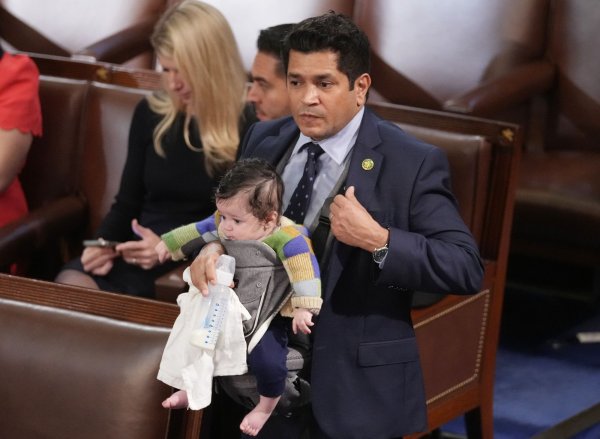
Gomez is married to Mary Hodge and together they have one son. In January 2023, Gomez and his son made headlines as the new father brought his infant son to the House, wearing him on the chamber floor in a baby carrier.

Rep. Jimmy Gomez, D-CA, carries his infant son Hodge on the chamber floor of the House at the U.S. Capitol in Washington, D.C., on Thursday, January 5, 2023. File Photo by Pat Benic/UPI
Following the June CNN report, Gomez released a statement acknowledging that he made mistakes in his marriage but that he violated no House ethics rules, while stating he would cooperate with its investigation.
Gomez on Monday issued a very similar statement to Courthouse News in response to the committee’s announcement, stating, “Although my actions were consensual in nature and haven’t violated the law or House Ethics rules, that doesn’t diminish the impact that these mistakes have made on those I care about most.”
“I have and continue to sincerely apologize to my family, friends and the people that II have the privilege to serve,” he said.
“I am deeply sorry to my wife for the pain and embarrassment that I have brought into our lives.”
The investigation into Gomez is the latest probe involving House members of both parties that the ethics panel has launched this summer.
Earlier this month, the panel made public an investigation into allegations of domestic violence and illegal drug use by Rep. Max Miller, R-Ohio. It also completed its investigation of Rep. Chuck Edwards, R-N.C., finding substantial reason to believe he violated House rules concerning sexual harassment and creating a hostile workplace and recommended that he be censured. Edwards has since announced he is dropping his re-election campaign.
In April, both Swalwell, D-Calif., and Tony Gonzales, R-Texas, resigned amid House Ethics investigations into alleged sexual misconduct. The Swalwell probe included allegations involving an employee, while the Gonzales probe was looking into allegations involving a congressional employee and alleged special favors.

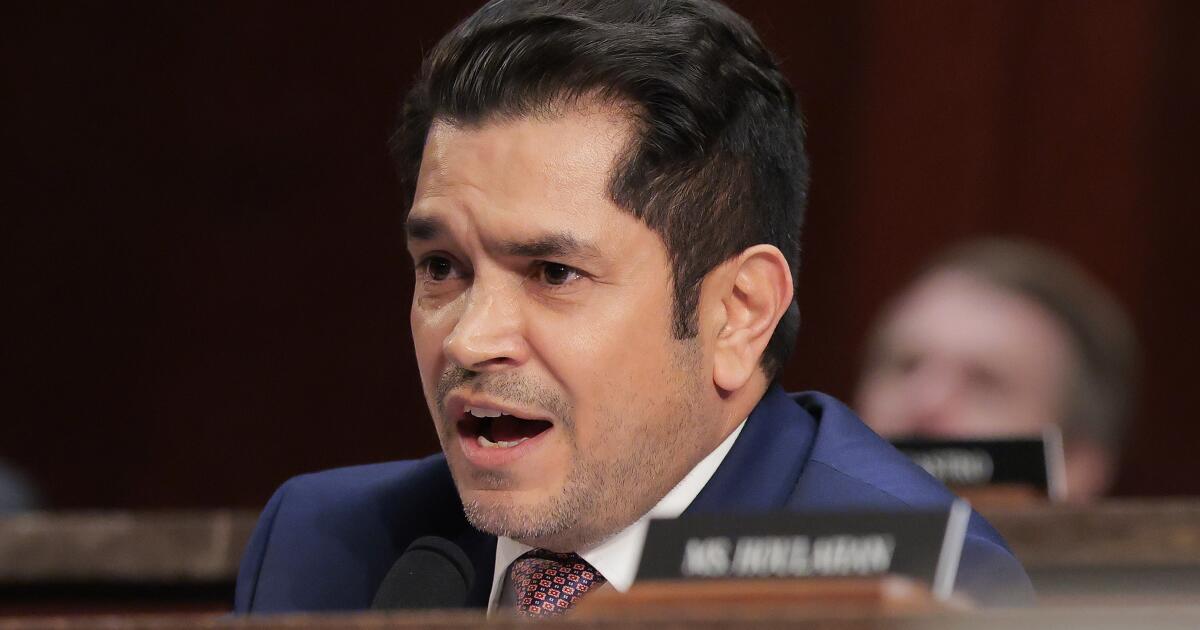
The House Ethics Committee announced Monday that it is investigating Democratic Rep. Jimmy Gomez of Los Angeles for alleged sexual misconduct.
The committee said it is investigating allegations that Gomez, 51, engaged in “inappropriate sexual contact with a House staffer,” according to a statement released by the committee’s chair, Rep. Michael Guest (R-Miss.), and ranking member Mark DeSaulnier (D-Concord).
The New York Post reported in April that Gomez, a married five-term congressman, was spotted in 2023 kissing a much younger staffer from another office. CNN reported that the House Ethics Committee later discovered other allegations of sexual misconduct by Gomez.
Gomez acknowledged in a statement Monday that he made “personal mistakes outside my marriage,” but said that his “actions were consensual in nature and haven’t violated the law or House Ethics rules.”
Guest and DeSaulnier said in their statement that the panel’s public acknowledgment of the investigation “does not itself indicate that any violation has occurred.”
Gomez said he is “confident that a full and impartial review of the facts will bear that out” and that he is “ready to cooperate with the Ethics Committee inquiry and provide it with whatever information it might need.”
The committee can take a wide range of actions if it substantiates the allegations in an investigation, including recommending that a member be reprimanded, censured or removed, or referring the conduct to the U.S. Department of Justice for criminal investigation.
Gomez represents California’s 34th Congressional District, stretching from Koreatown to Eagle Rock. He faces an election challenge in November from Democrat Angela Gonzales-Torres, who has the backing of the progressive Justice Democrats.
Gomez received 46% of the vote in the June primary, while Gonzales-Torres got 30%.
Gonzales-Torres has been particularly critical of Gomez because of his past support from the American Israel Public Affairs Committee, or AIPAC.
Gonzales-Torres blasted Gomez in a statement to The Times after news of the investigation.
“At a time when working families are struggling the most, we need to get creeps out of office,” she said. “We need representatives who will actually focus on fighting for policies like Medicare for All — not people like Rep. Jimmy Gomez and Donald Trump, who are mired in scandal and investigation.”
Gomez was friends with former California Rep. Eric Swalwell (D-Dublin), who resigned from Congress earlier this year and suspended his campaign for California gubernatorial campaign after being accused of sexual assault by multiple women. Gomez had been a co-chair of Swalwell’s campaign.
The 2023 incident reportedly occurred at a party hosted by Swalwell.
Gomez is married to Mary Hodge, a onetime top aide to former Los Angeles Mayor Eric Garcetti. The couple have a son whom Gomez wore in a baby carrier during the lengthy House speaker election in 2023. That same year, Gomez founded the Congressional Dads Caucus, which has advocated for expanded child tax credits and other parent-friendly legislation.
Gomez apologized to Hodge in his statement.
“I am deeply sorry to my wife for the pain and embarrassment that I have brought into our lives,” he said. “Her sacrifices and support are central to my ability to serve, and I can only feel gratitude for her grace and strength.”