Glasgow

Commonwealth Games 2026: Daily schedule for Glasgow 2026

Day nine highlights:

A huge 44 gold medals to be won across two sessions of athletics, boxing, track cycling and judo.

All 14 of the men’s and women’s boxing finals take place at the SEC Centre – with seven English fighters seeking gold medals.

The men’s mile is the highlight of the athletics schedule, with Scotland’s world record holder Josh Kerr favourite to take the gold

Plus, 2018 champions England face New Zealand in the netball semi-finals.

Schedule (all times BST and subject to change):

08:30-14:00 – bowls and Para-bowls

09:00-11:00 – netball – England v New Zealand semi-final

10:00-13:30 – track cycling and Para-track cycling

10:00-14:00 – athletics and Para-athletics – eight gold medals

11:00-14:00 – judo – last 16, quarter-finals and semi-finals

11:00-14:30 – boxing – seven gold medals

13:00-15:00 – netball – Australia v Jamaica semi-final

15:00-19:15 – track cycling and Para-track cycling – six gold medals including men’s sprint final

15:00-20:45 – bowls and Para-bowls – semi-finals

16:00-18:45 – judo – five gold and bronze medal contests

16:30-22:00 – boxing – seven gold medals

18:30-22:00 – athletics and Para-athletics – 11 gold medals including 4x100m relay finals from 20:15, men’s 800m final at 20:45, men’s mile at 20:55, mixed 4x400m relay final at 21:20 and the women’s mile at 21:45
Source link

Commonwealth Games 2026: Georgia Hunter Bell eyes golden sweep after Glasgow win

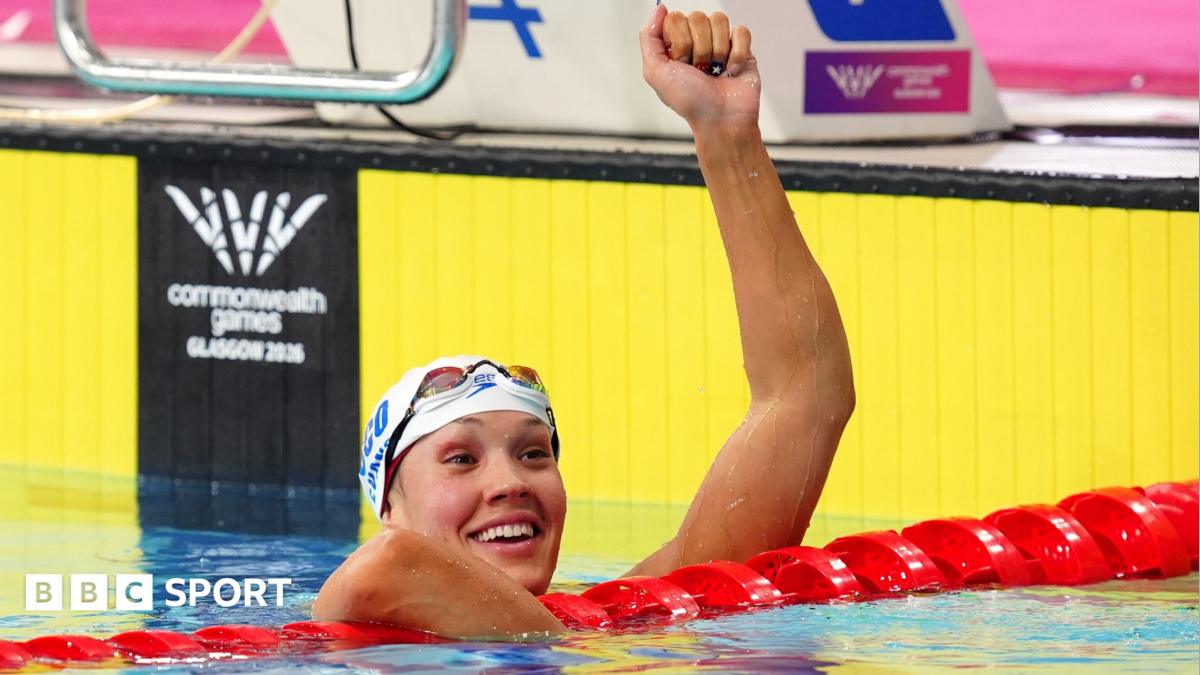
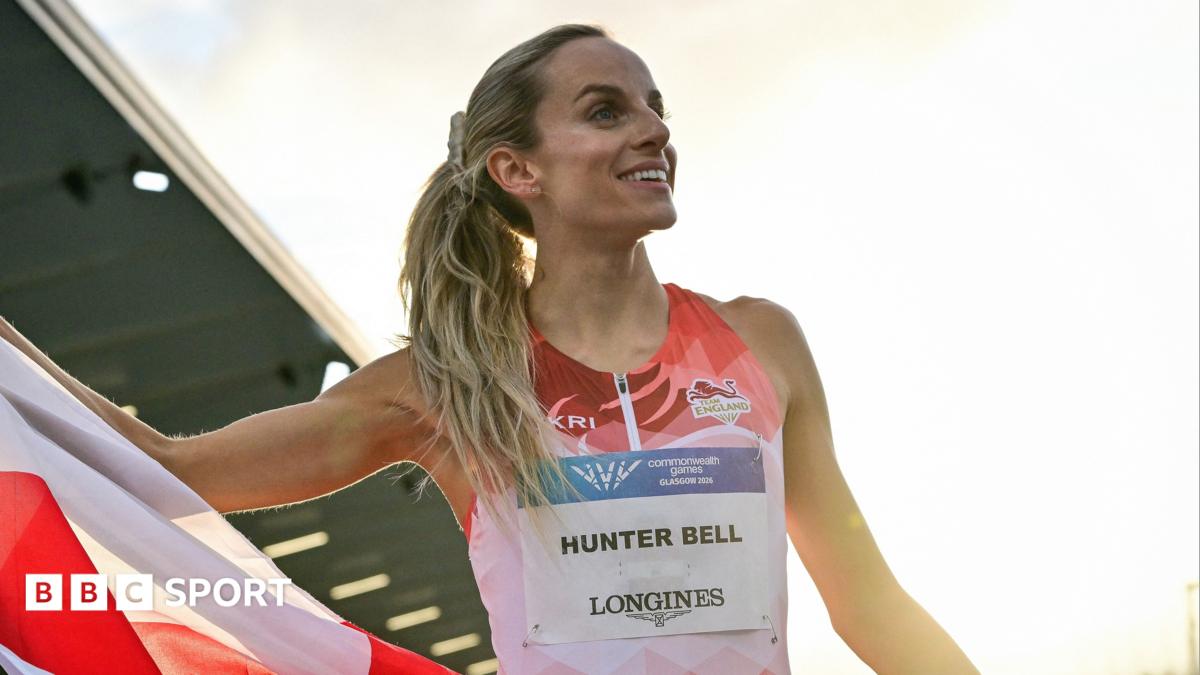
Georgia Hunter Bell is eyeing an ambitious sweep of gold medals in 2026 after winning the 800m Commonwealth Games title in Glasgow.

England’s Hunter Bell dominated the field to add Commonwealth gold to the 1500m world indoor title she won earlier this year in Poland.

The 32-year-old, a training partner of 800m Olympic champion Keely Hodgkinson, will also race at next month’s European Championships and the inaugural Ultimate Championships in September.

“There are four opportunities to win gold this year,” Hunter Bell told BBC Sport.

“I am two golds down and two more to go.”

Hunter Bell is blossoming later in her career.

Having taken five years out from the sport before returning during the Covid-19 pandemic, she took 1500m bronze at the Paris Olympics before pipping Hodgkinson to silver at last year’s World Championships in the 800m.

This, though, is her first outdoor title – in the event Hodgkinson is Olympic champion.

“Every medal is a landmark moment but my first outdoor gold is huge,” she said.

Hunter Bell and Kenya’s world champion Lilian Odira were the favourites for this title after Hodgkinson opted not to compete. The final was barely a contest with Hunter Bell setting the pace and then kicking on with 200m to go to win by more than a second.

Hodgkinson has instead taken time off before the European Championships in Birmingham, which start on 10 August.

Hunter Bell is only running in the 1500m in that event, denying the chance to see an intriguing race between the pair, but took her opportunity in her friend and training partner’s absence.

Though she said the win validates her decision to come to Glasgow, she defended the decision of others to withdraw.

Source link

Commonwealth Games 2026: Milestone moment for Kate O’Connor with Glasgow gold

Given that impressive 2025 she had, the pressure was on O’Connor to at least win a medal in Glasgow and it only ramped up after Katerina Johnson-Thompson, who had won gold ahead of her in 2022, pulled out.

The Englishwoman’s withdrawal paved the way for a good shot at that coveted gold, but she still had to go out and deliver.

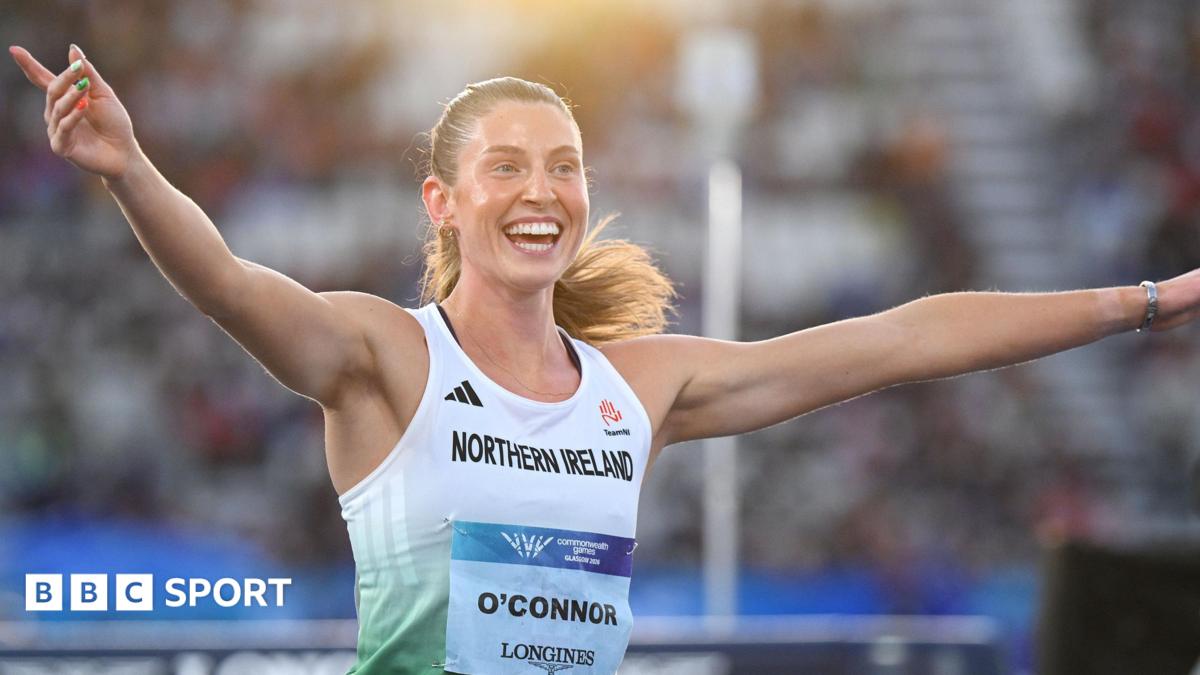
O’Connor ended on 6,569 points, 291 ahead of her nearest challenger, England’s Jade O’Dowda, but it wasn’t all straightforward.

Resilience is a key trait for any sportsperson, but particularly a heptathlete.

Fortunes can fluctuate across the seven events so it is needed in ample supply to come out on top at the end of two days of competition.

It was particularly pertinent for O’Connor in a rain-soaked second session of the event on Tuesday evening.

After a good start in the morning, that brought a third-place finish in the 100m hurdles and a season’s best 1.82m in the high jump, O’Connor struggled in the shot put and dipped well below her high standards by throwing just 12.85m as the torrential rain hammered down.

She said trying to grip the shot put in that rain was akin to trying to lift a bar of soap and that she was “gutted” as she “made it a lot easier for the rest of them to beat me”.

Her resilience was shown in abundance in the 200m that followed as she defied the elements to easily win her heat in a time of 24.14.

The Newry-born athlete added she had to “work really hard” on Wednesday and that she did, finishing with a flourish.

First came a big leap of 6.37m in the long jump, then another season’s best, this time in the javelin, of 52.85m that far exceeded those around her.

It will be particularly satisfying as that was an event she had worked hard at improving heading into 2026.

All that was left was to hold her nerve in the 800m and she did that and more, cruising to victory in a time of 2:10.46 just as the sun broke through for the celebrations at Scotstoun.

“I came here expecting a lot from myself and I really wanted to score like 6,600 or 6,700 and open up my season because that’s the shape I felt I was in,” she added.

“After day one I had to raincheck myself a bit, it’s not always about getting huge big scores but competing and getting the best out of yourself with the elements and challenges.

“I tried to navigate it as best as I could. The shot put didn’t go to plan, it needs work in those conditions, but I’m happy overall with how I did.

“There’s a lot of positives to take from it. I’ve got a gold medal round my neck so I can’t say much more.”

Source link

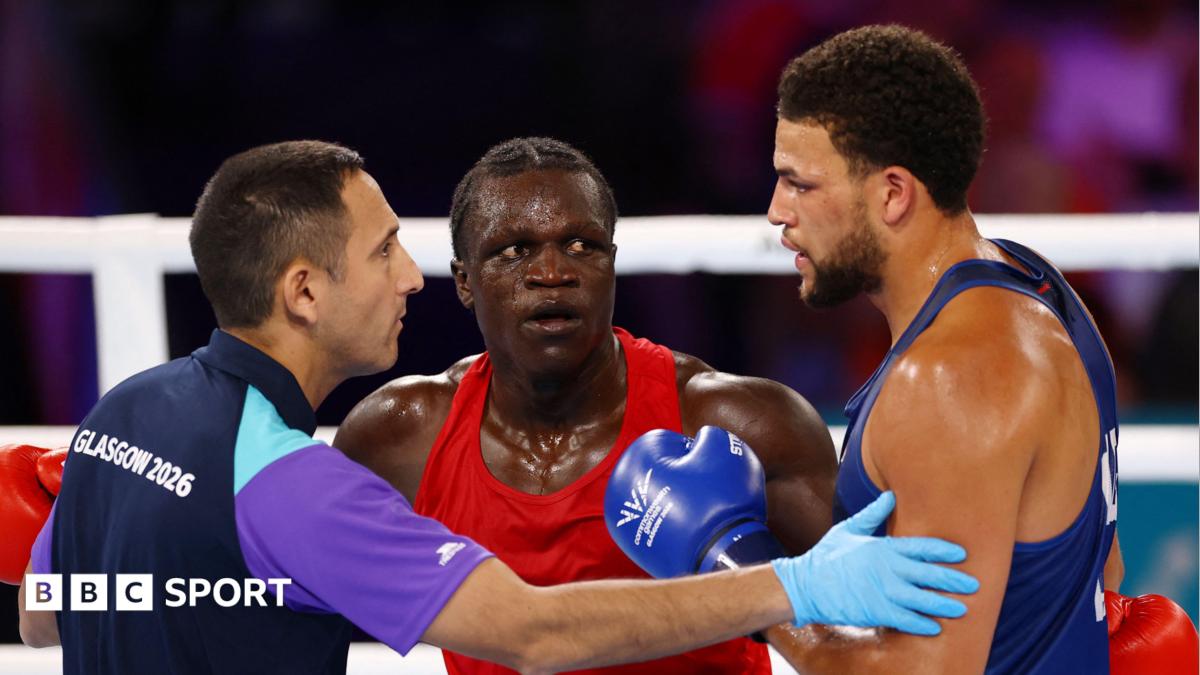
Commonwealth Games 2026: Aziz Abdul, grandson of Idi Amin, disqualified for headbutt in Glasgow

Before the super-heavyweight bout Abdul told the BBC he wanted to become the new ‘King of Scotland’ – in reference to Amin declaring himself that name in 1976.

After taking power in a coup in 1971, Amin ran a brutal regime during which an estimated half a million people were killed. He was also known as the Butcher of Uganda.

Abdul, who never met his grandfather, was chasing Uganda’s first Commonwealth boxing medal since Auckland in 1990 – something which would have been guaranteed had he beaten Thomas.

Instead, he was given warnings in the previous two rounds and was trailing on all of the judges’ scorecards.

“All I can say about this is the decision is not right, I am not happy,” he said.

“He elbowed me. He caught me with the elbow.

“It [the head movement] was not intentional. I was trying to come back.

“How can I headbutt someone? I would not.

“He was the person they wanted to win. He was the winner before.

“I knew if I did not get knockout I could not win the fight.”

BBC Sport has contacted Commonwealth Games organisers and World Boxing for a response to Abdul’s comments.

Thomas, who is now guaranteed at least a bronze medal, said it was “not the way” he wanted to win.

“I can’t change what happened today but I can control how I box on Friday,” he said.

Amin, himself a boxer, harboured a fascination with Scotland after serving in the King’s African Rifles in his 20s.

At the height of the regime, he was fond of wearing a kilt and playing the bagpipes – and even declared himself “King of Scotland” in 1976.

Some years later, those predilections even spawned an Oscar-winning film, The Last King of Scotland, starring Forest Whitaker and James McAvoy.

In a previous interview, Abdul said he was “inspired” by Amin, although it was not entirely clear whether he was talking about his boxing feats or not.

Speaking to the BBC, he refused to answer when asked if he was proud to be the dictator’s grandson, but he did address the question of how he feels when he is linked to someone with such a sinister reputation.

Source link

Commonwealth Games 2026: Soppy socks & a slathering of deep heat – rain causes chaos in Glasgow

Some athletes struggled in the conditions.

England’s Morgan Lake did not clear the bar with any of her three efforts in the high jump.

Similarly, Scotland’s Steven Stone had attempts with his glasses on his face and the top of his head in the men’s T20 long jump but did not register a clean effort.

Northern Ireland’s Kate O’Connor said she was “gutted” with her throw of 12.85m in the heptathlon shot put.

“It just kept slipping out of my hands,” she said.

“When your chalk gets wet, it’s like you might as well have dish soap on your hands and I just probably spent too much time and effort trying to stay dry rather than doing the cues that I work on in training.

“I can’t blame anybody else apart from myself for not executing.”

But there were also a number of impressive performances given the conditions.

O’Connor responded by running a dominant 24.14 seconds in the 200m to reclaim top spot of the heptathlon competition. England’s Jade O’Dowda was only eighth quickest and slipped back to second, 49 points in arrears.

In the men’s 100m, Eseme’s winning time of 9.83 was a Commonwealth Games record, the third-fastest time this year and moved him third on the all-time list of African sprinters.

The hammer throw and the high jump were briefly paused but when the former did resume Canada’s Camryn Rogers produced another Games record – 74.91m.

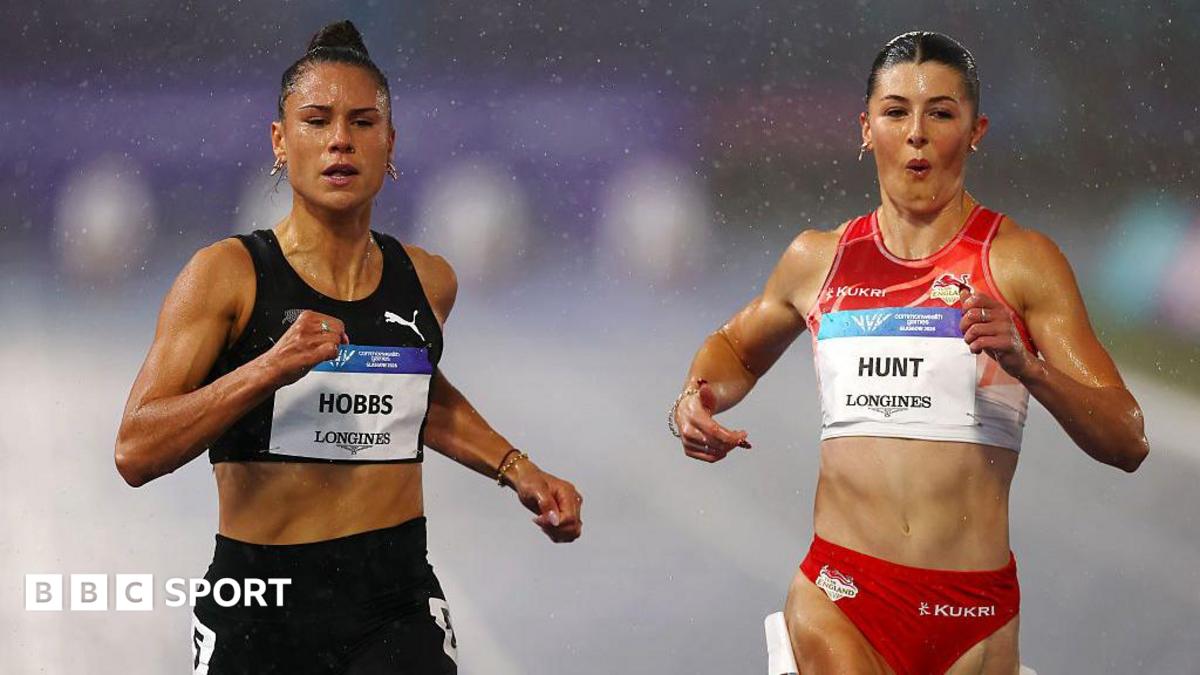
Even Hunt, who was slow out of the blocks and off the pace for the first 60m, finished 0.01secs outside her lifetime best of 10.97 in the women’s 100m.

“I am just proud of myself for gritting it out and trusting my long legs,” she said.

“Ultimately, we all have to race in the same conditions. We are all on the start line together freezing.

“You just have to get out there and get it done.”

A smattering of hardy locals even stayed until the final anthem was sung as the clocked neared 11pm.

It was a night few will forget.

Source link

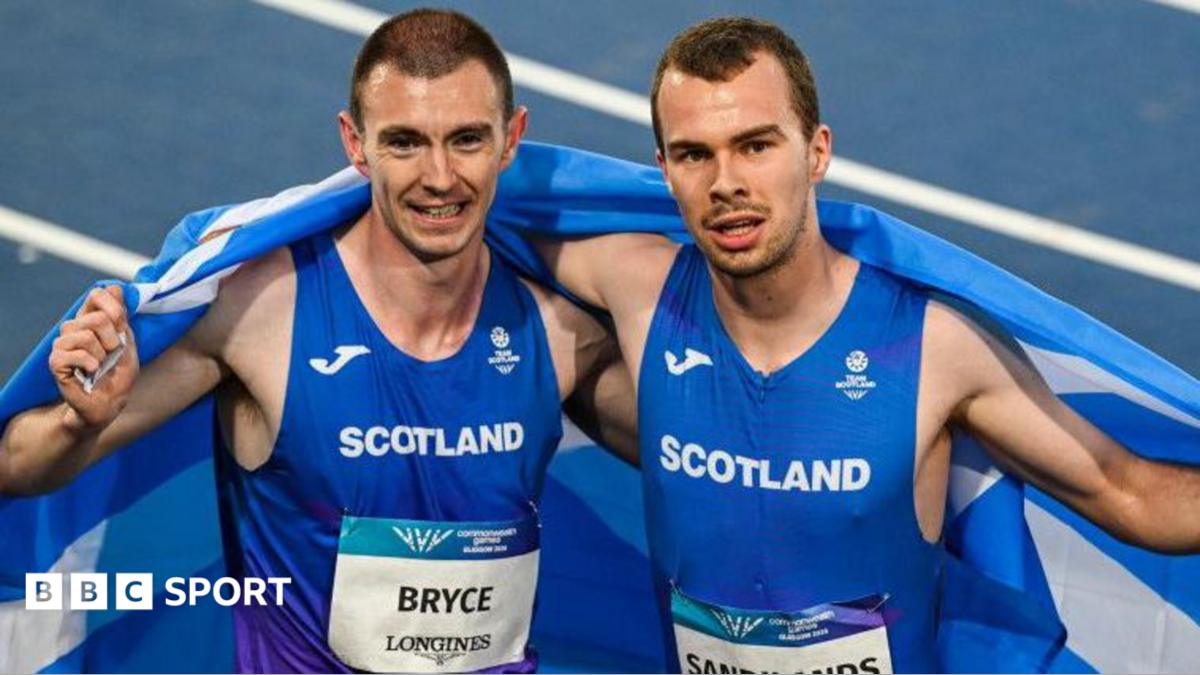
Commonwealth Games: Glasgow roars for new Scottish heroes as Sandilands & Bryce claim glory

Megan Keith was the sole Scottish representative in the women’s 10,000m after McColgan dropped out.

Despite a swell of cheers from the crowd at every pass, the Inverness runner was unable to replicate the iconic 2022 performance of her compatriot, finishing ninth in a time of 32:22.11.

Canada’s formidable Olympic hammer champion Ethan Katzberg drew gasps of awe from the Glasgow crowd with his herculean throw of 80.97m, which set a Commonwealth record.

But the biggest cheers in the hammer were reserved for Scotland’s Chris Bennett, competing in his fourth and final Games.

He finished fifth with his longest throw of 69.48m, clearly emotional as he wrapped up a 24-year career.

Alexander Thomson – who trains just down the road at Victoria Park and had fought back from knee surgery – finished ninth in the T38 100m final.

Jemma Reekie comfortably booked her place in the semi-finals of the 800m, finishing second in her heat with a time of 2:03.09 behind England’s world indoor 1,500m champion Georgia Hunter Bell.

Erin Wallace also booked her place in the semi-finals with a time of 2:03.15, but Mena Scatchard just missed out on qualification by 0.06 seconds after finishing fourth in her heat.

In the early sessions, Stephen Mackenzie got Scotland off to a strong start as he progressed to the men’s long jump final on Wednesday.

A second-round leap of 7.75m was enough to see him through in eighth place.

Meanwhile, hammer thrower Angela McAuslan-Kelly progressed to the women’s final, with a throw of 60.59m in the first round securing her place.

Source link

Glasgow 2026 Commonwealth Games: Keanna MacInnes overcomes nerves to win swimming silver

“I was really struggling to get food down, and was stressing about things like getting a medley relay slot instead of thinking about getting a medal tonight.

“My coach said to me I had nothing to lose but to just relax and enjoy it.”

Alongside fellow Scots Ciara Schlosshan and Lucy Grieve – who finished fifth and sixth respectively – MacInnes did just that.

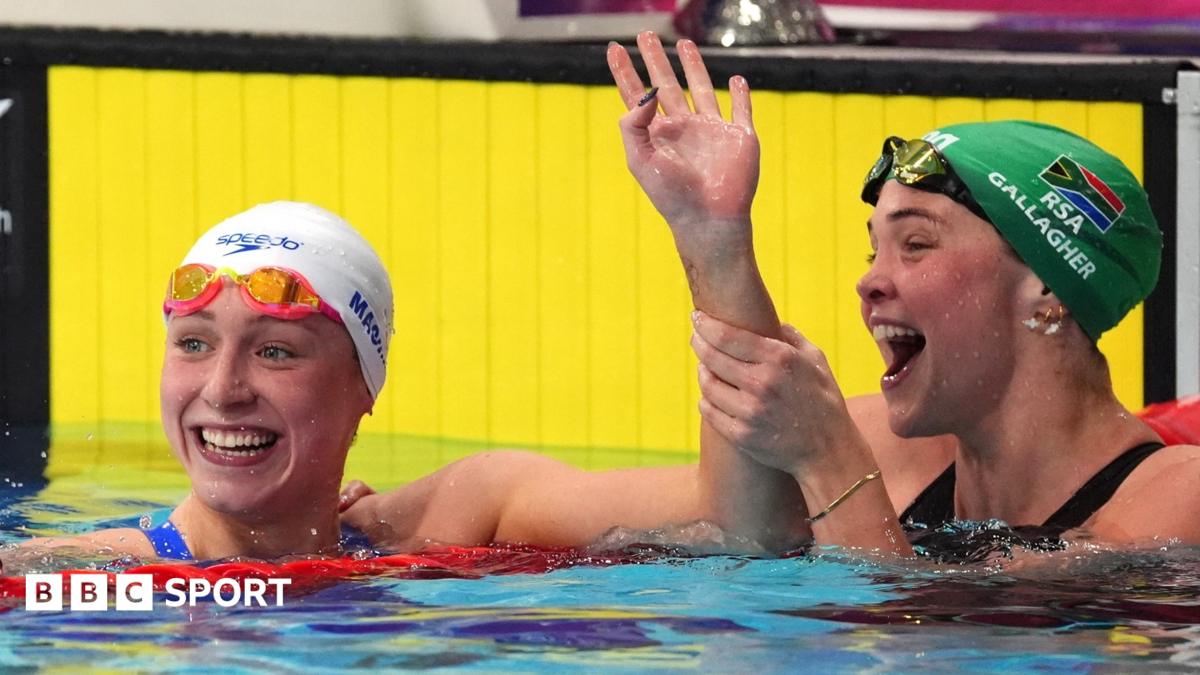
Third at the turn, she overhauled South Africa’s Erin Gallagher as the noise grew louder to earn a spot on the second step of the podium. Australia’s Alex Perkins took gold.

“Oh, God, I’m just starting to get my breath back,” MacInnes said. “That was so incredible.

“I’m so grateful to the crowd for making it such a special memory for me. I’m so grateful to my parents and boyfriend who are up in the crowd and I’m so glad I was able to do it in front of them.

“A silver is crazy to me. Maybe I was thinking ‘bronze could be really cool’ so this is just so amazing.”

Duncan Scott knows all about Games medals, given he has 14 of them in the house.

Gold in Friday’s 200m individual medley was a fine start to proceedings, but a couple of relay near-misses over the weekend were followed by another fourth place in the 200m butterfly on Monday.

Source link

Commonwealth Games: No Glasgow 2026 swimming medals for Scotland on night two in the pool

Shanahan missed the chance for a second chunk of metal in the last race of the night as she competed in the 4x100m mixed relay team who finished fifth, though they did set a new Scottish record.

Part of the team was, surprisingly, poster boy Scott.

He received a hero’s welcome as he returned, racing second after Evan Jones and before Evie Davies, but ultimately the field was too strong.

Earlier in the evening, Sean McCann finished eighth in the men’s 400m freestyle final, Lucy Grieve was seventh in the women’s 50m butterfly final and Matthew Ward broke the men’s 50m backstroke Scottish record on his way to seventh in that final.

Source link

Commonwealth Games 2026: Team Wales win two more swimming medals on dramatic night in Glasgow

With four fourth places in Birmingham in 2022, Richards was looking for his first Commonwealth medal to complete the set of Olympic, world and European podium positions.

Wales opted for an entirely different quartet in the pool in the final after Kieran Bird, Harry Milne, Medi Harris and Meghan Higgs had qualified fourth fastest in the heats.

Sutton and Taylor had qualified for their respective individual semi-finals in the 100m backstroke and 100m breaststroke, but both pulled out with a full focus on the relay.

The policy paid off and Taylor, 17, brought Wales back from fifth to third with a brilliant final leg.

Earlier, Rose Williams finished fourth in the women’s S14 200m freestyle final.

The S14 category covers swimmers who have an intellectual impairment, which typically leads to the athletes having difficulties with regard to pattern recognition, sequencing, and memory, or having a slower reaction time, which impact on sport performance in general.

Tyler Melbourne-Smith finished sixth in the 400m freestyle final, while Lewis Fraser qualified for the 100m butterfly final to be staged on Sunday evening.

Source link

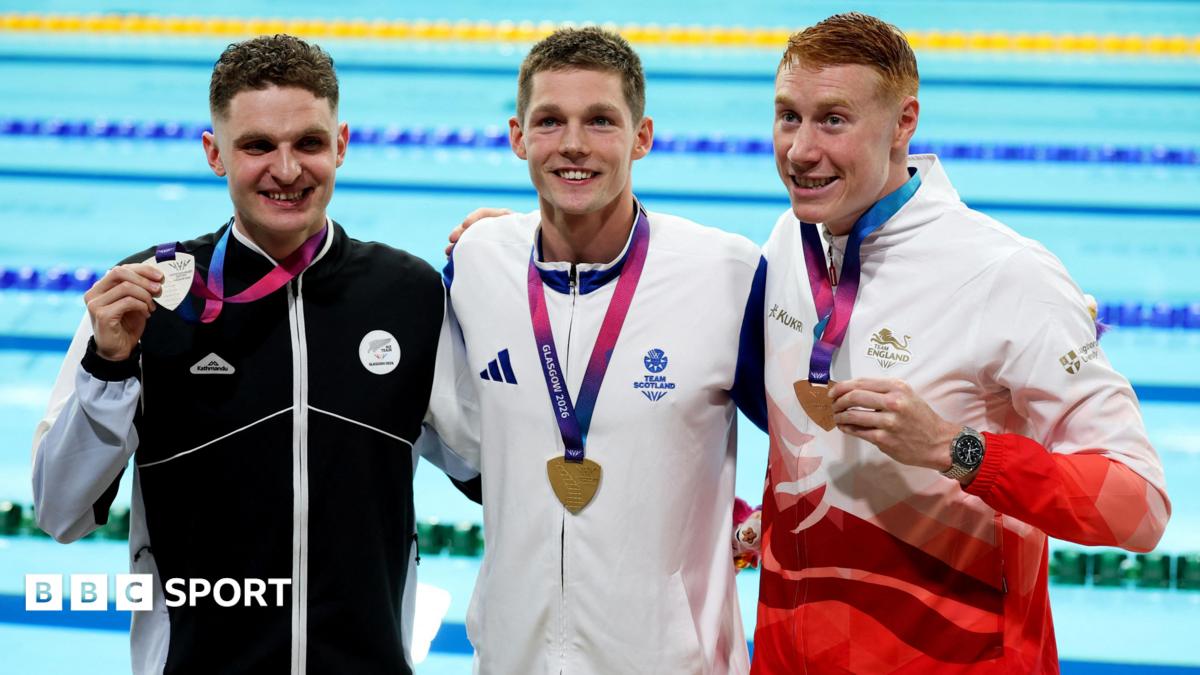
Glasgow 2026 Commonwealth Games: Duncan Scott overcomes pressure and Tom Dean to give Scotland golden start

Scott was not being caught, though. Not tonight. Not here. Not with his Scotland kit on and his team looking to him to spark their Games.

A Games which he has backed vocally since Glasgow salvaged it from the wreckage of Victoria’s aborted bid.

Almost exactly 12 years after he won his first Commonwealth medal in this very building, he was taking his 14th in his fourth Games. And it was going to be gold.

“I don’t usually feel the expectation, but that one I probably did,” he told BBC Sport Scotland. “Simply because it’s day one and I love representing Scotland and you want to try and get the whole team off to a good start.

“I think there was a bigger picture of trying to get good momentum for the crowd involvement for the rest of the week, and the team as well. So I felt that expectation, but it’s nothing I couldn’t deal with.”

You got the sense there was little that could have discomfited the Alloa native – a momentary loss of his accreditation apart – and even a post-race visit to the drugs testers wasn’t going to trouble him.

Scott’s got the weekend off now – he’s an old boy among the swimming set, after all – but he’s more than done his bit to set Glasgow 2026 off on the right note.

Source link

Commonwealth Games: Scotland kickstart Glasgow 2026 with three medals in 45 minutes

Scotland claimed three medals in a magnificent 45 minutes in the pool to kick-start the hosts’ Commonwealth Games in fine style in Glasgow – and added a second gold of the day an hour later to almost take the lid off Tollcross in the city’s east end.

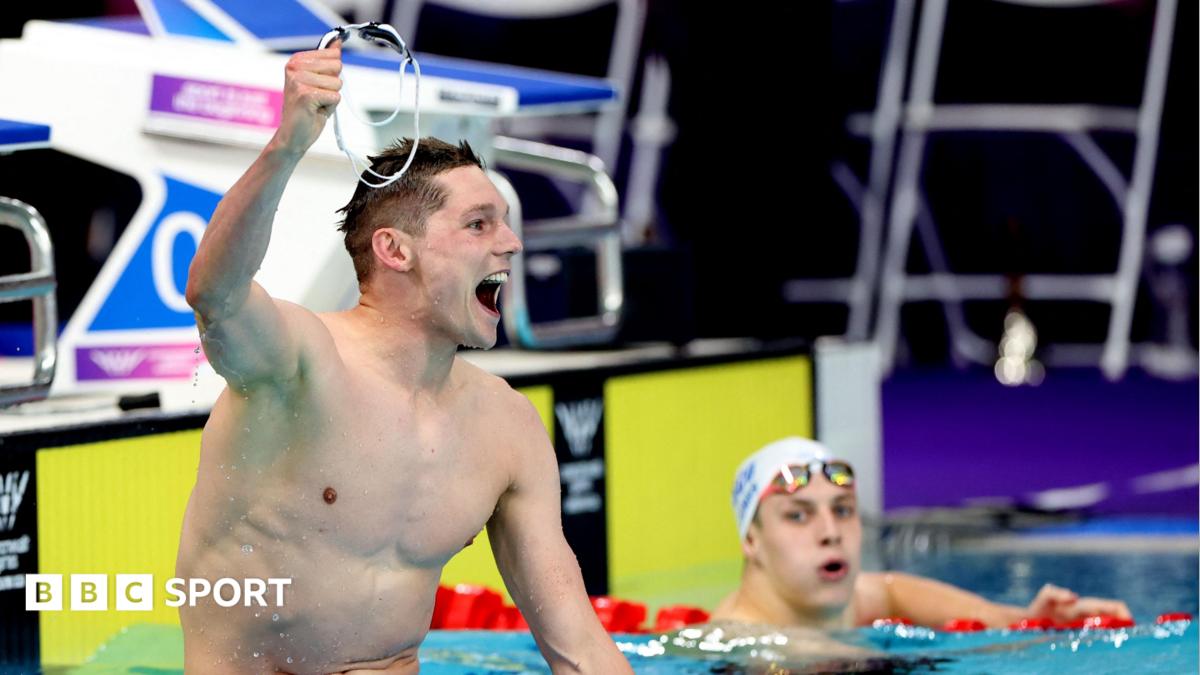
Poster boy Duncan Scott started the rush, defending his 200m individual medley gold from Birmingham four years ago by slicing a chunk off his own Games record.

Then Para-swimmer Stephen Clegg added silver in 100m freestyle S13 – with brother James fourth – after battling back from an injury-ravaged year.

And Katie Shanahan upgraded her 2022 Games bronze to silver in the 200m backstroke.

The frenzied scenes around this clammy building eventually abated, only for Faye Rogers to spark more bedlam with a rampant gold in the 200m individual medley SM10.

The drama all unfolded at the same Tollcross pool where 29-year-old Scott won the first of his now 14 Games medals in 2014.

Scotland’s most decorated Commonwealth Games athlete was a wee boy then – just 17 – but is a big man now and was under pressure to deliver a first rendition of Flower of Scotland at this staging.

And he delivered sensationally, streaking away from the field in the backstroke and breaststroke legs before closing it out in the freestyle.

Watching from the call room, Clegg could not fail to be roused.

There were times over the past year where the 30-year-old thought he might not be at these Games, and that his swimming career was over.

But he made it to Glasgow and managed to add another silver to the won he claimed in the 50m event four years ago.

Shanahan came home from that Birmingham Games with two surprise bronze medals so silver was an upgrade for another athlete who has come through tough times in recent months.

Her Scottish team-mate Holly McGill just missed out on the medals in fourth.

That success would have been sufficent to sate the home crowd, but Para-athlete Rogers delivered one of the most dominant performances of the night to clinch a second gold for the hosts and spark a second airing of the anthem.

Source link

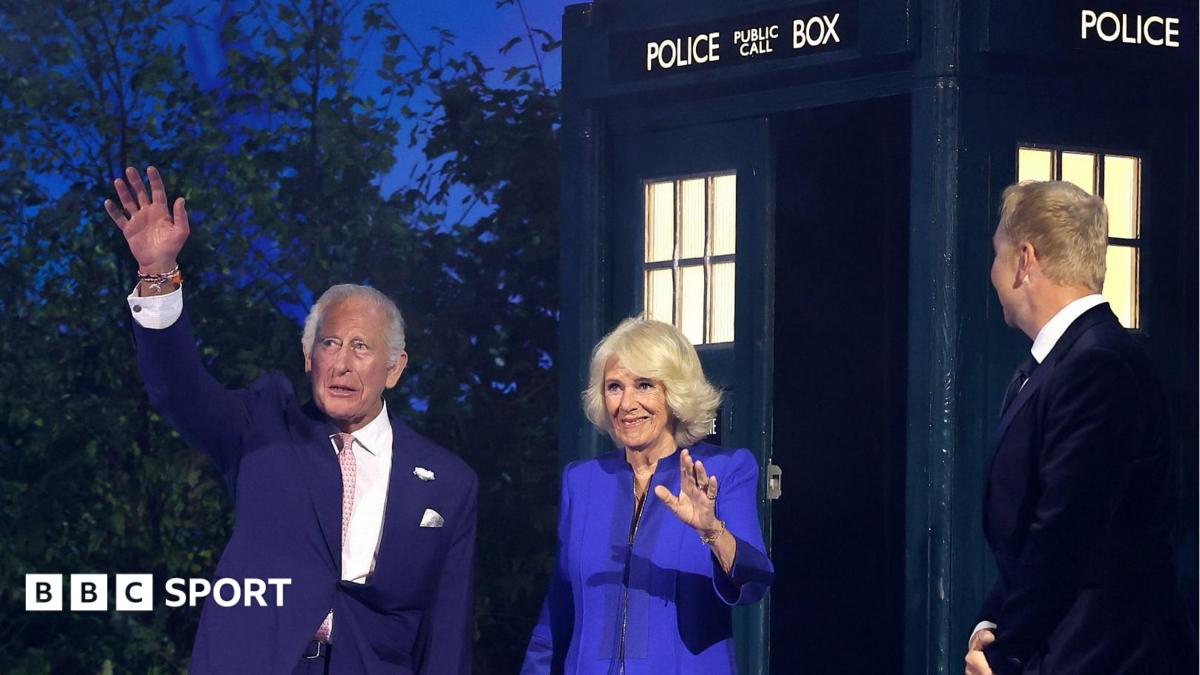
Commonwealth Games: King Charles III emerges from the Tardis as Glasgow 2026 Games begin

One of the louder cheers came for the Falklands Islands – in the news recently following Argentina’s victory over England in the football World Cup semi-finals – and another followed when the Samoa team emerged and performed a haka in front of the dignitaries in the Royal Box.

But nothing compared to the noise which greeted the arrival of the Scotland team, who entered the arena last in their white shirts and kilts and lifted many in the capacity crowd from their seats.

A large Loch Ness Monster representation then emerged, before, backed by bagpipers and drummers, a rousing rendition of Flower of Scotland followed.

The next section of the evening featured theatrical performances – a show billed as “a love letter to Glasgow and the Commonwealth”.

It began with a performance by Scottish folk and country singer Nathan Evans and a dance under a replica of Glasgow Central Station’s iconic clock.

The saying “Meet me under the clock” is famous in these parts.

Singer Callum Beattie’s rendition of Baccara’s Yes Sir, I Can Boogie – the 1970s disco tune recently adopted as Scotland’s unofficial anthem – had the Scottish athletes dancing in their seats.

Held indoors in front of about 10,000 people, this was a more intimate ceremony than the last time Glasgow hosted the Commonwealth Games, when a 40,000-strong crowd witnessed the opening of the Games in 2014 at Celtic Park.

There was a point, after the Australian state of Victoria withdrew as hosts in 2023, when some thought these Games would not happen. Glasgow stepped in at short notice to ensure otherwise.

There are eight fewer sports involved compared to 2014, given the short build-up, and venues from 12 years ago have been repurposed.

But Commonwealth Sport president Donald Rukare, wearing a tartan kilt in the colours of his home country Uganda, said this edition has been made possible by the “extraordinary legacy of 2014 and by a city that once again welcomes us with warm hearts and open arms”.

Source link

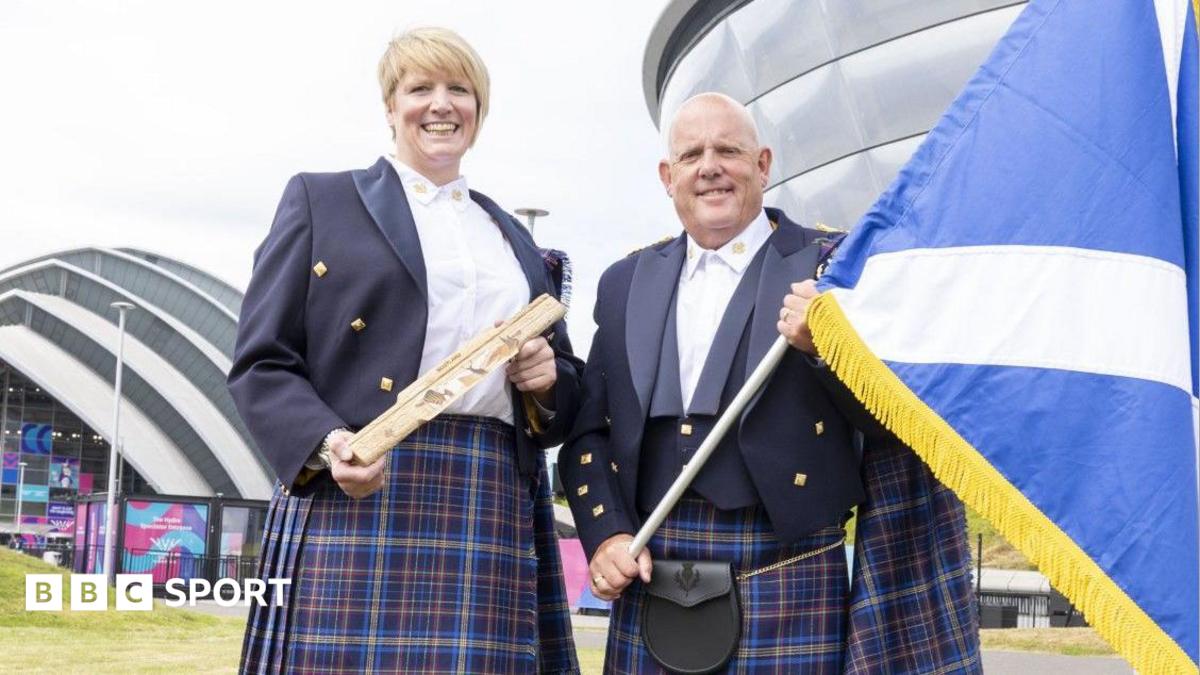
Glasgow 2026 Commonwealth Games: Alex Marshall and Sarah Adlington get Scotland flag honour

It just adds to what will be an especially special Games for Marshall, who is joined in the bowls team by his niece Beth Riva.

“It’s a bit nerve-wracking really,” 59-year-old Marshall told BBC Scotland. “It’s not very often I get a bit emotional, but I certainly had a tear in my eye when I came out the lift this morning and all the athletes were there. It’s just a huge honour.”

Resplendent in full kilt on a sweltering day, and proprietorially clutching the flagstick like a child would a favourite toy, the East Lothian bowler was in his element when talking about the news on Wednesday.

Marshall conceded he would have to let it go for the evening before having it returned before the big show.

But he might have to battle with Adlington for first shot of it when that time comes. “And I’d win that fight,” joked the 39-year-old heavyweight.

Adlington, who won judo gold in 2014 and 2022 and is looking to end her career by completing the treble, revealed the two of them have known the news for a few weeks but had been sworn to secrecy.

“That’s been really hard,” she told BBC Sport Scotland. “I was told I could tell my nearest and dearest but for everyone else it will be a massive surprise.

“I’m just so excited. I was so nervous when I woke up this morning, and I think I’ll be even more nervous tomorrow. I might not even sleep tonight but if it’s even half as good as it was in 2014, it will be amazing.”

Source link

Twice fire-ravaged Glasgow School of Art restoration may cost too much

Firefighters battle a fire blazing at the Mackintosh Building, housing the Glasgow School of Art, in Glasgow, Scotland, Britain, in 2018. The school announced Wednesday that the cost of rebuilding it to the architecht’s specifications would cost too much. File Photo by Stringer/EPA

July 22 (UPI) — The Glasgow School of Art Mackintosh building, damaged twice by fire, would cost too much for the school to fully rebuild on its own, the school’s board of governors said Wednesday.

Rebuilding the school in line with artist and architect Charles Rennie Mackintosh’s original design would cost about $355 million, the school said in a press release Wednesday.

That amount is “equivalent to five times the GSA’s annual turnover [revenue], an amount that is not affordable and which would compromise the financial sustainability of the institution.”

The Art Nouveau building, completed in 1909, was damaged by fire twice. Much of the building was destroyed in 2014 after a student’s art project was ignited by an overhead projector. In June 2018, when the rebuilding was nearly complete, another fire destroyed it. There was no cause found for the second fire, which ignited a dispute between the school and its insurance company that ended in arbitration that wrapped up this spring.

Neil Baxter, architectural historian and former lecturer in architectural history at the school, said the building is “of the greatest world importance,” and said, “The Scottish government should step up, and if it can’t, the British government should step up,” The New York Times reported.

The school released an 80-page analysis Wednesday that highlights the potential for the Mackintosh Building “to become an anchor project in a creative and cultural production innovation district, attracting investment to the city, driving the growth of its creative economy, and supporting new businesses and employment opportunities.”

Ann Priest, chair of the Glasgow School of Art’s board of governors, said early discussions with Scottish and British government officials ahead of the announcement “have been supportive and incredibly positive.”

Priest said the board believes the building should be a “heritage-led economic regeneration project, building on the existing creative and cultural production assets within this part of the city, to strengthen Glasgow’s creative eco-system and its position as one of the UK’s leading creative economies.

“The Mack will always have a special place at the heart of The Glasgow School of Art’s history, and we have further plans within the next phase of work to create museum standard interpretations of the building that will exist alongside its retained architectural elements and help tell the story of this remarkable place and the people who have worked and studied there for years to come,” Priest said.

Gordon Gibb, a former director of professional studies at the school’s architecture department, said that the school needs another organization to “take over” the restoration.

“This is a building that influenced world architecture and changed Victorian traditionalism into modernism,” Gibb told The Times. “We have detailed records of every part of it,” he added, “so it should be brought back.”

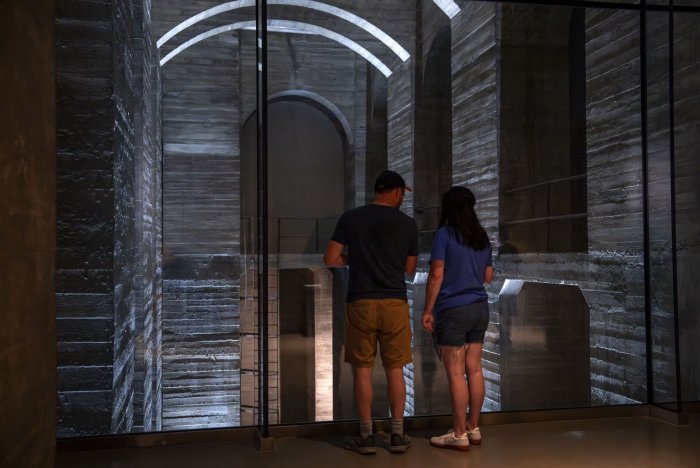
Visitors tour the newly remodeled undercroft beneath the Lincoln Memorial in Washington, D.C., on July 10, 2026. Photo by Bonnie Cash/UPI | License Photo

Source link

BBC Alba to screen Glasgow Commonwealth Games with nightly live coverage

The BBC Alba deal means there will still be some live coverage of the Commonwealth Games on free-to-air television in Scotland.

The commentary and presentation will, of course, be predominantly in Gaelic.

A similar deal is in place in Wales. This means there will be some live coverage on the Welsh language broadcaster S4C.

These deals happened because TV rights packages are available to cover many indigenous languages across Commonwealth countries – not just the main language.

The BBC was outbid for live English language rights in the UK by subscription service TNT. Channel 5 later secured a package of two hours of daily recorded highlights.

The Welsh and Gaelic deals ensure there will at least be some free-to-air live coverage.

BBC Alba and S4C are available to all viewers in Scotland and Wales respectively.

But the profile of the TV coverage will, inevitably, still be much lower to that afforded to previous Commonwealth Games in the UK.

The games in 1970, 1986, 2002, 2014 and 2022 got wall-to-wall coverage on BBC One.

The schedule on BBC One is currently dominated by the World Cup and Wimbledon. Major sporting events have the potential to bring large, diverse groups of people together to share memorable moments.

The deals covering BBC Alba and S4C are good news for these channels and inevitably some who do not speak Gaelic or Welsh will watch too.

But how will the scaled down Commonwealth Games fare without high profile live coverage on a major free-to-air channel?

Source link