Gibraltar

easyJet issues travel update for hotspot loved by 1.3million Brits after major rule change

The change has just come into place for the peninsula, and Brits flying to the area will need to make sure their travel documents meet the new requirements, or could find themselves stranded at the airport

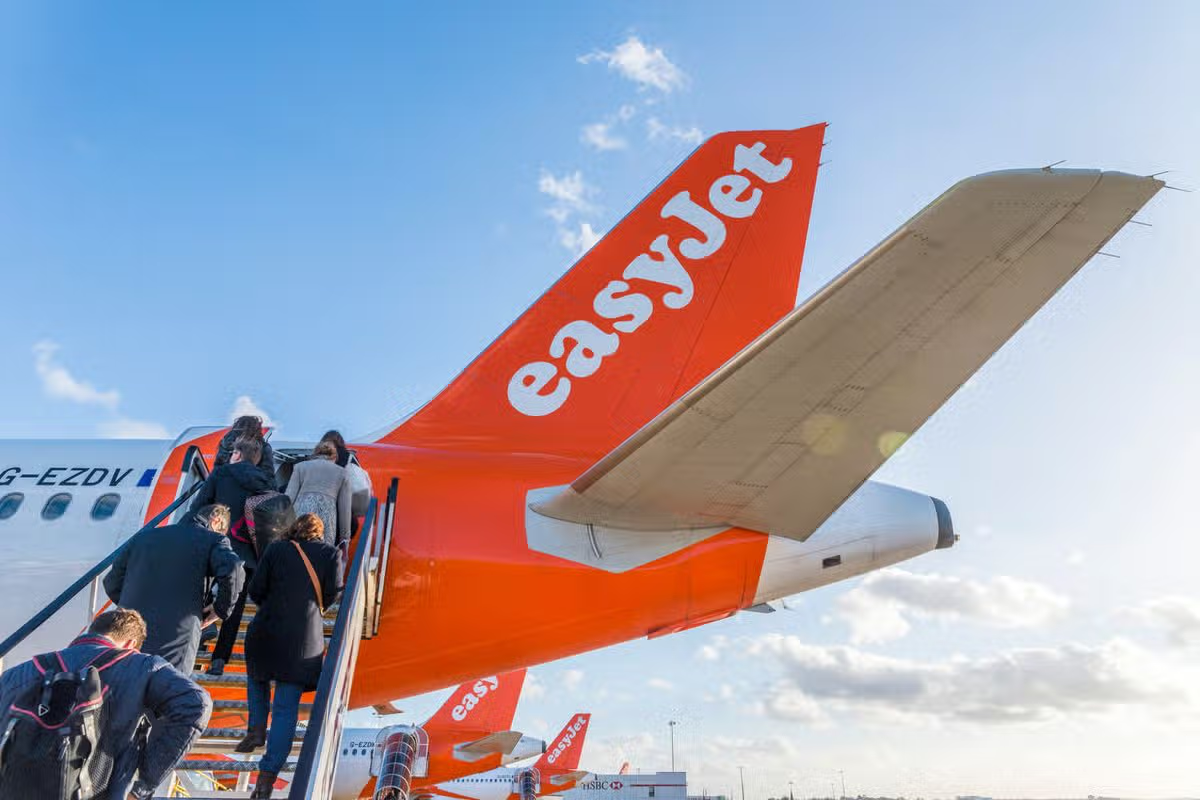
Budget airline easyJet has issued a warning to Brits flying on any of its four routes from the UK to a popular holiday hotspot visited by approximately 1.3million Brits every year, as new entry requirements came into force earlier this month.

In a statement, easyJet said: “From 15 July 2026, Gibraltar will align with Schengen entry requirements. If you’re travelling to Gibraltar, please check that your travel documents meet the new rules before you fly.”

The airline operates four routes from the UK to Gibraltar International Airport from Birmingham, Bristol, London-Gatwick, and Manchester. The only other airline that operates from the hub is British Airways, which has a London-Heathrow service.

The airline set out the key changes, saying: “UK visas and UK residence permits/share codes will no longer be accepted for entry to Gibraltar.” It also clarified: “Passports for travellers from non-Schengen countries (except Ireland and Cyprus) must have been issued within the last 10 years, and be valid for at least 3 months after the date you plan to leave Gibraltar.”

The requirements are now aligned with what Brits can expect at the other 29 countries in the Schengen area. This means they’ll need to go through registration under the Entry/Exit System (EES). EasyJet added: “Before travelling, please make sure you have the correct documents for your journey to avoid any issues at the airport, you can check the government website.”

While Gibraltar remains a a self-governing British Overseas Territory, as of July 15 a post-Brexit deal has allowed the border with Spain to be removed, getting rid of border controls and customs checks for those passing between Spain and Gibraltar.

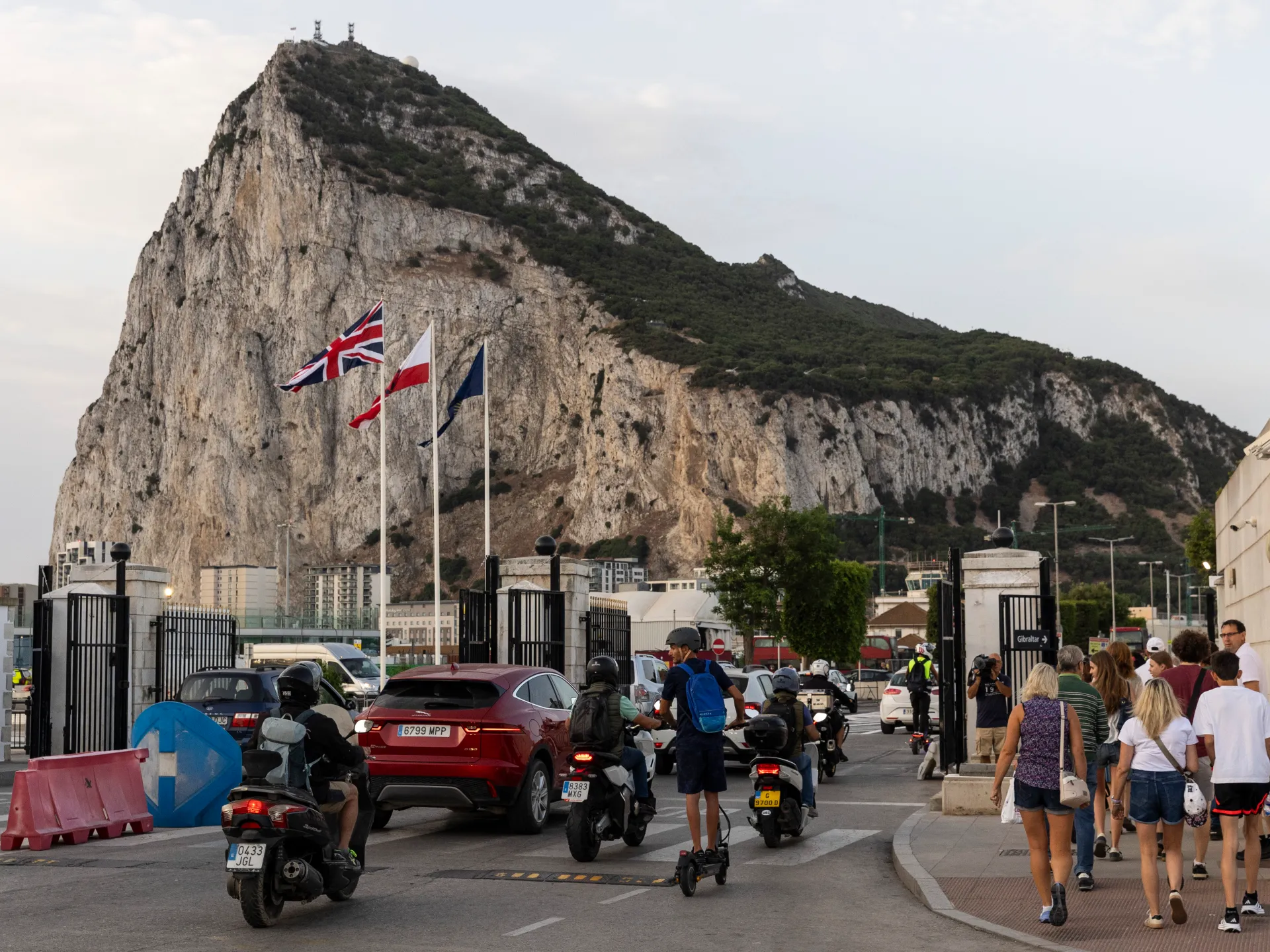
Historically, the border has caused hold-ups and long queues for locals as it has had to handle an average of 15,000 people passing through it each day for work, education, and social purposes.

But the change means that, while Gibraltar still has autonomy, it’s now a de facto part of the Schengen free-movement area, which is why Brits will notice a change when visiting the territory. The EES system will involve the same fingerprint and face scans as the EU requires at every airport.

The FCDO added: “On arrival at Joshua Hassan Gibraltar International Airport, you should expect two sets of checks which will satisfy entry into Gibraltar and the Schengen Area: Gibraltar entry immigration controls performed by the Gibraltar authorities and Schengen entry immigration controls performed by the Spanish authorities as the authorities of the neighbouring Schengen State

“This includes registration under the Entry/Exit System (EES) where it applies. The European Travel Information and Authorisation System (ETIAS) will also apply once it is operational. Once you have cleared these checks, you can move freely across the land border from Gibraltar into Spain and the wider Schengen Area.”

Have a story you want to share? Email us at webtravel@reachplc.com
Source link

Gibraltar opens border crossing with Spain after signing treaty

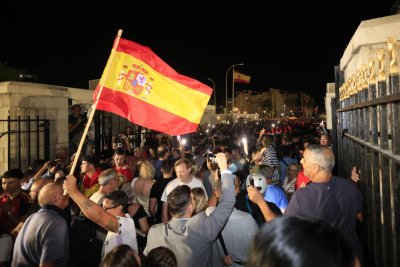
1 of 2 | Thousands of Spaniards and Gibraltarians celebrate shortly after midnight as the border fence between Gibraltar and Spain is dismantled in La Linea de la Concepcion, Spain, Wednesday. The dismantling follows five years of talks between the United Kingdom and the European Union and the signing of a treaty to open the border Tuesday. Photo by A. Carrasco Ragel/EPA

July 15 (UPI) — Spain and Gibraltar celebrated just after midnight Wednesday as border checkpoints and walls came down between the two nations after a treaty was signed in Brussels.

At midnight, the police stepped down from their border posts to open the territory, and thousands rushed across the border in both directions, celebrating the new crossing and Spain’s World Cup win against France in the semifinals, The Telegraph reported.

Spanish Prime Minister Pedro Sánchez visited the Spanish border town of La Línea de la Concepción on Wednesday to see the removal of the last section of a border fence. He said an “open wound” was finally closed, The Guardian reported.

“The Gibraltar fence — the last wall in continental Europe — has fallen so that we can take a step towards a new era of coexistence and shared prosperity,” Sánchez said. “This is a deal that has the wellbeing of the 300,000 Andalucíans in the Campo de Gibraltar at its heart and which opens a new phase in the relationship between Spain and the U.K.”

Gibraltar, a British overseas territory, has been British sovereign land since the Treaty of Utrecht in 1713. When Britain left the European Union in January 2020, travel between Spain and Gibraltar was made more complicated.

While Gibraltar has about 40,000 residents, about 15,000 Spaniards cross into it daily for work, causing long daily lines at the checkpoint where they were fingerprinted and had their passports scanned.

Now, British citizens flying or sailing into Gibraltar will have to be fingerprinted and have their passports checked as Spain takes over EU entrance controls, which is causing some consternation among conservative Brits.

Though Spain still wants full control of Gibraltar, this compromise allows for more cooperation between the two.

Gibraltarian Chief Minister Fabian Picardo said the treaty is a new beginning.

“The frontier that has so often divided and constrained our region will now become a place of cooperation and shared opportunity,” he said. “The daily lives of thousands of people will be made easier, our economy will be given greater certainty and Gibraltar’s future will rest on firm legal foundations.

“We have reached this moment without surrendering who we are, without compromising our British sovereignty and without weakening the constitutional protections that define Gibraltar,” Picardo added.

Not everyone was celebrating.

Iain Duncan Smith, former British conservative leader, expressed disappointment.

“This arrangement will in future years be used as a model for weak negotiation. It will be a significant step in the stripping out of hundreds of years of British sovereignty,” Smith said.

Nigel Farage, leader of the right-wing Reform UK, told The Telegraph, “This is a dreadful surrender and the opening of the border means that Gibraltar will never be the same.”

Picardo said the treaty was “among the most significant days in Gibraltar’s modern history.”

“After years of uncertainty, endurance and determined negotiation, we have secured an international treaty that protects Gibraltar, safeguards our sovereignty and opens the way to a more secure and prosperous future,” he said.

“The frontier that has so often divided and constrained our region will now become a place of cooperation and shared opportunity. The daily lives of thousands of people will be made easier, our economy will be given greater certainty and Gibraltar’s future will rest on firm legal foundations.”

Source link

New rules for people visiting Gibraltar from July 15

People have been told that the more intense checks have ‘an upside’ after arriving

Brits visiting Gibraltar now face new rules, including security screening and passport scrutiny, when landing in the British Overseas Territory. Travel journalist Simon Calder reported for The Telegraph that new rules came into force from today, July 15, as part of a post-Brexit deal.⁠

The UK-EU agreement to create an open land border between Gibraltar and Spain has been signed in Brussels – and was brought into effect from Wednesday. It will make Gibraltar effectively part of Europe’s passport-free Schengen Zone, with the removal of checkpoints and border fences.⁠

But the changes introduce tighter border controls at Gibraltar’s airport. On arrival at Joshua Hassan Gibraltar International Airport, Brits should expect two new sets of checks, which will satisfy entry into Gibraltar and the Schengen Area:

  • Gibraltar entry immigration controls – performed by the Gibraltar authorities
  • Schengen entry immigration controls – performed by the Spanish authorities

This includes registration under the Entry/Exit System (EES) where it applies. All of the updated entry requirements for tourists can be found on the GOV.UK website here.

The main page reads: “To enter Gibraltar, your [full UK] passport must have been issued within the previous 10 years and its validity must extend for at least three months after the day you intend to leave Gibraltar or the Schengen Area.”

If you are a British–Irish dual national and travel on your Irish passport, you will be treated as an EU citizen on entry to Gibraltar and the Schengen Area. You will not be subject to the 90-day limits, EES or ETIAS. If you travel on your British passport, the conditions above apply.

Content cannot be displayed without consent

What were the rules before July 15?

Before July 15, 2026, UK citizens visiting Gibraltar did not have their stay count toward the Schengen Area’s 90-day limit, and they only faced a single immigration check handled solely by Gibraltarian authorities upon arrival. Because the provisional UK-EU Gibraltar Agreement had not yet taken effect, Gibraltar operated entirely outside of the Schengen rules

UK nationals could visit Gibraltar for up to 90 days without a visa. Passports simply needed to be valid for the duration of the intended stay. But from today, tourists visiting the territory bordering Spain will face new rules.

What are the new ‘rules’?

As explained by Simon, he said: “From this summer, it gets a bit trickier to reach [Gibraltar] for British passport holders. The British Overseas Territory is not joining the Schengen area, but the effect for UK passport holders is the same.

On arrival in the Rock, you will be checked by Spanish passport officials to make sure that your passport meets those tricky rules on expiry and issue dates. They’ll also want to know if you’ve spent more than 90 days in the last 180 days in the Schengen area, and any time you spend in Gibraltar will count towards that total.”

With these new checks, Simon adds that there will be “an upside”. He claims that, with these stronger checks carried out in the airport upon arrival, visitors are considered inside the ‘frontier free zone’ and could travel straight into Spain without stopping again.

Source link

Gibraltar border controls lifted: Is it part of Schengen, the UK – or both? | Border Disputes News

Thousands of people who travel every day between the southern tip of Spain and the British territory of Gibraltar will no longer have to cross a physical border from Wednesday.

This came after the European Union and United Kingdom on Tuesday signed a treaty that delivers “economic and trade certainty for the people and businesses of Gibraltar, safeguards British sovereignty and protects the autonomous operation of UK military facilities”.

Recommended Stories

list of 4 itemsend of list

The treaty was signed in Brussels by the European Trade Commissioner Maros Sefcovic, British Minister of State for Europe Stephen Doughty, Spanish Foreign Minister Jose Manuel Albares and Gibraltar Chief Minister Fabian Picardo.

“Gibraltar was left out of the UK-EU Trade and Cooperation Agreement following Brexit, creating the prospect of a devastating ‘hard border’ for the 15,000 people – more than half of Gibraltar’s workforce – who cross the land border between Spain and Gibraltar every day,” the treaty said.

Here’s what we know about the treaty:

What does the treaty include?

Britain secured Gibraltar, a strategically important enclave at the southern tip of Spain, in the 1713 Treaty of Utrecht, which ended the War of Spanish Succession.

The contested British overseas territory of 38,000 people is perched at a strategic location, only 8 nautical miles (15km) from Morocco where the Atlantic Ocean meets the Mediterranean Sea.

The new agreement allows residents of Gibraltar to cross into Spain using residence cards without needing to have their passports stamped. In return, Spanish citizens will be allowed to enter Gibraltar using a government ID card.

The treaty in effect brings Gibraltar into the EU’s Schengen free-travel area, which allows people from 29 countries to move among them freely without needing visas.

At Gibraltar’s airport and port, entry and exit checks will be conducted by both British and Spanish border officials. The arrangement is similar to what’s in place at Eurostar train stations in London and Paris, where both British and French officials check passports.

Travellers to Gibraltar from countries outside the Schengen area, including the UK, will have to contend with the EU Entry/Exit System, which was rolled out in Europe in April and replaced passport stamps with biometric data collected through photographs and digital fingerprints.

Under the older system, every person had to face two border checks, one by Gibraltarian border agents and the other by Spanish officials when entering or exiting the Schengen area. The checks caused long queues, heavily impacting the workers who made the crossing daily.

The British government said the agreement brings “fluidity for people and goods crossing the Gibraltar-Spain border to support economic growth and jobs in the region”.

What was the motivation behind the treaty, and how does Brexit feature in it?

In a 2016 referendum in which UK voters approved leaving the EU, 96 percent of voters on “the Rock”, as Gibraltar is popularly known in English, supported remaining in the bloc.

When Britain eventually left the EU in 2020, the relationship between Gibraltar and the bloc was left unresolved. Previous talks on a deal to ensure people and goods could keep flowing across the border had made halting progress.

While the Trade and Cooperation Agreement, which came into force in 2021, broadly covered relations between the bloc and Britain, it was decided that Gibraltar would be addressed in separate negotiations because of its unique situation because it’s not in the EU customs union or the Schengen area.

In 2025, the EU and UK announced an agreement on those issues after more than three and a half years of negotiations.

Does the treaty place Gibraltar in a special position, and do any other British overseas territories have the same privileges?

Yes, Gibraltar is in a unique position because it has now gained EU privileges without being an actual EU member.

Still, it is under British sovereignty, and the treaty solely seeks to resolve post-Brexit cooperation with the EU and border management due to its open land border with the EU.

None of Britain’s other overseas territories, which include 14 territories scattered across the Caribbean and the Antarctic, has a deal similar to Gibraltar’s due to the shared land border.

Some of the territories have international arrangements, including Bermuda, which has its own immigration and tax systems, and the Falkland Islands, which govern themselves.

Source link

easyJet ‘important update’ alert for UK holidaymakers

easyJet is making passengers aware of new rules

Holidaymakers bound for a popular destination have been cautioned about extended airport queues and advised to factor in additional time when travelling.

easyJet issued a fresh alert to British passengers on Tuesday, June 16, warning them about substantial changes at the border that could throw travel plans into disarray. The airline updated its official guidance following the gradual introduction of stringent new security measures and evolving border rules.

Brits are also being reminded about the length of time they’re permitted to remain in the Schengen Area, following rule changes that have been introduced post-Brexit. easyJet’s ‘important updates’ message is aimed specifically at those flying to and from Gibraltar.

The alert explains: “EES border checks may be carried out for both arrivals and departures at Gibraltar Airport, which could result in longer waiting times when entering or leaving the country. Please allow extra time when planning both legs of your journey.”

The travel operator goes on to clarify that UK nationals can still visit Gibraltar visa-free for brief stays. The update continues: “For non-EU nationals, including UK nationals travelling visa-free, time spent in Gibraltar now counts towards the 90-day Schengen allowance.”

Additional guidance on Gov.uk clarifies that British passport holders are permitted to stay for no more than 90 days in any 180-day period across the following countries – Austria, Belgium, Bulgaria, Croatia, Czechia, Denmark, Estonia, Finland, France, Germany, Greece, Hungary, Iceland, Italy, Latvia, Liechtenstein, Lithuania, Luxembourg, Malta, Netherlands, Norway, Poland, Portugal, Romania, Slovakia, Slovenia, Spain, Sweden, and Switzerland.

easyJet’s alert adds: “Non-EU / Third-Country nationals may require a Schengen visa to enter Gibraltar and should check visa/entry requirements before travelling.”

Source link