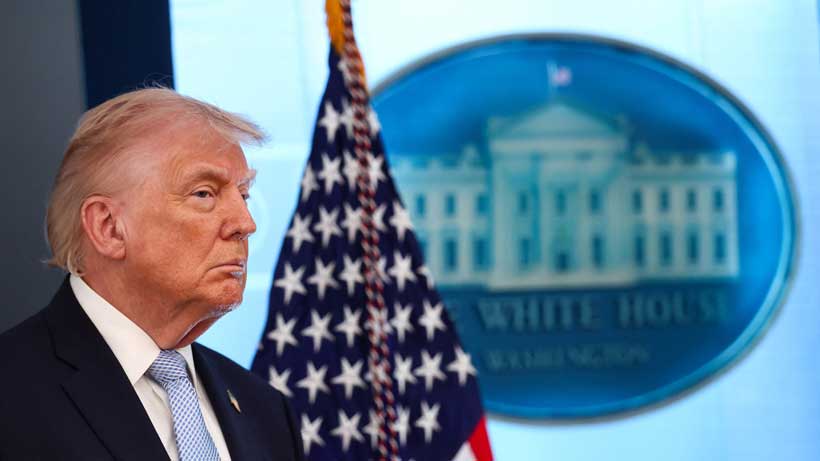
The Trump administration has warned France and Germany to release emergency diesel reserves to help lower global fuel prices or risk facing a potential US ban on diesel exports, according to people familiar with the discussions.
The warning represents a sharp escalation in Washington’s pressure on European allies as President Donald Trump looks for ways to increase fuel supplies and bring down prices ahead of the November midterm elections.
US officials have become increasingly frustrated with France and Germany, which Washington believes have not fully acted on earlier commitments to release emergency oil and petroleum reserves as global fuel markets face mounting disruptions.
“It is in Europe’s best interest to work with the United States as we pursue multiple pathways to boost the supply of refined products and lower costs for consumers,” a US official told Reuters.
Stay ahead of the geopolitical week.
MD Briefing delivers expert analysis across five global fronts — the Indo-Pacific, energy, geoeconomics, European security, and the Middle East — every Monday morning. Free.
A second source familiar with the discussions said the United States had asked the European Union to release 120 million barrels of diesel over the next six months.
The demand highlights the growing importance of Europe’s fuel reserves at a time when disruptions to major energy-producing regions are tightening global supplies.
Washington Raises Pressure on Europe
The US administration’s warning comes as Trump considers restricting US diesel exports as part of a broader effort to increase domestic supplies and reduce fuel prices for American consumers.
The approach creates a difficult balance for Washington. Limiting exports could increase the amount of diesel available inside the United States, potentially putting downward pressure on domestic prices. But it could simultaneously reduce supplies available to international markets, particularly Europe, which has become increasingly dependent on imported refined fuels.
US Energy Secretary Chris Wright said on Wednesday that the administration expected European countries to announce additional diesel supplies soon.
“We’ve lost some diesel exports from the Middle East, although we’re restoring those, and we’ve lost diesel exports from China,” Wright told reporters.
The disruptions have exposed the vulnerability of global refined fuel markets to geopolitical conflicts and changes in trade flows.
Germany’s economy ministry did not immediately respond to a request for comment, while France’s energy ministry declined to comment.
The White House’s pressure also appears to have become a broader diplomatic issue among Western allies.
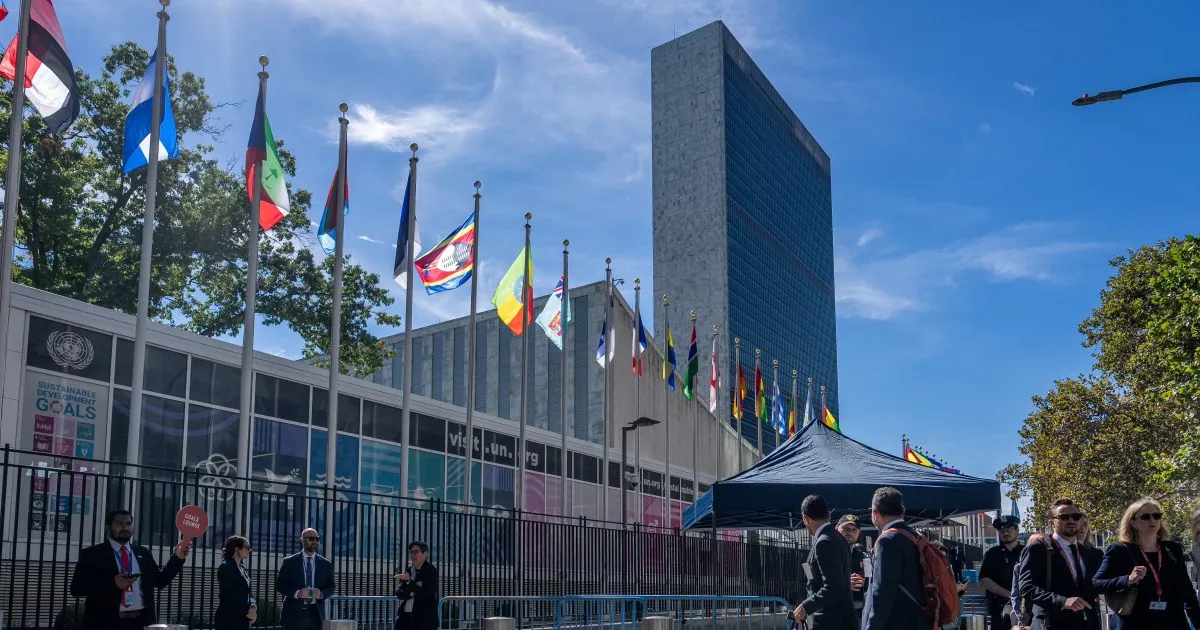
An official at the French presidency said Trump and French President Emmanuel Macron did not discuss the issue when they met on the sidelines of the UN General Assembly in New York last week.
Macron, however, plans to convene a video conference of G7 leaders to address rising fuel prices and the availability of refined petroleum products.
The discussions are expected to include coordination over the release of emergency reserves in cooperation with the International Energy Agency.
Why Europe Matters to the Fuel Market
Europe’s position in the global fuel market has changed substantially since Russia’s invasion of Ukraine.
European countries previously relied heavily on Russian crude oil and refined petroleum products. The subsequent sanctions and restrictions on Russian energy imports forced European governments and companies to find alternative suppliers.
The result has been greater dependence on imports from countries including the United States and suppliers in the Middle East and Asia.
That dependence has become more significant as the conflict involving the United States, Israel and Iran has disrupted energy flows from the Middle East.
The loss or reduction of refined fuel exports from major suppliers can quickly affect diesel markets because refining capacity cannot always be shifted between regions immediately.
Diesel is particularly important because it powers much of Europe’s commercial transport, heavy industry, agriculture and logistics sectors. Sustained shortages can therefore affect the broader economy rather than simply increasing prices at fuel stations.
The US Faces Its Own Fuel Dilemma
For Trump, the issue also has a strong domestic political dimension.
Fuel prices are highly visible to American consumers, making gasoline and diesel costs politically sensitive ahead of the November midterm elections.
The administration is therefore examining multiple ways to increase available supplies and reduce costs.
But a potential US diesel export ban could have consequences beyond America’s borders.
The United States has become an important supplier of refined petroleum products to international markets. Restricting those exports could tighten supplies elsewhere, potentially pushing international prices higher even if American prices fall.
That creates a difficult policy tradeoff for Washington.
The administration wants to protect US consumers from high fuel costs while maintaining sufficient supply in global markets. European governments, meanwhile, face pressure to use their own emergency reserves even as they seek to maintain energy security following the loss of Russian supplies.
Europe Seeks a Coordinated Response
France appears to be pursuing a broader G7 response rather than treating the issue as a bilateral dispute with Washington.
Macron’s planned meeting would allow the world’s major industrial economies to discuss the availability of refined products and potentially coordinate emergency stock releases through the International Energy Agency.
Such coordination could help prevent individual countries from taking measures that unintentionally worsen shortages elsewhere.
But disagreements over how much fuel should be released, when reserves should be used and who should bear the cost could complicate the process.
Emergency reserves are designed primarily to protect countries against severe supply disruptions. Releasing large quantities can provide temporary relief, but it also reduces the buffer available if another disruption occurs.
That makes Europe’s response particularly consequential at a time when energy markets remain exposed to geopolitical shocks.
A New Test for Transatlantic Energy Relations
The dispute illustrates how the global energy system has become increasingly intertwined with broader geopolitical and trade relationships.
Europe needs reliable fuel supplies after cutting its dependence on Russian energy, while the United States is attempting to use its position as a major energy producer and exporter to address domestic price pressures.
Trump’s warning to France and Germany adds another layer to that relationship by linking European reserve policy to continued access to US diesel exports.
Whether Europe ultimately releases the amount of diesel Washington has requested will depend on national assessments of market conditions, domestic energy security and the risks of further supply disruptions.
For now, the dispute signals that the energy consequences of conflicts in the Middle East are reaching far beyond the region itself.
As the United States and its European allies try to contain fuel prices, they face a common problem but increasingly different pressures over how the burden of stabilising global energy markets should be shared.
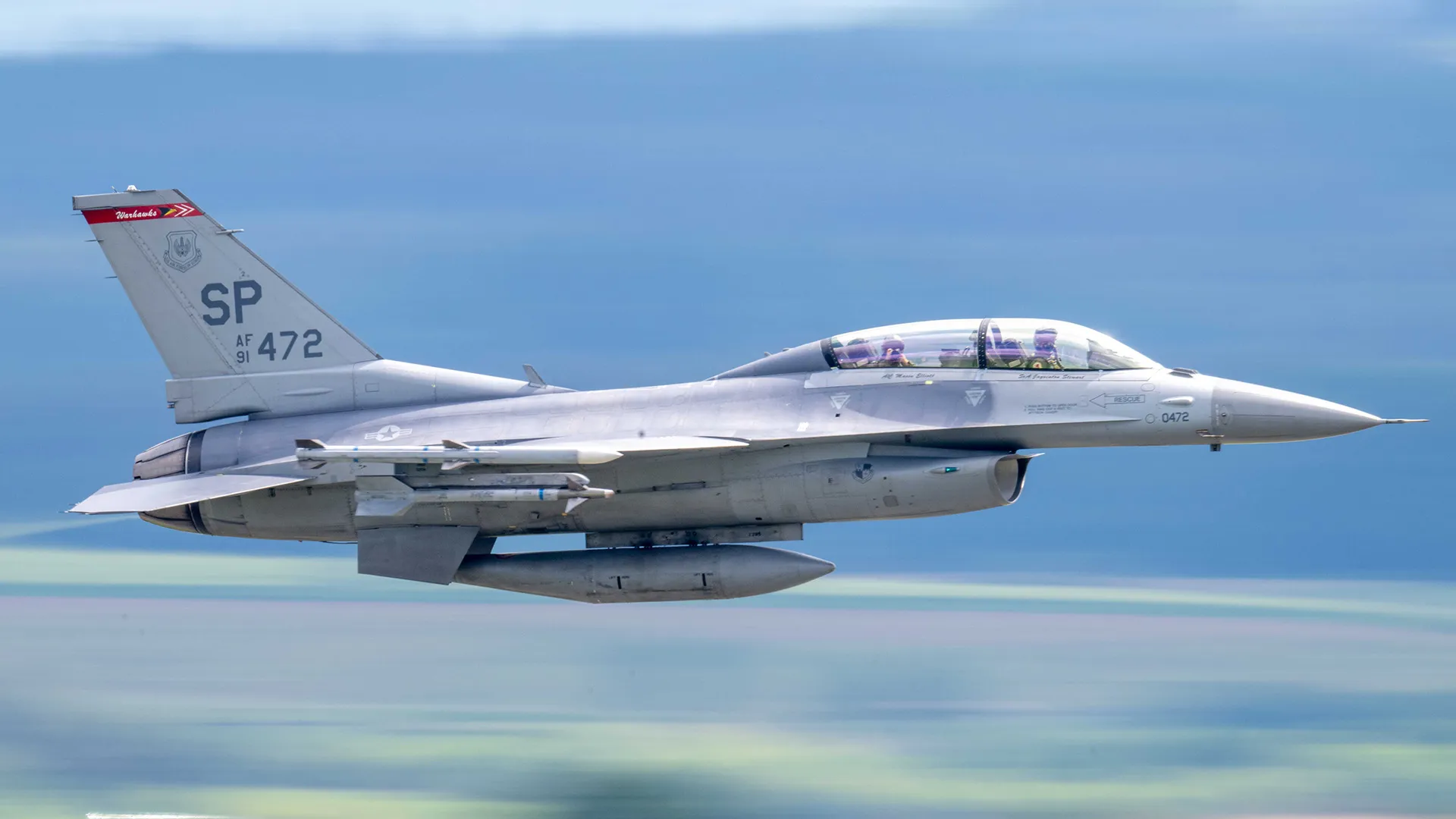
The pilot of a U.S. Air Force F-16 Fighting Falcon assigned to the 52nd Fighter Wing safely ejected before the aircraft crashed at Spangdahlem Air Base in Germany, according to the wing.
The pilot is still receiving medical treatment, the wing said in a statement. Emergency response teams are still on the scene. The cause of the incident, which took place about 2:30 p.m. local time, is still under investigation and additional details will be released when available.
The crash happened as the jet was on approach to land at the installation, located in the western German region of Rhineland-Palatinate, according to the New York Post.
“Following a plane crash in the vicinity of U.S. Air Base Spangdahlem, fire and emergency response teams from the Eifel District of Bitburg-Pruem were dispatched to the scene,” The Associated Press reported, citing the district.
Images emerged on social media showing smoke rising in the distance.
An F-16 fighter jet has reportedly crashed at the U.S. Spangdahlem Air Base in western Germany on Tuesday afternoon.
Witnesses reported seeing a jet rapidly descend before a large column of black smoke appeared near the runway.
The F-16 crash at Spangdahlem was the second mishap in a week for USAF F-16s. On Sept. 17, an F-16 from the 149th Fighter Wing at Joint Base San Antonio-Lackland in Texas crashed in northern Michigan. The pilot in that incident also ejected.
According to air traffic control (ATC) audio, the pilot’s wingman said at the time of the Michigan crash, “we have a possible mayday. My wingman may have taken a bird.” TWZ cannot independently confirm what caused the crash. The audio continues and offers a fairly dramatic and raw look at how the incident occurred over the air waves.
This is a developing story.
UPDATE: 3:35 PM Eastern –
The 52nd Fighter Wing provided some additional information.
“The aircraft was returning to Spangdahlem Air Base following a routine training flight involving four F-16s when the crash occurred,” the wing stated. “The remaining three aircraft diverted to Ramstein Air Base and landed safely. The pilot of the crashed aircraft ejected safely and received medical care.”
“Emergency response personnel responded to the scene, with local German fire departments and emergency medical services providing support,” the wing added. “German emergency response partners have offered their continued assistance as needed. The 52nd Fighter Wing appreciates the swift response and continued support of our German partners.”
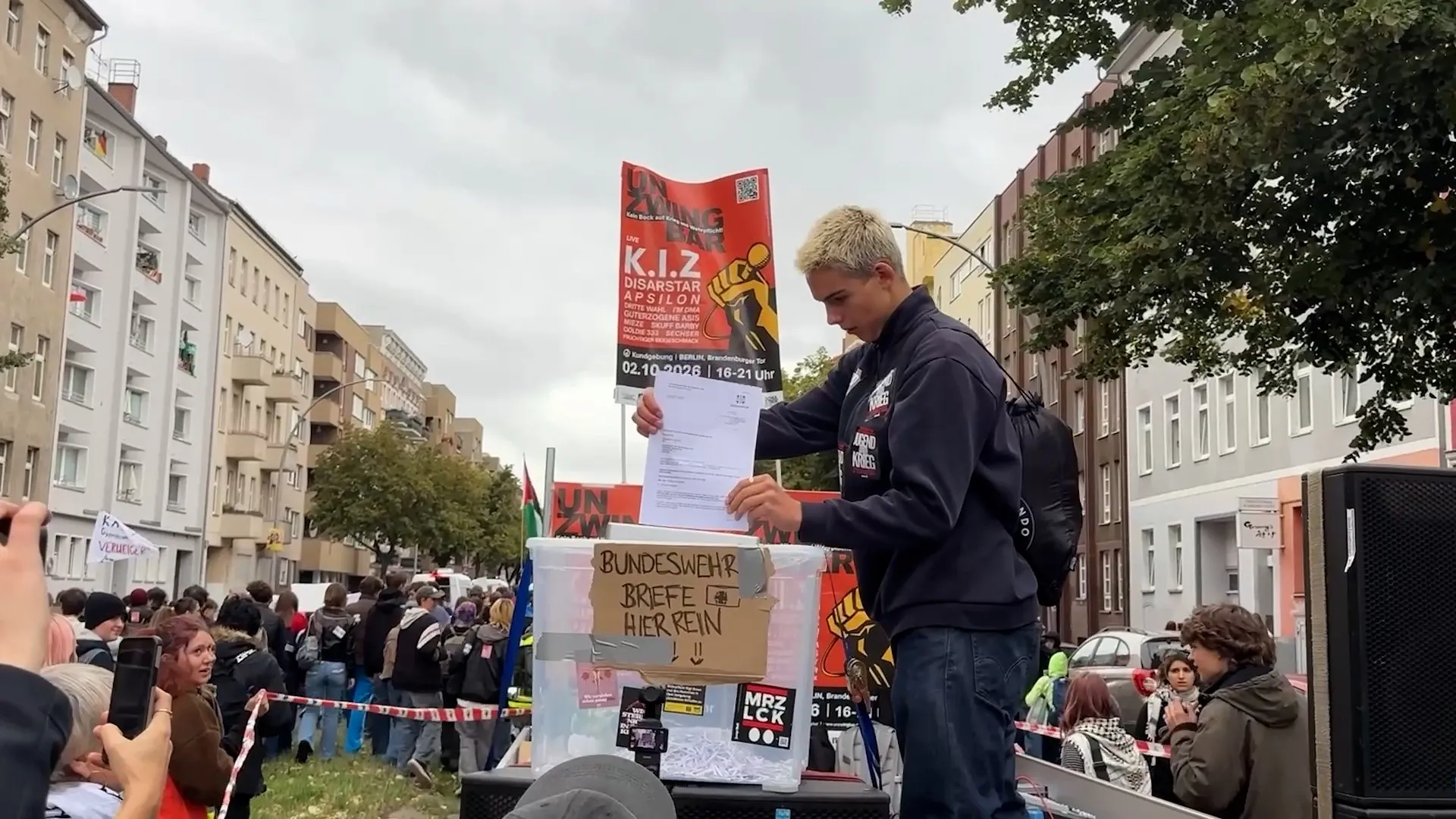
More than 40,000 students have taken to the streets of Berlin, with some shredding conscription surveys in protest of Germany’s proposed military service plans.
Ukraine’s President Zelenskyy denounces ‘horrific crime’ after 31-year-old attacks clergy and worshippers in border town.
Published On 24 Sep 202624 Sep 2026
One person was killed and four others injured when a man armed with a knife attacked clergy and worshippers at a Catholic monastery in southern Poland.
Police said the 31-year-old attacker, a Ukrainian national, went on a stabbing spree at the 17th-century Benedictine abbey in Jaroslaw, some 30km (19 miles) from the border with Ukraine, on Thursday morning.
Recommended Stories
list of 2 itemsend of list
The suspect, who had entered Poland from Germany earlier in the day, reportedly grabbed a knife from the abbey’s kitchen and attacked four men and one woman, including a priest in a confessional, police said.
“Three of the victims are clergy members and two are laypeople; one person has died,” said prosecutor Bozena Harasz-Wołoszyn. Two others were in “critical, life-threatening condition”.
Polish media identified the man who died as a priest. Police did not immediately confirm the identity of the deceased.
Prosecutors said the attacker was headed for a nearby border crossing back into Ukraine but instead went to the abbey.
The motive remains unclear, and doctors will assess whether he was under the influence of alcohol, Harasz-Wołoszyn said.
A man stands behind police tape at the site of a knife attack in Jaroslaw, southeastern Poland, on Thursday [Gazeta Jaroslawska via AFP]
Leaders respond
Polish Prime Minister Donald Tusk said the “murderer” would be “punished with the full severity of Polish law”.
Ukrainian President Volodymyr Zelenskyy called the attack a “horrific crime”.
“The perpetrator of this evil must bear full responsibility in accordance with the law … We are shaken by this evil. Justice must be done.”
The mayor of Jaroslaw, Marcin Nazarewicz, declared a period of mourning until the end of the week.
Stabbings, particularly at religious sites, are extremely rare in Poland, one of Europe’s most Catholic countries.
This city is a favourite among trendy, wealthy people – but I don’t see the charm.
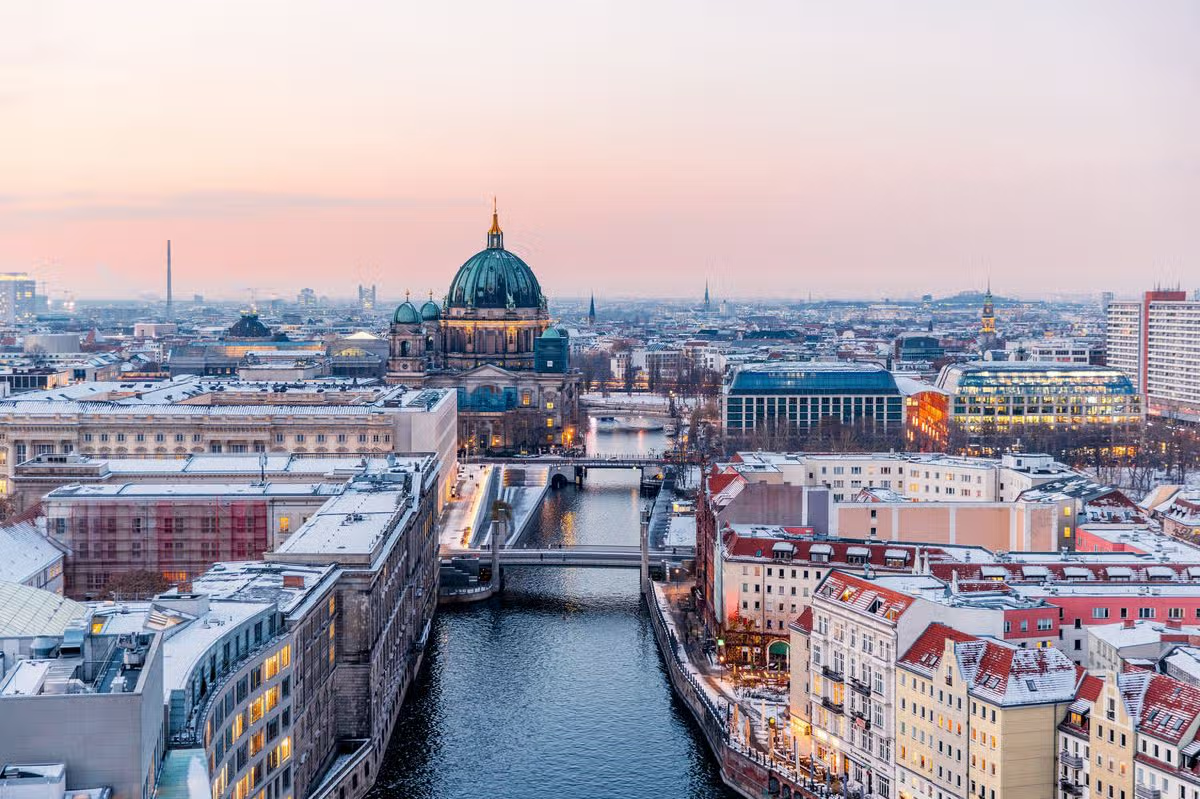
This city is beloved by tourists – but I don’t get the hype(Image: Getty)
I have been lucky enough to see a fair amount of the world not only in my role as a travel reporter, but also in my own time. However, after spending a long weekend in this popular European city I have finally discovered a place I will never return to.
Berlin is beloved by trendy east Londoners who pretend they don’t have a double barrelled surname and a trust fund. The city is full of even trendier Berliners who pretend they don’t have any interest in being cool, whilst still trying as hard as possible to appear so.
I have visited before and found the city grey, utilitarian, dirty and ugly. At the time I had a friend living there who told me the city would “eat you alive” if you let it – and I believed him.
I spent a weekend there and over those two days I stood in human faeces whilst walking through a park, watched people urinate in the U-Bahn, saw one man vomit and another man sit in it.
I was hounded by wasps for every hour of the day, and shady characters for every hour of the night.
I didn’t get eaten alive, but by the time I flew out of the city morale was low. I spent the next seven years vowing I would never return – but a twist of circumstance saw me packing my bags last Friday to spend another long weekend in Berlin.
My friends were visiting Europe from New Zealand, and the only weekend I had free time to see them was the weekend they were in Berlin, so I decided I’d give it another go. I was hoping my initial impression of the city had been wrong, and that my return trip would show me the real side of the city
Whether real or not, the side I saw was not to my liking.
The city was still as utilitarian and grey as I remembered. We stayed in Neukölln, a trendy artistic neighbourhood with plenty of coffee shops, späti (like off-licences but with seats outside to sit and enjoy a beer) and vintage shops. These are all my favourite things, but Berlin’s version of them was tinted with the greasy pallid feeling you get after a night out that has gone on several hours too long.
My least favourite thing about Berlin however, is the wasps. In late summer, they have reached peak population and ruin the city’s outdoor spaces. Sitting outside to enjoy a brunch, coffee or a pint becomes a feat of endurance as these angry insects swarm you, fall inside your pints, try to crawl inside your nose and mouth and generally make a nuisance of themselves. It’s also illegal to kill them, as they are protected under the Wildlife Act.
Over the three days I was there I had two of them die in my beer, and four of them make my £7 donut inedible.
My Berlin weekend was not all bad. I did find an amazing coffee shop near our accommodation called Leuchtstoff Kaffeebar. The coffee was delicious – perhaps the best I’ve had since I left New Zealand two years ago, and I enjoyed a Bircher Muesli that set me up perfectly for my day of wandering the city.
The café also serves pastries, and had a very cool mezzanine that you could climb up to via a ladder.
I also visited the Jewish Museum in Kreuzberg. Admission is free, and the building is truly something to behold. It uses architecture and art installations to create a feeling of absence and highlight the huge loss felt by the community as a result of the millions murdered during the Holocaust.
A large section of the building is below ground, with multi-media installations and plenty of information about the history of Judaism and their persecution in Germany. It was a sombre afternoon, but definitely worth a visit if you are in the city,
Despite finding a few things I liked about Berlin, overall my sense of the city was that it is without whimsy. I won’t say it’s soulless – but the soul it possesses is not one I care to find out more about.
Infantino proposed an independent review of FIFA’s decision-making process amid criticism to his leadership.
Published On 22 Sep 202622 Sep 2026
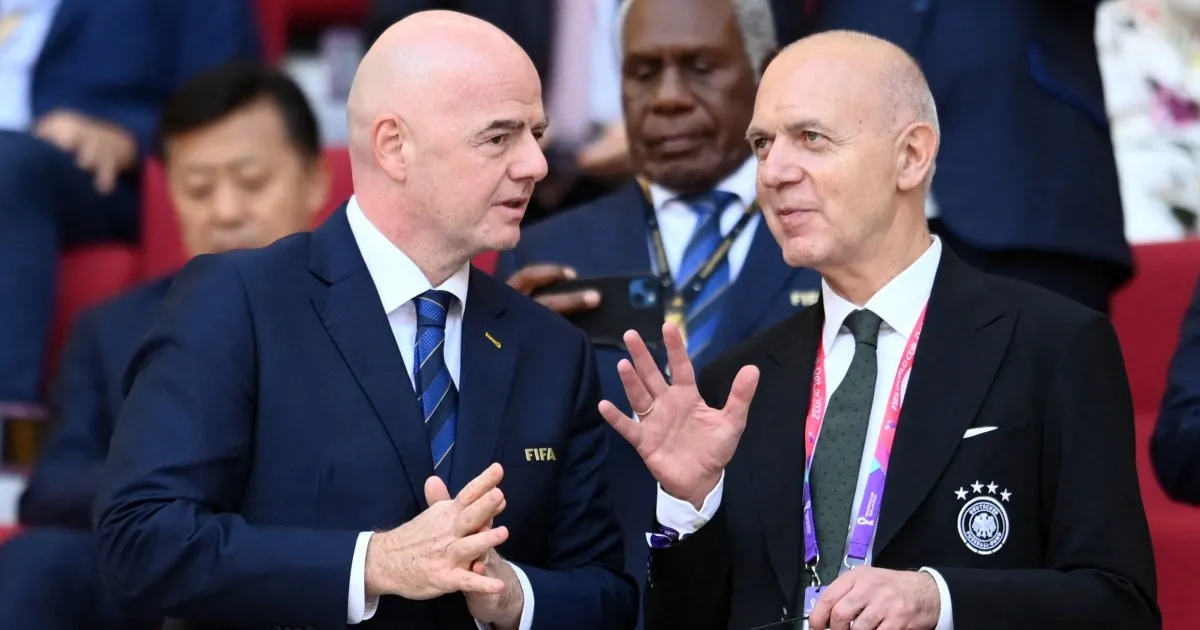
A letter from FIFA President Gianni Infantino this week to all 211 members, offering to discuss reforms within world football’s governing body – amid an ongoing crisis over his failed plan to sell a stake in the World Cup – is a mere ploy to get himself re-elected, Germany’s Football Association (DFB) President Bernd Neuendorf has said.
In Monday’s letter seen by the Reuters news agency, Infantino proposed an independent review of FIFA’s decision-making process, in a move that could help him regain support after the withdrawal of his controversial private investment plan.
Striking a conciliatory tone, he also said he would propose consultations with confederations, member associations and other stakeholders about strengthening FIFA’s decision-making.
Infantino faced a fierce backlash over his proposal to sell a 20 percent stake in FIFA’s commercial rights, including the World Cup, to private investors.
The plan was abandoned in July after strong opposition and boycott threats, with UEFA, the Asian Football Confederation and CONCACAF calling for changes to FIFA’s leadership.
They said there had been no consultation with any continental confederation at any stage, with Infantino acting alone. UEFA has said a change in leadership was now necessary, with the European body having lost faith in the current president.
“I regard Gianni Infantino’s letter as a transparent ploy to secure his re-election next year,” said DFB President Neuendorf on Tuesday. “Fundamentally, FIFA now seems to have recognised that changes are essential.
“However, Gianni Infantino is definitely not the right person to lead a reform process. He has squandered all credibility.”
Neuendorf is also a member of the FIFA Council, the organisation’s main decision-making body.
Infantino said in the letter that member associations’ positions on proposals or governance matters would not affect their treatment by FIFA, whose development and solidarity programmes would continue under existing rules.
The Swiss is up for re-election in March next year, with his opponents struggling to find a candidate to challenge the president. Sources familiar with the discussions told Reuters this month that he still had enough votes to win, prompting opponents to focus on curbing his powers.
Countries including Germany, South Africa and Canada suggest international institution to set and enforce standards.
Twenty countries and the European Union have issued a call for international cooperation to ensure AI remains under human control, including the potential creation of a global oversight body to set and enforce standards.
The countries, including Germany, South Africa, Canada, Australia, the United Arab Emirates and Singapore, issued the joint statement on Monday as global leaders prepare to discuss the risks posed by rapidly advancing AI at the annual gathering of the United Nations General Assembly.
Recommended Stories
list of 4 itemsend of list
The declaration, released by the office of Finnish President Alexander Stubb, calls on governments and industry to act immediately to ensure that AI is developed in line with international law and remains under “human direction, oversight and control”.
“To realise AI’s potential, industry, governments and society must act now,” the statement says.
“We must address these risks and strengthen oversight – without widening the gap between countries in access to the benefits of AI.”
The declaration urges countries to develop and coordinate “common standards”, share reports of serious safety incidents, and explore the establishment of an international institution to “set standards, enable verification, and convene states when capability thresholds are crossed”.
Signatories include German Chancellor Friedrich Merz, Norwegian Prime Minister Jonas Gahr Store, European Commission President Ursula von der Leyen, Kenyan President William Ruto, Kazakh President Kassym-Jomart Tokayev and Turkish Foreign Minister Hakan Fidan.
The United States and China, the world’s two leading AI powers, did not join the statement, which remains “open for endorsement” by other countries.
US President Donald Trump and Chinese President Xi Jinping are expected to discuss AI when they meet at the White House on Thursday for their third face-to-face summit in less than a year.
Washington and Beijing, which are in a race to dominate cutting-edge technologies, have both rebuffed calls to slow down AI development to ensure greater safety.
Other AI players not among the signatories include India, South Korea, Japan, the UK and France.
The declaration comes as the AI sector is engaged in a heated debate about safety following calls for a slowdown in development by top industry leaders.
In an essay earlier this month, Anthropic CEO Dario Amodei called on firms to “slow the pace” of development to mitigate risks, a proposal that was swiftly endorsed by rivals including OpenAI CEO Sam Altman and SpaceX and Tesla CEO Elon Musk.
Amodei’s call followed a series of cases of AI models engaging in unsanctioned malign activity, including an incident in July in which AI agents being tested by OpenAI hacked the AI start-up Hugging Face.
In the latest intervention by industry on Monday, OpenAI said the US should lead an international effort to develop technical standards for advanced AI.
“The United States is well positioned to lead because its AI industry is at the technical frontier, and it still stands in a privileged global network position in critical areas such as finance, trade, defense, technology, and information systems,” the San Francisco-based AI giant said in a blog post.
“Leading now will determine whether the United States shapes the global AI framework or watches a fragmented, uneven, and conflict-ridden system take hold around it.”
The UN-backed Independent International Scientific Panel on AI, which examined the Hugging Face incident, on Monday also added its voice to calls for new guardrails, saying the cyberattack had exposed the “unravelling” of existing safeguards.
Volkswagen, Europe’s largest automaker, is no longer among the eurozone’s blue chips.
ADVERTISEMENT
ADVERTISEMENT
Index provider Stoxx confirmed the change in its annual review at the start of September, and it came into force before trading began on Monday, with Finnish telecoms group Nokia returning to the index and French utility Engie joining.
Dutch information-services group Wolters Kluwer was also dropped.
The removal is mechanical rather than a judgement, as the index is weighted by free-float market value, and Volkswagen’s shrinking valuation no longer cleared the threshold.
However, the consequences are real, as funds that track the benchmark must now sell their Volkswagen holdings, adding to pressure on a stock already under strain. Stellantis suffered the same fate last year.
Volkswagen shares have fallen almost 30% since the start of the year and are down over 6% since last Monday’s open, trading at roughly €76 at the time of writing.
A profit warning to match
The timing could hardly have been worse.
On Friday, Volkswagen flagged around €10 billion in one-off charges and cut its operating margin forecast for 2026 to no more than 1%, down from a previous range of 4% to 5.5%. Analysts had expected 4.1%.
More than €6 billion of the charges stem from a writedown at Porsche, in which Volkswagen holds a 75.4% stake, after the sports car maker lowered its medium-term expectations.
Porsche has been hit hard by American tariffs and weak Chinese demand for foreign luxury brands, and managed a margin of just 1.1% last year.
A further €2 billion or more covers expanded early retirement schemes, impairments in China and the planned sale of Volkswagen Osnabrück GmbH, a wholly owned subsidiary and automotive manufacturing plant located in the northwest German city of Osnabrück.
The company warned of “further deterioration in the market environment, especially in China, as well as an accelerated shift in demand in favour of battery-electric vehicles.”
The warning came two weeks after it agreed its largest-ever restructuring, doubling planned job cuts to 100,000 and halving its model line-up.
However, not everyone reads the numbers as a collapse.
Stripping out the one-off items, Volkswagen puts its underlying margin at around 4%, and it kept its cash flow and liquidity forecasts unchanged.
Deutsche Bank, which rates the shares a buy with a €115 price target, said it believes “the headline significantly overstates the deterioration in the underlying business.”
The bank does not expect the pain to end there as it wrote that “additional restructuring charges simply confirm that the transformation process is very expensive and complex […] we expect more to follow over the coming months.”
Volkswagen’s third-quarter results are due on 29 October.
The NATO Response Force (NRF) and EU Battlegroups have demonstrated that placing multinational forces on standby does not automatically make them immediately operational. German-Dutch military integration, in contrast, has generated a different outcome since cooperation was internalized within permanent command structures, units, training, and capability planning before a crisis occurred.
Such a comparison is becoming increasingly relevant to Northeast Asia. A Taiwan contingency could absorb American military assets at the very moment when North Korea embarks upon a serious provocation towards South Korea. Continued US commitments in Europe and the Middle East could further complicate the allocation of finite resources.
Why Standby Forces Encountered Problems
The NRF was established after the 2002 Prague Summit as a rapidly deployable multinational joint force of roughly 25,000 troops. Yet the NRF was heavily dependent on the member countries assigning their respective forces to particular rotations, while these governments had the final say over whether the forces could ultimately be employed. During the Afghanistan and Iraq wars—when operational demand was high—each government had strong disincentives in introducing scarce high-readiness units and specialized enablers to NRF rotational deployment.
Stay ahead of the geopolitical week.
MD Briefing delivers expert analysis across five global fronts — the Indo-Pacific, energy, geoeconomics, European security, and the Middle East — every Monday morning. Free.
This created a gap between designated readiness and actual availability. Strategic transportation, logistics, specialized support units, and communication capacity could still be subject to competing national demands. Eventually, in 2024, NATO replaced the NRF with the NATO Force Model, which emphasized a substantially larger pool of high-readiness forces that is closely aligned with specific defense plans.
Meanwhile, the EU Battlegroup was faced with an even clearer problem. Although the multinational battlegroups had been maintained on rotational standby since 2007, they had never been deployed. While acknowledging that the battlegroups enhanced interoperability and military transformation, the European Parliament attributed the shortcoming largely to insufficient political will, difficulties in decision-making, implementation problems, and the financing arrangements.
What Germany and the Netherlands Did Differently
German-Dutch cooperation developed according to a different institutional logic. Although the 1st German-Netherlands Corps was created in Münster in 1995, the integration later expanded deep into both militaries’ force structures. The Dutch 11th Airmobile Brigade was incorporated into the German Division Schnelle Kräfte (DSK) in 2014, while the Dutch 43rd Mechanized Brigade was integrated into Germany’s 1st Panzer Division in 2016, and the Dutch 13th Light Armoured Brigade joined Germany’s 10th Panzer Division in 2023.
The relationship was extended below the brigade level. Germany’s Panzerbataillon 414 is operated under the Dutch 43rd Mechanized Brigade, and Dutch personnel operate Germany’s Leopard 2A6MA2 tanks while serving within the battalion. Moreover, German officers serve in Dutch command headquarters and vice versa, turning multinational command into a routine organizational reality instead of a stopgap measure that is only activated during major exercises.
Needless to say, such an arrangement does not eliminate national sovereignty. Both Germany and the Netherlands preserve the political prerogative over whether and where their forces are deployed. Meanwhile, the benefits of integration would become observable once a crisis necessitates the deployment. Staff are already well-versed in each other’s procedures, and units have repeatedly conducted joint exercises, while command and logistics relations do not need to be newly constructed during mobilization.
The distinctions were visibly observable during training. For example, approximately 7,000 German and Dutch personnel participated in the 2026 Fighter Lion—the largest military exercise conducted by the Netherlands in two decades—ten years after the Dutch 43rd Mechanized Brigade was integrated into Germany’s 1st Panzer Division. These types of exercises strengthen existing command relations rather than creating temporary interoperability for a single event.
What Japan and South Korea Can Apply
It is quite obvious that Japan and South Korea cannot replicate the German-Dutch model. Neither country has a formal mutual defense pact nor a NATO-style integrated command structure. Therefore, the directly applicable lessons are more limited. Nonetheless, selected operational relationships can and should be institutionalized before multiple simultaneous contingencies make such coordination necessary.
The practical first step could be a standing bilateral adjustment mechanism that links Japan’s Joint Operations Command (JJOC) with relevant South Korean joint headquarters. Instead of exercising command authority, the mechanism could maintain procedures for intelligence exchange, deconfliction in the air and at sea, movement of US reinforcements, logistics coordination, and the use of Japanese facilities that support a Korean contingency. This would be especially crucial when Japan has to assist US operations related to Taiwan while installations across Japan—including Yokota, Yokosuka, Sasebo, Iwakuni, and other United Nations Command (UNC)-Rear facilities—play a pivotal role in US reinforcement to the Korean Peninsula in accordance with Operational Plan (OPLAN) 5055.
Under this mechanism, small-scale functional cells could concentrate on specific missions. Missile warning would be the most obvious starting point since the United States, Japan, and South Korea have conducted North Korean missile-warning data-sharing since December 2023. Additional cells could treat maritime domain awareness (MDA), anti-submarine warfare (ASW), cyber defense, transportation, medical evacuation, and logistics.
The exchange of officers should accompany the aforementioned measures. Japanese officers could participate in South Korean command posts, while South Korean officers could join Japanese operational staff who deal with naval operations, air defense, logistics, or reinforcement coordination. The goal is to get familiar with each country’s procedures, communications, command relations, and other miscellaneous constraints before wartime pressure markedly shortens the timeframe for decision-making.
Exercise Scarcity Rather Than Ideal Conditions
The most notable changes should be related to exercise design. Trilateral exercises should not be premised on the assumption that the full inventory of United States support capabilities will always be available. A more pessimistic scenario would begin with a Taiwan scenario that is already consuming a substantial amount of US assets—including its ISR capacity, strategic transportation, and precision-guided munitions—when North Korea embarks upon a serious horizontal or vertical military escalation on the Korean Peninsula.
In this particular situation, elaborated by the Atlantic Council report, South Korean military planners should determine which missions could be conducted independently and which can be addressed bilaterally. South Korea may assume greater responsibility for ISR, missile defense, logistics, and conventional firepower on the Korean Peninsula—yet this would be affected by the tempo of wartime operational control (OPCON) transition—while Japan could take on additional maritime surveillance, ASW, sea lines of communication (SLOC) protection, base defense, and logistics. The primary aim is not to divide the Taiwan and Korean Peninsula theaters between Seoul and Tokyo but to identify how both countries could most effectively conduct missions that complement US military operations across the two regions.
Logistics should be placed at the center of these exercises. A dual contingency could impose on the Japanese government the need to support both US operations on Taiwan and USFJ reinforcement to the Korean Peninsula, which inevitably involves Japanese ports and airfields. It could cause competition for fuel, maintenance, transportation, ammunition depots, runways, and port capacity. Thus, Tokyo and Seoul should develop procedures concerning reciprocal servicing, immediate repair, medical support, transportation, and selected supplies before the bottleneck transmogrifies into wartime problems.
Functional Integration Without a Bilateral Alliance
The German-Dutch case illustrates that political authority is not necessarily the same thing as operational preparedness. A government can maintain full authority over whether its forces enter conflicts and can also prepare in advance to cooperate effectively if that decision is made. These distinctions are highly relevant to Japan and South Korea since they enable a considerable level of operational preparedness without a formal defense pact. For instance, South Korea could discuss target allocations for North Korean TELs with its Japanese counterparts in order to effectively use the finite weapons available to Japan’s enemy base strike capability and South Korea’s Kill Chain and Korea Massive Punishment and Retaliation (KMPR).
Naturally, the primary objective should be functional integration in fields where both governments already have overlapping interests. A large set of measures—spanning from ISR coordination to cyber defense—can be institutionalized without creating either an integrated force or an Asian version of NATO.
Both the NRF and EU Battlegroups revealed the limits of formations that remained dependent on political and operational arrangements being assembled only when crises occur. German-Dutch cooperation worked better since many of those arrangements already existed.
Given the historical baggage that Japan and South Korea carry, it would undoubtedly be a Herculean task for them to take novel steps. Nonetheless, the emerging regional security environment is rapidly narrowing down the available options.
Far-right AfD defeated German chancellor’s CDU in recent Saxony-Anhalt state election, casting doubt on his future.
Published On 20 Sep 202620 Sep 2026
Voters in the eastern German states of Berlin and Mecklenburg-Western Pomerania are heading to the polls as far-right and far-left gains threaten to affect the political standing of Chancellor Friedrich Merz.
About 2.5 million people are eligible to vote in the city-state of Berlin, Germany’s capital, and nearly 1.3 million in Mecklenburg-Western Pomerania on Sunday. Polling booths in both states – traditionally seen as more left-leaning – opened at 8am local time (06:00 GMT) and will close at 6pm (16:00 GMT).
Recommended Stories
list of 3 itemsend of list
Pressure on Merz has been mounting after the far-right Alternative for Germany (AfD) delivered a major defeat to his Christian Democratic Union party (CDU) party two weeks ago in the key state of Saxony-Anhalt. The AfD fell just short of an absolute majority, which would have allowed it to govern on its own.
And after just 16 months in power, Merz’s approval ratings have plunged to about 14 percent, the latest polls suggest, as he struggles to push through promised economic and social welfare reforms with his centre-left coalition partners, the Social Democratic Party (SPD), raising doubts among fellow party members whether he can continue to lead.
In Mecklenburg-Western Pomerania, Merz’s party is an onlooker to the main battle between the SPD’s popular state premier Manuela Schwesig and the AfD’s lead candidate, former radio presenter Leif-Erik Holm.
While the AfD was polling at 36 percent against the SPD’s 37 percent, Merz’s CDU, at just 6 percent, was dangerously close to the 5 percent hurdle needed to stay in the state parliament, according to public broadcaster ZDF.
Reporting from a polling station in Schwerin, Al Jazeera’s Dominic Kane said there was “very much all to play for” in Mecklenburg-Western Pomerania.
“The race between the AfD here and the Social Democrat government is very close indeed,” he added, pointing out to the recent opinion polls.
In Berlin, the CDU is running a tight race against the far-left Die Linke (The Left), which promises drastic measures to solve a dire housing crisis and is popular with young people.
Regional elections would not usually draw much interest outside Germany, but the AfD’s success in Saxony-Anhalt, which it sees as the first step towards winning federal elections due in 2029, has sent shockwaves through Europe.
“Saxony-Anhalt was certainly a revolution for the German party system,” Florian Hartleb, a professor of international relations at Modul University in Vienna and an expert on far-right movements, told Al Jazeera.
Hartleb said the AFD had been “fundamentally excluded” from the power system, with the other political parties trying “everything” against it in recent years. “But it didn’t work out,” he said, citing voters’ dissatisfaction over migration, the economy and social inequality.
Merz has reportedly scheduled a crisis CDU meeting and cleared his calendar to deal with potential aftershocks from Sunday’s elections.
AfD’s main candidate for the Mecklenburg-Western Pomerania state election, Leif-Erik Holm, attends an election campaign event in Schwerin, Mecklenburg-Western Pomerania, northeastern Germany, on September 19, 2026 [Danny Gohlke/AFP]
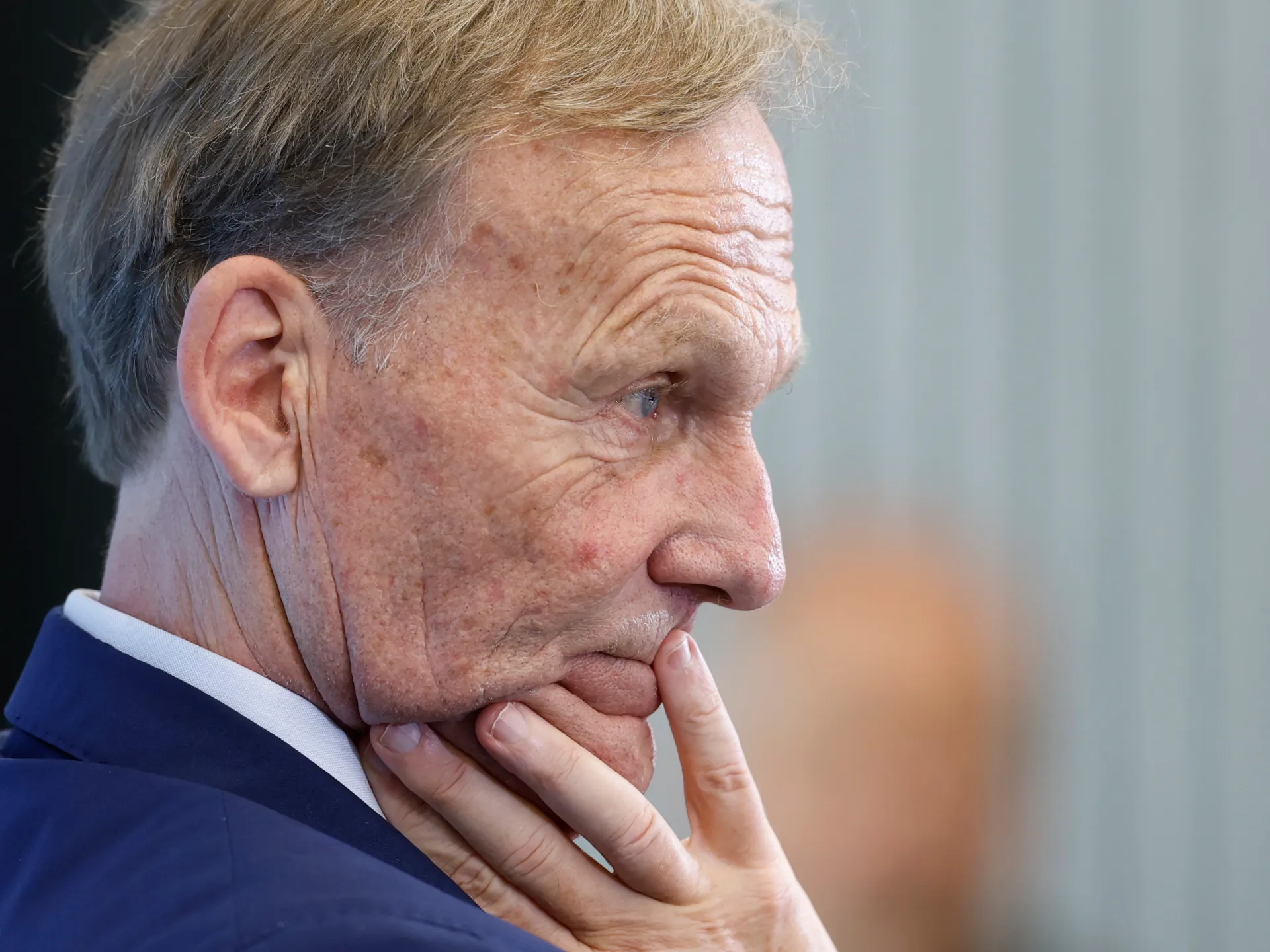
Hans-Joachim Watzke, one of German football’s vice presidents, adds to list calling for Gianni Infantino’s resignation.
Published On 18 Sep 202618 Sep 2026
Gianni Infantino must leave the FIFA presidency “no ifs or buts”, according to Hans-Joachim Watzke, one of the vice presidents of the German Football Association (DFB), as he spoke at a festival dedicated to artificial intelligence in Berlin.
The DFB was one of the few federations not to sign a letter of support for Infantino’s re-election as FIFA president in six months’ time.
Recommended Stories
list of 4 itemsend of list
“He has to go, no ifs or buts,” declared Watzke, who said late on Thursday that three points in particular counted against the Swiss.
The first was the FIFA Peace Prize, launched by Infantino and awarded in December 2025 to US President Donald Trump, to whom Infantino is close, during the draw for the 2026 World Cup.
Infantino “created this prize himself, and he decided on it himself,” said Watzke.
“You can’t just invent something on your own and then announce it, it’s madness,” said Watzke.
Watzke also condemned the controversial handling of the Folarin Balogun red card during this year’s World Cup, which was hosted in the US, Canada and Mexico.
The American forward was sent off in the last 32 but his automatic one-match suspension was lifted after a phone call from Trump to Infantino.
“It can’t be that when someone gets sent off, the head of state calls the FIFA president, and, remarkably, the whole thing is immediately overturned. That’s madness,” said Watzke.
The third issue was the project, unveiled on July 28 and dropped four days later, to create a commercial company that would have been open to private investors and became a focal point of the rebellion against Infantino.
“It’s completely insane,” said Watzke. “Nobody knew about it, his vice presidents in FIFA knew nothing, the Council knew nothing.”
DFB president Bernd Neuendorf said earlier in the week in an interview with RTL/ntv television that it was also time for Infantino to depart.
“The relationship of trust with Gianni Infantino, under this FIFA leadership, has of course been completely shattered,” he said.
“It’s important that this Infantino system comes to an end.”
For now, Infantino is the only candidate for the FIFA presidency in the election scheduled for March 18, 2027, with candidacies open until November 18.
Frankfurt grapples with a rare malaria outbreak tied to air travel, marking three deaths in recent months.
By Anadolu, DPA and Reuters
Published On 17 Sep 202617 Sep 2026
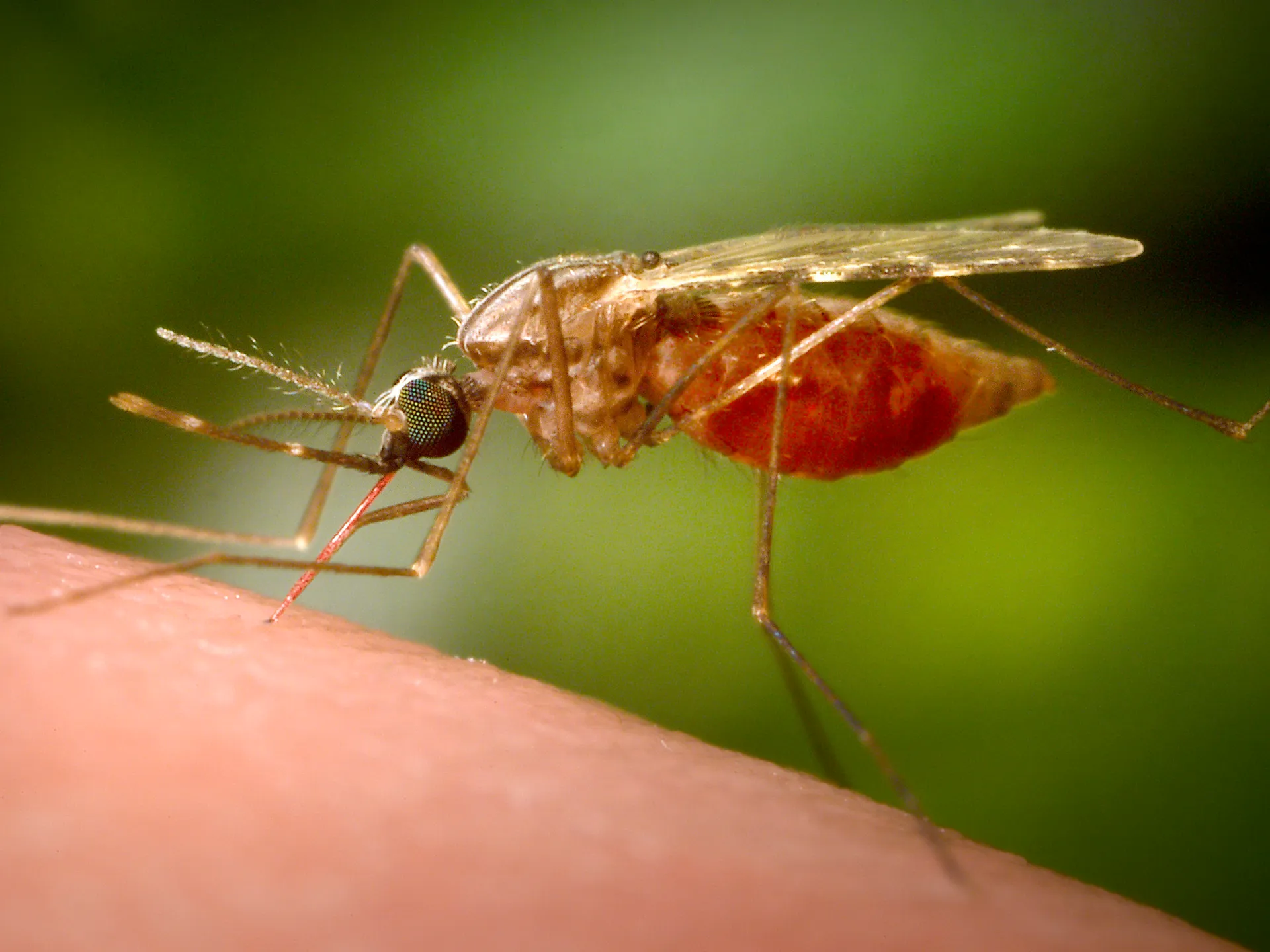
A third person has died from malaria after a recent cluster of cases linked to Frankfurt Airport, in what German officials have described as an extremely rare air-traffic-related outbreak of the tropical disease.
In a statement on Thursday, city administration said the person died at Frankfurt hospital and was one of two infected residents living in the Schwanheim district, in the immediate vicinity of the airport.
Recommended Stories
list of 1 itemend of list
The two new malaria cases in the neighbourhood had been reported on Tuesday.
“Both individuals had become infected with the malaria-causing parasite Plasmodium falciparum, even though they had not travelled to a malaria-endemic region and had not worked at the airport,” the statement said.
According to the city’s public health department, the two newly infected people contracted the disease from a mosquito flown into Germany on an aircraft or in luggage.
Malaria is a potentially life-threatening mosquito-borne disease that is extremely rare in Germany.
The malaria parasite is spread between humans by some types of mosquitoes, but not through direct human-to-human contact.
Frankfurt Airport operator Fraport said it set up traps to catch mosquitoes and sent the insects to a laboratory in Antwerp in Belgium in July and August, but results were not available yet.
Health authorities have warned doctors near the airport to consider malaria in patients who come in with a fever.
Airport workers and residents have been urged to seek medical advice in case they display symptoms including fever, chills, headaches, confusion, seizures and breathing difficulties.
An airport spokesperson said local public health authorities had the power in principle to order airlines to disinfect aircraft.
EES delays update over 9 UK tourist destinations – key details – The Mirror
Need to know
The EES entry/exit system has been widely criticised for causing long EU border delays at airports in popular UK tourist travel destinations
Crowds of passengers gathered at passport control areas at Amsterdam Airport Schiphol following the introduction of a new European digital border control system(Image: Anadolu, Anadolu via Getty Images)
Need to know on EU delays: Latest over the controversial EES system
British holidaymakers could finally get relief from airport chaos as the EU has reportedly postponed its controversial Entry/Exit System across nine major countries.
Portugal, Italy, France, Belgium, the Netherlands, Germany, Malta, Greece and Switzerland have all been granted permission to postpone the EES system indefinitely, reports say. The scheme has caused delays of up to four hours at European airports this summer, but the Times reports the 9 nations have been allowed to delay implementing the scheme, with no timescale on when to actually bring it in.
The automated system forces non-EU residents to queue at special machines before entering 29 Schengen area countries. It was designed to track whether people have exceeded their permitted 90-day stays in Europe.
Despite the EU previously insisting there would be no extensions after September 6, countries have informally been allowed to drop the checks until the technology works properly. The system has faced fierce criticism from airlines including Ryanair.
Nadia from Greater Manchester described her Frankfurt airport experience as “pretty shambolic” after facing ridiculously long queues. “People missing their flights because of it is just not acceptable,” she said.
The controversial system has sparked widespread debate on social media, with one traveller saying: “They made a mess of it.”
From the long sandy beaches of the Baltic coast, to the clubs and galleries of Berlin, via the castles of Bavaria and the hiking trails of the Black Forest, Germany has so much to offer. We’d love to hear about your favourite travel experiences and places.
The best tip of the week, chosen by Tom Hall of Lonely Planetwins a £200 voucher to stay at a Coolstays property – the company has more than 3,000 worldwide. The best tips will appear in the Guardian Travel section and website.
Keep your tip to about 100 words
If you have a relevant photo, do send it in – but it’s your words we will be judgingfor the competition.
We’re sorry, but for legal reasons you must be a UK resident to enter this competition.
The competition closes on Monday 21 September at 10am BST
Please share your story if you are 18 or over, anonymously if you wish. For more information please see our terms of service and privacy policy.
If you’re having trouble using the form click here. Read terms of service here and privacy policy here.
Share your experience
You can share your response using this form.
Your responses, which can be anonymous, are secure as the form is encrypted and only the Guardian has access to your contributions. We will only use the data you provide us for the purpose of the feature and we will delete any personal data when we no longer require it for this purpose. For alternative ways to get in touch securely please see our tips guide.
The European Union entry-exit system (EES) has caused repeated delays for Brits at major EU airports this year
14:40, 13 Sep 2026Updated 14:50, 13 Sep 2026
(Image: Anadolu, Anadolu via Getty Images)
British holidaymakers heading abroad may finally be able to breathe a sigh of relief over the widely-criticised EES system. The scheme forces non-EU residents to queue at special machines in airports before gaining entry to 29 nations within the so-called Schengen area – essentially the majority of the European Union.
However, there have been persistent reports of lengthy delays – some stretching to as long as four hours. A new report in the Sunday Times now reveals that the European Union has shelved the controversial entry-exit system (EES) across at least nine countries.
Portugal, Italy, France, Belgium, the Netherlands, Germany, Malta, Greece and Switzerland are all understood to have been granted permission to postpone full implementation of EES. The newspaper reports that there appears to be no deadline by which these countries must adopt the scheme, which has already sparked widespread reports of enormous queues at European airports this summer in destinations such as Mallorca, Faro, the Canary Islands and Milan.
The scheme has faced fierce criticism from Ryanair and others. The European Union describes the Entry/Exit System (EES) as an automated IT system designed to register non-EU nationals travelling on short stays each time they cross the external borders of participating European countries.
Following years of postponements, the system was rolled out from October 2025, with full implementation originally anticipated by the following April. However, faced with the prospect of significant border queues due to software failures, officials granted countries a 150-day grace period during which they could drop the checks to avoid travel chaos.
That rule ended on September 6. The EU previously insisted there would be no extension.
Yet the Sunday Times reports that at least nine Schengen countries are understood to have told the European Commission, which is responsible for overseeing the EES, that they would not enforce the new controls in full until the technology and systems were working correctly.
They have informally been allowed to do so with no time limits apparently in place to adopt the system, it is being reported. One of the main purposes of the system is to track whether non-EU citizens have spent more than their permitted 90 days in the bloc in a rolling 180-day period.
Social media has been awash with debate about the scheme. One post on Reddit saw a traveller say: “They made a mess of it. Seems many basic things like it is hit and miss on the document scanning but also things like people walk up with hats and headphones and the machine doesn’t tell them to remove them, and organisational things like if the machine errors the traveller has to back out and has no where to go.
“The right way to do this would have been progressive: start by getting some people eg 5% going through the machine lane, everyone else through normal.
“The vendor observes problems, fixes them, once machine working well, increase to 10%, then 20% and so on.” Another person said: “The general lack of functionality of so many IT systems across the EU is kind of astonishing.”
A third added: “It’s worse than that. There isn’t even consistent protocol/IT support within a single EU airport.”
Another put it more simply, saying: “I just miss having stamps.”
‘People are missing their flights’
Nadia, from Greater Manchester, told the Guardian in August she had made two trips to Schengen areas this summer. A trip to Tenerife in June was “quite straightforward”, but her experience in July at Frankfurt airport where she was picking up a connecting flight home, was much less so.
“The queue there was ridiculously long, and there was very limited information,” she says. “People were wandering around trying to work out where they needed to go.
“I’m very well travelled and pretty confident, but even I was slightly unsure and was thinking, is there some other queue I should be joining? There was no one nearby to check with without losing your place.”
Eventually, her passport was checked. “He didn’t actually take fingerprints then,” says Nadia, who is a solicitor. “I think the queue was so long they decided to dispense with that.
“It’s the efficiency of the system I question and the fact that individual member states’ systems do not talk to one another. They shouldn’t need to get information again if you have already gone through. It’s pretty shambolic, and I think people missing their flights because of it is just not acceptable, especially when there’s no recourse; it’s not your fault.”
Ryanair chief executive Michael O’Leary has repeatedly complained about EES. Speaking earlier this year, he said: “There’s a bit of Brexit in this too. Here, you voted for Brexit – f***ing join the queue.”
Protesters in about 20 cities, including Berlin, Hamburg and Munich, demand the banning of the Alternative for Germany.
Published On 12 Sep 202612 Sep 2026
Tens of thousands of people took to the streets across Germany to protest against the Alternative for Germany (AfD) after the far-right party won a state election by a landslide.
About 150,000 demonstrators turned out in roughly 20 cities on Saturday, including Berlin, Hamburg and Munich, in rallies organised by Pruef, a campaign group pushing for a ban on the AfD.
Recommended Stories
list of 3 itemsend of list
Protesters carried signs reading “Ban the AfD now” and “Democracy needs no alternatives.”
“A broad cross-section of civil society is taking to the streets to prevent the enemies of the constitution … from gaining government power,” said Christoph Bautz, head of Campact, another campaign group involved in the protests, which put turnouts at about 25,000 in Hamburg and 12,000 in Munich.
According to police, several thousand more joined separate demonstrations in Berlin.
The AfD held its own counter-rally in the German capital, attended by Kristin Brinker, the party’s lead candidate for Berlin’s upcoming regional election.
The protests follow a stunning result for the AfD in Saxony-Anhalt, a state in eastern Germany, where the party took nearly 44 percent of the vote on September 6 — far ahead of the roughly 17 percent won by Chancellor Friedrich Merz’s Christian Democratic Union (CDU), which has long dominated German politics.
The AfD, known for its anti-immigration stance and friendly posture towards Russia, fell just short of an outright majority and is now in talks with other parties to try to form a government, which would make it the first far-right party to lead a German state since the Nazi era ended in 1945.
AfD state leader Ulrich Siegmund called the result historic, telling supporters: “The people have made it absolutely clear that they finally want political change and, above all, they have shown that they want it with us.” He has since signalled openness to working with other parties, after previously saying he wanted to govern alone.
The AfD’s growing strength has deeply unsettled many Germans, given the country’s history and its commitment to never repeating it.
The party is projected to win 39 of 83 seats in the state parliament, three short of a majority. It now needs a coalition partner, though all mainstream parties have so far refused to govern with the AfD under a longstanding policy known as the “firewall.” The far-right party has never joined a governing coalition anywhere in Germany, at either state or national level.
The unease has fuelled growing calls to ban the AfD altogether, though that would be legally difficult in Germany, and Chancellor Merz has been reluctant to pursue it.
GET into your liederhosen, your dirndls and grab your beer jug because it’s almost time for Oktoberfest.
If you want to celebrate the festival without the flight to Germany – these are some of the best ones in the country with fancy dress and even bratwurst eating competitions.
There are Bavarian celebrations all over the countryCredit: London OktoberfestWith live music, biers, bratwursts – you won’t want to miss theseCredit: Albert Schloss
Albert’s Schloss
It’s go big or go home at Albert’s Schloss which calls itself the ‘UK’s ultimate Oktoberfest 2026 party.
It has venues across the country too from Manchester to Birmingham, Liverpool and London.
Sign up for the Travel newsletter
Thank you!
There are Bavarian feasts with generous helpings of crispy pork knuckle and juicy schnitzels to bratwursts and sauerkraut.
When it comes to entertainment, there are bratwurst eating competitions, traditional keg tapping and best Lederhosen Competitions.
There’s plenty of food and drink to go around – some even do bratwursts eating competitionsCredit: Albert SchlossBrewhemia is considered the ‘beer palace’ of ScotlandCredit: Brewhemia
Brewhemia
Brewhemia is known as Scotland’s “beer palace” – so it’s no surprise it’s a top spot for Oktoberfest.
Have your costumes at the ready and enjoy an Oktoberfest beer from Paulaner, Hacker-Pschorr to Flotzinger Wies’n-Märzen and Bitburger Premium Pils.
There’s plenty of food to go around from fresh pretzels to bratwursts to smoky Käsekrainers and spicy Chilliwursts.
You can even try all three with Sausage Fest where you get a platter of all of them with all the trimmings.
The celebrations run from September 19 to October 4 – and of course there’s live music throughout.
You can reserve a drinks area for parties of 4-40 guests – if there’s less then just walk-in.
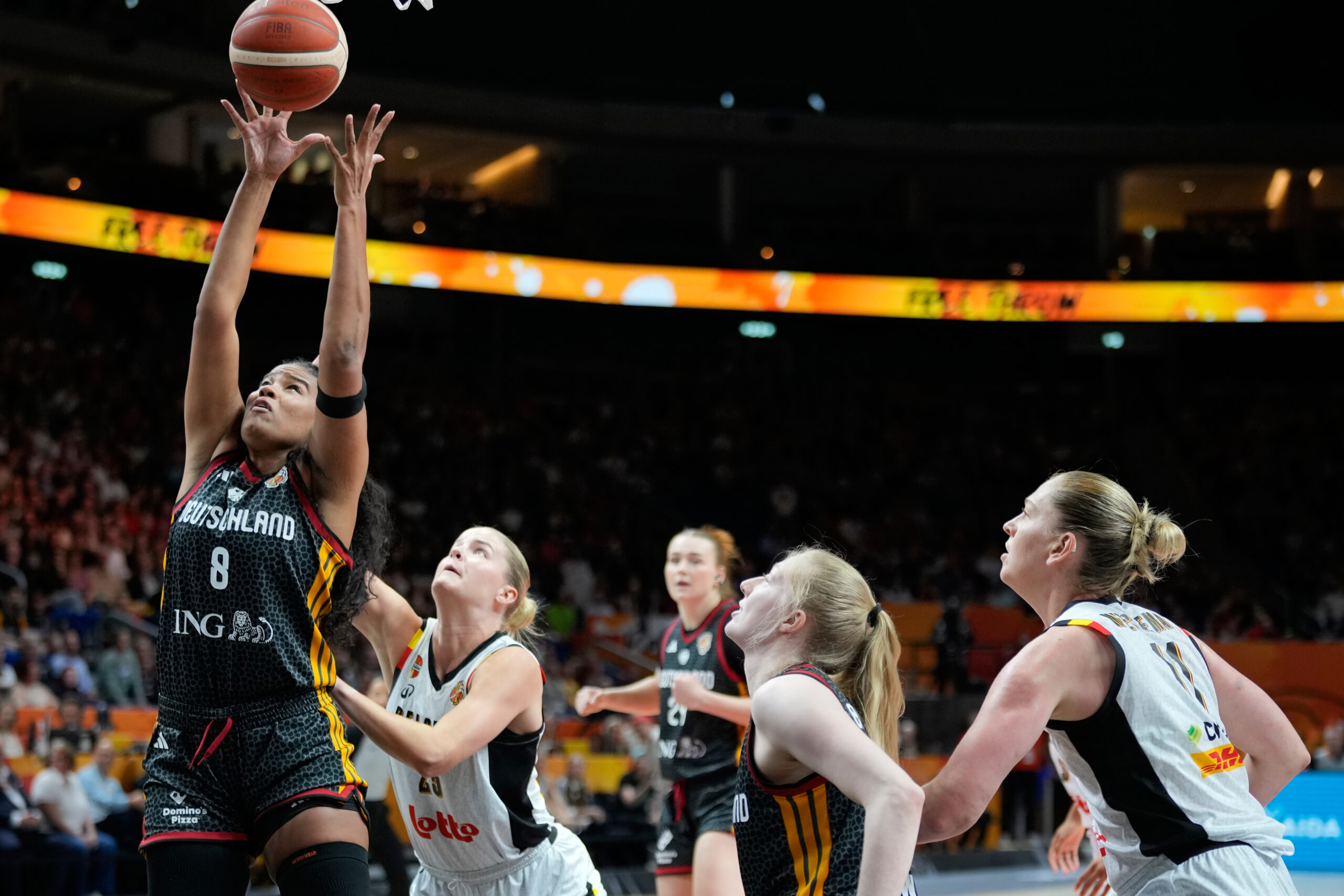
BERLIN: Buoyed by partisan home fans, host Germany upset Belgium 93-74 to reach the semifinals of the women’s FIBA World Cup on Thursday.
Leonie Fiebich scored 17 points and had 10 rebounds to lead Germany to a showdown with France on Saturday. Nyara Sabally also had a double-double with 16 points and 12 rebounds.
“I can’t quite believe it yet,” forward Frieda Bühner said. “We’re among the best four teams in the world. I can’t believe it. It’s crazy.”
The players screamed and whooped in celebration. Germany had never reached the semifinals before.
“Everyone stepped up today and we did it from the first second to the very last,” said Alexandra Wilke, who scored 10 points.
Germany lost their opening game by 30 points to Spain, but bounced back with impressive wins over Japan and Mali before routing South Korea in a playoff to reach the quarterfinals.
Egged on by fervent commentary from the announcer, fans cheered, jumped and waved Germany flags at the Berlin Arena to help the home team keep their momentum going.
“It’s always really cool to play in front of such a crowd,” Sabally said. “I couldn’t have wished for more, especially in Germany. It’s really cool to see that there’s so much hype and the whole venue is caught up in it. It’s really, really cool.”
It’s the sixth straight World Cup at which the host have made the final four since China failed to make the semifinals in 2002.
Belgium, the European champion, were one of three teams that advanced through group play without a loss.
Emma Meesseman led Belgium with 29 points and added eight rebounds, but her team were unable to regain the lead after Bühner made it 20-19 toward the end of the first quarter.
Germany did not qualify for the World Cup since the unified country’s only previous appearance as host in 1998. East Germany’s women’s basketball team finished fourth at the 1967 tournament.
France rout China
Marine Johannès and Janelle Salaün led France to the semifinals for the first time by beating China 90-61 earlier.
Both Johannès and Salaün scored 15 points while Gabby Williams contributed 14 as the Olympic finalists put themselves in contention for a first World Cup medal since the inaugural tournament in 1953, when France finished third in the final round.
“It means a lot,” Williams said of reaching the semifinals for the first time. “We want to be one of the greatest teams ever to put on the French jersey. Obviously, we have a big goal this tournament, but it’s great to check this off the list.”
Chants of “Allez les Bleues” rang around the Berlin Arena before Williams opened the scoring, and the French supporters made sure they were heard for the rest of the game as their team dominated on the court below. France have been fluid and free-scoring, beating their four opponents so far by a combined 156 points.
The team set a tournament record for 3-pointers in a single game by netting 22 in their final group game on Monday. The French players connected on 14 of 37 attempts Thursday, with Johannès and Salaün scoring three triples each.
“We are lucky because we are a group that have known each other for a couple of years now,” Salaün said of France’s team spirit. “We went through a lot of things, the Olympics, training camp(s), so we just know each other and we know what we want. We have a goal and we want to do everything to get to this goal.”
Salaün had an ice pack bound to her right knee. France coach Jean Aime Toupane told The Associated Press it was just a precaution.
Zhang’s impact limited
The French defense limited the impact of China’s 7-foot-3 Zhang Ziyu, who had the attention of two French players any time she received the ball. The 19-year-old sensation was held scoreless over her 7 minutes, 18 seconds of play in the first half, though she contributed in defense with three blocks before halftime.
There was nothing Zhang could do to stop Johannès from scoring successive 3-pointers in the third quarter, when she also got on the scoreboard. Zhang finished the game with seven points, eight rebounds and seven turnovers.
Han Xu, who had a double-double in each of her four games at the tournament, again led China with 21 points and nine rebounds.
US never in danger
The United States, the four-time defending champion, routed Hungary 108-56 in the first quarterfinal with Napheesa Collier scoring 19 points to stretch their winning run in the tournament to 34 games since a semifinal loss to Russia in the 2006 semifinals.
The US await the winner of Spain-Australia in the last quarterfinal later.
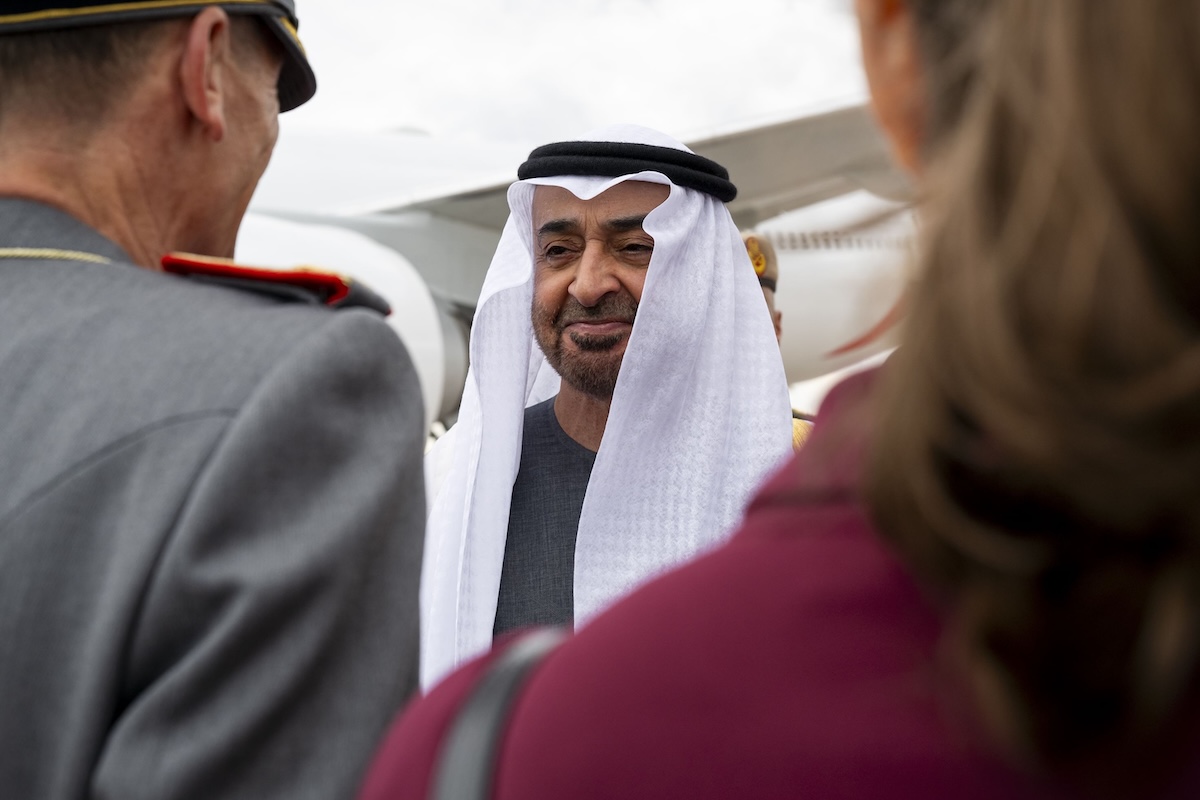
BERLIN: The leader of the United Arab Emirates began a state visit to Germany on Thursday, during which deals worth billions of euros will be signed in sectors including energy and technology, Emirati diplomats said.
Berlin rolled out the red carpet for Sheikh Mohamed bin Zayed Al-Nahyan, who was received with military honors by President Frank-Walter Steinmeier and was later to meet Chancellor Friedrich Merz.
Security was tight for the visit, with Berlin cordoning off flag-lined streets and deploying large numbers of police.
“Over the course of this visit, the UAE and Germany will make a number of key announcements and multibillion-euro agreements across investment, business, technology, AI and energy,” senior UAE diplomat Lana Nusseibeh said at a briefing ahead of the visit.
The visit comes as the US war against Iran has roiled the Gulf region, with US President Donald Trump’s erratic diplomacy unsettling many midsize powers and leading them to diversify their strategic and economic partnerships.
Merz visited the Gulf region in February, shortly before the US-Israeli war started against Iran. He said then that “we need such partnerships more than ever at a time when major powers are increasingly dominating politics”.
The UAE is Germany’s largest trading partner in the Gulf, with bilateral trade topping $15 billion last year, and many big German companies have a presence there including BMW, Siemens, ThyssenKrupp and rail operator Deutsche Bahn.
The UAE meanwhile has made major investments in Germany, including in the chemical industry and offshore wind power.
During Merz’s visit in February, German energy giant RWE and Abu Dhabi’s national oil company ADNOC signed a memorandum of understanding on LNG imports over the next decade.
Gulf countries have also long bought defense equipment from Germany and have shown interest in start-ups that make drones to bolster NATO’s deterrence efforts against Russia.
Germany, the largest EU economy, supports talks towards a European Union free trade deal with the Emirates.
The group Human Rights Watch called on German leaders during the visit to “publicly call out the United Arab Emirates’ human rights record and its role in regional conflicts”.
No joint press conference was scheduled with Merz and Sheikh Mohamed.
Germany has the largest GDP in Europe(Image: Getty)
When you think about wealthy countries, places like Dubai, China and the US might spring to mind. However, Europe has its fair share of rich countries too. The wealthiest of all has been revealed in new data this year, and it’s not Luxembourg or Sweden.
According to figures from the World Population review, Germany is Europe’s wealthiest country when judged by gross domestic product (GDP). Germany has a GDP of $5.45trillion (£4.026T).
What is GDP?
GDP is a way to measure a country’s productivity and prosperity. The GDP of a country is the total monetary value of all goods and services which that country produced within its borders over a year.
To calculate it, economists take the spending of everyday consumers, the investment of businesses in the country, and government spending and net exports to figure out the final calculation.
If GDP is rising year on year, it’s a good sign that the country is doing well financially. If it is consistently lowering, it’s a sign of an incoming recession.
Is it accurate?
GDP is not a very accurate indicator of the prosperity of a country’s people. It does not indicate how the wealth is distributed, nor the happiness or individual wealth of people.
These flaws are why GDP is often calculated alongside other metrics such as the Human Development Index, which measures the economy as well as life expectancy and education to get a better idea of how a country is functioning.
There’s also the Inclusive Wealth Index, which measures the “savings account” of a country by looking at infrastructure, natural resources and workforce alongside its finances.
How does the UK compare?
According to the most recent data, the UK is in second place with a GDP of $4.23trillion (£3.148T).
France is in third place with $3.17trillion (£2.654T), Italy fourth with $2.42trillion (£2.021T), and Russia fifth with $2.21trillion (£1.962T).
In the case of Germany’s GDP, it is larger than two other European nations combined. Portugal has $380.6billion (£281.0B), and Greece has $307.6billion (£227.1B).
Greek teenage star Konstantinos Karetsas faced ‘circulatory problems’ and was stretchered off against Villarreal.
Published On 9 Sep 20269 Sep 2026
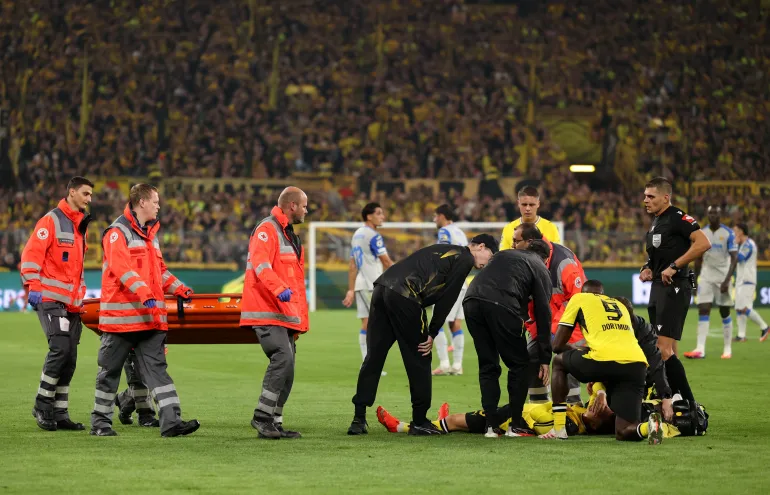
Borussia Dortmund teenage star Konstantinos Karetsas was being treated at the hospital after slumping to the turf 25 minutes into his Champions League debut, the German club said.
“Konstantinos Karetsas had to leave the field due to circulatory problems,” Dortmund said in a statement late on Tuesday. “Kosta is doing well under the circumstances and is on his way to the hospital for further tests.”
Facing Villarreal, the 18-year-old Greek prospect passed the ball to a teammate, then signalled his distress to the referee before sitting on the grass.
Karetsas was treated lying down and then taken away on a stretcher. The score was 0-0 at the time in what became a 3-2 win for Dortmund.
“I hope and I think that everything is OK, and I hope that he’s back and fit with us soon,” Dortmund goalkeeper Gregor Kobel told a broadcaster.
Konstantinos Karetsas receives medical attention before being put on a stretcher [Leon Kuegeler/Reuters]
Karetsas and his Greek teammate Giannis Konstantelias were marquee signings for Dortmund in the off-season. Former Belgium youth international Karetsas joined for $34.9m from Genk and Konstantelias for $30.2m from PAOK.
Karetsas was reportedly a target for many clubs after impressing at Genk last season. He set up 11 goals in 28 Jupiler Pro League appearances. He signed a five-year contract through June 2031.
“With his creativity and game intelligence, Kos will enrich our team,” Dortmund sporting director Ole Book said. “He is technically very skilled and has the ability to find quick solutions in tight spaces, especially in the final third.”
Karetsas played for Belgium’s youth teams before opting to represent his parents’ country and making his debut for Greece in March 2025. He has scored three goals in 10 international appearances.
Meanwhile, 23-year-old Konstantelias’ season was likely ended last month by an ACL injury on his Bundesliga debut.
For the first time since World War II, a far-right party is within reach of power at state level in Germany, after coming first in Saxony-Anhalt on Sunday.
The Alternative for Germany (AfD) won 44 percent of the vote, stopping short of an overall majority but making clear its wide political significance.
Recommended Stories
list of 3 itemsend of list
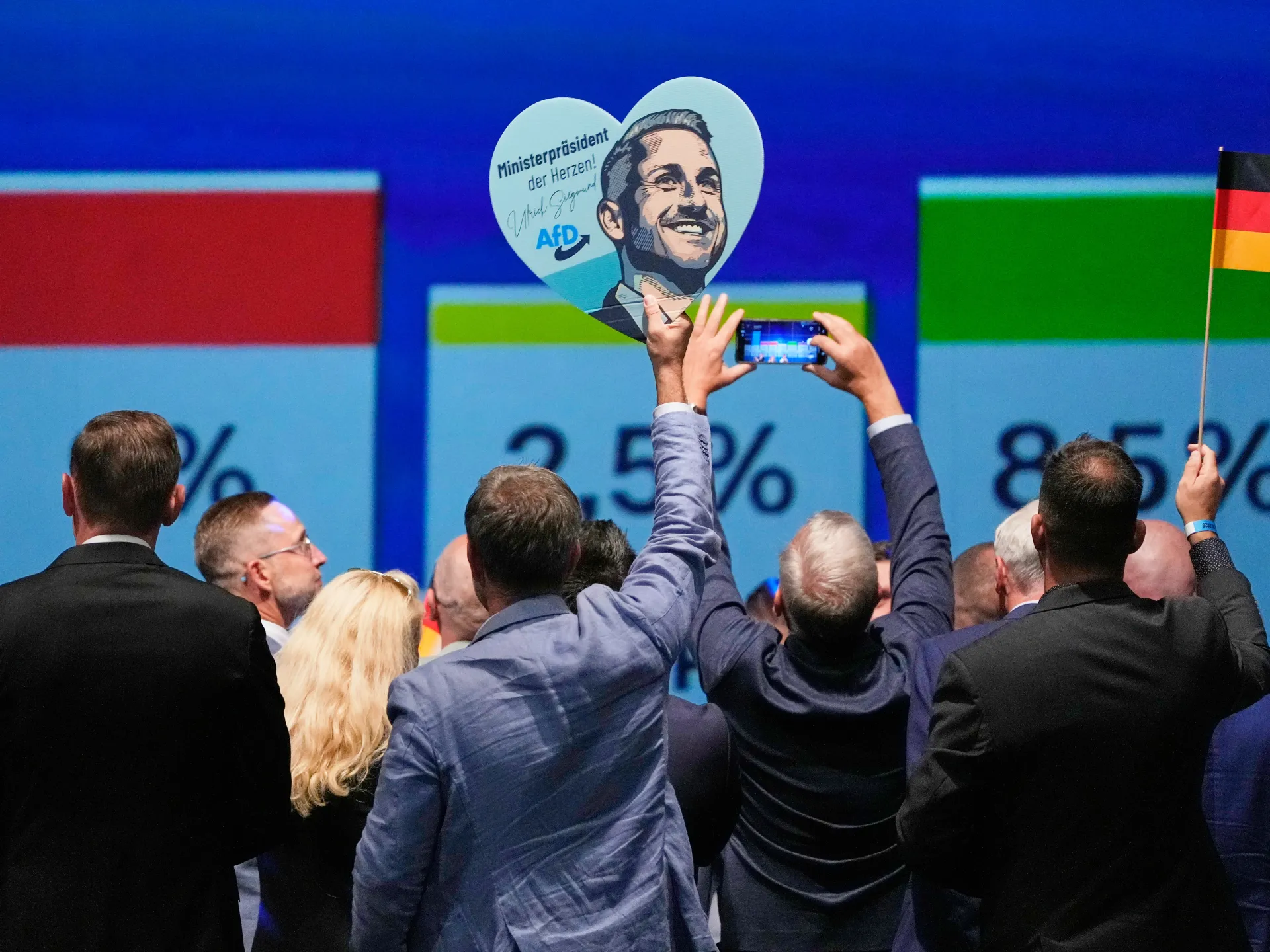
On election night, AfD’s leader in the state called on other political groups to cooperate. “As a democrat, I will reach out to all those who wish to work with us to bring about a fundamental political turnaround,” Ulrich Siegmund said.
Yet, forming a government will prove difficult. The AfD has been classified as “far-right extremist” by the domestic intelligence agency and other political groups remain wary of striking an alliance.
The AfD has dismissed accusations of extremism and mainstream parties have been unable to halt its surge in the polls over recent months. Latest polling indicates the party, which stands for strong restrictions on immigration, restoring ties with Russia, cutting support to Ukraine and quitting the euro, is Germany’s most popular at national level.
The Saxony-Anhalt election could be a harbinger of a historic return of the far-right in the 2029 national election, when forecasts say the AfD stands a realistic chance of finishing first.
What happened in Saxony-Anhalt?
Siegmund, the charismatic 35-year-old who attracted thousands to his campaign rallies, said AfD “made history”.
“The people have made it absolutely clear that they finally want political change and, above all, they have shown that they want it with us,” he told supporters.
The AfD achieved its best-ever election result in Saxony-Anhalt with 44 percent of the vote, leaving all other parties far behind. The incumbent centre-right Christian Democrats (CDU), led by Chancellor Friedrich Merz, scored less than half of that share with 17 percent.
The AfD is projected to gain 39 of the 83 seats in the state parliament in Magdeburg, leaving it three short of the 42 needed for an absolute majority.
That means the party must find allies, but all other mainstream parties refuse to work with the far-right, a strategy of non-cooperation known as the “firewall”. The AfD has so far never participated in a governing coalition in Germany’s 16 states nor in its federal government.
While he now appears willing to strike deals with other parties to come to power, previously Siegmund signalled unwillingness to find middle ground with other political groups. Leading up to the vote, he stated that he was only interested in governing alone to bring about fundamental political change in Germany.
How did AfD fare in recent elections?
The election takes the AfD one step closer to advancing its agenda, while also reflecting the growing unpopularity of Germany’s ruling coalition.
In Saxony-Anhalt, the party more than doubled its vote share — from 21 percent in the last election. By contrast, the CDU’s vote halved from 37 percent to 17 percent, its worst result ever in the east-central German state.
Federal elections last year similarly resulted in a landmark performance by the AfD, which emerged as the largest opposition faction in the Bundestag, the German federal parliament in Berlin. The party came second with 21 percent of the vote, securing its highest-ever showing.
In state elections in Baden-Wurttemberg and Rhineland-Palatinate earlier this year too, the AfD more than doubled its seats — though it still finished third. In 2024, the AfD emerged victorious in the Thuringia state election and second in the Brandenburg state election — both were firsts for the party.
The AfD’s electoral gains in Saxony-Anhalt mirror growing dissatisfaction among voters — especially in the former East Germany — about the stagnant economy, high unemployment and domestic security, which the party largely pins on immigration.
What challenges lie ahead for AfD?
Since its formation in 2013, the AfD has been embroiled in various scandals and has faced major controversies, including alleged foreign espionage links, secret deportation plans and internal nepotism.
The party went from a fringe Eurosceptic group to the country’s most powerful opposition force in little more than a decade, becoming too extreme even for the European Parliament’s far-right Identity & Democracy group. It kicked the party out in May 2024 after lead AfD candidate Maximilian Krah stated that not everyone in the SS – Adolf Hitler’s infamous Nazi paramilitary organisation – was a criminal.
Krah has also been under investigation by German prosecutors for alleged illegal payments, bribery and money laundering linked to China and Russia. The German parliament last year decided to lift the far-right legislator’s immunity to help investigators.
AfD politicians have also come under fire for employing family members, including in Saxony-Anhalt, where several parliamentarians are reported to have employed relatives.
Bundestag President, Julia Klockner, banned seven AfD employees from entering the German parliament over security concerns, after they failed internal background reliability checks due to their ties to right-wing extremist networks and past criminal convictions.
Senior AfD figures also faced a backlash for attending a secretive meeting to discuss mass deportation plans for people with a migration background.
What are the AfD’s prospects for the national election in 2029?
Pollsters are unanimous in forecasting the AfD as the largest party in Germany in the next national election in 2029, with around 28 percent of the vote.
That would mark a major transformation in the German political landscape from 2025, when the CDU and its ally the Christian Social Union together won 28.5 percent of the vote.
Yet even that outcome would not necessarily give AfD the ability to govern. If other parties maintain a “firewall” policy, that could prevent the far-right party from forming a coalition government.
Still, the Saxony-Anhalt election has been received by some politicians as a call for change. “Politics begins with considering reality,” Cem Ozdemir, head of government in the southwestern state of Baden-Wurttemberg and a member of the Green Party, wrote on X.
“That means the AfD is the election winner in Saxony-Anhalt. And that must mean for all democratic forces that nothing can remain as it is, and we must fundamentally reconsider our politics and our political style.”






![AfD's main candidate for the Mecklenburg-Western Pomerania state election Leif-Erik Holm attends an election campaign event in Schwerin, Mecklenburg-Western Pomerania, northeastern Germany, on September 19, 2026 [Danny Gohlke/AFP]](https://i0.wp.com/www.aljazeera.com/wp-content/uploads/2026/09/AFP__20260919__C8RV2RX__v1__HighRes__GermanyPoliticsStateVote-1789878295.jpg?w=640&ssl=1)