genocide

Sudan army drone attack on Darfur kills 35, rights group says | Drone Strikes News

Tens of thousands have been killed since April 2023 in the war between RSF commander Mohamed Hamdan Dagalo and his former ally, army chief Abdel Fattah al-Burhan.

At least 35 people were killed, and several others wounded, when Sudanese army drones struck a traditional court in western Darfur, a rights group has said.

The Emergency Lawyers group, which has documented abuses by both sides of the three-year civil war in Sudan, said the strike on Sunday hit a court in the village of Garra al-Zawaya in North Darfur state at about 1pm local time (11:00 GMT).

Recommended Stories

list of 3 itemsend of list

It said civilians had “gathered to attend hearings on local cases and disputes” when the attack took place.

The village is under the control of the paramilitary Rapid Support Forces (RSF).

Tens of thousands of people have been killed since the war began in April 2023 between supporters of RSF commander Mohamed Hamdan Dagalo and his former ally, Sudanese army chief Abdel Fattah al-Burhan.

The court building, which serves as a traditional institution for resolving local and tribal feuds, was also damaged in the strike, Emergency Lawyers said.

“The court session was being held under a tree with the participation of local community leaders,” a witness from the area told the AFP news agency on condition of anonymity for safety reasons.

Among those killed were “four tribal leaders and two RSF commanders”, the witness added.

Garra al-Zawaya lies near the town of Kabkabiya, about 150km (93 miles) west of el-Fasher, the army’s last stronghold in Darfur, which the RSF captured after a bloody offensive in October last year.

United Nations investigators have said violence linked to the RSF siege and capture of el-Fasher bore “the hallmarks of genocide”.

Following its takeover of the city, the RSF – which emerged from the government-backed militia known as the Janjaweed, accused of atrocities in Darfur in the early 2000s – consolidated control over much of the region.

Since that campaign, both sides have increasingly relied on drone warfare. According to the UN, more than 1,000 civilians were killed in drone strikes during the first five months of this year.

The conflict has also displaced millions and created what the UN describes as the world’s largest humanitarian crisis.

Source link

Gaza students overcome Israel’s genocide to mark Tawjihi results | Education News

In the Musa family home in Khan Younis, southern Gaza, for three siblings, the announcement of this year’s high school examination results on July 24 reflected a long journey of determination.

Despite the ongoing genocide in Gaza, Sama, Abdullah and Nada Musa had focused all their attention on their Tawjihi, a series of exams that decide Palestinian high school students’ academic future, to insulate their futures from incessant hardships and uncertainty.

Their trepidation turned into a family celebration when all three found out that they had passed their exams with flying colours. Sama scored 97.5 percent, Abdullah 94.6 percent, and Nada, 94.4 percent.

Sama Musa, who achieved the highest grade among the siblings, said the path to academic success was “exceptional and difficult”.

“Thank God for everything. I expected a higher grade, but the circumstances determined the result we achieved,” he told Al Jazeera.

“Even psychologically, a person did not have the energy to continue, but I challenged all circumstances so I could make my family happy and achieve the grade I had dreamed of for years.”

Educational challenges

The path was particularly demanding for Abdullah and Nada, who could not attend private lessons due to their physical disabilities, so the family arranged for teachers to come to their home.

Their mother, Hind Muhanna, says years of care and support had played a role in their children achieving exceptional grades. “Thank God, we worked very hard for them, and today I am reaping the fruits of their success. Our efforts did not go to waste,” she told Al Jazeera.

“We always made them feel that they were better than everyone else. From kindergarten through school, everyone who knew them would ask me: ‘What is the secret behind their confidence?’”

Nada Musa acknowledged that their parents’ support was a key motivation to push them towards achieving high grades.

“Thank God, because of my parents I was able to challenge all difficulties. They supported me at every step and never fell short,” she said.

Despite the students’ work and parents’ backing, the genocide in Gaza inevitably affected their academic year, so Abdullah was relieved that their grades reflected the family’s joint efforts.

“Thank God, it was a grade that reflected the effort and hard work. It was a very difficult year filled with displacement and hardships, but despite the pain, we were able to reach the top and achieve the goals we worked for,” he said.

The Musa family in Khan Younis [Eman Aby Zayed/Al Jazeera]
The Musa family in Khan Younis [Eman Abyu Zayed/Al Jazeera]

In an environment that makes life for Palestinians unbearable, thousands of students in Gaza – including the three siblings – worked hard over the year to prepare themselves for the exams.

Palestinian Minister of Education Amjad Barham said about 89,000 students in the occupied West Bank, occupied East Jerusalem and the Gaza Strip took the Tawjihi this year. Another 2,000 students sat for the exams in 46 other countries.

Barham said that more than 106,000 students in Gaza have taken the Tawjihi exams over the past three years, including 36,900 students in 2026. More than 1,100 students who were due to take the Tawjihi exams this year were killed by Israel.

Israel’s war on Gaza has also seen thousands of homes destroyed, schools bombed, roads uprooted, and educational resources barred from entering Gaza.

The United Nations said in November, shortly after a truce was announced for Gaza, that more than 97 percent of schools have been damaged or destroyed over the past two years of war.

Gaza’s educational system was on the verge of collapse, the UN added, with nearly 92 percent of education facilities requiring full reconstruction or major rehabilitation to become functional.

Teaching amid a genocide

Also behind the students’ success were teachers who continued their duties despite the exceptional circumstances.

Hanaa al-Sayed, a mathematics teacher, supported a number of Tawjihi students through classes at an educational centre in Deir el-Balah, central Gaza, amid the destruction wrought by Israel.

Many students arrived at class carrying heavy psychological loads caused by the grief and trauma of losing family members. Her response to the situation was to treat them not just as her students, but also as children, with love and care.

“The students did not only need someone to explain the curriculum; they needed someone to listen to them and stand beside them,” she told Al Jazeera.

“I treated them as if they were my own daughters, trying to support them psychologically before teaching them mathematics.”

Children play in a tent camp for displaced Palestinians in Nuseirat, central Gaza Strip Friday, July 31, 2026. (AP Photo/Abdel Kareem Hana)
Thousands of Palestinian children have had to study in tents or shelters during Israel’s war on Gaza [Abdel Kareem Hana]

Inside the school, which also served as a shelter for displaced people, children sat on mats during lessons.

“There were no desks or chairs. The school was divided between Tawjihi students and displaced people, but despite that, we insisted on continuing education,” she said.

Palestinians have demonstrated a commitment to education despite the difficult circumstances they have faced over the past decades, and the Tawjihi results this year reflect this.

“What I saw from the students was something exceptional. They came to study despite everything around them because they believe education is their path to the future,” Hanaa said.

Some of her students who paused their education before the war have since returned to school.

“There were students who had lost hope of completing their education before the war, but they returned and decided to start again,” Hanaa said. “This reflects the level of determination and desire to achieve their dreams.”

Celebrations amid grief

While many students celebrated their Tawjihi results, this was also a time mixed with grief.

Tala Abu Sukkar, from the Bureij refugee camp in central Gaza, lost her mother, Salwa, in 2010 when she was just two years old. During the war on Gaza, she lost her older brother Yusuf, then her father, Mahmoud, followed by her sister and her four nephews and nieces. Tala now lives with her uncle, who became her main support carer after the loss of so many family members, and took her Tawjihi exams this year.

The final year of school was not only an academic challenge, but also a major psychological struggle as she tried to cope with the pain and grief that followed her throughout the year.

“I lost people who were part of my life. The hardest thing was continuing my path while carrying all this pain inside me, but I tried to stay strong and keep going,” she said.

“The Tawjihi period was one of the most difficult stages I have gone through. I was studying while trying to deal with grief, but I had a goal to succeed and achieve something that would make my family proud.”

Tala's father with his grandchildren [Eman Abu Zayed/Al Jazeera]
Tala’s father, Mahmoud, with three of his grandchildren [Supplied/Al Jazeera]

When she received her certificate, achieving an average score of 86 percent, it was a moment mixed with joy and sadness.

“When the results appeared, I felt mixed emotions. I was happy that I succeeded, but I wished my father and my family members were with me to share this joy,” she said.

“My uncle has been my support after losing my family, and his presence beside me helped me continue and not give up.”

The stories of this year’s Tawjihi students in Gaza represent the determination of a generation to continue education and work towards a better future, despite great hardships.

Despite losing loved ones, changing learning environments and daily difficulties, students continued their journey with the support of loving family members and teachers.

The Tawjihi journey is a story of patience and determination but also shows how important education is to Palestinians’ lives. For the children of Gaza, schools remain a place of hope, care and ambition.

Source link

Several children killed and wounded in Israeli attacks across Gaza | Gaza News

NewsFeed

Israeli strikes hit multiple areas across Gaza overnight, including tents sheltering displaced families in al-Mawasi, Khan Younis. In Gaza City, an attack on a residential apartment injured many Palestinians, most of them children, according to eyewitnesses.

Source link

Palestinians hope international peace force can rebuild Gaza | Gaza

NewsFeed

Displaced Palestinians in Gaza cautiously welcome Israel’s approval for an international stabilisation force to enter the territory under the US-backed ceasefire plan. Residents hope the force can help rebuild Gaza and allow them to return home after months of bombardment and displacement.

Source link

Cuban president accuses US of genocide, seeking takeover | Business and Economy News

The island has weathered a US oil embargo since January and is enduring one of its worst economic crises ever.

Cuba’s president has accused the United States of carrying out “genocide” against his people and seeking to seize the Caribbean island nation.

President Miguel Diaz-Canel lashed out during a rally on Sunday commemorating the start of the Cuban Revolution in 1953. His anger was a reaction to Washington’s continued pressure, which has included a crippling oil embargo that has produced regular blackouts and economic hardship.

Recommended Stories

list of 4 itemsend of list

“I denounce that Cuba is the victim of a cold-bloodedly calculated genocide,” Diaz-Canel said in Pinar del Rio at the event marking the 73rd anniversary of the uprising against former dictator Fulgencio Batista.

US relations with the communist-led island have long been tense, but have deteriorated further under US President Donald Trump.

Washington imposed an oil embargo on Cuba on January 29, causing daily blackouts of more than 20 hours.

The US, Diaz-Canel said on Sunday, was engaged in “economic strangulation” through its actions.

Employers have been forced to reduce workdays, industrial production has stopped, and water and medicine shortages are hitting a country already suffering from previous US sanctions and financial reforms that caused inflation.

Payment companies Visa and Mastercard, Spain’s Melia hotel chain, and Air Canada and Air France have all exited the country amid the crisis.

“Cuba is today waging a historic battle … against the walls of a genocidal policy whose objective is to suffocate an entire people in order to appropriate the country,” Diaz-Canel said.

Trump said he would “take over” Cuba, following the US abduction of former Venezuelan president and Cuban ally Nicolas Maduro in January.

Last week, a US State Department report accused Cuba’s government of running an espionage and influence network against Washington and Latin American neighbours.

In May, the US indicted former president and revolution leader Raul Castro – brother of Fidel – of murder and other crimes for his alleged part in the downing of two civilian airplanes operated by Miami-based exiles off the Cuban coast in 1996.

Cuba’s government has rejected the accusations and denounced Trump’s rhetoric. Talks between the two countries have largely stalled, Cuban officials said in June.

The Cuban Revolution, led by brothers and later leaders Fidel and Raul Castro, culminated in the Batista government’s fall in 1959. Former President Raul, 95, was unusually absent at Sunday’s rally.

Source link

Darfur: Weaponising Identity | Genocide

How land conflict, state neglect and racist ideology have driven Darfur towards alleged genocide.

This episode examines how mass violence in Darfur has been constructed over time and why many activists, governments and courts have labelled it genocide, even as that term remains politically contested. It traces how environmental stress, neglect of the peripheries and competition over land fed grievances between communities. It shows how Khartoum armed and mobilised militias, how racialised language framed “Arabs” and “Africans” as enemies and how aerial bombing, burning of villages and mass displacement became tools of policy. Through survivors’ testimony and legal analysis, the film follows the path from counterinsurgency to crimes against humanity and alleged genocide and asks what justice has – and has not – been delivered for Darfur.

Source link

Austria turns Adolf Hitler’s birthplace into police station | History News

Austrian politicians hope the change will prevent neo-Nazis from visiting the building as a place of pilgrimage.

The building in which Adolf Hitler was born near the Austrian border with Germany has been converted into a police station.

The Austrian government opened the new police station in the town of Braunau am Inn on Wednesday in the hope that the change will prevent neo-Nazis from visiting the building as a place of pilgrimage.

Recommended Stories

list of 3 itemsend of list

The government bought the terraced house in 2017, and the plans to remodel it were announced in 2019. The renovation cost about 20 million euros ($22.8m).

Officers from the district and local police will be based in the building.

In a ceremony to mark the opening, Johannes Waidbacher, mayor of the town, said he hoped the transformation would show that the local community is “confronting its history, that it is assuming responsibility”.

“I believe that the opening of the police station today brings clarity to the discussion, perhaps also a bit of calm for the people of Braunau,” Waidbacher said in a ceremony also attended by Interior Minister Gerhard Karner.

About 100 people watched an orchestra play in the house’s courtyard, including some 30 officers in uniform, though few locals made the trip, the AFP news agency reported.

The head of the Austrian Ministry of the Interior’s ‌history department, Stephan Mlczoch, told reporters on a tour of the building: “The aim was to prevent any association with Adolf Hitler, so as to strip it of that mystique.”

That mystique was encouraged by the Nazis’ cult of personality around Hitler, under whose rule the “Fuehrer birth house” was an art museum.

Hitler was born there on April 20, 1889; his family moved out a few weeks later. Passers-by often stop to take pictures, but their views on Hitler are usually not known. Local officials said there are now only “isolated incidents” involving visitors, fewer than before.

Picture taken on July 16, 2026 shows a police car standing in a courtyard of the birth house of former German dictator Adolf Hitler that is turned into a police station, in Braunau am Inn, Austria.
A picture taken on July 16, 2026 shows a police car standing in a courtyard of the birth house of former German dictator Adolf Hitler in Austria [AFP]

However, critics have said changing the building’s function will not erase its history and association with the Nazi leader.

“The world won’t forget where the worst mass murderer in history was born. Wikipedia won’t change its entries,” said Robert Eiter of the Mauthausen Committee and the Network Against Racism and Right-Wing Extremism. He added that there will be no reduction in the number of neo-Nazis making “the pilgrimage to Braunau”.

When asked about the public response to the project, Mayor Waidbacher told the Reuters news agency, “I think on the whole ⁠the people of Braunau have accepted it and can live with it.”

Meanwhile, some residents are unhappy about the building’s new purpose. “I would have preferred ‌if ‌they had done something else, but it is what it is,” said Irene, 74, adding that she would have wanted the charity to stay there.

Waidbacher was on a commission ⁠that recommended the building be used for either a charitable or official administrative purpose. In the end, having a charity based there would have made it too accessible to the public, he said. Waidbacher had said an argument against the charity was that it would have been too accessible to the public.

There is a rock on the building’s pavement from the Mauthausen concentration camp with the inscription “Never again fascism”. The rock remains in place, and a sign that reads “Police” has recently been added.

Source link

UK Christians protest for Church of England to recognise genocide in Gaza | Israel-Palestine conflict

NewsFeed

Christians in the UK are urging the Church of England General Synod to pass a motion to formally engage with Kairos Palestine II, a document by Palestinian Christian leaders that describes Israel’s actions in Gaza as a genocidal war and which calls on churches to boycott Israel.

Source link

Thousands gather in Srebrenica to mark 31 years since genocide | Srebrenica genocide News

Ten newly identified victims were buried as the more than 8,000 slain Bosnian Muslim men and boys were remembered.

Thousands have gathered in Bosnia and Herzegovina to mark 31 years since the Srebrenica genocide, as leaders and activists worldwide use the anniversary to call on people to fight dehumanisation.

On Saturday, mourners, survivors, foreign dignitaries and religious leaders gathered at the Srebrenica-Potocari Memorial Center to commemorate those who were killed in 1995. People took part in the annual peace march before 10 newly identified victims were buried.

Recommended Stories

list of 3 itemsend of list

Bosnian Serb forces overran the eastern Bosnian town of Srebrenica on July 11, 1995, killing more than 8,000 Bosnian Muslim men and boys over several days. Srebrenica had been declared a protected “safe area” by the United Nations Security Council two years earlier.

Denis Becirovic, Chairman of the Presidency of Bosnia and Herzegovina, said honouring those who were killed was crucial to maintaining stability.

“If we fail to preserve the truth about our past, we will have neither a present nor a future,” he said.

The Dutch ambassador to Bosnia and Herzegovina, Henk van den Dool, said education was key to preventing a repeat of similar atrocities.

“One of the common goals we share with the Srebrenica Memorial Center, with the mothers, and with the survivors is to translate this enduring warning into meaningful action. One of the most meaningful and effective ways to do that is through education,” he said.

Pursuit of justice

Every year on July 11 , newly identified victims are buried at the Srebrenica-Potocari Memorial Center, as investigators continue to search for the remains of people buried in mass graves in surrounding areas.

More than a thousand victims remain missing following the genocide, which is widely recognised as the worst atrocity committed in Europe since the Holocaust during the Second World War.

Pakistani Prime Minister Shehbaz Sharif called the massacre “a crime against humanity”, while the Mayor of London, Sadiq Khan, posted on X that he was “deeply moved” during his trip to Srebrenica last week.

“Today, as we stop to remember the victims and families who mourn them, we must also commit ourselves to fighting violence and dehumanisation wherever we encounter it and stopping hatred from taking hold,” Khan said.

More than 100,000 people were killed during the Bosnian War between 1992 and 1995. The conflict followed the dissolution of Yugoslavia, triggering a series of ethnic conflicts and wars of independence among the Balkan states that had previously formed a single country.

In recent days, campaigners have drawn comparisons between the Srebrenica genocide and Israel’s genocidal war on Gaza. Kenneth Roth, former executive director of Human Rights Watch, decried that senior Israeli officials are yet to be held legally accountable for their crimes.

“The United Nations this week remembered the genocide in Bosnia – the 8,000+ Muslim men and boys killed in Srebrenica in July 1995. The leaders of the genocide were convicted. The perpetrators of Israel’s genocide in Gaza remain at large,” Roth said on X.

Source link

UN probe finds mass killings, gang rapes by Sudan’s RSF amount to genocide | Sudan war News

A UN Fact-Finding Mission found that the paramilitary’s systematic campaign of violence in Darfur amounted to genocide.

Sudan’s paramilitary Rapid Support Forces (RSF) committed genocide in the western city of el-Fasher, carrying out mass killings, gang rapes and deliberate starvation as part of an intentional policy, a United Nations investigation has found.

The UN Fact-Finding Mission for Sudan released its findings on Wednesday, concluding that the RSF’s systematic campaign of violence against civilians during and after its siege of the capital of North Darfur state amounted to genocide, building on a February report that had already identified hallmarks of the crime.

Recommended Stories

list of 4 itemsend of list

The mission’s chairman warned that the findings have urgent lessons for el-Obeid, another major city now ringed by RSF forces, where the UN human rights chief has warned a “catastrophe” is unfolding.

In Wednesday’s report, survivors in el-Fasher described being raped in rooms where bodies of recently killed ‌civilians, including their own family members, were still lying on the ground.

The report found that the RSF and its allies committed the war crime of starvation by imposing a prolonged siege on the city, impeding relief supplies and shelling food production systems.

The RSF has denied such abuses in more than three years of war with the Sudanese military, saying the accounts have been manufactured by its enemies and making counteraccusations against them.

UN High Commissioner for Human Rights Volker Turk warned last week that ⁠a “catastrophe” was unfolding around el-Obeid, the capital of North Kordofan state in south-central Sudan, and his office had documented patterns of summary executions, abductions, torture and sexual violence in the surrounding region.

For much of Sudan’s civil war, international attention has centred on Khartoum and the Darfur region.

In recent weeks, however, attention has increasingly shifted to el-Obeid as fighting has intensified across the Kordofan region in central Sudan.

Members of the UN Human Rights Council on Monday condemned the violence and set up an urgent inquiry ⁠into reported abuses there.

The United Kingdom and other states have warned of a risk of large-scale atrocities as the RSF have massed forces around el-Obeid, now home to ⁠about half a million people, including more than 83,000 internally ⁠displaced people.

The fact-finding mission had already concluded in its February report that mass killings of non-Arab communities when the RSF captured el-Fasher bore hallmarks of genocide.

Its new report said it found additional evidence that the widespread and systematic ‌pattern of conduct of the RSF, including large-scale killings, mass rapes and deliberate starvation, was part of an intended policy.

“The patterns we documented in el-Fasher – including encirclement, attacks on civilian infrastructure, restrictions on ‌humanitarian ‌access and widespread abuses against civilians – serve as a stark warning,” said Mohamed Chande Othman, the mission’s chairman.

“The international community must heed these lessons and act to prevent further catastrophe,” he added.

Source link

‘Collateral damage’: 73 Palestinian children Israel shot in the head | Gaza

NewsFeed

Israel has rejected a UN Commission report that says its army deliberately targets Palestinian children. But there are cases of children being shot by precision weapons, making it difficult to argue they were accidents.
Al Jazeera’s @emmawithrow explains.

Source link

Israeli government recognizes Armenian genocide

June 28 (UPI) — The Israeli government on Sunday voted unanimously to recognize the mass killings of Armenians in the early 20th century as a genocide.

Minister of Foreign Affairs Gideon Sa’ar proposed the vote during a cabinet meeting.

“Despite the extensive and unambiguous historical documentation, the Armenian genocide remains to this day the subject of an institutionalized campaign of denial and minimization, including manipulative rewriting of history, mainly by the Turkish government,” Sa’ar said during the meeting.

“It is widely believed that the Ottoman Empire committed crimes amounting to genocide in a systematic manner, with the aim of destroying the Armenian people.”

The fact that the Armenian genocide happened beginning in 1915 is well-accepted within academic circles. However, the Turkish government has continued to deny the culpability of its predecessor — the Ottoman Empire. More than 1.5 million Armenians were killed between 1915 and 1923.

Ahead of the vote, Turkish Vice President Cevdet Yılmaz described the Israeli resolution as “an attempt to cover up their own crimes.”

In 2024, the Armenian government officially recognized an independent Palestinian state, months after the Oct. 7, 2023, attack by Hamas on Israel that sparked the Gaza war. Armenia said a two-state solution, which is backed by other nations including the United States, is the best option to bring peace to the region.

In response, Israel summoned the Armenian ambassador for a “harsh reprimand conversation.”

Israel joins more than 30 countries across the globe that have acknowledged the Armenian massacres, using the term “genocide,” Politico reported. Among them are France, Germany, Lebanon, Syria and the United States.

President Donald Trump, however, has repeatedly declined to use the term and rejected a 2016 congressional vote to formally and symbolically recognize the genocide.

The last U.S. president to publicly acknowledge the massacres as a genocide was Joe Biden, who, in 2021, marked the 106th anniversary of the atrocities on April 24, Armenian Remembrance Day.

“Each year on this day, we remember the lives of all those who died in the Ottoman-era Armenian genocide and recommit ourselves to preventing such an atrocity from ever again occurring,” Biden said.

“We honor the victims of the Meds Yeghern so that the horrors of what happened are never lost to history,” he said, using the Armenian term for the genocide. “And we remember so that we remain ever-vigilant against the corrosive influence of hate in all its forms.”

An Armenian woman prays during a memorial mass marking the 100th anniversary of the Armenian massacre by Ottoman Turks in 1915, in St. James Cathedral in the Old City of Jerusalem, Israel, April 24, 2015. An estimated 1.5 million Armenians were massacred by the Ottoman Empire in the first genocide of the 20th century. Photo by Debbie Hill/UPI | License Photo

Source link

Gaza’s displaced families face worsening living conditions | Gaza

NewsFeed

Rats are invading displacement camps across Gaza, where piles of garbage, overflowing sewage and overcrowded shelters are worsening a public health crisis. Doctors report more severe skin diseases as families struggle without proper sanitation or adequate medical care.

Source link

UN: Israel committed genocide by targeting Gaza children | Israel-Palestine conflict News

NewsFeed

Israel deliberately targeted Palestinian children in Gaza, resulting in genocide, crimes against humanity and war crimes, according to a new UN inquiry. The report says more than 20,000 children were killed between October 2023 and October 2025. Israel rejected the findings.

Source link

Palestinian children targeted in genocide, war crimes in Gaza: UN inquiry | Gaza News

A United Nations commission of inquiry has accused Israel of systematically targeting Palestinian children in the occupied Palestinian territory, saying Israeli actions amount to genocide, war crimes and crimes against humanity in Gaza and war crimes in the occupied West Bank.

In a report released on Tuesday, the commission said about 30 percent of those killed in Gaza since Israel’s war began in October 2023 were children, and that attacks on maternity and neonatal units, along with an aid blockade, have devastated children’s chances of survival.

The commission says Israeli forces have destroyed orphanages and schools, and Palestinian children have been arbitrarily arrested, tortured and subjected to sexual abuse in detention. It warns that killings and serious injuries have continued even after the October 2025 “ceasefire”, in defiance of international law.

UNICEF estimates more than 50,000 children have been killed or wounded since the war began, with at least one Palestinian child killed on average every day in the eight months since the October “ceasefire” took effect.

These images document the lives and losses of Palestinian children in Gaza and the West Bank as they struggle to survive bombardment, displacement and imprisonment – and to hold on to a future that is being systematically stripped away.

Source link

Remembering Al Jazeera cameraman Ahmed Wishah’s life’s work | Israel-Palestine conflict News

Al Jazeera cameraman Ahmed Wishah dedicated his life to documenting the voices of his people, showcasing their grief, displacement, survival and resilience under Israel’s genocidal war on Gaza, before he was killed by an Israeli attack.

Source link

Activists disrupt German military exhibit over arms sales to Israel | Genocide News

NewsFeed

Pro-Palestine activists interrupted an army recruitment event during German Armed Forces Day. They climbed onto a tank and unfurled a banner reading ‘Genocide with German weapons’ and named Rheinmetall, a key arms supplier to Israel’s military.

Source link

‘Milestone’: Macron opens Paris monument honouring Rwanda genocide victims | Genocide News

Macron, who has acknowledged French ‘responsibility’ in the genocide, called the memorial a reconciliation ‘milestone’.

French President Emmanuel Macron has presented a memorial in Paris dedicated to the victims of the 1994 Rwandan genocide, as France pursues closer ties with the East African country and continues to grapple with its role in the historic atrocity.

Speaking at the inauguration event alongside his Rwandan counterpart Paul Kagame on Tuesday, Macron said the monument marked “the culmination of a long and patient quest for truth”.

Recommended Stories

list of 3 itemsend of list

“An unprecedented reconciliation has emerged between Rwanda and France,” said Macron. “This monument, while it is an achievement, is not an end. It is a milestone on a path we have opened.”

Dubbed “L’Archive” (The Archive), the monument consists of two black brass steles, and it bears an engraved tribute to the estimated 800,000 men, women and children, mostly ethnic Tutsis, massacred between April and July 1994.

(From L) Rwanda's President Paul Kagame, Rwanda's First Lady Jeannette Kagame and France's President Emmanuel Macron stand after laying wreaths of flowers on a monument for honouring the victims of the Rwanda's genocide made by the Portuguese artist Grada Kilomba, during a ceremony on the Habib-Bourguiba Esplanade along the Seine River in Paris, on June 2, 2026. (Photo by Sarah Meyssonnier / POOL / AFP) / RESTRICTED TO EDITORIAL USE - MANDATORY MENTION OF THE ARTIST UPON PUBLICATION - TO ILLUSTRATE THE EVENT AS SPECIFIED IN THE CAPTION
Rwanda’s President Paul Kagame, Rwanda’s First Lady Jeannette Kagame and France’s President Emmanuel Macron view the monument, dubbed ‘The Archive’, in Paris, France on June 2 [Sarah Meyssonnier/Pool via AFP]

The memorial’s inauguration comes five years after Macron travelled to Kigali and first acknowledged France’s failure to heed warnings of impending massacres in Rwanda.

Macron has said Paris and its Western and African allies did not have the will to halt the genocide, though he has stopped short of issuing a formal apology.

‘Requires real courage’

Speaking at the ceremony, Kagame hailed France’s efforts to assume its share of responsibility, and praised Macron for his “courage and humanity”.

“France was not alone in falling short, far from it,” said Kagame, who had long accused France of “complicity”.

“Many other countries did so as well, but none has gone as far as France in setting the record straight and accepting its part in the tragedy.

“Confronting historical responsibilities requires real courage because it generates a fierce opposition by those with a case to answer,” Kagame said.

Rwanda's President Paul Kagame delivers his speech during the inauguration of a new memorial, honouring victims of the Rwanda's genocide on the Habib-Bourguiba Esplanade along the Seine River in Paris, on June 2, 2026. (Photo by Sarah Meyssonnier / POOL / AFP)
Rwanda’s President Paul Kagame delivers his speech during the inauguration of a new memorial honouring victims of the Rwandan genocide, in Paris, France, June 2 [Sarah Meyssonnier/Pool via AFP]

When the genocide against the Tutsis occurred in 1994, France had been a long-standing backer of Rwanda’s Hutu-dominated government, leading to decades of tensions between the two countries, including a break in diplomatic ties between 2006 and 2009.

A commission set up by Macron and led by historian Vincent Duclert concluded in 2021 that France had been ⁠blinded by its colonial attitude to events leading up to the genocide ⁠and bore a “serious and overwhelming” responsibility ⁠for failing to foresee the slaughter.

However, it said there was no evidence that Paris was complicit in the killings.

‘Part of France’s public history’

Duclert said the unveiling of the monument was a “powerful” step. “The genocide against the Tutsi is now fully part of France’s public history,” he said.

The French courts, acting on the principle of universal jurisdiction to try the most serious crimes committed worldwide, have convicted several Rwandans for their part in the massacre.

In May, France’s judiciary ordered the resumption of an almost two-decade investigation into accusations that the widow of late Rwandan President Juvenal Habyarimana, who has lived in France since 1998, was involved in the genocide.

Source link

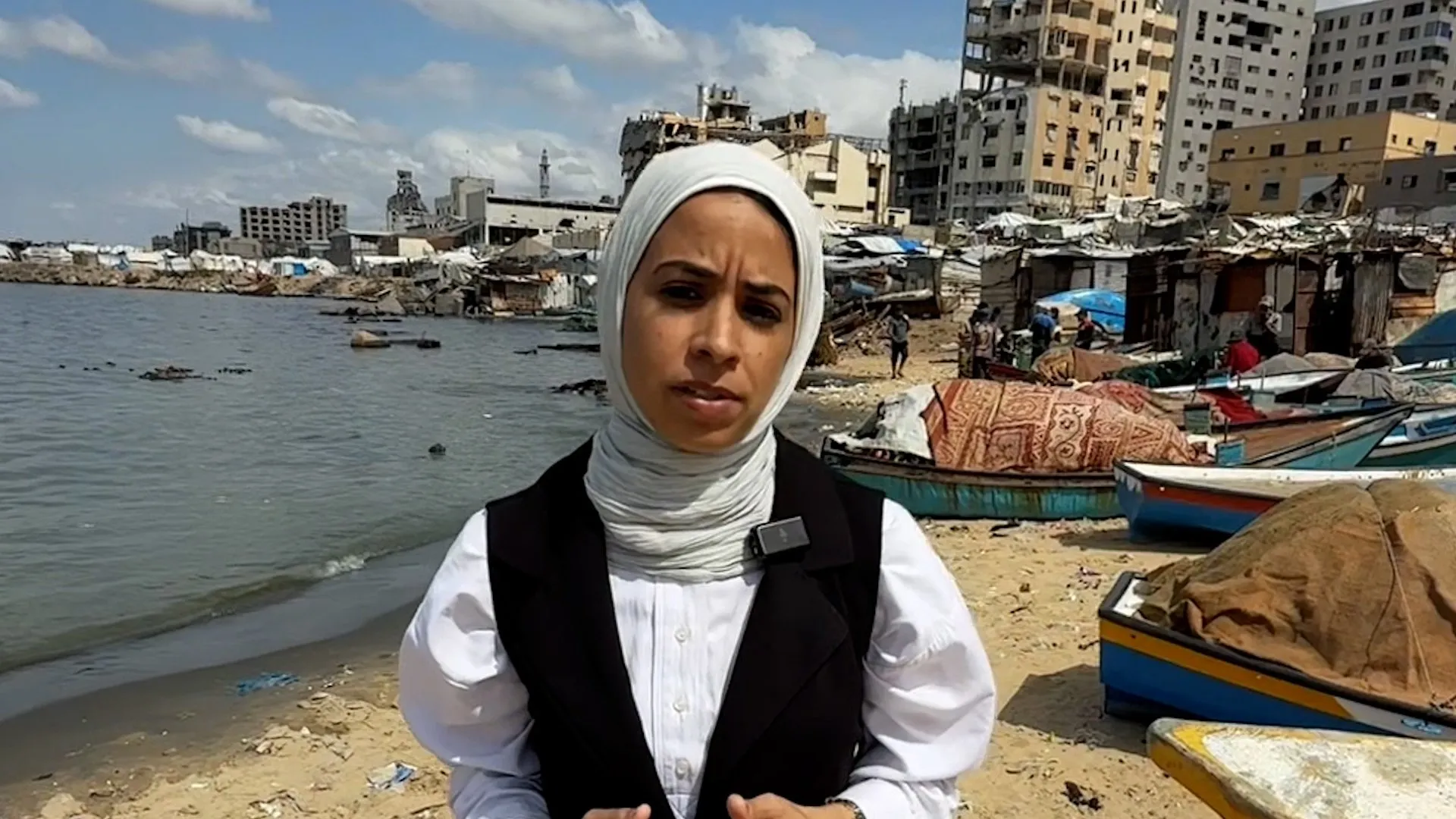
Israel airstrike kills at least two Palestinians at Gaza port | Gaza News

NewsFeed

At least two Palestinians were killed and around a dozen wounded when an Israeli air strike hit a crowded cafe at Gaza’s seaport. Witnesses said people had gathered there to escape the heat and enjoy a public holiday, as attacks continue despite an October ceasefire.

Source link