General

Blanche to face questions about his independence at attorney general confirmation hearing

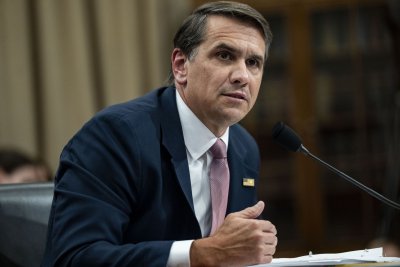
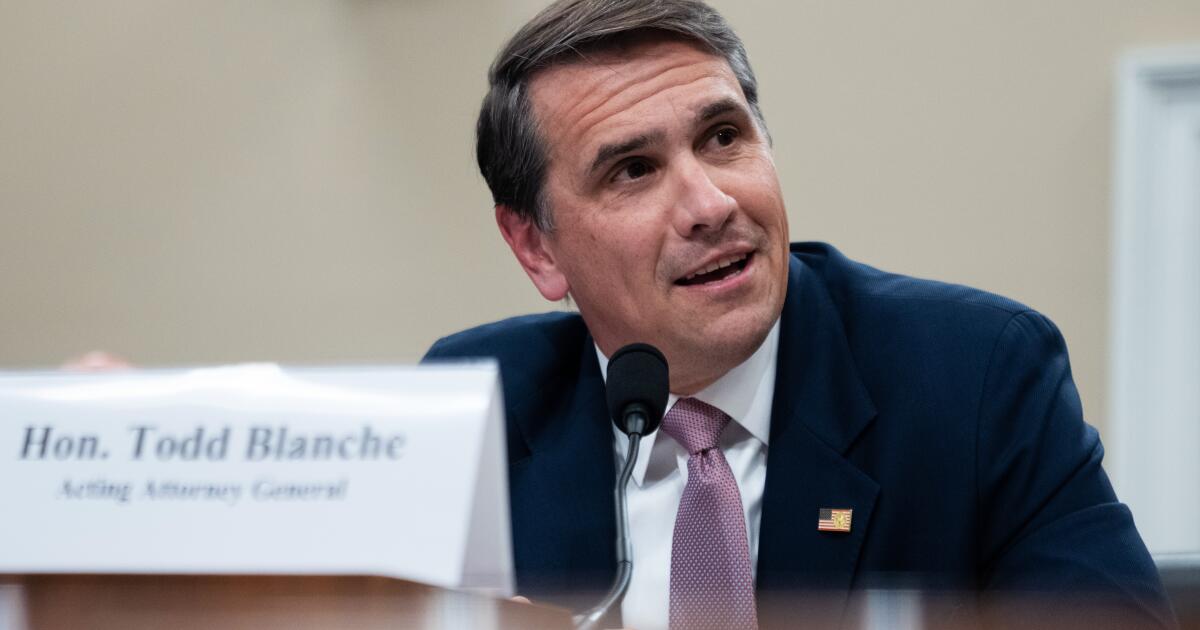
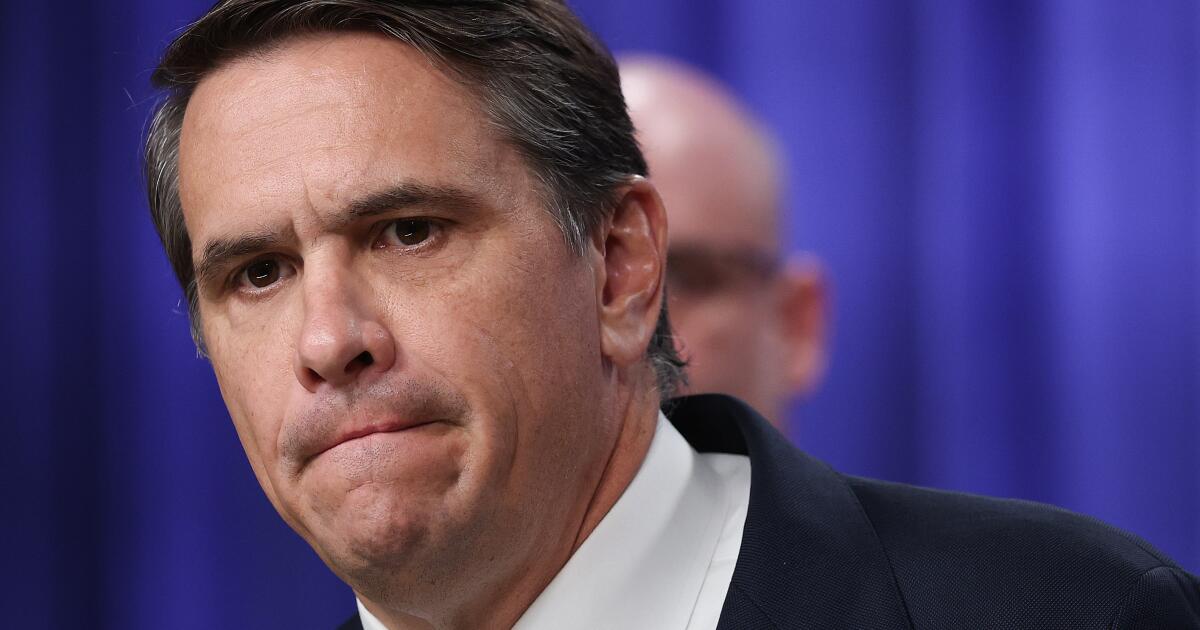
The Senate confirmation hearing Wednesday for Todd Blanche, President Trump’s pick for attorney general, will be a referendum on far more than his individual merits.

Blanche, the acting attorney general, served as Trump’s defense attorney before taking office and has been closely linked to many of the most consequential — and controversial — issues that have dominated the first two years of Trump’s second term.

Blanche is set to appear before the Senate Judiciary Committee, which will decide whether to approve his nomination and send it to the full Senate for a confirmation vote. The committee hearing will continue Thursday.

“I would expect committee Democrats to treat Mr. Blanche’s hearing as an opportunity to conduct oversight of the Department of Justice,” said Phil Brest, president of the American Constitution Society, a progressive legal nonprofit and a former top Democratic staffer on the committee. “It’s a test of the Senate’s willingness to probe the department’s operations and to actually serve as a check on the department and the administration more broadly.”

Democrats on the committee are expected to push Blanche on a host of topics, including the $1.8-billion “anti-weaponization fund” that critics derided as a slush fund for the president’s allies, the Justice Department’s rollout of the so-called Epstein files, and the department’s prosecution of several perceived enemies of Trump, notably former FBI Director James Comey.

“While deploying the Justice Department as a shield for the president and his cronies, Blanche has also used our top law-enforcement agency as a sword against Trump’s political opponents,” said Sen. Dick Durbin (D-Ill.), the ranking Democrat on the committee last month. “The independence of DOJ has been decimated under Blanche’s authority.”

Blanche was confirmed by the Senate as deputy attorney general in March, 2025, and was elevated to his current role after Atty. Gen. Pam Bondi was fired in April.

More critical to the success of Blanche’s nomination will be whether he can win the support of two lame-duck Republican senators, Thom Tillis of North Carolina and John Cornyn of Texas, who expressed some reservations about Blanche soon after his nomination was announced.

Cornyn raised concern about Blanche’s independence from Trump, while Tillis said Blanche’s stance on protesters who violently stormed the U.S. Capitol on Jan. 6, 2021, would be critical to his consideration.

Some of those Jan. 6 protesters were expected to be the beneficiaries of the $1.8-billion fund announced as part of a settlement to a lawsuit Trump and his sons and business brought against the IRS.

In a scathing ruling this week, the federal judge wrote that the lawsuit was improper and recommended sanctions against two Justice Department attorneys who worked on the case, though not Blanche himself.

Cornyn told Semafor on Tuesday that the ruling raised a number of issues, including “the potentially collusive nature of the lawsuit.”

He has said previously that he will hold off on making a decision about whether to approve Blanche until after the hearing.

Tillis, meanwhile, told CNN’s Manu Raju on Tuesday that the weaponization fund would need to be completely off the table for him to support Blanche’s nomination.

Trump touted Blanche’s record ahead of the hearing.

“Todd Blanche is doing a PHENOMENAL job as Acting Attorney General of the United States,” the president wrote on Truth Social. “He is a great lawyer, always very fair, and every Republican Senator should vote to CONFIRM Todd Blanche, ASAP!”

Sen. Lindsey Graham’s death means that Republicans currently only enjoy a one-seat majority, but a replacement for Graham on the committee could be in place before it votes on whether to move his nomination to the Senate floor, which will likely come two weeks after the hearing.

Blanche, 51, spent 12 years working for the U.S. attorney’s office for the Southern District of New York, working largely on drug and violent crime cases, and rose to the level of co-chief of the district’s White Plains division.

He left the office in 2014 for private practice and joined the prominent law firm Cadwalader, Wickersham & Taft in 2017 as a partner. He left the firm in 2023 and went independent after other partners expressed concern when he took Trump on as a client.

Blanche went on to represent Trump in several criminal matters, including the New York case about hush money payments to porn star Stormy Daniels, and cases brought by Special Counsel Jack Smith about Trump’s alleged efforts to block the transfer of power after the 2020 presidential election and his alleged retention of classified documents.

He listed all three as among the 10 most significant cases of his career in the questionnaire he completed ahead of the hearing, along with his work at the Justice Department on a lawsuit challenging the construction of a new White House ballroom.

A group of more than 1,200 former Justice Department attorneys wrote a letter opposing Blanche’s nomination, asserting that his leadership has resulted in mass departures of career staff. That has “meant that much of the department’s vital work isn’t being done, or isn’t being done as well – leaving communities less safe, Americans’ rights less protected, and our national security more vulnerable,” the lawyers wrote.

Former Justice Department pardon attorney Liz Oyer is scheduled to testify as a witness for Democrats on Thursday. She has said she was fired for refusing to recommend the restoration of actor Mel Gibson’s gun rights.

Oyer will be joined Thursday by Dani Bensky, one of many victims of the deceased sex abuser Jeffrey Epstein who has criticized Blanche’s handling of the release of the so-called Epstein files — millions of pages of records detailing the Justice Department’s investigations into Epstein’s crimes.

Numerous victims have said that their names and other sensitive information were not properly redacted in the files and criticized Blanche and the department for failing to investigate Epstein’s potential co-conspirators.

Blanche has also come under criticism from survivors of Epstein’s abuse for the interview he conducted in July, 2025, with Epstein accomplice Ghislaine Maxwell, who is serving a 20-year prison sentence for her role in facilitating and participating in Epstein’s abuse.

Days after their interview, Maxwell was moved from her prison in Florida to a minimum-security prison in Texas.

Source link

Sparks fire general manager Raegan Pebley amid lackluster season

The Sparks’ ownership made a major shift in direction on Sunday, firing general manager Raegan Pebley amid a lackluster season that has the team just below the WNBA playoff cutoff line and far from the title-contending form Pebley promised.

Assistant general managers Zach Knowlton and Nate Nielsen will split interim GM duties, the team announced.

“We are grateful to Raegan for her leadership and commitment to the Los Angeles Sparks and women’s basketball,” Sparks managing partner and governor Eric Holoman said in a statement. “Her work on the Sparks roster and player experience will have a lasting positive impact on our organization. We sincerely thank her for all she has invested in the Sparks and wish her success in her next chapter.”

The Sparks (10-11) sit in ninth place in the WNBA standings, one removed from the last playoff spot. The team is coming off back-to-back wins over the Chicago Sky and Indiana Fever, which followed a three-game losing streak.

“There is a united vision from ownership to leadership, and then I think it’s discipline,” Pebley told The Times in an interview before Friday’s game. “I think you can make a lot of mistakes if you use recency bias, and if you become really reactionary. We want to respond to the things that we’re seeing that we want to grow in, but we don’t want to just demonstrate a lack of discipline and quickly react that way.”

The Sparks have won three WNBA titles, the most recent in 2016, but the franchise has not made the playoffs since 2020.

Leading scorer Kelsey Plum has missed two long stretches because of injuries, but the biggest headache for the team for much of the season has been its poor defense.

Under Pebley’s direction, the Sparks hired coach Lynne Roberts and acquired Plum and Nneka Ogwumike, a former most valuable player with the team. Roberts, however, had been the coach at the University of Utah and had no WNBA experience. Despite the team’s struggles, Pebley gave Roberts a vote of confidence on Friday.

Sparks GM Raegan Pebley speaks during a news conference introducing new guard Kelsey Plum.

Sparks general manager Raegan Pebley, left, speaks during a news conference introducing new guard Kelsey Plum, center. They are joined by Sparks coach Lynne Roberts.

(Ringo Chiu/For The Los Angeles Times)

“She has been all we were looking for and more,” Pebley said. “We wanted someone who had that emotional regulation; she stays neutral. I think the days of a tyrant head coach are over.”

The Sparks’ offseason personnel moves included trading popular first-round draft pick Rickea Jackson to make the roster older, one that Pebley said could better position the team for a title run.

“Loved having her here … she’ll be successful wherever she goes,” Pebley said of Jackson shortly after the trade. “But we’re focused on winning a championship and finding that fit and balance and getting all those pieces locked in with each other.”

Pebley’s other moves included trading the No. 2 pick in the 2025 draft, which became Seattle center Dominique Malonga, for Plum, and trading the Sparks’ first-round pick this year, which became third overall selection Awa Fam, for Kia Nurse and the No. 4 pick in 2024, which the Sparks used to select Jackson.

Instead of demonstrating marked improvement, the Sparks have struggled with consistency, at times showing their potential, as in a win at Las Vegas, a dramatic come-from-behind win against New York on the league’s 30th anniversary and a defensive shutdown of Fever guard Caitlin Clark last week.

With the trade deadline less than a month away, Pebley had expressed excitement about the return of Plum and Cameron Brink.

“Knowing those two are going to be added into a group that’s continued to be able to get better in their absence,” she said, “I think we have a right to be optimistic.”

The franchise found itself in the middle of some controversy with reports that the Sparks were among more than half the players in the league who did not complete their All-Star starter ballots. The ballots were emailed to players, but they reportedly did not see them in time to vote. Plum was not named a starter despite leading the WNBA in scoring at the time votes were cast, although it’s unclear whether full player participation would have altered a decision calculated by combining player, fan and media votes.

“That’s something we take responsibility for as an organization, and we’ll have a more robust process going forward,” the Sparks said in a statement.

Soon afterward, the Sparks’ director of communications left the team.

The Sparks hired Pebley in January 2024 to help the former WNBA champions break out of their playoff drought.

A third-round pick by the Utah Starzz in the WNBA’s inaugural 1997 draft, Pebley was the coach at Utah State (2005 to 2012) and Fresno State (2012 to 2014) before a nine-year stint at Texas Christian, where she led the Horned Frogs to four WNIT appearances in her first five years before stepping down in 2023 as TCU finished 8-23. She was a TV analyst for the Dallas Wings from 2016 to 2023.

Source link

A grand jury indicts Louisiana’s attorney general in a fight over changes to New Orleans courts

Louisiana’s attorney general has been indicted over accusations she threatened the jobs of New Orleans leaders who fought a Republican-led overhaul of local courts in the heavily Democratic city.

The 16-count indictment against Republican Liz Murrill, handed up Thursday by a New Orleans grand jury, charges Louisiana’s first female attorney general with intimidation and malfeasance.

At the center of the case are deepening rifts between state leaders in Louisiana, which is heavily Republican, and Democrats who control the state’s most prominent city.

Republican Gov. Jeff Landry promised a swift pardon, saying Murrill would not have her reputation tarnished by an “Orleans kangaroo court.” Mayor Helena Moreno, a Democrat, was among those who had accused the state’s top law enforcement official in May of making threats against public officials.

Murrill called the case against her “retaliatory, meritless, and unconstitutional.” Late Thursday, Murrill said she had filed for an emergency stay with the Louisiana Supreme Court.

“I will not back down. I will continue enforcing the law, fighting corruption, and doing the job the people of Louisiana elected me to do,” she wrote on X.

For months, political tensions intensified between Louisiana Republicans and New Orleans officials over a new law that abolished a court clerk office won by an exoneree, Calvin Duncan, who spent nearly three decades in prison. The change consolidated that job with another clerk’s office, which Republican supporters said would make the local judicial system more efficient.

The change was staunchly opposed by New Orleans leaders, and in May, the City Council set a special election that would have given Duncan a chance to win the newly combined job. Murrill responded by warning local officials in letters that they could lose their offices for violating state “usurper” laws, which forbid support for an unauthorized officeholder.

“We’re very interested in elected officials in New Orleans not being intimidated or threatened by letter or any other way,” special prosecutor Laurie White told reporters.

Bond for Murrill was set at $400,000 on Thursday, according to court records.

Landry said he was ordering state police to investigate what he called “alleged improprieties” of the grand jury and those who ran it.

“The criminal justice system is a circus at its finest in Orleans and we will not have any of that!” he wrote on X.

The Republican Attorneys General Assn. said that making statements to local officials — in writing — was simply “issuing a legal opinion and warning public officials about the law” as part of her official duties. It called the indictment “as outrageous as it is dangerous.”

Moreno, who was elected in January and was defiant after Murrill sent the letters, on Thursday called it a “matter for the courts” and did not directly address the allegations.

“My focus, as always, remains on fulfilling the responsibilities the people of New Orleans elected me to carry out,” Moreno said.

Duncan has said he believes state officials were retaliating against him in eliminating the job he won with 68% of the vote. Murrill and Landry have long refused to acknowledge his innocence, though he’s listed on the National Registry of Exonerations.

Republicans have said the change was not personal and supporters have noted that the offices of criminal and civil clerks of courts are combined in other parishes.

Duncan was a jailhouse lawyer who later graduated from law school. He founded a nonprofit dedicated to expanding incarcerated people’s access to the court system and was the driving force behind a 2020 U.S. Supreme Court decision that ended nonunanimous jury convictions.

Duncan spent more than 28 years in prison over a fatal shooting during a robbery in 1981.

The night before a 2011 hearing to consider new evidence, prosecutors offered to reduce Duncan’s sentence to the time he’d already served in prison if he pleaded guilty to manslaughter and armed robbery. Duncan took the deal and was freed but didn’t give up on clearing his name.

In 2021, a judge agreed that Duncan had been unjustly convicted and vacated his sentence altogether. Landry and Murrill have pointed to the 2011 plea deal in objecting to Duncan calling himself exonerated.

Riddle and Hanna write for the Associated Press. Associated Press reporter Jack Brook in New Orleans contributed.

Source link

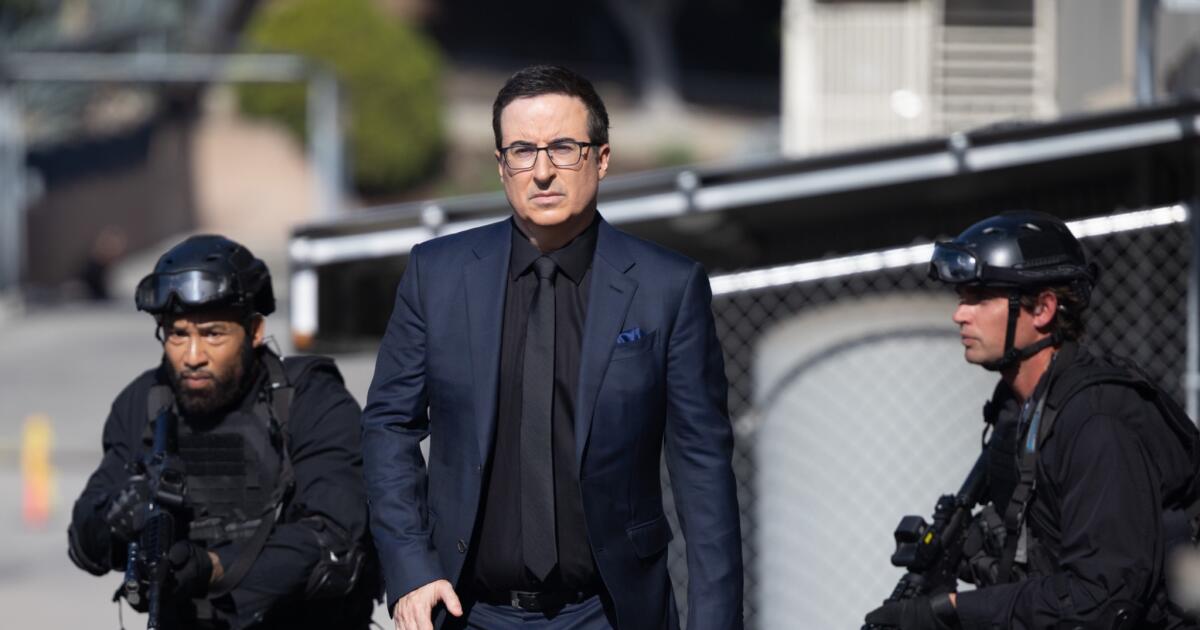
John Oliver scores roles on ‘General Hospital’ and ‘Days of Our Lives’

It’s no joke: John Oliver of HBO’s “Last Week Tonight” is checking into “General Hospital,” the ABC soap opera.

The host of the weekly series that takes sharply comedic aim at government and institutions announced during his June 28 episode that he will appear on the daytime soap “General Hospital” on July 2, 3 and 6. No details about his role were revealed except that it will be a “substantial guest role.”

And that’s not the only soap he’ll be in this summer. He will also have a role on “Days of Our Lives,” streaming on Peacock, on Aug. 11, 12 and 14.

The appearances are the culmination of Oliver’s pleas to soap opera producers during the March 8 installment of his show that they consider him for a part. An unapologetic devotee of the outrageous antics and high melodrama which characterize the genre, Oliver said, “Write me a role and I will be on your set so fast it will make your head swim.”

In a statement, Oliver celebrated the realization of his dream: “‘General Hospital’ was everything I hoped it would be. It’s a true honor to be a small stain on the history of this illustrious show.”

The series’ executive producer Frank Valentini said in a separate statement that Oliver made an offer they could not refuse.

“When John Oliver publicly threw down the gauntlet and said he wanted to appear on a soap, we didn’t hesitate for a second,” he said. “He was everything you’d hope he’d be: prepared, professional, funny, and genuinely kind to everyone on set. He plays an integral character in the story, and I can’t wait for fans to see who he crosses paths within Port Charles.”

“General Hospital,” which airs weekdays on ABC and streams on Hulu, is in its 64th year and stands as the longest-running American soap opera currently in production.

On the March 8 episode, Oliver said he was jealous of celebrities such as Katy Perry, Snoop Dogg and Smokey Robinson who would pop up on various soaps. He was particularly envious of sports pundit Stephen A. Smith who has had a recurring role on “General Hospital,” playing a shady figure known only as “Brick.”

Oliver made it clear that he was not interested in a brief walk-on playing himself. He wanted to play a character, and have a “juicy role” that involved murder or “slapping.” He also required that there be a close-up of his face.


Source link

Angels fire general manager Perry Minasian, appoint interim GM

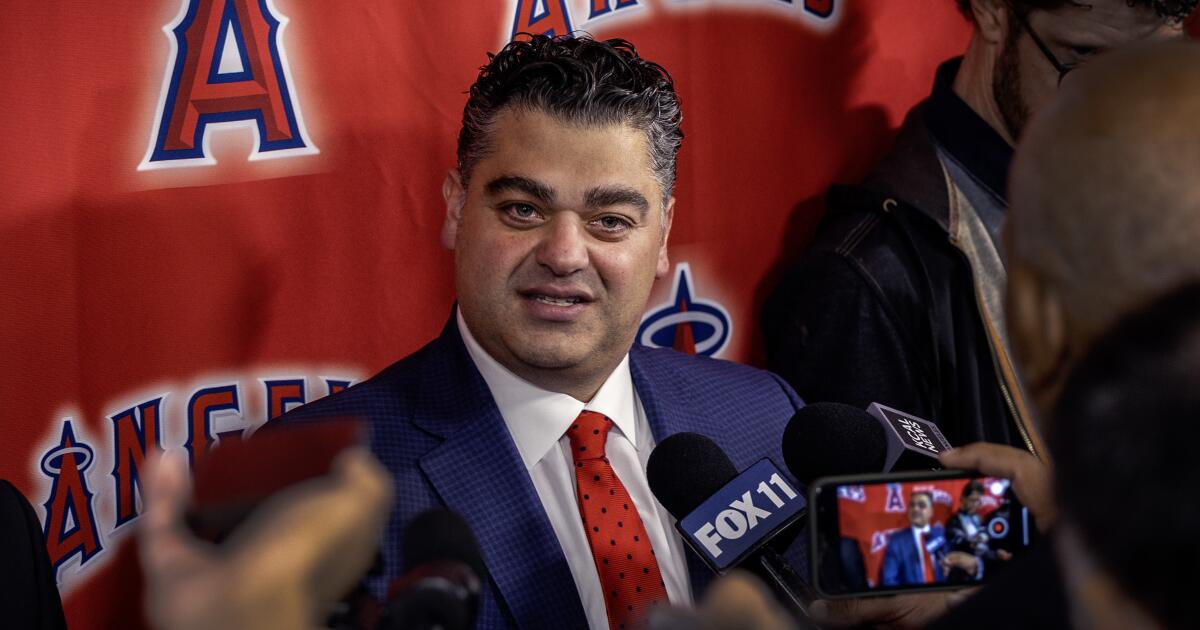
The Angels have fired general manager Perry Minasian midway through their sixth consecutive disappointing season under his leadership.

The last-place Angels appointed former Cardinals GM John Mozeliak to be their interim general manager and baseball operations consultant on Friday. Mozeliak will oversee day-to-day baseball operations while assisting the search for the next GM, team president Molly Jolly said in a news release.

“Perry has been a valued leader who worked tirelessly over the last six years to strengthen our baseball operations department,” Jolly said. “I am grateful for his dedication, insight and many contributions to our organization.”

Minasian took over the Angels’ front office in November 2020, but the long-struggling franchise has made no discernible progress during his tenure under mercurial owner Arte Moreno.

The Angels’ streaks of 10 straight losing seasons and 11 straight non-playoff seasons are both the longest in the majors, and its farm system is still considered to be among the majors’ worst, just as it was when Minasian arrived.

The biggest transaction of his tenure occurred when Shohei Ohtani left the Angels after six seasons for the Dodgers in late 2023, the Angels failing to trade Ohtani for prospects before Ohtani became a free agent.

Minasian’s flurry of moves before and after the 2023 trade deadline seemed chaotic. The Angels kept Ohtani — a decision Moreno had a big hand in — and dealt away several prospects in an attempt to push for the playoffs.

But the Angels went 8-19 that August and fell so far out of contention that they placed several players on waivers in order to bring their payroll under the luxury tax threshold.

After holding the majors’ worst record for much of the current season, the Angels are tied for last in the AL standings at 34-48 heading into their game against the Athletics on Friday night at Angel Stadium. Los Angeles lost a franchise-record 99 games in 2024, its first season after losing two-time AL MVP Ohtani.

The Angels never won more than 77 games or finished higher than third in the AL West during Minasian’s tenure.

Minasian clashed with respected manager Joe Maddon early in his tenure, eventually leading to Maddon’s firing amid an epic losing streak in the 2022 season. After Phil Nevin and Ron Washington also failed to hold the managerial job for more than two seasons, Minasian hired first-time manager Kurt Suzuki from his own front-office staff last fall, giving him a one-year deal with the acknowledgment that their fates were tied.

Ray Montgomery served as interim manager in 2025.

A reduction in payroll forced Minasian to supplement this year’s team with low-cost players — several returning from major injuries — such as pitchers Alek Manoah, Jordan Romano, Drew Pomeranz, Kirby Yates and Brent Suter, outfielder Josh Lowe and infielders Yoan Moncada and Adam Frazier.

Most of the moves didn’t pan out, as Romano and Pomeranz were released, and Manoah, Lowe and Moncada have been busts.

The largest free-agent deal signed by Minasian was a three-year, $63 million contract for left-hander Yusei Kikuchi before 2025. Kikuchi was an All-Star last season but has been sidelined since late April because of a shoulder injury.

Minasian also signed reliever Robert Stephenson to a three-year, $33 million deal before 2024, but the right-hander is out for this season because of another elbow injury.

Jolly and Mozeliak are scheduled to speak at a news conference on Saturday.

Minasian is a former Rangers clubhouse attendant who rose to positions in the front offices of the Atlanta Braves and the Toronto Blue Jays as a protege of Alex Anthopoulos.

Minasian had never interviewed for a GM job before he was chosen to replace Billy Eppler by Moreno, who has repeatedly hired GMs with little to no prior experience in the job during his two decades of ownership.

Mozeliak left the Cardinals last fall after three decades with St. Louis, including the past 18 in charge of baseball operations.

Source link

Los Angeles Rep. Xavier Becerra poised to become California’s first Latino attorney general

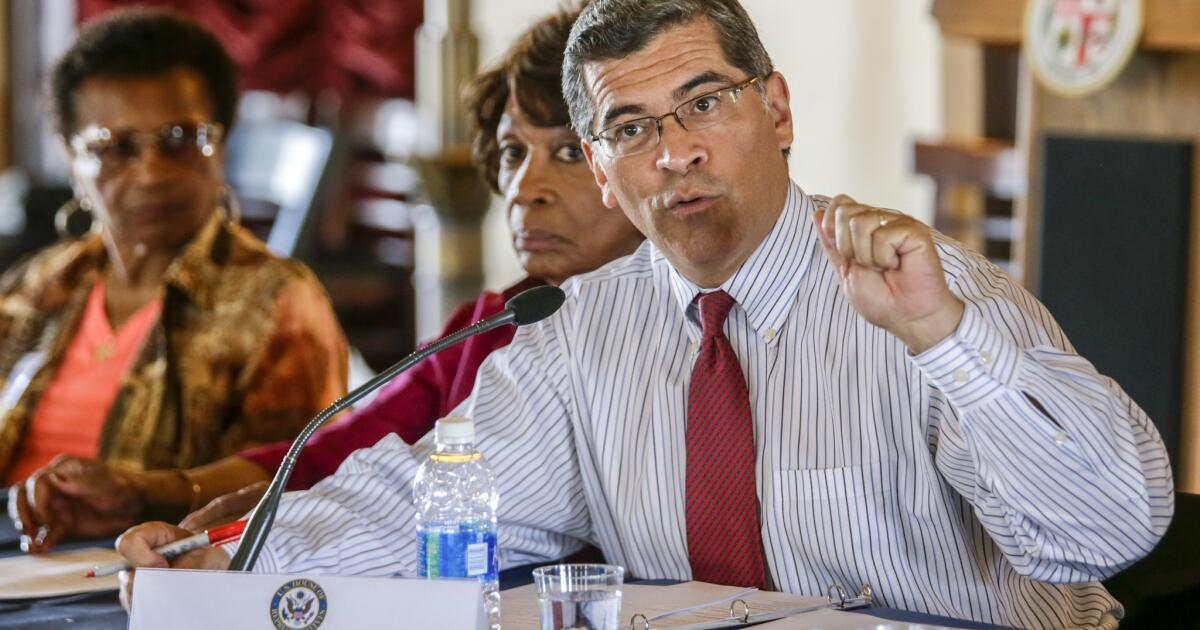
In a move that suggests a sharp battle to come with the administration of President-elect Donald Trump and upends conventional wisdom about who will emerge as the next generation of statewide elected officials, Gov. Jerry Brown picked House Democratic Caucus Chairman Xavier Becerra (D-Los Angeles) on Thursday to be California’s next attorney general.

If confirmed by both houses of the Legislature, he will succeed Kamala Harris, who was elected to the U.S. Senate in November.

Becerra, 58, has served 12 terms in Congress. Just days before the appointment, he had announced a bid to become the ranking Democrat on the powerful House Ways and Means Committee.

“It’s a phenomenal opportunity,” Becerra said. “It means I get to be home a lot more.”

Few statewide offices are as powerful, or prominent, as that of attorney general. The role has often been referred to as the state’s top lawyer and its top law enforcement officer, a nod to the breadth of responsibilities vested in the office and its leadership of the California Department of Justice.

Attorneys general not only must pursue cases of criminal and civil wrongdoing, they oversee criminal forensic work for most counties and make the final choice about defending state laws — even crafting the language that summarizes ballot measures for voters.

Becerra was beaming during an interview in his House office Thursday morning shortly after Brown offered him the job.

“I’m still processing,” Becerra said with a laugh. “I didn’t expect it.”

Becerra would be the state’s first Latino attorney general. The son of Mexican immigrants, he was the first member of his family to attend college, earning a law degree from Stanford Law School and a bachelor’s degree in economics from Stanford University. Elected to a two-year term in the state Assembly and then to the House in 1992, he rose through the ranks to become the highest-ranking Latino in Congress.

Becerra worked in the civil division of the state attorney general’s office, writing advisory opinions for former Gov. George Deukmejian, a Republican, and defending the state’s constitutional officers from 1987 to 1990 before entering the Assembly. He said he had always wanted to return to the office.

“It was a great place to be,” he said.

Brown’s pick was so sudden that Becerra has not yet had time to reactivate his state law license, though he would not be the first attorney general to have to do so. Inactive status allows attorneys to hold on to their licenses when they are not actively practicing law.

Becerra would also be the first attorney general appointed by a governor since Thomas Lynch, who was chosen by former Gov. Pat Brown in 1964. Few political appointments are likely to be as personal to the current governor as this one, given his own four-year stint as attorney general starting in 2006 and the fact that his father used the office as a steppingstone to governor more than five decades ago.

“Xavier has been an outstanding public servant — in the state Legislature, the U.S. Congress and as a deputy attorney general,” Brown said in a statement. “I’m confident he will be a champion for all Californians and help our state aggressively combat climate change.”

The choice sent political shock waves through California, in large part because Becerra was not on any of the widely circulated lists of potential picks. Brown had offered no details on whom he would pick or when.

Many suspected that he might choose a caretaker, perhaps even a career staffer who would simply carry out the office’s functions through the 2018 election. Virtually no Democrats who heard the news on Thursday believed that Becerra would be that kind of officeholder.

“He has the smarts, political experience and ambitions to run and win reelection,” said state Sen. Steve Glazer (D-Orinda), a former top political adviser to Brown.

If Becerra serves less than two years of Harris’ existing term, he could be eligible to run for up to two additional terms — eight years — as attorney general. Harris has said she plans to hold the position until she is sworn in to the Senate on Jan. 3, and at that point Brown could officially nominate Becerra.

Becerra said Thursday he’s thinking about the confirmation process at this point and not whether he’ll run for a full term as attorney general or another office in 2018. He must be confirmed by the state Senate and Assembly, both controlled by Democrats. Becerra said he hasn’t been told when a confirmation vote might happen.

Earlier, Becerra had flirted with a bid for U.S. Senate when Sen. Barbara Boxer (D-Calif.) announced plans to retire, but Harris’ quick entry into the race kept him and other California Democrats from running.

Holding such a prominent statewide post would raise Becerra’s profile as the Golden State’s foil to Trump, potentially setting him up to run for governor or U.S. Senate in the future. The attorney general, by virtue of the office’s broad power, will likely be a key player alongside Brown in pushing back against Trump’s proposed efforts on issues important to California, including immigration and climate change. In Texas, a state that has its own experience fighting the federal government, attorneys general have been a major force in the battle over states’ rights.

“He has great tenacity and he respects the rights of all Californians — much-needed qualities for an attorney general given the troubling times ahead,” Assembly Speaker Anthony Rendon (D-Paramount) said Thursday.

Several congressional colleagues echoed that sentiment.

“Many of the values that we stand by in California will be under attack in the next few years, and Chairman Becerra is the fighter I want in our corner,” Rep. Tony Cardenas (D-Los Angeles) said in a statement.

Becerra said that with Trump headed to the White House, he’s prepared to protect California’s progressive policies on immigration, the Affordable Care Act, energy and criminal justice. As California politicians embrace their roles in guarding the state against Trump’s policies, Becerra threw down his own gauntlet Thursday.

“If you want to take on a forward-leaning state that is prepared to defend its rights and interests, then come at us,” Becerra said.

A vocal advocate for Hillary Clinton’s presidential bid, Becerra was briefly floated as a potential pick for vice president or a Cabinet position. With Clinton’s loss Nov. 8 and no upward mobility available in House leadership, Becerra’s future political career was unclear.

He’d reached the time limit on serving as caucus chairman, the fourth highest-ranking House Democratic leadership position, and with House Minority Leader Nancy Pelosi (D-San Francisco) and the other two Democrats above him in leadership staying put, there was no path up the ladder headed into the next Congress.

Becerra serves on the powerful House Ways and Means Committee, and made a play as recently as Tuesday to be the committee’s ranking Democrat. He was quickly endorsed by the current ranking member, Rep. Sandy Levin (D-Mich.), who said in a statement Thursday that he respects that Becerra “feels a special responsibility during these difficult times to look after vital legal interests in his home state.”

Democrats across California reacted Thursday with effusive praise for Becerra. Lt. Gov. Gavin Newsom called him “a thoughtful and effective leader, with a keen legal mind and a passion for giving a voice to the voiceless.”

In particular, some pointed out the importance of elevating a Latino politician to statewide office, alongside both Latino leaders of the Legislature and Secretary of State Alex Padilla.

“It’s good for the state’s future,” said Bill Lockyer, who served as attorney general from 1999 to 2007.

The announcement also meant early guessing as to who would replace Becerra in representing downtown Los Angeles and communities to the west and north in Congress. Becerra won reelection in November in the solidly Democratic district. A special election to fill the seat would probably take place in late spring of 2017, though the law gives Brown wide discretion on the precise schedule.

John A. Pérez, the former Assembly speaker and current University of California regent, announced his bid less than an hour after Brown’s announcement, and more contenders may follow.

sarah.wire@latimes.com; john.myers@latimes.com

Follow @sarahdwire and @johnmyers on Twitter

Read more about the 55 members of California’s delegation at latimes.com/politics

ALSO

After beating back rival for House leadership post, Nancy Pelosi says Democrats are ready for Trump

Trump seems ready to fight the world on climate change. But he’s likely to meet resistance

Updates on California politics


Source link

USAF Orders Both General Atomics’ FQ-42 And Anduril’s FQ-44 Into Production

The U.S. Air Force has awarded contracts for the production of General Atomics FQ-42A Dark Merlin and Anduril FQ-44A Fury drones. This sets the service up to operate a split initial fleet of Collaborative Combat Aircraft (CCA), something TWZ has highlighted as being a distinct possibility from the start.

The Air Force down-selected the designs from General Atomics and Anduril to move ahead as part of the first incremental development cycle of its CCA program, or Increment 1, back in 2024. What were originally designated the YFQ-42A and YFQ-44A first flew in August and October 2025, respectively, and have been undergoing further testing since then. Dark Merlin testing was paused earlier this year after one of the drones crashed, but has resumed.

A trio of YFQ-44A drones. Anduril
Three YFQ-42As in a row. GA-ASI

“By moving fast from competitive selection into full-scale manufacturing, we position ourselves to field highly credible and combat-ready semi-autonomous systems to stay ahead of the pacing challenge,” Secretary of the Air Force Troy Meink said in a statement today. “These contracts reaffirm our confidence in the strategic path forward for the program to procure over 150 combat capable CCA by the end of the decade.”

The Air Force says these contracts were awarded four months ahead of schedule, reflecting “that the FQ-42 and FQ-44 meet rigorous mission requirements and are ready for full-scale manufacturing.” At the time of writing, the service does not appear to have provided an update on the expected delivery timeline of the first production CCAs, but it has said in the past that it is hoping to have the first examples in operational service toward the end of the decade. Air Force has asked for nearly $1 billion in its 2027 Fiscal Year budget request to begin procurement of these drones.

“Under the contract, Anduril will deliver an initial set of production FQ-44 semi-autonomous fighter aircraft to support continued testing, validation, and, ultimately, operational fielding,” Mark Shushnar, Anduril’s Vice President for Autonomous Airpower, also wrote in a blog post today. “The contract also establishes a structure for the Air Force to buy additional lots of production FQ-44 aircraft across the next several years, providing a clear path for the Air Force to rapidly and affordably expand fighter capacity.”

A Fury drone carrying an inert AIM-120 air-to-air missile during a flight test. USAF

“This is an exciting day for our company and the nation,” David Alexander, President of General Atomics’ Aeronautical Systems, Inc. division (GA-ASI), said in his own statement. “Moving to production on FQ-42A is the result of an extraordinary partnership and many years of investments between General Atomics and the U.S. Air Force. We’ve been preparing for this order, and manufacturing is already well underway.”

A YFQ-42A in flight. General Atomics

A split-buy of Dark Merlin and Fury drones will help drive down risk. The designs are also very different, which opens the door to more operational possibilities for the Air Force right from the start. General Atomics and Anduril can also then focus on refining the respective strengths of their uncrewed aircraft. As noted, TWZ has pointed out on several occasions that a mixture of uncrewed platforms with different attributes would be needed to truly do justice to the CCA concept.

Furthermore, the Air Force making this decision still deep in the developmental phase also underscores how critical the service sees CCAs, and its desire to push ahead with getting at least an early iteration of the capability into service.

“Collaborative Combat Aircraft change how we project power and generate mass in highly contested environments,” Air Force Chief of Staff Gen. Ken Wilsbach said in a statement today. “Delivering this capability to our warfighters faster ensures our forces maintain the tactical edge required to deter and, if necessary, defeat any adversary.”

The Air Force has also further split the CCA effort into hardware and software segments, with airframe development falling into the former category.

“These distinct efforts validate acquisition transformation principles to secure a critical operational advantage: decoupling hardware from software,” according to an Air Force press release today. “By treating mission autonomy as ‘software sold separately,’ the Air Force ensures that the warfighter receives state-of-the-art physical platforms alongside agile, easily updatable software, effectively breaking traditional procurement molds.”

Anduril and General Atomics, as well as Lockheed Martin, Northrop Grumman, RTX Collins Aerospace, and Shield AI form the current vendor pool for the software side of the CCA program. The Air Force announced today that it had awarded additional mission autonomy contracts to Anduril, Collins, and Shield AI. Anduril is notably the only company currently with CCA contracts on the hardware and software sides.

Collaborative Mission Autonomy thumbnail

Collaborative Mission Autonomy


“This targeted award, based on the vendors’ ability to meet aggressive schedule and affordability requirements, will fund the first of two six-month competitive phases designed to speed the fielding of operational software to the warfighter,” according to an Air Force release. “While the baseline contract establishes a continuous competitive arena, the competitive awards are designed to deliver capability faster. Following the initial six-month period, the Air Force will evaluate the vendors’ progress and execute a second competitive award period. This performance-based competition will culminate in the selection of a primary mission autonomy provider for CCA Increment 1, with award planned for selection by summer 2027.”

“Furthermore, this software contract leverages a first-of-its-kind award fee exposure strategy, which enables operator feedback and combat performance to determine what the Air Force pays for mission autonomy. The Air Force will only pay the entire licensing fee if a vendor provides a combat capability aligned with warfighter needs and feedback,” the release adds. “The licensing approach also allows the Air Force to award software licenses to any of the six vendors within the pool at any point over the next six years. This approach ensures the Air Force can procure the best-performing and most affordable solutions as technology evolves.”

More government ownership of key intellectual property, and software in particular, has become a central guiding principle for the U.S. military contracting, in general, in recent years. When it comes to autonomy software packages, there is also now a core government-owned Autonomy Government Reference Architecture (A-GRA) that goes beyond the Air Force’s CCA program.

“Today, Lattice for Mission Autonomy is fully A-GRA compliant, ensuring that it can be integrated not only with all Increment 1 CCA, but with the full spectrum of current and future A-GRA compliant aircraft,” Anduril’s Shushnar highlighted in his blog post. “Through the A-GRA, the CCA program has established the foundation that will drive the development of a larger ecosystem of autonomous aircraft.”

Lattice for Mission Autonomy: An Unfair Advantage for Unrivaled Deterrence thumbnail

Lattice for Mission Autonomy: An Unfair Advantage for Unrivaled Deterrence


Shield AI’s Hivemind software is also already flying on a number of different drones.  Just last month, the Pentagon announced that it would be using this autonomy package to introduce swarming capabilities to its Low-Cost Uncrewed Combat Attack System (LUCAS) kamikaze drones.  

Shield AI flies Hivemind AI Pilot on 6th Aircraft thumbnail

Shield AI flies Hivemind AI Pilot on 6th Aircraft


“Mission autonomy is the cornerstone of the CCA concept, and leveraging a competitive, multi-vendor environment ensures we capture the latest technology,” Secretary Meink also said today in another statement. “This approach guarantees our Airmen are equipped with state-of-the-art capabilities today but keeps the door open for the breakthroughs necessary to maintain air superiority.”

In general, greater government control over intellectual property rights also helps avoid the potential to be locked into a single vendor. Establishing vendor pools to compete for follow-on contracts also creates opportunities to lower costs and to diversify supply chains, especially when it comes to hardware. That diversification, in turn, can be beneficial when it comes time to scale up production of both key subcomponents and complete systems.

As far as we know, the Air Force is still planning for at least one more incremental CCA development cycle, or Increment 2, firm requirements for which have yet to be publicly released. This could lead to further diversification of the service’s future CCA fleets. The Air Force has notably already given the YFQ-48A designation to Northrop Grumman’s Talon Blue drone design, which first broke cover in December 2025. Boeing’s MQ-28 Ghost Bat, originally developed for Australia, now has a greater presence in the United States.

The U.S. Marine Corps and the U.S. Navy are also pursuing their own CCA fleets in very close coordination with the Air Force. The Air Force is very much in the lead in fielding drones in this category, which could factor into future Marine and Navy decisions. The Marines are currently planning for their first tranche of MQ-58 Valkyrie CCA drones from Kratos to arrive in 2029. The Navy’s program is still very much in its infancy.

The Air Force’s CCA program has now taken another major step forward toward an initial fleet of drones that will include both General Atomics Dark Merlin and Anduril’s Fury.

Contact the author: joe@twz.com

Joseph is TWZ’s Deputy Editor, helping to oversee the site’s highly experienced and dedicated team, while also writing informative and impactful defense and national security content. He lives right in the thick of it in the Washington, D.C. area.


Source link

Venezuelan Gov’t Signs Deals with General Electric and IMPSA to Boost Electricity Supply

Rodríguez thanked US Chargé d’Affaires John Barrett for helping establish ties with US corporations. (Prensa Presidencial)

Mérida, June 16, 2026 (venezuelanalysis.com) – The Venezuelan government has signed two agreements with foreign companies as part of efforts to bolster the country’s National Electric System (SEN).

On Monday, Acting President Delcy Rodríguez penned a memorandum of understanding with GE Vernova, a company formed from the 2024 breakup of US conglomerate General Electric, at Miraflores Palace in Caracas.

“This memorandum is historic for Venezuela, so we can recover such an essential service for the Venezuelan people,” she stated during a televised broadcast. “I have asked the teams to convert this memorandum into a contract as soon as possible and start the works.”

According to Rodríguez, the agreement will incorporate 1,000 Megawatts (MW) into Venezuela’s electricity grid in the next 24 months, and 5,000 MW over four years. The acting president added that GE technicians have spent “six weeks” in the country assessing conditions of electric equipment.

Rodríguez did not disclose what the deal entails, nor what components of the electric grid will be turned over to GE Vernova, but stated that the plan concerns generation, transmission, and electricity substations.

The Venezuelan acting leader went on to thank US Chargé d’Affaires John Barrett, who was present at the ceremony, for promoting engagement with major US corporations like GE. Company executives Roger Martella and Eric Gray were likewise in attendance. Martella stated that GE’s objective was to quickly reactivate electricity generation. 

“We want to move quickly so the system can work as best as possible in a few months. We already have an agreement on technical details,” he said.

Two days earlier, Venezuelan authorities announced a separate accord with Argentina-based firm Industrias Metalúrgicas Pescarmona (IMPSA) to rehabilitate the Manuel Piar and Antonio José de Sucre hydroelectric projects, known as the Tocoma and Macagua dams. Both are located in the Caroní river, in Bolívar state, which also supplies the Simón Bolívar Hydroelectric Plant, known as the Guri Dam.

The official release indicated that the agreement aims to inject 2,640 MW into the grid. IMPSA President Jorge Salcedo clarified on social media that the company’s initial target is to restore 672 MW of capacity from Tocoma within 19 months. 

“This agreement launches a broader effort to strengthen Venezuela’s power system through a comprehensive plan that could deliver up to 2,160 MW at Tocoma and 480 MW at Macagua over the next five years,” he wrote.

The Tocoma project dates back to the 2000s. In 2008, Venezuela’s state electricity company CORPOELEC hired a construction consortium headed by Brazilian firm Odebrecht to build the dam, with IMPSA tasked with supplying machinery. 

However, despite costs running over US $9.3 billion, more than triple the original $3 billion budget, the project was not culminated. Venezuelan authorities reported that construction was at 90 percent completion in 2016. A $1.2 billion debt owed by CORPOELEC saw IMPSA suspend activities with only two of the ten projected turbines partially installed.

According to Reuters, IMPSA is holding most of the contracted equipment in storage and will replace the missing or obsolete ones with new technology.

IMPSA was temporarily owned by the Argentine state before being privatized by the Milei administration in February 2025. The company was acquired by the US-based consortium Industrial Acquisition Fund (IAF). IAF’s main partner is ARC Energy, headed by close Trump ally and donor Jason Arceneaux.

Venezuela’s electrical system has suffered under years of US sanctions as well as underinvestment, lack of maintenance, and corruption. Around 40 percent of its installed 30,000 MW capacity is currently operational, with generation deficit around 3,000 MW meaning regular blackouts in most of the country.

Strengthening the electrical supply is a precondition for the country’s economic recovery, with growing oil production placing an additional burden on the grid.

The Rodríguez acting government has sought to address the issue by opening the electricity system to the private sector, with GE and IMPSA the first corporations formally engaged. 

On June 4, the National Assembly preliminarily approved a reform of the Organic Law of the National Electricity System. The new legal framework breaks with the 2007 legislation under Hugo Chávez that centralized the grid under CORPOELEC and defined all stages of electricity generation and distribution as “strategic for the nation.”

The reform allows for private sector participation in generation, transmission, distribution, and commercialization ativities through concessions lasting up to 25 years. It also envisions new tariff structures based on “real costs and reasonable returns” for investors.

Edited by Ricardo Vaz in Caracas.

Source link

Judge blocks suit by Texas Attorney General Ken Paxton against ActBlue

June 12 (UPI) — A federal judge blocked a lawsuit by Texas Attorney General Ken Paxton against Democratic fundraising platform ActBlue.

In a 15-page ruling, U.S. District Judge Richard Stearns granted ActBlue a preliminary injunction banning Paxton from continuing the litigation, finding that ActBlue was likely to win in its claims that the suit infringed on its First Amendment’s free-speech protections.

The judge said the suit was filed in retaliation of ActBlue raising funds for James Talarico, who is running for Senate against Paxton.

“The lawsuit in Texas is undoubtedly an adverse action,” Stearns wrote in the order. “And having previously found bad faith, the court agrees with ActBlue that the evidence in the record compels the conclusion that, far from protecting Texas consumers, the action was filed in retaliation for ActBlue’s fundraising on behalf of Talarico, Paxton’s current political rival for the Senate seat.”

Paxton began an investigation in 2023 against the organization for allegedly enabling international donors to make gifts through gift cards and prepaid debit cards. President Donald Trump requested the investigation before he was re-elected. Paxton filed suit in April.

“The truth is plain and captured in Paxton’s own declarations: The lawsuit was filed in retaliation for (and in an attempt to suppress) ActBlue’s efforts to fund [James] Talarico’s campaign,” Stearns ruled.

ActBlue sued in Boston to stop Paxton, claiming Paxton’s suit was “rife with false and inflammatory allegations” and was filed soon after a $2 million funding day for Talarico. ActBlue is based in Massachusetts.

“Paxton’s public statements in the wake of filing the case against ActBlue reveal his true motivation,” Stearns wrote. “While a prosecutor is entitled to a large degree of prosecutorial discretion and has a right to make a considered public accounting of his actions, Paxton did not hesitate in drawing a connection between the lawsuit and his candidacy for Senate.”

Paxton had alleged that ActBlue had misrepresented itself to donors.

“The platform does nothing more than facilitate political donations from private donors, who seek out its convenience, anonymity and aggregation of the benefit bestowed on chosen political candidates,” Stearns ruled.

Source link

Trump officially nominates Blanche as attorney general

June 8 (UPI) — On Monday, President Donald Trump officially nominated Todd Blanche, the acting attorney general, to take over the job for good, sending the nomination to the Senate. Blanche would replace Pam Bondi, the attorney general Trump fired in April.

Trump said several days ago that he would officially nominate Blanche, who used to be one of the president’s personal defense lawyers, for the role.

Now, the Senate must confirm Blanche through a majority vote. In a statement, Senate Judiciary Committee Chairman Chuck Grassley said that he will support Blanche, CNN reported.

“Blanche is well-qualified and has shown his dedication to restoring law and order across our country,” Grassley said. “The Senate Judiciary Committee’s work to process Blanche’s nomination is underway.”

CNN also reported that Sen. John Cornyn, R-Texas, who is also a member of the committee, said that he will ask Blanche about Trump’s $1.8 billion “anti-weaponization” fund, which was created after a settlement between the Internal Revenue Service and the president, his sons and the Trump Organization.

Blanche said last week that the fund, which some have called a way for Trump to reward his political allies (including those convicted in the Jan. 6, 2021, riots at the U.S. Capitol), is dead. However, he refused to put that in writing. On Thursday, Senate Republicans stopped an attempt by Democrats to ensure the fund’s permanent demise through an amendment to a bill to fund the Department of Homeland Security.

Blanche’s nomination also comes after he arranged for Trump and the other parties in the IRS lawsuit to have immunity from prosecution or enforcement actions on any tax returns filed before the settlement.

Blanche is also likely to face questions on the release of the so-called Epstein Files. Bondi told the House Oversight and Government Reform Committee in May that she put Blanche, then deputy attorney general, in charge of releasing the files, CNBC reported. The department did not redact the names of some victims and withheld other documents.

Source link

Trump attorney general pick Todd Blanche faces confirmation challenges

President Trump announced Wednesday night at a White House dinner that he wanted to make acting Atty. Gen. Todd Blanche’s leadership of the Department of Justice permanent.

The president said he thought the confirmation of his onetime personal defense attorney would go “very quickly,” according to a video posted from the dinner.

But early indications suggest that the process could be anything but.

Blanche, who assumed his current role after Trump fired former Atty. Gen. Pam Bondi in April, has been the face of some of the administration’s most unpopular actions, including the $1.8-billion “anti-weaponization fund,” the Justice Department’s release of the so-called Epstein files and a spate of prosecutions that critics have seen as politically motivated.

“He was nominated because he’ll do whatever the President demands. Todd Blanche should be under investigation — not under consideration for a promotion,” Sen. Cory Booker (D-N.J.), who sits on the committee, said in a statement.

Blanche was confirmed as deputy attorney general last year in a vote along party lines but now faces a changed political climate, in which Senate Republicans have felt more emboldened to question the administration’s actions.

Already, two Republicans who sit on the Senate Judiciary Committee, which will decide Blanche’s fate, have expressed reservations about his nomination.

Republicans hold a 12-to-10 majority in the committee, so losing two votes probably would torpedo Blanche’s confirmation.

Texas Republican Sen. John Cornyn told CNN reporter Manu Raju Thursday that he was concerned about the independence of Blanche, who served as Trump’s personal attorney in a New York case about his alleged hush money payments to porn star Stormy Daniels.

“Being attorney general is probably one of the hardest jobs in the Cabinet, because you’re working for the president but you’re also supposed to be able to tell the president ‘no,’ ” Cornyn said. “So we need to talk about that.”

Cornyn recently lost his primary bid for reelection after Trump endorsed his opponent, Texas Atty. Gen. Ken Paxton.

In recent weeks, Blanche has faced withering criticism for the anti-weaponization fund, which was created last month to settle a lawsuit brought by Trump, two of his sons and their business against the Internal Revenue Service.

Blanche publicly walked back the fund at a congressional hearing this week, after critics had described it as a slush fund for allies of the president who believed they had been prosecuted for political purposes, including those who participated in the Jan. 6, 2021, storming of the Capitol.

Republican Sen. Thom Tillis of North Carolina, who sits on the Senate Judiciary Committee, told reporters that the fund, and any support for participants in the Jan. 6 insurrection, would be a sticking point for him in Blanche’s nomination.

“The key for Todd or anyone going through the Judiciary Committee is being pretty tight on January the 6th,” Tillis said.

Tillis, who is not seeking reelection, previously held up the confirmation of another Trump appointee — Federal Reserve Chair Kevin Warsh — over the senator’s concern about the prosecution of outgoing Federal Reserve Chair Jerome H. Powell in connection with statements Powell had made about a renovation of the Federal Reserve headquarters.

After the Powell investigation was dropped, Tillis supported Warsh’s nomination.

And Blanche will probably face questions during the confirmation process about the department’s prosecution of other perceived political enemies of the president, including former FBI Director James Comey, who is facing charges in North Carolina over a picture he posted on social media of seashells spelling out the numbers “86 47,” a reference to removing the president that prosecutors described as a death threat.

During Blanche’s first nomination hearing to be deputy attorney general, Tillis specifically asked Blanche to promise not to pursue any politically motivated prosecutions.

“I’ve got your commitment there will not even be a whiff of an investigation that appears to have a political motivation to it?” Tillis asked.

“I commit to that,” Blanche responded.

Even if he were to advance out of the Senate Judiciary Committee, Blanche could face a tough confirmation vote in the full Senate, where Republicans hold 53 seats. Two Republican senators facing tough reelection matchups, Sen. Lisa Murkowski of Alaska and Sen. Susan Collins of Maine, along with lame duck Republican Sen. Bill Cassidy of Louisiana, could prove to be hard votes to win.

Blanche has also been criticized for his handling of the release of millions of pages of records from the Justice Department’s investigation into deceased sex offender Jeffrey Epstein, as well as his interview with Epstein accomplice Ghislaine Maxwell.

Last week, Blanche’s predecessor, former Atty. Gen. Pam Bondi, placed the blame for the delayed release of files and improper redactions on Blanche’s shoulders.

He has also faced criticism for his decision to interview Maxwell in her Florida prison in July 2025, and for her transfer to a more comfortable prison in Texas soon after the interview was conducted. The former British socialite’s attorneys have made clear that she is seeking a pardon for her 2021 conviction and 20-year prison sentence.

Source link