GCC

Who are the Gulf’s military allies, and how are they helping in Iran war? | Drone Strikes News

Gulf countries are coming increasingly under attack from Iranian strikes as the United States-Israeli war on Iran continues to escalate.

On Friday, Saudi Arabia intercepted multiple waves of Iranian drones and Kuwait Petroleum Corporation said its Mina al-Ahmadi refinery had been targeted by several early-morning drone attacks, leading to some units being shut down.

Gulf countries have repeatedly insisted that their defences are sufficient to repel these Iranian strikes. However, they also have military partnerships and agreements in place with other countries which could potentially provide more assistance as tensions escalate.

In this explainer, we look at what these partnerships are, how they are helping the Gulf and whether they could do more.

What military partnerships do the Gulf countries have?

The Gulf countries have a handful of military partnerships of different kinds.

Qatar

Qatar is home to the largest military base hosting US assets and troops in the region – Al Udeid.

The 24-hectare (60-acre) base, located in the desert outside the capital Doha, was established in 1996 and is the forward headquarters for US Central Command, which directs US military operations in a huge swath of regional territory stretching from Egypt in the west to Kazakhstan in the east.

It houses the Qatar Emiri Air Force, the US Air Force, the United Kingdom’s Royal Air Force, as well as other foreign forces.

Qatar is the second largest Foreign Military Sales (FMS) partner to the US after Saudi Arabia. FMS is the official, government‑run channel the US uses to sell weapons, equipment and services to other governments.

In January, the US State Department said that “recent and significant” sales to Qatar included the Patriot long-range missile system, the National Advanced Surface to Air Missile System, early warning systems, radars and attack helicopters.

On September 9, 2025, Israel struck a residential area of Qatar’s capital, Doha, targeting senior leaders of Hamas including negotiators for a ceasefire in Israel’s genocidal war in Gaza.

On September 29, US President Donald Trump signed an executive order reaffirming support for Qatar, saying: “The United States shall regard any armed attack on the territory, sovereignty, or critical infrastructure of the State of Qatar as a threat to the peace and security of the United States.”

On Wednesday, Israel struck Iran’s critical South Pars gasfield. Soon after, Iran retaliated, hitting a major gas facility at Qatar’s Ras Laffan plant.

In response, Trump wrote in a Truth Social post guaranteeing that Israel would not attack the South Pars field again unless Iran again “unwisely” attacked Qatar.

Trump added that, if it did, the US “with or without the help or consent of Israel, will massively blow up the entirety of the South Pars Gas Field at an amount of strength and power that Iran has never seen or witnessed before”.

There is also a Turkish military base in Qatar as the two countries collaborate via defence cooperation agreements and joint training.

In recent years, Qatar has also strengthened ties with the United Kingdom through joint training and exercises and with France from which it buys weapons.

Earlier this month, UK Prime Minister Keir Starmer said he would send four additional Typhoon fighter jets to Qatar to help with defence.

Despite initially stating that the UK would not permit the US to use UK bases for strikes on Iran, Starmer partially relented on March 1 when he granted a US request to use UK bases for “defensive” strikes on Iranian capabilities.

Nevertheless, Starmer has stated that the UK will not send its own assets or troops or otherwise become involved in the ongoing war.

Saudi Arabia

Saudi Arabia hosts US military assets and personnel at the Prince Sultan Air Base (PSAB), located near Al Kharj, southeast of Riyadh.

Saudi Arabia is also the largest Foreign Military Sales (FMS) partner of the US.

There is no formal mutual‑defence treaty between the US and Saudi Arabia, similar to NATO’s Article 5. Instead, there are defence cooperation agreements between Riyadh and Washington.

Pakistan and Saudi Arabia have had a decades-long security partnership. This was strengthened in September 2025, when the two countries signed a formal mutual defence pact.

The extent to which Pakistan, which shares a 900km (559-mile) border with Iran in its southwest, can and will intervene is unclear, however.

On March 3, Pakistan’s Deputy Prime Minister and Foreign Minister Ishaq Dar told a news conference he had personally reminded Iranian Foreign Minister Abbas Araghchi of Pakistan’s defence obligations to Saudi Arabia.

“We have a defence pact with Saudi Arabia, and the whole world knows about it,” Dar said. “I told the Iranian leadership to take care of our pact with Saudi Arabia.”

An estimated 1,500 to 2,000 Pakistani troops are stationed in Saudi Arabia.

United Arab Emirates

The UAE also hosts US assets and personnel at its Al-Dhafra airbase, including advanced aircraft such as F-22 Raptor stealth fighters and various surveillance planes, drones and airborne warning and control systems (AWACS).

On Thursday, the US announced an $8.4bn arms deal with the UAE, for the Gulf nation to buy drones, missiles, radar systems and F-16 aircraft.

Recently, the UAE has bolstered its military partnership with India. In January this year, the president of the UAE, Sheikh Mohamed bin Zayed Al Nahyan, visited India.

During this meeting, India and the UAE reaffirmed the India-UAE Comprehensive Strategic Partnership. Established in 2017, this is a bilateral agreement focused on defence cooperation, energy security and technology exchange.

The UAE and India do not have a mutual defence-style agreement in place, however.

Oman

The US has long-term access agreements for key air and naval facilities in Oman, notably the Port of Duqm and Port of Salalah, both of which have been subject to Iranian strikes over the past three weeks.

The UK and Oman also have a defence cooperation agreement and conduct regular joint exercises.

Pakistan and Oman also have military ties where they hold regular joint naval exercises.

However, there are no mutual defence commitments in place.

Bahrain

The US operates the Naval Support Activity (NSA) in Bahrain. Home to the US Navy’s Fifth Fleet, the base provides security to ships, aircraft, detachments and remote sites in the region.

Bahrain and the UK also have a comprehensive security pact. Earlier this month, Starmer held talks with King Hamad bin Isa Al Khalifa of Bahrain and confirmed that the UK would send aircraft to bolster Bahrain’s security.

Kuwait

Kuwait hosts Camp Arifjan, a major US Army installation that functions as the main logistics, supply and command hub for US military operations across the Middle East, especially within the US Central Command (CENTCOM) area of responsibility.

On Thursday, the US announced an $8bn arms deal with Kuwait – for air and missile defence radar systems.

In 2023, Kuwait signed an agreement on military cooperation with Pakistan, focusing on joint training and military exercises.

These are not mutual defence agreements, however.

What could these partners be doing to better assist Gulf countries?

Experts say military allies of Gulf nations could provide naval escorts to ships transiting the Strait of Hormuz. One-fifth of the world’s oil and gas supplies are shipped through this route in peacetime from Gulf producers.

On March 2, Ebrahim Jabari, a senior adviser to the commander-in-chief of Iran’s Islamic Revolutionary Guard Corps (IRGC), announced that the Strait of Hormuz – through which 20 percent of the world’s oil and gas is transported – was “closed”. This has contributed to the recent surge in oil prices, which have surpassed $100 a barrel, compared with the pre-war Brent crude price of about $65.

In recent days, countries have been individually scrambling to negotiate safe passage for ships with Iran. A handful of mainly Indian, Pakistani and Chinese-flagged ships have been able to get through as a result.

“Pakistan and India are working with Iran to ensure of safe passage of tankers for their markets,” David Roberts, a senior academic in international security and Middle East studies at Kings College London, told Al Jazeera.

Roberts said that theoretically, the countries could also offer a naval escort for their tankers and other tankers.

“As neutrals, this might be a plausible gambit, but would need the acquiescence of Iran. Support establishing a shipping channel from the monarchies to China, Pakistan, India is plausible with concerted pressure from the three states, but Iran will be reluctant to give up that pressure point.”

Roberts said that European countries on the other hand, are “stretched thinly” when it comes to offering any such military support in the Strait of Hormuz.

He suggested the UK could send “another plane or two” to Qatar to join their joint Typhoon squadron. However, he added that it is difficult to make predictions about what support is likely to be forthcoming.

“Gulf states clearly need support. But it’s not clear what can be offered by anyone,” Roberts said.

He added they likely need more munitions for missile defence but stocks are tight everywhere.
Source link

UN Security Council adopts Gulf countries’ draft resolution | GCC

NewsFeed

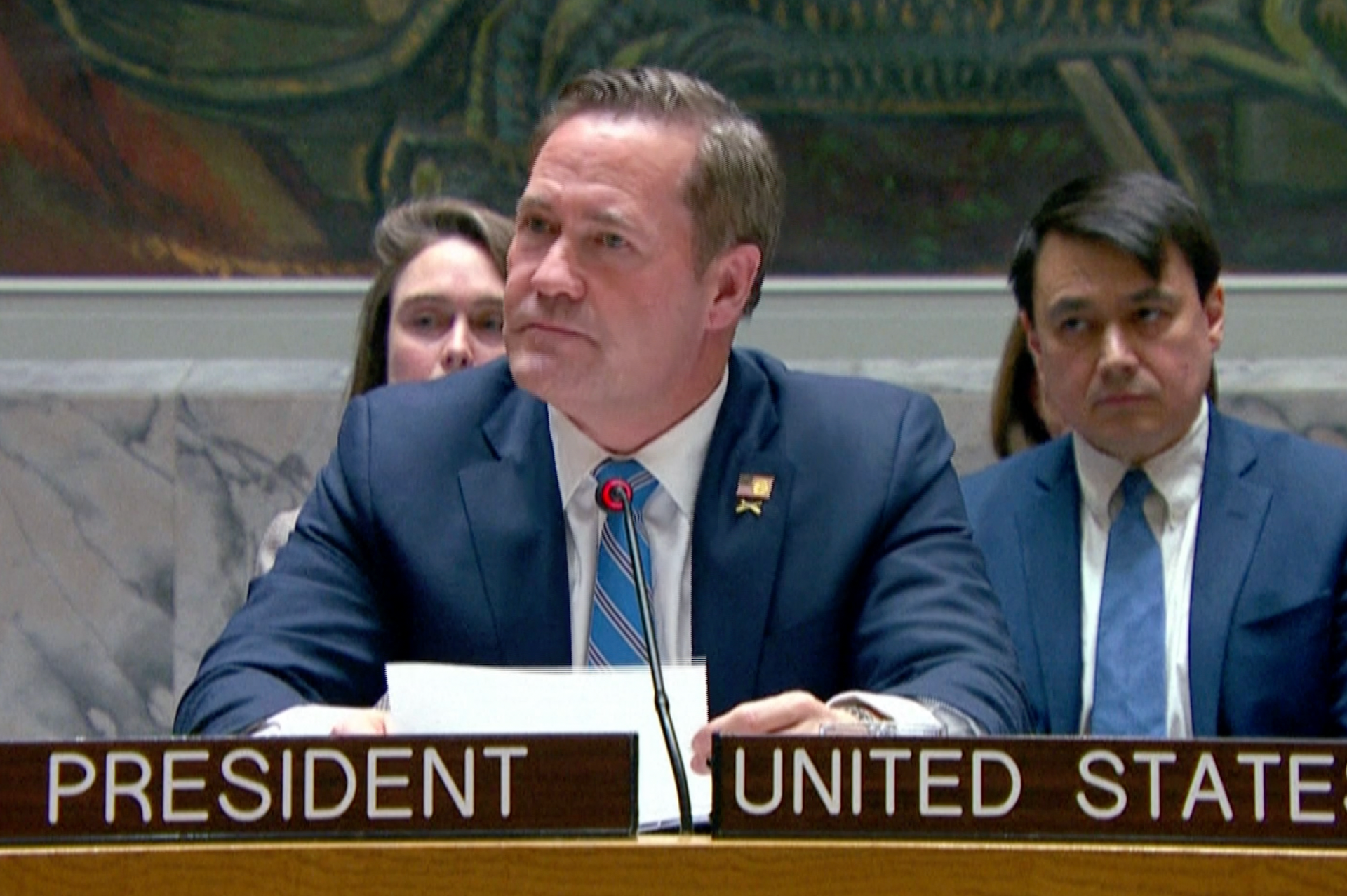
The UN Security Council has passed a resolution put forward by Gulf Cooperation Council members calling on Iran to halt its attacks on Gulf countries. The measure was adopted with 13 votes in favour and two abstentions, while no member states voted against it.

Source link

Where do the 35 million foreigners living in the GCC come from? | Infographic News

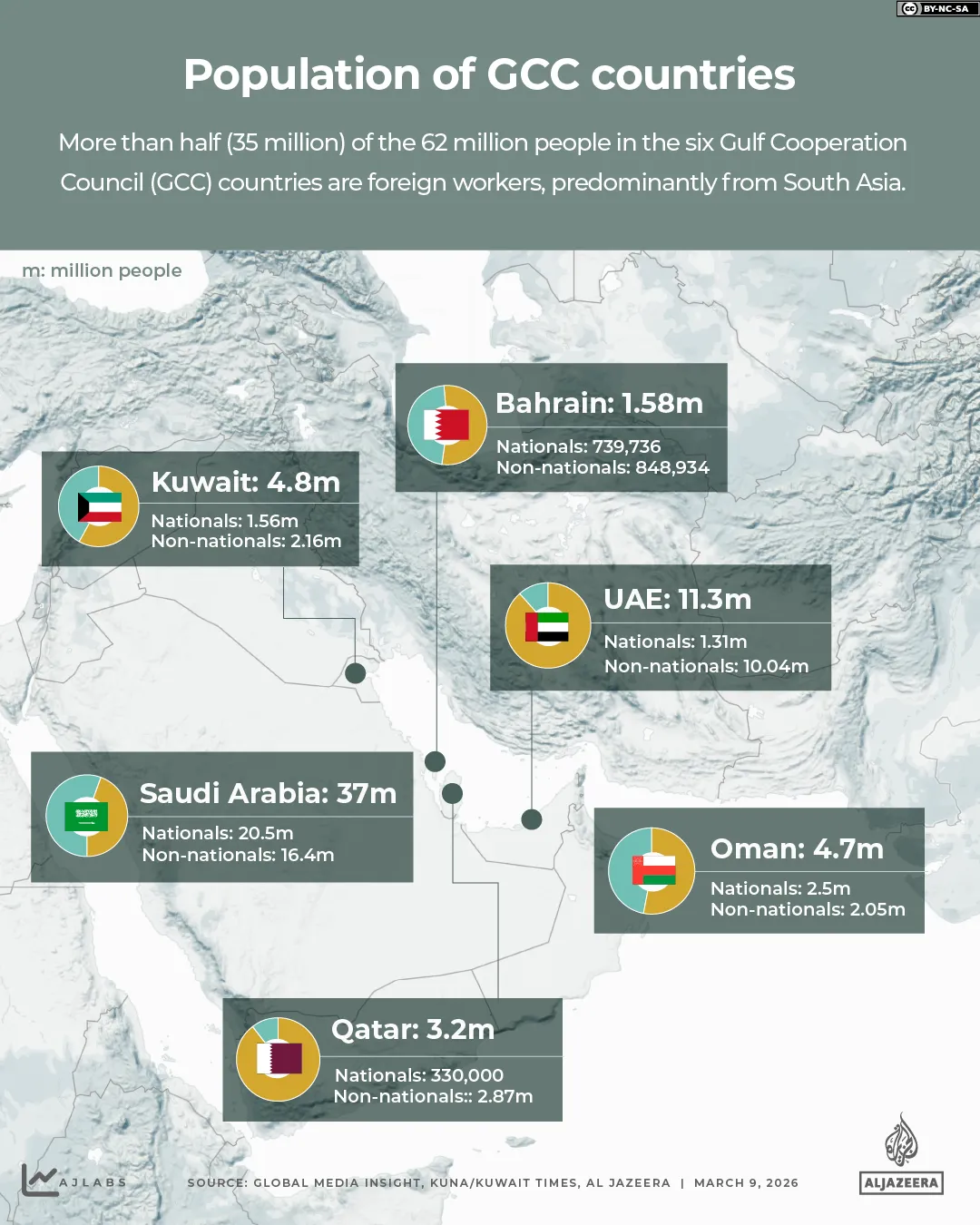
More than half of the 62 million people in the six Gulf Cooperation Council (GCC) countries are foreign workers.

Nearly 62 million people living in the six Gulf Cooperation Council (GCC) countries have been caught in the crossfire of the latest US-Israel war on Iran.

Known for their economic opportunities, these countries, including Bahrain, Kuwait, Oman, Qatar, Saudi Arabia and the United Arab Emirates (UAE), collectively host nearly 35 million foreign workers from around the world, predominantly from South Asia.

Recommended Stories

list of 4 itemsend of list

With the exception of Saudi Arabia and Oman, foreign workers make up the bulk of the populations of people living in the remaining four GCC countries.

The map below illustrates the national and non-national populations in each of the GCC countries.

Interactive_WhereDo_Expats_GCC_MARCH9_2026

Where do GCC foreign workers come from?

Generations of foreign workers in the GCC countries have significantly contributed to the workforce, including labourers, construction workers, household staff, security personnel, and cleaners, all vital to building the modern infrastructures that Gulf nations are known for.

Millions consider the Gulf their home, despite holding nationalities from other countries.

Additionally, highly skilled foreign workers have a long history in industries such as banking, finance, technology, engineering, aviation, medicine and the media.

According to Global Media Insight, a digital marketing agency based out of the UAE,  the 10 largest groups of non-nationals living across the six GCC countries are from:

  • India: 9.1 million
  • Bangladesh: 5 million
  • Pakistan: 4.9 million
  • Egypt: 3.3 million
  • Philippines: 2.2 million
  • Yemen: 2.2 million
  • Sudan: 1.1 million
  • Nepal: 1.2 million
  • Syria: 694,000
  • Sri Lanka: 650,000

Interactive_WhereDo_Expats_GCC_COUNTRY_NATIONALITY_MARCH9_2026

Saudi Arabia

Saudi Arabia is the largest of the six GCC countries, with a population of nearly 37 million.

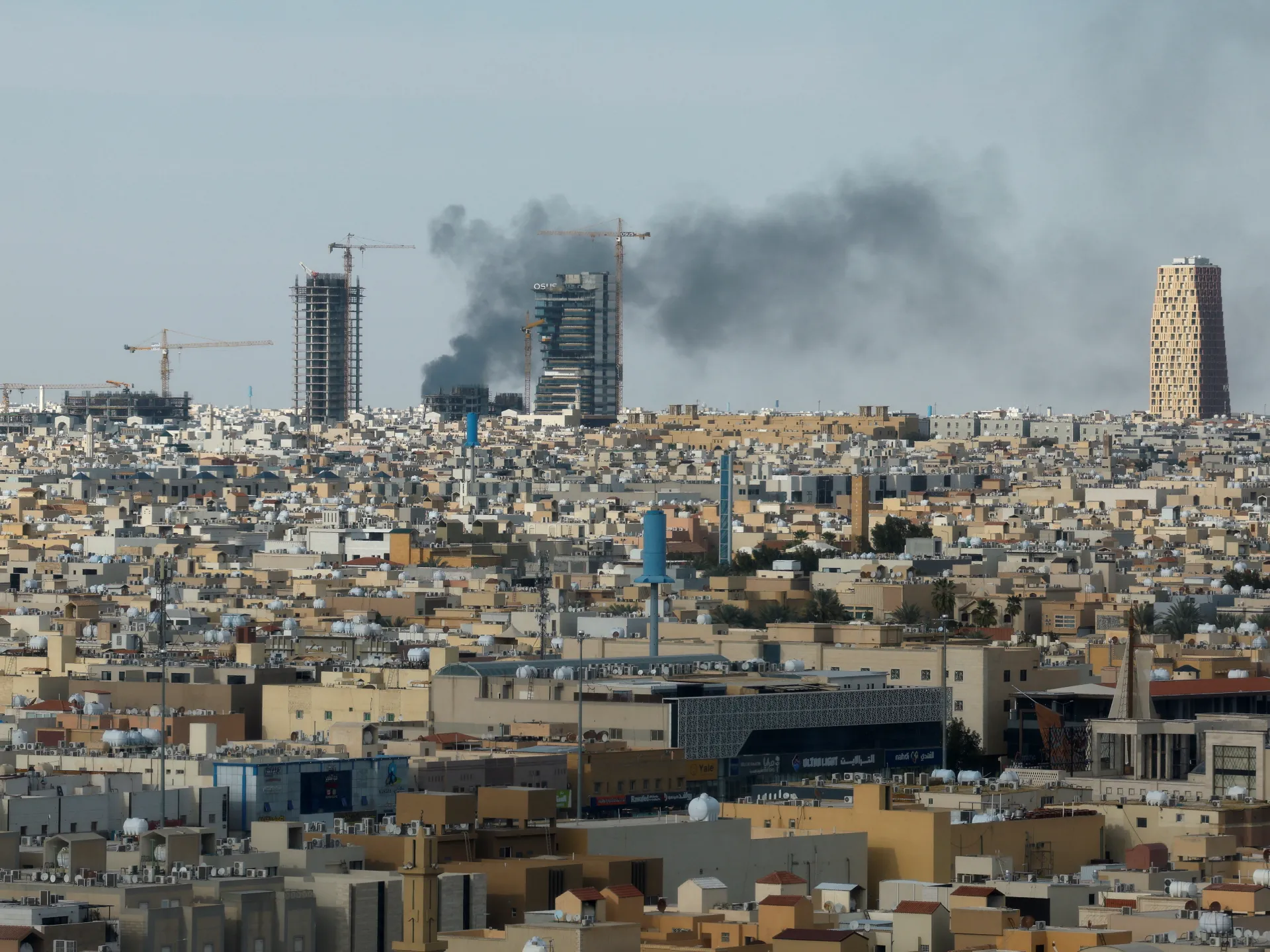
riyadh
Aerial view of Riyadh city is seen from Mamlaka tower, a 99-story skyscraper, in Riyadh, Saudi Arabia [Amr Nabil/AP Photos]

The oil-rich country has a local population of about 20.5 million and an additional 16.4 million foreign residents.

The five largest groups of non-nationals living in Saudi Arabia are people from:

  • Bangladesh: 2,590,000
  • India: 2,310,000
  • Pakistan: 2,230,000
  • Yemen: 2,210,000
  • Egypt: 1,800,000
  • Sudan: 1,000,000

The UAE

The United Arab Emirates has the second-largest population in the GCC, totaling some 11.3 million people.

Dubai skyline
Dubai skyline is visible with the Burj Khalifa, the world’s tallest building, during the COP28 U.N. Climate Summit, in Dubai, United Arab Emirates, Thursday, November 30, 2023 [Kamran Jebreili/ AP Photo]

It consists of seven emirates, including the capital Abu Dhabi, Dubai, Sharjah, Ajman, Umm Al Quwain, Ras Al Khaimah, and Fujairah.

Emiratis make up nearly 12 percent of the population, with foreigners at almost 88 percent.

The five largest groups of non-nationals living in the UAE are from:

  • India: 4,360,000
  • Pakistan: 1,900,000
  • Bangladesh: 840,000
  • Philippines: 780,000
  • Iran: 540,000
  • Egypt: 480,000

Kuwait

With a population of 4.8 million, Kuwait has the third-largest population in the GCC.

Kuwait
A drone view shows Kuwait City in Kuwait, February 28, 2026 [Stephanie McGehee/Reuters]

Approximately 1.56 million are Kuwaiti citizens, and 2.16 million are foreign workers.

The five largest groups of non-nationals living in Kuwait are from:

  • India: 1,000,000
  • Egypt: 700,000
  • Bangladesh: 350,000
  • Philippines: 250,000
  • Pakistan: 200,000
  • Nepal: 120,000

Oman

Oman’s population stands at approximately 4.7 million people. Oman’s 2.5 million citizens account for nearly 59 percent of the population, while the remaining 2.05 million (or 41 percent) are foreign workers.

Oman
General view of old Muscat the day after Oman’s Sultan Qaboos bin Said was laid to rest in Muscat, Oman, January 12, 2020 [Christopher Pike/Reuters]

The five largest groups of non-nationals living in Oman are from:

  • India: 766,735
  • Bangladesh: 718,856
  • Pakistan: 268,868
  • Egypt: 46,970
  • Philippines: 45,213
  • Uganda: 20,886

Qatar

Qatar skyline
The Doha skyline, seen here [Showkat Shafi/Al Jazeera]

Qatar has a population of some 3.2 million people, with 2.87 million foreign workers accounting for about 88 percent of them. Qatari citizens number around 330,000, making up 12 percent.

The five largest groups of non-nationals living in Qatar are from:

  • India: 700,000
  • Bangladesh: 400,000
  • Nepal: 400,000
  • Egypt: 300,000
  • Philippines: 236,000
  • Pakistan: 180,000

Bahrain

With a total population of 1.58 million, Bahrain has the smallest population in the GCC. Bahraini citizens make up just under half of the population.

Manama
A general view of residential buildings in the Juffair district of Manama, Bahrain, June 22, 2025 [Hamad I Mohammed/Reuters]

The five largest groups of non-nationals living in Bahrain are from:

  • India: 350,000
  • Bangladesh: 150,000
  • Pakistan: 120,000
  • Philippines: 80,000
  • Egypt: 60,000
  • Nepal: 35,000

Source link

Iran’s legal case for striking the Gulf collapses under scrutiny | Israel-Iran conflict

The Gulf states have spent years trying to broker peace between Iran and the West: Qatar brokered nuclear talks, Oman provided back-channel diplomacy, and Saudi Arabia maintained direct dialogue with Iran through 2024 and into 2025. Iran attacked them anyway. The idea that the Gulf states have a responsibility, a moral one, to protect Iran from the consequences of its actions because of good neighbourliness is now grotesque in context. Iran did not return good neighbourliness. Iran returned ballistic missiles.

Iran’s position is based on three propositions. First, that Iran acted in lawful self-defence pursuant to Article 51 of the UN Charter; that host countries relinquished territorial sovereignty by allowing US military bases on their territory; and that the definition of aggression in Resolution 3314 justifies the attack on those bases as lawful military objectives. Each of these propositions is legally flawed, factually skewed, and tactically wrong. Collectively, they add up to a legal argument that, if accepted, would ensure that the Gulf is permanently destabilised, the basic principles of international law are destroyed, and, in a curious twist, the very security threats that Iran is reacting to are reinforced.

The UN Charter, in Article 51, permits the use of force only in self-defence against an “armed attack”, and this term is not defined by reference to the state invoking it. The International Court of Justice, in cases such as Military and Paramilitary Activities in and against Nicaragua (Nicaragua v. United States) (1986) and Oil Platforms (Iran v. United States) (2003), has interpreted the requirement of an “armed attack” under Article 51 of the UN Charter restrictively. The Court distinguished between the most grave forms of the use of force, which qualify as armed attacks triggering the right of self-defence, and less grave uses of force that do not. Accordingly, not every use of force, such as minor incidents or limited military activities, amounts to an armed attack. In this light, the mere presence of foreign military bases in Gulf states, maintained for decades under defence agreements with host governments, would not in itself constitute an armed attack against Iran.

Necessity and proportionality are also part of customary international law, requiring that self-defence be necessary and proportional. Iran has not demonstrated either. Targeting the territory of other sovereign Arab states in response to the policy decisions of the United States is neither necessary, since diplomatic and United Nations avenues are still available, nor proportional, since it imposes military consequences on states that are not a party to any conflict with Iran.

Critically, Article 51 also has a mandatory procedural element, in that any state employing self-defence is immediately required to notify the Security Council. Iran has consistently evaded this requirement in each of its escalatory actions. While this may seem to be a minor element, it is in fact the means by which the international community is able to verify and check self-defence claims. A state that evades this requirement is not employing Article 51. It is exploiting the language of Article 51.

Iran’s reading of Resolution 3314 is a fundamental distortion

The provision of Article 3(f) of the Annex to United Nations General Assembly Resolution 3314 (XXIX) (1974) states that an act of aggression includes the “action of a State in allowing its territory, which it has placed at the disposal of another State, to be used by that other State for perpetrating an act of aggression against a third State”. Iran could rely on this provision to hold the Gulf states that host United States military bases liable for any act of aggression committed from their territories against Iran. Nevertheless, the mere presence of military bases is not sufficient to hold them to be lawful military objectives; this will depend on their actual contribution to military activities against Iran based on the rules of international humanitarian law.

Thus, such an Iranian reading would be wrong on three distinct legal grounds.

First, Resolution 3314 is definitional in nature. The resolution was adopted to assist the Security Council in determining when aggression has taken place, not to confer upon states the unilateral power to punish states deemed to have committed aggression through the use of force. The resolution itself, in Article 2, asserts the power of the Security Council to make the determination of what constitutes aggression. The self-application of Article 3(f) of the resolution is therefore bypassed altogether.

Second, Article 3(f) speaks of the active launching of an attack, not the passive hosting of a military base. The legal distinction is fundamental. A state, in signing a defence treaty with another and hosting the latter’s troops on its soil, is engaging in a measure of sovereignty. A state, actively launching, coordinating, or enabling military strikes against a third party, is engaged in a different matter altogether. Iran has not credibly shown this latter case. The presence of US troops or bases in the Gulf has been a fact for decades, and this has not constituted armed aggression against Iran under any legal standard.

Third, even if Article 3(f) were applicable, the appropriate course would be to bring the matter to the Security Council, not to launch unilateral military strikes. General Assembly resolutions do not override the Charter. Iran cannot rely upon a non-binding resolution defining terms to override the Chapter VII requirements for the use of force or the clear criteria of Article 51.

Sovereignty cannot be dictated by a neighbour’s strategic preferences

Iran, in invoking the principle of good neighbourliness, asks the Arab Gulf states to deny the United States basing rights. Good neighbourliness is a two-way principle, and it does not allow for interference in the internal affairs of other states, certainly not interference in the decisions of other states simply because they are deemed inconvenient to the interfering state. All UN states possess the inherent right to conclude defence treaties with whomever they choose, and this is so regardless of the opinion of their neighbours.

The asymmetry of Iran’s position is striking and self-disqualifying. Iran itself has active military relationships with Russia and China. Iran arms, finances, trains, and supports the activities of non-state military actors in Lebanon, Syria, Iraq, and Yemen. The Islamic Revolutionary Guard Corps Quds Force operates openly in various states, and this has been extensively documented in United Nations Panels of Experts reports, as well as other international monitoring reports. According to the standards that Iran applies to the Gulf states, any state that hosts the activities of the IRGC, the transfer of Iranian arms, or the coordination of Iranian proxies on its soil would be engaging in aggression against third parties. Iran will not accept this principle when it is applied to itself. A legal principle that is unacceptable to the party to whom it would be applied is not a legal principle at all; it is a political tool.

A doctrine that defeats Iran’s own strategic interests

From the perspective of international relations theory, Iran’s position follows the logic of offensive realism, which seeks to remove the external balancing architecture of regional neighbours by claiming it to be hostile in nature. However, this approach is empirically self-defeating.

Under balance of threat theory, states react to offensive capability, geographic proximity, and aggressive intentions. Iran’s doctrine, in asserting the right to strike any state that hosts forces it perceives as a threat, drives each and every threat variable to maximum levels for each and every state in the region. The obvious consequence, evident in the data, is that the states in the region and external powers are becoming more, rather than less, securely integrated. The Fifth Fleet’s permanent base in Bahrain, the UAE’s negotiations over F-35s, Saudi Arabia’s deployments of THAADs, and Qatar’s expansion of the Al Udeid base are reactions to Iran’s escalation, not causes of it.

From the perspective of constructivism, the legitimacy of a legal argument is also partly based on the normative credibility of the state that presents the argument. The record of Iran’s compliance with IAEA regulations, including the enrichment of uranium to a purity level of 60 percent or more in 2023–2024, interference with inspections, the removal of monitoring cameras, and the overall violation of the non-proliferation regime, has undermined the credibility of the state significantly. A state that is itself a violator of the legal regime cannot claim the role of a law-abiding state seeking protection under the norms of the legal regime.

Iran’s legal rationale was always theoretically wrong. What has occurred since February 28, 2026, has made Iran’s actions morally and politically wrong. Iran did not simply target US military assets. The reality of the situation is now documented and undeniable. Ballistic missiles and drones were launched against Gulf states in the opening days of the conflict. This marked the first time one actor had simultaneously attacked all six GCC states. Iran escalated its attacks in deliberate stages. Day 1: Iranian missiles were fired against military bases. Day 2: Iranian missiles were fired against civilian infrastructure and airports. Day 3: Iranian missiles were fired against the energy sector. Days 3 and 4: The US Embassy in Riyadh was attacked by Iran. International airports in Dubai, Abu Dhabi, and Kuwait were attacked by Iranian missiles, resulting in the suspension of flights throughout the region. Videos from Bahrain documented an Iranian Shahed drone attacking an apartment building. This is not self-defence. This is the collective punishment of sovereign nations that went to extraordinary lengths to avoid the conflict.

The rationale provided by Iran falls flat when one considers the actions Iran itself took. Its doctrine held that only targets involved in the preparation or launch of an attack against Iran were legitimate targets. Civilian airports are not military bases. Hotels in Palm Jumeirah are not military command centres. An apartment complex in Manama is not a weapons storage facility. By Iran’s own stated legal rationale, none of these targets was legitimate, yet they were attacked. This was not a legal doctrine at all; it was a pretext for coercion, and the conduct of war revealed this to be the case.

The views expressed in this article are the author’s own and do not necessarily reflect Al Jazeera’s editorial stance.

Source link

GCC Mulls Action Over Iranian Attacks

At least 10 people have died, and more than 100 have been injured, after Iran launched barrages of missile and drone attacks against every member of the GCC in retaliation for US-Israeli strikes on Tehran.

Until February 28, few in the Gulf Cooperation Council (GCC) could have imagined missiles flying overhead, let alone crashing into the glass facades of five-star hotels. For decades, cities such as Dubai, Abu Dhabi, and Doha had been marketed as luxurious, safe havens—business and financial hubs seemingly shielded from the harshness of the desert and regional geopolitical turbulence, thanks to vast petrodollar wealth.

Recent attacks have punctured that sense of invulnerability.

The economic implications remain uncertain, but the US-Iran war marks a clear turning point. With much of the region still on high alert, business activity has begun to slow down and investors are reassessing risk. In January, the World Bank projected 4.4% growth for GCC countries this year. On March 2, however, JPMorgan cut its non-oil growth forecast by 0.3 percentage points.

“Businesses shift quickly into contingency mode: staff safety, operational coverage, supply, and cash-flow discipline,” says Abdulaziz Al-Anjeri, Founder & CEO, Reconnaissance Research in Kuwait. “You also see immediate attention to the ‘price of risk’—airspace and logistics friction quickly translate into higher war-risk premiums, insurance costs, and delayed decisions. The strongest response is quiet competence—keeping the lights on without drama”

Even in the most remote areas of the GCC feel the effects of the crisis. In Khasab, the last Oman town on the coast of the Strait of Hormuz and a popular tourist destination for outdoor activities, Ali Al Shuaili runs a diving center.

“Everything is normal, but the sea is closed so we can’t go fishing or diving and, of course, all tourist bookings have been cancelled,” he tells Global Finance via WhatsApp. “Life-wise, it looks normal, but everybody is worried about the business. We pray for everything to settle down quickly.”

For now, banks in the region are absorbing the shock, supported by strong liquidity and capital buffers.

“We are not seeing any direct impact on banking operations in the UAE or the wider GCC,” says Bader Al Sarraf, Research Analyst at Standard Chartered’s UAE office. “Financial institutions across the region continue to operate normally, supported by strong infrastructure, resilient financial systems, and established operational resilience frameworks that enable banks to continue facilitating transactions and supporting business activity even during periods of heightened uncertainty.”

Banks and major institutions focus first on continuity— keeping core functions stable: payments, customer access, liquidity management, and clear reassurance, adds An-Anjeri. “In moments like this, finance is not only about balance sheets; it’s also about maintaining confidence, because uncertainty can do damage even without physical disruption.”

Across the region, the prevailing approach among institutions, corporates, and investors is to monitor developments rather than take immediate action, according to Al-Sarraf.

“Given that the situation remains fluid and still in its early stages, many are in a ‘digest and risk assessment’ phase before making strategic decisions,” he says. “This reflects a period of careful observation as developments continue to unfold and as businesses and investors evaluate the potential implications across sectors and economic activity.”

One immediate concern is digital infrastructure. The Gulf has spent years positioning itself as a regional hub for data centers, but the conflict has exposed its vulnerability. Amazon Web Services reported that drones attacked three of its facilities in the UAE and Bahrain, disrupting cloud and IT services across the region. In the UAE, several bank customers briefly lost access to their online accounts. Such incidents could prompt US tech giants, including Amazon, Microsoft, Google, and Oracle, all of which have invested heavily in Gulf data infrastructure, to reassess their exposure.

Weaknesses Exposed

The war has highlighted structural weaknesses in the region’s economic model. Despite years of diversification efforts, most GCC economies still rely heavily on hydrocarbon revenues.

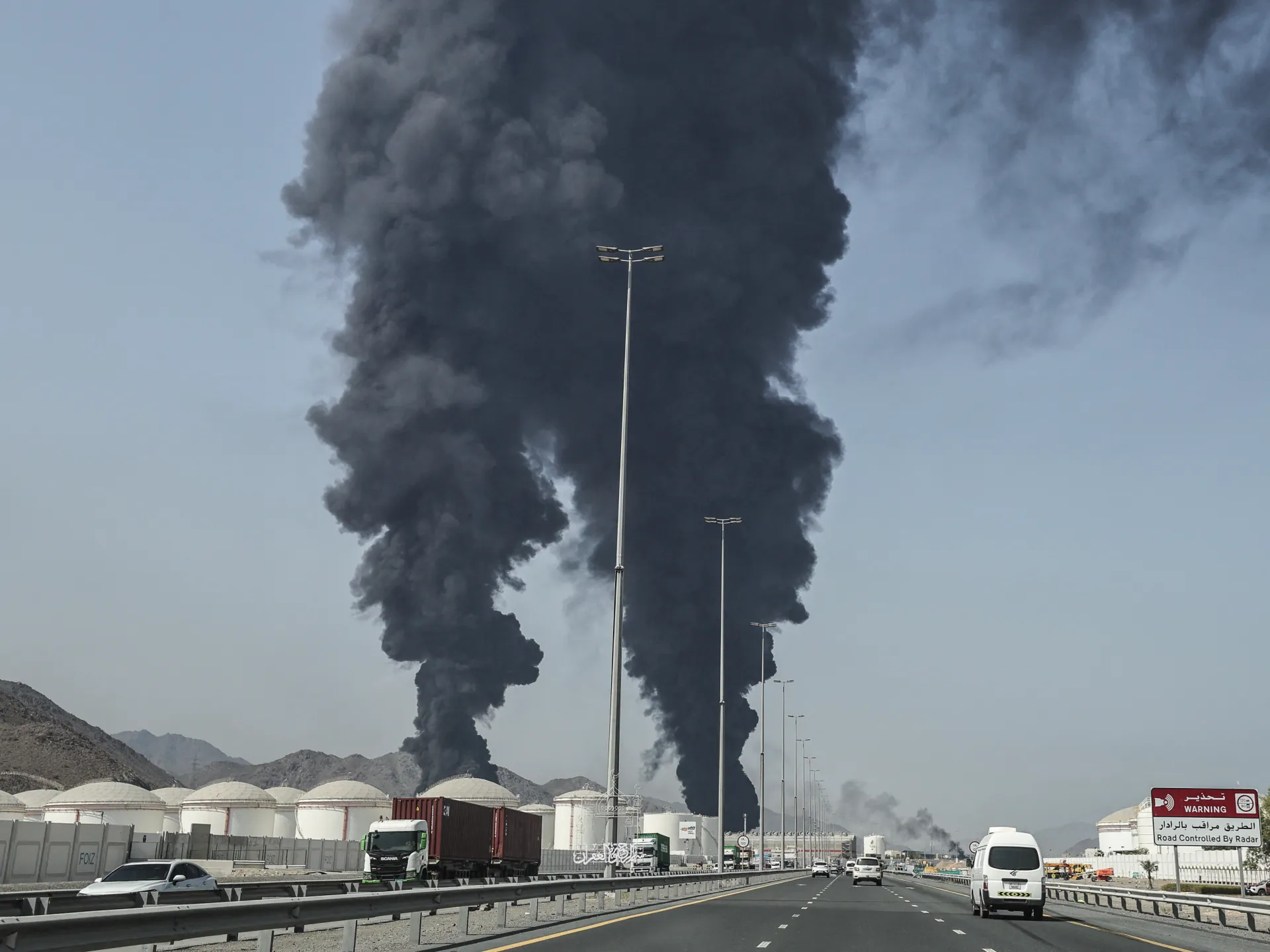
QatarEnergy, the world’s largest liquified natural gas (LNG) producer, halted production afte drones hit two of its facilities. Oil exports are also affected. Saudi Arabia partially shut the Ras Tanura refinery, one of the largest in the Middle East, with a capacity of 550,000 barrels a day.

Now, all eyes are on the Strait of Hormuz, a strategic chokepoint through which roughly a fifth of the world’s hydrocarbon supply transits. For GCC economies, the disruption translates into billions of dollars in daily revenue at risk.

“If the war drags on, you can get a mixed picture: energy revenues may benefit from risk pricing, while the broader economy pays through confidence, logistics, insurance, and financing costs,” says Reconnaissance Research’s An-Anjeri. “Non-oil sectors tend to feel prolonged uncertainty first because they’re confidence-sensitive—services, travel, retail, private investment. GCC states have buffers, but buffers don’t replace stability.”

Another major concern is food security: The region relies overwhelmingly on imports to feed its population, with roughly 70% of food shipments arriving through the Strait of Hormuz. The system has faced stress tests before—during the Covid-19 pandemic, for instance, and in 2017 when several GCC countries, including Saudi Arabia and the UAE, imposed an embargo on Qatar. At the time, Doha imported around 90% of its food. Since then, the country has invested heavily in domestic production and is now self-sufficient in milk, but it still depends on imports for much of the rest.

Water security may be an even more critical vulnerability. Nearly 90% of drinking water in GCC countries comes from desalination plants. Any disruption, whether from direct damage or oil spills affecting coastal facilities, could quickly trigger a humanitarian crisis within days.

For now, most governments and businesses are in a wait-and-see mode. But as the conflict widens, including in Lebanon and, to a lesser extent, towards Cyprus and Turkey… longer-term scenarios are beginning to enter boardroom discussions.

“In the short run, if the war ends quickly, I don’t think there will be any significant impact on the banks, but if the conflict extends over weeks and if the flow of oil and gas through the Strait of Hormuz continues to be even temporarily interrupted, eventually this will definitely affect GCC economies, government revenues, and trade flows,” notes Beirut-based Ali Awdeh, head of research at the Union of Arab banks.

For Al-Anjeri, the situation evolves, a number of lessons are already emerging: “For institutions, the takeaway is to treat stress-testing as real: cyber scenarios, telecom dependencies, liquidity access, supply-chain choke points, and customer-communication playbooks that are ready before the crisis—not written during it,” he says. “Hardware matters, but crisis governance matters too: credible communication, continuity discipline, and de-escalation channels so one incident doesn’t trigger a chain reaction.”

Source link