IT’S been more than two years since Samie Elishi last walked out of the Love Island villa – and as this year’s finalists prepare for tonight’s live final, she knows better than most what comes next.
Speaking exclusively to The Sun, the former Islander has backed this year’s cast to “smash it” after the villa and lifted the lid on life with boyfriend Tyrique Hyde – amid her latest career ventures.
Samie shot to fame on Love Island in 2023, finishing third alongside footballer Tom ClareCredit: RexThe Love Island star officially became a W7 ambassador earlier this yearCredit: Supplied
The Essex beauty finished third alongside Tom Clare in 2023, winning over viewers with her no-nonsense approach to villa drama. Like many Islanders, she left Majorca with a world of opportunities suddenly opening up in front of her.
These days, her time is split between building businesses and enjoying a relationship with fellow Love Island star Tyrique Hyde that blossomed after both of them left the villa.
Sign up for the Showbiz newsletter
Thank you!
After working with W7 since leaving Love Island, Samie officially became one of its ambassadors earlier this year and is now preparing to launch her collaboration with the beauty giant.
And with this year’s Love Island final airing tonight, Samie admits she’ll be watching just like millions of other viewers – knowing exactly what’s about to hit the finalists when they leave the villa.
She said, “I have been watching it. I watch it every year.”
Unlike some former contestants who distance themselves from the programme once it’s ends, Samie has “never missed a series”. And as tonight’s finalists prepare to discover whether they’ve won the public vote, she believes a few couples have the potential to make a success of life beyond the villa.
While millions of viewers have watched this year’s Islanders navigate recouplings, Casa Amor and Movie Night, Samie knows the real challenge only begins once the cameras stop rolling.
Asked what advice she would give the finalists before they step back into the real world, she doesn’t hesitate: “Soak up every moment before your phone comes back. As soon as you switch that phone on… wow.”
Samie believes loved-up pair Jasmine and Kav have every chance of winning tonight’s Love Island finalCredit: Shutterstock EditorialSimba and Angie have also impressed the former Islander, who says she’s loved watching their romance blossomCredit: ITV
Rather than getting caught up in public opinion, she hopes this year’s cast focuses on making the most of the opportunities waiting for them.
“I feel like all of them are really strong this year,” she said.
“They’ve all got such good heads on them. I honestly think they’re all going to smash it, whatever they decide to do.”
Despite following every episode, Samie refuses to be drawn into choosing one favourite contestant.
The star admitted, “I feel like everyone has been really entertaining this year. You know what? I actually don’t have a favourite – I actually like everyone for different reasons.”
Though she has connected with one person: “I spoke to Ellie on the phone because she was on Tyrique’s stream and she was lovely.”
She’s also been impressed by Finn and Ellie’s relationship, admitting she hopes they continue to go from strength to strength outside the villa.
When it comes to predicting the winners, though, Samie knows better than most that Love Island rarely follows the script.
She believes Jasmine and Kavan have every chance after winning viewers over with their journey, while Simba and Angie have also caught her eye.
“I feel like Jasmine and Kav have a good chance. They’re very much loved up. I really like Simba and Angie.”
Samie says life with fellow Love Island star Tyrique Hyde has made her “really happy”Credit: instagram./@tyriquehydeAlthough they both found fame on Love Island, Samie and Tyrique’s romance only began after leaving the villaCredit: samieelishi/Instagram
But she suspects the biggest surprise could come elsewhere.
Samie explained: “I think Tommy and Yasmin could be the underdogs. It’s always the winners that nobody expects.”
Having experienced the unpredictable public votes herself, she knows contestants inside the villa often have little idea how they’re being perceived.
“When you’re in there, you genuinely don’t know what’s being shown,” she explained.
“So when the public vote comes in, you’re just like, ‘Okay… that’s fine.’”
Watching this year’s romances unfold has also reminded Samie just how much life has changed since her own villa experience. Although she and Tyrique Hyde both found fame on Love Island, their relationship didn’t begin in the villa.
Asked how life together compares to the whirlwind romances viewers usually see on screen, which can often crash and burn off camera, she laughed: “Me and Ty were never actually on the cameras together. So we’ve just met properly in real life. It’s just been us from the start, which has been really nice.”
The pair now spend virtually every day together, with Samie admitting moving in together feels less like an “if” and more like a “when.”
She said: “In the future we’ll definitely live together. We’re inseparable anyway, so it won’t really change much.”
Friends and fans have watched the relationship flourish over the past year, and Samie says she’s happier than ever.
“We’re just really happy. I feel like everyone who knows me can see that.”
That happiness has spilled over into every other part of her life too.
Now she’s preparing to unveil what she describes as her “biggest beauty venture” yet, after spending months working behind the scenes on a collaboration with W7.
Unlike many celebrity collections that simply involve putting a famous face on an existing product, Samie insists this project has been far more hands-on.
The reality star says seeing her W7 campaign in Superdrug stores has been a major “pinch-me” momentCredit: SuppliedSamie says she’s spent months testing products behind the scenes to make sure her upcoming W7 collection is “perfect”Credit: Supplied
Opening up on the project, she said: “We’ve been working on the products really closely. I’ve been using little testers for months because I wanted to make sure everything was perfect.”
Although she’s sworn to secrecy over exactly what fans can expect, she promises the finished collection is unmistakably her.
She laughed: “It’s really annoying because I can’t actually tell you what it is. But what I can say is it’s very me.”
Rather than simply lending her name to a range, Samie wanted the products to reflect the make-up look she’s become known for since first appearing on ITV2.
“I wanted products that people can use every day. That was what I based everything around,” she explained.
The collaboration is the culmination of a relationship that began shortly after she left Love Island.
“It’s been such a huge pinch-me moment,” she admitted.
One of the biggest milestones came when she spotted herself in Superdrug stores across the country.
She laughed: “Walking into Superdrug and seeing my face there is just mad. My friends keep sending me photos every time they see it. It’s one of those shops we all grew up going into, so it feels surreal.”
Alongside the W7 collaboration, Samie continues to develop her perfume brand while juggling a house move and several other ventures she’s not yet ready to reveal.
“This has definitely been my busiest year,” she said.
“There are so many exciting things coming later this year and into next year. I just feel like I keep ticking things off my bucket list.”
Rather than relying on the fleeting fame that comes with reality TV, Samie has spent the past two years building a career away from the villa.
“I feel like we’re conquering all aspects this year,” she said.
“There are so many exciting things coming towards the end of this year and the start of next year.”
Weekly insights and analysis on the latest developments in military technology, strategy, and foreign policy.
During a recent tour TWZ took of the RTX-owned Pratt & Whitney’s jet engine assembly plant in Middletown, Connecticut, nearly everything was quiet on the line following a major push to complete outstanding deliveries by the end of the second quarter on July 1. But the Bearing Automation Robotic Builder – known familiarly as BARB – remained calmly at work, completing assembly processes for the #2, #5, and #6 bearings on the company’s commercial 1100G – one of the company’s GTFs, or geared turbofan engines, powering several Airbus and Embraer fleets.
While robotic assembly machines are a commonplace sight on factory floors building everything from cars to electronics, Pratt & Whitney’s assembly lines are still largely human-dependent. That’s a function, in part, of the exacting and unforgiving work of building jet engines, which require a carefully policed logbook of production steps executed to keep the process error-free. Throughout the factory floor, “Foreign Object Debris” bins remind workers to keep areas clear of any loose materials, from stray threads to gum wrappers. Even small pieces of detritus can become deadly if they end up in a jet intake. Company staff stressed that ensuring a machine could operate error-free in a range of conditions was a time-consuming and critical prerequisite for embracing automation.
BARB robot. (Pratt & Whitney)
BARB, which fits the mold of a factory robot out of central casting with its upright stance and long yellow arms, is the product of a $20 million investment the company has made into automation. It’s a modest first step at integrating automation more fully throughout jet engine assembly – both on the civilian side and in the somewhat more complex military engine business on a parallel production line in the same facility.
According to Ted Sluis, vice president and manager of Product Delivery Centers at Pratt & Whitney, BARB arrived in Middletown around late 2024, but only came online this spring after extensive testing that ensured the robot’s cameras and sensors could reliably identify parts and consistently perform the correct operations.
“There is a visual inspection aspect of it, and when we were doing the initial trials of the parts, we were using scrap parts,” Sluis said. “But the scrap parts were old, and we went to make production parts on it, those were new and shiny. The vision system started having issues because it wasn’t used to shiny parts; it was used to like the old parts … little things like that, that we had not anticipated. And so a lot of learning meant that it took us all the way through last year, into the beginning of this year to get it to where it could repeatedly get through the entire cycle without a person intervening to do something.”
According to public production and training manuals, the 1100 engine, which is assembled in a horizontal position, has seven total bearings requiring assembly. The #2 bearing is a ball bearing that supports the front of the low-pressure (LP) rotor, which extracts energy to power the engine fan and reaches maximum speeds above 10,000 RPM. The #5 and #6 bearings are rear roller bearings.
Sluis said engine assembly involves bearing sub-assembly, including the bearing, housing components, and affiliated seals and covers.
“So it’s a handful of parts that you have to get put together into a sub-assembly,” he said. “With the types of operations that we’re doing, different parts have different clearances. And so to get them to go together, you have to heat one part and cool another part, and you have to orient those in the right way, press them together, let it normalize, inspect it to make sure that it actually meets the right dimensional requirements.”
(Pratt & Whitney)
In the traditional engine assembly process, he said, a mechanic would sign a record at every stage verifying the prescribed action had been completed in the correct order. Integrating the assembly robot into the record-keeping process has been another deliberate effort, Sluis said.
“If a person is doing that work, they would be signing with their badge all the different sequences to say ‘I completed this work..’ In this case, the mechanic is basically signing, saying, ‘I provided the parts to the machine, the machine is tracking, I did this, I did this, I did this,’ and that’s going to be part of the engine build record. The mechanic signs, saying, ‘I received the assembly from the automation machine, and I’m going back to the normal process.’”
While the approach to integrating automation into an exacting assembly process has been small-scale to start, Sluis said the benefits in efficiency have been immediately clear, with an 80% reduction in ‘touch time.’ When reporters visited the production line July 1, the robot appeared still, but it was in reality actively supervising the heating of parts in an oven while standing by to complete the next assembly steps. But the biggest benefit to bringing BARB online, Sluis said, has been the proven error-free repeatability.
“If you look at the yield of that sub-assembly, it’s essentially 100%,” he said. “I think that, of all the ones that we’ve made since we went into serial production with it, we had one that had an issue and it was something that had to do with the part going in, as opposed to what the machine was doing with the parts.”
That deliberate work has taken place in parallel with Pratt & Whitney’s efforts to integrate AI into engine production. It recently debuted an AI-assisted borescope inspection software for its powerful commercial V2500 engine and has already completed pilot test cycles on both the GTF commercial engines and the F135 engine, which powers all variants of the F-35 Joint Strike Fighter.
(Pratt & Whitney)
The AI support tool purports to help human inspectors by applying trained analysis to video of the borescopes to identify any variations more quickly and consistently.
“Broadening the integration of AI-assisted inspection capability strengthens our ability to detect issues earlier, improve turnaround times, increase time on wing and reduce operational disruption for our customers,” Rob Griffiths, senior vice president of Commercial Engines Operations, said in a released statement. “It will fundamentally reshape how engines and components are inspected, maintained and supported throughout their lifecycle, as we increase its application across Pratt & Whitney.”
(Pratt & Whitney)
The notion behind both technology applications is that a meticulously trained robot will beat even a seasoned human inspector for accuracy and consistency.
“I think our biggest benefit will actually be in the quality signature,” Sluis said.
The multi-year plan for automation will gradually branch out to more complex automation applications, Sluis said, moving next to “small modules that do not have rotating parts” before moving to those that do have moving components.
The next spot for an automation machine has already been chosen: it will be the 1100G’s central diffuser module that has fuel nozzles mounted to it and is positioned in front of the high-pressure turbine. Pratt & Whitney is currently building a 2,600-square-foot site where the robotic assembly can take place, Sluis said, with a robot six times as large as the roughly human-sized BARB. The company expects it to be up and running on the line a lot sooner after delivery than its first robot.
“Our lead time from when it arrives to when we’re making modules off of it should be much, much shorter than we experienced with BARB,” Sluis said.
Military customers, company execs said, have already expressed “tremendous interest” in building automation into their engine assembly plans. Sluis and Chris Olivo, the Middletown product delivery center customer and event manager who led the production line tour, said the long-term goal saw every line benefiting from BARB-like robots.
One hurdle is the way the engines are assembled. While the 1100G and F139 engines, the latter used for the Air Force’s KC-46 Pegasus, both tip horizontally for assembly, the F135 is assembled vertically in pits on the floor. This makes it more difficult for a non-human operator to isolate and access some assembly processes.
(Pratt & Whitney)
Then, Sluis said, the higher dexterity needed for a lot of engine assembly processes required additional testing and development. He cited, in particular, fixing nuts and bolts onto assemblies as processes conducive to human dexterity. Once those issues are solved, dissemination of jet-assembly automation technology could move quickly.
“From there, it all depends on volume, business case or interest,” Sluis said. “But at least the capability will be foundationally established.”
The Owen family are back on screens today as a repeat episode of Our Farm Next Door airs
Amanda Owen made a sad discovery about Anty John’s(Image: ITV)
Amanda Owen reflected on the future at Anty John’s after making a morbid discovery.
Amanda, who has described owning Anty John’s “as a dream come true”, has captivated viewers for years with her rugged rural life on the North Yorkshire Moors.
The farmer, author and TV personality rose to fame through the Channel 5 series Our Yorkshire Farm, which followed her life at Ravenseat Farm alongside her nine children — Raven, Reuben, Miles, Edith, Violet, Sidney, Annas, Clemmie and Nancy — and her then-husband Clive Owen.
Since her split from Clive in 2022, Amanda has embarked on a new chapter, taking on Anty Johns, a historic property that has become the subject of her latest Channel 5 series, Our Farm Next Door.
The show follows Amanda and her children as they restore and settle into their new home, and during a repeat airing on Sunday, it took a distinctly “morbid” turn.
Taking advantage of a day off from the demanding farm work that keeps her and her nine children busy, Amanda paid a visit to Derek at the County Records Office. There, the historian uncovered the diary of Anty Johns’ former owner, revealing that the man had breathed his last breath within the very walls of the property.
Eager to unearth the secrets of her new home’s past, Amanda made her wishes clear to the historian: “I guess what I am wanting to find out is who in this extensive family tree was actually residing in my house at Anty Johns.”
Turning his attention to Anthony Clarkson’s ancestry, Derek guided Amanda through the Clarksons’ family history, concluding with John, the last of the bloodline to live at Anty Johns, who died in 1900.
Fascinated by the records, including details of John Clarkson’s inquest, Amanda read aloud from the document: “The body of the man, aged about 81, is lying dead at Smithy Home (Anty Johns).”
She discovered John’s final moments: “Time of death 6am, 5th December 1900. At about 9am on Tuesday, the housekeeper, Anne, proposed to send for the doctor, but the deceased would not hear of it.”
Amanda went on, quoting: “And said, ‘I shall soon be better and about’. I know it’s kind of morbid, but it sort of humanises people when you hear about it.”
Recounting the history, she added: “So basically, we know in 1900, the last Clarkson died upstairs in a bedroom at Smithy Home.”
Searching for further family stories, Derek highlighted that Anthony’s marriage records would prove crucial. Anthony wed his first wife in 1818, and shortly after their marriage they welcomed four children and made Smithy Home their residence.
Anthony’s second wife’s death was recorded as Angina, a touching detail discovered amongst the documents. A diary penned by one of Anthony’s children, James, also provides glimpses into his father’s passing.
Our Farm Next Door: Amanda, Clive and Kids is available to watch on Channel 4.
Cardiff head coach Corniel van Zyl believes Halfpenny’s achievements, including scoring 801 points while winning101 Wales caps and being a highly respected three-time Lions tourist, are invaluable attributes.
Van Zyl said: “It is clear and evident from last year’s work that all of our kickers improved. He is so professional and diligent in everything he does, so now moving into a full-time role I am excited to see the impact he will have.
“He will work with all of our kickers from goal-kicking and touch-kicking etcetera to our scrum-halves and their technique, but he will also work within the academy, which will be really beneficial for his growth and development as a coach.
“He has a great future as a coach and we are looking forward to welcoming him back to the Arms Park following another great experience with the national squad.”
Thinking back on the last two years of his life full of album releases, filming schedules and tour dates, Finn Wolfhard requires squint-inducing concentration to keep it all straight.
“Jesus, a lot has happened,” he says, looking surprised. That’s an understatement.
In that time, the 23-year-old not only finished filming the Netflix hit show “Stranger Things,” which catapulted him to global stardom, and promoted the final season upon its premiere. He also released his feature film directorial debut (“Hell of a Summer,” co-directed with Billy Bryk, which hit theaters in April 2025). Then, he starred in another movie (A24’s creature feature “The Legend of Ochi”), directed a posthumous George Harrison stop-motion music video, wrote, recorded and put out his first solo album (“Happy Birthday”), and embarked on a 22-date tour before recording a new album.
On a video call from his family home in Vancouver, Canada, where he lives with his parents and older brother, he’s chatting about the release of that record, the eclectic, guitar-driven “Fire From the Hip,” which dropped Friday.
“I think it’s a nice day?” he offers when I ask what’s happening in Vancouver. “I don’t know. I’ve been in my basement studio all day, so I don’t … I think it’s nice.”
He’s been down in the basement doing press calls like this, he explains, undoubtedly a familiar routine after so many years in the limelight. He wears a baseball cap and an oversize brown sweater, tugging on the sleeves while he ponders.
Even if Wolfhard is exhausted by the press marathon, he doesn’t show it. He’s excited for the chance to be known on his own terms. He never fails to express gratitude for the projects that afforded him recognition and opportunity, but he’s ready to “take control of the narrative.”
“I spent my whole childhood standing on marks that other people told me to stand on and saying lines that other people told me to say,” he says. “Why wouldn’t I want to make my own stuff?”
Being in control also means being the face of the operation. Before “Happy Birthday” and “Fire From the Hip,” Wolfhard released a total of two records and an EP, plus a whole bunch of singles, with his previous bands, Calpurnia and the Aubreys. Being in a band was a natural fit for Wolfhard, who thrives in an ensemble where he can “hide behind the band name.”
Touring last year was his first time seeing his own name on the marquee.
“It’s just straight up me, and if I suck, I suck,” he laughs. “It’s not like I can be like, ‘Oh, man, we’re having disagreements in the band.’ It’s like, no, that’s you. So there was a little more pressure early on.”
Finn Wolfhard released “Fire From the Hip” on Friday.
(Victoria Stevens)
Stepping into the spotlight required Wolfhard, who admits he shies away from conflict, to own both the pressure and the power of being the one audiences came to hear.
When he got sick and had to cancel a show in Portland, Ore., he remembers feeling crushingly sad “letting down” his fans and bandmates — who, of course, assured him it was outside of his control and urged him not to be so hard on himself.
Wolfhard introduced many of the songs that ended up becoming “Fire From the Hip” to his bandmates while they were still on tour, and he says playing them live “cultivated the spirit” of the eventual recordings. Despite his collaborative ethos, there was a moment during the process where he had to learn how to put his foot down in real time.
“I remember suggesting something and people being like, ‘Ah, I don’t know if I want to do that.’ And I was like, ‘No, you don’t get to do that to me. It’s my record,’” he remembers. “It was very innocent — I don’t think there was much ego on either side. But I think I maybe set up too collaborative of an experience that day.”
“I think I sometimes make it feel like a democracy, which it is in a lot of ways,” he adds. “But also, in the end, it is up to me.”
That thought is echoed in the album’s cover art, an image of two miniature Finn Wolfhards facing off, donning colonial garb and brandishing weapons. It’s meant to represent dueling impulses inside of him, he explains.
Wolfhard, a true-blue music nerd, has been described online as an archetypical example of the “child of a Gen X cool dad,” in the same vein as Olivia Rodrigo. (His dad, a former screenwriter turned lawyer and Indigenous rights researcher, does sound cool, but it was his mom who first introduced him to the Beatles. His parents apparently met over a Stone Roses record.)
That sensibility is evident in his musical influences — “I wanted everything [on drums] to sound like the first two Wilco records,” he says — and in his approach to recording. “Happy Birthday” was recorded almost entirely on four-track cassette tapes, while “Fire From the Hip” uses 24-track reel-to-reel.
The album runs the gamut from its cheeky, surf-rock opener “I’ll Let You Finish” (yes, that is a reference to Kanye West’s infamous speech at the 2009 VMAs) to more ’90s alt-inspired tunes to a surprising dose of straightforward country-folk.
Lyrically, Wolfhard divides his songs into two categories: the “very personal” and the story songs written around books he was reading (“Knockemstiff” by Donald Ray Pollock) or quotes that made him laugh. The personal themes he explores are exactly what you would expect from an early-20s rocker raised in the public eye — namely, relationship expectations and existential fears about the future.
On the nostalgic piano ballad “Good Morning,” he imagines what it might be like to settle down somewhere “with a dog and a wife.”
“I haven’t lived that part of my life yet,” he says now. “So I can really easily get lost in thinking about what that looks like.”
When it comes to sharing his music, especially the more vulnerable tracks, Wolfhard knows his “Stranger Things” fame is the elephant in the room. Anything he sings can and might be used against him in the court of public opinion.
“I could either kind of say nothing and be totally private, because it is scary knowing that everything I say, at least one person will take it a certain way that I wouldn’t want them to. But I just don’t have the control,” he says.
“So if I don’t have the control, then there’s nothing really that I can do, other than try to be as truthful and passionate and well-meaning as I possibly can, you know?”
The double-edged sword of fandom hasn’t stopped Wolfhard or his musically-inclined “Stranger Things” co-stars from pursuing this path. Fellow Hawkins alums Joe Keery (who releases music under the moniker Djo) and Maya Hawke are indie darlings in their own right, and Wolfhard has previously referred to Keery as a mentor. None of them face the unique challenge of relatability in quite the same way, however.
“I’m aware that my specific problems are maybe not as relatable because of how specific of a life I have,” he said. “The only thing I can hope for is that some other person out there listens to it and relates to the same things that I do.”
Sometimes an air of wistfulness accompanies these admissions. When asked about how he feels about Los Angeles, he tells me that it’s complicated: “I think if I wasn’t a young actor, it would be a very different situation.” His favorite parts of the city are its repertory cinemas and lush neighborhoods like Mount Washington, where his godfather resides, because they look the most like Vancouver.
That said, he’s not through with Hollywood. He’ll be back in L.A. for an Oct. 13 show at the Fonda Theatre, and acting and directing are still on the agenda. He would like his next film project — other than the Matt Johnson and Bong Joon Ho projects he’s already committed to, of course — to be something more “personal.”
For now, though, the focus is music. Wolfhard launches a new tour this month, and he’s most looking forward to “doing dumb s—” with his friends.
He tells a quick story to illustrate: When he and the band last toured in Glasgow, Scotland, he was trying to leave the venue without being noticed. (“I have a hard time dealing with fan interaction,” he says.)
“We kind of made it into this joke thing, knowing it wouldn’t work, where me and Rand, my guitarist, were like, ‘let’s switch clothes.’ Rand pretended to be me and I pretended to be Rand,” he says. Miraculously, it worked up until the “very last second” before they stepped on the bus.
“I couldn’t help myself,” he says: He instinctively made eye contact with someone in the crowd. “They did a double take, like, ‘Wait, what?’”
It sounds like a scene straight out of “A Hard Day’s Night” — or maybe inspiration for his next film.
“I’m pretty in my head about things and want them to be a certain way,” he says. “The thing that I have to remind myself all the time is that, like, dude, you’re with your friends, you’re playing music — it’s the best.”
A display shows notes and wishes for Korean unification at an event marking the third annual North Korean Defectors’ Day in Goyang on Tuesday. Photo by Yonhap
President Lee Jae Myung said Tuesday the experience of understanding North Korean-born citizens in South Korea will become a “special asset” to prepare for a future shared by the two Koreas.
Lee made the remarks in a written address delivered by Lim Woong-soon, the second deputy director of the National Security Office, in commemoration of the day for North Korean defectors, which falls on July 14.
“The experience of understanding and trusting one another in a new community will lay the foundation for social integration and serve as a valuable asset in preparing for a future in which South and North Korea live together,” Lee said.
“We will establish lasting peace on the Korean Peninsula and move steadily toward shared prosperity for the two Koreas,” the president said, adding that he will make all-out efforts to usher in a future of “coexistence and cooperation” beyond conflict and confrontation.
During the speech, Lee consistently referred to North Korean defectors as “bukhyangmin,” or people whose hometown is North Korea, a new term adopted by the unification minister earlier this year. The ministry is using “North Korean-born citizens” to refer to the North’s defectors.
Meanwhile, Unification Minister Chung Dong-young underscored at the event that it marked the first year to commemorate the third anniversary under the newly adopted reference, noting the term “North Korean defectors” implies discrimination and exclusion.
Tuesday’s event in Goyang, northwest of Seoul, was attended by some 1,000 people, including North Korean-born citizens and those who helped them settle into South Korea.
Copyright (c) Yonhap News Agency prohibits its content from being redistributed or reprinted without consent, and forbids the content from being learned and used by artificial intelligence systems.
A vision was set out to Guimaraes when he joined a club fighting relegation.
Newcastle‘s hierarchy at the time said they did not just want to go on to qualify for the Champions League – they ultimately wanted to win it.
Newcastle have twice since sat at Europe’s top table, but they are a long way off from taking that next step.
It was rather telling that Isak pushed hard to move to Liverpool, even after Newcastle secured Champions League football in 2025.
As much as Liverpool were able to offer Isak a huge wage increase, because of far superior revenues, the Swede also wanted to compete to win the biggest trophies.
Guimaraes appears to face a similar dilemma further on in his career following a bruising domestic season for Newcastle, who finished 12th in the Premier League.
Arsenal have yet to make contact with Newcastle, who do not want to lose the Brazilian, but does Guimaraes feel this is potentially the last chance he would have to win a Premier League title or the Champions League if they do come to the table?
As loved as Guimaraes is on Tyneside, does the 28-year-old have the patience to help lead a new era at Newcastle with a young group who will take time to flourish?
Newcastle had previously managed to keep hold of their most important players, but the side who made history by ending a seven-decade wait for a major domestic trophy in 2025 has broken up.
Of the 26 players pictured in a jubilant team photograph after the EFL Cup final win against Liverpool, 11 have left the club.
Some changes were overdue, yet there is also a delicate balance to strike.
Newcastle head coach Eddie Howe touched upon this in one of his final news conferences of last season when he warned “the squad can’t get weaker”.
The squad, as it is now, has clear gaps, but Newcastle are understood to have made progress on a move for exciting Freiburg midfielder Johan Manzambi.
Newcastle have also completed the signings of winger Bazoumana Toure, midfielder Sean Steur and goalkeeper Ewen Jaouen.
Turning to younger players from European clubs is a strategy others have adopted successfully.
Bournemouth, who finished sixth last season, have shown how clubs can recover from the loss of key players with the help of smart recruitment and good coaching.
But experience is needed, too, and Guimaraes is priceless to Newcastle in that regard. Losing him would mean the whole project is called into question.
The California Supreme Court is poised to rule in a lawsuit that has pitted the state’s court reporters — the workers who create transcripts of court proceedings — against victims of domestic violence and other vulnerable litigants.
The case will determine whether to end a long-standing prohibition on the electronic recording of most civil court proceedings, enabling the use of modern technology to create a “verbatim record,” which is crucial to appeals and other legal challenges.
Advocates say a decision in favor of electronic recording could end a years-long judicial crisis virtually overnight, producing legal records and preserving the right to appeal in tens of thousands of cases in civil, family and probate hearings where court reporters are rarely provided. Participants in the civil proceedings can hire private stenographers to maintain a record of what’s said, but their services can run thousands of dollars a day.
“In many, many courtrooms throughout the state today, there is nobody there, and there’s not going to be anybody there,” attorney Sonya Winner told the high court during oral arguments in Los Angeles last month. “The court reporters the court has on staff are off doing felony trials,” making electronic recording the only alternative for most civil litigants.
Everyone agrees the lack of court reporters is a crisis. Lawyers on both sides have urged the high court to establish a clear right to a verbatim record in civil hearings.
The divergence is over whether the worker shortage is improving slowly or still getting worse, and what the Supreme Court should do about it.
California’s largest public sector union and the court reporters it represents warn the decision could allow the state’s court systems to stop hiring stenographers.
Court reporters say their duty to maintain an accurate record is a profound public trust that can only be performed by a human being, who can intervene to ensure everyone is heard and who bears responsibility if a transcript is missing or incomplete.
Despite California’s sluggish job market, hiring for court reporters remains brisk, bolstered by tens of millions in funding from Sacramento, a recent change in state law and aggressive recruitment by some of the country’s largest court systems, including Los Angeles, Orange and San Diego counties.
Lila Scott, a TV writer, is among those seeking to join the profession. Like a lot of Hollywood talent, she had been struggling to find steady work in recent years.
The “Unicorn Academy” writer was trolling government job sites when she stumbled across a listing for court reporters in Los Angeles — and then another, and another.
“I thought, ‘What the heck is this?’” Scott recalled as she set up for a class at Downey Adult School.
Scott is now in training to become a “voice writer,” a form of note-taking that relies on a device called a stenomask — something like a cross between a podcast mic and a nebulizer — to produce a transcript. Voice writers repeat every word spoken in court along with a sequence of formatting commands to voice recognition software.
“You use your mom voice when you’re dictating,” said another Downey student, 40-year-old Wanda Port. “That stern mom voice, that’s the one you use.”
Traditionally, court reporters have used 22-key steno machines to rapidly take down every word said by lawyers, judges and anyone else who speaks on the record during an official proceeding. The licensing process for these stenographers is significantly longer and more difficult than what voice writers undergo.
A change in state law in 2024 allowed voice writers to become licensed as “certified shorthand reporters,” opening a new pipeline for court staff.
About half of the court reporters hired in California since 2024 have been voice writers, data show.
“Of the 300-plus students we have, it’s about 50/50,” said Jennifer Shenbaum, who directs the Downey program.
The current hiring blitz follows more than a decade of decline, after California’s court systems shed about a third of their reporters amid a protracted budget crisis in 2012. Labor leaders say new licenses have jumped ninefold in recent years, and court reporting classrooms across the state are full.
Diana Van Dyke, a Los Angeles County Superior Court reporter and a shop steward in Service Employees International Union Local 721, credits much of that growth to the expansion of paid internships, signing bonuses and other aggressive recruitment tactics funded by the Legislature and promoted by the union.
Students training to become court reporters practice on stenotypes and stenomasks during a speed-building class at Downey Adult School.
(Kayla Bartkowski / Los Angeles Times)
At Orange County’s Cypress College, which offers court reporter training, job fliers boasting six-figure salaries paper the walls. A pamphlet from the Central District of California that touted “front-page Federal cases” hung in the window of a court reporting classroom, where students practiced typing 200 words per minute.
“By the end of the third test I can’t feel my fingers — but it’s worth it!” said Asia Mendez, a trainee-stenographer.
While advocates for court reporters say humans can still do the job better than machines, the fact that many hearings occur without any official transcript at all has drawn concern from top state officials.
Atty. Gen. Rob Bonta has called the situation “untenable.”
“This is the rare case in which the current application of a statute violates procedural due process,” Bonta’s office said in a brief urging the state’s high court to allow recordings.
Such a ruling would be especially important for survivors of domestic violence, who often find the family court system weaponized against them, said Jennafer Dorfman Wagner, director of programs at the Family Violence Appellate Project, which brought the suit that is now before the California Supreme Court.
“People who want to exert power and control over an ex-partner will find whatever foothold they can and use it,” Wagner said.
Without a record of their proceedings, litigants can’t prove what happened in the courtroom, or appeal if a judge denies a restraining order or approves a custody arrangement that leaves them vulnerable to further violence.
California’s court systems have also thrown their weight behind the plaintiffs in the case.
“California has long led in areas of access to justice and technology, but in this area, it lags far behind the rest of the country, and behind the federal courts that are in this state,” said Mark Yohalem, an attorney representing the state’s superior courts.
The justices, too, seemed eager to embrace electronic recording in cases where no court reporter is available and litigants cannot afford to pay for one on their own, repeatedly pressing lawyers on exactly how such a ruling might be written.
Although the decision would not affect criminal proceedings, the high court judges have expressed concern that court systems may use their ruling to roll back the broader recruitment push as a cost-cutting measure — a worry labor leaders share.
“Electronic recording is cheaper,” said Justice Joshua P. Groban. “It allows any court to just say, for example, that no more court reporters are needed.”
When advocates for the Family Violence Appellate Project told Groban and the other justices hearing the case that such a move by the courts would amount to “bad faith” and should not weigh on their decision, the judge appeared skeptical.
“Either bad faith or fiscal responsibility, depending on the budget that year,” Groban said.
Garoua and Tiko, Cameroon – A year ago, Oumarou Sanda, mayor of Garoua 2 in northern Cameroon, raised a trophy above his head after his municipality was named Cameroon’s Citizenship Champion for its efforts to expand birth registration.
The recognition, awarded through UNICEF-supported initiatives in partnership with the Cameroonian government, marked months of work to address one of the country’s most persistent but often invisible child protection gaps: the absence of legal identity for thousands of children.
Under Cameroon’s civil status law, every child has the right to a birth certificate. Parents are expected to register births within 90 days at no cost. After that period, registration becomes more complex, and after one year, families must go through court procedures that are often costly, time-consuming, and difficult to navigate.
For many parents, that system remains out of reach.
“One of my eldest children was sent home years ago from school because we didn’t have his official papers,” says Aissatou Bouba, a mother of four living in Garoua 2.
That changed in 2024 when she brought her youngest child to a local health facility where staff registered the birth immediately after delivery, issuing the documents needed to establish his legal identity.
Her experience reflects a wider reality. According to Cameroon’s Ministry of Basic Education, more than 1.5 million children, about 30 percent of primary school pupils, are enrolled without birth certificates.
Without that documentation, the consequences often emerge later in life.
School children receiving birth certificates in Tiko, Cameroon [Lucrece Armande/Al Jazeera]
“If a child stays without a birth certificate, the child will not have admission into secondary school,” says Anna Enanga epse Itoe, head of the civil status bureau at the Tiko Council in Cameroon’s southwest region.
“It will be impossible to sit for public examinations. It will also be impossible to obtain a national identity card, which is needed to access many services,” she told Al Jazeera.
UNICEF estimates that, of the 560,000 births recorded in health facilities in 2023, only 43.77 percent were officially registered. The gap leaves many children exposed to risks that extend beyond education.
“Children without documentation are harder to trace, monitor, or protect,” says Alexis Mayang, a UNICEF child protection specialist based in Yaounde. “They can be moved across borders with fewer checks,” he told Al Jazeera.
He added that in conflict-affected areas, the lack of identification increases vulnerability to exploitation, including recruitment into armed groups.
A response to a protection gap
The push to address these gaps gained momentum after the first Mayors’ Forum on Birth Registration in April 2024, where local authorities signed a charter committing to strengthen civil registration systems in their municipalities.
Following the forum, UNICEF, working with the government and local partners, supported the rollout of the “My Name” campaign, aimed at identifying and registering children without legal documentation across Cameroon’s 360 councils and 14 cities.
Members of the Tiko Council team conduct a community sensitisation session for pregnant women at a local health centre to highlight the importance of early birth registration [Lucrece Armande _ Social Voices]
Since its launch, officials involved in the programme say more than 17,000 children have been registered.
Municipalities were assessed based on how effectively they improved registration systems, including setting up civil registration services within health facilities and identifying out-of-school children without documentation.
In Tiko, in the southwest, officials brought registration services closer to remote communities, working with traditional leaders to collect birth declarations from rural areas.
“In Tiko, people are coming every day to register their children and obtain birth certificates,” says Enanga. “We have issued documents to thousands of children.”
To manage demand, local chiefs played a central role in documenting births in hard-to-reach areas before forwarding records to council offices.
In Garoua 2, authorities took a different approach. Faced with delays caused by handwritten registers, the municipality shifted to digital civil status systems, allowing certificates to be issued within minutes.
Barriers that remain
Despite these gains, officials say significant challenges remain.
In many communities, birth registration is still not prioritised, with some parents only engaging with the system when children are denied access to schooling or barred from sitting national examinations.
Mayors from Cameroon’s top-performing municipalities, including Mayor Oumarou Sanda of Garoua 2, centre, are awarded for their exceptional efforts in deriving grassroots civil registration [Salomon Beguel/UNICEF]
Schools often become the first point of enforcement, particularly at primary level, where pupils without documentation are turned away from key assessments.
Deeper social barriers also remain. Child protection workers say that in some rural communities, harmful norms persist, including beliefs that girls do not require formal documentation or education. These practices contribute to undocumented children and increase the risk of early or forced marriage.
Officials and community workers say traditional and religious leaders are increasingly being engaged in awareness campaigns aimed at changing these perceptions and encouraging earlier registration of births.
Globally, UNICEF estimates that 166 million children under the age of five remain unregistered. In Cameroon, officials say closing that gap will depend not only on administrative reform, but also on shifting how communities define a child’s legal existence.
“I was happy knowing that my son could get educated without any hindrance,” Bouba told Al Jazeera.
Weekly insights and analysis on the latest developments in military technology, strategy, and foreign policy.
The U.K. Royal Navy has launched a kamikaze drone, the Nyan one-way effector, from a ship at sea, marking a significant step toward the U.K.’s ambition of a so-called ‘hybrid’ naval force. This is just one element of a much broader push toward increased reliance on uncrewed platforms, something that was underscored in the long-awaited Defense Investment Plan, unveiled earlier this week.
During recent trials off the south coast of England, the Nyan one-way effector drone was launched from the experimentation ship XV Patrick Blackett, a platform used by the Royal Navy as a testbed for new technologies.
The trial, known as Exercise Neptune Reach, involved personnel from the Royal Navy’s 744 Naval Air Squadron, 26 Royal Artillery of the British Army, and the Royal Air Force.
In a statement, Luke Pollard MP, Minister for Defense Readiness and Industry, said: “Britain is serious about the transition to a Hybrid Navy with new, powerful drones at the heart of the Royal Navy. By bringing together Army and Navy expertise to field strike drones from a ship at sea, we are accelerating the capabilities our forces need to stay ahead of our adversaries.”
The experimentation ship XV Patrick Blackett with the launcher for the Nyan drone installed. Crown Copyright Royal Navy
The catapult launcher for the Nyan was installed on the ship’s deck. Operators then programmed the drone to fly to a specific target, which it flew to autonomously, while the ship was underway.
Developed starting in 2022, specifically for precision strike, the Nyan was designed and built by Callen-Lenz, a subsidiary of BAE Systems. It is intended to be a low-cost strike platform, with a unit cost of less than £100,000 ($132,000), according to the manufacturer.
The drone has a wingspan of around 9.5 feet and a reported range of more than 93 miles (150 kilometers) — meaning it can hit targets at a greater distance than the Harpoon anti-ship missile. Built mainly of carbon fiber, the Nyan is powered by a small turbojet engine. The design of the drone and its construction include reference to low observability, including a stealthy exhaust nozzle, making it harder for hostile air defenses to detect and destroy.
Royal Navy and British Army personnel prepare a Nyan for launch on experimentation ship XV Patrick Blackett. Crown Copyright Royal Navy
The Nyan drone and launcher have already been tested extensively during land exercises. During Exercise Spring Storm in Estonia this year, the British Army used the system in support of NATO allies on maneuvers. Thereafter, the British Army’s Royal Artillery adopted the Nyan for operational service.
In the maritime context, the Exercise Neptune Reach trials from the Patrick Blackett were part of the wider, tri-service Project Vantage. This is focused on rapidly testing and delivering one-way effectors for the Royal Navy.
“This trial makes a significant step forward in delivering maritime one-way effectors at pace,” explained Lt. Cmdr. David Burton, Maritime One-Way Effectors Capability Sponsor with the Royal Navy. “Under Project Vantage, we are planning to integrate these capabilities into the Hybrid Navy, combining crewed platforms with uncrewed systems to expand reach, increase tempo and enhance lethality.”
A palletized Nyan drone is lowered onto its catapult launcher installed on the ship’s deck. Crown Copyright Royal Navy
The Nyan is already in quantity production, with more than 1,000 units manufactured so far, according to Matt Foster, CEO of Callen-Lenz.
The Royal Navy has said that the recent at-sea trials pave the way for further experimentation and also potential future deployment of the Nyan across the fleet.
Beyond the strike mission that the Nyan is currently equipped for, Callen-Lenz has said that the Nyan could be adapted to carry other payloads, or potentially be scaled up for increased range or endurance.
Interestingly, BAE Systems has also outlined the potential for further trials of the Nyan aboard the aircraft carrier HMS Queen Elizabeth.
In its last Strategic Defense Review, published last year, the U.K. Ministry of Defense described how plans for a hybrid naval force would also affect the two carriers and their air wings:
“The Royal Navy must continue to move towards a more powerful but cheaper and simpler fleet, developing a ‘high-low’ mix of equipment and weapons that exploits autonomy and digital integration,” the review stated. “Carrier strike is already at the cutting edge of NATO capability, but much more rapid progress is needed in its evolution into hybrid carrier air wings, whereby crewed combat aircraft (F-35B) are complemented by autonomous collaborative platforms in the air, and expendable, single-use drones. Plans for the hybrid carrier air wings should also include long-range precision missiles capable of being fired from the carrier deck.”
Already tested extensively during land exercises, the autonomous drone was taken to sea to explore how it could be operated from a ship. Crown Copyright Royal Navy
Earlier this week, the Defense Investment Plan noted that the development effort for the hybrid carrier air wing will include trials of jet-powered drones from the carrier. Previous drone trials aboard the British carriers have involved the QinetiQ Banshee Jet 80+, an adapted target drone, launched from HMS Prince of Wales in 2021. Subsequently, the General Atomics Mojave short takeoff and landing (STOL) drone was operated from the same carrier in 2023, as you can read about here. The Mojave’s impressive STOL capabilities meant that no launch and recovery systems were required for these tests.
A Mojave STOL drone landing on HMS Prince of Wales. GA-ASI
Beyond catapult-launched drones like the Nyan, the Royal Navy has a longer-term ambition for ‘cat and trap’ drone operations aboard its carriers, under an effort named Project Ark Royal.
If successful, Project Ark Royal will see the two carriers start to operate drones that can undertake a variety of missions and then increasingly heavier, complex, and higher-performance ones. In the past, General Atomics has pitched to the Royal Navy a carrier-capable fifth member of its Gambit drone family, intended to fit into a future air wing aboard the U.K. carriers.
A rendering featuring a catapult-equipped HMS Prince of Wales with a Gambit-series drone ready to launch. GA-ASI
Later on, full catapult-assisted takeoff but arrested recovery (CATOBAR) capability could even add fixed-wing crewed aircraft, as we have explored in the past.
Of course, the United Kingdom is not alone in these aspirations, with China and Turkey, most notably, also increasingly exploring using drones aboard big-deck amphibious warfare vessels and other non-conventional-takeoff-and-landing aircraft carriers.
For the time being, the Nyan represents a fairly modest strike capability. Based on its range, what is likely a relatively small warhead, and subsonic performance, it is best understood as a low-cost tactical precision weapon. It lacks the reach and payload of the kinds of long-range precision-fires capabilities that the U.K. Armed Forces are increasingly looking to develop. However, it is an affordable means of engaging targets at relatively short distances and could be particularly effective if launched in large numbers and from a variety of platforms. As we have explored in the past, quantity has its own advantages in this context, and launching swarms of these at enemy ships or shore targets would make them very hard to defend against.
At the same time, experience with the Nyan in a maritime environment will help pave the way for introducing more capable drones.
An experimental Banshee Jet 80 target drone on the flight deck of HMS Prince of Wales during an earlier test of uncrewed technology on the aircraft carrier. Crown Copyright LPhot Ben Corbett
As such, the successful at-sea launch of the Nyan drone marks an important milestone in the Royal Navy’s transition toward a hybrid naval force.
More generally, by demonstrating the ability to deploy low-cost, autonomous strike drones from a moving ship, the trial highlights the U.K.’s commitment to expanding precision strike capabilities and expanding its use on uncrewed platforms.
As the Royal Navy continues to experiment with ship-based drone operations, including air wings featuring uncrewed systems, these kinds of assets are set to play an increasingly important role, complementing traditional platforms and enhancing the fleet’s overall combat effectiveness.
Weekly insights and analysis on the latest developments in military technology, strategy, and foreign policy.
Uncrewed systems will be at the heart of the UK Armed Forces in the future, under a more than $6.6-billion initiative that looks to transform all three services and the way they fight. Perhaps most dramatically, the new defense plan will see the Royal Navy sacrifice its future destroyer for a “hybrid,” distributed concept, with autonomous vessels being paired with crewed ones. But there are equally far-reaching measures set to reconfigure the British Army and Royal Air Force (RAF) around uncrewed and autonomous capabilities, some of which remain very high-risk as they are still deep or even early in development.
Warfare is changing. It’s why we’re making the largest ever drone investment in our Armed Forces.
🚢 Autonomous submarine hunting frigates ✈️ Drone “wingmen” to fly alongside Apaches 💥 Thousands of low-cost kamikaze strike drones 🛰️ Surveillance drones to replace older systems pic.twitter.com/lQLxPjDLTS
In a speech today, U.K. Prime Minister Keir Starmer set out his government’s long-awaited Defense Investment Plan. The aim of this is nothing less than “keeping the country safe for years to come,” the government said, and for this, the UK Armed Forces will lean heavily on autonomous systems. Most of these don’t currently exist in physical form, at least as far as we know. At the same time, the effort stresses the rapid fielding of capabilities. This illustrates just how ambitious, and risky, the plan is.
The Defense Investment Plan provides a budget of more than £5 billion ($6.6 billion) over four years just for drones and related capabilities. This is part of a much larger overall spend on defense, amounting to £298 billion ($395 billion) over the same period. This sum also includes £15 billion ($20 billion) of additional spending on top of last year’s Spending Review.
As the conflicts in Iran and Ukraine show, drones are reshaping warfare.
That’s why more than £5 billion is to be invested in drones over the next four years. This will drive a transformation, with new technology and infrastructure keeping us at the leading edge of innovation. pic.twitter.com/TSkAJg8vRh
By the end of the decade, Starmer asserted, the proportion of U.K. GDP spent on defense will be higher than at any time during the last 30 years and is in line with NATO ambitions to reach a level of 3.5 percent of GDP.
I welcome the UK’s Defence Investment Plan. Stronger UK defence makes us all safer. This is a good step towards reaching the 3.5% of GDP on defence agreed in The Hague last year
Defence spending and production will be an important focus of the #NATOsummit next week
The government points to the conflicts in Ukraine and Iran, specifically, as evidence of the need for a “drone transformation.”
“Drones are rapidly reshaping warfare, with cheap systems destroying high-value targets and innovation cycles measured in weeks, not years,” the government said, in announcing the plan. “Ukraine uses roughly 200,000 drones a month to defend itself from Russia’s barbaric invasion, while at the height of the Iran conflict, 700 offensive drones were being launched per day,” it adds.
Royal Navy
The changes forecast for the Royal Navy have so far garnered the most attention.
As part of a previously announced plan to create a so-called “Hybrid Navy,” the service will receive four new types of uncrewed vessels that will operate in conjunction with crewed warships and aircraft.
Of these new vessels, the Type 91 will be an uncrewed missile platform, serving as a ‘floating magazine’ to increase the overall firepower of the fleet. A combination of air defense, long-range land attack, and anti-ship missile capabilities seems likely, although any armament fit will likely be readily changeable and highly modular. The lessons of the conflict in the Red Sea provided dramatic evidence of how quickly missile cells can be depleted in an intense air-warfare environment.
Also uncrewed, the Type 92 vessels are described as “sense platforms” and will have a primary anti-submarine warfare (ASW) tasking. As such, they will ensure the Royal Navy’s sensor reach is extended further into the North Atlantic, where the Type 92s will support previously ordered frigates in the hunt for Russian submarines.
The Royal Type 23 frigate HMS Somerset escorting a Russian submarine through the English Channel. Crown Copyright LPhot Dan Rosenbaum
The Type 93 is defined as an extra-large uncrewed underwater vessel and is intended as an adjunct to crewed hunter-killer submarines. They will carry both sensors and weapons (presumably torpedoes) to help search and destroy enemy submarines. This is an area in which the Royal Navy has been struggling particularly, with significant gaps in its fast-attack submarine force due to limited availability.
Finally, the Type 94 is another uncrewed sense platform, but is optimized for air defense missions. It will use its sensors to look for aerial threats on behalf of both the fleet and in support of homeland missions.
This NDP image shows Type 91, 92 and 94 alongside a Type 26 for scale. Type 94 carries the air defence radar and is the largest of the three, around 100m length. Type 91 and 92 are planned to be 70 and 90m in length. That suggest displacements anywhere from 800-3,500 tons. pic.twitter.com/GIwh2pov0c
The Types 91 and 94 will eventually be tied together by at least six Common Combat Vessels, which will form part of a networked Maritime Air Defense system. Arriving in service in the 2030s, the crewed Common Combat Vessels will serve as the “brains” behind this architecture, and the overall system will eventually take over the air defense tasking currently handled by the Type 45 destroyers.
The Type 45 destroyer HMS Dragon (bottom) conducting replenishment at sea while operating in the Middle East. Crown Copyright LPhot Helayna Birkett
The Maritime Air Defense system and the Common Combat Vessels, which are widely assumed to be roughly frigate-sized vessels, supersede earlier plans for the new Type 83 destroyer. This was previously expected to replace the Type 45 in the late 2030s, although for some time now its future had appeared threatened by increasing Admiralty interest in ‘arsenal ship’ concepts like the Type 91.
The Hybrid Carrier Air Wing outlined in the Defense Investment Plan is something we have discussed before.
“The Royal Navy must continue to move towards a more powerful but cheaper and simpler fleet, developing a ‘high-low’ mix of equipment and weapons that exploits autonomy and digital integration. Carrier strike is already at the cutting edge of NATO capability, but much more rapid progress is needed in its evolution into ‘hybrid’ carrier air wings, whereby crewed combat aircraft (F-35B) are complemented by autonomous collaborative platforms in the air, and expendable, single-use drones. Plans for the hybrid carrier air wings should also include long-range precision missiles capable of being fired from the carrier deck.”
F-35Bs launch from HMS Prince of Wales to take part in NATO Exercise Ramstein Flag 2026. Crown Copyright PO Phot Chris Sellars
While there is no further mention of the deck-launched long-range precision missiles at this point, the Defense Investment Plan does note that Project Pantheon will serve as the development effort for the Hybrid Carrier Air Wing and will include trials of unnamed jet-powered drones alongside the F-35B.
While not referred to specifically, the Royal Navy has already outlined its ambition for ‘cat and trap’ drone operations aboard U.K. carriers, which is known as Project Ark Royal.
If realized, the project will see the two Queen Elizabeth class carriers start to operate drones that can undertake a variety of missions and then increasingly heavier, complex, and higher-performance ones. Later on, full catapult-assisted takeoff but arrested recovery (CATOBAR) capability could also add fixed-wing crewed aircraft, as we have explored in the past.
Larger fixed-wing drones are an aspiration that the Royal Navy is already working toward under Project Vixen, which you can read more about here.
As we have discussed in the past, there are many technological hurdles ahead as the Royal Navy looks to introduce carrier-capable drones. Beyond the launch and recovery systems, it will also need to develop control stations, datalinks, unique procedures, and much more to ensure the drones can be safely and effectively integrated within the carrier air group, for example. Even working out the intricacies of deck handling and flow integration involving drones combined with crewed fixed-wing jets and helicopters will be a considerable effort.
Project Pantheon certainly looks like it will move all of this ahead, although it should be noted that the size of the jet-powered drones for the program has not been stated. Already, the Royal Navy has conducted trials involving smaller, jet-powered drones, with the QinetiQ Banshee Jet 80+, best known as a target drone, being launched from HMS Prince of Wales in 2021. Even the Banshee could provide a suitable platform for a rapidly introduced decoy or one-way attack munition.
Banshee Jet 80+ drones on the flight deck of HMS Prince of Wales. Crown Copyright
The Royal Navy’s elite amphibious and special operations-capable light infantry force, the Commandos, are also earmarked for further investment including “new high-speed boats and the latest drone and autonomous technology.”
Less surprising was the government’s commitment to strengthen the U.K.’s nuclear deterrent, including allocating more than £63 billion ($83 billion) over the next four years to fund the four Dreadnought class ballistic missile submarines and the SSN-AUKUS nuclear attack submarines, as well as a new warhead for British Trident submarine-launched ballistic missiles (SLBMs).
‘£64bn will be invested into renewing the UK’s nuclear deterrent’
The money will go into building new submarines, developing a new sovereign warhead, and buying 12 F-35A fighter jets, to guarantee “British and European security”, Starmer says https://t.co/vzwgATWaj2pic.twitter.com/9tf0Wc2mFG
Moving on to the British Army, this service will benefit from more investment into “inexpensive expendable autonomous systems and loitering munitions.” This will include around $66 million boost over the next 12 months for the Army’s Rapstone program, which will pay for additional first-person view (FPV) and interceptor drones.
A British Army Puma AE 2 drone is launched during a tactical training exercise, while another soldier flies the device with a laptop and controller. Crown Copyright Graeme Main
The British Army gets a new uncrewed ground vehicle (UGV) program, as yet unnamed, which plans to rapidly develop and produce uncrewed vehicles and associated mission systems via U.K. industry.
In the air, Project Nyx will provide the British Army with up to 24 autonomous armed drones that will operate in a crewed-uncrewed teaming arrangement with the service’s recently upgraded Apache attack helicopters. Planned to be operational by 2030, the drones will be outfitted for reconnaissance, precision strike, and electronic warfare.
A British Army Apache and Royal Air Force Chinook. Crown Copyright AS1 Haydn Brumley Banks
Lastly, under Project Corvus, up to 24 surveillance drones will replace the British Army’s much-troubled Watchkeeper drone system, carrying out intelligence, surveillance, target acquisition, and reconnaissance (ISTAR).
A British Army Watchkeeper drone. Crown Copyright Sgt Donald C Todd (RLC)
Royal Air Force
While standout announcements for the Royal Air Force are fewer than for the other services, the flying branch does secure around $10.6 billion for the Global Combat Air Program (GCAP) over the next four years. This should drive forward the effort to a next-generation stealth fighter for the Royal Air Force, alongside Japan and Italy.
More intriguingly, the Defense Investment Plan mentions a “new, national Collaborative Combat Air program,” which would appear to supersede various earlier ‘loyal wingman’-type programs. The Collaborative Combat Air program aims to develop “new autonomous fighter jets which will fly alongside crewed jets,” and a demonstrator is expected to be in the air by at least 2030.
As part of the nuclear deterrence budget, the Royal Air Force will also receive the 12 F-35As that will be armed with U.S.-owned B61-12 tactical nuclear bombs, allowing them to join NATO’s nuclear mission. You can read more about that plan — and questions about its feasibility — here.
A Royal Air Force Typhoon FGR4 and a U.S. Air Force F-35A prepare to land at Nellis Air Force Base, Nevada, during Exercise Red Flag in 2026. Crown Copyright William Lewis
Finally, the Storm Shroud system will provide the Royal Air Force with a new uncrewed electronic warfare drone, which will enter service this year. The Storm Shroud has already been trialed in exercises and is equipped with the Leonardo BriteStorm stand-in jammer, which you can read more about here.
A Storm Shroud drone during trials at MoD Boscombe Down. Crown Copyright AS1 Leah Jones
All three services will benefit from an initiative to boost munitions and weapons stockpiles, a growing concern for militaries across the board, which has been highlighted by depletions through transfers to Ukraine and conflict in the Middle East.
The United Kingdom will spend £11 billion ($14.5 billion) to increase U.K. stockpiles, including long-range strike weapons, low-cost cruise missiles, and one-way effectors. Conceivably, a lot of these efforts will be kickstarted by separate projects originally launched to provide Ukraine with U.K.-made weapons. By 2030, there is a plan to build at least six new energetics factories as part of an overall increase in national munitions production capacity.
Less obvious are the cuts that the British Armed Forces will face in some areas.
The government says it will phase out its Storm Shadow air-launched cruise missiles, many of which have already been transferred to Ukraine. The plan says that “We are now pivoting to the next generation of low-cost cruise missiles,” without providing further details.
Also facing the axe are more than 30 Wildcat and the oldest (Mk 6A variant) Chinook helicopters, as well as plans to upgrade a satellite communications system.
A Royal Navy Wildcat helicopter from 815 Naval Air Squadron embarked on the aircraft carrier HMS Prince of Wales. Crown Copyright PO Phot Chris Sellars
A drone-based defense plan
By putting drones squarely at the forefront, Starmer’s long-delayed Defense Investment Plan is certainly eye-catching. It also comes with immense developmental risk, involving many concepts that remain unproven in the real world.
However, there are still plenty of stress factors, not least the demands of senior officers from all three services for additional funding.
Tensions around the Defense Investment Plan have already led to fierce discussions between the Ministry of Defense and the Treasury. These came to a head when John Healey resigned as defense secretary earlier this month.
In an effort to placate criticisms, Starmer added another £1 billion ($1.3 billion) to the defense budget after Healey walked. However, Healey had reportedly been pushing the Treasury for a total rise closer to £18 billion ($23.8 billion).
I want the Defence Investment Plan to be a success. And I thank the MOD officials who’ve worked so hard over many months on it. I welcome the extra funding and focus the Treasury has ceded over the last couple of weeks. (1/6)
The government has also responded to criticism that it is moving too slowly to address emerging threats and changing security demands.
“The Defense Secretary [Dan Jarvis] has spent the last two weeks refocusing the Defense Investment Plan so that it prioritizes getting the latest kit into the hands of military personnel,” the MoD said.
So, there we have it. The U.K. government has injected $6.6 billion into a defense plan that aims to do no less than reconfigure the British Armed Forces as “a flexible, integrated force with attack drones flying alongside Army helicopters, RAF jets made invisible from enemy detection with new drones, and a hybrid Royal Navy made up of crewed and uncrewed vessels.”
It is a bold vision and one that will face further challenges, not just in terms of cost and technological hurdles, but also from senior officers who will still question whether traditional crewed platforms — as well as all other military requirements — are adequately funded.
For nearly a century, Sparkletts bottled its water in a vast building on Lincoln Avenue designed to look like a Moorish palace, or maybe an industrial oasis.
Now Sparkletts has moved out, the owners aren’t talking and L.A. city officials, hoping to save the building, have named the site a historic-cultural monument.
“We’ve always had an eye on the building because it’s such an icon in the community,” said Frank Parrello, Landmarks and Advocacy chair for the Eagle Rock Valley Historical Society. “We want to make sure that whatever happens in the future, the building is considered.”
The plant, which drew water from subterranean springs and bottled it for distribution through Southern California, went up in 1929 on E. Lincoln Avenue along the Eagle Rock-Highland Park border, filling the block between N. Avenue 45 and N. Avenue 46. Designed by architect Richard D. King, its main building features arches, towers and domes, a white-washed brick exterior and wrought-iron lanterns.
The L.A. Conservancy calls it a bold example of Moorish Revival industrial style and a prime illustration of “the industrialization of drinking water in Los Angeles.”
Neighbors call it “the Taj Mahal,” resident Anthony Carmona says.
The Sparkletts building, built in 1929, was designed in a Moorish Revival style. The building, idle since 2025, has been added to the L.A. City Historical-Cultural Monument list.
(Christopher Reynolds / Los Angeles Times)
Questions about the building’s future began to multiply in 2025, when Sparkletts ceased operations on the site. A 4.4-acre portion of the property was listed for sale, then for lease. The L.A. Conservancy warned that the building was “at risk of redevelopment.”
The Instagram site Save Iconic Architecture also sounded an alarm, saying the Sparkletts building “tells the story of Los Angeles’ innovation, design, and relationship with its most precious resource: water.”
Meanwhile, the Eagle Rock Valley Historical Society nominated the building as a historic-cultural monument, which led to a site visit and votes by the city of Los Angeles Cultural Affairs Commission and City Council.
On June 24, the council voted to protect the building as a monument. The designation “does not guarantee that the building cannot be demolished,” but it does allow city officials to delay demolition for up to 360 days “to allow for time to preserve the monument.”
The city Planning Department staff report on the historic monument nomination lists the owners as Sparkletts Drinking Water Corporation and Foremost Water Corporation. Neither commented to the city on the monument nomination and Primo Brands (Sparkletts’ parent company) did not respond to requests for information Monday.
The city’s staff report on the site says the architect may have been influenced by a Moorish design trend in the 1920s that included the film “The Thief of Bagdad” (1924). The El Capitan Theater on Hollywood Boulevard and Shrine Auditorium near USC, both completed in 1926, are also known for their Moorish features.
Architectural historians David Gebhard and Robert Winter included the Sparkletts building in their “Architectural Guidebook to Los Angeles,” noting its mosque-like presence and saying “the best remaining element” is the tiled mosaic oasis scene over the entrance.
The building has seen some changes. As the Eagle Rock Valley Historical Society nomination notes, the building’s largest Sparkletts sign was removed in July 2025. City records show that decades ago, in the course of repairs after the 1971 San Fernando earthquake, at least one minaret was removed.
The entrance, however, remains largely intact, featuring three arches and a set of steps framed by a pair of tall palm trees. Just above the front door and beneath a surviving Sparkletts sign hangs the tilework that Gebhard and Winter enjoyed.
Moreover, “it’s very impressive inside,” Parrello said. “It’s a big open industrial floor plan, which could be used for a lot of things.”
The Sparkletts building, idle since 2025, has been added to the L.A. City Historical-Cultural Monument list.
(Christopher Reynolds / Los Angeles Times)
If public agency or nonprofit is able to play a role in the property’s future, Parrello added, “it could become a housing complex, or a community center for a housing complex.”
A similar answer came from Carmona, 51, a restaurant worker who lives in an RV about a block away from the Sparkletts building. Carmona said he’d love to see it become a gathering place where neighbors can trade products, services, ideas, “lemons, oranges, whatever.” In a perfect world, Carmona said, “there should be free water for everyone, but of course that’s not going to happen.”
The city of L.A. began designated historic-cultural landmarks in 1962 and has given that status to more than 1,000 buildings and other structures.
The closure of the Eagle Rock Sparkletts operation followed a 2024 merger between Sparkletts’ parent company, Primo Water, and another bottled water company, BlueTriton, to from Primo Brands.
There are weeks that change a government. And there are weeks that change a country. This is one of them.
Until just a few days ago, the economic debate regarding Venezuela revolved around how much we would grow this year. Around whether the figure would be 4% or 6%, and at what point that growth would materialize in people’s daily lives: exchange rate stabilization, the reestablishment of relations with multilateral organizations, and the possibility of slowly beginning a recovery process.
On the morning of June 24th, a Financial Times scoop centered the discussion on the actual size of our foreign debt. That was the horizon. Today, the horizon no longer looks like that. The earthquakes that struck this week not only leave a human tragedy of dimensions still difficult to quantify; they also profoundly alter the country’s economic outlook. International evidence shows that a major earthquake can generate losses equivalent to between 3% and 10% of GDP, depending not only on physical damage but on the State’s capacity to respond.
Anyone who thinks the problem is limited to the cost of rebuilding highways, hospitals, or housing is seeing only a part of the picture. Earthquakes destroy infrastructure, but they also destroy productivity, employment, tax revenues, logistical chains, and confidence. Thousands of businesses interrupt operations, families postpone consumption and investment decisions, and economic activity loses momentum for months or even years. The expectations and decisions of economic agents are disrupted by a widespread sense of loss and uncertainty.
The economic literature is quite consistent on this point. Studies by the World Bank, the IMF, and numerous academic papers conclude that the impact of a natural disaster depends far less on the intensity of the phenomenon itself than on the institutional strength of the affected nation. Economies with solid States tend to absorb the initial shock and recover relatively quickly. Conversely, in fragile States, a natural disaster often mutates into a prolonged economic crisis because institutional weakness amplifies the damage and delays reconstruction.
The economic agenda will no longer be dominated exclusively by growth, but by reconstruction. We need to prevent the disaster from destroying a large part of Venezuela’s remaining physical and human capital.
That is precisely Venezuela’s primary challenge. Over the years, the country lost fiscal, technical, and operational capacity. This is not a political assessment, but an observable fact. The State’s capacity to design public policy has been significantly reduced. The prolonged economic crisis and hyperinflation led us to a state of “save yourself if you can.”
The difficulties in maintaining basic infrastructure, public utilities, or the hospital network were already evident before the earthquake. Rebuilding cities like La Guaira demands far more than financial resources: it requires planning, engineering, contracting capacity, technical supervision, and a public administration capable of coordinating thousands of projects simultaneously. Today, the Venezuelan State lacks a good portion of those capabilities.
Our recent history shows how society has demonstrated resilience where the State has lost capacity. The private sector, non-governmental organizations, churches, universities, and multiple civil society initiatives have, through years of crisis, developed a remarkable ability to organize, mobilize resources, and respond swiftly to emergencies. We saw it during the pandemic, during the landslides in Las Tejerías, and in so many other humanitarian crises. And we are seeing it now. This accumulated experience will be one of the most critical assets in confronting this tragedy, though on its own, it remains insufficient to undertake a reconstruction of this magnitude.
It would be a mistake to turn international aid into a battleground for confrontation. Venezuela doesn’t need speeches on sovereignty, but engineers, heavy machinery, hospitals, drinking water, electricity, and the capacity to rebuild.
That is why I maintain that this earthquake completely changes the economic conversation. Just a few weeks ago, we were discussing how to accelerate growth, attract investment, or deepen reforms. We argued that institutional reform was necessary for Venezuela to achieve sustained and inclusive growth. Today, the priority has shifted to preventing the disaster from destroying a large part of the country’s remaining physical and human capital. The economic agenda will no longer be dominated exclusively by growth, but by reconstruction.
An inevitable conclusion emerges from this: Venezuela cannot face this challenge alone. This is not merely a matter of securing financing. It will be indispensable to mobilize technical assistance, specialized teams, field hospitals, temporary infrastructure, fast-access credit, and international coordination mechanisms. International cooperation will cease to be a mere complement and will become a necessary condition for recovery.
There’s some good news, however: for the first time in many years, the conditions exist for such cooperation to be possible. The reestablishment of relations with international financial institutions opens a window that until a few months ago seemed firmly shut. It would be a mistake to turn this aid into a new battleground for political confrontation. Countries do not need speeches on sovereignty after an earthquake. They need engineers, heavy machinery, hospitals, drinking water, electricity, and the capacity to rebuild.
The country needs to design a roadmap to achieve broad political agreements, leading to a democratically elected government able to drive the necessary reforms.
Economic history demonstrates that major disasters can become turning points. Some countries seized these tragedies to modernize their infrastructure, strengthen their institutions, and build more resilient economies. Others remained trapped for decades in a cycle of destruction and precariousness. The difference was never solely the magnitude of the earthquake, but the quality of the collective response.
Beyond the immediate emergency, this tragedy also leaves a political lesson that is impossible to ignore. The reconstruction of Venezuela demands more than financial resources or international assistance. It requires leadership with democratic legitimacy and the capacity to build consensus. The country needs to design a roadmap to achieve broad political agreements, leading to a democratically elected government and providing it with the necessary backing to drive the economic and institutional reforms that recovery demands. No reconstruction program will be sustainable unless it rests upon legitimate institutions, clear rules, and a political pact that offers stability, generates trust, and allows for the mobilization of support from the international community and private investment.
That is why I believe this earthquake has not only moved the earth. It shifted Venezuela’s economic horizon. The projections we made just a week ago likely no longer describe the country we will have at the close of this year. The Venezuelan economy has just entered a new phase, and the speed with which we manage to combine the efforts of the State, the proven capacity of the private sector and civil society, and the decisive support of the international community will determine not only the economic performance of 2026, but the real possibilities for recovery over the next decade.
The reopening of the Strait of Hormuz has restored the flow of oil and natural gas after more than 100 days of disruption, but the crisis has already left a lasting mark on global energy markets. The prolonged closure exposed the vulnerability of the world’s energy supply chain and has prompted governments to reconsider how they secure fuel supplies.
Analysts say the crisis mirrors the impact of the 1973 Arab oil embargo, which transformed global energy policy by encouraging conservation, diversification, and strategic stockpiling. While today’s energy system proved more resilient, the Hormuz disruption may accelerate a broader shift away from fossil fuels.
What Happened?
The Strait of Hormuz, through which nearly 20 percent of global oil and liquefied natural gas supplies normally pass, remained effectively closed for more than three months during the US Israeli conflict with Iran.
Despite the disruption, global markets avoided a severe supply crisis through rapid rerouting of cargoes, the release of strategic reserves, reduced Chinese imports, and shifting demand patterns.
However, analysts say these emergency measures were only temporary. Energy inventories fell sharply during the crisis, and markets were approaching a critical point before shipping resumed.
Why the Crisis Matters
The Hormuz disruption demonstrated that even today’s highly interconnected global energy system remains vulnerable to geopolitical conflict.
Unlike previous crises, the world avoided a complete energy collapse because governments, traders, and shipping companies quickly adapted. Nevertheless, the episode exposed the limits of those emergency responses and reinforced concerns about overreliance on a single strategic chokepoint.
The crisis is expected to influence long term energy investment decisions far beyond the Middle East.
Lessons From the 1973 Oil Embargo
The 1973 Arab oil embargo fundamentally changed global energy policy after oil producing nations restricted exports to countries supporting Israel during the Yom Kippur War.
The embargo caused oil prices to surge, triggering inflation and prompting governments to adopt fuel efficiency standards, develop domestic oil production, establish strategic petroleum reserves, and create the International Energy Agency.
Rather than ending fossil fuel use, the crisis encouraged countries to consume energy more efficiently while reducing dependence on imported oil.
A New Energy Strategy Emerges
The Hormuz crisis appears to be driving another major strategic shift, particularly across Asia.
Countries heavily dependent on Middle Eastern oil and gas are increasingly prioritizing energy security over low fuel costs. Governments are expected to expand strategic petroleum reserves while accelerating investment in domestic renewable energy, nuclear power, and alternative fuel sources.
India, Pakistan, Japan, and South Korea are among the countries reviewing long term strategies aimed at reducing exposure to overseas energy disruptions.
Europe Continues Its Energy Transition
Europe entered the Hormuz crisis after already reshaping its energy system following Russia’s invasion of Ukraine in 2022.
The loss of Russian energy supplies forced European countries to cut gas consumption, diversify imports, and rapidly expand renewable energy capacity.
The latest Middle East disruption is expected to reinforce that trend by encouraging further investment in clean energy and energy efficiency while reducing dependence on imported fossil fuels.
Investment Trends Support the Shift
Global investment patterns already suggest that energy markets are evolving.
According to the International Energy Agency, worldwide energy investment is projected to reach 3.4 trillion dollars this year, with much of the growth directed toward renewable energy, electricity infrastructure, battery storage, and grid resilience rather than new oil production.
Electric vehicle sales continue to rise rapidly across Europe, Latin America, and Asia Pacific, while Chinese solar panel exports have surged across Africa and Southeast Asia.
Governments are also increasing spending on energy efficiency, with around 20 countries introducing new conservation measures directly in response to the Hormuz crisis.
Why It Matters
The Hormuz crisis has reinforced that energy security is becoming just as important as energy affordability.
Rather than relying solely on global oil markets, governments are increasingly pursuing diversified energy systems that combine fossil fuels with renewables, nuclear power, strategic reserves, and domestic production.
This transition is expected to influence investment, industrial policy, and international trade for years to come.
Future Outlook
Oil and natural gas are expected to remain central to the global economy for decades, particularly in transportation, manufacturing, aviation, and power generation.
However, future growth in fossil fuel demand may become significantly slower as governments invest more heavily in renewable energy, electric vehicles, battery storage, and efficiency improvements.
The Hormuz crisis may ultimately be remembered not as the event that ended the oil era, but as the moment many countries accelerated preparations for a more diversified energy future.
Implications
The Hormuz crisis is likely to have consequences that extend far beyond the immediate recovery in oil and gas flows. Governments that experienced supply disruptions are expected to place greater emphasis on energy security, even if it comes at a higher economic cost. This could accelerate the expansion of strategic petroleum reserves, diversify import sources, and increase investment in domestic energy production, including renewables, nuclear power, and critical energy infrastructure.
For oil exporters in the Gulf, the crisis may strengthen the case for developing alternative export routes that bypass the Strait of Hormuz, reducing dependence on a single maritime chokepoint. Import dependent economies, particularly across Asia, are also likely to rethink long term procurement strategies by securing more flexible supply contracts and expanding storage capacity.
Financial markets are also expected to assign a higher geopolitical risk premium to energy prices. Even after shipping has resumed, investors may continue to price in the possibility of future disruptions, increasing volatility across oil, gas, shipping, and insurance markets. The crisis could also accelerate capital flows into technologies that reduce dependence on imported fossil fuels, including electric vehicles, battery storage, hydrogen, and energy efficiency.
Analysis
The Hormuz crisis may ultimately prove more significant for what it revealed than for the physical disruption it caused. Although global energy markets demonstrated remarkable resilience, that resilience depended on temporary measures such as drawing down inventories, rerouting cargoes, reducing consumption, and relying on spare production capacity. These mechanisms bought time rather than solving the underlying vulnerability of the global energy system.
Unlike the 1973 Arab oil embargo, which primarily forced consuming nations to improve efficiency while expanding fossil fuel production elsewhere, today’s crisis occurred at a time when commercially competitive alternatives to oil and gas already exist. Renewable energy, electric vehicles, battery storage, and advanced power grids have matured into viable strategic assets rather than purely environmental investments. As a result, governments are increasingly viewing clean energy not only as a climate policy but also as a national security priority.
Another important distinction is the shift in investment behavior. Historically, supply disruptions often encouraged greater investment in oil exploration and production. Following the Hormuz crisis, however, a growing share of capital is moving toward energy diversification instead of simply increasing fossil fuel output. This suggests policymakers increasingly see reducing oil dependence as a more sustainable way to improve resilience than expanding strategic reserves alone.
The crisis also exposed a structural imbalance in global energy markets. While production remains concentrated in politically sensitive regions, demand growth is increasingly centered in Asia, leaving major importers highly exposed to geopolitical instability. Countries such as India, Pakistan, Japan, and South Korea may therefore pursue parallel strategies of securing diversified hydrocarbon supplies while rapidly expanding domestic renewable generation, nuclear power, and energy storage.
Perhaps the most important takeaway is that energy security has overtaken cost as the dominant driver of policy decisions. For decades, governments largely optimized their energy systems for affordability and efficiency. The Hormuz disruption demonstrated that the cheapest energy source can quickly become the most expensive if geopolitical events interrupt supply. That realization is likely to reshape government policy, corporate investment, and global energy trade for years to come.
The crisis does not signal the immediate end of the oil era. Oil and natural gas will remain indispensable for transportation, petrochemicals, aviation, heavy industry, and electricity generation in many regions. However, it may represent an inflection point where the trajectory of fossil fuel demand begins to flatten as countries systematically reduce their strategic dependence on imported hydrocarbons. In that sense, the Hormuz crisis could be remembered less as an energy supply shock and more as the catalyst that accelerated the next phase of the global energy transition.
Daryl Hall recently underwent a kidney transplant and he’s already feeling better.
The 79-year-old musician — formerly of the iconic rock duo Hall & Oates — took to social media Tuesday to share the news.
“I thought you should know that I recently received a kidney transplant from a very kind and generous living donor,” Hall wrote in an Instagram post. “It happened a couple of weeks ago, and I’m already starting to feel better. It was, according to my doctors, a complete success!”
The “Dreamtime” singer-songwriter added that he expects to be “back to normal in a few months” and promised “more music and lots of Daryl’s House shows” in the future. Hall has been hosting “Live from Daryl’s House,” a web series where he and his band perform with guest artists, on and off since 2007.
A living-donor kidney transplant is when a healthy living person donates their kidney. The recipient is usually experiencing kidney failure. According to the National Kidney Foundation, “kidneys from a living donor may last longer and are more likely to start working right away than a kidney from a deceased donor.”
Hall did not share any additional details regarding his kidney transplant.
The “Bring It On Home” singer has opened up about other health issues in the past. In 2005, Hall & Oates had to postpone a series of shows after Hall was diagnosed with Lyme disease.
Lyme disease is a bacterial infection that is spread through the bite of infected black-legged ticks — also known as deer ticks. Symptoms can include fever, rash, facial paralysis, an irregular heartbeat and arthritis, according to the CDC.
He’s no longer a quintessential underdog routinely pardoned for his bad defense, his questionable durability and his tendency to tighten up in the playoffs.
He’s a big dog who needs to own it.
Austin Reaves, the most beloved Laker, became the most scrutinized Laker on Wednesday with the news that he agreed to a maximum four-year, $185-million contract to remain with the team.
Kudos to him for becoming the highest-paid undrafted player in league history.
Props to him for declining a rich extension offer last summer to play out the season and bet on himself.
Congrats to the Lakers for turning a homegrown talent into a budding superstar.
Seriously, it makes you just want to hug that unkempt, headband-wearing dude and let him know how his everyman story resonates with the masses.
Except that story is finished. That book has been closed. A new volume has begun.
It’s called, “Is Austin Reaves Worth It?”
Thus far, the answer has been no.
Flash back to May, the opener of the Western Conference semifinals against the Oklahoma City Thunder, a week after he had returned to the court following a monthlong absence with an oblique injury.
Lakers guard Austin Reaves chases after a loose ball ahead of Rockets guard Amen Thompson during Game 5 of their playoff series in May.
(Robert Gauthier / Los Angeles Times)
The Lakers needed Reaves to set the tone. He instead laid an egg, shooting three for 16 from the field and zero for five from beyond the arc, his body knocked clear to Tulsa by a physical Thunder defense.
Two games later, same thing, he shoots five for 13 and one for five from deep, allowing the Thunder to pound him to a pulp.
With Luka Doncic out and LeBron James exhausted, the Lakers desperately needed Reaves to pick up the slack. He dropped it, again and again, and the Lakers were swept.
It was the same thing in the spring of 2025, when Reaves crumbled in the first-round series-clinching loss to the Minnesota Timberwolves, shooting five for 14 and two for 10 in a performance that was, as usual, generally overlooked because he tried so hard and accepted his shortcomings so honestly.
That’s not going to work anymore. That’s not going to be enough anymore.
With this new deal, Reaves becomes the Lakers’ second cornerstone along with Doncic. They are now officially a one-two punch. They are now a twin-engine scoring machine that can rival any similar duo in the NBA.
Guards Austin Reaves and Luka Doncic are the new one-two punch of the near future for the Lakers.
(Gina Ferazzi / Los Angeles Times)
Doncic has lived up to his end of the bargain. Will Reaves?
And what about defense? For $185 million, you’d think you could get some defense. Doncic needs his running mate to compensate for his questionable defensive skills, and Reaves has yet to do that.
Simply by earning his way onto the Lakers roster five years ago, Reaves has been a great role model for everyone who has ever been ignored or shunned or marginalized. But did the Lakers fall in love with his legend and ignore his frailties?
Yes, he averaged 23 points per game last season. But he only played in a career-low 51 games because of calf and oblique injuries, and will he add the muscle required to fend off such problems in the future?
Yes, he has been a great interview while admirably and publicly holding himself and his teammates accountable. But he’s always been able to lead from the shadows. How will he react when 185 million microphones are pointed at him?
In a postgame interview after the Lakers’ final loss against Oklahoma City this spring, Reaves was at his aw-shucks best.
“I take life day by day and I’m just blessed to have an opportunity to play for this organization, play a kid’s game,” he said, “I make good money. But like I said, I don’t think about what I’m really going to do in the future, just day by day.”
Lakers guard Austin Reaves consults with coach JJ Redick during a break in the action during Game 3 of the series against the Oklahoma City Thunder in May.
(Robert Gauthier / Los Angeles Times)
That tone has to change. He now has to think about the future because he is the future, of this team, of this organization, of the hopes of this city.
With all of Reaves’ shortcomings, one can almost see the unsentimental Dodgers officials looking at Wednesday’s news and saying, “Wait, they did what?”
But in the end, the Lakers didn’t really have a choice. There wasn’t a free agent available who could match Reaves’ prolific shooting, and nobody who could match the Laker-centric story of his personal journey.
Renowned softie Rob Pelinka, who should count Reaves as one of his greatest successes, was so moved by the opportunity to bring him back that he mentioned the Lakers colors when answering a question about him.
“He started his journey here as a Laker and has made it very clear to us that he wants his journey to continue as a Laker,” Pelinka said during exit interviews this spring. “We want his odyssey to continue to unfold in the purple and gold.”
And so it will, for at least several more years, Reaves now occupying a Lakers leading sidekick role made famous during their championship years by the likes of Anthony Davis and Pau Gasol.
Those close to the Dutch national team speak of a unified squad and, after a difficult domestic season, Gakpo has started the tournament impressively.
His World Cup record – including the 2022 tournament – is impressive, with five goals in seven games. Twenty-three goals across 52 international caps in total since his debut five years ago bears further testimony to his quality.
For now, his focus is entirely on the national team, where he also plays an important role off the pitch too in helping fellow Christians within the squad.
“Cody is our pastor – he leads the prayers,” said Crysencio Summerville.
Netherlands and Liverpool captain Virgil van Dijk needs no convincing of Gakpo’s qualities on the pitch.
“He is an outstanding footballer,” he said after the 5-1 win over Sweden. “He works so hard for the team, he’s disciplined and his quality stands out – his crosses, his assists, his goals.”
Continuing to impress at the World Cup may well enhance Liverpool‘s desire to retain Gakpo for at least another season.
One need only consider the relative struggles of Isak and Wirtz in their debut campaigns at Anfield to be reminded of just how challenging it can be for new signings.
But as Iraola and Liverpool‘s recruitment team reshapes an attack that laboured last season, the Gakpo conundrum is one to keep an eye on this summer.
After her colleague and mate Dylan Keogh (William Beck) uncovered she’d been conducting a clandestine romance with his son and junior medic Matty Linlaker, he informed Clinical Lead Flynn Byron (Olly Rix).
Explaining that the accusations levelled against her ‘amount to sexual coercion’, Matty, Dylan and Stevie were all required to attend hearings with HR panel members during Saturday’s instalment (June 20).
Throughout the medical drama, the three clashed yet again as Stevie subsequently apologised to Matty for the entire situation.
Nevertheless, Matty responded: “You’re not sorry, Stevie. You’ve realised I’ve got the power to end your career and you’re worried what I’m going to say, right?”
When she questioned what he intended to tell the HR panel, he remained silent, while Stevie was subsequently shown in floods of tears confiding in Flynn, confessing she didn’t wish to lose her position, reports the Daily Star.
As the episode drew to a close, audiences witnessed Stevie facing the panel members as she declared: “Look, before we get started. I just wanted to apologise unreservedly for my behaviour.
“I have no doubt whatsoever that I’ve made mistakes. But, I’m a bl**dy good doctor. I deserve to be here, and I’ll fight tooth and nail to make sure I stay.”
Can Stevie preserve her position at the hospital? Or will Matty destroy her career for spurning him?
It didn’t take long for viewers to react to the episode, with many divided over Stevie and her future on the long-running medical drama. One viewer wrote: “WE CAN’T LOSE STEVIE.”
While another urged: “Fight for your job, Stevie.” A third chimed in: “THE WAY STEVIE ENDED THE EPISODE. I’m so happy.”
With one fan commenting: “Stevie is going to fight for her job. Hopefully, she isn’t leaving now.”
Yet not everybody shared the same excitement about Stevie’s decision to fight for her position, with a number of viewers keen to see her go.
One wrote: “Don’t like this storyline. Add in real life, Stevie would be on suspension, I would’ve thought.” While another simply declared: “So tired of Stevie.”
For decades, satellites have provided critical data for military activities in active and non-active combat zones. One of the most significant integration of space-based technologies emerged in missile defense systems during the Cold War. Satellite constellations provided critical data on the launch sites and trajectories of ballistic missiles. The US Defense Support Program (DSP) was the first program to launch satellite constellations to detect heat signatures of Soviet ICBMs with infrared sensors. The Soviet Union launched the first generation of early warning systems under OKO satellite constellations against US missile threats. These systems of satellite constellations allowed both the US and the USSR to maintain a close watch over each other’s strategic capabilities and allowed for much needed early warning that upheld mutual deterrence between the two powers.
Fast forward to the current era, today’s missile defense systems have shown a very limited success rate against hypersonic missiles. The tracking and interception capabilities of current missile defense systems have remained effectively limited due to speed, maneuverability, and depressed flight of hypersonic missiles. Traditional missile defense systems have been outmaneuvered by hypersonic missiles, which increases the threat level due to their capability to reach and hit targets with a high success rate. Modern hypersonic missiles can still be detected with infrared sensing during their boost phase, but Hypersonic Glide Vehicles (HGVs) are extremely difficult to track and intercept primarily due to their maneuverability. The radar-evading capabilities of HGVs affect the strategic calculus by shrinking detection and reaction time duration during crises and conflicts.
As a remedy, the US has introduced the Hypersonic and Ballistic Tracking Space Sensors (HBTSS) to counter the threat of HGVs and Hypersonic Cruise Missiles (HCMs). The HBTSS will be a major component of the US Golden Dome missile defense project. It is a layered network of command-and-control systems, interceptors, and space-based sensors to build an advanced layer of missile defense system. What makes HBTSS different from traditional missile defense systems is the satellite constellation, which provides real-time tracking data of missiles. Traditional defense systems like Space Based Infrared System (SBIR) could detect the launch of missiles, but HBTSS can detect, track, and possibly predict the target of the missile.
Because HGVs present a unique challenge due to low flight path and maneuverability and often operate under the coverage of conventional radars, which make it difficult for traditional defense systems to detect. HBTSS relies on space-based sensors, which can detect and track continuously from space. Theoretically, it can be called a space-based missile defense system reflecting the growing strategic importance of space in the military domain. It relies on an interconnected satellite network that can work as a kill web across the globe against the threat of hypersonic missiles.
HBTSS is an emerging strategic shift as it starts a new era of space weaponization with a layer of satellites for enhanced detection and tracking. A reliable space-based tracking system bolsters a state’s capabilities to deal with the threat of hypersonic missiles with improved early warning and missile tracking systems, and reduces the threat of surprise attacks from an adversary. Although missile forces hold great impact on deterrence stability, the induction of HTBSS will question the effectiveness of missiles during crises and conflicts if a more advance missile defense system is introduced. This will provide a wider view from space with more accuracy and precision, and increase the vulnerability of missile forces of states.
Because ground-based nuclear forces are considered vulnerable, many countries have developed second-strike capabilities, particularly at sea, to preserve deterrence even after absorbing an initial attack. But the development of HBTSS undermines the survivability of a state’s missile forces with an enhanced detection and tracking system. Even though the United States and Russia continue to maintain certain crisis management and risk reduction mechanisms, including hotlines and military deconfliction channels, the suspension of New START has weakened the broader framework of strategic stability. While in conflict-prone regions like South Asia, India and Pakistan possess a more limited and less institutionalized set of confidence-building measures (CBMs), making crisis management in South Asia particularly challenging due to emerging technologies.
The peaceful use of outer space depends on the intent and actions of major powers. Sometimes measures taken for self-defense can also prompt a proportionate reaction in the form of countermeasures. The strategic impact of HBTSS on the missile forces may lead to more advance, fast, and lethal missiles for survivability. The development of HBTSS will not end the arms race, it will intensify the arms race with countermeasures.
Iran’s government has portrayed the interim agreement with the United States as a victory that ended months of conflict and prevented further escalation. The deal halted a war that saw U.S. and Israeli airstrikes, disruptions to trade, and severe economic damage across Iran.
However, interviews with ordinary Iranians reveal a starkly different picture. Many citizens say years of sanctions, combined with the recent conflict, have left them struggling with rising prices, declining living standards, and deep uncertainty about the future. While the fighting may have stopped for now, many remain unconvinced that the agreement will bring meaningful economic relief or lasting stability.
Economic Hardship Continues to Dominate Daily Life
For many Iranians, the ceasefire has not changed the reality of daily economic struggles.
Business owners, students, and workers interviewed across the country described a population focused on survival rather than recovery. Many reported cutting household spending, reducing social activities, and adjusting to higher living costs. Small businesses continue to face weak consumer demand, while young people increasingly worry about their economic prospects.
The war added another layer of pressure to an economy already weakened by years of international sanctions, inflation, and limited foreign investment. As a result, many citizens see little immediate prospect of improvement even if the ceasefire holds.
Divided Views on the Outcome of the Conflict
The agreement has exposed a clear divide between the government’s narrative and public sentiment.
Supporters of the Islamic Republic view the deal as proof that Iran resisted external pressure and preserved its political system. Some hardliners argue that the country emerged stronger and demonstrated resilience despite military and economic pressure.
Many ordinary citizens, however, are less focused on geopolitical outcomes and more concerned about living standards. For them, the key measure of success is whether the agreement leads to lower prices, economic opportunities, and greater stability. So far, few appear convinced that such changes are imminent.
Concerns Grow Over Political Freedoms
Beyond economic concerns, many Iranians fear that the post war environment could lead to tighter political controls.
Some citizens believe the government may use the conflict and national security concerns to justify stronger oversight and restrictions. These fears are particularly pronounced in regions populated by ethnic minorities, where previous protests have often been met with heavy security responses.
There is also uncertainty about whether public frustration over economic conditions could trigger future demonstrations. While many people remain cautious after previous crackdowns, underlying grievances over jobs, inflation, and political freedoms remain unresolved.
The ceasefire may have reduced the immediate threat of war, but it has done little to address the deeper challenges facing Iran. Public opinion appears increasingly shaped by economic realities rather than political declarations of victory.
The government may benefit in the short term from ending the conflict and avoiding further military escalation. However, lasting stability will depend on whether authorities can deliver tangible economic improvements and restore public confidence.
The biggest challenge for Tehran is that expectations remain extremely low. Many Iranians do not see the ceasefire as a turning point but rather as a temporary pause in a broader cycle of economic hardship and political uncertainty. If future negotiations fail to produce sanctions relief, investment, and economic recovery, public frustration could continue to grow despite the end of active conflict.
Stakeholders
Iranian government and political leadership
Iranian citizens and businesses
United States
Israel
Ethnic minority communities in Iran
International investors and energy markets
Regional governments monitoring stability in the Middle East
What’s Next
Attention will now shift to negotiations aimed at turning the interim agreement into a permanent settlement. Iranian leaders will seek economic benefits and sanctions relief, while Washington is expected to push for further commitments on security and nuclear issues.
Domestically, the government faces the challenge of managing economic expectations and maintaining stability. Whether the ceasefire translates into meaningful improvements for ordinary Iranians may ultimately determine how the agreement is judged inside the country.
In this week’s episode of “The De Los Podcast,” hosts Fidel Martinez and Suzy Exposito sat down with actor Xolo Maridueña to chat about his East L.A. upbringing, the importance of Latino representation in his career and a litany of projects he has in the works.
Born and raised in El Sereno, Maridueña was exposed to the arts at a very young age through local community arts hubs Casa 0101 and the Boyle Heights Art Conservatory, where his mother, Carmelita Ramírez-Sánchez, now serves as executive director.
The 25-year-old actor credited his mom, who also previously worked as a radio DJ for decades in L.A., for encouraging him to explore a creative career.
“She was in the music world at a time when that wasn’t really a thing as a Latina woman,” Maridueña said. “She met so many roadblocks and overcame those that when it came time to for her to eventually raise her own family, she understood the want to try something that was outside of what the education system would deem successful. As a Latina, she also instilled these values of remaining curious, questioning certain traditions and the ways our experiences are affected by some systems that are larger than ourselves.”
He also touched on what it was like being the first Latino lead in a live-action superhero film in “Blue Beetle” — and the importance of continued Latino representation in Hollywood.
Xolo Maridueña is featured on “The De Los Podcast.”
(L.A. Times Studios)
“It was such a wild ride doing something like ‘Blue Beetle,’ that was the first in a lot of categories… But once the movie came out, it was so heartwarming to see that there were already like 10 other Latino superheroes that were making their debuts on the screen,” Maridueña said. “[Filming the movie] was the first time I had witnessed some much of the crew being Latino, or just being diverse — there were a lot of women and queer folks on that set.”
Having worked on hit series like “Parenthood” and the Netflix phenomenon “Cobra Kai” in addition to his theatrical roles, Maridueña wants to help provide an avenue for fellow Latino artists to succeed.
“I just hope [that] with this body of work, I can help open the door and prop it open for everyone else,” he said.
The conversation with Maridueña wrapped with him discussing the litany of projects he has coming out in the near future, including a leading role in the film “Dog Years” alongside Xochitl Gomez, a part in the Al Pacino-led movie “Killing Castro” and a spot in the upcoming season of Netflix’s live-action adaptation of “One Piece.”
He will also feature alongside Sandra Bullock and Nicole Kidman in the upcoming sequel to the witchy 1998 film “Practical Magic,” which is set for release Sept. 11.
“It’s been a blessing to expand not only the types of people I’ve gotten to work with, but [also] the genres and types of characters I’ve gotten to bring on to the screen,” said Maridueña. “Projects like ‘One Piece’ are so wonderful for the reach and then movies like ‘Dog Years’ and ‘Killing Castro’ are just as fulfilling in the sense that because they get to be smaller productions, the cast and crew have a bit more ownership of what they’re doing.”
Weekly insights and analysis on the latest developments in military technology, strategy, and foreign policy.
The Franco-German KNDS company has presented a new main battle tank, which it is offering to France as an interim replacement for its Leclerc fleet. The development comes as France recognizes that it will need a Leclerc successor before the next-generation Main Ground Combat System (MGCS) becomes available. This joint French and German program is complicated and already delayed, while Europe at large is increasingly alert to the need for capable tanks and other armored vehicles as the threat from Russia grows, and trust around U.S. military backing diminishes.
The proposed CAPINT tank was unveiled at the Eurosatory defense show on the outskirts of Paris this week.
Europe currently has four major lines of development effort for future main battle tanks (excluding the United Kingdom), ranging from multinational programs to national developments. The landscape has become much more fragmented over the past two years, as nations have increasingly understood the urgency of fielding new-generation armored vehicles.
Arguably the most ambitious of these programs is the now-delayed Franco-German MGCS, which began in 2017 and is now expected to arrive in service some time in the mid-2040s. With the MGCS delayed by roughly a decade, both France and Germany have a looming capability gap. In the case of France, its Leclerc tanks are due to be taken out of service by 2038.
French Army Leclerc tanks during the annual Bastille Day military parade on the Champs-Elysees Avenue in Paris on July 14, 2025. Photo by Ludovic MARIN / AFP
As well as the main battle tank that is supposed to be its centerpiece, the MGCS program, as a ‘system of systems,’ is expected to field other crewed and uncrewed vehicles. These will likely be tasked with electronic warfare, air defense, or as platforms from which to launch drones or loitering munitions or fire directed-energy weapons.
Alongside this effort, around a dozen European nations (excluding France) are currently working on research and development under the MARTE (Main ARmored Tank of Europe) program, which is looking at tank requirements for the post-2040 period.
Against this complicated backdrop, France and Germany have both come to the realization that they will need new tanks before the MGCS arrives in service.
As a result, Germany is now working on the Leopard 3, also known as the Leopard 2AX, expected to provide a service-ready fighting vehicle around the early 2030s.
Back in April of this year, French Armed Forces Minister Catherine Vautrin told parliament that Paris had decided to launch an “intermediate” tank program to mitigate delays affecting MGCS.
To meet the French requirement for a stopgap tank, KNDS is now proposing its CAPINT (CAPacité INTérmédiaire, or Interim Capability).
This will combine a French turret and main gun on the hull of a German Leopard 2, a tank that is already in production for a variety of customers. Should this solution be chosen, a new Leopard 2 would likely be set up in France to manage the demand.
Interestingly, another new tank on show in Paris this week, the New Main Battle Tank (NMBT) concept demonstrator, from the Leonardo Rheinmetall Military Vehicles (LRMV) joint venture, also uses a Leopard 2 hull as its starting point, although that may change in the future. Derived from the Rheinmetall Panther KF51, the new tank is being offered to the Italian Army, which is also looking for a successor to its current Ariete main battle tank.
An Italian Ariete main battle tank during the Allied Spirit 2022 military exercise at the Hohenfels military training area in Germany. Photo by Armin Weigel/picture alliance via Getty Images
Returning to the CAPINT tank, the turret will be uncrewed and armed with the 120mm ASCALON smoothbore gun from KNDS France. The plan is to have the turret able to accommodate a 140mm cannon in the future. The 120mm ASCALON has already undergone firing trials using an uncrewed turret on a moving vehicle. Meanwhile, the 140mm version of the ASCALON is planned for the MGCS.
#ASCALON
Unlike larger-caliber guns that have been proposed for future tank programs in the past, the 120 mm ASCALON offers the advantage of being fully compatible with all NATO-standard 120 mm ammunition. This means operators can maintain and leverage their existing ammo stockpiles.
The three crew of the CAPINT will be carried in an “armored citadel” at the front of the vehicle, which will be defended by passive composite armor as well as reactive and active protection systems.
The active protection system will be developed by KNDS and will be distributed around the turret and hull, so its defensive effectors provide more complete coverage.
In the meantime, it is interesting to note that a Leclerc outfitted with an anti-drone “cope cage” on top of its turret is part of the dynamic demonstration of military equipment at Eurosatory this week.
A Leclerc main battle tank with an anti-drone “cope cage” during a dynamic demonstration of military equipment at Eurosatory this week. Photo by Kenzo TRIBOUILLARD / AFP
KNDS says it will complete a CAPINT demonstrator tank as early as 2030 and, should France choose to go with it, it could deliver the first series-production examples in 2035, leading to frontline deployment in 2037.
There is also a plan to incorporate into the CAPINT some of the advanced systems that are intended for the MGCS.
These elements are likely to include fully integrated AI, the aforementioned passive/reactive/active protection systems, counter-drone warfare, and beyond-line-of-sight engagement capability.
Another feature of the MGCS program that would likely be brought forward for the CAPINT tank is accompanying uncrewed ground vehicles (UGVs). According to MGCS, one or two types of “robotic wingmen” are planned for the interim tank. These UGVs will be able to keep up with the tank, but will be small enough to be affordable. Their cost will also be governed by offering different levels of passive protection.
Concept artwork showing four different MGCS vehicles all based on the same main battle tank chassis. The vehicle second from left includes a pop-up launcher for some kind of rocket artillery or possibly loitering munitions. Hensoldt
The renewed focus on tank programs reflects a broader resurgence of armored warfare across Europe, driven largely by lessons from Russia’s full-scale invasion of Ukraine. While that conflict has highlighted the vulnerability of tanks to drones, loitering munitions, and precision anti-tank weapons, it has also underscored that heavily protected, mobile firepower remains indispensable for combined-arms operations. As a result, European militaries that once downsized or delayed armored modernization are now investing heavily in new main battle tanks and upgrades.
While the need for interim tanks in both France and Germany is becoming increasingly urgent, the current push for the CAPINT and for the German Leopard 3/Leopard 2AX does risk putting the MGCS program under threat.
The Leopard 2 A-RC 3.0 technology demonstrator will feed into the future Leopard 3. KNDS
“We are already working to create what will be the combat of tomorrow,” KNDS CEO Jean-Paul Alary said during a press conference at Eurosatory yesterday. “Maybe the combat of tomorrow, the ambition of MGCS, will come a little bit earlier than the project itself.”
Meanwhile, according to Reuters, a German government spokesperson raised doubts about the future of MGCS, saying that the project would be focused on “platform-independent” technologies, adding that it was not clear whether a joint tank would still be built.
Depending on how capable these stopgap tanks prove to be, the decision of France and/or Germany to walk away from the more complex MGCS program could become easier. Much will likely also depend on the path that the MARTE program takes, with the possibility that MGCS requirements could be superseded. Meanwhile, recent experience with the Franco-German-led pan-European Future Combat Air System (FCAS) has highlighted just how difficult it can be to keep programs like these on track, regardless of how badly they may be needed.








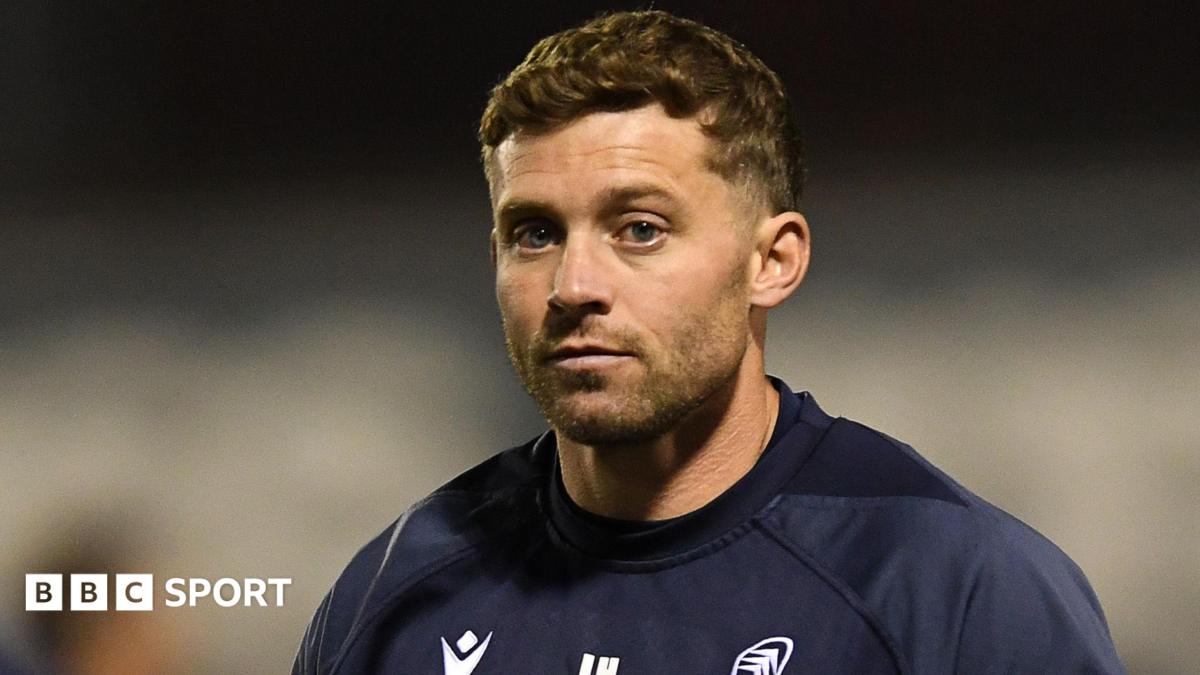










![Members of the Tiko Council team conduct a community sensitization session for pregnant women at a local health center to highlight the importance of early birth registration [Lucrece Armande _ Social Voices]](https://i0.wp.com/www.aljazeera.com/wp-content/uploads/2026/06/Members-of-the-Tiko-Council-team-conduct-a-community-sensitization-session-for-pregnant-women-at-a-local-health-center-to-highlight-the-importance-of-early-birth-registration-Lucrece-Armande-_-Social-Voices-1782791789.jpg?w=640&ssl=1)
![Mayors from Cameroon's top-performing municipalities, including Mayor Oumarou Sanda of Garoua 2 (center), are awarded for their exceptional efforts in deriving grassroots civil registration [Salomon Beguel _ UNICEF]](https://i0.wp.com/www.aljazeera.com/wp-content/uploads/2026/06/Mayors-from-Cameroons-top-performing-municipalities-including-Mayor-Oumarou-Sanda-of-Garoua-2-center-are-awarded-for-their-exceptional-efforts-in-deriving-grassroots-civil-registration-Salomon-Beguel-_-UNICEF-1782791781.jpg?w=640&ssl=1)