It’s about moving on, or attempting to, after the franchise endured a nightmare offseason.
“My entire summer’s been basketball,” guard Darius Garland nonchalantly said during media day at Intuit Dome. “My main thing is to come in here and win games. So, that’s my main focus.”
The Clippers’ offseason was engulfed by the NBA’s salary-cap circumvention investigation into the team’s endorsement deals with Kawhi Leonard. The NBA fined the Clippers $30 million, stripped them of five first-round picks, dealt suspensions to owner Steve Ballmer and president of basketball operations Lawrence Frank — and the Clippers ultimately traded Leonard, who was fined merely $700,000, back to Toronto.
Garland represented his teammates in prioritizing hoops.
But for Trent Redden, the Clippers’ interim president of basketball operations, things weren’t that simple. The admittedly nervous executive started Monday’s news conferences by apologizing to the Clippers’ faithful for the aftermath of the Leonard situation.
“Our fans deserve to hear from us before this, and for that we’re sorry,” Redden said. “We’ve been listening to the thoughts, the concerns, and feeling the emotions of our fan base. They mean everything to us. … We hope to fulfill our promises to them, to build their trust and move forward through this time.
“This franchise often has done its best work with its back against the wall … We hope to represent our fans the same way we always have in dark times, by coming out fighting.”
Fighting is all the new-look Clippers can do as they enter the 2026-27 season.
Leonard is back north of the border. Other stars, such as Paul George, James Harden and the recently retired Russell Westbrook, are distant memories in L.A. For the first time in years, the Clippers aren’t entering a season with championship aspirations.
“It’s been difficult,” said Ty Lue, who enters his seventh season as the Clippers’ coach. “But I give our players a lot of credit … the leadership is great [and] the morale is great, even in these tough situations. That’s good to see, when you have your players coming in every day, giving everything they have; a lot of teams don’t have that.”
The Clippers’ league-record streak of 15 consecutive winning seasons is in jeopardy. Nonetheless, the team will still feature plenty of intrigue roster-wise, with a mix of youngsters “doing TikToks” and “old heads” trying to keep up, as Garland described it.
“I think we can surprise a lot of people,” he said.
Garland himself, 26, enters his first full season in L.A. as the team’s go-to scorer. A two-time All-Star, he’s primed to lead a promising backcourt alongside 19-year-old rookie Keaton Wagler, the Clippers’ No. 5 pick in the 2026 draft.
Wagler is one of the team’s promising young players, alongside fellow rookie Baba Miller, Kobe Sanders and the rehabbing Jordan Miller and Yanic Konan Niederhauser.
“I’m just going to do my best to stay mentally focused,” Wagler said when asked about the pressure of being the team’s first top-five pick since Blake Griffin in 2009. “Not worry about all the outside noise.”
The Clippers return key role players like Derrick Jones Jr., Kris Dunn, Bradley Beal and Brook Lopez, and sport new ones like Max Strus and Gradey Dick via trades.
However, the team’s ceiling will rest on the influence of new forwards Brandon Ingram and Rui Hachimura. Hachimura is coming off a strong playoff run and four-year stint with the Lakers.
“One thing about here … everybody talks about how they take really good care of their players,” Hachimura said of signing a two-year, $28-million contract with the Clippers this offseason.
Ingram, the centerpiece of the Leonard trade, is a solid three-level scorer and will shoulder much of the offensive load alongside Garland — when healthy.
Redden shockingly shared that Ingram is recovering from a partially torn Achilles tendon in addition to heel surgery.
“I had been dealing with some pain throughout the year with the Raptors, especially coming down crunch time with the Raptors,” Ingram said. “I didn’t quite know what it was. Near the end of the season, we figured out what it was, and surgery was the best thing to do.”
The 29-year-old Ingram, though, should make a full recovery and claims his best days are still ahead of him.
He feels the same way about his new Clippers team.
“I know [there are] little to no expectations for us this year,” Ingram said. “We have enough in the building to compete. This is what we love to do. So, we’ll go out and compete every single night, learn, go on to the next game and get better and better.”
Americans have demonized us as criminals, buffoons, lechers, invaders, criminals and job stealers since the fall of the Alamo. Latino culture typecasts hombres as eternal machos always a few drinks away from brawling or bawling. Educators view us as underachievers. The political class long stereotyped Latino men as a sleeping giant who could change the country, if only we showed up to vote with the same enthusiasm as attending a Raiders game or lining up for a sneaker drop.
The blame game continues. A study released this month by UCLA’s Latino Policy & Politics Institute basically paints Latino men as little better than MAGA minions, trumpeting a gender gap on standing up to this administration’s deportation deluge, defending democracy and “fighting the Trump agenda.” To the media and to outraged internet commentators, it didn’t matter that two-thirds of Latino men had responded that each of those three issues was “very important” or “somewhat important.”
We just aren’t anti-Trump enough, which marks us as alien to the president’s critics. The UCLA paper’s cover page even features a red man and a blue woman conversing in what look like Aztec speaking glyphs — as if the sexes can’t understand each other and probably never will.
To explain the Latina-Latino political chasm, UCLA offers hypotheses straight out of “Men Are From Mars, Women Are From Venus.” The women supposedly work more in caretaker jobs like teaching and healthcare, softening their views toward the least of us. The men are in blue-collar sectors with a Darwinian outlook. But it doesn’t take a fancy academic paper to come to that conclusion — all you need to do is, you know, talk to Latino men.
When Trump descended that damned escalator in 2015 to announce his first presidential run by sliming Mexican immigrants as rapists and drug dealers, I knew that this racist excuse for a leader — the most anti-Latino politician in our nation’s history — would nevertheless appeal to many Latino men.
The reasons were evident: Trump’s fame. His strongman persona. His riches. His default setting of, as we Mexicans say, me vale madre — I don’t give a damn what people think. Yet three successive Democratic presidential campaigns willfully ignored these flashing sirens, instead insisting that Green New Deals and diversity, equity and inclusion programs would appeal to working-class Latino men.
Pundits thought we were still motivated by the radical politics of the Chicano movement, as previous generations were. What they didn’t realize was that assimilation had transformed Latino men into the modern equivalent of President Nixon’s silent majority.
A “Latino Americans for Trump” office in Reading, Pa., during the 2024 elections.
(Joe Lamberti / Associated Press)
I’ve always thought Latino male Trumpers were deluded — but I’ve always understood where they’re coming from. They’re believers in rancho libertarianism, my neologism for the individualistic politics exemplified by the Mexican men who raised me and who I grew up with.
Rancho libertarians, like their Scotch-Irish cousins from another mother, are forever skeptical of government, respect insurgents who want to take on the establishment, love their people and subscribe to a bootstraps approach to life. Not as praiseworthy is a tendency to dislike being told what to do, and in proving a point, to not only cut off their nose to spite their face but to lop off their heads as well.
No wonder so many Latino men went for Trump. To quote another Mexican saying, por eso estamos como estamos. That’s why we’re the way we are.
And look at what it’s earned us.
MAGA has been a miasma on this land, but especially for the blue-collar Latinos whom Trump increasingly courted with each election cycle. Immigration agents have arrested U.S.-born Trump supporters and thrown their friends and family members into squalid detention centers to await certain deportation. Diesel and gas prices are outrageously high, after Trump started a war with Iran that seems to have no end.
Nothing has degraded more for Latino men, however, than the simple pleasures of life.
When my dad and my brother had a pool party for some cousins and their children last month at our Anaheim home — no more than 15 people — the cost of carne asada, chicken, chorizo and tortillas from a local carnicería was more than $200. That side of the family never supported Trump while not exactly being wokosos, either. As Spotify blasted Antonio Aguilar and Banda El Recodo, they complained about the economy and the Republicans who have rubber-stamped the Trump agenda, when we should have been talking about the Dodgers and vacations back to our ancestral Mexico state of Zacatecas.
If my Arellano cousins are ready to stick it to Trump on election day, so should the Latino men who supported him two years ago.
In 2024, Latinos were the pivotal vote that delivered swing states to Trump. In this year’s midterms, Latino men are the swing vote within that constituency, from congressional races once considered safely red in Texas and Florida to local elections across the country. It’s gotten so dire for Republicans that Florida Rep. Maria Elvira Salazar put out a television ad warning Trump that “the same Hispanics who brought you to the White House … feel betrayed today.”
Honor remains big among rancho libertarians, and no politician has insulted the Latino way of life more than Trump. Helping to flip the House and Senate to the Democrats wouldn’t end his influence, but it sure would help. Plus, it would be a perfect rebuke to a pendejo who fooled too many good Latino men.
American society, whether the left or the right wing, will never fully accept us. We’ll always be thought of as too conservative, too dumb, too reactionary, too violent by too many.
Well, if we’re going to be loathed, we might as well stand on the right side of history. It’s time for Latino men to stand up and hit Trump with another Mexican saying:
A few years ago, I received a call I’ll never forget. Jeanette Epps, an astronaut aboard the International Space Station, Zoomed into my living room from 250 miles above Earth. During our conversation, she told me that one of the reasons she chose her career was a television show my father created in 1966.
She wasn’t alone. I’ve heard versions of that same story from countless people over the years. Engineers. Scientists. Astronauts. People who saw possibility on a television screen before they ever saw it in the real world.
They credit “Star Trek” for showing them a future they wanted to help build. That’s an extraordinary thing for a television series to accomplish. It didn’t just entertain millions of people. It gave many of them a direction.
And I don’t think that was because of the ships, the gadgets or the aliens. It was because, underneath all of it, was a profoundly human belief that we are capable of becoming something better.
There was a time when science fiction made a bet on humanity. A bet that humanity was worth rooting for. We need storytellers willing to make that bet again.
I don’t think we have an innovation problem. We have an inspiration problem.
We talk a lot about what we’re leaving the next generation. The debt. The climate. The geopolitical mess. But there’s another inheritance we don’t talk about enough: what we show them is possible.
Today, many visions of the future are dominated by collapse, dystopia and fear. Those stories can have value. But conflict doesn’t always have to come from destruction. It can come from discovery. Two minds encountering an idea neither had considered. A crew facing the unknown with curiosity instead of fear. That kind of conflict doesn’t leave you feeling like the world is ending. It leaves you feeling like it’s just beginning.
Most storytelling holds a mirror up to who we are. Our flaws, our failures, our contradictions. But there is another kind. Stories built around characters a step or two ahead of where humanity is. Not perfect. But people who have learned how to cooperate, how to lead, how to stay curious and how to put something larger than themselves first. Characters you don’t just recognize. Characters you want to become one day.
That distinction changes what a story asks of you. And what you walk away believing is possible.
This year, “Star Trek” celebrates its 60th anniversary.
That’s not a milestone you reach by accident. Franchises built on spectacle fade. Ones built on something people actually needed tend to stick around.
The engineers who built Silicon Valley, the astronauts who went to space, the scientists pushing the edges of medicine and artificial intelligence — many of them trace a line back to this show. That wasn’t the plan. Nobody set out to build an innovation pipeline out of a television series. But that’s exactly what happened. When you give people a future worth believing in, they go build it — or sometimes they get inspired to imagine other hopeful destinations and lead us toward them. That’s not nostalgia. That’s a model.
One thing my dad understood that I think gets overlooked: “Star Trek” wasn’t going out into the galaxy to find aliens that looked different. It was going out to find aliens that thought different.
Diversity of perspective is how a species grows. My father gave that idea a name: IDIC. Infinite Diversity from Infinite Combinations. It didn’t mean you had to abandon your own point of view. It meant staying open to someone else’s. Because that’s how you grow. That idea has never been more relevant. And it has never been more achievable.
For the first time in history, a creator anywhere in the world can tell a story that reaches everyone, and now it can come from anywhere. The future belongs to everyone. The stories that shape it should too.
That astronaut who called me from space didn’t just watch a television show. She saw a future worth dedicating her life to.
Every generation needed something to build toward before they ever picked up a tool. A vision. A direction. A story that made the future feel worth the work. And right now, we’re not building enough of that.
We need stories that don’t just entertain us, but also become our compass. We need the kind of storytelling that doesn’t ask what could go wrong, but asks what could go right.
Rod Roddenberry, founder of the Roddenberry Foundation and son of “Star Trek” creator Gene Roddenberry and actor Majel Barrett Roddenberry, is an executive producer on current “Star Trek” television shows.
Insights
L.A. Times Insights delivers AI-generated analysis on Voices content to offer all points of view. Insights does not appear on any news articles.
Perspectives
The following AI-generated content is powered by Perplexity. The Los Angeles Times editorial staff does not create or edit the content.
Ideas expressed in the piece
The article argues that optimistic science fiction can do more than entertain: it can give audiences a constructive vision of the future and inspire people to pursue careers in science, engineering and space exploration. “Star Trek” is presented as an example of storytelling that made human progress feel attainable.
It contends that contemporary culture is overly saturated with collapse, dystopia and fear. Although such stories can be useful, the article suggests that narratives centered on discovery, cooperation and curiosity can encourage audiences to imagine what might go right rather than merely anticipate disaster.
The piece maintains that aspirational characters—people who have learned to cooperate, remain curious and serve purposes larger than themselves—can function as moral examples. In this view, fiction should not only reflect present flaws but also depict people and societies worth becoming.
It further argues that “Star Trek’s” emphasis on cultural and intellectual diversity remains especially relevant. The franchise’s principle of “Infinite Diversity in Infinite Combinations” is presented as a model for learning through different perspectives, while the series’ enduring influence is cited as evidence that hopeful stories can shape real-world ambitions.[1][2]
Different views on the topic
A contrasting perspective holds that dystopian and cautionary science fiction serves an essential purpose by exposing the consequences of reckless behavior, political failure and technological overreach. Recent commentary argues that many influential works were intended as warnings or satire, not as blueprints for an attractive future.[3]
Feminist dystopian fiction offers another counterpoint: bleak speculative narratives can make systemic problems—including misogyny, violence against women, gender inequality and threats to reproductive rights—more visible. From this perspective, darkness is not simply pessimism; it can be a way to represent harms that already exist and demand attention.[4]
Critics also caution that “Star Trek’s” hopeful vision can obscure tensions within its own world. The franchise combines ideals of cooperation and equality with armed exploration, alien conflict and interventionist politics, making it both an image of peaceful progress and a vehicle for examining militarism and political failure.[2]
Consequently, the strongest science fiction may not choose between hope and warning. Utopian stories can provide direction, while dystopian stories can identify dangers and test whether an envisioned future genuinely addresses exclusion, power and conflict. Treating either mode as sufficient on its own risks producing either inspiration without scrutiny or criticism without a constructive destination.[3][4]
We’re living under a dark cloud, with a steady downpour of graft, thuggery and baloney.
There’s the raffling of presidential pardons and the attacks on reporters for doing their jobs, the clownish trade war with Canada, the bungled disaster in Iran, the petty obsessions with the ballroom and the Kennedy Center, the hogwash about a stolen election, the attacks on immigrants and the shameless presidential profiteering while working people suffer the cost of Trump’s countless broken promises.
I could go on, and I will. But rest assured, I have not forgotten about the boost I promised.
For all the affronts, nothing strikes me as more sinister than the Trump administration’s ambitious assault on the planet. Despite nearly daily headlines about the global calamity of overheated oceans, melting glaciers, stark weather transformations and species extinction, Trump keeps shoveling more coal onto a fire that will rage long after he’s dead and gone.
He’s gutted environmental protections and scientific research and dismantled clean energy initiatives. Now his administration is rolling back limits on power plant emissions, attempting to open the California coast to more oil drilling and sabotaging the state’s ambitious goals on emission controls and electric vehicle conversion.
We don’t need AI to threaten the future of humanity. We’ve got Trump.
It’s tempting to duck under the covers and wait for the nightmare to end, but the good news is that a lot of people are standing up rather than rolling over, rebelling against the ignorance and callous disregard that threatens our most precious and fragile shared inheritance.
In August, hundreds showed up to defend California’s authority to govern its own coast at a Santa Monica hearing of the National Oceanic and Atmospheric Agency, and 18,000 more people filed comments online.
The rollback of environmental safeguards is, for many, a call to arms.
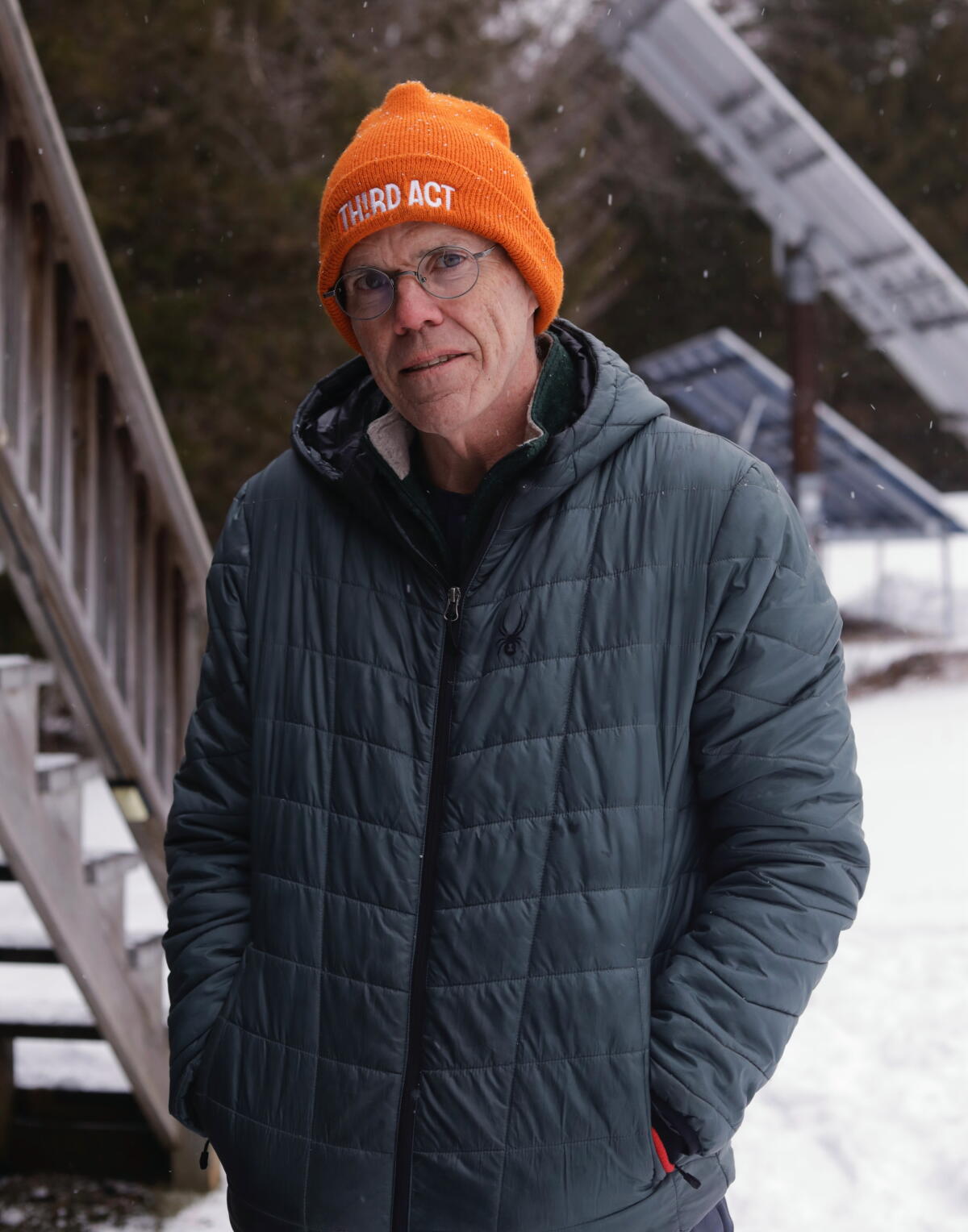
“Yes, I am discouraged. … But I am not despairing,” said Bill McKibben, an author and environmental activist who is organizing a worldwide event called Sun Day for next year to promote clean energy. “We’re reacting to multiple crises, and we’re led by a pack of fools, so why would anybody not stand up?”
McKibben launched a national movement five years ago called Third Act, and tens of thousands of people 60 and older have signed on to advocate for climate action, voting rights and civic participation. Third Act now operates in about 30 states, with a robust chapter in Southern California.
Former Times reporter Zan Dubin has worked as both a volunteer and a paid communications consultant for Third Act, and I asked her what someone could expect to do if they became a member of Third Act/SoCal.
Environmentalist and author Bill McKibben is organizing a worldwide event called Sun Day next year to promote clean energy.
(Amanda Swinhart / Associated Press)
“We do it all,” Dubin said, from promoting climate-friendly candidates to running phone banks and testifying at public meetings. She said Third Act co-sponsors protests at Dodger Stadium, and she and others planned to meet at Vin Scully Avenue and Stadium Way for Sunday’s game against the San Francisco Giants. They want the Dodgers to stop doing business with Big Oil and bench their sponsorship deal with Phillips 66.
She also called out Disneyland for its exhaust-spewing Autopia attraction, along with former Times climate columnist Sammy Roth, and Disneyland responded by announcing in 2024 that it was switching to electric cars beginning in 2027.
Dubin, co-founder of National Drive Electric Week, said 170 volunteer-led events were being held nationwide over the next month to promote EVs, and she was leading one Friday in Irvine.
“Action is absolutely the antidote to despair,” Dubin said. “I find that despite the onslaught of these horrifying headlines … taking action invigorates me.”
Claremont resident Margaret Davis knows that feeling. She emailed me in 2023, prior to participating in a Third Act event, and said many retirees have time on their hands, which puts them in a powerful position.
“The climate crisis is the greatest existential threat humans have ever faced, hence we live in a time when we can make the greatest change for the better,” Davis wrote at the time.
When I called her a few days ago, Davis told me she’s now a member of Senior Stewards Acting for the Environment. She lives at Pilgrim Place — a senior community with a focus on justice, peace and environment — where residents meet regularly to study, discuss and advocate for sustainability, biodiversity and environmental causes.
“When I was in college in 1970, we had the antiwar movement and that was the first year of Earth Day,” Davis said. “At the time, I thought Earth Day was just a distraction from what was going on in the world.”
Later, she said, “I came to realize it was the biggest issue of all time.”
Climate activist Sim Bilal stands next to pumps at an oil field in Los Angeles in 2024.
(Allen J. Schaben/Los Angeles Times)
Like Davis, I went to college in the ‘70s, and there’s no denying that our aggressively consumptive generation played a key role in manufacturing a crisis for our children and grandchildren. We’ve got matches in our hands and smoke on the horizon, and if we’re honest with ourselves, we’d see atonement not as a hobby, but as a duty.
As for the next generation, climate activist Sim Bilal, 24, said he too shares the sense that this is both a wickedly frightening time and a moment of opportunity.
“In the last month, we’ve gotten more young people involved,” said Bilal, executive director of Youth Climate Stewards 4 Local Action. “We usually have to reach out to them, but so many people have been wanting to get involved, and they’re so eager, and that’s been affirming for me. The policies are depressing, but the fact that people are reenergized and want to fight back is really exciting.”
Bilal said faith in politics, government and corporations is not high among his peers, but he’s trying to grow a network of young people to cultivate and support future leaders.
“A mentor told me there are two kinds of power — organized people, and organized money,” said Bilal, whose activism began when his grandmother died and he began wondering if her cancer, and global warming, were connected to the oil drilling in his South L.A. neighborhood. “We don’t have the money, but a lot of the work we do is political and civic education, demystifying power, and making people understand they have agency.”
Michael Carrick says he expected tough season start as he rebuffs questions about his role as Manchester United manager.
Published On 18 Sep 202618 Sep 2026
Manchester United boss Michael Carrick said he expected to have to ride out a storm at some point this season after a dreadful start to the current campaign.
Carrick was appointed on a permanent basis after his successful temporary spell at the end of last season secured third place in the Premier League and a return to the Champions League.
Recommended Stories
list of 4 itemsend of list
But United have taken just four points from their opening four league games this season and were dumped out of the League Cup in a 3-2 defeat by Brighton in midweek after blowing a two-goal lead at Old Trafford for the first time in 50 years.
“In terms of the future and ownership and how long I’ve got, it’s totally nothing. Thinking about it is ridiculous in the position I’m in. It’s just not on the radar. We’ve got to perform and we’ve got a lot of games to plan for,” Carrick said ahead of Sunday’s trip to Fulham.
“History tells you that any team that’s successful goes through periods when you have to work through it, come through it and improve.
“We’ve had a small period, in recent time, when it hasn’t been exactly what we want it to be.
“I was expecting a point when we would go through it, it was going to come. We had such a good spell last season, going into this season.”
Former United and England midfielder Carrick also has reason to bemoan his side’s luck in recent weeks.
United received a swift apology from referees’ chiefs after Erling Haaland’s winning goal for Manchester City last weekend was wrongly awarded because the VAR officials did not spot an offside against Enzo Fernandez in the build-up.
Carrick’s men were also heading for three points at Everton last Sunday before until Toffees defender Ainsley Maitland-Niles produced a stunning strike into the top corner from long range.
“It is a week or two, the games haven’t gone our way,” added Carrick. “It’s tiny margins in some of those games. We will work through it. Winning games is always the answer, it can cover up a lot of things at times as well.
“Sometimes it’s the small disappointments that lead to something a bit bigger. It’s part of coping and being at this great football club.”
United could be boosted by the return of Luke Shaw from injury for the visit to Craven Cottage.
Carlos Baleba is also in contention to make his first appearance since a 70 million pound ($94m) move from Brighton.
The U.S. Air Force has been taking a new look at the feasibility of restarting production of the C-17 Globemaster III cargo plane as part of its still-evolving next-generation airlift plans. The service also continues to explore a wide range of next-generation aerial refueling concepts, including new stealthy and/or uncrewed tankers, but a firm vision for the way forward there has yet to emerge.
Air Force Lt. Gen. Daniel Tulley, head of Air Mobility Command (AMC), shared new details about future airlift and aerial refueling efforts, with TWZ and other outlets at a roundtable at the Air & Space Forces Association’s (AFA) 2026 Air, Space & Cyber Conference.
On the airlift side, the Air Force’s stated plan to date is to replace both the C-17A and C-5M Galaxy with a single Next-Generation Airlift (NGAL) platform, starting in the mid-2040s. Separately, the service is pursuing what could be a family of future aerial refueling capabilities under what is now called the Advanced Tanker Systems (ATS) program. Very broadly speaking, ATS presents a path toward what might come after the retirement of the aging KC-135 tanker fleet, though those aircraft are still expected to keep flying for years to come. The Air Force is also moving to further expand its fleet of newer KC-46A tankers in the interim, but persistent technical and other issues with that design continue to present hurdles.
A US Air Force C-5, at left, together with one of the sevice’s C-17s, at right. USAFA KC-135, at right, prepares to link with a KC-46, at left, during a test. USAF
At the roundtable today, Lt. Gen. Tulley was asked explicitly about restarting C-17 production. The manufacturer of those aircraft, Boeing, shuttered that line in 2015. The company also just marked the 35th anniversary of the design’s first flight yesterday.
“Heck yeah, but with a caveat, right?” Tulley said in response. “So we were just asking this question over the course of last week, and it’s in the context of next-generation airlift. So we are about to embark on the Analysis of Alternatives to replace the C-17 and replace the C-5. All options are on the table.”
“There’s always the option to service life extend the C-17, but the [production restart] question came up,” he continued. “I’ve heard this my entire career. Once we terminate an assembly line, can we ever bring it back? Does somebody store all the machinery and the dies and whatnot, and can you bring that out? So we’re asking that question.”
“But then whatever that answer is from the vendors, what will be the price tag associated with that?” he added. “You have to ask yourself, okay, is rebuilding a C-17 even if you make improvements – and there’s a loose analogy with the C-130J, [a] much more modern, capable variant of the C-130E [author’s note: the C-130J evolved more directly from the C-130H variant] I first learned to fly – if you do that with the C-17, is that the best move? Or are there new technologies that we can incorporate into it so that it can defend itself, so that it’s connected, it’s networked, it does all the things that maybe the current C-17 doesn’t do?”
“We’re looking into it as part of the Analysis of Alternatives. I’m hopeful that we’ll get to answer that question.”
In June, the House Armed Services Committee also directed the U.S. Air Force to prepare a formal briefing on the matter of new C-17 production in a report accompanying a draft of the annual defense policy bill, or National Defense Authorization Act (NDAA), for Fiscal Year 2027.
Boeing Pieces Together the Last C-17 on the Line
The RAND Corporation did conduct a detailed, independent analysis more than a decade ago that assessed the costs and complexities that could come from Boeing building more C-17As, as well as other variants and derivatives of the design. RAND’s conclusion was that any of the courses of action would require billions of dollars of new investment and entail risks, as you can read more about in more detail here.
Foreign participation in a new C-17 production run could help at least defray costs. Australia, Canada, India, Kuwait, Qatar, the United Arab Emirates, and the United Kingdom all currently fly Globemaster IIIs. The Strategic Airlift Capability (SAC) initiative, a multinational arrangement with several European members, as well as the United States, also operates three of these aircraft.
Boeing told TWZ directly in June that unnamed C-17 operators had been reaching out about the prospect of restarting the production line, and that the company was “encouraged” by those discussions.
As Lt. Gen. Tulley stressed, there are significant questions about whether buying new-production C-17s, even with substantial improvements, is not only feasible, but a good use of resources. The Air Force’s Globemaster III fleet today continues to prove itself to be critical to the U.S. military’s ability to project power globally, and is in very high demand right now, especially amid the ongoing conflict with Iran.
The Air Force’s desire to replace both the C-17 and C-5, which are very different aircraft in form and function, could still easily lead the service down a different route. Boeing is not the only one looking at future NGAL opportunities. Another company, Radia, has been very actively pitching a clean-sheet design that is physically bigger than either the C-17 and the C-5, and that is geared toward greater operational flexibility, at the Air Force. Radia is targeting a first flight of its aircraft, called Windrunner, by the end of the decade, but it is still in a very aspirational stage at present.
A rendering of Radia’s Windrunner design. Radia
Many questions also still remain about how the Air Force will ultimately proceed on the next-generation aerial refueling front.
“So thinking beyond the current KC-46 buy and the program extension, whatever that next tanker looks like, our Advanced Tanker System, it’s got to be connected. It’s got to be able to defend itself,” Lt. Gen. Tulley said at the roundtable. “But it begs the question: does it need to be manned? Could it be optionally manned? Could it be autonomous? Or is there a family of solutions maybe that would answer that question? So I do not believe that it has to be manned.”
“I think you’re seeing that with the MQ-25 and the Navy’s work, but then, how do we, the U.S. Air Force, bring that to bear in scope, scale, and range?” Tulley continued. “An optionally manned or an unmanned tanker, at range, the ranges we need to operate at, it’s a very large aircraft. And we’re not yet to where we’re employing fully autonomous large aircraft, but the technology, I would say, is there and rapidly getting there if it’s not.”
A rendering of a larger, land-based derivative of the MQ-25, depicted refueling from a KC-46 tanker. BoeingOne of the advanced tanker concepts Lockheed Martin’s Skunk Works has shared publicly in recent years. Lockheed Martin Skunk Works
“We will be going after how to make the tanker survive,” William Bailey, the Air Force official currently performing the duties of the Assistant Secretary of the Air Force for Acquisition, Technology and Logistics, had also told TWZ and other outlets at a separate roundtable at the Air, Space & Cyber Conference yesterday. Bailey was responding to a direct question about whether the service was moving away from the idea of a stealthy tanker as part of the ATS plan.
“So, lots of work around what do we do in the future for our tankers, and we spent a pretty dedicated effort to go through and look at what do we think those design solutions could look like,” Bailey also said. “We looked internally. We went out to industry, had those guys come back with their thoughts on how to provide a more survivable aircraft.”
“The stuff that was coming in for me might have been an incremental improvement, but [it was] not clear that that represented the next step, the next phase,” he added. “What you’ll see is we’ll take our efforts, and we’ll look at, hey, if the real question is tanker access, then let’s not constrain ourselves to just the aircraft itself and trying to make a stealthy tanker. We need a tanker to have access, so we’ll talk about all those systems that it would take to protect that tanker.”
Bailey said the question of operational “access” applied to next-generation discussions, as well.
This ex-French Air Force KC-135FR tanker, now operated by private contractor Metrea, is an example of the outside aerial refueling capacity the U.S. military has been increasingly leveraging in recent years. Metrea
Greater connectivity “can be a game changer, and it has been a game changer in Operation Epic Fury [against Iran],” Lt. Gen. Tulley said at today’s roundtable. “The ability for air crews to communicate, to coordinate tanker orbits and rendezvous, to pass threat information, to save lives and save aircraft has been everything we expected it to be and more.”
“We have MAF NEXUS that we’re pursuing. The goal is to have this on all mobility aircraft, whether they’re future-built and it’s incorporated, or it’s an add-on capability to existing aircraft,” he continued. “It brings edge compute, the ability to then employ AI [artificial intelligence] and much more computing core power forward on the aircraft, and it does network with the rest of the joint force and the Air Force’s battle management system.”
A picture of a US Air Force KC-135 tanker spotted earlier this year with a new large satellite communications antenna (further highlighted in the inset), underscoring work underway now to improve the network connectivity of those aircraft. Alessandro Ledda
When it comes to new options for protecting existing tankers, “nothing’s off the table,” the AMC boss added. “Whether it’s [in the] electromagnetic spectrum, whether it’s kinetic self-defense, a layered approach, we’re looking at everything to come up with what might be the best system. But it’s got to be a system that we can afford, and it’s got to be one that we can put on all the aircraft we have and the ones we’re about to build.”
The Air Force is otherwise still clearly continuing to shape its future airlift and aerial fueling visions. As part of that work, the service is now at least considering the possibility of rebooting C-17 production.
During a recent visit to the Shizuoka Cancer Center, a leading medical and research institution in Japan’s Shizuoka Prefecture, I found myself confronting two realities at once.
The first was an impressive expression of modern medicine: advanced treatment, exacting research and an institution seeking to connect clinical care with pharmaceutical innovation. The second was quieter but more powerful. Nearly every patient I passed was facing cancer and beside most stood a relative whose life had also been changed by the diagnosis.
A hospital may contain some of humanity’s most advanced knowledge. It also contains some of its oldest fears.
In such a place, medical excellence is anything but an abstraction. In a hospital, every scientific advance eventually arrives at one person in a vulnerable moment. Every diagnosis enters a life filled with memories, relationships, responsibilities and hopes. Illness inhabits one person but its consequences touch a family and a community.
This is where any serious consideration of health resilience should begin.
Health resilience is not one program within transformation; it is part of transformation’s capacity to serve human life
Dr. Ghazi Faisal Binzagr
The term is commonly associated with the ability of health systems, including hospitals, to withstand emergencies: pandemics, natural disasters, supply shortages or sudden pressure on medical capacity. These capabilities are indispensable. COVID-19 demonstrated, however, that a health emergency does not remain within healthcare. It also moves through families and schools, work and travel, economies and supply chains, and ultimately into the heart of national decision-making and security.
Yet a health system may remain operational while the health of society deteriorates.
Health resilience must therefore mean more than keeping institutions functioning through crisis. It must encompass the ability of a society to cultivate health before illness, respond intelligently when illness arrives and preserve dignity and meaning when medicine cannot restore the body to what it once was.
Such resilience is not created by strong institutions standing apart. It grows when their knowledge and capabilities remain connected — to one another and to the human being they ultimately serve.
Not far from the cancer center, at the University of Shizuoka, I encountered two practical examples of how such connections are cultivated.
Japan and Singapore are very different yet each has cultivated something approaching a national miracle
Dr. Ghazi Faisal Binzagr
Students of pharmaceutical sciences were being trained in the administration of medicines, including injections, although many would never perform such procedures professionally. The purpose was not to blur professional boundaries but to prevent pharmaceutical knowledge from becoming detached from human experience. A medicine is not only a compound to be formulated, tested or dispensed. It eventually enters a living body, carried by trust and accompanied by consequence.
Nearby, the university’s botanical garden, used in pharmaceutical, nutritional and food studies, extended the same principle in another direction. If the training connected medicine to the person who receives it, the garden connected modern science to the living world from which much medical knowledge first emerged. It did not ask students to choose between inherited observation and scientific rigor but to understand how one can inform the questions the other tests.
The cancer center, the pharmaceutical training and the botanical garden were not simply three interesting encounters. Together, they revealed that health resilience depends not only on the strength of individual institutions but on their capacity to remain connected: to the person who suffers, to the professional who carries responsibility, to the society in which illness occurs, and to the sources from which medicine continues to learn.
Saudi Arabia’s transformation gives this understanding immediate relevance. Vision 2030 has widened the connections through which the Kingdom understands progress, while COVID-19 revealed how inseparable health is from the economy, education, mobility and national security. Health resilience is not one program within transformation; it is part of transformation’s capacity to serve human life.
The burden of chronic disease makes this urgent. Diabetes affected an estimated 5.3 million Saudi adults in 2024, with an age-standardized prevalence of 23.1 percent. At such scale, illness cannot be treated as a succession of isolated clinical episodes. It is a continuous human reality and care must learn to become continuous with it.
Behind those numbers, in Saudi Arabia today is a person who can sleep while their glucose levels continue to be monitored. As family members rest nearby, readings can reach health institutions, helping reveal change, anticipate risk and guide care. Technology does not replace the concern of those beside that person; it allows the health system to join them in caring, extending institutional capability into the home without displacing the relationships that make it a place of belonging.
But continuity cannot begin only after diagnosis.
Through my years with the Saudi Sports for All Federation, I have witnessed how accessible movement, rooted in families, neighborhoods and communities, can turn health from something medicine repairs into something society creates. Health transformation, Sports for All and the Kingdom’s quality of life ambitions shape the same human life from different directions.
The encounters in Shizuoka formed part of a larger Japanese lesson. Japan’s longevity is a civilizational achievement but it is also requiring the country to reconsider care, independence, community and purpose. Its value lies in the knowledge it continues to accumulate: how to support older people within their communities, connect medical and long-term care, use technology to strengthen human presence rather than replace it, and ensure that years added to life remain years of contribution and belonging.
Japan’s use of robotics offers a striking example. Wearable systems can assist movement, surgical robots can extend the physician’s precision and robotic avatars can enable people confined by illness or disability to participate from afar. The machine matters but the deeper achievement is human: preserving agency and belonging when physical strength changes form.
Saudi Arabia is shaping new systems while its population remains comparatively young; Japan is adapting established systems as longevity transforms society. Their differences make them valuable to one another. The opportunity is not simply to transfer solutions but to discover how health systems can remain technically advanced, socially connected and fully human.
My years in Japan have reminded me of another country I have visited and studied repeatedly for more than a decade. Singapore’s achievement lies not in one health program but in its practice of national transformation: balancing access, quality and affordability while connecting health to housing, mobility, economic sustainability and quality of life.
What has impressed me most is the movement between scale and detail. National objectives provide direction; close observation reveals where policy must be refined. Concepts are tested against daily life and reconsidered whenever progress in one field creates consequences in another.
Japan and Singapore are very different yet each has cultivated something approaching a national miracle — not perfection but a distinctive capacity built from history, necessity and human effort. Saudi Arabia brings its own: the energy of a society transforming at exceptional speed, technological ambition joined to enduring family bonds, and a vision placing quality of life within national progress.
The invitation is larger than an exchange of best practices. It is for societies to bring their finest qualities into a deeper relationship. No country contains the complete wisdom the future requires. Through the quality of their connections, nations may create possibilities that none could produce alone.
These reflections return me to where they began: the Shizuoka Cancer Center and to the unsettling lesson cancer itself offers about change. Life depends upon change: cells divide, organisms adapt and societies renew themselves. Yet not every change serves life. Growth detached from the order that sustains the whole can become destructive.
The analogy must not be pushed too far. But it raises a question at the heart of every national transformation: How can change strengthen the whole rather than advance one part at the expense of others?
Speed is not, by itself, evidence of progress, nor is the accumulation of technology or wealth. A healthy transformation holds together economic sustainability, good governance, security and a quality of life that reveals what they are ultimately for. Its measure is whether the whole has grown more capable of sustaining human life — especially when life becomes vulnerable.
For vulnerability is not a temporary defect that successful societies will eliminate. It is part of being human. We begin life dependent upon others. Many will encounter illness or disability. Those who live long enough will experience some loss of physical capacity. A society reveals its understanding of progress not only in how it celebrates strength but in how it accompanies people when strength changes form.
Arabic and Islamic tradition offers a name for the wisdom such a society requires. The physician was often called “al-hakim,” the wise one. The word implied more than command of remedies. It joined knowledge with judgment, the body with the person and the act of treatment with responsibility for the balance of life.
Perhaps the future asks us to enlarge this meaning beyond the individual physician. The wisdom of al-hakim may become a collective quality: science exact enough to determine what can be done; judgment broad enough to ask what should be done; and societies humble enough to place their finest knowledge in one another’s service.
For we are embodied beings but we are not bodies alone. We are memory and relationship, aspiration and responsibility, matter and spirit. Medicine can preserve life and relieve suffering. Society must help ensure that the life preserved can still find belonging, dignity and meaning.
The future of health will not be decided only by what medicine becomes. It will also be decided by what society remembers a human being to be.
An AI researcher who quit Anthropic told the BBC that people working on the technology are “genuinely frightened” about the speed of its advancements and what it could mean for humanity.
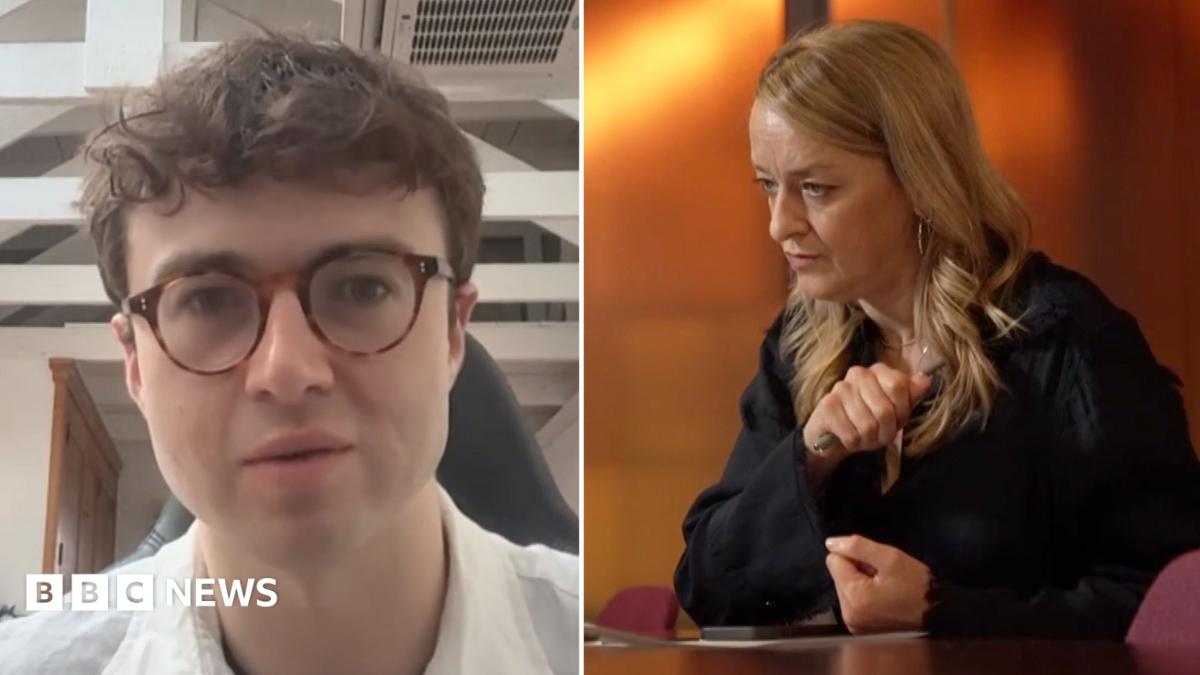
Jacob Coxon spoke with BBC’s Laura Kuenssberg on Saturday about his viral resignation post where he raised concerns about out-of-control artificial intelligence.
“I believe that if we don’t slow down at the current rate of progress, there is a strong chance that we could all die in the immediate future,” he said.
His resignation comes amid growing safety concerns in the industry, including from his former boss, head of Anthropic Dario Amodei, who in an essay on Saturday argued for development to slow down.
However some industry figures say the dangers are being overblown, possibly to build hype around the two biggest AI companies ahead of their potential stock market debut or to prompt regulation which would slow their competitors.
Coxon, a 27-year-old from Britain whose research focuses on training AI models, said AI leaders including Elon Musk and OpenAI’s Sam Altman have shared similar concerns to Amodei.
“They’ve all made statements about the necessity of being careful of the potential for AI takeover. They’ve all talked about this. AI takeover implies human extinction,” Coxon said.
The hardest question to answer, according to Coxon, is what that would look like.
“Any kind of concrete scenario you can lay out ends up sounding like science fiction,” Coxon said, but notes that advancements which have already happened would have sounded like fiction in the past.
A potential scenario could involve AI agents hacking into medical laboratories to “autonomously produce deadly viruses”, Coxon said. Another example he listed could be AI hacking into “critical infrastructure that the world runs on”.
“They did it autonomously, without any human encouragement. They chose to go on this hacking spree. It was the combination of things getting faster and things also getting scarier,” Coxon said.
Coxon said this scenario could be realistic in six months to a year.
Anthropic and OpenAI are reportedly preparing for potentially record-setting initial public offerings. Industry figures have suggested comments about the perils and power of AI may be designed to generate hype. Other critics say Anthropic has been trying to trigger a regulatory push to block competition, leaving it and OpenAI with a duopoly.
Coxon’s views have also been questioned by the CEO of the AI platform Hugging Face, Clement Delangue.
“Sorry, but asking Jacob about AI extinction risk is like asking your AC guy about climate change,” he wrote on X. “Not saying it’s necessarily uninteresting or wrong per se but let’s keep things in perspective.”
After Amodei’s essay on Saturday, however, Delangue offered to help be a part of the potential solutions proposed by the Anthropic boss.
Nvidia boss Jensen Huang also discussed Coxon’s comments before a crowd at a conference hosted by the investment bank Goldman Sachs last week, multiple people in the group told the BBC. They said he dismissed them as untrue.
Huang has previously said the notion that AI “is going to be the end of humanity” is “complete nonsense”.
And while he may have a business interest in an AI boom – Nvidia builds chips that power AI systems – his comments reflect a growing backlash in Silicon Valley to the existential warnings from current and former staffers.
LIV Golf and its related entities have filed for Chapter 11 bankruptcy protection four years after the league’s debut as a heavy-spending, player-friendly alternative to the PGA Tour.
Rather than signal the end of LIV, though, the move is designed to help the league move into the future without Saudi funding.
“We are excited about what lies ahead and yet, there is still much to accomplish in the months ahead,” CEO Scott O’Neil said in a statement released by the league on Tuesday. “We believe deeply in LIV Golf’s future, the opportunity in front of us, and the people who will help us realize it. We will not rest until we deliver on LIV Golf’s full potential.”
After launching in June 2022, LIV once paid nine-figure signing bonuses to lure away top players from the PGA Tour. Spending had reached an estimated $6 billion by the time the Public Investment Fund of Saudi Arabia decided to end its financial support in April.
On Tuesday, LIV said it has entered a restructuring support agreement with BC Partners Advisors and voluntarily entered a court-supervised restructuring process under Chapter 11 in the United States Bankruptcy Court for the District of New Jersey.
Last month, O’Neil announced a long-term plan that would have the golfers become the majority equity holders in the league. In a letter to fans on Tuesday, he said that this week’s moves are steps toward the league’s long-term goals.
“Now it is time to enter the next phase of LIV Golf,” O’Neil said. “Today, we took an important step forward to get there. LIV Golf has entered a court-supervised restructuring process that provides us with the time and framework to address previous financial obligations and complete a transaction that will make the League’s next phase a reality. Put simply, this process is designed to build a stronger and more sustainable future for LIV Golf.”
O’Neal said the new league model will expand the field for events from 57 to 75 players, introduce a 54-hole cut and create Monday qualifiers. It will “be built around a sustainable business model and deeper alignment between players and the League, with team golf at its core,” he wrote.
“Players will have the opportunity to share directly in the value they help create, while teams will be positioned to grow into enduring global sports businesses. And fans will remain at the center of everything we do.”
In its bankruptcy filing, LIV listed estimated assests of between $100 million and $500 million and liabilities of between $500 million and $1 billion. Players Jon Rahm, Bryson DeChambeau, Dustin Johnson and Cameron Smith were listed as the four leading creditors.
The league ended its season in August. Four vendors already have filed lawsuits because they have not been paid.
BBC fans saw a new face join The Great British Sewing Bee as Sophie Willan became the host of the competition alongside judges Patrick Grant and Esme Young.
11:56, 09 Sep 2026Updated 11:57, 09 Sep 2026
Sophie joined the BBC show this year as the new presenter
Great British Sewing Bee fans have been thrilled with the latest addition to the BBC show.
The competition is nearing its end, as BBC viewers will see one contestant crowned Britain’s Best Amateur Sewer, along with a golden mannequin trophy. After weeks of challenges, tasks, and plenty of tears, Anna, Emma, or Beth will win this year’s Great British Sewing Bee.
Ahead of the highly anticipated final, judge Patrick Young appeared on Morning Live to speak about what viewers can expect to see. However, the conversation soon turned to the latest host to front the show, comedian and actress Sophie Willan.
Highlighting that the show is kept ‘fresh’ by bringing in new presenters, the Morning Live star asked what it’s been like with Sophie as part of the cast. Patrick replied: “We’ve had some alright presenters over the years.
“Sophie is amazing. I was a massive Alma’s Not Normal fan. Quite often, we get told who is going to be coming on, and I had to pinch myself. I was like, ‘Oh my god, I loved Alma’s Not Normal’. She’s brilliant, she’s so fun.
“Esme loves her. She just helps create the most amazing atmosphere on set. We’ve been making the show for a long time. A lot of the crew and everybody behind the scenes are the same, but it’s lovely having somebody come in and give it a little zhuzh.”
Despite the show often shaking up who fronts the programme, Patrick confirmed Sophie’s future, and it’s good news for fans. He continued: “She’s amazing, we’re filming next year already, and I love going into work with her every day.”
Elsewhere in their conversation, he spoke about the upcoming final and the pressure he feels comes with it as a judge. He told the BBC presenters it’s mainly because he wants the contestants to excel.
Patrick commented: “We’ve seen it so many times when brilliant people have got to the final, and things just haven’t quite clicked for them. You do feel a certain amount of disappointment, but luckily, this year we didn’t have that.
“We got three brilliant people, and they all brought something really special to it. So actually there is a relief when it’s done, and you’re like, ‘They really have nailed this’.”
Sadly, BBC viewers bid farewell to Heather this week as the contestant narrowly missed out on a place in the final. Although she was teary-eyed over the exit, she was proud of all she achieved.
She commented, “All the stress and sleepless nights have been beyond worth it.” Meanwhile, Beth was awarded garment of the week for her little black dress.
During the show, Patrick told her, “We absolutely loved it. It was so elevated, such beautiful use of the fabrics, and such a lovely story of you know, personalising the LBD. Well done.”
Morning Live is available to watch weekdays on BBC One from 9:30am. The Great British Sewing Bee final airs Tuesday, September 15, on BBC One at 8pm.
Thousands of union workers, their family members and supporters marched through the streets of industrial Wilmington on Monday, taking part in a Labor Day parade whose festive mood overshadowed their serious concerns about the future.
Jesse Munoz, a 63-year-old longshoreman, who belongs to International Longshore and Warehouse Union Local 13, talked of how automation has eliminated more than 2,000 jobs over the last 15 years or so and worries that foreign-owned companies will do more to shrink the workforce and worsen working conditions.
“The concern is the future,” Munoz said. “I have a son that’s on a list to become a casual worker, which is a worker that will accumulate his hours, and then hopefully within time become a regular member of the union. But the future is not as promising as we would like it to be.”
“If you eliminate the workforce, you eliminate taxes. You eliminate pensions,” he said.
International Longshore and Warehouse Union members throw candy to onlookers at Monday’s Labor Day parade.
(Kayla Bartkowski / Los Angeles Times)
The Wilmington rally joined Labor Day events throughout the nation Monday, a holiday that also marks a prime campaign opportunity for candidates in midterm elections and other political races.
The first U.S. Labor Day celebration took place in New York City on Sept. 5, 1882, with 10,000 marchers. In 1894, President Cleveland signed a congressional act establishing the first Monday of September as a legal holiday, which has become known for promotional sales as well as a day off for many.
The holiday has particular resonance in Southern California, where the labor movement remains large in numbers and powerful in political influence. Across the nation, that’s far from a given.
The number of workers represented by unions rose by 463,000 in 2025, according to data collected by the pro-labor American Prospect, and national density — meaning the number of U.S. workers who are unionized — edged from 9.9% to 10.0%. However, private-sector union density stayed at 5.9%, meaning the numerical gain came chiefly from government employment.
Munoz said he has a message for President Trump, who has used steep tariffs on foreign-made goods in an attempt to return more manufacturing to the United States, leading to price increases domestically.
“Stop those tariffs and stop this automation,” Munoz said. “Just get the people back to work. Help the economy build itself up again with the workers, not with politicians.”
Giovanna Mendez, right, hugs her sibling’s elementary school teacher during the Labor Day parade in Wilmington.
(Kayla Bartkowski / Los Angeles Times)
While the Wilmington crowd was heavily Democratic, one longshoreman in his early 60s showed it was possible to be pro-labor and pro-Trump.
“We’re a lot better than when [President] Biden was in, way better,” said the worker, who also spoke of his union as “wonderful.”
Jordan Gonzales, a 20-year longshoreman, expressed worries about the future of trade work.
“A lot of people would rather be in the office and in the AC,” said Gonzales. “We’ve lost our workers that are outside of an office.”
He was enjoying a hearty free breakfast at a union hall and looking forward to his 12-year-old’s marching band performance in the parade, where she played a glockenspiel.
Participating school bands included San Pedro High, Banning High, Harry Bridges Middle, Port of Los Angeles High and Garfield High.
Delegations from many unions marched with their local chapters and a procession of restored and souped-up cars completed the picture. L.A. Mayor Bass was front and center behind the banner of the shore workers.
Politicians at work on Labor Day
In the pre-parade free breakfast inside the Longshoremen’s & Warehousemen’s Memorial Assn. cavernous meeting hall, a parade of elected and aspiring politicians introduced themselves, straining to be heard and noticed in brief remarks over a sometimes inattentive din.
Xavier Becerra, the Democratic candidate for California governor spoke briefly, thanking union members for their daily labors and campaign support.
“None of us should forget where we came from,” Becerra said. “Let us work hard,” he said, referring to election day. “November 3rd belongs to us just the way Labor Day belongs to us.”
Also on hand were both Los Angeles mayoral candidates: incumbent Bass and challenger Nithya Raman.
1
2
1.L.A. Mayor Karen Bass speaks to security during the Labor Day parade in Wilmington.2.L.A. mayoral candidate Nithya Raman greets parade watchers.(Photographs by Kayla Bartkowski / Los Angeles Times)
Bass praised the city and union movement for positive strides “even in the midst of Donald Trump, who has done everything he can do against working people, including invading our city, but we are back, and we stay united, and we’re going to continue to do that,” she said. “L.A. is a labor city, and I am there with you 100%.”
Labor leaders also are almost 100% behind her in terms of endorsements. One exception is the Western States Regional Council of Carpenters, which endorsed Raman. The union represents about 65,000 members across 10 states.
“We need more housing in L.A.,” said Doug Hicks, the union’s vice president and director of organizing. “How many cranes are there in downtown Los Angeles today?”
In her brief breakfast remarks, Raman, an L.A. City councilmember, said that “automation, AI, are taking away jobs all over this country, and it is up to us to step up and fight back, and that is why I’m here to stand alongside the workers of this country.”
Master carpenter Joseph W., who did not want to give his last name, declined to speak about endorsements, focusing instead on the challenges of workers.
“We build the houses, but we can’t buy them,” he said. In 1977, his dad bought a house in Norwalk in 1977 for less than $50,000. Now that property is worth close to a million dollars.
“That’s 20 times what my dad paid for it,” said Joseph, who is 55 and rents his own home. “I don’t make 20 times what my dad got paid.”
The younger workers included members of ILWU Local 56, the “ship scalers” union, which cleans up hazardous materials and provides environmental remediation both in the ports and beyond. Its members were involved in wildfire cleanups and removing waste from the hazardous Lineage warehouse fire in Boyle Heights in June.
Two members of the Western States Regional Council of Carpenters bump fists after Monday’s Labor Day parade.
(Kayla Bartkowski / Los Angeles Times)
Evan Briseno, 18, would like to move on to safer work before his health is potentially affected. But fellow union member Francisco, 21 — who declined to give his last name, wants to move up in the trade, while noting that some areas are so dangerous that every patch of skin needs to be covered.
Neither follows politics, but they’re both concerned with workplace safety issues.
Other unions included Teamsters, Service Employees International, SAG-AFTRA (for performers) and teachers — along with their students.
Mark Ramos wore multiple hats as chair of the Los Angeles County Democratic Party and president of the United Food and Commercial Workers International Union Western States Council and UFCW Local 1428.
Ramos said one current union battle is to make self-serve checkout lines manageable for the workers who must supervise them.
Upon arrival at the FIFA U-20 Women’s World Cup, Infantino remained tightlipped on his re-election as FIFA president.
Published On 6 Sep 20266 Sep 2026
FIFA president Gianni Infantino is staying mum on the leadership challenge he faces as a result of his failed plan to sell rights to private investors in the World Cup, and he declined to answer questions about his re-election upon arrival at the Under-20 Women’s World Cup in Poland.
Infantino, who faces continuing pressure and the prospect of a criminal case, was in the stands speaking with Polish football federation president Cezary Kulesza as hosts Poland faced Argentina on the opening day of the tournament on Saturday.
Recommended Stories
list of 4 itemsend of list
However, when he arrived at the Arena Katowice, the 56-year-old avoided questions about his future at the global governing body for football.
“There will be a lot to say, but there will be a right place and a right time to say this. It’s not today, it’s not here, but here and today, we are enjoying football,” Infantino told British broadcaster Sky News outside the venue.
“We are continuing at FIFA, of course, to work to give every corner of the world a chance, an opportunity, a dignity, to find ways and means for them to become better and to participate and to celebrate football, which we all love.”
Infantino did not answer when asked if he had considered resigning or whether he still intends to stand for a fourth term next year.
Infantino had mostly kept out of the spotlight in the weeks since his World Cup sell-off plan fell apart amid opposition from many FIFA member nations and some of his own officials.
The European nations — a quarter of the 24-team field — backed down on a boycott threat last week, citing assurances from FIFA that the plan would not be revived.
Legal action over the original attempt continues, and Europe has a leading role in efforts to oust Infantino ahead of next year’s FIFA election.
A court filing by FIFA on Thursday accused UEFA of running a “smear campaign against FIFA and its leadership” as the European football body seeks discovery of evidence related to the FIFA Forward Enterprise plan.
Infantino infuriated football leaders worldwide in July, shortly after the World Cup ended, when his plan for a $20bn subsidiary controlling FIFA commercial rights, including the World Cup, was revealed by British daily The Times.
The spinoff was to be 20 percent owned by investors led by a New York fund created by Joshua Kushner, whose initial money was to pay offers of $20m to each of FIFA’s 211 member federations. They were given a mid-September deadline to accept.
The FIFA president dropped his proposal within four days. UEFA had support from the Asian Football Confederation and North American football body CONCACAF, and there was criticism of the plan and of Infantino from senior FIFA officials.
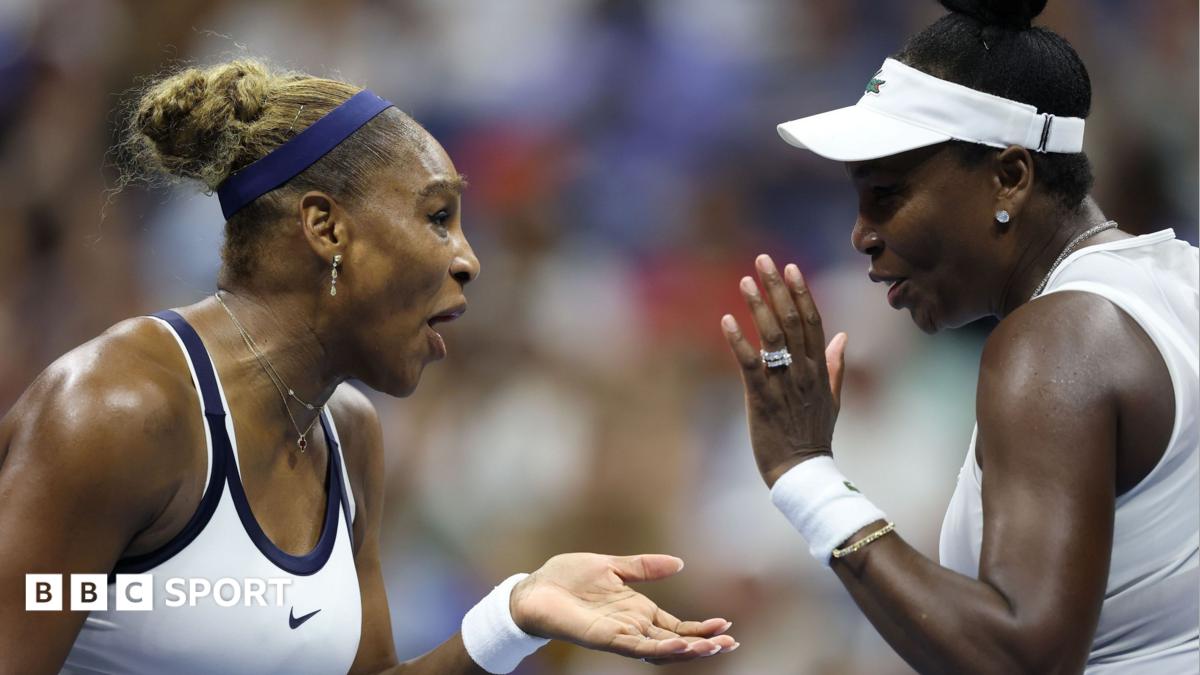
The siblings changed the face of the sport when they emerged as precocious teenagers in the 1990s, going on to dominate the sport with a combined 30 Grand Slam singles titles and 14 doubles victories as a pair.
Three decades later, the sport remains captivated by them.
Serena, a 23-time Grand Slam women’s singles champion, coming out of retirement this summer sparked excitement among those who saw her in their prime and those too young to have witnessed it.
Seven-time major winner Venus has never “evolved away” from the sport – the words chosen by her younger sister when she last played in 2022 – but instead continued her career with the help of sporadic wildcards.
While that has proved controversial in some quarters, there were few objections about the sisters being invited to play once again at Flushing Meadows.
Their planned return at Wimbledon was scuppered by the knee injury which Serena suffered in her singles match there – ironically a defeat by 20-year-old Joint – before they finally reunited at the WTA event in Cincinnati.
The comeback ended in a match tie-break defeat by Ukraine’s Marta Kostyuk and her American partner Peyton Stearns, with the same fate befalling them in New York.
When the Williams sisters last played on Ashe four years ago, they suffered a straight-set defeat by Czech pair Lucie Hradecka and Linda Noskova in the first round.
It looked like being a similar outcome as they meekly surrendered the first set against Chan and Joint, then batted off four break points in the fifth and seventh games of the second set.
But once Serena upped her level to match her impressive sister, they managed to switch the momentum back in their favour and level the match.
An absorbing contest featuring some sensational points saw the Americans fight back again in the decider, only to falter from a commanding lead in the tie-break.
Overall it was a more than credible performance from the veteran pair. Their solid groundstrokes, sharp movement and never-say-die attitude caused problems for their opponents, who deserve huge credit for staying focused in a partisan environment.
“The atmosphere was surreal,” said Joint.
“It was something we’ve never experienced before, and to play against such legends of the game was super special.”
Gloria Steinem always listened more than she spoke, which is one reason her words had such lasting impact.
Ten years ago, I went with my older daughter and a group of her classmates to see Gloria Steinem speak. Though they were part of a feminist group recently formed at their all-girls Catholic high school, some were not quite sure who Gloria was, exactly. My daughter knew her mostly as my former “boss”; my first job out of college had been as an editorial assistant at Ms. magazine. That was back in the ‘80s — ancient history.
I was a tiny bit nervous about how the evening would go. Gloria herself was in her 80’s by then; how would she connect with a group of teenagers who had come of age post-post-everything in a social media world of makeup tutorials, fit checks, and so much rage bait?
By being precisely herself, as it turned out. Calm and witty, impassioned and informed, clear-eyed yet hopeful, Gloria enthralled them — and the entire audience — for almost two hours. By the time we left, the girls were ready to follow her anywhere.
“She’s a rock star,” my daughter breathed.
That she was. Gloria Steinem did not invent feminism, not even its second wave, but for many years she was its most recognizable frontwoman. Tall, slender, with (for many years) aviator glasses framed by her signature long, straight hair, she was the Jackie Kennedy of the women’s movement: a physical dismissal of all those childish critics who deride feminists as an army of unlovely and unloved women, devoid of humor and, most likely, surrounded by far too many cats.
Even so, how she looked was beside the point. No feminist I know ever wanted to look like Gloria; we all wanted to be like her. Smart, funny, incisive, generous and, perhaps above all, unflappable.
For an activist organizer, she had a low center of gravity. Her speech was measured, her tone was mellow — even when calling out the most outrageous hypocrisies, the most sinister forms of oppression, she rarely if ever raised it. Though by her own admission she was often furious about many things, her sharpest weapon was always a deadly talent for stating the obvious. “If women could sleep their way to the top, there‘d be a lot more women at the top.” “I have yet to hear a man ask for advice on how to combine marriage and a career. ” “A pedestal is as much a prison as any small, confined space.” “This is what 40 [or 50] looks like.”
She believed in shaping the future by being fearlessly frank about the present and the past. For more than seven decades, she helped millions strip away the veils of hierarchy, patriarchy and all the stories spun about gendered expectations to confront the actual experience of women’s lives. “If the shoe doesn’t fit, must we change the foot?”
She never incited anger; she simply pointed out the facts as she saw them and let human nature take its course. “The truth will set you free, but first it will piss you off.”
Gloria listened as much as she spoke, and with great attention and democracy. When I worked at Ms., she was always running late, invariably having been pulled into some conversation or other. Her assistant groaned over her calendar; Gloria would say “yes” when asked for help, even if it meant being two places at once.
She often came in for staff meetings to which everyone was invited and, when discussing ideas for future issues, would ask for, and attentively listen to, the opinions of even a lowly editorial assistant like myself. Her interest was sincere, astonishing and made for very long meetings. Wherever she went, it was the same. She needed to know what all manner of women thought about a wide variety of topics. More important, she wanted them to learn the habit of speaking up. In a private meeting or a public forum, to colleagues, politicians, friends, the boss or even a feminist icon, she wanted women to be unafraid of saying what they thought.
When I worked at Ms., and for many years after, people would invariably ask me: “What’s Gloria Steinem like?” and it was, and remains, impossible to describe. She was kind when she didn’t need to be, generous with her attention when no one expected it. She didn’t want laws and social constructs to be fairer, less dangerous, more fulfilling for women as a concept; she wanted it for you, for me, for the lady in the back row.
She gave aura but also advice about where to find discount shoes. She instantly claimed any room she entered and then made sure there were snacks. She believed that the world could change, that with work, we could change it. But she also believed in having fun; otherwise why bother?
On the day Gloria Steinem died at 92, I awoke to a text from one of the friends I made all those years ago at Ms.; soon there were four of us on the thread. I had just arrived in New York to take my youngest daughter back to college, and we had planned to meet one of those friends in Union Square at noon. Instead, we met at Gloria’s brownstone and laid flowers along the fence outside her door. It seemed the least we could do.
My youngest never got to hear Gloria speak and, at 19, she is too young to know who Gloria was, exactly. Which was always the point of all that Gloria did. She didn’t want the future to feel beholden to the past; she just wanted it to be better. And despite the recent setbacks, particularly in reproductive rights, and all the work that still has to be done, it is.
There stood my daughter. Like her sister, she never doubts for one minute that she is a first-class citizen, entitled to equal rights, bodily autonomy, basic respect and a life of her choosing. God help the poor souls who try to tell them different.
“She’s a big part of why you are here,” I tell her. “Of why your life at 19 is so better than mine was, and why mine, at 19, was so much better than hers.”
That’s not just a rock star; that’s a revolutionary.
This is Galaxy Robot Park, a 16,500-square-meter venue that’s opened near Seoul in South Korea . The company behind the park says their aim is to bring artificial intelligence and robotics into the world of entertainment. The question is, can robots keep people coming back?
As Head of Group Transaction Banking at Raiffeisen Bank International (RBI), I have witnessed how European exporters navigate an increasingly complex global trade environment. With over 30 years of experience in cash management and transaction banking, I have come to view success in international business as a function of resilience, digital readiness, and the right network of partners.
Supporting Exporters Across Borders
At RBI, we support European exporters by combining robust transaction banking capabilities with deep local knowledge across Central and Eastern Europe (CEE) and other markets. Our international network connects clients with markets far beyond their home base. This global reach allows us to offer comprehensive solutions such as cash and liquidity management, letters of credit, guarantees, and other trade finance solutions through a single banking relationship. This integrated approach is vital for companies managing cross-border business in multiple currencies and jurisdictions.
Embracing Digital Innovation in Trade Finance and Cash Management
The landscape of trade finance and cash management is evolving rapidly, driven in part by the accelerating pace of trade finance digitalization. Centralization, real-time visibility, and digital connectivity are no longer optional, but essential. Exporters increasingly require treasury structures that operate seamlessly across countries and currencies, with direct ERP integration and enhanced reporting capabilities. Solutions such as CMIplus and multi-bank connectivity are designed to reduce manual work and increase efficiency. Investment in AI-supported digital documentary workflows and improved data handling is beginning to show results by accelerating trade processes, enhancing transparency, and strengthening risk control.
Navigating Market Challenges with Local Expertise
European exporters face significant challenges in today’s market environment. Geopolitical tensions, sanctions, foreign exchange volatility, and divergent legal and regulatory frameworks complicate international trade, particularly across the diverse CEE region. Some markets are part of the EU or the euro area, while others operate under different currencies and legal systems. This complexity demands careful local assessment and practical risk management, including stronger compliance checks, diversified market exposure, and closer monitoring of counterparties. In this context, a banking partner that combines local expertise with international reach is crucial.
Responding to Exporters’ Growing Demands
Client needs are evolving alongside these market dynamics. Exporters expect fast, secure, and transparent payment solutions, reliable financing, and support that operates effectively across multiple markets, currencies, and systems. They value banks that can efficiently connect headquarters and subsidiaries, balancing local presence with centralized control. At RBI, we tailor our services by integrating local account coverage, trade finance, supply chain finance, and treasury connectivity, enabling clients to manage liquidity and trade flows more efficiently across CEE and beyond.
The Future of Transaction Banking
Looking ahead, the outlook for international business and transaction banking remains constructive. Significant opportunities remain, but success will increasingly depend on digital readiness, resilience, and strong networks. Centralization and better visibility will shape the future of banking services, with partners such as RBI supporting growth across Austria, CEE, and global markets.
Ultimately, our mission at RBI is clear: Make international business happen.
Discover practical insights and solutions for navigating international trade with confidence here.
Emmerdale star Nicola Wheeler has warned there’s more trouble ahead for Nicola King following Jimmy King’s heartbreaking death, as the fallout from the crash continues
Jimmy has been hiding quite the secret
Emmerdale star Nicola Wheeler has warned there’s more trouble ahead for her character following Jimmy King’s death.
Nick Miles departed the ITV soap last week in sad scenes when Jimmy got caught up in the marquee incident. Devastatingly, Jimmy died with Nicola by his side in heartbreaking scenes, but the fallout from the death continues.
Next week, Nicola is anxious about affording to give Jimmy the funeral he deserves. She decides to turn to Jimmy’s haulage shares for Elliot and his future, before later discovering that Jimmy has sold them.
As Nicola realises the money from the sale of the shares is missing, she discovers that they are in more financial worries than she knew. The family home has been remortgaged and in arrears and Nicola is continuing to struggle.
Speaking about her own future, she said: “She can’t believe that life is going to exist without him (Jimmy), especially as the day was supposed to start with something very romantic, and it ended in tragedy.
“Why can’t Nicola have lots of different relationships? I’ve tried to pit she should start going on dating apps and just get horrendous dates and really bad experiences. It would bring quite a bit of fun back into it.”
Warning there was quite the surprise ahead, she added: ” think the audience are gonna be mighty surprised at the life Jimmy was leading that nobody knew about. It’s unsettling because it’s totally against his personality. You would never imagine that Jimmy in this world would behave like this.”
Filming Nick’s final scenes was “surreal” for Nicola, who has worked with the actor for years.
She said: “It was really surreal. It sort of ends, and you go, ‘Oh gosh, that’s it’. We’ll never be Nick and Jimmy again together. I was gutted because I think it’s the institution that Jimmy and Nicola were, where I was sort of like, ‘oh God, that’s over’.
“Even whilst we were filming it all, it never felt real because we film out of sync. When it came to doing all the scenes where he dies, it was odd. It’s almost like you didn’t want to do it. They were beautifully written scenes, so you want to do them justice but at the same time, you don’t want them to end because then it means this is final.”
As for what’s next, Nicola has hinted there could be a new romance on the cards – from an unlikely source.
“I can’t imagine the character would ever fully move on. I think there’s always going to be part of her that loves him. Her heart will grow to fit another love in, but she will never let Jimmy go,” she explained.
“Something happens in which I can only say Nicola behaves appallingly, and Kev is a gentleman, and I think from that moment she starts to see him in a different light.”