Fury

Epic Fury Already Stress Testing More Agile Army Acquisition System, General Says

The Army’s revamped system for getting gear and weapons to the fight faster has already been put to work in support of the war the U.S. is waging on Iran, a service leader said Tuesday.

Speaking at the Association of the United States Army’s Global Force Symposium in Huntsville, Ala., Brig. Gen. David Phillips, deputy portfolio acquisition executive for Maneuver Air, revealed the Army was trying to innovate in real time as the conflict approaches the end of its first month.

“As I look back on the past 30 days in Operation Epic Fury, we had some immediate requests from the field in the first week,” Phillips said. “Those immediate requests in the field returned on a requirements document with the [Army Future Capabilities Directorate] and [Army Transformation and Training Command] in about 48 hours, who turned on a contract in about 72 hours. And I can say that we’ve had soldiers out training and testing the capabilities they’re going to deploy with in real time in the past 10 days. So we’ve got industry fully engaged.”

Phillips did not go into detail on what capabilities were sourced or needs identified in that short timeframe. Notably, the Pentagon has shown willingness to deploy new tech to the fight from day one, debuting the Low Cost Uncrewed Combat Attack System (LUCAS), a reverse-engineered American version of the Iranian Shahed-136 kamikaze drone, in the initial barrages.

A Low-cost Unmanned Combat Attack System (LUCAS) launches from the flight deck of the Independence-class littoral combat ship USS Santa Barbara (LCS 32) while operating in the Arabian Gulf, Dec. 16, 2025. Prior to the launch, shipboard weapons integration assessments helped ensure the system could be safely stored, moved, and handled at sea. Task Force 59 operated the LUCAS drone as part of Task Force Scorpion Strike operations. (U.S. Army photo by Spc. Kayla McGuire)
A Low-cost Unmanned Combat Attack System (LUCAS) launches from the flight deck of the Independence-class littoral combat ship USS Santa Barbara (LCS 32) while operating in the Arabian Gulf, Dec. 16, 2025. Prior to the launch, shipboard weapons integration assessments helped ensure the system could be safely stored, moved, and handled at sea. Task Force 59 operated the LUCAS drone as part of Task Force Scorpion Strike operations. (U.S. Army photo by Spc. Kayla McGuire) NAVCENT Public Affairs

On Tuesday, the Army formally announced the creation of an “Unmanned Aircraft Systems Marketplace” in partnership with Amazon Web Services and the Army Enterprise Cloud Management Agency that purports to be a “digital one-stop shop” for procuring drones fast for Army units and their allies.

Phillips urged defense industry members, as well as academics and units currently in the field, to tell leaders what was working in the fight and what needed to change.

“We want your engagements. We want your feedback at PAE Expanded Maneuver Air, and we want to have you as a part of our team. Because we know we don’t bend the metal, we don’t really go out and talk to the sub-tier suppliers as much as you all do, but we need this to be a team sport,” Phillips said. 

In a panel discussion helmed by Phillips, Army leaders who have worked with Ukraine and with mobile brigade combat teams within the 101st Airborne Division did exactly that, discussing needs and vulnerabilities with rare candor. 

U.S. Army Soldiers with the 25th Infantry Division monitor a handheld controller and review sensor data during Joint Pacific Multinational Readiness Center (JPMRC) rotation 26-01, Nov. 6, 2025, at Schofield Barracks, Hawaii. JPMRC integrates U.S. forces, along with military members from France, Malaysia, Maldives, Philippines, Singapore, and Thailand, alongside New Zealand Staff Observers to refine joint capabilities and rehearse tactics, techniques, and procedures required to dominate jungle and archipelagic terrain during large-scale combat operations. The exercise underscores the U.S. Army’s commitment to ensuring regional security and strengthening partnerships in the Indo-Pacific area of responsibility. (U.S. Army photo by Sgt. Taylor Gray)
U.S. Army Soldiers with the 25th Infantry Division monitor a handheld controller and review sensor data during Joint Pacific Multinational Readiness Center (JPMRC) rotation 26-01, Nov. 6, 2025, at Schofield Barracks, Hawaii. JPMRC integrates U.S. forces, along with military members from France, Malaysia, Maldives, Philippines, Singapore, and Thailand, alongside New Zealand Staff Observers to refine joint capabilities and rehearse tactics, techniques, and procedures required to dominate jungle and archipelagic terrain during large-scale combat operations. The exercise underscores the U.S. Army’s commitment to ensuring regional security and strengthening partnerships in the Indo-Pacific area of responsibility. (U.S. Army photo by Sgt. Taylor Gray) Sgt. Taylor Gray

Col. Burr Miller, a former innovation advisor with the Army-led Security Assistance Group-Ukraine, warned that U.S. systems were sometimes not strong enough to sustain attacks on position, navigation and timing (PNT) capabilities. These are technologies that aid in navigation, like GPS, that are absolutely essential to modern warfighting. 

“The PNT environment is incredibly corrosive,” Miller said, adding that he had observed many U.S. systems that “did not survive first contact” with a Russian adversary. “… In the same kind of tenor, we do not test a representative environment in the United States; nowhere can we test what the representative environment is … That’s not only a government responsibility, vendors; that’s your responsibility.”

What Miller did find effective, but said he hadn’t seen much Army action on, was fiber-optic drones, which were largely impervious to electronic warfare defenses and, when moving fast to a target, were hard to bring down with a kinetic kill shot.

“The Russians and the Ukrainians use mass,” he said. “We have forgotten how to fight mass.”

Russian fiber-optic FPV drone strikes a US-made M1A1SA Abrams main battle tank operated by the Armed Forces of Ukraine.

The tank was driving on a road covered by an anti-drone net tunnel, yet the Russian drone managed to snuck into it and hit the vehicle in the rear. pic.twitter.com/QsxlJekDdr

— Status-6 (War & Military News) (@Archer83Able) September 17, 2025

Leaders with the 101st Airborne added concrete numbers to the picture. For a company to attack and defeat an enemy platoon, it had to be able to take down 20 attack drones per day; accordingly, a brigade needed to be able to take out 200, or 1,000 per week, said Col. Ryan Bell, commander of the 101st’s 3rd Mobile Brigade Combat Team. For that reason, he added, the Army was beginning to issue roughly 30 reusable drones to each company training at the Joint Readiness Training Center at Fort Polk, La., allowing them to simulate the mass they’d need to be competitive in a fight.

“We need drones that are good enough to work, but not exquisite,” Bell said. “We have to get them fast. They have to be cheap enough that they compete with artillery and economies of scale; that’s the challenge. I’m shooting 1,000 of these a day. I am looking at these munitions like they are artillery racks, and I have to resupply them like artillery racks, and that is a change in how we’ve been treating them.”

Bell said his units are also working to combine effects – for example, using Starlink-connected ground intelligence, surveillance and reconnaissance robots for all-weather sensing to determine when best to employ AeroVironment Switchblade loitering munitions

A U.S. Army Soldier with the 25th Infantry Division inspects a Switchblade launch tube during Joint Pacific Multinational Readiness Center (JPMRC) rotation 26-01, Nov. 6, 2025, at Schofield Barracks, Hawaii. JPMRC integrates U.S. forces, along with military members from France, Malaysia, Maldives, Philippines, Singapore, and Thailand, alongside New Zealand Staff Observers to refine joint capabilities and rehearse tactics, techniques, and procedures required to dominate jungle and archipelagic terrain during large-scale combat operations. The exercise underscores the U.S. Army’s commitment to ensuring regional security and strengthening partnerships in the Indo-Pacific area of responsibility. (U.S. Army photo by Sgt. Taylor Gray)
A U.S. Army Soldier with the 25th Infantry Division inspects a Switchblade launch tube during Joint Pacific Multinational Readiness Center (JPMRC) rotation 26-01, Nov. 6, 2025, at Schofield Barracks, Hawaii. JPMRC integrates U.S. forces, along with military members from France, Malaysia, Maldives, Philippines, Singapore, and Thailand, alongside New Zealand Staff Observers to refine joint capabilities and rehearse tactics, techniques, and procedures required to dominate jungle and archipelagic terrain during large-scale combat operations. The exercise underscores the U.S. Army’s commitment to ensuring regional security and strengthening partnerships in the Indo-Pacific area of responsibility. (U.S. Army photo by Sgt. Taylor Gray) Sgt. Taylor Gray

A company commander, he said, might have his unit modify Skydio reconnaissance quadcopter drones to execute a breach before sending in ground robots.

“And he can also protect his rifleman, if he has to modify the [drone] to deliver a breaching charge, an aerial breaching charge,” Bell said. “And then using two ground robots as a tertiary mechanism with 28 pounds of C4 to open up the breach before that first rifle squad makes contact.”

Col. Duke Reim, commander of the 101st’s 2nd Mobile Brigade Combat Team, also described innovating in training by pairing the Army’s small medium-range reconnaissance (MRR) drones with loitering munitions in operations to shrink down the time lag between scouting a target and raining steel down on it.

U.S. Army Soldiers assigned to the 1st Battalion, 29th Infantry Regiment, 316th Cavalry Brigade, based at Fort Moore, Ga., use the Hunter WOLF, an unmanned ground vehicle, to retrieve simulated casualties during a military capability demonstration as part of Project Convergence - Capstone 4 at Fort Irwin, Calif., March 17, 2024. The Hunter WOLF is a 6x6 robotic vehicle with a hybrid diesel/electric drivetrain, which can hold two litters on deck and can be rigged to side-carry an additional two litters for prolonged field care. (U.S. Army photo by Spc. Hunter Grice)
U.S. Army Soldiers assigned to the 1st Battalion, 29th Infantry Regiment, 316th Cavalry Brigade, based at Fort Moore, Ga., use the Hunter WOLF, an unmanned ground vehicle, to retrieve simulated casualties during a military capability demonstration as part of Project Convergence – Capstone 4 at Fort Irwin, Calif., March 17, 2024. The Hunter WOLF is a 6×6 robotic vehicle with a hybrid diesel/electric drivetrain, which can hold two litters on deck and can be rigged to side-carry an additional two litters for prolonged field care. (U.S. Army photo by Spc. Hunter Grice) Sgt. Hunter Grice

“The battlefield today doesn’t have time for eventually, and what we’re doing now by pairing these systems is quickening the pace at a rate that we’ve never seen before,” he said. “Our enemy is adapting. They can move quicker, they can hide and, heaven forbid, they can shoot just as fast as we can. So we’ve got to be able to take this initiative and continue to evolutionize it.”

Contact the editor: Tyler@twz.com


Source link

Venezuela Fury, 16, looks amazing in gold dress and tiara as she celebrates hen do with mum Paris ahead of her wedding

BRIDE-TO-BE Venezuela Fury, 16, looked amazing in her gold dress and tiara as she celebrated her hen do with mum Paris ahead of her wedding.

The teen has enjoyed a whirlwind engagement after it was revealed her boyfriend Noah Price, 17, got down on one knee at her 16th birthday party and popped the question.

Venezuela Fury looked incredible as she arrived at her hen doCredit: Splash
The teenager was joined by her glam mum ParisCredit: Splash
Venezuela pulled out all the stops for her hen do at Morecambe Football ClubCredit: Splash

The young couple have not yet announced a date for their wedding, but as the hen do was last night, this could be a big hint their big day is getting closer.

Venezuela, who appears in the Fury family’s hit Netflix reality series At Home With The Furys, pulled out all the stops as she stepped out for her bachelorette party.

The teen was dressed in a stunning metallic dress, and matching strappy heels.

Venezuela wore her hair up on top of her head with a tiara and bridal veil.

RED FACED

Paris Fury left mortified as McDonald’s drive thru takes an unexpected turn


MUM’S CONCERN

Paris Fury rushes daughter, 4, to hospital as Venezuela ‘almost cried’

She also made sure to flash her huge engagement ring as she made her way into her hen do, which was held at Morecambe Football Club

As Venezuela walked into her party, she told The Daily Mail: “I can’t wait. I’m really looking forward to married life. I’m very happy and excited.”

The youngster was joined by her glam mum Paris, 36, who looked incredible in her white bodycon dress.

The mother-of-eight showed off her stunning figure in the skintight dress.

It has been reported that Venezuela had an estimated 300 guests at the hen party.

According to the Mail, party goers were treated to a huge buffet, Karaoke and a DJ.

Venezuela added extra glam to her outfit with a tiara which had a bridal veil attachedCredit: Splash
The youngster needed some help with her dress as she got out of the carCredit: Splash

When it was announced last September that the teenager had got engaged, there was some backlash from fans, due to her age.

Venezuela has since been forced to hit back at trolls who have said that she is too young to marry.

Earlier this month the teen’s mum Paris, who has seven other children, shared her thoughts on the upcoming wedding.

“I didn’t feel old enough for this, but Venezuela is over-the-moon happy,” she told The Mirror.

Venezuela is seen here with her famous dad Tyson and mum Paris along with her husband-to-be, Noah PriceCredit: TikTok/@parisvenezuela

“The two of them are in their own little bubble. And, look, I got married myself at 18.”

Although Paris is delighted for Venezuela and Noah, she insisted it is “too soon” for the pair to start having children – saying they want to travel first.

The mother-of-eight also admitted that she’s worried about herself when her eldest child eventually moves out.

She said: “I’ll feel like I’ve lost my arm. It’s going to hit me hard.

Paris recently opened up about her daughter Venezuela getting married at 16Credit: Instagram

“Right now, Tyson’s in training camp in Thailand, the kids are in school, and Venezuela and I… basically co‐parent!

“But I do let her have her space. The weekends are her time. I know she’ll be fine, getting on with an exciting new life. It’s me I’m worried about.”

It comes as bride-to-be Venezuela recently revealed she is already packing up items to move into a house with her fiance Noah, who is a boxer and an East Midlands belt holder.

In a Q&A with fans on Instagram, the teenager confirmed she would be staying with her parents until she is married.

Paris said she doesn’t feel ‘old enough’ for her daughter. 16, to be getting marriedCredit: Instagram

Venezuela told followers: “I’m trying to get everything booked for May/June time, but I’m not sure when it will be.

“I will be in my mam and dad’s home til I’m married.”

In order to get ready to set up her marital home, Venezuela has been buying home items ready and showed off the results from a haul.

Paris also recently opened up about her feelings surrounding Venezuela’s engagement, which has sparked controversy among fans regarding her age.

But speaking to The Sun, the matriarch insisted she’s “really pleased” for her daughter, adding: “I got engaged at 17, so even though I feel she’s young, I did it.

“I wouldn’t change a thing.

“So if that’s what she wants to do, then 100 per cent, me and her dad support her.”

Paris also dropped some hints about Venezuela’s upcoming wedding as she says the teen isn’t “rushing to plan weddings” – in sharp contrast to her daughter’s Instagram remarks.

“She’s not rushing to plan weddings or get married,” she said.

“We have very different tastes.

“She has said she wants a smaller wedding, so if that’s what she wants, I’ll go along with it.”

Paris and Tyson Fury share eight childrenCredit: Instagram/ parisfury1,

Source link

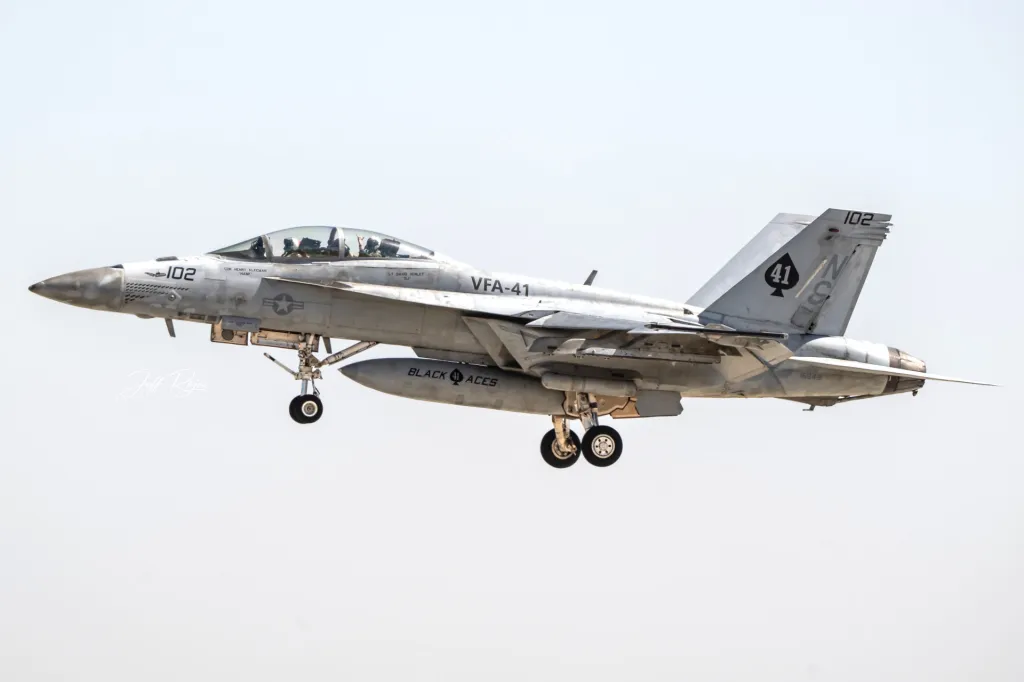
Navy F/A-18’s Close Call With An Iranian SAM Highlights Remaining Risks To Epic Fury Aviators (Updated)

Videos have emerged showing an apparent very close call for a U.S. Navy F/A-18E/F Super Hornet after it was targeted by an Iranian man-portable air defense system (MANPADS) while conducting a low-level strafing run during an Operation Epic Fury mission. The persistent threat posed by Iranian air defenses, whatever is left of them, is something that we have repeatedly drawn attention to.

The videos have been geolocated to the port of Chabahar in Iran’s Sistan and Baluchestan province, which is located along the country’s eastern shore, near the Pakistan border. This would explain, at least to a degree, why the Super Hornet is operating so low over hostile territory. This coastal area was hit hard by strikes from the start of the war, and the near proximity to the ocean means combat search and rescue would be easier to execute in a pinch. There is also a better understanding of what air defense threats remain than, say, in the eastern part of the country.

GeoConfirmed Iran.

A U.S. Navy F/A-18 was hit near the Iranian city of Chabahar after being targeted with what appears to be a MANPADS system. He was flying near or above the Imam Ali Independent IRGC Naval Base.

Rough location, area grid of the F/A-18 –
25.332214, 60.602761… https://t.co/aeS3LB1V2c

— GeoConfirmed (@GeoConfirmed) March 26, 2026

The date of the incident is unconfirmed, but it is reported to have occurred yesterday.

Better video of a U.S. Navy F/A-18 Super Hornet fighter jet being targeted by the Iranians with a surface-to-air missile, perhaps fired from MANPADS, over the city of Chabahar in southern Iran on Wednesday.

The missile didn’t immediately appear to cause any significant damage to… pic.twitter.com/LrguBu7YVI

— Status-6 (War & Military News) (@Archer83Able) March 25, 2026

Previously, we have seen plenty of evidence of Super Hornets conducting strafing runs with their M61A1 Vulcan rotary cannons in coastal areas of Iran. Some of these are seen in the videos posted directly below.

Strafing run happened last week, but Navy Super Hornets have continued to operate at low level over Chabahar since. https://t.co/J5JT3FaywK

— OSINTtechnical (@Osinttechnical) March 15, 2026

In the sequence, the distinctive zipping sound of the cannon can be heard, as well as a puff of smoke as the rounds are unleashed.

The F/A-18 makes a left-hand turn before the missile comes into view. It is unclear if the pilot was aware of the threat and maneuvered to avoid it or was unaware of the missile. There is no obvious sign of infrared countermeasures being deployed, although BOL IR-type countermeasures can be harder to see in daylight.

The missile is then seen exploding behind the aircraft, leaving shrapnel in its wake.

While it is not immediately obvious whether or not the F/A-18 was struck, it appears to have escaped relatively unscathed, suggesting this may have been a very lucky near-miss for the crew of the jet.

The Islamic Revolutionary Guard Corps (IRGC) claimed that the Super Hornet crashed in the Indian Ocean. Iran’s Fars News Agency published the statement from the IRGC:

“The enemy F-18 fighter jet was accurately hit in the sky of Chabahar by missiles from the IRGC Navy’s advanced modern air defense system, under the command of the country’s integrated air defense network, and crashed in the Indian Ocean.”

U.S. Central Command responded by denying that any U.S. fighter aircraft had been shot down by Iran, but its statement on X did not immediately rule out a near-miss or damage to the aircraft.

🚫FALSE: The Islamic Revolutionary Guard Corps announced a U.S. F/A-18 fighter was struck over Chabahar using new advanced air defense systems.

✅TRUE: No U.S. fighter aircraft have been shot down by Iran. pic.twitter.com/I25QFjYo0l

— U.S. Central Command (@CENTCOM) March 25, 2026

There have been multiple Iranian claims of U.S. aircraft being hit by air defenses. So far, however, there is credible evidence for only one previous such incident.

This was the U.S. Air Force F-35A that the IRGC claimed was hit over Iran, and which U.S. officials confirmed made an emergency landing, with the pilot having sustained shrapnel injuries. The IRGC released a video that they claimed shows the F-35 being hit by a missile, as seen through a forward-looking infrared (FLIR) system.

Iran’s IRGC released a footage reportedly showing U.S. F-35 jet being hit over Iran.

Note that we can’t independently confirm the authenticity of the footage. pic.twitter.com/9N0ePd2LLf

— Clash Report (@clashreport) March 19, 2026

As we have explained in the past, while the U.S. has claimed air supremacy over Iran, it certainly does not yet possess it across the entire country. There remain very real risks, especially as the air campaign moves more toward increasing direct attacks farther east in the country, bringing aircraft closer to potential lingering threats.

U.S. forces continue to eliminate threats presented by the Iranian regime, striking over 10,000 targets since the start of Operation Epic Fury. pic.twitter.com/6rTIWG9NBC

— U.S. Central Command (@CENTCOM) March 26, 2026

For all the defense-suppression missions that have been flown, Iran still possesses road-mobile air defenses as well as more exotic types that can pop up virtually anywhere and give aircrews very little time to react. These systems can be easily hidden and will remain a threat on the battlefield long after static air defenses are destroyed. Beyond that, there are MANPADS, which, while less of a menace in terms of outright performance and engagement envelopes, are impossible to entirely remove from the battlespace.

UPDATES:

We have ended our rolling coverage on Epic Fury for the day.

UPDATE: 4:30 PM EST 

The open-source researchers at the Bellingcat organization say they have identified the mines found overnight in Kafari, Iran, as U.S.-made BLU-91/B anti-tank mines, usually associated with the Gator Scatterable Mine System.

Bellingcat identified the mines found overnight in Kafari, Iran as US BLU-91/B anti-tank mines from the Gator Scatterable Mine System. At least two people were reportedly killed.

These mines were deployed over a village near a Iranian missile base. pic.twitter.com/Ymzb9iu9Bp

— Trevor Ball (@Easybakeovensz) March 26, 2026

There have been suggestions that the mines may have been dropped along roads to try to prevent Iranian mobile missile launchers from deploying out of their mountain bases and heading to launch sites.

It looks as if President Trump has suspended his ultimatum on the Strait of Hormuz for another 10 days. Trump, under increasing domestic pressure as oil prices soar, had last week warned that the U.S. military would “obliterate” Iranian power plants if the strait is not open before a 48-hour deadline.

UPDATE: 4:00 PM EST 

U.S. Secretary of State Marco Rubio stated today that a “growing amount of energy” is flowing through the Strait of Hormuz as indirect contacts between the United States and Iran show progress.

“There’s a growing amount of energy that’s been flowing through the strait, not as much as should be flowing, but some of it has picked up. There’s been some progress in regards to the exchange of messages, but that’s an ongoing and fluid process, and not one we’re going to negotiate or talk about in the media,” Rubio explained to reporters.

Marco Rubio on Iran:

Some concrete progress has been made, as you’ve seen and as has been documented already.

There’s a growing amount of energy that’s been flowing through the Strait — not as much as should be flowing, but some of it has picked up. pic.twitter.com/du9zZ5AEgt

— Clash Report (@clashreport) March 26, 2026

President Donald Trump today reiterated his estimated timeline for ending the war with Iran, saying that he still plans for it to last just four to six weeks.

Trump made the statement during a Cabinet meeting at the White House, telling reporters that the U.S. is already “way ahead of schedule” on the conflict.

“We estimated it would take approximately 4 to 6 weeks to achieve our mission, and we’re way ahead of schedule. If you look at what we’ve done in terms of the destruction of that country, I mean, we’re way ahead,” Trump said.

UPDATE: 3:50 PM EST 

President Trump has slated the U.K. Royal Navy’s Queen Elizabeth class aircraft carriers as “toys” compared to the flattops of the U.S. Navy.

In his latest spat with the United Kingdom, Trump said America “doesn’t need” British help in the conflict, despite repeatedly criticizing its reluctance to get involved.

Relations between Trump and U.K. Prime Minister Keir Starmer have been tense ever since Starmer refused America permission to launch its initial strikes on Iran from RAF bases.

UPDATE: 3:40 PM EST 

Trump has revealed the nature of the “present” from Iranian officials, which he alluded to earlier this week.

Trump said that Iran has allowed 10 oil tankers through the Strait of Hormuz as a sign of good faith for talks to end the war. Trump told reporters: “[Iran said] we’re going to let you have eight boats of oil, eight boats, eight big boats of oil. This was two days ago. And they’ll sail up tomorrow. That was three days ago. And I didn’t think much about it. And then I watched the news, and they said, a very good anchor actually happened to be Fox. But I watched it, and they said something unusual is happening. There are eight boats that are going right up the middle of the strait. Eight big tankers are going loaded up with oil right through. And I said, well, I guess, I guess they were right. And they were they were real. And I think they were Pakistani-flagged. And, I said, well, I guess we’re dealing with the right people. And, actually, they then apologized for something they said, and they said, we’re going to send two more boats. And we ended up being 10 boats.”

Today, however, publicly available ship-tracking data revealed only two Iran-linked LPG carriers were seen leaving the Persian Gulf, possibly the “extra two” vessels Trump referred to.

Bloomberg tanker data shows no sign of the eight oil ships Trump mentioned in the Hormuz Strait.

Only two Iran-linked LPG carriers were seen leaving the Persian Gulf Thursday, possibly the “extra two” he referred to.

While some ships turn off tracking signals for safety,… pic.twitter.com/0xhX6tYJED

— Clash Report (@clashreport) March 26, 2026

UPDATE: 2:05 PM EST 

In its latest update on the situation in the Middle East, the U.K. Ministry of Defense claims that Russia was likely providing intelligence and training to the Iranian military ahead of the United States and Israel launching their operations. Russian expertise for Iran likely encompassed drone technology and electronic warfare, drawing from their own experience in Ukraine.

The commander of U.S. Central Command (CENTCOM), Adm. Brad Cooper, has provided his view on the death of Iran’s Islamic Revolutionary Guard Corps (IRGC) Navy commander in an Israeli airstrike.

According to Cooper, under Adm. Alireza Tangsiri’s command for eight years, the IRGC Navy “harassed thousands of innocent merchant mariners, attacked hundreds of vessels with one-way attack drones and missiles, and killed countless innocent civilians.”

We are seeing a major airlift operation underway at the remote American outpost in the Indian Ocean, Diego Garcia. Five C-17s and a C-5 were visible on the main ramp at the airfield today. This is a sudden uptick in aerial logistics on the island.

There has been a contingent of KC-135R tankers that have been using the island, as well as a handful of F-16s protecting it. And while a transport or two would be seen coming and going, this is an airlift operation that is much larger. There had been some talk that air defenses were being moved from Asia to the island after Iran supposedly took two ballistic missile shots at it. The Navy also continues to use its port facilities there to support ships that are taking part in Epic Fury. The USS Tripoli and its escorts just stopped by there on their way to the Middle East, for instance. But this could also be the logistics surge before a bomber deployment. While B-52s and B-1s operate at a high tempo from RAF Fairford in the UK, the B-2s are still flying missions from the United States. This could be about to change.

Planet Labs

Russia is close to completing a phased shipment of drones to Iran, according to Western intelligence reports about Moscow’s efforts to keep its embattled partner in the fight against Israel and the United States. As well as drones, Moscow is set to provide Tehran with medicine and food, the Financial Times reports. However, Russia appears to have turned down Iranian requests for long-range air defense systems.

The British newspaper cites two officials who were briefed on the intelligence report. They state that senior Iranian and Russian officials began secret discussions on the delivery of drones only days after Israel and the United States attacked Iran.

The first shipment of Russian-made drones reportedly began to be delivered to Iran in early March and was due to be completed at the end of the same month.

The reports provide the first firm indication since the start of the war that Moscow is providing Iran with lethal, as well as non-lethal, support. Russia is also understood to provide Iran with other critical military capabilities, including satellite imagery, targeting data, and intelligence support.

Although the types of drones included in the deal are not disclosed, they very likely include the Geran-2, which is a Russian-based version of the Iranian Shahed-136.

Inside a Russian factory where licensed production of the Iranian Shahed-series one-way attack drone is taking place. via X

Asked about Moscow sending drones to Iran, Kremlin spokesperson Dmitry Peskov told the FT: “There are a lot of fakes going around right now. One thing is true — we are continuing our dialogue with the Iranian leadership.”

Russian support for Iran is not just about ensuring that Iran remains able to hit back at Israel and the United States, but also about securing its own interests: namely, keeping a pro-Kremlin regime in control in Tehran.

Publicly, Moscow has voiced its support for Tehran but has presented its support as humanitarian, rather than military. In particular, Russia has publicized its provision of humanitarian aid to Iran since the start of the conflict.

On the other hand, the Russian provision of Geran-series drones makes a lot of sense for Iran. So far, Tehran has relied heavily on long-range one-way attack drones to hit targets across the Middle East. Reportedly, it has fired more than 3,000 of these drones since the start of the fighting.

While the Shahed-136 is notably cheap to manufacture, Iran is clearly burning through its accessible stocks of the drones, while its production capacity is also coming under attack by Israel and the United States. With a production line already up and running in Russia, and reportedly churning out thousands of Geran drones each month, Iran would clearly benefit from tapping into this supply.

Russia has also been producing more advanced versions of the one-way attack drones for use in its own war in Ukraine. Modifications include measures to better evade air defences and to carry heavier and more varied payloads, as well as more precise navigation systems. Such developments would likely be of interest to Iran, as well.

Ultimately, in the next stage of the deepening Russia-Iran relationship, Tehran could start to manufacture drones incorporating some of the advances that have been introduced and combat-tested by Russia.

Regardless, Israel is already actively interdicting shipments between Iran and Russia on the Caspian Sea via airstrikes. Moving large volumes of drones across that waterway will be an increasing challenge as those shipments will be a top target of the IAF and Mossad.

At the same time, Tehran looks set to miss out on advanced air defense capabilities that it had requested from Russia.

Russia has declined, however, Iranian requests for the S-400, the FT reports, based on information provided by current and former Western officials. It is assumed that Moscow wants to avoid further escalation with the United States, especially if Iran were to use the S-400 to target U.S. military jets.

However, Russia did close a deal last December to deliver 500 Verba man-portable air defense systems (MANPADS) as well as 2,500 of the associated 9M336 missiles over three years. The Verba was developed as a replacement for the widely used Igla. Its primary advantage is its advanced multispectral seeker, operating in the ultraviolet, near infrared, and mid-infrared bands, for improved discrimination between targets and decoys.

An official marketing video showing the Verba (SA-29 Gizmo) MANPADS:

Verba MANPADS


U.S. President Donald Trump has issued another warning to Iran, while repeating his claim that Tehran is “begging” for a deal to end the war.

Trump warned that Tehran “better get serious soon, before it is too late.”

It is unclear whether Iran is serious about negotiations, after reports that the Trump administration offered Tehran a 15-point ceasefire plan earlier this week. The plan was reportedly presented to Iranian officials via Pakistan.

In public, Tehran has said it rejects the proposal, although there have been suggestions that Iranian officials are at least reviewing it.

Iranian Foreign Minister Abbas Araghchi told state media that his government has not engaged in talks to end the war and that it does not plan on any negotiations. While he acknowledged the United States had tried to send messages to Iran through other nations, he said that was “not a conversation nor a negotiation.”

Writing on his Truth Social app, Trump said: “The Iranian negotiators are very different and ‘strange.’ They are ‘begging’ us to make a deal, which they should be doing since they have been militarily obliterated, with zero chance of a comeback, and yet they publicly state that they are only ‘looking at our proposal.’ WRONG!!! They better get serious soon, before it is too late, because once that happens, there is NO TURNING BACK, and it won’t be pretty!”

The White House has reiterated this hard line, with a warning that the U.S. military was prepared to “unleash hell” if Iran did not accept defeat. Press secretary Karoline Leavitt said the U.S. president preferred a peaceful path but was prepared to “hit [Iran] harder than they have ever been hit before” if necessary.

‘President Trump does not bluff and he is prepared to unleash hell. Iran should not miscalculate again’

Karoline Leavitt adds: ‘Their last miscalculation cost them their senior leadership, their navy, their air force and their air defence system’https://t.co/PAiZ4D1jU3 pic.twitter.com/eNjf8tSpYM

— Sky News (@SkyNews) March 25, 2026

Negotiations as soon as this weekend seem less likely, at least according to Ishaq Dar, the foreign minister and deputy prime minister of Pakistan. In a statement on X, he wrote:

“There has been unnecessary speculation in the media regarding peace talks to end the ongoing conflict in the Middle East. In reality, U.S.-Iran indirect talks are taking place through messages being relayed by Pakistan. In this context, the United States has shared 15 points, being deliberated upon by Iran. Brotherly countries of Turkiye and Egypt, among others, are also extending their support to this initiative. Pakistan remains fully committed to promoting peace and continues to make every effort to ensure stability in the region and beyond. Dialogue and Diplomacy is the only way forward!”

Options for what the U.S. military might do next include deploying ground forces and/or a massive bombing campaign, according to Axios, which cites two U.S. officials and two sources with knowledge of the ongoing discussions.

In terms of ground forces, the United States is looking at the option of invading or blockading Kharg Island; invading the island of Larak, another strategic outpost in the Strait of Hormuz; seizing the strategic island of Abu Musa and two smaller islands, which lie near the western entrance to the strait; and blocking or seizing ships that are exporting Iranian oil on the eastern side of the Hormuz Strait.

Axios: The Pentagon is developing military options for a “final blow” in Iran that could include the use of ground forces and a massive bombing campaign, according to two U.S. officials and two sources with knowledge. pic.twitter.com/M1ozZbZUPA

— Annmarie Hordern (@annmarie) March 26, 2026

We have previously looked at reported plans to send American troops to take Kharg Island or even far deeper into the country to seize stocks of enriched uranium. Any such option would represent a huge escalation for Operation Epic Fury, and an attempt to seize Kharg Island would be very challenging — something that we have discussed with former CENTCOM commander Joseph Votel.

The possibility of the U.S. military seizing one or more islands belonging to Iran or taking control of the Strait of Hormuz is also unlikely to find favor with Israeli officials.

Operations of this kind would be “complex and fraught with danger,” and would likely trigger “massive Iranian attacks on energy infrastructure, the laying of mines, and, in any case, a severe escalation.” This is the assessment of unnamed Israeli security officials speaking to journalist Nadav Eyal.

Exclusive – Israeli security officials: The option of seizing islands in Iran (Kharg or others) or the Strait of Hormuz is “complex and fraught with danger,” and would likely trigger “massive Iranian attacks on energy infrastructure, the laying of mines, and, in any case, a…

— נדב איל Nadav Eyal (@Nadav_Eyal) March 25, 2026

Trump has also lashed out at NATO allies for doing “absolutely nothing” to assist the United States in the conflict.

Adopting all caps for his Truth Social post, Trump wrote: “NATO NATIONS HAVE DONE ABSOLUTELY NOTHING TO HELP WITH THE LUNATIC NATION, NOW MILITARILY DECIMATED, OF IRAN. THE U.S.A. NEEDS NOTHING FROM NATO, BUT ‘NEVER FORGET’ THIS VERY IMPORTANT POINT IN TIME!”

Trump: “NATO NATIONS HAVE DONE ABSOLUTELY NOTHING TO HELP WITH THE LUNATIC NATION, NOW MILITARILY DECIMATED, OF IRAN. THE U.S.A. NEEDS NOTHING FROM NATO, BUT ‘NEVER FORGET’ THIS VERY IMPORTANT POINT IN TIME! President DONALD J. TRUMP” pic.twitter.com/E7eqLHUXMg

— Aaron Rupar (@atrupar) March 26, 2026

Israel has announced the latest senior Iranian military official to have been killed in an airstrike: the commander of the Islamic Revolutionary Guard Corps (IRGC) Navy.

Prime Minister Netanyahu:

“We continue to forcefully strike the targets of the Iranian terrorist regime.

Last night, we eliminated the Commander of the IRGC Navy. This man had a great deal of blood on his hands; he was also the one who led the closure of the Strait of Hormuz. pic.twitter.com/XZPXK4ivXt

— Prime Minister of Israel (@IsraeliPM) March 26, 2026

According to the Israeli defence minister, Israel Katz, the Iranian naval commander of the IRGC, Alireza Tangsiri, was killed along with other “senior officers of the naval command” in an overnight strike in southern Iran. Tangsiri was “directly responsible for the terrorist operation of mining and blocking the Strait of Hormuz” and has been “blown up,” Katz said in a video statement. Iran has yet to comment.

According to The New York Times, citing three Israeli officials, Tangsiri was targeted while he was in an apartment hideout alongside other IRGC officers. Some Israeli media outlets report that Tangsiri was killed in a strike in the southern Iranian city of Bandar Abbas.

BREAKING:

The IRGC Navy Commander Alireza Tangsiri has been eliminated in an Israeli airstrike in Bandar Abbas.

He and his men were buried under a collapsed building pic.twitter.com/hFrh2uL8aj

— Visegrád 24 (@visegrad24) March 26, 2026

Israel’s military said today that it had carried out a wave of strikes across Iran, including extensively in the central city of Isfahan. It said Israeli forces “completed a wide-scale wave of strikes targeting infrastructure” of the regime.

Meanwhile, Iran has launched further attacks on Israel, with reports of explosions in Jerusalem, as well as in the central town of Kafr Qasim. Both those areas have seen non-stop air raid alerts today, with reports that Iran launched at least six missiles, including some apparently carrying cluster munitions.

Reports indicate that missile fragments or cluster munitions struck the outskirts of Jerusalem, while more missile debris reportedly came down in the Modiin area, just outside Jerusalem.

An Iranian missile attack on Kafr Qasim reportedly left six people “lightly injured by blast effects.” The city’s mayor, Haitham Taha, said the blast this morning was caused by cluster munitions. A video purportedly taken in Kafr Qasim this morning showed a car being flipped over by a nearby blast.

Iranian bombardment of U.S. military facilities in the wider region appears to be having a significant effect, according to a report from The New York Times.

Citing military personnel and American officials, the newspaper states that many U.S. troops have been forced to relocate from their bases to hotels and office spaces throughout the region.

“So now much of the land-based military is, in essence, fighting the war while working remotely, with the exception of fighter pilots and crews operating and maintaining warplanes and conducting strikes,” the article contends.

NYT: Iran’s missile and drone attacks have driven U.S. forces from U.S. military bases, “forcing many American troops to relocate to hotels and office spaces throughout the region.”

U.S. can’t defend its own bases from Iran.

So why keep them?

“Many of the 13 military bases in…

— Rosemary Kelanic (@RKelanic) March 25, 2026

The need to keep the U.S. military and its allies in the Middle East supplied with weapons could be bad news for Ukraine. The Washington Post reports that the Pentagon is considering whether to divert to the Middle East critical munitions earmarked for Ukraine. The report cites three people familiar with the matter, but notes that a final decision to redirect the equipment has not yet been made.

The weapons that could be diverted away from Ukraine would almost certainly include air defense interceptor missiles, badly needed by Kyiv, but also by allies in the Middle East that continue to come under Iranian drone and missile attack.

‘The Pentagon is considering whether to divert weapons intended for Ukraine to the Middle East as the war in Iran depletes some of the U.S. military’s most critical munitions, according to three people familiar with the matter.⁰….⁰The weapons that could be diverted away from…

— Franz-Stefan Gady (@HoansSolo) March 26, 2026

The Israel Defense Forces (IDF) remain heavily engaged on a second front in Lebanon. Israeli Prime Minister Benjamin Netanyahu has said that Israel will expand its occupation of southern Lebanon, creating what he described as a “larger buffer zone” to push back the threat of Hezbollah.

Today, the IDF confirmed that another Israeli soldier has been killed in combat in southern Lebanon, amid ongoing fighting with Hezbollah militants along the border. Reportedly, the soldier, part of the Golani Brigade’s Reconnaissance Unit, was killed in an exchange of fire with Hezbollah gunmen, during which another Israeli soldier was lightly hurt.

This brings the number of Israeli soldiers killed in southern Lebanon to three, after the military said two were killed on March 8.

Hezbollah chief Naim Qassem has said any negotiations with Israel would amount to “surrender,” and the Iran-backed group is continuing to launch attacks on Israel.

Hezbollah chief Naim Qassem says negotiations with Israel under fire would amount to “surrender,” as the #Iran-backed group launched attacks and #Israel said it is expanding a “buffer zone” inside #Lebanon.https://t.co/NvOLxb3J7M

— Al Arabiya English (@AlArabiya_Eng) March 26, 2026

After a brief lull, Iranian missile and drone attacks are once more targeting the United Arab Emirates.

After one day lull, Iran fires 15 ballistic missiles at UAE today along with 11 drones: MoD

Yesterday, no missiles were fired at UAE.

— Lucas Tomlinson (@LucasFoxNews) March 26, 2026

In Abu Dhabi, the capital of the United Arab Emirates, two people were killed by falling debris after an Iranian missile was intercepted, according to local media. In a post on X, the official Abu Dhabi Media Office said three others were injured in the incident. Since the war began, at least 10 people have been reported killed in the UAE from Iranian attacks.

Abu Dhabi authorities have responded to an incident involving falling debris in Sweihan street, following the successful interception of a ballistic missile by air defence systems. The incident resulted in the deaths of two unidentified individuals, three injuries, and damage to…

— مكتب أبوظبي الإعلامي (@ADMediaOffice) March 26, 2026

Kuwait has said it had arrested six people over an alleged Hezbollah plot to assassinate leaders in the Gulf state. The interior ministry said five of those arrested were Kuwaiti citizens. It added that 14 more members of the group had fled the country.

Kuwait says it has uncovered a Hezbollah plot to assassinate state leaders.

The Interior Ministry reported that six suspects, five of them Kuwaiti, confessed to espionage and terrorist activities, including assassination training. pic.twitter.com/Qc80Brf7y7

— Clash Report (@clashreport) March 26, 2026

An Iranian envoy has said South Korean ships could pass through the Strait of Hormuz only after coordinating with Tehran, the Yonhap News Agency reported.

Iranian Ambassador to South Korea Saeed Koozechi said that his country has asked Seoul to provide details of the vessels stranded in the key waterway. Reportedly, 26 South Korean ships with about 180 crew members aboard remain stranded in the shipping lane, effectively blocked by Iran following attacks by the United States and Israel.

Contact the author: thomas@thewarzone.com

Thomas is a defense writer and editor with over 20 years of experience covering military aerospace topics and conflicts. He’s written a number of books, edited many more, and has contributed to many of the world’s leading aviation publications. Before joining The War Zone in 2020, he was the editor of AirForces Monthly.


Source link

Brits’ fury about Huw Edwards’ ‘disgraceful’ sentence after Martin Clunes TV drama

Huw Edwards, the lead presenter of BBC News at Ten for 20 years, was spared jail at Westminster Magistrates’ Court after pleading guilty to three charges of making indecent images of children

Furious viewers have blasted Huw Edwards’ “disgraceful” sentence after a shocking TV drama detailed his crimes.

The shamed broadcaster, 64, was spared jail despite admitting three charges of making indecent images of children. His case was explored in Channel 5’s Power: The Downfall of Huw Edwards on Tuesday night, in which Martin Clunes played the presenter.

The 90-minute programme showed how Edwards groomed a teenager, paying him for sexual photos and videos. After it was broadcast, one viewer said: “First time in ages I flicked on terrestrial telly — and wow, it laid bare exactly what a monster he was.” Another summed up public anger by adding: “He should be watching this behind bars.” A third viewer said: “His sentence was disgraceful, considering what a sick creep he was.”

Nearly two million people tuned in to see Clunes, 64, portray the broadcaster, who had a vile double life. He was praised for his “compelling” and “career-defining” performance.

READ MORE: Huw Edwards’ publicist leaves GMB hosts speechless as ‘car crash’ interview sparks backlashREAD MORE: Where you’ve seen Power: The Downfall of Huw Edwards’ Ryan actor before

The programme showed Edwards sentenced to a six-month jail term, suspended for two years. Viewers described the drama as compelling but also as “uncomfortable” as it laid bare the sick nature of Edwards’ crimes.

“I don’t get why Huw isn’t in prison. He needs to pay for what he’s done. It’s fact,” one viewer posted on X, which was known as Twitter. Another on the platform said: “Watching Power. Martin Clunes is excellent but it’s very uncomfortable viewing. How did Huw Edwards escape prison?”

Katie Jones, a mum who watched the show, wrote online: “I watched simply because I wanted to understand why NO jail time for EDWARDS. Was it cos he claimed to be suffering from a mental breakdown? It’s a must watch — difficult subject told well.” A shocked viewer agreed: “He should have been jailed. He’s a paedophile. He’s not sorry.”

Edwards paid a troubled teenager thousands of pounds, which the lad spent on drugs. The youngster was played by Emmerdale actor Osian Morgan. Osian, who was also in Waterloo Road in 2023, was praised for his acting in the harrowing drama.

Father-of-five Edwards was charged after the arrest of another paedophile, Alex Williams, who had sent him 377 images via WhatsApp. Westminster Magistrates’ Court the star, who was the lead presenter of BBC News at Ten for 20 years, sent 41 indecent images of children, some showing a victim aged between seven and nine.

Child protection charities have slammed the sentencing. Emma Hardy, of the Internet Watch Foundation, said: “We must never forget children are at the heart of this story — children who have suffered, and who suffer again each time imagery of them at their most vulnerable is reshared.

“Perhaps most worryingly, there is nothing to stop this happening again. WhatsApp, and other apps which use the extreme end-to-end form of encryption, are still failing to prevent the upload of known child sexual abuse imagery.

“While some platforms are now choosing not to use this kind of encryption because of safety fears, there remain whole swathes of the internet where this dangerous and illegal content can still be shared undetected and unopposed. The tools to help stop the next Huw Edwards are here, they work, and they do not impact on individuals’ privacy. It’s time to use them.”

Source link

After Nearly A Month Of Epic Fury There’s No Off-Ramp In Clear Sight

As Operation Epic Fury slogs on for a 26th day, Iranian officials have publicly dismissed the Trump administration’s efforts to negotiate a way out of the crisis. Both sides have exchanged demands for any settlement of the war as Pakistan has agreed to hold peace talks, but there appears to be no quick off ramp to this conflict. Meanwhile, the missile and drones keep launching and the bombs keep falling.

White House press secretary Karoline Leavitt on Wednesday said Iran “refused to come to a deal,” adding that President Donald Trump “does not bluff and is prepared to unleash hell.”

Leavitt: “President Trump does not bluff … any violence beyond this point will be because the Iranian regime refused to understand they have already been defeated” pic.twitter.com/siWhW4yEp3

— Aaron Rupar (@atrupar) March 25, 2026

The Iranians claimed that they rejected any move to stop the fighting because of the demands made by the White House and, what they state, is their ongoing successful defensive strategy. They also hit back with their own peace deal demands.

Though the U.S. has started “efforts to establish a ceasefire and start indirect negotiations with Iran… Tehran considers a ceasefire and negotiations currently unjustifiable,” the official Iranian FARS news agency proclaimed on Wednesday. “While U.S. diplomatic movements for a ceasefire have increased in the past five days with mediation by some countries, experts describe the change in Donald Trump’s rhetoric as a sign of Washington’s retreat in the face of Iran’s resistance. However, according to observers, the U.S. government’s effort to maintain its prestige has caused these requests to be presented wrapped in military and media threats.”

“…the Islamic Republic of Iran, before making any decision regarding the ceasefire request presented by U.S. intermediaries, emphasizes achieving its strategic goals in confrontation with the hostile front, and only upon their fulfillment will there be a possibility to end the war (not just a ceasefire),” FARS added. “Political analysts also believe that Iran’s comprehensive resistance against the U.S., the Zionist regime, and their allies has narrowed the maneuvering space for the enemy, forcing them to seek a way out of the current situation.”

However, despite rejecting the peace deal, “Iranian officials nevertheless signaling privately that they are open to negotiations, raising the prospect of a cessation in hostilities, Israel moved to step up its efforts to destroy as much of Iran’s military capabilities as possible,” The New York Times reported.

Iranian officials are also wary of dealing with Trump at all, Axios posited.

“The U.S. is pushing for in-person peace talks as soon as Thursday in Islamabad, Pakistan. But during the two previous rounds of U.S.-Iran talks, Trump green lit crippling surprise attacks while still claiming to be seeking a deal,” the outlet noted. “Iranian officials have told the countries trying to mediate peace talks with the U.S. that they have now been tricked twice by President Trump and “we don’t want to be fooled again.”

🇮🇷🇺🇸Iran suspects Trump’s peace talk push is another trick. The U.S. made clear to the Iranians that Trump is serious and floated Vice President Vance’s possible involvement in the talks as proof. @MarcACaputo and I write for @axios https://t.co/DqY7aZMvQY

— Barak Ravid (@BarakRavid) March 25, 2026

The rejection came after the The New York Times reported on Tuesday that the United States sent Iran a 15-point plan to end the war. The publication cited officials briefed on the diplomacy.

The publication acknowledged that it did not see a copy of the plan, but explained that officials “shared some of its broad outlines, saying that it addresses Iran’s ballistic missile and nuclear programs,” the Times wrote. “The plan also discusses maritime routes, one of the officials said. Since the beginning of the war, Iran has effectively blocked most Western ships from safely passing through the Strait of Hormuz, the strategic waterway in and out of the Persian Gulf, cutting the global supply of oil and natural gas, and sending the prices soaring.”

It was unclear how widely the plan, delivered by way of Pakistan, had been shared among Iranian officials, the newspaper noted, nor was it clear whether Israel, which has been bombing Iran together with the United States, was on board with the proposal.

Israeli media offered more details about the plan, but said it involved 14 points. They include Iran dismantle its nuclear capabilities, promise not to strive to obtain nuclear weapons or enrich uranium inside the country, limit the number of range of missiles and end its support for proxies like Hezbollah and the Houthis among several other demands.

🚨JUST IN: The 14-point document that was given to Iran:

📌 Dismantling of existing nuclear capabilities that have already been accumulated
📌A commitment that Iran will never strive to obtain nuclear weapons
📌No material will be enriched on Iranian soil
📌All enriched… https://t.co/Nv5kXtf8v5

— Raylan Givens (@JewishWarrior13) March 24, 2026

BREAKING: The Trump administration offered a 15-point ceasefire plan to Iran, an AP source says, even as the U.S. military is preparing to send at least 1,000 more troops from the 82nd Airborne Division to the region. https://t.co/Yt51Hh6g4I

— The Associated Press (@AP) March 25, 2026

Iran set a high bar with its own proposal. It demanded the closure of all U.S. bases in the Gulf , guarantees of no further attacks, an end to Israeli strikes on Hezbollah, lifting all sanctions on Iran, the payment of war damage reparations and no restrictions on the missile program, according to the Wall Street Journal.

“A U.S. official called the demands ridiculous and unrealistic,” the newspaper added.

Iranian demands for an end to the war, according to the WSJ:

– Closure of all US bases in the Gulf
– Guarantees of no further attacks
– End to Israeli strikes on Hezbollah
– Lifting all sanctions on Iran.
– War damage reparations
– No restrictions on the missile program pic.twitter.com/j0GmXSjT0t

— Faytuks News (@Faytuks) March 25, 2026

“Trump’s special envoys Steve Witkoff and Jared Kushner, and US Vice President JD Vance, could travel to Islamabad if an agreement was likely to be reached,” Bloomberg news reported on Tuesday, citing one senior Western diplomat. “The US had also considered locations such as Muscat, Doha and Cairo for peace talks, but fraying relations due to the war or mistrust from either Washington or Tehran toward those governments made those options less viable, the person added.”

Iran, however, has reportedly refused to negotiate with anyone other than Vance, accusing Witkoff and Kushner of “backstabbing” because the U.S. launched Epic Fury hours after the two held talks with Tehran.

On Wednesday, Leavitt dismissed claims about any face-to-face negotiations, saying “nothing should be deemed official until formally announced by the White House.”

When asked if face-to-face talks are planned for negotiations with Iran, White House press secretary Karoline Leavitt tells CBS News’ @JenniferJJacobs: “I’ve seen a lot of speculation and reporting about potential talks that could happen later this week. Nothing should be deemed… pic.twitter.com/yeR1x2vpNK

— CBS News (@CBSNews) March 25, 2026

UPDATES:

The Speaker of the Iranian Parliament issued a veiled threat on Wednesday.

“Based on some data, Iran’s enemies, with the support of one of the regional countries, are preparing to occupy one of the Iranian islands,” Mohammad Bagher Ghalibaf posted on X. “All enemy movements are under the full surveillance of our armed forces. If they step out of line, all the vital infrastructure of that regional country will, without restriction, become the target of relentless attacks.”

While Ghalibaf didn’t specify the regional countries he wrote about, he is referring to a potential attack on Kharg Island or other Iranian islands in the Strait of Hormuz. As we previously noted, the U.S. is sending additional troops to the region for such a possibility. Last week, former CENTCOM commander Joseph Votel offered his candid views about the difficulty of taking Kharg Island. You can read our exclusive interview with Votel here.

براساس برخی داده‌ها، دشمنان ایران با پشتیبانی یکی از کشورهای منطقه، در حال تدارک عملیات اشغال یکی از جزایر ایرانی هستند.
تمام تحرکات دشمن تحت اشراف نیروهای مسلح ماست. اگر قدم از قدم بردارند، تمام زیرساخت‌های حیاتی آن کشور منطقه‌ای بدون محدودیت، هدف حملات بی‌امان قرار خواهد گرفت.

— محمدباقر قالیباف | MB Ghalibaf (@mb_ghalibaf) March 25, 2026

Meanwhile, the Iranians are beefing defenses on Kharg Island, CNN reported.

Amid the halting diplomacy, U.S. Central Command (CENTCOM) commander Adm. Brad Cooper released his fifth video update on Epic Fury, saying that the U.S. has hit more than 10,000 Iranian targets and just reached the 10,000 mark “just hours ago.”

Earlier today, CENTCOM released video showing strikes against Iran’s military infrastructure.

U.S. forces are striking targets to degrade the Iranian regime’s military infrastructure and capabilities that have threatened American troops and regional partners for decades. pic.twitter.com/wPIR1c6kA0

— U.S. Central Command (@CENTCOM) March 25, 2026

The IDF claimed it struck two naval cruise missile production sites in Tehran.

Iran continued firing missiles at Israel. The following video shows an intermediate-range ballistic missile with a cluster muntion warhead that is difficult to intercept in the terminal phase.

Iran said Wednesday it had fired cruise missiles in the direction of the the aircraft carrier USS Abraham Lincoln aircraft carrier.

FARS, which has close ties with the Islamic Revolutionary Guard Corps (IRGC), claimed that the missile attack had “forc[ed] the American naval fleet to change position.”

CENTCOM did not immediately respond to our request for comment.

The Iranian claim about the Lincoln came a day after Trump told reporters that Iran has unsuccessfully launched 100 missiles at the carrier.

CENTCOM on Wednesday shot down Tehran’s claim that a U.S. Navy F/A-18E/F Super Hornet was downed by Iranian air defenses.

🚫FALSE: The Islamic Revolutionary Guard Corps announced a U.S. F/A-18 fighter was struck over Chabahar using new advanced air defense systems.

✅TRUE: No U.S. fighter aircraft have been shot down by Iran. pic.twitter.com/I25QFjYo0l

— U.S. Central Command (@CENTCOM) March 25, 2026

That claim was made by the official Iranian Press TV news outlet in a post on X.

Two U.S. Air Force C-5M Super Galaxy heavy transports flew into Diego Garcia, in the past 48 hours, according to open source flight trackers. One was from Okinawa, Japan and the other from South Korea. Some believe this indicates the shipment of air defense systems and interceptors in the wake of claimed Iranian attempts to strike the island, about 2,500 miles away, with ballistic missiles. It remains unclear what the flights were actually about.

In the past 48 hours, two U.S. Air Force C-5M Super Galaxy heavy transports flew into Diego Garcia, one from Okinawa, Japan and another from South Korea.

They’re likely hauling interceptors, so the threat of Iranian strikes on the base is HIGH. https://t.co/16RpTWf2dk pic.twitter.com/7HTBVnQZvn

— Egypt’s Intel Observer (@EGYOSINT) March 25, 2026

Yesterday, we noted that open-source satellite imagery captured over the Indian Ocean yesterday indicates that the USS Tripoli is now docked at Diego Garcia. However, imagery posted today by open-source investigator MT Anderson shows that the Tripoli Amphibious Readiness Group (ARG) has pushed on toward the Middle East, while a lone Arleigh Burke class guided missile destroyer is now docked there.

That was a quick pit stop. 👇

NSF DIEGO GARCIA UPDATE: ARG Departs, DDG Arrives
Mar 25 imagery shows a fast turnover at the logistics hub.
➡️ Tripoli ARG has already pushed off to continue their transit. In their place, a lone Arleigh Burke-class destroyer is now alongside.… https://t.co/QoJhvvJvY0 pic.twitter.com/pgsewaBc80

— MT Anderson (@MT_Anderson) March 25, 2026

CENTCOM released images of A-10 Thunderbolt II close air support jets taking part in attacks on Iranian ships.

U.S. Air Force A-10 Thunderbolt II attack aircraft have been used to strike Iranian naval vessels during Operation Epic Fury. pic.twitter.com/VasnOrehax

— U.S. Central Command (@CENTCOM) March 25, 2026

As the Middle East energy war rages on, an Iranian missile struck near the Orott Rabin power plant in Hadera, Israel, with no reports of direct impact on the facility.

An Iranian missile struck near the Orot Rabin power plant in Hadera, Israel, with no direct impact reported on the facility, according to initial reports. pic.twitter.com/IZOrzEcIsN

— Faytuks Network (@FaytuksNetwork) March 25, 2026

Though Trump derided new Iranian Supreme Leader Mojtaba Khamenei, Spanish Prime Minister Pedro Sánchez sees him as a threat.

Spanish PM Pedro Sánchez on Mojtaba Khamenei:

Mojtaba Khamenei is just as dictatorial and even more bloodthirsty than his father.

And on top of that, he supports Iran developing nuclear weapons.pic.twitter.com/XXUaArApf2

— Clash Report (@clashreport) March 25, 2026

The “present” that Trump said Tuesday that Iran had given Washington “was allowing the safe passage of a number of fuel tankers through the Strait of Hormuz in recent days,” the Times of Israel reported on X, citing a senior Arab diplomat and a U.S. official.

The “present” that US President Donald Trump said Tuesday that Iran had given Washington was allowing the safe passage of a number of fuel tankers through the Strait of Hormuz in recent days, a senior Arab diplomat and a US official tell @TimesofIsrael (1/7)

— Jacob Magid (@JacobMagid) March 25, 2026

France may be organizing its own coalition to re-open the Strait, Reuters reported on X.

BREAKING – Looks like the French are organizing their own coalition! See these alerts:

* FRANCE TO HOLD VIDEOCONFERENCE SOON WITH ARMY CHIEFS KEEN TO PLAY ROLE IN RESTORING MARITIME NAVIGATION IN HORMUZ – FRENCH MILITARY

* FRENCH MILITARY: MEETING WOULD BE COMPLETELY…

— Phil Stewart (@phildstewart) March 25, 2026

However, several European leaders are pushing back against comments made by NATO Secretary General Mark Rutte that European allies would eventually ‘come together’ to heed Trump’’s call to deploy naval assets in the Strait of Hormuz, Financial Times reported.

Vessels seeking to gain Iranian protection while transiting the Strait of Hormuz are being asked to provide detailed information to the Islamic Revolutionary Guard Corps (IRGC), Bloomberg reported. The demand includes lists of crew and cargo, along with voyage details and bills of ladings.The publication also noted that the IRGC is exacting tolls on shipping, charging some vessels $2 million to transit.

Vessels seeking to transit the Strait of Hormuz under Iranian protection are being asked to provide lists of crew, cargo and voyage details to secure a green light from the IRGC https://t.co/EHYbSHxU4W

— Bloomberg (@business) March 25, 2026

With the Strait of Hormuz still largely closed for most shipping, China’s foreign ministry, asked whether Chinese ships are passing through, said Beijing has been in communication with all parties.

BREAKING: China’s foreign ministry, asked whether Chinese ships are passing through the Strait of Hormuz, said Beijing has been in communication with all parties. pic.twitter.com/5EJzeqjQC1

— Al Jazeera Breaking News (@AJENews) March 25, 2026

The Iraqi Ministry of Defense condemned a deadly U.S. airstrike on its medical and logistical facilities in Habbaniya on Wednesday. The incident is the latest in an ongoing series of attacks by Iranian-backed militias on U.S. and allied forces in Iraq, and resulting retaliation strikes that have seen a dramatic uptick since the launch of Epic Fury.

“At approximately 9:00 AM, the Habbaniya Military Clinic and the local Works Department came under a direct airstrike, which was immediately followed by concentrated cannon fire from the attacking aircraft,” The Iraqi Defense Ministry stated. Saying that seven soldiers were killed and 13 others wounded “while performing their national and humanitarian duties.”

The Ministry described the strike as “a flagrant violation of international law and a heinous crime, specifically citing global conventions that prohibit the targeting of medical facilities and personnel.”

In addition to Iraqi soldiers, the base is also shared by PMF/Hashd al-Shaabi, one of the Iranian-backed militias striking U.S. and allied forces.

The War Zone cannot independently verify this claim.

7 Iraqi Army soldiers were killed and 13 wounded after a U.S. airstrike hit the clinic and engineering department at the Habbaniyah base in Anbar.

The base, which is shared by the Iraqi Army and PMF/Hashd al-Shaabi, was struck in two consecutive U.S. attacks on March 24–25.… pic.twitter.com/FF9sFWHdst

— Clash Report (@clashreport) March 25, 2026

The reported attack came after Iraq gave permission to a quarter of a million paramilitary troops under the Popular Mobilization Forces umbrella to retaliate against strikes by the U.S., according to the Middle East Broadcasting Networks.

With no end to the fighting in sight, we will continue to provide updates on the status of Epic Fury and efforts to end the war.

Contact the author: howard@thewarzone.com

Howard is a Senior Staff Writer for The War Zone, and a former Senior Managing Editor for Military Times. Prior to this, he covered military affairs for the Tampa Bay Times as a Senior Writer. Howard’s work has appeared in various publications including Yahoo News, RealClearDefense, and Air Force Times.


Source link

U.S. Battled Drone Incursions Over Key Bases At Home After Launch Of Epic Fury

Multiple recent drone incursions over U.S. bases housing strategic military assets amplify concerns The War Zone has been documenting for years about highly worrisome drone flights over these installations and critical capabilities. These incidents, as we’ve noted, present a risk to national and local security.

One of the drone overflights took place earlier this month at Barksdale Air Force Base in Louisiana, home of B-52 Stratofortress bombers and nuclear weapons storage facilities, and a key part of the airborne leg of America’s nuclear triad. Another was at an unspecified installation last month, the commander of U.S. Northern Command mentioned in recent written testimony for the Senate Armed Services Committee (SASC). Both situations took place after the U.S. began bombing Iran in a campaign that has included B-52, B-1 Lancer and B-2 Spirit bombers. It is unknown at this point if there is a connection, however, as we have frequently reported, the military is highly concerned about drones operating with near impunity over its facilities. In addition to interfering with flights and their potential use as weapons, drones can surveil and map the electronic emissions throughout a base, gaining insight into vulnerabilities. They can also photograph key areas and operations, providing additional valuable intelligence for any adversary.

One of these incidents spurred NORTHCOM to deploy its new counter-drone fly-away kit, designed to give installation commanders the ability to detect, quantify, and defeat small drones that they cannot defend against on their own. We’ll discuss that in greater detail later in this story.

A B-52 Stratofortress from the 5th Bomb Wing taxis at Minot Air Force Base, N.D., Oct. 26. 2025. The U.S. Northern Command Counter-small Unmanned Aerial System fly-away kit, seen in the foreground, and operators were rapidly deployed to the North Dakota base as part of an exercise to demonstrate the command's ability to quickly support installation commander experiencing a drone incursion. (Department of War photo by John Ingle)
A B-52 Stratofortress from the 5th Bomb Wing taxis at Minot Air Force Base, N.D., Oct. 26. 2025. The U.S. Northern Command Counter-small Unmanned Aerial System fly-away kit, seen in the foreground, and operators were rapidly deployed to the North Dakota base as part of an exercise to demonstrate the command’s ability to quickly support installation commanders experiencing a drone incursion. (Department of War photo by John Ingle) John Ingle

The incursions at Barksdale began the week of March 9, a spokesperson for the 2nd Bomber Wing at the base told us, offering few details about what happened beyond saying “we are working closely with federal and local law enforcement agencies to investigate these incursions.”

The incident sparked a shelter-in-place order lifted later that day.

According to ABC News, a confidential briefing document dated March 15 stated that the “drones came in waves and entered and exited the base in a way that may suggest attempts to ‘avoid the operator(s) being located,’” the network reported. “Lights on the drones suggested the operators ‘may be testing security responses’ at the base.”

“Between March 9-15, 2026, BAFB Security Forces observed multiple waves of 12-15 drones operating over sensitive areas of the installation, including the flight line, with aircraft displaying non-commercial signal characteristics, long-range control links and resistance to jamming,” the document stated. “After reaching multiple points across the installation, the drones dispersed across sensitive locations on the base.”

The document added that more drone incursions could be expected and that they “pose a significant threat to public safety and national security since they require the flight line to be shut down while also putting manned aircrafts already inflight in the area at risk.”

It is not publicly known if there have been any additional incursions since the document was issued. Base officials declined to tell us.

A U.S. Air Force B-52H Stratofortress aircraft assigned to the 2nd Bomb Wing sits on the flightline at Barksdale Air Force Base, Louisiana, as part of Exercise Global Thunder 26, Oct. 19, 2025. Global Thunder is an annual command and control exercise designed to train U.S. Strategic Command forces and assess joint operational readiness. (U.S. Air Force photo by Senior Airman Laiken King)
A U.S. Air Force B-52H Stratofortress aircraft assigned to the 2nd Bomb Wing sits on the flightline at Barksdale Air Force Base, Louisiana. (U.S. Air Force photo by Senior Airman Laiken King) Senior Airman Laiken King

Another incident took place at an unspecified location in February as the U.S. was beginning to attack Iran.

“In the early hours of Operation EPIC FURY last month, a deployed [fly-away kit] successfully detected and defeated sUAS operating over a strategic U.S. installation,” Air Force Gen. David M. Guillot, the commander of NORTHCOM, explained in a written statement to SASC on March 19.

Guillot did not say which base or provide any other details. On Tuesday, a NORTHCOM spokesperson declined to specify which base Guillot was referring to but confirmed there were multiple incursions and personnel used the flyaway kit’s “jamming protocol.”

“We will not name the base nor the type of installation where our Flyaway Kit is deployed in order to preserve operational security,” NORTHCOM added. “Specifically, connecting the Flyway Kit to a specific base can potentially illuminate that base’s vulnerabilities to an adversary. Additionally, by confirming a specific Counter-small Unmanned Aircraft System (C-sUAS) platform, we would potentially give an adversary an advantage in circumventing our C-sUAS capabilities at that location.”

So far, NORTHCOM has only one fly-way kit, but more should be delivered “in the Spring of 2026,” Guillot added in his written statement.

The kit currently deployed is produced by Anduril. The company describes it as a “rapidly deployable, modular, and battle-tested counter-UAS system designed to detect, track, identify, and defeat Group 1-3 drones.” It uses Anduril’s Pulsar system for radio-frequency detection and electromagnetic effects to jam radio signals controlling drones. There are also drone-on-drone interceptors. You can read more about that in our story about the system here

Anduril’s counter-drone fly-way kit. (US Military)

While Guillot offered scant details in his written testimony, he provided some additional insights into the military’s efforts to counter drones over the homeland. His command is tasked with coordinating those efforts.

“We’ve seen an increase from last year in the number of detections over military installations over the course of the year.,” he said in response to a question from Sen. Eric Schmitt (R-MO), who represents Whiteman Air Force Base, home of B-2s used in Epic Fury. “Some of that might be due to the fact that we have more detection capability now than we did in the past, and then our ability to defeat them has improved. Whereas a year ago, almost every one that was detected was not defeated, now about a quarter of the ones that we detect we’re able to defeat. I pay particular attention to Whiteman and other strategic bases, whether submarine silos or aircraft, and work very closely with Admiral [Richard. A] Correll at STRATCOM to make sure that either through the services or through our own capabilities at NORTHCOM, we are protecting those vital locations from UASs.”

Northcom, Southcom Commanders Testify Before Senate Armed Services Committee 03.19.2026


Whiteman declined to comment about whether that base has seen any drone incursions, citing operational security concerns.

The incursions over Barksdale are reminiscent of those that took place over Langley Air Force Base in December 2023 that The War Zone was the first to report. It remains publicly unknown who operated those drones, which has been the case with incursions at military installations across the U.S. and Europe as well that we also were the first to write about.

That these latest drone flights took place in the wake of Epic Fury is alarming. Iran’s drone capabilities loom large in the mind of U.S. intelligence even here in the homeland. Also, it’s worth noting that B-52s at Barksdale sit almost entirely out in the open and, with just 76 of these airframes available across the force, they are extremely valuable assets and thus potentially very high-value targets. This is especially true since there are just a few that could be regenerated if any are lost. Moreover, Stratofortresses are expected to provide a large portion of U.S. conventional and nuclear aerial strike capabilities for decades to come.

We have been warning about the threat to American aircraft on flightlines from even the lowliest of drones for many years. These warnings have taken on new urgency after last year’s Ukrainian near-field attacks on Russian long-range aviation, dubbed Operation Spider Web. This operation alone suddenly turned what were once theoretical nightmares into very real possibilities.

We will continue to monitor this situation and provide updates when warranted.

Contact the author: howard@thewarzone.com

Howard is a Senior Staff Writer for The War Zone, and a former Senior Managing Editor for Military Times. Prior to this, he covered military affairs for the Tampa Bay Times as a Senior Writer. Howard’s work has appeared in various publications including Yahoo News, RealClearDefense, and Air Force Times.


Source link

BBC Gladiators halted as Bradley Walsh ambushed by Fury live on air

Gladiators host Bradley Walsh left his son in hysterics when he was ambushed by a Gladiator live on air, who proved the presenter most definitely doesn’t have ‘nerves of steel’

Bradley Walsh screamed live on air during BBC’s Gladiators, forcing the game show to abruptly halt as he lost his cool thanks to an ambush. The Chase host was presenting the second semi-final of the endurance show with his son Barney when he was taken by complete surprise by Gladiator Fury.

Host Bradley had just been telling the audience how he has “nerves of steel”, when he was blindsided by the competitor. Bradley said: “This next event, our contenders need nerves of steel. Like me.”

Playing along in the scripted exchange, Barney exclaimed: “You, nerves of steel?” Bradley doubled down, saying: “I don’t get rattled by anything. Nothing phases me Barnes.”

Ensure our latest headlines always appear at the top of your Google Search by making us a Preferred Source. Click here to activate or add us as your Preferred Source in your Google search settings.

But immediately proving Bradley wrong, Gladiator Fury could be seen creeping up behind him, before bursting a balloon right next to him. Bradley screamed out in fear, before saying: “Next…” in a bid to compose himself while looking visibly shaken.

Barney and Fury both belly-laughed as they watched the usually calm TV star get himself together. “You didn’t tell me about that did you,” he laughed as he turned to the Gladiator – clearly still shaken but being a good sport about the prank.

Barney found the whole thing hilarious and couldn’t stop laughing as he attempted to bring the programme back to order. He continued: “Time for the next event,” before high-fiving the athlete.

Moving on from Bradley’s scare, the show cut to The Wall, which saw female semi-finalist and firefighter Millie take on the Gladiator Sabre. But unfortunately for Millie, she was unsuccessful, failing in just 20 seconds.

Emily was up next, as she went head-to-head with Comet, coming out on top as she won in 33 seconds. The same event saw the men both losing to the Gladiators – Shaun took on Hammer, and Josh was up against Nitro. Shaun lasted for 28 seconds, with Josh doing marginally better, coming in at 32 seconds.

Emily eventually emerged victorious overall, meaning she bagged a place in the final, which will air on Saturday, March 28. She will be joined by the first semi-finalist Naomi, with both women hoping to win the competition.

It comes after last week, Bradley was shocked again and the audience booed when he was sternly ordered to “be quiet” by the referee. The presenter was questioning the rules of one of the challenges on the BBC show, when ref Mark Clattenburg snapped: “Be quiet!” Unimpressed, the fans started booing as Mark wagged his finger at the TV star.

The clash took place during last Saturday’s semi-final (March 14), as contenders Mo and Finn went up against the Gladiators in a bid to secure a spot in the final of the current series. Mo was marked down for dropping a ball during the Collision game, telling Bradley afterwards that he thought he should have got the point anyway. “I think I got disqualified with one point. I should have been allowed that,” he said.

Turning to Mark, Bradley asked if he could clarify the situation, saying: “Please explain what’s going on there, please?” The ref replied: “You’ve dropped the ball on the bridge. That’s against the rules.”

Looking puzzled, Bradley wondered if there could be a loophole, asking: “There’s a case to be said that if you drop the ball and then you regain it and catch it? I mean, seriously.”

However, pointing his finger at him, the ref snapped: “Bradley, be quiet! The rules are the rules,” he went on as the crowd erupted into a chorus of loud boos. Smirking at the audience, Bradley muttered about Mark: “He’s got out of the wrong side of the bed today.”

Like this story? For more of the latest showbiz news and gossip, follow Mirror Celebs on TikTok , Snapchat , Instagram , Twitter , Facebook , YouTube and Threads .


Source link

Manchester United fury at ‘astonishing’ penalty decisions

Manchester United were left furious about “astonishing” and “baffling” refereeing decisions as two penalties were awarded and one was not in their thrilling 2-2 draw at Bournemouth.

Harry Maguire’s special day – following his England recall – was spoiled by his sending off at Vitality Stadium, but it was the performance of the officials that had United fuming.

Maguire, who will return to the England squad for the first time in almost two years for upcoming friendlies with Uruguay and Japan, was sent off for pulling back Evanilson inside the box as Manchester United led 2-1 with 10 minutes to go.

Junior Kroupi subsequently scored the penalty but the decision not to award Manchester United an earlier spot-kick left interim manager Michael Carrick furious – especially after his side had been awarded a penalty for what he deemed to be a similar challenge earlier in the match.

The penalty the visitors were not given came when Amad Diallo appeared to be pulled back inside the box by Adrien Truffert, with Manchester United leading 1-0 after Bruno Fernandes’ penalty.

Carrick, who described the decisions made as “baffling”, said: “My first [thought] is he definitely got one of them wrong, because he’s given one penalty for the same thing that he’s not given one as a two-armed grab.

“So the Matheus Cunha one, he gives, the second one on Amad he doesn’t, which is, I think, almost identical, really, two hands on someone in the box, and they go over and they’re in control of the ball.

“Massive moment and I don’t understand how you can give one and not the other – it’s crazy. It’s as obvious as you can get.

“It’s clear, if that’s what he believes is a penalty to start with then the second one has to be. I don’t understand how you can’t give that. And then the goal and after that it was chaos. It’s astonishing.”

Manchester United captain Fernandes, meanwhile, felt that if Bournemouth‘s penalty was given for a foul by Maguire, then so should one for the Diallo incident.

“I think we could have gone 2-0 up, and then we ended up conceding a goal, not getting a penalty and then we get a penalty against, where more or less it’s the same situation as Amad,” he said.

“One is awarded as a penalty, the other one not. I know it’s difficult for the referee to give two penalties in the same game for the same team but what I don’t understand is why VAR doesn’t get involved in that situation.”

Source link

KC-135 Tanker Crashes In Iraq During Operation Epic Fury Sortie

A KC-135 Stratotanker that was taking part in Operation Epic Fury has crashed in Iraq, U.S. Central Command announced.

“U.S. Central Command is aware of the loss of a U.S. KC-135 refueling aircraft,” the command stated Thursday afternoon in a media release. “The incident occurred in friendly airspace during Operation Epic Fury, and rescue efforts are ongoing. Two aircraft were involved in the incident. One of the aircraft went down in western Iraq, and the second landed safely.”

“This was not due to hostile fire or friendly fire,” the CENTCOM statement added. “More information will be made available as the situation develops. We ask for continued patience to gather additional details and provide clarity for the families of service members.”

U.S. Central Command is aware of the loss of a U.S. KC-135 refueling aircraft. The incident occurred in friendly airspace during Operation Epic Fury, and rescue efforts are ongoing. Two aircraft were involved in the incident. One of the aircraft went down in western Iraq, and the…

— U.S. Central Command (@CENTCOM) March 12, 2026

Three American crewed aircraft are known to have been lost during Operation Epic Fury prior to today’s KC-135 loss. These were F-15Es that were shot down in a bizarre friendly fire incident.

This is a developing story. We will update this post with new information as soon as we get it.

UPDATE: 6:15 PM EDT –

The Times of Israel has reported that the second aircraft involved was another KC-135. That outlet also says that the KC-135 in question was one that landed at Israel’s Ben Gurion Airport earlier in the day after declaring an in-flight emergency. Online flight tracking data shows that tanker is a KC-135RT variant, one of a small subset of KC-135Rs that are themselves capable of being refueled in flight. This, in turn, allows them to make use of tanker support themselves to remain on station longer or to conduct longer-distance missions. You can read more about these “receiver-tankers” in this past TWZ feature.

The second tanker involved in the incident landed at Ben Gurion Airport earlier this evening. The aircraft had sent a “squawk code” of 7700, an international emergency signal, according to flight tracking data.

— Emanuel (Mannie) Fabian (@manniefabian) March 12, 2026

The loss of a KC-135 today appears to be the first time one of these tankers has crashed in support of combat operations since May 3, 2013, when one went down over Northern Kyrgyztan, killing all three crew aboard. That aircraft had been supporting operations over Afghanistan.

This is the first loss of a KC-135 in support of combat operations since 3 May 2013 when KC-135 63-8877 of the 22nd ARW suffered a structural failure and crashed over Northern Kyrgyzstan after supporting operations in Afghanistan killing all 3 crew members. https://t.co/sn7G8itmwP

— TheIntelFrog (@TheIntelFrog) March 12, 2026

UPDATE: 7:09 PM EST –

Reuters also reports that the second aircraft was a KC-135 and added that the jet that crashed had six service members on board.

An official says the other aircraft, which is safe, was a KC-135. There were six service members onboard the aircraft which crashed. https://t.co/0AYR1TSjUu

— Idrees Ali (@idreesali114) March 12, 2026

Contact the author: howard@thewarzone.com

Howard is a Senior Staff Writer for The War Zone, and a former Senior Managing Editor for Military Times. Prior to this, he covered military affairs for the Tampa Bay Times as a Senior Writer. Howard’s work has appeared in various publications including Yahoo News, RealClearDefense, and Air Force Times.


Joseph has been a member of The War Zone team since early 2017. Prior to that, he was an Associate Editor at War Is Boring, and his byline has appeared in other publications, including Small Arms Review, Small Arms Defense Journal, Reuters, We Are the Mighty, and Task & Purpose.


Source link

‘The Bride!’ review: Maggie Gyllenhaal breathes fury into Frankenstein’s mate

“The Bride!” is a maniacal assemblage of ’30s musicals, ’40s noirs, 19th century literature and 21st century ideology. Every wacky second, you’re well aware how perilously close it is to falling apart at the seams. This spiritual sequel to “Frankenstein” is a romantic tale of obsession, possession and fantasy — adjectives that also apply to its filmmaker, Maggie Gyllenhaal, who expends massive quantities of energy jolting it to life. She succeeds by the skin of her teeth.

The monster’s missus comes with as much narrative anticipation as Godot. Mary Shelley’s 1818 novel has Dr. Frankenstein bicker with his creature about her potential existence before deciding against it in fear that “she might become ten thousand times more malignant than her mate.” Over a hundred years later, the debate continued, raging through nearly all of 1935’s “Bride of Frankenstein” which finally introduces Elsa Lanchester and her sky-high bouffant five minutes before the end credits, just enough time for her to make an iconic impression before her arranged husband blows them both to smithereens. Boris Karloff laments, “She hate me.” Lanchester’s Bride never speaks and quite possibly never knows what is happening to her at all.

Gyllenhaal’s empowerment story, meanwhile, feels like an unhinged scream. Jessie Buckley (who starred in Gyllenhaal’s debut, “The Lost Daughter”) tackles the dual roles of the Bride and Shelley, a hat tip to Lanchester, who did the same thing. The action starts in Shelley’s grave where she’s spent centuries seething about the sequel she never dared to write, then cuts to an American nightclub, where her spirit suddenly possesses a drunken strumpet named Ida (Buckley) — not smoothly but herky-jerky, with the angry author causing this gangster’s moll to go on the fritz. Her accent alternates mid-sentence from city gal to snidely British, Ida loudly accusing a mob boss of murdering women. She’s right and she’s next.

Our setting is 1936 Chicago, but this is an exaggerated, fictional world, not ours or even Karloff’s. Elsewhere in town, the original creature, played by Christian Bale, has lurched here from Austria still on his lonely quest for companionship. (For simplicity’s sake, he goes by Frank.) He begs the ethically gray Dr. Euphronius (Annette Bening) to help him finally experience what he chivalrously calls, “a garden of pleasure.” The blunter and crasser Euphronius asks if Frank has a specific shape of mammaries in mind. (Her maid, played by Jeannie Berlin, is a riot.)

This Bride comes alive roughly and rudely not having given her consent either. Regardless, now that she’s here, she still has to figure out her next move, with or without Frank, and often without key pieces of information. Frank has convinced her she’s an amnesiac. Also, somehow, she doesn’t even know that she’s dead.

The theme is, of course, a woman’s right to choose. But what’s interesting about Gyllenhaal’s approach is that she expands Ida’s options beyond an enthusiastic yes and a priggish no into a dim sum menu that includes a dubious yes, an asterisked yes and a no that rejects even having to answer the question. She also overuses Bartleby the Scrivener’s line, “I would prefer not to.” I would prefer not to hear that quote a dozen times in two hours, but neither I nor the Bride get exactly what we want.

A perversity in the script is that Frank is a manipulator and a gaslighter but overall a pretty good dude. Their bond is messy and thrilling, with one of the most delightful romantic montages in ages. There’s a great scene where Frank exposes his unbeating heart to her and gets rejected, yet he laughs with delight because the Bride’s stubborn spirit is exactly what he likes about her.

The Bride also looks dynamite in her bias-cut coral dress and peekaboo black lace bra. Her zapping turns her entire head of hair — not just a streak — shocking white à la Jean Harlow, and leaves an oddly-appealing black blotch on her cheek. It’s a fabulous look, at once sexy and frightful, with an element of cartoonishness as the movie sends her speeding around the country pursued by gangsters and the police, changing stolen cars but never her clothes.

The movie makes no secret of its phony mechanics. In one scene, the Bride is the most famous outlaw in America; in the next, a cop doesn’t recognize her at all. There are several moments that force you to accept that the characters can become psychic at will, including one where Frank somehow mind-controls a party to dance the jitterbug — heck, we almost believe that he invented it — and the smart move is just to give in and enjoy the number.

Whatever Gyllenhaal wants to do, she does, which becomes its own act of captivation and reckless empowerment. It helps that Buckley and Bale are terrific, as is the ensemble at large. The full force of Lawrence Sher’s cinematography, Karen Murphy’s production design and Hildur Guðnadóttir’s orchestral score is fabulous, combining to make something seedy, moody and extravagant.

Gyllenhaal’s love for other variations of this story is right up there onscreen with brash callbacks to Mel Brooks’ 1974 “Young Frankenstein” and the underrated “Frankenhooker.” Yet “The Bride!” isn’t just assembled from her passion for those movies. It seems to be made of every movie: a wild and playful and overbearing ambulation of references.

Almost every role is a Frankencharacter of the director’s cinematic obsessions, like Penelope Cruz’s lady detective who is named for “The Thin Man’s” Myrna Loy, acts like “His Girl Friday’s” Rosalind Russell, and dresses like Barbara Stanwyck in “Double Indemnity.” I suspect that Gyllenhaal’s favorite movie might be the same as my own, the bitterly nostalgic ’80s-does-’30s Steve Martin musical “Pennies From Heaven.” Watch it and tell me if you agree and even if you don’t, at least you’ll have seen one of the greatest films of all time.

There’s a scene in which Frank meets his own idol, an alt-world version of Fred Astaire (played by Gyllenhaal’s brother Jake, who is good at mugging and singing), and vomits his fandom at him until the actor recoils. The intensity of devotion can feel a bit like that. It also exposes that our culture is ready for its own shock of invention. Shelley spawned the entire genre of modern science fiction; today’s talents often feel like remix artists.

Like the mad scientists she’s sending up, Gyllenhaal goes too far. She triply underlines her feminist themes and nearly sabotages her own clever creation. Ironically, she doesn’t trust the audience to think for itself either. The overkill hits its nadir when the Bride repeatedly wails the survivors’ hashtag, “Me too!” But grab a scalpel and cut 10 minutes out of it and “The Bride!” would be a rip-roaring dazzler. This monster is more than alive, it’s allliiiiiive.

‘The Bride!’

Rated: R, for strong/bloody violent content, sexual content/nudity and language

Running time: 2 hours, 6 minutes

Playing: In wide release Friday, Mar. 6

Source link

One Of Iran’s Most Advanced Wacky Catamaran Warships Sunk In Epic Fury

We are seeing the total destruction of Iran’s naval capabilities unfold day by day. Earlier this morning, the Pentagon announced that a U.S. Navy submarine had made the first torpedo kill since World War II against an Iranian frigate in the Indian Ocean. Now we are seeing footage of one of Iran’s strangest and most advanced warships, the Shahid Soleimani class IRIS Shahid Sayyad Shirazi (FS313-03), being struck and set ablaze. The ship would later sink, according to the Department of War.

U.S. forces have struck or sunk to the bottom of the ocean more than 20 ships from the Iranian regime. Last night, CENTCOM added a Soleimani-class warship to the list. pic.twitter.com/KgW8cS726P

— U.S. Central Command (@CENTCOM) March 4, 2026

Images appear to show a Shahid Soleimani-class missile corvette of the IRGC-N burning off Bandar Abbas after U.S. strikes. Among the largest IRGC-N surface combatants, these ships are typically fitted with some combination of SAMs, CIWS, and a UAV/helicopter pad. pic.twitter.com/PkS5NSHCnp

— Nicole Grajewski (@NicoleGrajewski) March 4, 2026

The first ship in her class, the Shahid Soleimani, was commissioned in 2022, and is a very unique vessel indeed. Built for littoral combat, it incorporates a number of interesting features for a ship of its size. This includes a vertical launch system with two cell sizes that is capable of slinging air defense missiles. It also features anti-ship cruise missiles, gun systems, and a large flight deck. Clearly, Shahid Sayyad Shirazi‘s capabilities offered little help to its survival, as the video, shot by a U.S. surveillance aircraft, shows.

In fact, if you look closely at the image at the top of the story, it appears that either a missile is exiting one of the IRIS Shahid Sayyad Shirazi‘s vertical launch cells or it is stuck on its launch rail. We also see an image with smoke streaks surrounding the ship. It isn’t clear if this was it launching weapons at its attackers, or the attacker’s weapons finding their way to the Shahid Sayyad Shirazi.

You can see a missile sticking up out of the open VLS cell. It isn’t clear if the image shows the missile stuck in place or if it is in the process of launching. The latter seems more likely. (DoW)

Appeared close-up of VLS cells. At first I thought that 4 blocks along the edges were blocks of 4 cells for short-range SAM, but turned out to be very large cells. Perhaps some large missiles want to place there, or vice versa, blocks of small missiles..
via @khishvand_110 pic.twitter.com/uywPO40v0z

— Yuri Lyamin (@imp_navigator) September 5, 2022

It’s also worth noting that the IRIS Shahid Sayyad Shirazi‘s first-in-class progenitor is named after the IRGC commander that U.S. forces killed during the first Trump Administration in a strike near the Baghdad airport. This assassination in 2020 went on to largely set the tone between Tehran and Washington during the remainder of Trump’s first and now his second presidency.

The first in class Shahid Soleimani. Iran had four of these ships by the start of the war. (Iranian State Media)

We previously noted that at least one of the four Shahid Soleimani class corvettes escaped initial U.S. airstrikes on its home port of Bandar Abbas, Iran’s most important naval base that sits right in the Strait of Hormuz. The ship was at its berth just days before the war kicked off, but was nowhere to be found in subsequent satellite imagery. That vessel very well could have been the one sunk.

Ракетные катамараны Ирана типа Shahid Soleimani, обзор


This class of vessels is the most advanced of Iran’s catamaran warships, which are often configured in a puzzling manner. These ships are active components of the naval arm of the IRGC, nonetheless, and have played a part in close encounters with U.S. Navy warships in the region.

As an update to our prior reporting on the strikes on Bandar Abbas, new satellite imagery we have reviewed appears to show both frigates that were struck in the first attacks now having sunk. The single Kilo class submarine, Iran’s most advanced, which was docked at the base, also appears to have been sunk, and a large scorch mark sits next to where it was tied-up pier-side. U.S. Central Command confirmed it had targeted the “most operational Iranian submarine” in ongoing strikes last night.

Combined with losses earlier in the war, it looks like Iran’s Navy is nearly a memory at this point.

Contact the author: tyler@twz.com

Tyler’s passion is the study of military technology, strategy, and foreign policy and he has fostered a dominant voice on those topics in the defense media space. He was the creator of the hugely popular defense site Foxtrot Alpha before developing The War Zone.


Source link

Jade Thirlwall drops biggest hint yet that full Little Mix reunion is OFF after ‘fury’ over Jesy Nelson’s comments

JADE Thirlwall has dropped a major clue that a Little Mix reunion if off the table after Jesy Nelson’s recent interview.

The Sweet Melody hitmaker, 33, said there were lots of sweet symbolisms behind the number three when it came to her career.

Jade Thirlwall dropped a huge hint that full Little Mix reunion is OFF the tableCredit: Capitalbuzz/Instagram
Jade said there were lots of sweet symbolisms behind the number threeCredit: Getty
Jesy Nelson made some bombshell claims about the ‘real reason’ behind her Little Mix exitCredit: Instagram

Just last month, Jesy made some bombshell claims about the “real reason” behind her Little Mix exit, which ultimately dashed hopes of a reunion.

Speaking at the BRIT Awards on Saturday, Jade praised bandmate Leigh-Anne Pinnock on her solo album, My Ego Told Me To, which was released last month.

During an interview with Capital, Jade said: “I’m so happy for her. I’ve been chatting to her today saying how proud I am.

“So deserved, the album’s amazing.”

ARTIST’S PLEA

Huge producer reveals he has no record deal despite his hits with Beyonce


BACK PINN CONTROL

Leigh-Anne Pinnock soars up the charts with debut solo album

Referring to Leigh-Anne’s album going top three in the charts, Jade said: “And I feel like it’s some weird cosmic energy that we’re all number three and that we’re a three, three, three.

“I feel like it’s quite special, very happy for her.”

Little Mix currently consists of three members – Jade, Leigh-Anne and their fellow bandmate Perrie Edwards.

The group was previously a four-piece before Jesy quit in December 2020.

Jesy, 34, revealed the truth behind her sudden departure.

The singer shocked fans when she revealed her secret suicide attempt days before quitting the group – suggesting her cry for help was ignored by her bandmates.

The revelation came after Jesy thrilled fans with news their six-year feud was over after the girls had privately reached out.

While Jesy gave fresh hope about the possibility of reconciling with her bandmates on stage, the girls’ reactions following her comments suggested an entirely different story.

A source told The Sun: “Jesy’s confession has obviously opened up a can of worms for the girls.

“The documentary itself and the backlash that has followed, has brought up a lot of bad feeling from the past.

Jesy (second left) revealed the truth behind her sudden departure in a recent documentaryCredit: Getty

“It’s been upsetting for the girls, but they are focused on their solo careers and the future now.”

While on her tour of That’s Showbiz Baby! in the US, Jade broke down in tears on stage as she sung Natural at Disaster.

The track is said to have been written about her struggling friendship with Jesy, with lyrics including: “It’s hard to love you when you hate yourself. Can’t be there for you without negatively impacting my mental health.”

And seemingly in another swipe at Jesy after Jesy Nelson: Life After Little Mix was released, Jade chose to play Natural At Disaster over her latest Instagram post.

Sharing video footage from behind the scenes at her show in Chicago, JADE wrote: “And all that jazz.”

One fan commented: “The song choice… I hope you’re not shading Jesy. I love you all.”

Jesy’s revelations sent Little Mix’s fanbase into a spin – with some rival supporters clashing online.

Recalling the painful breakdown of Little Mix’s friendship days before her overdose, Jesy said: “I sat ­everyone down to explain how I was feeling and I remember one of the responses being, ‘Are you done now? Is that it?’

“She [one of the girls] was like, ‘Can I go now?’”

Fighting back tears, Jesy added: “That made me feel really alone. I felt like there was no point. That no one cared.”

Her comments apparently sparked social media rows, with some fans “picking a side”.

However, others insisted: “Jesy sharing her side of the story of what happened shouldn’t be viewed as her trying to villainise them. Me nor you truly don’t know what happened between those girls so trying to sit there and call someone a liar as if you know better than her is very weird.”

Another said: “Both sides have faults and both sides have valid feelings. It’s really not that hard to understand.”

Someone else added: “I’m proud Jade, Leigh-Anne and Perrie reached out to her when Jesy was pregnant because they are good people all three of them. I just hope they can all move forward now and heal.”

Jesy revealed her secret suicide attempt days before quitting the groupCredit: Getty

How to get help

EVERY 90 minutes in the UK a life is lost to suicide

It doesn’t discriminate, touching the lives of people in every corner of society – from the homeless and unemployed to builders and doctors, reality stars and footballers.

It’s the biggest killer of people under the age of 35, more deadly than cancer and car crashes.

And men are three times more likely to take their own life than women.

Yet it’s rarely spoken of, a taboo that threatens to continue its deadly rampage unless we all stop and take notice, now.

If you, or anyone you know, needs help dealing with mental health problems, the following organisations provide support:

Source link