Watch: Scotland lose friendly against Ivory Coast
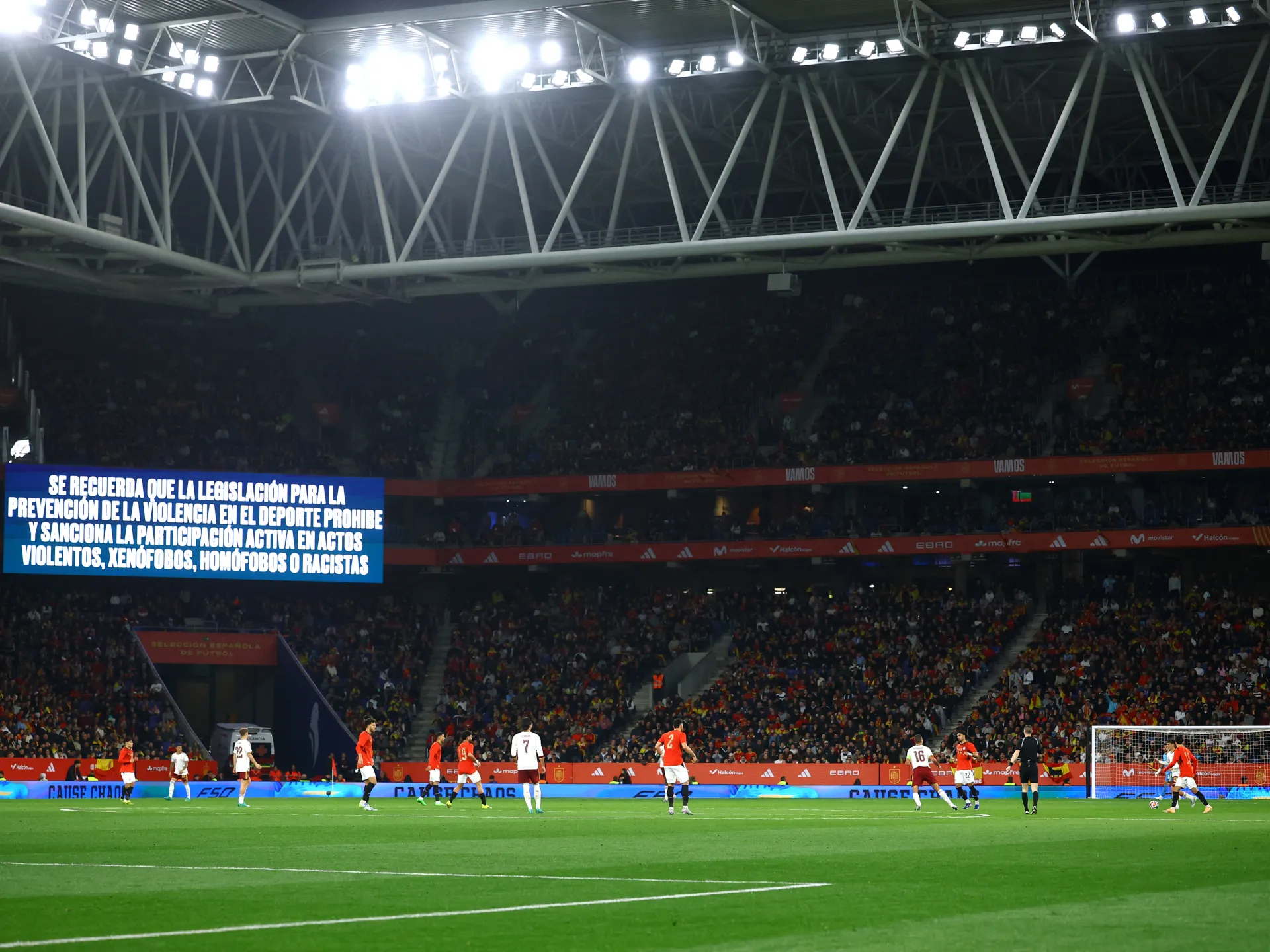
Watch the best of the action as Scotland are beaten 1-0 by Ivory Coast at Everton’s Hill Dickinson Stadium.
Source link
Watch the best of the action as Scotland are beaten 1-0 by Ivory Coast at Everton’s Hill Dickinson Stadium.
Source link
Jordan Pickford: Japan’s opening goal was the first time Pickford had conceded for England in 922 minutes. He had to produce a smart save in the second half to keep the hosts in the game. 6
Ben White: Beaten once early on but showed the consistency he has done for Arsenal after that. A constant hard-working presence down the right-hand side. One particularly good overlapping run in the first half. 6
Ezri Konsa: In with a big chance of starting the first game at the World Cup. One crucial block to deny Ayase Ueda with the shot hitting the bar and going over. 6
Marc Guehi: Given the armband by Tuchel for the first time. A couple of shaky moments early on but after that as dependable as ever. 6
Nico O’Reilly: Another important game for O’Reilly as he makes the left-back position his own before the summer. He showed his ability on the ball and moved into midfield whenever he could. 7
Kobbie Mainoo: A bright start and some nice footwork when moving the ball around midfield. Beaten a couple of times on Japan attacks when trying to defend. 6
Elliot Anderson: A certain starter at the World Cup. Assured in midfield, provided a drive to England’s play and tried to make things happen. One of the better performers on the night and clipped the crossbar with a good effort. 7
Cole Palmer: The Chelsea attacker was given the nod as the number 10 over Phil Foden who played as a false nine. There was always a sense that something could happen when Palmer was on the ball. However, he was caught on the ball and punished for Japan’s opener. Came off just before the hour mark. 6
Morgan Rogers: Started on the right wing and asked to provide a threat through the middle with no natural striker in the starting line-up. Not his best position but did the job that was asked of him. 6
Anthony Gordon: Put in another energetic performance with lots of hard work but not many moments to threaten the Japan defence. 5
Phil Foden: The Man City forward started as a false nine as Tuchel looks for a position for him in England’s squad. It was not a good night for Foden who will be worried about his place on the plane for the World Cup. Replaced in the 59th minute. 5
Ali McCann, Ruairi McConville, Paddy McNair and Bailey Peacock-Farrell will miss Northern Ireland’s friendly with Wales in Cardiff on Tuesday.
Source link
The Brusseleir dialect that’s still spoken in much of the Marolles dates back to the middle ages, a symbol of the independence of this proudly working-class neighbourhood in central Brussels. Located between the Palace of Justice and Halle Gate, it’s always been an inclusive refuge for immigrants from Europe and north Africa. The must-see Brussels tourist attractions of the Grand-Place central square and Mannekin-Pis statue are within walking distance, but the Marolles offers a very different experience: fashion, antiques and bric-a-brac shopping; alternative creative centres and provocative graffiti; characteristic estaminets (hybrid pub, cafe, bistros) specialising in hearty local dishes; and artisan breweries.
The splendid art nouveau Les Brigittines is a Belgian culinary institution, where chef Dirk Myny has overseen the kitchen for 35 years. He daringly reinterprets classic Flemish recipes with dishes such as smoked eel mousse and succulent pork belly with a tart cherry ale vinaigrette, or pig’s trotter, coddled egg, capers and gherkins. The three-course €38 lunch menu is a steal.
Don’t miss the experience of a traditional estaminet, either for breakfast coffee with a speculoos (spiced biscuit), or lunchtime pistolet (crusty rolls) with cheese, a hearty plate of stoemp (vegetable mash) and meatloaf, or chicons (endives) braised with ham. Estaminets such as Volle Brol and Au Mouton Bleu are fun spit-and-sawdust locales, but nothing beats the historic La Clef d’Or, which looks out over the daily flea market on Place du Jeu de Balle. Its owner, Eddy Aslan, sums up the Marolles as “a friendly cosmopolitan village where everyone is made welcome, and unique in that it is outside Belgian politics, neither Flemish nor Walloon but genuinely Bruxellois”.
A more modern estaminet is Mazette!, a cooperative microbrewery of 900 members who make more than 20 beers, mill an organic flour and bake their own bread, pizza and focaccia. Cantillon, on nearby Rue Gheude, is the last Brussels lambic (traditional wild-yeast fermented) brewery and worth a visit for its gueuze beer.
The Marolles is proudly multi-ethnic. Try My Day, opened by Iraqi refugee Yousif Alsaleh, which serves home-cooked dishes such as maqluba, a pilaf-style spicy rice dish with chicken, lamb or roasted vegetables. Alternatively, there’s Flower Food for a Moroccan beldi breakfast of semolina crepes and flatbreads with eggs, smoked beef, honey and dates. For vegetarian menus, the plant-based diner Lucifer Lives serves tasty soups such as broccoli and garlic, while the community cooperative L’Eau Chaude offers simple organic dishes such as coconut curry for €9.50.
At night, the Marolles can be a wild place to party. Start off playing pinball and table football at the brilliant bar Le Petit Lion and you could still be there at 2am, dancing with a packed crowd to local DJs. Just up the road is Fuse, a legendary techno dance club since 1994, where weekend gigs carry on till sunrise, when the Jeu de Balle bars are just opening up.
While the headline Magritte and Fine Arts museums are in the centre of Brussels, the Marolles offers a vibrant and challenging counter-culture scene. Dotted around the backstreets, street art enthusiasts can track down 16 of the city’s iconic comic strip murals; sadly, no Tintin, but rather local heroes such as Spirou, Blake & Mortimer, and Le Chat, a beloved cat cartoon. Wander through the streets and tunnels around the old Chapelle train station and Ursulines skate park and you enter an unofficial graffiti gallery, constantly being repaired and updated.
More formal cultural centres are the Octopus Heart art centre, which exhibits and offers residencies to local artists, and the Centre d’Art Mont-de-Piété, a 17th-century charitable organisation whose gallery hosts everything from photography and textiles to fashion shows. Be sure to go right to the end of Rue Haute, to discover the remarkable Art et Marges museum, which for 40 years has been a cutting-edge centre presenting art brut, outsider art produced by self-taught artists outside the contemporary circuit.
The Marolles is vintage shopping heaven, attracting fashionistas hunting down rare outfits, interior design fans looking for art deco lamps and Murano mirrors, and bargain hunters searching for collectibles in the sprawling Jeu de Balle flea market. Bernard Gavilan is the neighbourhood’s undisputed fashion guru; he opened his first boutique here in 2011, an Aladdin’s cave of vintage clothes and accessories. “Retro fashion has become much more important in the Marolles over the years,” he says, “but there’s a difference between the by-the-kilo stores popping up everywhere, which sell basic, recent secondhand clothes, and shops like mine, whose quality items can go back to 1900.”
The two key streets to explore are the parallel Rue Blaes and Rue Haute. Don’t miss Passage 125, an ancient textile warehouse that has been transformed into a labyrinthine antiques emporium selling everything from jewellery and stained glass to crystal chandeliers and rare arms. Meanwhile, Haute Antiques is housed in the old art nouveau Rialto cinema, where 25 collectors tempt shoppers with high-quality pieces, from furniture to lighting.
The vibrant heart of the neighbourhood is the Marolle’s monster Jeu de Balle flea market, open 365 days of the year but with the best bargains on Sundays. At midday, head to Centro Cabraliego, a social club for generations of immigrants from Spain’s Asturias, where local people cook up a copious lunch of chorizo, ribs and calamari with wine or cider for under €20. Walk over to the Place Brueghel, on Rue de l’Epée, where a free glass lift whisks you up to the entrance of the landmark Palace of Justice, with panoramic views over Brussels. Finish off with a walk down Rue des Tanneurs, past the Palais du Vin, now an organic food market, till you arrive at the stately romanesque Notre-Dame de la Chapelle church, where the 16th-century painter Pieter Bruegel the Elder is buried.
On bustling Rue Haute, La Maison Haute is a chic boutique place with room-only doubles from €120. A budget alternative at the edge of the Marolles is Ibis Brussels, with spacious doubles from around €90, right opposite the Eurostar station.
The meal at Les Brigittines was provided by Visit Brussels