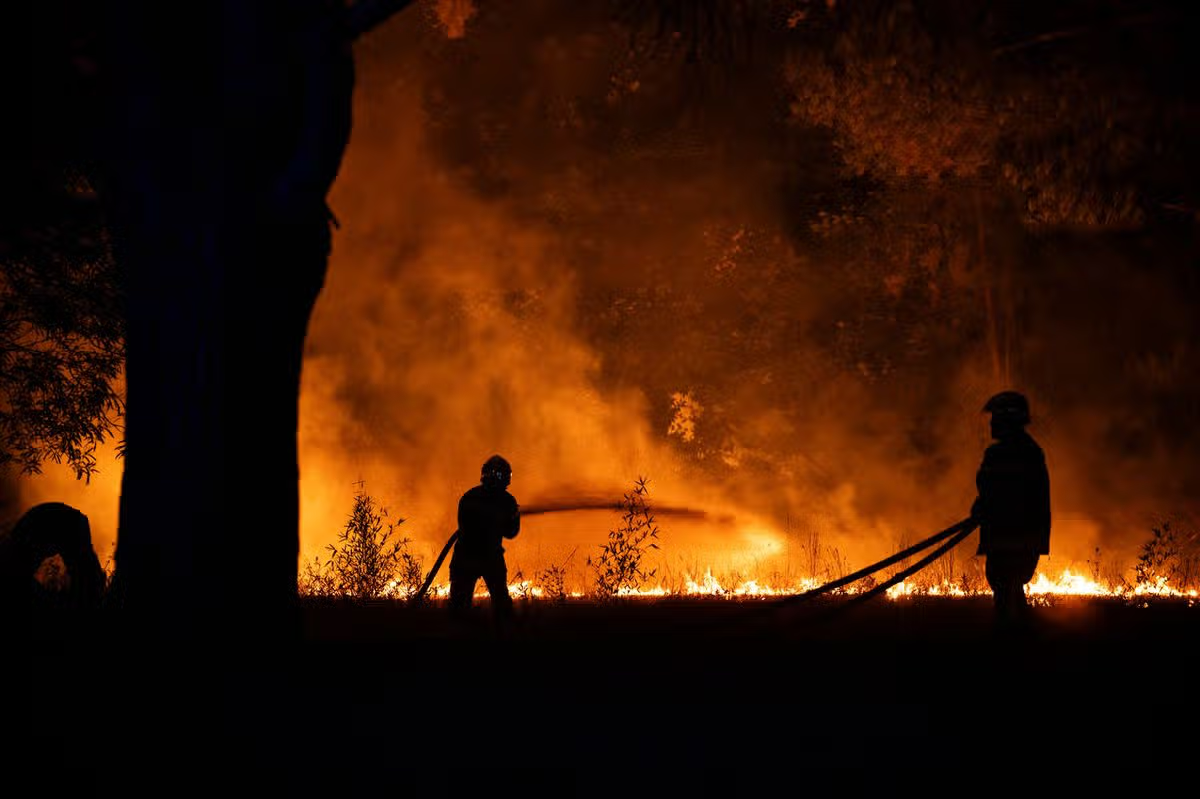
Forest fires

New July 24 Foreign Office ‘wildfire’ alert for parts of France

People have been given a fresh update on the situation

The Foreign Office has issued an update for people in or travelling to parts of France affected by ongoing wildfires. More areas are facing immediate threats, with thousands forced to flee from the growing danger zone.

As of July 24, the country is battling dozens of wildfires, with the largest having been burning since Tuesday (July 21). Reports suggest that the massive Cap Ferret Peninsula blaze has forced thousands to evacuate the French tourist spot.

The fires, which began earlier this week, have burned for days, with almost 25,000 acres of land (including pine forest) caught up in the flames. The popular tourist region of Arcachon Bay has been evacuated by authorities as the fire threatened homes and businesses in the area.

Posting an update this afternoon, July 24, the Foreign Office said: “Wildfires are affecting parts of Gironde, including areas around Saumos, Le Porge and Lège-Cap-Ferret, where French authorities have evacuated campsites, tourist accommodation and some residential areas. A separate wildfire is also affecting parts of Landes, including Biscarrosse and surrounding areas.

“Access to affected areas may be restricted and roads may close at short notice. If you are in the area or planning to travel there, follow the advice of local authorities, monitor local media, and check with your accommodation or travel provider before travelling.”

The Foreign Office has previously warned that France has a “high risk of wildfires during the summer season”. The chances of wildfires are often higher between the months of April and October.

The risk is highest in the south of the country, particularly along the Mediterranean coast, in Corsica, and in areas of the south-west during periods of hot, dry weather. Check the French weather service’s fire alert map before travelling and monitor local authority advice during your stay.

In the summer months, there is a risk of higher-than-normal temperatures in France. Tourists should monitor the weather forecasts online using trusted sources like the Met Office or the Meteo France website.

If you’re staying in or near a high-risk area, the French government has advised people to know what to do if a wildfire breaks out and how to prevent wildfire outbreaks in the first place. Causing a wildfire in France is illegal, even if it is started by accident, and you could get a fine or a prison sentence.

If you are caught in a wildfire or witness one, call emergency services on 18 (fire) or 112 (emergency services). After alerting the authorities, take shelter and cover your nose and mouth with a damp cloth to protect yourself from the smoke.

The French government said: “Take shelter in a cleared property until the intervention of the emergency services. No car can be considered as a safe place because it may catch fire easily.”

Source link

Spain Ministry ‘don’t do it’ warning to people visiting the European country

The warning comes as the country has faced hazardous conditions this week

Spain’s Ministerio del Interior has issued a warning to anyone in the country, including visiting tourists, as hot weather bakes the country. This week, the European nation faced unprecedented, record-setting heat.

The country was caught in a severe and hazardous heatwave caused by hot air travelling north from the Sahara Desert. These extreme temperatures broke long-standing weather records and led to widespread red alerts, especially in the northern and central parts of the country. Temperatures soared past 45C in some areas of northern Spain at the beginning of the week.

The northern region of Cantabria broke its previous heat record, hitting an incredible 43.7C in Tama. Bilbao Airport recorded temperatures over 40C on three different days (Sunday, Tuesday, and Wednesday). This is a historic first for the region: reaching this level three times in one year.

On Thursday, June 25, temperatures began to drop, and there was some rain and thunderstorms in parts of the northern and central plains, including Madrid. However, high temperatures are still sticking around.

Places like Andalusia and cities such as Seville and Córdoba are experiencing usual summer highs. Temperatures are rising back up to 37C to 38C as the weekend comes to a close.

Content cannot be displayed without consent

The Ministerio del Interior translates as the Ministry of the Interior (also known as the Home Office or the Ministry of Internal Affairs). This government cabinet department handles domestic policy, public safety, law enforcement, immigration, and civil protection.

Taking to X on Sunday, June 28, the ministry urged people to avoid doing three things for safety reasons. It said: “In the forest, every gesture counts.

“Don’t throw away cigarette butts or matches. Don’t make fire outside of authorised areas. Don’t abandon flammable waste.” It added: “With heat and wind, the risk increases. A small oversight can turn into a big fire.”

Has Spain experienced wildfires this week?

This week, Spain has been hit hard by a serious wave of wildfires after experiencing its first big summer heatwave. The temperatures soared above 45C in the south and reached up to 43C in the north.

These extreme heat levels, along with dry weather and lightning strikes, have led to several devastating fires. One major wildfire erupted between Tamarite de Litera and Alcampell, consuming more than 4,000 hectares of land. It is thought that a harvesting machine started the fire, which resulted in the evacuation of around 240 people from three nearby villages.

Is Spain prone to wildfires?

Spain faces a significant risk of severe wildfires during hot weather, ranking it among the most fire-prone countries in Europe. The mix of intense summer heatwaves, extended periods of drought, and powerful winds results in “tinderbox” conditions that enable fires to start and spread rapidly.

Data from the Ministry for Ecological Transition in Spain reveals that human activity is responsible for the majority of wildfires. More than half of the annual fires in Spain are deliberately set, and a significant portion is due to accidents or negligence, such as mismanaged agricultural burning, cigarette butts that are carelessly thrown away, or barbecues.

Source link