flood

Nepal races to rescue trapped workers, as flood death toll surpasses 900 | Floods News

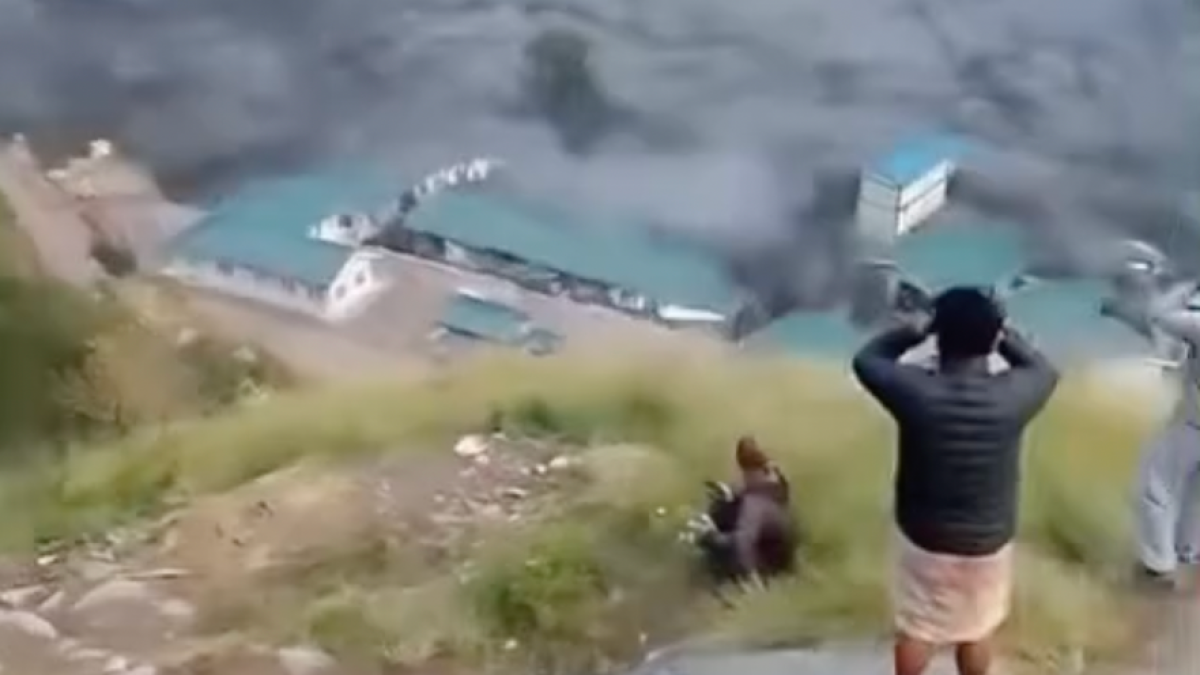
Nepal’s rescue teams, aided by Chinese and Indian experts, are racing to save more than 900 workers believed to be trapped underground at hydropower projects hit by devastating flash floods.

Nepali officials said on Monday that the focus was on reaching the workers in about a dozen hydropower project tunnels blocked by mud and rock debris.

Recommended Stories

list of 4 itemsend of list

The unprecedented deluge of ice, rock, mud and debris on the Nepal-Tibet border on Wednesday – caused by a glacier collapse – has killed 903 people with 4,247 missing in Nepal, its disaster authority said.

The flood also wreaked havoc across the border in China’s Tibet region, where at least 16 people died and 546 are missing, said Chinese authorities.

‘Big challenge’

Pictures and videos shared by rescue teams in Nepal showed earth-moving equipment digging and shovelling mud and rocks under lights in the dark of the night as workers watched. Soldiers used torchlights in a big pit they had created to look for space to get into one tunnel.

“A large amount of debris has been deposited and that is posing us a big challenge to open the tunnels,” Nepal army spokesperson, Raja Ram Basnet, told the Reuters news agency.

“Our main focus is on opening the tunnels.”

Hundreds of bodies, many unidentified, have been buried in shallow graves as they began decomposing in the humid weather after being swept down the mountains by the torrent.

At a hospital in the capital of Kathmandu, morgues have reached capacity and families are flocking to other hospitals in hopes of finding missing loved ones, reported Al Jazeera’s Minelle Fernandez.

In addition to the 933 missing hydropower workers, some 500 workers from the Truck and Container Association are also missing, said Fernandez.

The Red Cross has estimated that more than 90,000 people are likely to have been affected by the disaster, which China has linked to the effects of climate change.

Prime Minister Balendra Shah said the flood was an “unprecedented and devastating natural disaster” and it remained challenging to compile a complete assessment of the damage.

“Despite the adverse weather, difficult terrain and continuing risks, we are moving forward with determination to save the lives of our citizens,” he said in a Facebook post late on Sunday, adding that nearly 21,000 security personnel were involved in rescue operations, besides civilian workers and volunteers.

While accessibility has been restored on many roads and highways, almost “40 kilometres of roads have been absolutely swept away”, Al Jazeera’s Fernandez said.

“So there are challenges on the ground in getting this aid to communities, but the authorities, as well as the agencies and their networks are working their way through it.”

China sends experts, aid

China’s state-run CCTV said the government has mobilised more than 2,100 rescue workers and allocated at least 220 million yuan ($33mn) to support relief efforts. Equipment and supplies have been airdropped to frontline rescuers, while Chinese soldiers used life-detection equipment to look for the missing.

Beijing said 261 foreign nationals from 23 countries were unaccounted for in Tibet.

“President Xi Jinping, according to state media, has called for all out efforts to rescue those missing in the mudslide, and this is the second time that the president has made such a call,” said Al Jazeera’s Katrina Yu, reporting from Beijing.

“So this seems to be the Chinese leader’s effort to call on people, not only to continue their efforts, but redouble their efforts even as things are looking grimmer and grimmer.”

China has sent nine tunnel rescue experts to Nepal and shared satellite information with Nepalese authorities, said Yu.

Although Nepal has said it does not need foreign help in general search and rescue efforts, it has accepted help from giant neighbours India and China for their expertise in tunnel rescue.

Rescue operations have been suspended several times since Friday because of bad weather and concerns that a lake, formed across the Nepal-China border by the disaster, could trigger new flooding after it began overflowing into Nepal’s rivers.

The weather was good on Monday and rescue work continued to pick up pace, said Narendra Pariyar, the district administrator of Rasuwa, one of the two hard-hit districts.

Source link

Nepal tragedy intensifies glacial flood fears in Chile, Argentina, Peru

People sits on a safer ground after another flash flood alert iin Nuwakot district, Nepal, on Friday. Photo by Narendra Shresth/EPA

Aug. 28 (UPI) — After Wednesday’s devastating glacier collapse in the Himalayas, scientists and geologists are warning that unstable conditions and the accelerating retreat of Andean ice sheets are exposing Chile, Argentina and Peru to the risk of catastrophic floods and mudslides.

The retreat of Andean glaciers has accelerated the formation of unstable lakes and exposed large slopes of loose rock that can collapse more easily as global temperatures rise, experts say.

Fast-moving floods and mudslides through mountain valleys could directly threaten drinking water supplies, energy projects and the lives of thousands of people living in vulnerable areas of the three countries.

The Himalayan disaster, which has left almost 600 people dead and more than 1,900 others missing, experts say that although monitoring and early-warning technologies exist, the speed and scale of glacial lake outburst floods, or GLOFs, such as the one in Nepal can make responding difficult.

“What happened in Nepal has already happened in Argentina,” Juan Pablo Milana, a researcher with Argentina’s National Scientific and Technical Research Council, told Infobae.

In November 2005, Laguna de los Erizos in San Juan province suddenly burst, releasing more than 1.1 billion cubic feet of water in just 67 minutes, Milana said. The flood traveled more than 155 miles, destroying crops and roads and isolating communities. No deaths were reported because the area was sparsely populated.

In Argentina, the areas at greatest risk are concentrated in Patagonia. One of the most critical sites currently under observation is the tourist town of El Chaltén, where instability on the slopes of Cerro Solo directly threatens Laguna Torre.

Lakes formed by the retreat of large ice masses, such as the Upsala Glacier, also pose a potential threat. In 2013, a collapse in the glacier’s channel generated a destructive wave in Onelli Bay.

Argentina’s Geological and Mining Survey and research teams from the University of Buenos Aires are responsible for monitoring the threats.

They combine satellite imagery used to update the National Glacier Inventory with projects to establish ground-based early-warning systems. Those systems are designed to use weather stations and hydrological sensors to detect changes in water levels and unusual slope movements in real time.

With more than 26,000 glaciers, Chile is among the countries most exposed to GLOFs worldwide, with risks divided between two distinct geographic areas.

The largest high-risk zone is concentrated in remote Chilean Patagonia, particularly the Aysén and Magallanes regions, where the rapid retreat of the Northern and Southern Patagonian Ice Fields has increased the formation of unstable lakes held back by fragile natural dams, although the region has a low population density.

Geographer Simón Inzunza told Chilean broadcaster T13 that the country has recorded GLOFs, particularly in Patagonia, as well as other emergencies associated with glacier melting and ice collapses.

In central Chile, watersheds are smaller but the risk is significant because of the high concentration of infrastructure, including hydroelectric plants, mining operations and drinking water systems serving millions of people.

Darío Ormeño, a geologist and professor at Andrés Bello University’s School of Earth Sciences, told BioBioChile radio that a mudslide is a real risk in Chile, although an event on the scale of the Nepal disaster is unlikely.

“Our glaciers are much smaller and do not have such an extreme elevation difference,” Ormeño said.

Chilean government agencies monitor glaciers using a national inventory updated with satellite imagery and radar. The tools allow authorities to measure the growth of glacial lakes and detect cracks in Andean slopes in an effort to issue early warnings before a disaster occurs.

Peru faces the highest risk in South America of disasters caused by GLOFs, with a history of deadly events and significant geographic vulnerability.

Paola Moschella, director of glacier research at Peru’s National Institute for Research on Glaciers and Mountain Ecosystems, or INAIGEM, told Exitosa radio that Peru has 528 lakes at risk of overflowing, including 58 considered high risk.

Unlike Patagonia and some high-altitude areas of Chile and Argentina, where glaciers are in remote valleys, entire cities and critical infrastructure in the Peruvian Andes, particularly in the Áncash region, lie directly along potential flood and mudslide routes.

Lake Palcacocha, in Peru’s Cordillera Blanca mountain range, is considered by scientists to be one of the world’s most critical cases because of its instability and proximity to the city of Huaraz, which has more than 120,000 residents.

The lake holds more than 599 million cubic feet of water and is fed by hanging glaciers that are susceptible to large avalanches as global temperatures rise.

If a large block of ice were to collapse into the lake, it could generate a massive wave capable of breaching its natural barriers and triggering a destructive flood that could reach urban areas in less than an hour.

The threat has a deadly historical precedent. In 1941, a similar outburst from the same lake destroyed about one-third of Huaraz and killed thousands of people.

Scientific monitoring in Peru has advanced significantly through the deployment of permanent personnel in high-altitude areas and the use of satellite surveillance systems.

Experts warn, however, that physical mitigation infrastructure installed in previous decades is outdated or insufficient to contain current water volumes.

Source link

Anger mounts in Nepal over the government’s response to flash flood | Floods

Anger is growing in the flood-hit Nuwakot district as survivors accuse the government of delays in delivering aid and finding missing loved ones after a flash flood devastated the area near the Nepal-Tibet border on Wednesday, Al Jazeera’s Barnaby Lo reports.

Source link

Nepali families pray for miracles with relatives missing after flood | Floods

At a Kathmandu hospital, families peer at lists of those who are critical, dead — or have been released.

Kathmandu/Nuwakot/Trishuli, Nepal – Loknath Chaulagain is looking for his 23-year-old nephew Sudarshan at Tribhuvan University Teaching Hospital in Kathmandu, Nepal’s capital.

A bus conductor, Sudarshan was waiting at the checkpoint in Timure, a town bordering Tibet, when the flash flood that devastated parts of Nepal and Tibet struck on Wednesday. His family says a phone call went through to his number at 9:54am local time – after the flash flood struck the border region – but Sudarshan did not pick up the call. Since then, his phone has been unreachable.

The family has been searching for him – near where the floods struck, and now in Kathmandu’s hospitals, where some survivors have been brought. But so far, they’ve had no luck.

They’re not alone. Thousands of families in Nepal are still stranded in the no-man’s land between hope and fear: hopes of an impossible miracle and worst fears of losing someone they love.

An army camp in Nuwakut, Nepal, where helicopters are being used for rescue efforts
An army camp in Nuwakut, Nepal, where helicopters are being used for rescue efforts [Mohammad Meherban/Al Jazeera]

Two days after the flash flood swept away much of what lay in its path along the Bhotekoshi River in the northern Himalayan region bordering Tibet, the full scale of devastation is yet to be ascertained in Nepal. The death toll is on the rise, with nearly 500 bodies recovered. The missing toll is well over 1,000 and is expected to rise further.

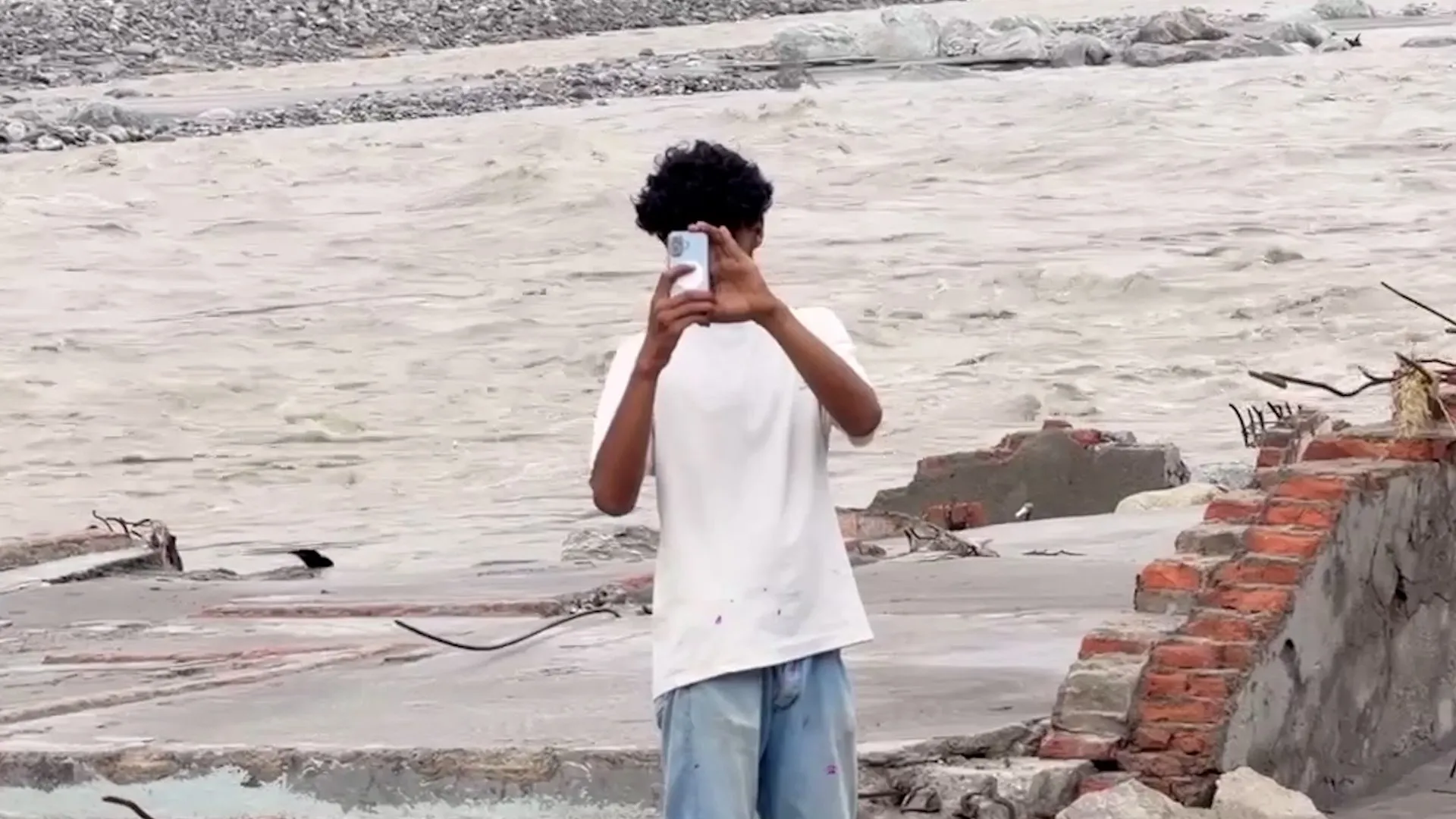
The wall of water with ice and mud that surged downstream with fury on August 26 caused maximum damage to Timure, Rasuwagadhi and Syabrubesi in the higher Rasuwa region nearer to Tibetan border checkpoints.

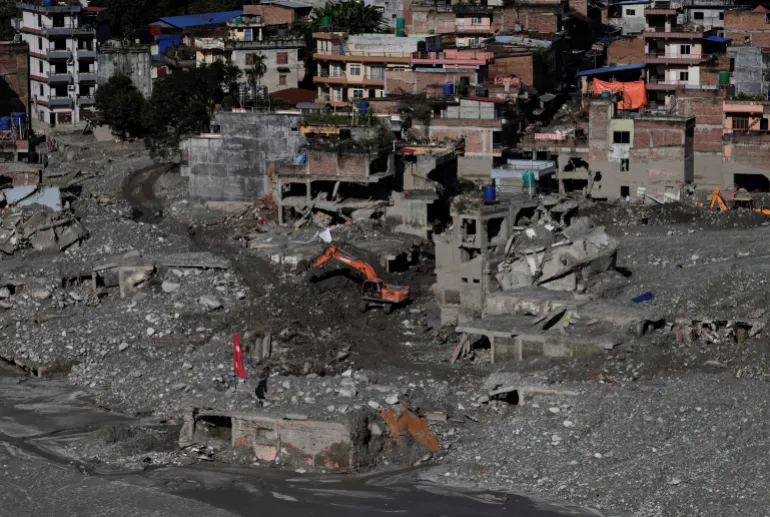
Downstream, it washed away buildings, electric poles, bridges, markets, homes and vehicles that stood in its path in Trishuli and Nuwakot regions.

The usually buzzing Trishuli market is today covered in mud, sludge and debris. Locals, including many Indians who have made the area their home for many years, beg and plead with relief workers to take them to their destroyed homes in earthmovers to retrieve whatever may be left of their belongings.

Trishuli market, covered in sludge, in Trishuli, Nepal [Mohammad Meherban/Al Jazeera]

Helicopters whirred nonstop on Wednesday and Thursday in these areas, trying to rescue those trapped under the rubble or washed away and stranded in dangerous situations. Those rescued with lighter injuries are being treated at the army camp helipad medical unit, while those with grievous injuries are being airlifted to bigger facilities in Kathmandu.

At the Tribhuvan University Teaching Hospital, people come by and plaster posters on walls with photographs and contact details of missing friends and family. Other hospital pillars bear lists of those who have been admitted or are in critical condition – or those who have been killed: five-year-old Ishara Tamang in paediatric surgery; 30-year-old Tej Bhadur Tamang in the ICU; 25-year-old male Kusal Magar, listed as dead. Multiple pairs of concerned eyes gaze intensely at these lists, hoping to find their loved ones there.

Among them is Sohan, a young man who does not want to speak to journalists on camera. He is searching for his 42-year-old father, Gyan Bahadur Rana Magar. “Three days on, we are searching and still trying to find him,” he says. His father went with Indian tourists as a guide to Rasuwa, the border district with Tibet that is one of the worst affected.

When the lists on pillars offer no answers, people searching for their loved ones head to the mortuary where photographs of some of the recovered bodies have been glued to the gates. Many bodies were found dismembered; some were missing limbs. When someone finds a hint of familiarity, they inform security officials, who let them in after some identification check to take a look at the body.

Dressed in a red saree and blouse, and wearing a red pothe necklace  – a traditional glass-bead necklace worn by married women in Nepal – Lal Kumari is desperately looking for her husband, Arjun Shreshtha. A tourist van driver in his late 40s, he was swept away by the flood in Rasuwa district. Kumari has three children, including a married daughter and a grandchild, and her only question is: Could her husband, miraculously, still be alive?

Lal Kumari, one of thousands still searching for loved ones, is looking for her husband, Arjun Shreshtha, a tourist van driver missing since the floods
Lal Kumari, one of thousands still searching for loved ones, is looking for her husband, Arjun Shreshtha, a tourist van driver missing since the floods [Mohammad Meherban/Al Jazeera]

Source link

The Sopranos star Vincent Pastore, 80, found dead at home as ‘probe launched’ & tributes flood in for iconic actor

THE Sopranos star Vincent Pastore has been found dead at the age of 80.

Cops have launched an investigation into his death, as tributes flood in for the well-loved actor.

Vincent Pastore, who is best known for his role in The Sopranos, has died at his Bronx home Credit: Getty
A neighour his thought to have found Vincent’s body Credit: Getty

Vincent played a number of mobster characters in film and TV in a long and illustrious career.

He was found dead on August 1 in his Bronx home by a neighbour, according to sources.

Vincent had not been heard from in three days before being discovered on Saturday, reports say.

The circumstances surrounding his death are being investigated.

ALL EYES ON HER

Britney Spears twerks and dances topless a day after horseriding boob flash


THE MASK IS OFF

Kelly Osbourne’s ex-fiance Sid Wilson ‘permanently kicked out of Slipknot’

Cops are investigating the star’s death Credit: Getty Images – Getty
Vincent also became something of a reality TV star later on in his extensive career Credit: PA:Press Association

Pastore’s manager Robert Attermann said in a statement: “I had the privilege of representing Vinny for more than 30 years, long before The Sopranos made him a household name.

“To the world, he will always be remembered as the unforgettable ‘Big Pussy,’ but to those of us who knew him, he was so much more.”

He added: “Vinny was one of the kindest, most generous people I have ever known. “He treated everyone with warmth and respect, never turning down a fan who wanted a photograph or an autograph.”

Vincent’s manager continued saying that Pastore “genuinely appreciated the people who supported him and always made them feel valued.

“He loved being an actor. He was passionate about his craft and was always encouraging, respectful, and generous with young actors, taking the time to offer guidance and support whenever he could.”

Atterman wrote that losing Pastore was “deeply personal.”

“Over more than three decades, I had the honour of watching not only his remarkable career but also the incredible person he was,” he went on. “I will miss his friendship, his loyalty, his humour, and his heart.”

He ended his personal statement by saying: “My deepest condolences go out to his family, friends, colleagues, and the countless fans whose lives he touched.

“He leaves behind a legacy that extends far beyond his memorable performances. He will be greatly missed and never forgotten.”

Vincent was born in the Bronx, New York City, on July 14, 1946.

He fought in the Vietnam war before going to graduate with a degree in drama from Pace University.

Vincent had a number of small parts in films such as Goodfellas, Carlito’s Way and Men of Respect in the 1990s.

He came to wider attention though in The Jerky Boys: The Movie in 1995 and the HBO TV movie Gotti, the following year, where he appeared alongside future Sopranos co-stars Tony Sirico, Frank Vincent, and Dominic Chianese.

Vincent though became a household name in David Chase’s 1999 drama The Sopranos, where he played Big Pussy, Tony Soprano’s, played by James Gandolfini, longtime best friend and mob enforcer turned FBI Informant

His extensive credits also include Mickey Blue Eyes, Shark Tale, Once Upon a Time in Brooklyn and Guy Ritchie’s Revolver.

Vincent also made a number of appearances on reality TV shows, including Celebrity Apprentice, Celebrity Family Feud, Dancing With the Stars, Shark Tank and Celebrity Fit Club.

Pastore is survived by his daughter, Renee.

Source link

Rescuers search for flood survivors in Afghanistan | Floods

NewsFeed

Rescuers in eastern Afghanistan are searching through mud and rubble after flash floods and a landslide tore through Nuristan province. At least 23 people have been killed and dozens are still missing as officials warn of more heavy rain and a rising death toll.

Source link

Flood Risk Looms Again in Mokwa Amid Ongoing Challenges

In the afternoon of May 31, 2026, the Anguwan Hausawa area of the Mokwa Local Government Area of Niger State, North-Central Nigeria, was thrown into mourning. The news of Abubakar Usman’s death in the lodge water had spread through the area, and people were trooping to the house to extend their condolences to his parents.

Abubakar, a 13-year-old, had gone out to play with his friends. Hours later, he was brought back lifeless while his other friend was rushed to the hospital, having drowned in floodwaters caused by a blockage the construction workers working on a culvert had put in to hold the water as they worked. 

As the lastborn of his parents, Abubakar was the kind of boy whose presence lit up every corner of the community. He attended the Islamic school close to his house, and his teachers admired how brilliant he was. Residents say he was respectful, and the elders in his community often praised him as he never passed by without greeting people warmly—a rare quality that made him beloved by all.

His father, Usman Shekare, an elderly man in his late sixties, stood heartbroken at the sight, lying on a mat, fixing his gaze on his beloved son. The only words he had the courage to utter were, “God gave him to me, and He has collected him back.”

What broke him further was a simple question: “What message do you have for the government?” He instantly broke down in tears, unable to speak further.

This tragedy is not an isolated incident. Just weeks earlier, residents told HumAngle that three boys fell into the clogged waters and were luckily rescued. The water continues to gather at last year’s Mokwa Flood site, fed by the heavy downpour flowing from the Zugurma and Yagbagba axis, and worsened by another source from gully erosion sites in nearby communities. 

Erosion on arid land with scattered trash and small, distant houses under a hazy sky.
One of the flood zones along the Mokwa-Jebba Road in Mokwa LGA, Niger State. Photo: Isah Ismaila/HumAngle.

Hussaini Ibrahim, the Spokesperson of the Niger State Emergency Management Agency (NSEMA), told HumAngle almost a month after the incident that the agency is not aware of any loss of life due to the blockage but will reach out to the community leader and affected family for further actions.

In Mokwa, the echoes of last year’s devastating flood still haunt the community. Residents told HumAngle that farmers had raised alarm before last year’s disaster, warning that water was accumulating, but their concerns were ignored until after the flood struck. Now, the same warnings are being repeated, with little sign of preventive action.

“Barely a year after the flood, Mokwa is once again staring at water lodging in the same vulnerable zones,” Isah Mokwa, a community leader and activist in the community, told HumAngle. “The bridge and waterway reconstruction, meant to symbolise recovery, has inadvertently blocked water channels, creating a dangerous buildup. As we speak, the town is sitting on a ticking bomb.”

Residents told HumAngle how the first rainfall they witnessed in May made them apprehensive. That evening, they revealed, the sound of rushing water sent shivers down their spines. Mothers were seen rushing to gather their children as fathers stood at the site of collapsed structures, staring at the lodging of water in the same flood-prone channel that swallowed over 150 lives and many homes last year, with hopes of it not wreaking havoc again. 

Studies indicate that the mental health and wellbeing of individuals, especially children affected by flooding in Nigeria, can deteriorate for extended periods, often lasting months or even years after the event.

The cumulative stress of rebuilding homes, restoring livelihoods, and coping with displacement has been shown to exert a heavier toll on affected populations than the initial impact of the flood, underscoring the need for comprehensive psychosocial support in disaster management strategies.

“The water was coming right from Yagbagba,” Ndako Usman, a resident, said. “It’s accumulating just behind the blockage. Once it gets bigger and more powerful, it could hit our homes again.” 

Hussaini told HumAngle that the blockage was caused by construction workers working on the ongoing drainage construction, and the management has taken swift action to address the issue.

“During last year’s flood, we were taken unaware, but we have taken proactive measures to ensure that it does not repeat itself this year. We have a monitoring team, and also volunteers who constantly update us on the flow of water so that we take immediate action.”

“Regarding the culvert, we have written to relevant stakeholders, including the Ministry of Water Resources, to study and assess the situation of the culverts to see if they can handle the water volume in case of a flood-related disaster and advise appropriately,” Hussaini added.

A catastrophe remembered

The fear is not irrational. In May 2025, Mokwa was the epicentre of one of Nigeria’s deadliest flood disasters in recent memory. Torrential rains combined with structural failures to unleash devastation that claimed hundreds of lives, displaced thousands, and left the town grappling with hunger and grief. 

Flooding has become one of Nigeria’s most persistent natural disasters, wreaking havoc on communities across the country almost every year. Heavy rainfall, poor drainage systems, deforestation, and the release of water from dams often combine to create devastating outcomes. 

In 2024 alone, floods claimed over a thousand lives, displaced millions, and destroyed farmlands and infrastructure worth billions of naira, but the situation dropped in 2025, according to the National Emergency Management Agency (NEMA). 

The agency revealed that floods killed 241 people and affected 459,995 residents across 27 states and 128 local government areas. Also, the disaster displaced 158,588 people, injured 839, and damaged 54,684 houses while destroying 96,649 farmlands. 

Workers construct a canal with metal reinforcements in a rural area surrounded by red earth and small buildings.
The newly constructed culvert in the Anguwan Hausawa area of Mokwa, one of the hard-hit areas of last year’s flood. Photo: Isah Ismaila/HumAngle

Early warnings had been issued by the Nigerian Meteorological Agency (NiMet), but local authorities failed to act.

The disaster struck suddenly. Heavy rainfall battered Mokwa, but the real trigger was the collapse of a railway embankment and blocked drainage channels that redirected torrents into residential areas. 

Within hours, homes were submerged, bridges collapsed, and farmlands were washed away. Reports varied, but estimates suggested between 200 and 700 people lost their lives, and about 3000 houses and properties were destroyed, leaving families stranded in makeshift camps.

In the wake of the disaster, the Minister of Information and National Orientation, Mohammed Idris, revealed that President Bola Tinubu approved the release of ₦16.7 billion for the immediate reconstruction of the Mokwa Bridge, which was destroyed by flooding, noting that the project would involve constructing a bridge with 10 spans. 

In the months that followed, HumAngle published a damning investigation into the Mokwa flood, among other issues. Our findings painted a picture of systemic neglect. The investigation established that gully erosion in Mokwa has remained a destructive force despite years of significant financial allocations. The erosion continues to expand, damaging infrastructure and farmland and worsening during rainy seasons. 

Equally, the report uncovered that billions of naira from ecological funds and World Bank loans were earmarked for erosion control, yet no substantial work has been executed. While officials claimed contractors were engaged, there was no evidence of transparent bidding processes. Field assessments confirmed that erosion control activities remain absent, exposing a gap between official pronouncements and actual implementation.

Last month, NEMA listed Mokwa among high flood-risk local government areas in Niger State for 2026. Yet on the ground, little seems to have changed. 

Isah Mokwa, the activist based in Mokwa, confirmed to HumAngle that the bridge constructed to contain the water has proven inadequate. According to him, the community braces for the worst, fearing that heavier downpours could unleash destruction far greater than before.

“Nothing has changed. In fact, the situation has deteriorated even further. In the same direction where the water started gathering before the flood, farmers have raised the alarm that water is already accumulating,” he said.

“We believe there is no accountability for the funds contributed to the state government. What happened to the billions donated after the 2025 flood? Even the shelter that was promised for victims of last year’s flood has not been provided. Just recently, there was a flag-off ceremony, but no contractor has been mobilised to the site, no details were given about the number of houses to be built, and no project timeline was shared,” he said.

According to residents, some of the affected families who were lucky to receive ₦500,000 ($360) in financial support last year to rent houses have exhausted their funds, and the majority are now struggling to renew their rent. 

For many in Mokwa, the suspicion is that the tragedy of 2025 has been reduced to a political talking point, while the lived reality of survivors remains ignored.

However, experts warn that Mokwa cannot afford another disaster. 

Abbas Idris, the president of the Risk Managers Society of Nigeria (RIMSON), in an interview with HumAngle, said that before now, the government should have taken a proactive disaster management approach through risk assessment and hazard categorisation.

This, according to the risk expert, would help not only the government and state emergency management agency but also residents to put in place measures or tackle the disaster even before it strikes.

In the longer term, Abbas revealed that the Niger State government must enforce urban planning regulations, preventing construction on floodplains and investing in climate adaptation strategies. 

“Neglecting risk assessments leaves communities defenceless when disaster hits,” Abbas stressed. “We must address corruption, weak governance, and poor ecological management as root causes of the crisis and pave the way for transparent, science-driven interventions to mitigate future disasters.”

It has been a year since the flood, and despite repeated appeals from the community, the state government, under the leadership of Umar Bago, has yet to provide a lasting solution. Families like the Shekare’s are still left to brace for waters that rise too quickly and claim too much.

And until their demands are met, Mokwa remains vulnerable — a place where the memory of one brilliant boy reminds everyone of both the fragility of life and the urgency for change.

Source link